
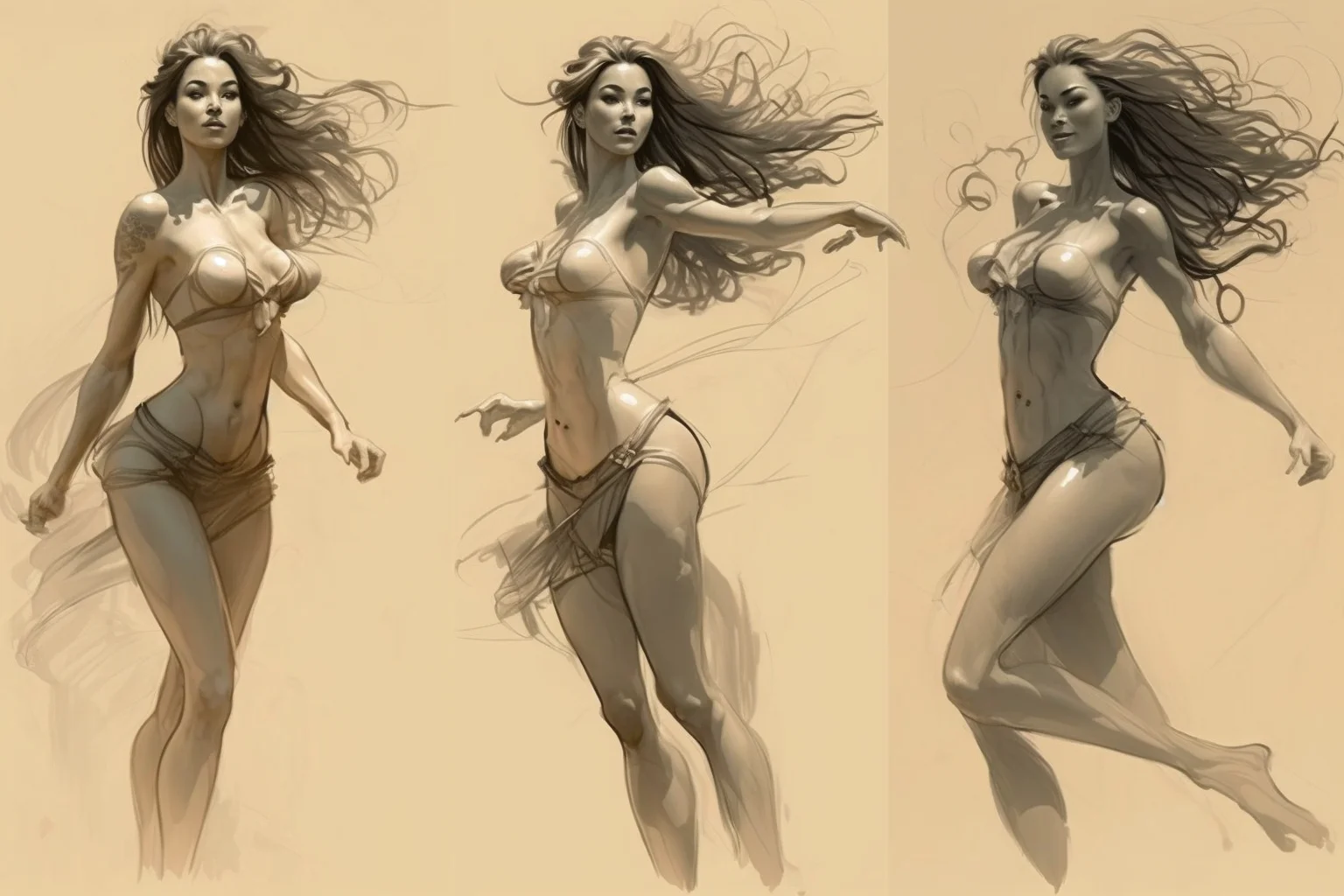
Twenty-six female figure references for longer pose studies: standing, sitting, casual, dancing, action, face and full-body construction. Use them after a quick gesture sketch, when you are ready to slow down and check proportion. Click or tap any image to open the full-size reference.
Jump to: standing & weight · sitting & casual · action & dance · face & construction · longer studies
Standing poses and weight distribution — References 1–8
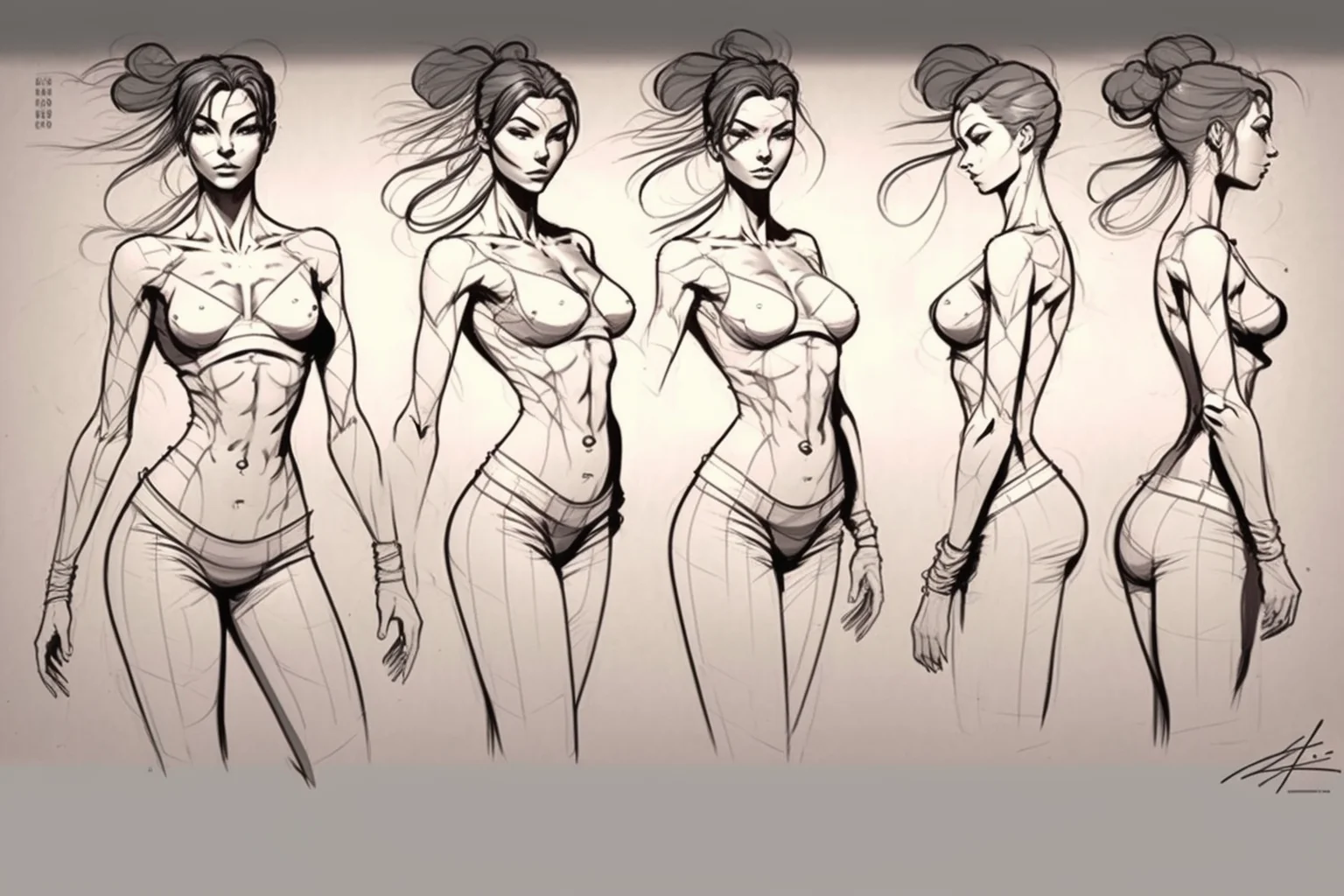
Start with the standing references. They make balance easier to see. Before drawing the contour, ask which leg is carrying more weight and whether the torso sits directly above that support.
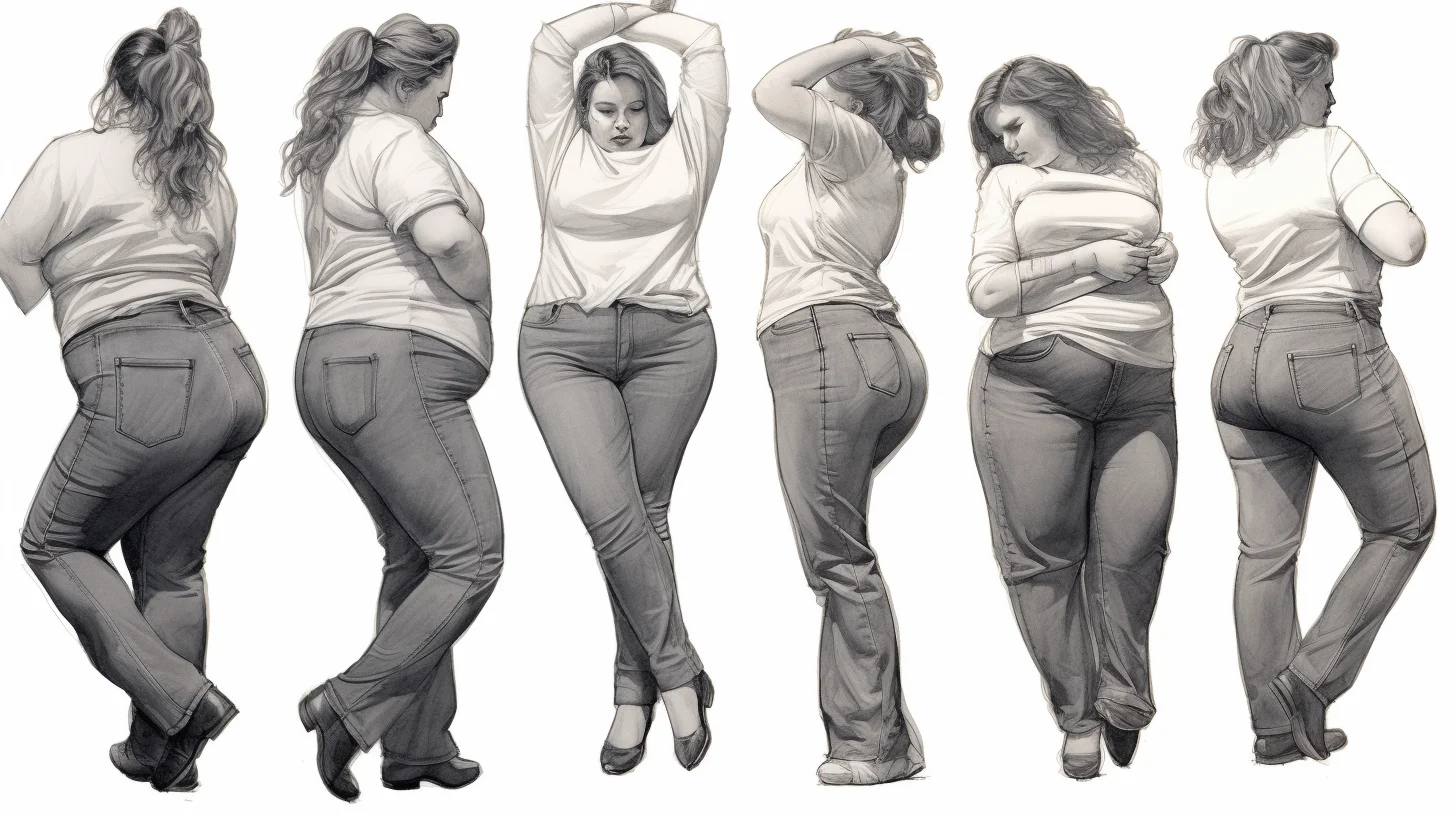
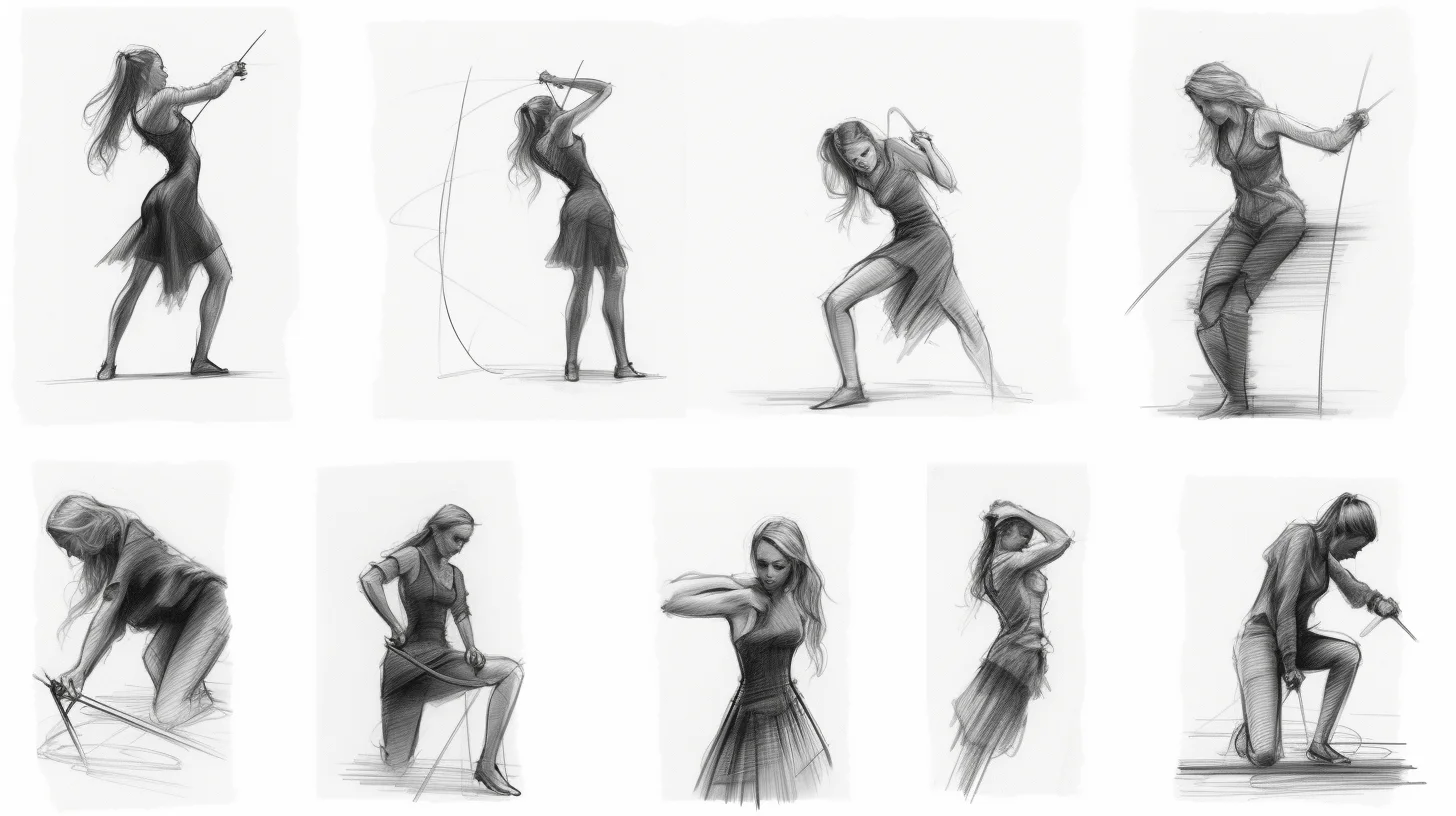
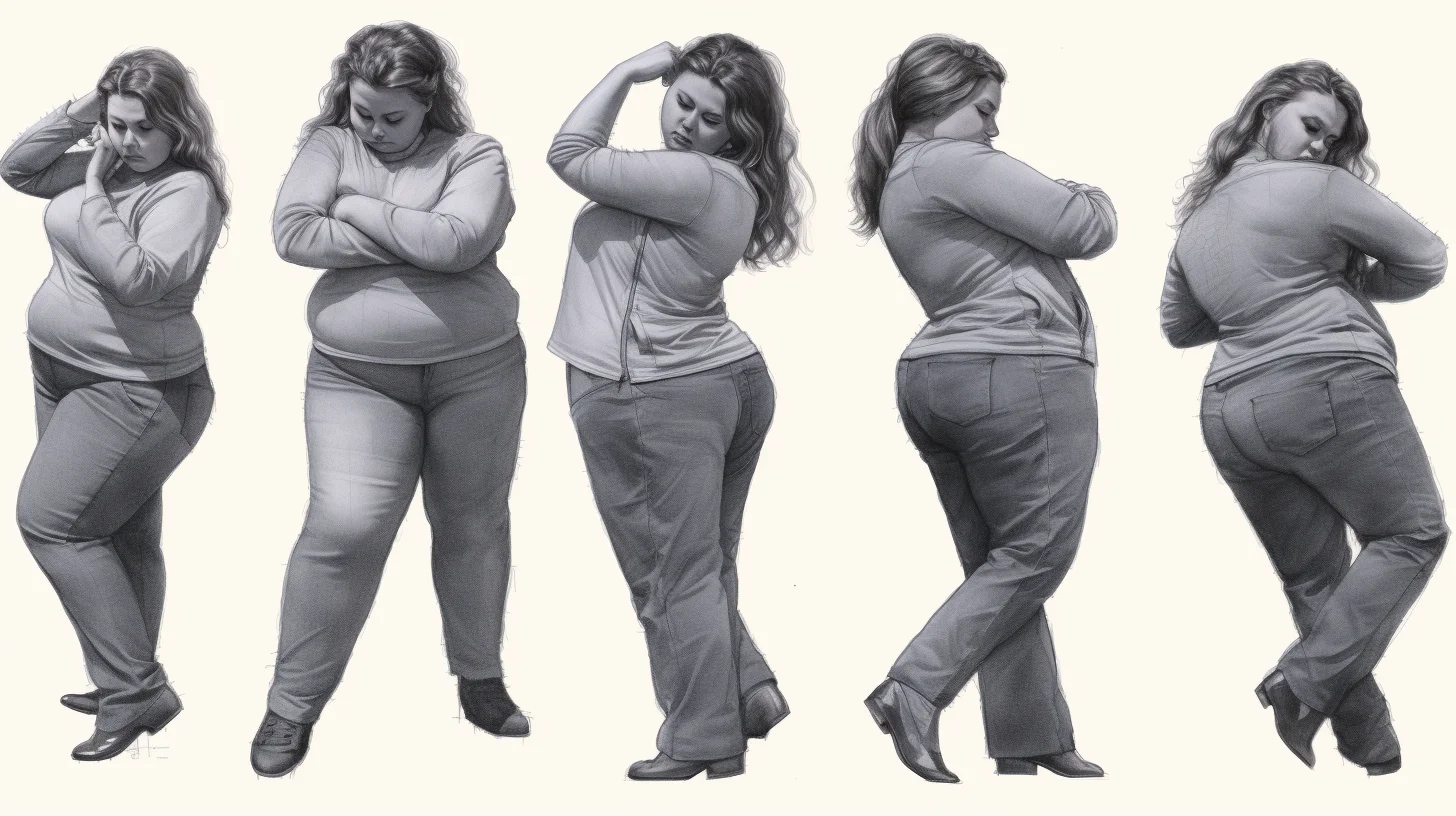

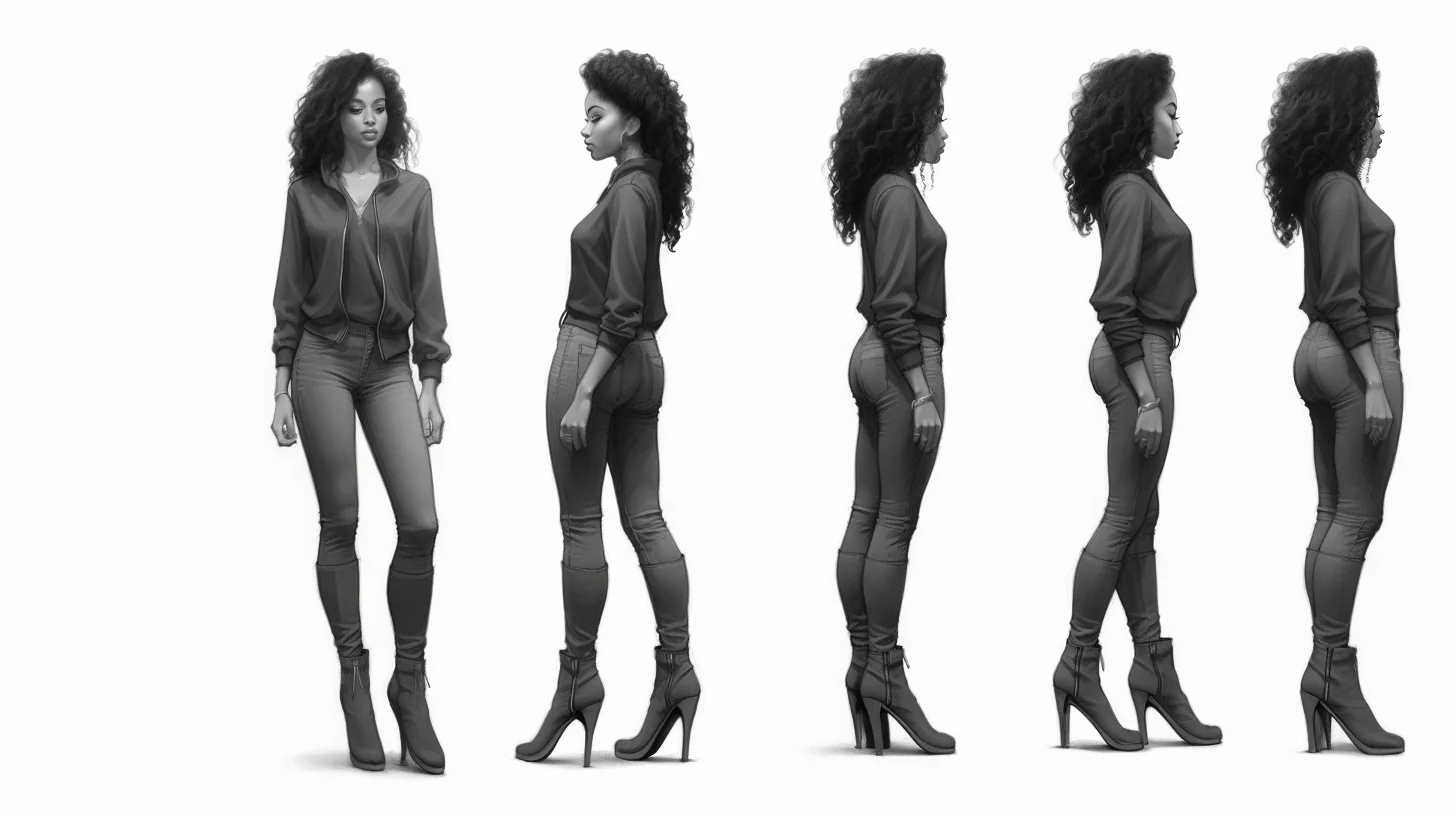
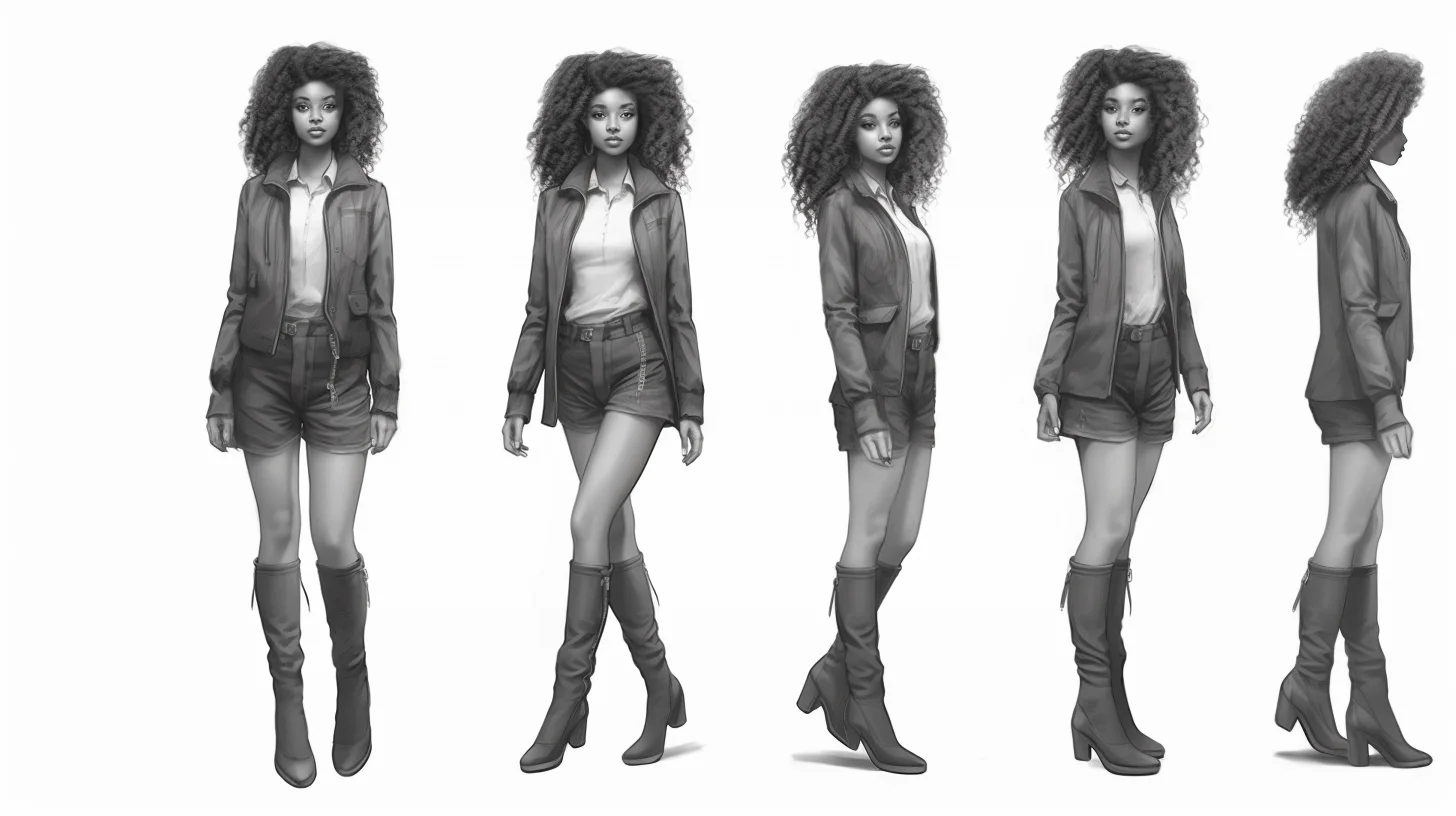
How to turn a pose into a figure study
- Make a 30–60 second gesture first. Get the action and balance down.
- Add rib cage and pelvis. Treat them as simple masses, not finished anatomy.
- Check shoulder and hip angles. They tell you a lot about the weight shift.
- Build limb volume around directional lines. Do not start with the outer contour.
- Add clothing and smaller anatomy last. They should sit on top of a pose that already works.
Sitting and casual poses — References 9–13
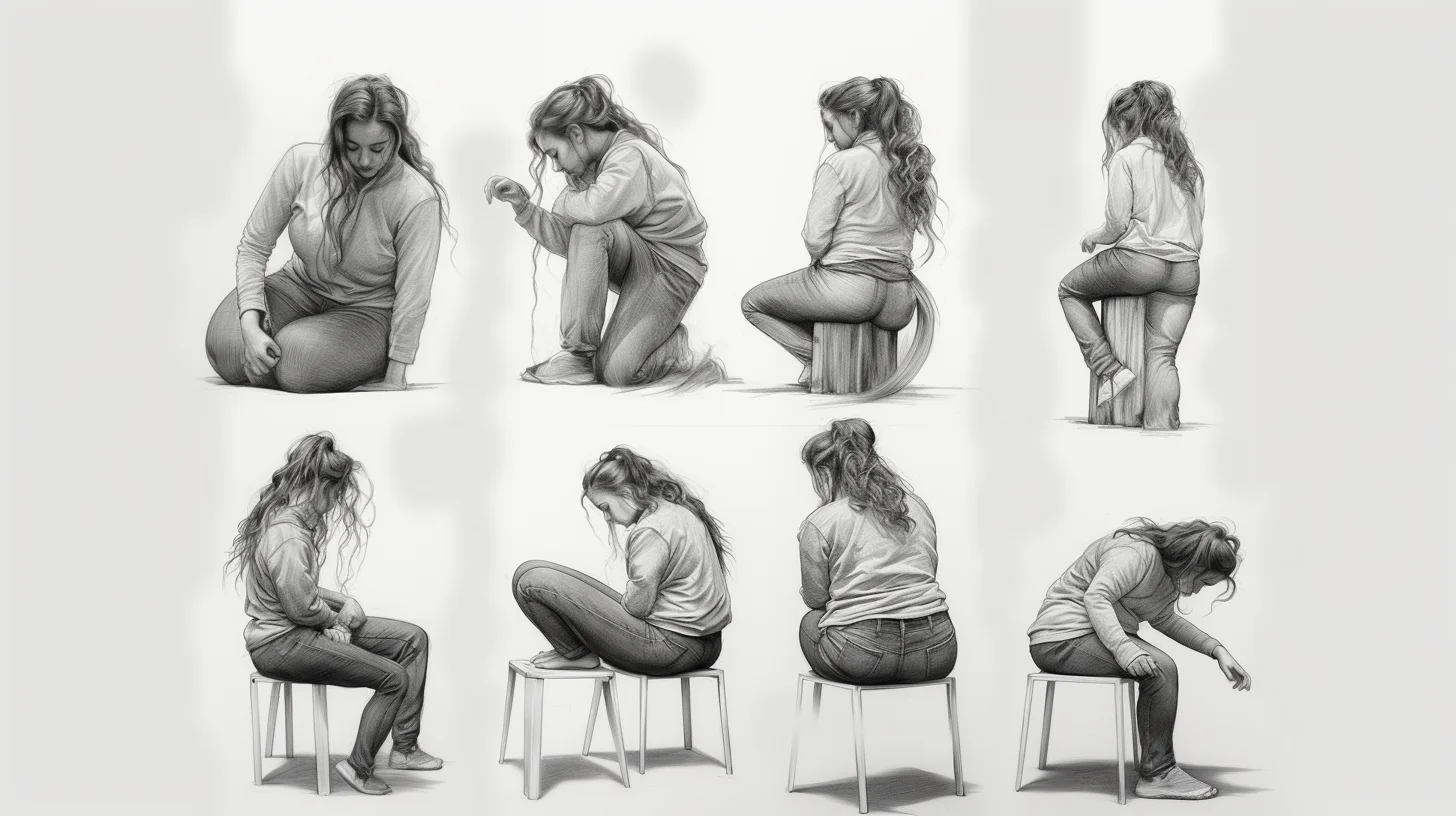
Sitting poses are useful because the pelvis compresses, rotates and interacts with a surface. Check where the body actually contacts the chair or ground before drawing the legs.
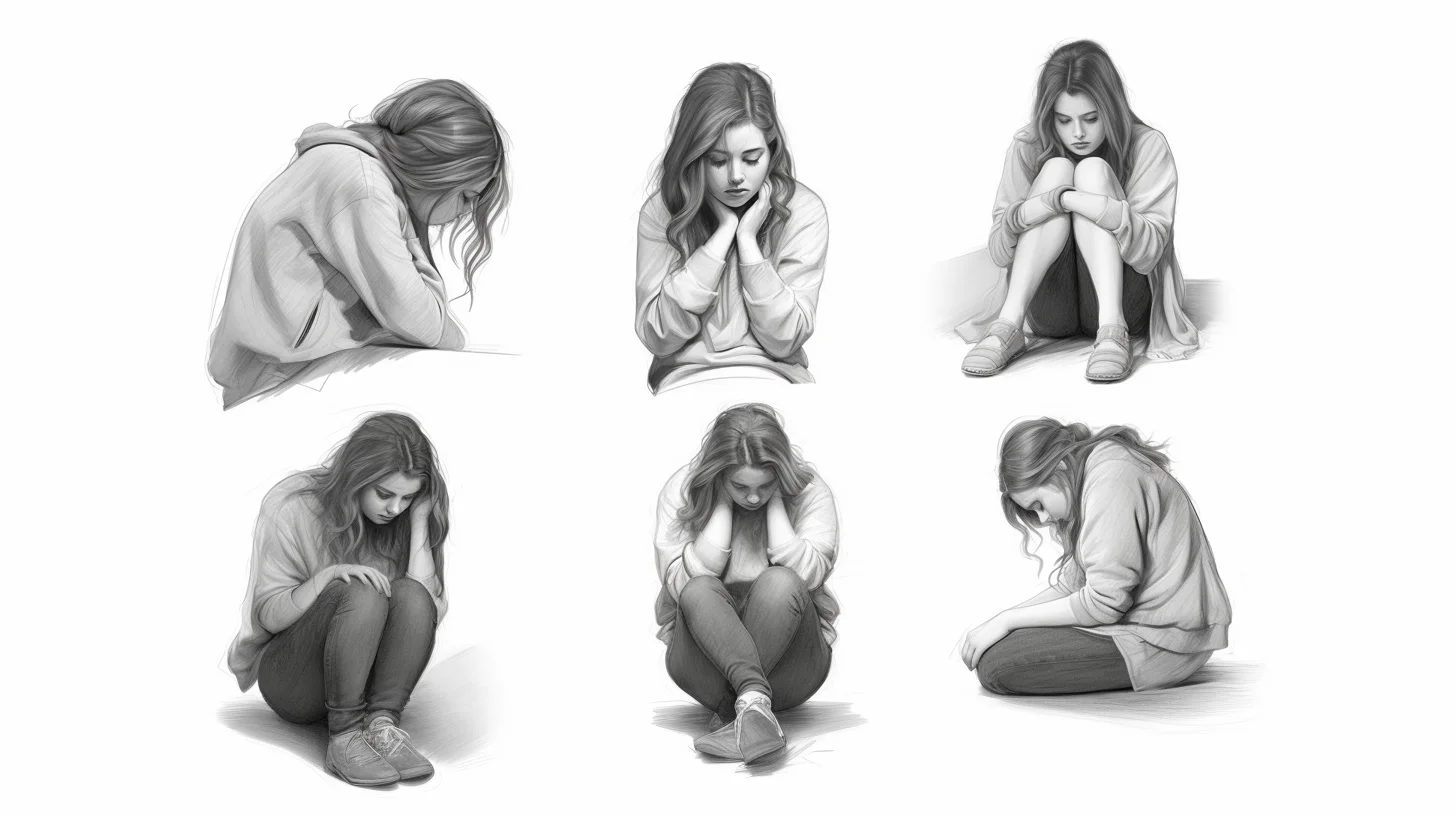
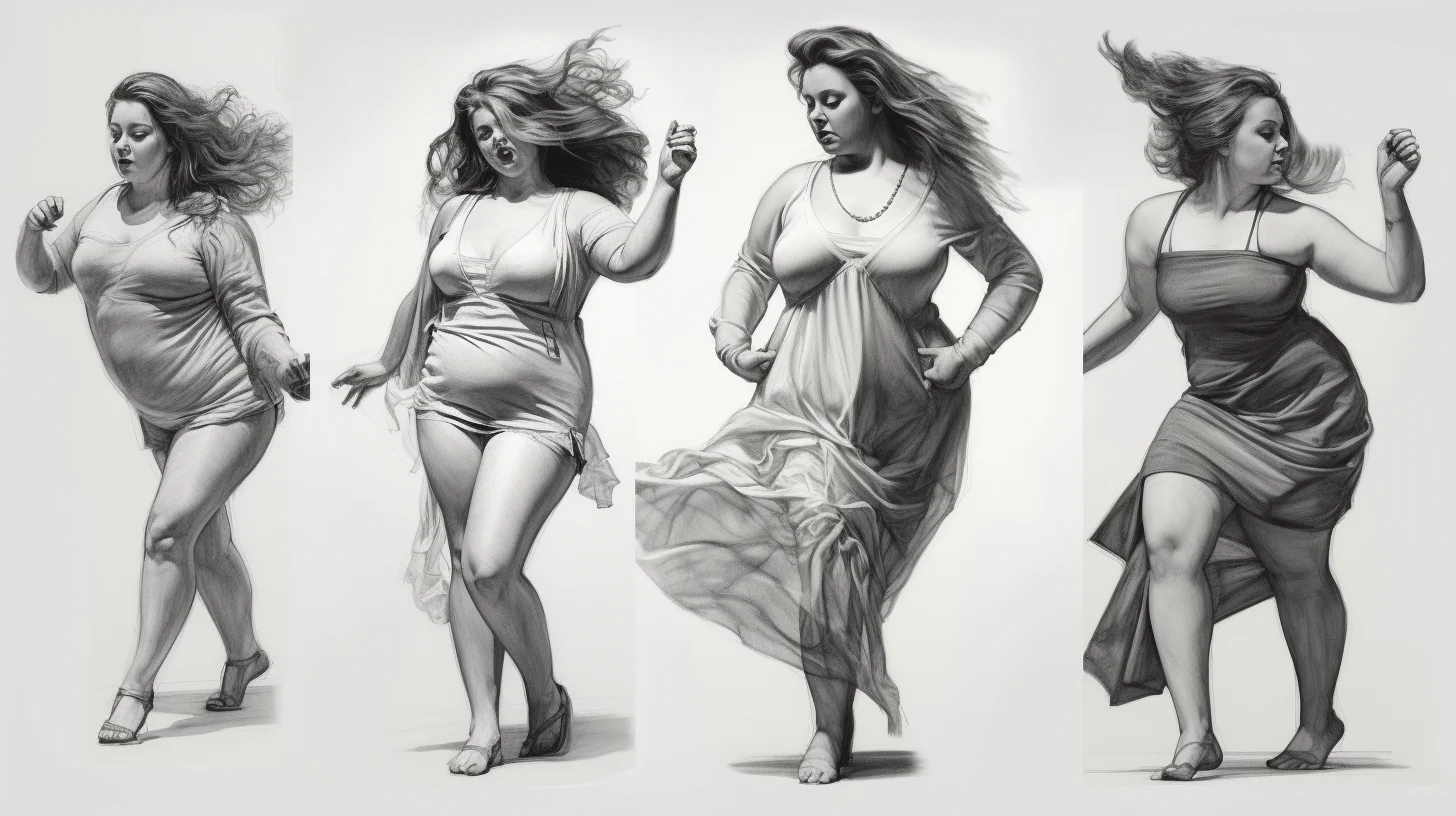
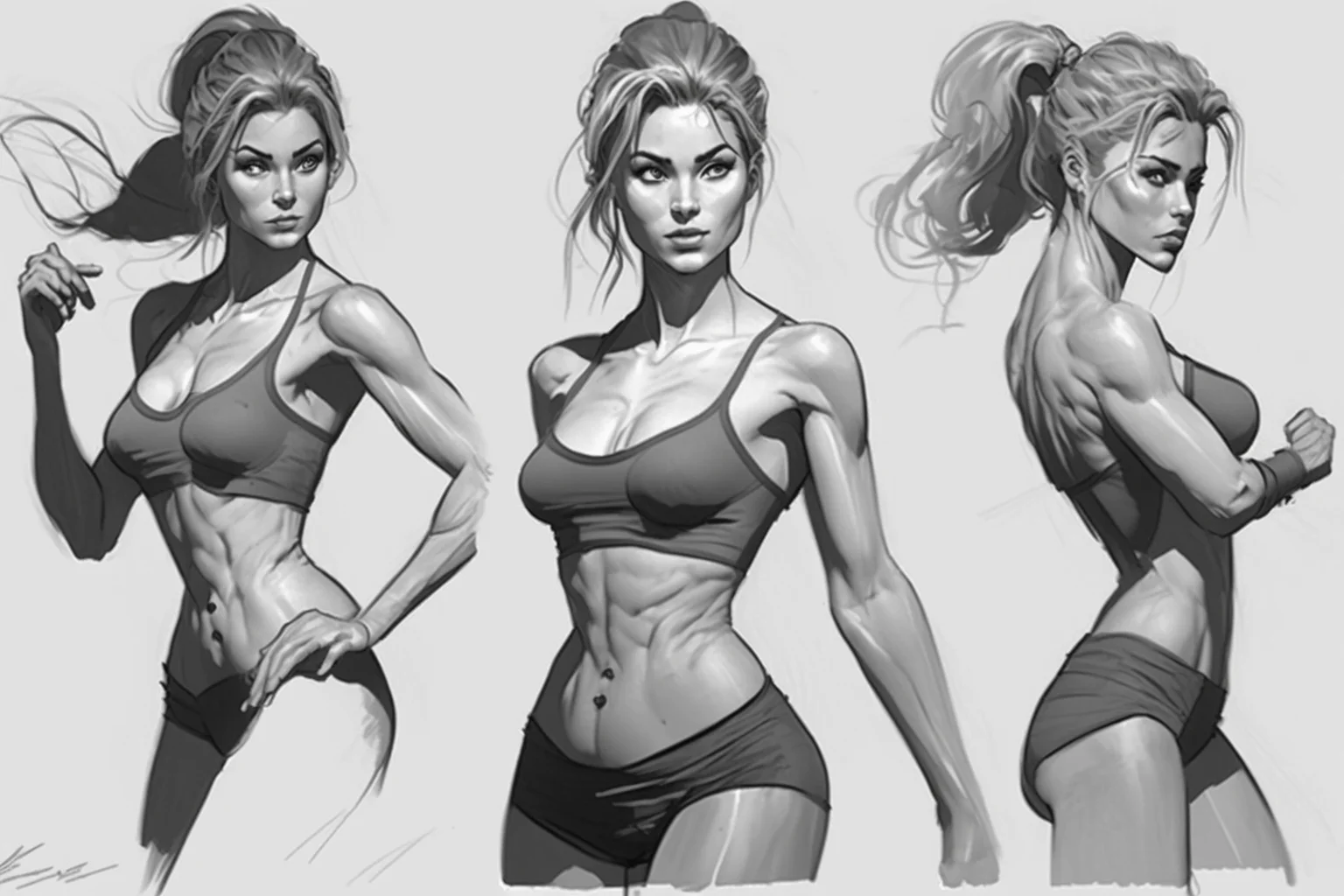
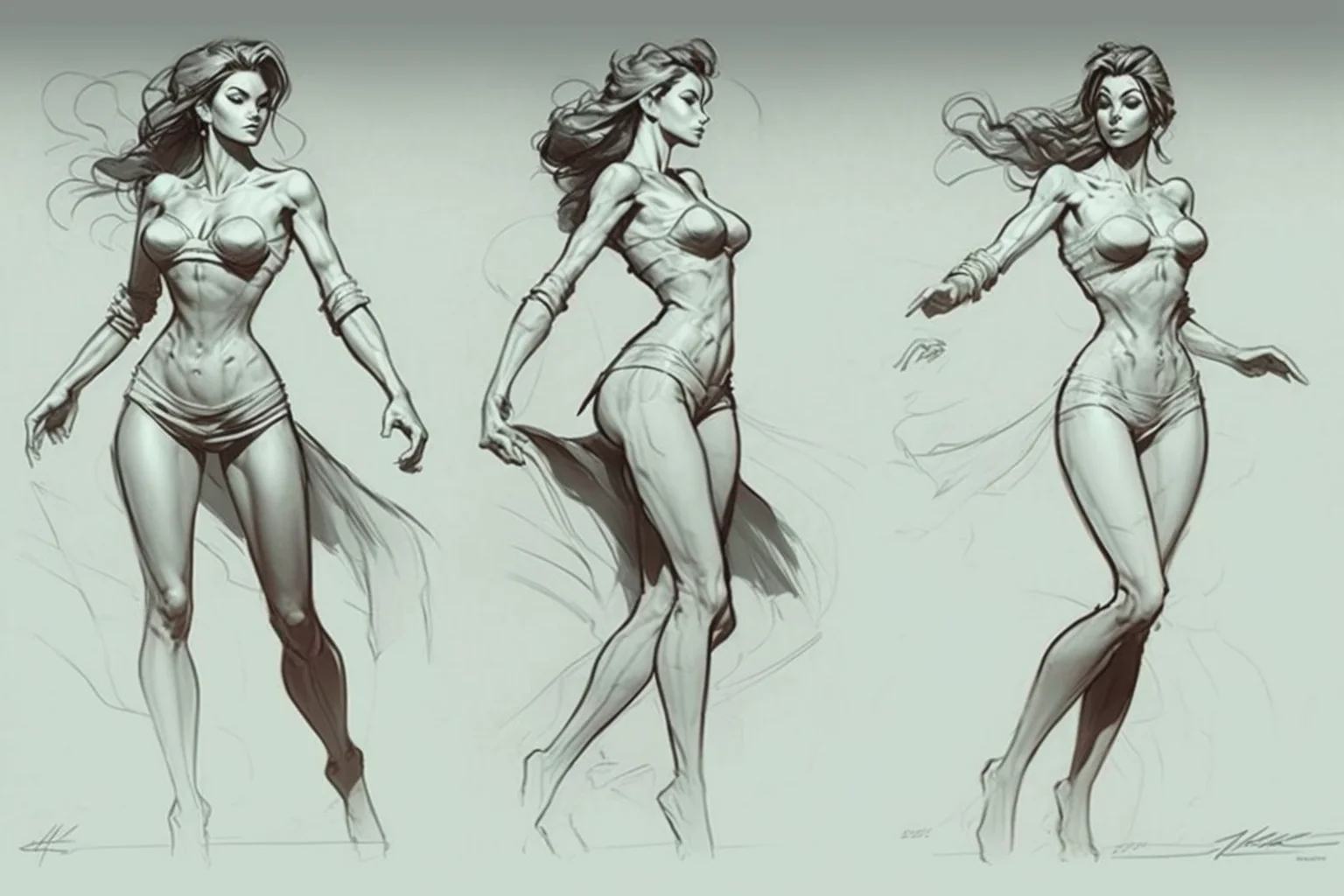
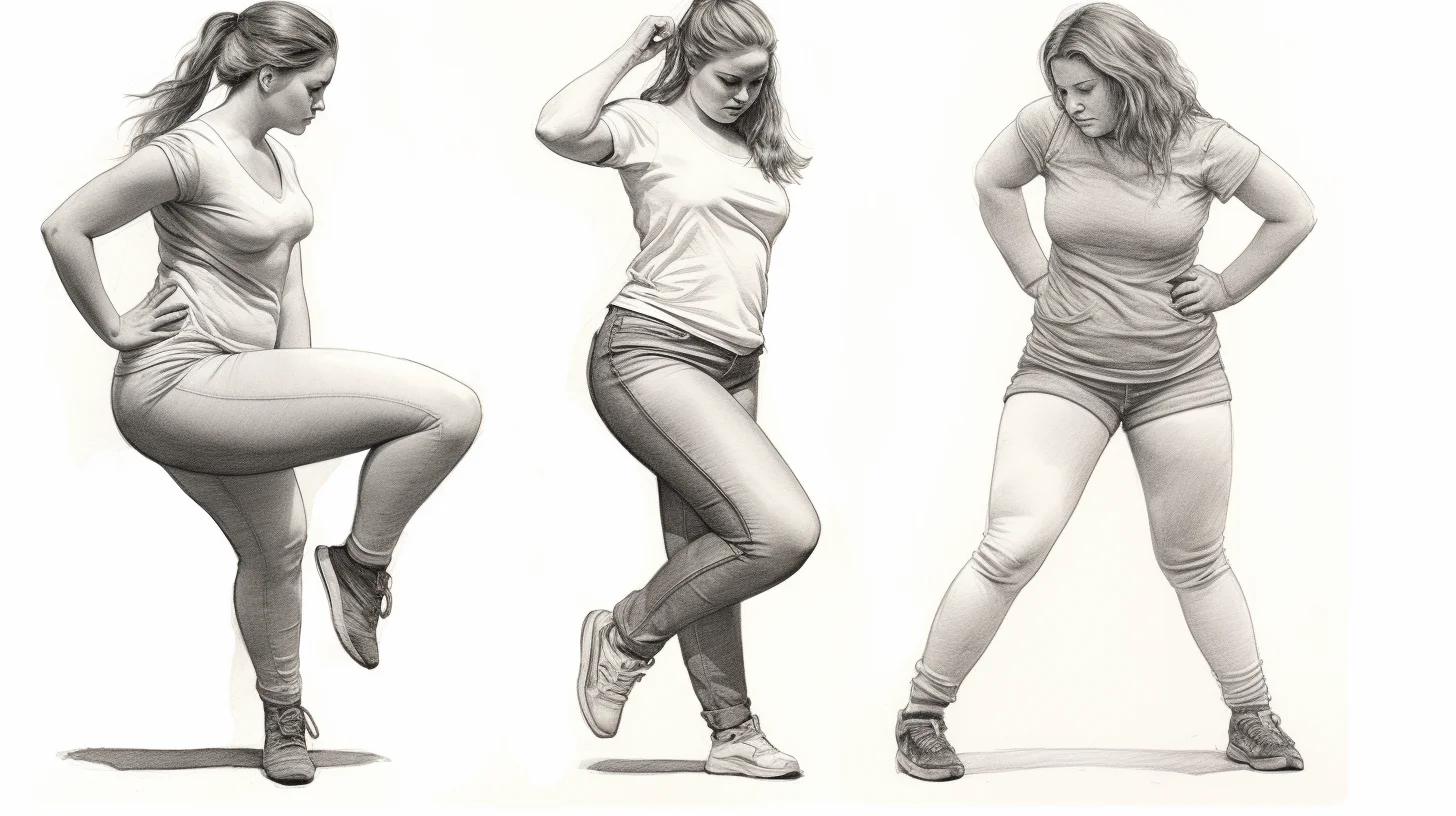
Action and dancing poses — References 14–17
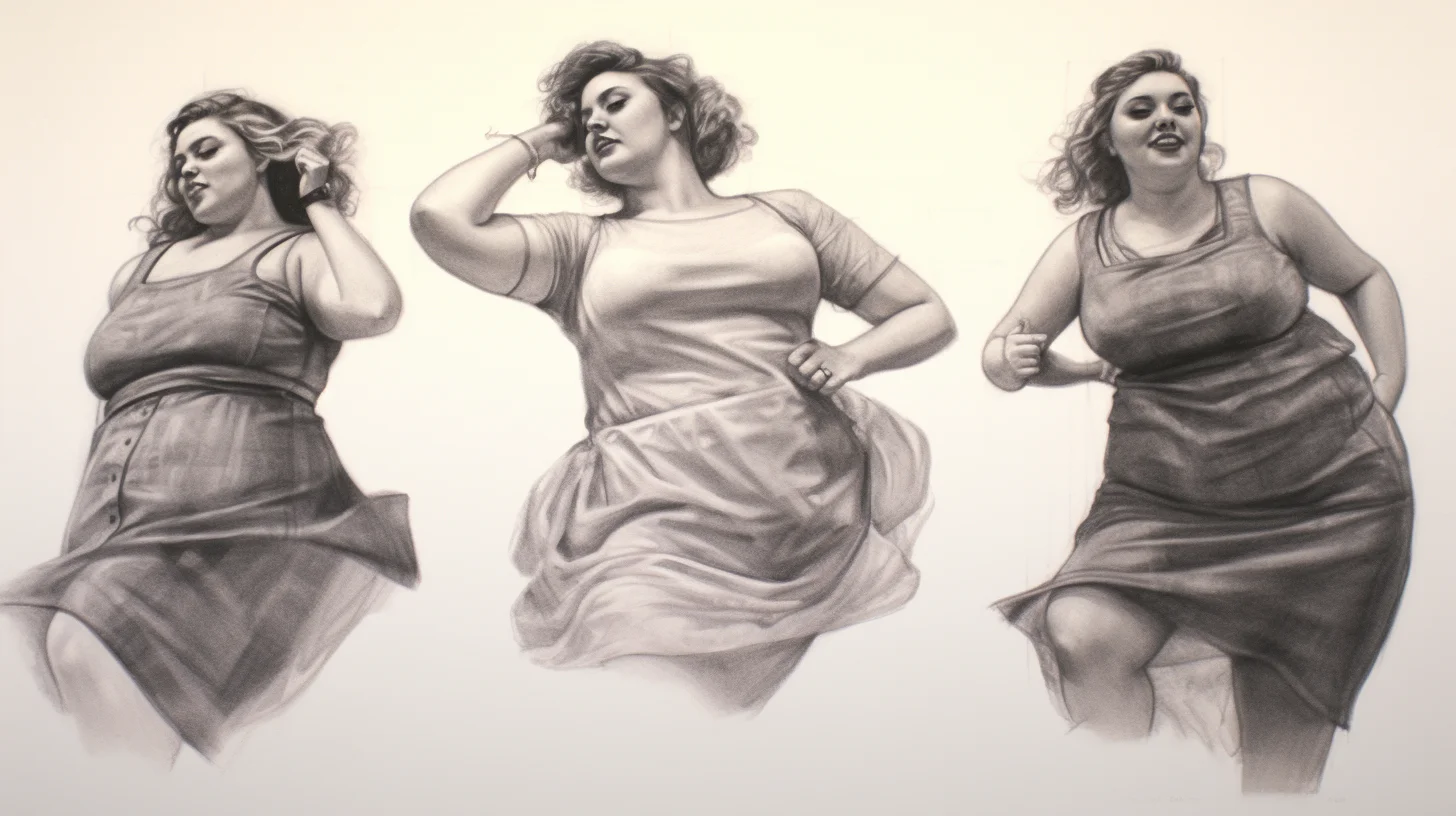
For action poses, keep the gesture visible underneath the construction. If the rib cage, pelvis and limbs become perfectly vertical or horizontal too early, the movement usually disappears.
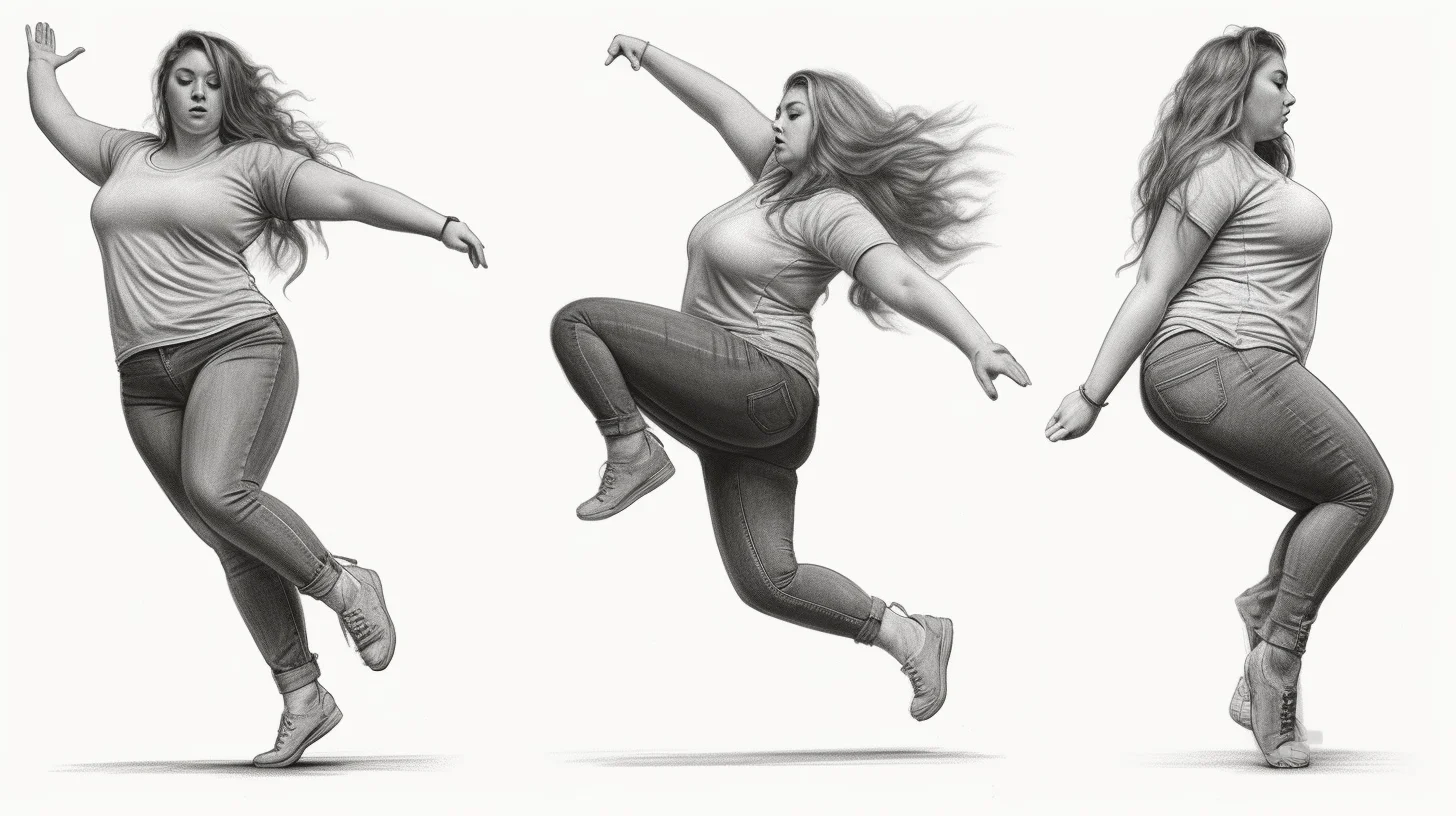
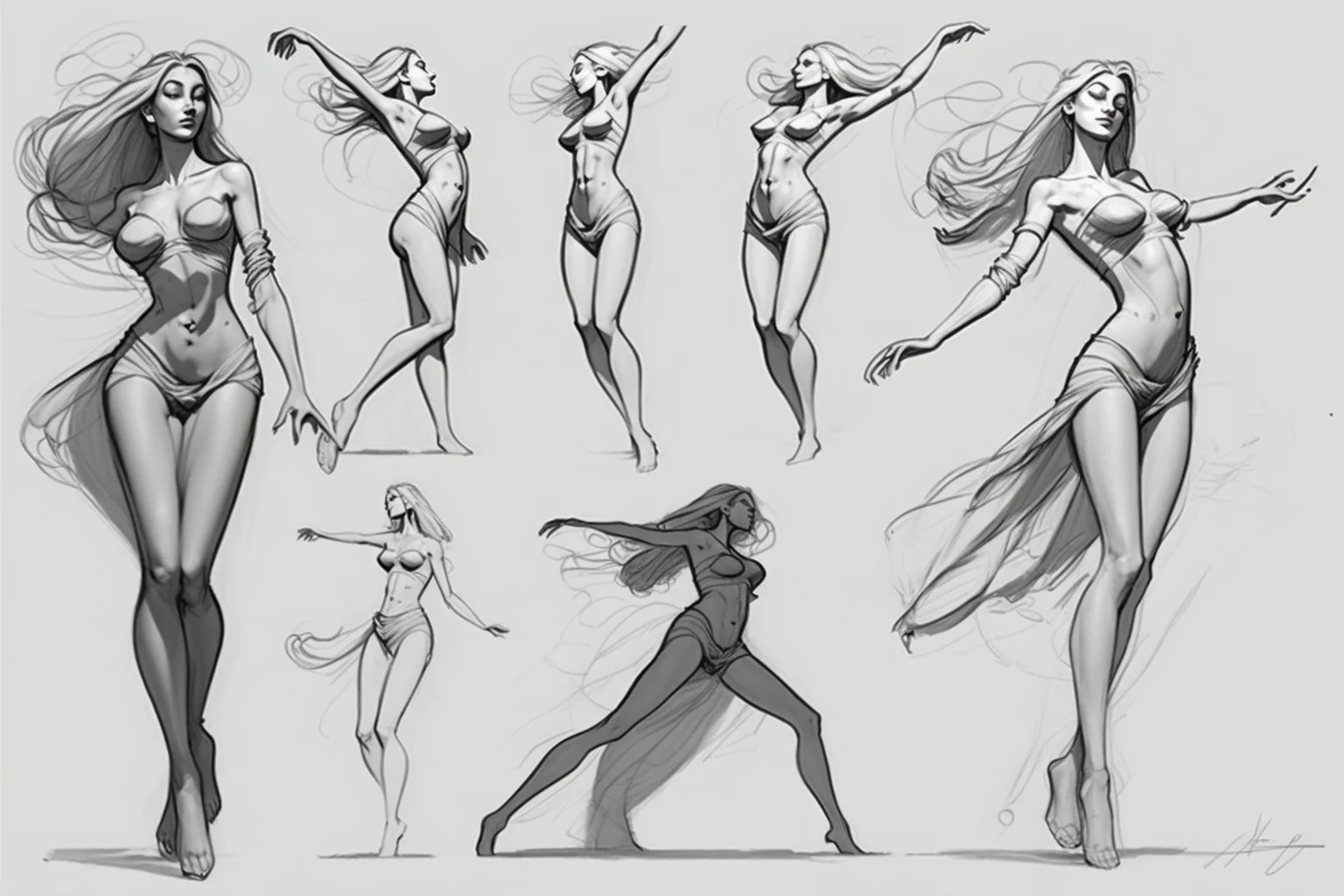
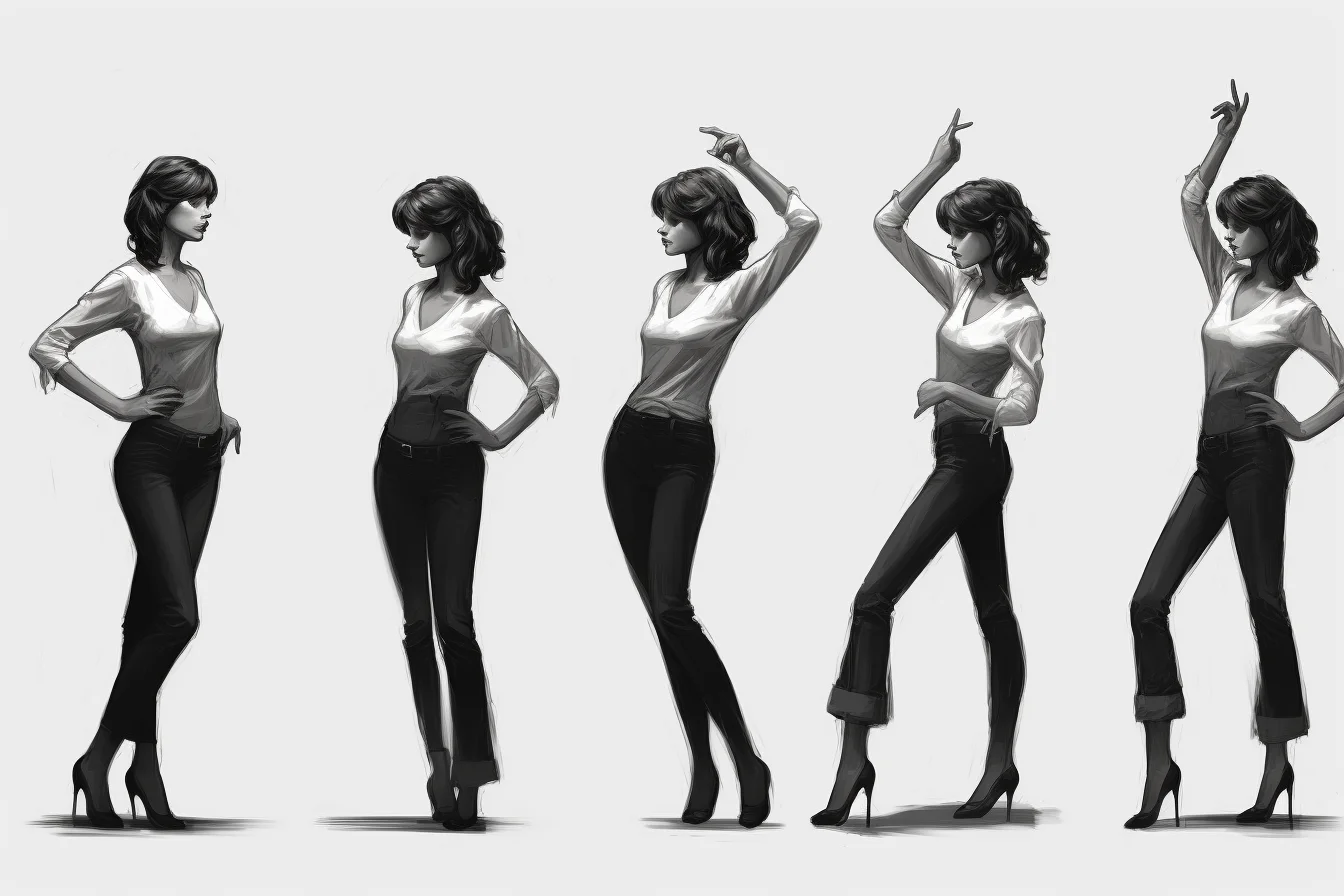
Face and full-body construction — References 18–21
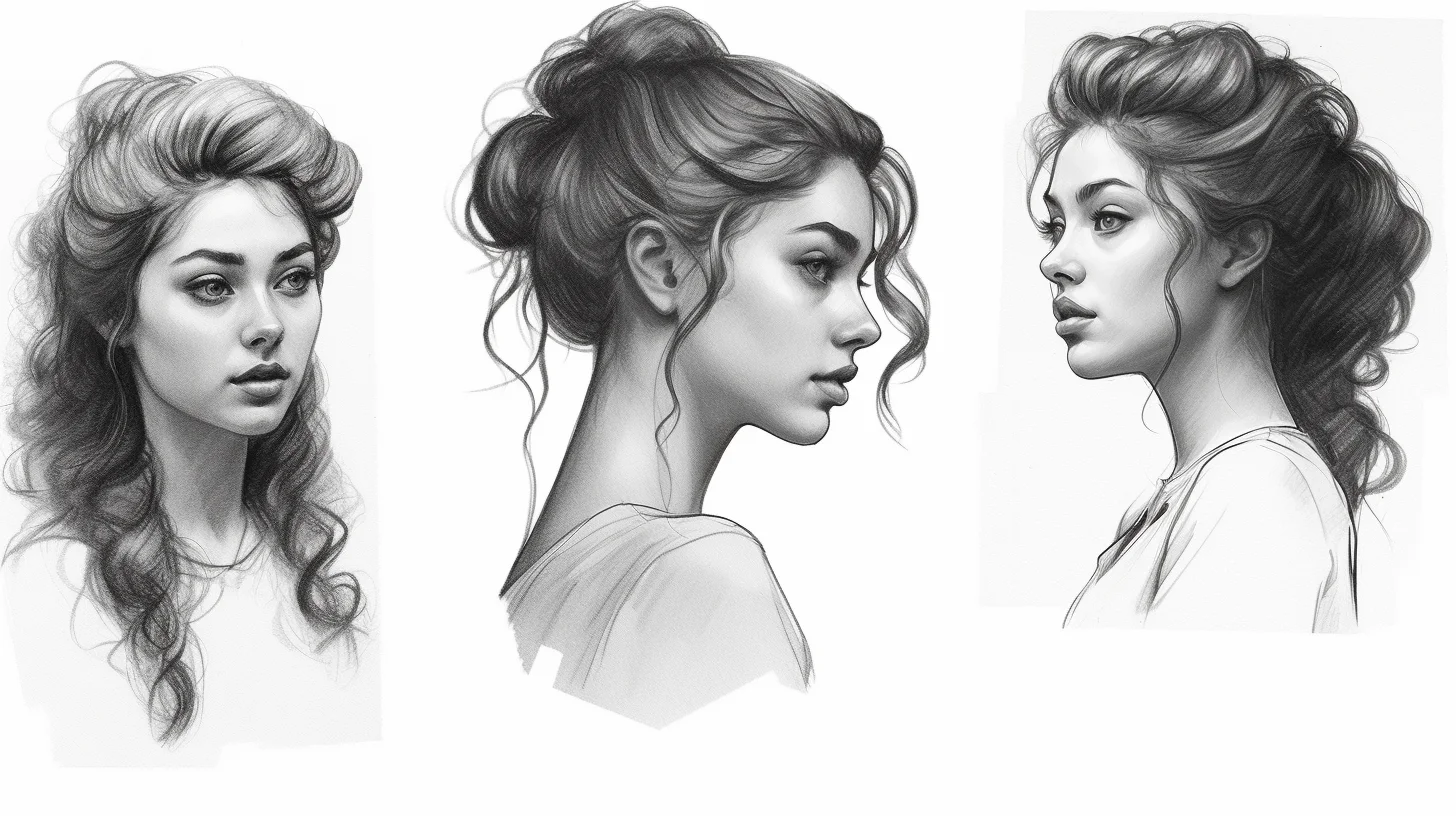
For heads, add a center line and eye-level guide before features. For full bodies, keep checking the relationship between head size, torso length and pelvis placement instead of measuring isolated limbs.
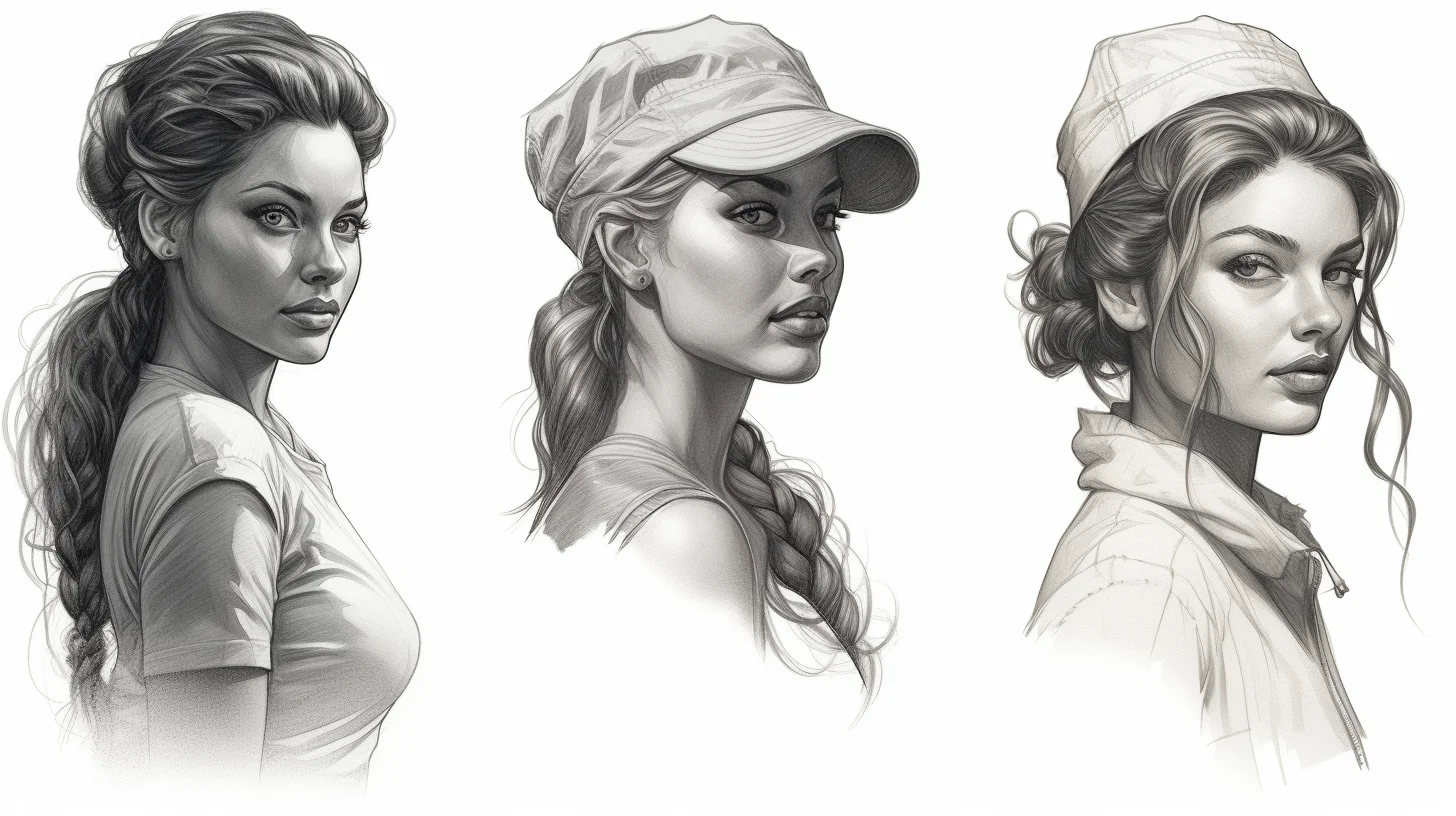
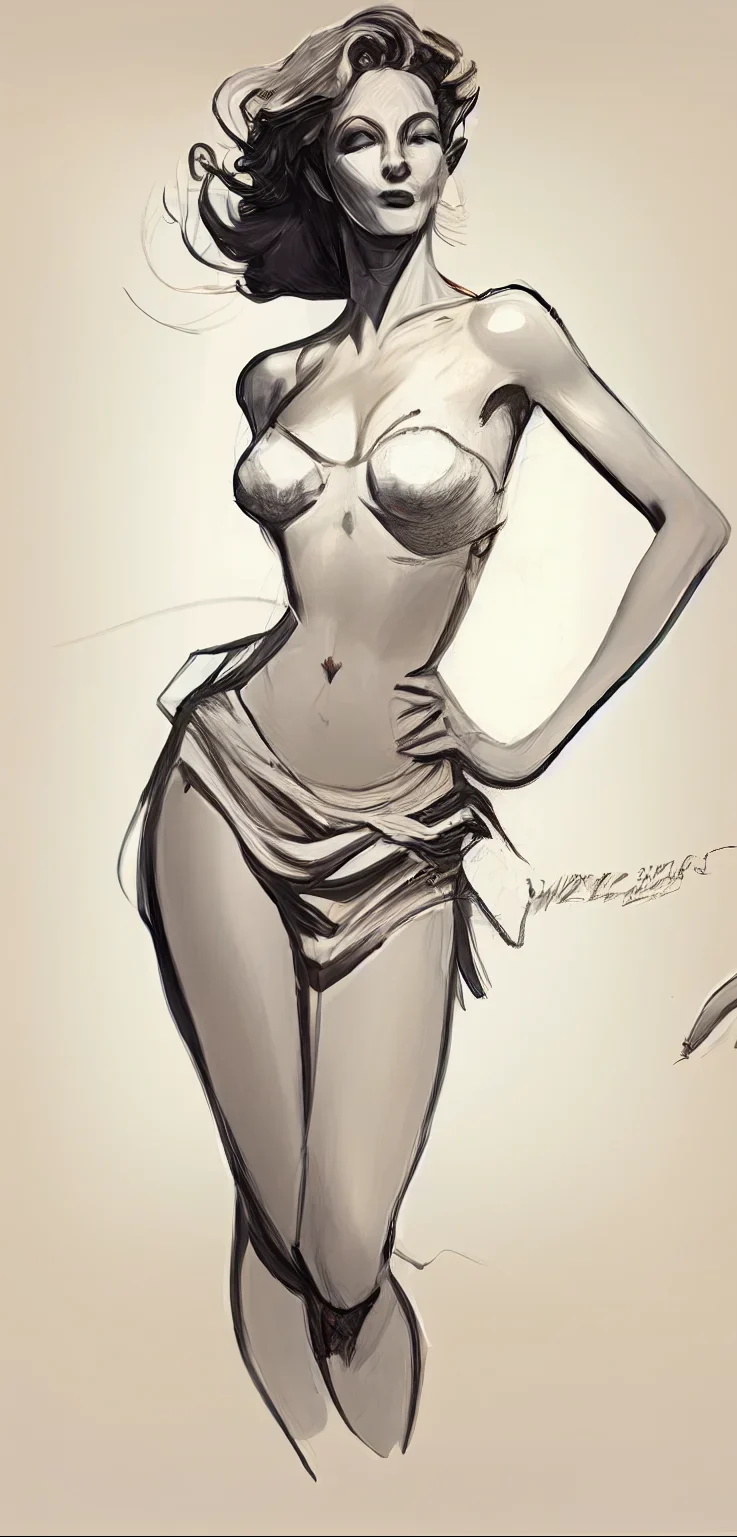
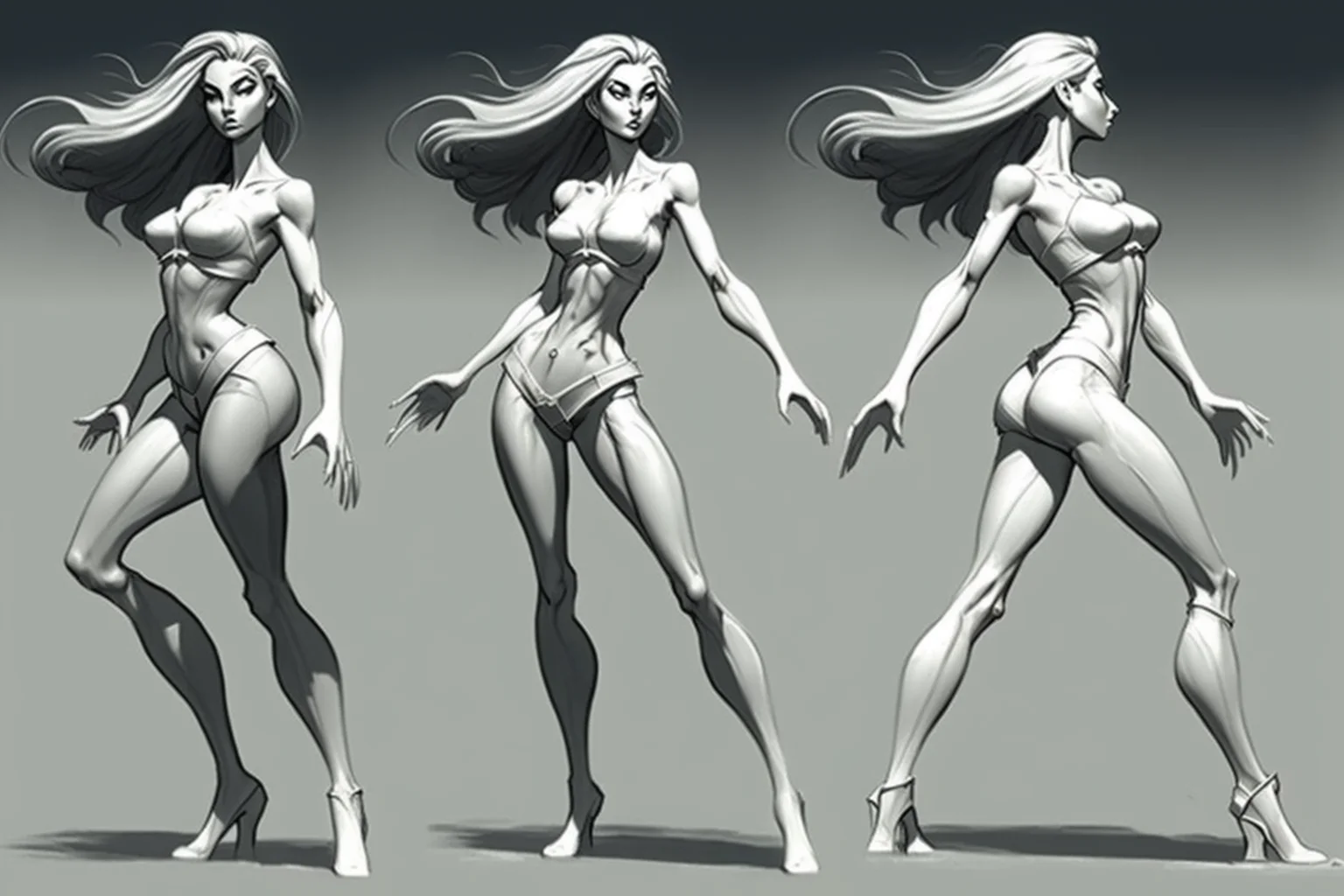
Longer figure studies — References 22–26
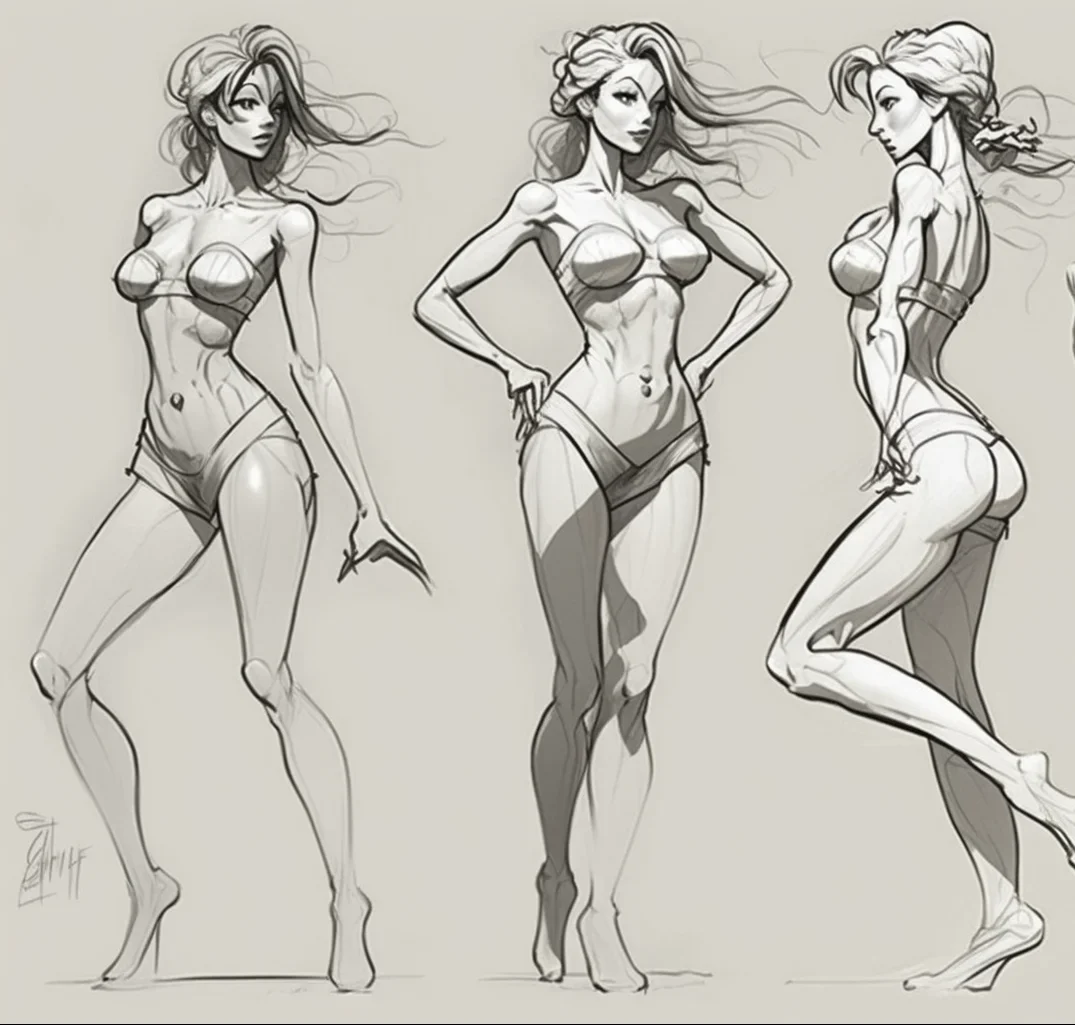
Use these for slower 10–20 minute studies. Keep the first two or three minutes loose, then refine only after the balance and large forms are working.
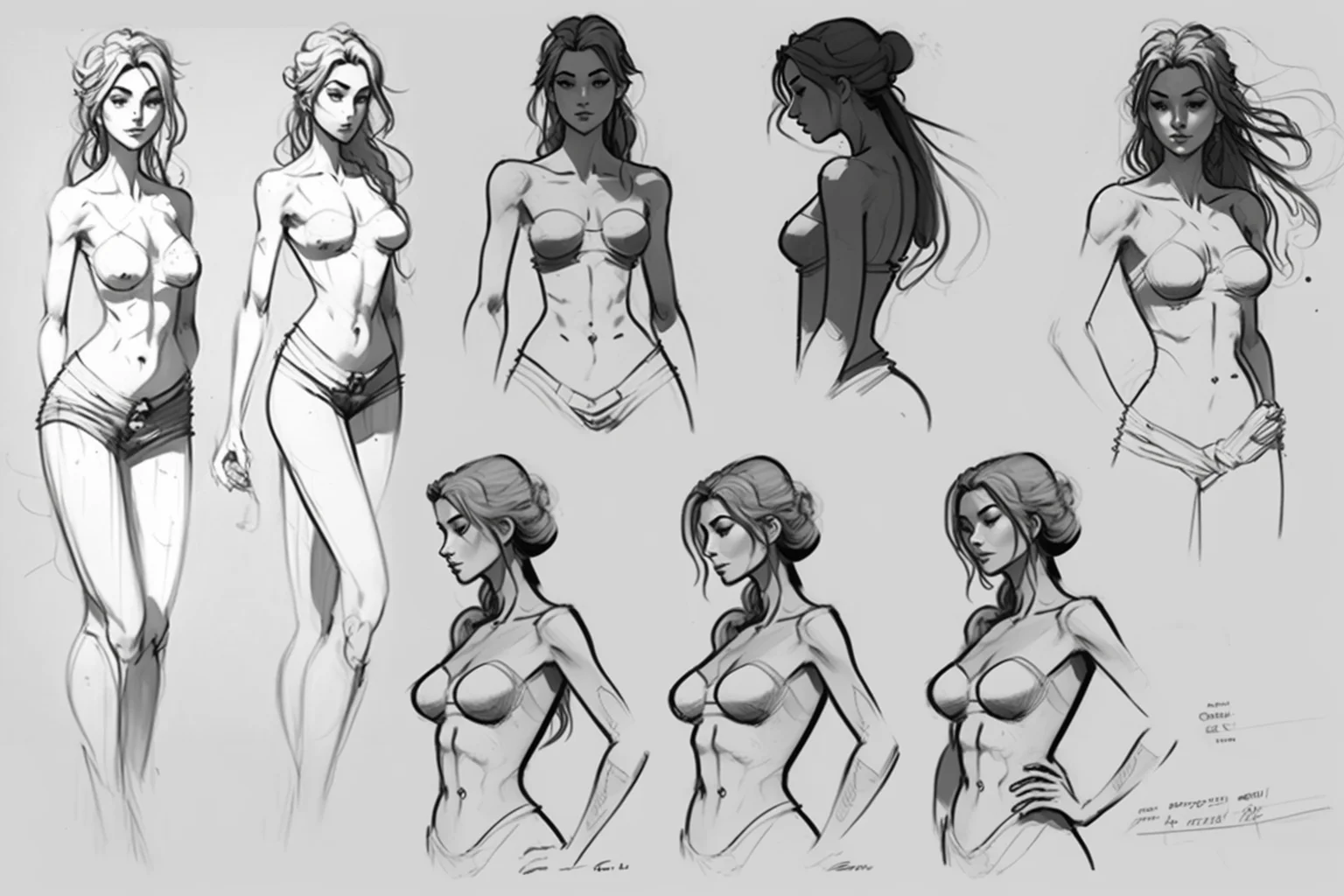
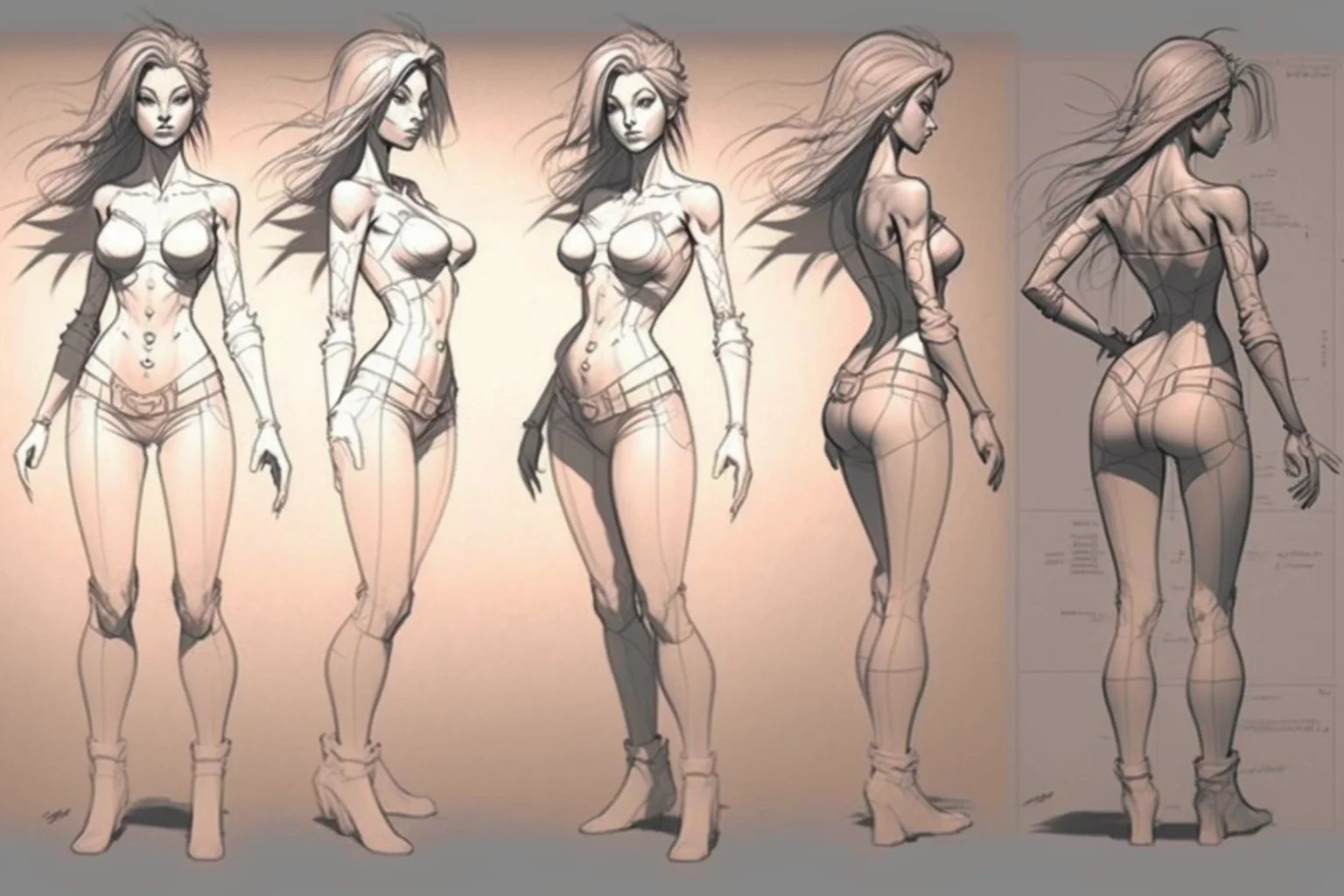
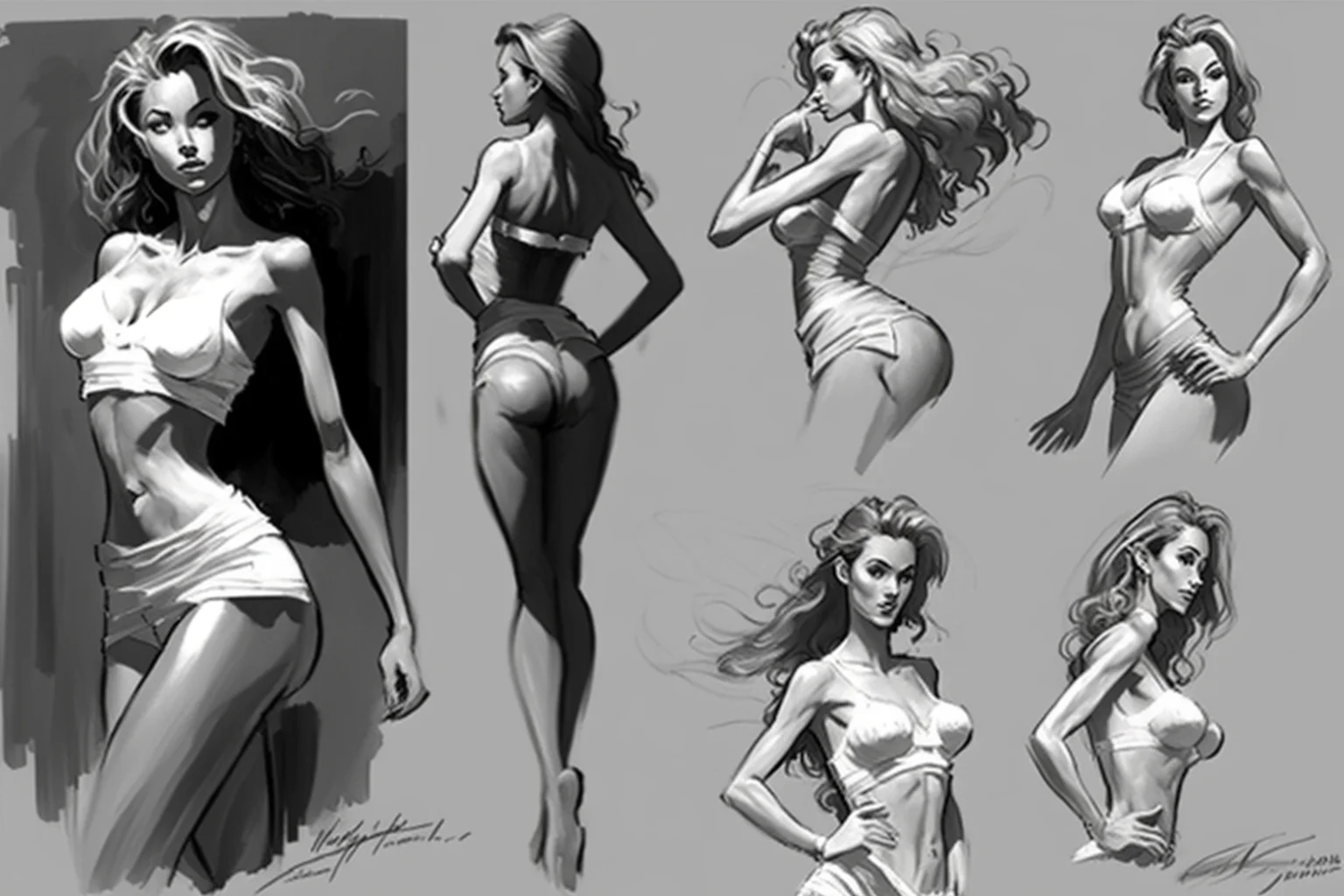
A useful 20-minute figure study
- 2 minutes: gesture and balance.
- 4 minutes: rib cage, pelvis and limb directions.
- 6 minutes: build volume and check proportion.
- 6 minutes: refine contour, hands, feet or clothing.
- 2 minutes: compare the drawing with the reference and mark one proportion you would change next time.
Common figure-reference mistakes
- Copying the outline before finding the pose. Construction should come first.
- Measuring every limb separately. Compare larger relationships: head to torso, torso to pelvis, shoulder width to hips.
- Ignoring contact points. Sitting, leaning and standing poses need believable support.
- Rendering one area too early. A carefully drawn face does not help if the body balance is wrong.
Gesture reference or figure reference?
If you only have 30 seconds to two minutes, use the gesture drawing poses. Use this page when you want to stay with the pose long enough to study proportion, construction and clothing. If you mainly want a smaller set of dynamic and casual female poses to browse quickly, use the female pose reference collection. For hands specifically, use the hand drawing guide. For broader step-by-step lessons, use the 43 beginner drawing tutorials.
Reference note
For anatomy study, verify exact structure with a trusted photo or anatomy source. Some site visuals may be stylized or AI-assisted, so small proportion or joint errors are possible. This legacy gallery also does not document original artist attribution or commercial reuse licensing for every image.


For something that claims to ’empower the depiction of women’, all of these reference poses are of *scarily* thin women. Even when drawn with muscle tone, their figures are perfectly hourglass and no muscle is added to their shoulders, neck, arms, legs…
All of their poses are alluring or femme fatale. No dynamic physical combat, or realistic day-to-day poses. Every pose is on an angle, where are the eye-level and forward facing bolder references? Its all just *ooohhh, look at the hot skinny model* poses.
Its cool if you want to collect/draw references for traditional femme fatales, but don’t claim that it’s empowering for all ‘modern 2023 women’. All of these sketches lack any variation, and have the proportions of a barbie doll from the 1960s.
I mean outside of what you said they are also all anatomically incorrect. These images are terrible to use as references because of said errors.
Calling this “art reference” is a disgrace to humanity.
….So you talk about using art pose references and why they’re important, yet the majority of the ‘art’ on this article is inadequate. I’ve been an art instructor who uses bodies to teach real referencing techniques for over a decade and this ‘article’ is nothing short of appalling.