
A rose becomes much easier to draw when you stop thinking of it as “dozens of petals” and build it as a few overlapping layers. Start with one of the simple references below, then use the step-by-step method farther down the page when you are ready to draw your own. Click or tap any drawing to open the full-size reference.
Jump to: easy rose references · step-by-step method · realistic references · shading · common mistakes
Easy rose drawing references — Sheets 1–4
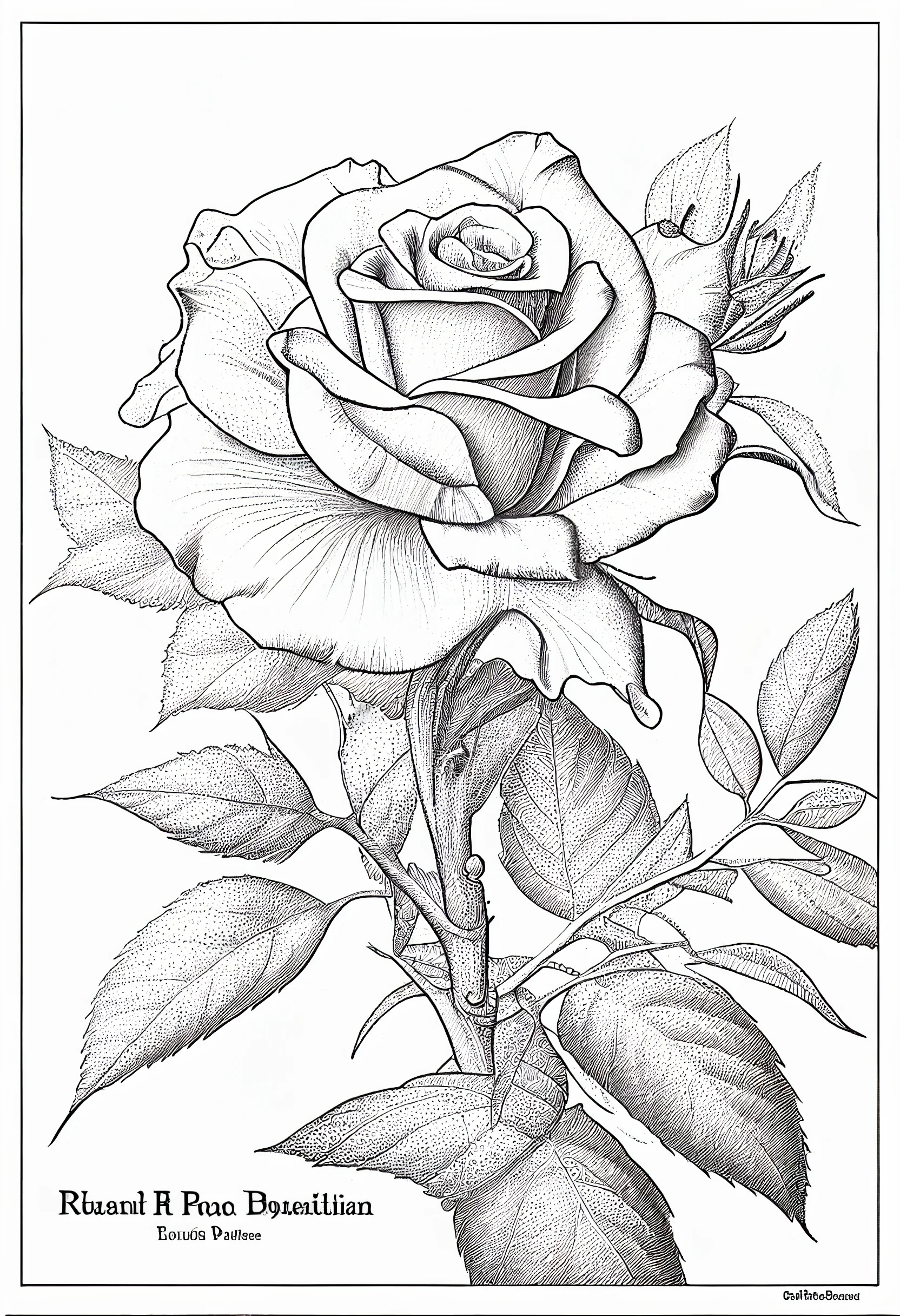
Start here if roses usually feel confusing. Copy the overall silhouette first. Do not count petals. Notice how the center is tight, the middle petals overlap, and the outer petals open wider.
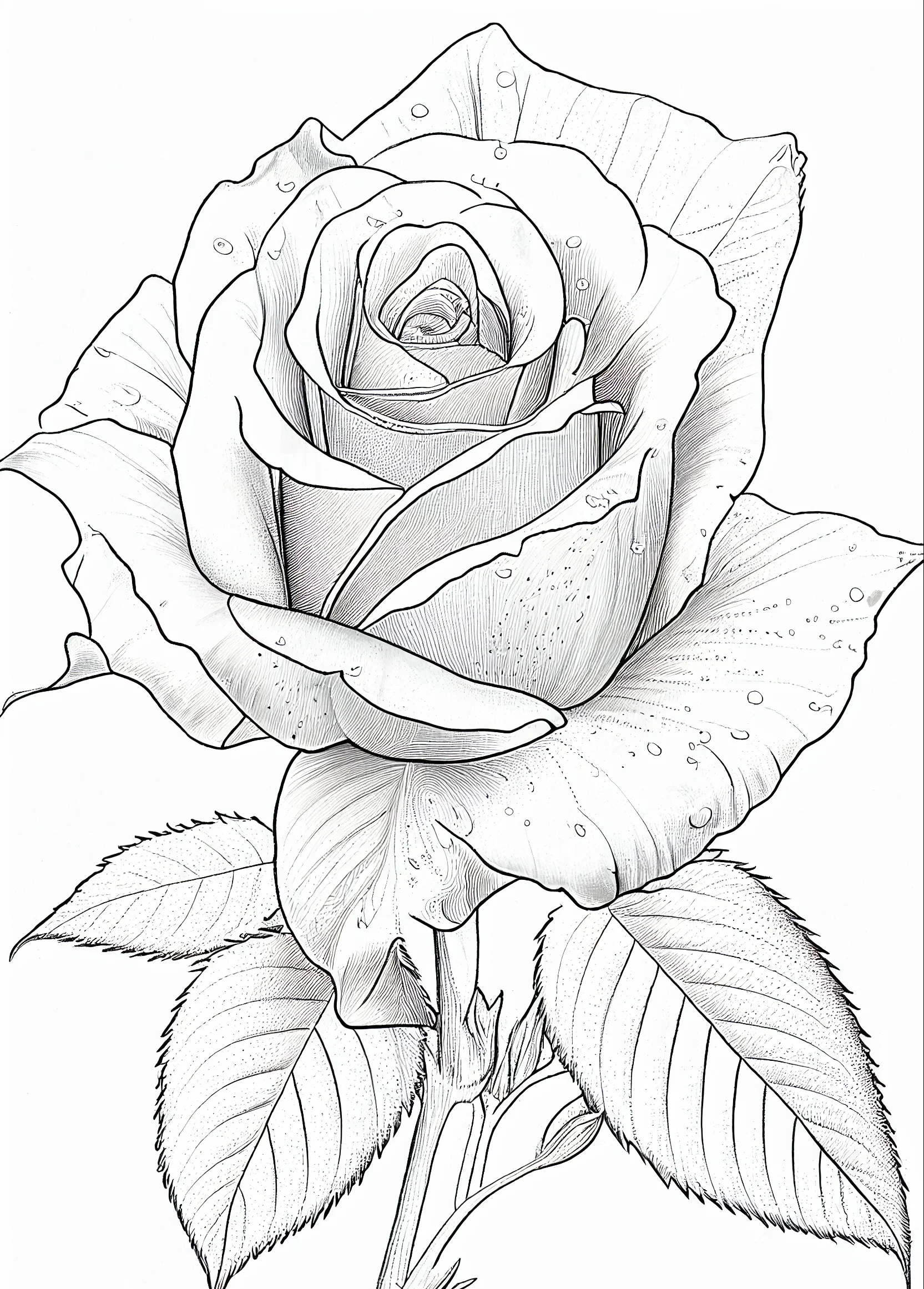
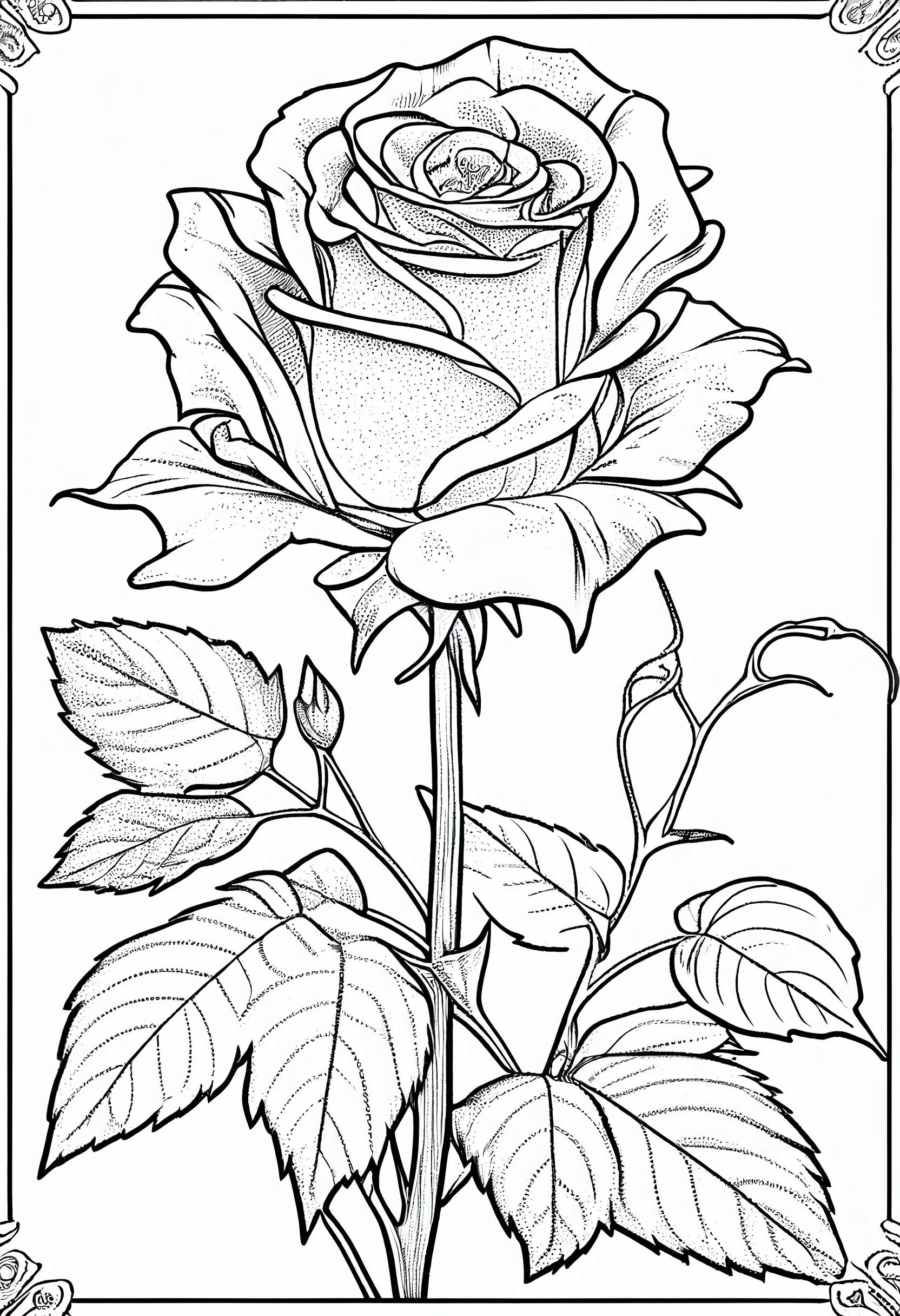
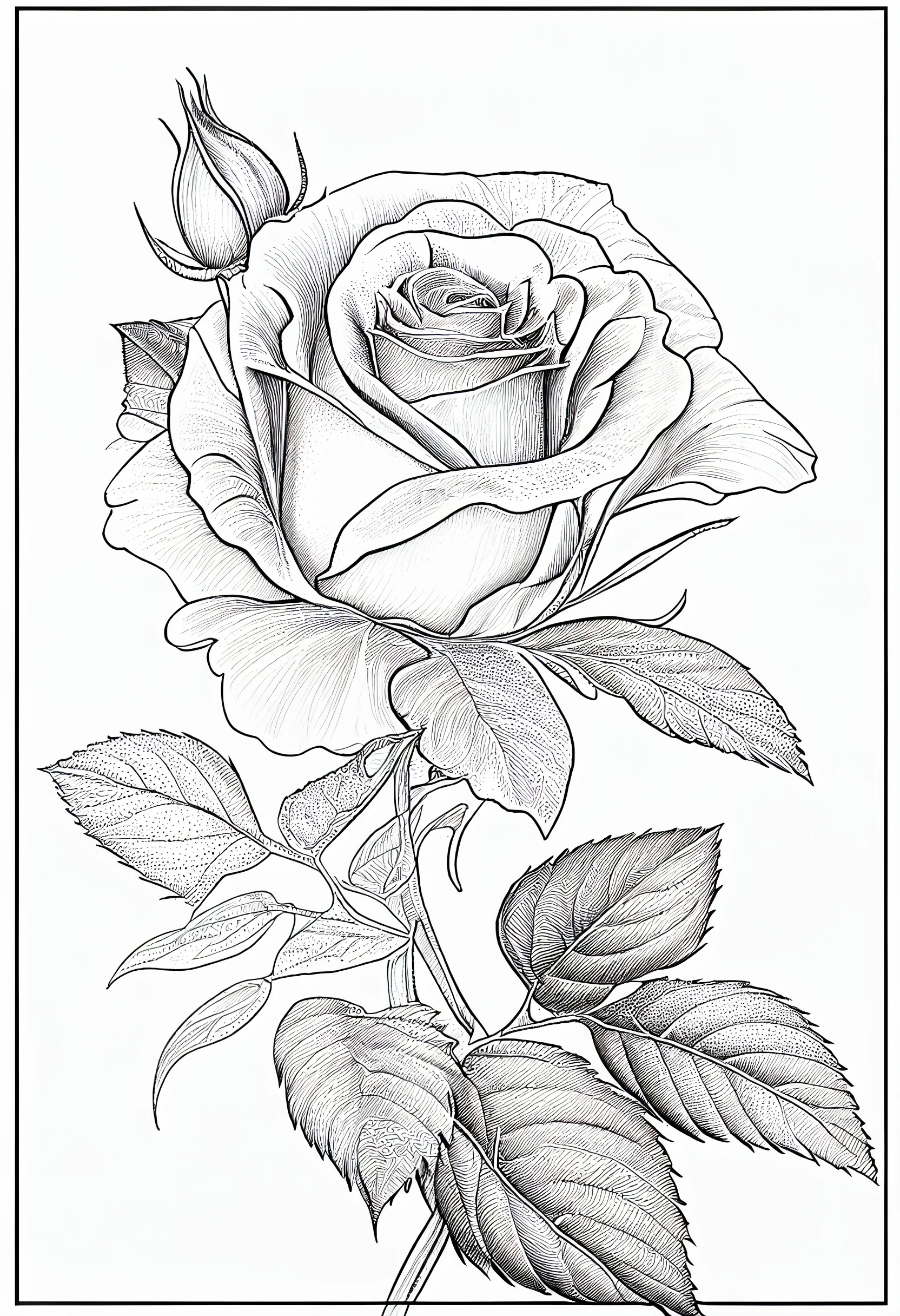
How to draw a rose step by step
- Mark the center. Draw a small folded shape or loose spiral. Keep it tiny; the center should not fill half the flower.
- Wrap two or three petals around it. Think of these as small cups. Their edges should overlap instead of meeting neatly.
- Add the middle ring. Make the petals wider and let some lean left or right. Do not space them evenly.
- Build the outer silhouette. Add larger petals that open away from the center. The outside edge should feel roughly circular, but never perfectly symmetrical.
- Break the perfect curves. Add a few bends, folds and slightly pointed tips. Real petals are soft and irregular.
- Add the stem and leaves. Draw the stem after the flower head is working. Use pointed leaf shapes with one strong center vein before adding smaller veins.
- Erase the construction lines you no longer need. Do this before heavy shading.
- Shade the overlaps. Darken where one petal tucks underneath another, while keeping the exposed upper surfaces lighter.
The easiest way to understand rose petals
| Part of the rose | What to draw | What usually goes wrong |
|---|---|---|
| Center | Tight folds and small overlapping shapes | Making it too large or drawing a perfect spiral |
| Middle petals | Curved cup-like petals that overlap | Spacing every petal evenly |
| Outer petals | Wider, more open shapes | Repeating the same petal over and over |
| Silhouette | An irregular round flower head | Trying to make both sides identical |
If the rose stops looking right, ignore the details and look only at the outside shape. A believable silhouette matters more than drawing every inner fold perfectly.
Before you shade, check these four things
- The center is smaller than the outer petal area.
- At least a few petals visibly overlap instead of simply touching.
- The outer edge is irregular rather than perfectly round.
- You can still erase most construction lines without damaging the drawing.
If one of those is off, fix it now. Shading makes a good construction better, but it rarely rescues a rose whose petal structure is already confused.
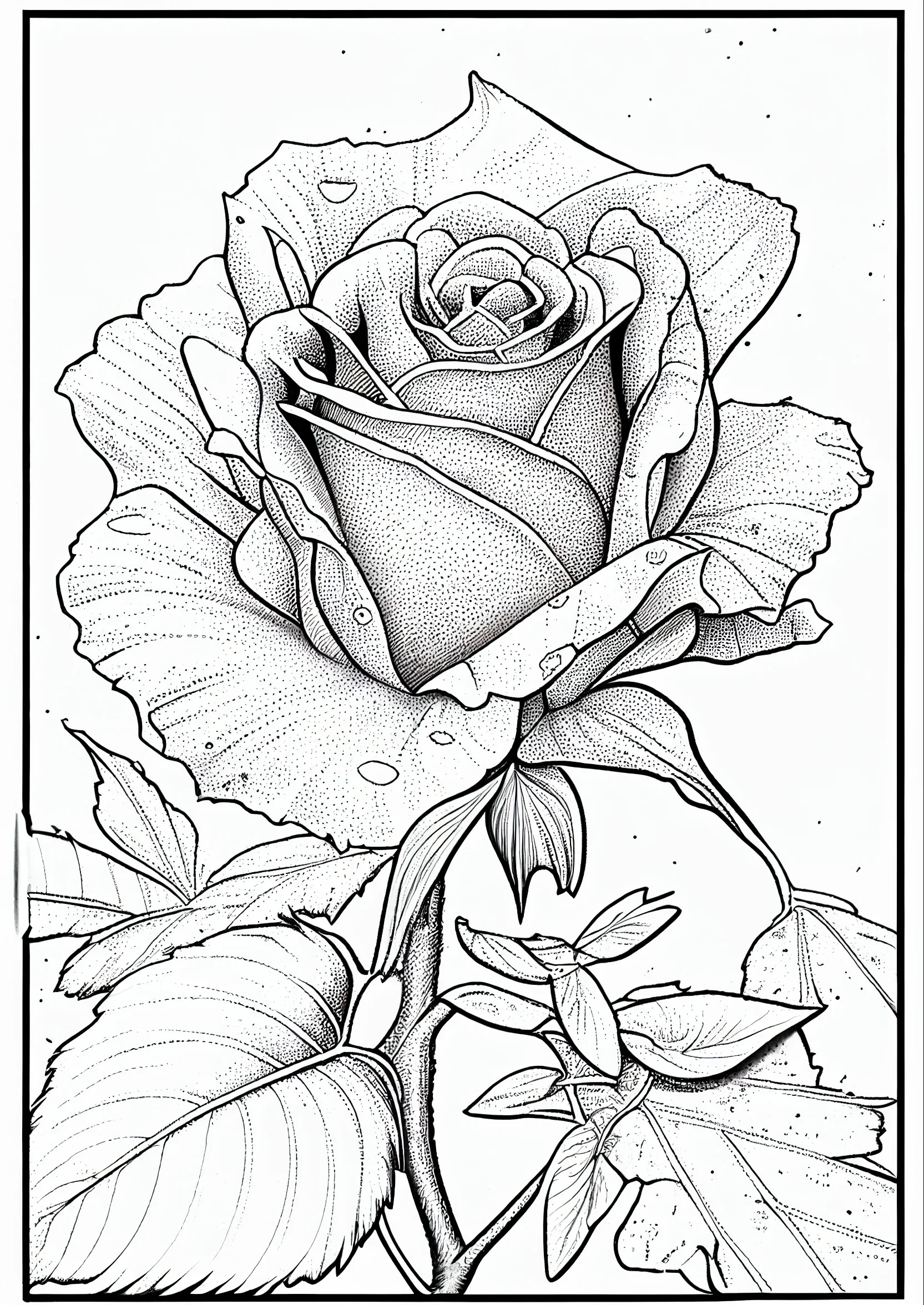
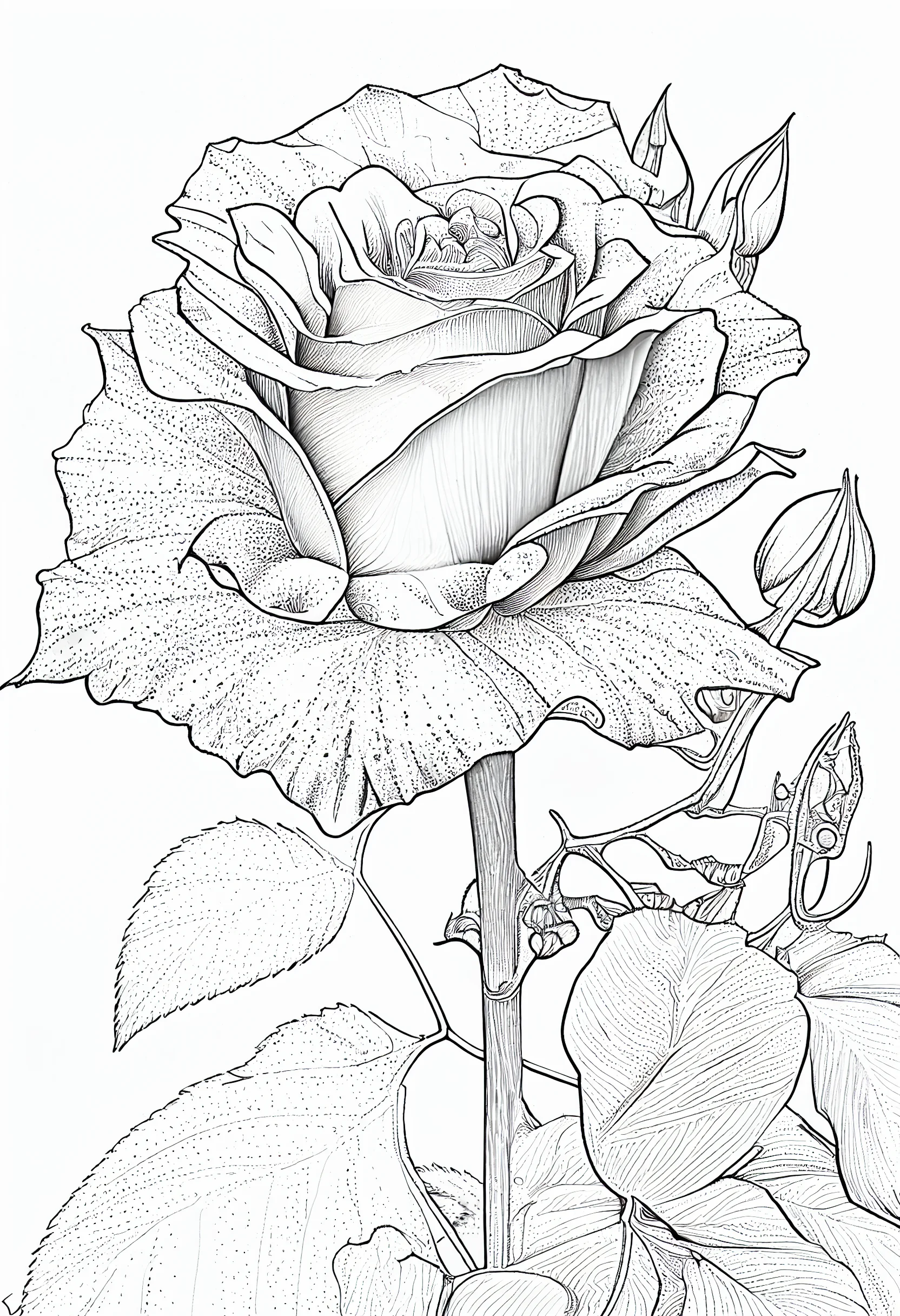
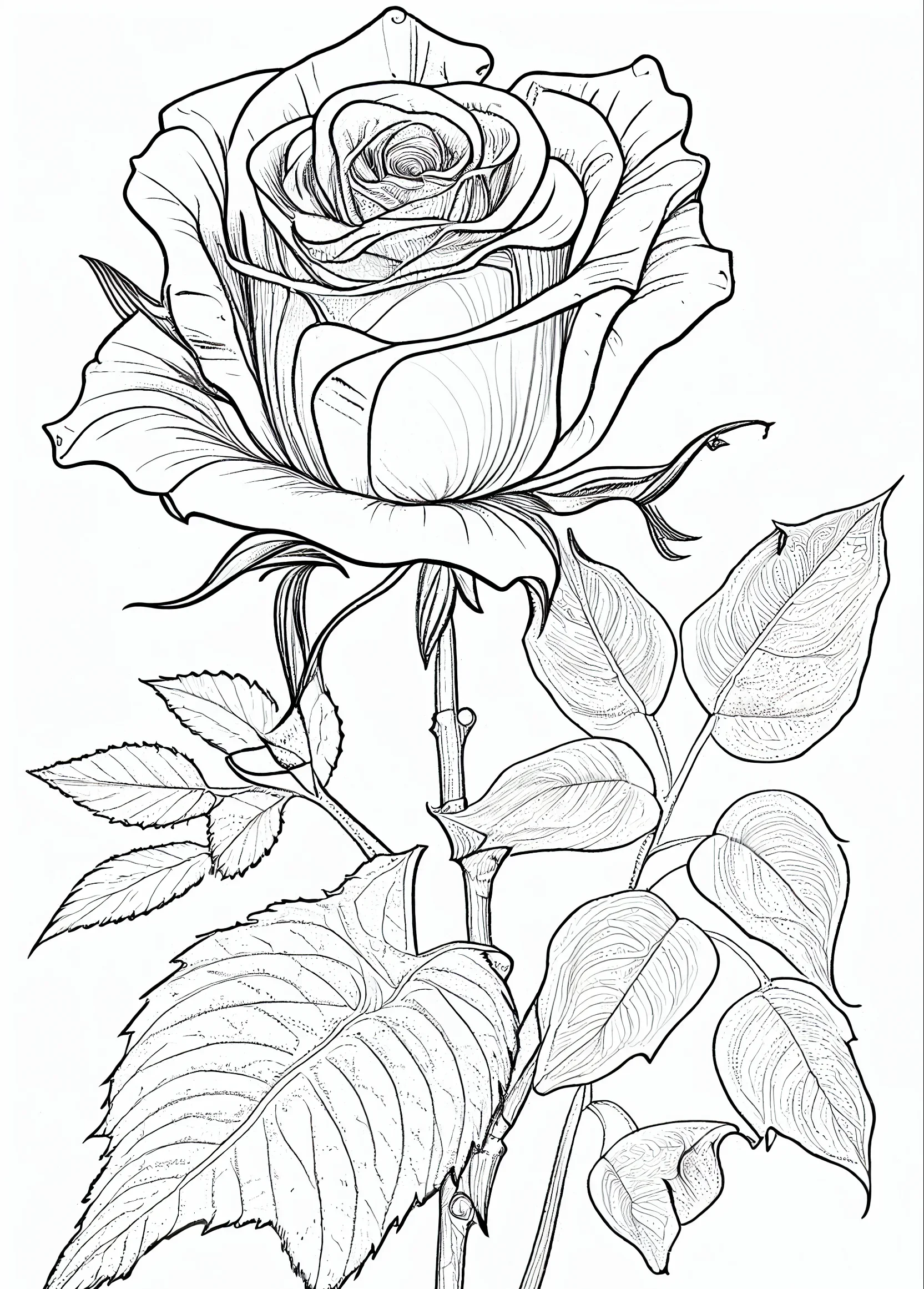
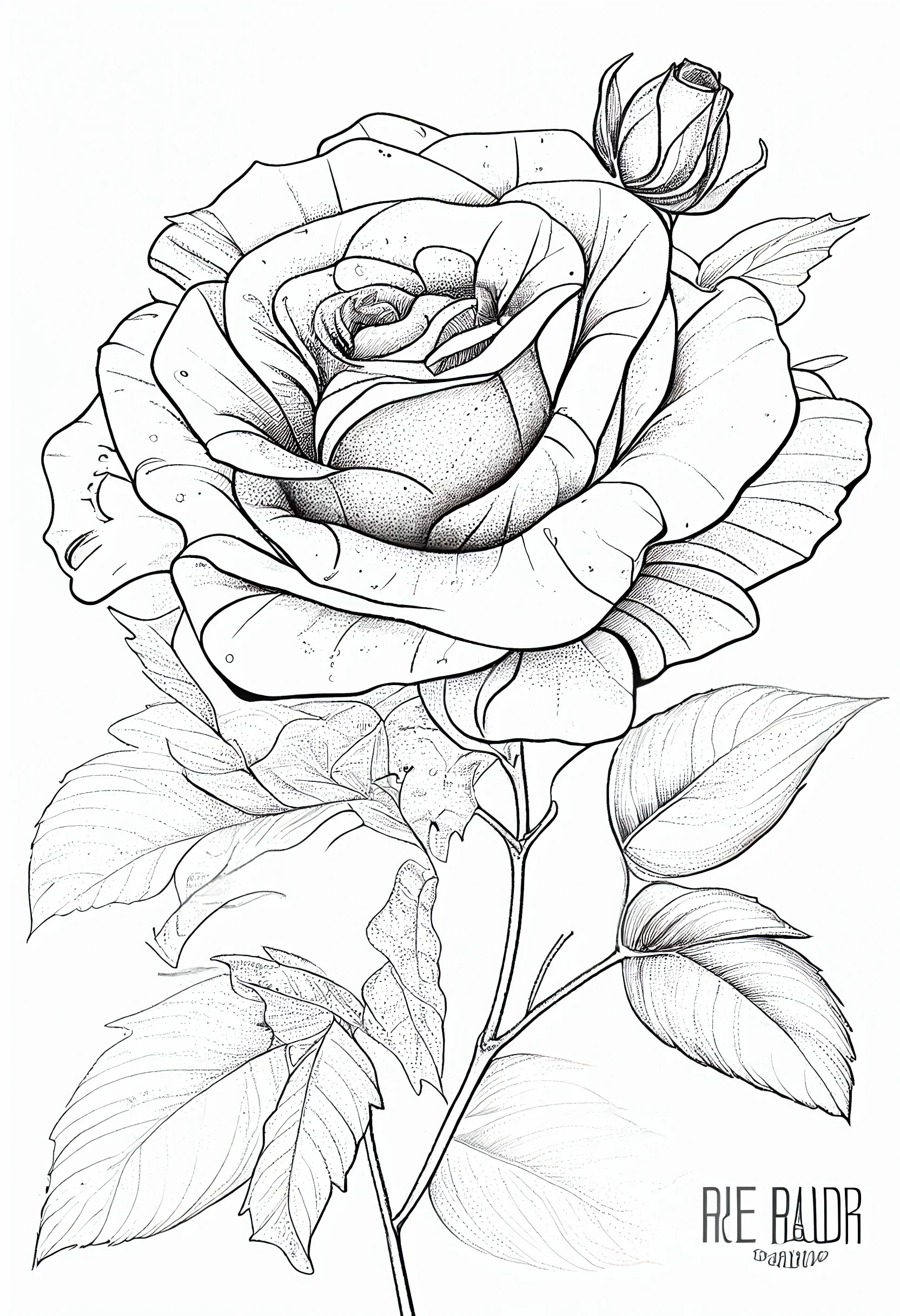
Realistic rose drawing references — Sheets 5–9
Use these after the basic construction starts to feel comfortable. They are better references for value, petal overlap and pencil texture than for your very first attempt.
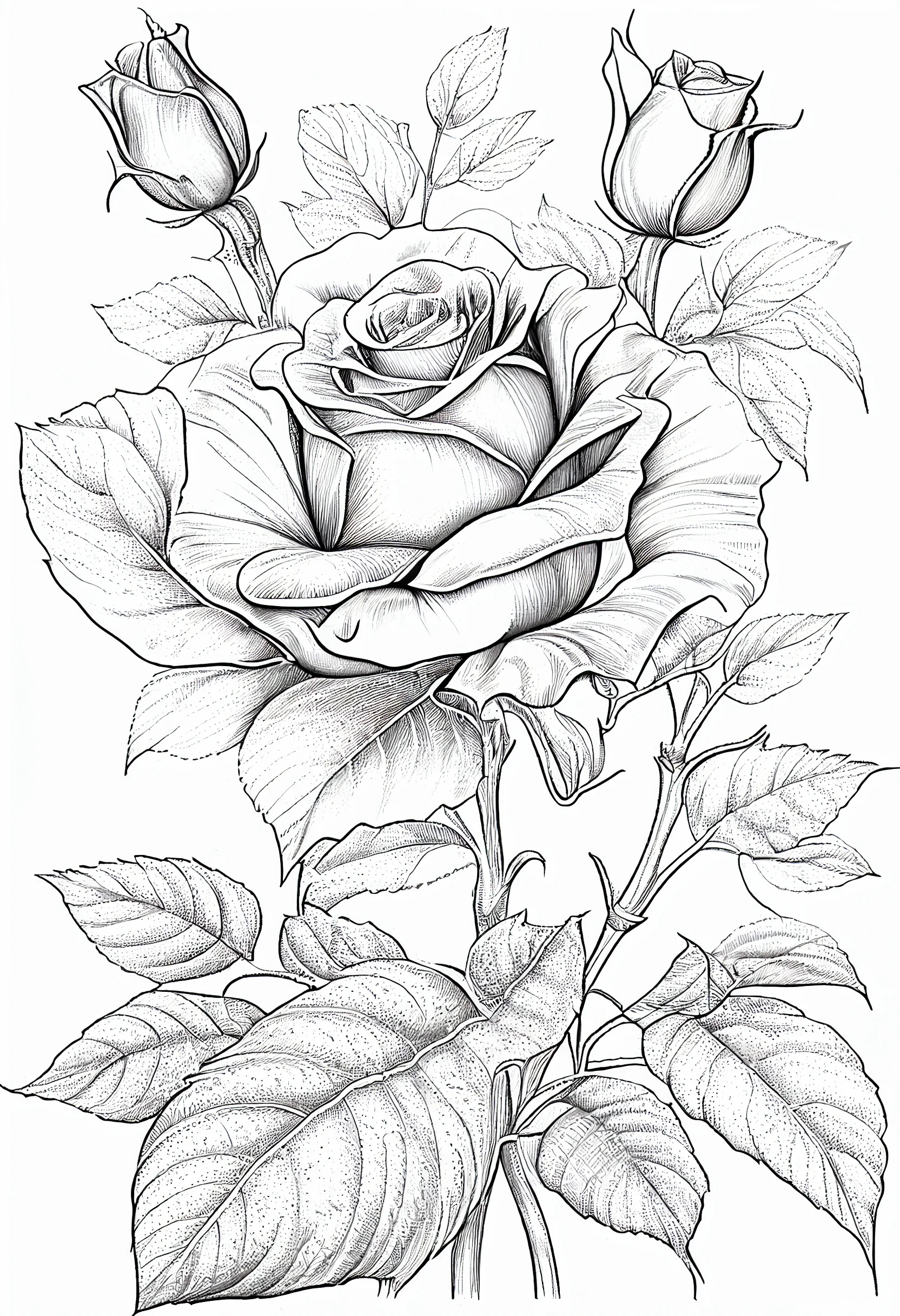
How to shade a rose without making the petals muddy
Think about overlap, not “dark petal versus light petal.” The darkest marks usually belong where one petal disappears underneath another. Keep the exposed middle of a petal lighter, then soften the value as it turns away from the light.
- Darkest: deep center folds and narrow gaps between overlapping petals.
- Medium: lower halves of petals, undersides of curls and areas facing away from the light.
- Lightest: upper petal surfaces and edges catching the light.
- Leave some paper white: tiny untouched highlights often make a pencil rose feel more dimensional than adding more graphite everywhere.
Avoid tracing every petal edge with a dark line. Some edges should almost disappear where two similarly lit petals meet. That lost-and-found edge is one of the easiest ways to make the flower feel softer.
Which pencil should you use?
| Pencil | Use it for |
|---|---|
| 2H or H | Very light construction lines that are easy to erase |
| HB | Most of the drawing and light-to-medium shading |
| 2B | Petal overlaps, the center and stronger mid-tones |
| 4B | The deepest accents only; use it sparingly |
You do not need four pencils to draw a good rose. An HB pencil is enough if you vary the pressure. The extra grades simply make it easier to separate light construction from deep shadows.
Common rose drawing problems — and how to fix them
| If your rose looks… | Usually the problem | Try this |
|---|---|---|
| Like a pinwheel | Every petal turns around the center in the same rhythm | Break the pattern with uneven overlaps and a few petals facing different directions |
| Flat | All petals have the same value | Darken only the overlaps and underside areas; leave upper surfaces lighter |
| Too perfect | The flower is symmetrical | Change the width, tilt and edge shape of the outer petals |
| Messy in the center | Too many tiny lines were added too early | Simplify the center to three or four larger folded shapes, then add only the most useful internal lines |
| Like separate stickers | Petals touch but do not overlap | Let one edge disappear behind another so the layers connect |
A simple practice plan
- First drawing: copy Sheet 1 and focus only on the outer shape and overlaps.
- Second drawing: use Sheet 3 and add a little shading under the petal overlaps.
- Third drawing: choose Sheet 5 or Sheet 6 and practice a full range from light graphite to deep shadow.
Three focused roses will teach you more than drawing ten rushed ones. Change only one thing each time—petal shape, shading or stem/leaves—so you can see what actually improved.
Rose drawing questions
What is the easiest way to start a rose?
Start with a tiny folded center, then wrap a few small petals around it. Build outward with larger petals. Do not begin by drawing a big perfect circle and filling it with petal lines.
Why does my rose look like a spiral?
The petals are probably following the same rotation too consistently. Roses have overlap, interruption and uneven spacing. Let some petals face forward while others turn sideways.
Should I draw every petal I can see?
No. Especially in the center, a few well-placed folds are clearer than dozens of small lines. Simplifying is part of drawing, not cheating.
How do I make the petals look soft?
Use gradual shading and avoid outlining every edge equally. Darken the overlap underneath a petal, then let the value fade across the surface.
Can I draw a rose with only one pencil?
Yes. An HB pencil is enough. Use light pressure for construction, medium pressure for form and heavier pressure only for the deepest overlaps.
More rose and flower art
For other flowers, use the flower drawing tutorials. If you want to work with finished line art instead of sketching from scratch, try the rose coloring pages or the realistic flower coloring pages.

