
Toy Poodles are easy to recognize on a coloring page, but the coat can be surprisingly hard to color well. If every curl gets the same dark tone, the dog quickly turns into one solid shape. That is why this collection is now arranged by difficulty instead of upload order: the simplest puppies come first, the fur-focused pages follow, then the dressed-up poodles, and the most detailed designs are saved for the end.
If you are coloring with a younger child, start at the top and stop whenever the pages begin to look too busy. If you want to practice shading, skip straight to the curly-fur group. The numbering now describes the gallery rather than making you hunt through nineteen unrelated images.
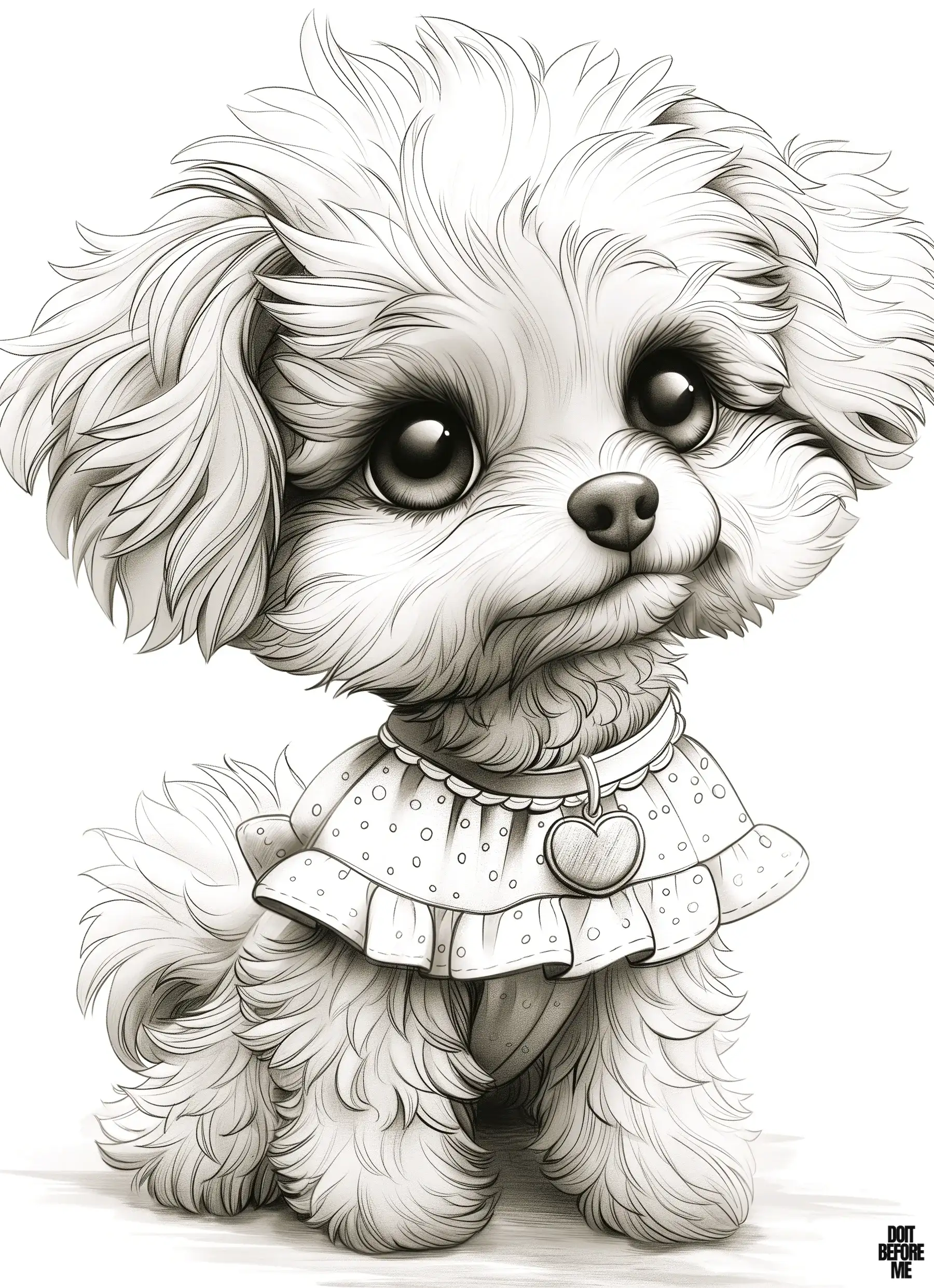
Open full-size Toy Poodle coloring sheet 1
Quick start: use this first sheet to test a coat palette before moving into the curl-heavy designs. Keep the muzzle and face lighter than the deepest coat shadows so the expression stays readable.
Choose the kind of Toy Poodle page you want
| If you want… | Go to | Best tools |
|---|---|---|
| A quick, easy puppy | Sheets 1–3 | Crayons or broad pencils |
| Curly fur and realistic shading | Sheets 4–8 | Colored pencils |
| Clothes, bows and accessories | Sheets 9–15 | Pencils plus fine-tip markers |
| The most detailed pages | Sheets 16–19 | Two or three pencil shades |
How to color curly poodle fur without losing the texture
Do not try to color every curl separately. It usually looks cleaner if you work in larger areas first. Put down a light base over the coat, then add a second shade under the ears, under the chin, around the legs and anywhere one part of the body overlaps another. Leave a few small light patches untouched. Those little gaps are what keep white, cream and apricot coats looking fluffy instead of flat.
For a black poodle, avoid filling the entire coat with solid black. Dark gray plus black in the deepest shadows leaves enough contrast for the eyes, nose and curl lines to stay visible. For a white poodle, you barely need any color at all: pale gray, cool blue or light beige in the shadow areas is often enough.
Practice the coat on three tiny curl clusters
Before starting Sheets 4–8, draw three loose cloud-like shapes on scrap paper. Leave the first almost untouched, shade the second along its lower edge, and give the third a light base plus two or three short darker marks where curls overlap. Look at them from arm’s length. The third cluster should read as fluffy without becoming a dark scribble.
Use the same idea on the dog: treat the forehead, ears, chest and legs as separate fur masses, not hundreds of individual curls. Put the darkest accents where one mass tucks behind another—under an ear, below the chin, between the front legs and beneath the belly. On the outer edge of the coat, use fewer dark marks so the silhouette stays soft.
Diagnostic: if the coat looks woolly but the face has disappeared, stop adding fur texture. Lighten the visual pressure around the muzzle by leaving more paper showing, then reinforce only the eyes and nose. If the dog looks flat instead, deepen the contact shadows under the chin and where the legs meet the body rather than darkening every curl.
Choose the tool before you choose the page
- Crayons: better for the simpler puppies because they need larger spaces.
- Colored pencils: the most forgiving option for curly coats because you can build tone slowly.
- Fine-tip markers: useful for bows, collars, scarves and clothing, but less forgiving on the fur itself.
- Gel pens: nice for tiny accessories or highlights, not for filling the whole dog.
Before printing, open the full-size file rather than printing the small preview on the page. If your printer crops the paws or top of the ears, use the coloring-page printing guide and choose “fit to page” in the print window.
A five-minute setup that makes the page easier to finish
- Choose the difficulty first. Do not pick the prettiest page if the amount of detail already looks tiring.
- Pick the coat color before the outfit. That gives you a clear contrast plan.
- Test the darkest shade on scrap paper. This matters most with black, brown and marker-heavy palettes.
- Color the face before the body. If the eyes, nose and muzzle read clearly, the whole dog usually works.
- Stop before every white gap disappears. Those untouched areas are what make curly fur look light and fluffy.
If you are coloring with a child, steps 1 and 2 are enough. The rest can happen naturally while they work.
Easy Toy Poodle coloring pages — Sheets 1–3
These are the best starting pages for younger kids or anyone who wants a short coloring session. The dog is the main subject, the spaces are larger, and there is less clothing or background detail competing for attention. Sheet 1 appears near the top of this page as the quick-start example; continue below with Sheets 2–3.
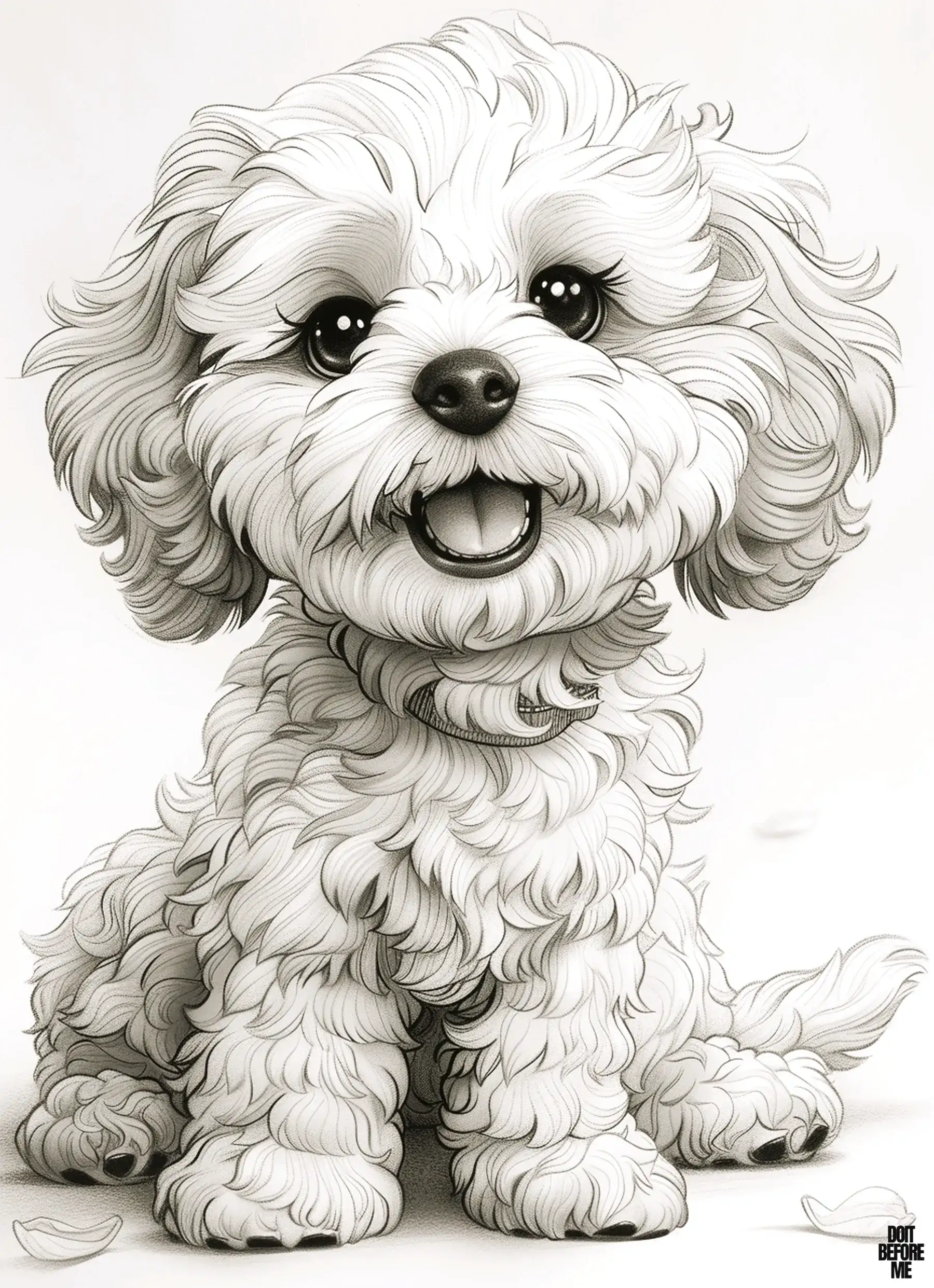
Open full-size Toy Poodle coloring sheet 2
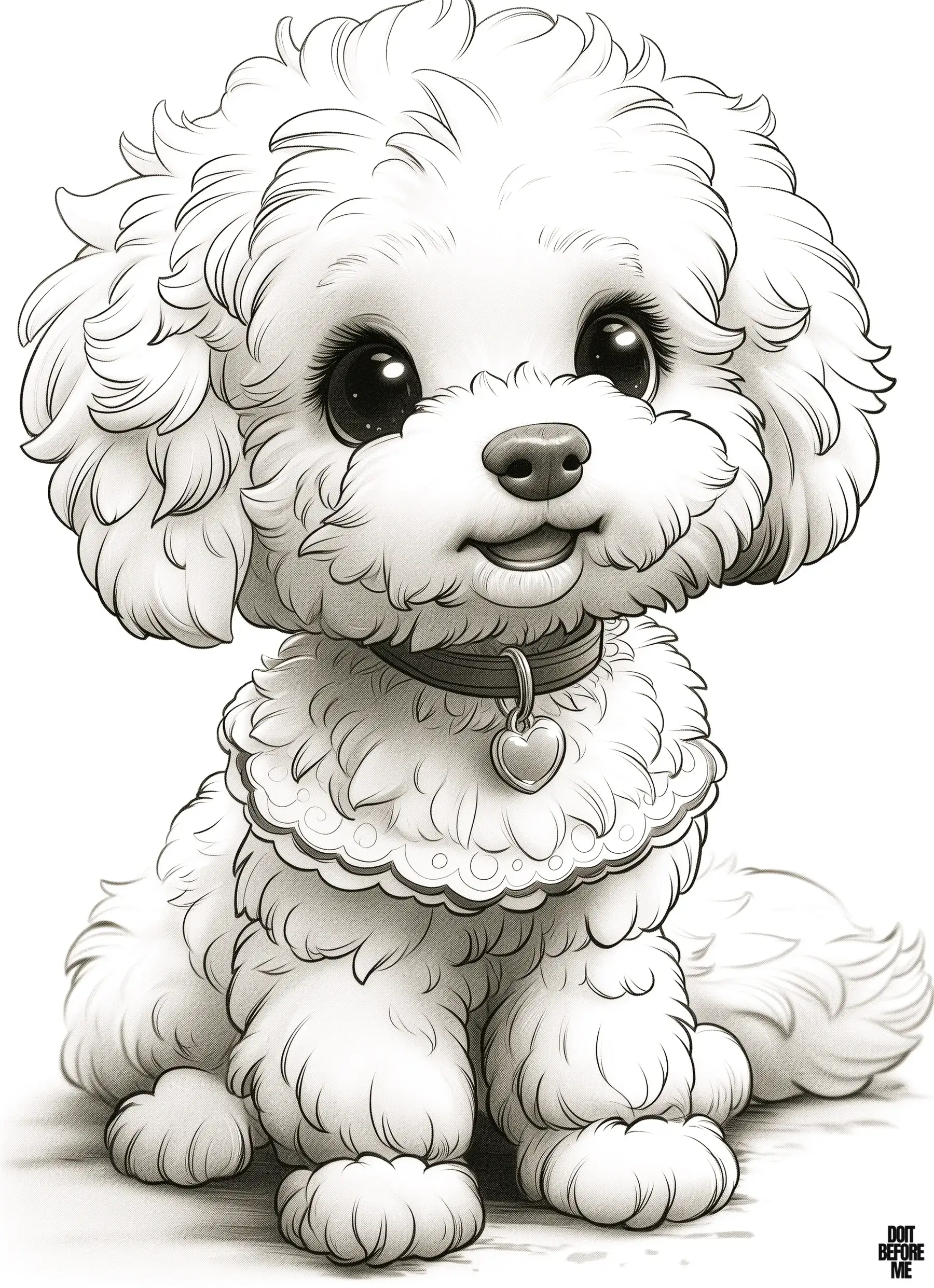
Open full-size Toy Poodle coloring sheet 3
Curly-fur and realistic Toy Poodles — Sheets 4–8
This is the group to choose if you actually want to work on the coat. Colored pencils are the easiest tool here because you can build light and shadow gradually without covering the curl lines.
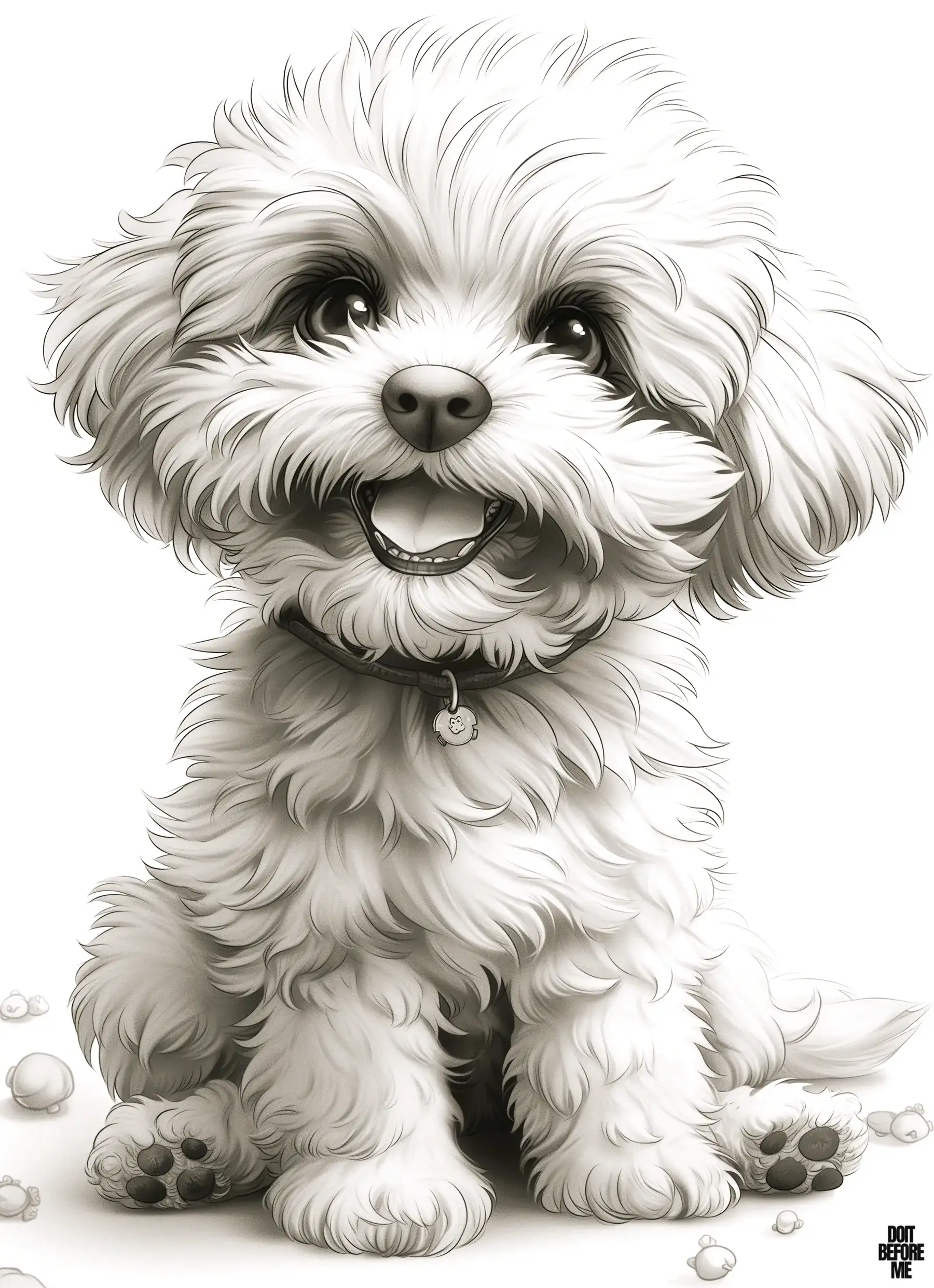
Open full-size Toy Poodle coloring sheet 4
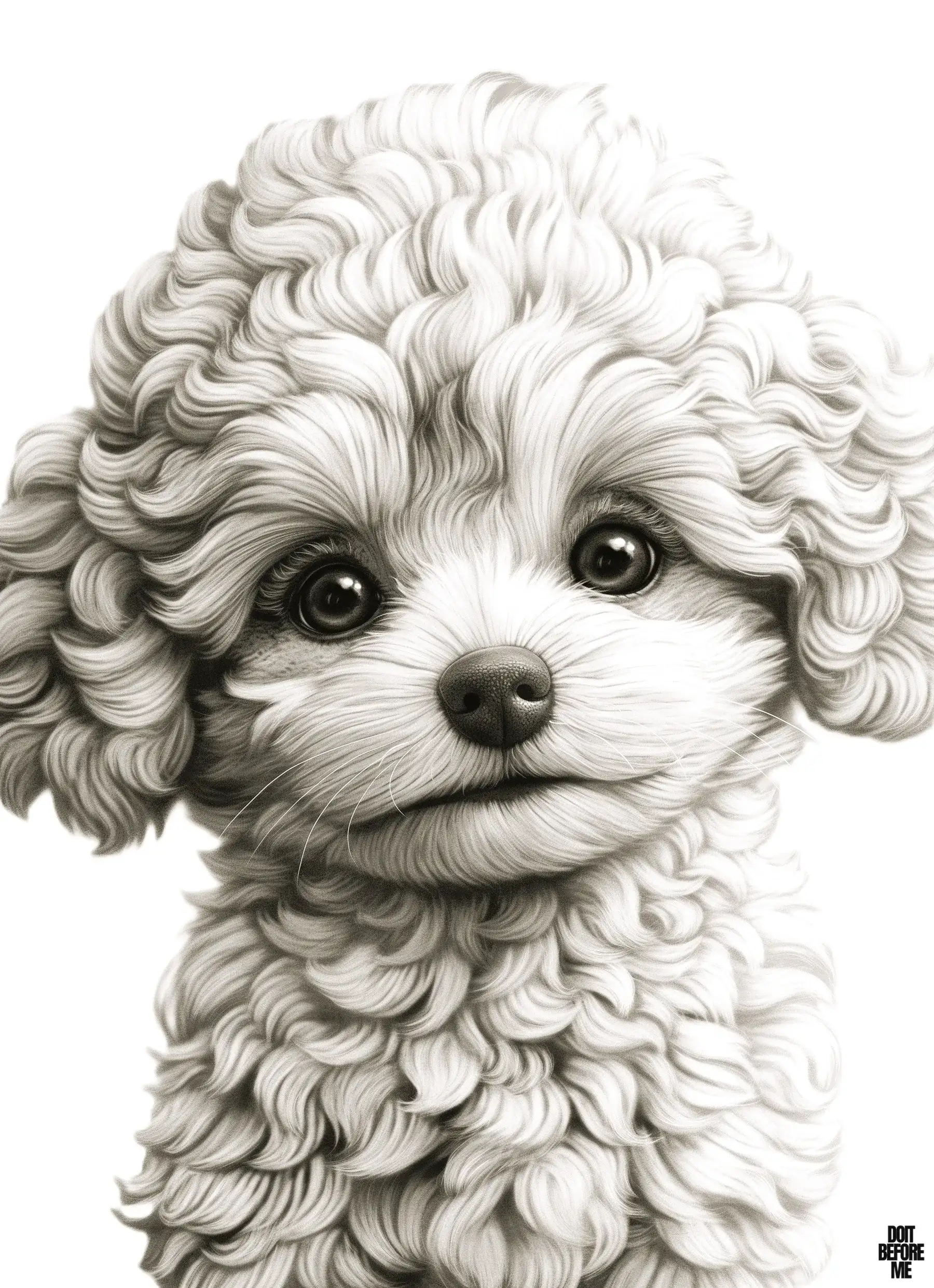
Open full-size Toy Poodle coloring sheet 5
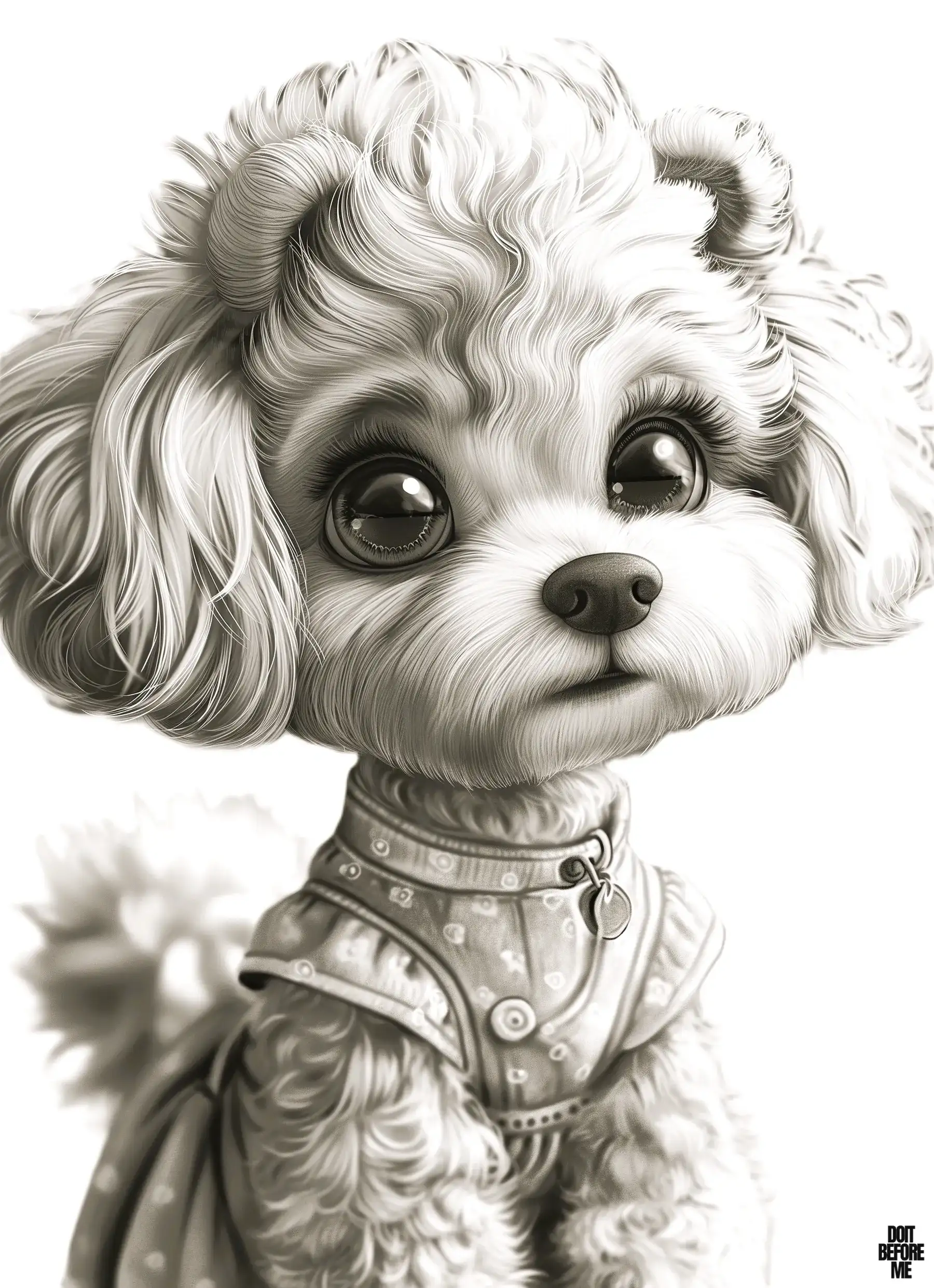
Open full-size Toy Poodle coloring sheet 6
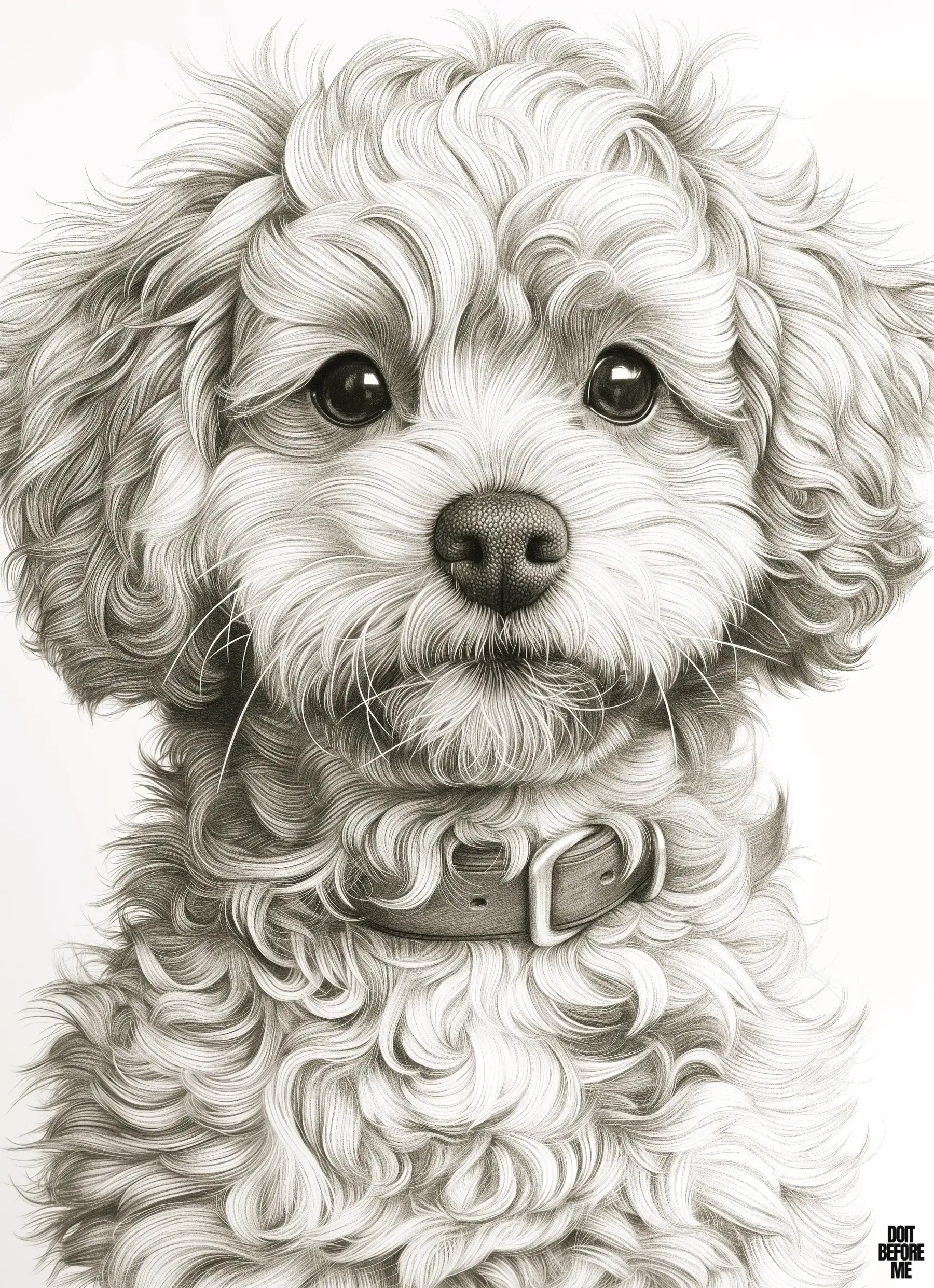
Open full-size Toy Poodle coloring sheet 7
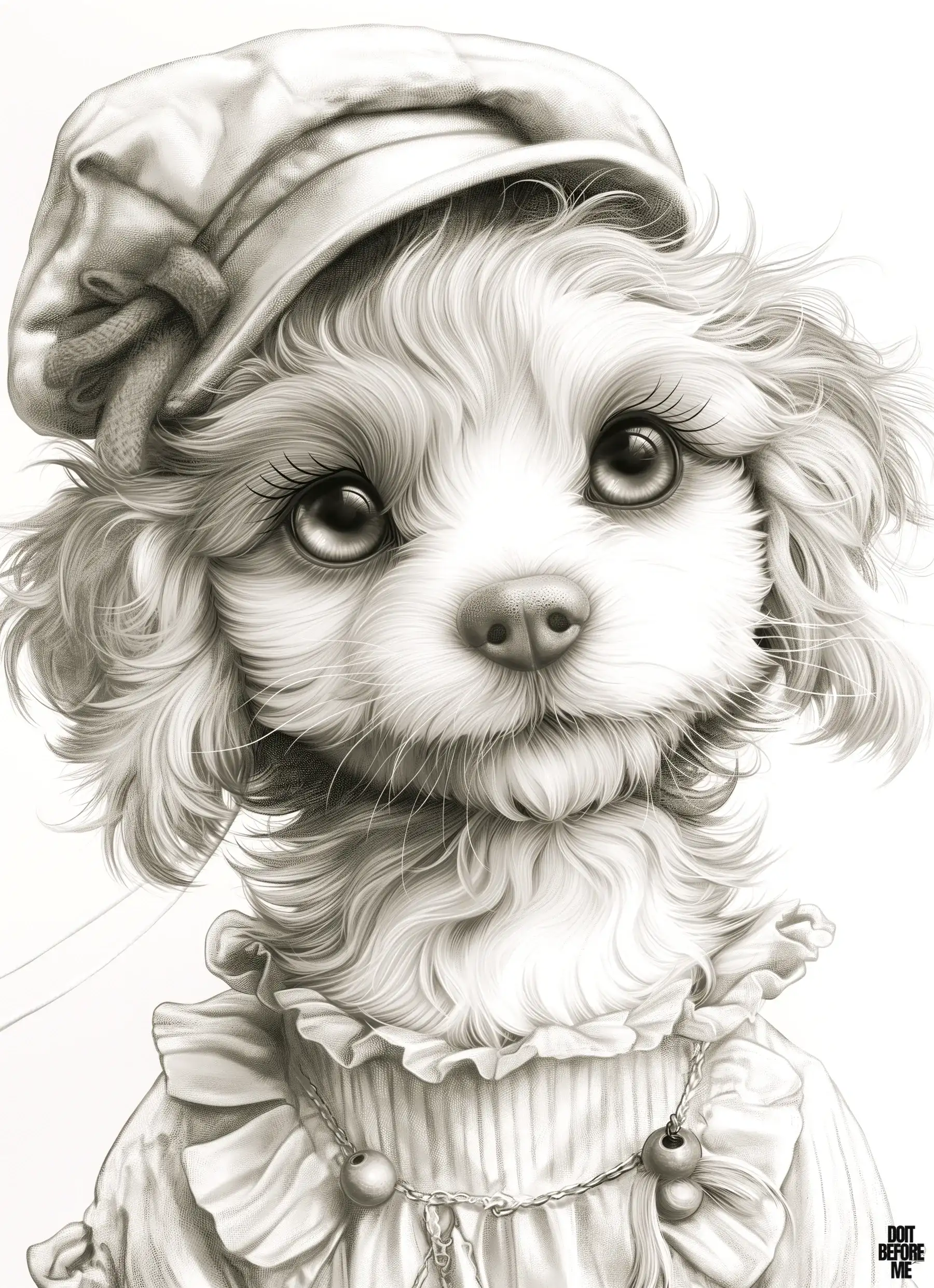
Open full-size Toy Poodle coloring sheet 8
A useful stopping point: if the fur already has a light base, a darker underside and a few pale curls left visible, it is probably finished. Another dark layer often makes the coat look flatter rather than better.
Toy Poodles with clothes and accessories — Sheets 9–15
These pages are more about palette choices than difficult fur. Color the dog first, then pick two or three colors for the clothing. A light coat against a stronger scarf, jacket or hat is much easier to read than a dog and outfit colored in nearly the same tone.
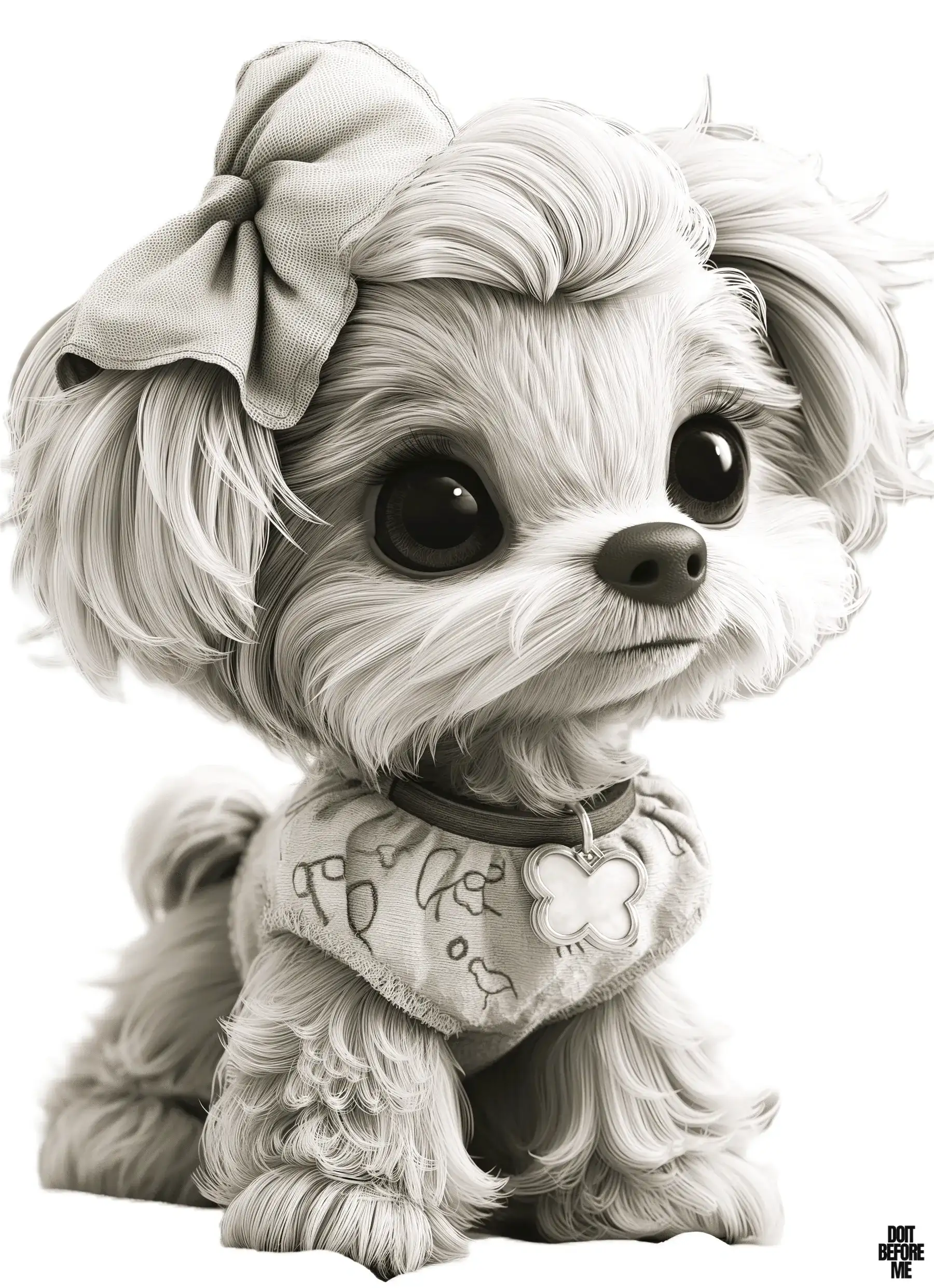
Open full-size Toy Poodle coloring sheet 9
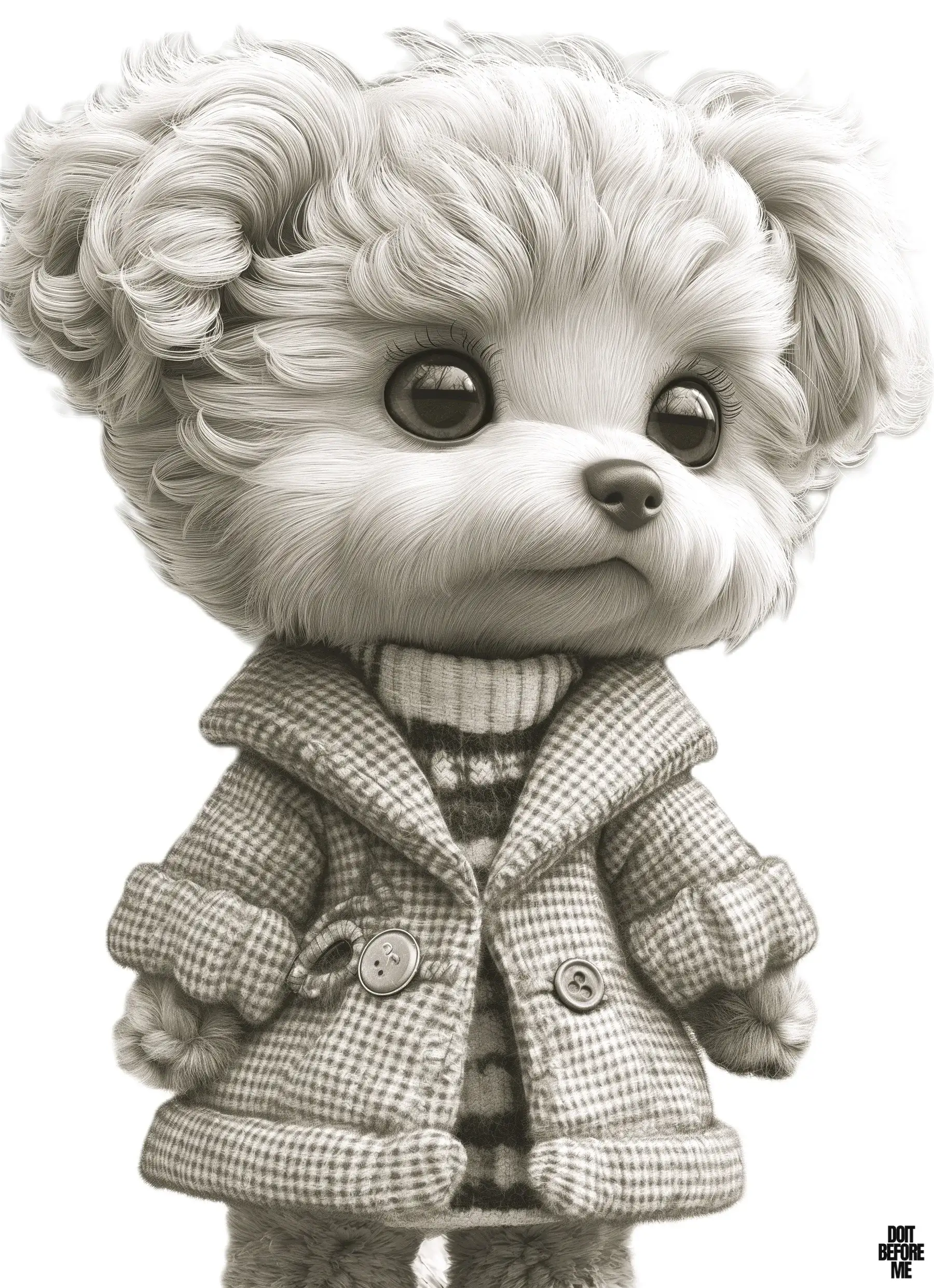
Open full-size Toy Poodle coloring sheet 10
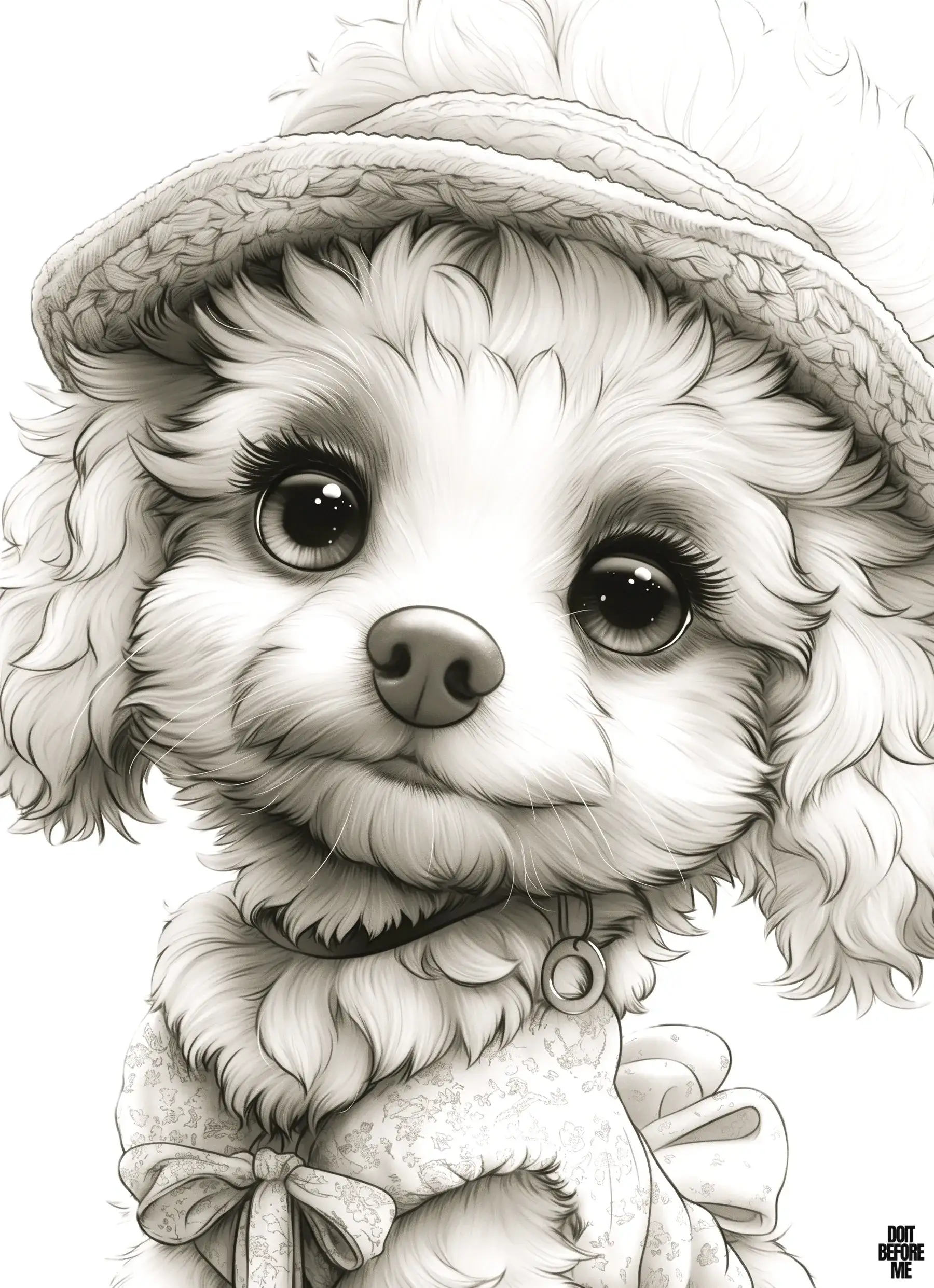
Open full-size Toy Poodle coloring sheet 11
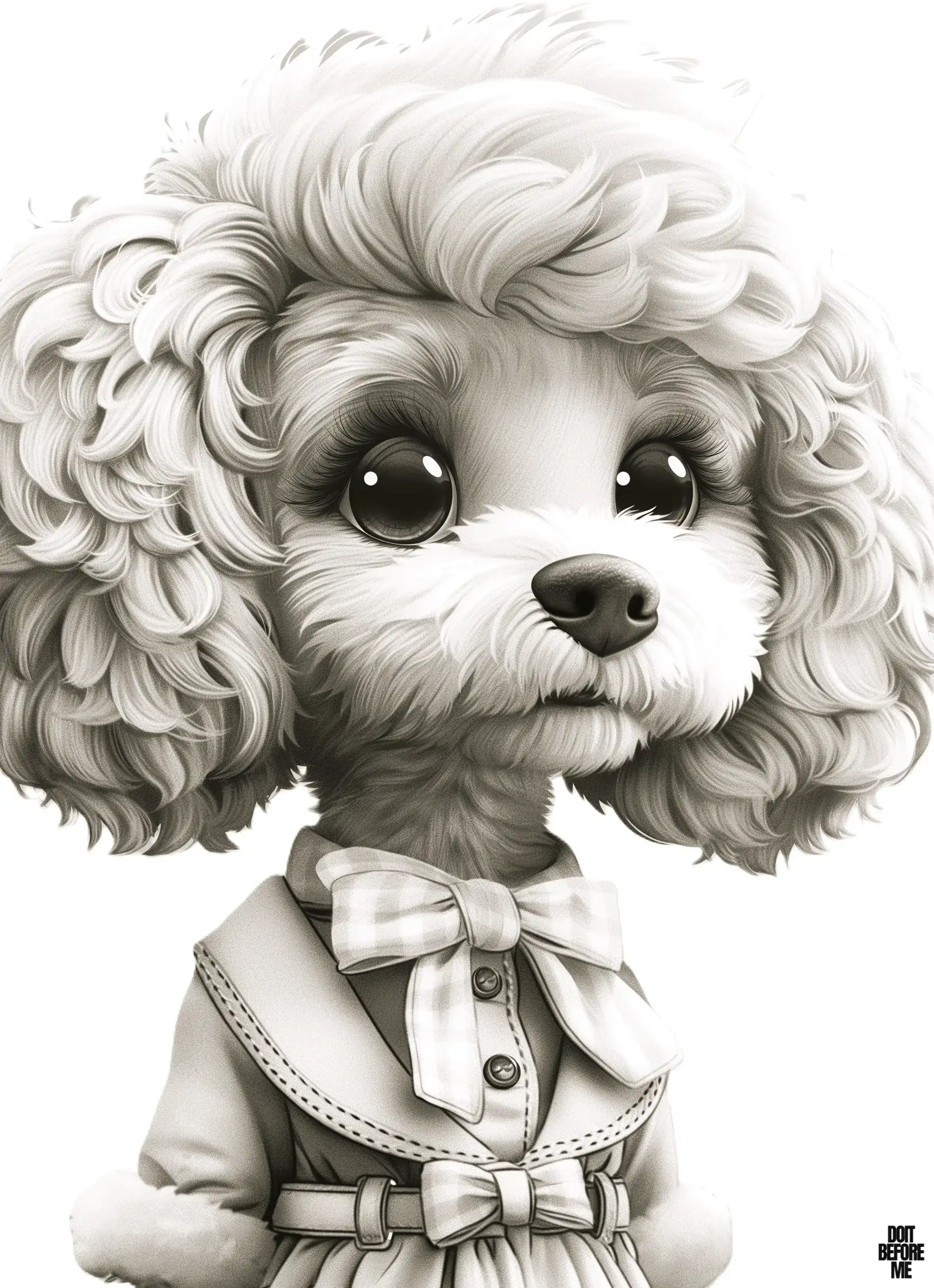
Open full-size Toy Poodle coloring sheet 12
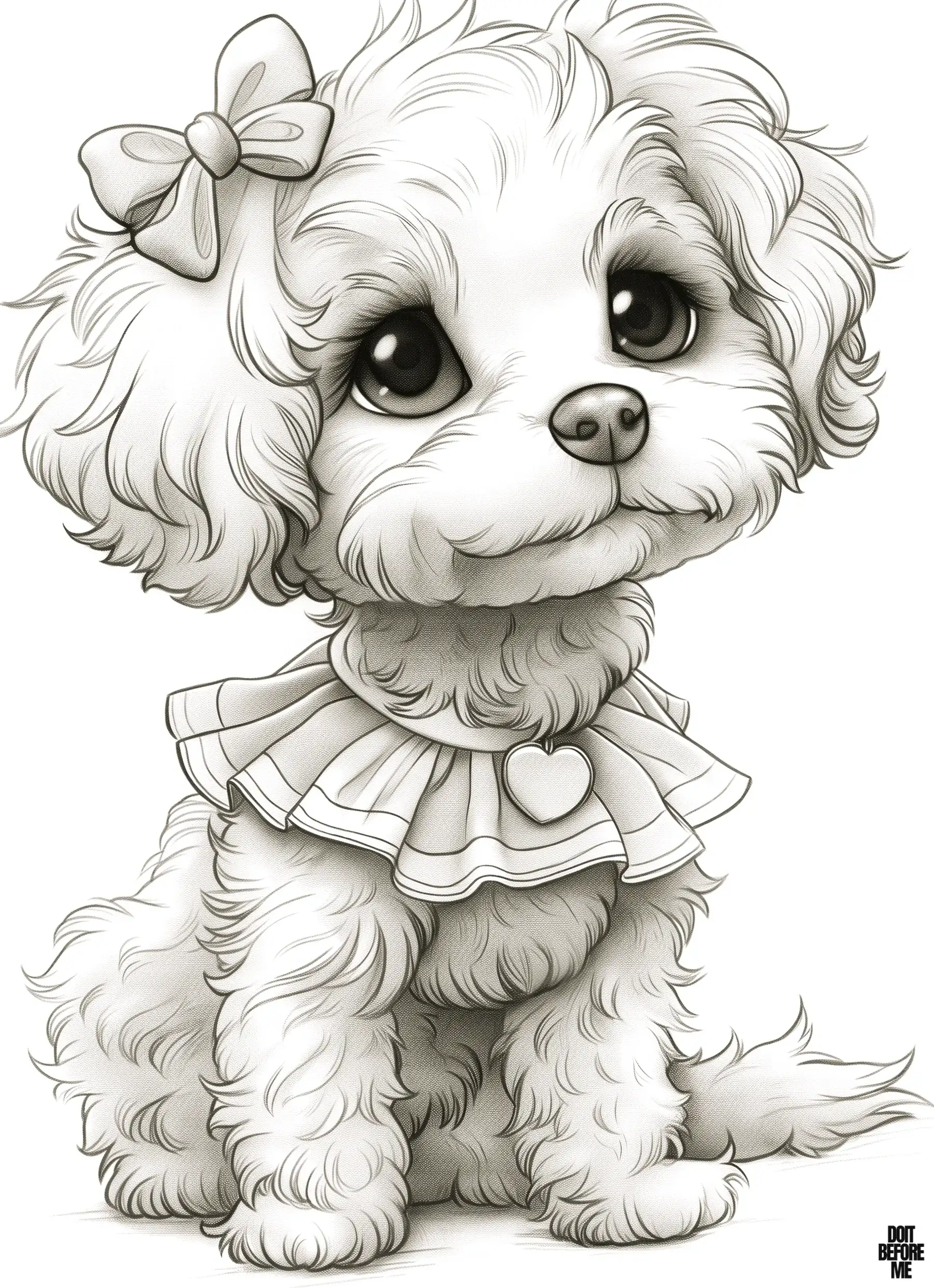
Open full-size Toy Poodle coloring sheet 13
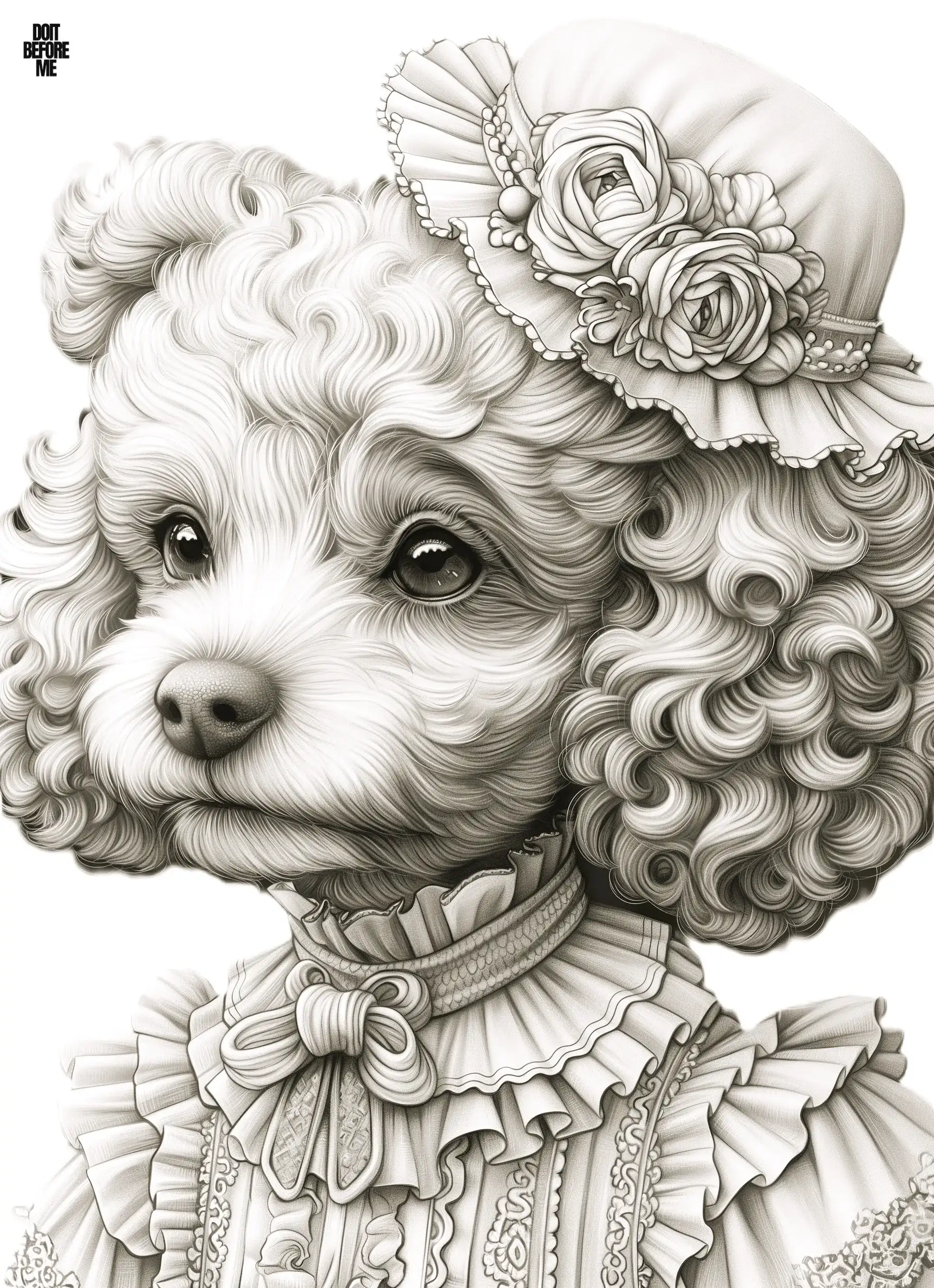
Open full-size Toy Poodle coloring sheet 14
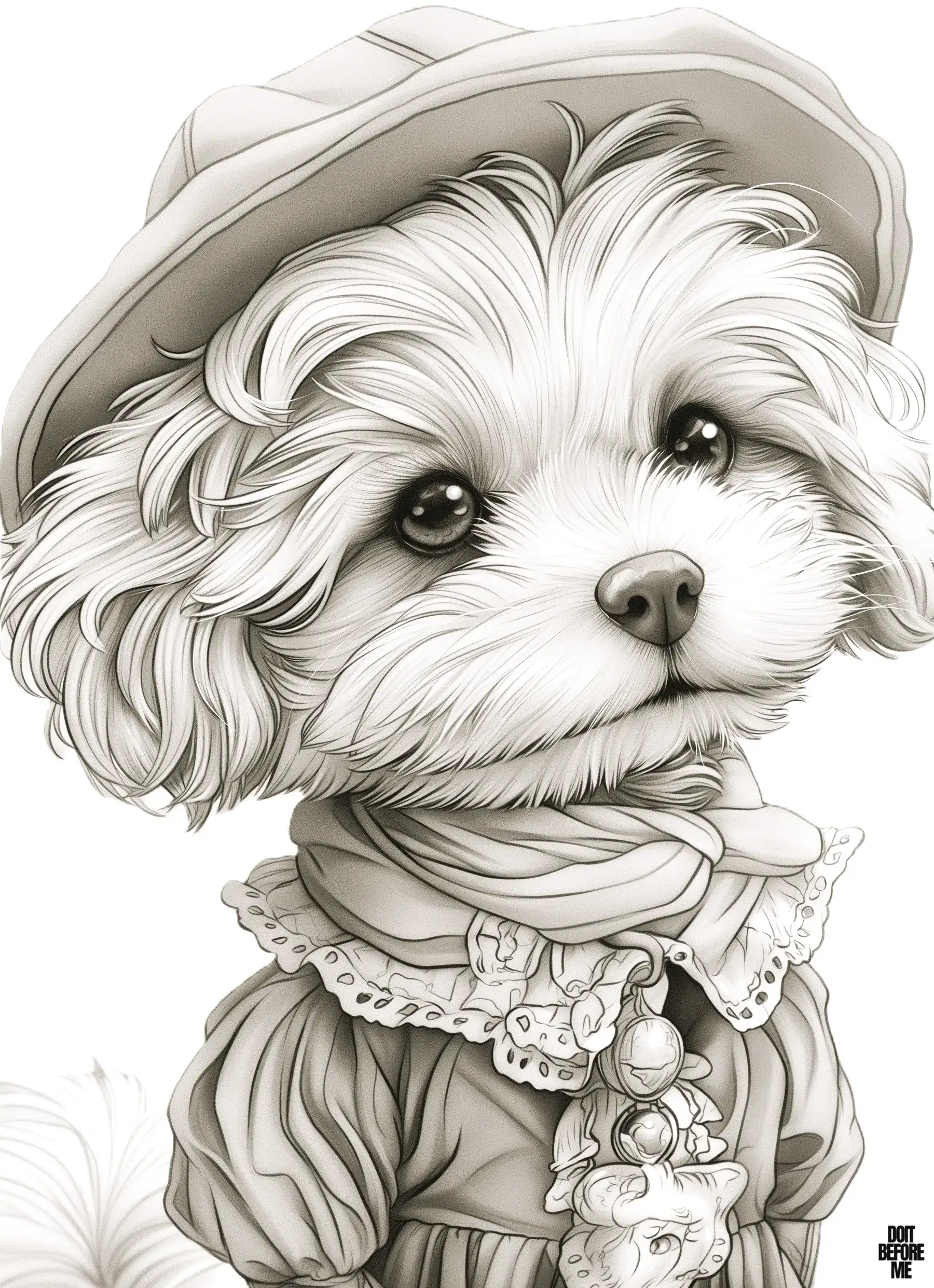
Open full-size Toy Poodle coloring sheet 15
Most detailed Toy Poodle pages — Sheets 16–19
Save these for a slower session. There are more clothing seams, decorative elements and small sections, so work from the large shapes down to the tiny ones. You do not need to give every detail a different color; three or four colors often look cleaner.
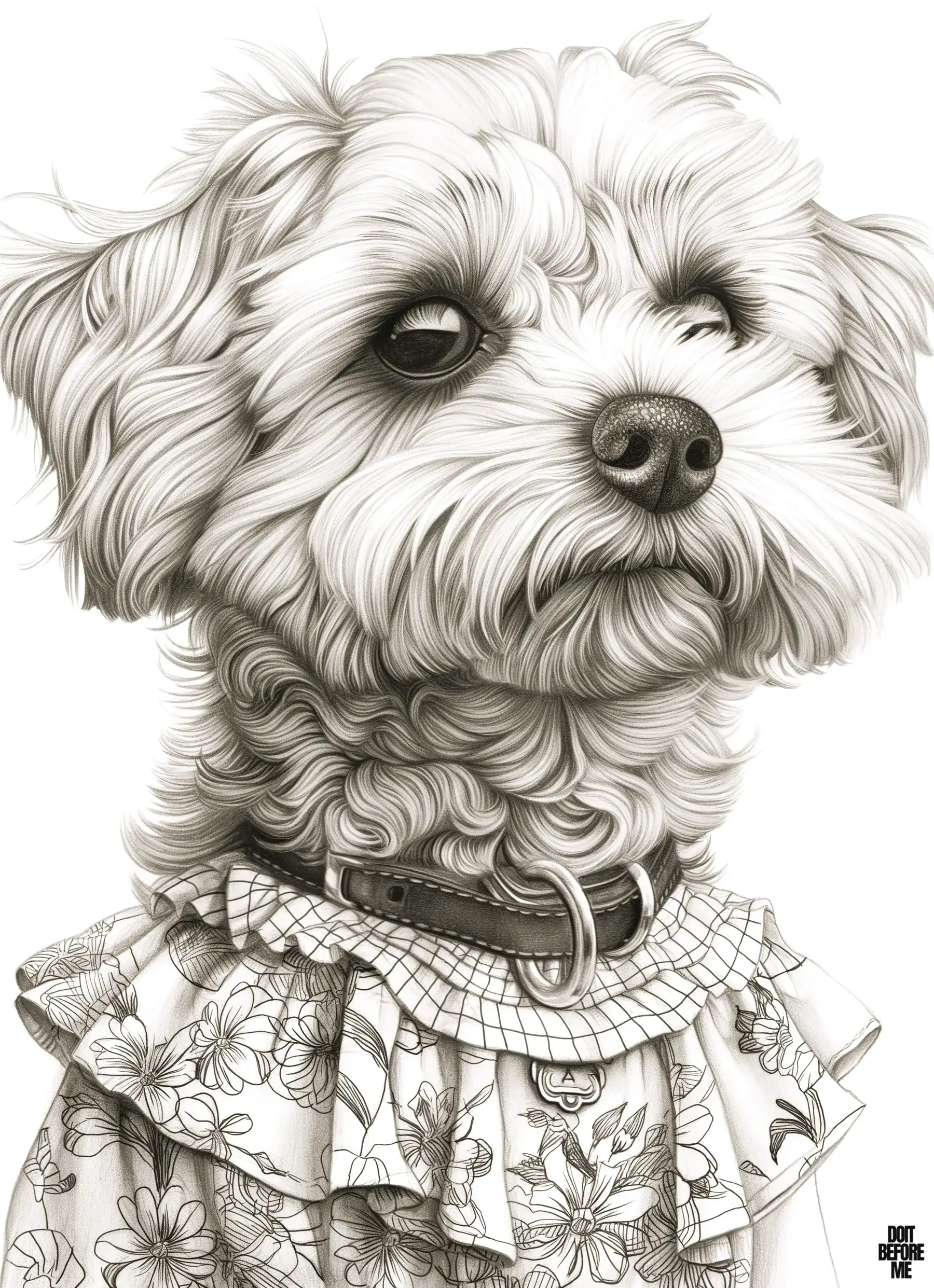
Open full-size Toy Poodle coloring sheet 16
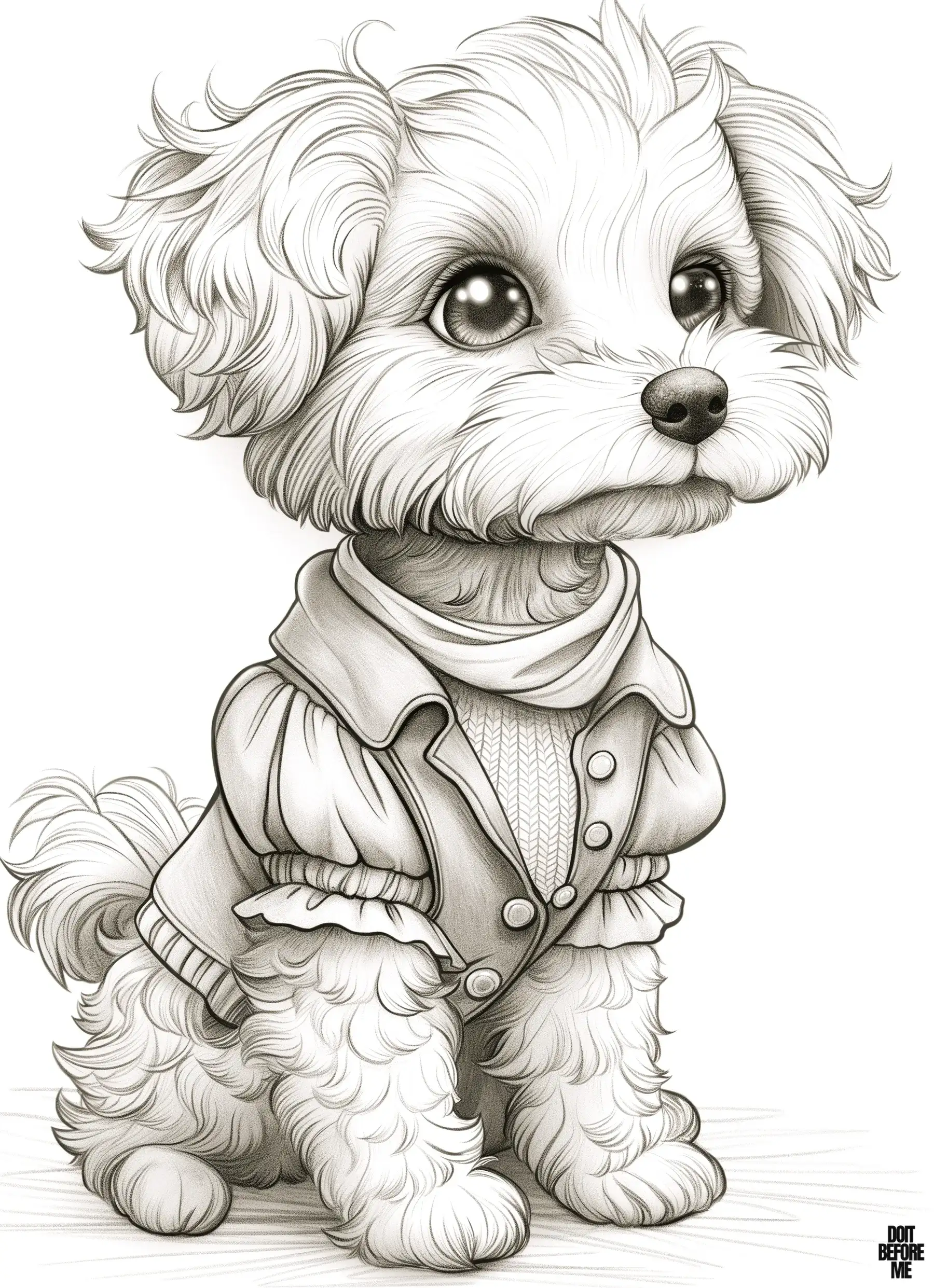
Open full-size Toy Poodle coloring sheet 17
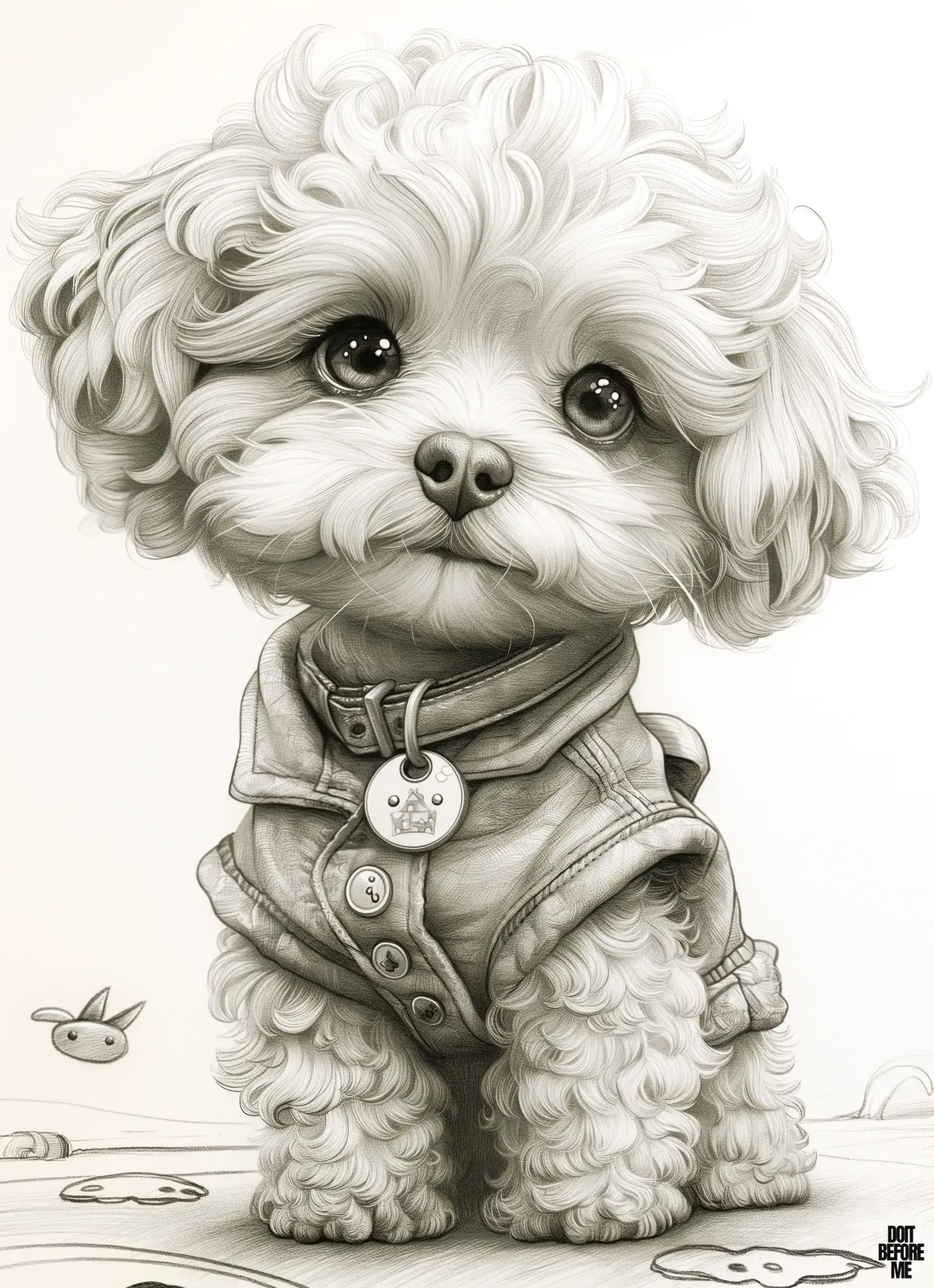
Open full-size Toy Poodle coloring sheet 18
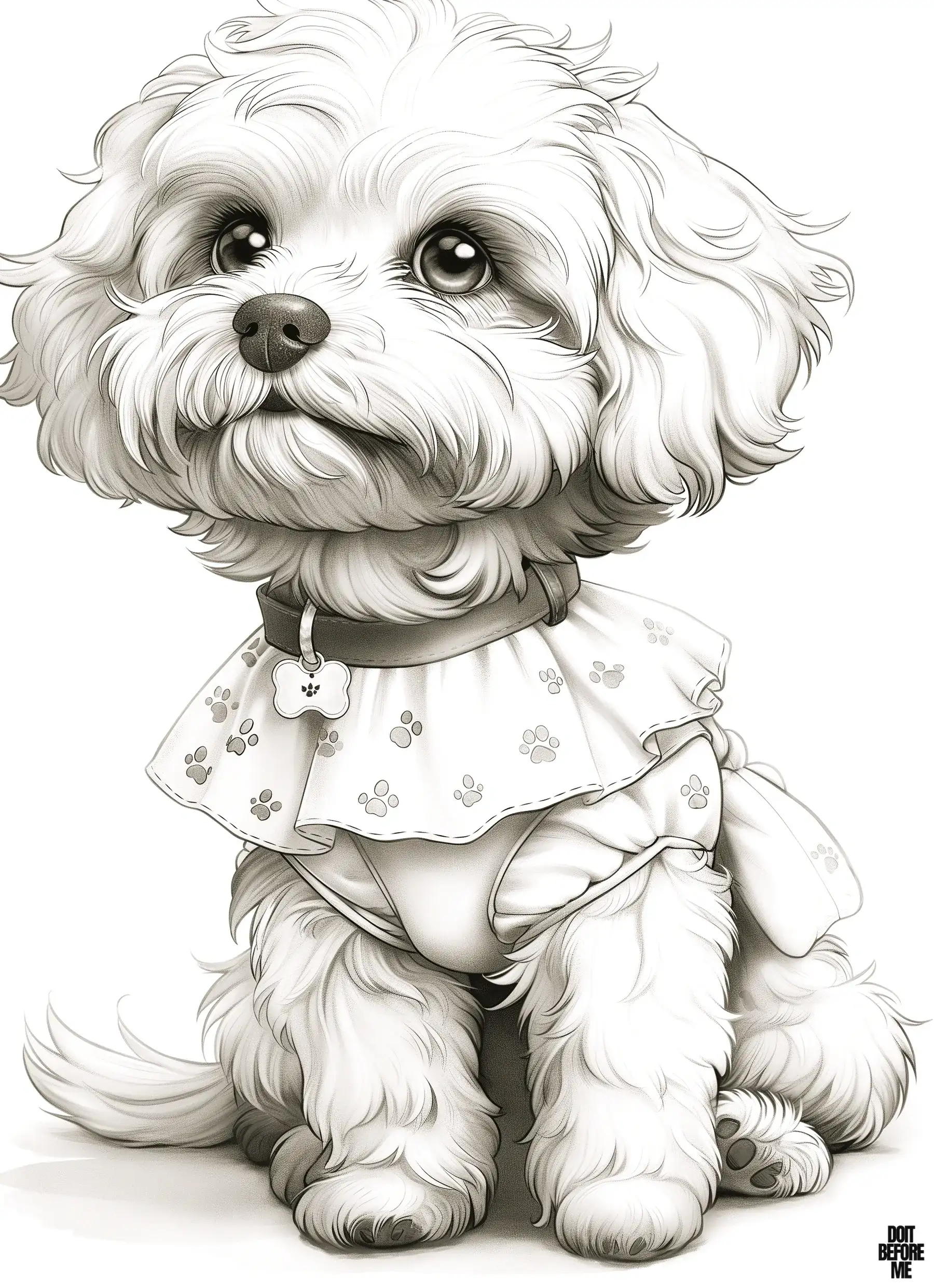
Open full-size Toy Poodle coloring sheet 19
A simple poodle color palette that works
If you do not want to think about colors for long, try one of these combinations:
- Apricot poodle: pale peach base, warm tan shadows, dark brown nose and eyes.
- White poodle: mostly white paper, very light gray or blue-gray shadows, one bright accessory color.
- Black poodle: charcoal base, black shadows, untouched white highlights around the face.
- Cartoon poodle: ignore realism completely and use the coat as one color family and the outfit as another.
One small trick makes almost every page look cleaner: decide on the coat color before you start the clothes. Otherwise it is easy to choose an outfit that is too close in value to the fur and the dog disappears into it.
Questions parents and colorists often ask
Which sheets are easiest for preschoolers?
Sheets 1–3 are the safest starting point because the dog is large, the spaces are open and there are fewer small accessories to stay inside.
Which pages are best for practicing realistic poodle fur?
Sheets 4–8. Colored pencils are easier than markers here because you can build the coat in several light layers without flattening the curl pattern.
Do Toy Poodles have to be white or apricot?
No. Real poodles come in several coat colors, and these are coloring pages, not breed-standard diagrams. Natural palettes can be useful for realistic sheets, but there is no reason a cartoon poodle cannot be pink, blue or purple.
Can I print these on thicker paper?
Yes, as long as your printer accepts it. Slightly heavier paper is especially useful if you plan to use markers because it reduces bleed-through.
More dog coloring pages
If you want a different coat challenge, try the Golden Retriever puppy pages, where the main job is building soft golden shading rather than curls. The Pug puppy collection is better for facial masks and wrinkles, while the broader animal coloring collection gives you more species and difficulty levels.

