
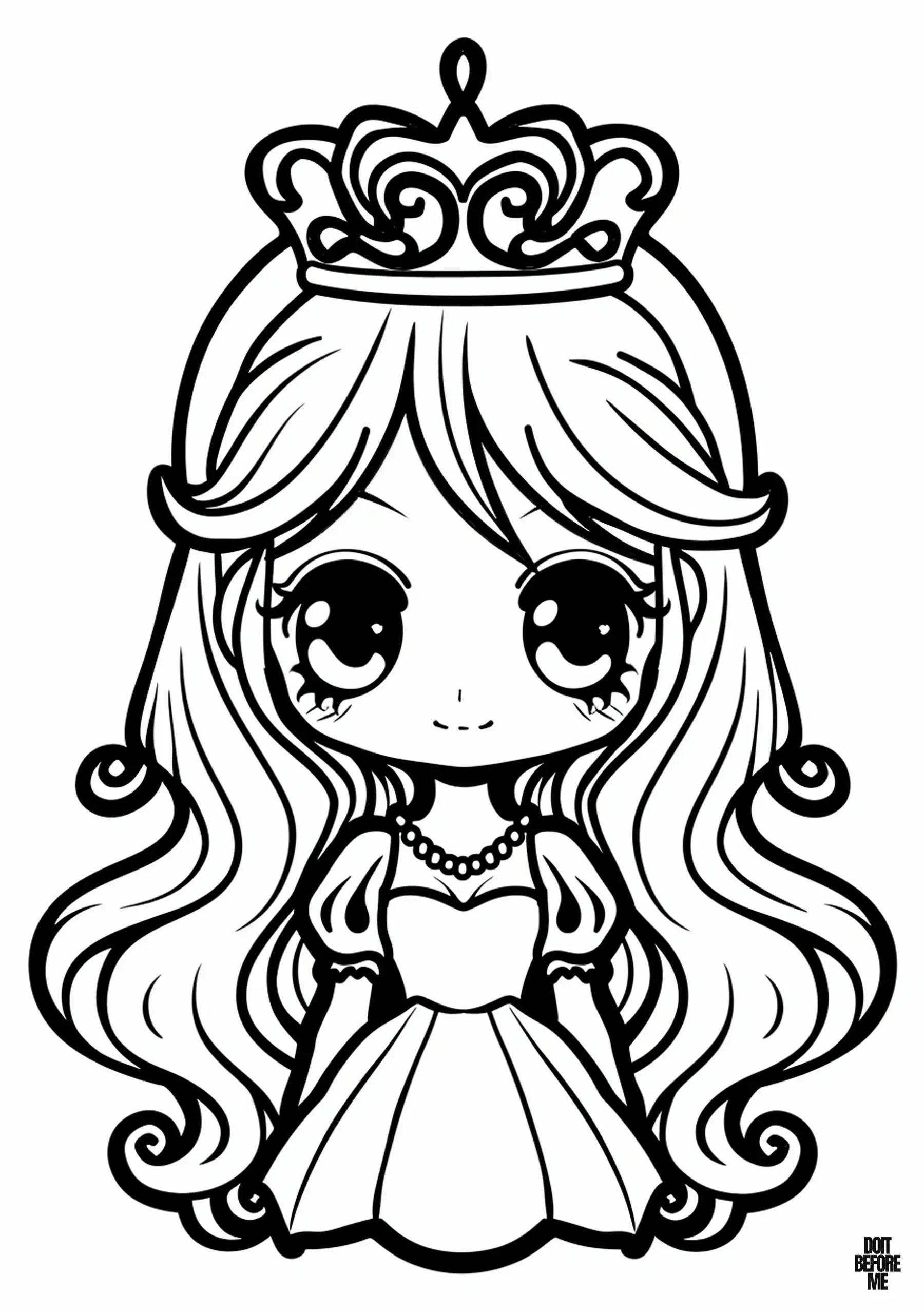
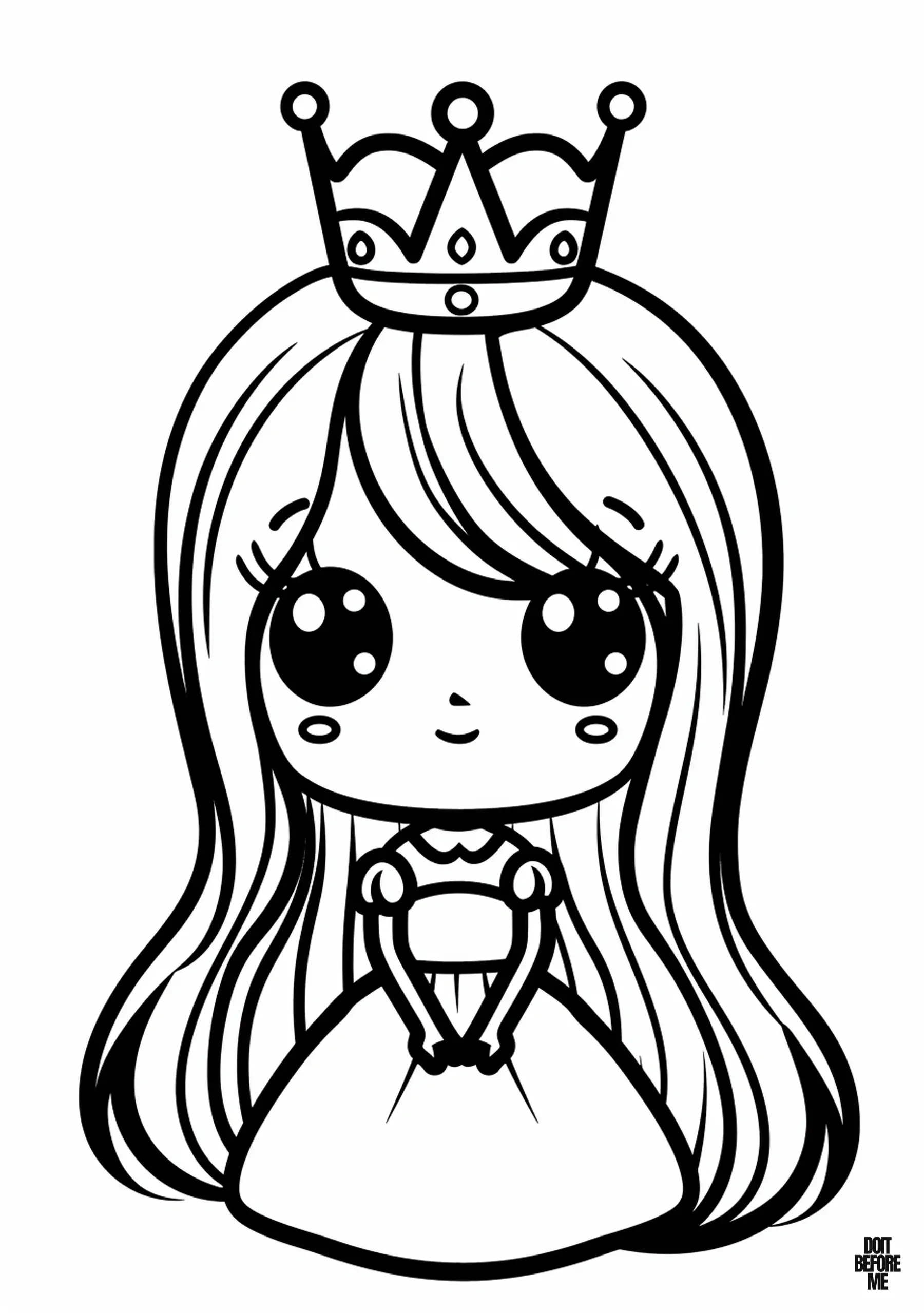
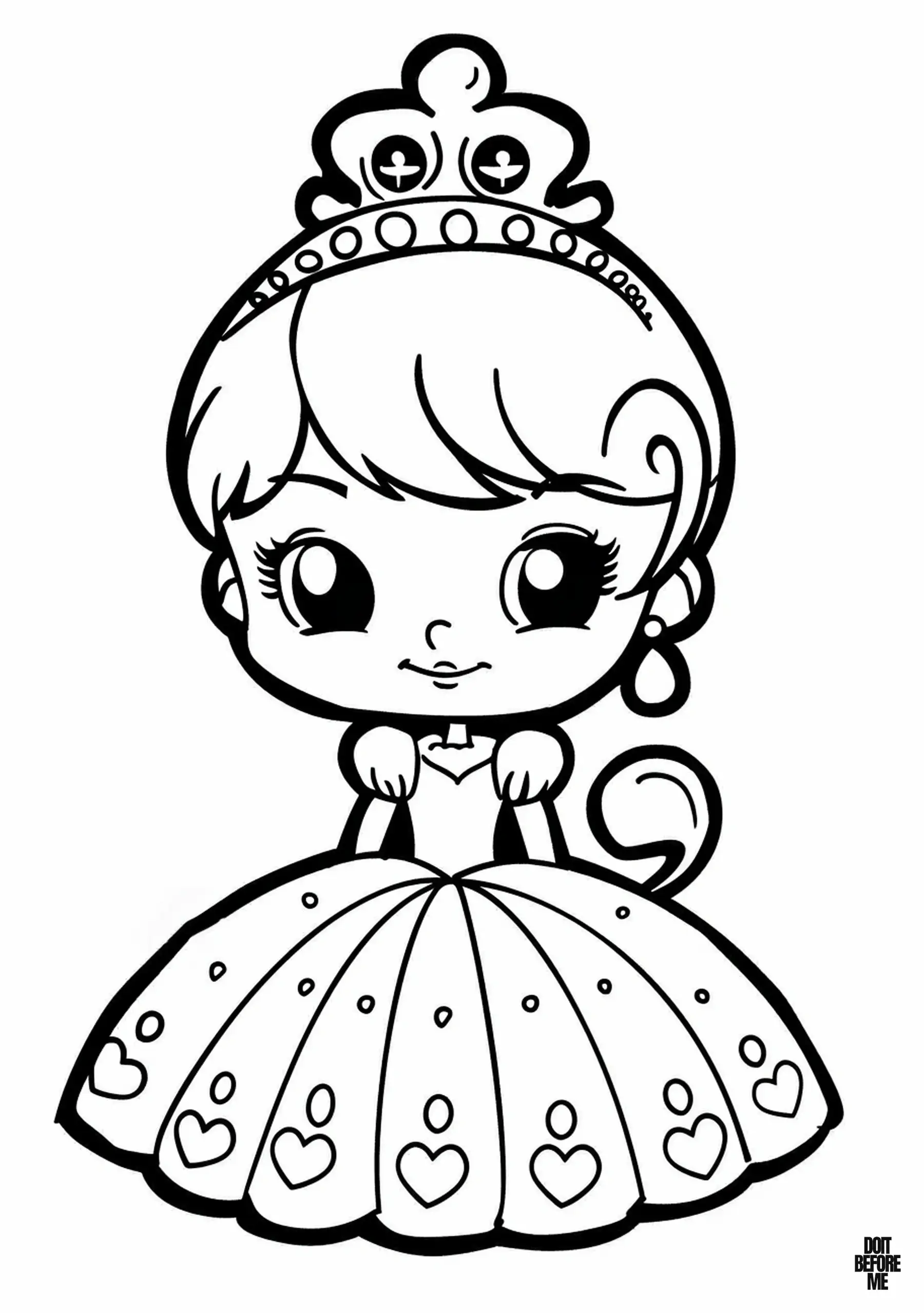
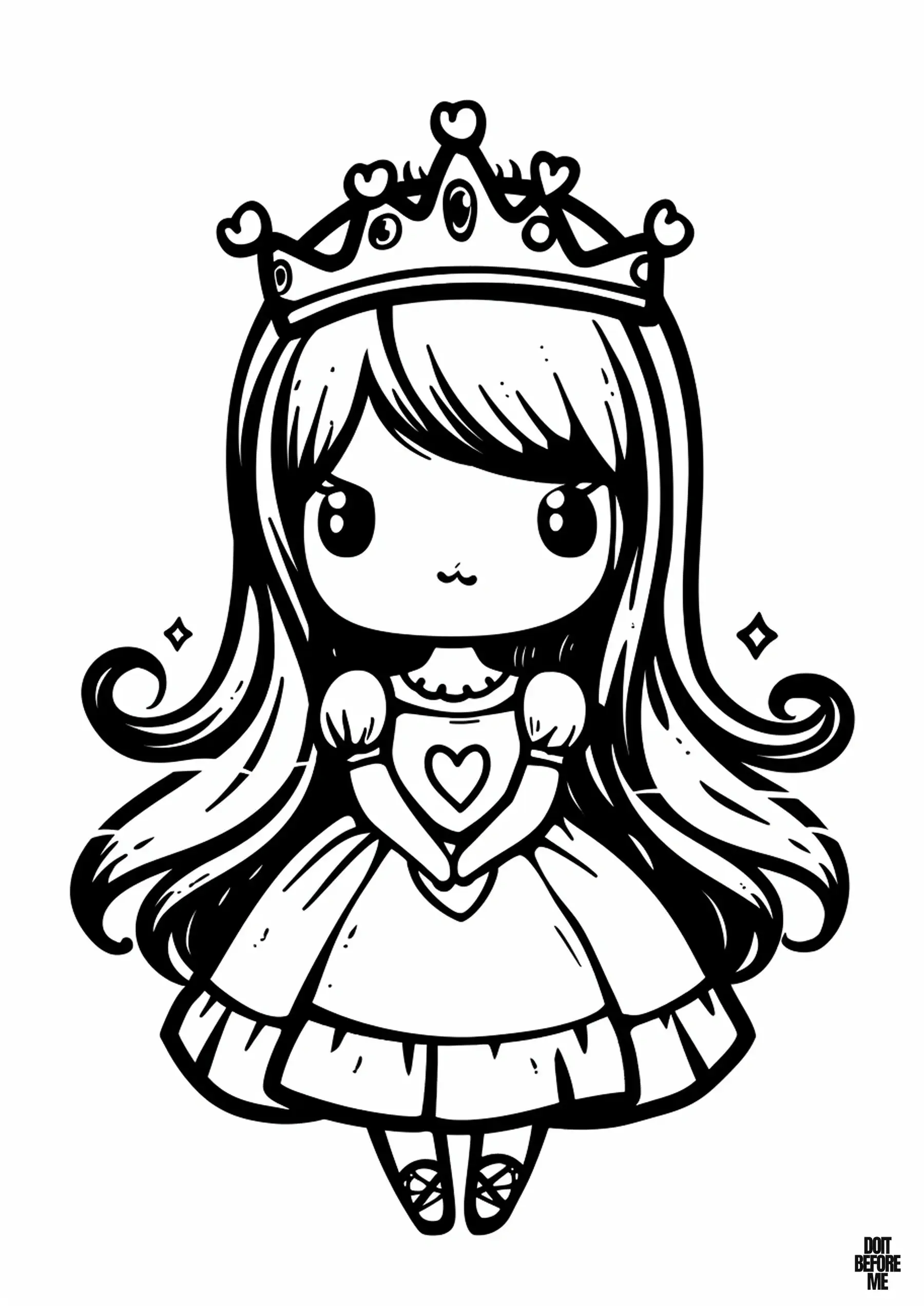
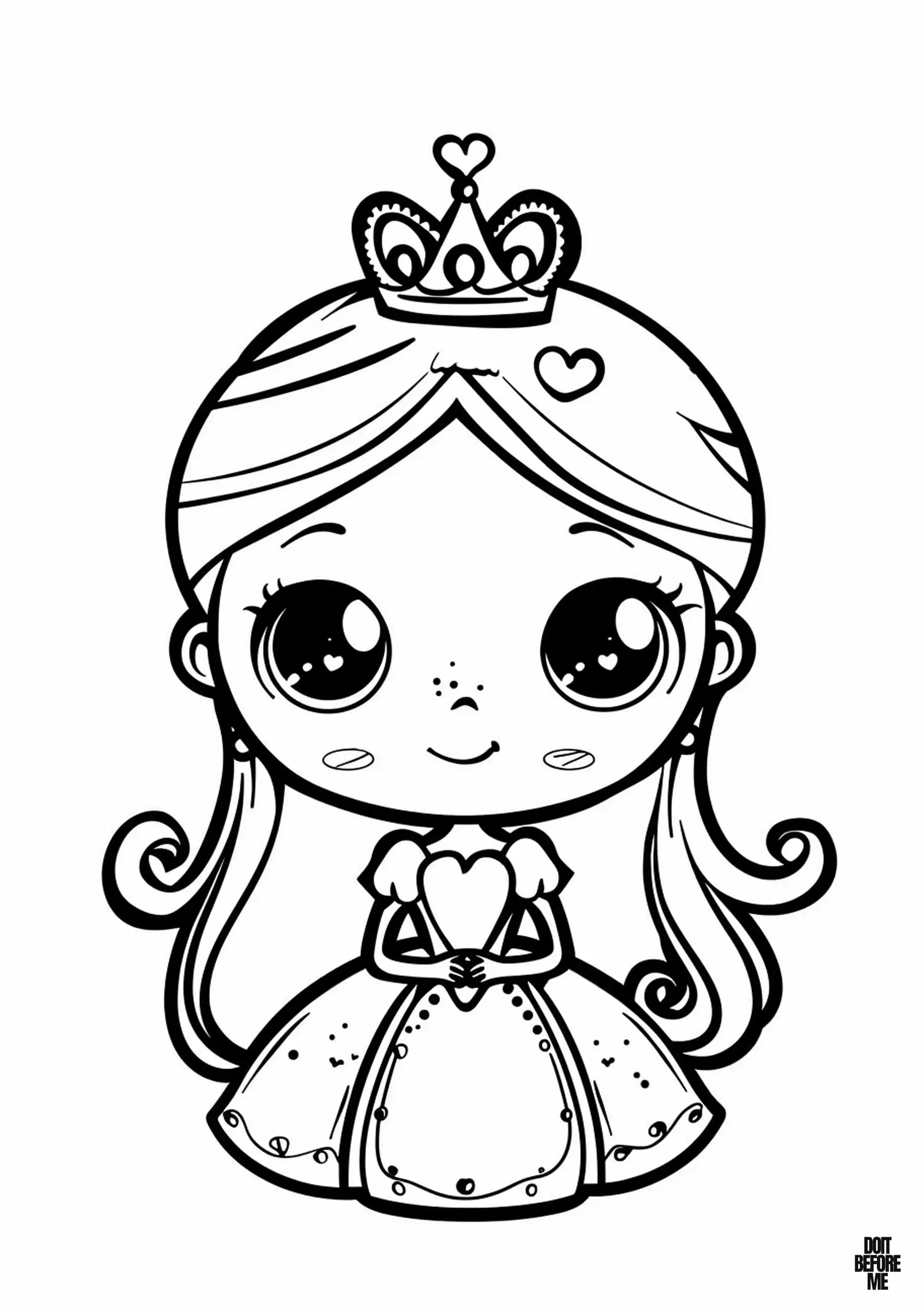
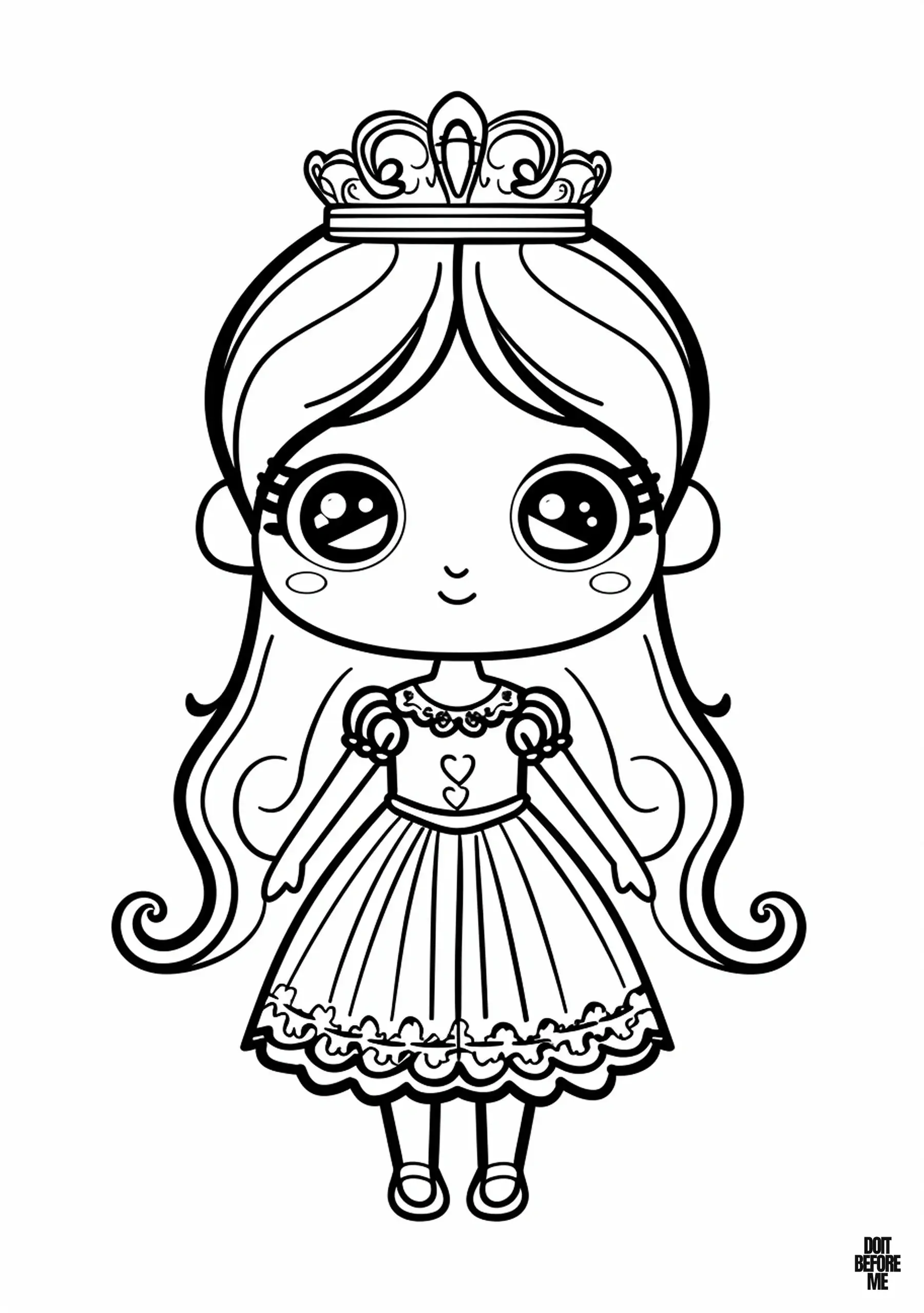
Thirty-four princess coloring pages, arranged so the easiest designs come first and the more detailed hair, gowns and fantasy characters come later. Click any princess to open the original full-size printable.
Jump to: Easy & preschool (1–12) · Cute & kawaii (13–23) · Fantasy characters (24–28) · More detailed (29–34)
Easy princess coloring pages — Sheets 1–12
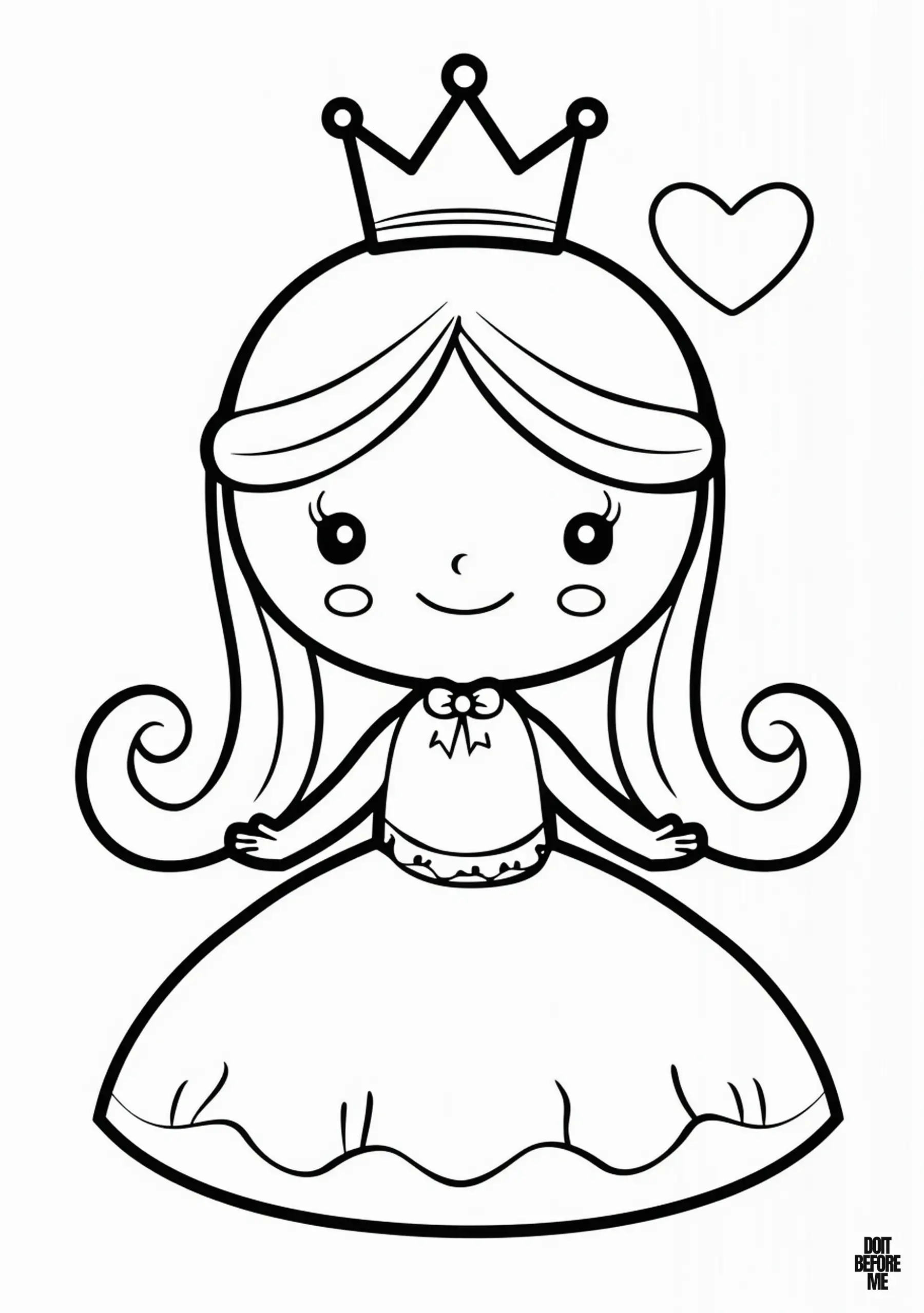
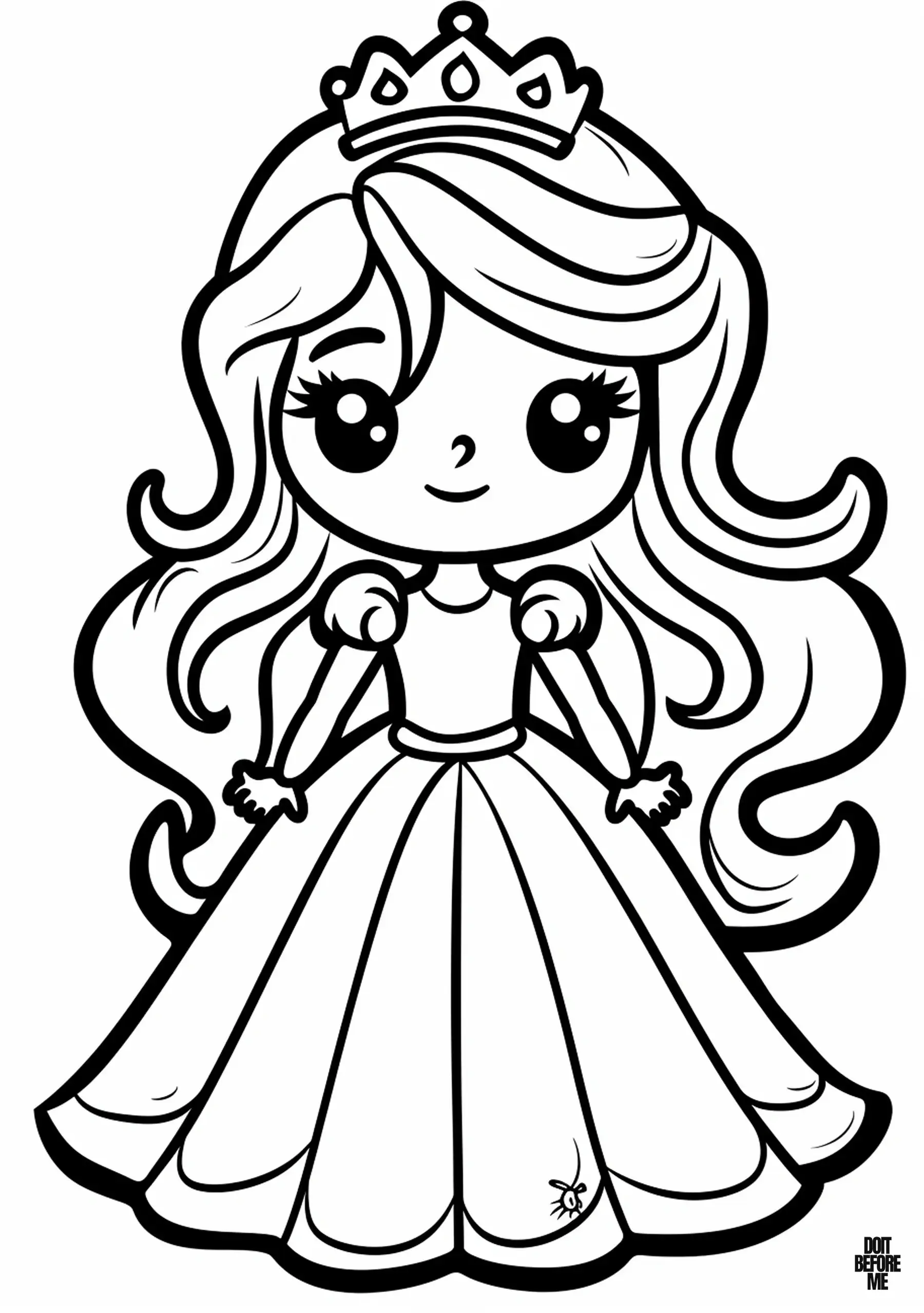
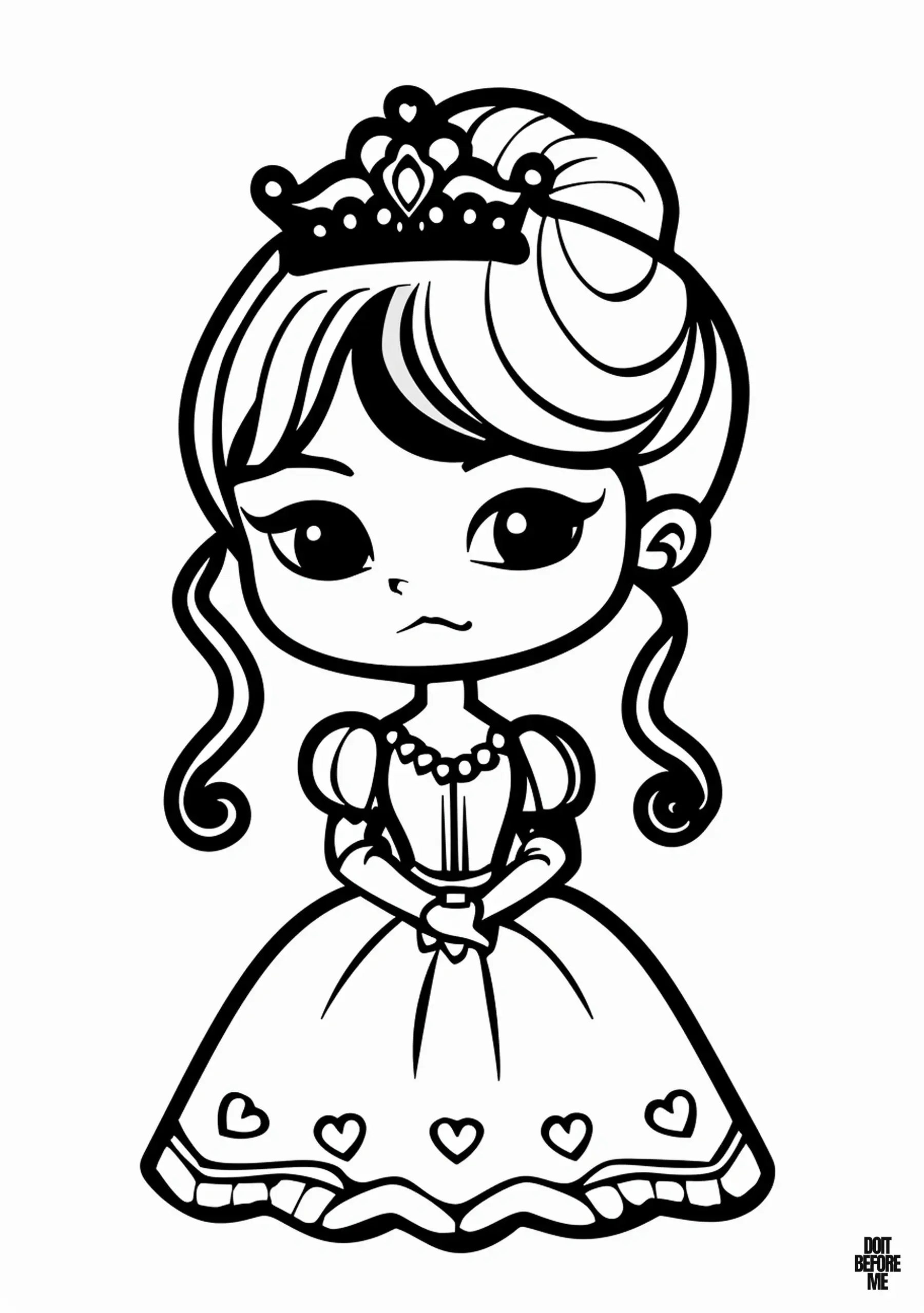
Start here for the cleanest outlines, larger dress shapes and fewer tiny details. These are the best choices for crayons, younger colorers, or anyone who wants to finish a page without spending most of the time on hair strands and decorations.
Try this 90-second dress, hair and face test first
Before coloring a whole gown, use a scrap of the same paper to test the three values you will actually need: your normal dress color, the same color with firmer pressure, and the lightest version you can make without leaving obvious gaps. If those three swatches look almost identical, adding more shades will not rescue the dress; choose a darker pencil or marker for the folds instead.
- Test the face against the hair. Put your intended skin tone beside the hair color. The edge should remain easy to see without outlining the entire face in a dark pencil. For very light blonde hair, make the shadow under the bangs slightly darker; for black or dark-brown hair, keep a narrow lighter area beside the cheeks so the face does not disappear.
- Give the gown one shadow rule. Darken only places where fabric logically turns away or overlaps: beneath sleeves, immediately below the waist, inside a fold and behind an upper layer of skirt. If you are shading every outside edge, stop—the result usually looks outlined rather than folded.
- Protect the tiny focal points. Pupils, lashes and the line between the lips need less pressure than you may expect. Color the large hair and dress shapes first, then check whether the eyes still attract attention before filling crown gems, earrings and trim.
- Check it from an arm’s length away. You should see the face first, then the silhouette of the hair and dress, then the accessories. If the crown or skirt decoration grabs attention before the face, simplify the accent colors rather than adding more detail.
For preschoolers using thick crayons, reduce this to two choices: one dress color and one different color for the hair. The goal is clean shape recognition, not realistic fabric shading. On Sheets 1–12, that simpler approach usually produces a clearer finished page than asking a young colorer to manage several nearly identical shades.
Choose a princess sheet by the tool in your hand
A page can look “easy” on screen and still be frustrating once it is printed. Before choosing a sheet, place the tip of the crayon, marker or pencil over the smallest important spaces: the eyes, fingers, crown points and narrow gaps between hair and face. If the tip is wider than those spaces, either switch to a finer tool or move to a simpler sheet instead of trying to force neat coloring into an unsuitable design.
| If you are using… | Start with | Practice goal |
|---|---|---|
| Thick crayons | Sheets 1–6 | Stay inside the large dress and hair shapes; ignore tiny jewelry if needed. |
| Fine crayons or washable markers | Sheets 7–12 | Keep the crown, face, hair and dress clearly separated. |
| Colored pencils | Sheets 13–23 | Use pressure changes to make hair overlap and dress folds readable. |
| Fine-tip markers or pencils | Sheets 24–34 | Control small accessories and details without making every area equally dark. |
One-page practice: on Sheet 6, color only the hair, face and upper half of the dress first. Put the page down and look at it from across the table. If the face is still the first thing you notice, continue. If the crown, hair or dress dominates, fix the value balance before coloring the lower skirt. This catches contrast problems while they are still easy to correct.
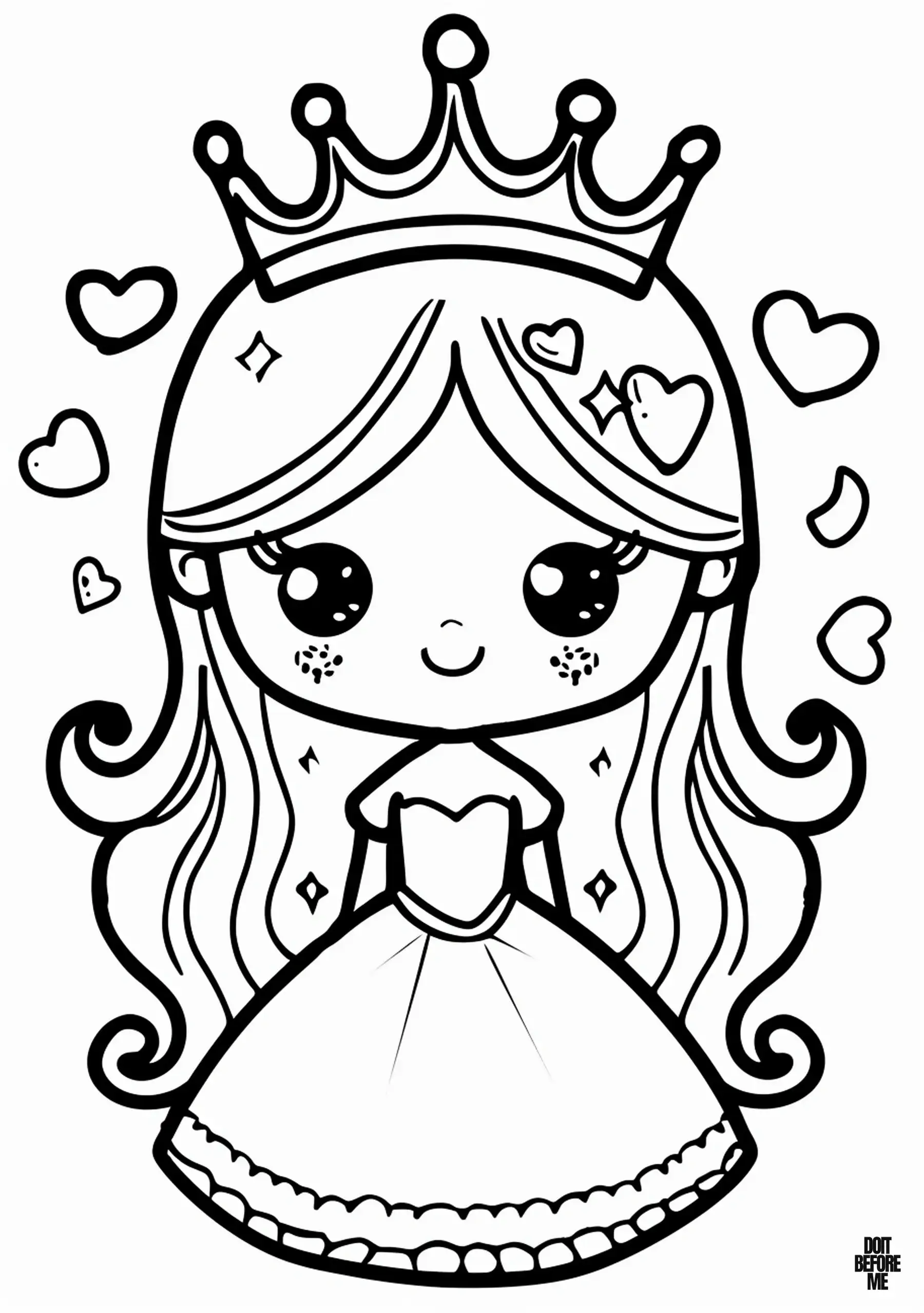
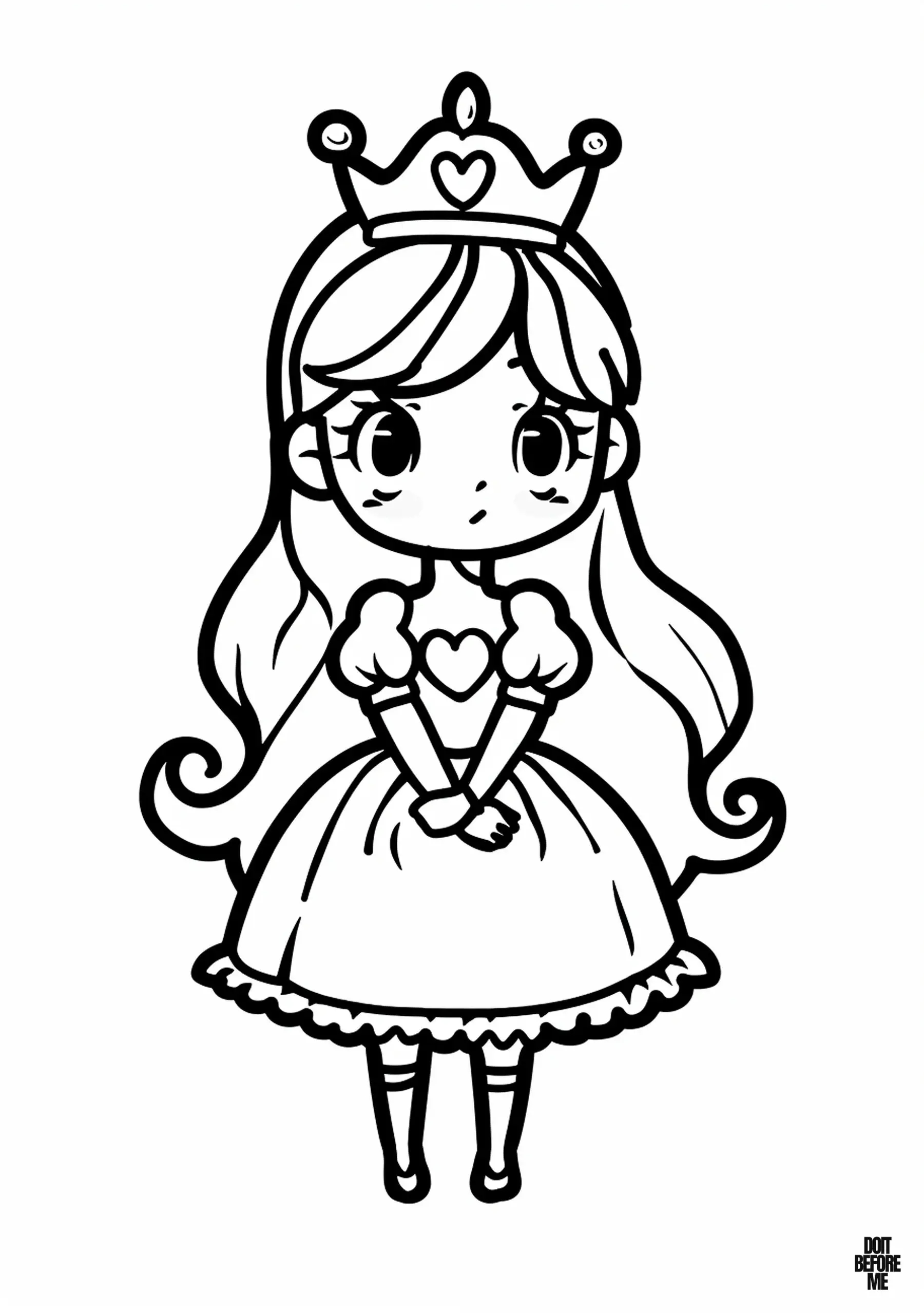
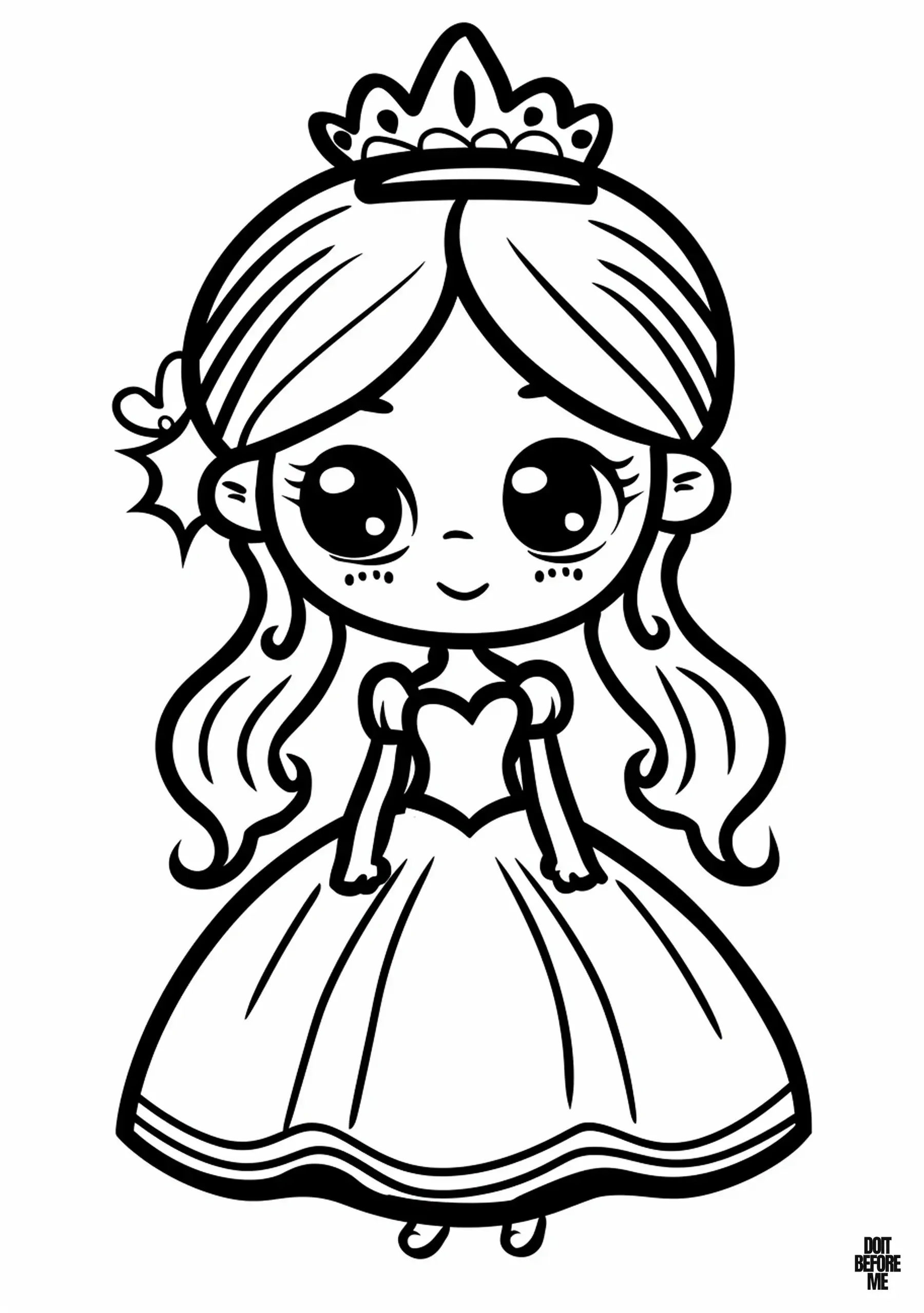
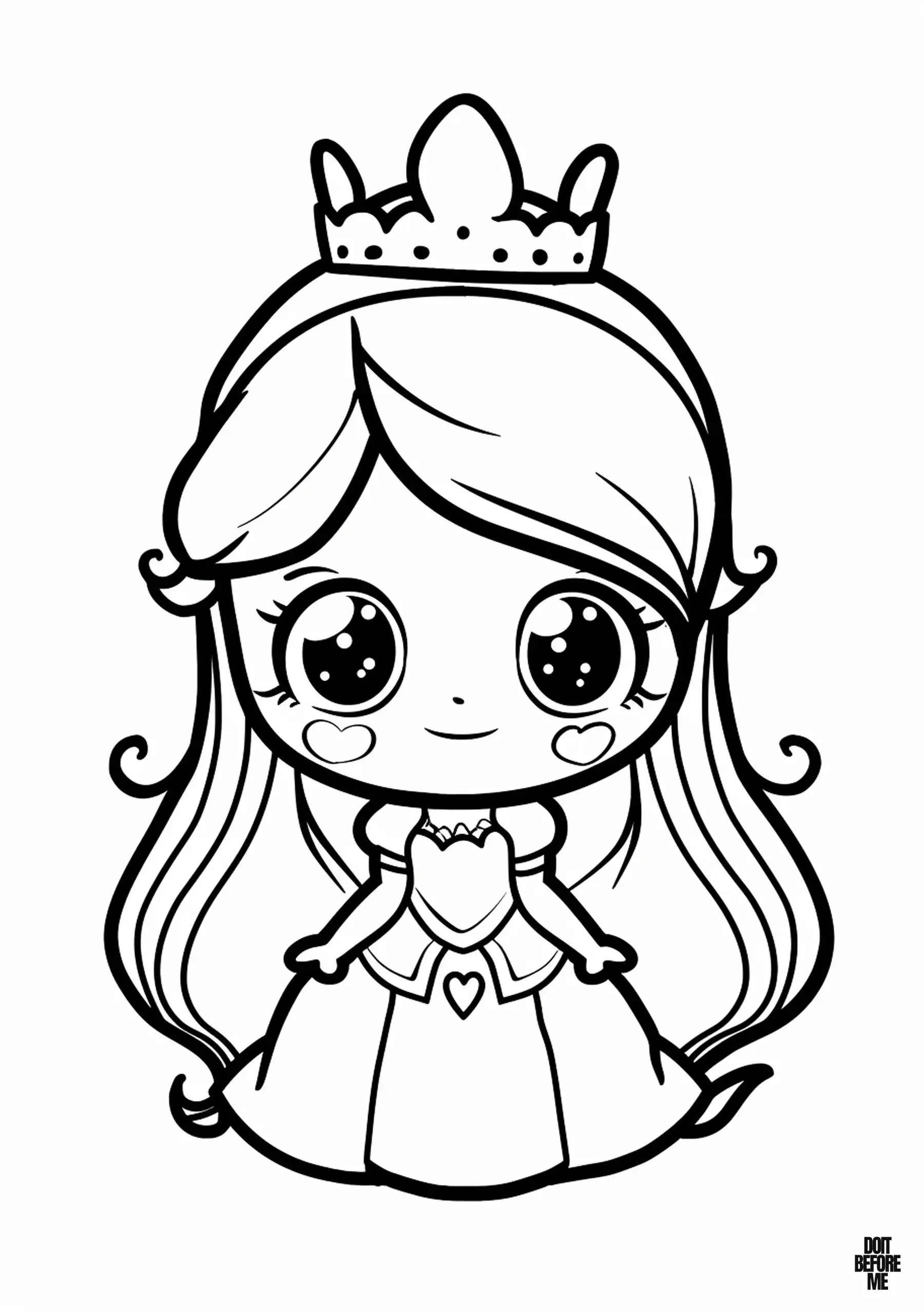
How to keep an easy princess page easy
- Choose the dress color first. One main dress color makes the rest of the page much easier to plan.
- Keep skin, hair and crown separate. You do not need five shades in each area; a base color plus one darker shade is enough.
- Repeat one accent. If the crown has pink gems, use the same pink on a ribbon or heart rather than introducing another new color.
- Leave some white space. White sleeves, pale trim or an uncolored background can make the finished page look cleaner.
For a quick three-color palette, try lavender + deep purple + gold, pale blue + navy + silver-gray, pink + burgundy + cream, or mint + teal + warm yellow. There is no required princess palette.
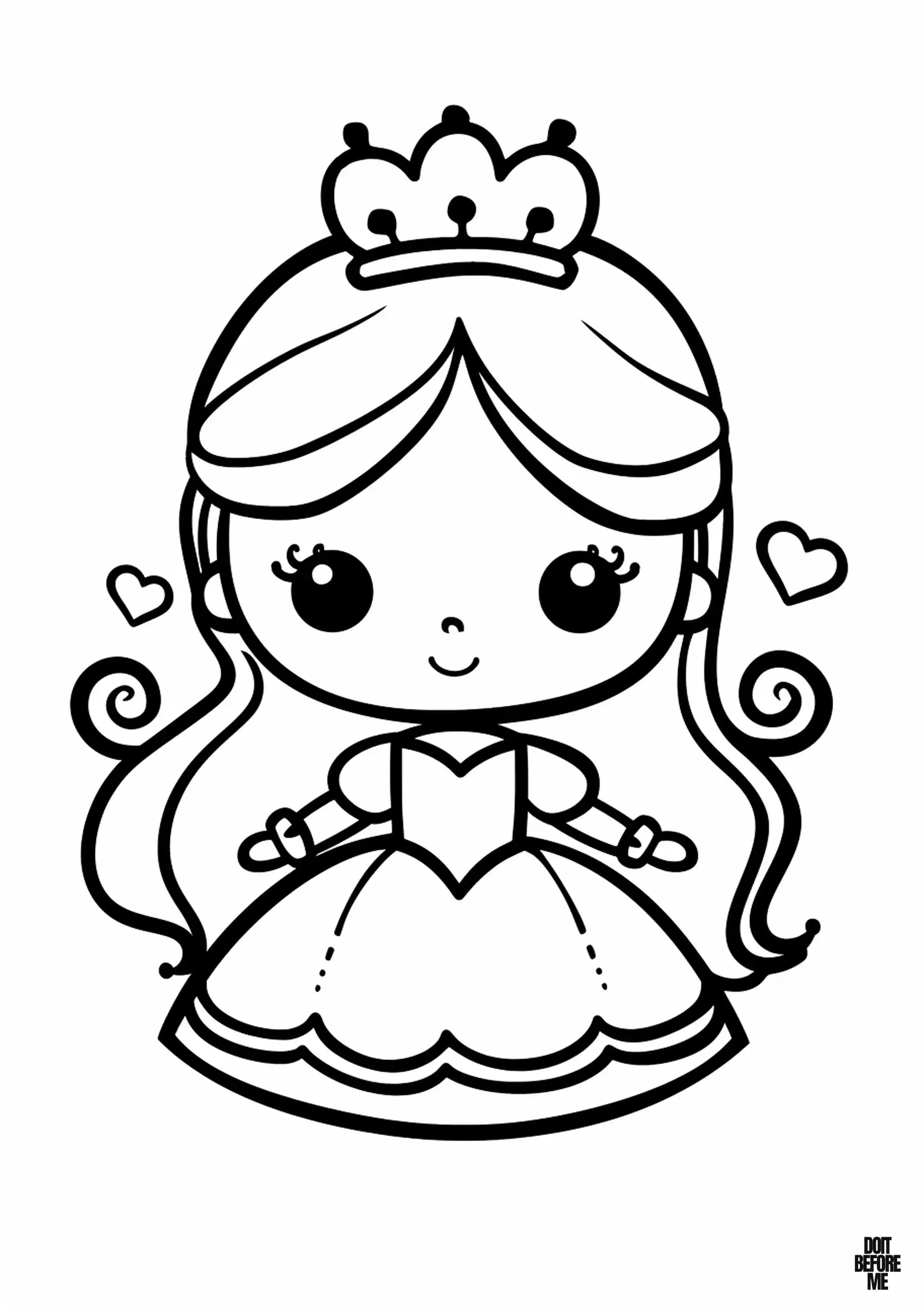
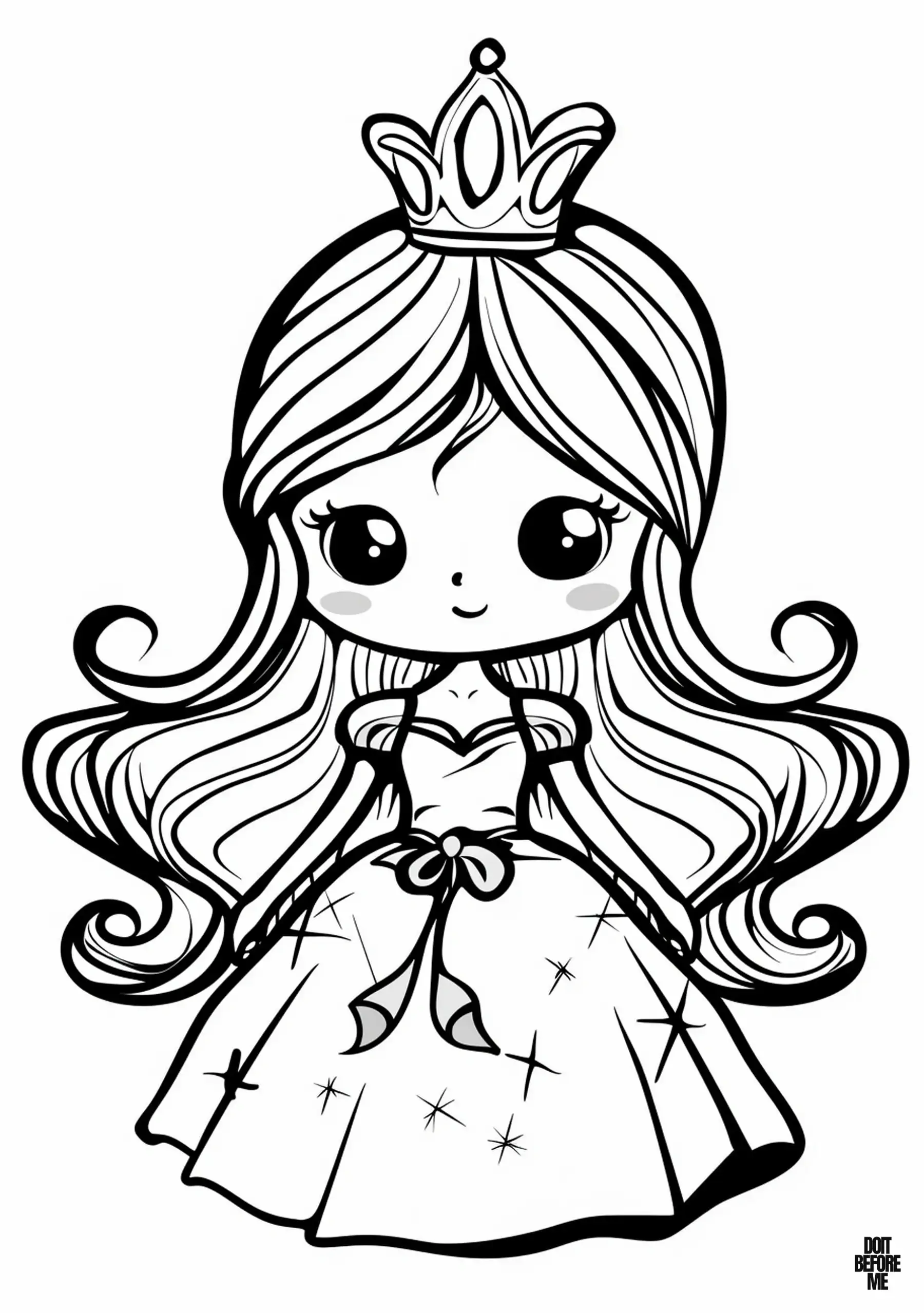
If you only want to print three pages and be done, use Sheet 2 for something very easy, Sheet 15 for a cute chibi-style princess, and Sheet 24 for the mermaid princess. Use them as a short practice sequence: on Sheet 2, aim for smooth coverage inside the large dress shapes; on Sheet 15, practice keeping hair, skin and dress clearly separated; on Sheet 24, add a second shade only where forms overlap. That progression teaches more than simply coloring three similar gowns.
Fix common princess-coloring problems
| If you notice… | Change this | Why it works |
|---|---|---|
| The gown looks flat | Add one darker version of the dress color under sleeves, at the waist and inside the deepest folds. | A few placed shadows describe fabric better than shading every edge. |
| Long hair looks striped | Lay down one light base first, then darken only overlapping curls and the hair behind the neck. | The base joins individual strokes into one mass of hair. |
| The face gets lost | Keep the darkest values away from the cheeks and reserve them for pupils, lashes and nearby hair. | The facial features stay readable even on the kawaii sheets. |
| The crown competes with the face | Use one metallic-looking color plus a single gem accent instead of coloring every jewel differently. | The crown reads as an accessory rather than the focal point. |
| Markers leave bands on a large skirt | Fill one adjoining section at a time while the previous edge is still damp. | Wet edges merge more evenly than dried overlaps. |
| The whole page feels too pink or purple | Add a neutral such as cream, gray or brown and repeat it in two or three places. | A neutral gives the bright palette somewhere to rest. |
If you want an even smaller, simpler collection, use the baby princess pages. If you want castles, towers, dragons and broader scenes, the storybook princess collection is the better fit.
Cute and kawaii princesses — Sheets 13–23
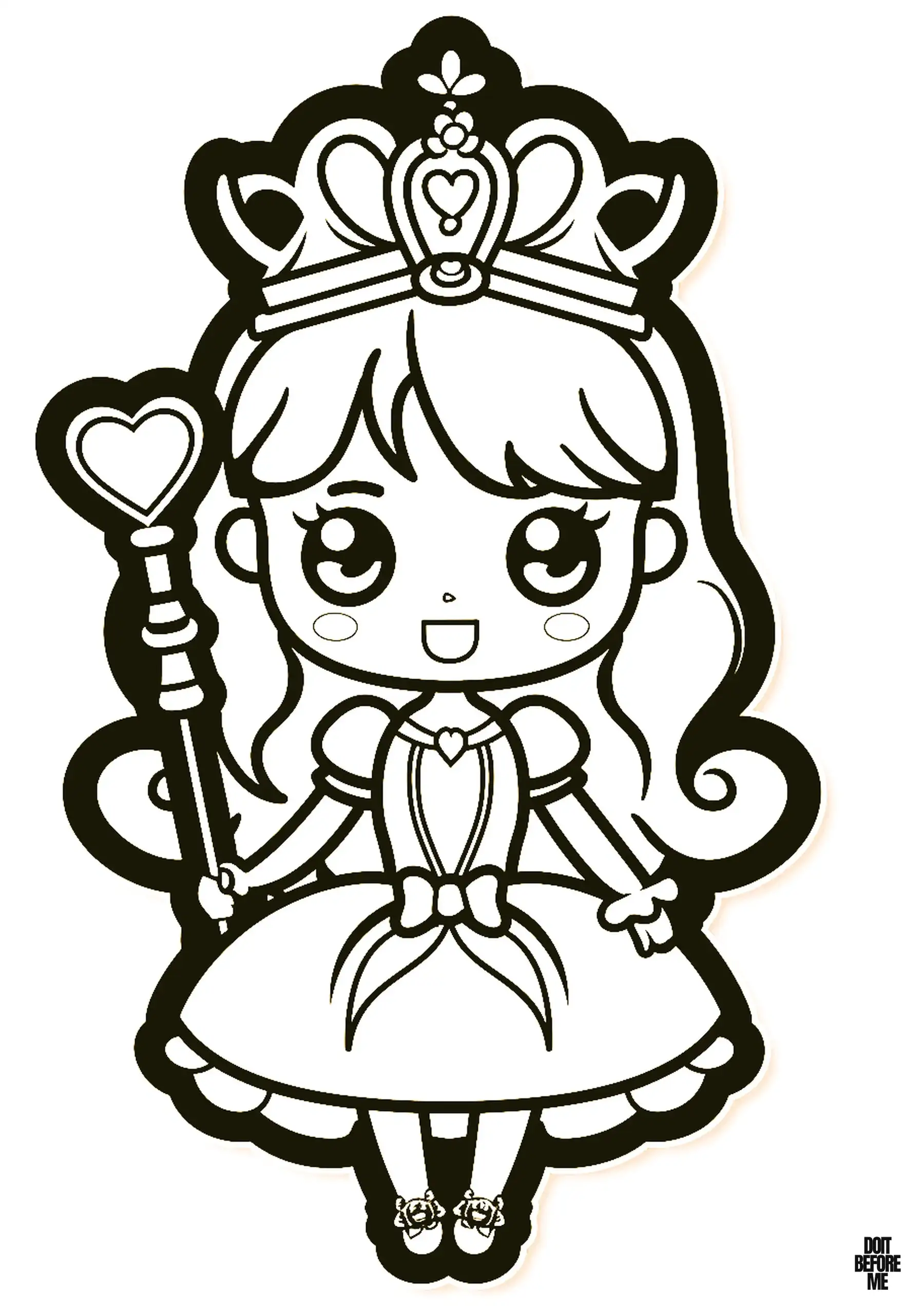
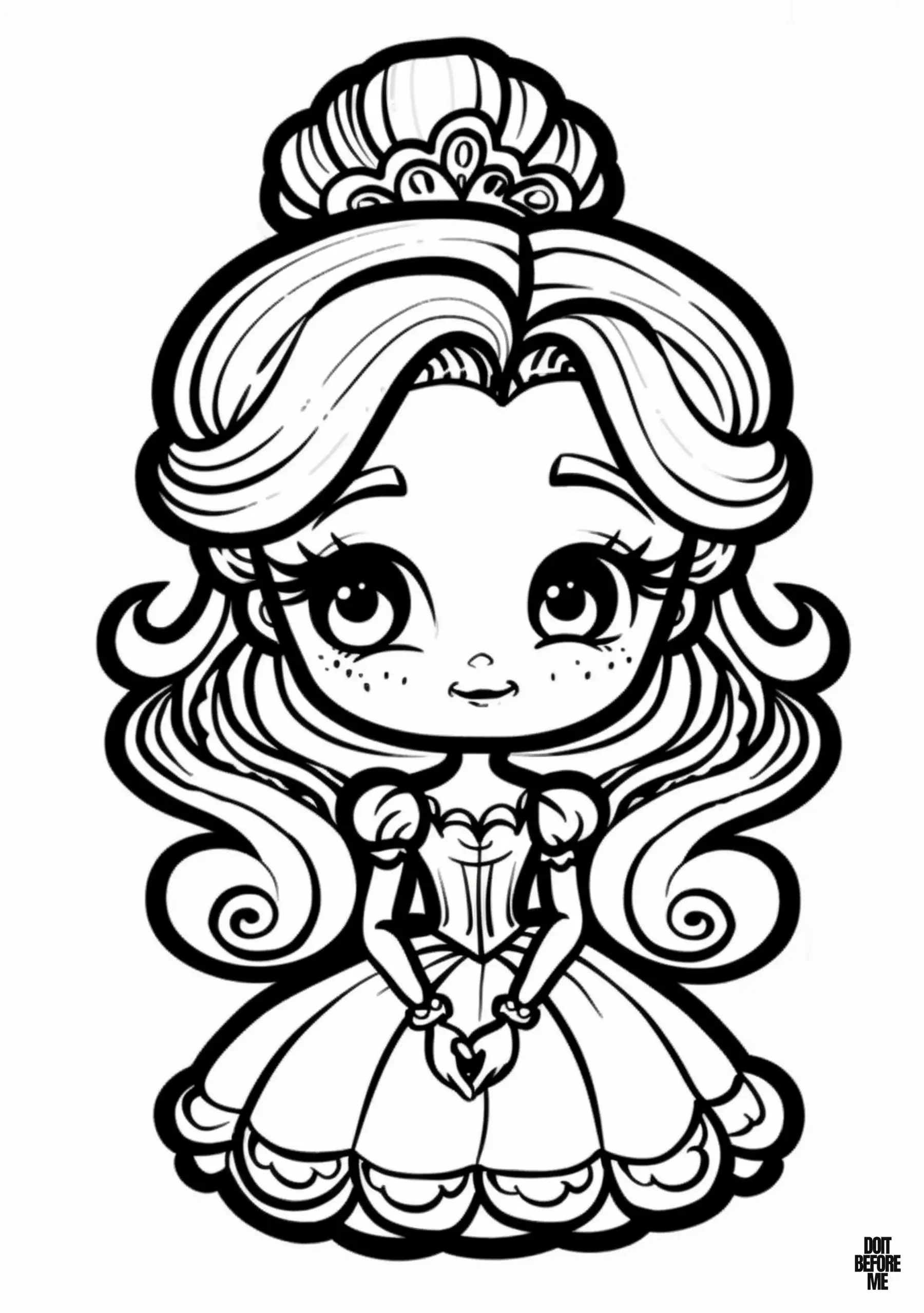
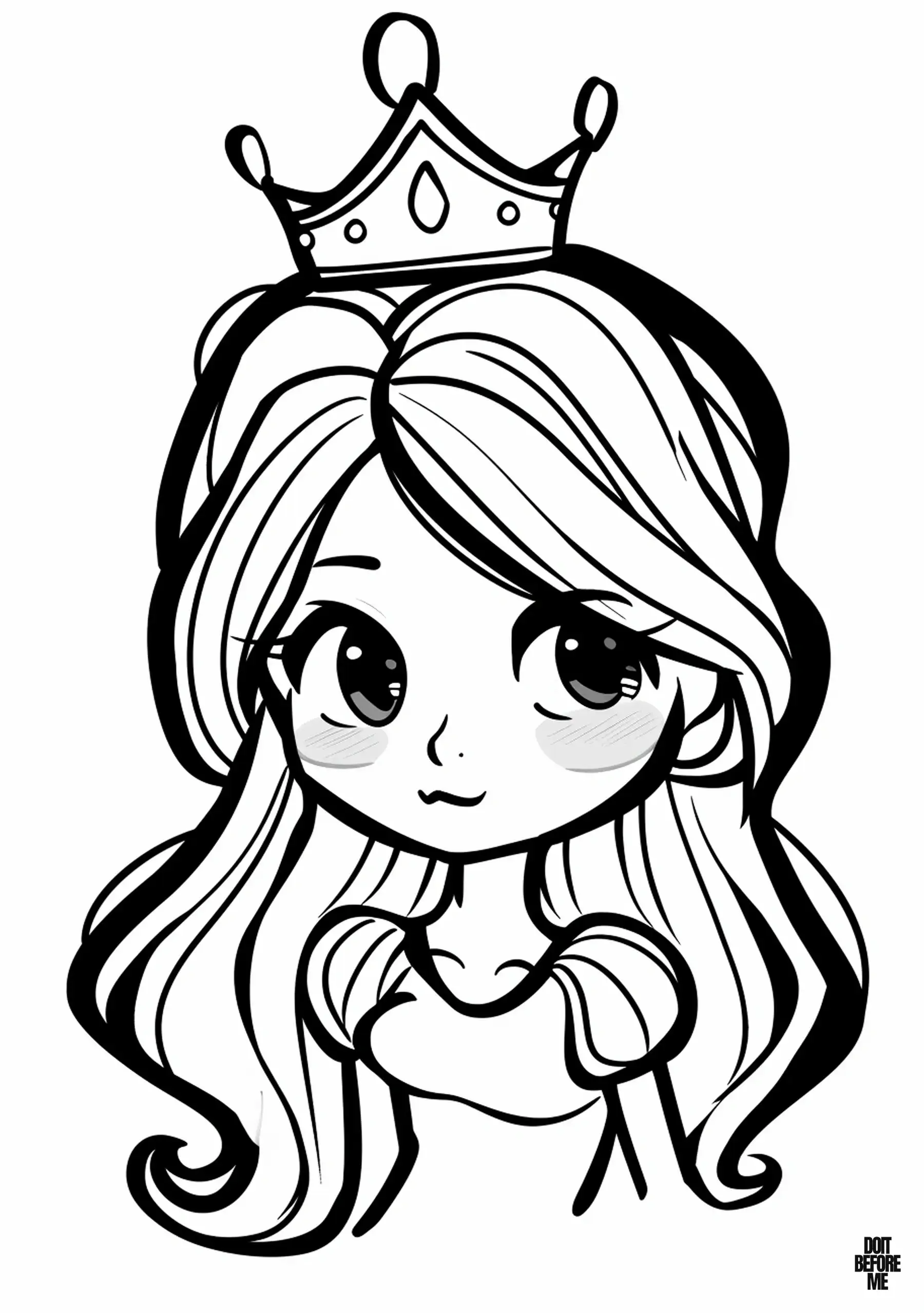
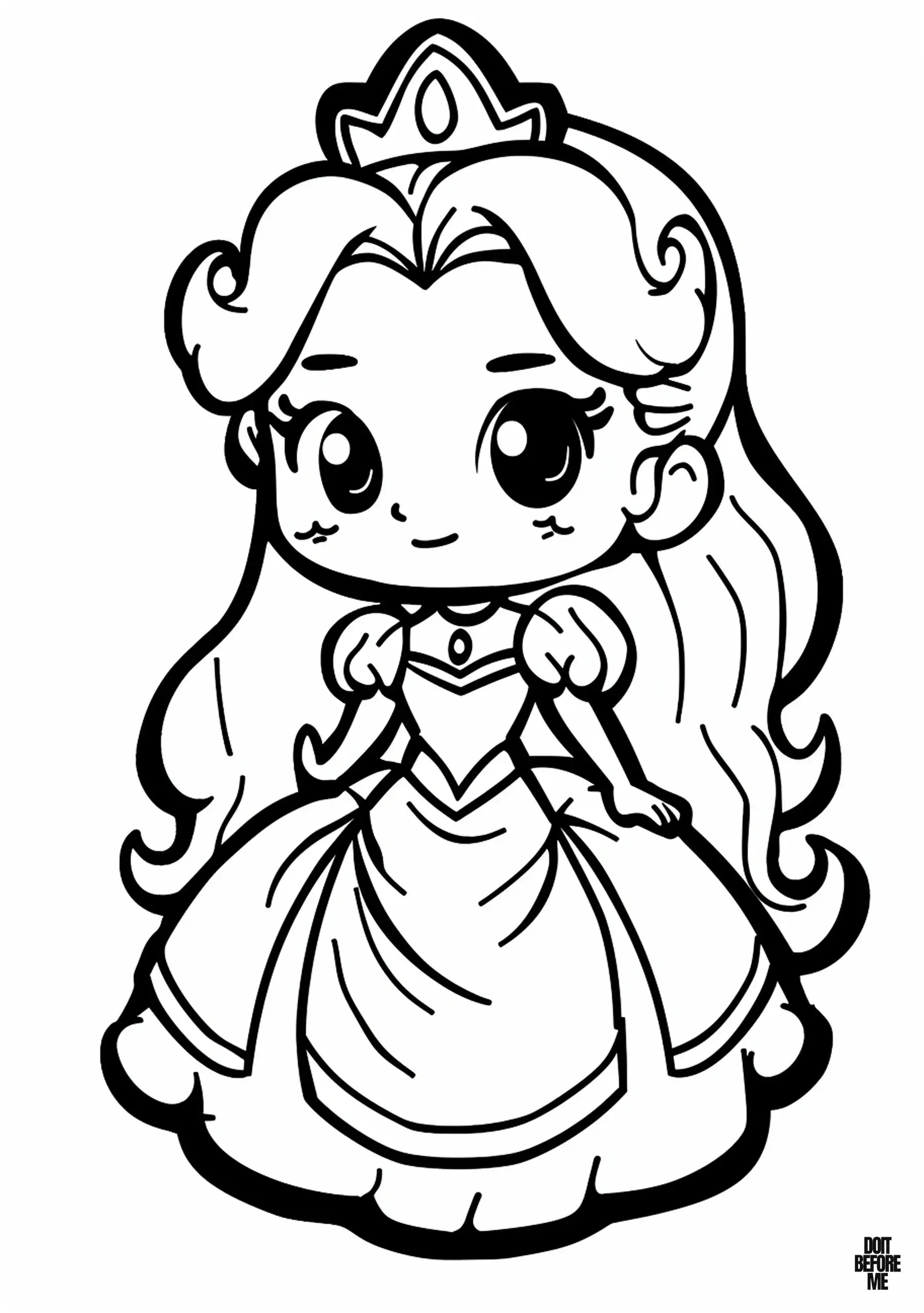
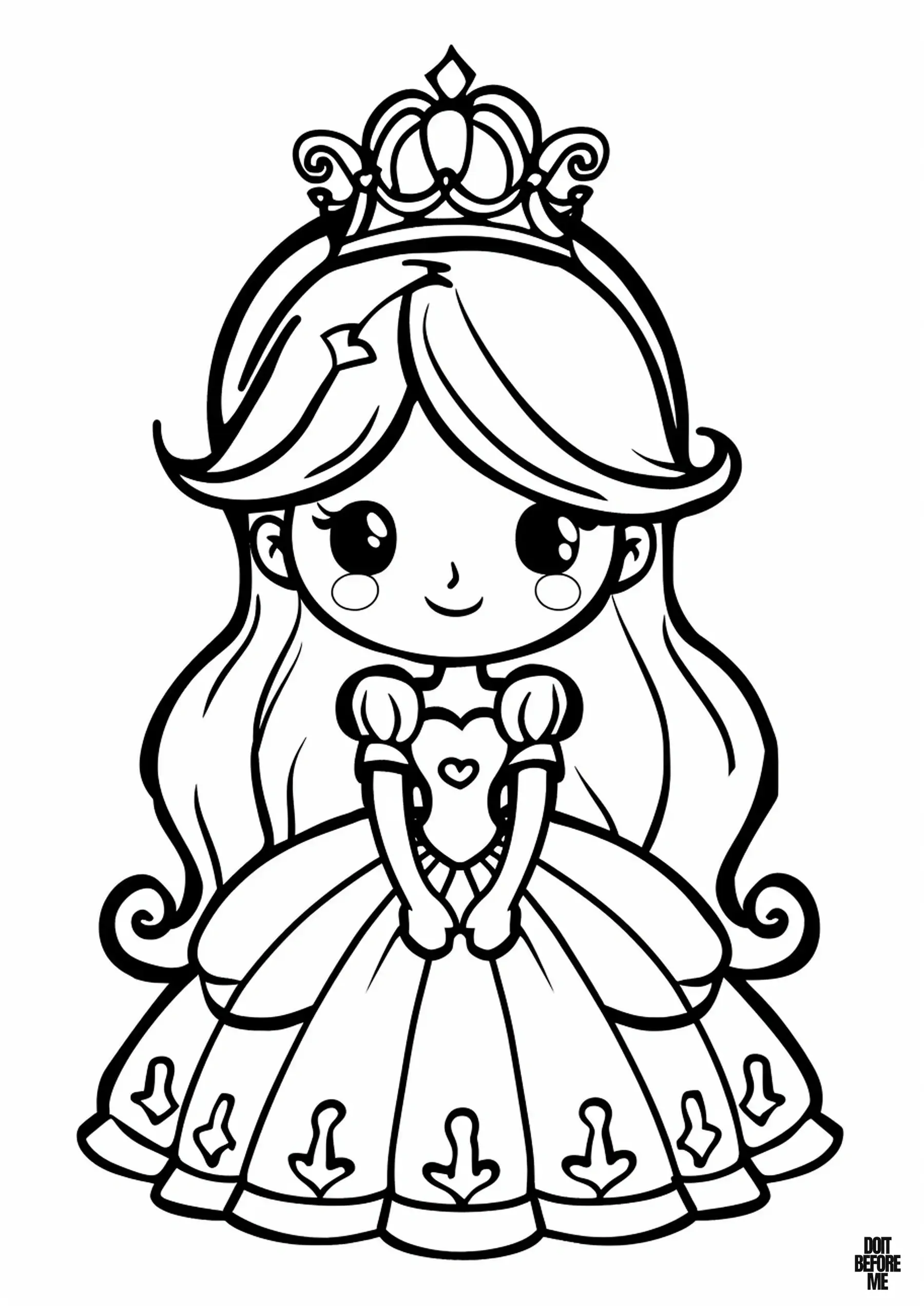
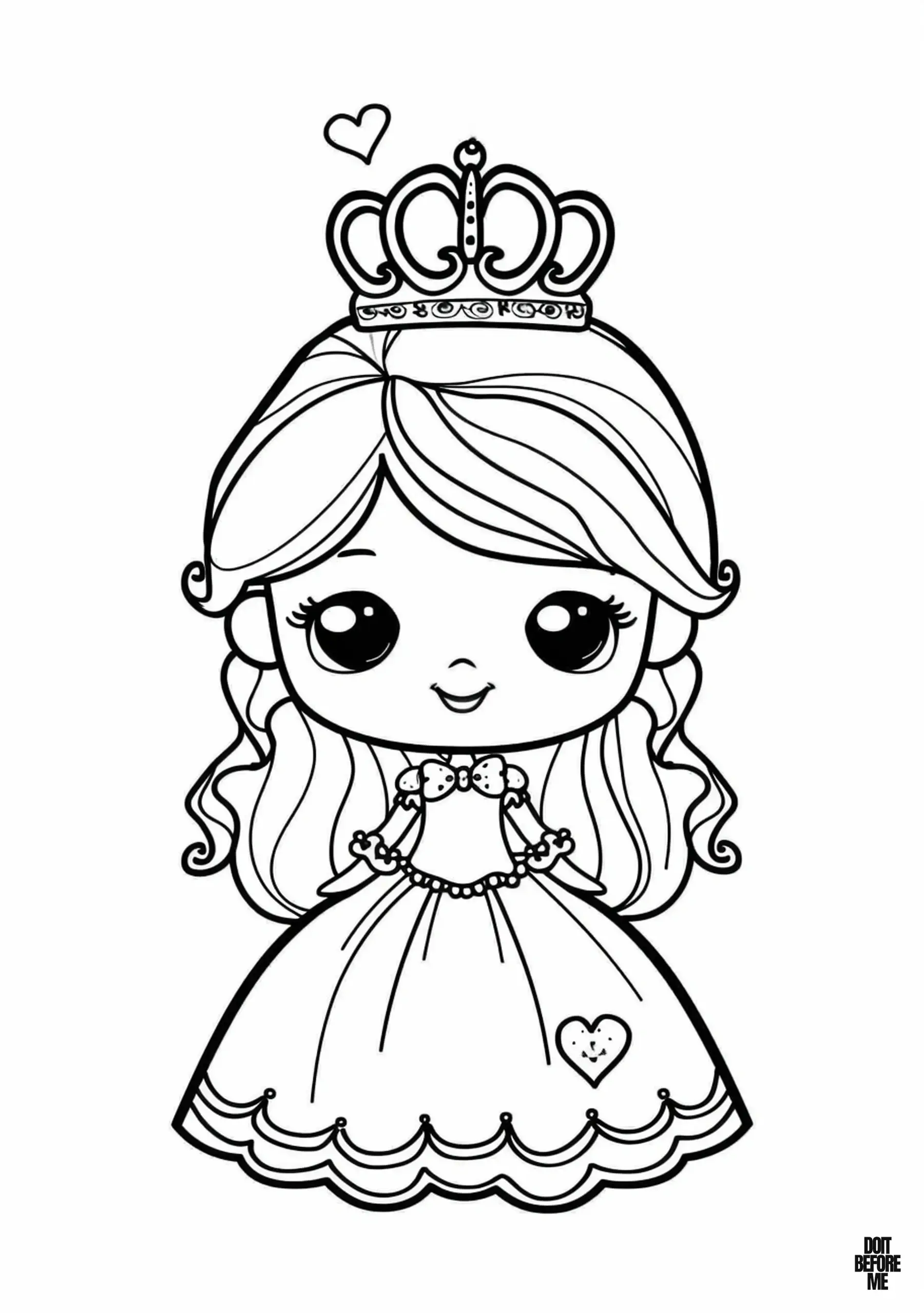
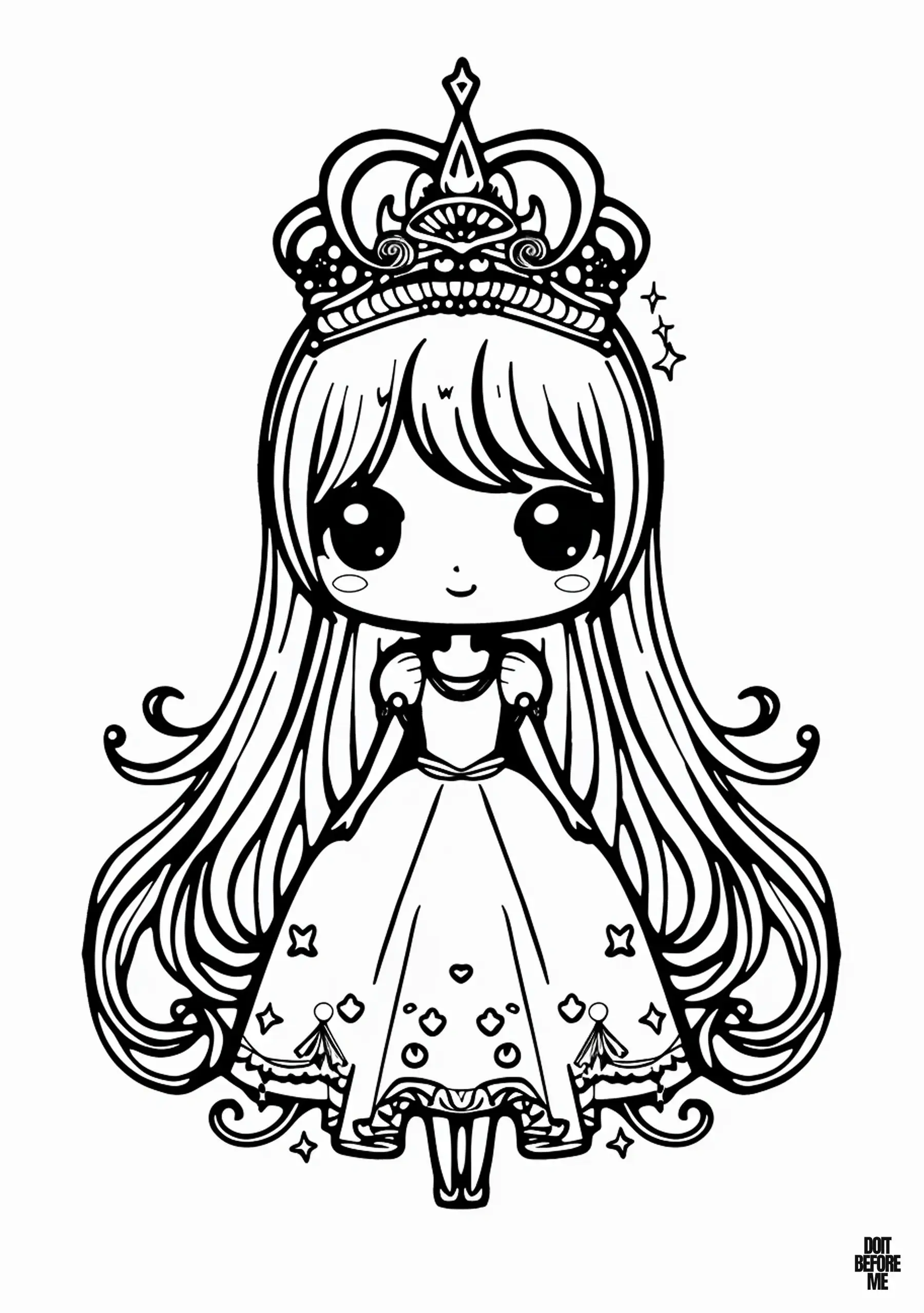
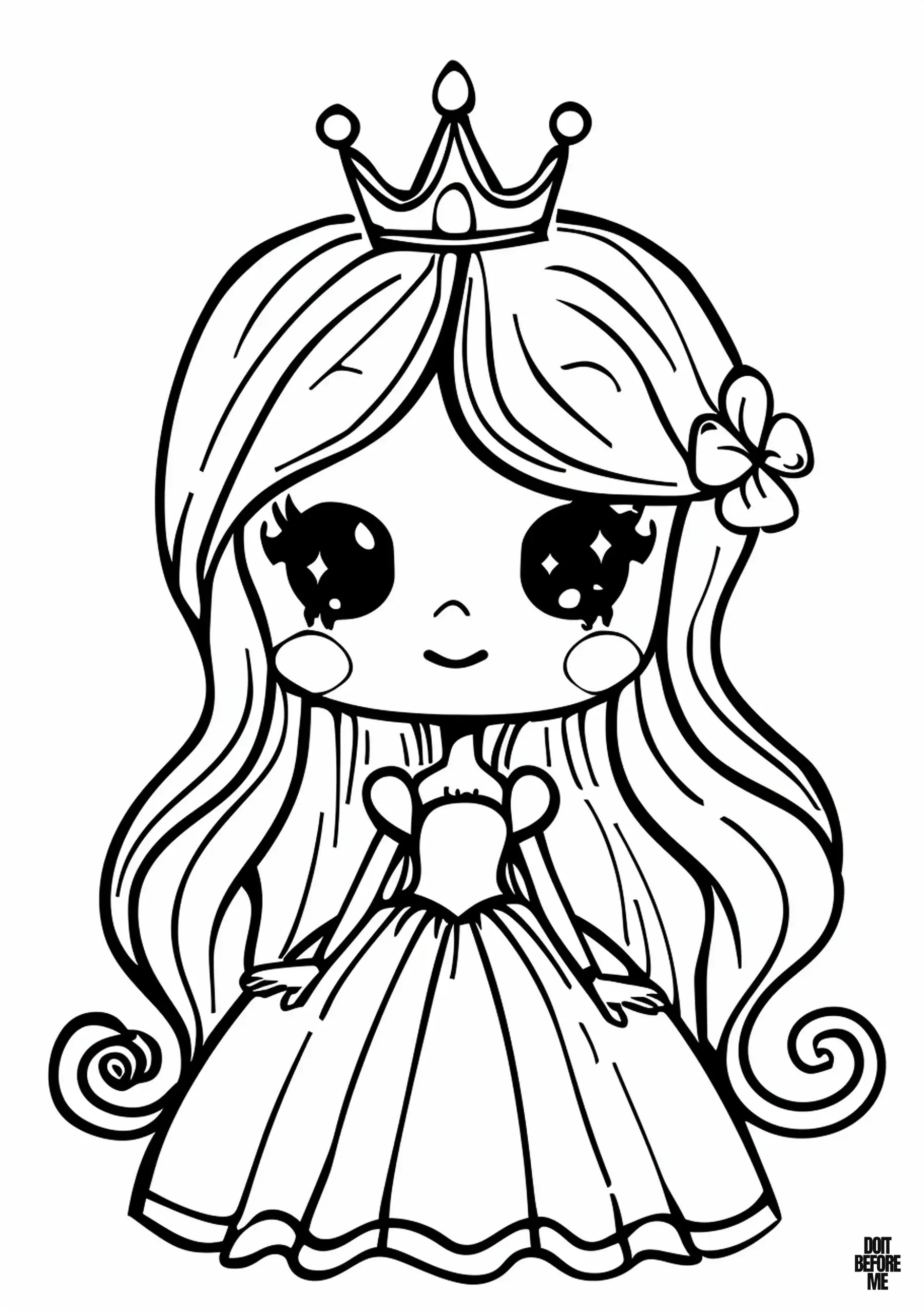
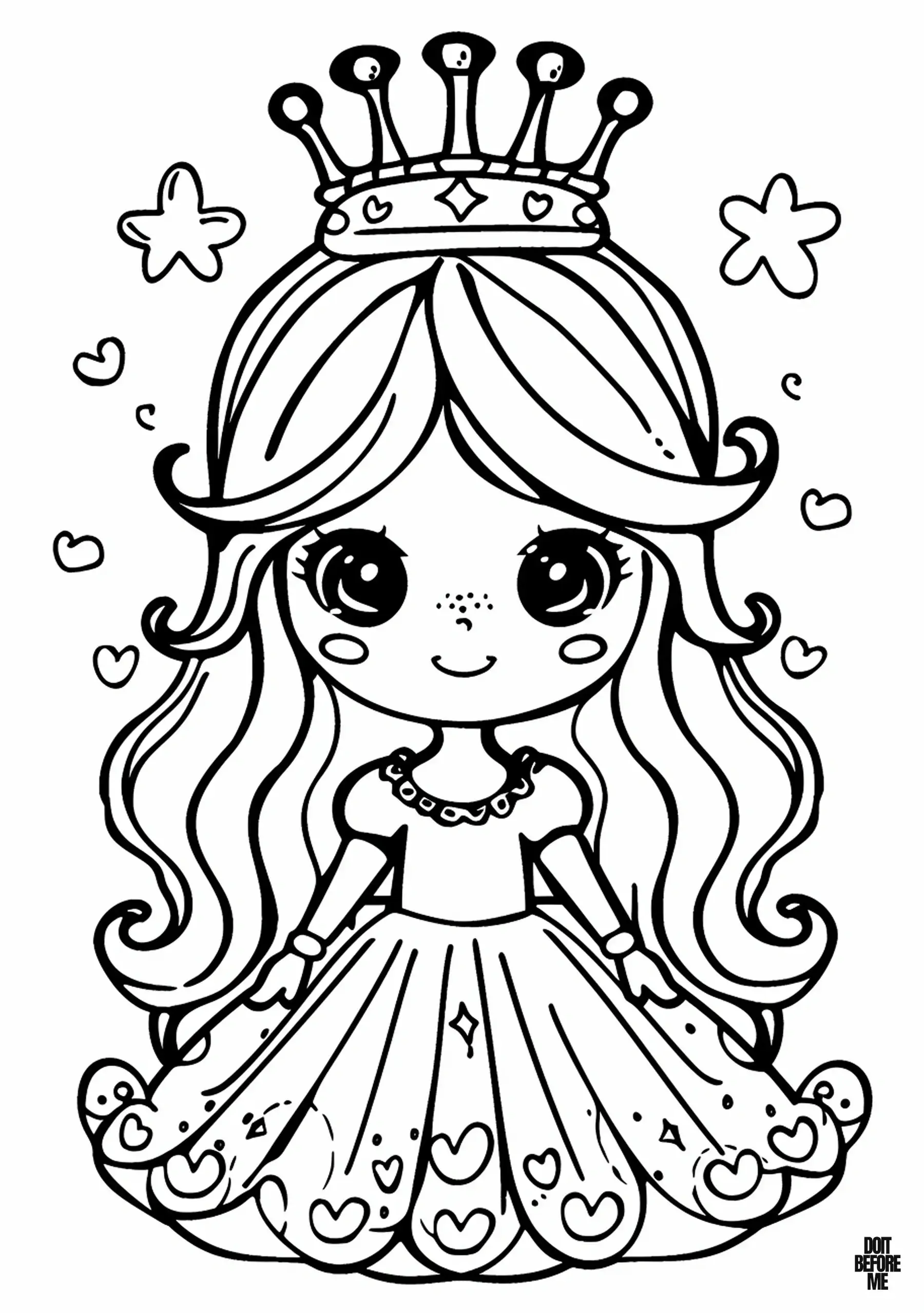
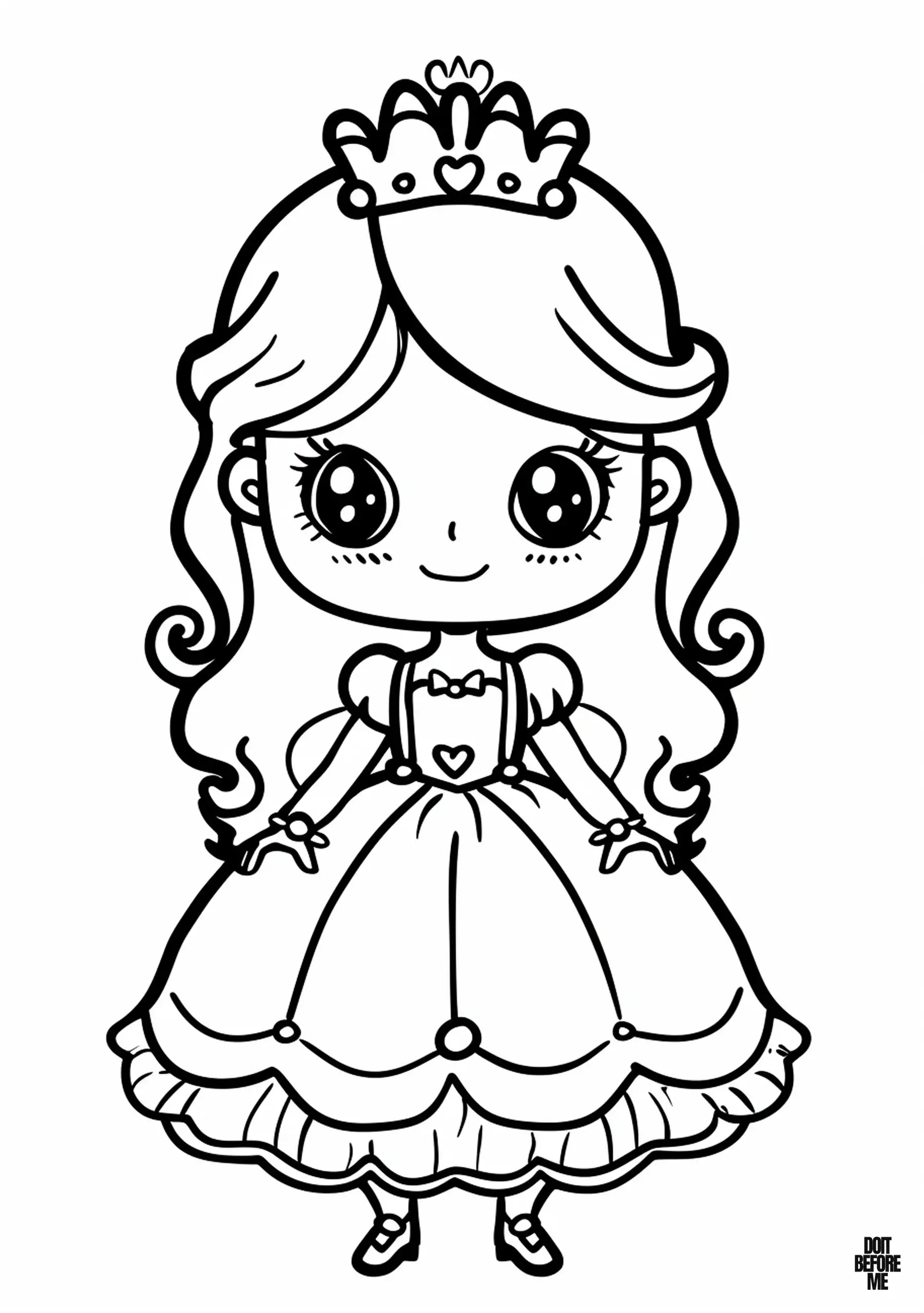
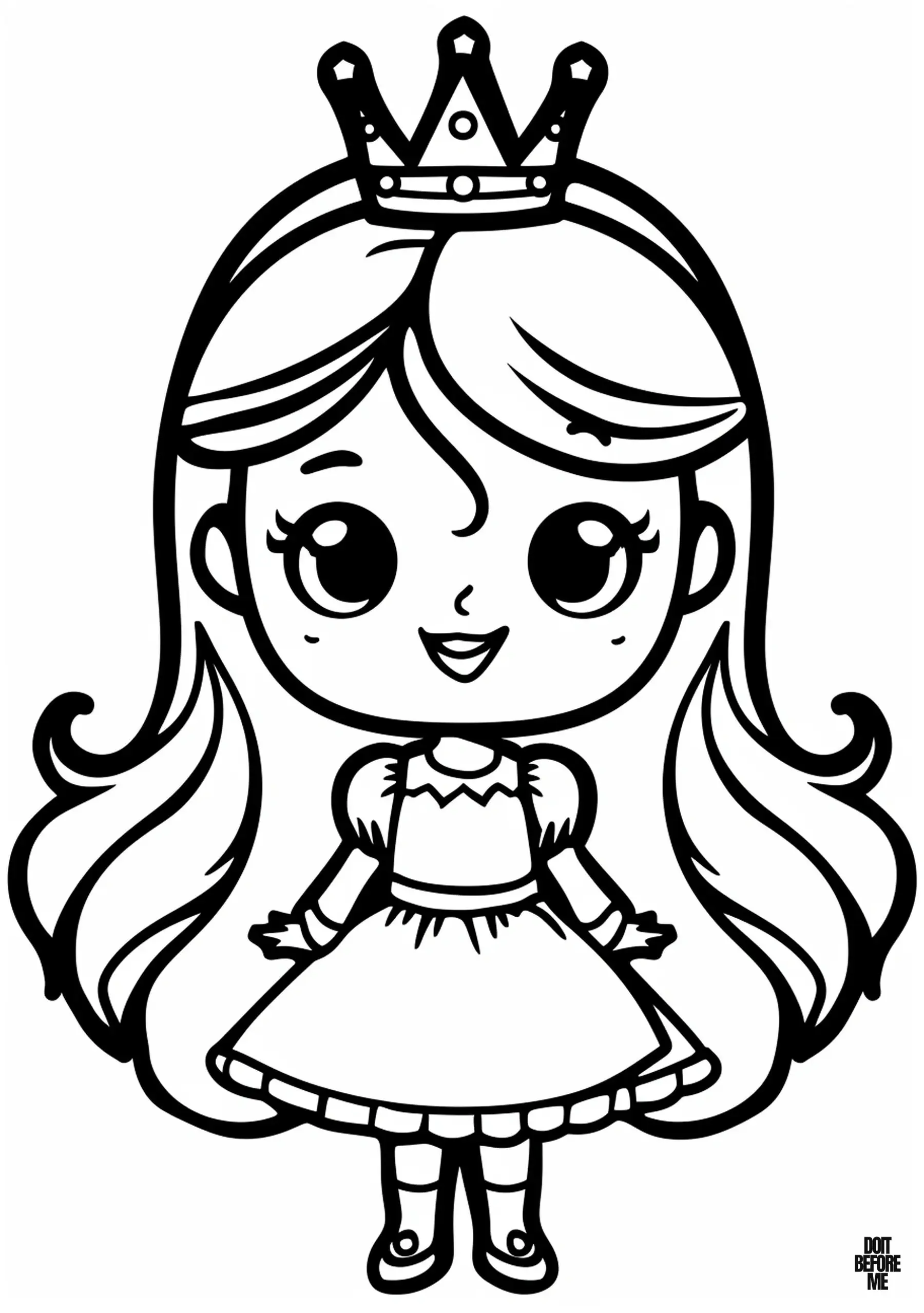
These designs put more emphasis on faces, big eyes, curls and playful styling. Colored pencils are useful around hair and eyes, but the dresses still have enough open space for crayons or markers.
Coloring princess hair and dresses without overworking them
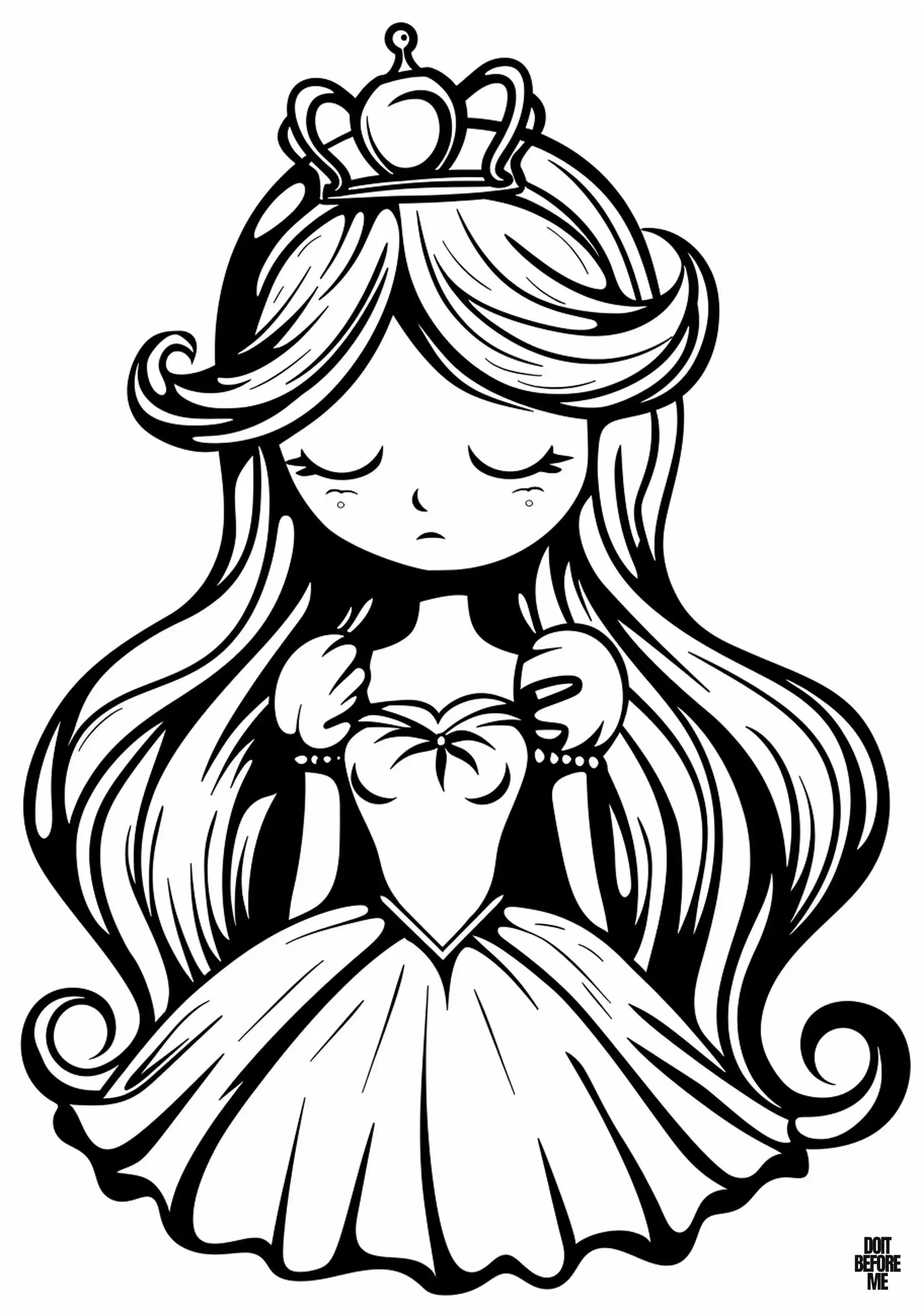
For hair, start with one base color, then put the darker shade under curls, behind the neck and where one lock overlaps another. Leave a few lighter strips untouched for shine. For a gown, color the largest fabric area first, then darken only the folds near the waist, under sleeves and where the skirt overlaps itself. Save metallic-looking gold, silver or bright accent colors for the crown, jewelry and trim rather than using them across the whole dress.
Markers are quickest on large gowns. Colored pencils are easier for hair, faces and small details. If a page has both, there is nothing wrong with using both tools on the same sheet.
Fantasy and character princesses — Sheets 24–28
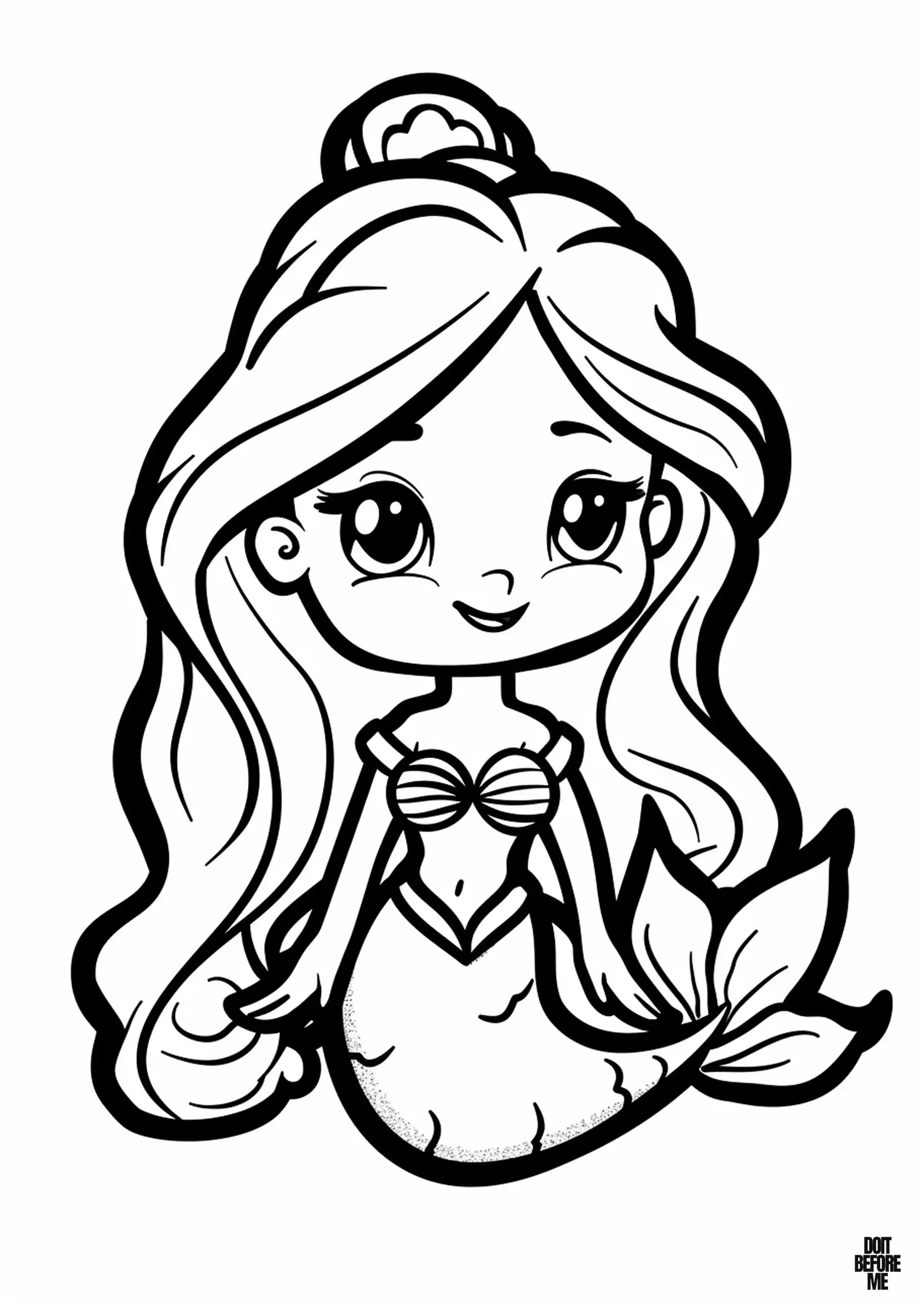
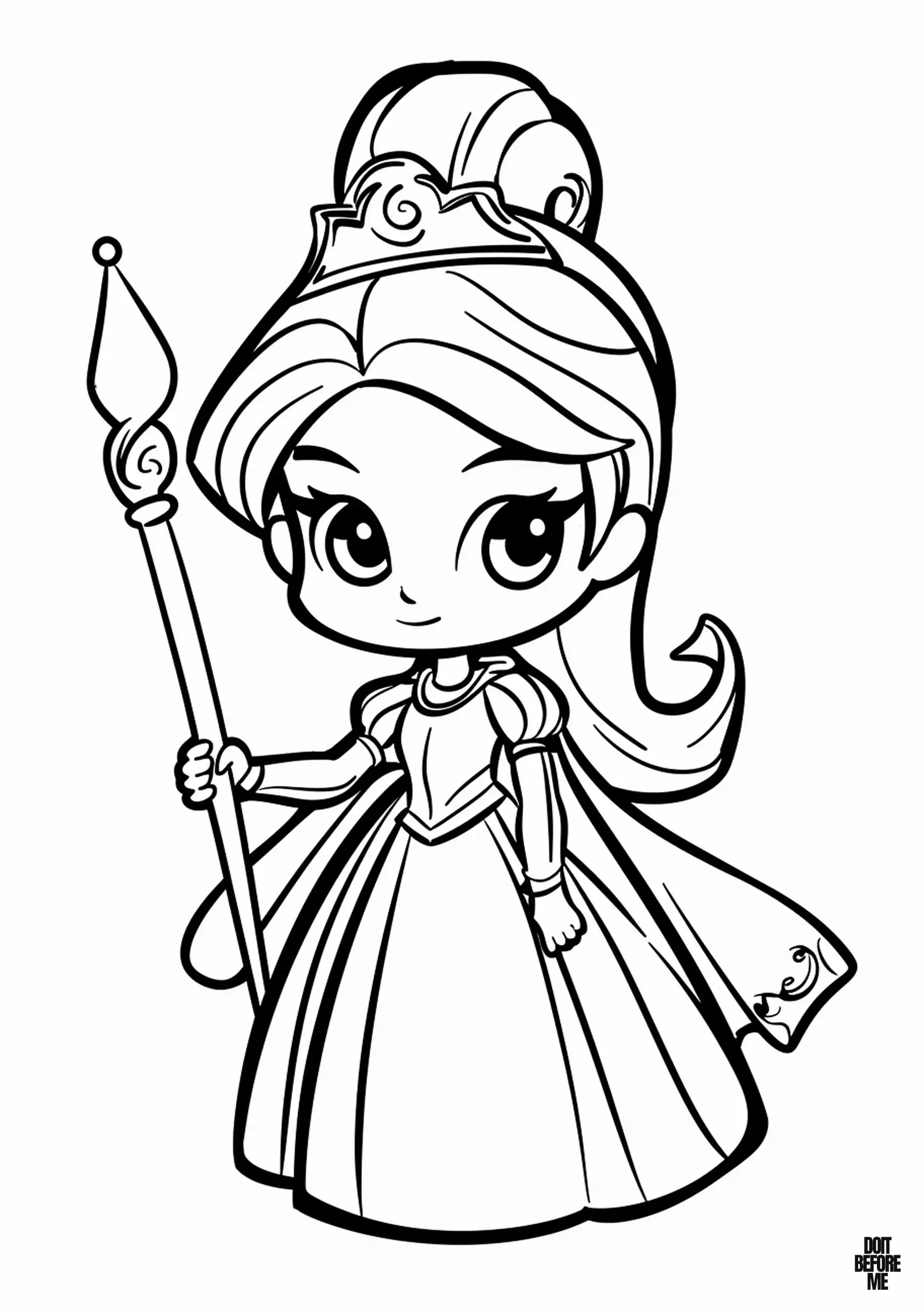
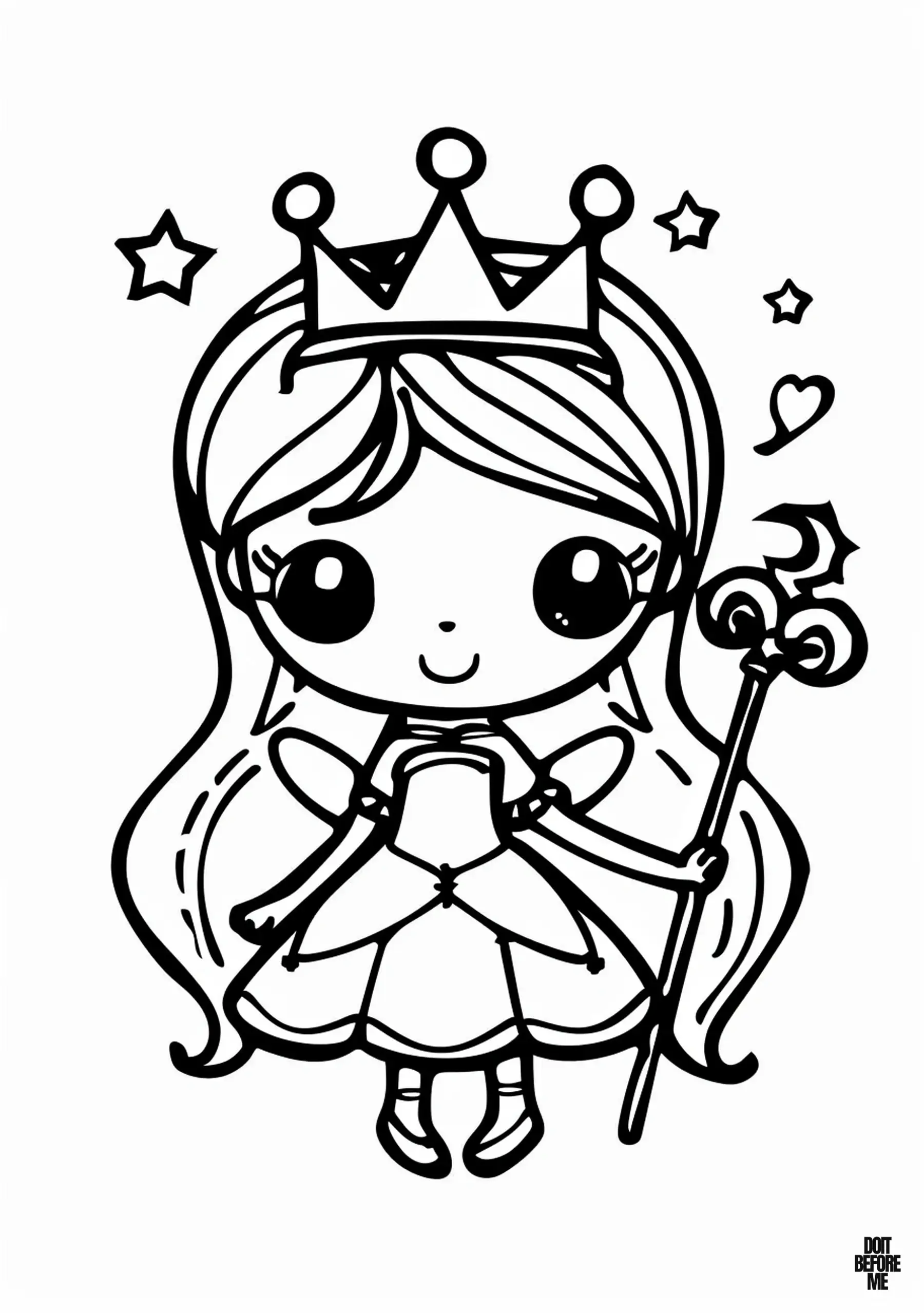
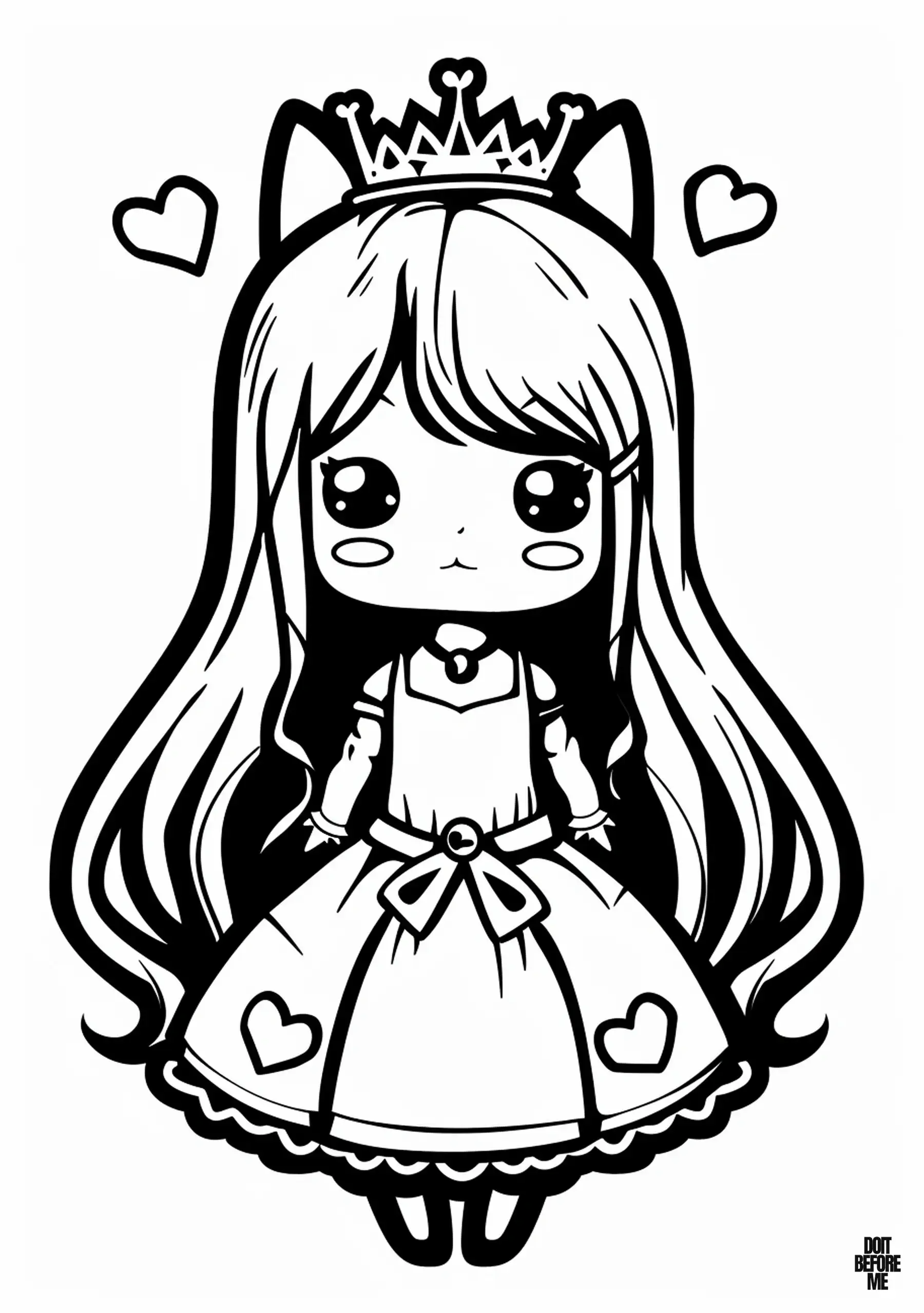
This short section is for visitors who want something less traditional than another ball gown: a mermaid princess, an adventurous warrior, a storybook character, a fairy princess and a cat-inspired princess.
Princesses with more hair and gown detail — Sheets 29–34
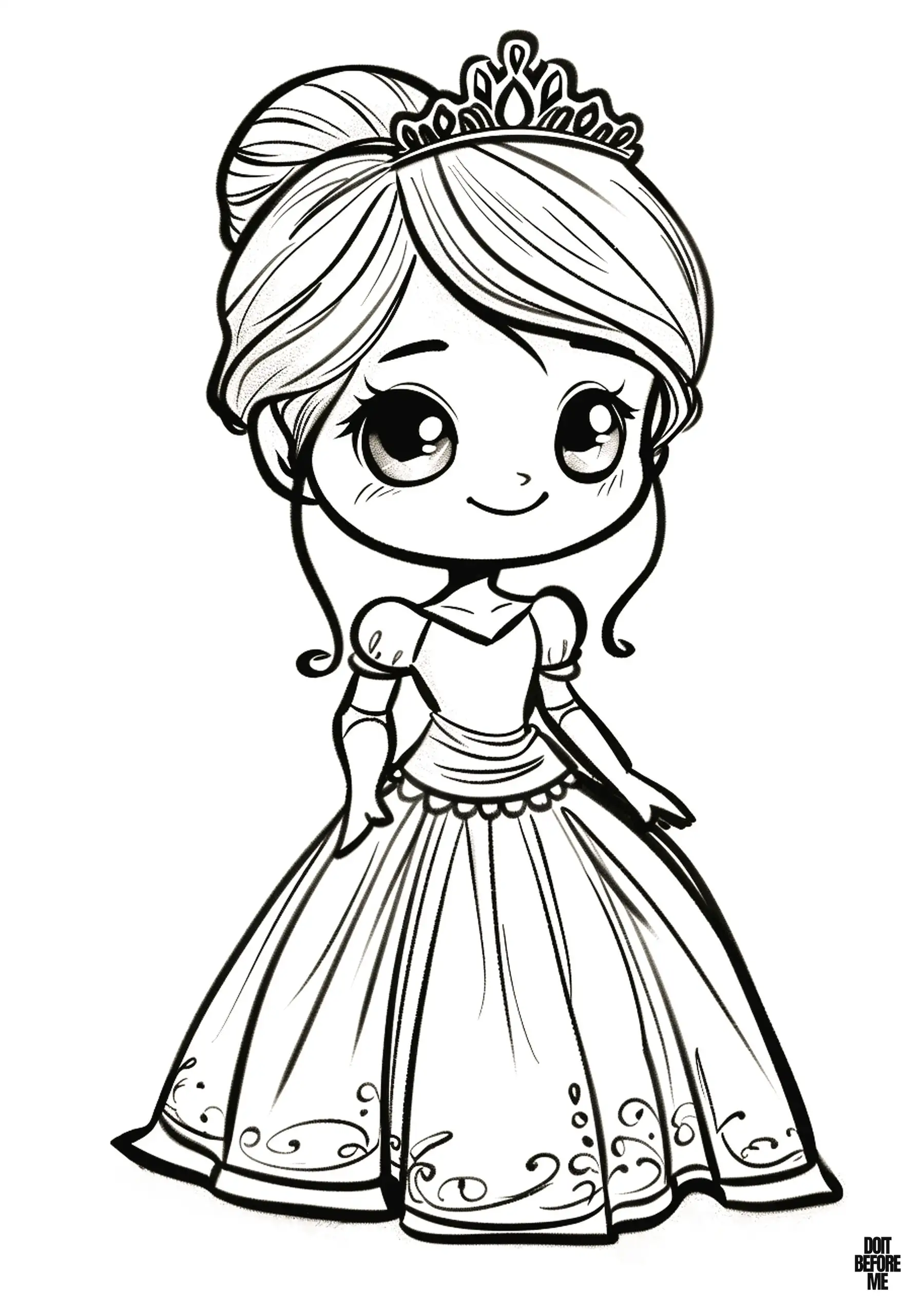
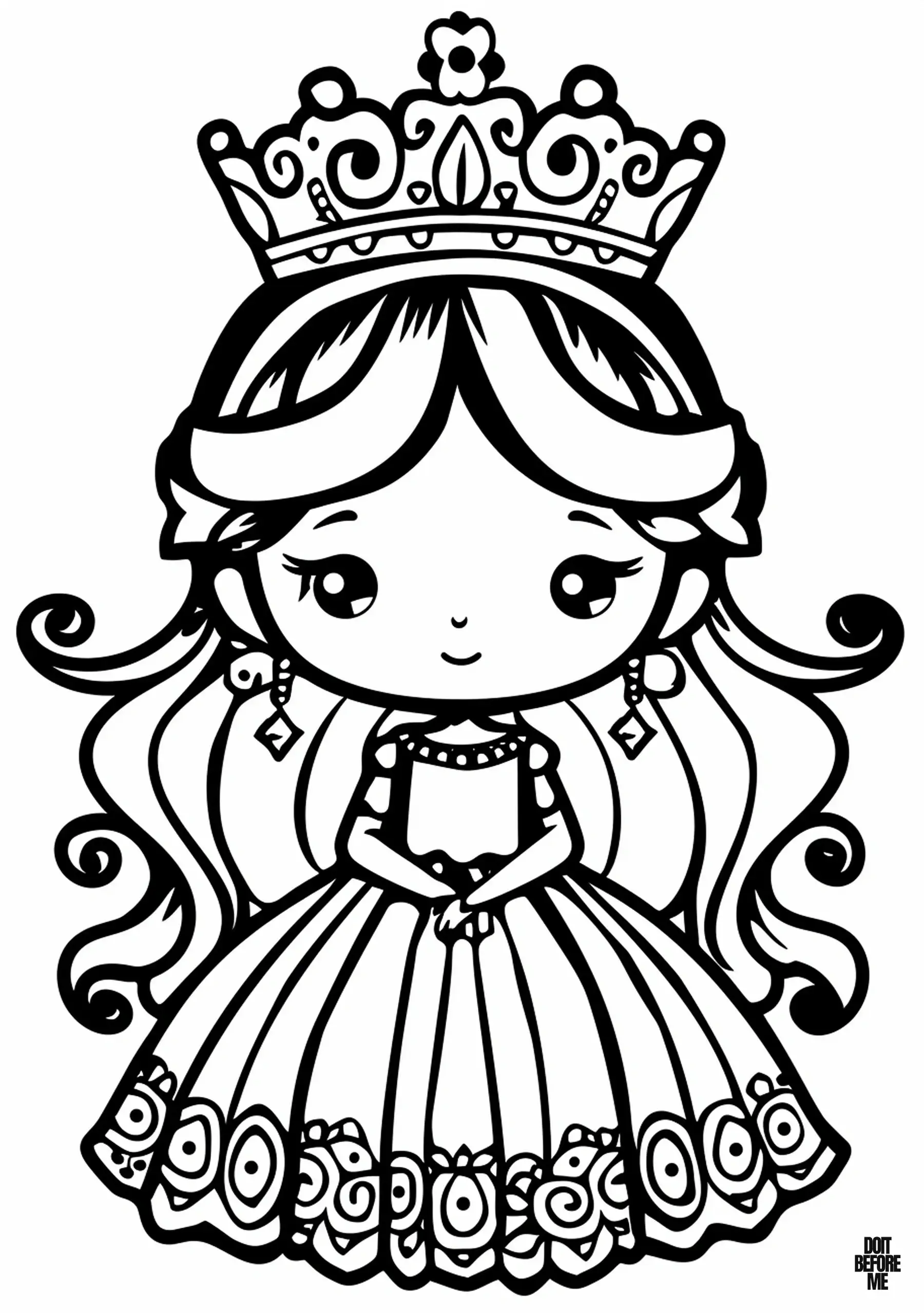
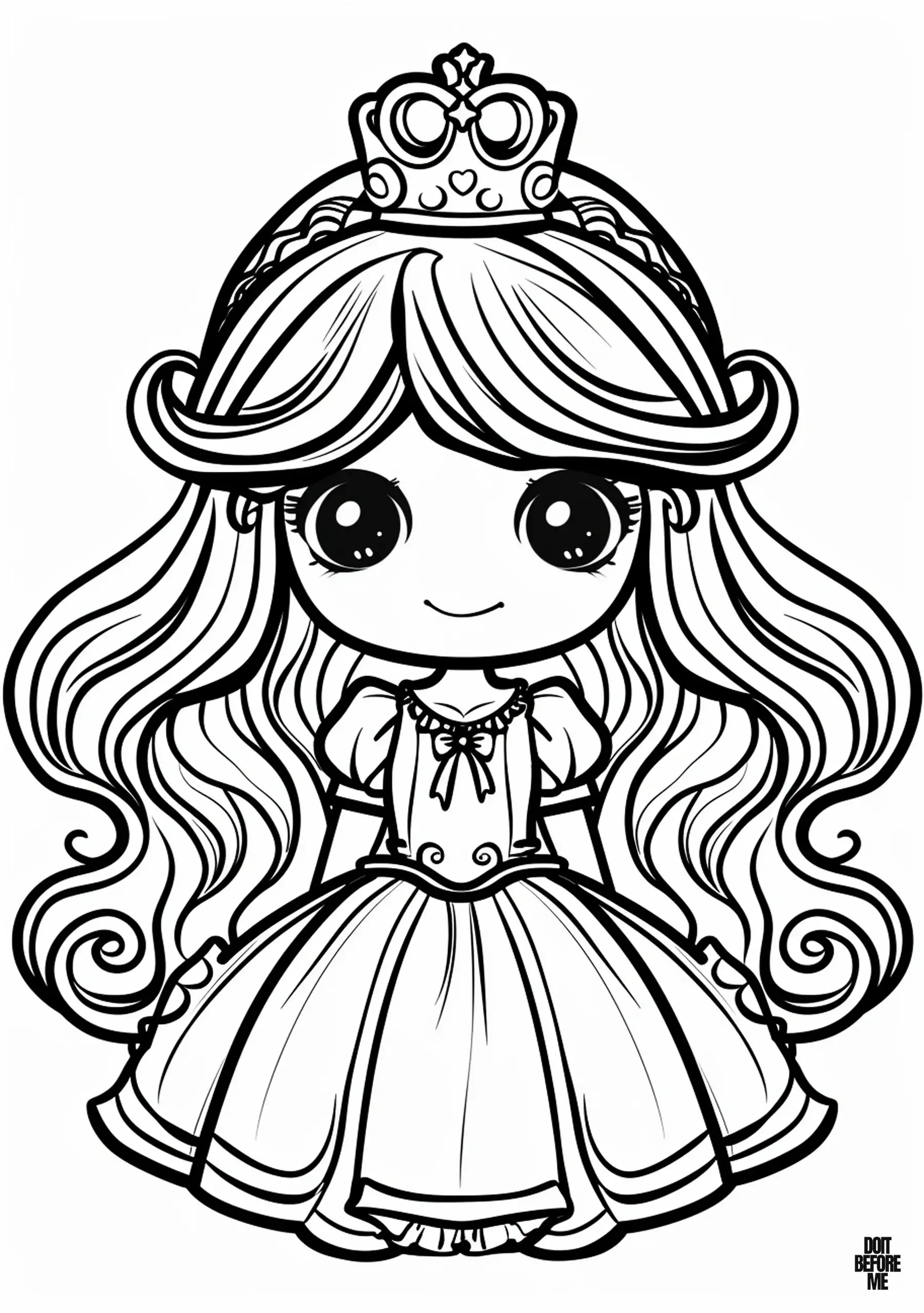
These are still approachable, but they reward slower coloring. Start with the dress and hair as large shapes before working on earrings, folds, curls or smaller accessories. If every strand of hair gets a different shade, the face can disappear; two hair tones are usually enough.
Printing these princess pages
All 34 sheets are portrait-oriented. Click or tap an image to open the original full-size file, then print on A4 or US Letter with Fit to page. Regular printer paper is fine for crayons and pencils. For markers, heavier paper is better if your printer accepts it, or place a spare sheet underneath. The printing guide covers margins and paper choices in more detail.
Looking for a different kind of princess?
- Very simple, younger-looking characters: use the baby princess coloring pages.
- Black princess characters: use the Black princess coloring pages.
- Castles, towers, dragons and bigger scenes: use the storybook princess collection.
- More magical characters than princesses: try the fairy coloring pages or mermaid coloring pages.
Princess coloring questions
Which princess pages are easiest?
Start with Sheets 1–12. They have the clearest shapes and the least fiddly hair or dress detail, so they are the best part of this collection for crayons and shorter coloring sessions.
Where are the mermaid, warrior and fairy princesses?
They are grouped together in Sheets 24–28. That section is the best place to look if you want something more imaginative than a traditional crown-and-gown princess.
How do I color long princess hair without making it stripey?
Use one base color over most of the hair, then add the darker shade underneath curls, behind the neck and where sections overlap. Leave a few lighter areas rather than drawing a dark line along every strand.
Do princess dresses have to be pink?
No. Pink and purple are easy choices, but blue and silver, green and gold, red and cream, or even black with one bright accent can work just as well. Repeating one accent color in the crown, jewelry or trim usually makes the page feel more finished.
Where can I find princesses with castles, dragons and bigger story scenes?
Use the storybook princess coloring collection. It is intentionally broader than this easy portrait set and includes castles, towers, dragons, puppies, butterflies and unicorn scenes.
More fairy-tale coloring pages
Continue with our fairy coloring pages, unicorn coloring pages, or baby dragon coloring pages.

