
This is the broad flower hub: 40 pages ranging from smiling daisies and simple sunflowers to flower crowns, roses and denser mandala-style designs. Use it when you want to browse very different flower styles in one place rather than follow a fixed difficulty sequence. If you already know you want a strict easy-to-hard progression, use the 20 flower coloring sheets from easy to advanced instead.
Ready to color? Jump to the 40 designs. Click any picture to open its largest available original, then save it. For a paper copy, print the saved image with “Fit to page” selected. See step-by-step printing help. Want several pages in one PDF? Visit our six-sheet flower sampler and choose Print → Save as PDF in your browser. The full 40-page gallery still provides individual image files.
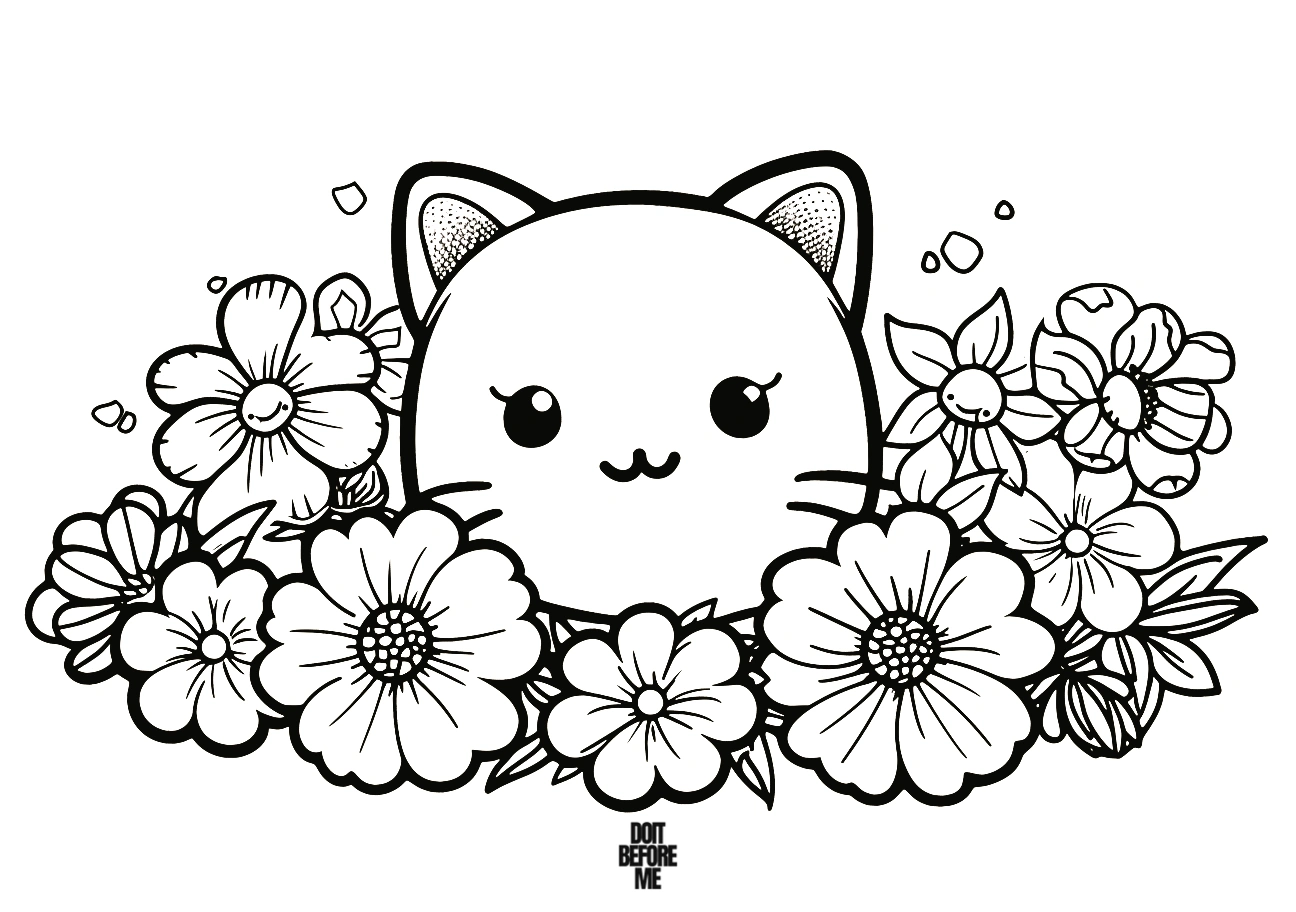
Test your flower palette before you color the whole page
A flower page can look busy surprisingly fast, especially when it contains many small blossoms. Before filling the first flower, test your plan on one bloom or on scrap paper. Pick one light petal color, a darker version of it, and one green. Color the petal lightly, press harder only where it meets the center, then compare the flower with the leaves. The bloom should still be the first thing you notice.
- If the petals and leaves merge together: lighten the green or choose a warmer/cooler petal color so the flower separates clearly from its foliage.
- If the flower looks flat: keep the petal tip light and add the darker value only at the base and under overlaps. Do not trace every edge with the dark color.
- If a page with many flowers already feels chaotic: stop adding new colors. Repeat the same two or three petal colors elsewhere before introducing another hue.
- If tiny sections are frustrating: switch from crayon to a sharpened colored pencil for the centers and narrow gaps. The problem may be the tool, not the design.
Then hold the page at arm’s length. You should be able to spot the main flower, face or character before you notice individual leaves and background details. If everything has equal visual weight, make the focal flower slightly darker or more saturated and keep the surrounding greens quieter.
For preschoolers: skip the shading test. Give them one flower color and one green, let them finish the large petals first, and treat staying inside every line as optional. Once broad areas feel comfortable, add a second flower color on the next sheet.
Choose the kind of flower page you want
| If you want… | Jump to… | Best tool |
|---|---|---|
| Flowers mixed with cute characters | Character flower pages | Crayons or pencils |
| The simplest flowers for young kids | Preschool & kindergarten flowers | Crayons |
| Flower crowns and hair detail | Flower-crown pages | Colored pencils |
| Repeating floral patterns | Mandala flowers | Fine pencils or markers |
| Roses and layered petals | Rose pages | Colored pencils |
A simple petal-shading trick
- Put down a light base color over the whole petal.
- Add the darker shade where the petal meets the flower center or disappears behind another petal.
- Leave the outer edge slightly lighter.
- Repeat the same light-dark pattern across the flower instead of inventing a new rule for every petal.
That works on a daisy, sunflower or rose and is more useful than buying a large set of colors. Two shades of the same color are enough to give a flat flower some shape.
A three-page flower practice method
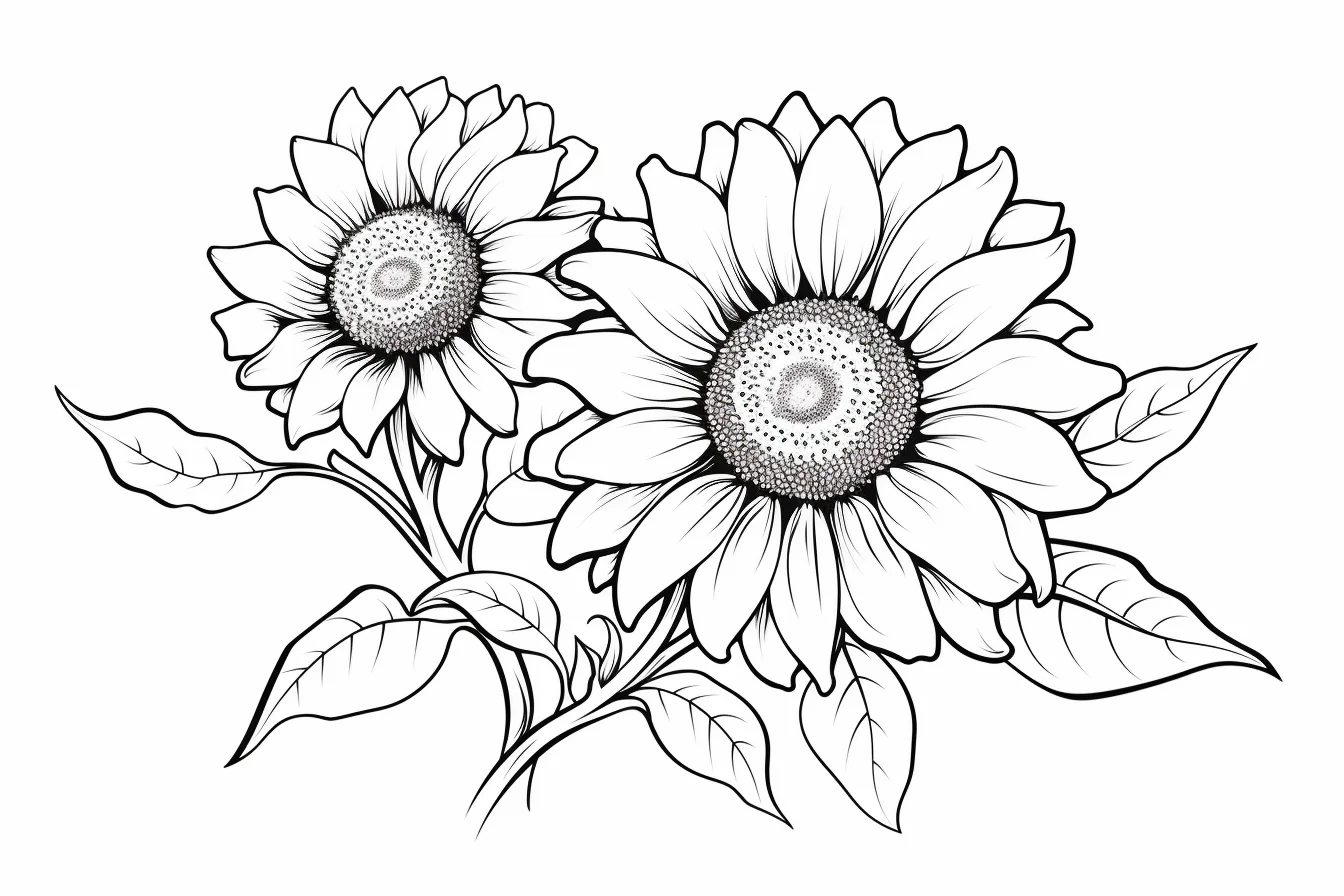
- Begin with a large daisy or sunflower. Practice even coverage first. Keep the petal tips lighter and put the darker value only near the center.
- Move to a mixed-flower page. Limit yourself to three petal colors plus two greens. The exercise is deciding where colors repeat, not finding a unique color for every blossom.
- Finish with a rose, crown or mandala. Work in layers: light base, overlap shadows, then the smallest accents. Stop before every outline and crevice becomes equally dark.
When a flower page is not working
| Problem | Likely cause | Try this |
|---|---|---|
| Petals look flat | One value from center to tip | Darken only the petal base and overlaps; preserve a lighter outer edge. |
| Every flower competes for attention | Too many unrelated colors | Choose two or three petal colors and repeat them across the page. |
| White flowers disappear | Paper white is also the background | Add a very pale gray, blue or cream shadow at petal bases and leave most of the petal white. |
| Leaves overpower the flowers | Greens are darker or more saturated than every bloom | Use a quieter green and reserve the strongest contrast for the flower centers. |
| Rose petals look outlined | Dark color follows every edge | Put shadow inside folds and beneath overlaps instead of tracing the full petal perimeter. |
| Mandala flowers look chaotic | Color changes on every small shape | Repeat a three-to-five-color sequence from the center outward. |
Most sheets are wide landscape images. Save the design you want and print with “Fit to page.” If the preview crops the edges, use landscape orientation or the Print & Save Help guide.
40 flower coloring pages
Cute flower pages with characters
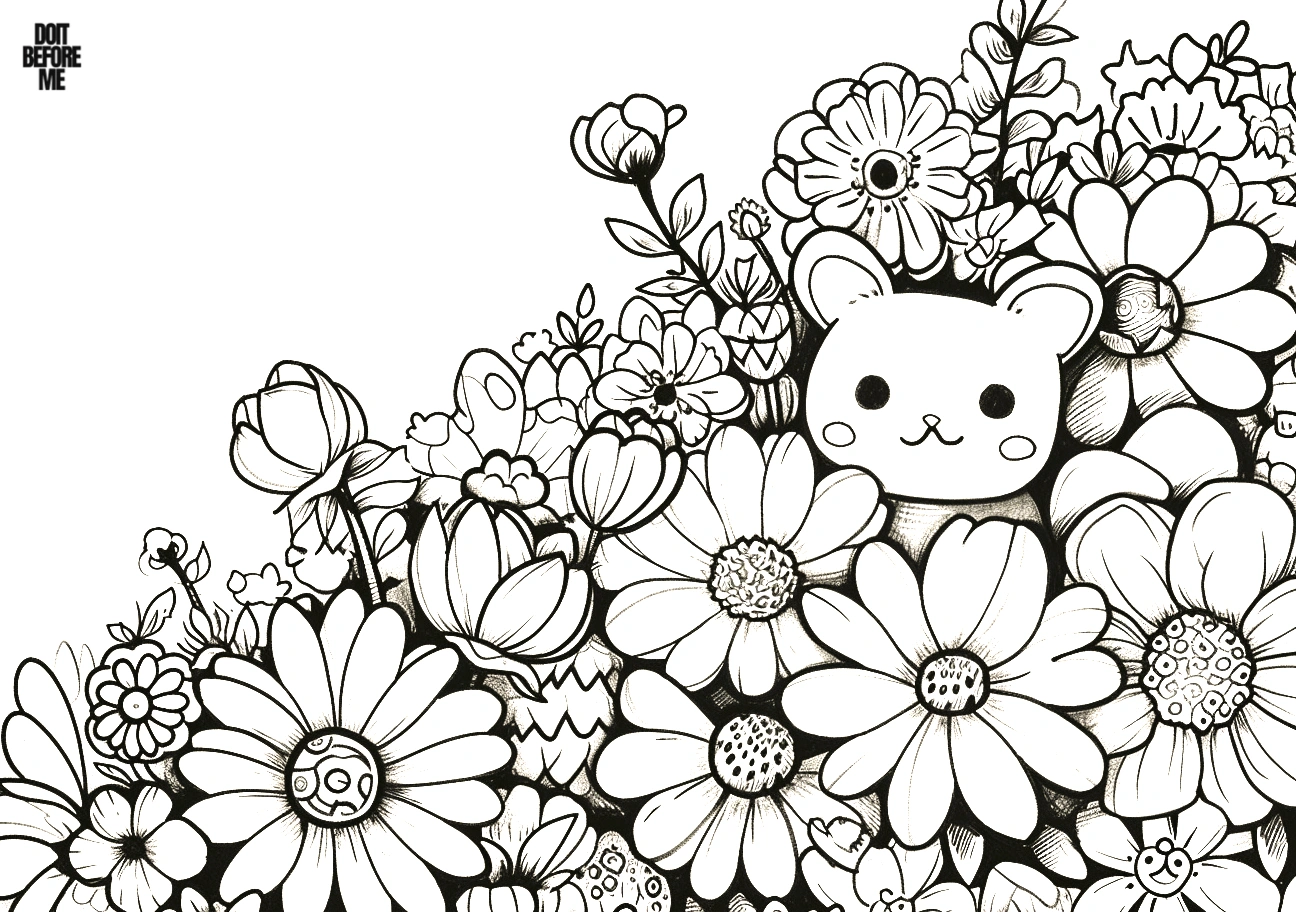
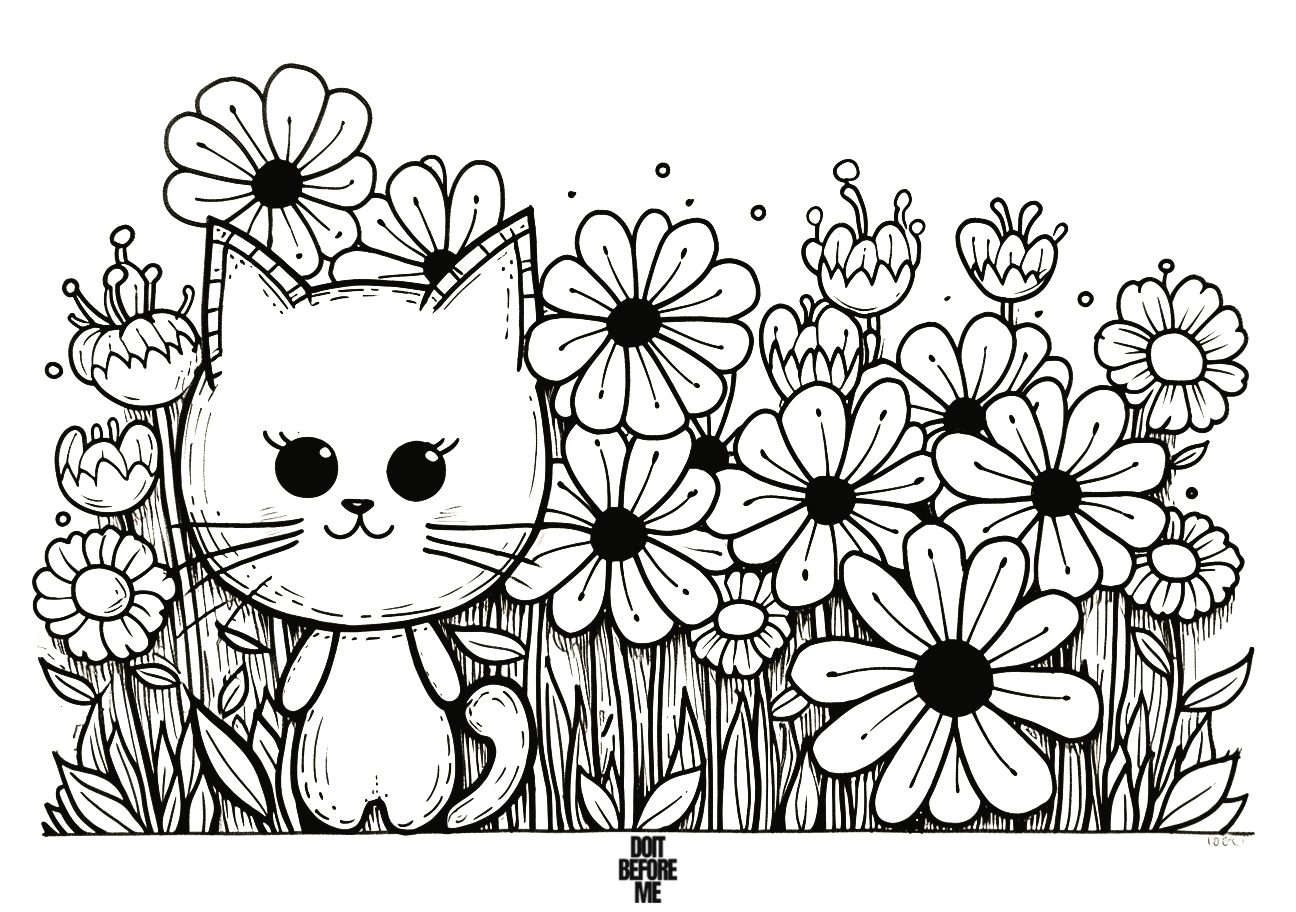
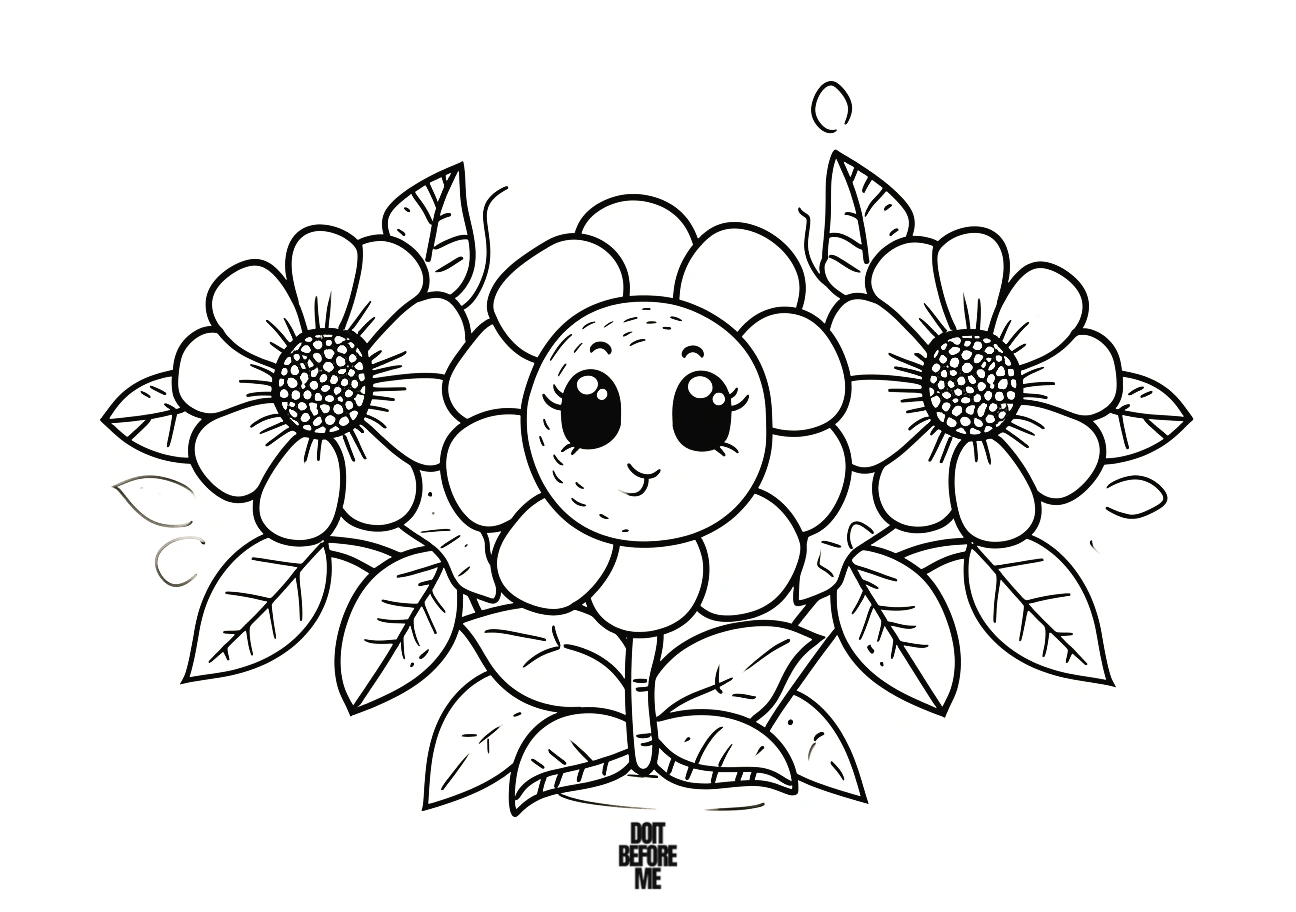
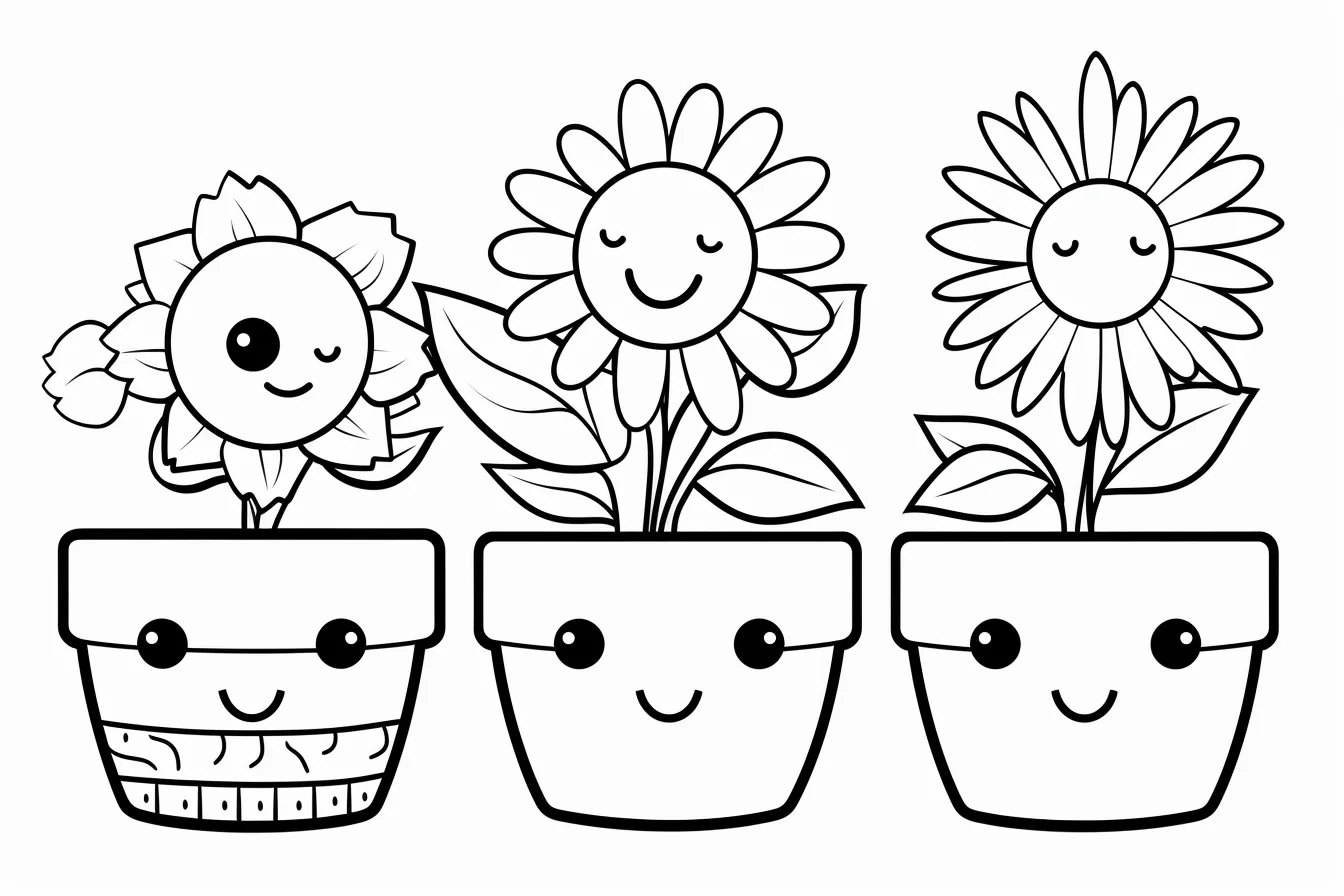
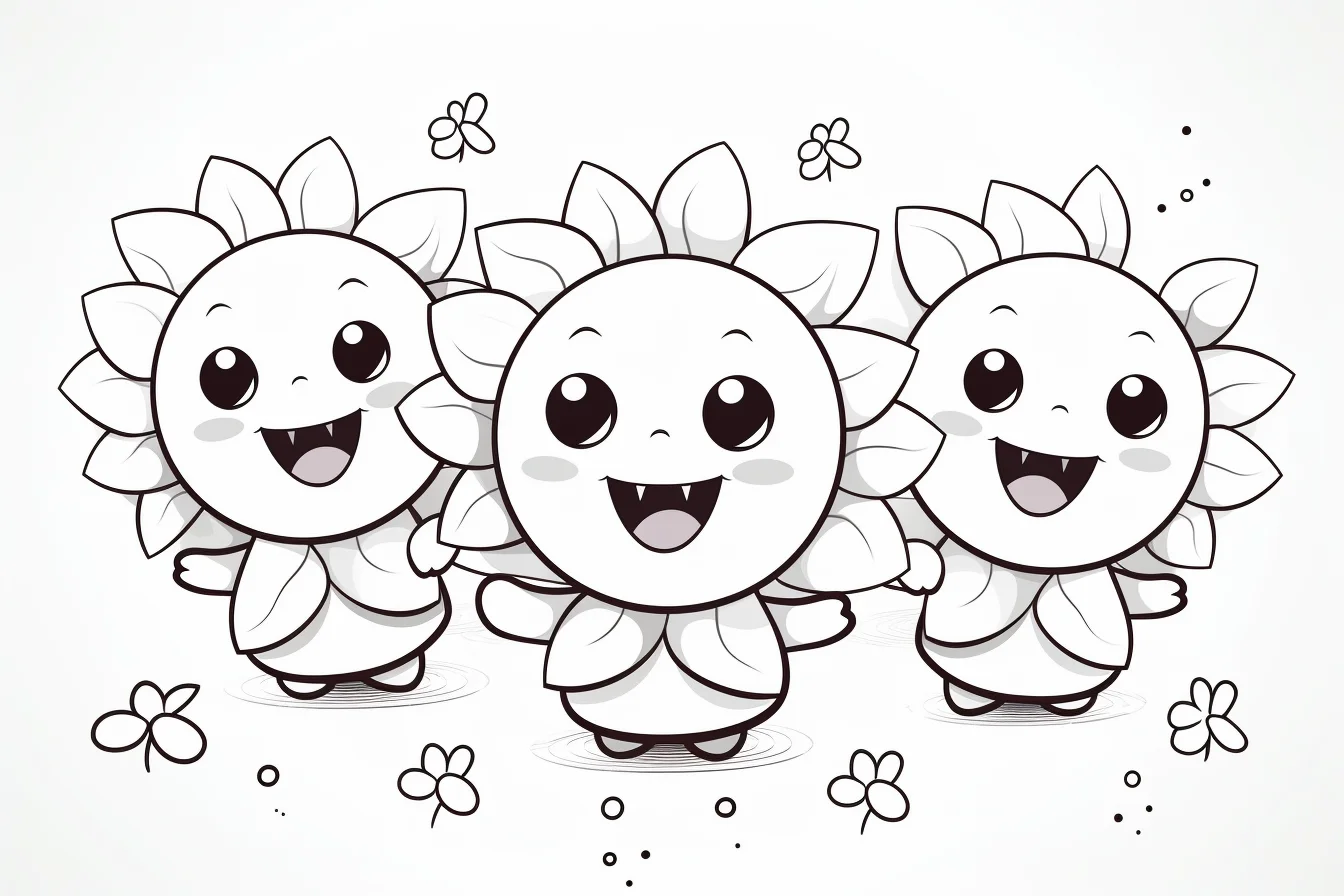
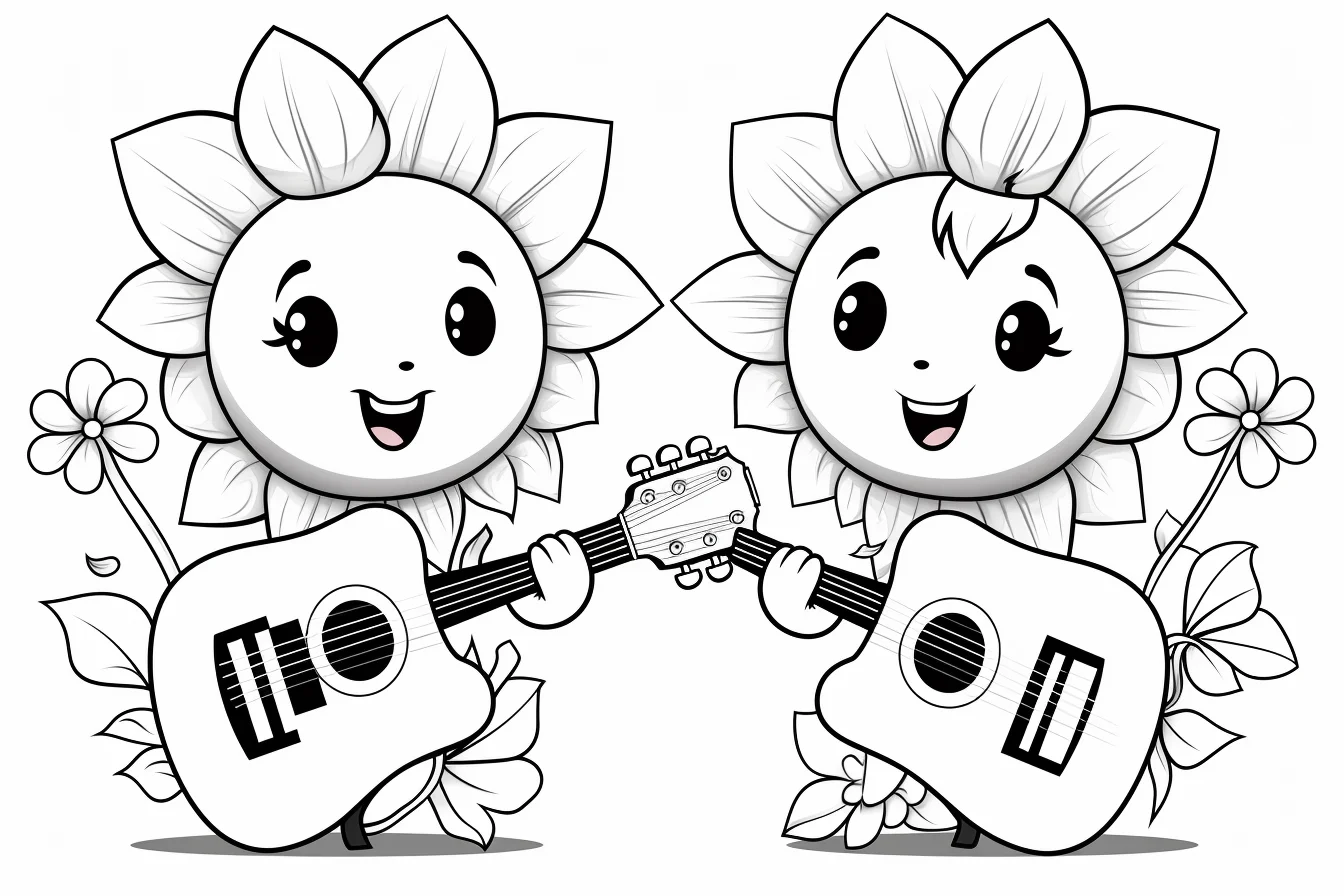
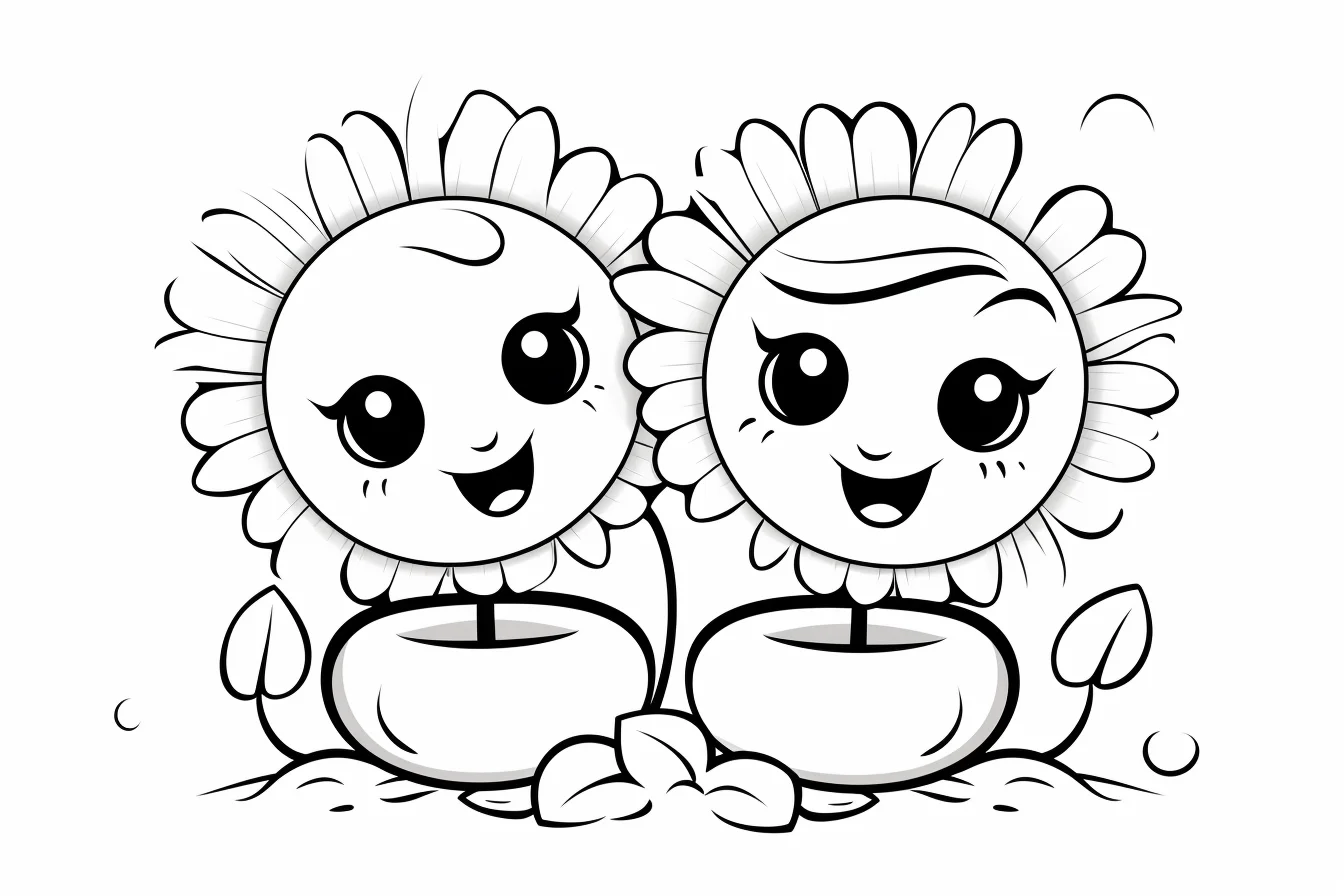
The opening group mixes flowers with cats, a baby bear and other playful details. Color the character first, then choose a smaller flower palette around it—two or three petal colors are usually enough. Keeping the background lighter helps the animal or face remain the focal point instead of disappearing into a busy field of flowers.

Simple flowers for preschool and kindergarten
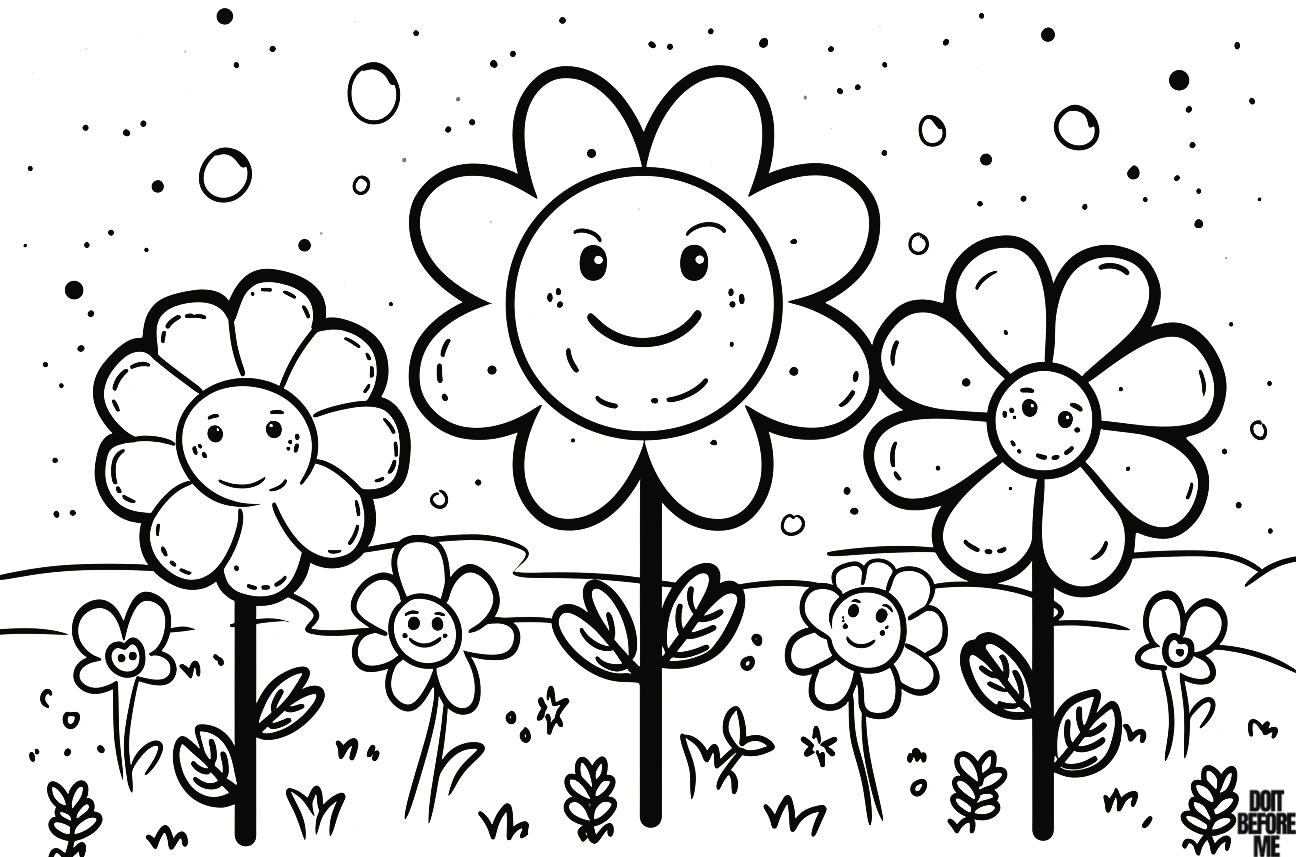
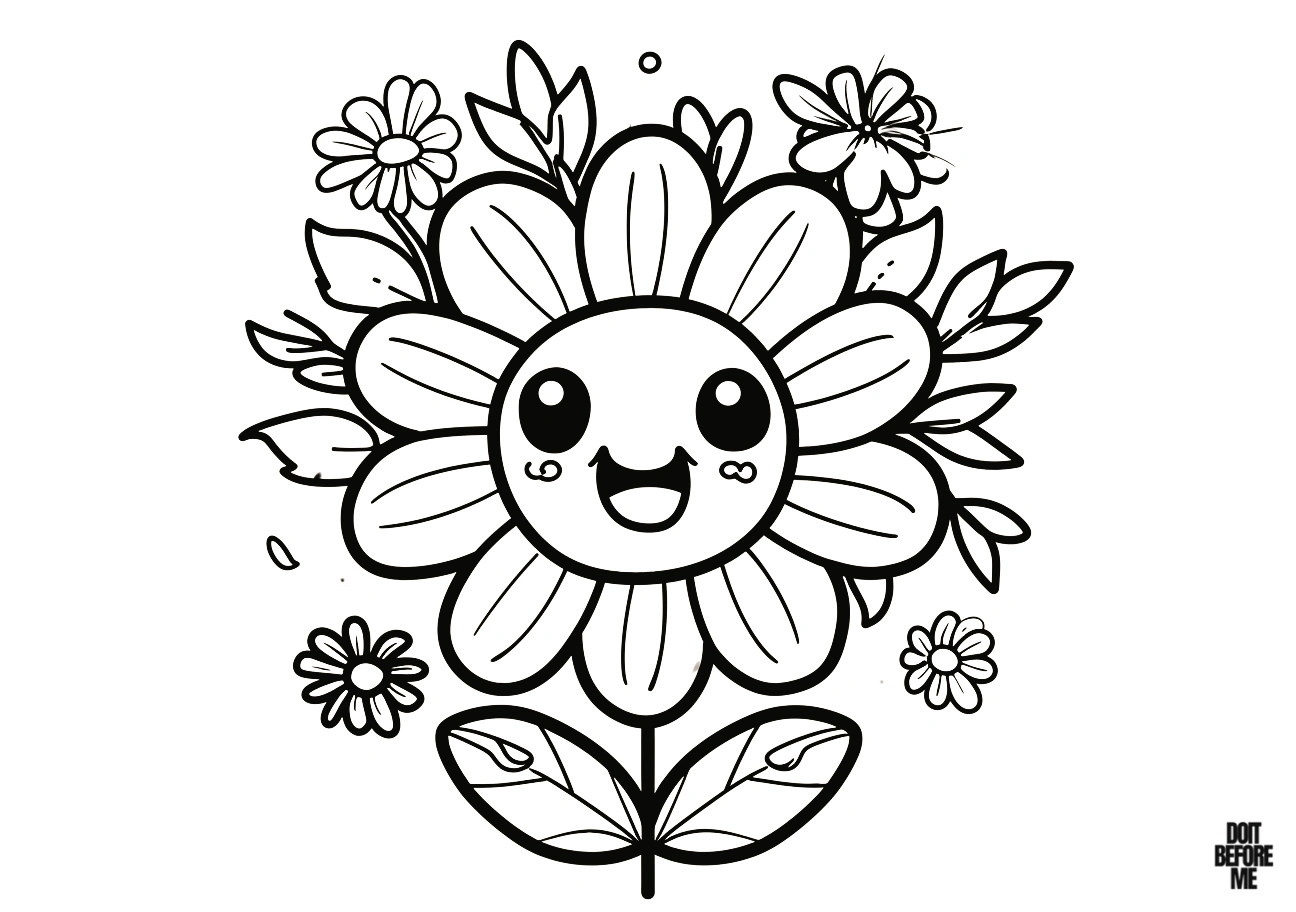
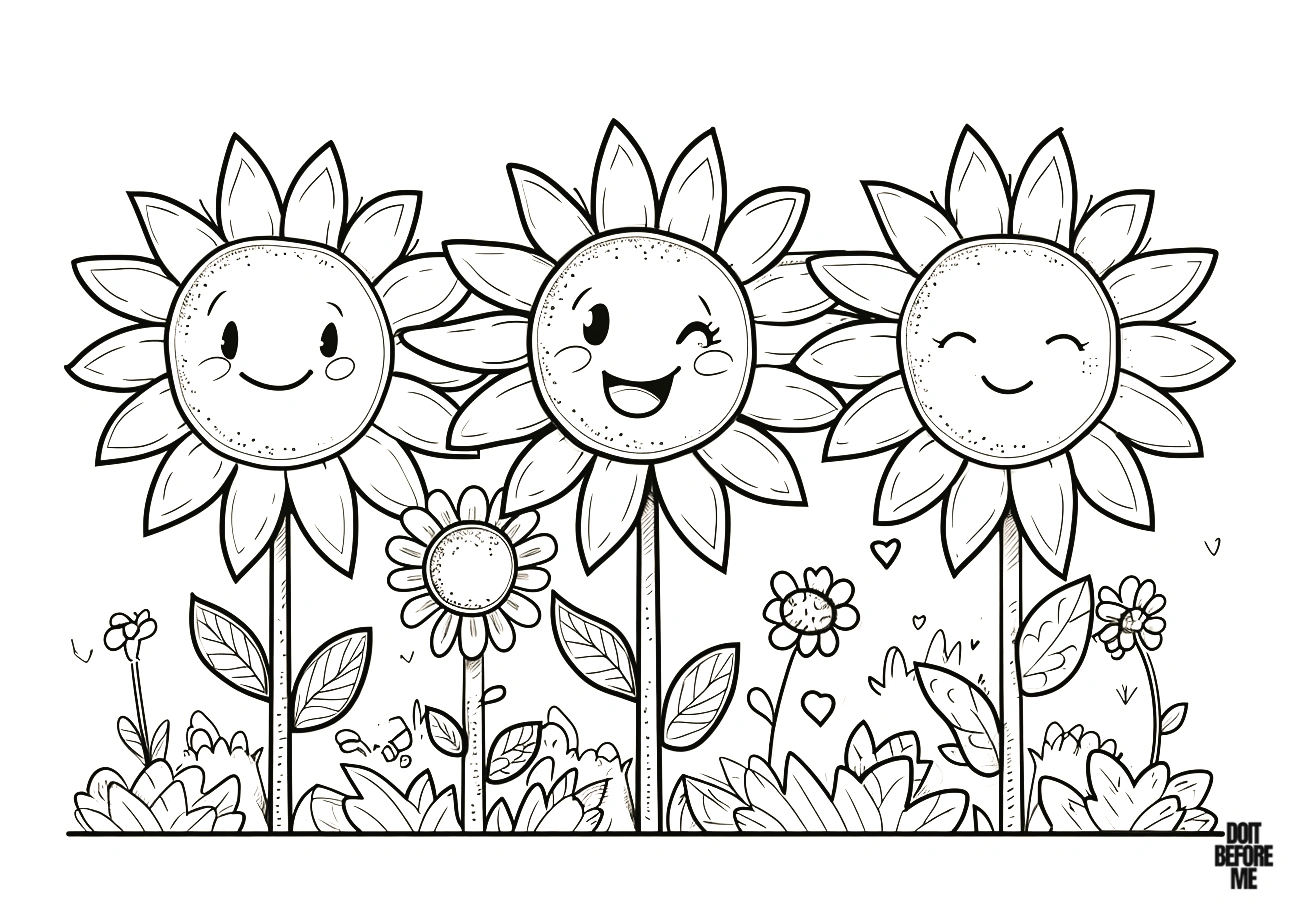
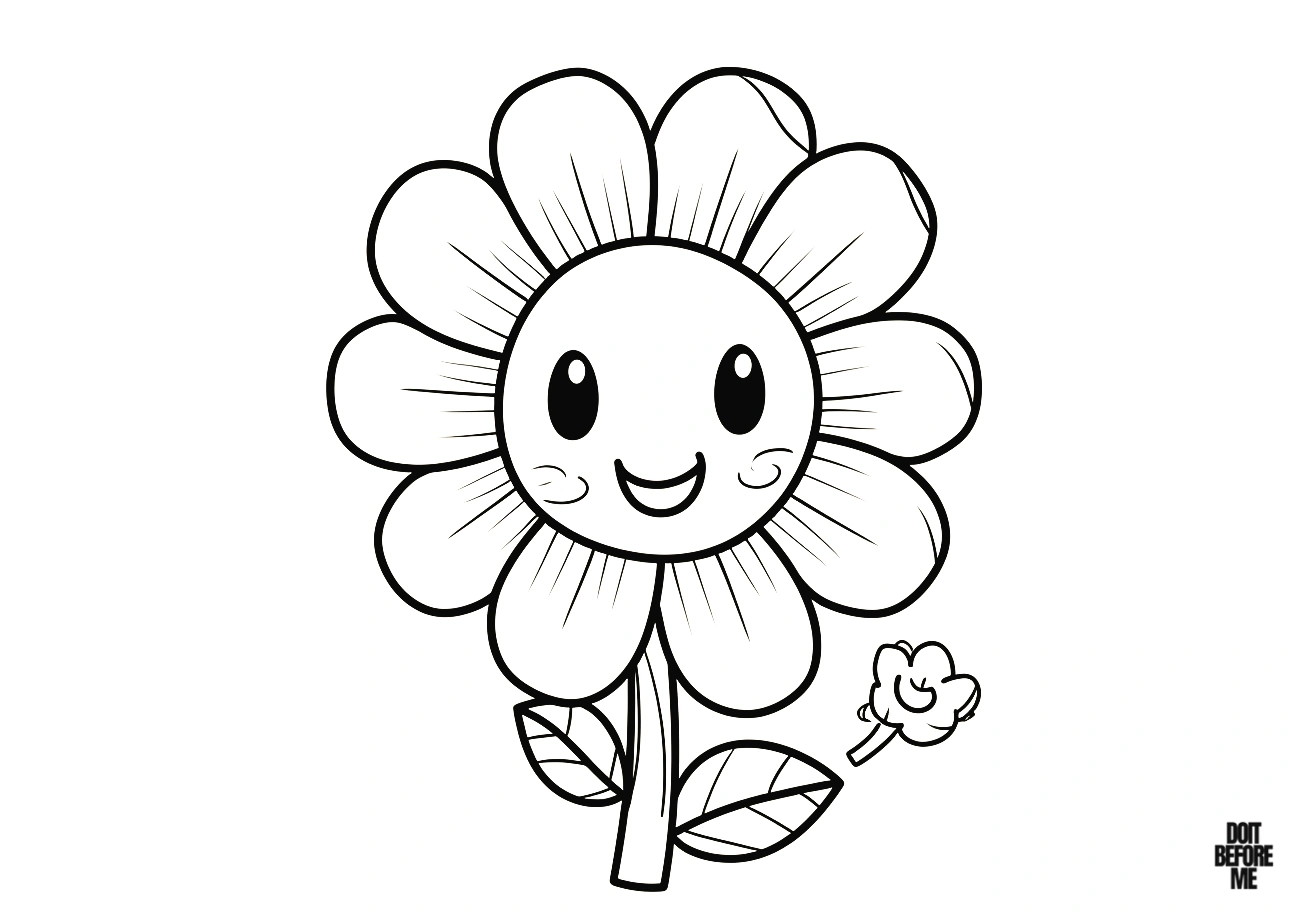
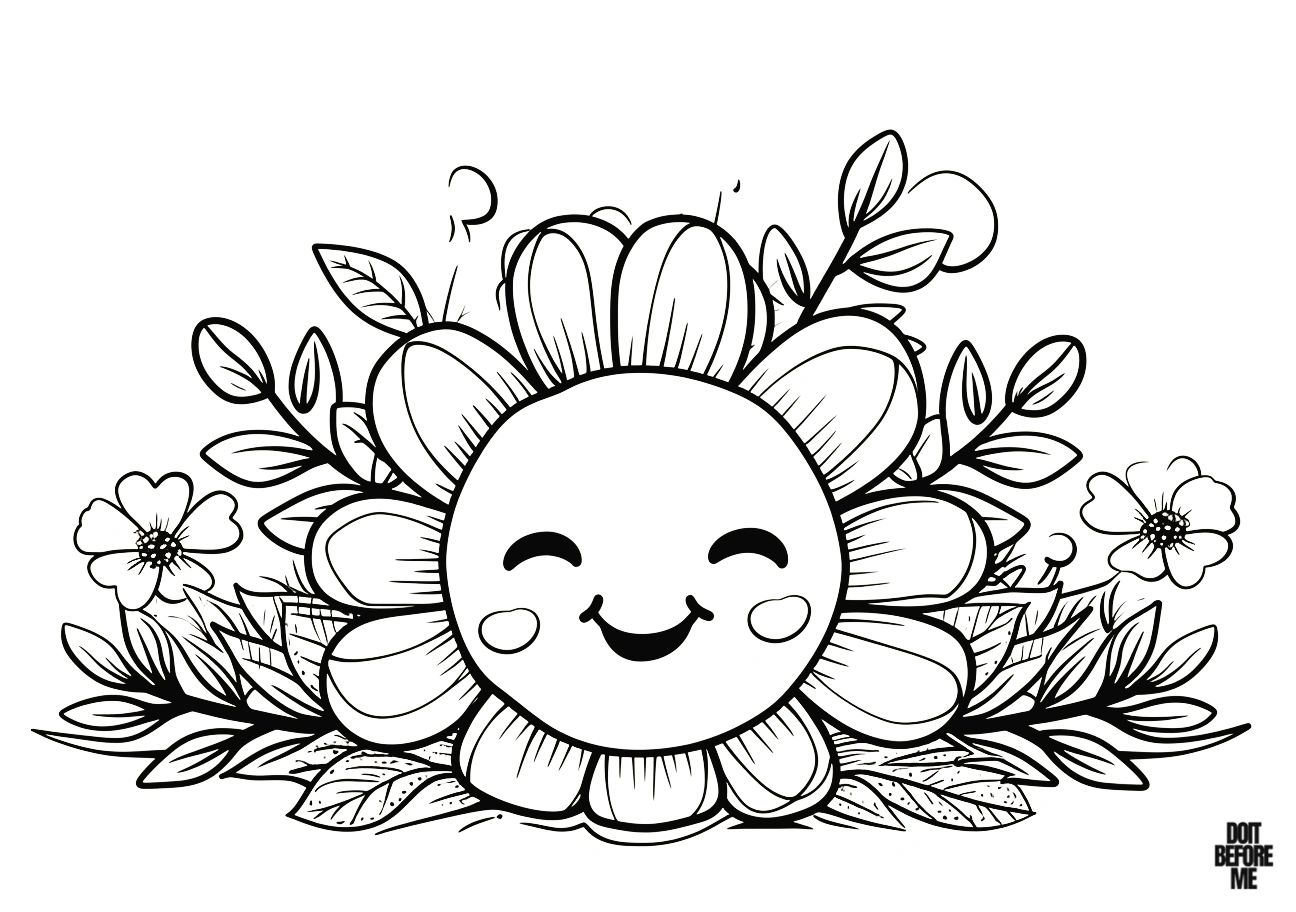
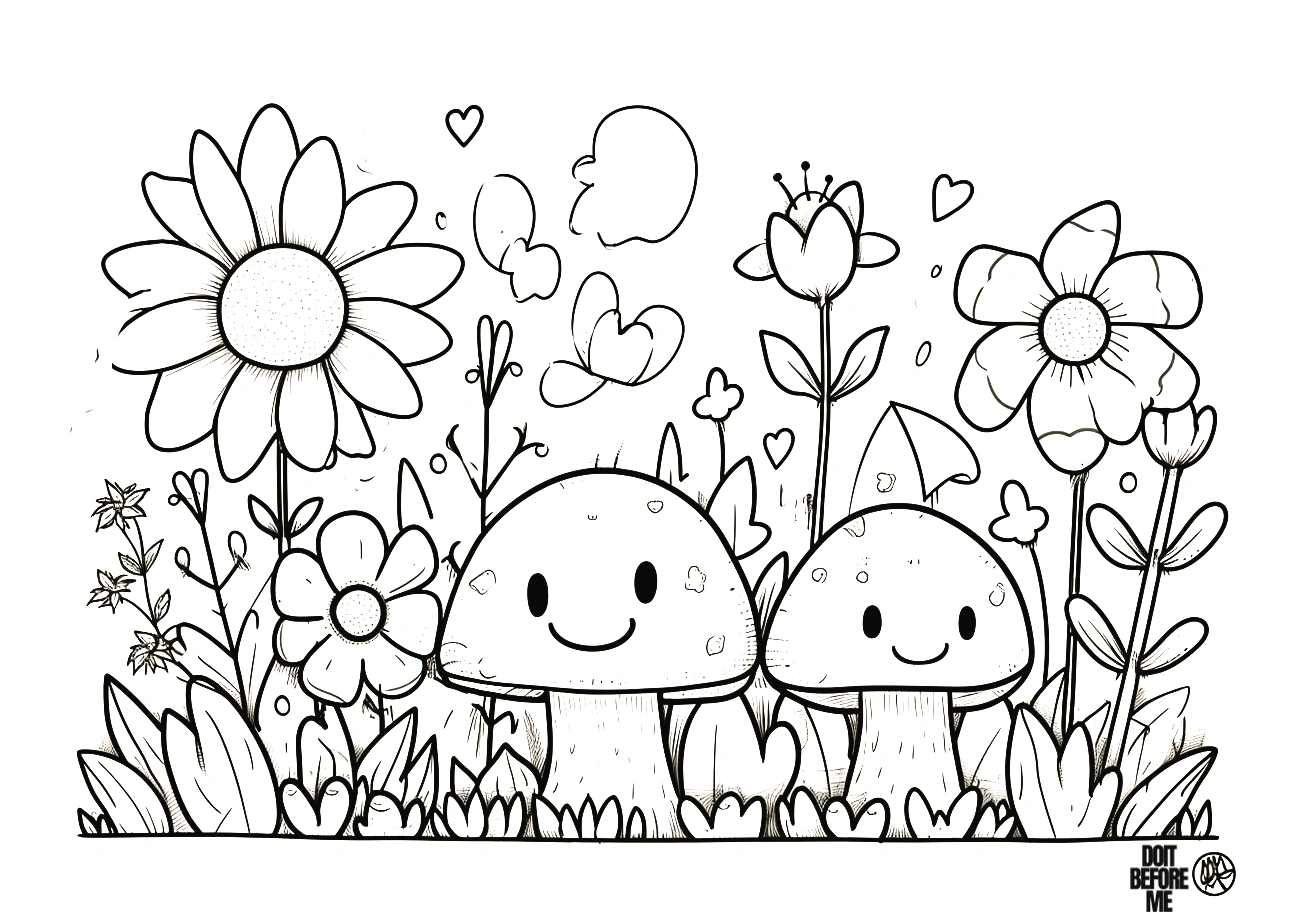
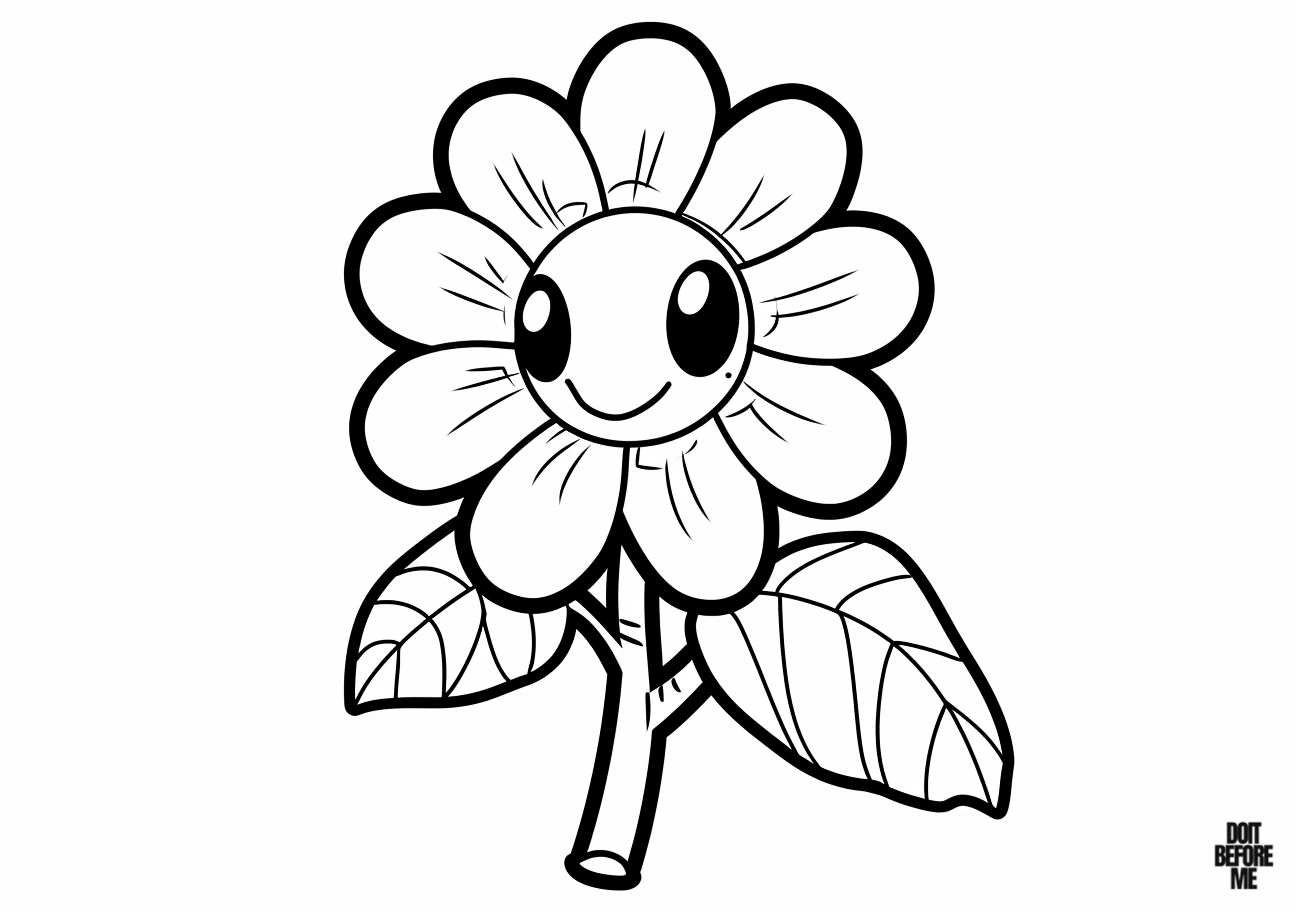
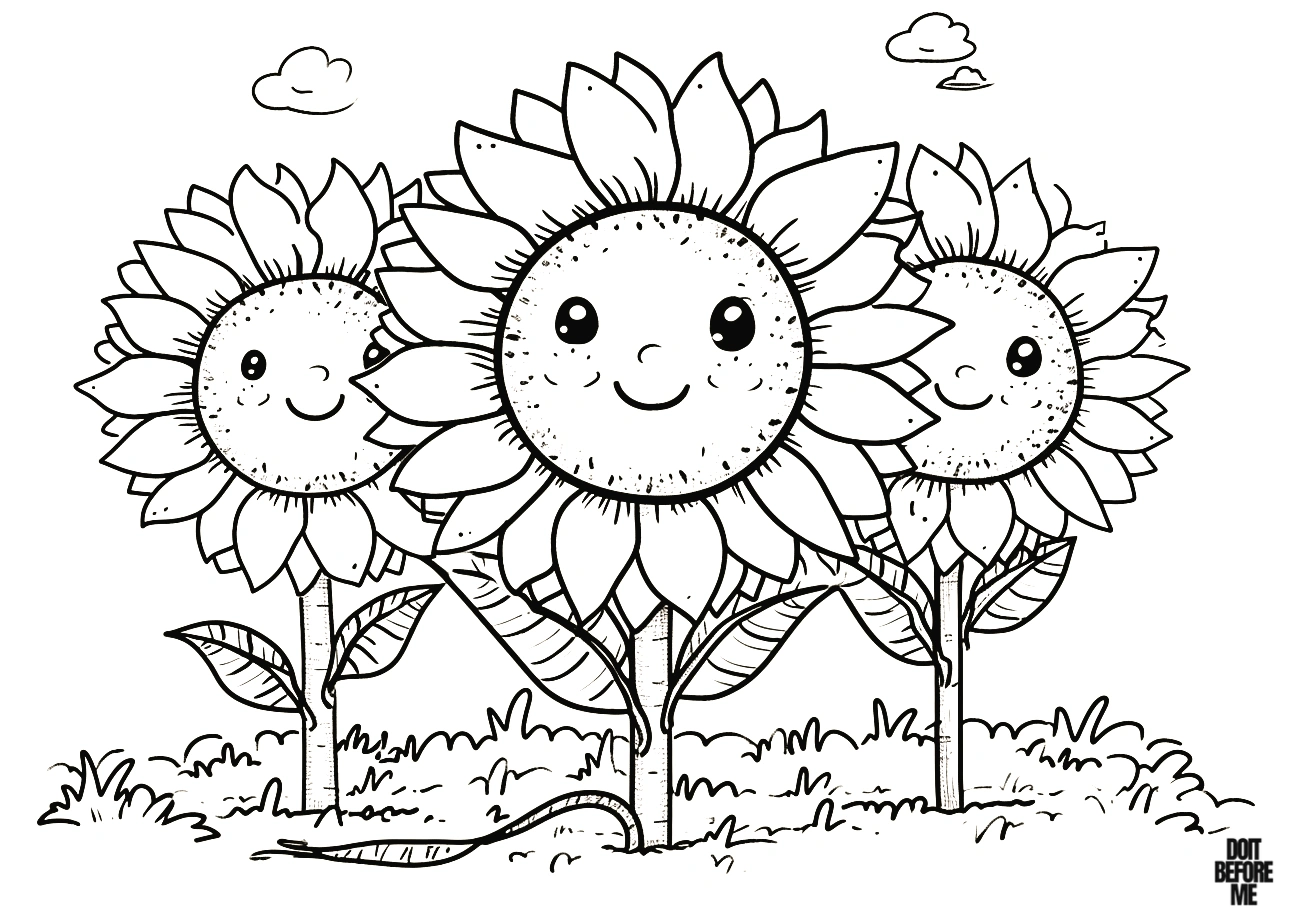
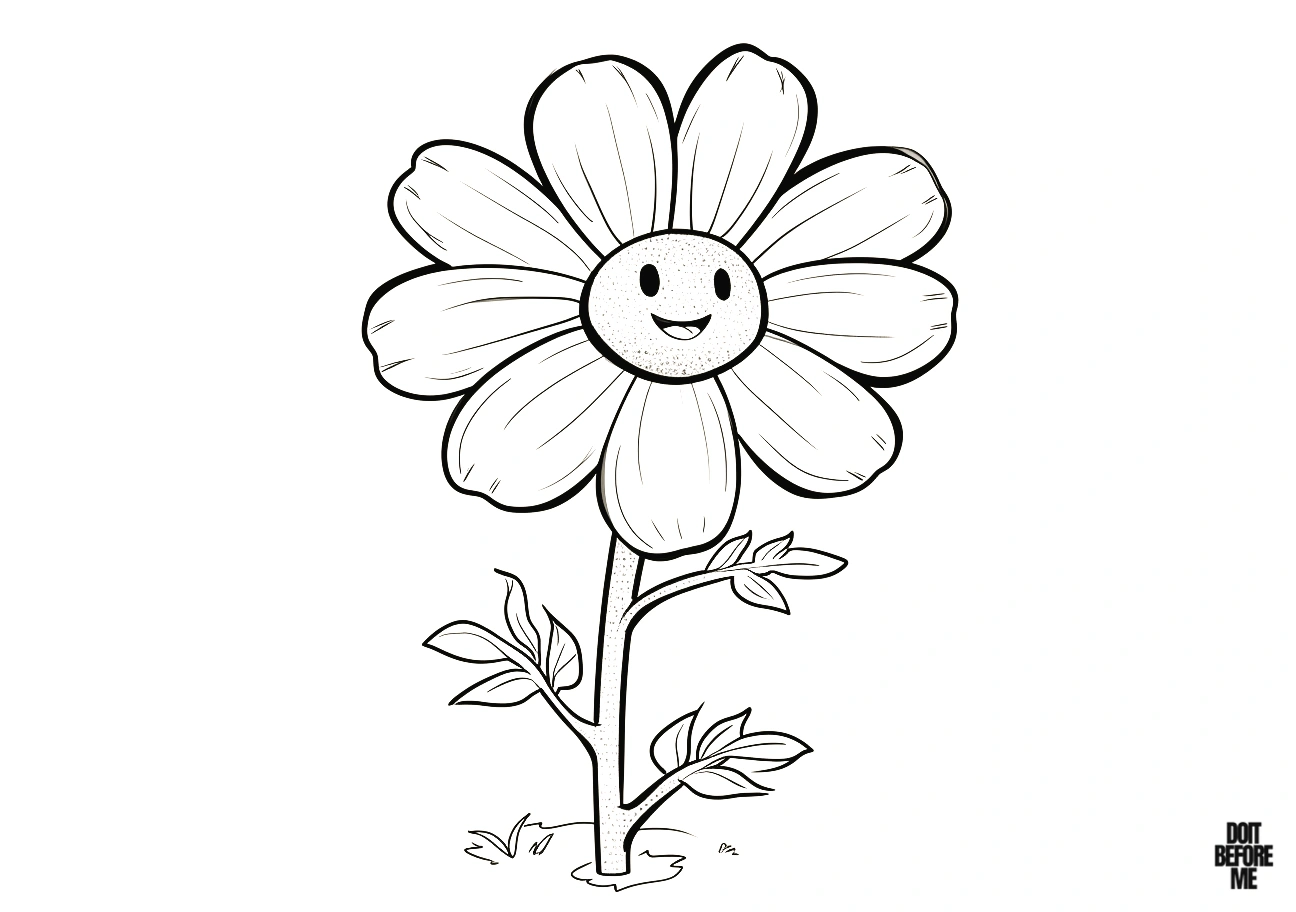
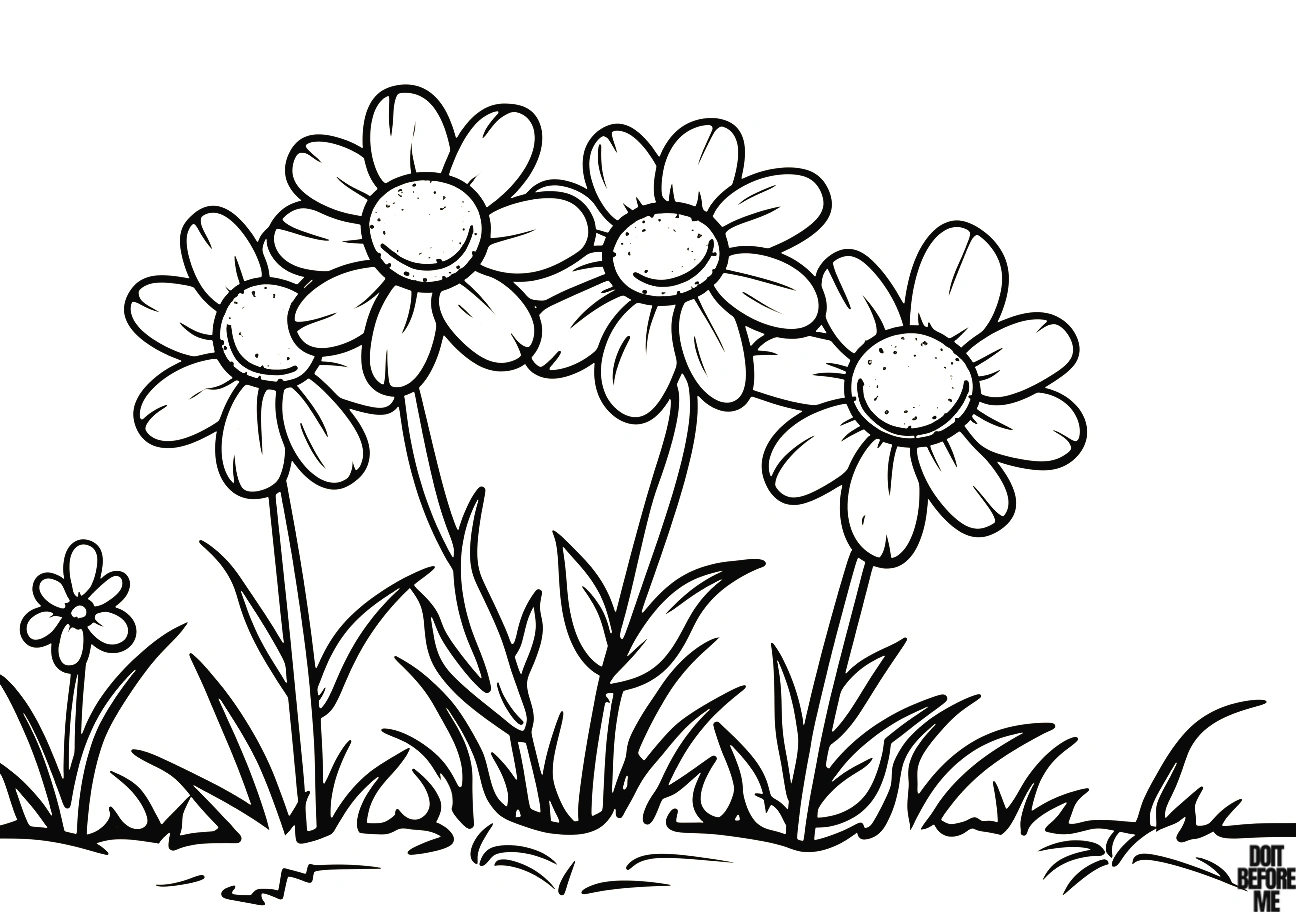
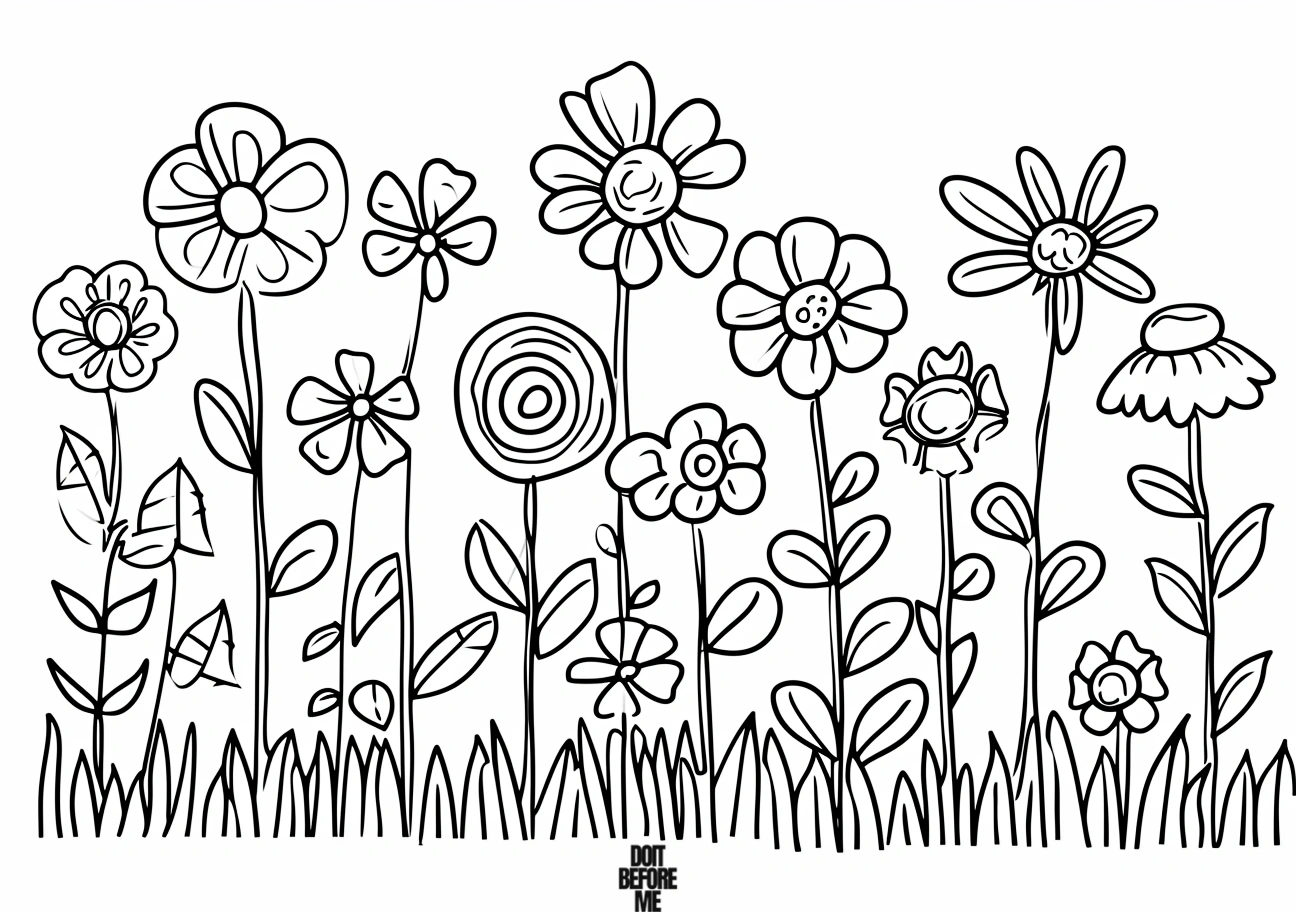
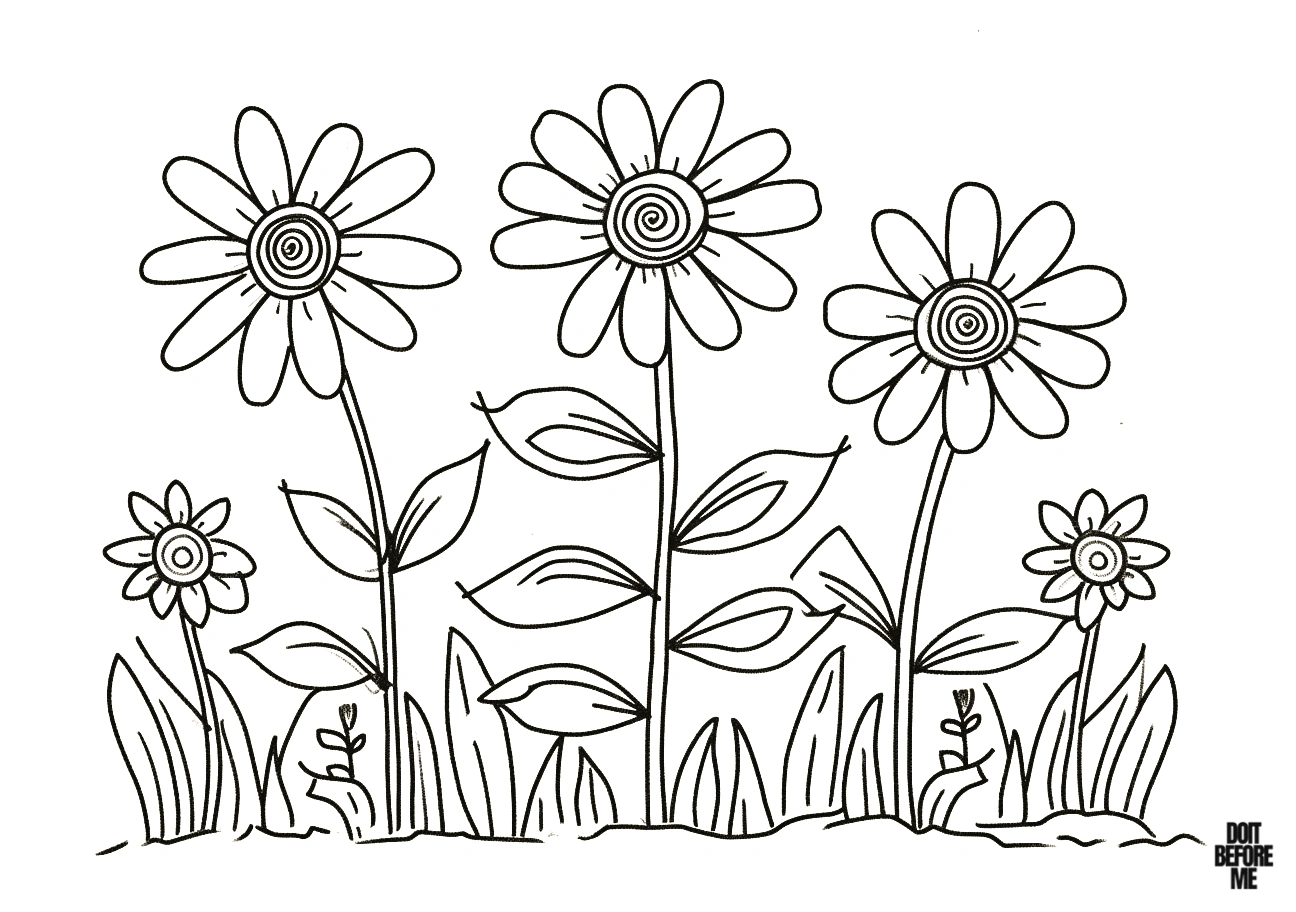
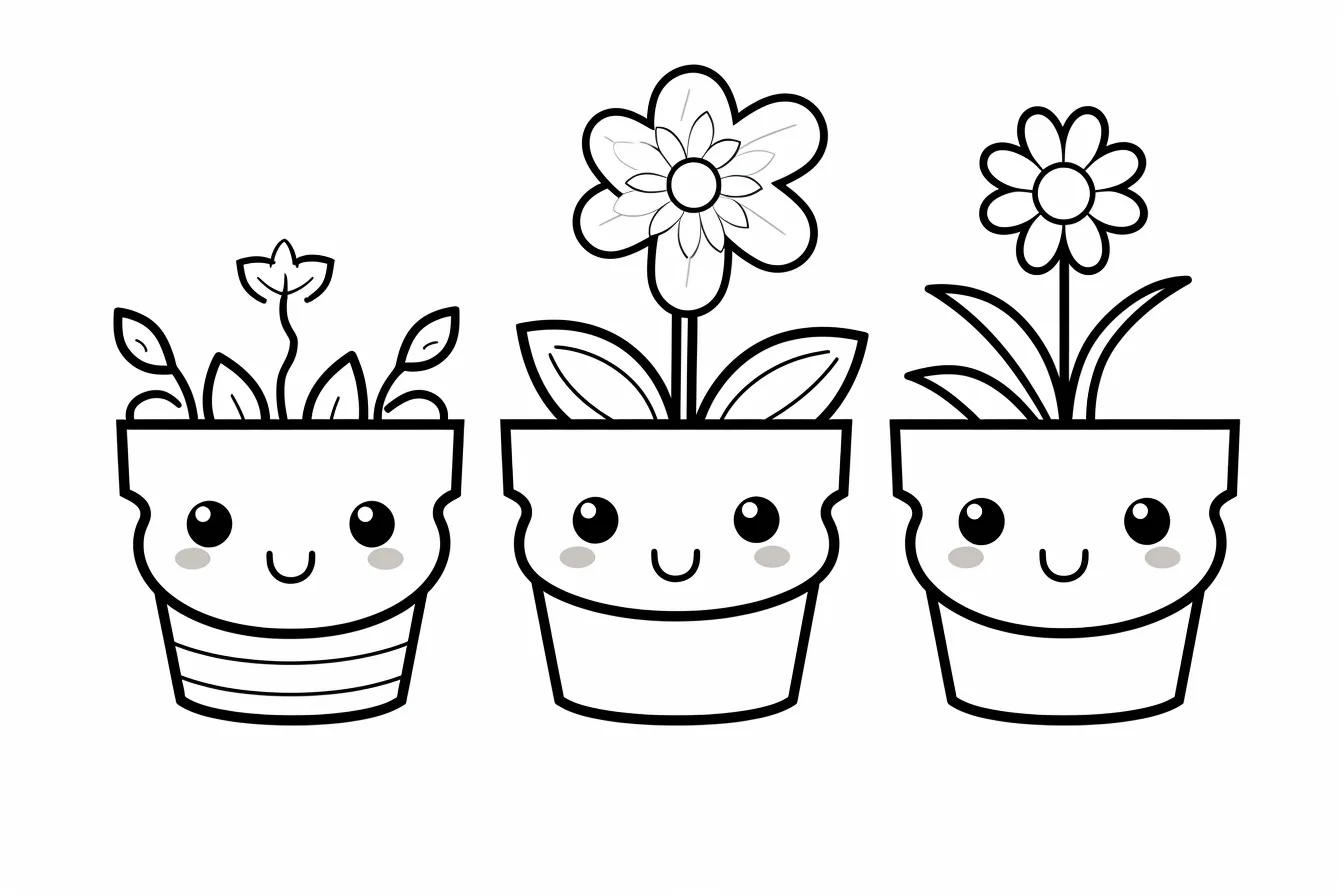
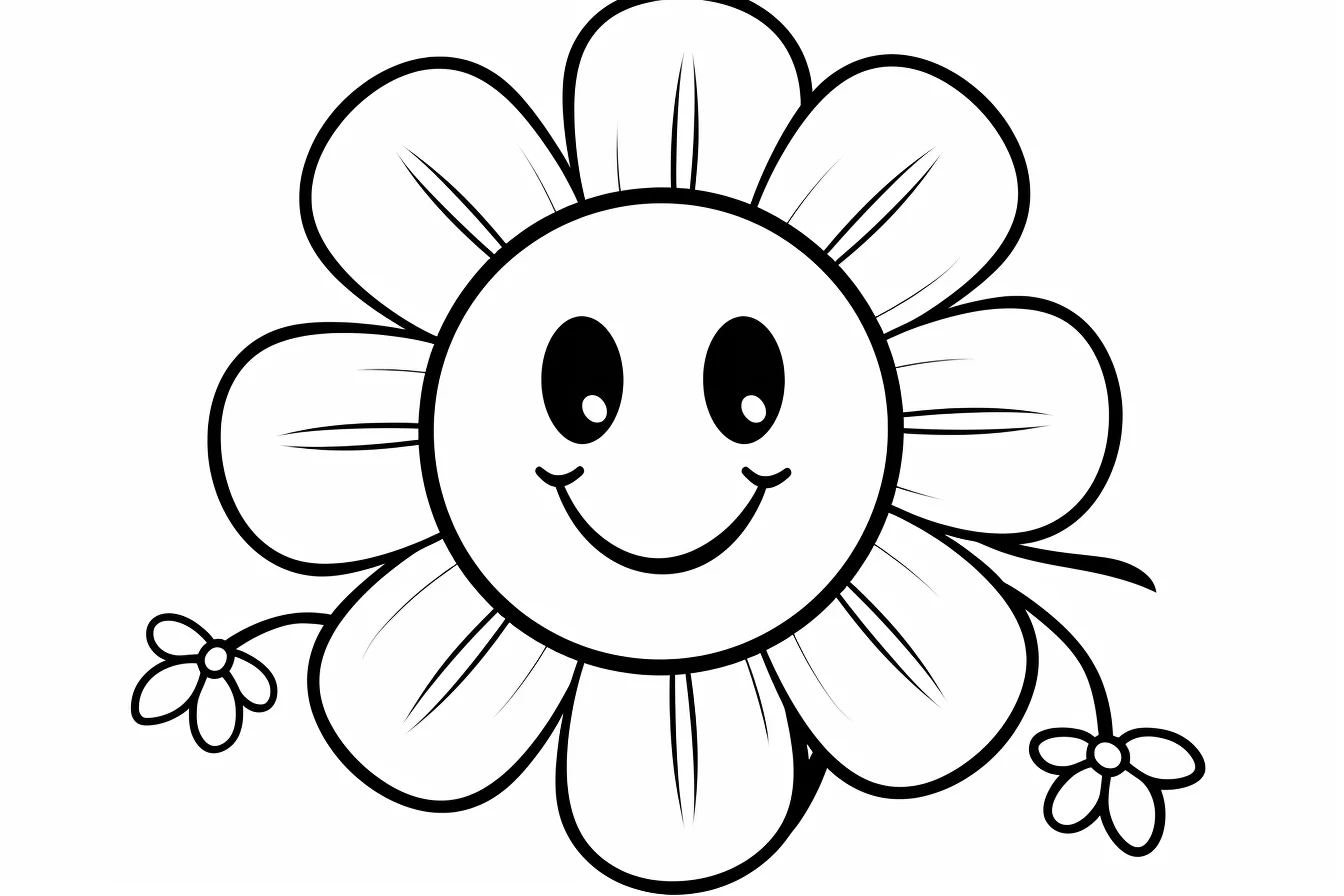
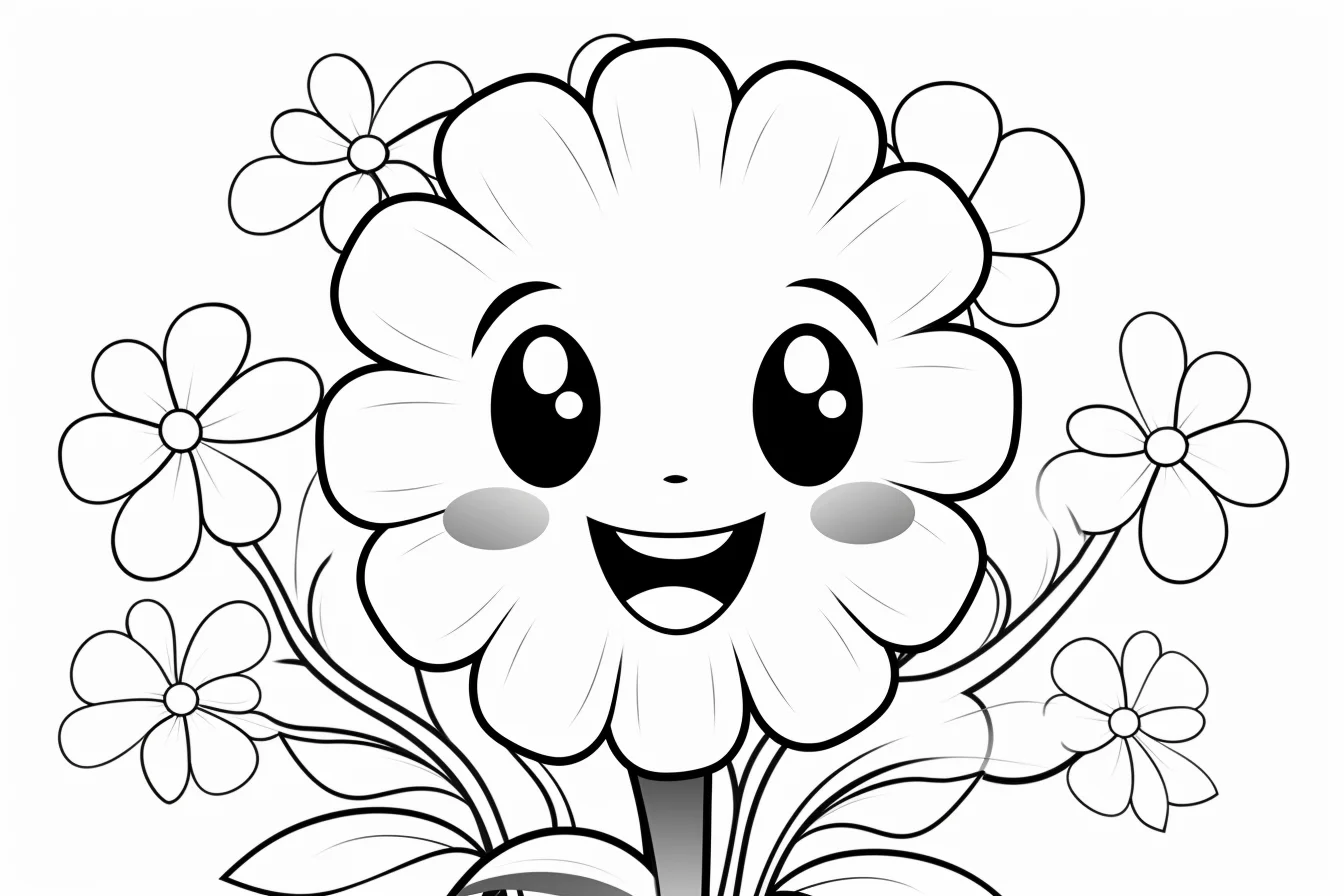
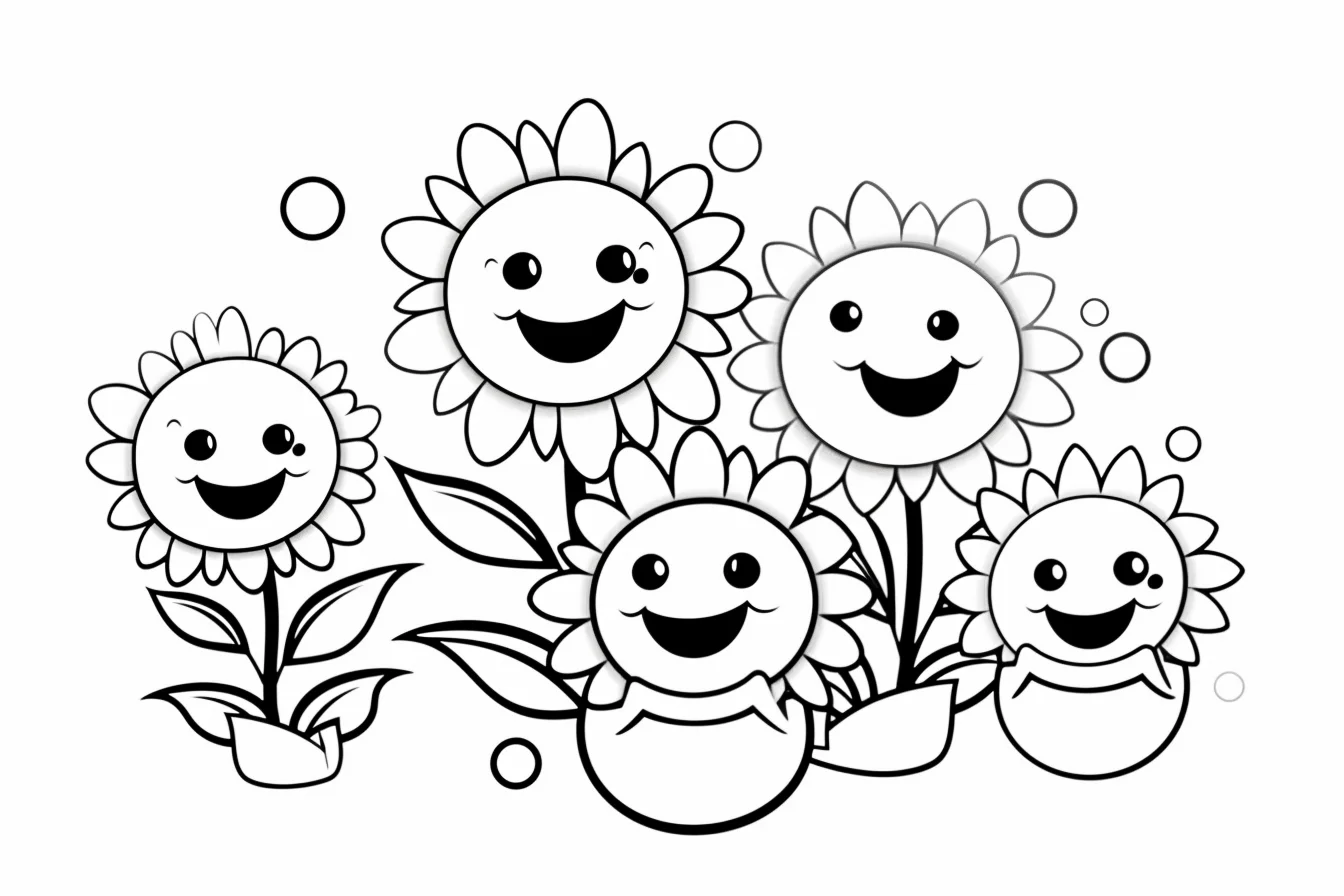
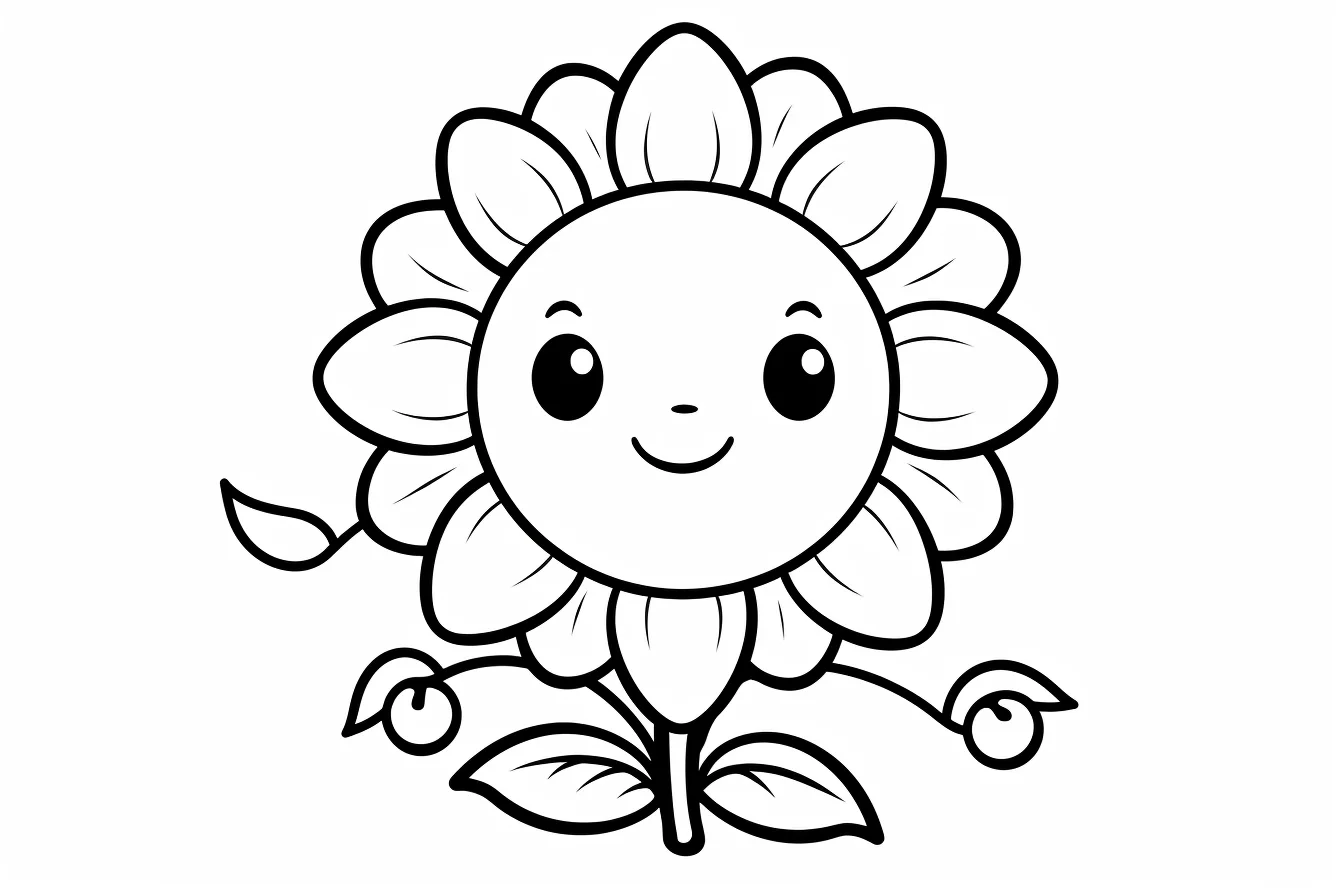
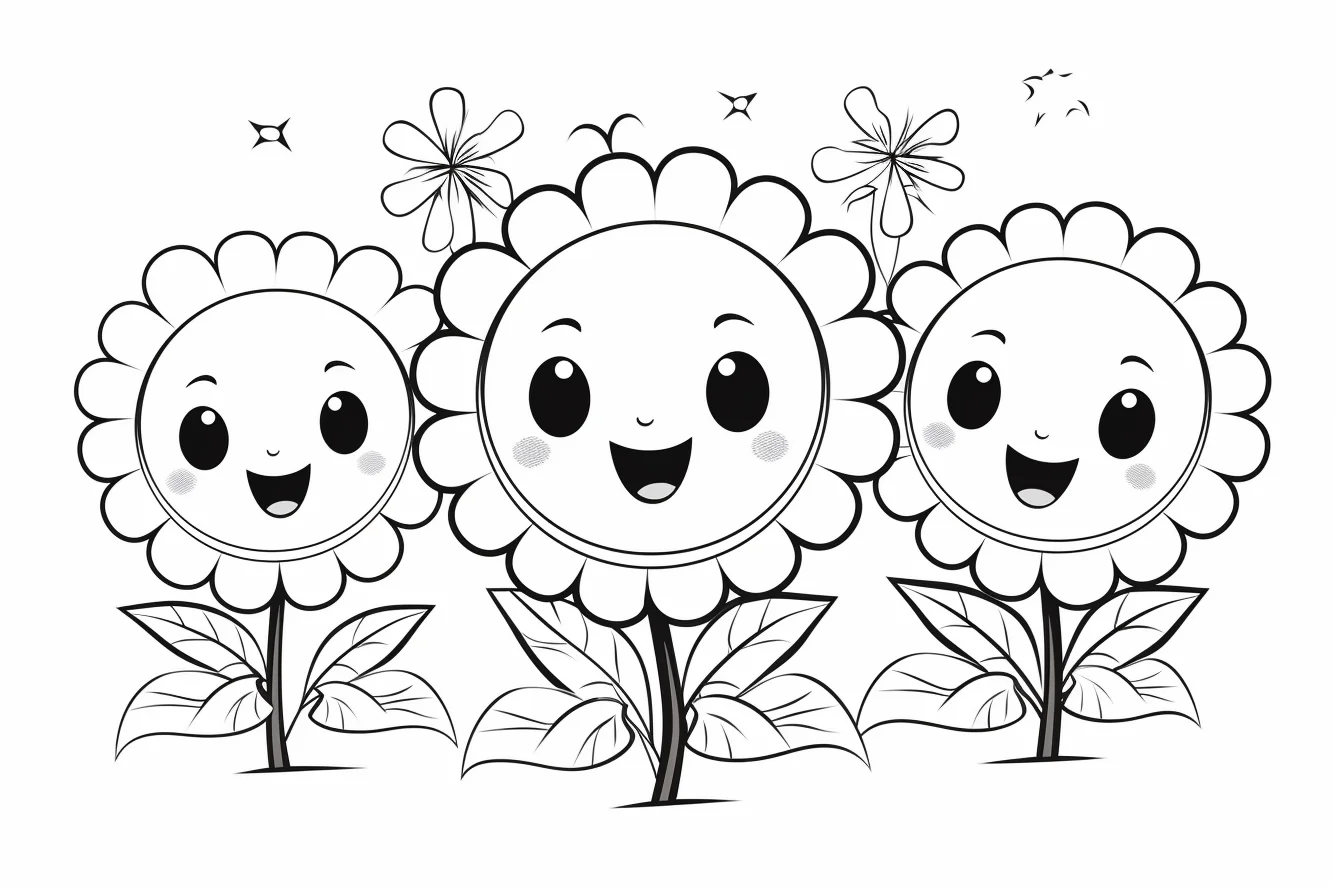
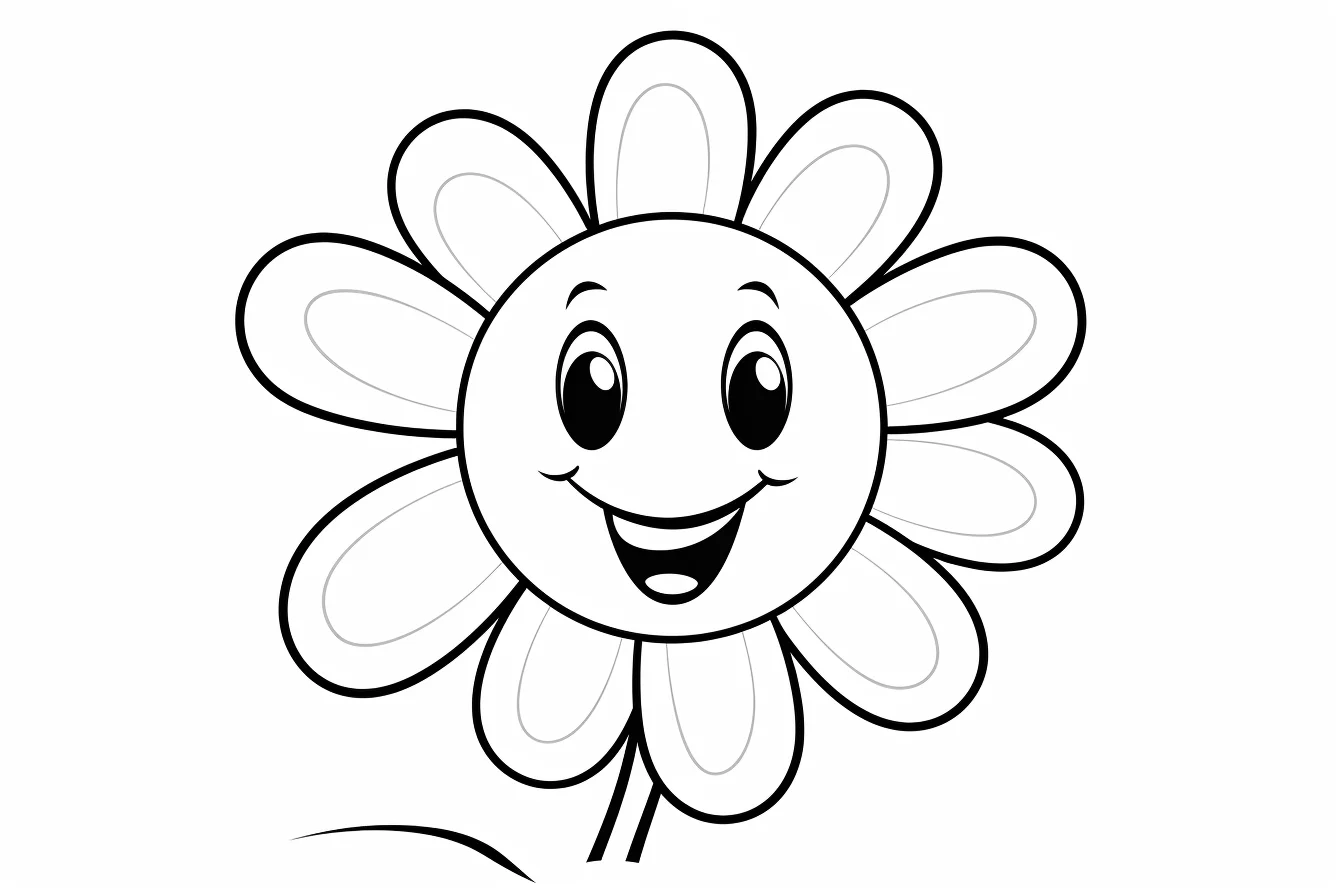
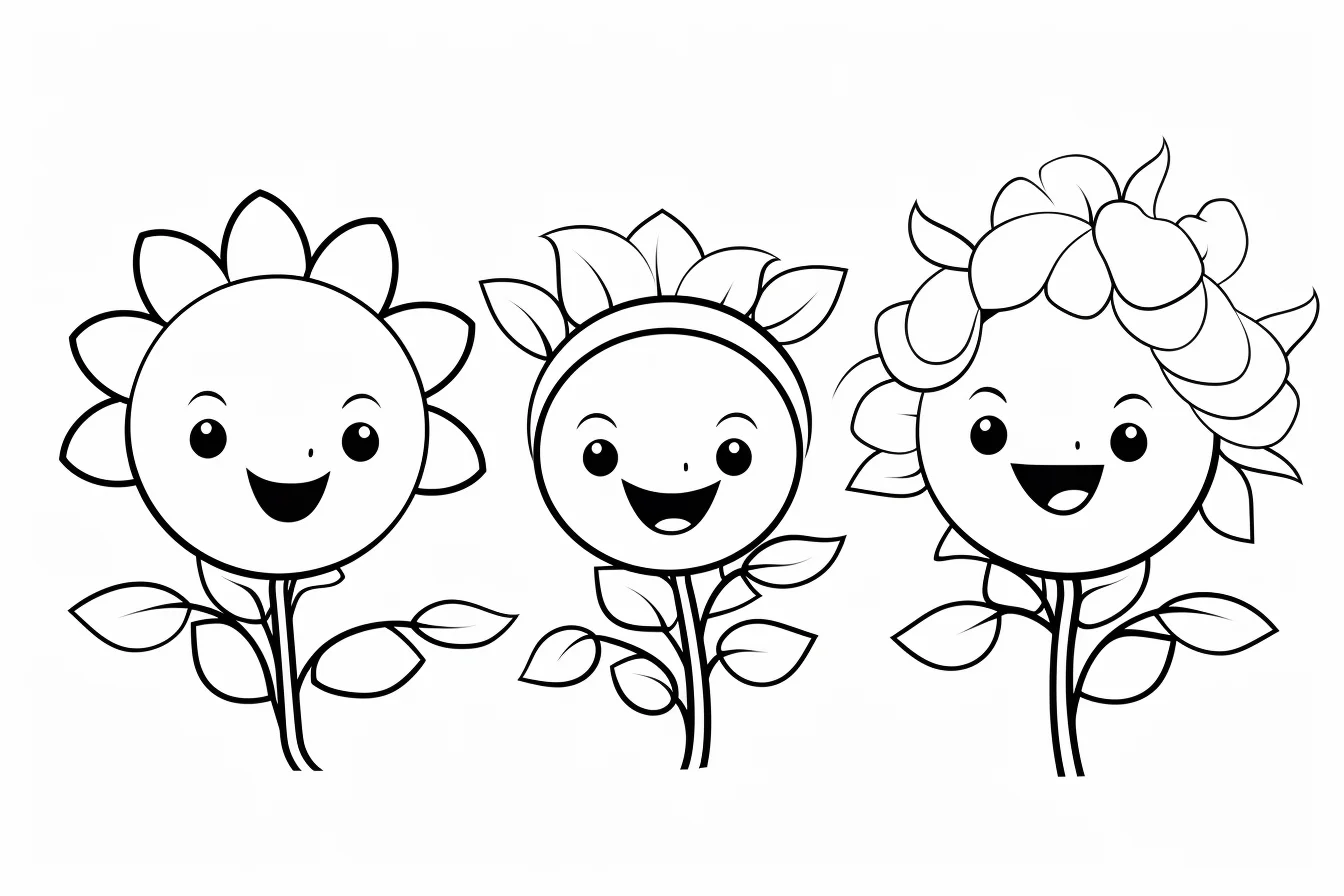
The smiling daisies and sunflowers are the quickest pages in the set because the petals and centers are large and easy to separate. Crayons or washable markers work well here. For a younger child, offer only a few colors at first; choosing among three or four crayons is often easier than deciding from a full box.
Flower crowns and detailed character pages
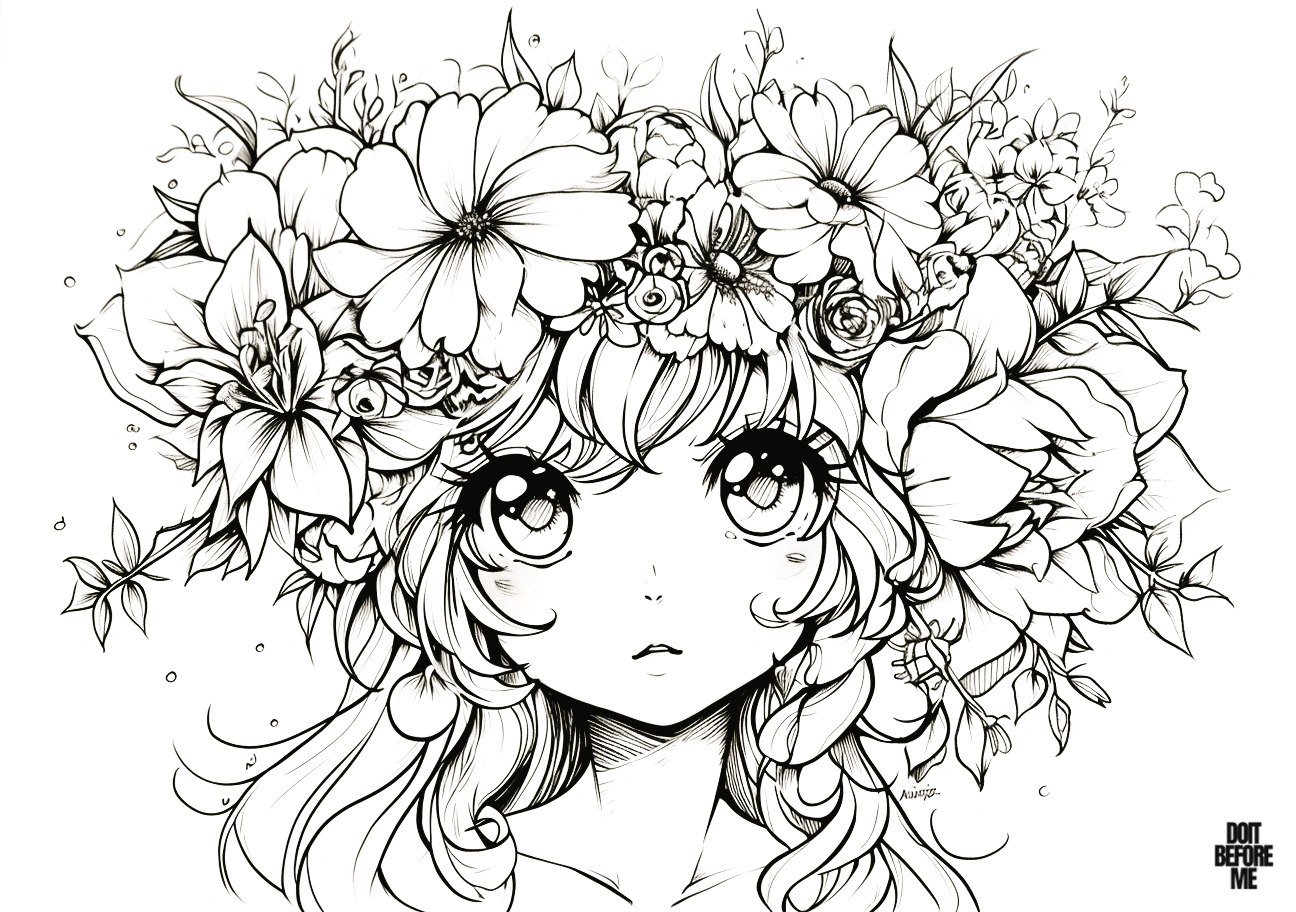
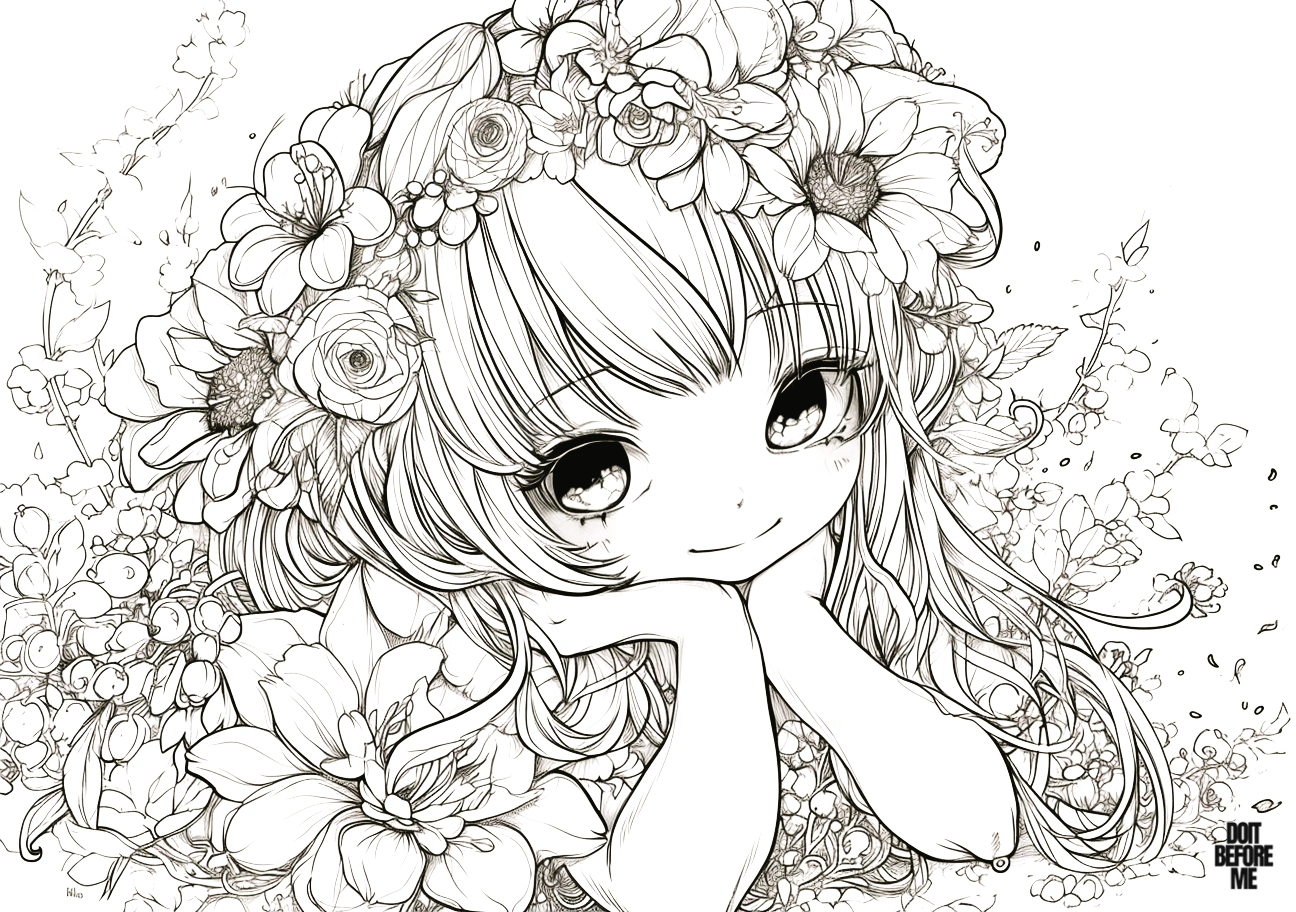
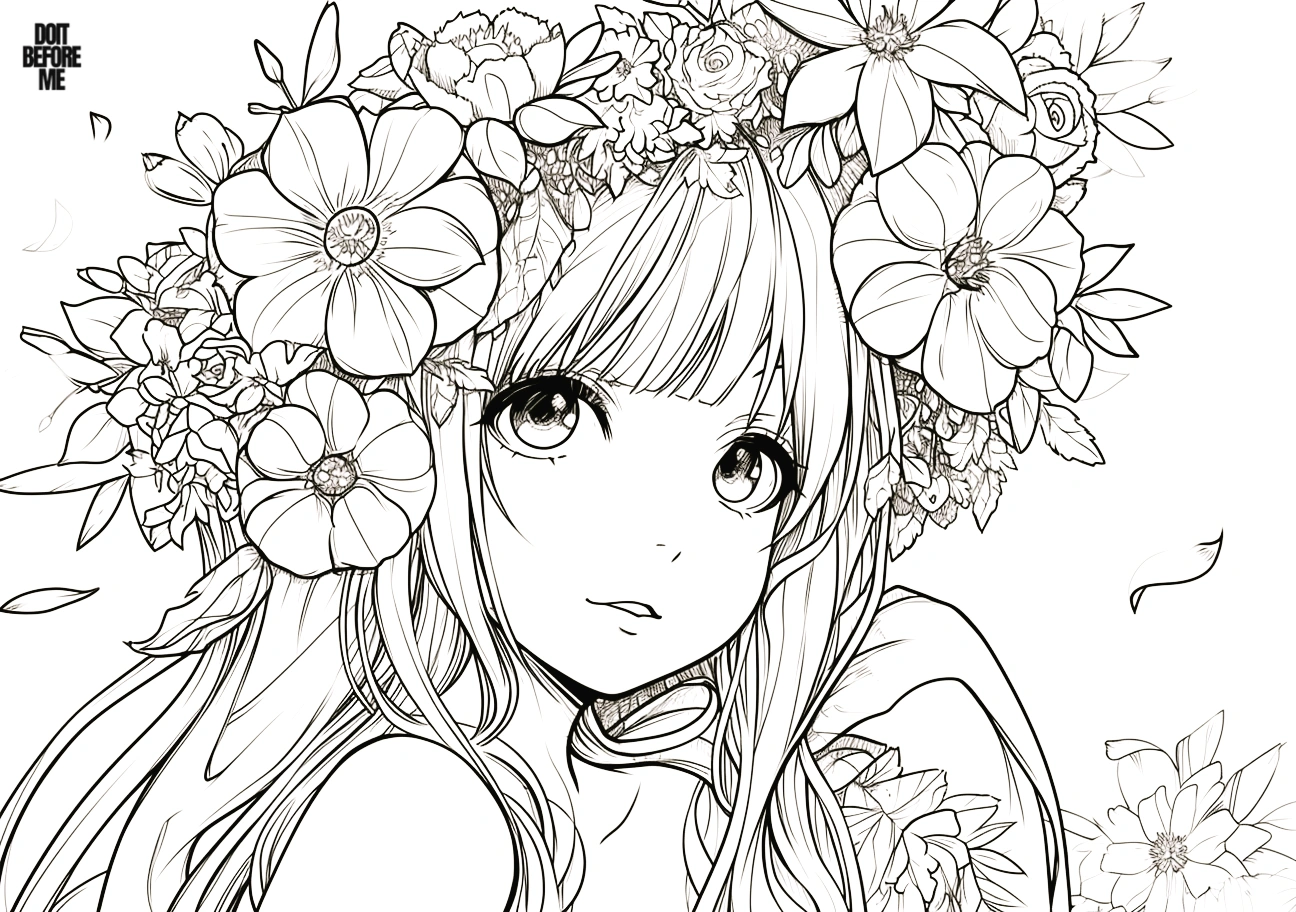
The flower-girl and anime-style sheets take longer because hair, petals and facial details compete for attention. Colored pencils are easier to control than broad markers. Pick the hair color first, then choose flower colors that contrast with it. Repeating the same two or three flower colors across the crown keeps the page cohesive instead of turning every blossom into a separate color decision.
Mandala flowers: repeat colors instead of inventing a new one for every section
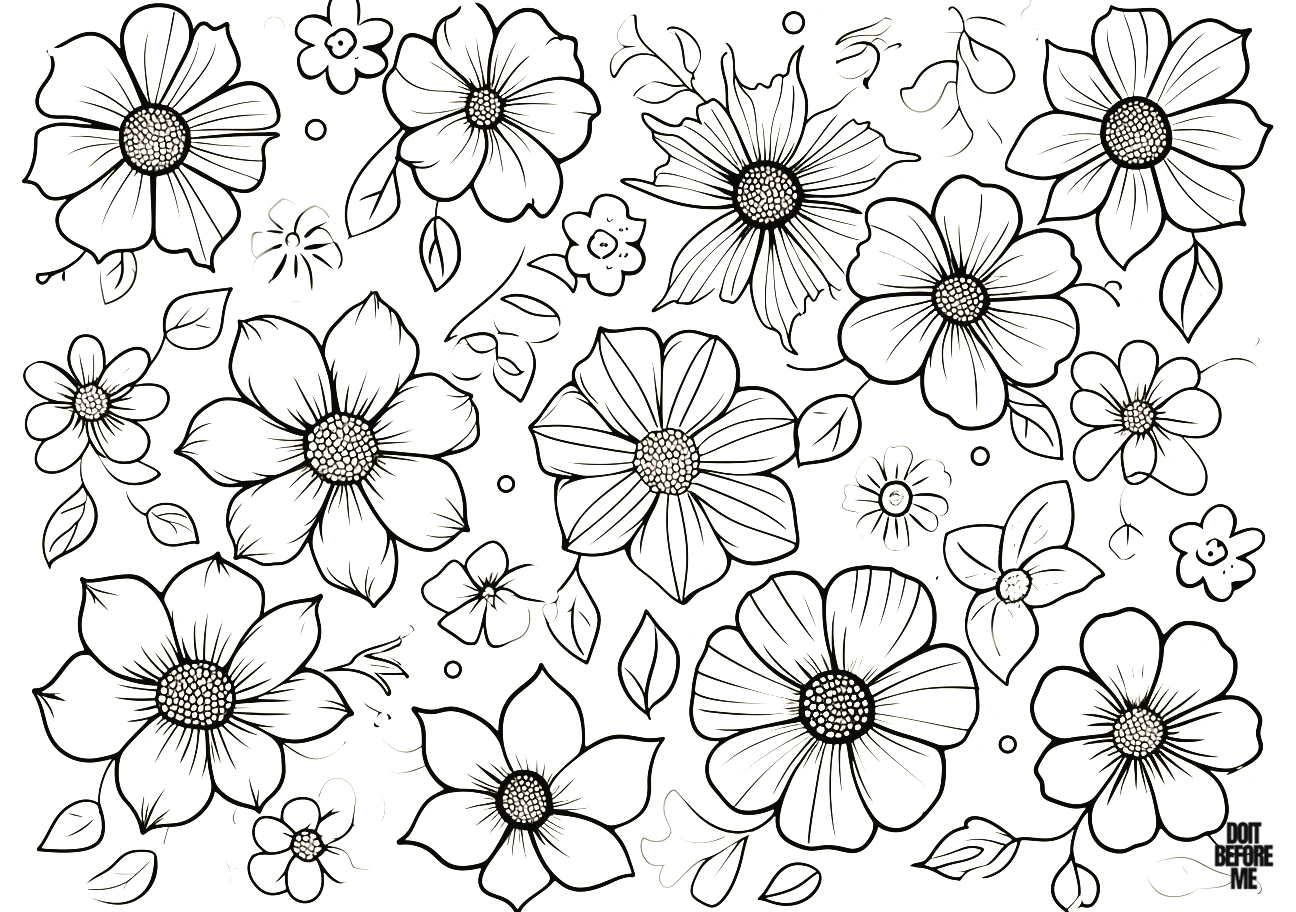
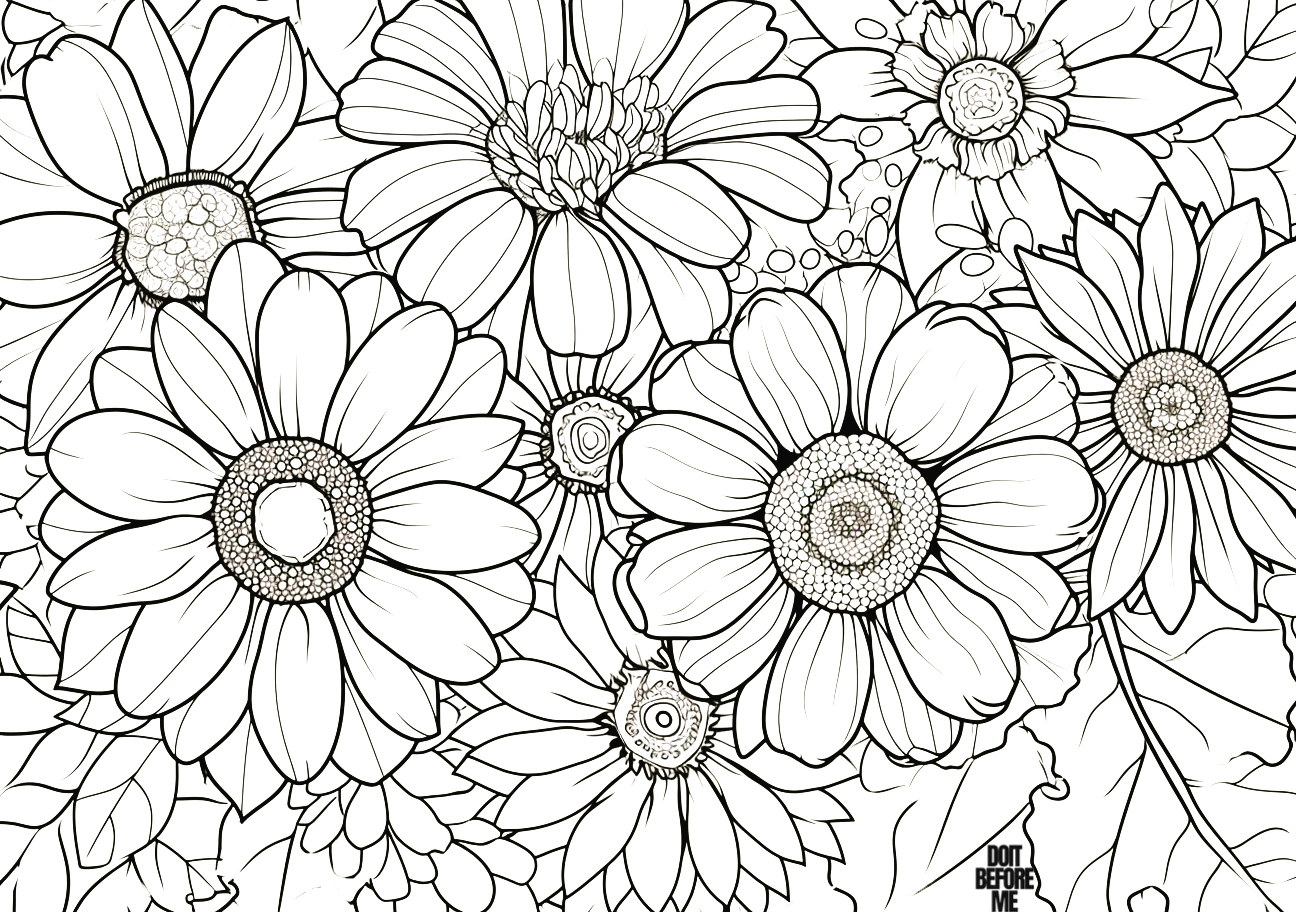
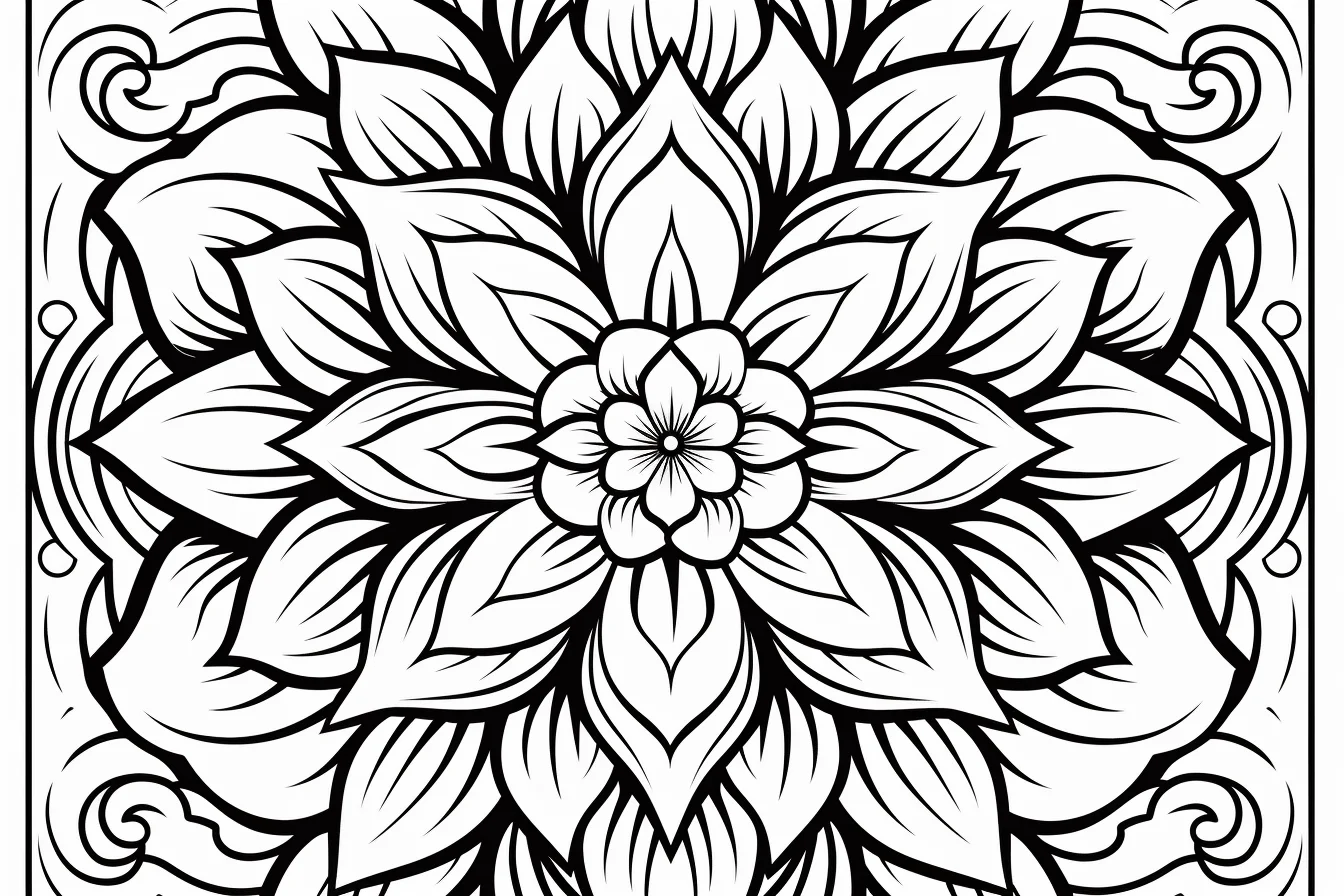
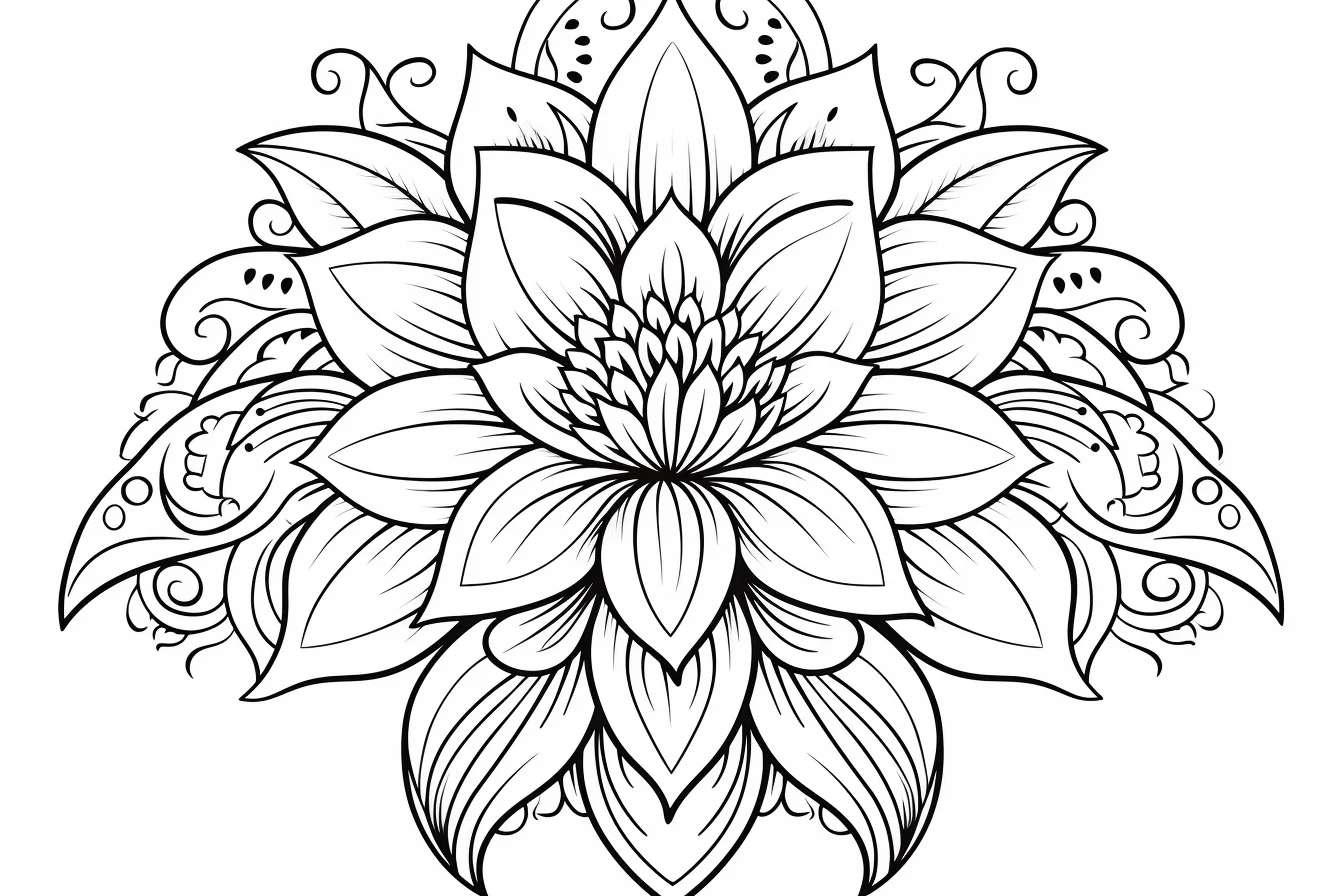
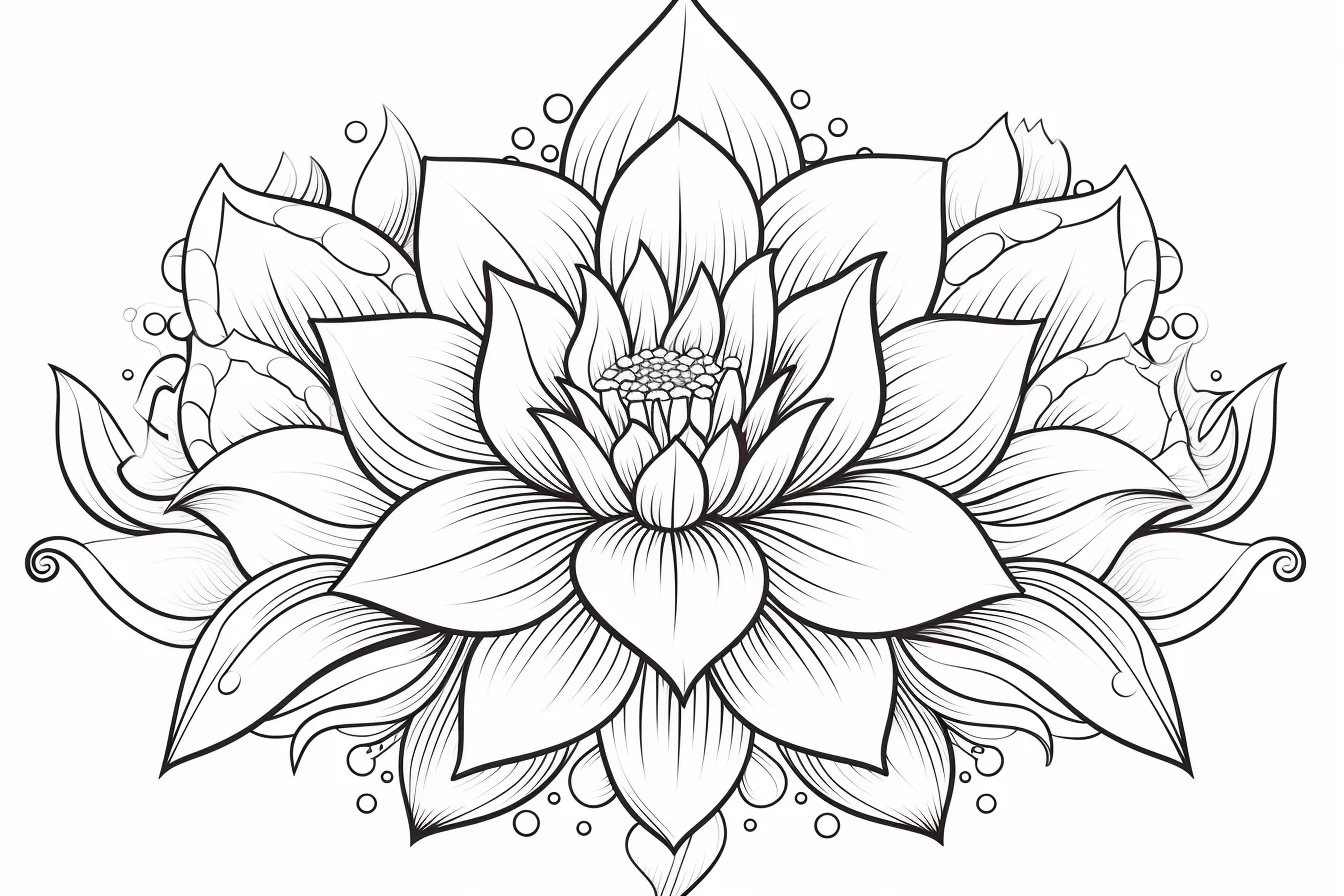
For the mandala-style pages, choose a compact palette—three to five colors is plenty—and repeat it symmetrically. Work from the center outward or finish one repeated ring at a time. Fine-tip pencils or markers are much easier than broad tools here because the repeated shapes leave less room for correction.
Roses need a different kind of shading
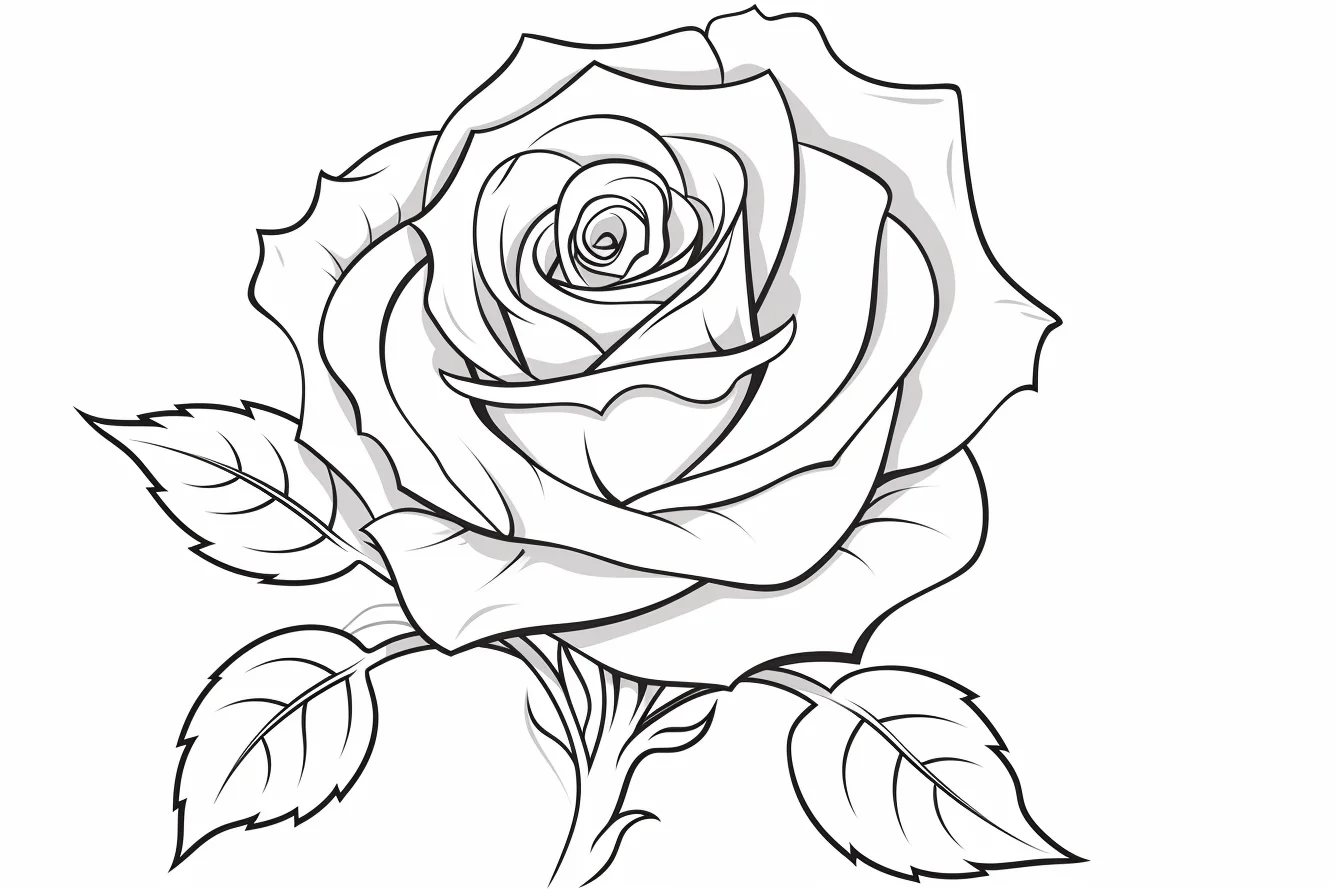
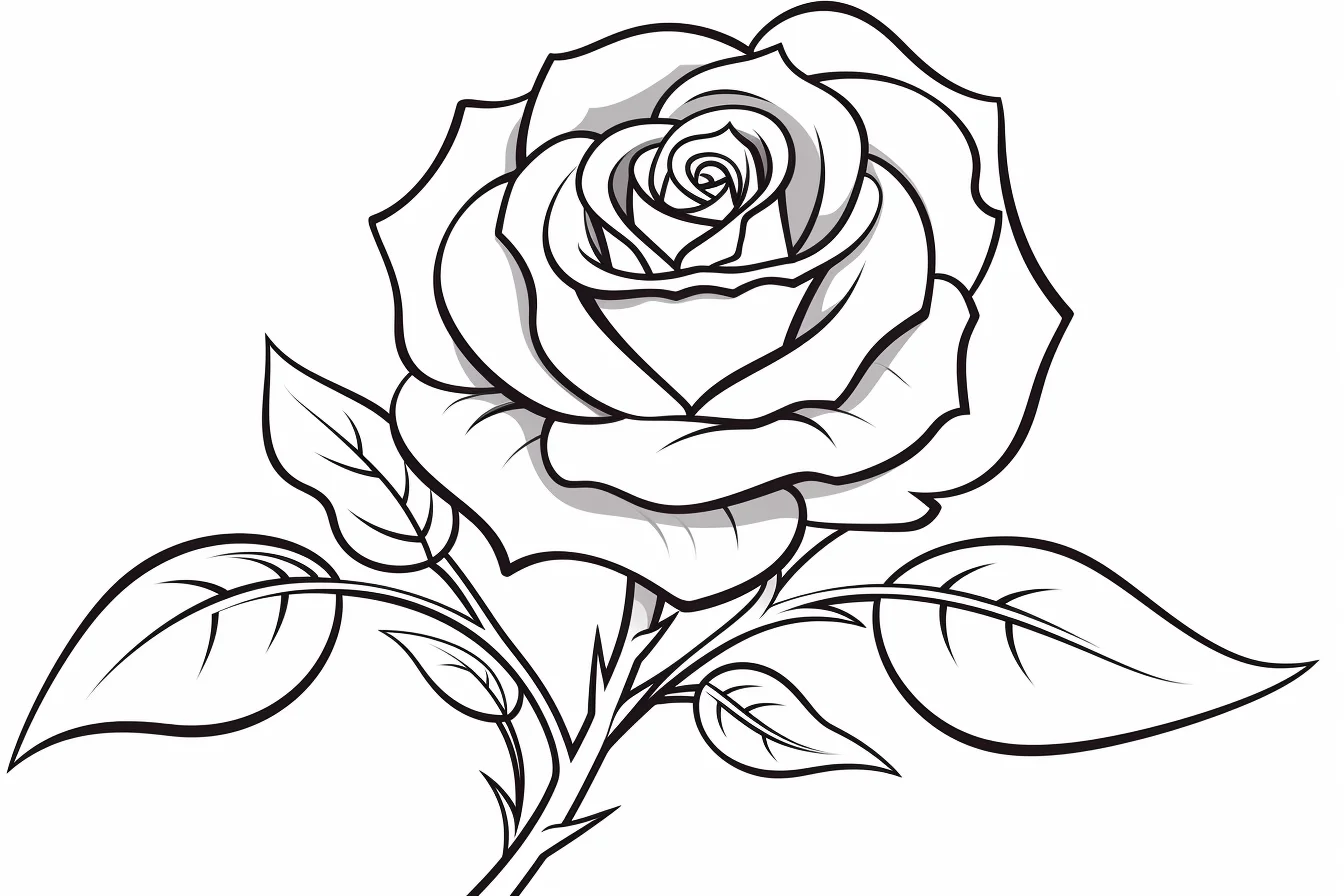
On rose pages, start with a light base across the petals and add darker color where petals overlap or fold inward. Avoid outlining every petal heavily; a darker edge on only the deepest folds creates more depth. If you want an easier page, the daisies and smiling flowers above require much less layered shading.
Flower coloring questions
Which flower pages are easiest for preschoolers?
Start with the smiling daisies, sunflowers and other pages with large open petals. Crayons are usually easier than pencils when the child is still learning to control smaller shapes.
What is the easiest way to shade petals?
Use one light base and one darker shade near the flower center or where petals overlap. You do not need a different color for every petal.
Which pages are better for adults?
The flower crowns, mandalas and rose-heavy designs take longer because there are more repeated shapes and smaller sections. They are also better suited to colored pencils or fine-tip markers.
Where should I go if I want flowers grouped by type?
Use the flower pages by type or the broader rose, tulip, orchid and mixed-flower collection.
Which flower collection should you use?
- This 40-page gallery: best when you want variety—cute characters, smiling flowers, flower crowns, roses and mandalas in one place.
- 20 flower coloring sheets from easy to advanced: better when difficulty progression matters more than variety.
- 20 flower pages by type: better when you want roses, daisies and other flower-focused choices rather than character-heavy pages.
For printing, save the full-size image first and use landscape orientation for the wide sheets. If you are printing several pages for children, mix one very simple flower with one more detailed page so they can choose how long they want to spend coloring. Finished your own version? Share your color choices and artwork with the creative community.

