
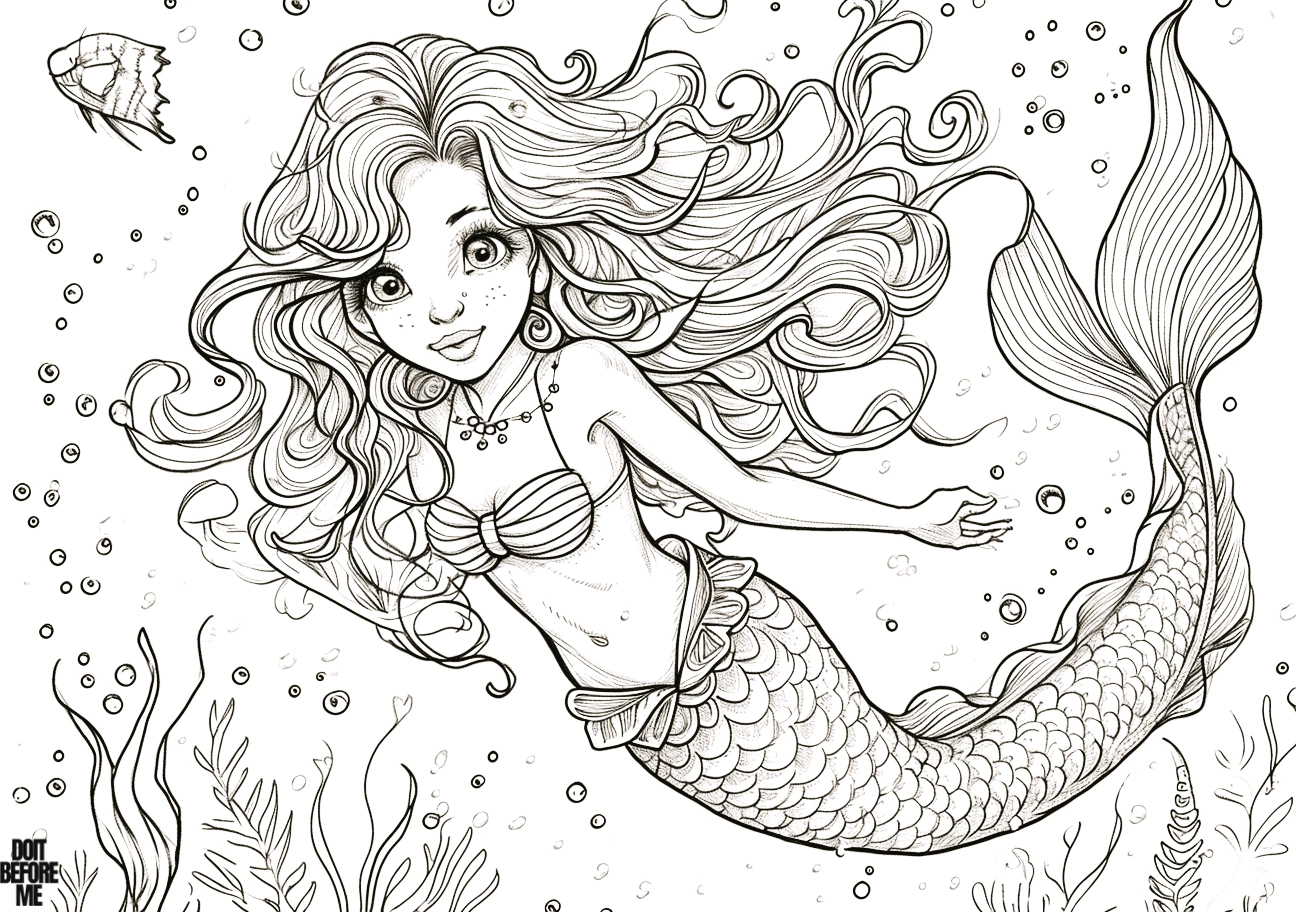
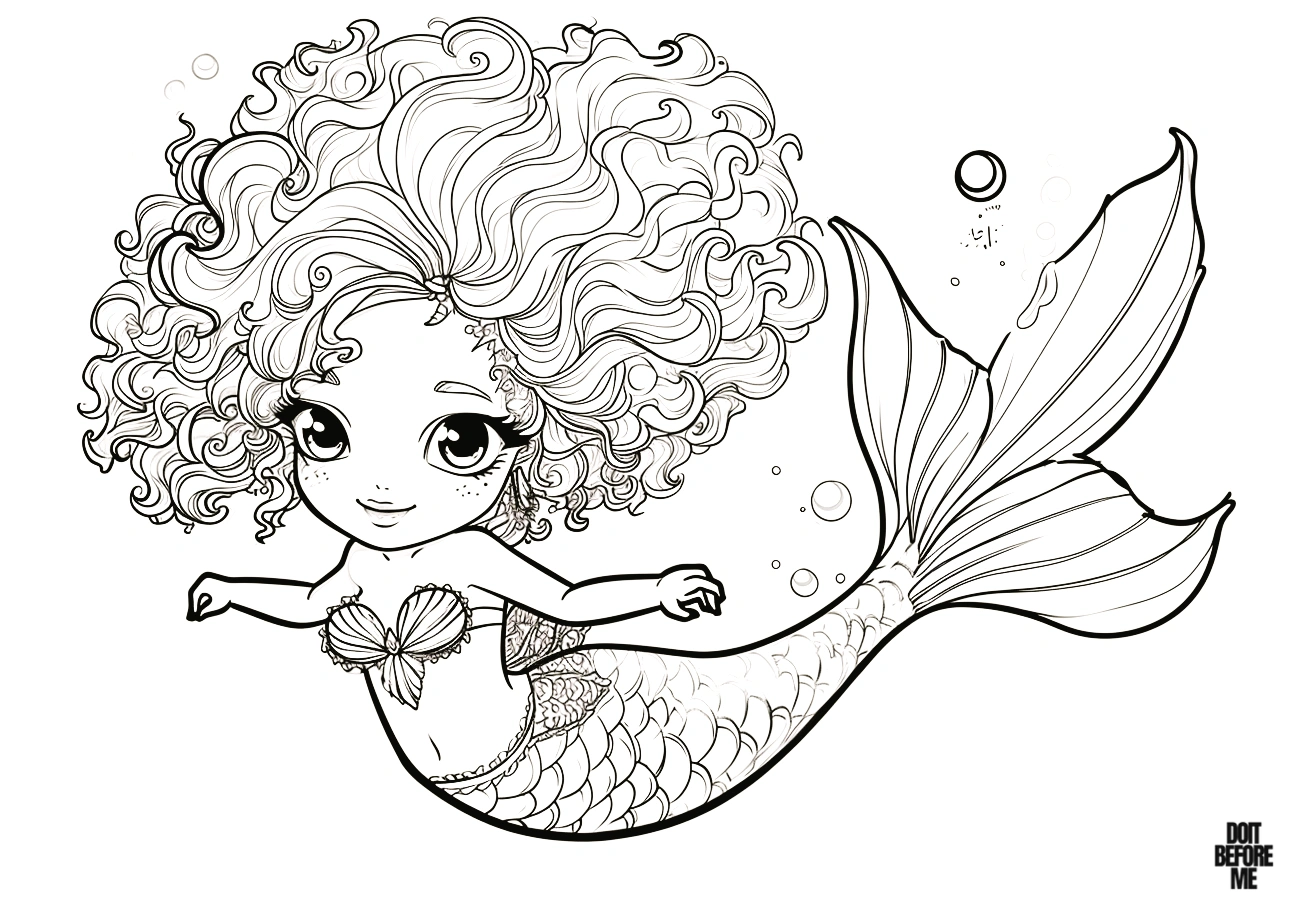
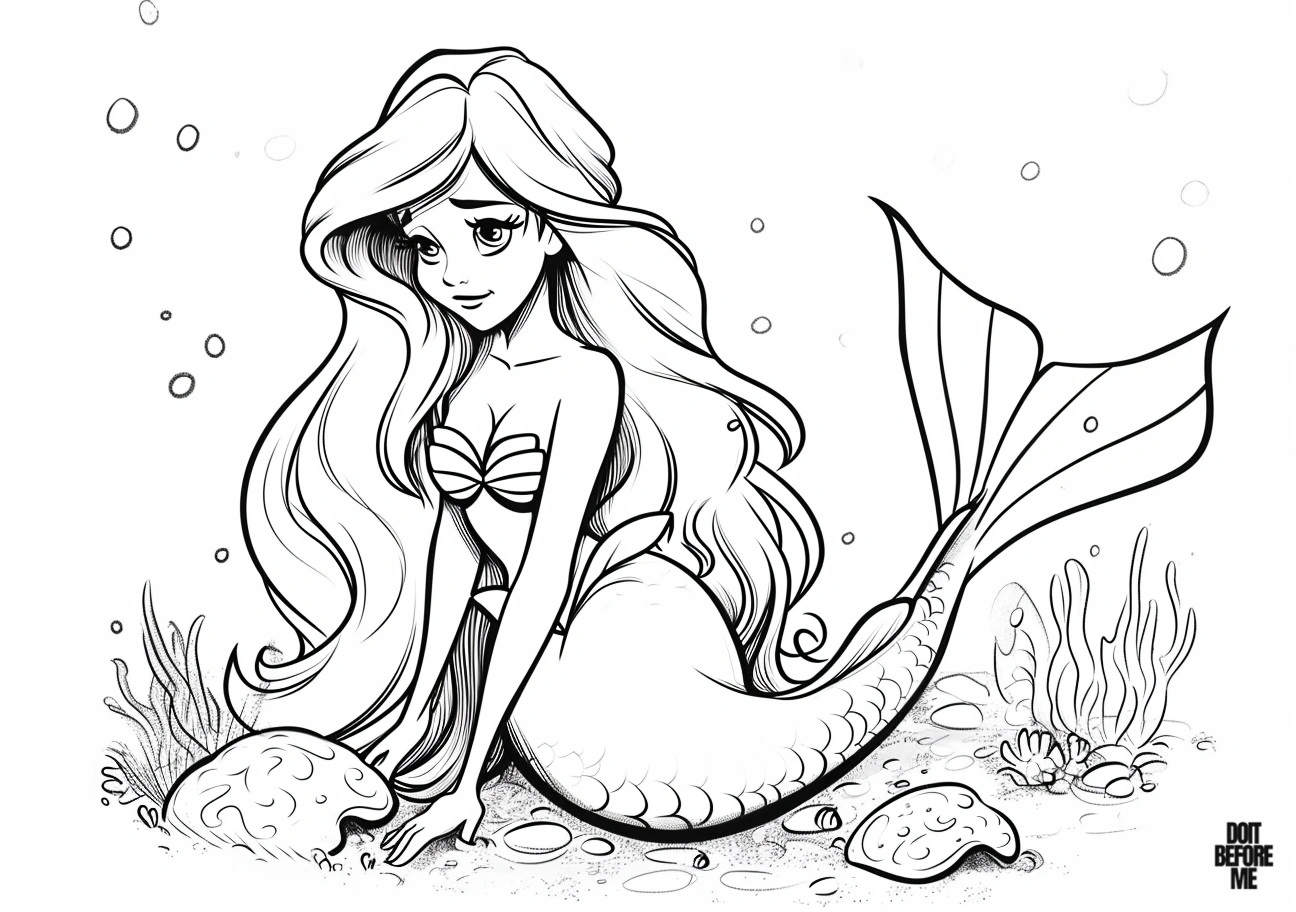
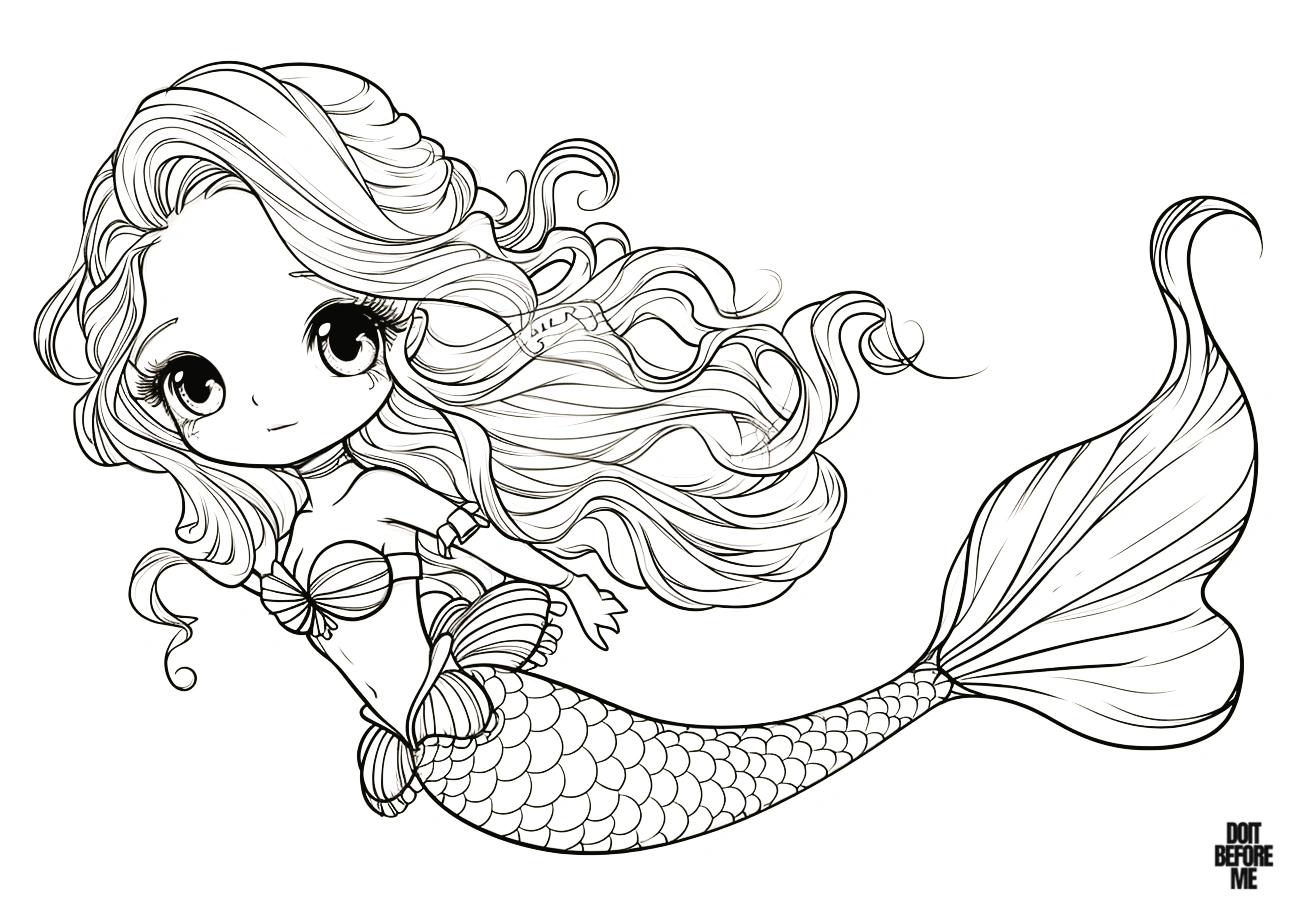
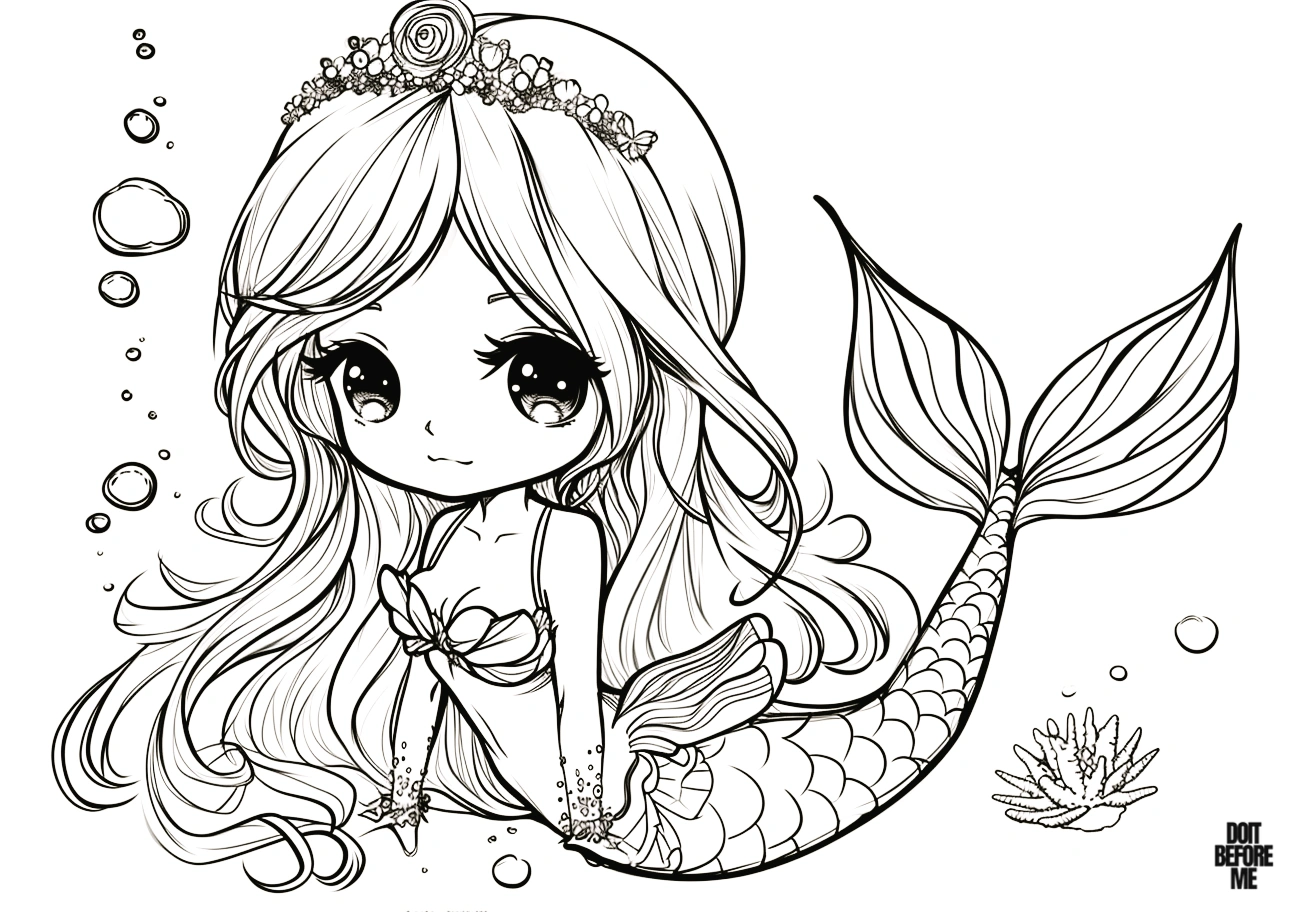
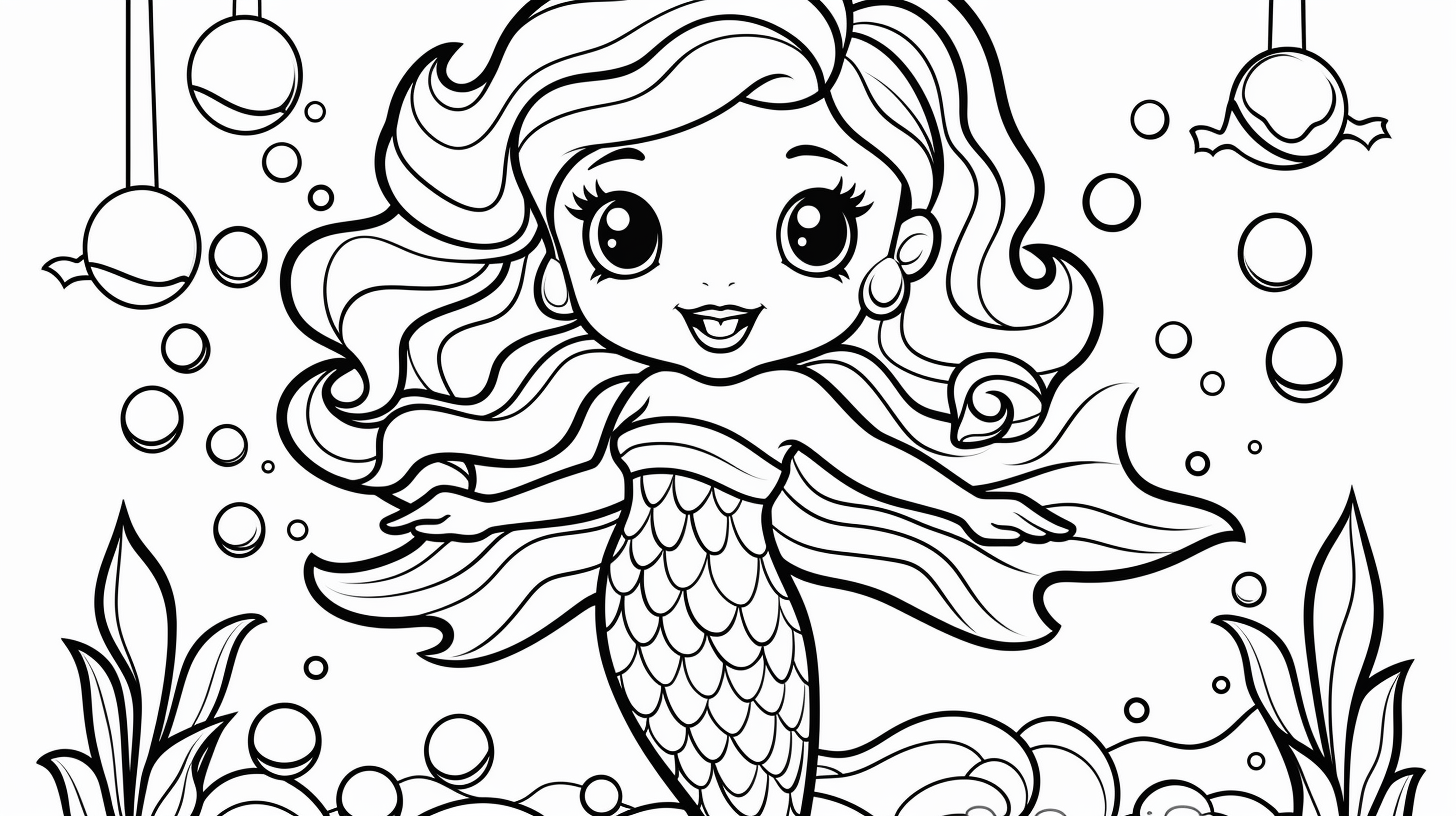
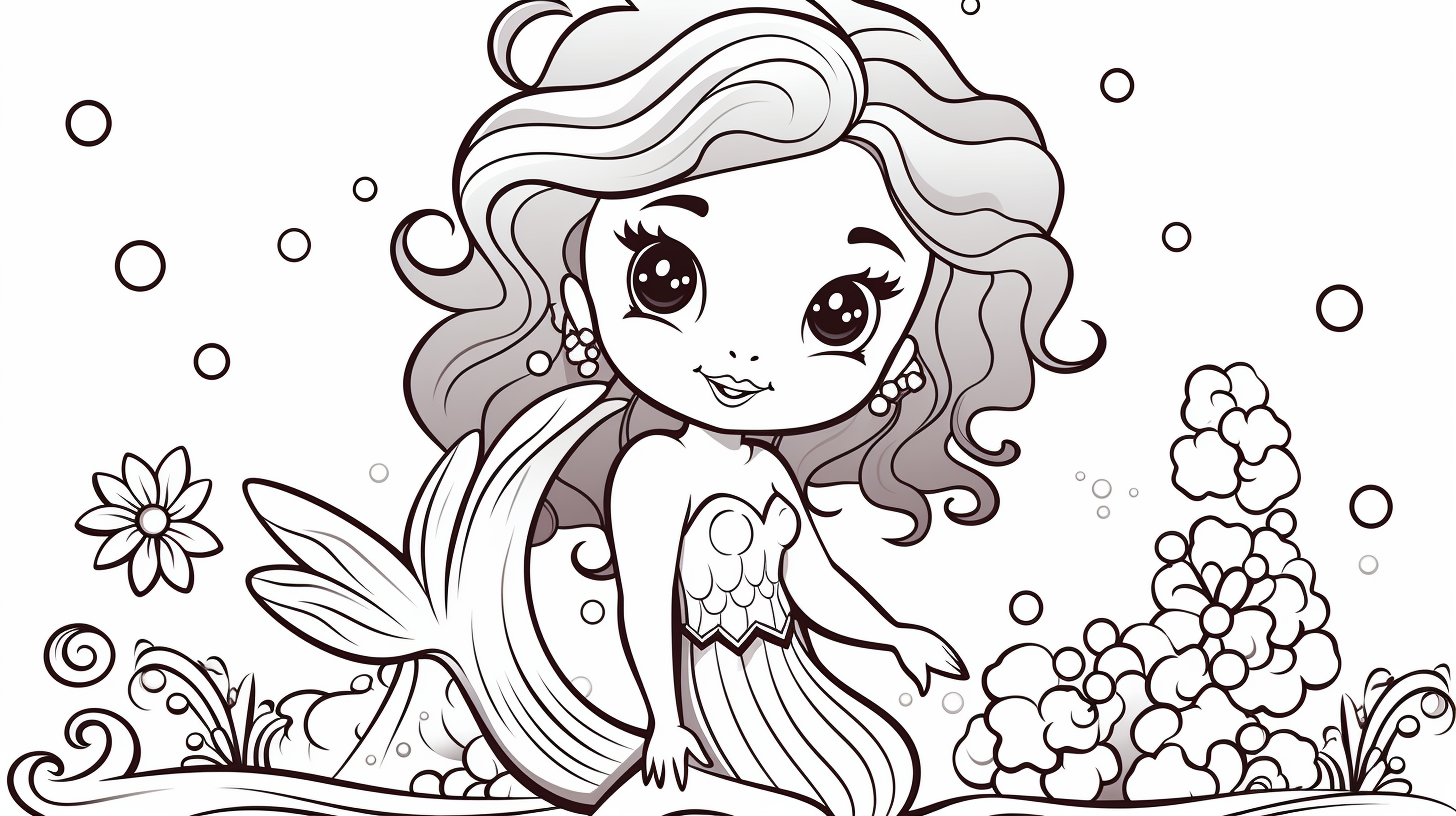
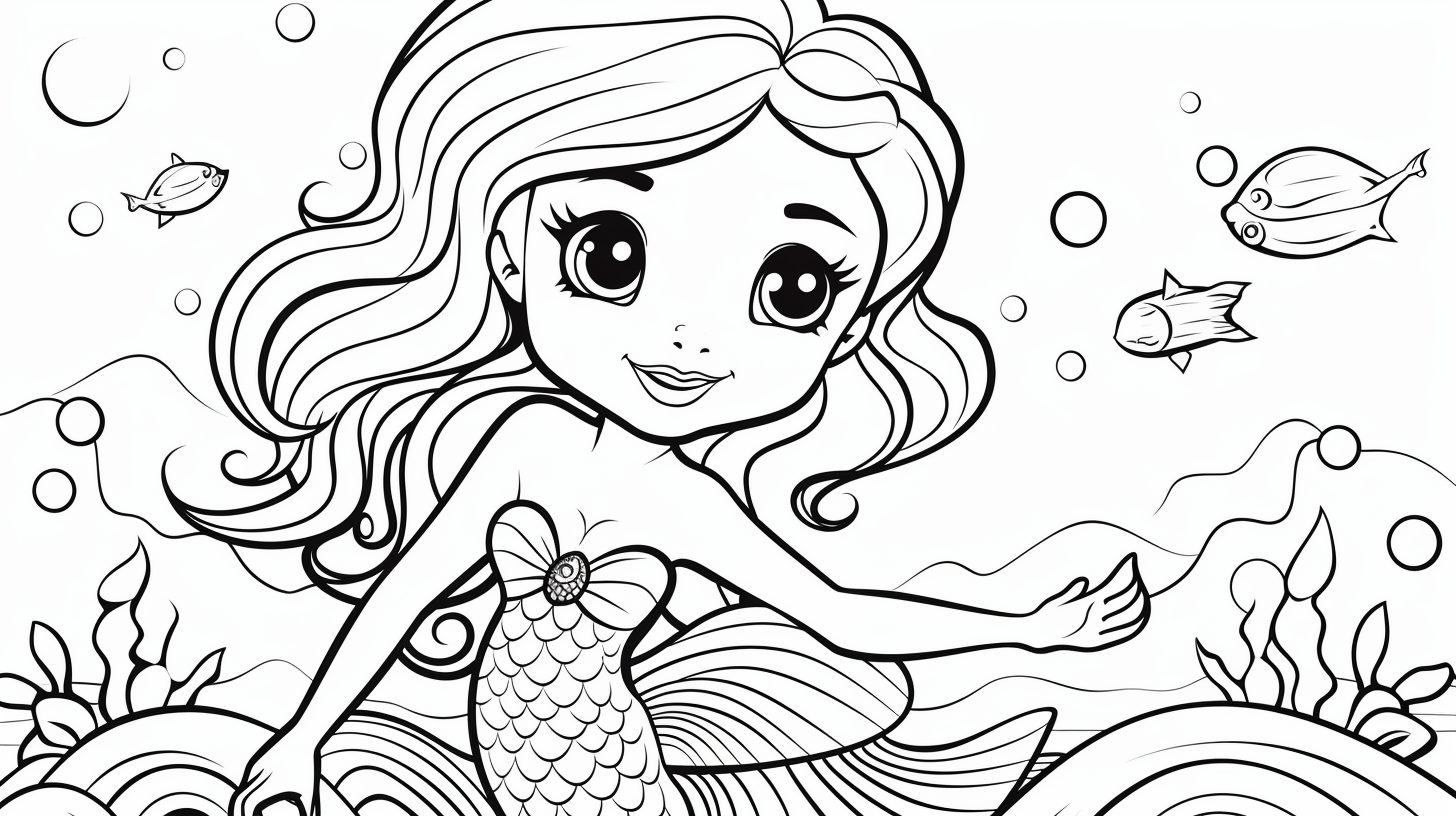
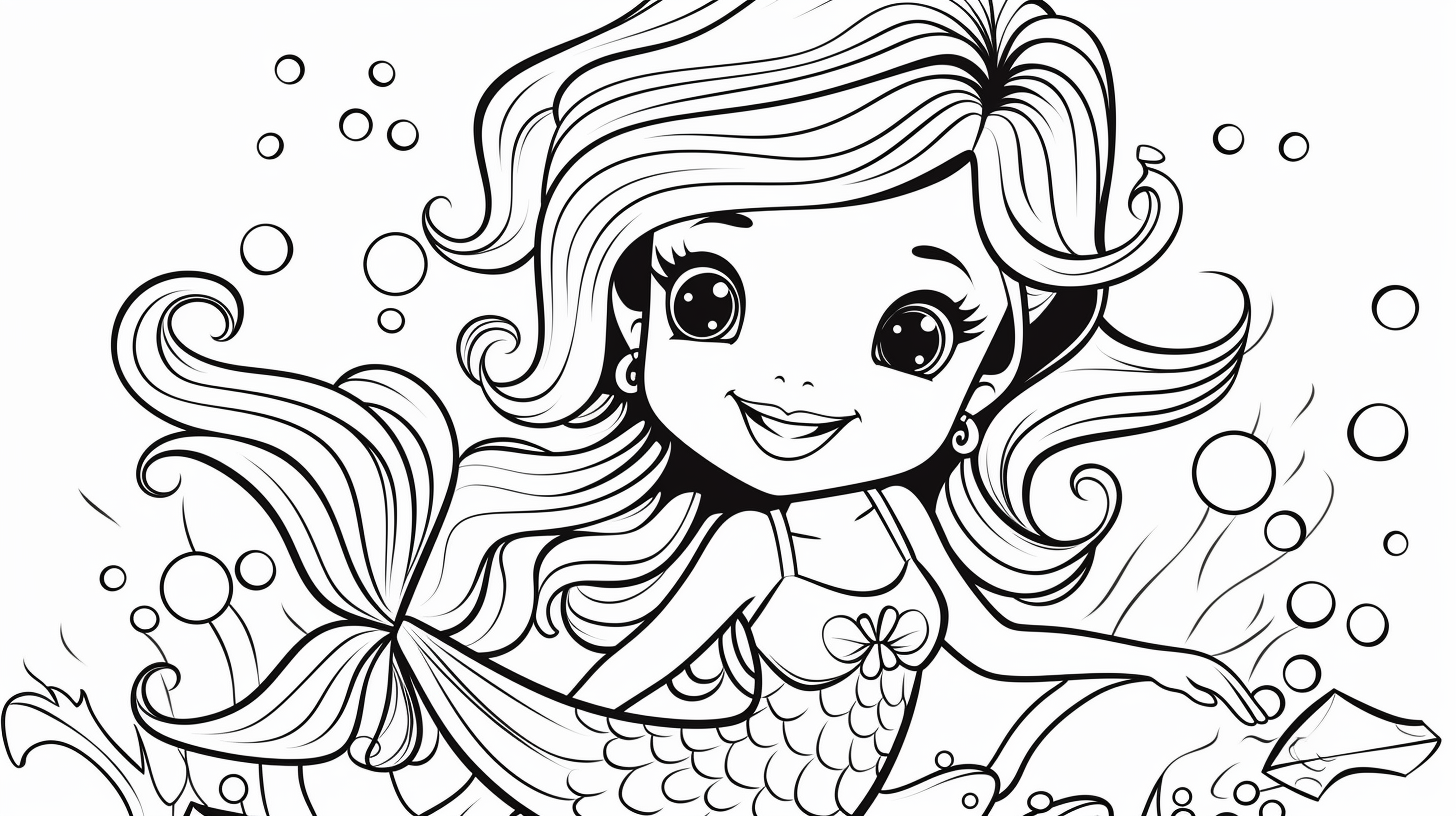
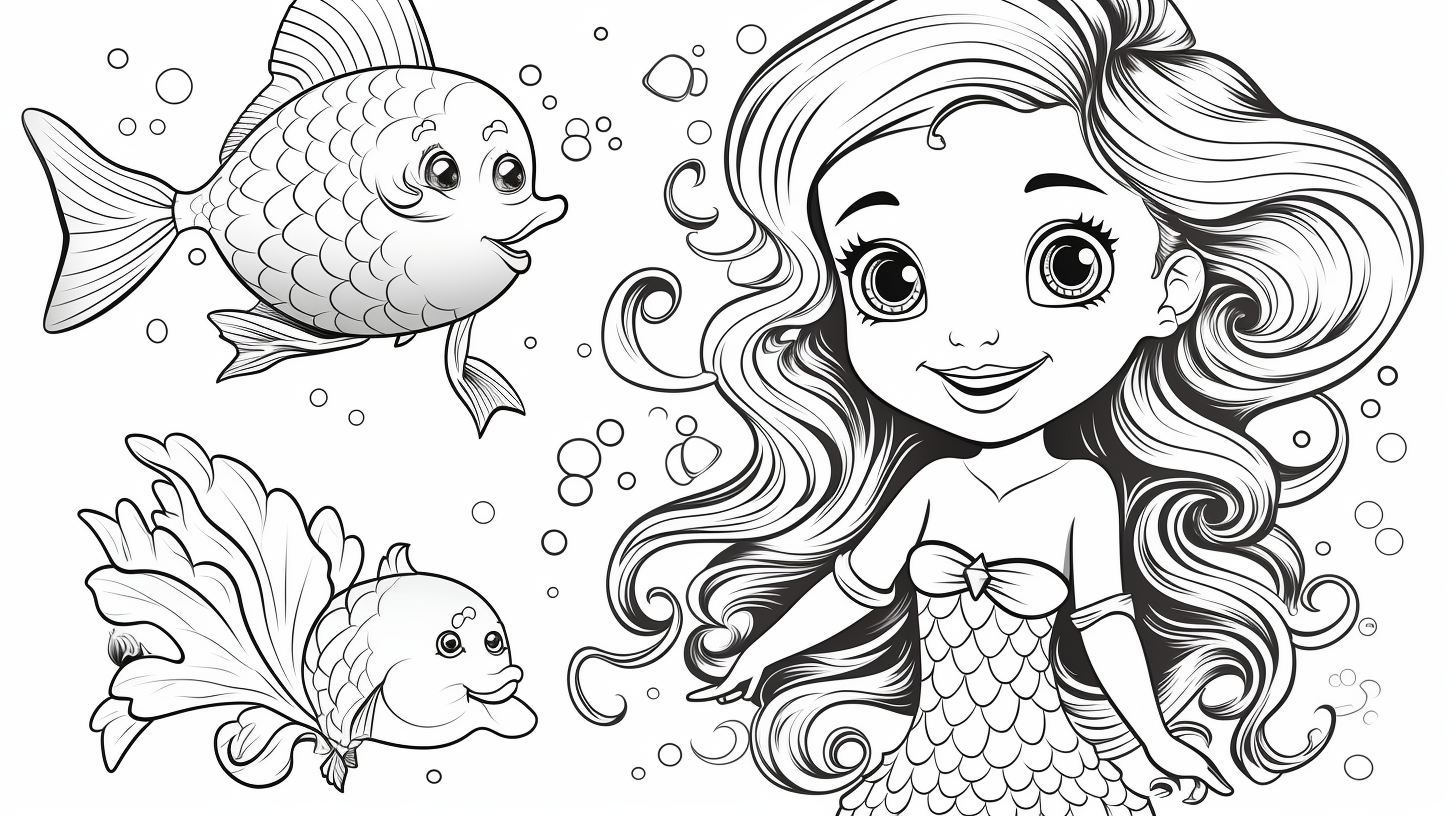
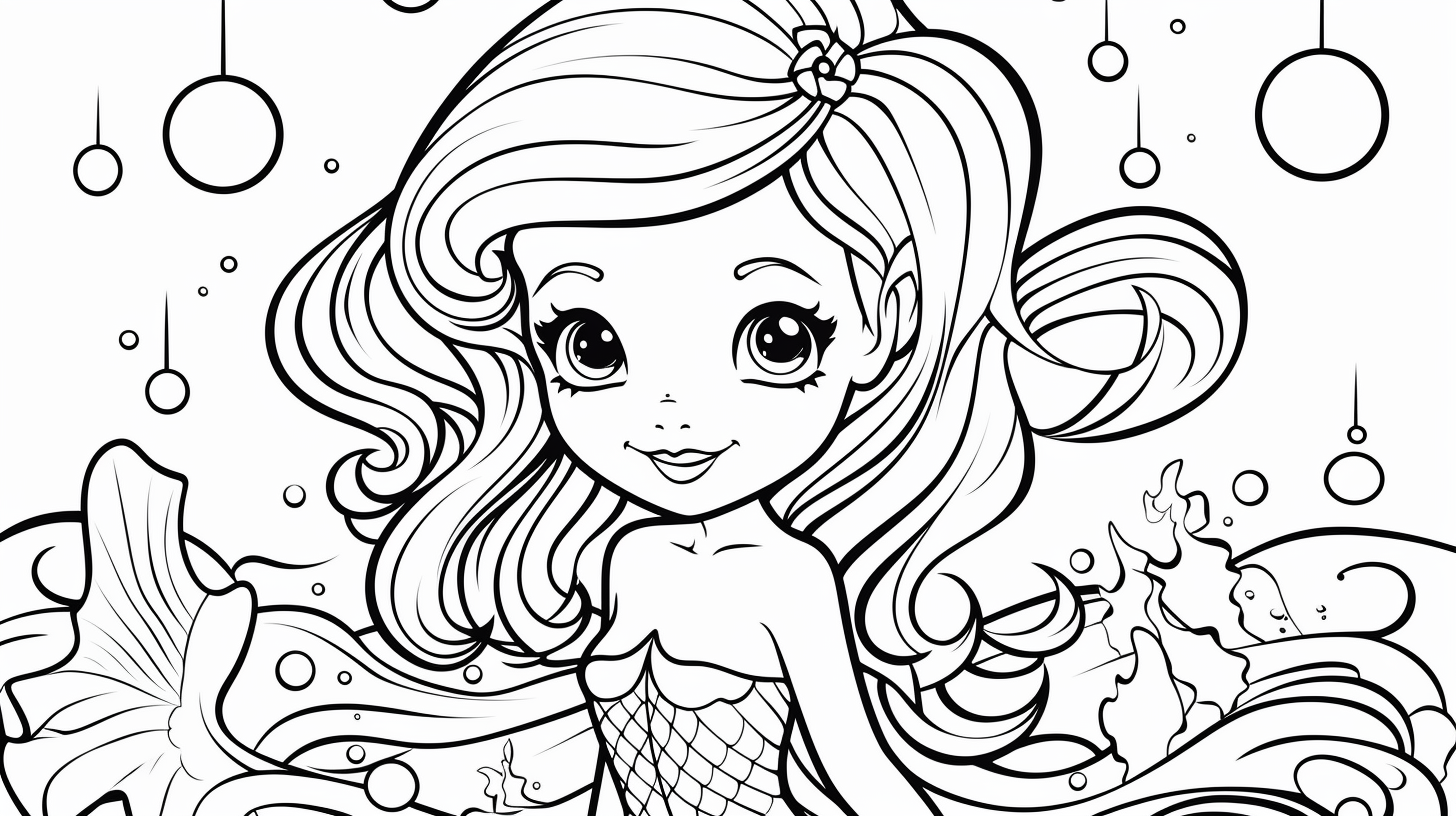
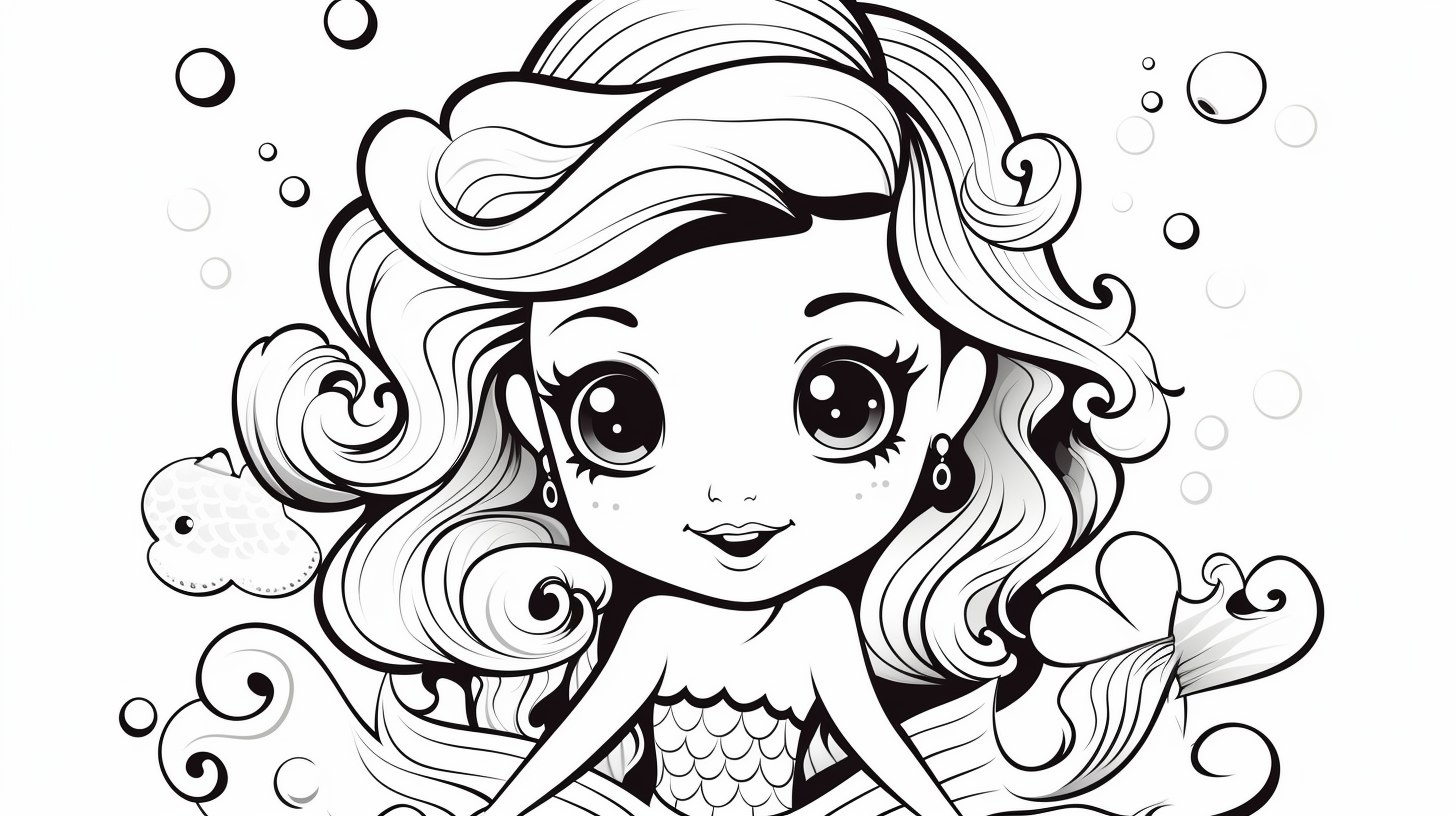
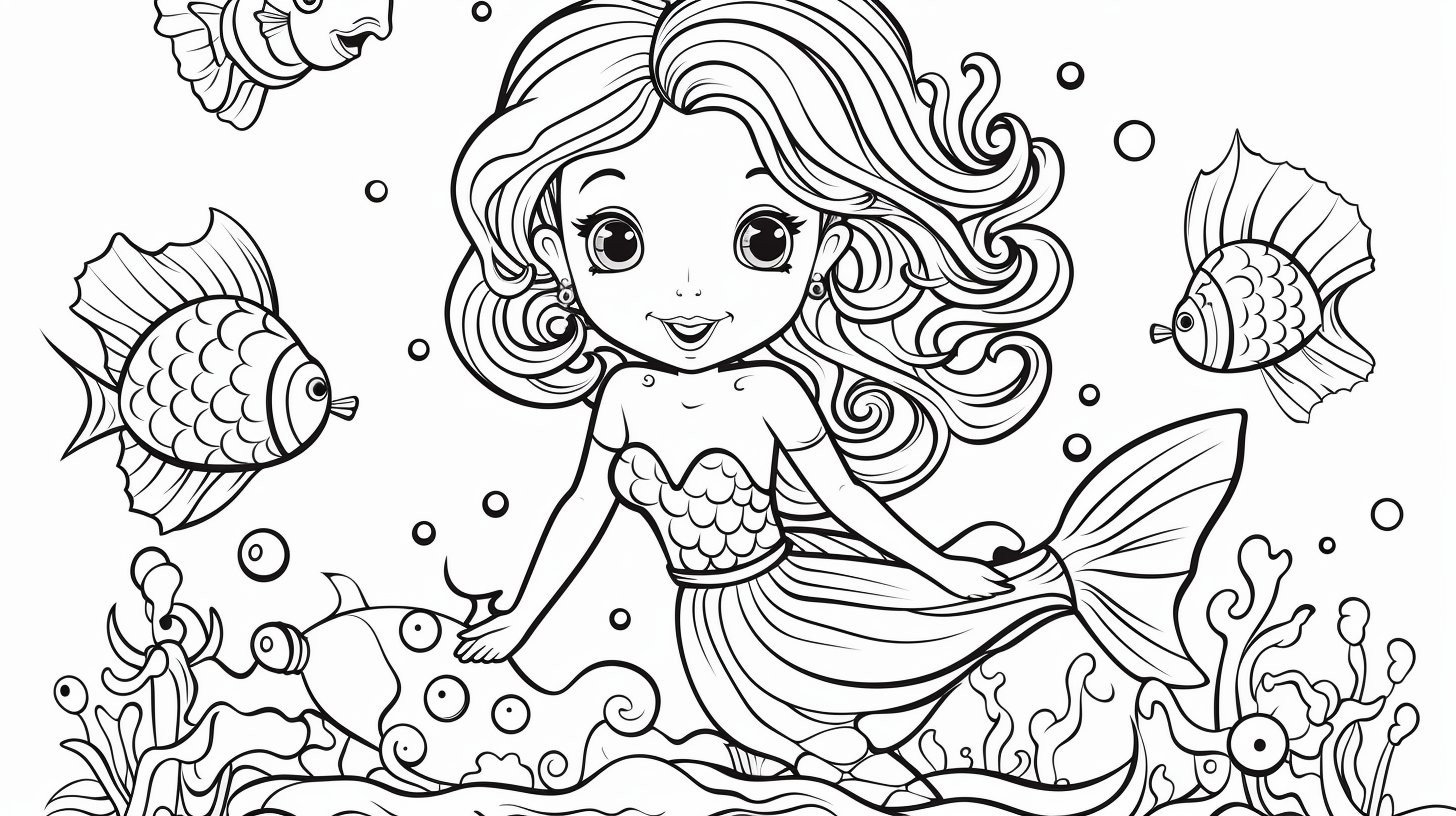
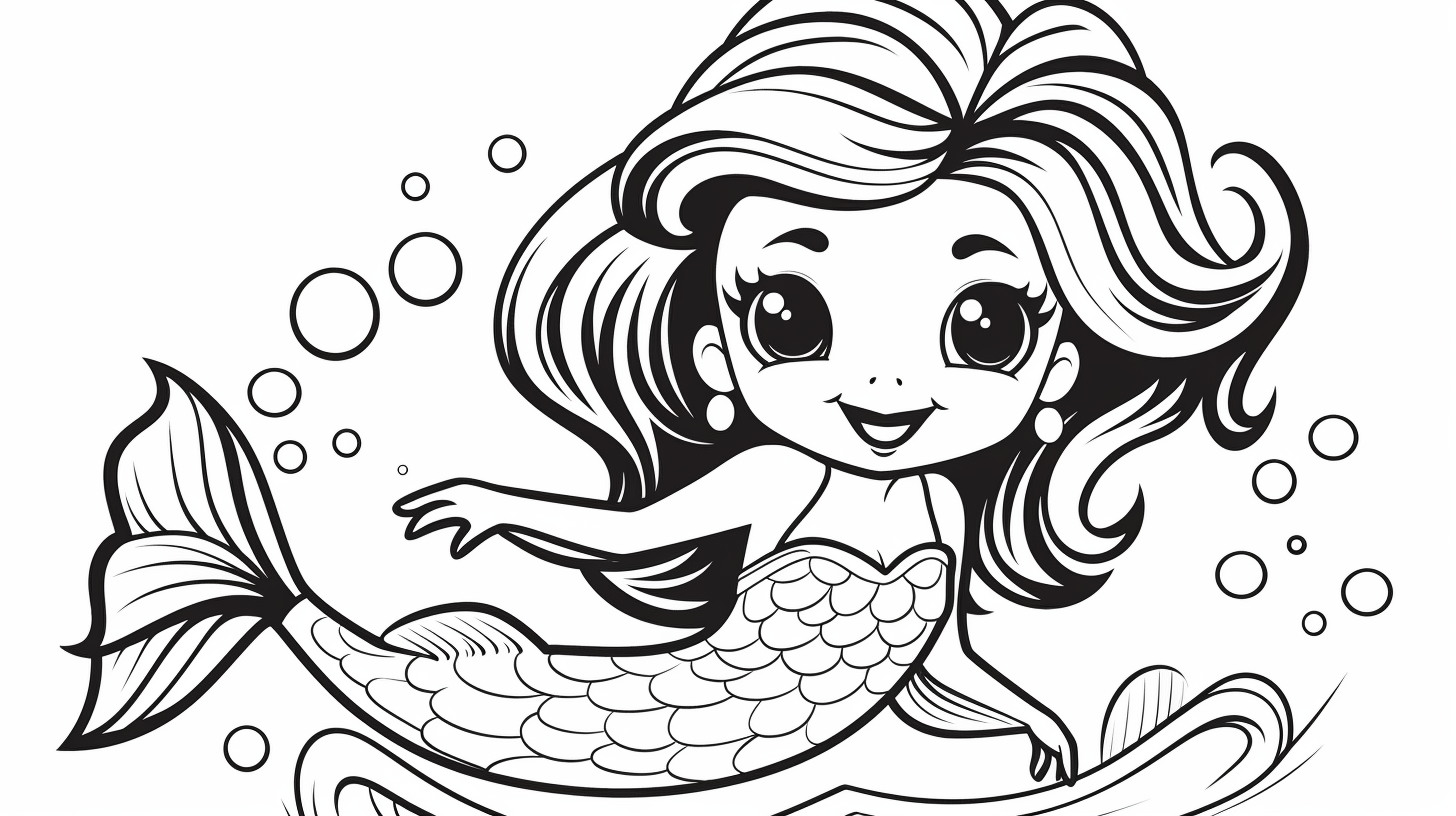
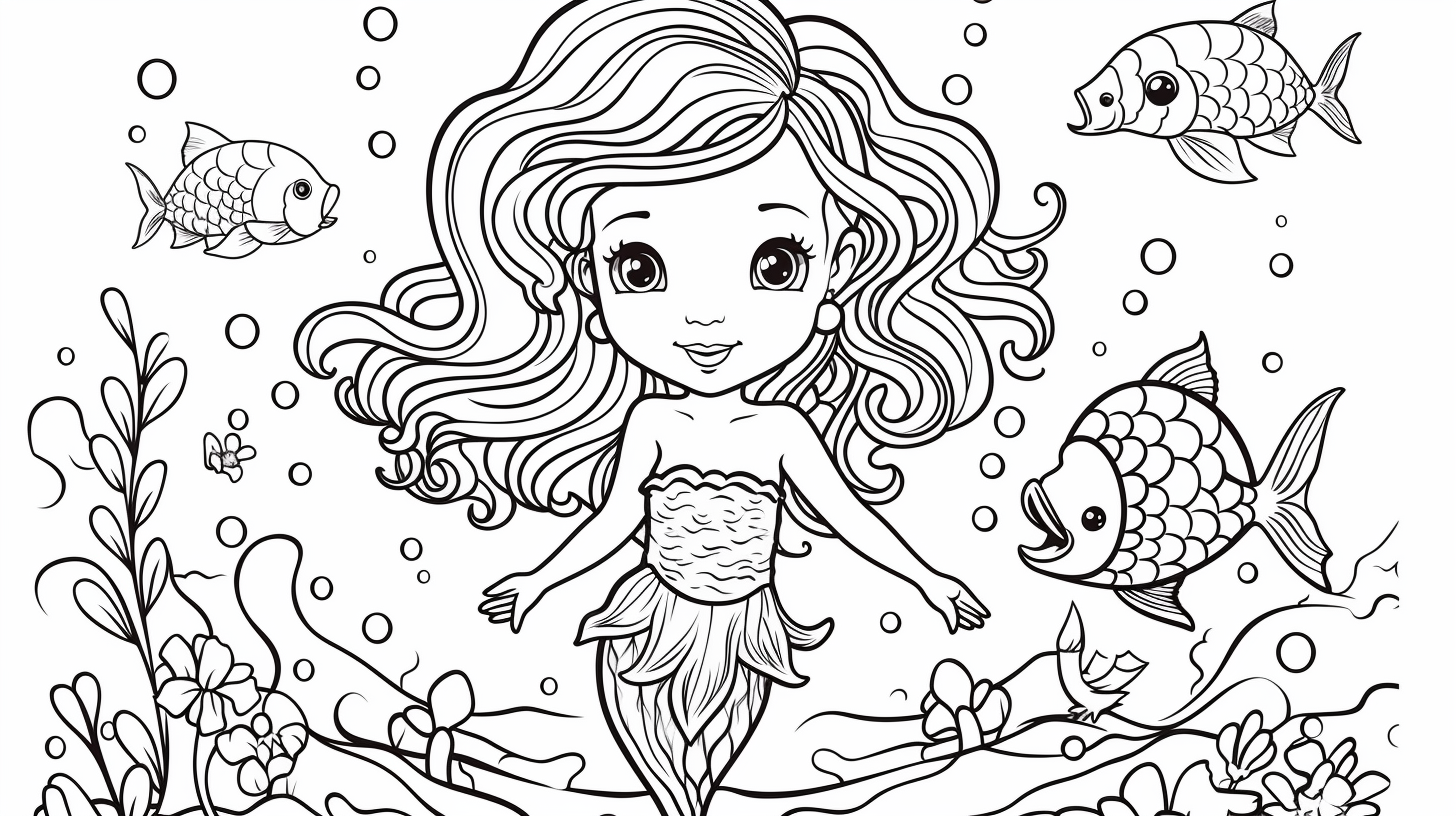
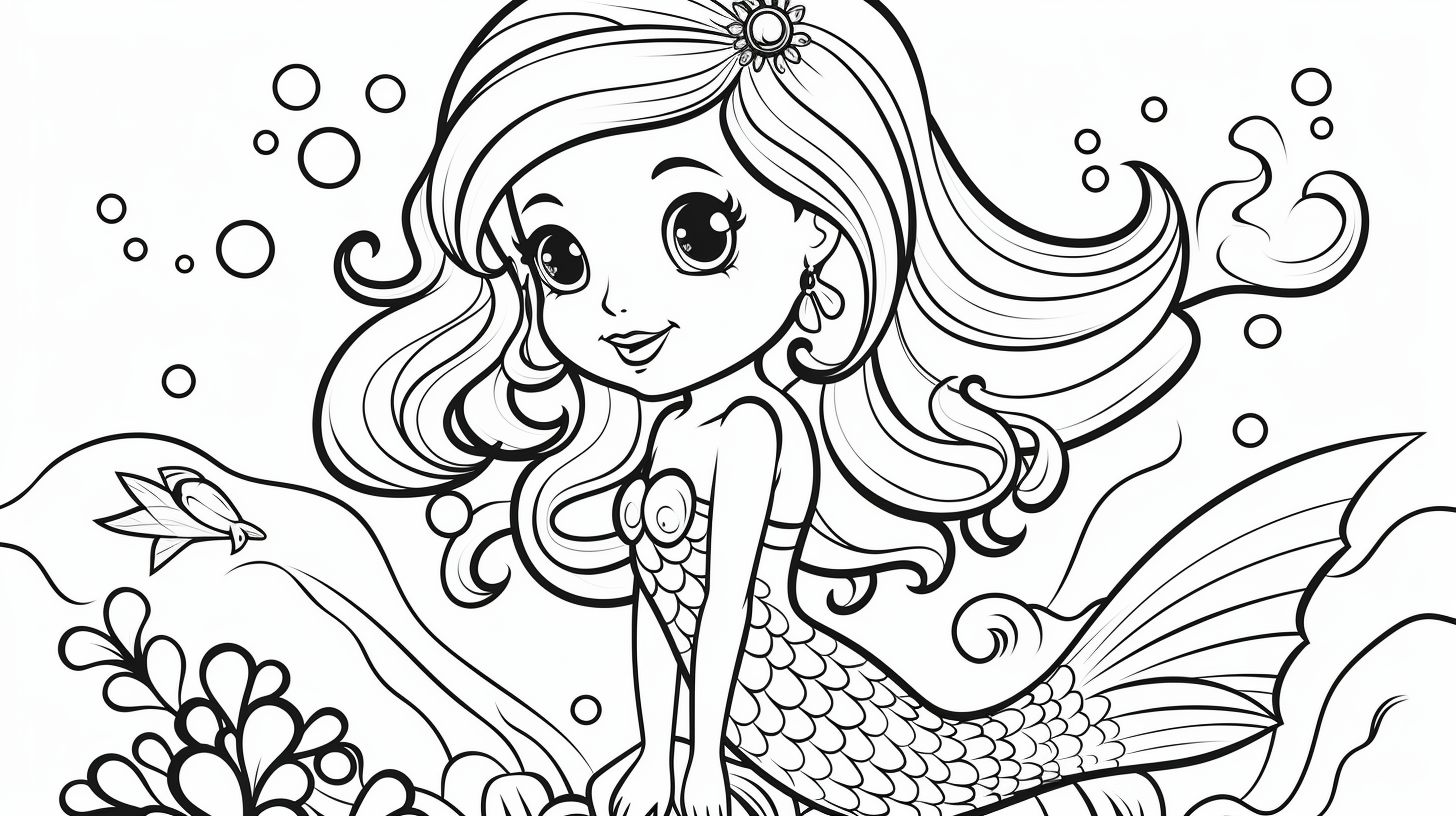
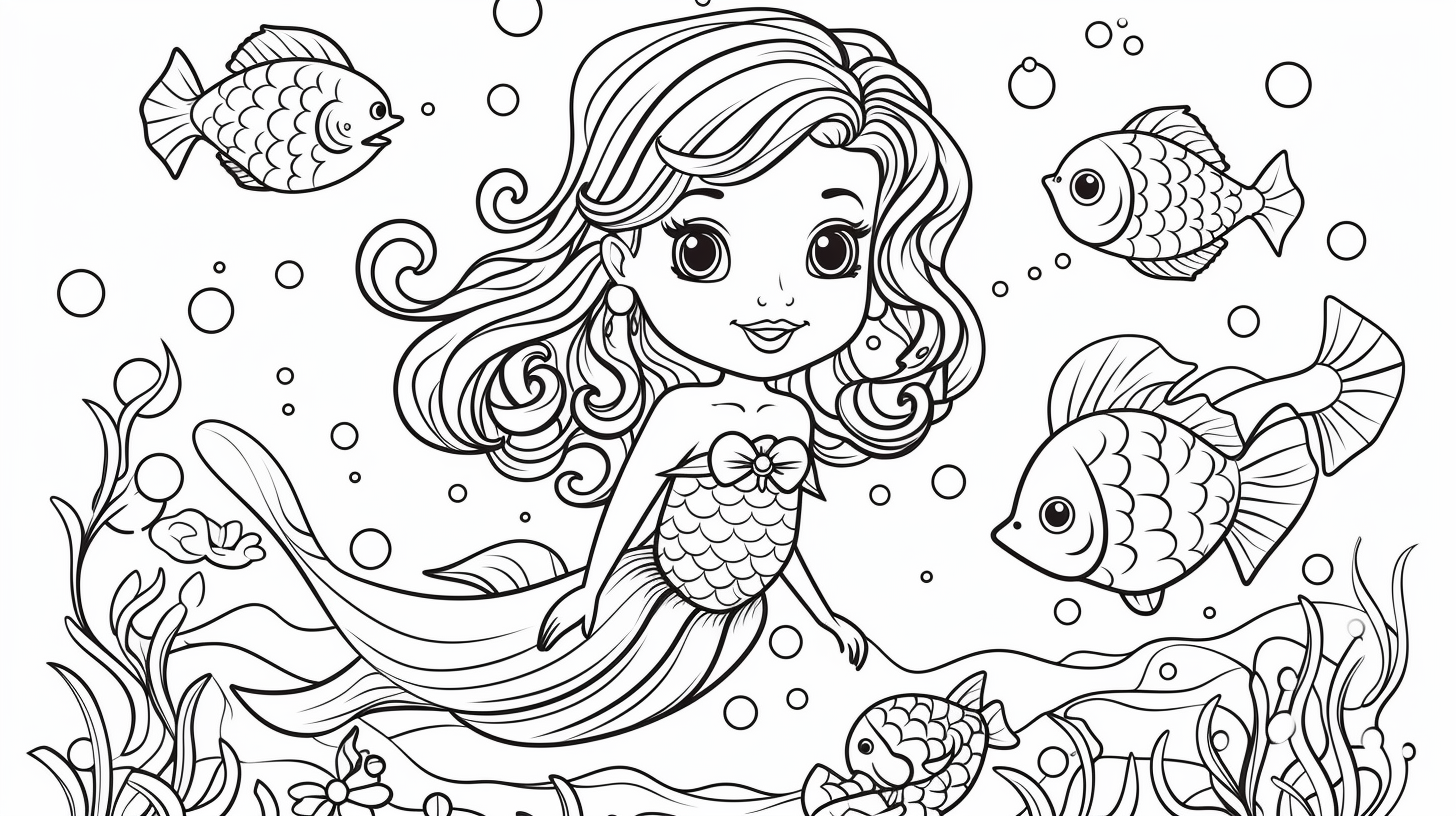
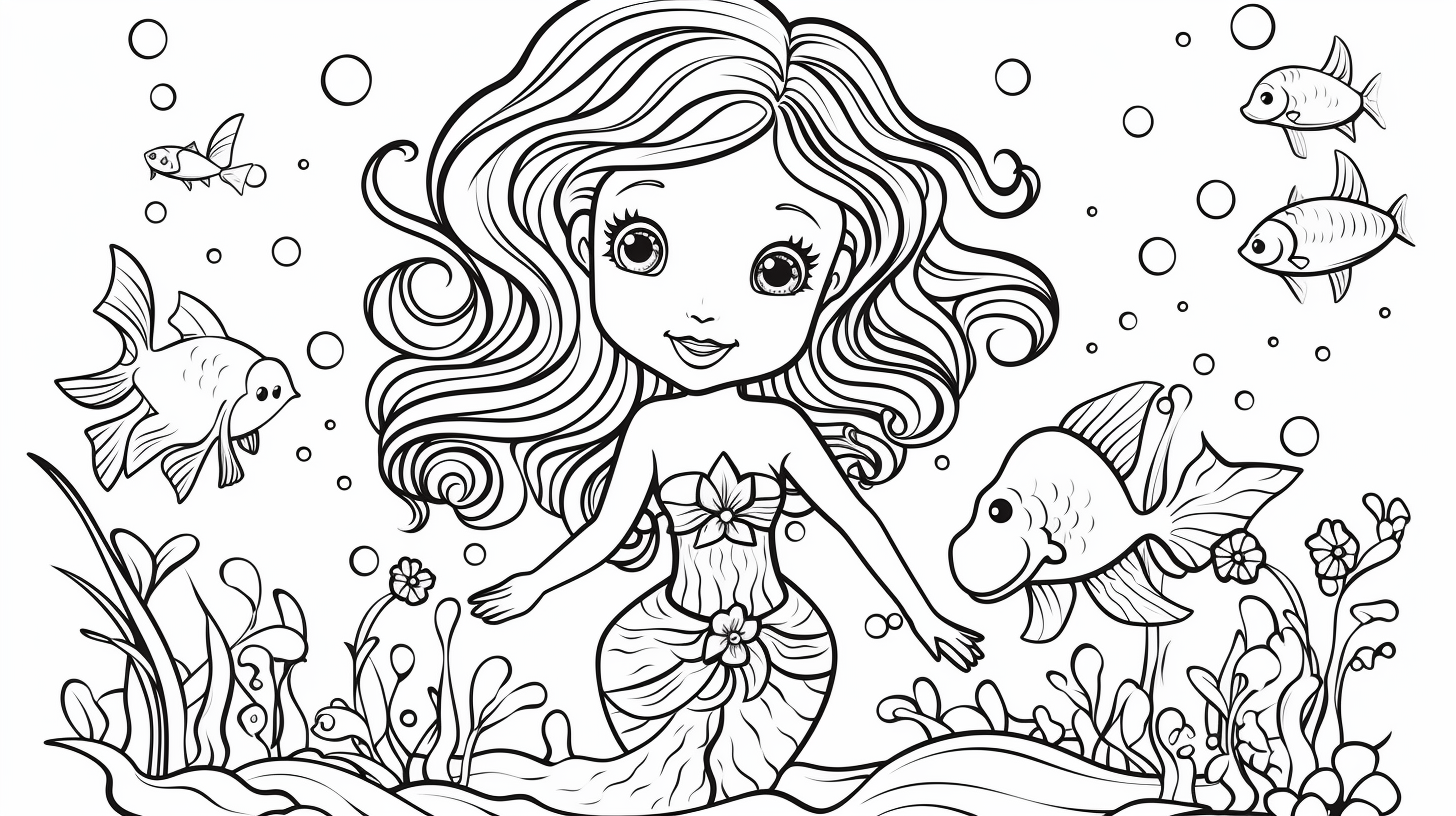
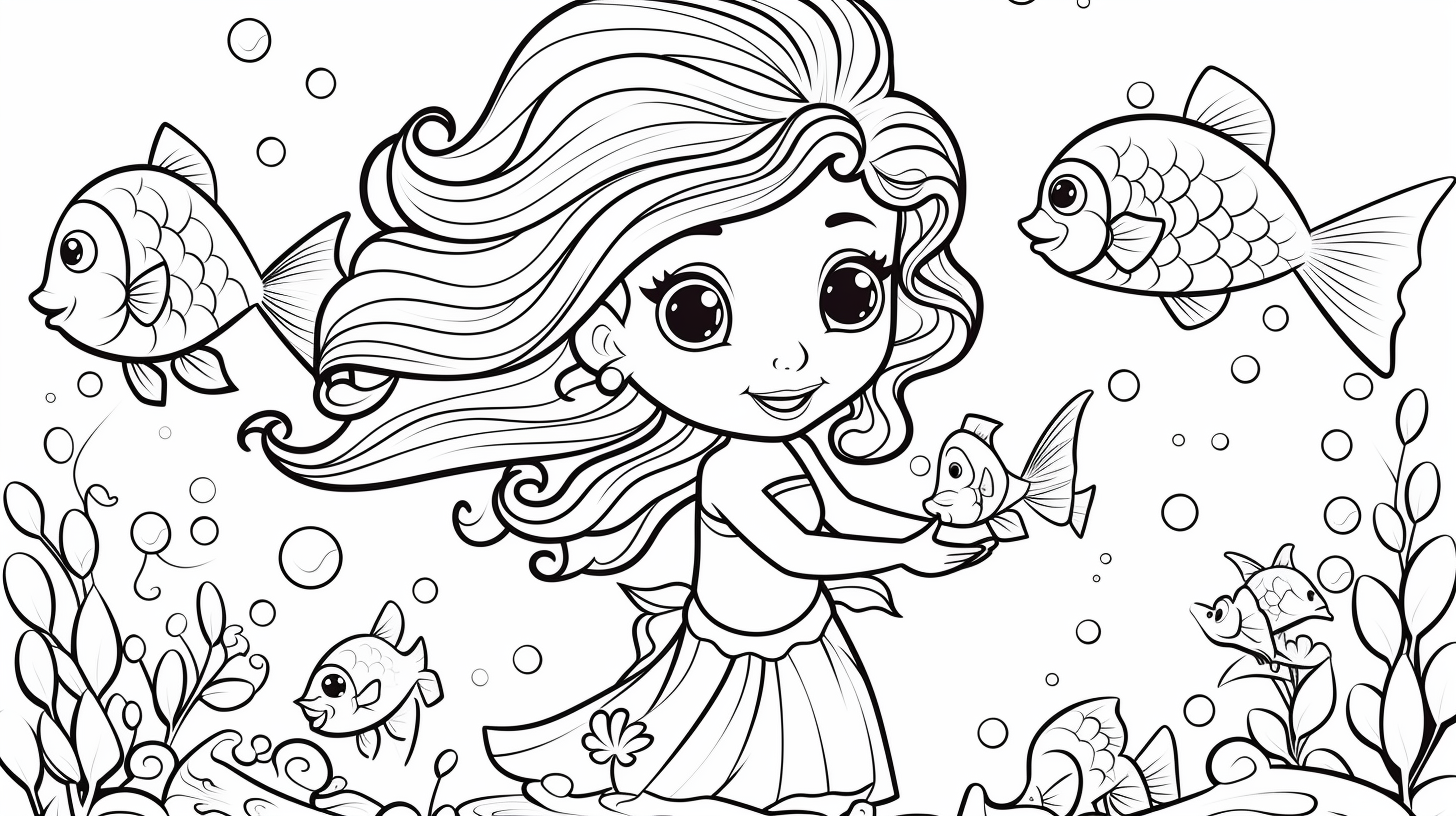
This gallery contains 28 mermaid coloring pages with cute chibi characters, princess-style mermaids, underwater scenes, coral backgrounds and more detailed fantasy designs. The sheets are landscape-oriented, so landscape printing will usually use the paper better.
Choose by detail level
- Simple: single mermaids with clear outlines and little background detail.
- Kawaii: larger heads, expressive faces and simplified underwater elements.
- Detailed: coral, sea plants, bubbles, clothing and smaller decorative areas that suit colored pencils.
How to save and print
Click or tap the mermaid you want to open the original full-size file, save that file to your device, then print it using Fit to page. If the outer artwork looks tight in preview, reduce the scale slightly.
If you prefer portrait-format character pages instead of wide underwater scenes, use the 15 portrait mermaid coloring pages.
Reuse note: this is a legacy gallery and some image filenames or descriptions refer to well-known commercial characters or brands. Their appearance here does not establish republication or commercial-use rights. For uses beyond personal coloring, check the Terms of Use and contact us if a specific image is unclear.
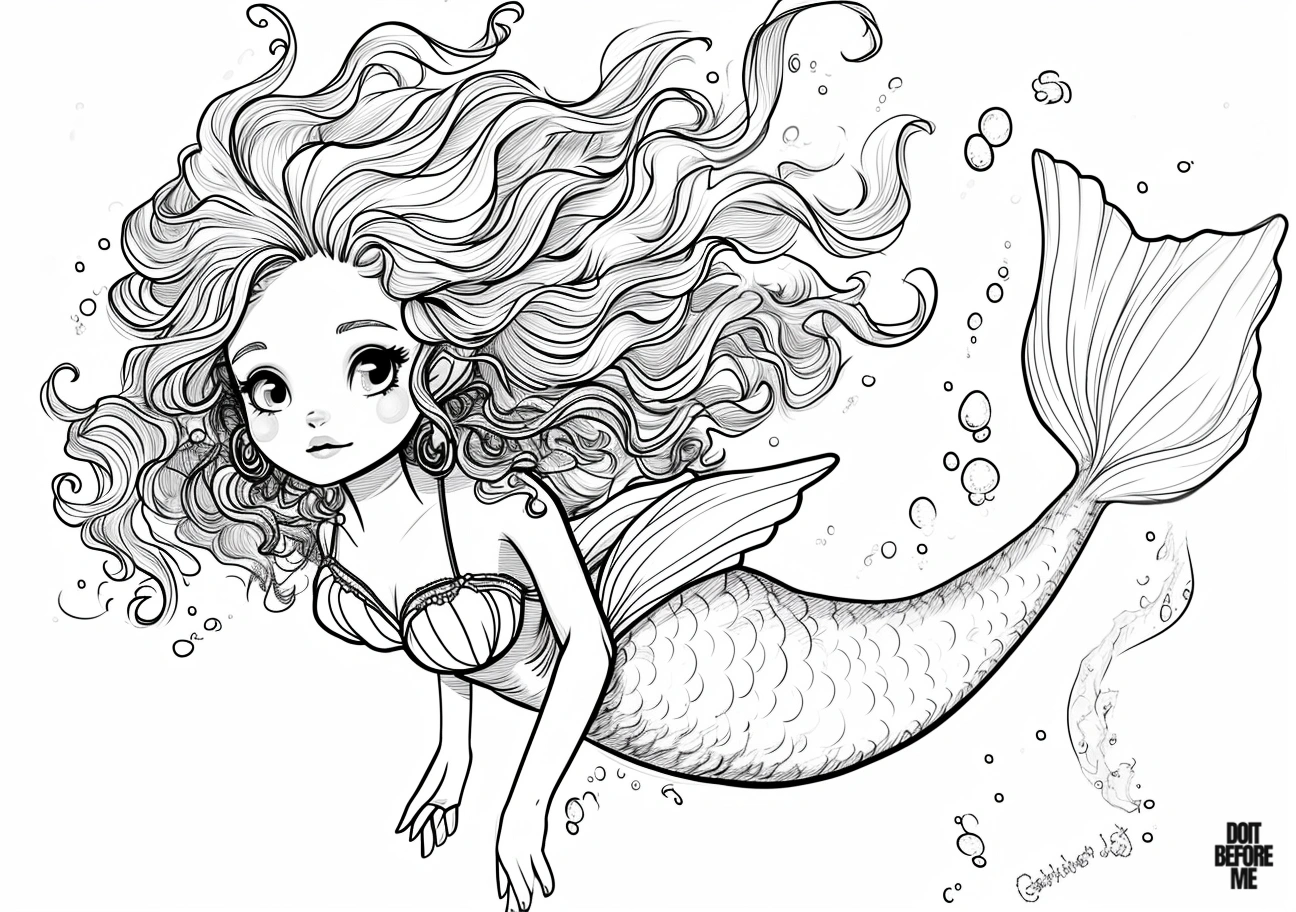
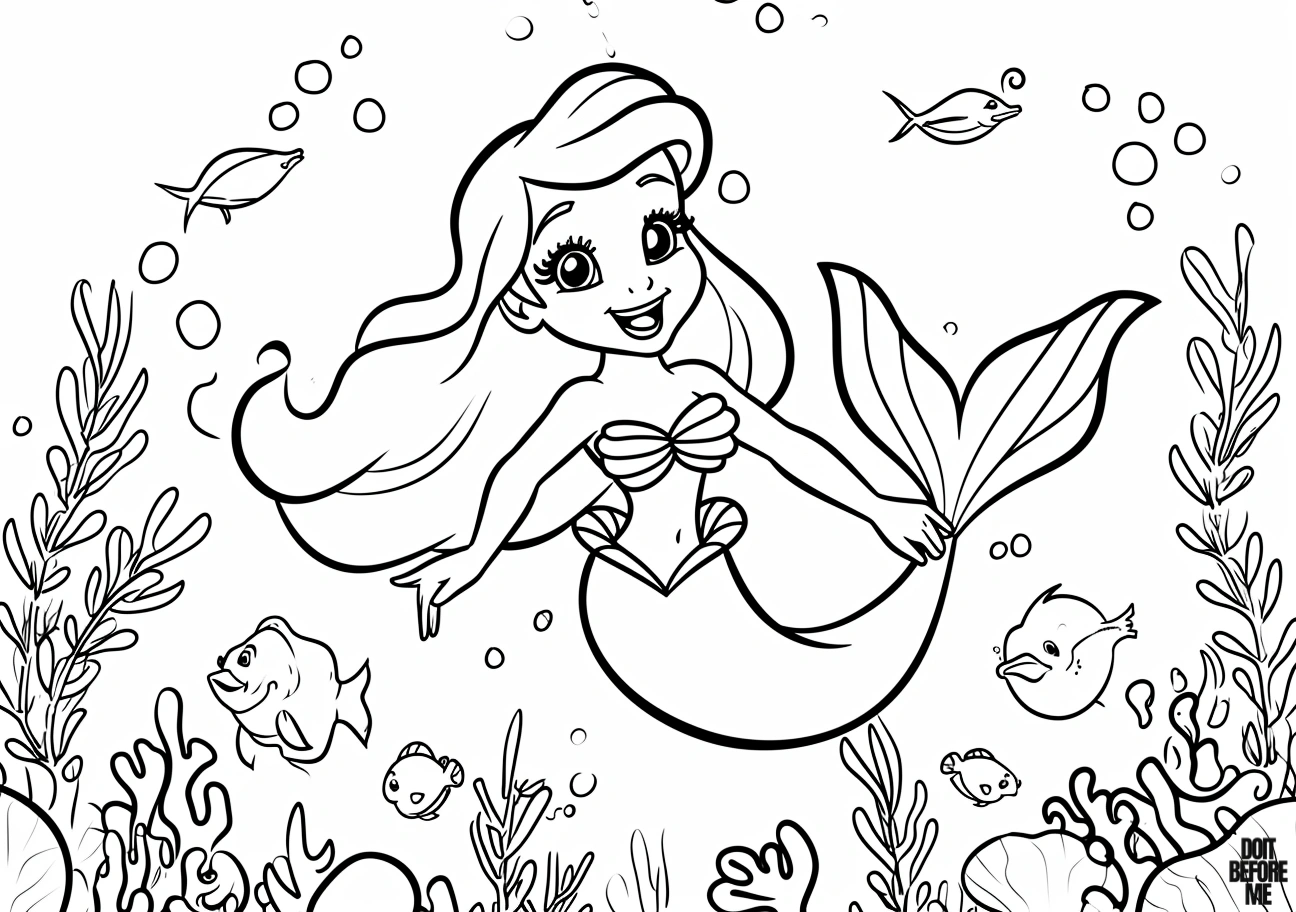
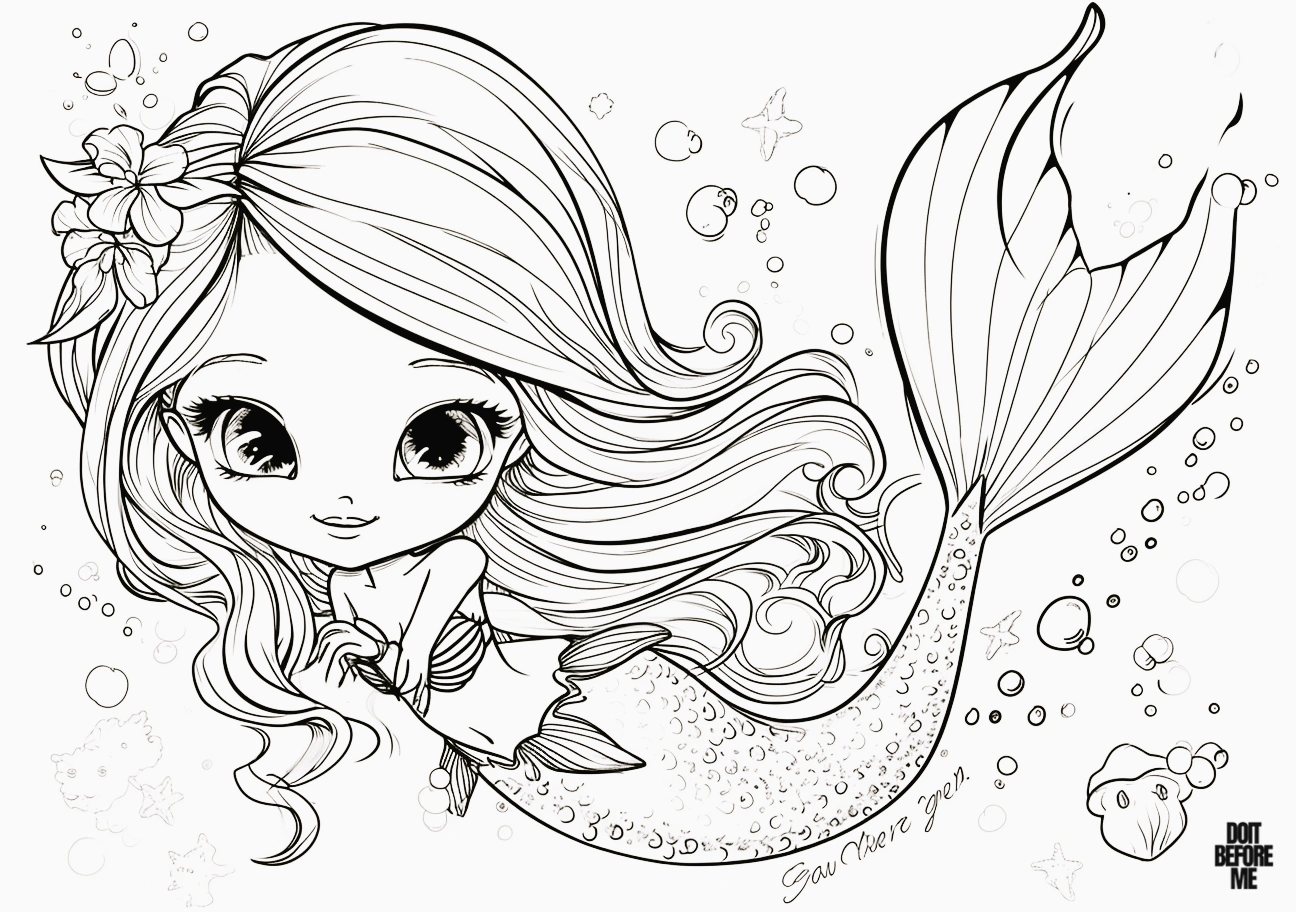
Underwater palette idea: separate the mermaid from the sea
If both the mermaid and the background use the same blues and greens, the character can disappear into the scene. Try keeping the water in cooler blue-green shades and giving the tail, hair or accessories one warmer accent such as coral, pink, gold or purple. That contrast makes detailed pages easier to read without requiring complicated shading.
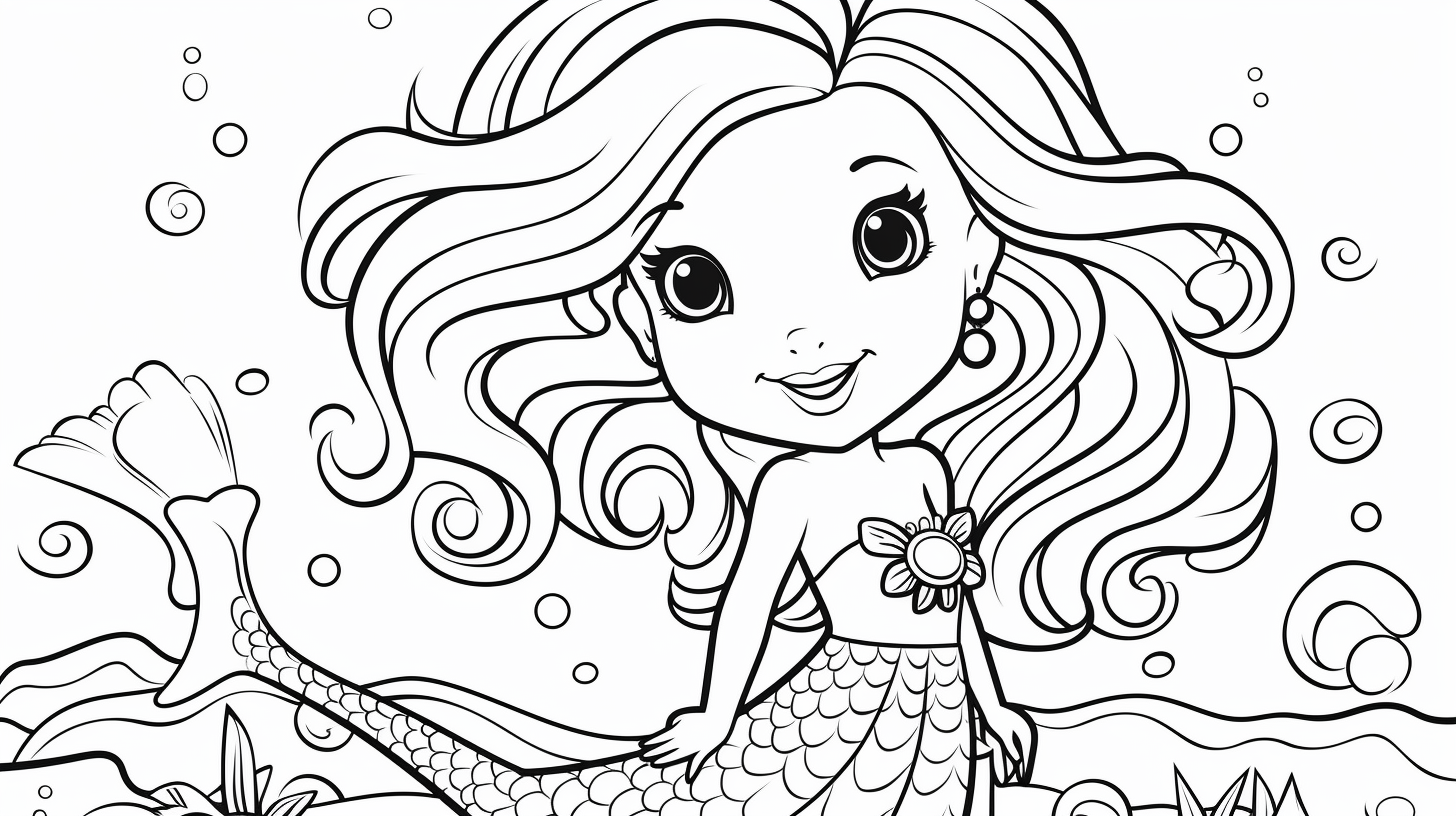
Kids and toddlers: choose space before detail
For younger colorists, large open tail sections and simple backgrounds matter more than whether a page is labeled “kids” or “toddler.” Crayons and washable markers are easier on broad areas. If a child wants to add an underwater background, suggest a few bubbles, seaweed lines or small fish rather than filling every empty space.
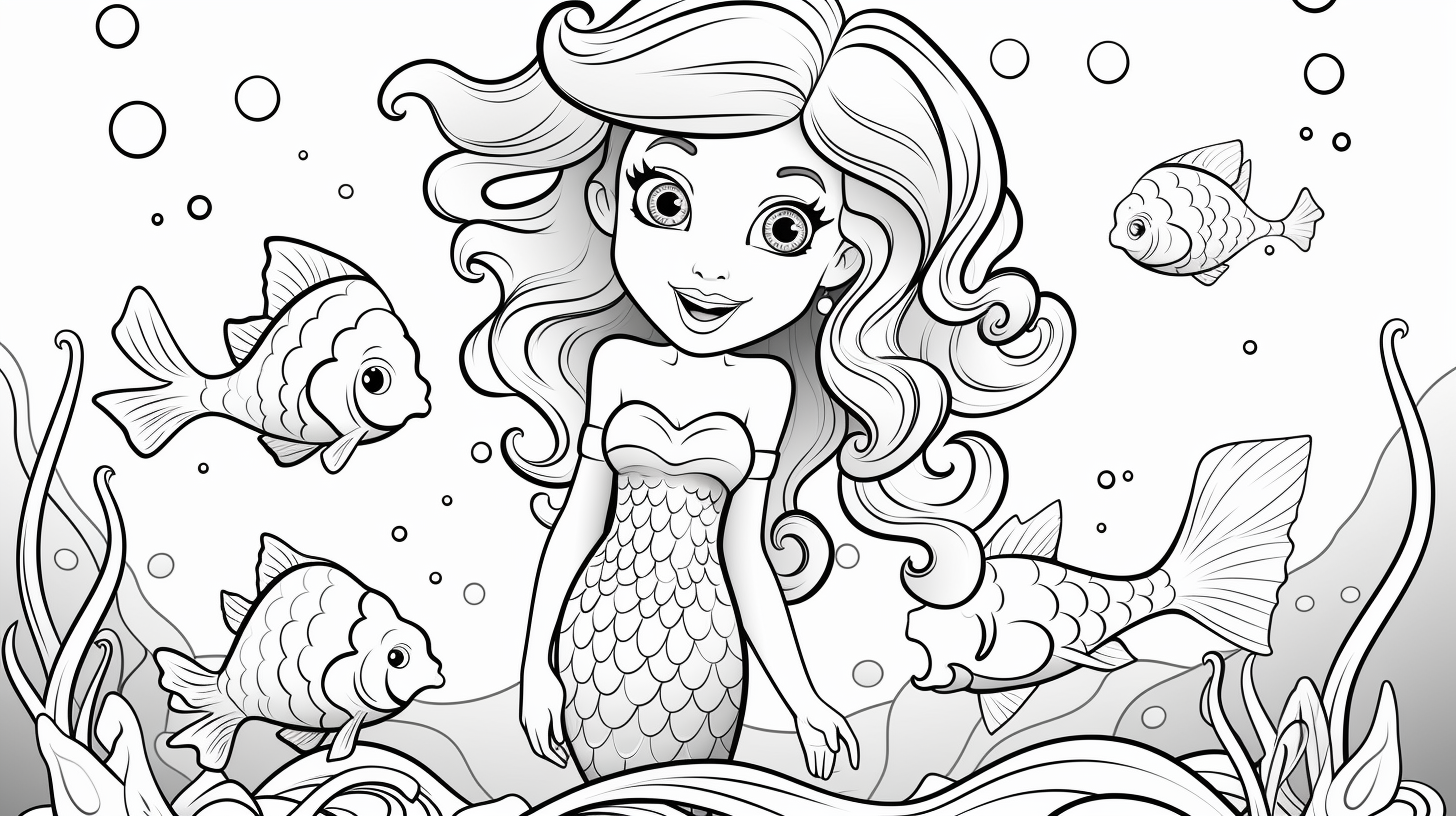
Detailed and realistic mermaids: build color in layers
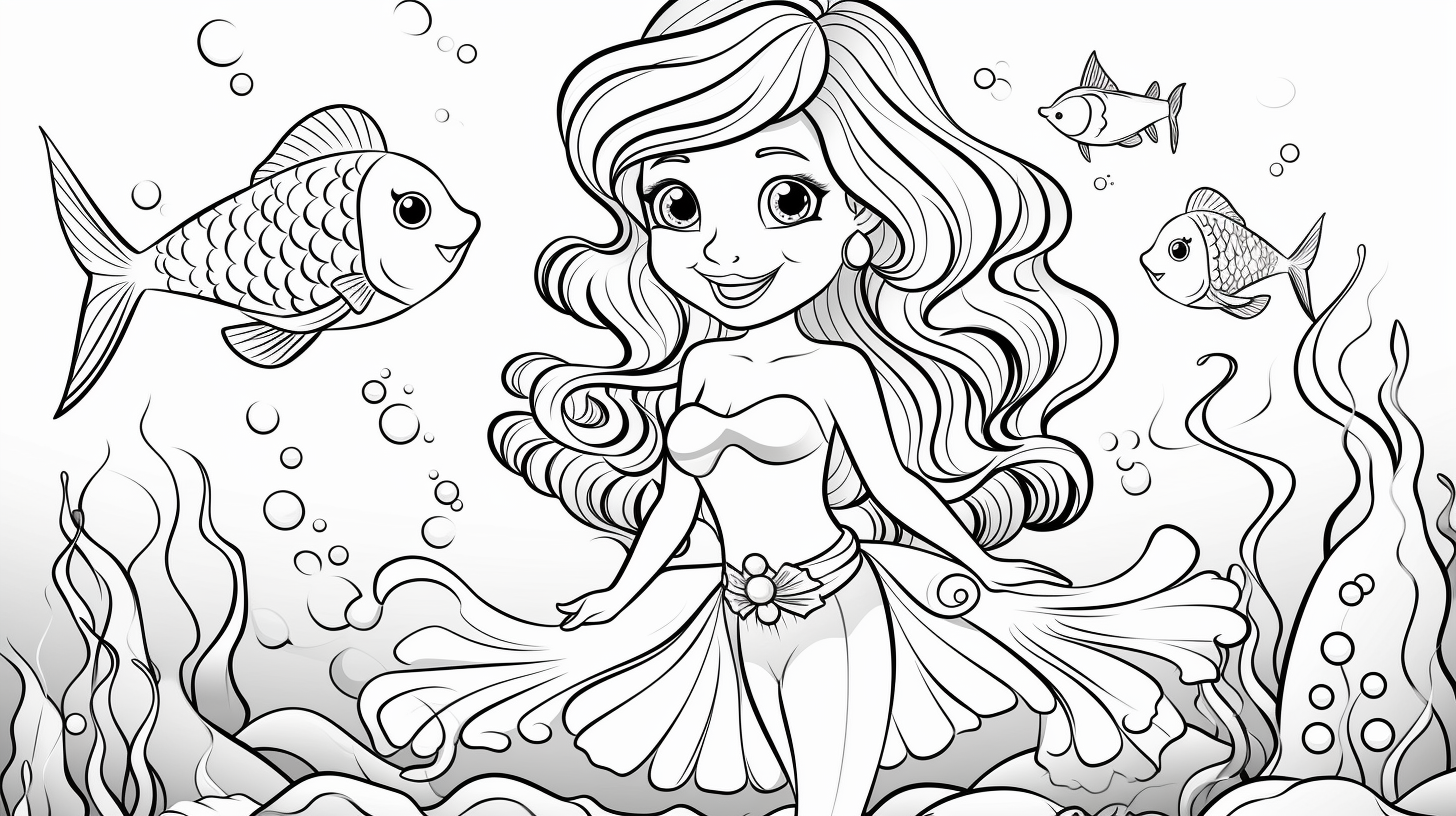
Use a light first layer on hair, tail and skin, then deepen shadows gradually instead of pressing hard immediately. Smaller decorative areas are easier with sharpened colored pencils or fine-tip markers. For scales, repeating two neighboring colors usually looks more coherent than assigning every scale a different color.
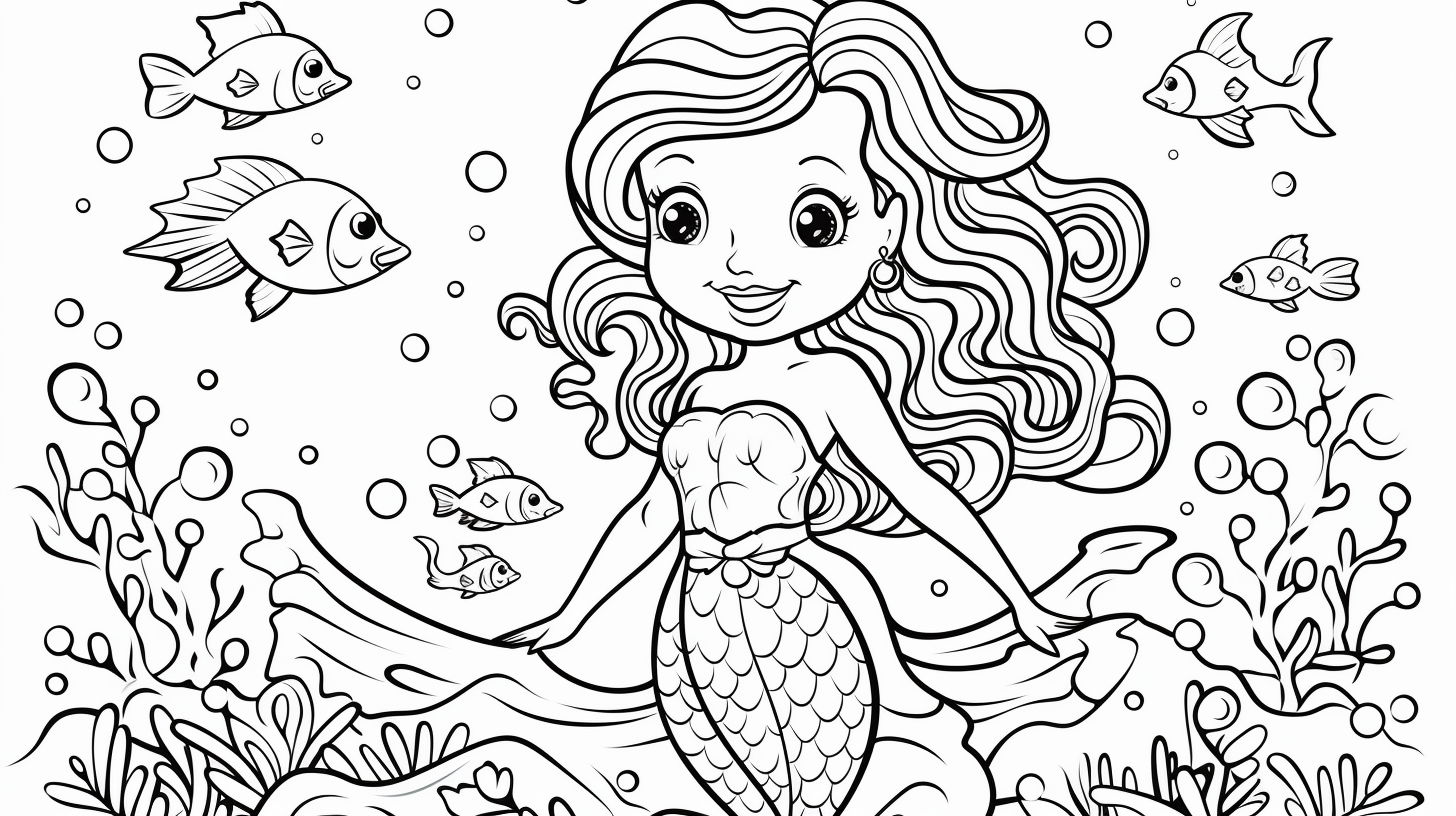
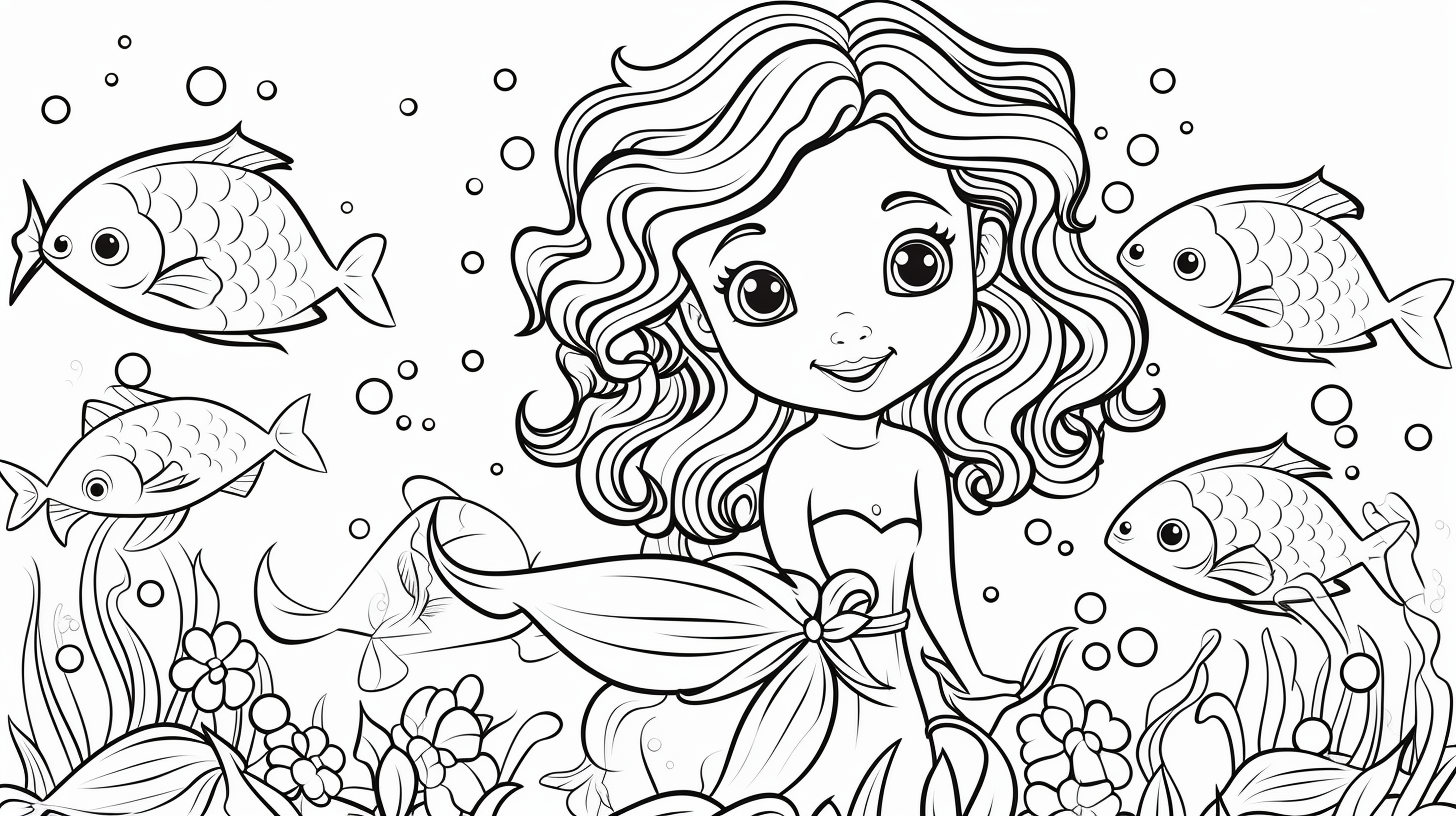
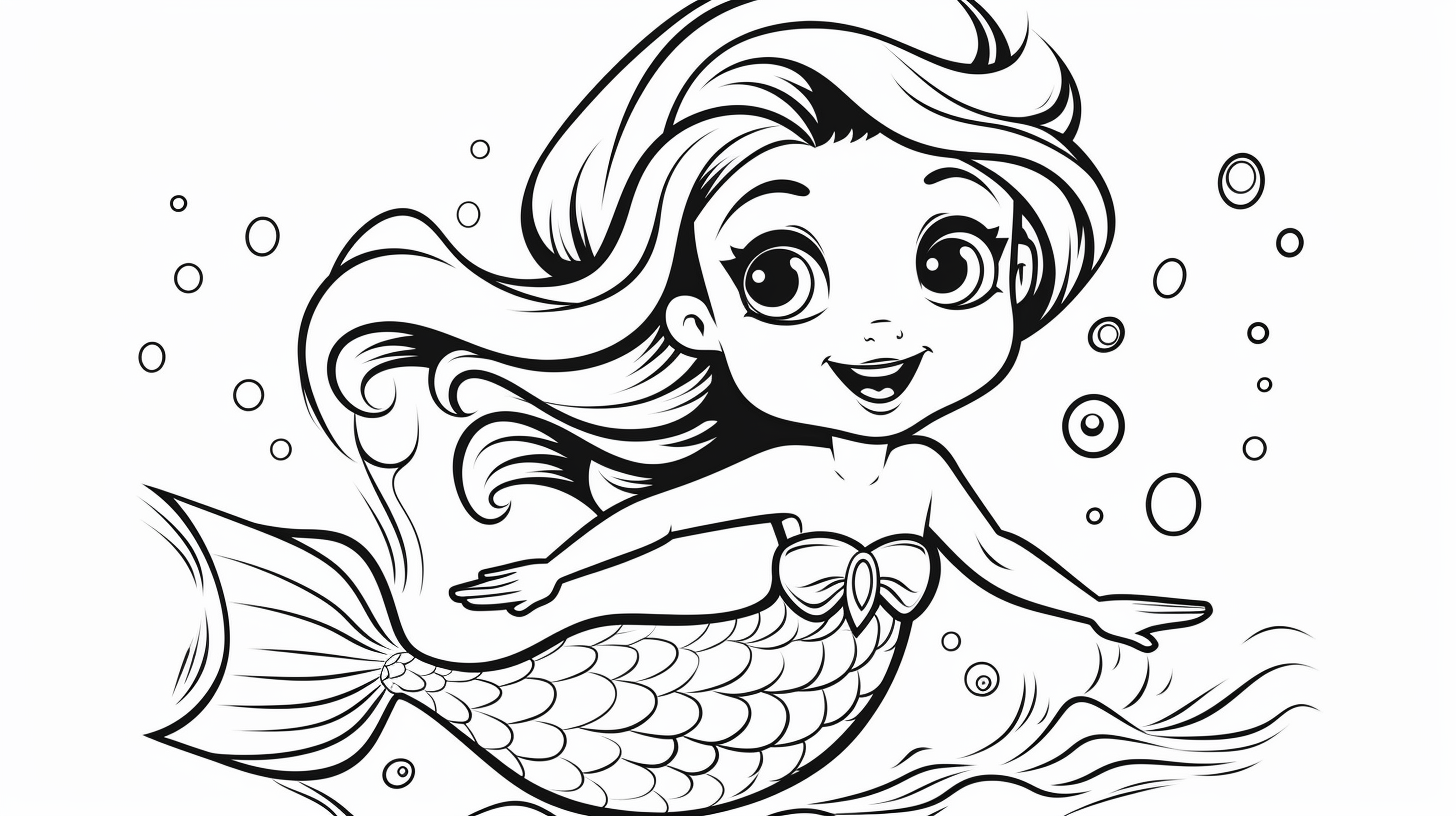
Do a two-minute water-and-tail contrast test first
Before coloring a detailed scene, use a scrap from the same printer paper and make two small swatches: your planned water color and your planned tail color. Put them side by side, then look at them from arm’s length. If they merge into one similar value, change one before starting the page. A darker teal tail against pale aqua water works; so does a coral or violet tail against blue-green water.
Next, draw three short curved pencil strokes from light to firm pressure. Pick the middle pressure as your base layer and reserve the darkest stroke for the underside of the tail, hair overlaps and the nearest coral. This gives you a usable value range before the small spaces tempt you to press too hard.
Quick diagnostic: squint at the finished character before coloring the background. You should still be able to identify the face, hair mass and tail silhouette. If not, deepen one of those edges or lighten the adjacent area instead of darkening the whole page.
Practice a mermaid scene in three passes
If you want the detailed sheets to feel manageable, use three pages as a short progression rather than starting with the busiest design. The goal is to separate the character clearly first, then add texture, and only then manage a complete underwater scene.
- Page 1 — silhouette: choose a simple mermaid. Use one main tail color, one hair color and a contrasting accent. Keep the background mostly white so you can judge whether the character reads clearly.
- Page 2 — texture: choose a page with visible scales, flowing hair or accessories. Build the tail from light to dark and repeat two neighboring colors through the scales instead of changing color in every cell.
- Page 3 — scene: move to coral, bubbles and sea plants. Finish the mermaid before the background, then make the nearest coral darker or warmer than distant water details to create depth.
How to color scales, hair and underwater depth
Scales: start with a light base, then darken the upper or lower edge of selected scales consistently. You do not need to shade every scale. A repeated shadow pattern is enough to suggest texture without making the tail look noisy.
Hair: follow the direction of each lock with long strokes. Leave narrow strips of the paper lighter instead of outlining every highlight in white. On pages where the hair appears to float, curve your strokes with the printed strands rather than pulling everything straight downward.
Water: avoid filling the entire background with one heavy blue. A pale blue-green layer, or even mostly white space with blue concentrated around bubbles and plants, keeps the line art readable. Darker foreground coral and lighter distant details create more convincing depth than simply making the whole ocean darker.
Mermaid coloring problems and quick fixes
| Problem | Try this | Why it helps |
|---|---|---|
| The mermaid disappears into the water | Give the tail or hair one warm accent and keep the surrounding water cooler. | Warm-cool contrast separates the character from the scene. |
| The tail looks flat | Use a light base, a middle tone along one side and a darker accent near folds or the fin. | Three values suggest volume without complicated blending. |
| Scales look chaotic | Repeat two neighboring colors and shade only selected rows. | A pattern creates texture while preserving the tail’s overall shape. |
| Hair looks striped | Overlap long pencil strokes and vary pressure rather than coloring each strand separately. | The locks read as larger flowing masses instead of disconnected lines. |
| The background competes with the face | Keep the strongest contrast around the eyes, hairline and upper body; soften distant coral. | The viewer notices high-contrast areas first. |
| Marker bleeds through the paper | Place scrap paper underneath and use single flat passes instead of repeatedly soaking an area. | Ordinary printer paper holds limited wet ink. |
Four mermaid palettes to try
- Tropical reef: turquoise tail, coral-pink accents, golden hair and pale aqua water.
- Moonlit ocean: indigo, violet, cool gray and a small amount of silver-gray or pale blue.
- Sea-glass: mint, teal, soft blue and lavender for a quiet pastel result.
- Warm fantasy: magenta, purple, orange-gold and deep teal; keep teal mainly in the water so the warm character stays prominent.
On the busiest sheets, choose the palette before coloring. Repeating the same three or four colors across the tail, accessories and nearby coral creates a more deliberate result than selecting a new color for every enclosed shape.
Mermaid coloring questions
Which pages are easiest for younger children?
Choose a mermaid with large tail and hair areas, a clear outer silhouette and little background detail. Large spaces matter more than an age label because they are easier to fill with crayons or broad washable markers.
What works best for the detailed pages?
Colored pencils give the most control over scales, hair and small coral shapes. Fine-tip markers work well for crisp decorative areas, but put scrap paper behind the sheet because ordinary printer paper may bleed through.
How can I make an underwater scene look deeper?
Keep distant water and plants lighter, then increase contrast on the mermaid and the nearest coral. Overlapping shapes also help: a foreground plant crossing slightly in front of another object immediately suggests distance.
Should every scale be a different color?
No. Two neighboring colors repeated through the tail usually look more coherent. Add a third darker value selectively for shadow or pattern rather than treating each scale as an isolated compartment.
Can these be used for a mermaid-themed activity?
Yes. For a simple group activity, let each person choose one limited palette, color a mermaid, then add only three background elements—such as bubbles, seaweed and a shell. The restriction keeps the activity manageable while still producing different results.
Use this gallery for scenes; use the portrait set for characters
This 28-page collection works best when you want wide underwater scenes and a mix of easy and detailed fantasy designs. If the character itself is the priority and you prefer a taller page, switch to the portrait mermaid coloring collection. Keeping the two sets separated this way makes it easier to choose by page format rather than browsing two near-identical galleries.

