
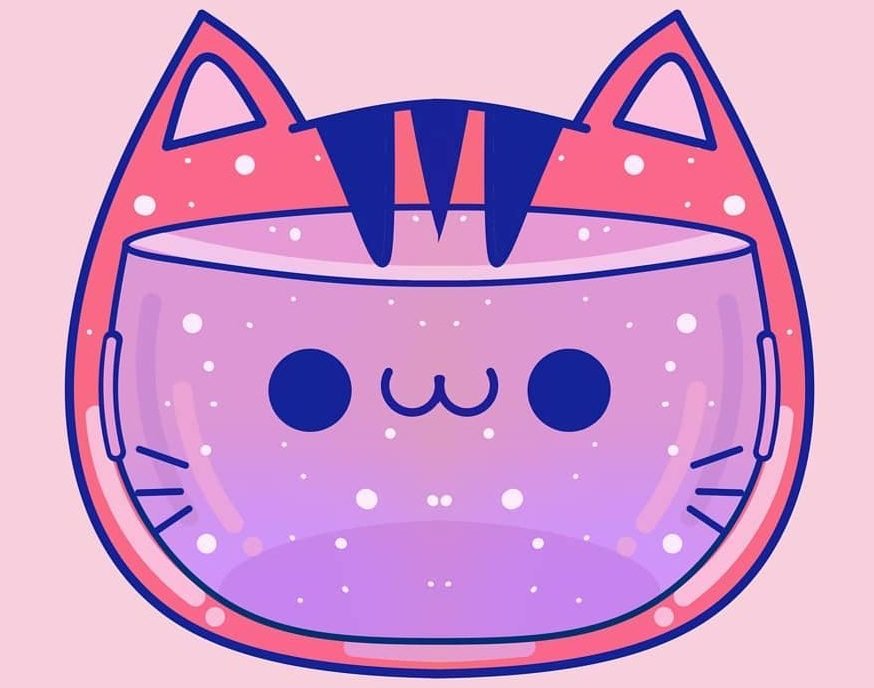
Creativity usually comes from changing something familiar, not inventing a completely new subject. Take an ordinary object, animal, portrait or symbol and change the scale, mood, setting or drawing style. Click or tap any image below to open the full-size reference.
Jump to: ordinary things with a twist · style & medium experiments · symbolic ink ideas · story & fantasy ideas · make your own prompt
Ordinary things with a twist — Ideas 1–4
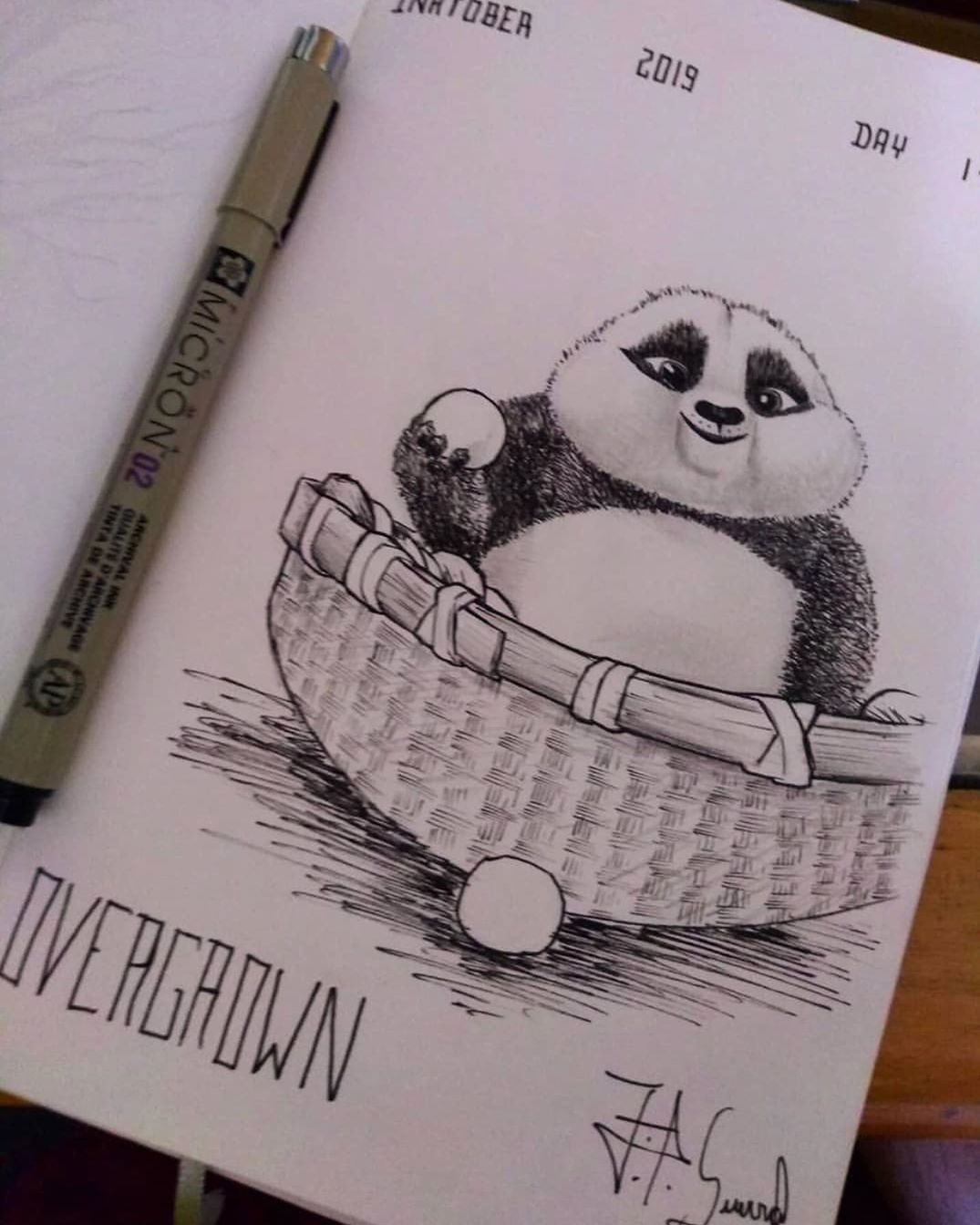
The subject does not have to be unusual. The panda works because the setting changes it. Try the same trick with an animal you already know how to draw: put it in a teacup, backpack, flowerpot or oversized shoe.
A four-part way to invent better drawing ideas
Instead of waiting for inspiration, build an idea from four decisions:
- Subject: something ordinary enough that you can draw it without struggling with every basic shape.
- Transformation: change the scale, material, setting, function or behavior.
- Constraint: limit the drawing somehow—three colors, only curved lines, a square format, one light source, no background, or one continuous shape family.
- Emotional direction: decide whether the result should feel quiet, absurd, eerie, warm, tense or playful.
For example: snail + transparent shell + only blue pencil + lonely. Or coffee cup + floating city + only straight lines + cheerful. The point is not that the formula guarantees a good idea. It gives you enough structure to make a specific decision instead of staring at a blank page.
Do three tiny thumbnails before committing
Spend one minute on each thumbnail. Keep them small enough that you cannot fuss over detail. Change only the composition: close-up, distant view, cropped view, low angle, centered, off-center. Then choose the version with the clearest relationship between the main subject and the twist.
This is one of the fastest ways to improve a creative drawing without needing a better pencil technique. A weak idea can become much stronger when the composition makes the unusual part impossible to miss.
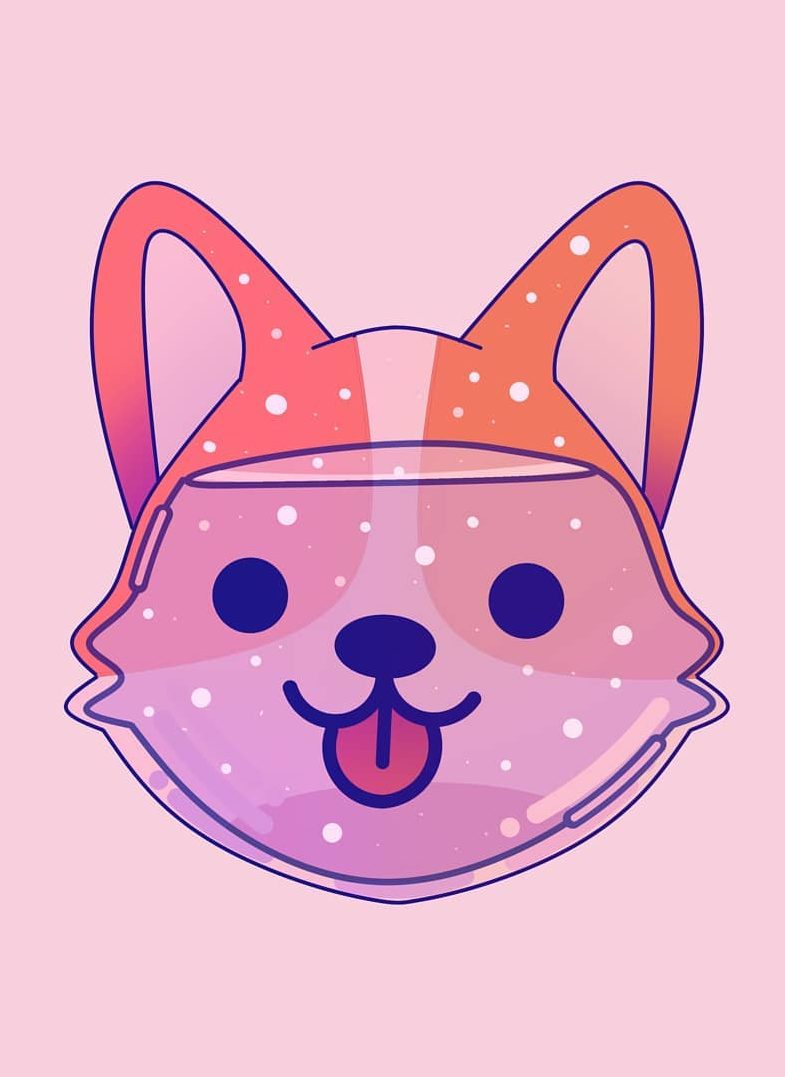
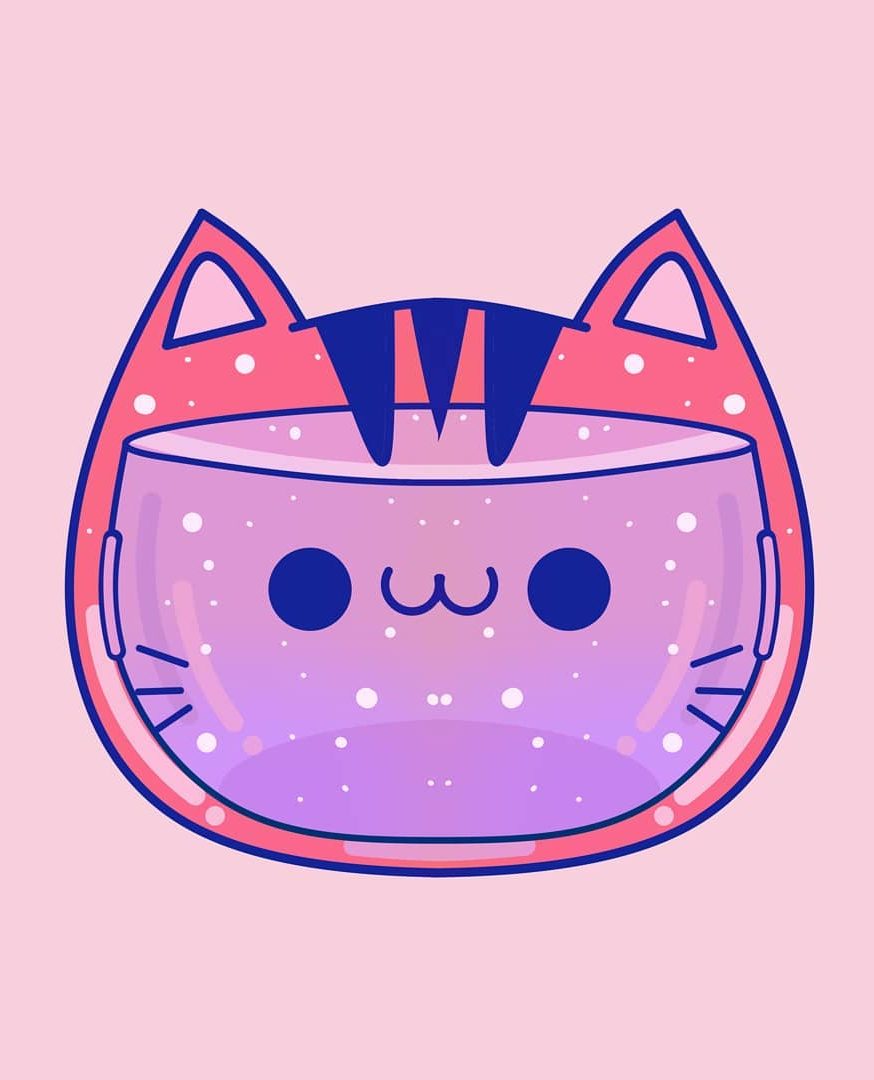
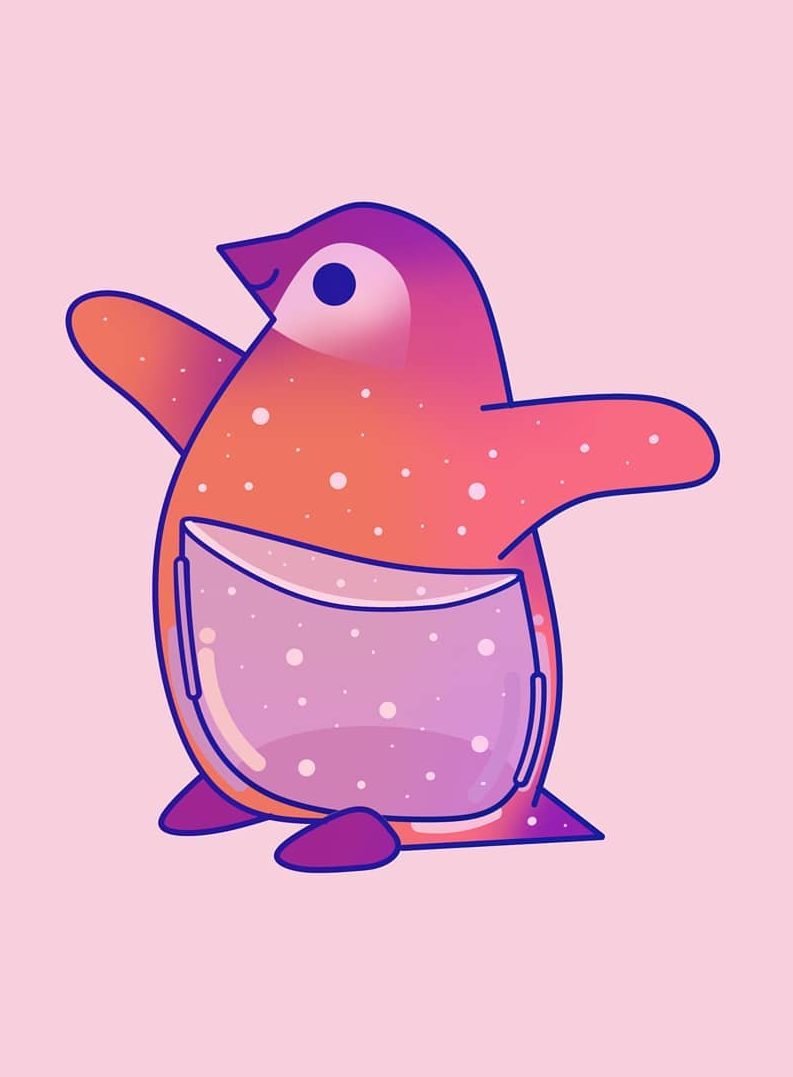
Change the style, not the subject — Ideas 5–8
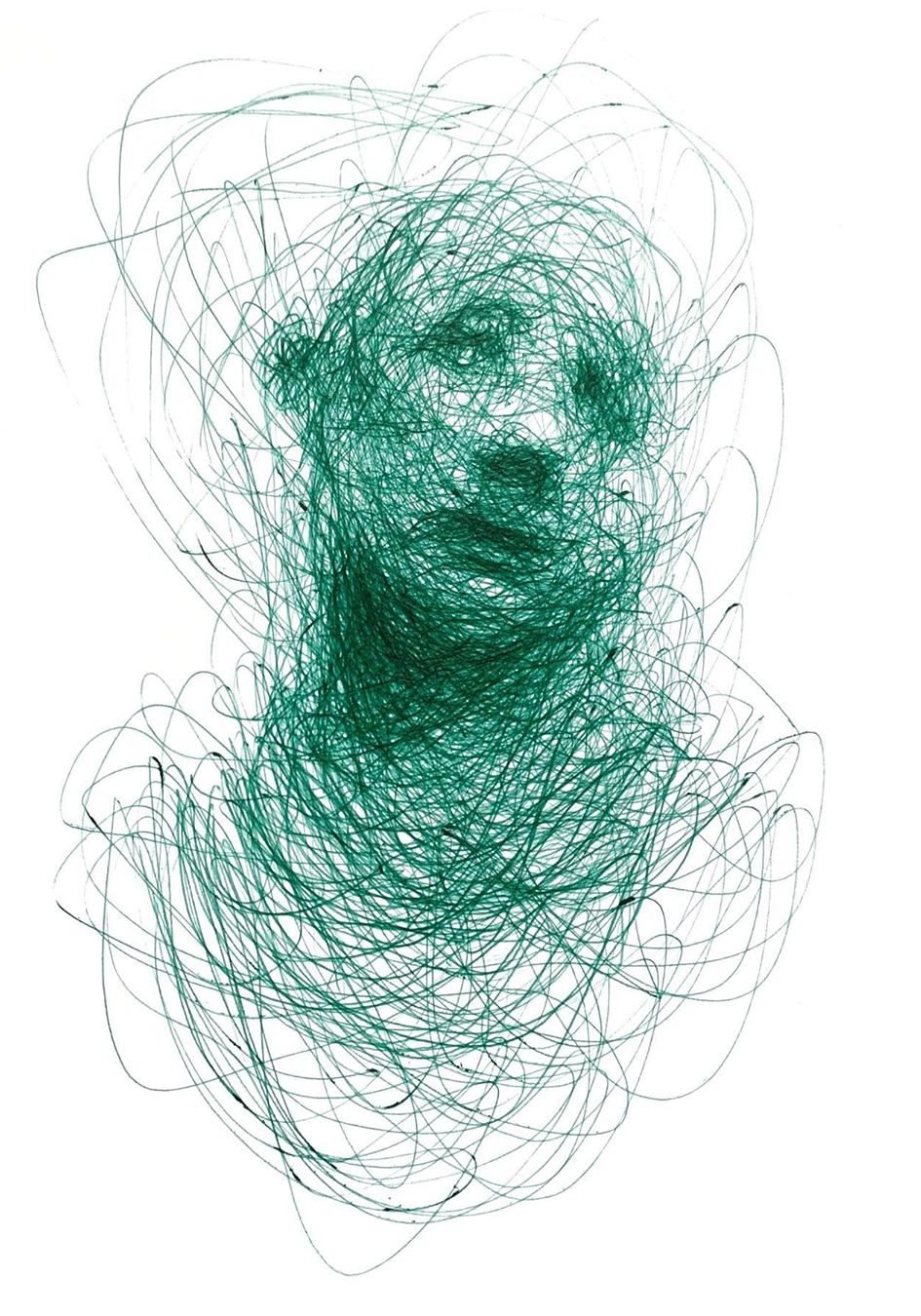
This is a useful way to get unstuck: keep the subject, change the rule. Draw a portrait using scribbled lines, a landscape with only straight marks, or an object using three colors you would never normally choose.
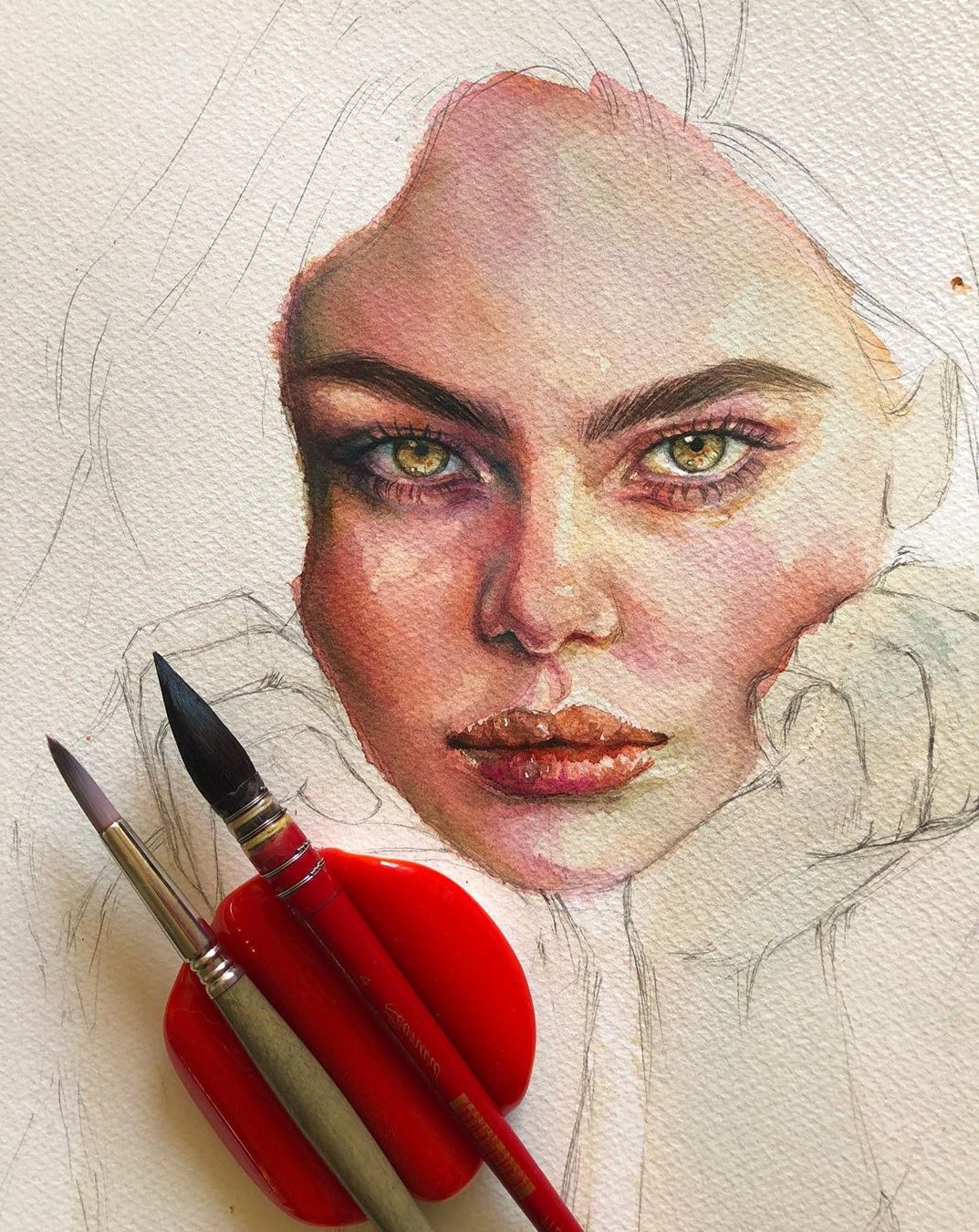
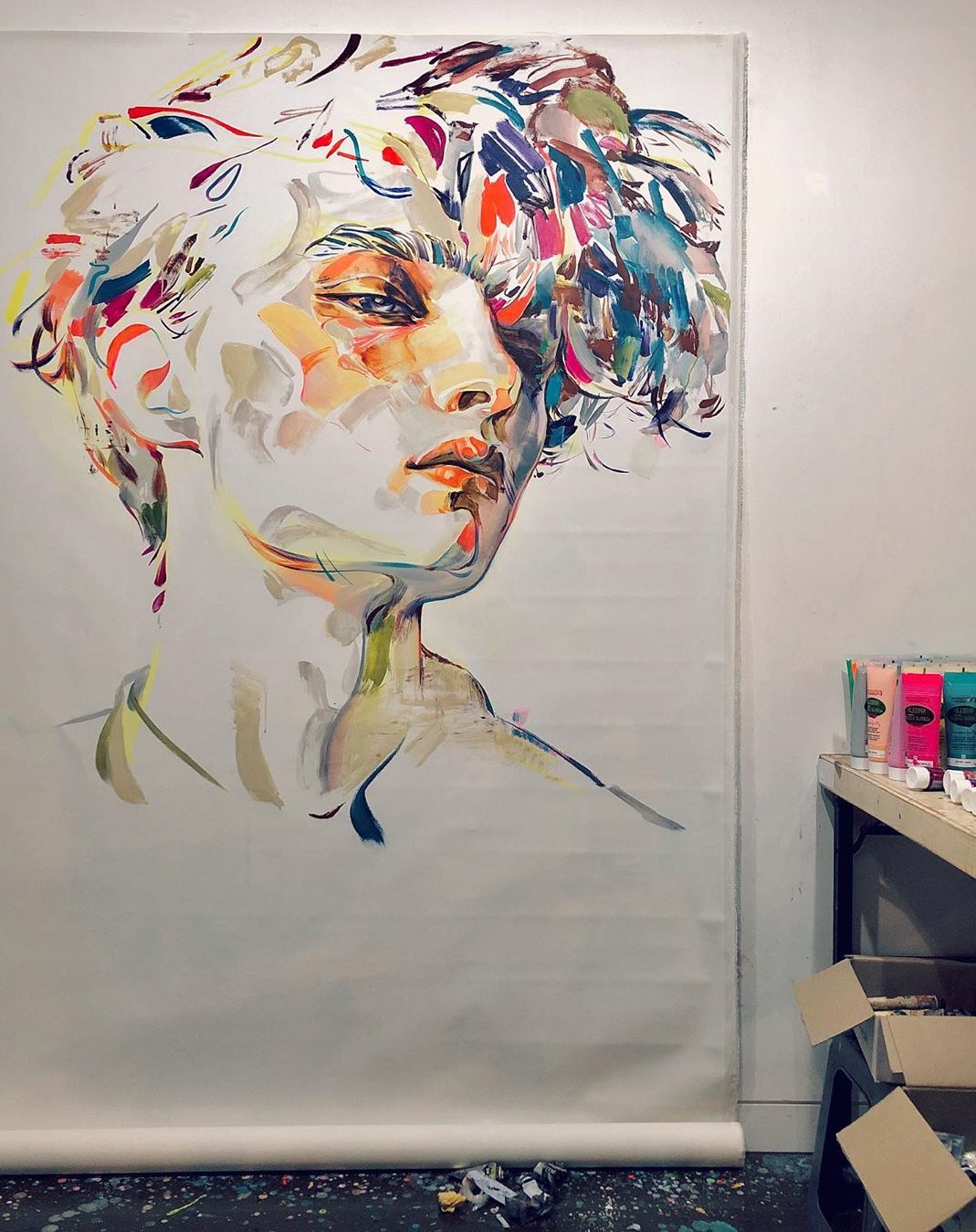
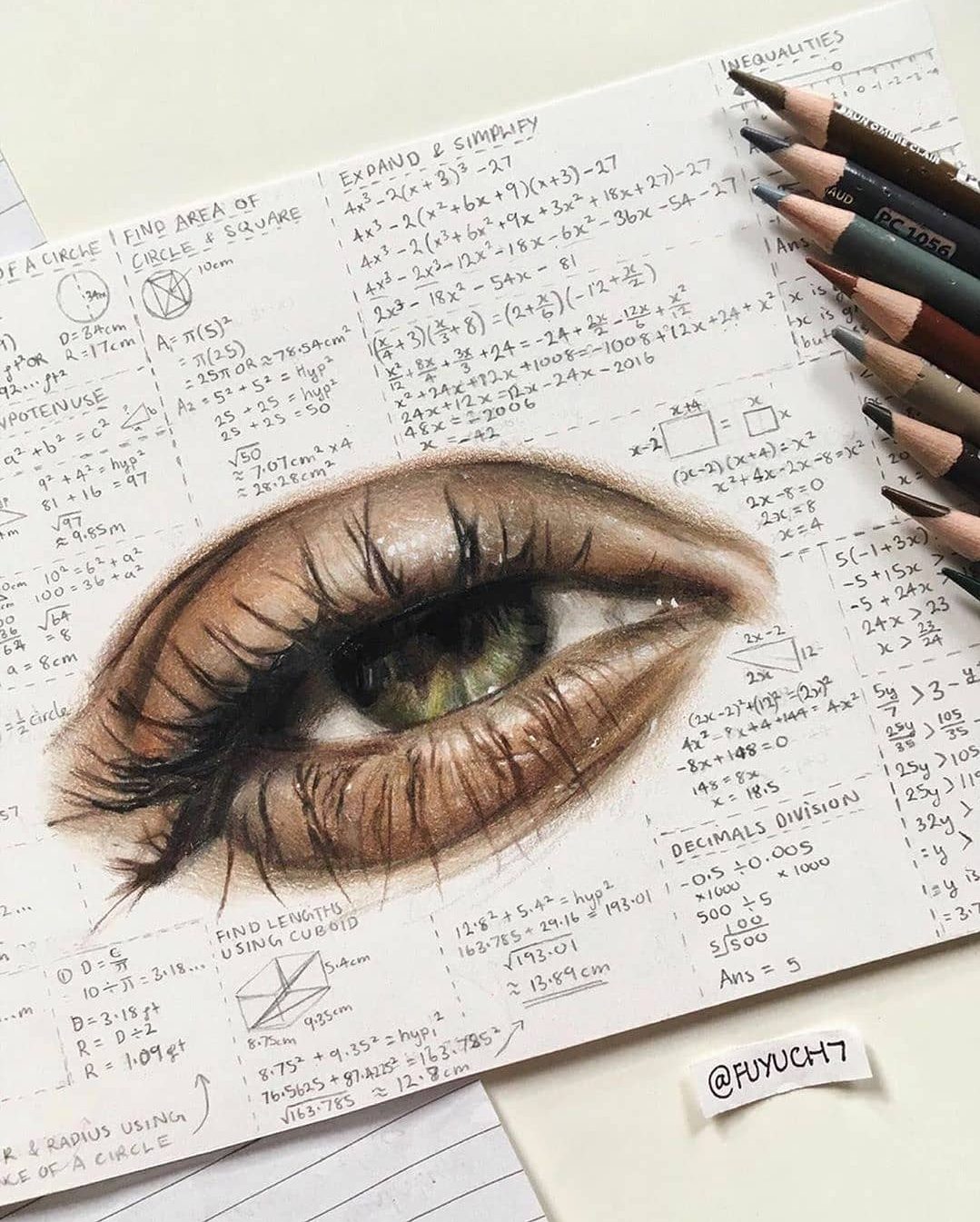
For a beginner, limiting the experiment helps. Pick one variable—line style, color, texture or background—and leave the rest alone. Changing everything at once makes it hard to tell what actually improved the drawing.
Use a constraint ladder instead of random style changes
Take one simple subject and redraw it several times. Keep the composition nearly identical so the experiment has one clear variable:
- Line: smooth contour, broken contour, scribble, angular marks or thick marker.
- Value: outline only, two values, then three values.
- Color: monochrome, complementary pair, then an intentionally strange palette.
- Texture: clean surface, rough hatch, dots, dry brush or paper grain.
- Medium: pencil, ink, watercolor, marker or digital brush.
You are not trying to find the “best” style. You are finding which visual decision changes the mood most. That knowledge transfers to later drawings far better than copying a finished effect without knowing why it works.
Symbolic and decorative ink ideas — Ideas 9–12
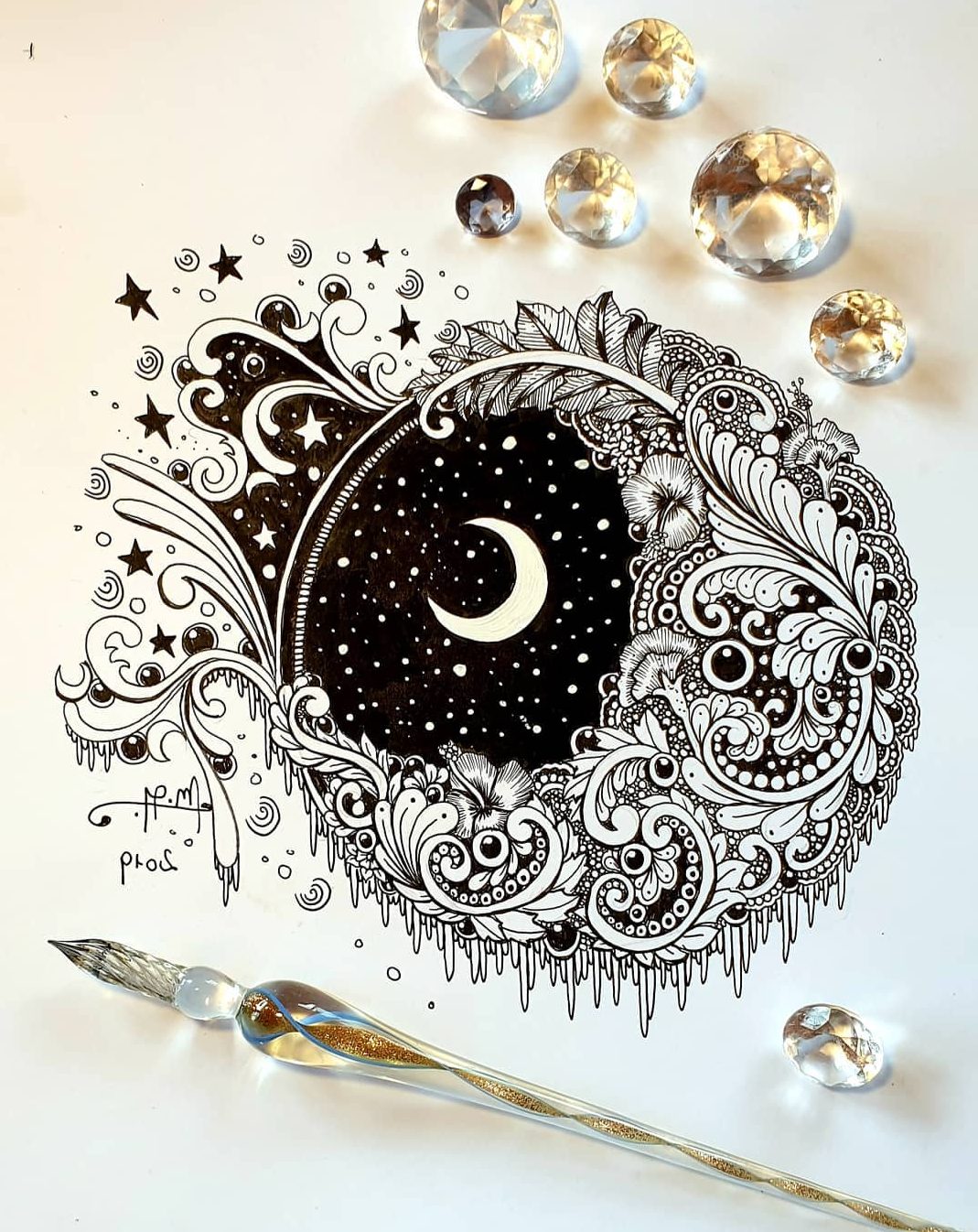
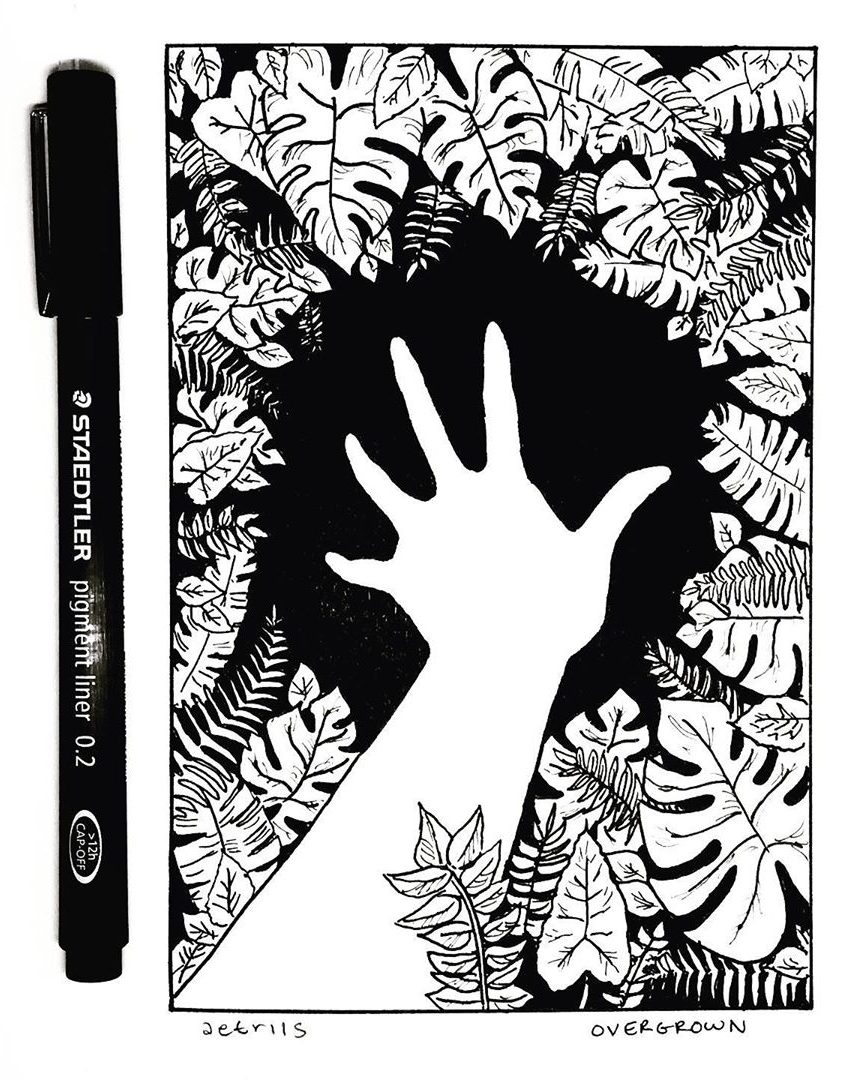
Symbols are useful because the main shape is already familiar. Start with a moon, hand, star, eye or zodiac sign, then build around it with leaves, flowers, clouds or geometric marks. The central silhouette keeps the drawing readable even when the decoration gets dense.
Make the decoration answer the symbol
Before adding flowers or stars, decide what the central symbol means in this drawing. Then choose supporting shapes that either reinforce that meaning or deliberately contradict it.
- Core symbol: the main readable shape—moon, hand, eye, key, heart, crown.
- Supporting motif: a repeated family of forms that belongs with the idea—roots for growth, machinery for control, clouds for uncertainty, flowers for softness.
- Contrast: one element that creates tension—a delicate flower growing through metal, a calm moon surrounded by sharp geometry, a hand holding something impossible.
Use the central silhouette as the anchor and let detail become denser near the focal area, then quieter as it moves away. That keeps ornate ink work from becoming an even carpet of decoration.
Draw a moment from a story — Ideas 13–15
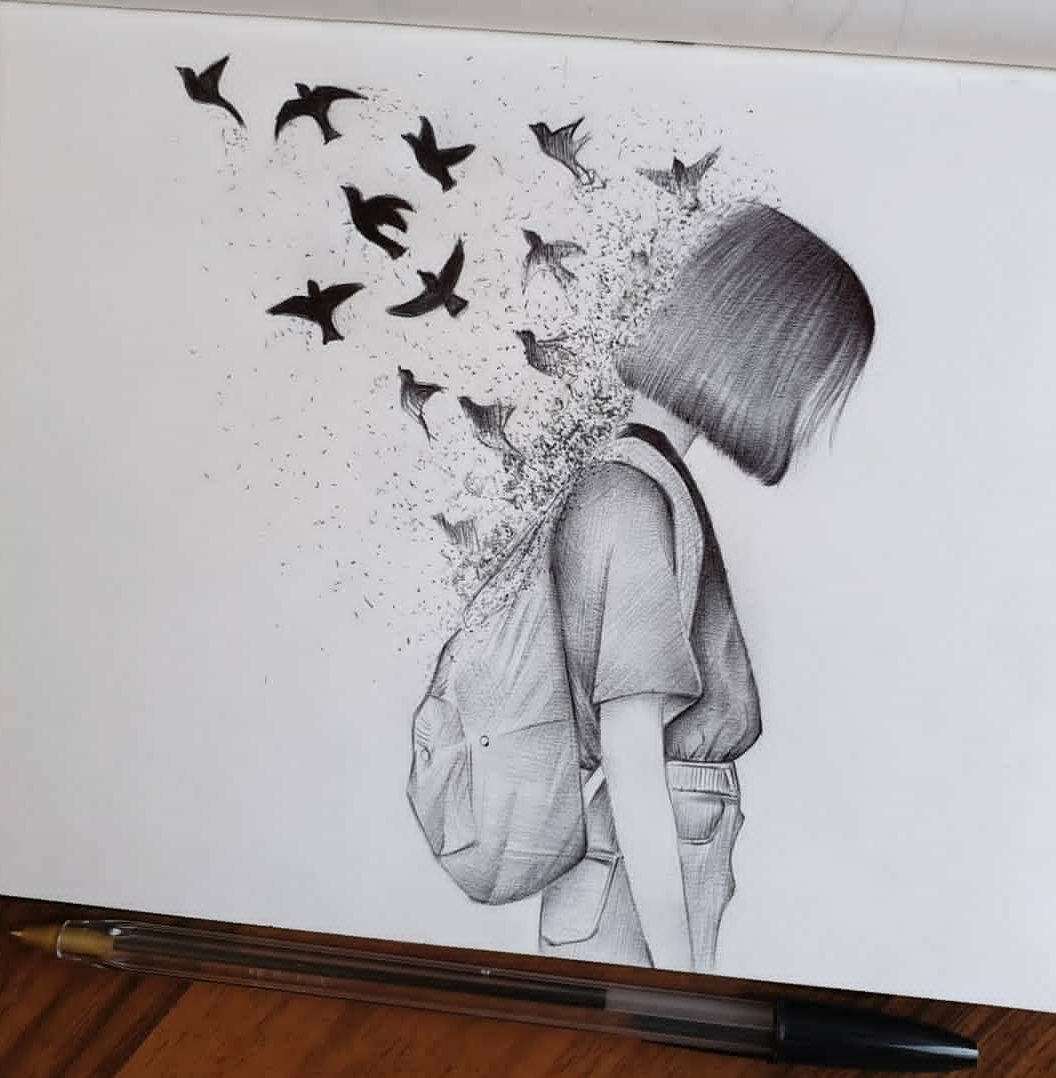
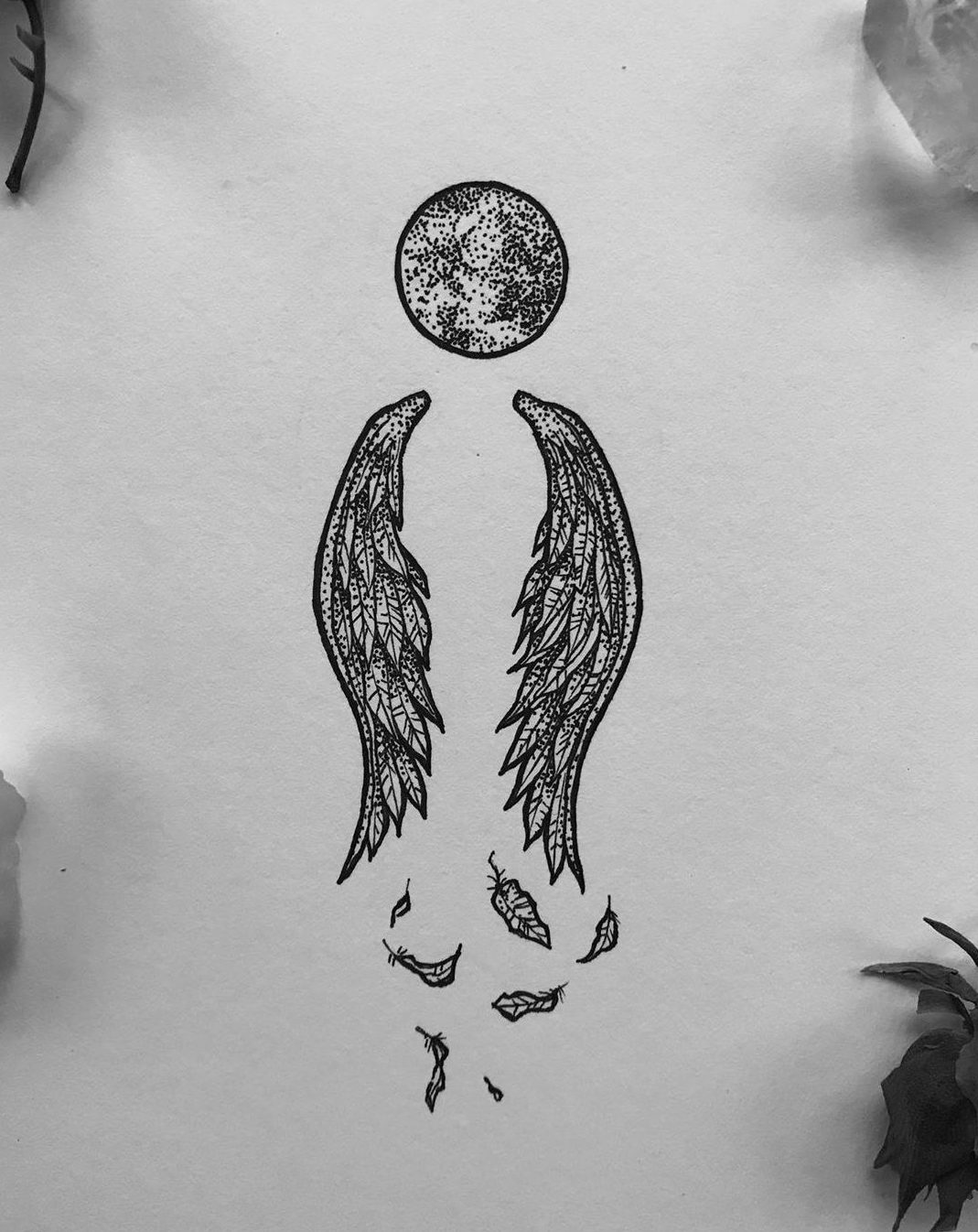
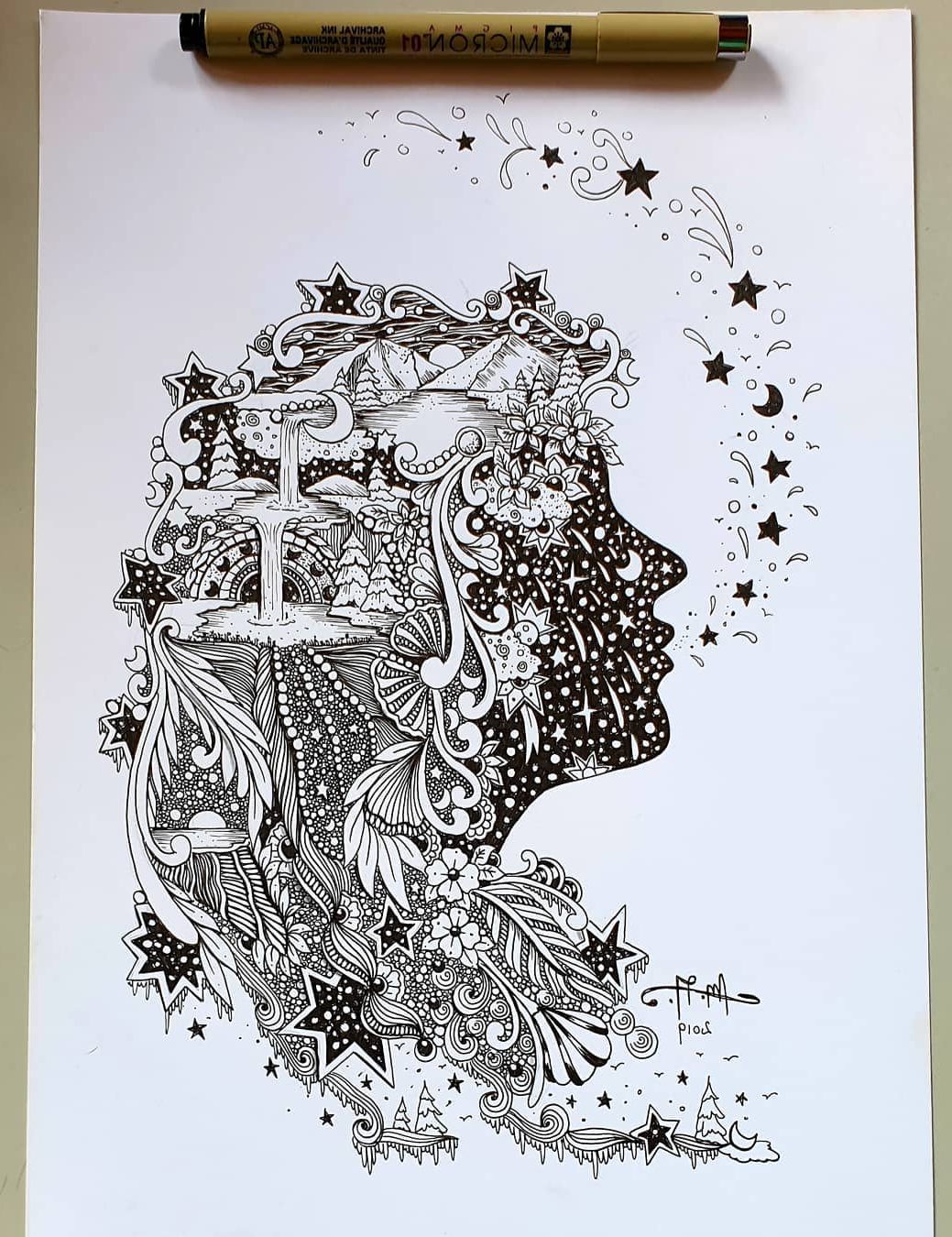
You do not need to illustrate an entire story. Draw one strange moment: a person turning into birds, a room filling with flowers, a character opening a door onto the wrong place, or an ordinary phone call happening in an impossible setting.
Choose the moment where the situation changes
A narrative drawing gets stronger when the viewer can imagine what happened one second before and what might happen one second after. Instead of drawing “a magical room,” draw the instant the first flower breaks through the floor. Instead of “a person with birds,” draw the point where the arm is still human but the fingertips are already becoming feathers.
Before drawing, answer three short questions:
- Before: what was normal?
- Change: what is happening right now?
- After: what does the viewer expect next?
You only draw the middle answer. The other two exist in the viewer’s imagination, which is what gives a single image a sense of story.
Give the scene one visual clue that does not belong
For beginner story drawings, one contradiction is usually enough. A kitchen is ordinary; a kitchen with a tiny moon floating over the sink is not. A bus stop is ordinary; a bus stop underwater is not. Keep most of the scene believable so the strange element has something to push against.
A prompt formula that is actually useful
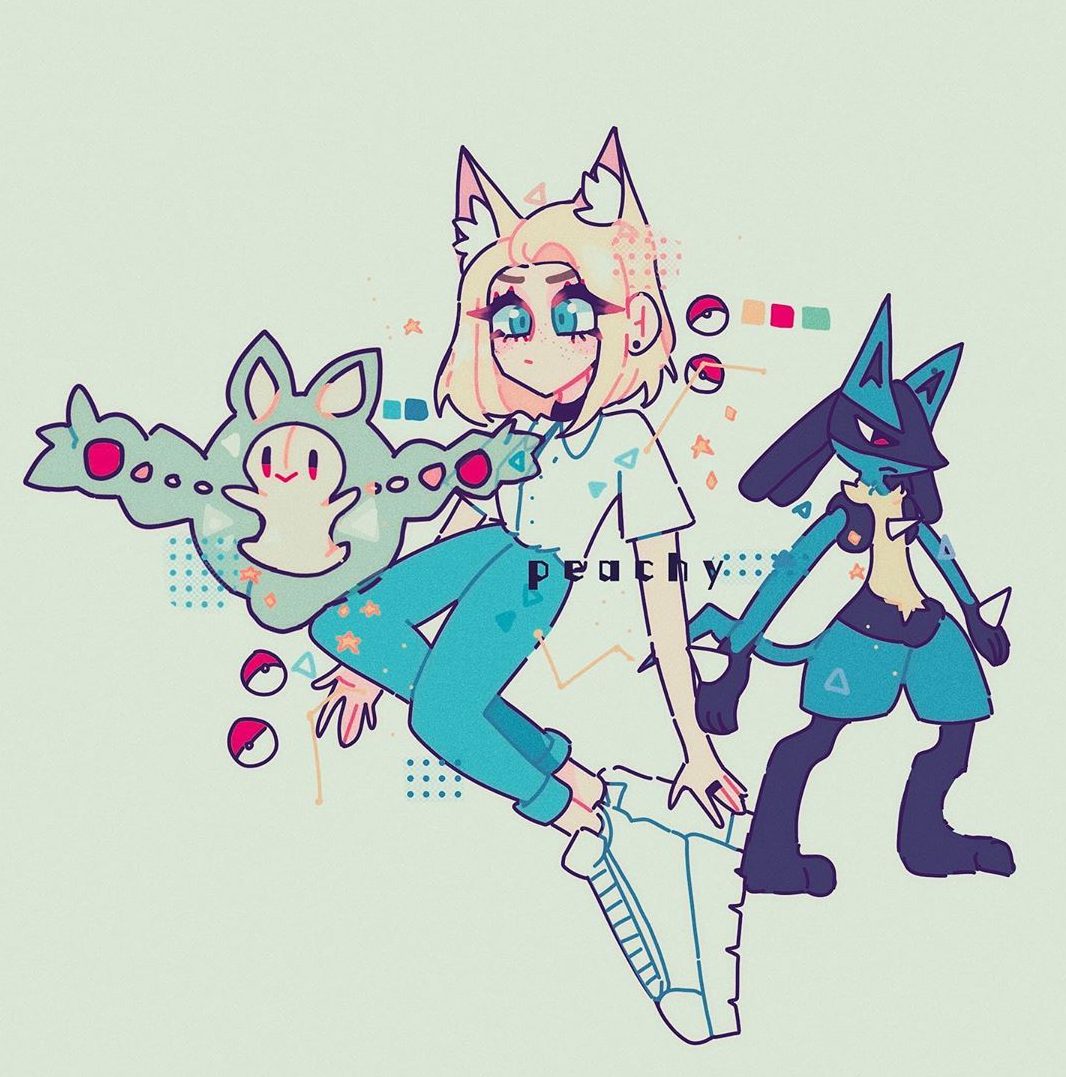
When the page is blank, combine three things: subject + change + mood. “Cat + enormous teacup + sleepy.” “City + floating streets + foggy.” “Portrait + scribbled lines + tense.” The middle part is what makes the prompt interesting; the mood stops it from feeling random.
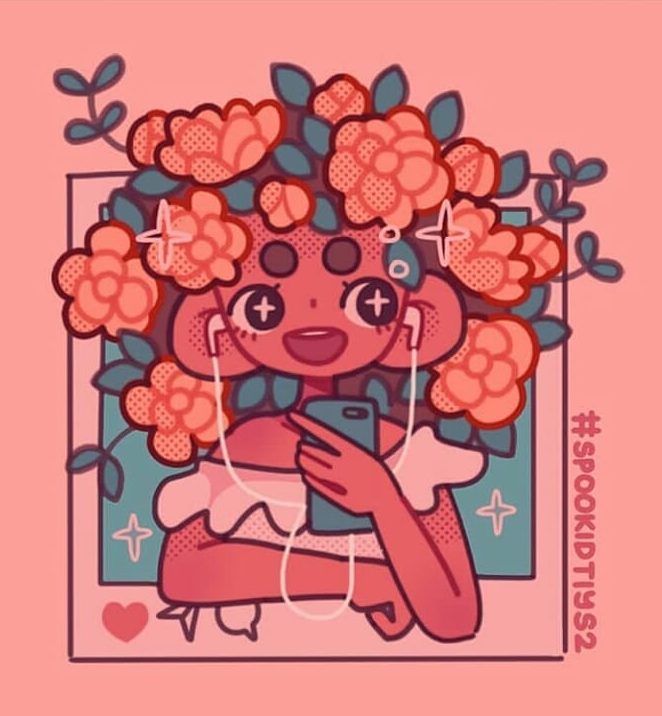
If that is still too open, steal one decision from a reference above. Keep the moon shape from Idea 9, but turn the flowers into mechanical parts. Keep the bird from Idea 4, but replace the cup with a tiny house. Keep the eye from Idea 8, but draw the notes around it as a map instead.
Generate five ideas, then judge only the thumbnails
Do not choose the first prompt merely because it arrived first. Write five variations, make a tiny thumbnail for each, then ignore drawing quality and judge only three things:
- Clarity: can you tell what the unusual idea is in two seconds?
- Composition: is there one obvious focal relationship rather than several competing ones?
- Curiosity: does the image create a question the viewer wants answered?
Choose the thumbnail that performs best on those three tests. A technically difficult idea is not automatically more creative, and a simple idea is not automatically boring.
Use the 70/30 rule for strange ideas
When everything is unusual, nothing feels unusual. Keep roughly 70 percent of the image understandable and let about 30 percent carry the unexpected change. A familiar room with one impossible doorway often feels more convincing than a room where every object is floating, melting and changing species at once.
This is not a mathematical law. It is a useful editing question: have I kept enough normal information for the strange part to have contrast?
A five-minute idea generator
- Pick something nearby. Mug, shoe, plant, key, backpack—anything ordinary.
- Change one thing. Make it enormous, alive, floating, broken, transparent or in the wrong place.
- Choose a mood. Quiet, eerie, cheerful, lonely, chaotic.
Then draw only the first version that comes to mind. Five minutes is enough. The point is to stop waiting for a perfect idea and start making decisions on paper.
Three exercises worth repeating
- One subject, three versions: draw the same object normally, then oversized, then in an impossible setting.
- One drawing, one restriction: use only three colors, only curved lines, or one continuous line.
- Redraw after a week: use the same prompt again without looking at the first attempt until you finish.
The last one is especially good for seeing progress because you are comparing the same problem rather than two unrelated drawings.
A 20-minute creative drawing workflow
- Minutes 1–3: write five subject + transformation + mood combinations.
- Minutes 4–7: make one tiny thumbnail for each idea.
- Minutes 8–10: choose one and make two alternate compositions.
- Minutes 11–16: draw the strongest composition larger, keeping only the major shapes and focal relationship.
- Minutes 17–20: add one finishing decision—limited color, texture, ink pattern or value contrast—rather than several unrelated effects.
Stop there. The point of the exercise is not a portfolio piece; it is to practice generating, selecting and developing an idea quickly enough that you can repeat the process.
Why a creative drawing can still feel random
- Too many twists: keep one main transformation and make the rest of the image support it.
- No focal relationship: decide what two things the viewer should compare first.
- The style experiment hides the subject: simplify the effect until the subject still reads.
- The symbolism is decorative only: choose motifs that reinforce or challenge the central idea.
- The composition was never tested: make thumbnails before committing to detail.
- The idea is technically difficult but conceptually weak: ask whether the unusual part would still be interesting as a rough sketch.
Using these references
This is an older inspiration gallery and the original creator or reuse licence is not documented for every image. Use the references for study, practice and idea generation; do not assume the artwork itself is cleared for republication or commercial reuse.
More drawing practice
If you mainly want quick visual ideas, use the easy cool drawing ideas page. For a broader list of simple subjects, try easy things to draw. If you want step-by-step instruction rather than prompts, go to the beginner drawing tutorials.
Creative drawing questions
What should I draw if I have no ideas?
Pick an ordinary subject first. Then change one thing about it: scale, setting, mood or style. Starting with something familiar is usually easier than waiting for a completely original idea.
How do I make a drawing feel more original?
Do not change everything. Keep one recognizable part and make one deliberate change. A familiar subject in an unfamiliar setting is often enough.
Is copying a reference bad practice?
Copying can teach observation, but do a second version afterward with one clear change. That is where the exercise starts becoming yours.
What if my idea sounds silly?
Draw it anyway. A lot of useful ideas sound slightly ridiculous before they exist on paper. You can decide whether it works after you can actually see it.


I did not find what I wanted
please make more of your animals that look like drink there so cute, and I love copying them you do so good with them thank you