
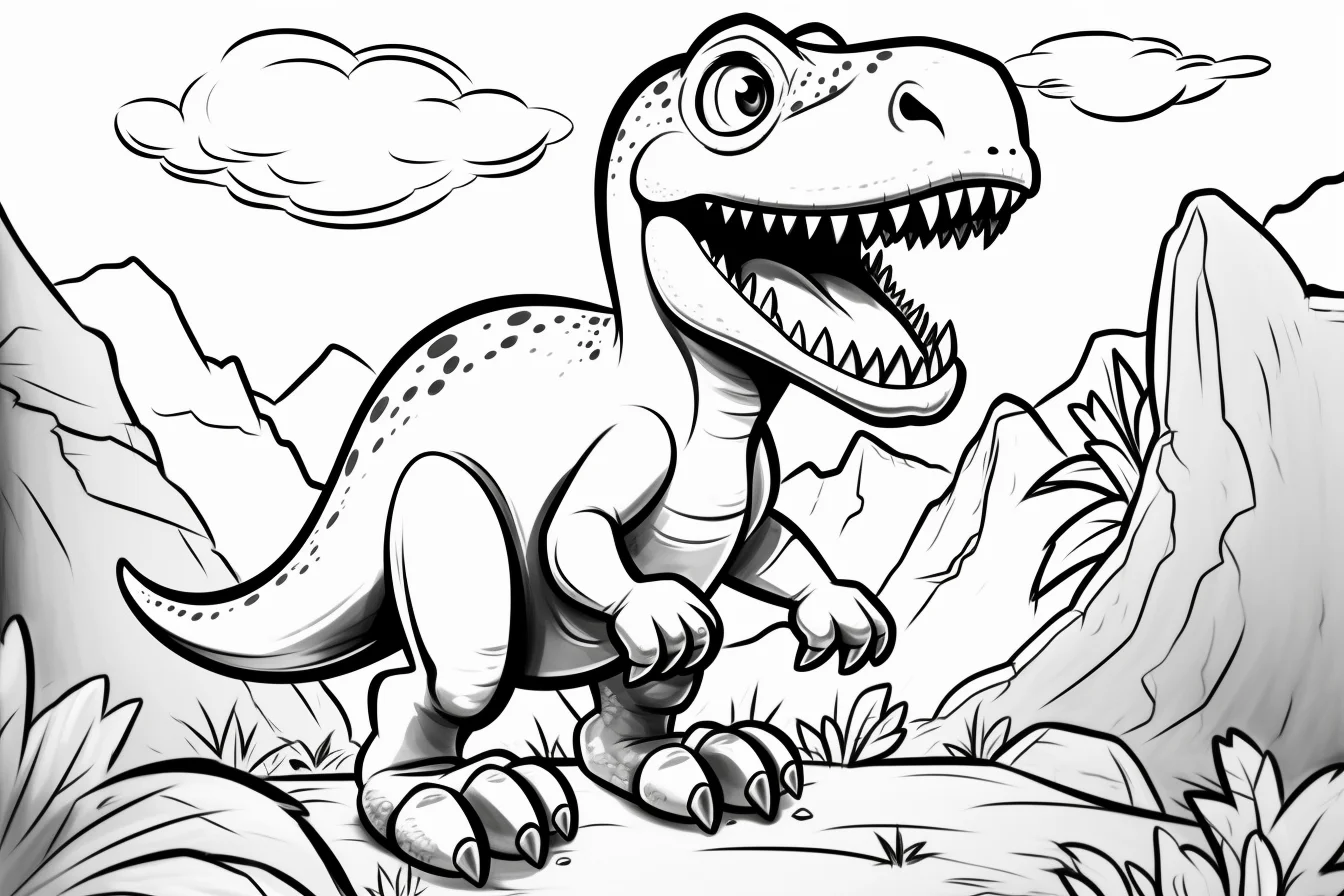
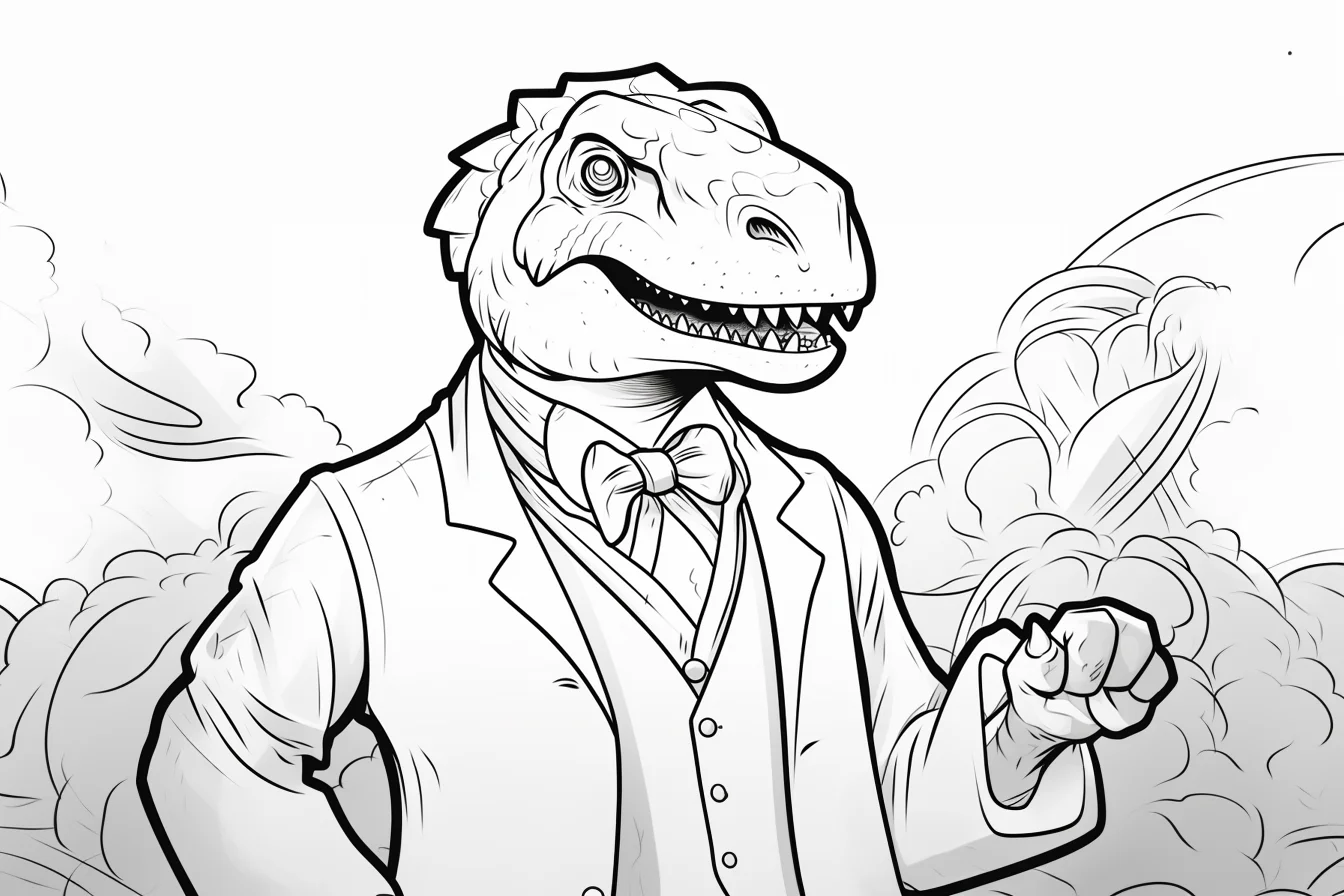
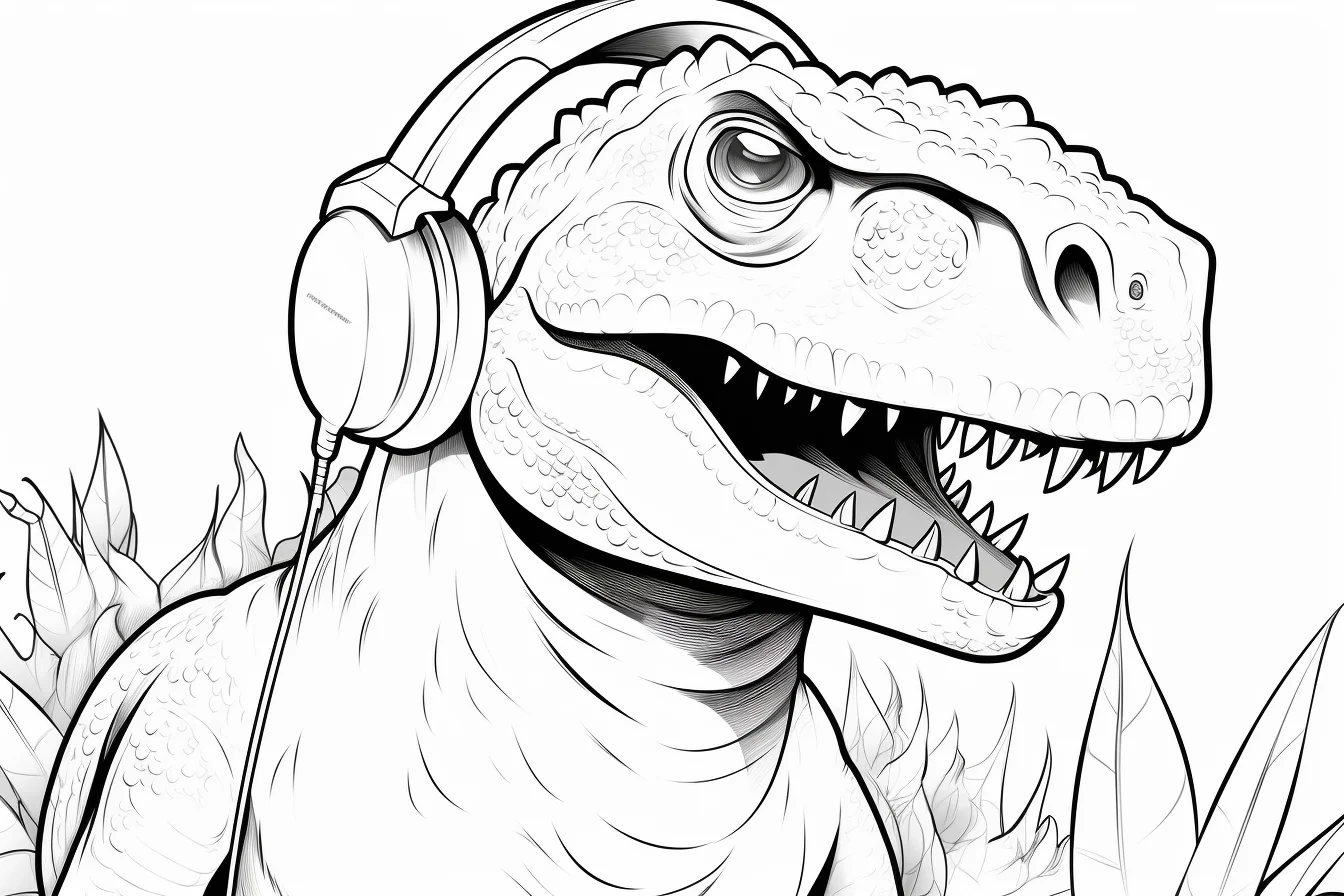
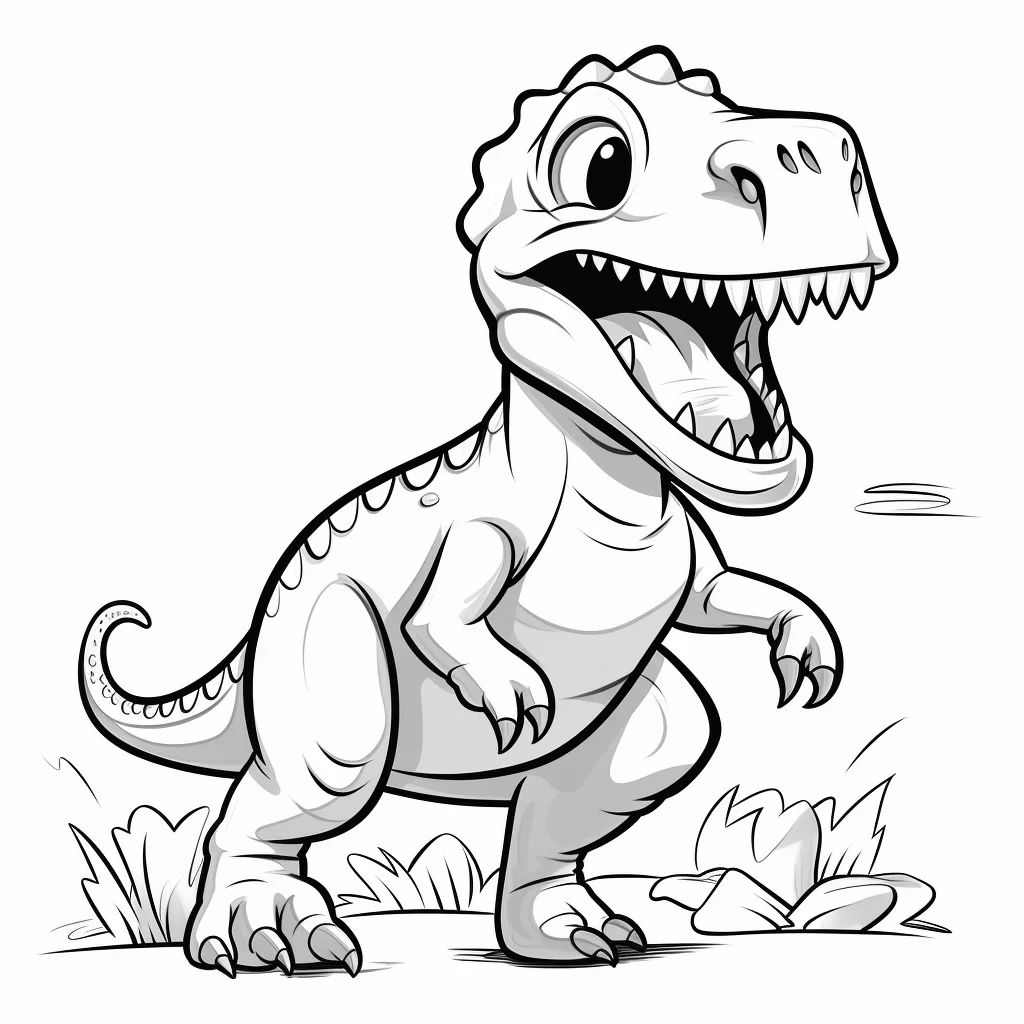
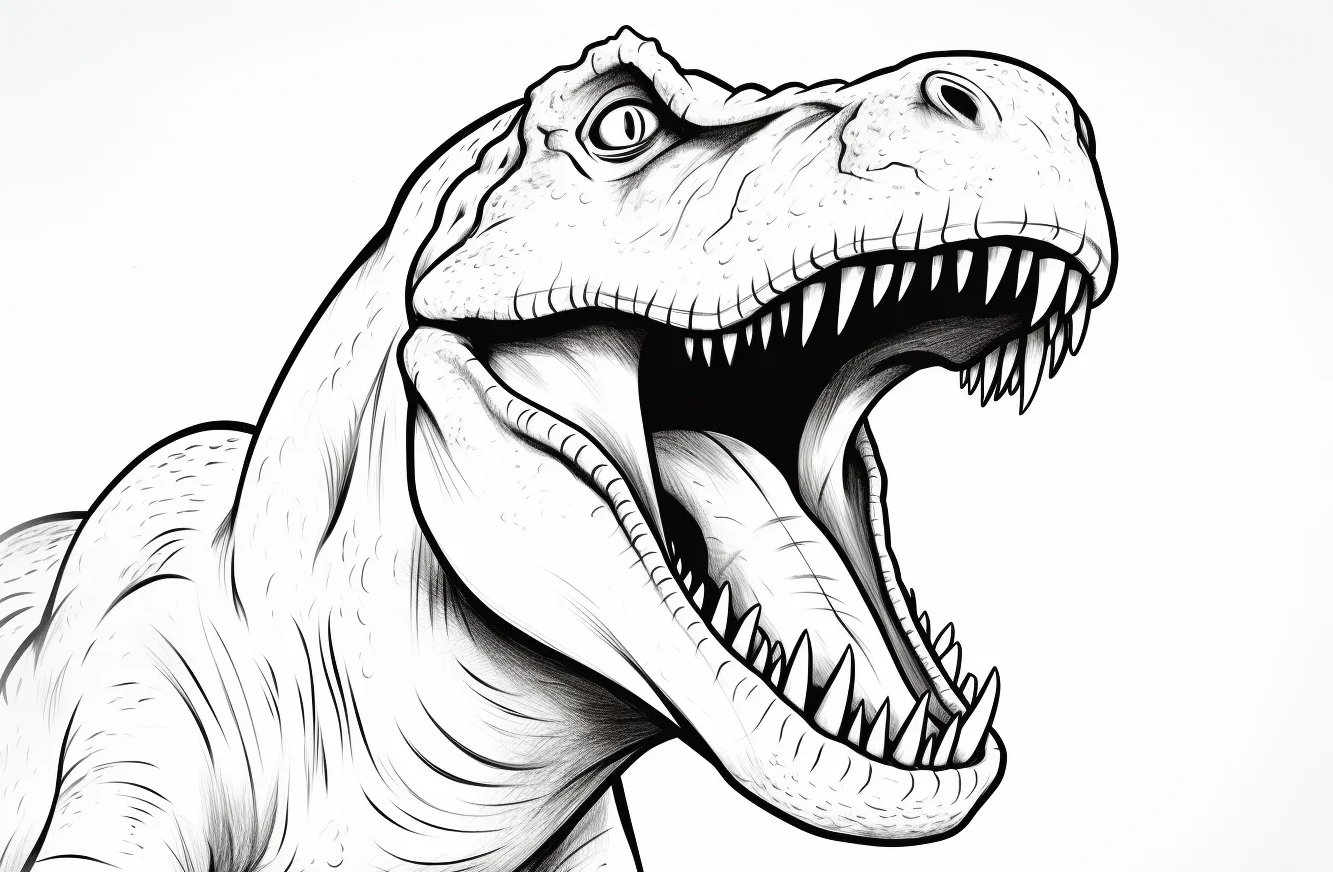
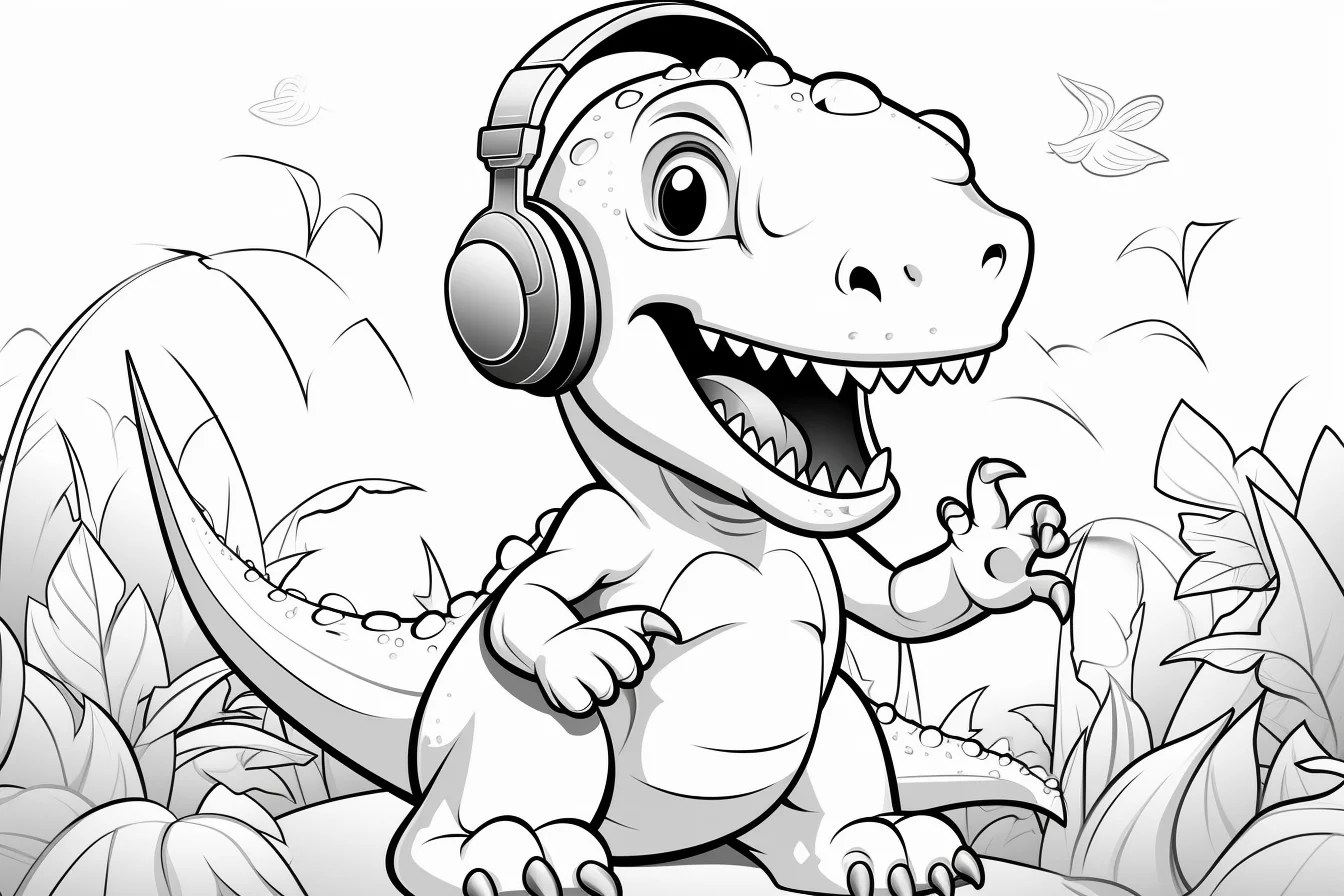
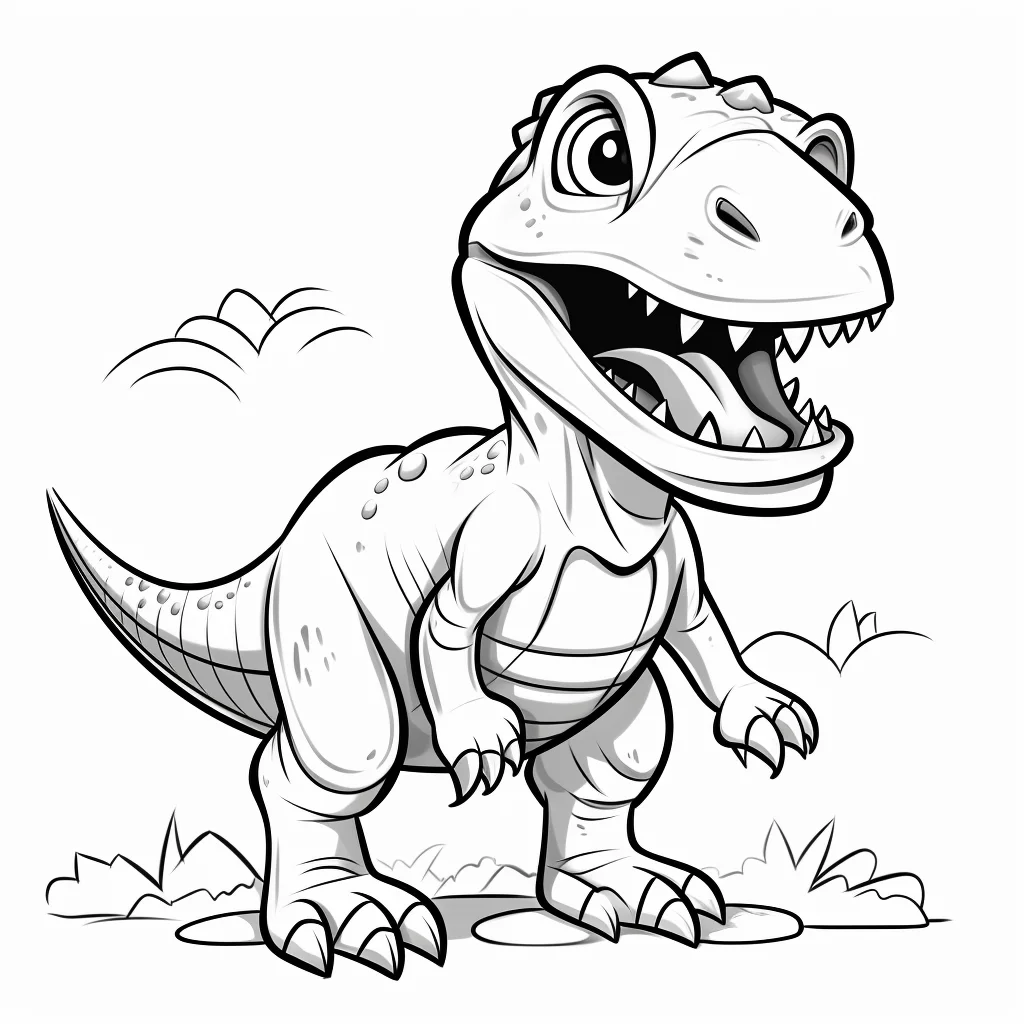
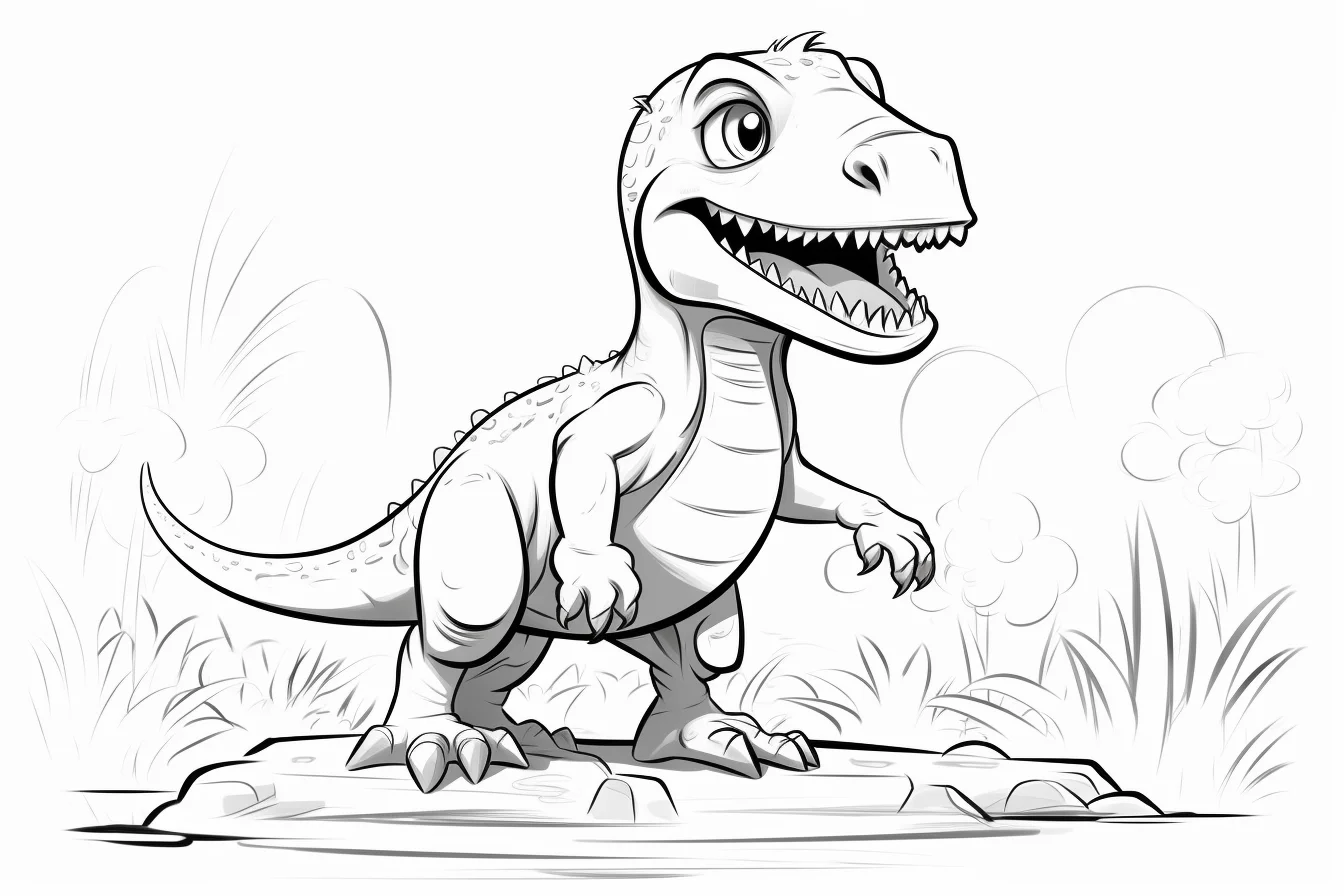
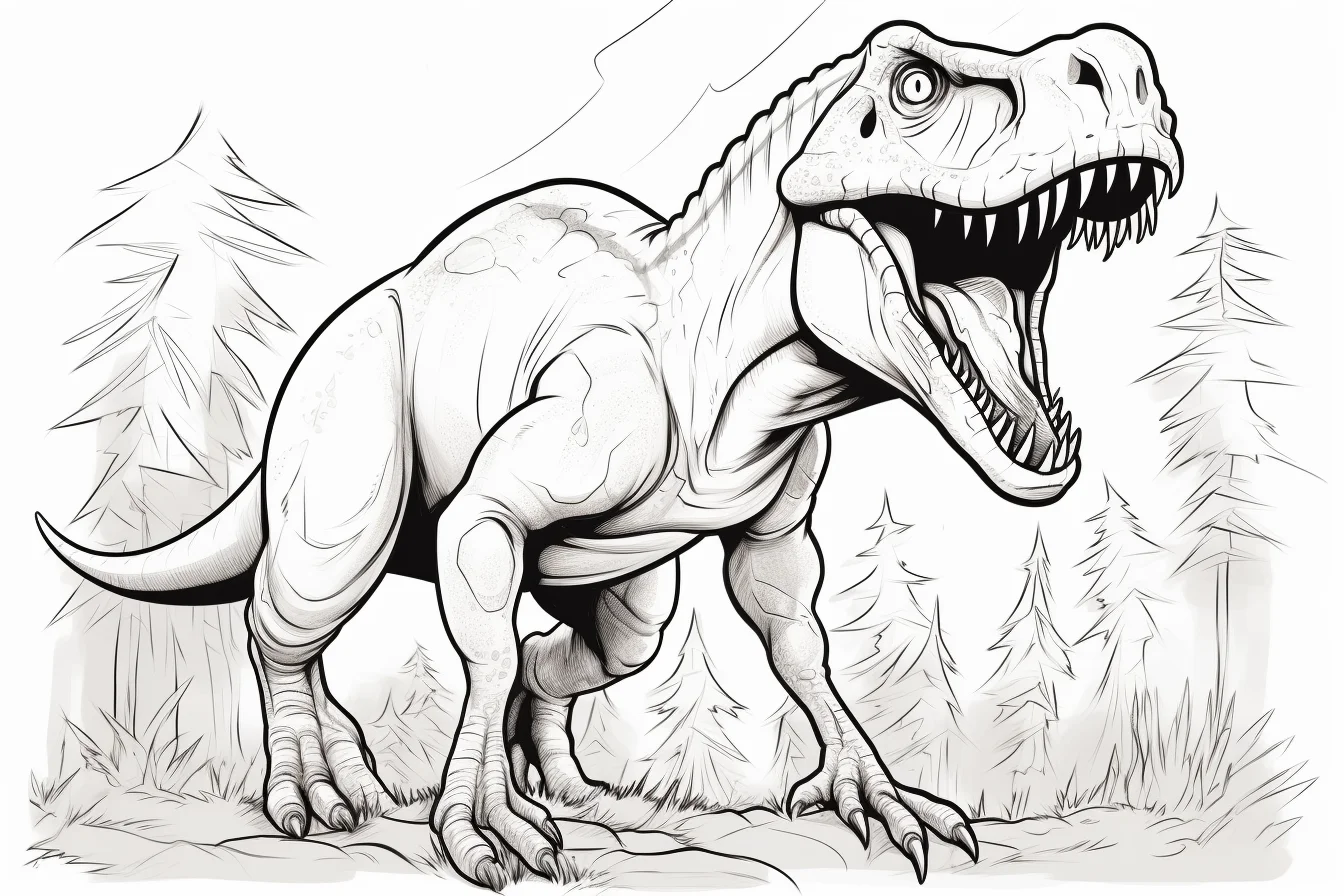
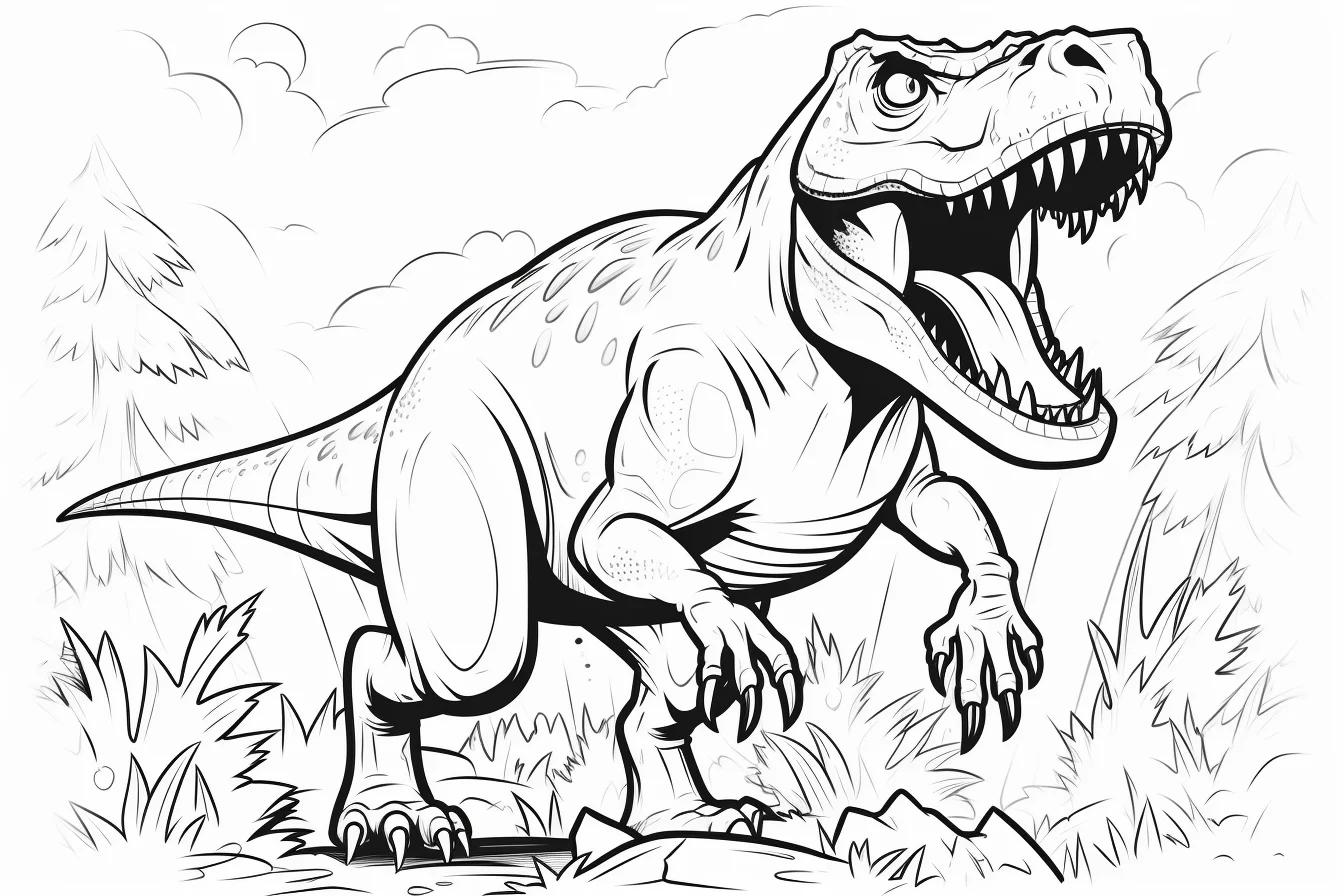
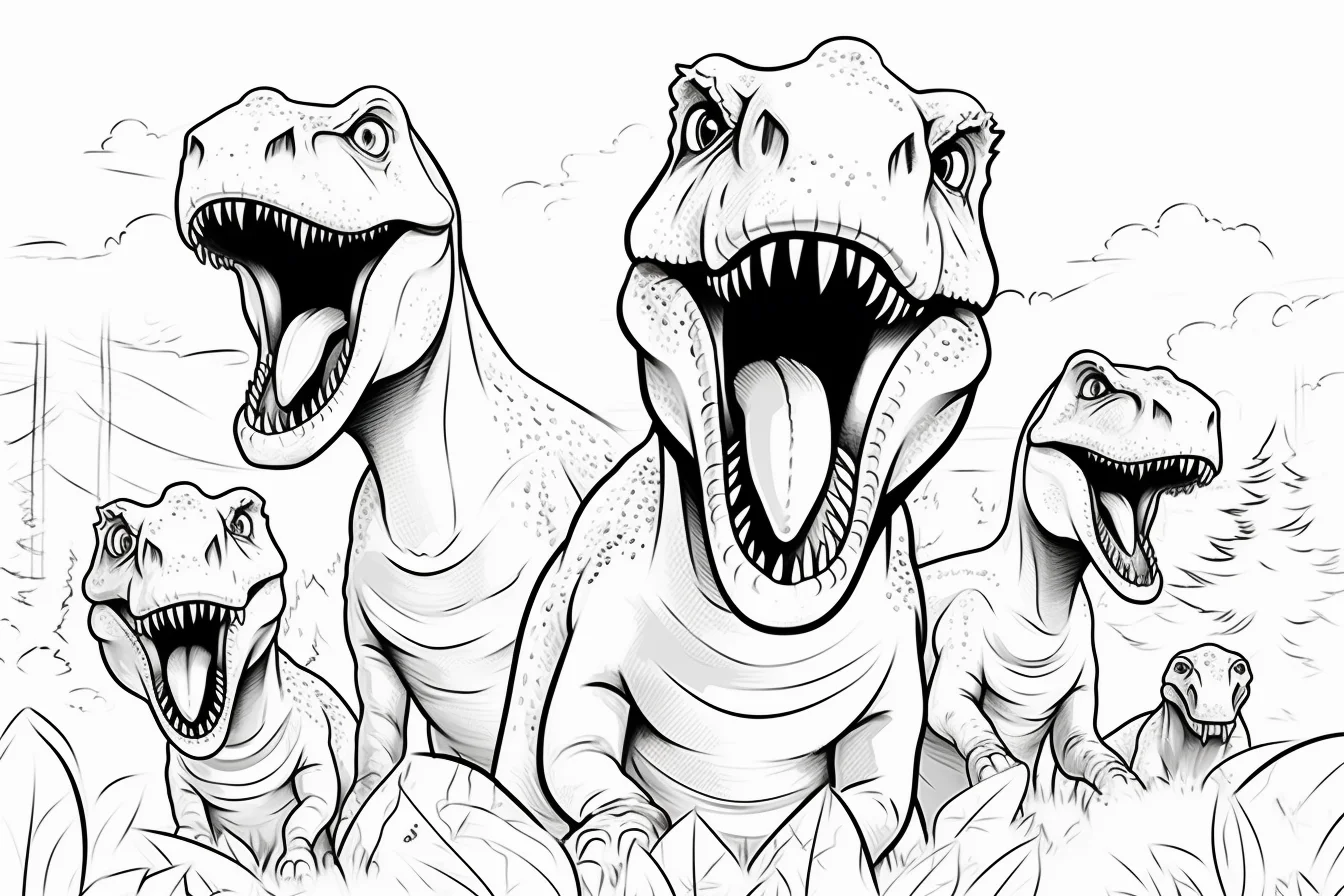
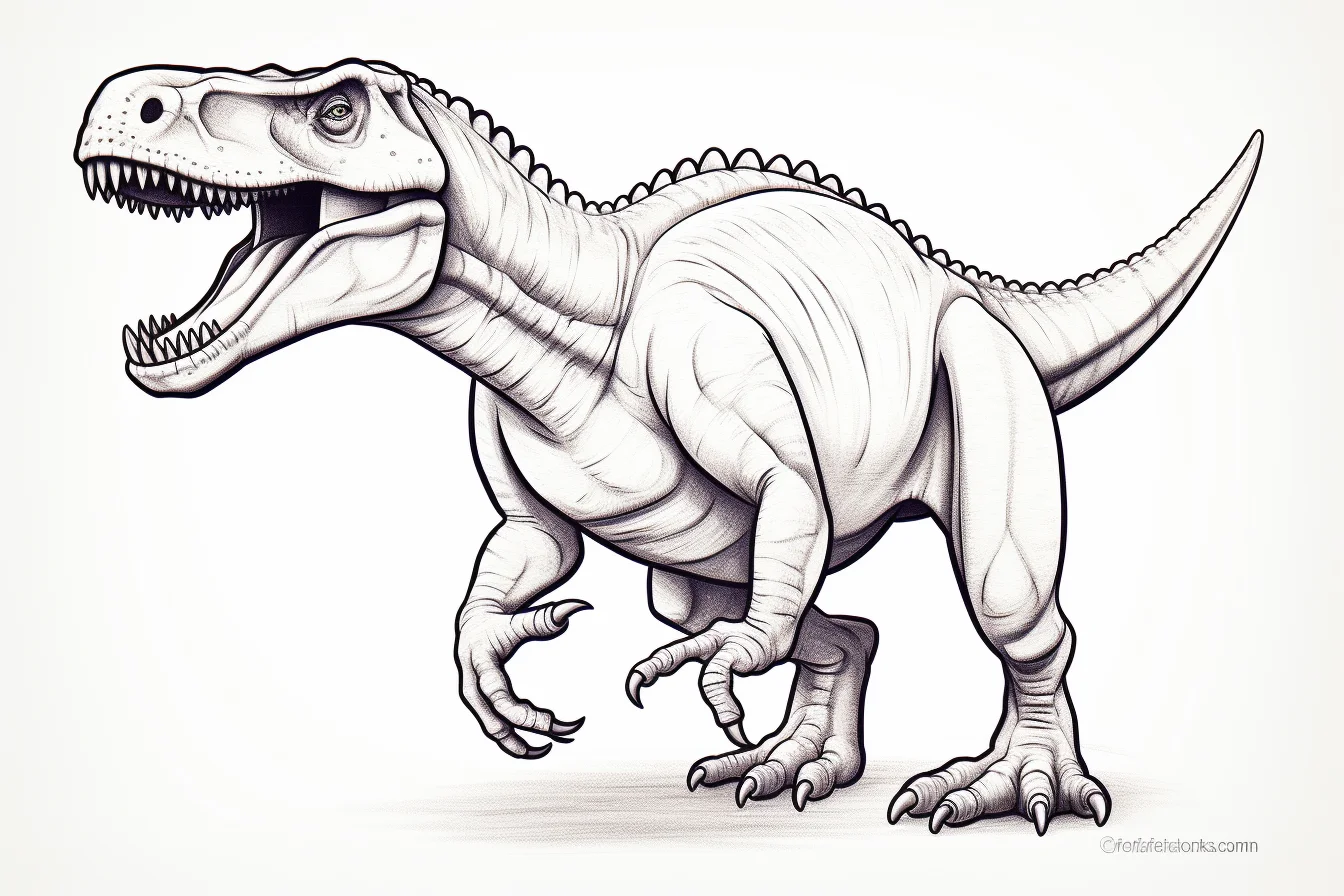
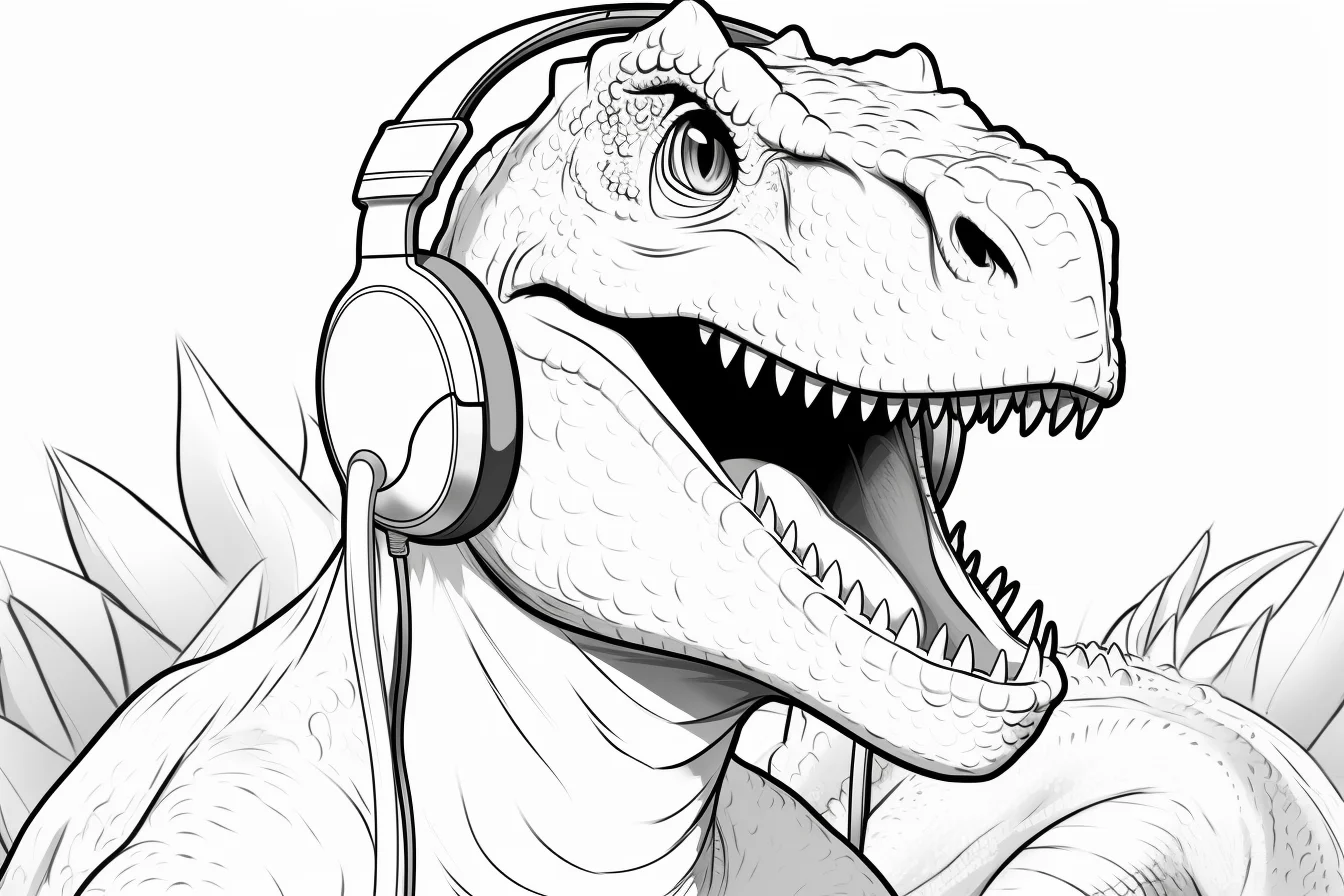
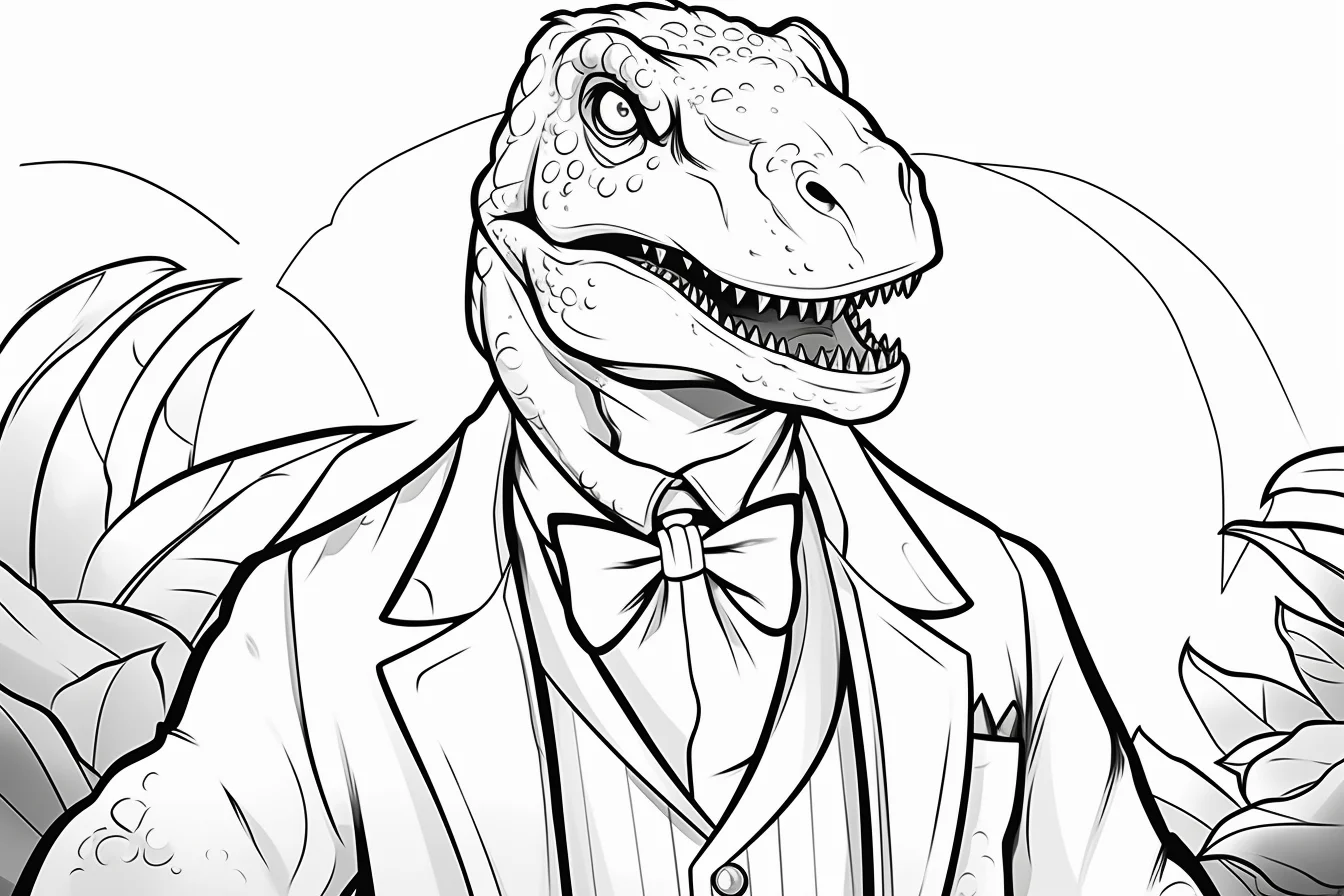
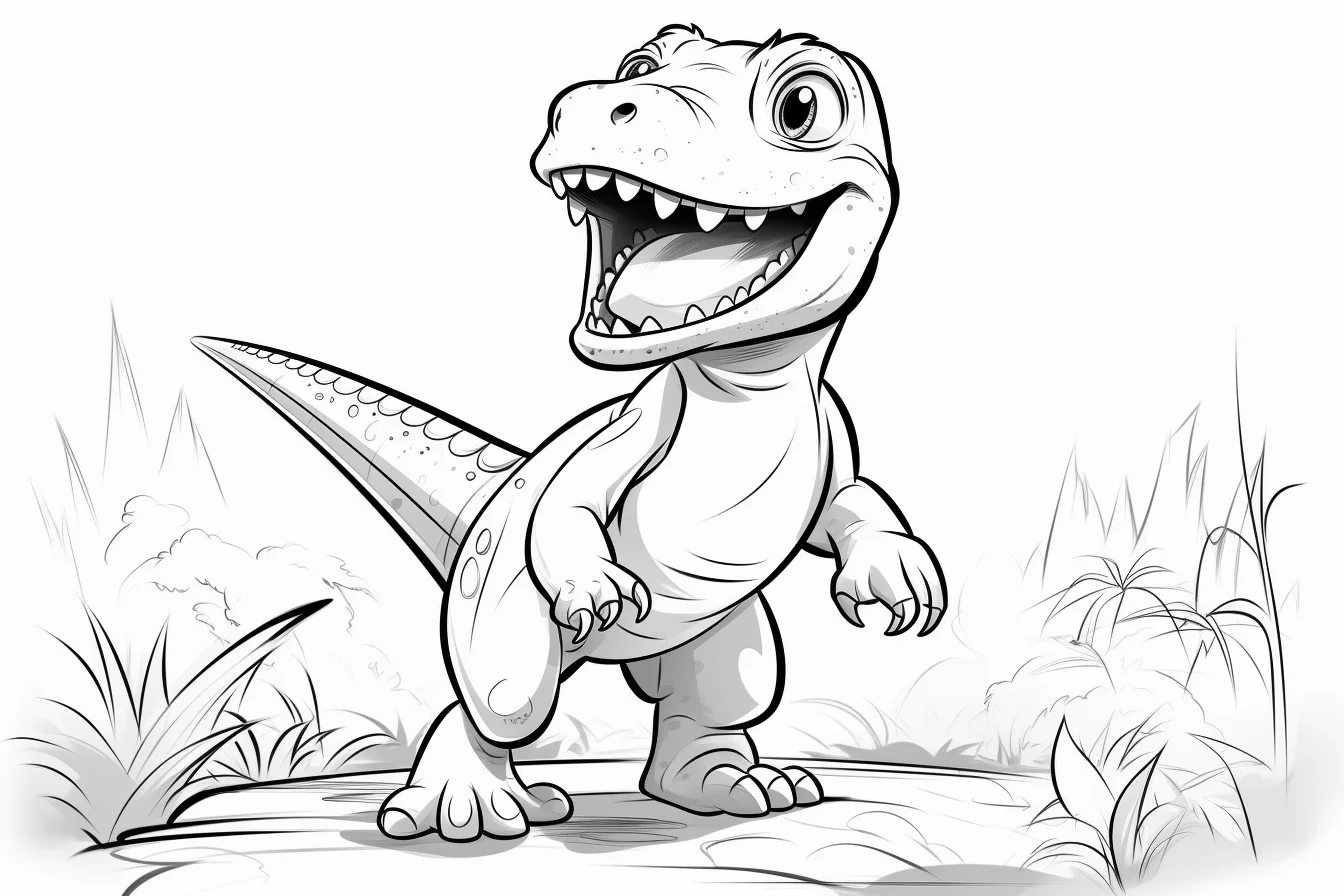
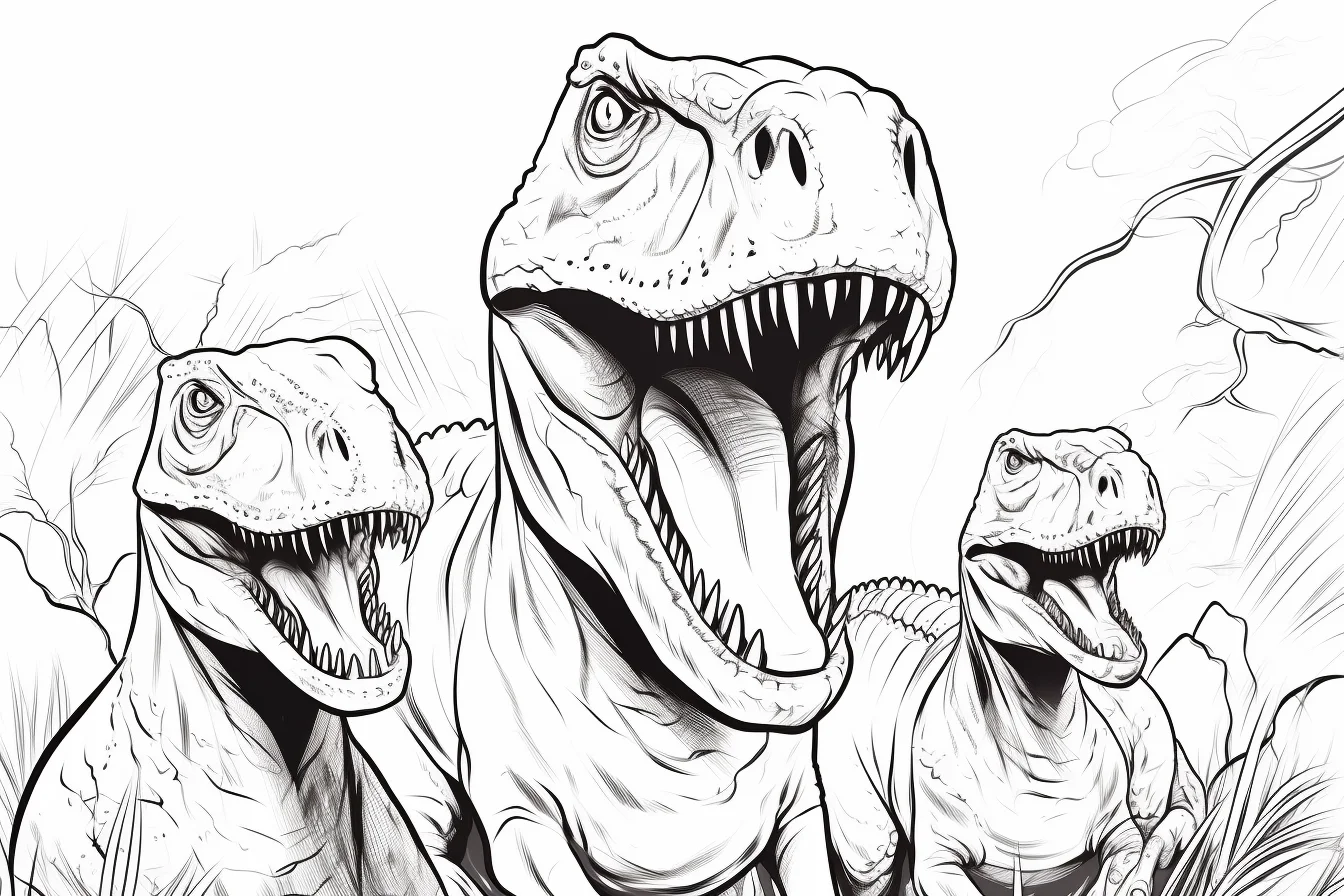
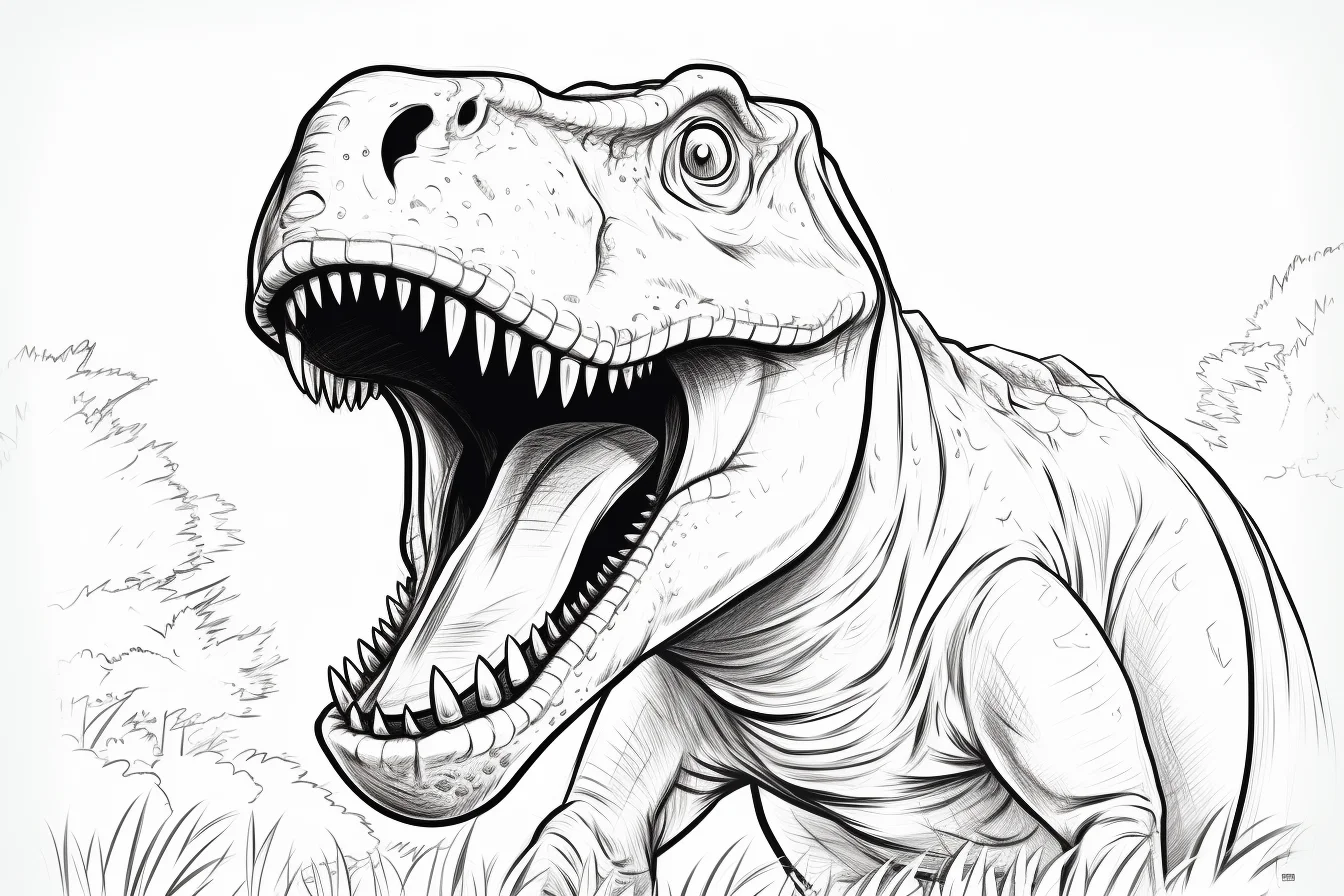
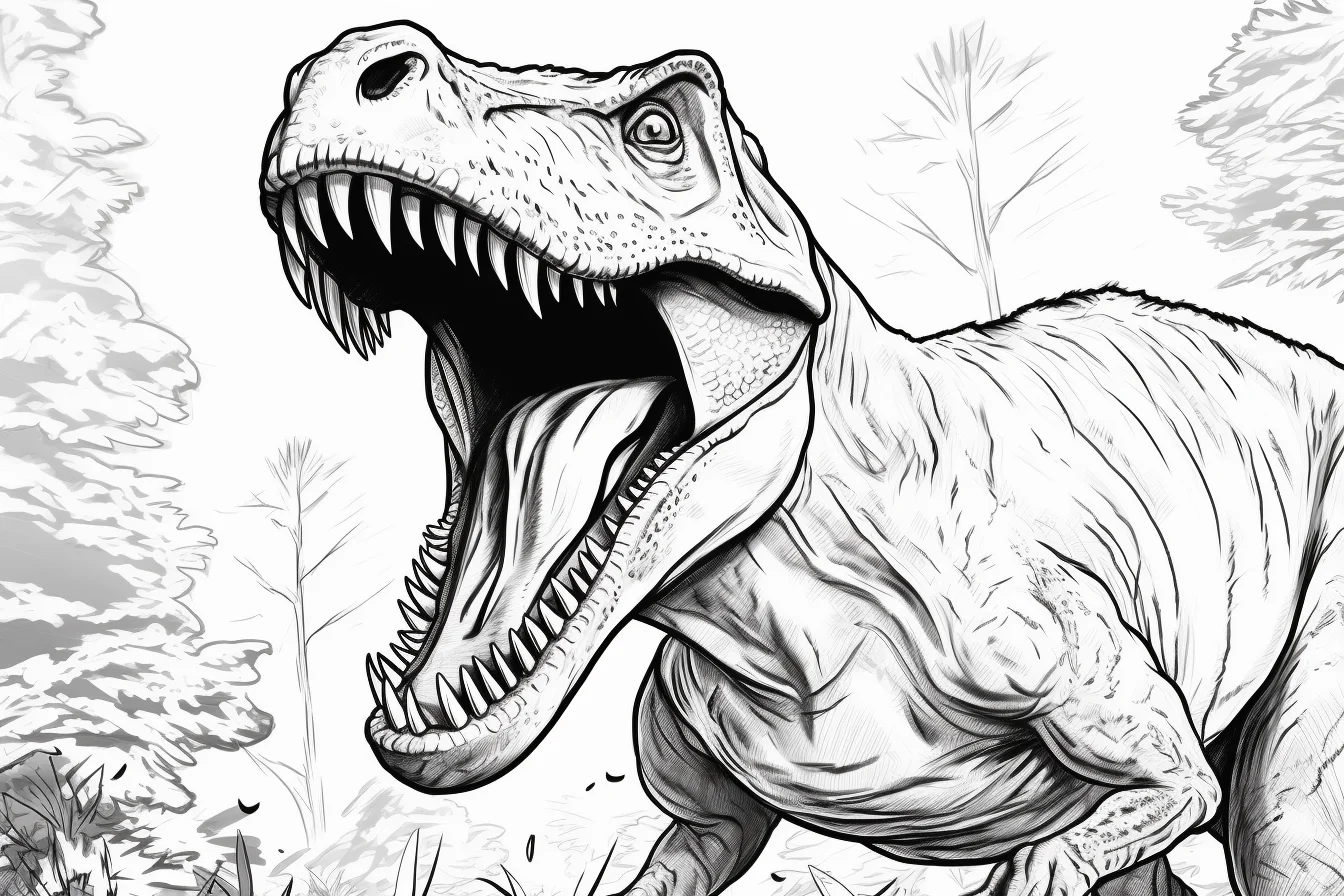
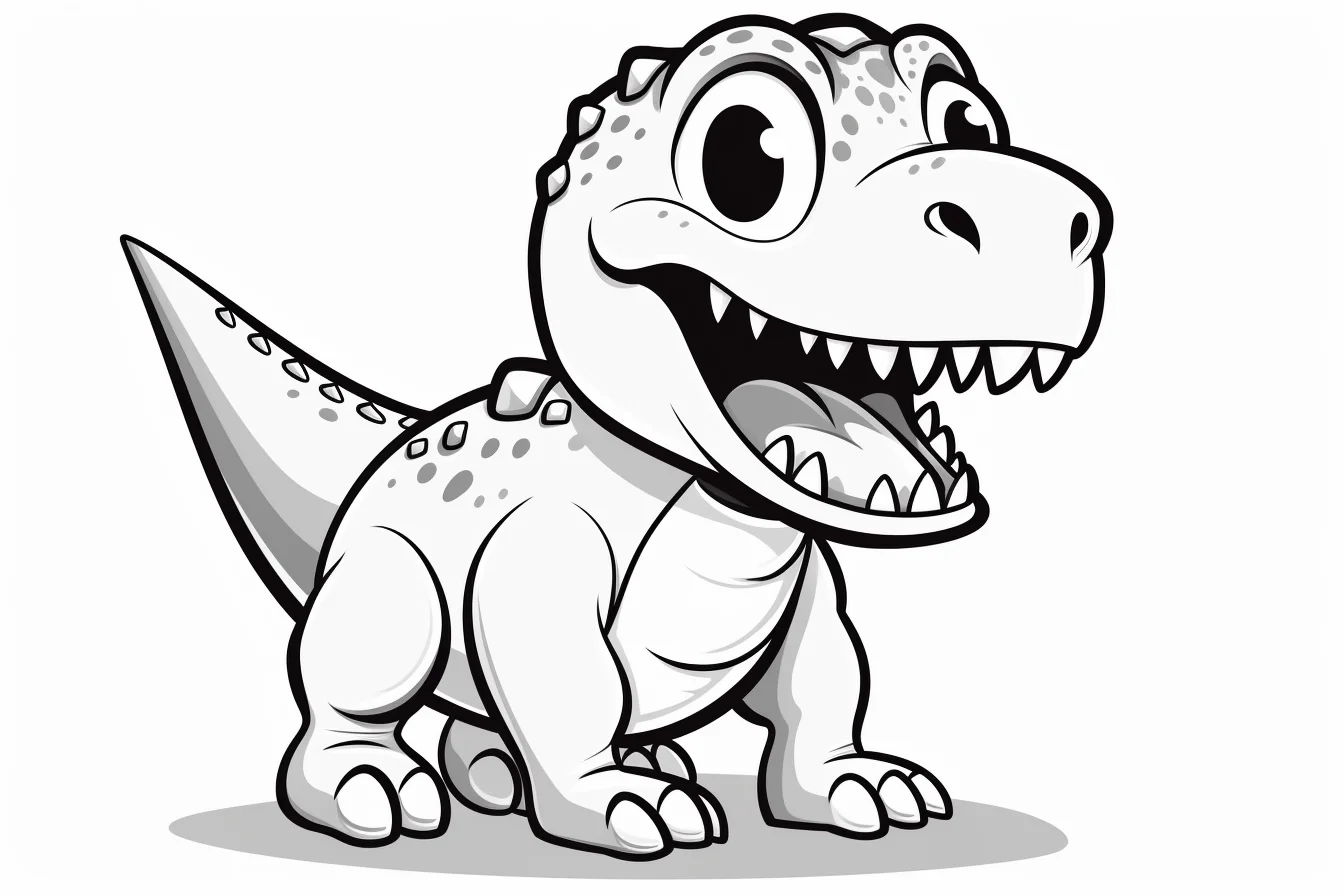
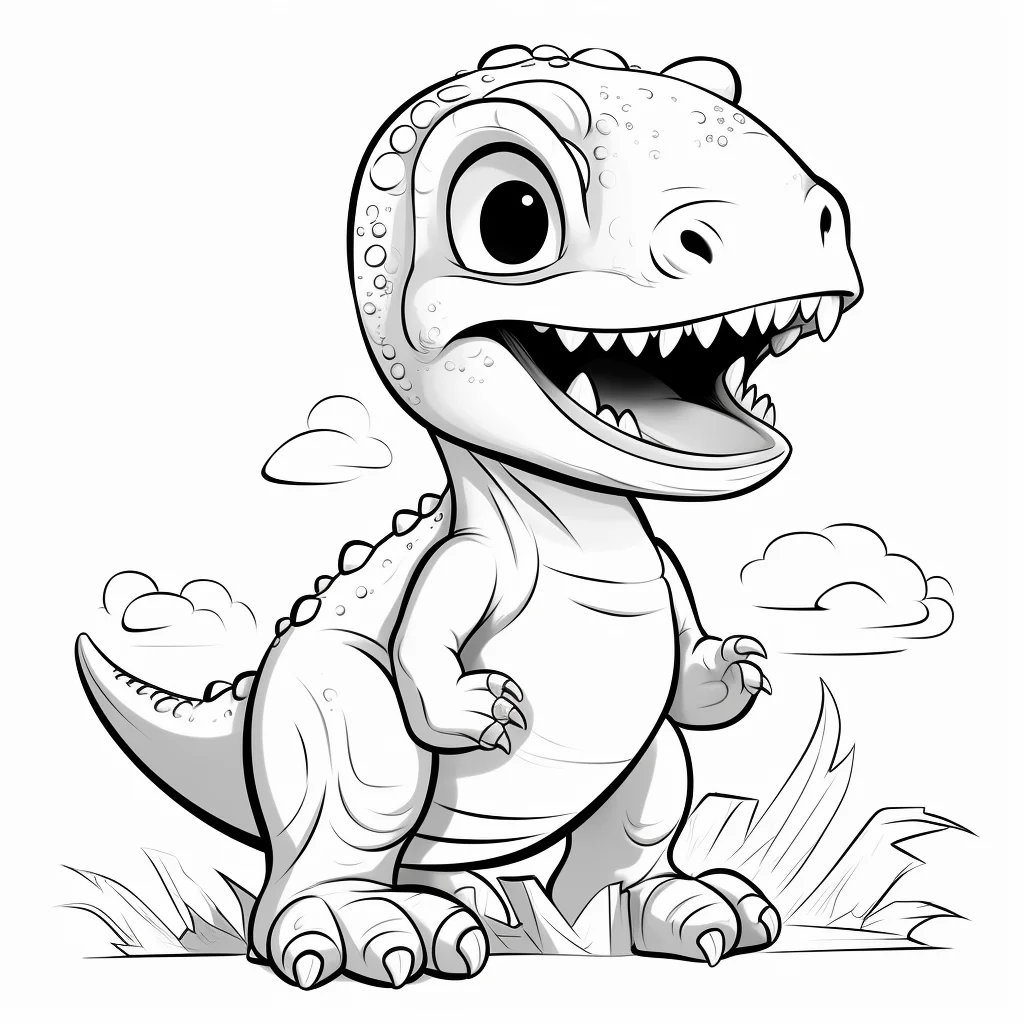
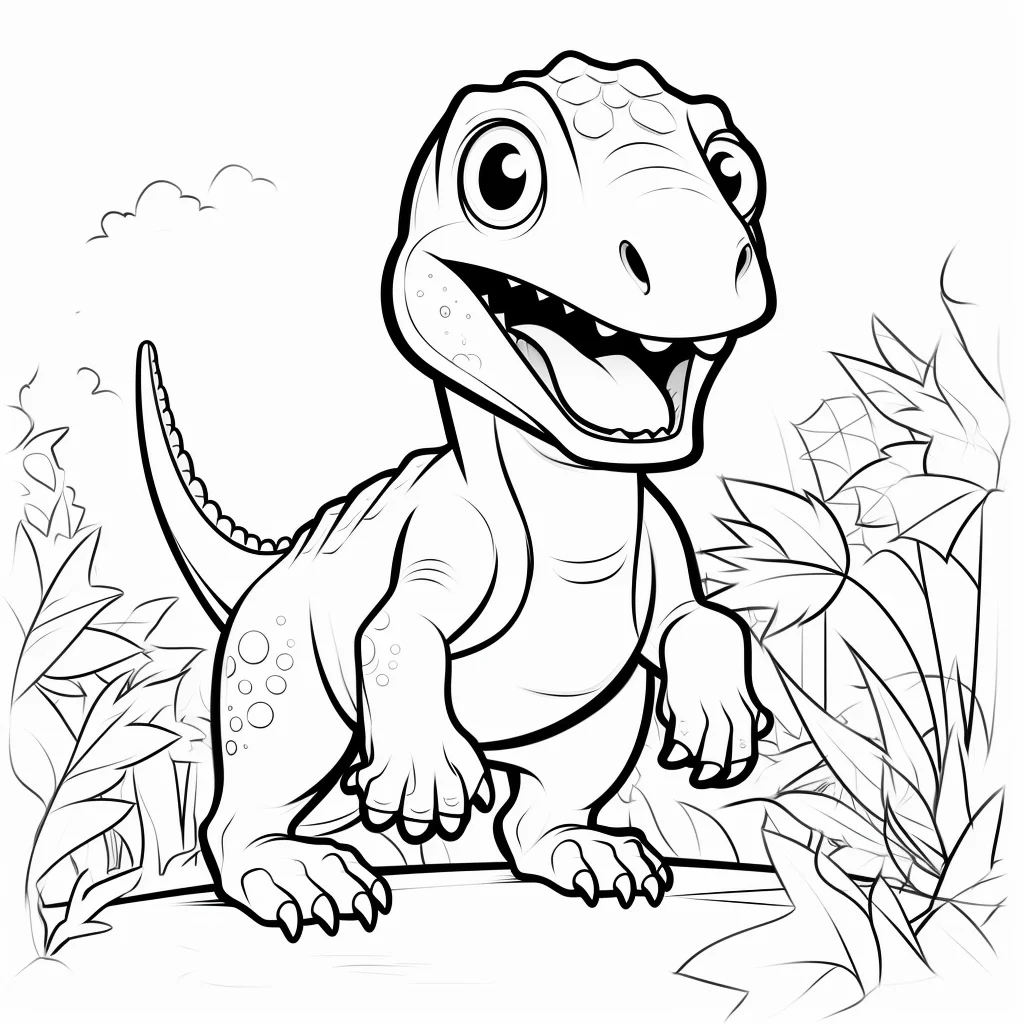
A T-Rex page does not have to be complicated to be fun. Some of the 32 sheets here are big, simple dinosaurs that work well with crayons; others have teeth, claws, scenery and smaller details that are much better suited to pencils or fine-tip markers.
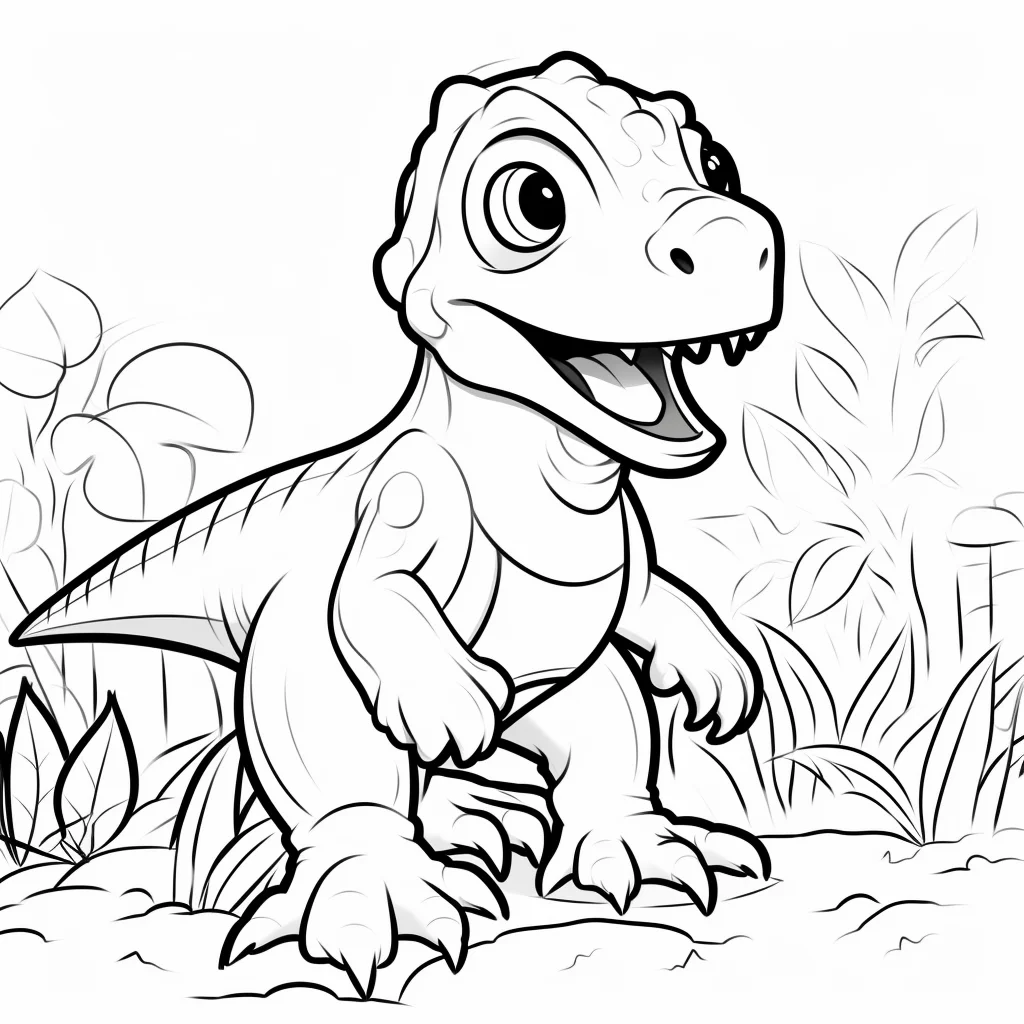
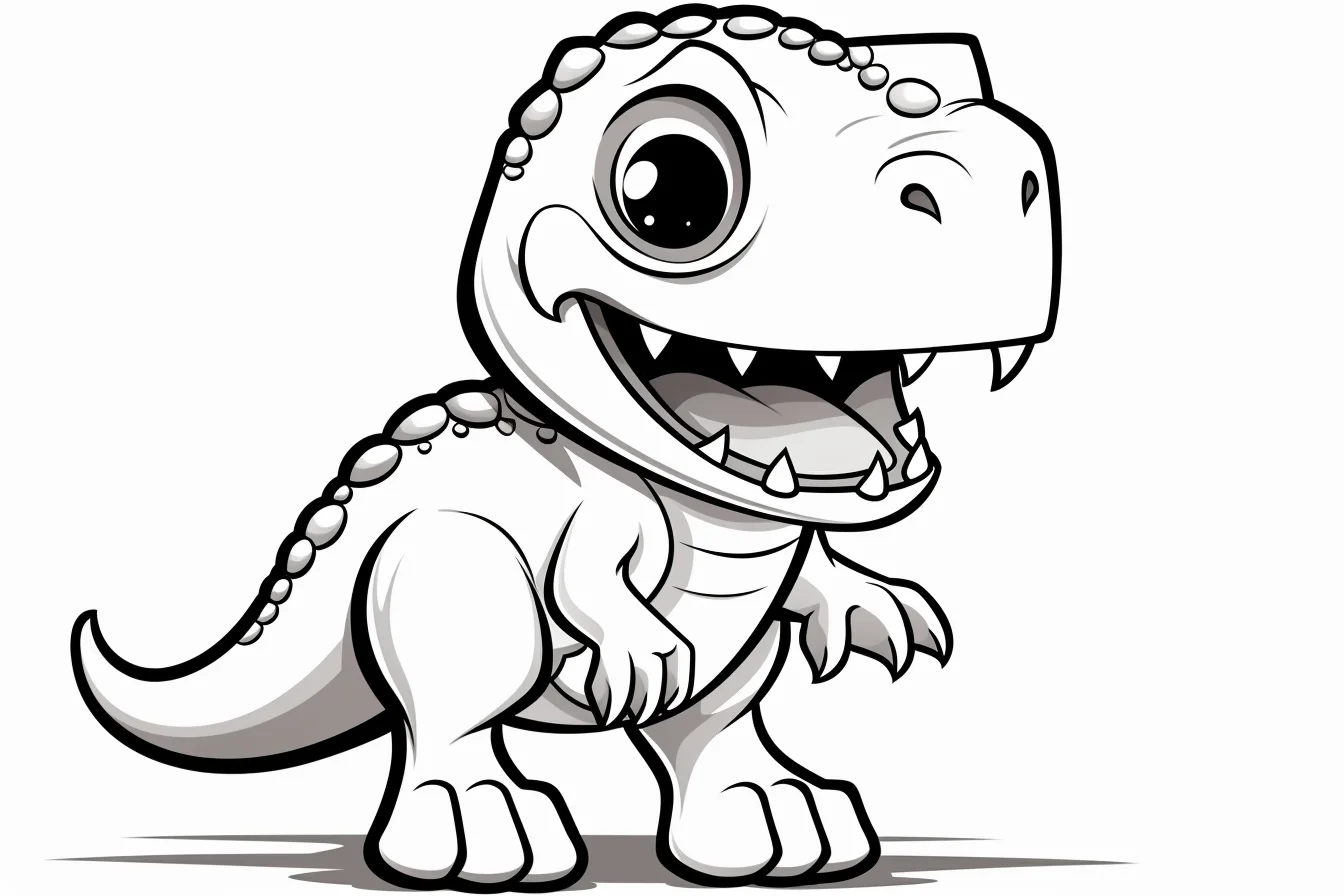
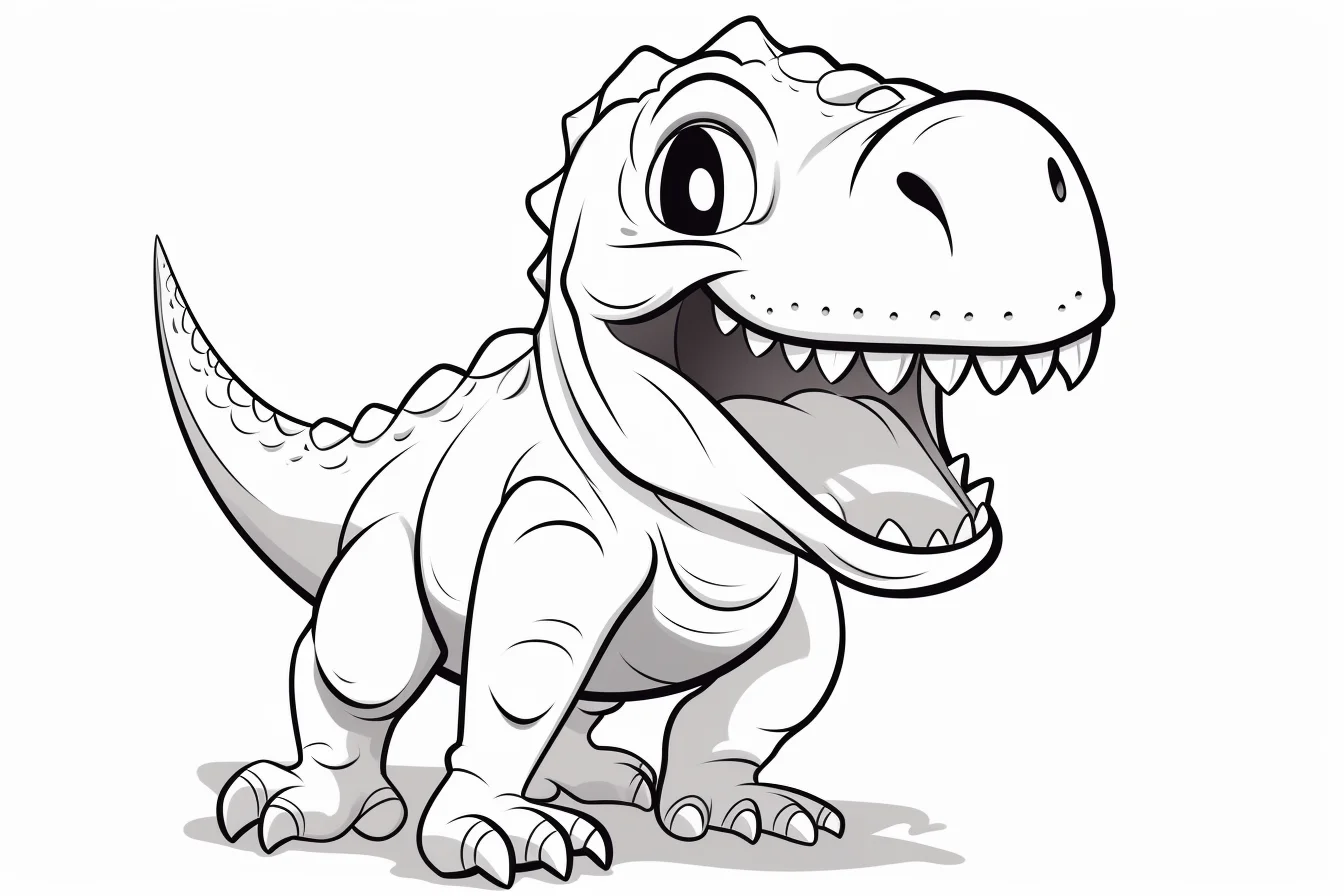
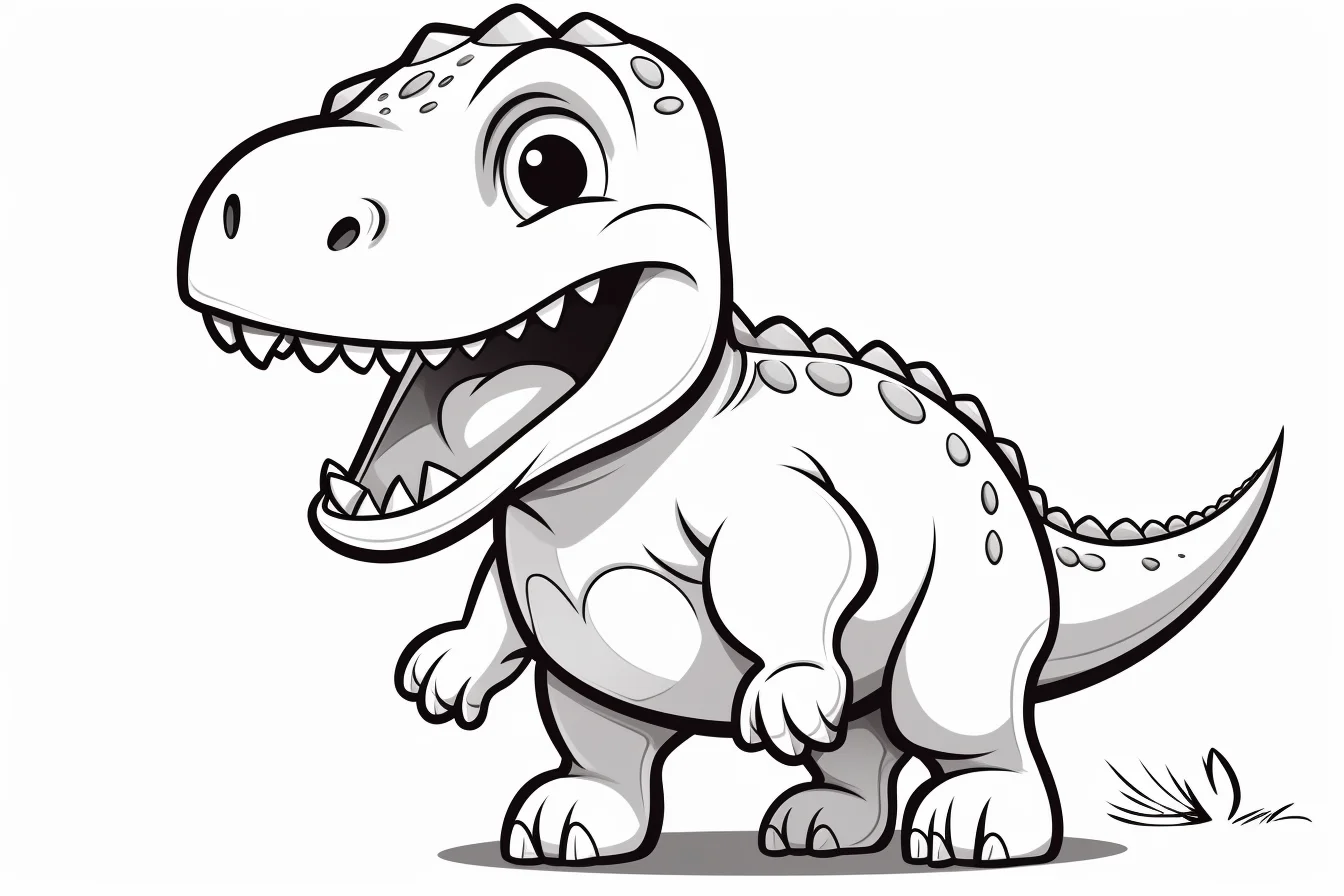
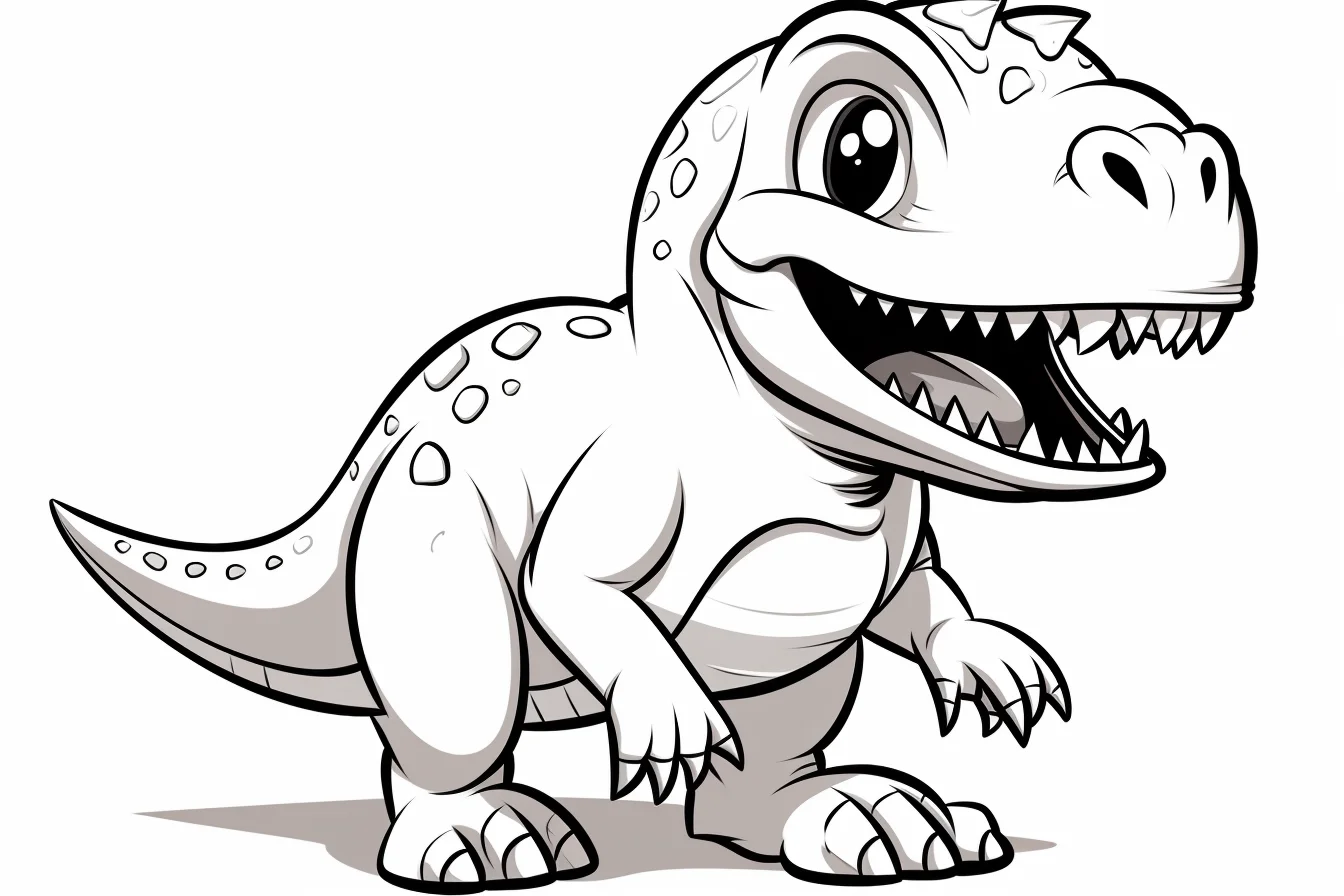
The baby and cartoon T-Rex pages are the easiest place to start. If you want something that takes longer, skip ahead to the roaring, fighting and fuller dinosaur scenes.
Before you print
Open the design at full size, save it, then print on A4 or Letter paper with “fit to page” selected. Ordinary printer paper is fine for pencils and crayons. If you are using markers, slightly heavier paper will handle the ink better.
No one knows the exact color pattern of a T-Rex, so there is no reason every dinosaur needs to be green or brown. Muted earth tones work well for a more grounded look; bright reds, blues or patterned skin can make the cartoon pages more playful. For a very different dinosaur shape, see the Stegosaurus pages, or browse the kids’ coloring hub for more subjects.
Free printable T-Rex coloring pages
Choosing a T-Rex coloring page
- Easy designs: choose large outlines with little background detail for crayons and broad markers.
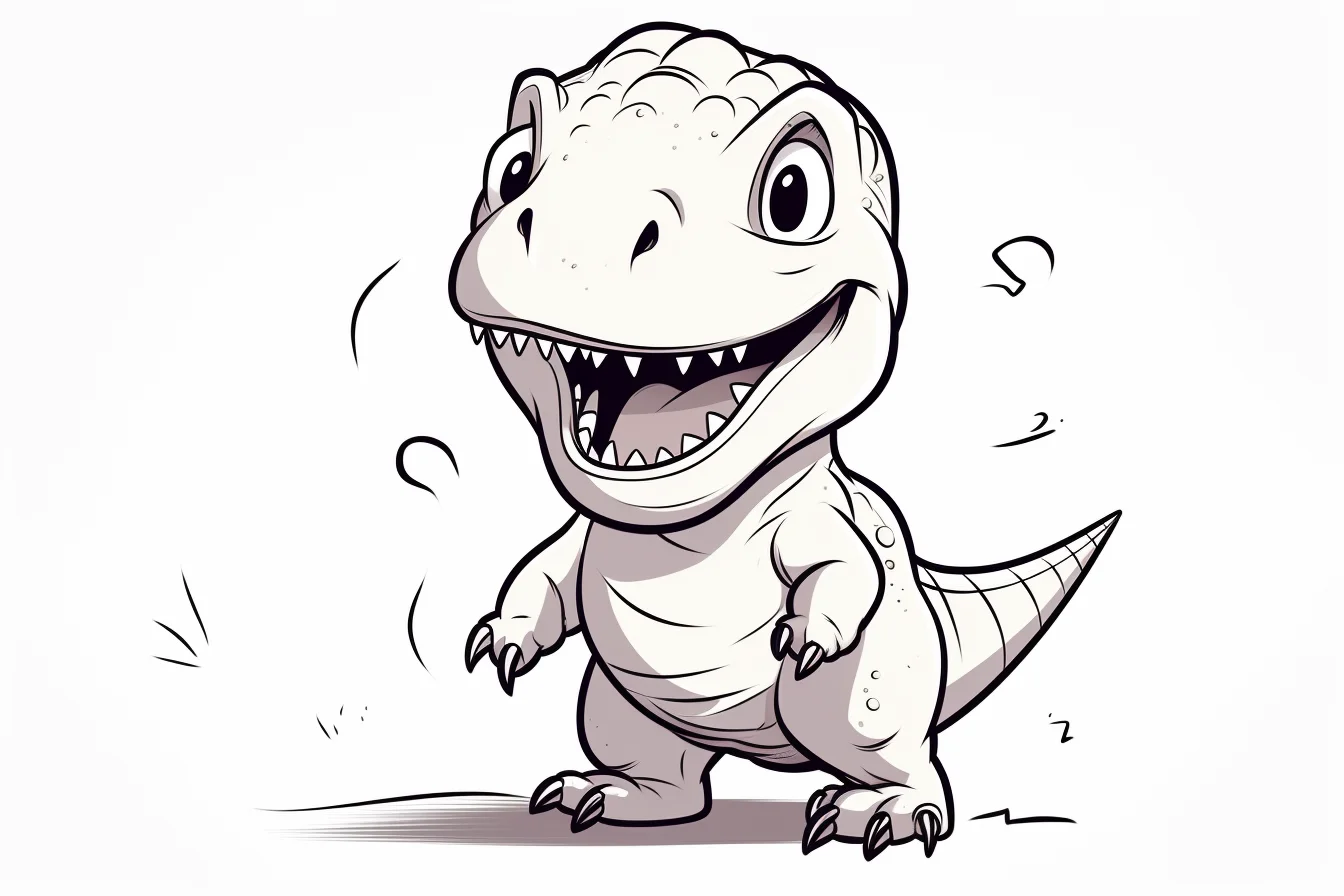
- Cute T-Rex: use the baby and cartoon pages for a softer, playful dinosaur style.
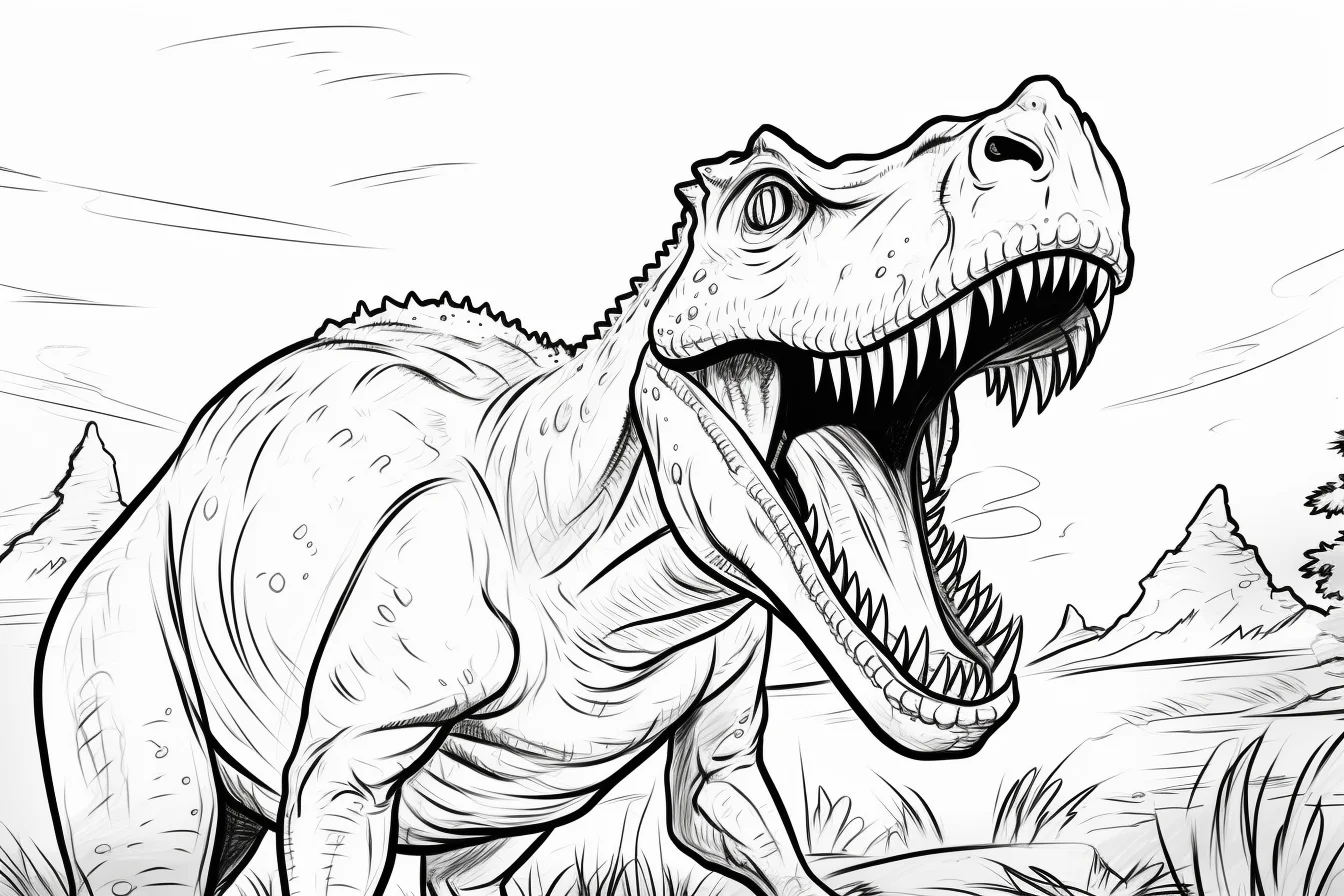
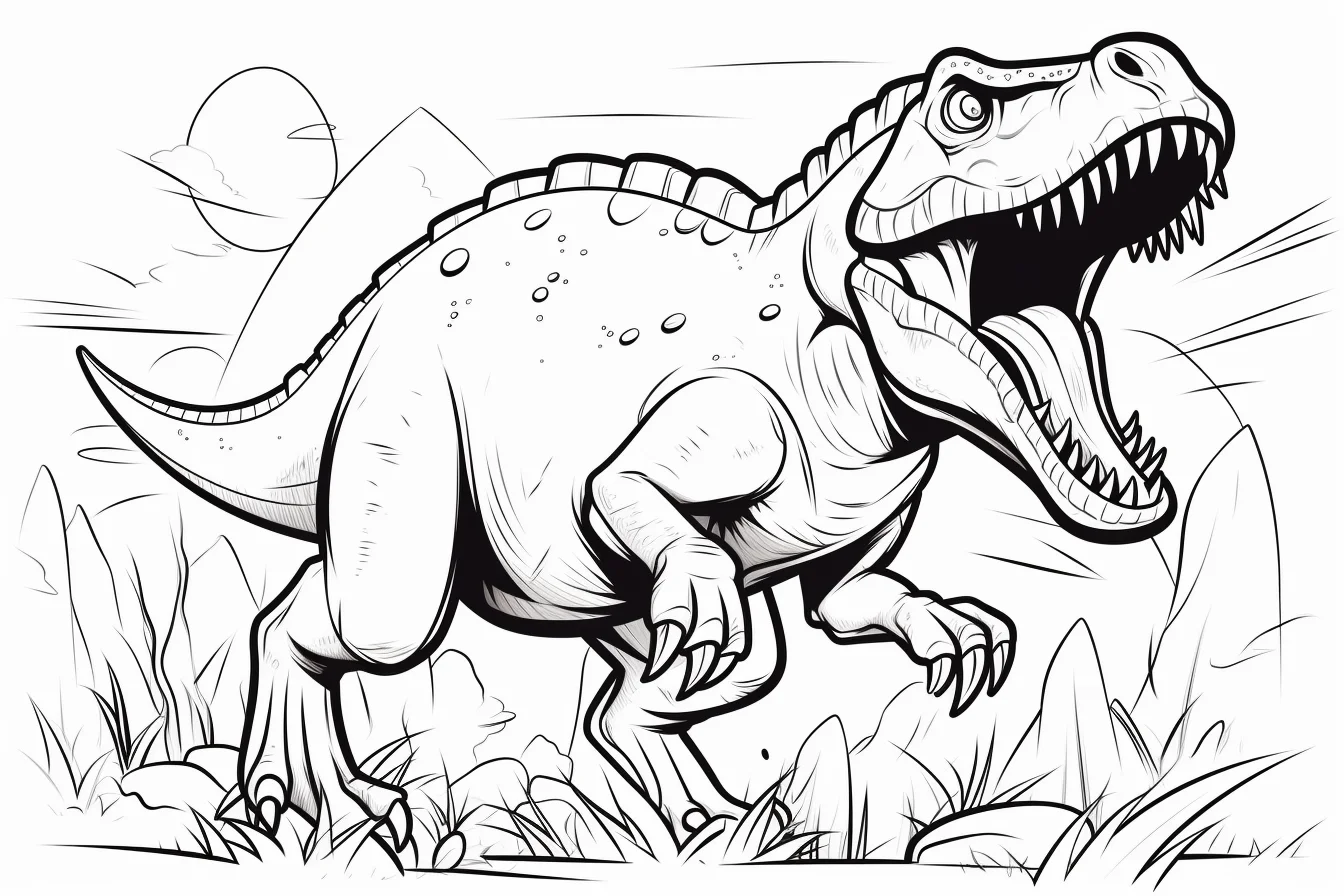
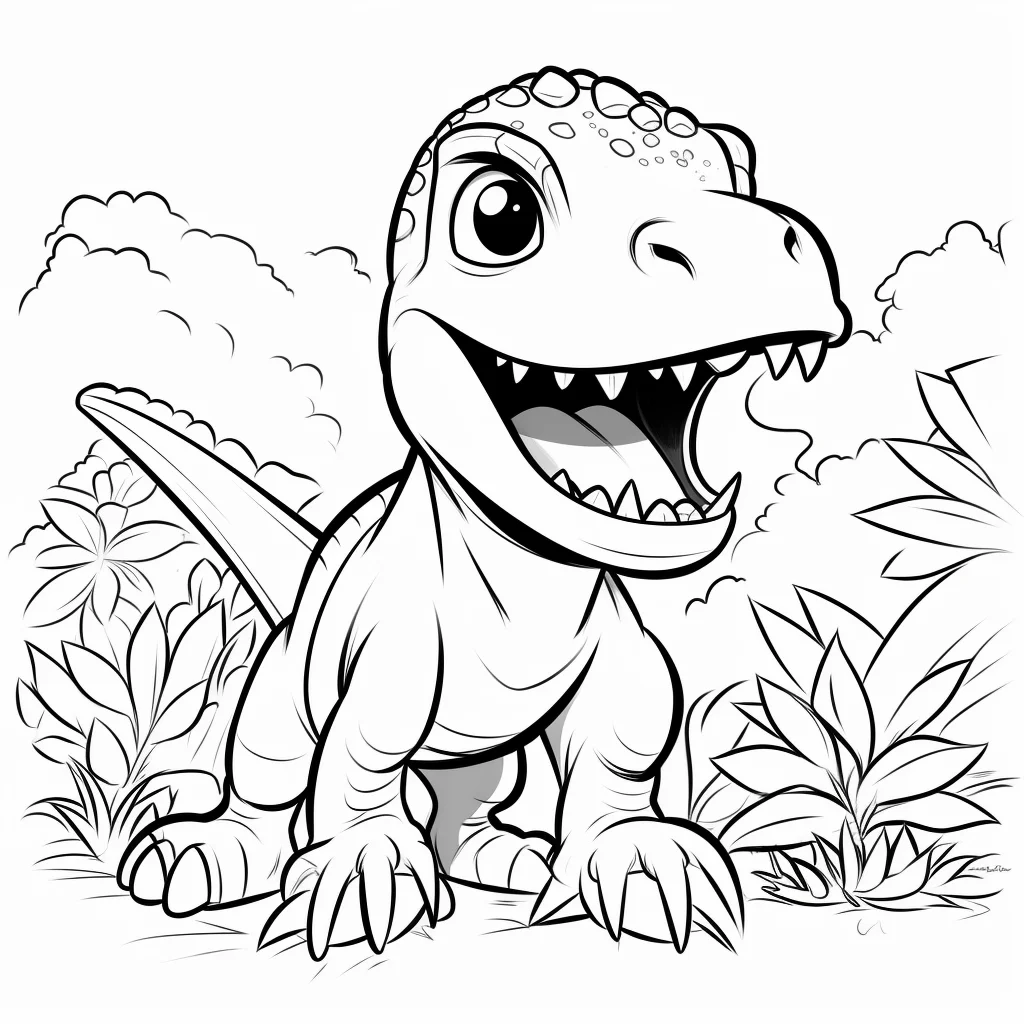
- Detailed scenes: choose the pages with fuller backgrounds or multiple dinosaurs when using colored pencils or fine-tip markers.
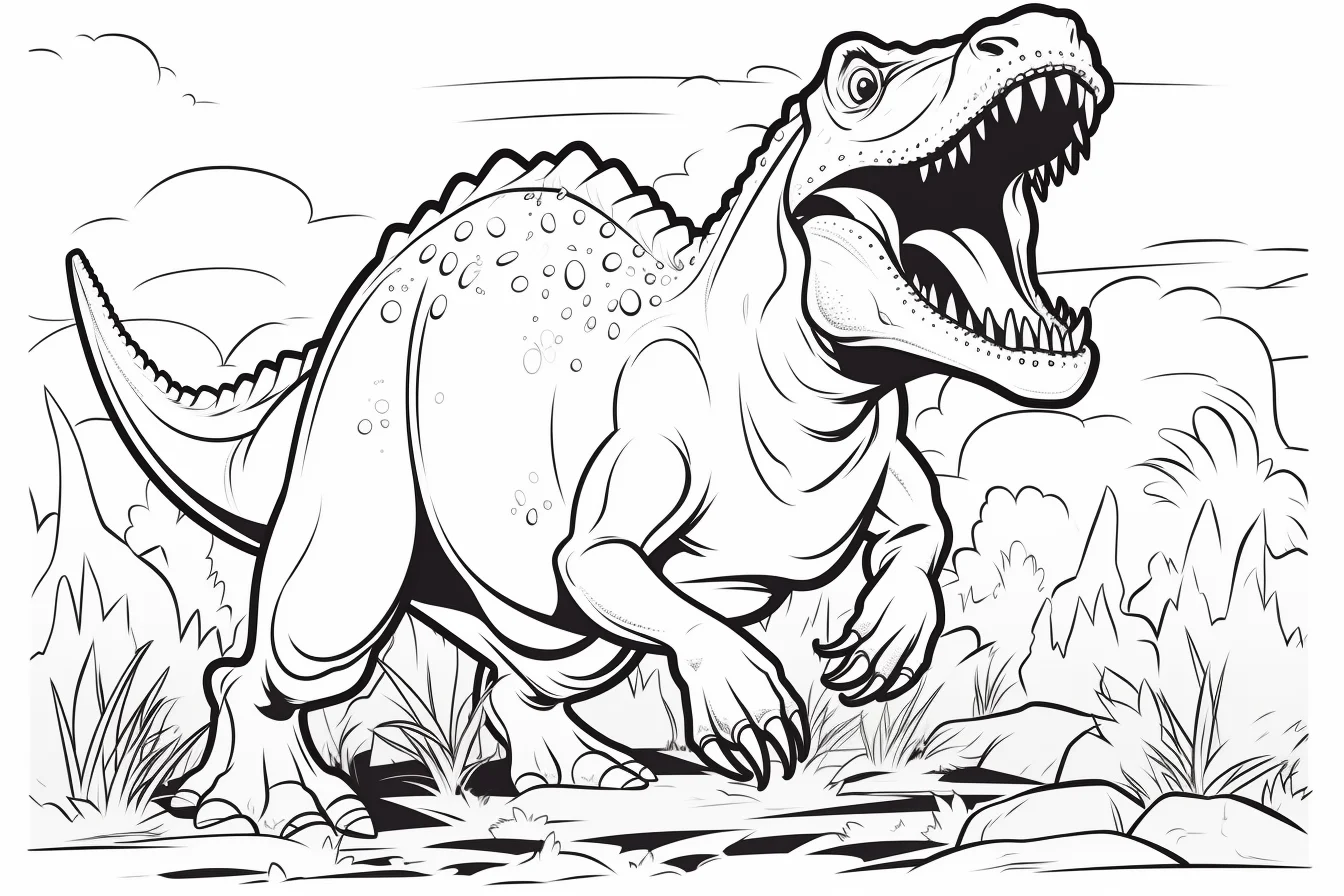
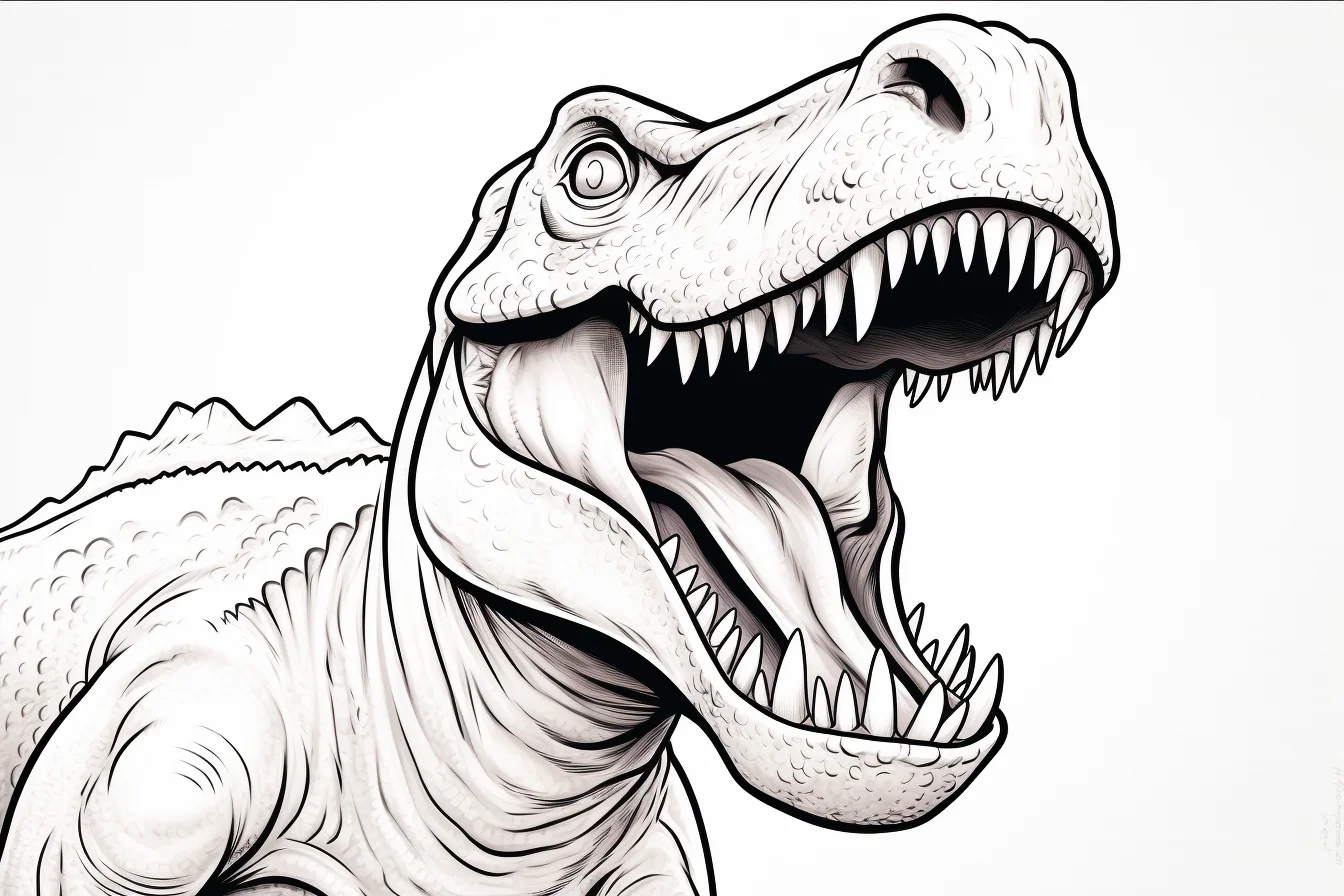
- Action scenes: fighting or roaring poses work well with dramatic sky, rock and ground colors.
Try adding a darker shade along the back, tail and underside to create depth. For scales or skin texture, small patches of lighter and darker color usually look more natural than coloring the whole dinosaur in one flat tone.
A two-minute T-Rex value test before you color
Before working on the dinosaur, use a scrap of the same paper to test the exact pencil or crayon you plan to use. Make three small patches with one body color: light pressure, normal pressure and two layered passes. Beside them, make one patch with the color you plan to use for the ground or background.
- Pick the middle body value first. It should be strong enough to read as the dinosaur’s main color but still leave room for a darker shadow.
- Test the underside. Add your darker value below the middle swatch. If the two patches look almost identical from arm’s length, deepen only the shadow rather than pressing harder everywhere.
- Compare body and background. Squint at the two swatches. If they merge into one similar value, lighten the background or change its hue before coloring a full scene.
- Protect the face. Keep a tiny uncolored strip for a tooth and place your darkest mouth color directly beside it. If the tooth becomes obvious without outlining it, you have enough contrast.
This quick test is especially useful on roaring and fighting sheets: the mouth, teeth and head need to remain readable even after the body and scenery are filled. On a cute baby T-Rex, use the same test with gentler values so the face does not become heavier than the rest of the drawing.
A simple T-Rex coloring method
The easiest way to make a large dinosaur feel solid is to work from big shapes to small ones. Start with the whole body instead of the teeth or claws. A light first layer also leaves room to correct a color that feels too strong. Use the middle value from the test above for this first body layer; that gives you a repeatable starting point instead of guessing pressure on the finished sheet.
- Block in the body. Cover the head, torso, legs and tail lightly with one main color. Leave the belly a little lighter if you want an easy two-tone pattern.
- Choose one light direction. Imagine light coming from above. Keep the top of the snout, shoulders and tail lighter and deepen the color beneath the jaw, belly and legs.
- Add skin variation. Instead of outlining every scale, place a few irregular darker patches along the back, hips and tail. This suggests texture without turning the dinosaur into a checkerboard.
- Finish the small parts. Color the mouth, teeth, claws and eye after the body is established. The darkest accents usually work best around the pupil, inside the mouth and where one limb overlaps another.
Three pages to practice on
If you are using several sheets, make each one teach a different skill rather than coloring all 32 in the same way.
- Page 1 — simple T-Rex: use only three colors: one body color, a lighter belly color and one dark accent. Concentrate on staying inside the larger shapes.
- Page 2 — roaring T-Rex: practice the face. Keep the teeth mostly uncolored or softly shaded, make the inside of the mouth darker, and use a tiny dark pupil so the expression remains readable.
- Page 3 — full scene: color the dinosaur first, then choose quieter colors for rocks, plants and sky. The background should support the T-Rex rather than compete with it.
How to color T-Rex skin without making it look flat
One solid green or brown can work on the easiest pages, but a second value makes a surprisingly large difference. If the body is olive green, for example, use a deeper olive under the neck, along the belly and behind the legs. Add a lighter yellow-green sparingly to the upper snout and shoulders. The same method works with rust and dark red, tan and brown, or blue-gray and charcoal.
Do not feel obliged to draw scales everywhere. On these pages, texture is clearer when it follows the dinosaur’s form: shorter marks around the face, broader patches across the torso and marks that turn with the tail. Leaving some areas smooth also keeps the picture from becoming visually noisy.
Fix common T-Rex coloring problems
| Problem | What to change |
|---|---|
| The dinosaur looks flat | Add a darker version of the body color beneath the jaw, belly, tail and overlapping limbs rather than adding random dark patches. |
| The teeth disappear | Keep the teeth pale and darken the mouth behind them. The contrast will define each tooth without a heavy black outline. |
| The skin looks too busy | Stop adding individual scales. Group texture into a few areas around the back, face and tail and leave quieter areas between them. |
| The T-Rex blends into the background | Reduce the background saturation or choose a background color that contrasts with the dinosaur’s main body color. |
| Marker strokes look streaky | Work one section at a time while the ink edge is still wet. For tiny claws, teeth and facial details, switch to colored pencil. |
| The eye looks oversized or cartoonish | Keep the darkest pupil small and build the surrounding eye area gradually. On the cute sheets, a larger eye can be part of the intended style. |
Four T-Rex color ideas
- Forest: olive body, pale moss belly, deep green shadows and warm brown claws.
- Desert: sandy tan body, cream underside, burnt-orange patches and dark brown accents.
- Volcanic: muted brick-red body, darker burgundy shadows and charcoal claws, with a restrained orange accent.
- Storm: blue-gray body, pale gray belly and charcoal shadows. This works especially well when the background uses warmer earth colors.
These are starting points, not reconstructions of the animal’s real appearance. Fossils can tell us a great deal about anatomy, but they do not give us a complete, certain color pattern for Tyrannosaurus rex.
T-Rex coloring questions
Which pages are easiest for preschoolers?
Start with the baby, cartoon and large-outline designs that have fewer background objects. Crayons or broad colored pencils are easier to control there than fine markers.
How can I make a white tooth visible on white paper?
Leave most of the tooth white and add a very light gray, cream or pale yellow shadow near its base. Darkening the mouth immediately behind the teeth creates most of the contrast you need.
Do T-Rex coloring pages have to be green?
No. Earthy greens and browns are familiar choices, but reds, blue-grays and imaginative patterns work perfectly well for a coloring activity. If you want the result to feel more naturalistic, use a limited palette and consistent shading rather than relying on a particular body color.
What should I color after this collection?
For a dinosaur with plates instead of the T-Rex silhouette, try the Stegosaurus coloring pages. If the main goal is simply finding easy subjects for children, the kids’ coloring collection covers a much wider range than dinosaurs.

