
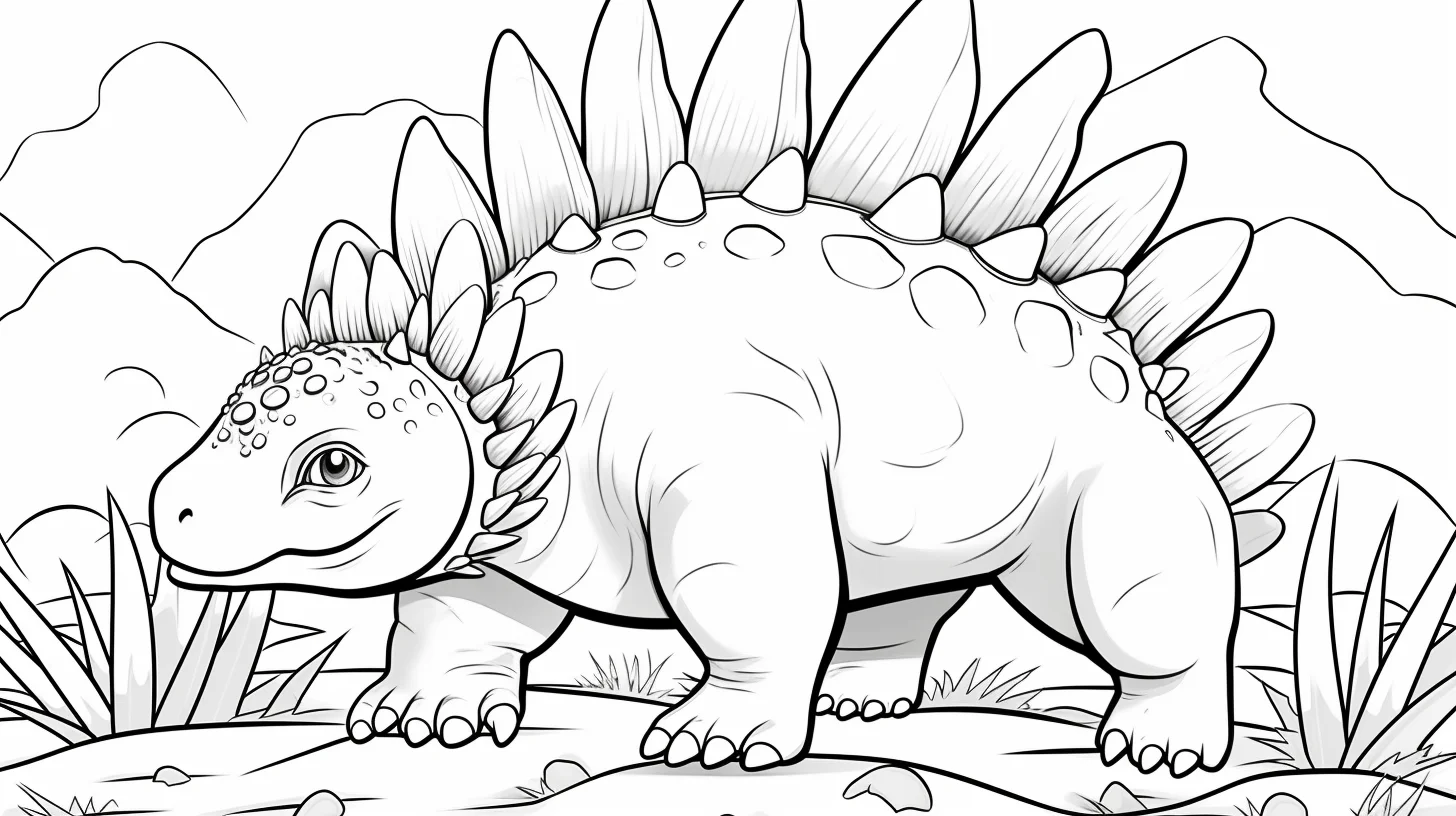
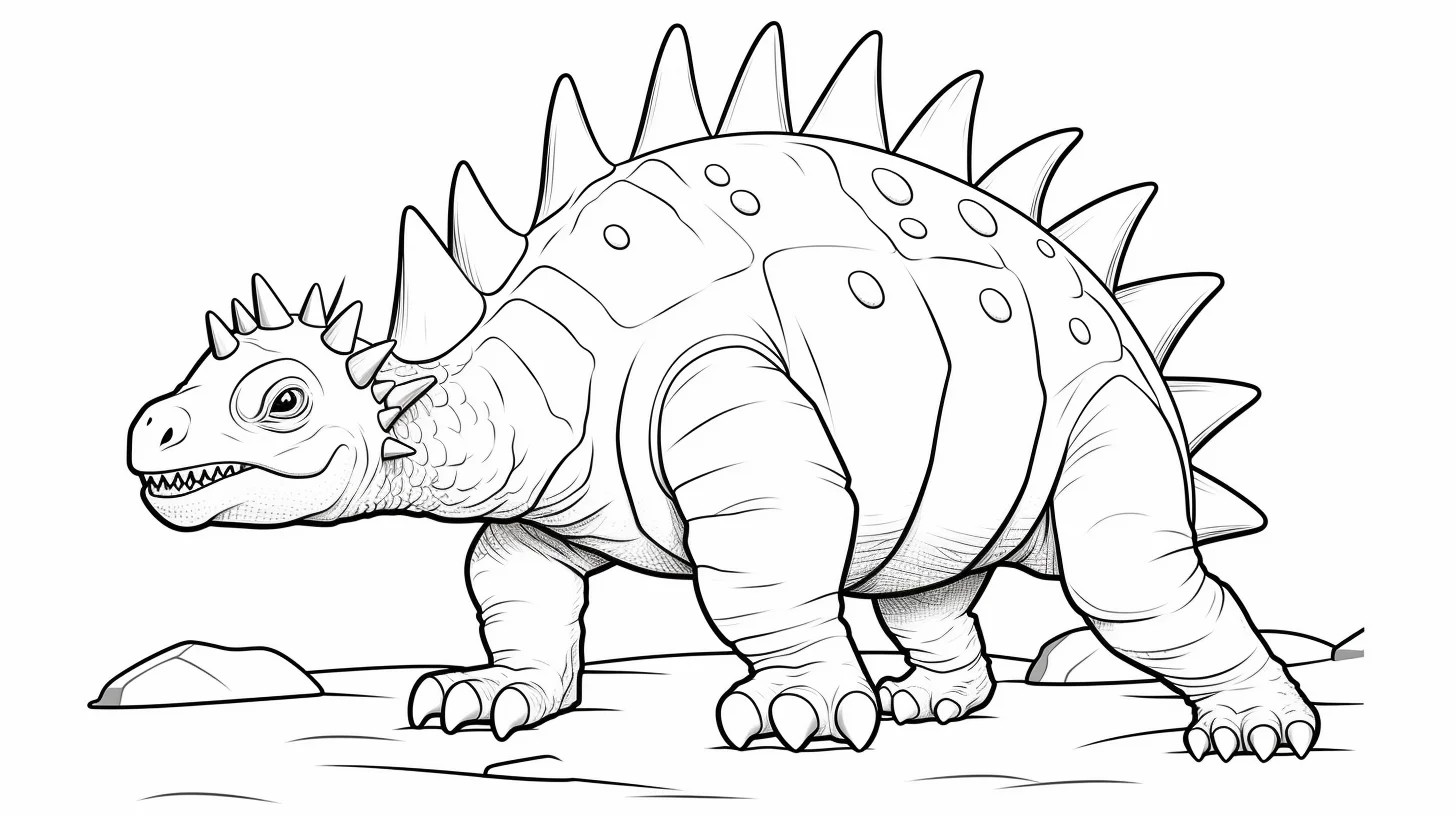
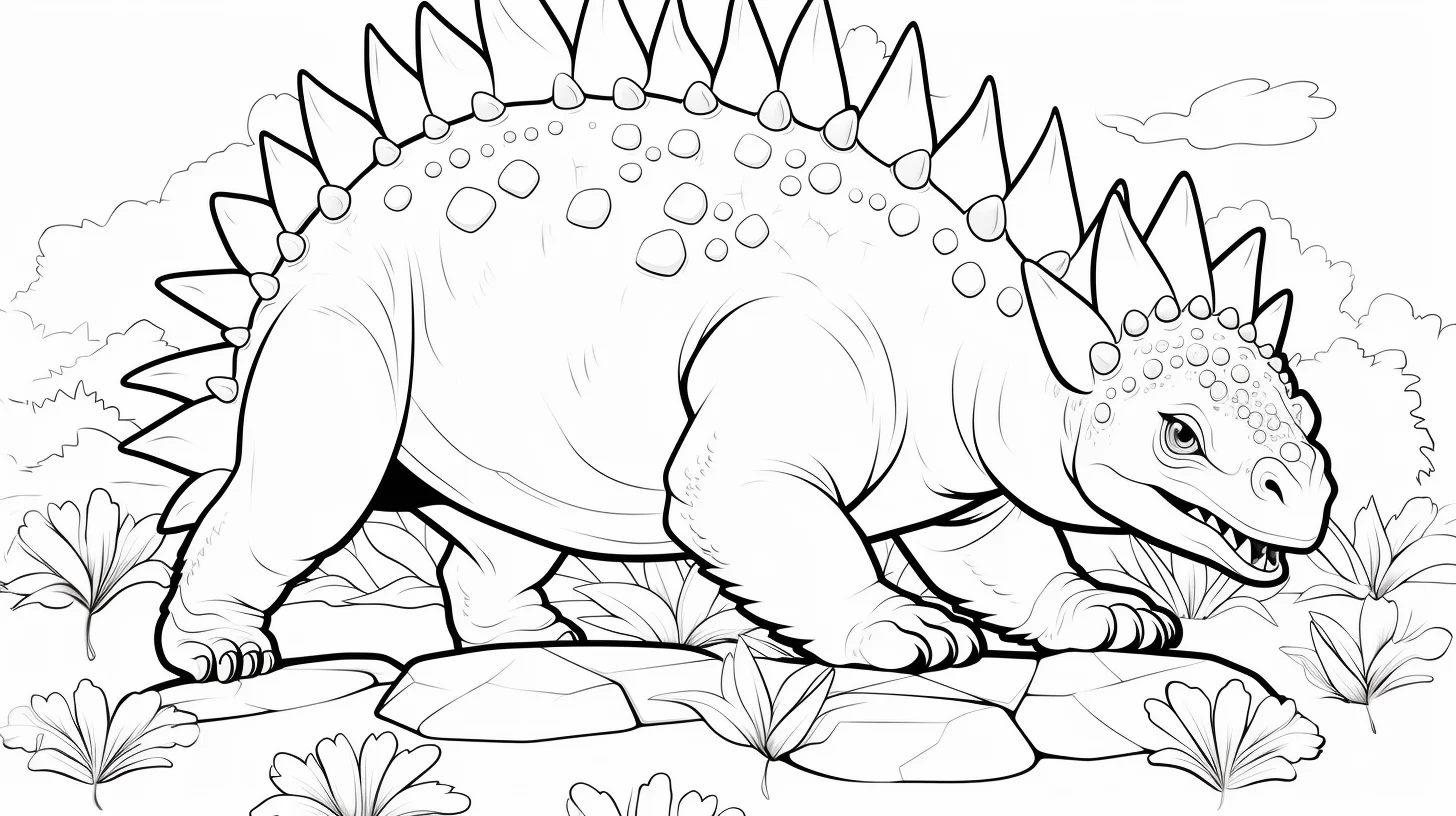
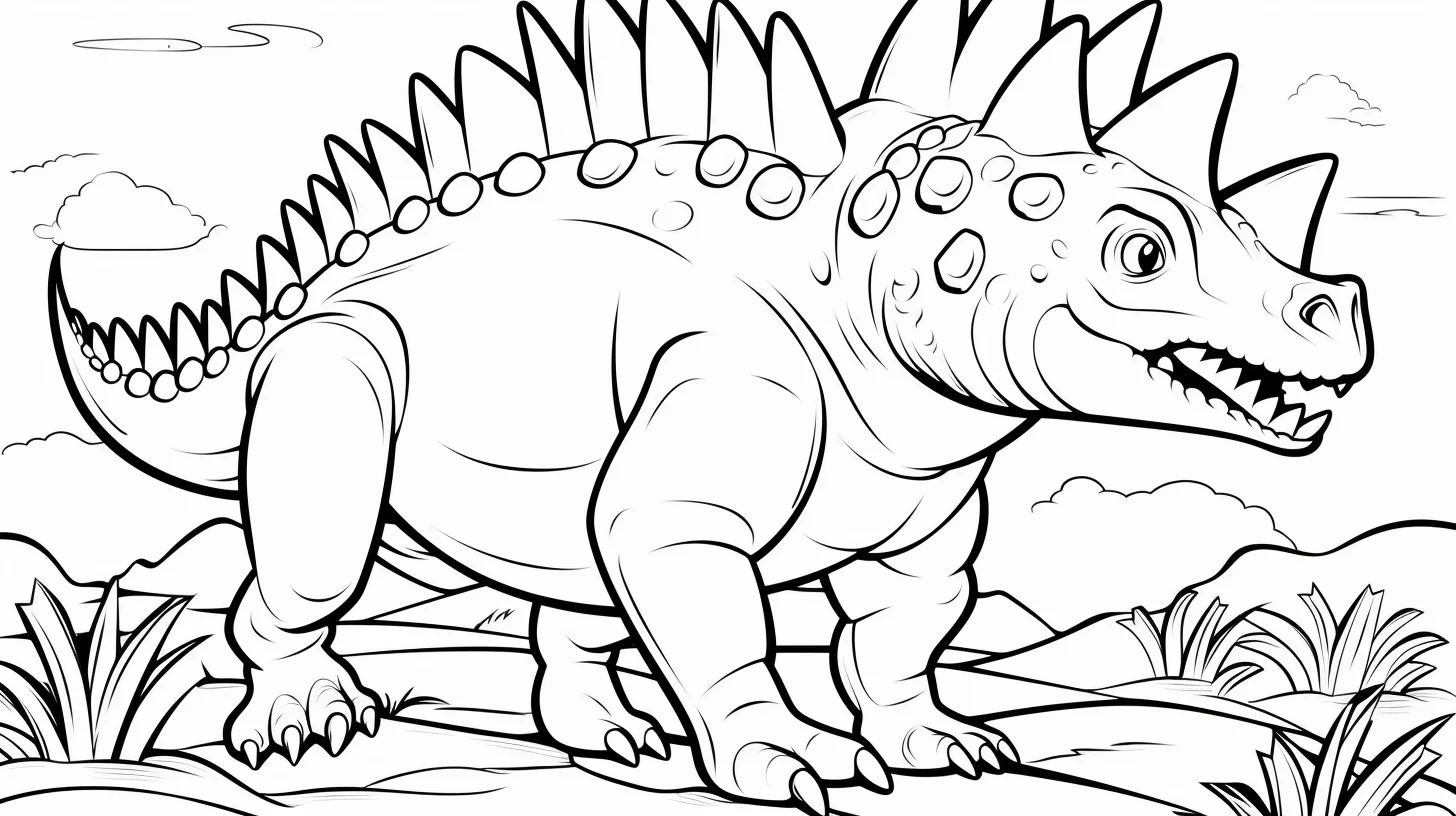
A Stegosaurus page gives you one built-in design feature that most dinosaurs do not: the row of plates. You can keep the body calm and earthy, then use the plates for alternating colors, a light-to-dark sequence or one stronger accent. These 25 printables are arranged so the baby dinosaurs come first, the kawaii designs stay together, and the more general Stegosaurus sheets follow after them.
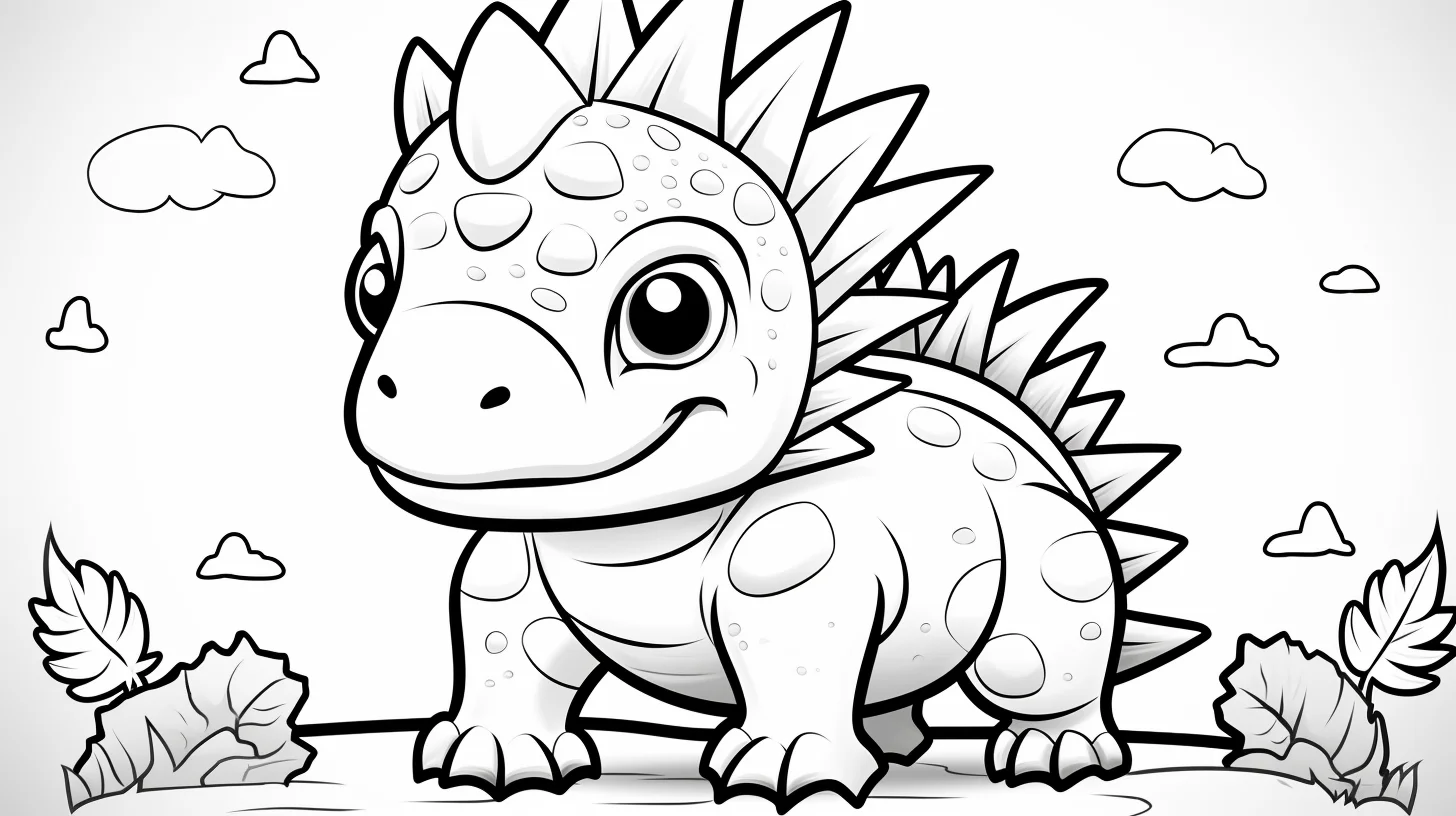
Do this 60-second plate test before you color
Use the first printable as a quick test sheet before choosing your final page. First, compare your pencil, crayon or marker tip with the narrowest plate tips and toes. If the tip is wider than those spaces, use it for the body and switch to a finer tool for the edges. Next, make three small swatches on scrap paper with the same body color: light pressure, normal pressure and a darker second layer. If you cannot see three distinct values, the finished dinosaur will be harder to shade without changing colors.
- Protect the face first. Decide how dark the eye and mouth will be before filling the head; tiny facial marks disappear easily beside a very dark body.
- Test two neighboring plates. Color one at normal strength and the next slightly lighter. If their boundary still reads clearly from arm’s length, your plate pattern has enough value separation.
- Choose one pattern rule. Alternate A-B-A-B, repeat three colors, or grade one hue from light to dark. Do not improvise every plate separately.
- Check the silhouette. Squint at the page. The body should read as one dinosaur before individual plates grab your attention. If the plates dominate, soften their darkest value.
For a younger child, reduce the test to two choices: one body color and one plate color. Let them finish the large body shapes first, then tackle the plates. That keeps the page manageable without turning the activity into an accuracy exercise.
Choose a Stegosaurus page
| If you want… | Start here |
|---|---|
| Baby or easier Stegosaurus pages | Sheets 1–10 |
| Kawaii Stegosaurus designs | Sheets 11–15 |
| General printable Stegosaurus sheets | Sheets 16–25 |
Let the plates carry the pattern
You do not need to make every plate a different color. Two or three repeating colors usually look cleaner, especially on the simpler pages. Another option is to start pale near the neck, deepen the color through the middle plates and fade again toward the tail. The body can stay olive, brown, gray or green while the plates provide the stronger contrast.
For more depth, keep the belly and inside of the legs lighter than the back. The tail spikes can either match the darkest plate color or stay more neutral. On cartoon pages, none of this needs to be realistic—a turquoise body with orange plates works perfectly well if the values are clear.
A simple Stegosaurus coloring order
- Color the belly and other light body areas first.
- Add the main body color.
- Darken the back, lower tail and outer legs slightly.
- Color the plates and tail spikes after the body is established.
- Add plants, ground or sky last so the dinosaur remains the focal point.
Printing
All 25 sheets are wide landscape files, so landscape orientation is the natural starting point on A4 or US Letter paper. Open the full-size image, choose “Fit to page,” and check the preview before printing. For a very different dinosaur silhouette, continue with the T-Rex coloring pages; for a mixed collection, use the kids’ coloring pages.
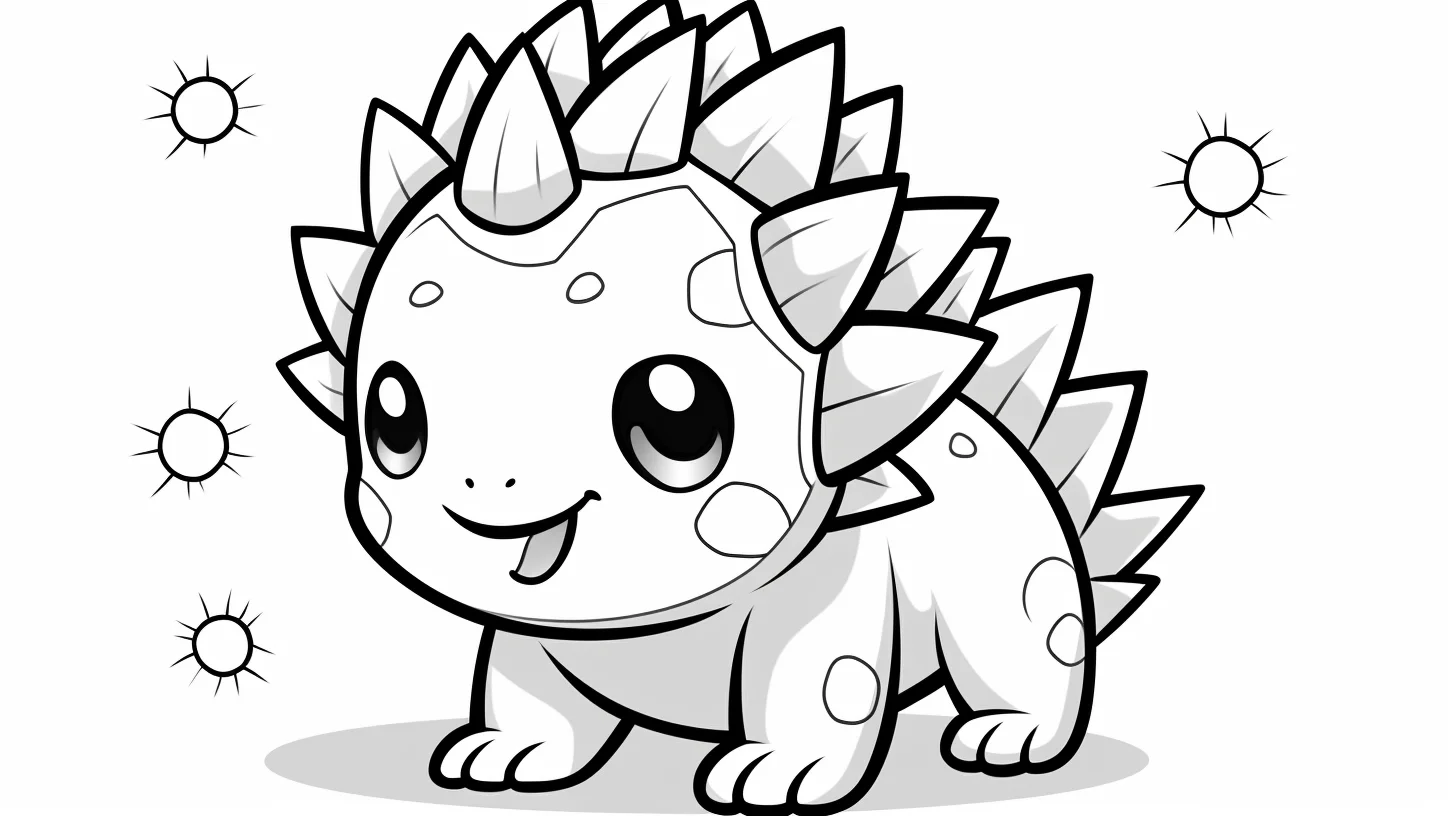
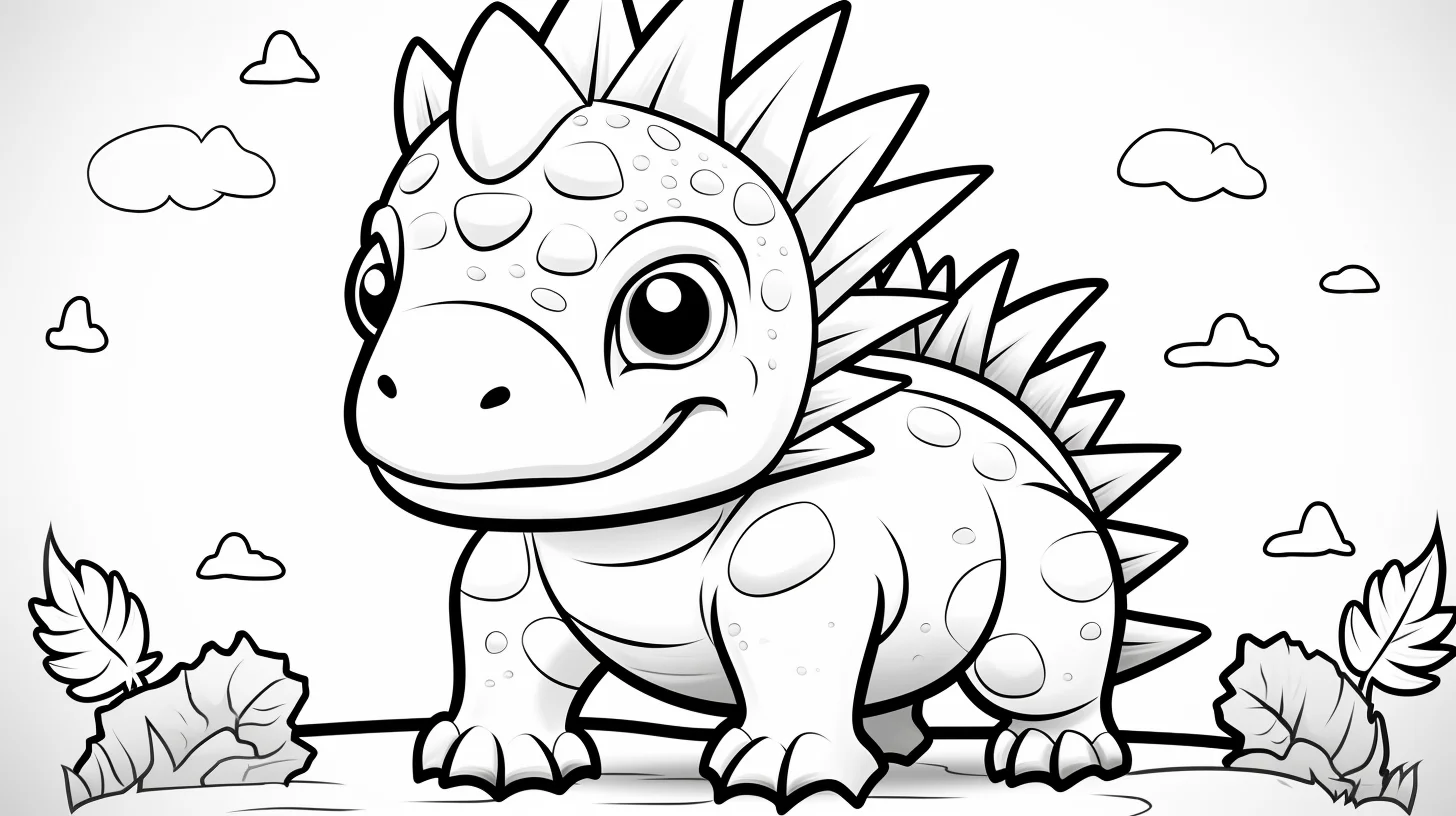
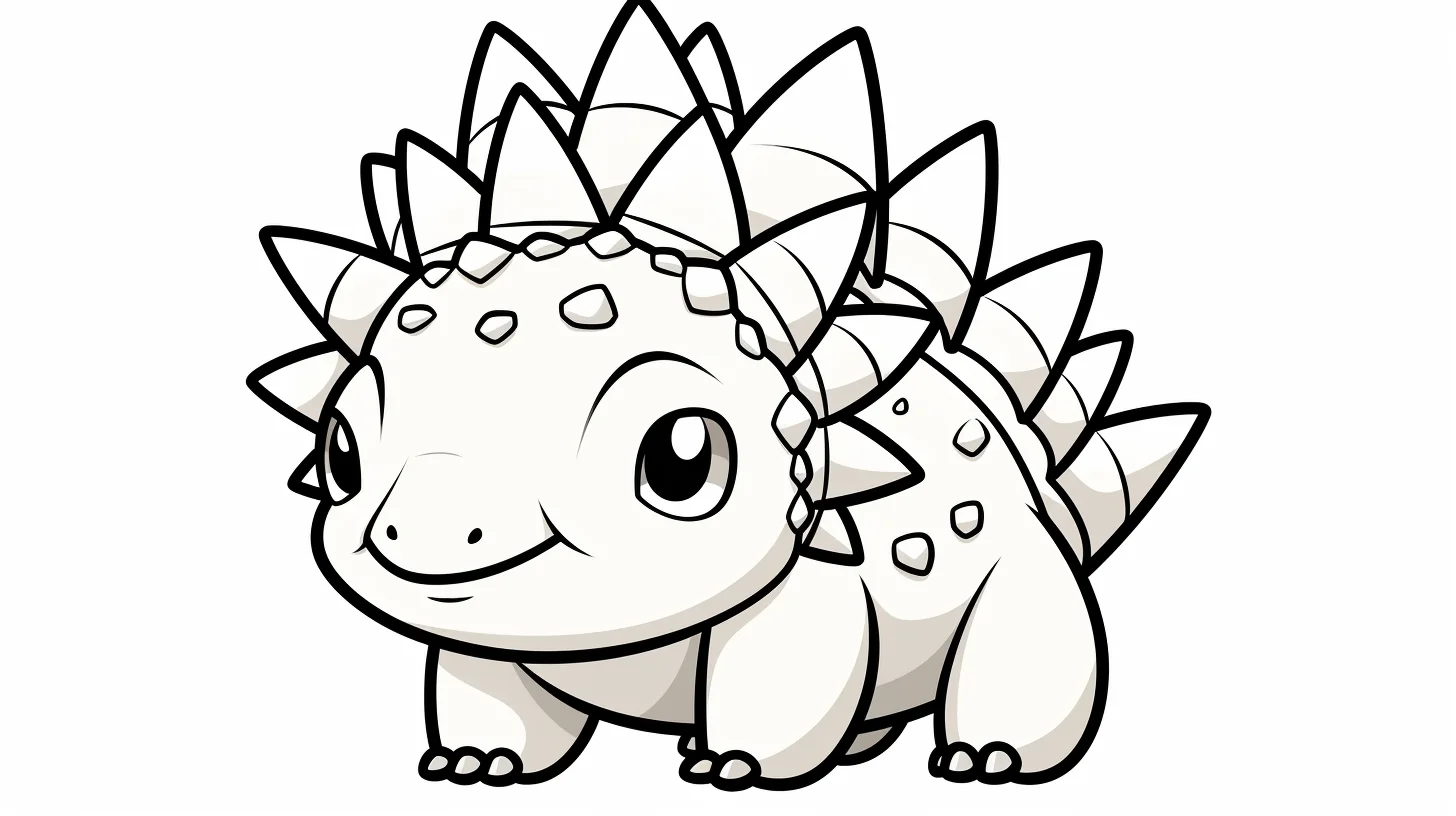
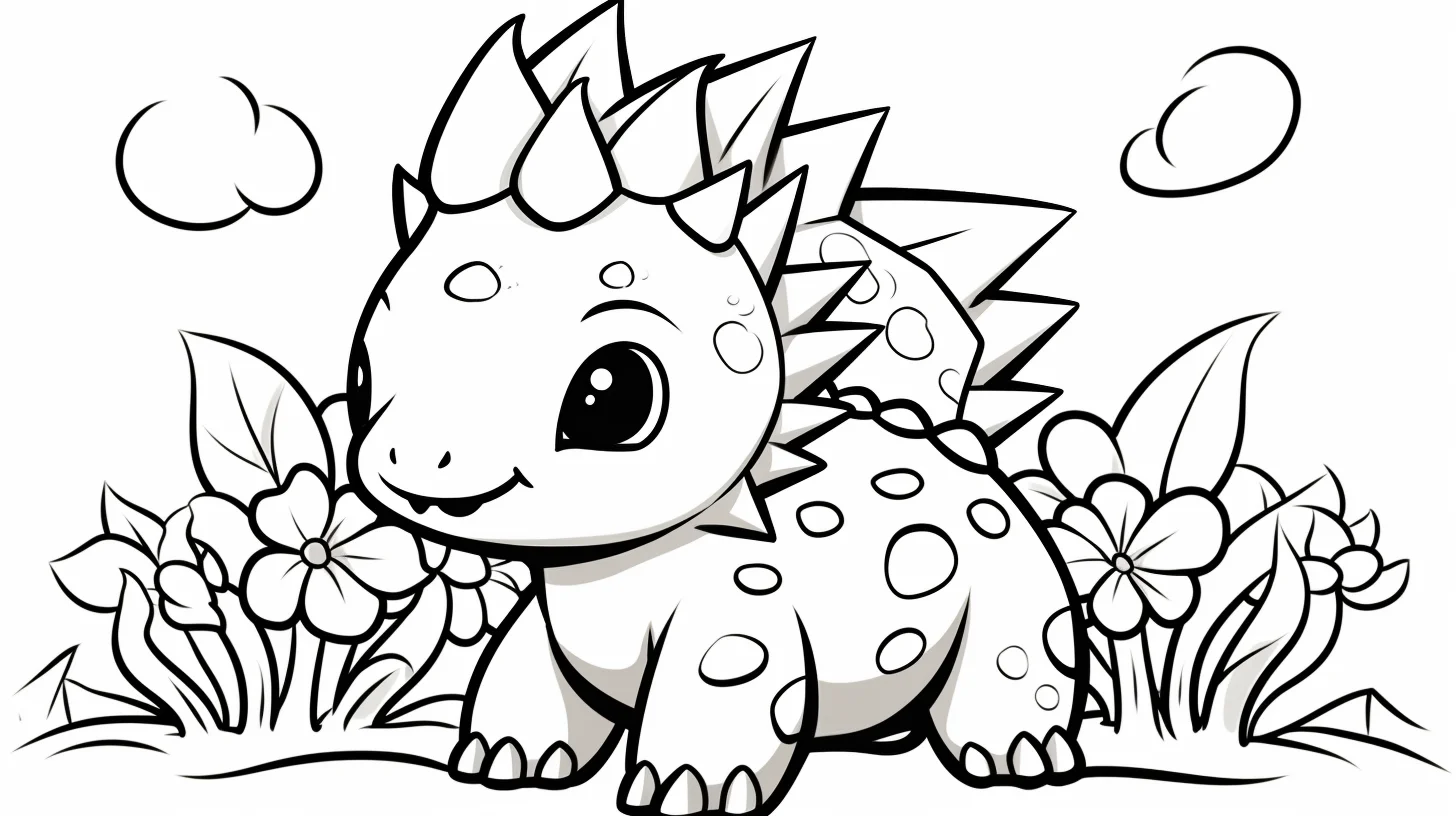
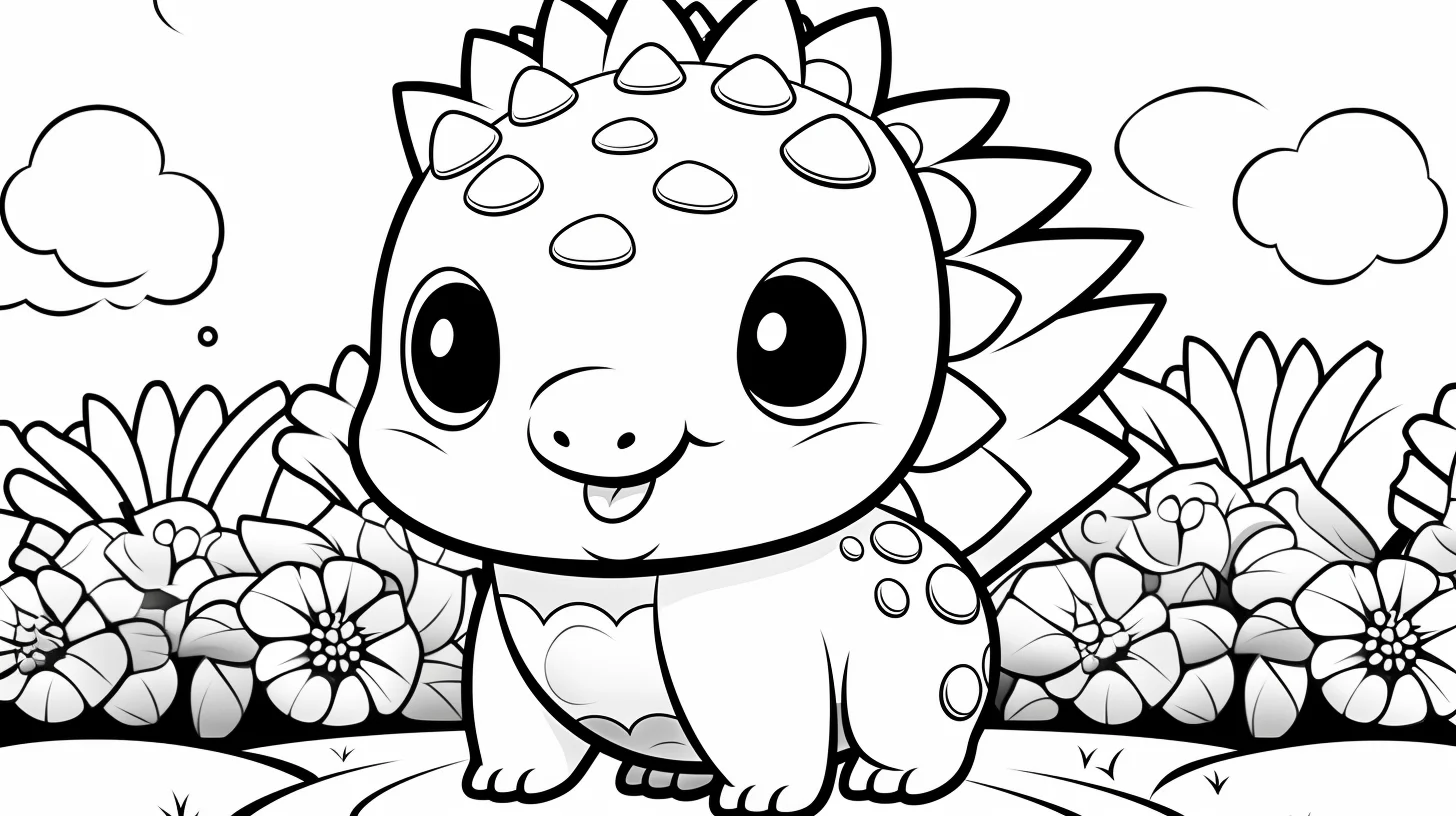
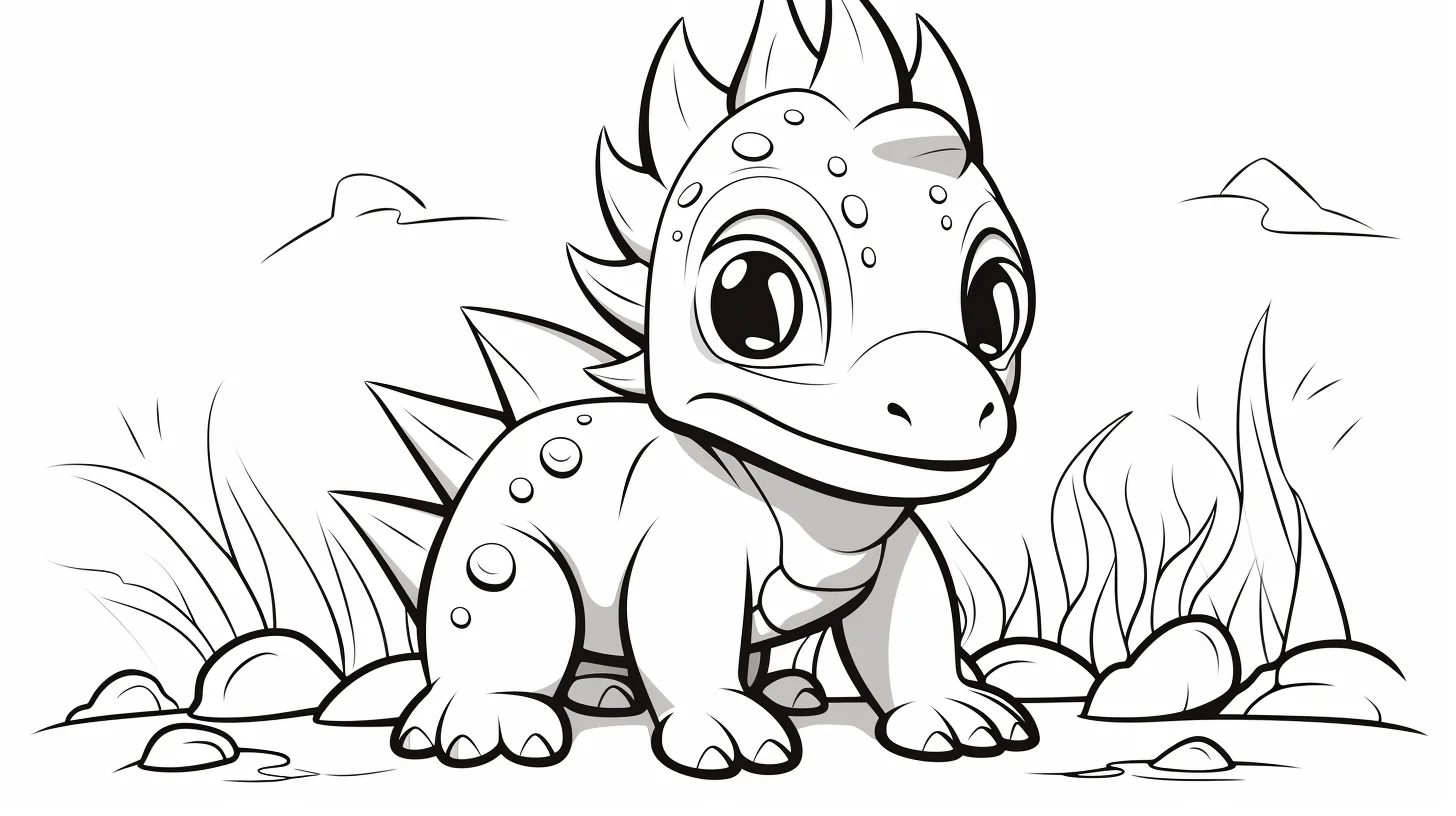
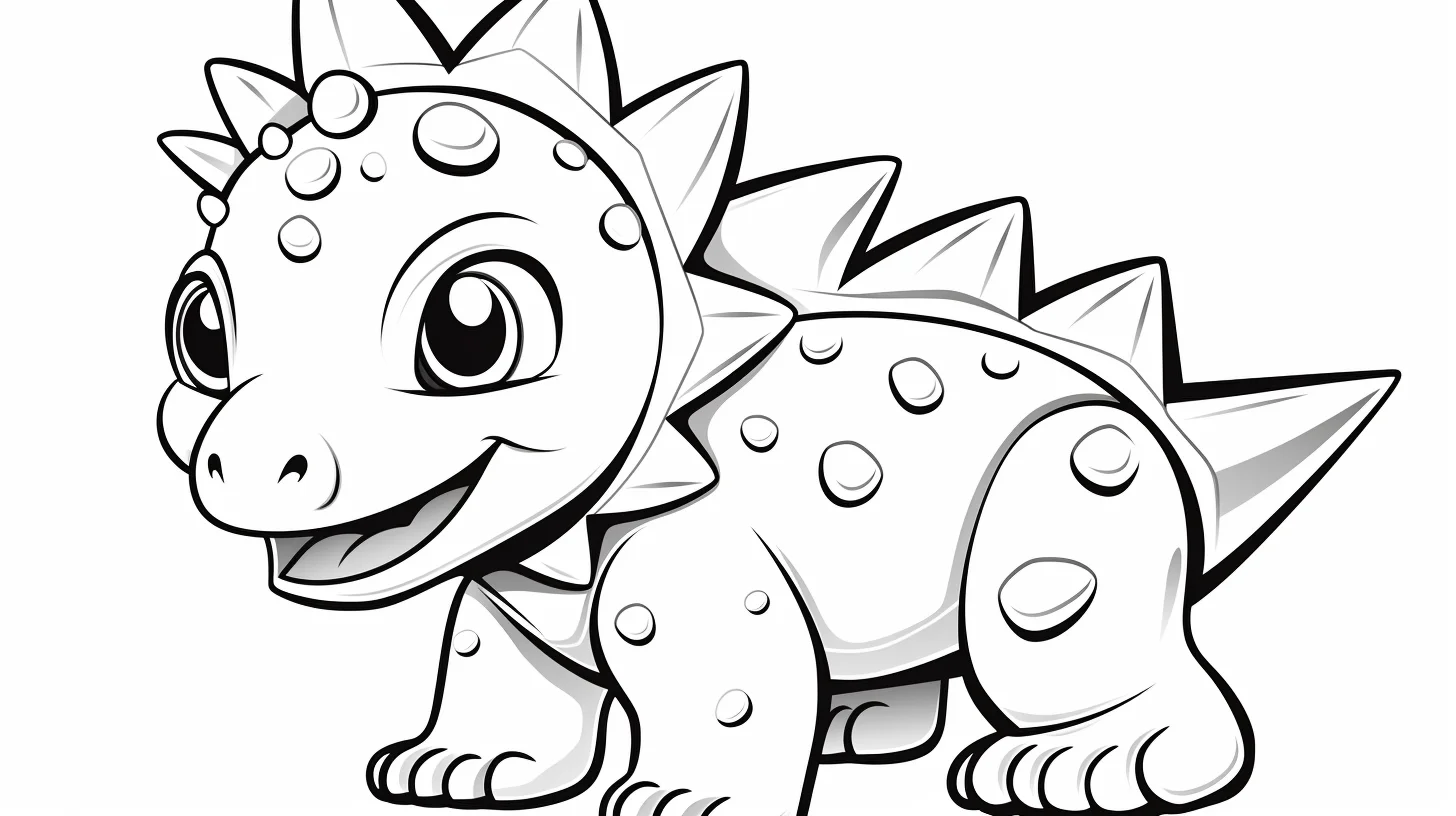
Baby Stegosaurus pages — Sheets 1–10
The first ten are the easiest place to start. Their baby-dinosaur styling gives you larger body areas and a less intimidating row of plates.
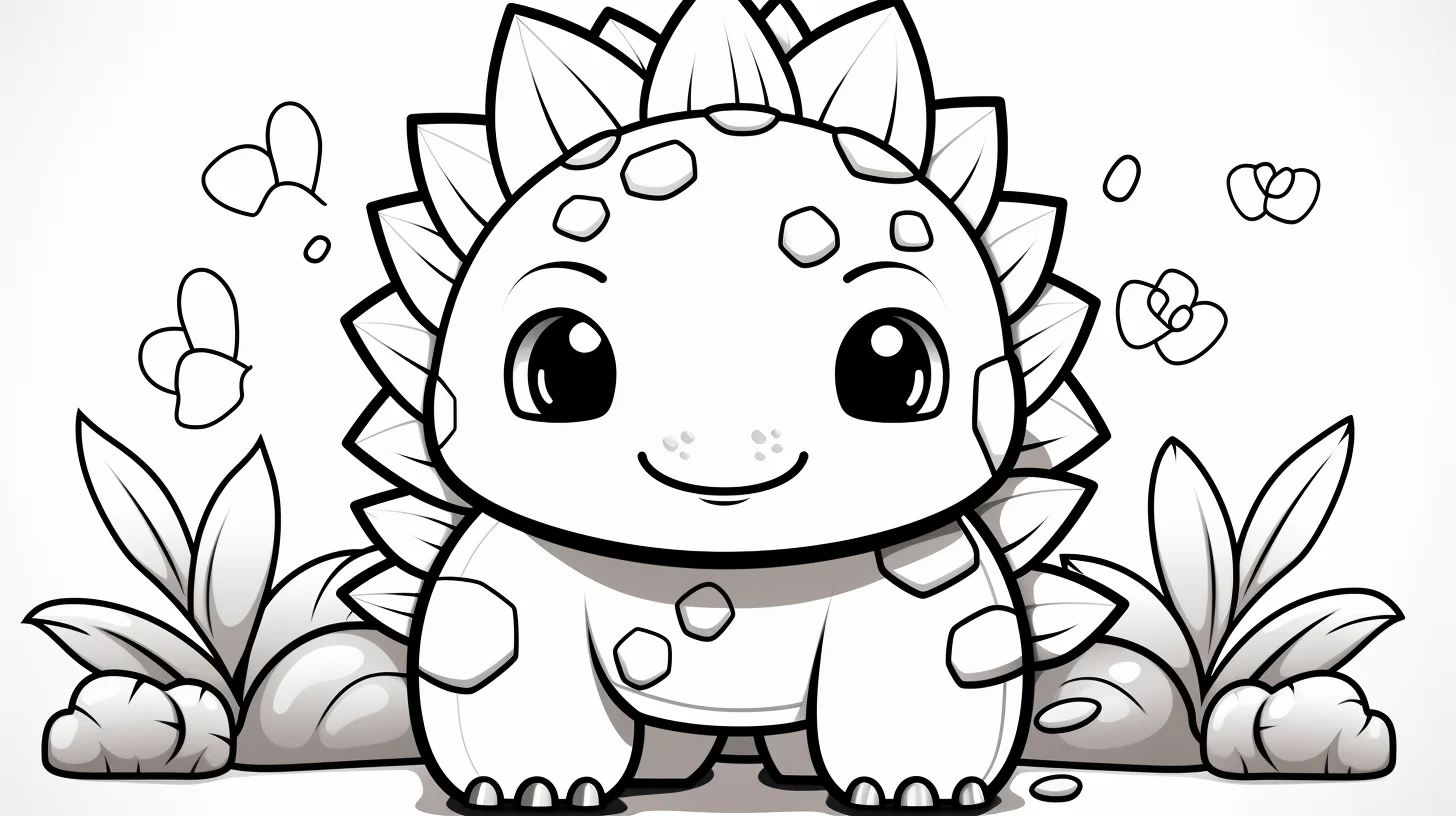
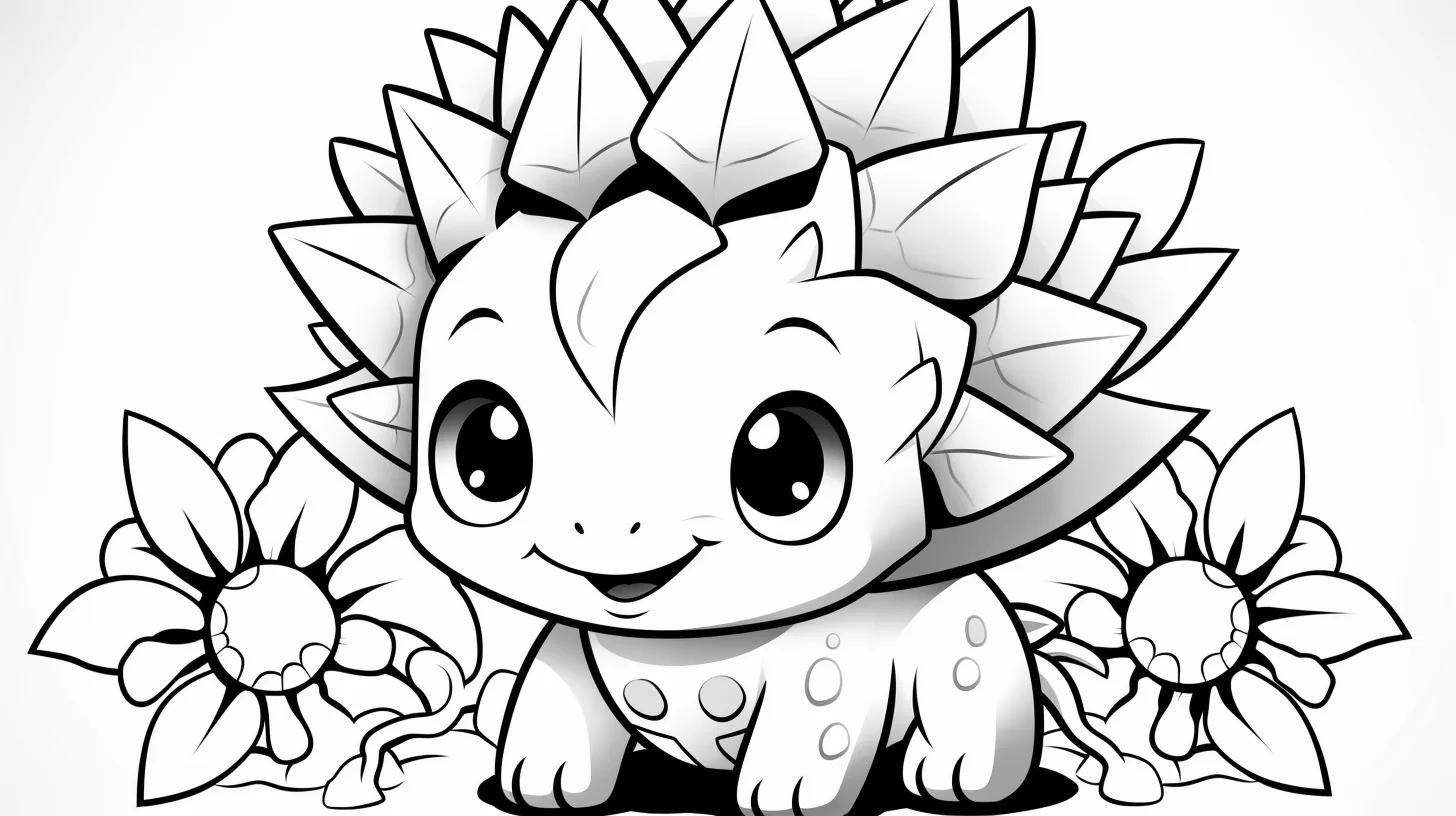
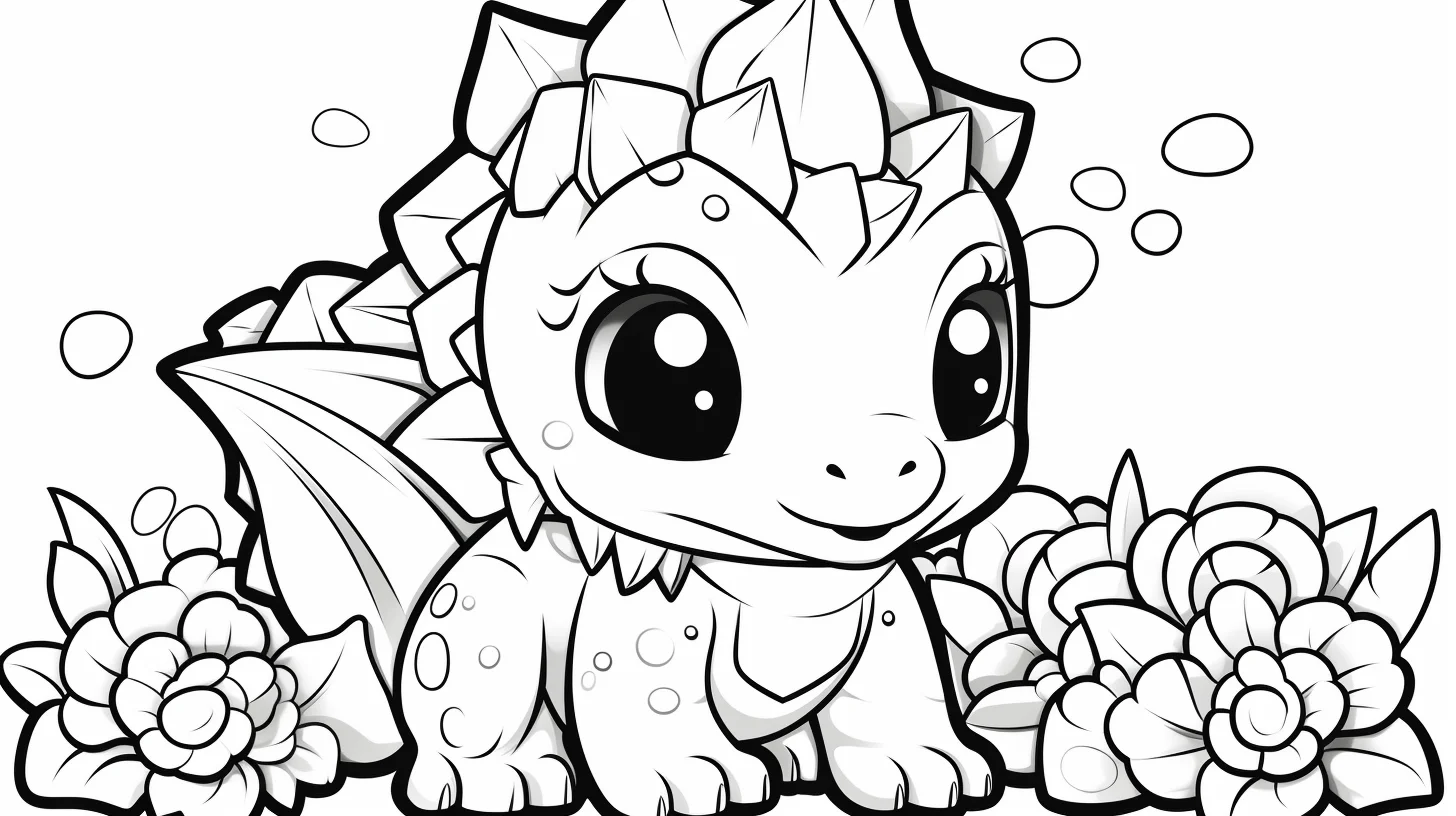
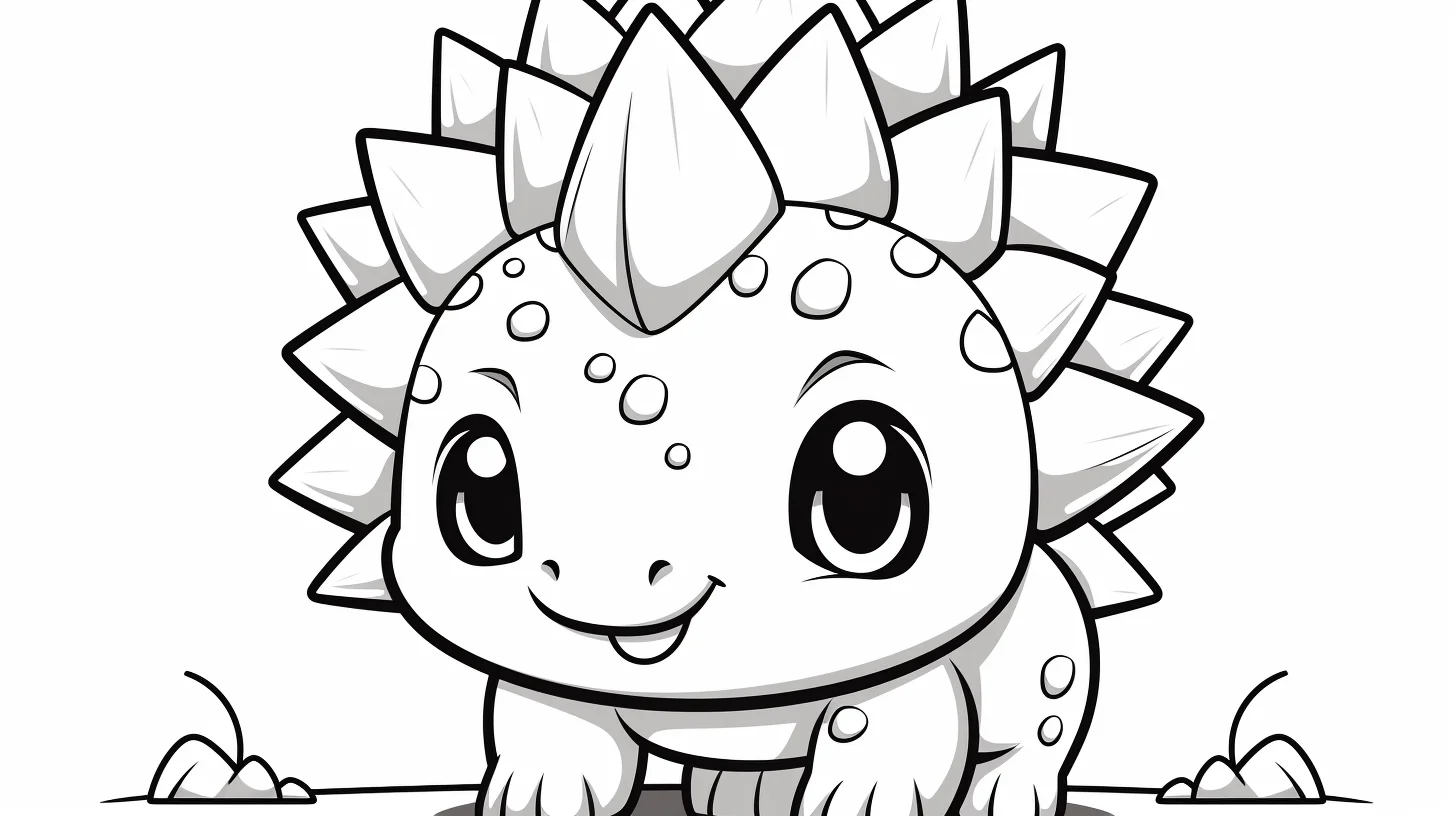
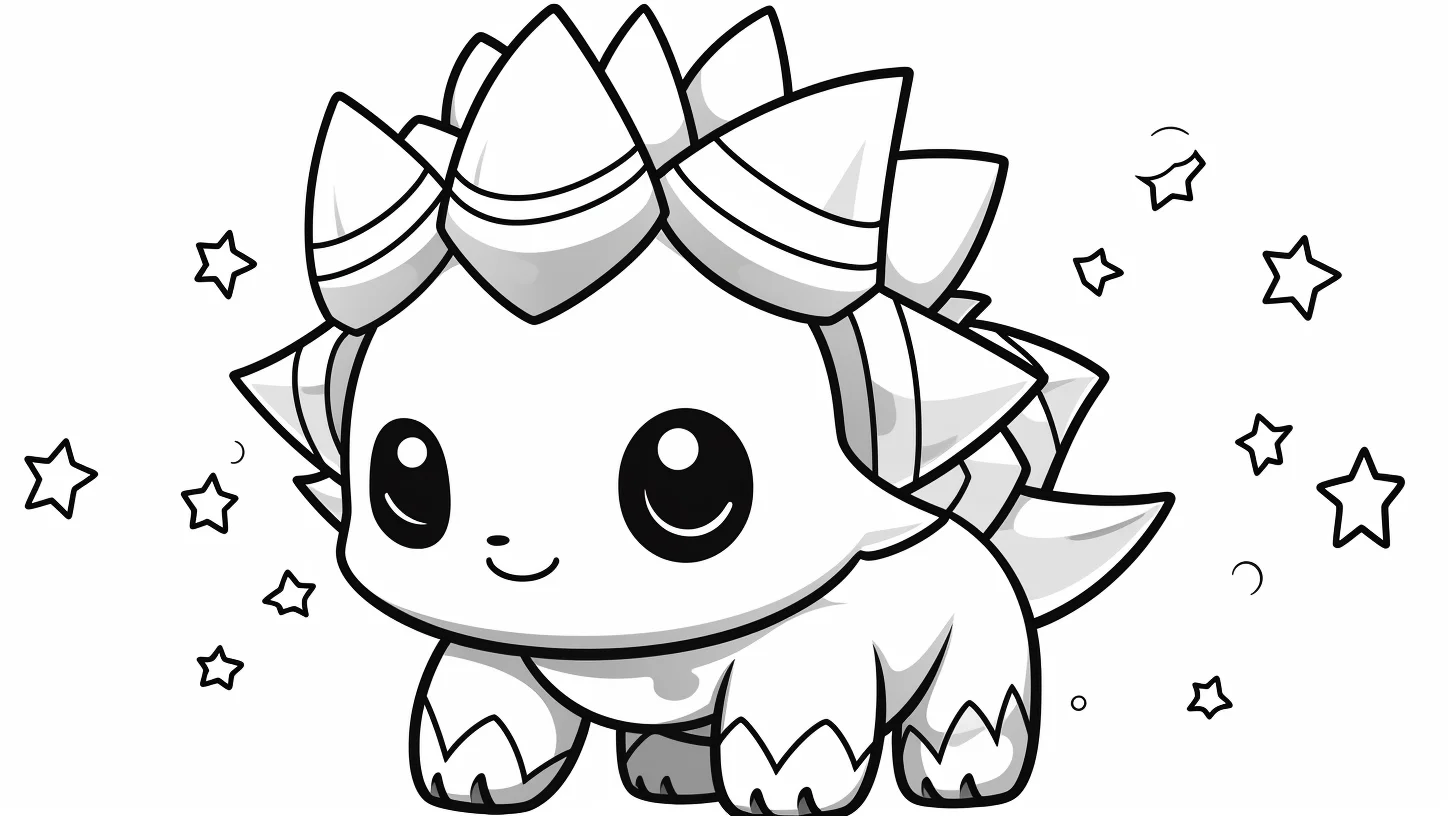
Kawaii Stegosaurus pages — Sheets 11–15
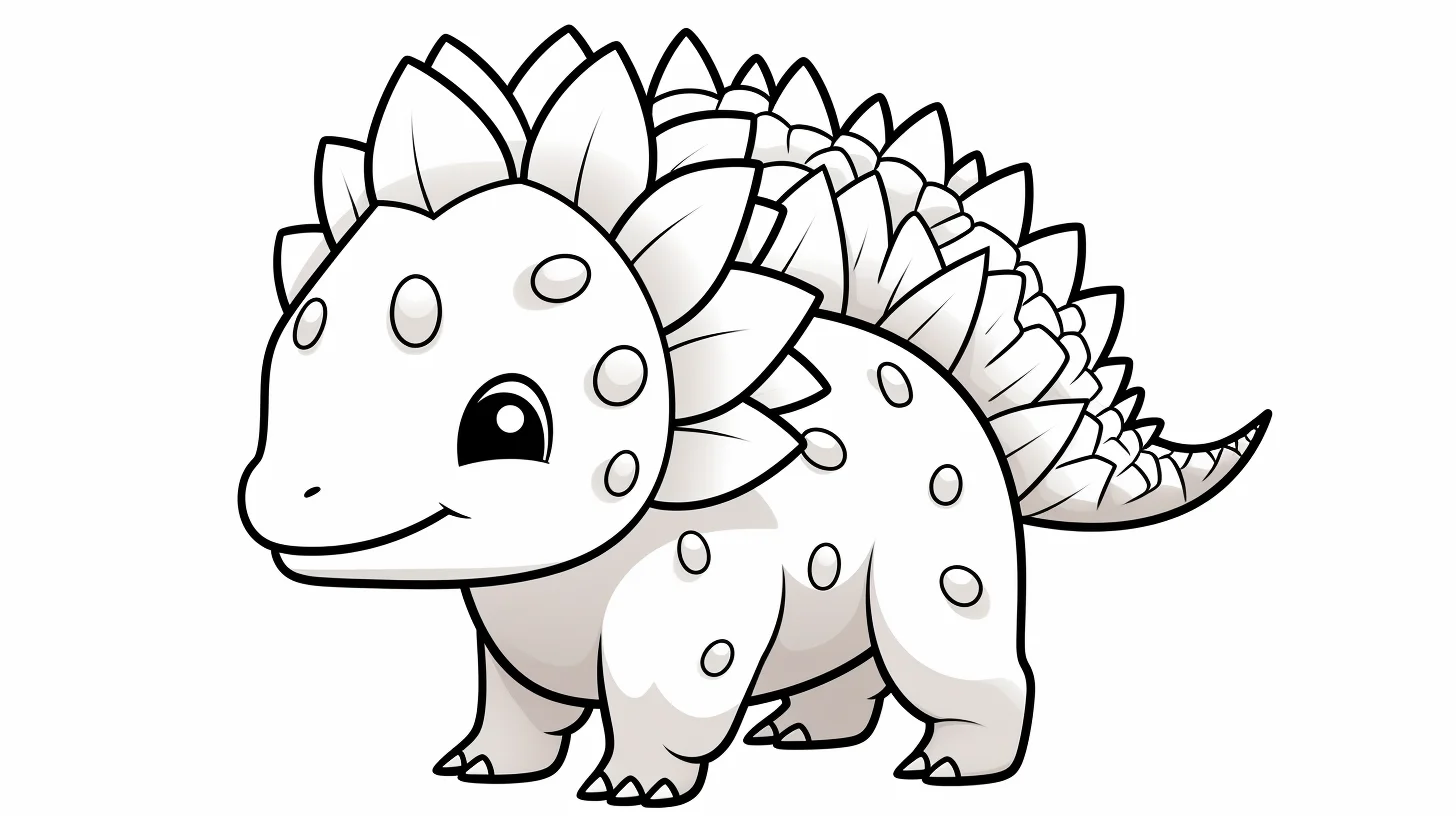
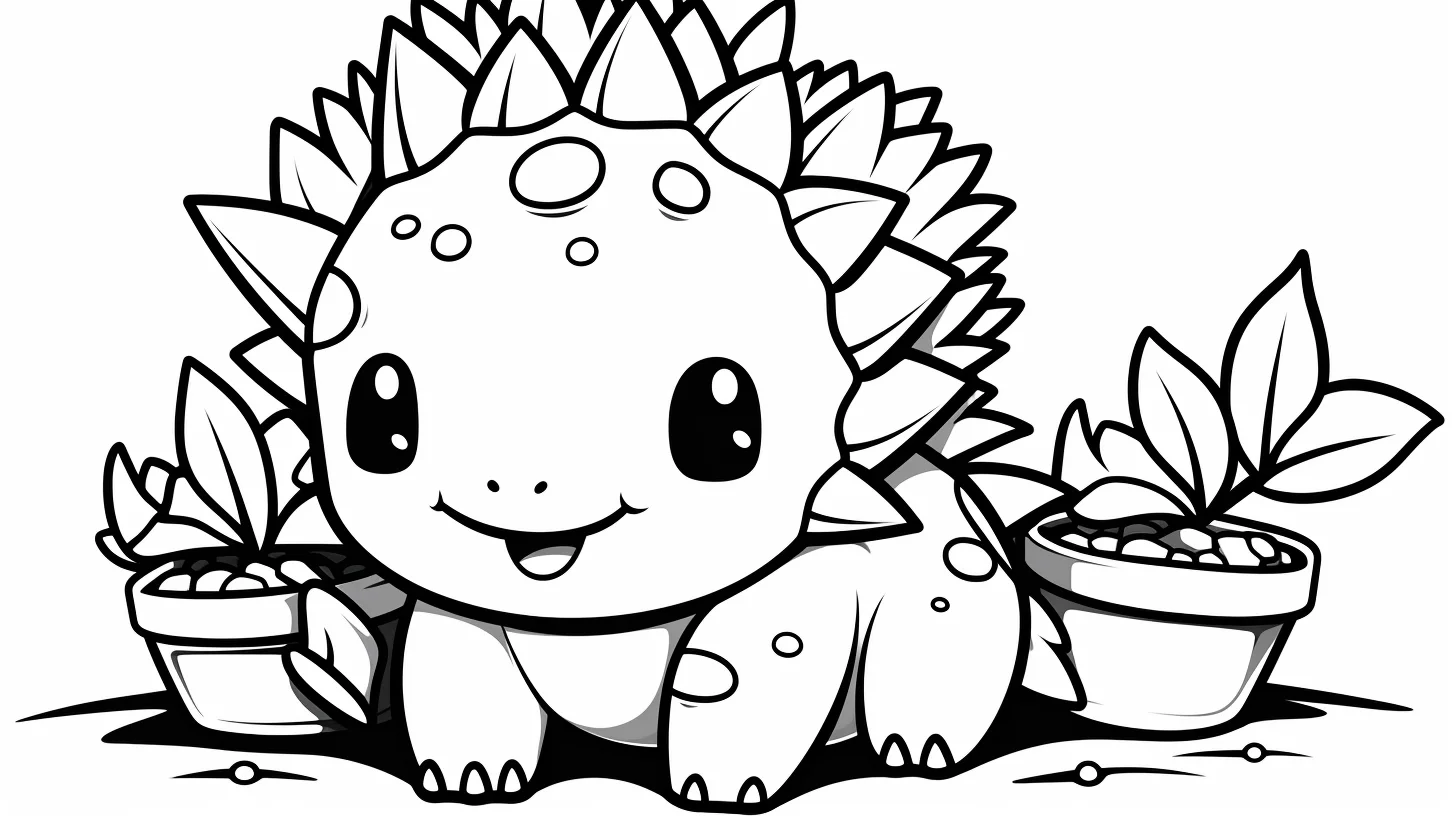
These five work especially well with playful palettes. Keep the body to one or two colors and let the back plates carry the brighter sequence.
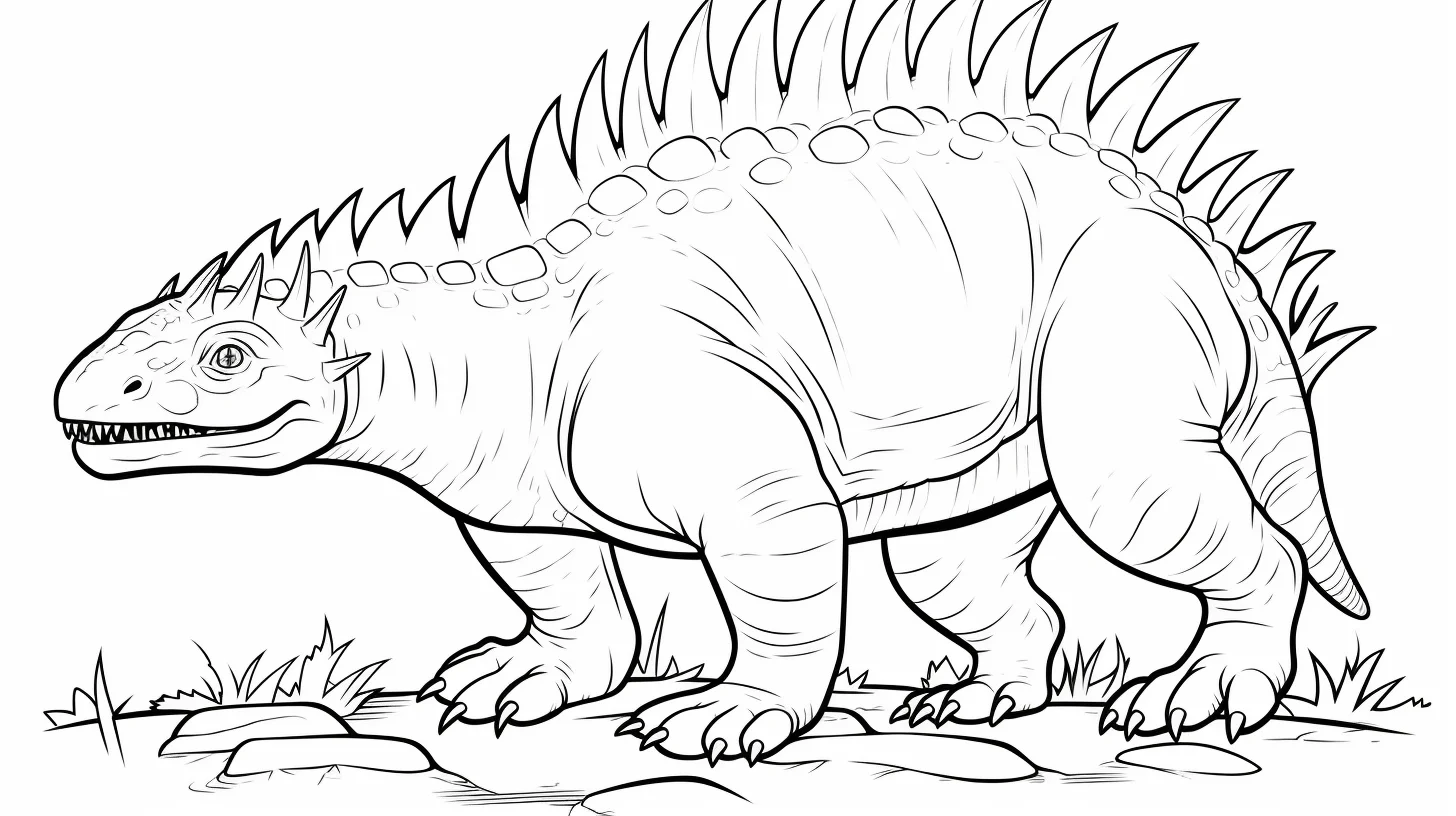
General Stegosaurus printables — Sheets 16–25
The last ten are the broader Stegosaurus set. They are good for plate-pattern practice without the explicitly baby or kawaii styling.
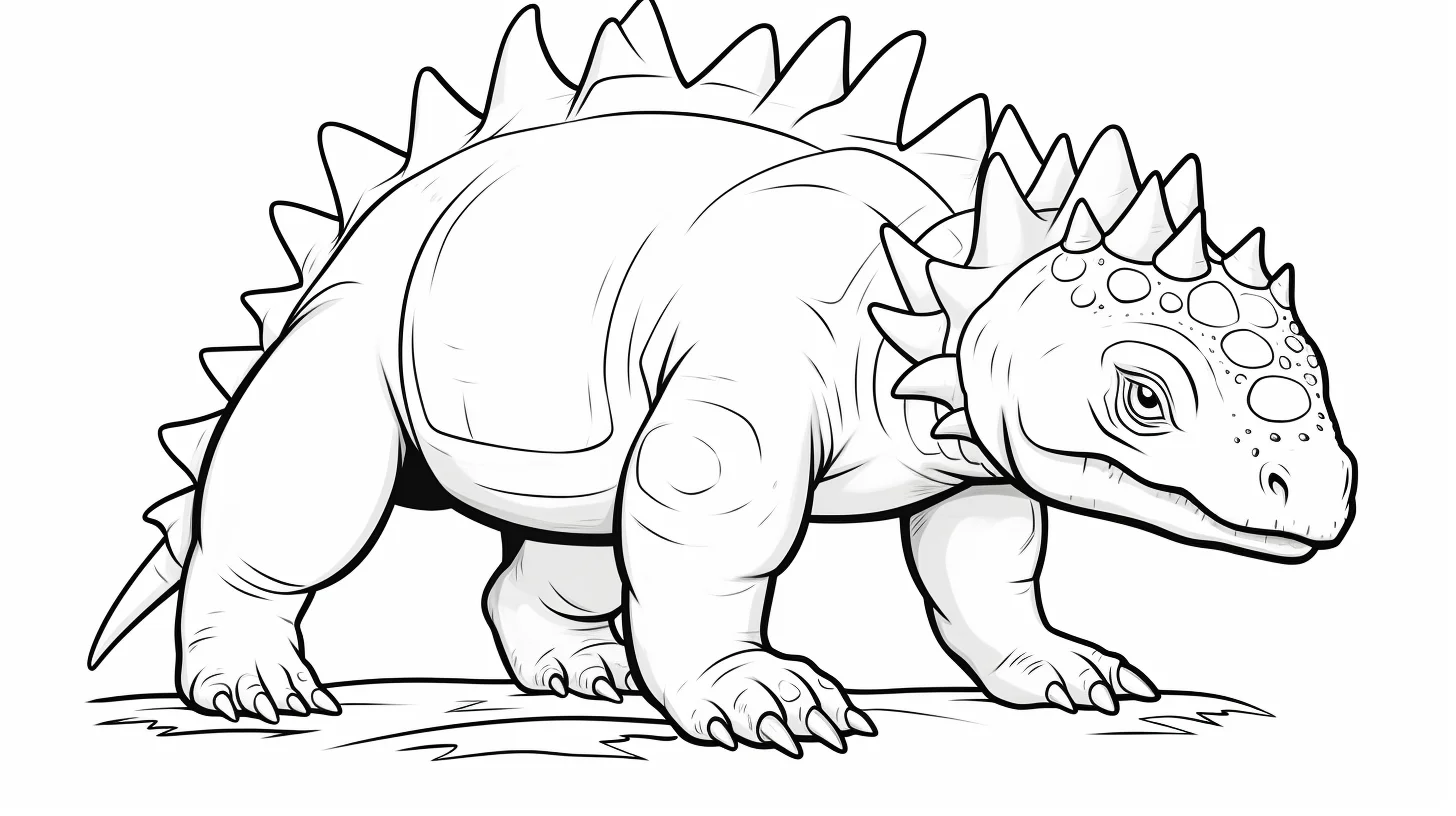
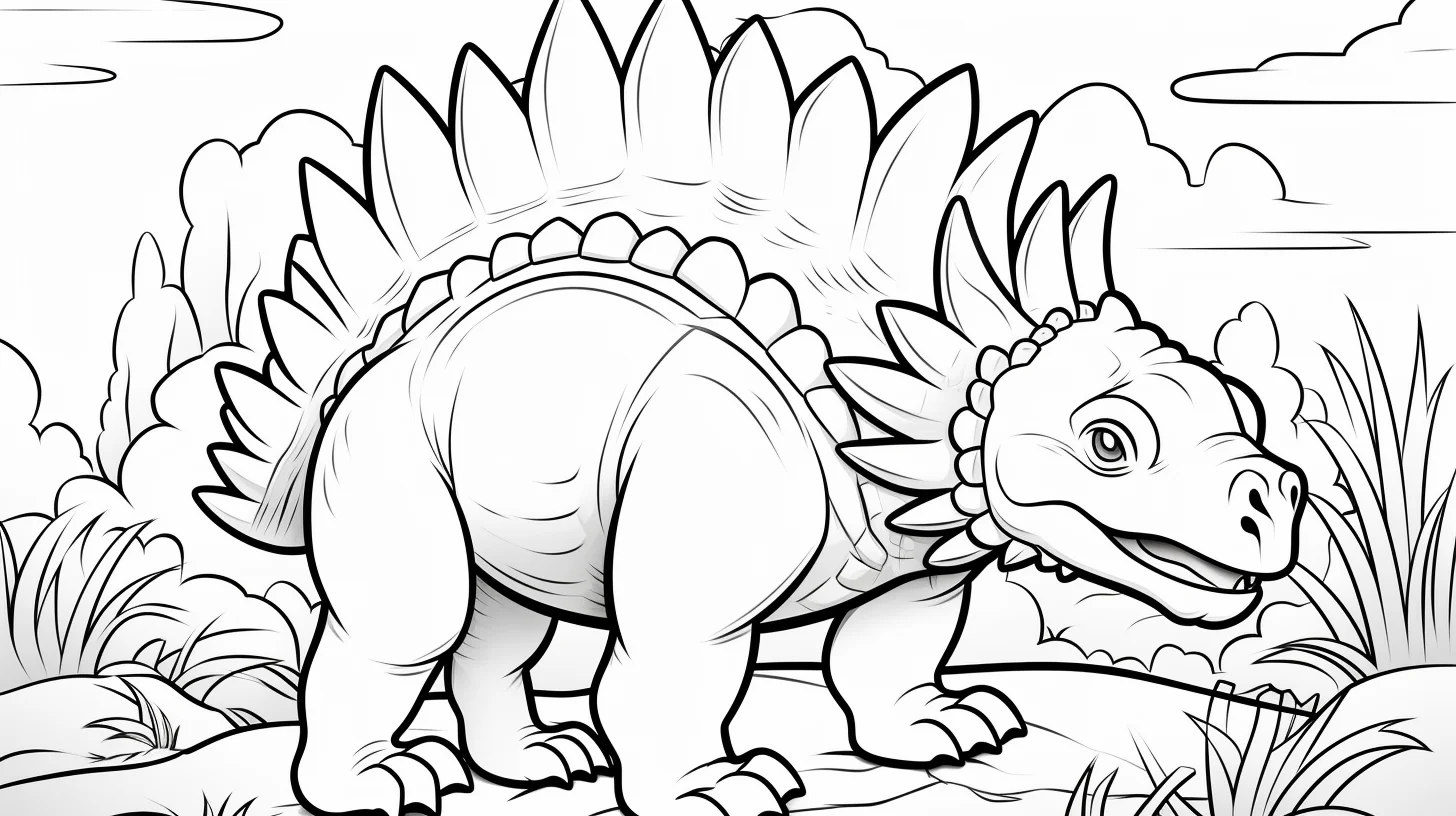
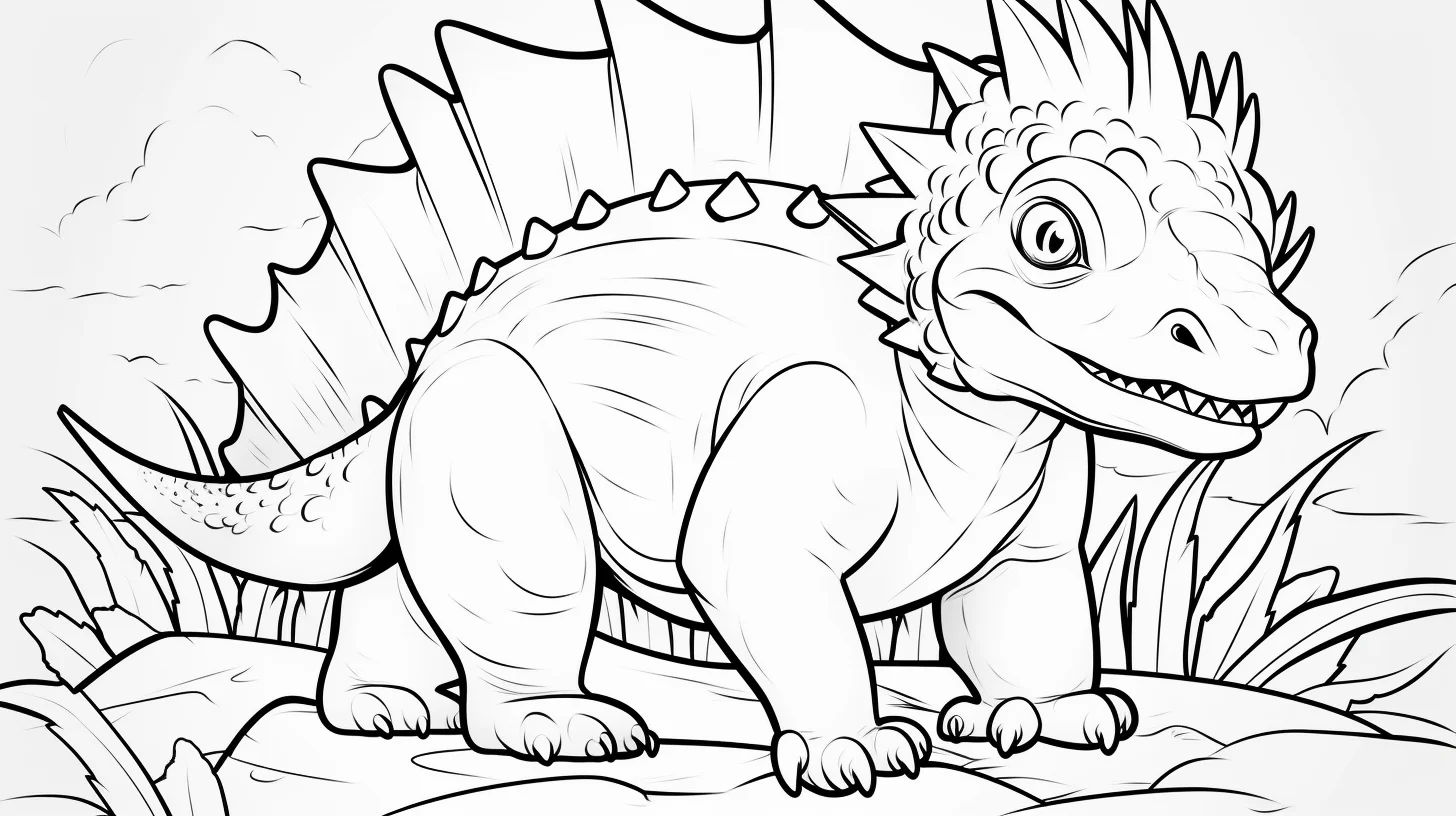
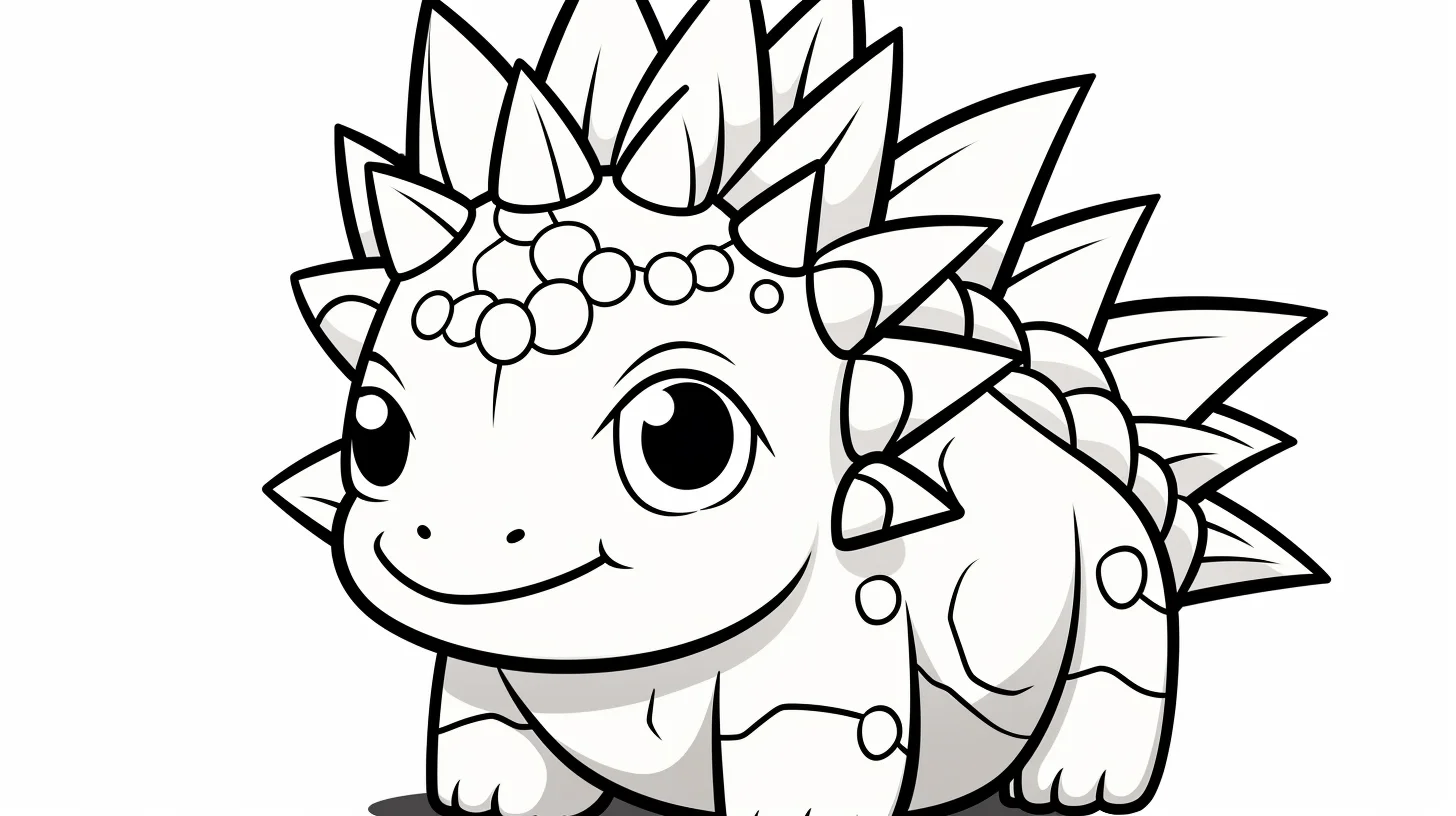
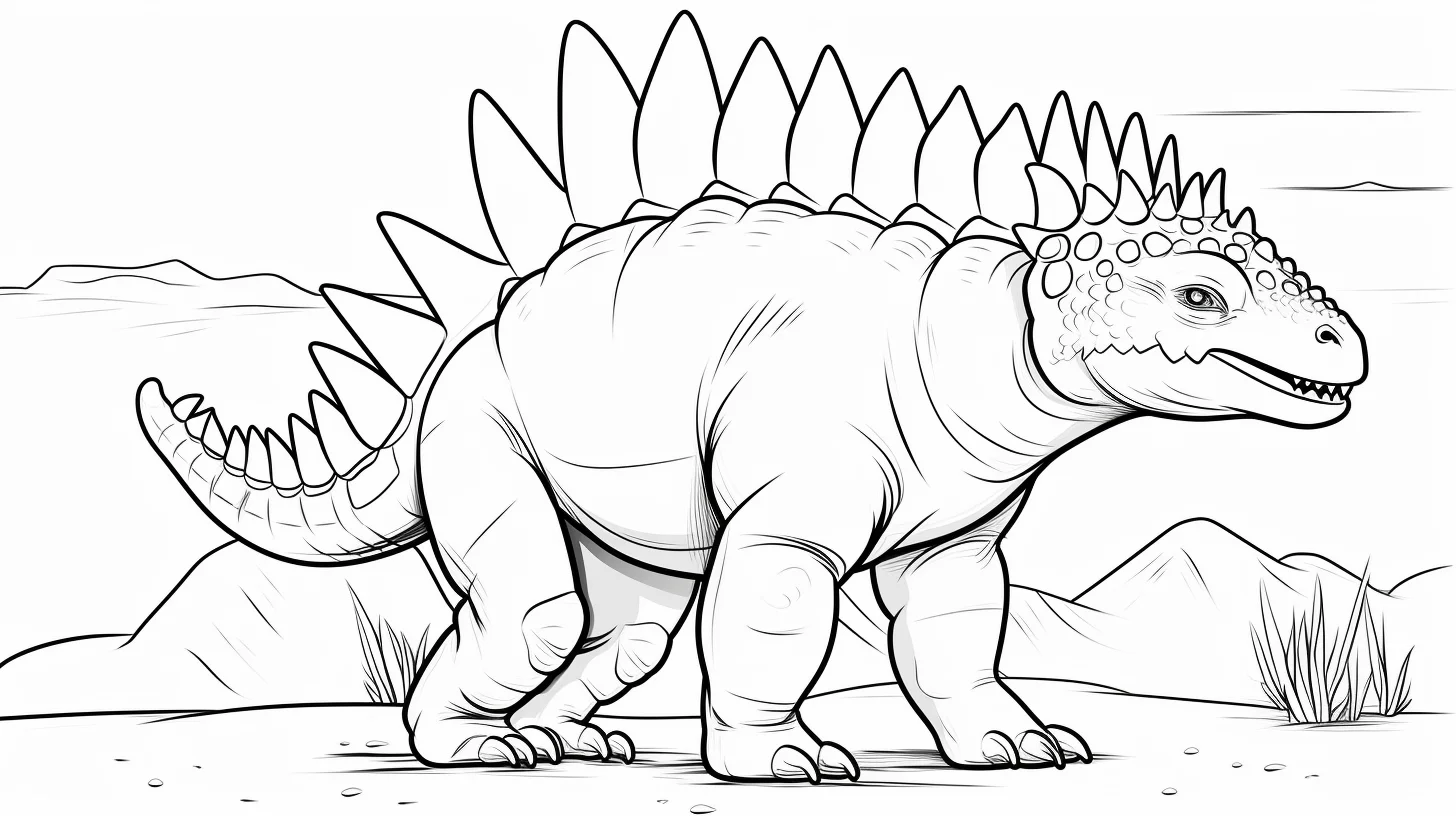
Make the plates look intentional, not random
The plates are the easiest place to give a Stegosaurus page rhythm. Before coloring them, choose a rule you can repeat: two alternating colors, three colors in a repeating sequence, or one hue that gradually changes from light to dark. A rule keeps 15 or 20 separate plates from looking like unrelated patches.
If you want the plates to feel dimensional, leave a narrow lighter strip along one edge and deepen the color toward the base. On colored-pencil pages, build that darker base with two or three light layers rather than one hard stroke. Keep the body quieter than the plates: an olive body with yellow-orange plates, for example, is easier to read than using equally strong colors everywhere.
Three sheets for practicing control
- Begin with a baby design. Use one body color and alternate two plate colors. The goal is clean coverage inside the larger shapes.
- Try a kawaii sheet. Add a lighter belly and a darker strip along the back, while keeping the plate pattern consistent.
- Finish with a general Stegosaurus. Use colored pencils to shade the legs, tail and plate bases, then add a restrained ground or plant palette.
This progression adds one decision at a time: first edge control, then simple value changes, then shading and background separation. If the second page already feels crowded, repeat it with fewer colors before moving on.
Common Stegosaurus coloring problems
| If this happens… | Try this |
|---|---|
| The plates overpower the dinosaur | Repeat only two or three plate colors and make the body more neutral. |
| The body looks flat | Keep the belly lighter and add a slightly darker value along the back, outer legs and lower tail. |
| Every plate blends together | Leave a small value difference between neighboring plates, even when they use related hues. |
| Marker bleeds across the plate outlines | Use colored pencil or a fine-tip marker for the narrow plate tips and save broader markers for the body. |
| The background competes with the dinosaur | Use fewer and softer colors for plants, rocks and sky than you used on the Stegosaurus. |
| The legs merge into one dark mass | Keep the nearer legs one value lighter than the far legs, or reverse that relationship consistently. A small value gap is enough to separate overlapping limbs. |
| Pencil coverage looks striped on the large body | Use light overlapping circles rather than long back-and-forth strokes. Add a second light layer at a different angle before pressing harder. |
A five-minute plate-and-body practice drill
If you want to improve technique rather than simply finish a page, use one baby sheet as a test page. Pick three adjacent plates and color the first with even pressure, the second with a light-to-dark gradient from tip to base, and the third with two thin layers instead of one heavy layer. Then use the large body area to practice overlapping circular pencil strokes. The aim is not realism; it is learning which pressure and stroke direction produce clean coverage before you commit to a more detailed sheet.
When the dinosaur is mostly colored, put the page at arm’s length. You should notice the face and overall silhouette before individual plates. If the plates dominate immediately, soften one or two of the brightest accents. If the dinosaur disappears into its surroundings, darken either the body edge or the nearby background—not both. This distance check is especially useful before adding more detail, because it catches contrast problems that are difficult to see while working close to the paper.
A simple prehistoric palette that stays readable
You do not need to guess the animal’s exact living colors to make the page convincing. Build the palette around contrast instead. Choose one main body hue, a lighter version for the underside, a darker version for shadows, and one accent family for the plates. Earthy combinations such as olive + ochre, gray-brown + rust, or sage + muted orange work well. For a playful page, the same structure works with turquoise + coral or lavender + yellow.
Color the eye and facial details near the end. That prevents a dark pencil or marker from smearing while you work on the larger head and neck areas. On pages with grass or rocks, finish those last so you can judge how much background color is actually needed.
Quick Stegosaurus questions
Which pages are easiest?
Start with Sheets 1–10. They are all baby-Stegosaurus designs and are the most natural fit for younger children.
Do the plates need realistic colors?
No. The exact living colors are not known from these drawings, so use the plates as a design feature. Repeating two or three colors usually looks cleaner than making every plate unrelated.
What tools work best?
Crayons and broad pencils are good for the baby pages. Colored pencils give more control if you want a gradual plate sequence or shading along the belly and tail.

