
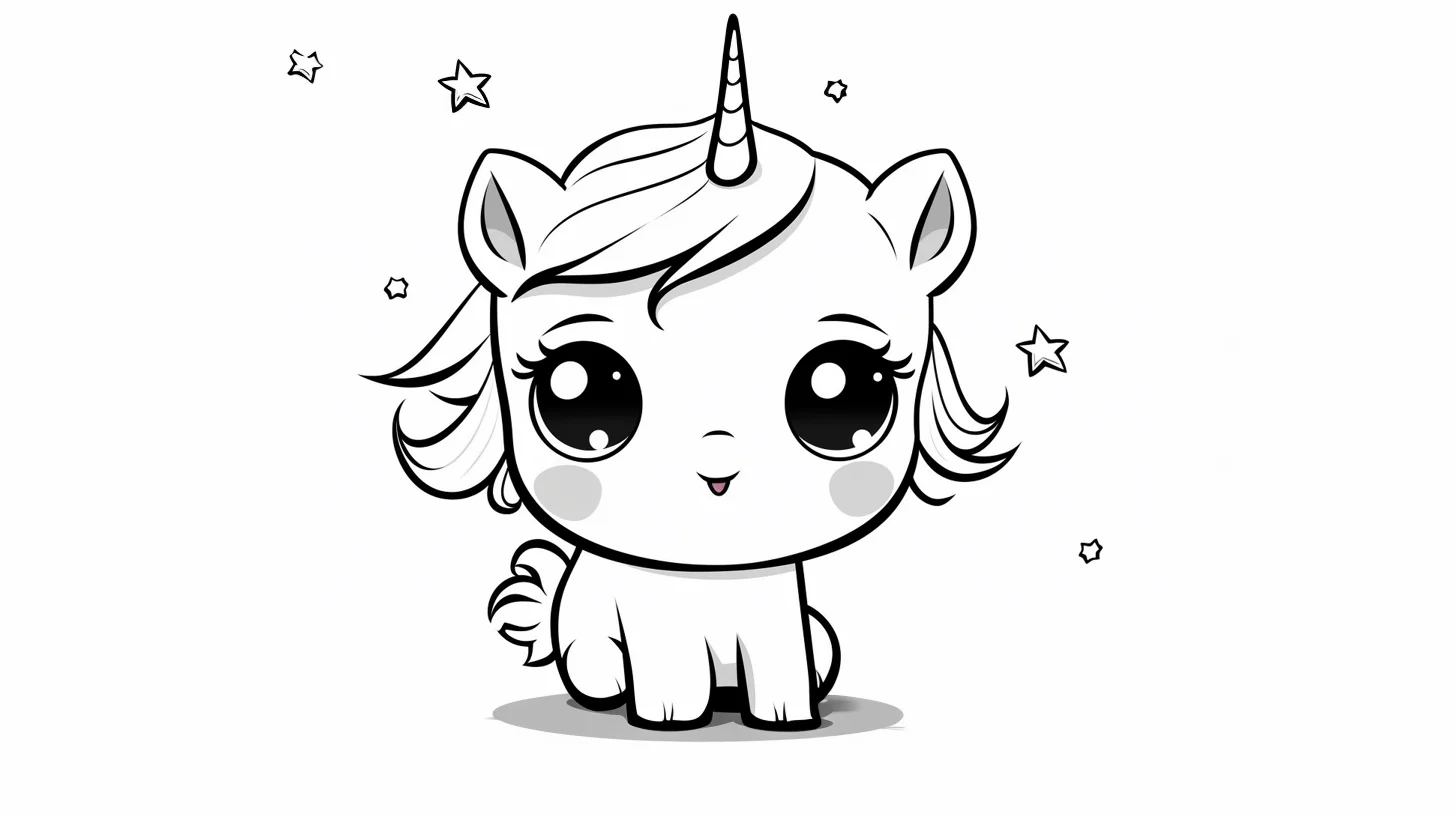
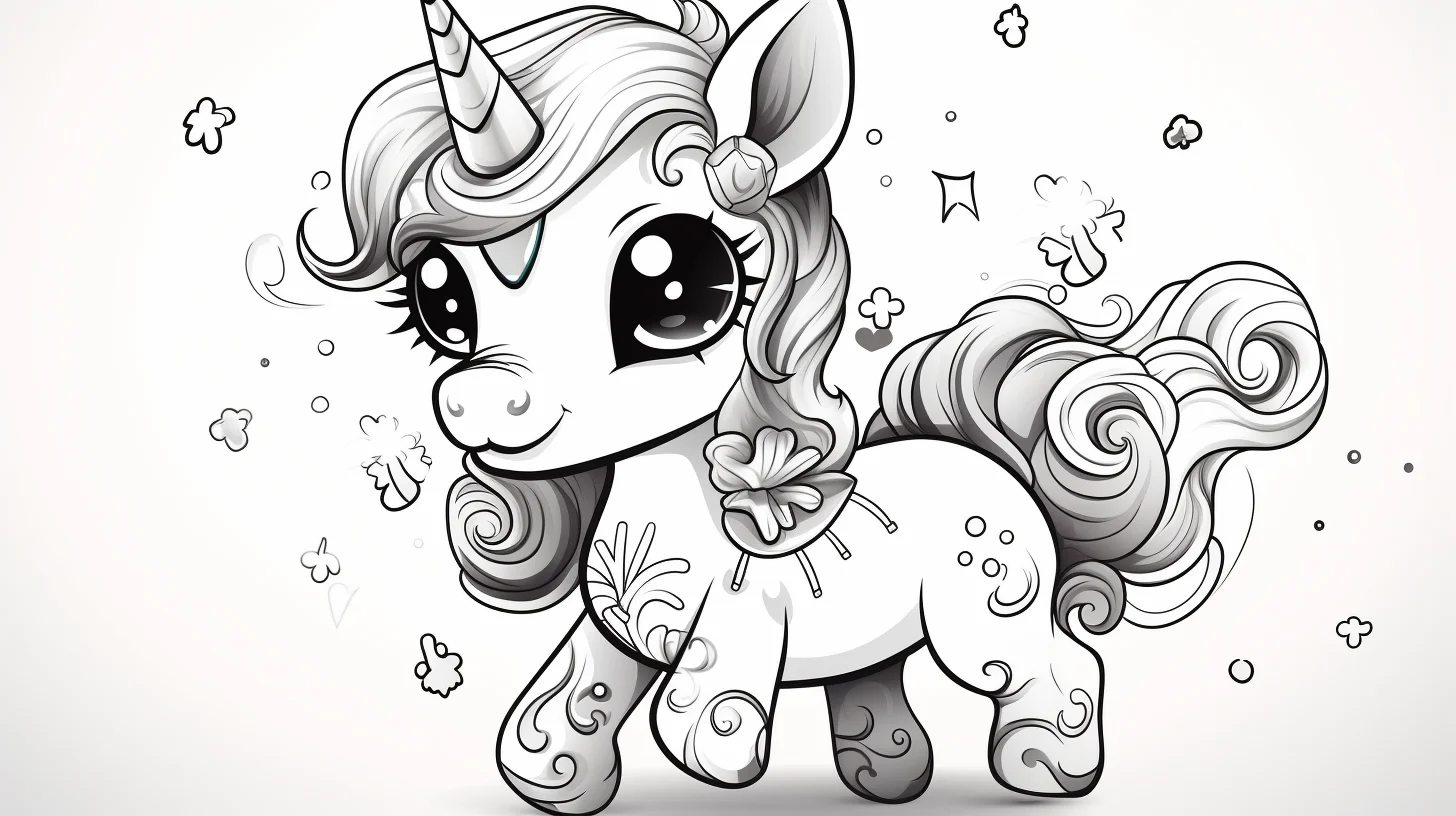
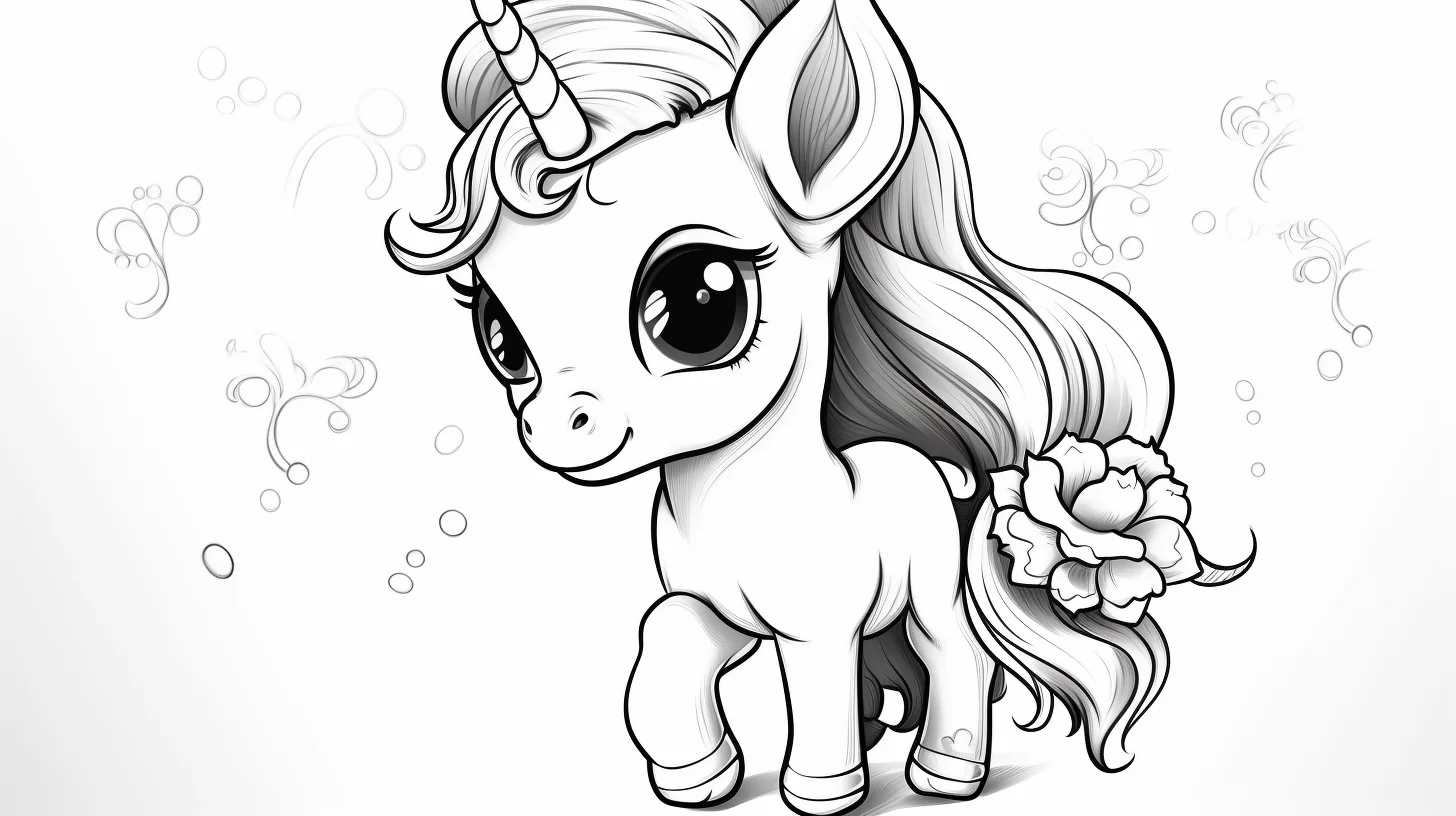
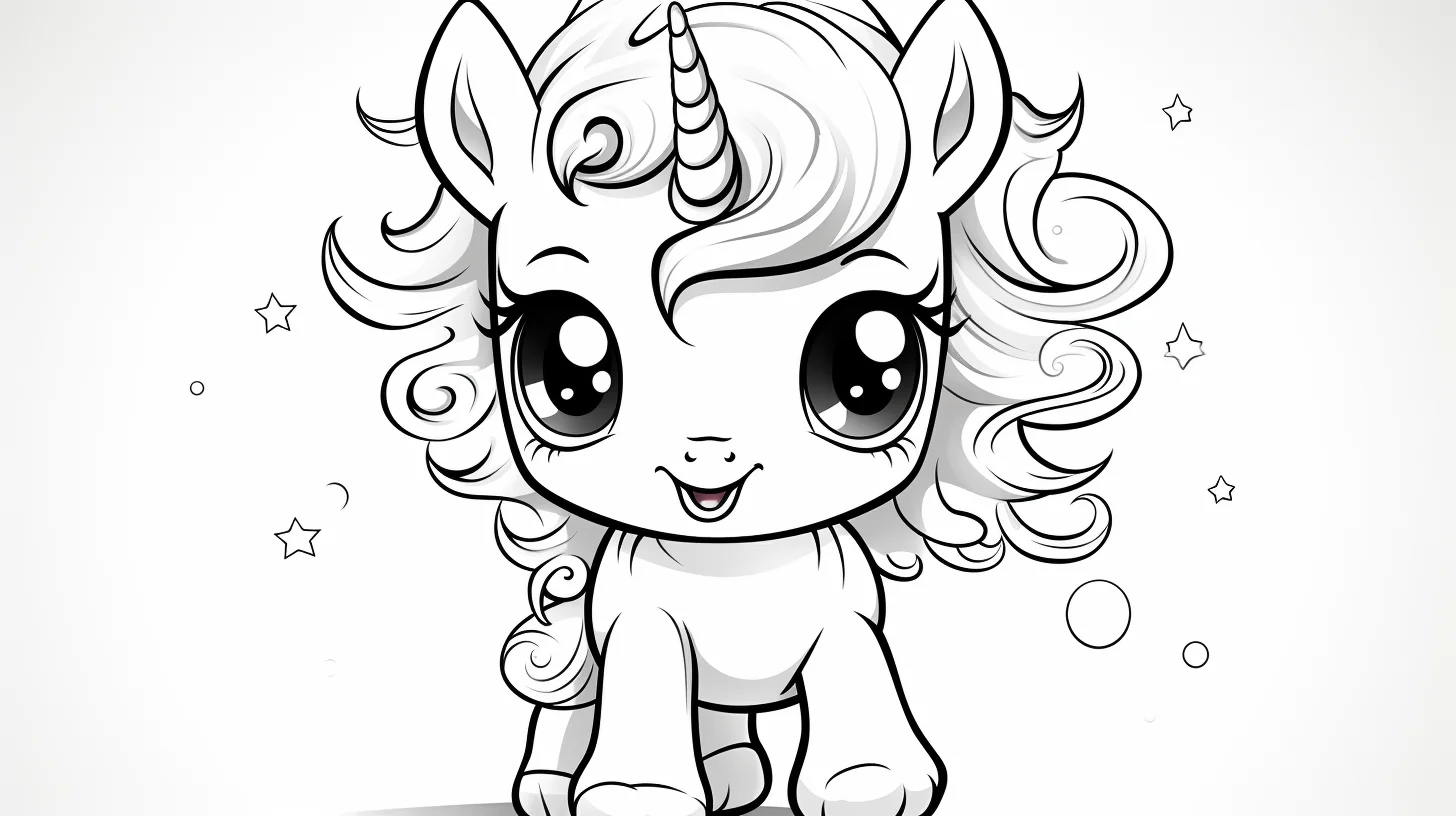
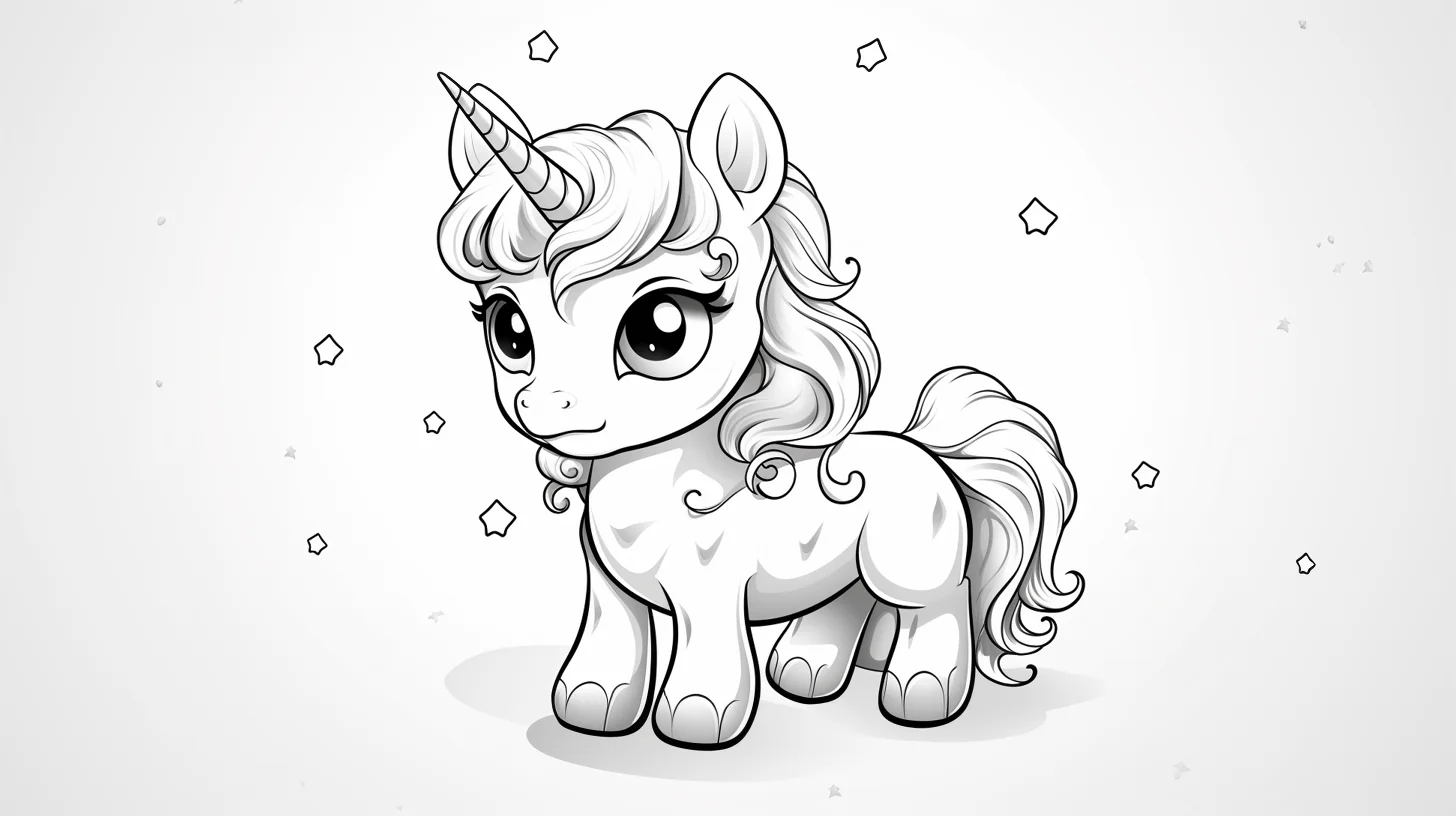
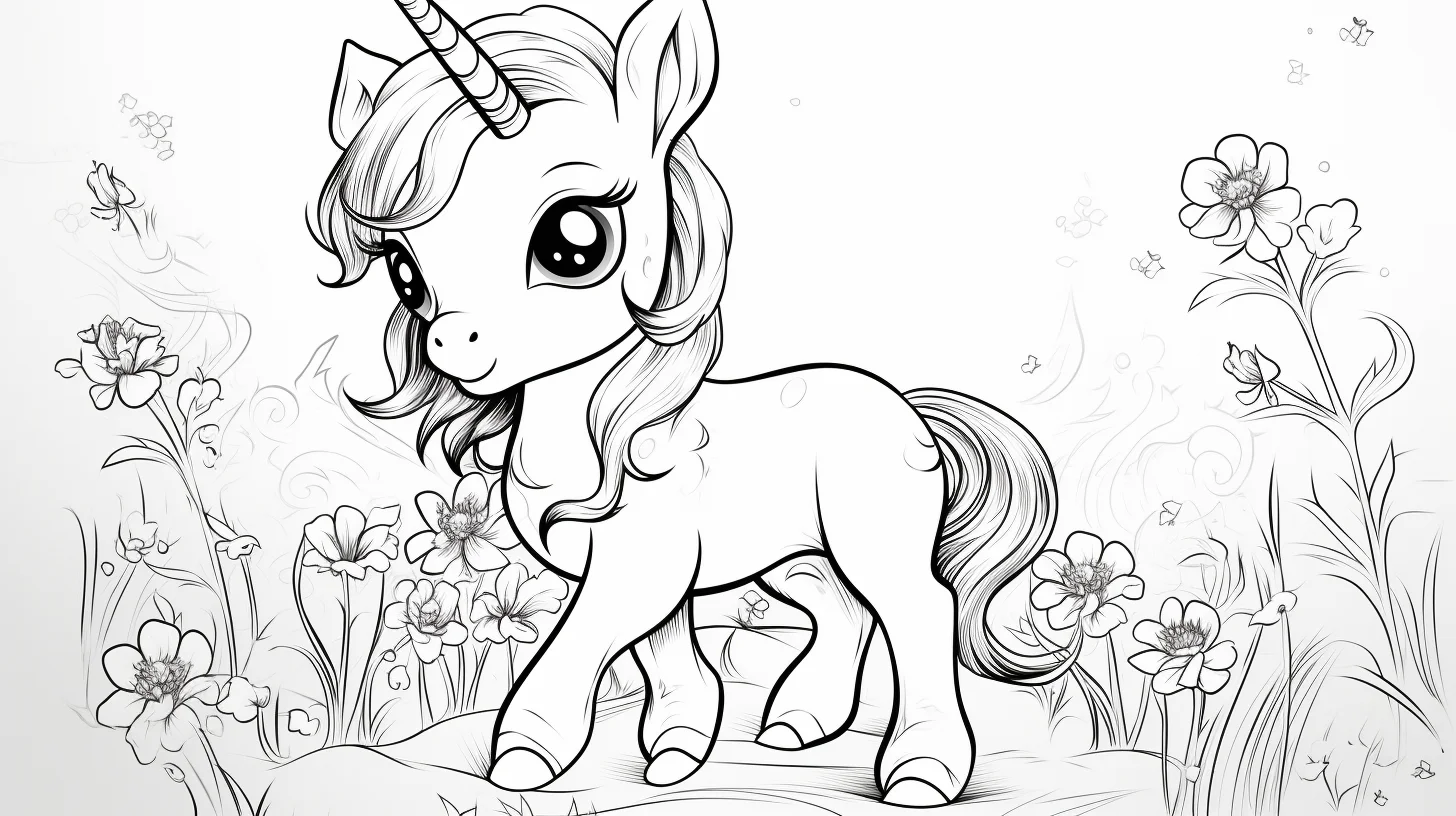
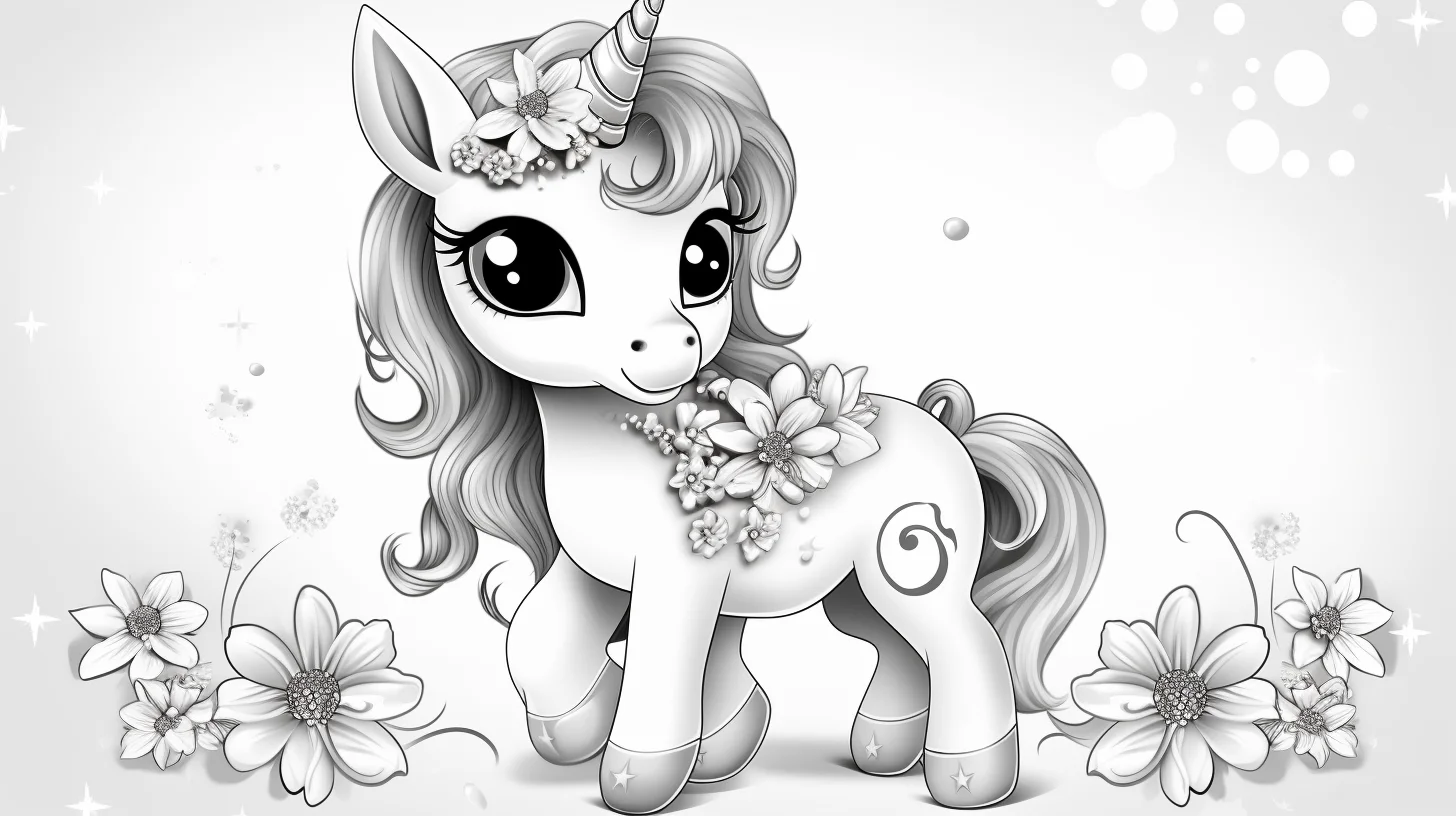
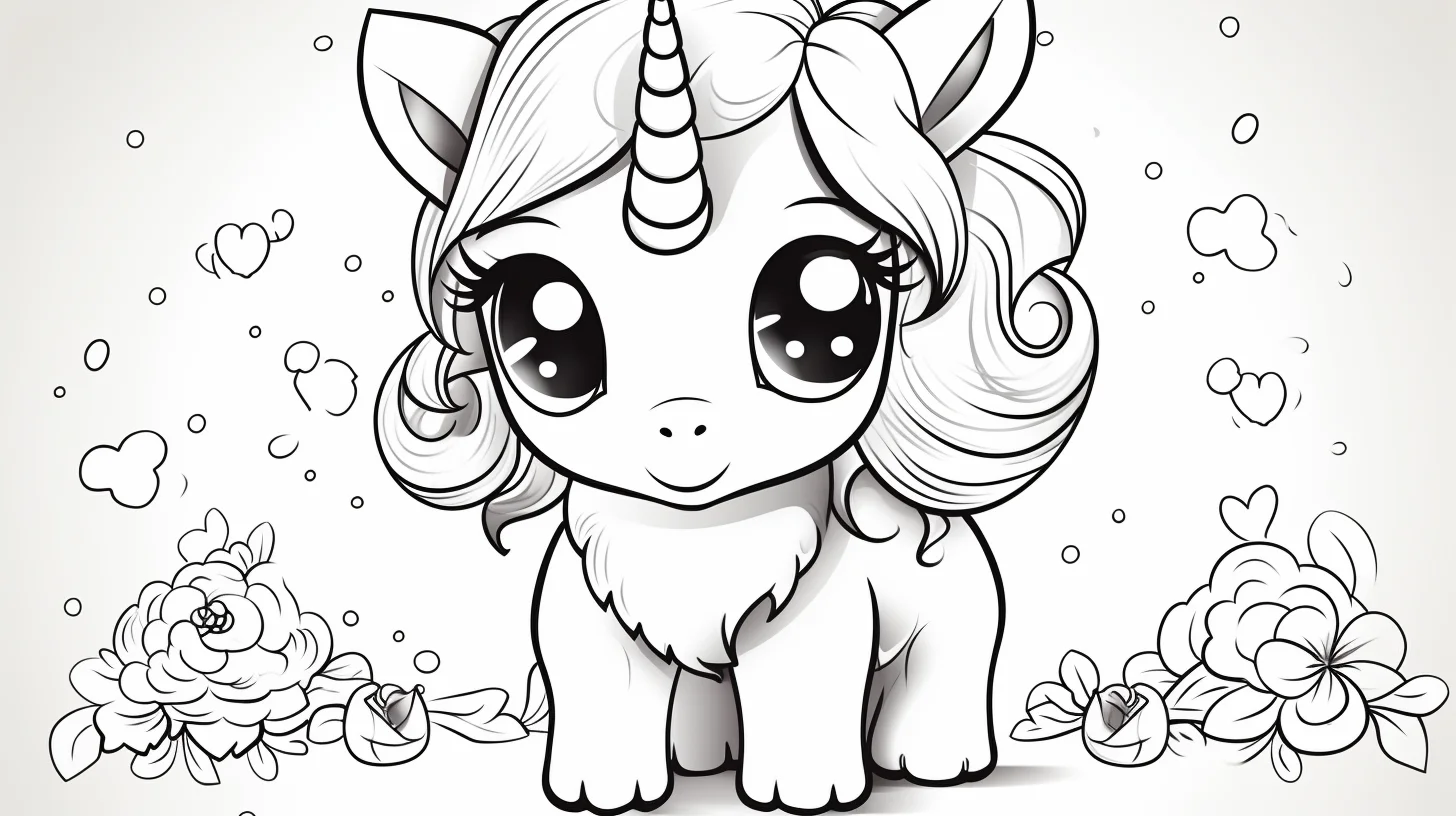
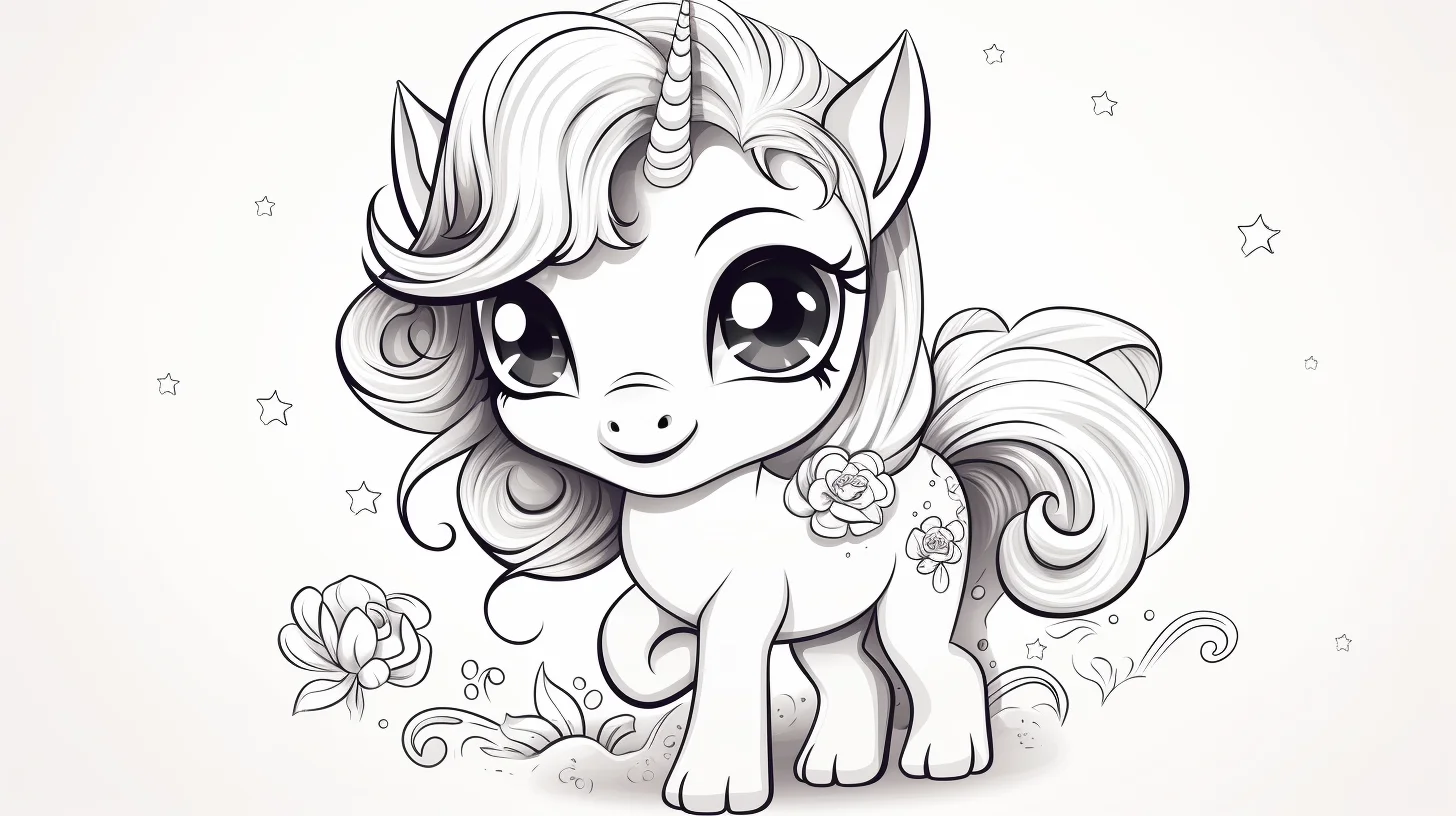
This is the bonus unicorn gallery: 21 printable sheets that did not need another narrowly themed collection. You will find quick baby-unicorn pages beside busier designs with smaller mane, horn and background sections. If you have already used our focused unicorn sets and want fresh choices, start here.
21 additional unicorn coloring sheets
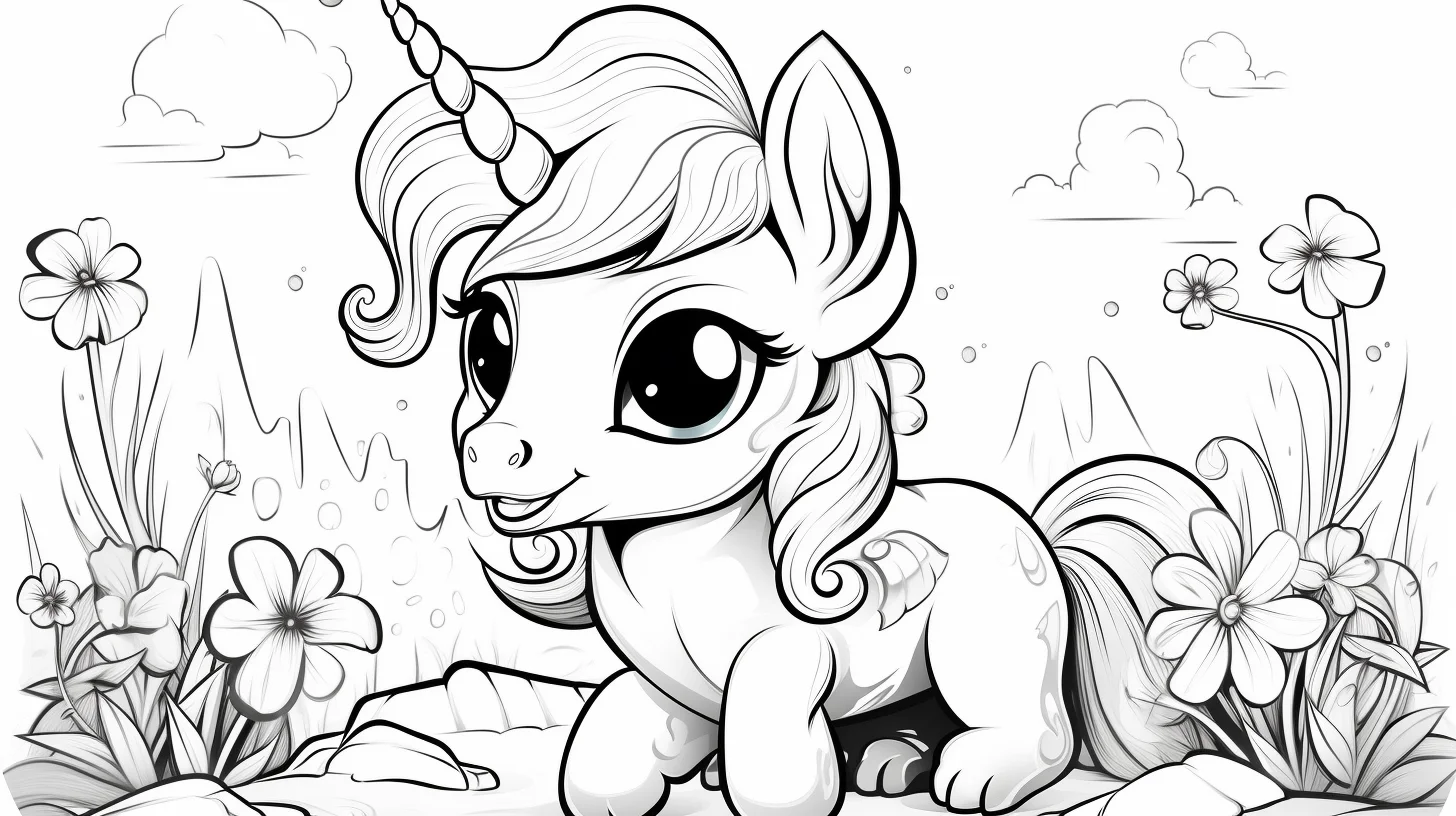
Click any picture to open its full-size file for printing. The first sheet is directly below so you can start browsing without working through a long introduction.
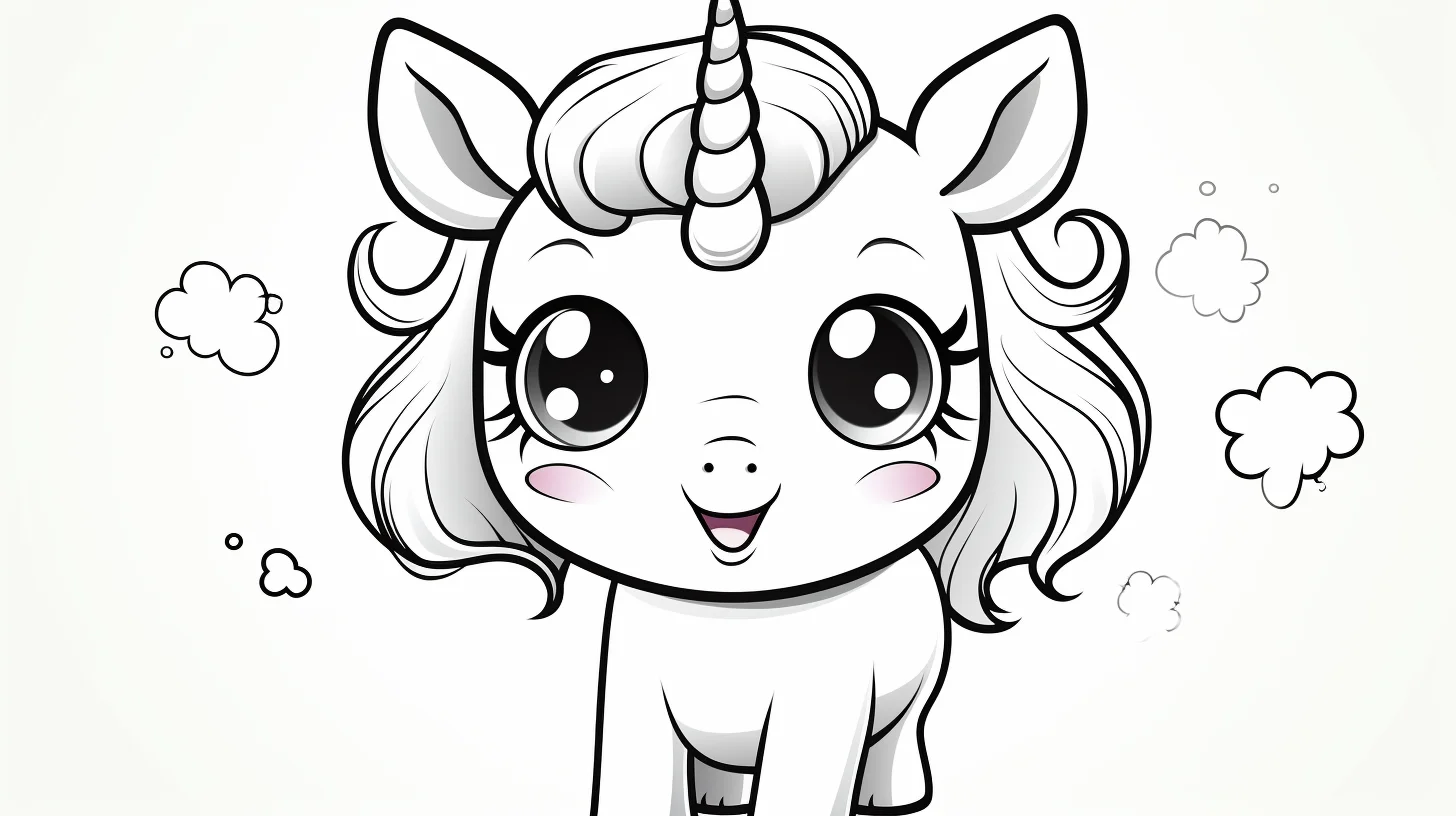
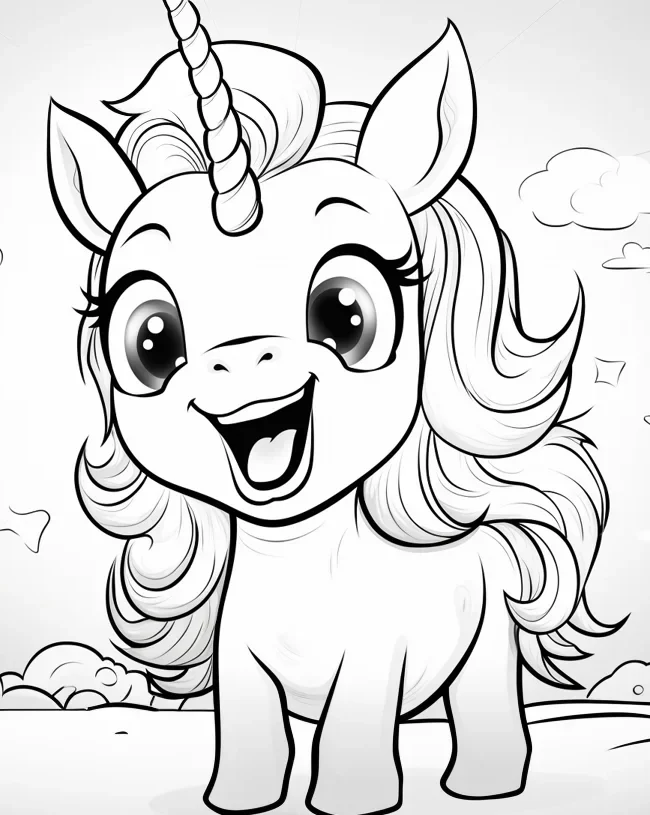
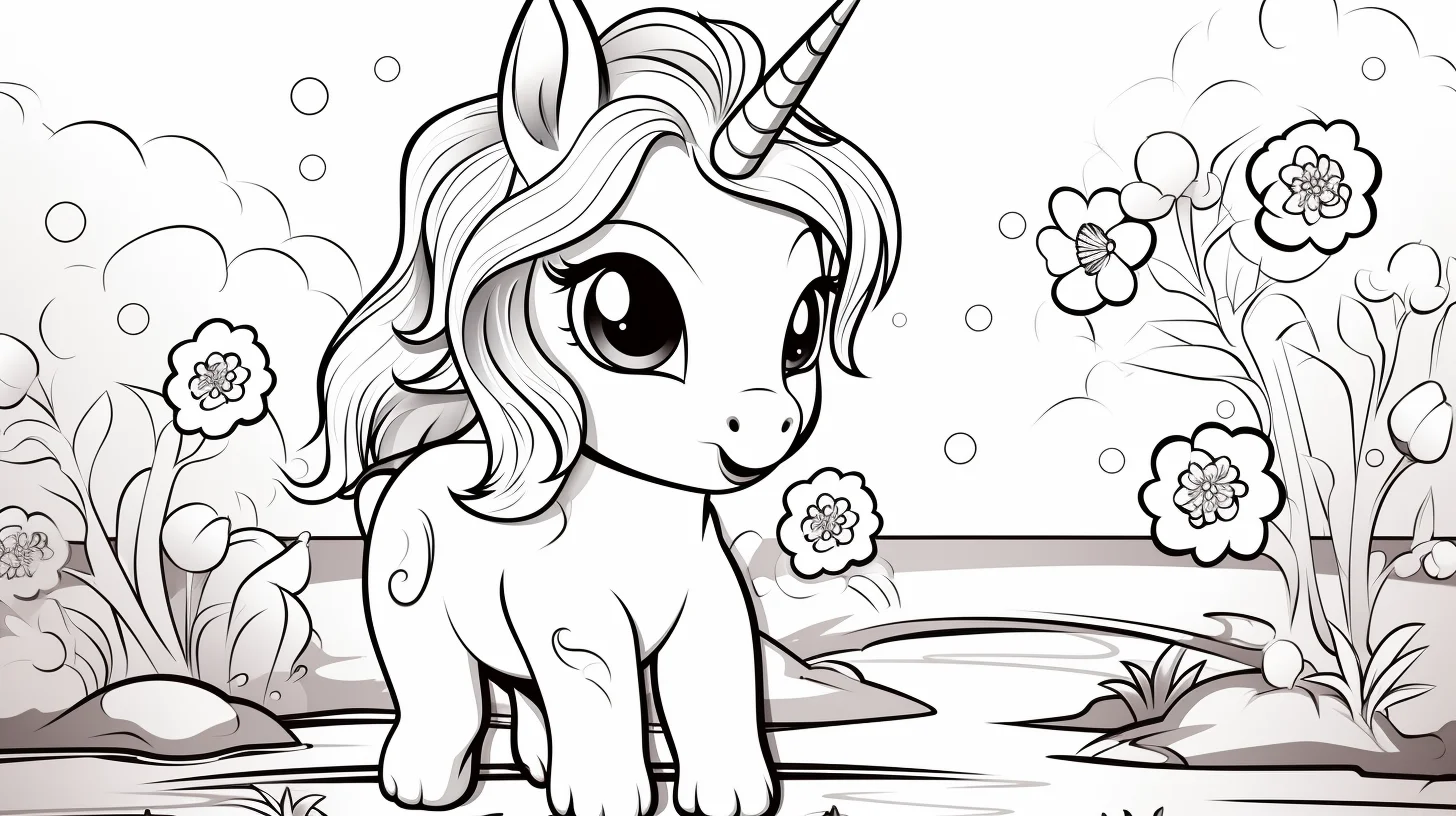
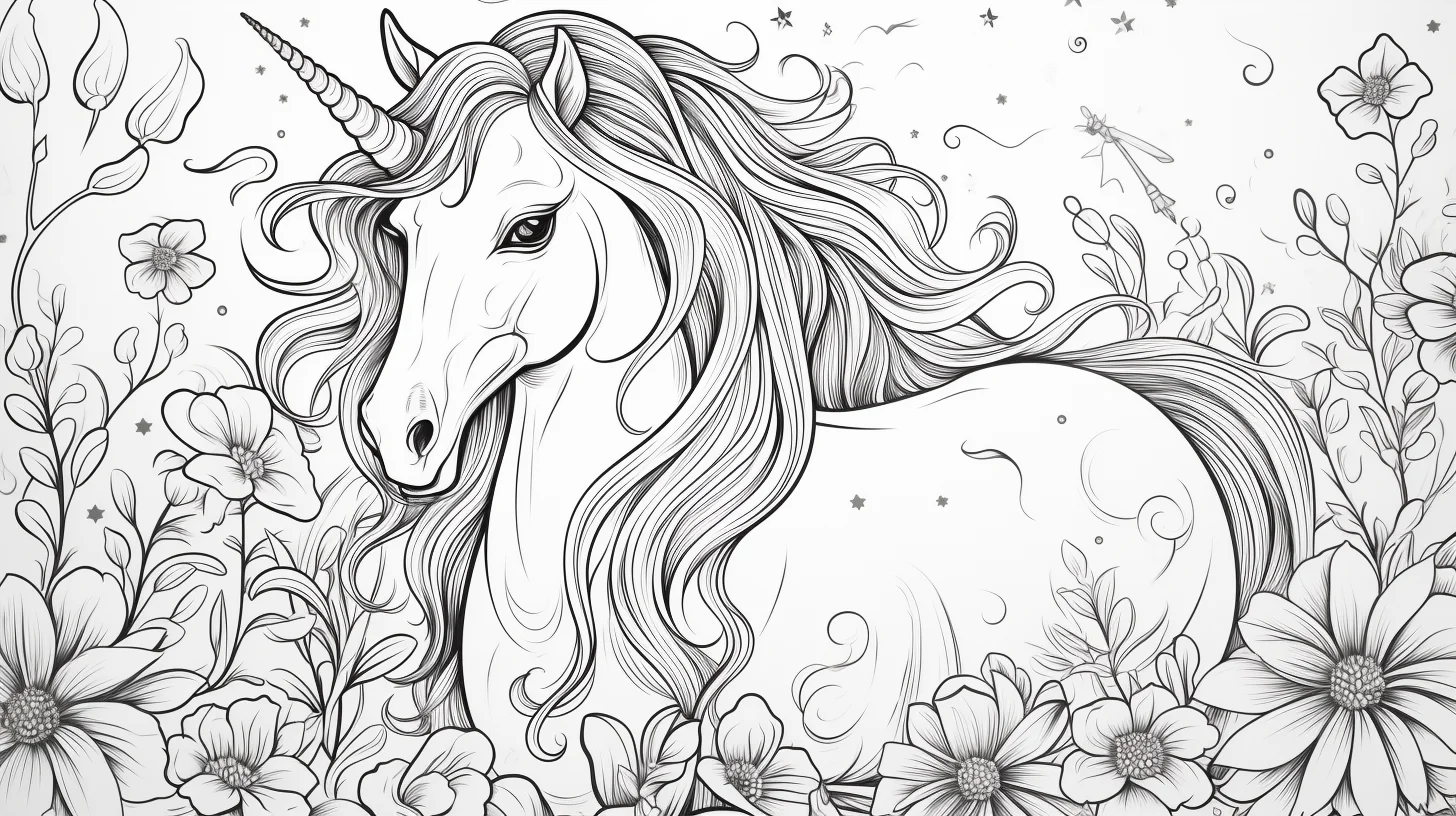
Choose by the time you have, not just by age
A useful way to pick from this mixed gallery is to decide how long you actually want to color. A large unicorn with an open mane can be satisfying in a short session; a page with narrow hair sections or scenery rewards slower pencil work. For a mixed-age table, print one open design and one denser design rather than expecting everyone to finish the same sheet.
- 10-minute page: large body, broad mane and little background detail.
- 20–30 minute page: several mane sections, accessories or a few background objects.
- Longer session: smaller repeated shapes and tighter spaces that benefit from sharpened colored pencils.
A simple method for coloring a unicorn mane
- Choose one main mane color and a lighter neighboring color.
- Color each lock lightly from root to tip instead of filling it at full pressure immediately.
- Add the darker color near overlaps and where one lock passes behind another.
- Leave a narrow strip of paper showing on the bend of a lock; that white gap acts as a highlight.
- Repeat the same light–dark pattern in the tail so the character feels consistent.
If every strand is a different saturated color, the small sections can become visually noisy. For a rainbow mane, repeat three or four colors in order rather than choosing a new color for every shape.



Three palettes that stay readable on paper
These pages work especially well with a small palette because the unicorn remains the focal point. Try one of these combinations, then change the exact shades to whatever supplies you have.
- Soft fantasy: pale lavender body, pink mane, light blue accents and a small amount of yellow for the horn or stars.
- Moonlight: cool gray or very pale blue body, navy-to-blue mane, violet accents and an uncolored white highlight.
- Warm storybook: cream body, coral and peach mane, muted green background details and gold-yellow accents.
For younger children, reduce any palette to three colors: body, mane/tail and accent. Limiting choices makes the page faster to finish and prevents the wide landscape sheets from becoming a collection of unrelated colors.
Crayons, pencils or markers?
Crayons suit the largest baby-unicorn shapes and tolerate quick coloring. Colored pencils are the most forgiving choice for narrow mane sections because pressure can be built gradually. Markers give clean, bright fills, but test them on a spare print first and put scrap paper underneath because ordinary printer paper can bleed through.
Diagnose the page before adding more color
When a unicorn page feels unfinished, adding more colors is often the wrong fix. Put the sheet on the table and look at it from about an arm’s length away. You should notice the unicorn’s face and silhouette before individual mane strands or background decorations. If you notice the background first, reduce its contrast; if everything blends together, strengthen one value difference rather than adding another hue.
| What looks wrong | Likely cause | Try this |
|---|---|---|
| White body disappears | No edge contrast | Keep most of the paper white, but place pale blue, lavender or gray under the belly, behind the legs and beside overlapping forms. |
| Mane looks flat | Every lock has the same value | Darken roots and overlaps, then leave a lighter strip through the bend of each lock. |
| Rainbow looks chaotic | Too many unrelated hues | Choose three or four colors and repeat their order through the mane and tail. |
| Face is hard to read | Heavy color around small features | Keep the muzzle and eye area lighter; sharpen the pencil only for the final small details. |
| Background competes with the unicorn | Equal saturation everywhere | Use lighter pressure or grayer versions of the background colors. |
| Pencil fill looks striped | Long strokes at high pressure | Use small overlapping circles or short strokes, then build a second light layer in another direction. |
A 10-minute practice sequence before a detailed sheet
- Minute 1–2: on scrap paper, make three swatches with the same pencil: barely touching the paper, medium pressure, and dark pressure. This becomes your value scale.
- Minute 3–5: color one mane lock from dark at the root to light at the bend and back toward medium at the tip. Avoid outlining the entire lock.
- Minute 6–7: test the body color beside the mane color. If both look equally dark in grayscale or at a distance, lighten one so the silhouette stays clear.
- Minute 8–10: choose one accent color for the horn, stars, flowers or accessories. Use it in two or three small places instead of introducing a new color for every decoration.
This short test is most useful before one of the tighter sheets in this bonus gallery. It catches pressure and palette problems on scrap paper, where they are easy to change, rather than halfway through the printable.

Use the right unicorn collection
This page is intentionally the extra-choice gallery, not another difficulty guide. If you need large, forgiving shapes for younger children, use our baby and easy unicorn coloring pages. If you want to progress deliberately from simple outlines toward tighter detail, use the unicorn pages arranged by difficulty. Keeping those jobs separate makes it easier to find the right printable without scrolling through three nearly identical collections.
Print the wide sheets without cropping them
- Open the full-size image by clicking the printable you want.
- Choose landscape orientation for a wide image and portrait orientation for a tall image.
- Select “fit to page” or the equivalent scaling option rather than “actual size” if the preview cuts off the horn, hooves or border.
- Check the preview before printing; printers reserve different amounts of non-printable margin.
If you are printing from a phone or a browser that hides scaling controls, our coloring-page printing guide covers the common print and save options.
Quick practice: make one page look three different ways
Print the same simple unicorn three times. On the first, use only warm colors; on the second, use only cool colors; on the third, use a mostly neutral unicorn with one bright accent. Keep the line art identical. Comparing the finished sheets makes it immediately obvious how palette—not extra detail—changes the mood and focal point.
Frequently asked questions
Which sheets are easiest for young children?
Choose pages with a large unicorn body, broad mane sections and little scenery. Large enclosed shapes require less fine motor control than pages filled with narrow hair strands or small decorations.
Can I leave the unicorn white?
Yes. Instead of filling the body, add a very light cool shadow around the underside, legs and overlapping forms. The untouched paper becomes the highlight, so the unicorn still reads as white without disappearing.
What paper should I use?
Standard printer paper is fine for crayons and most colored pencils. For markers, heavier paper is more comfortable when your printer accepts it, and a spare sheet underneath helps protect the surface below.
Why do some sheets look better in landscape orientation?
Many images in this bonus collection are wider than they are tall. Matching the printer orientation to the image preserves more printable area and reduces unnecessary scaling.

