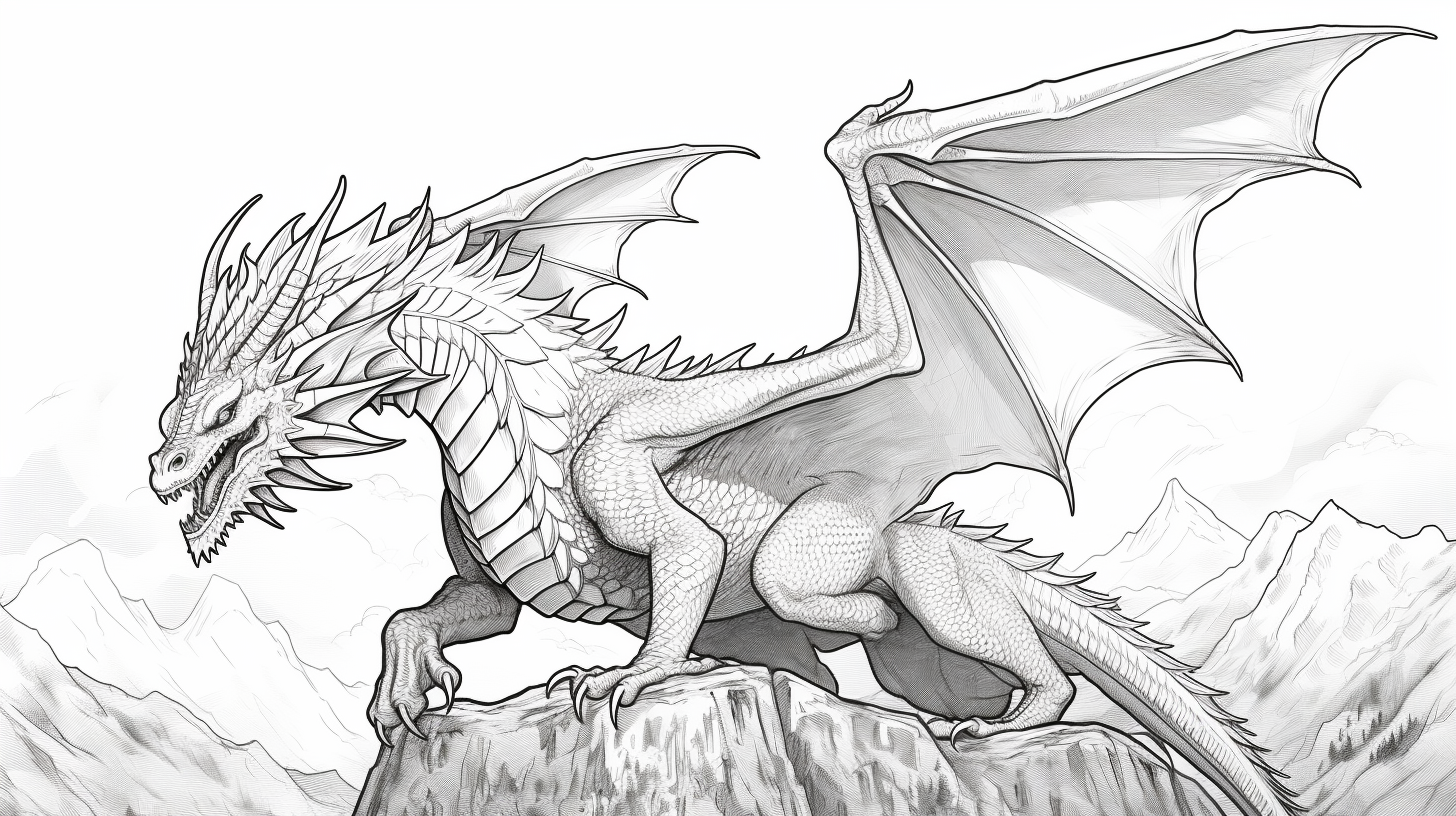
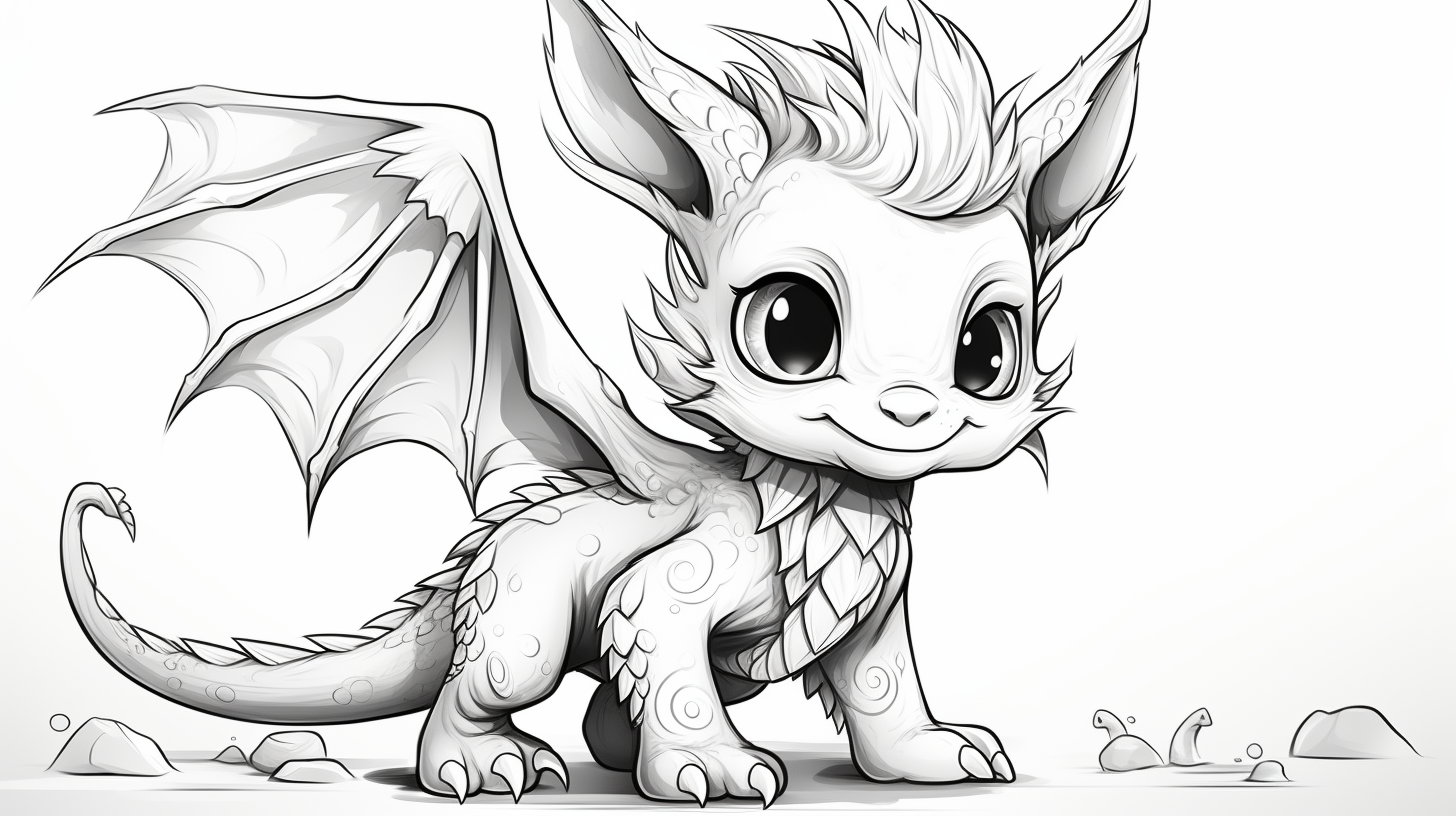
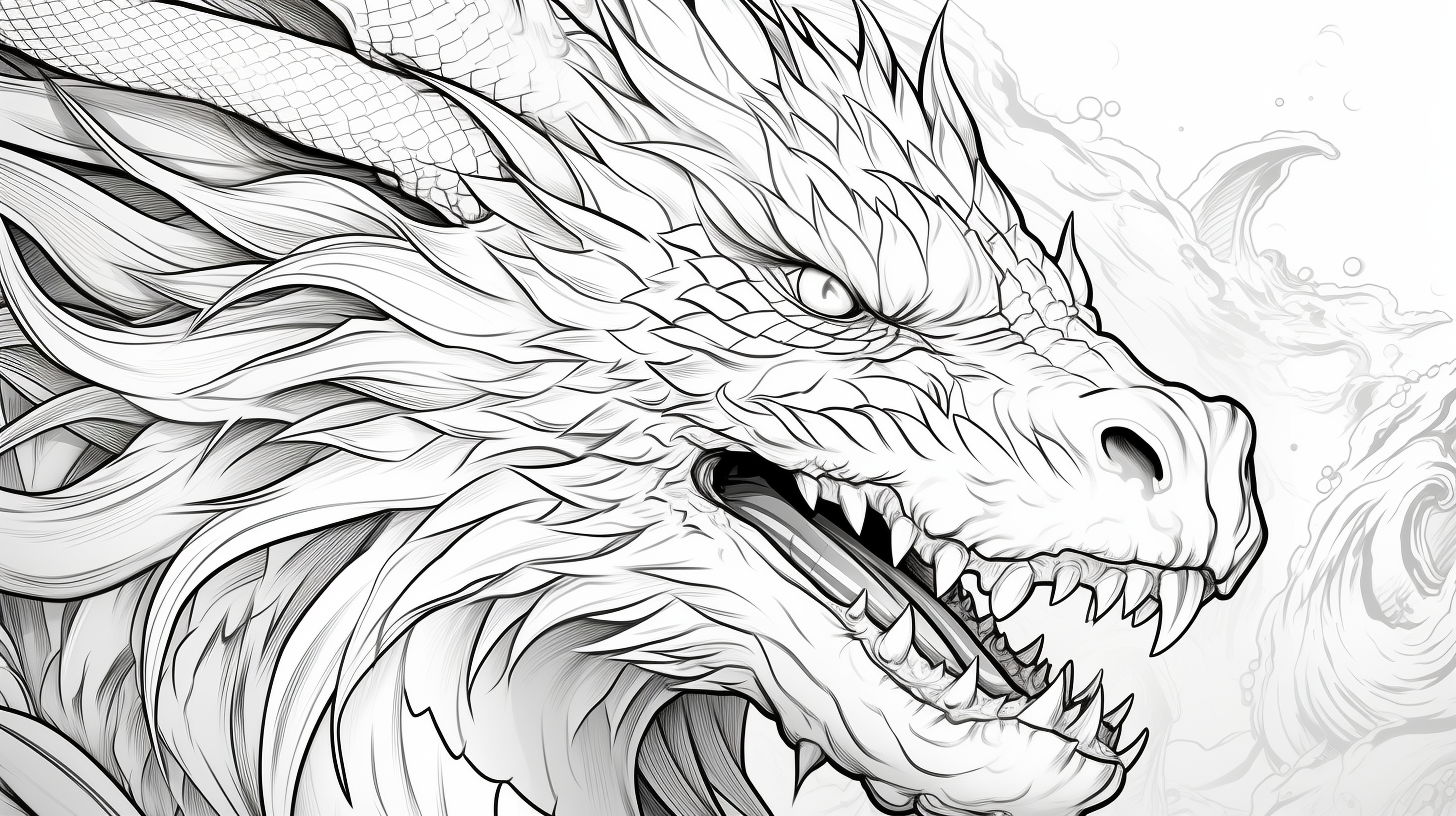
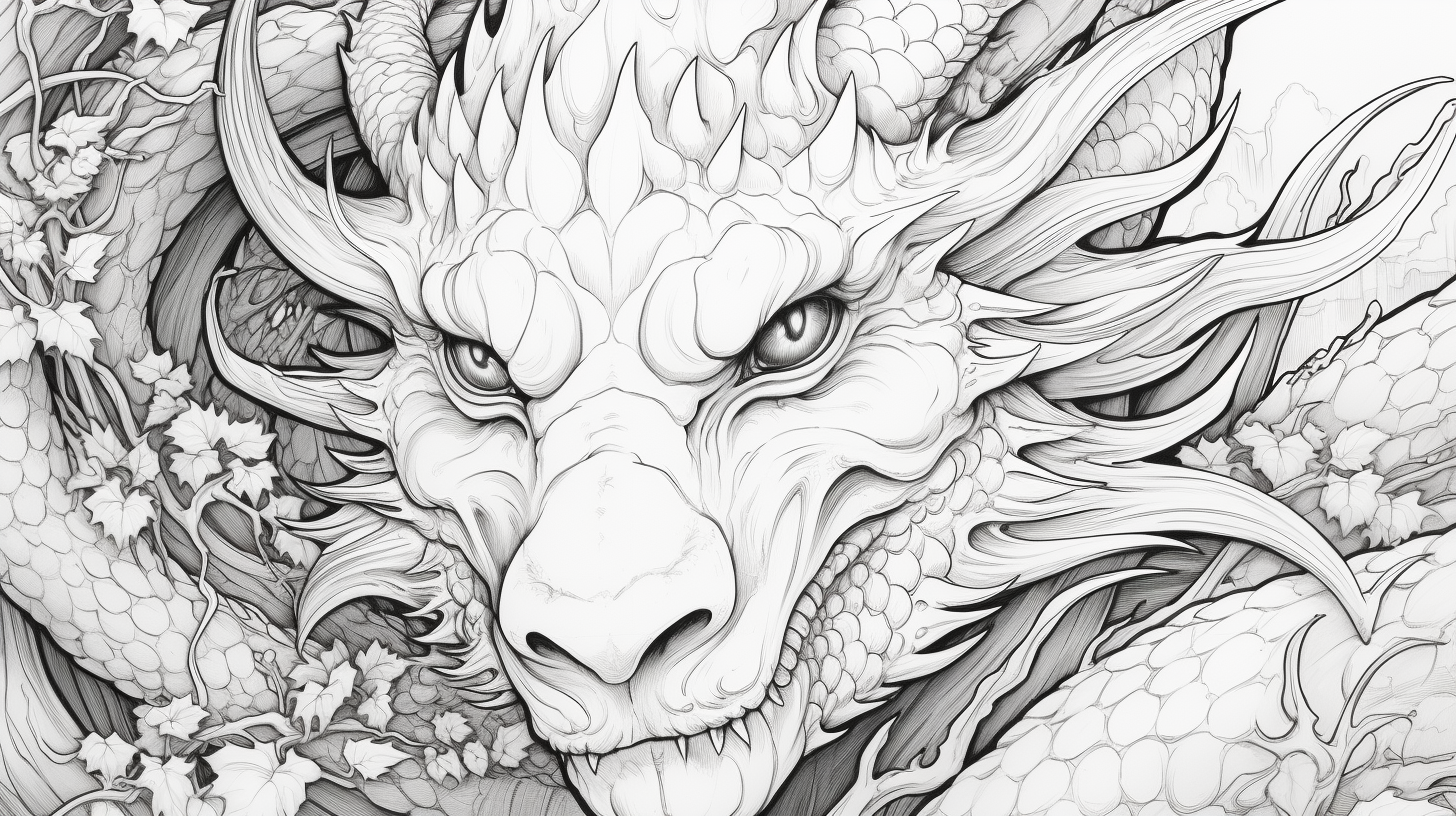
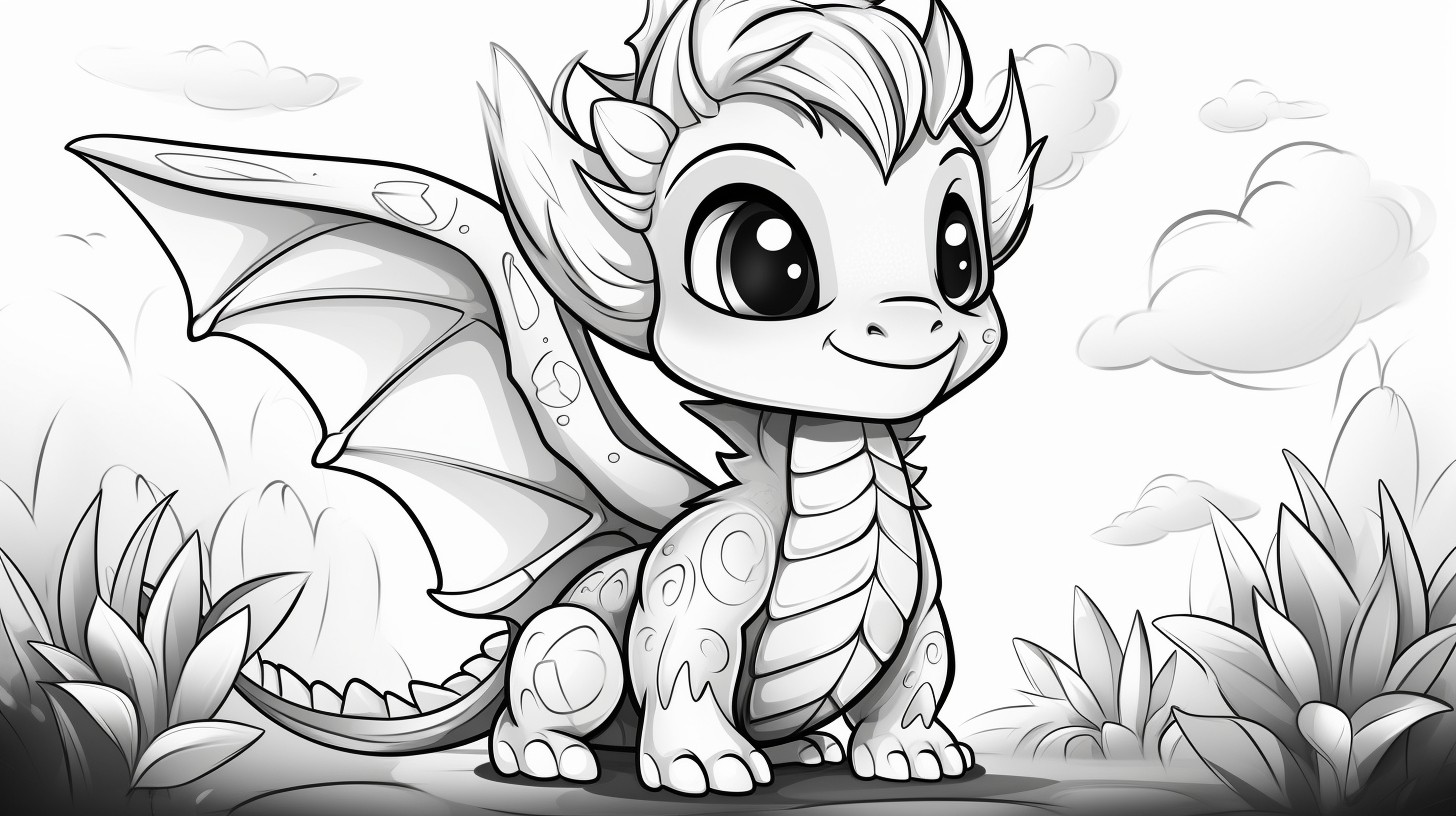
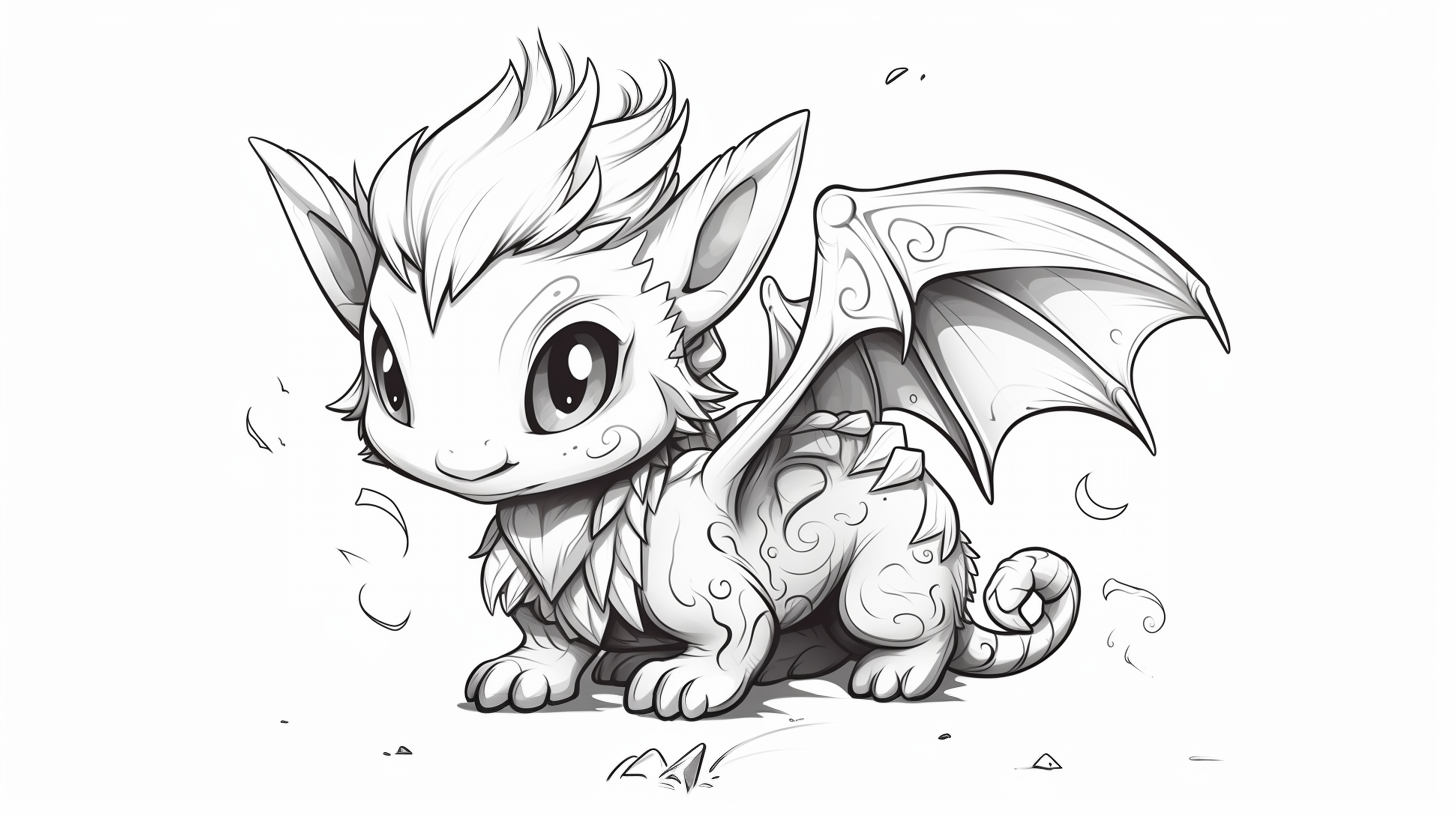
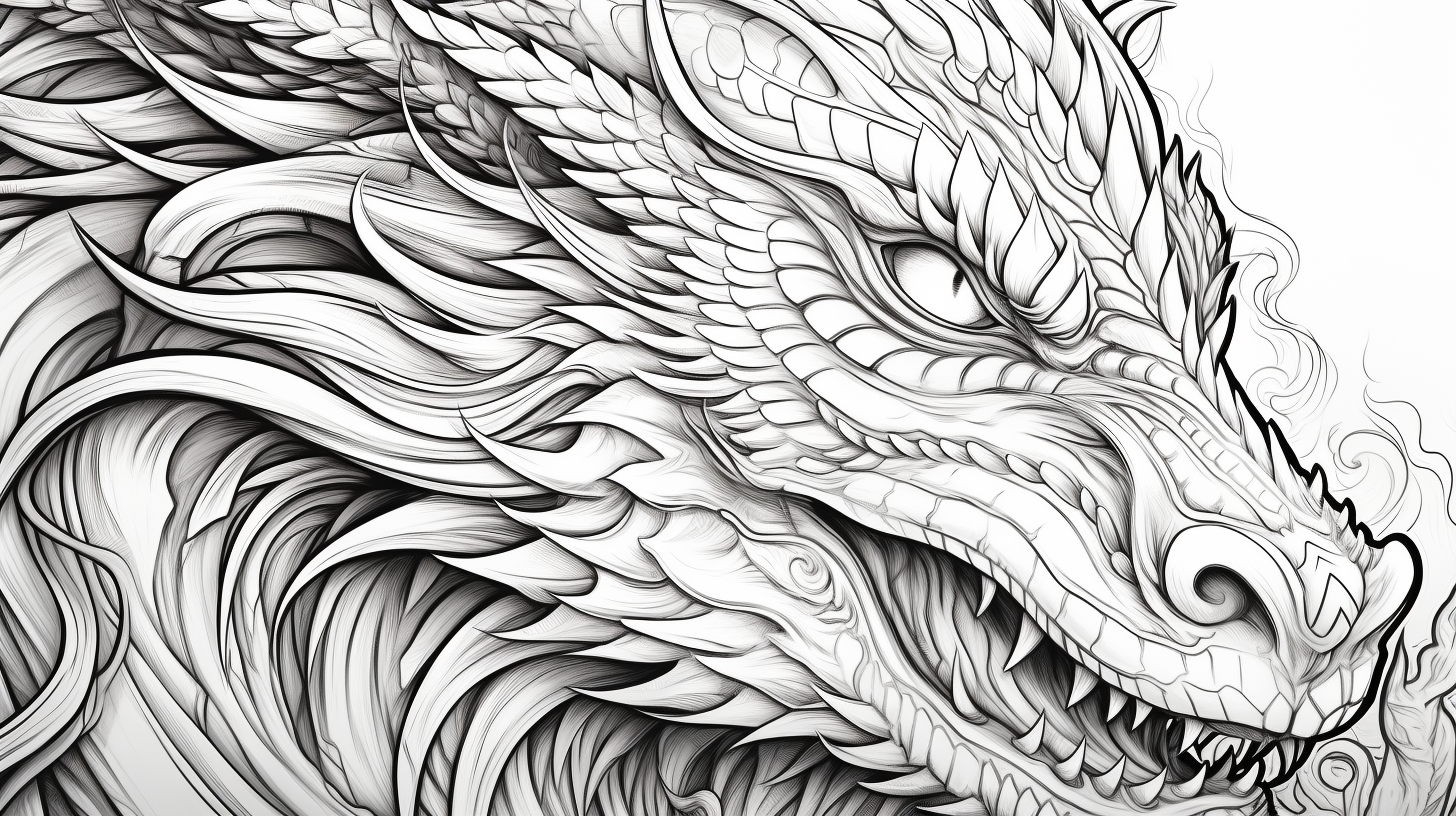
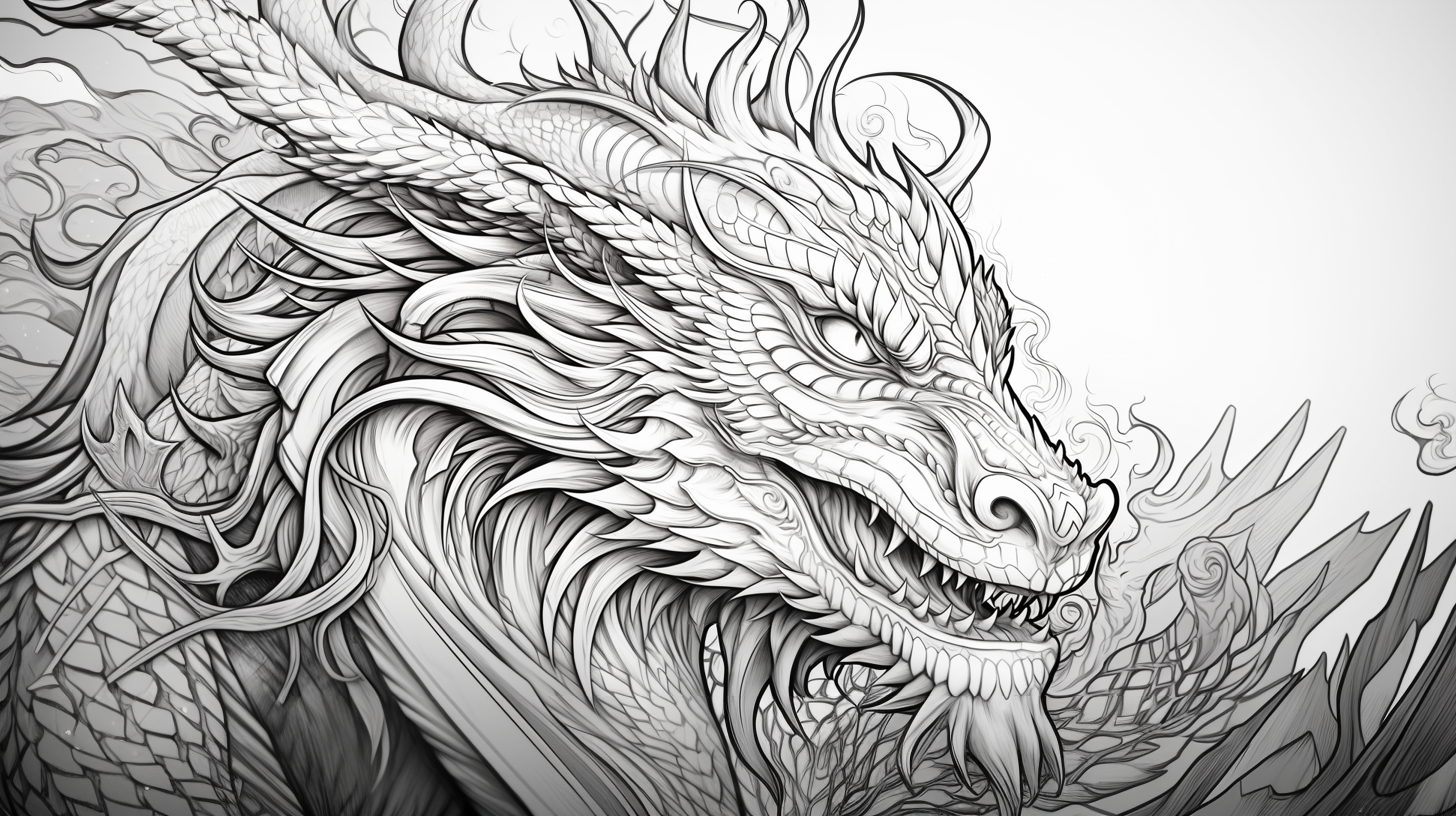
This gallery contains 20 dragon coloring pages ranging from cute baby dragons to more detailed fantasy and realistic designs. Most sheets are landscape-oriented, so they usually print best in landscape mode.
Choose the dragon collection that fits
| Collection | Best for |
|---|---|
| This 20-page landscape set | A wide-format mix of cute, realistic and detailed dragons. |
| 26 portrait dragon pages | Vertical cute, fire-breathing, baby and realistic dragons. |
| 31 square dragon pages | 1024 × 1024 fantasy designs that work well when you prefer a centered square composition. |
| 33 baby dragon pages | Flying, sleeping, chubby and kawaii baby dragons with more simple options. |
| 23 realistic dragon pages | Detailed portraits, battle scenes, riders, castles and advanced fantasy designs. |
Choose by difficulty inside this 20-page set
| Sheets | What you will find | Best tools |
|---|---|---|
| 1–6 | Cute and easy dragons with larger sections | Crayons or broad pencils |
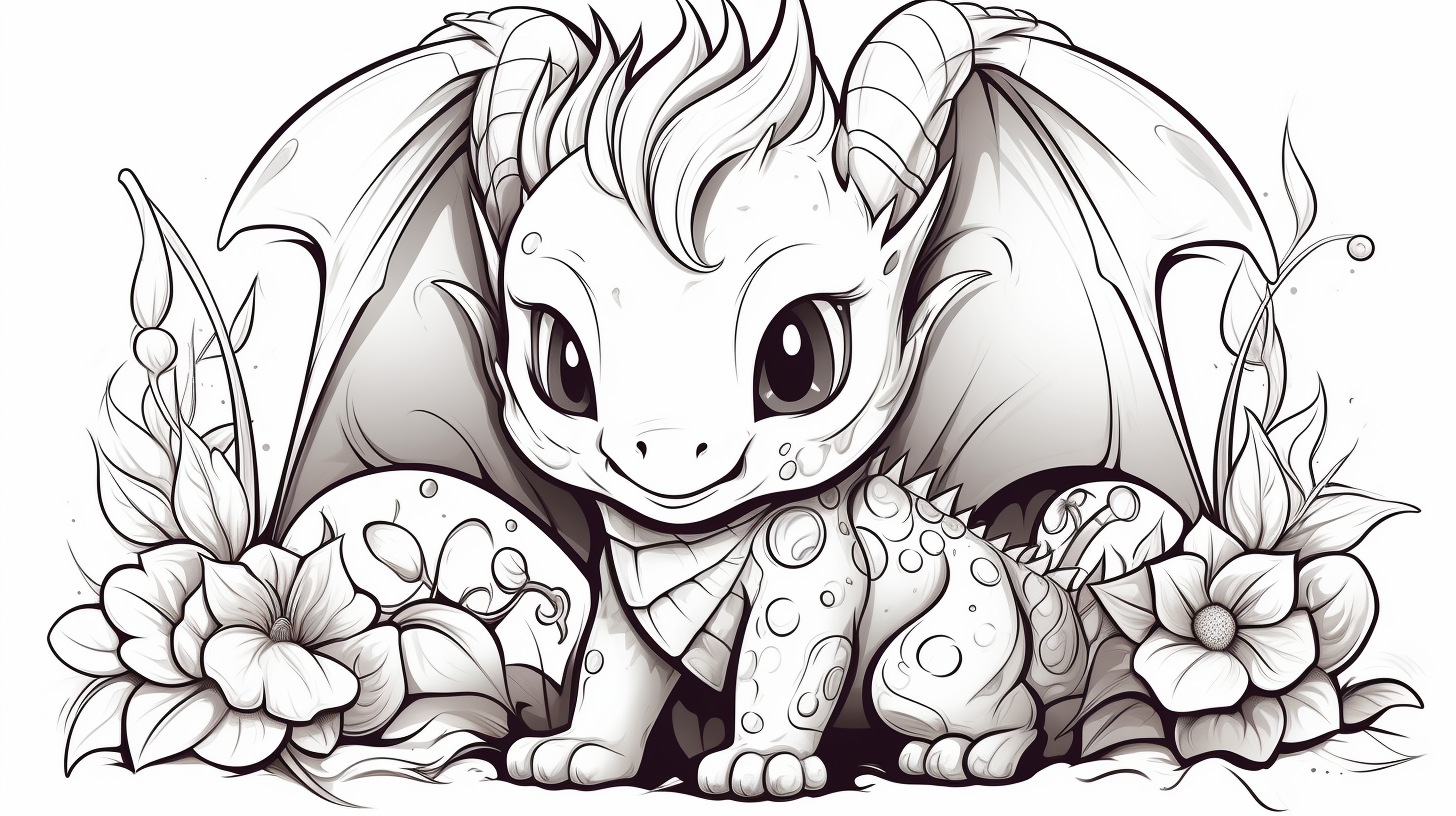
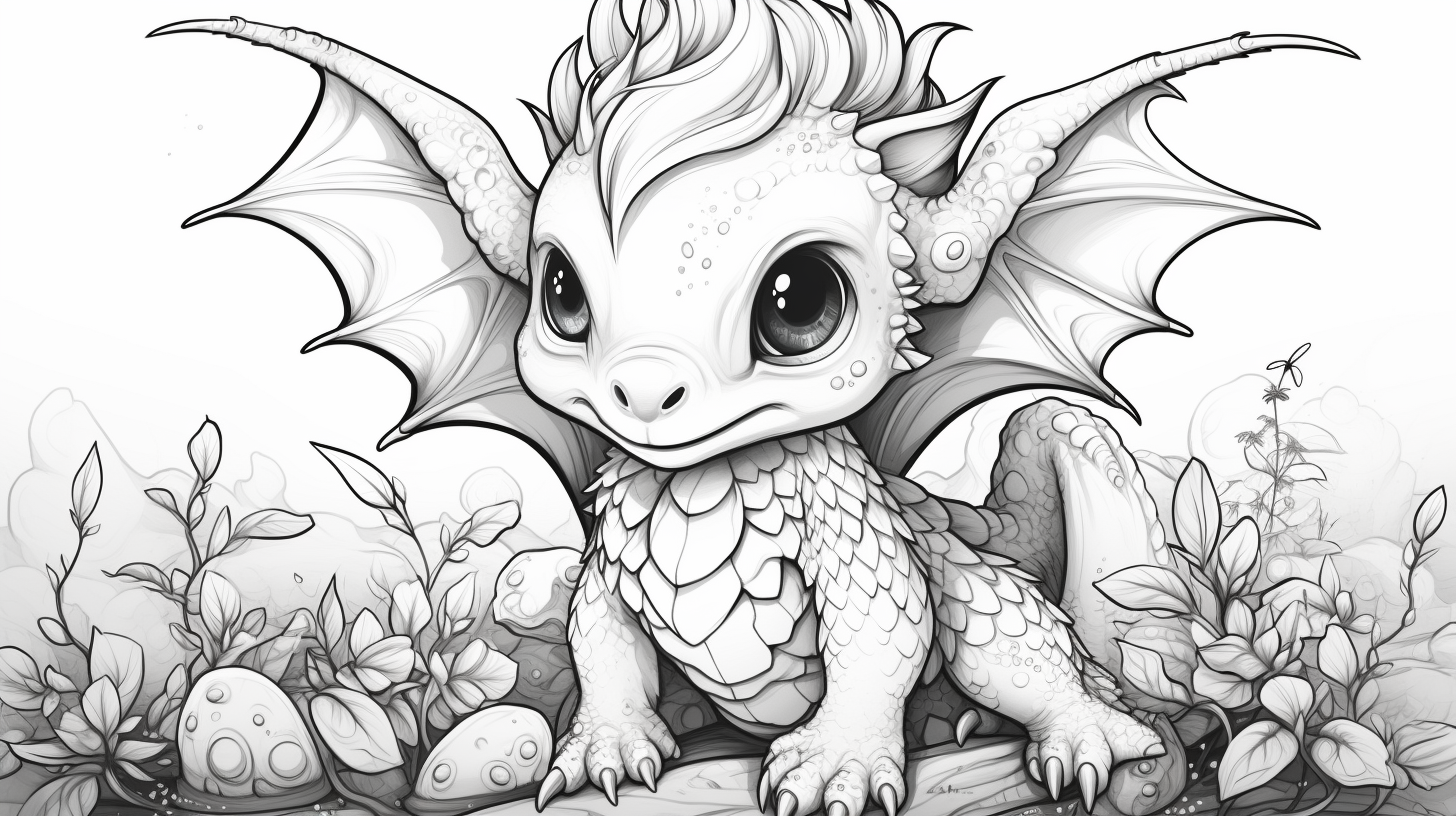
| 7–9 | Baby dragons with softer, simpler shapes | Crayons or colored pencils |
| 10–13 | General fantasy dragon printables | Colored pencils |
| 14–20 | Adult, hard and realistic designs | Sharp pencils or fine-tip markers |
A simple way to color wings and scales
Choose the body color first. Then decide whether the wings should be a lighter version of that color or a contrasting second color. Keeping the wing membrane different from the wing bones makes even a simple dragon easier to read.
On detailed dragons, do not give every scale a separate color. Use one base color across a larger area, then darken a few rows or edges. Save the smallest horns, claws and scale accents for last.
- Lay down the main body color.
- Add a second tone to the belly, wing membranes or larger scales.
- Darken the underside of the neck, body and tail for depth.
- Add horns, claws, eyes and tiny decorative details last.
How to print
All 20 sheets in this collection are landscape-oriented. Click or tap the dragon to open the original full-size file, save it, then print in landscape mode using Fit to page. Check the preview so wing tips and tails are not clipped.
Cute and easy dragons — Sheets 1–6
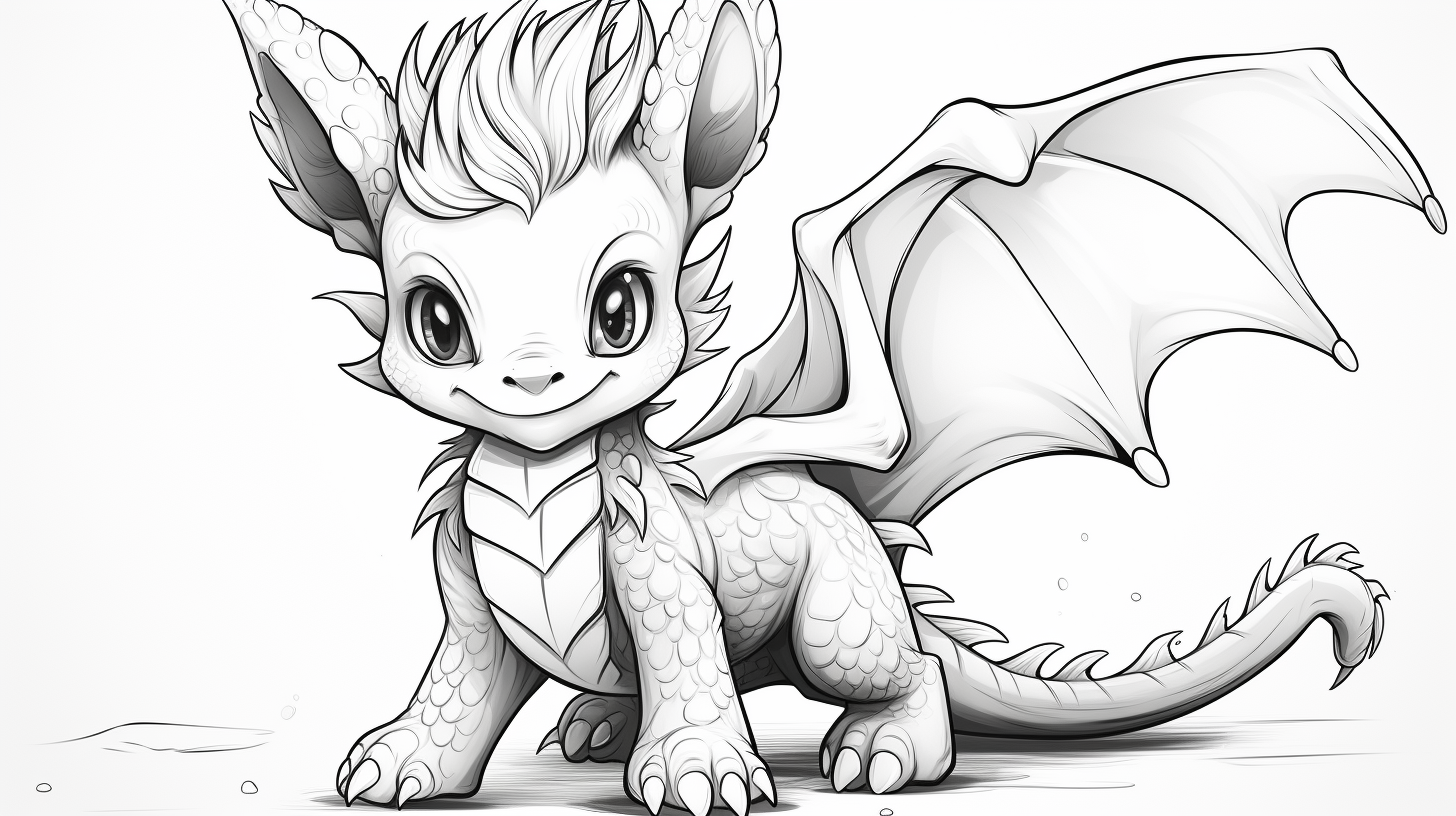
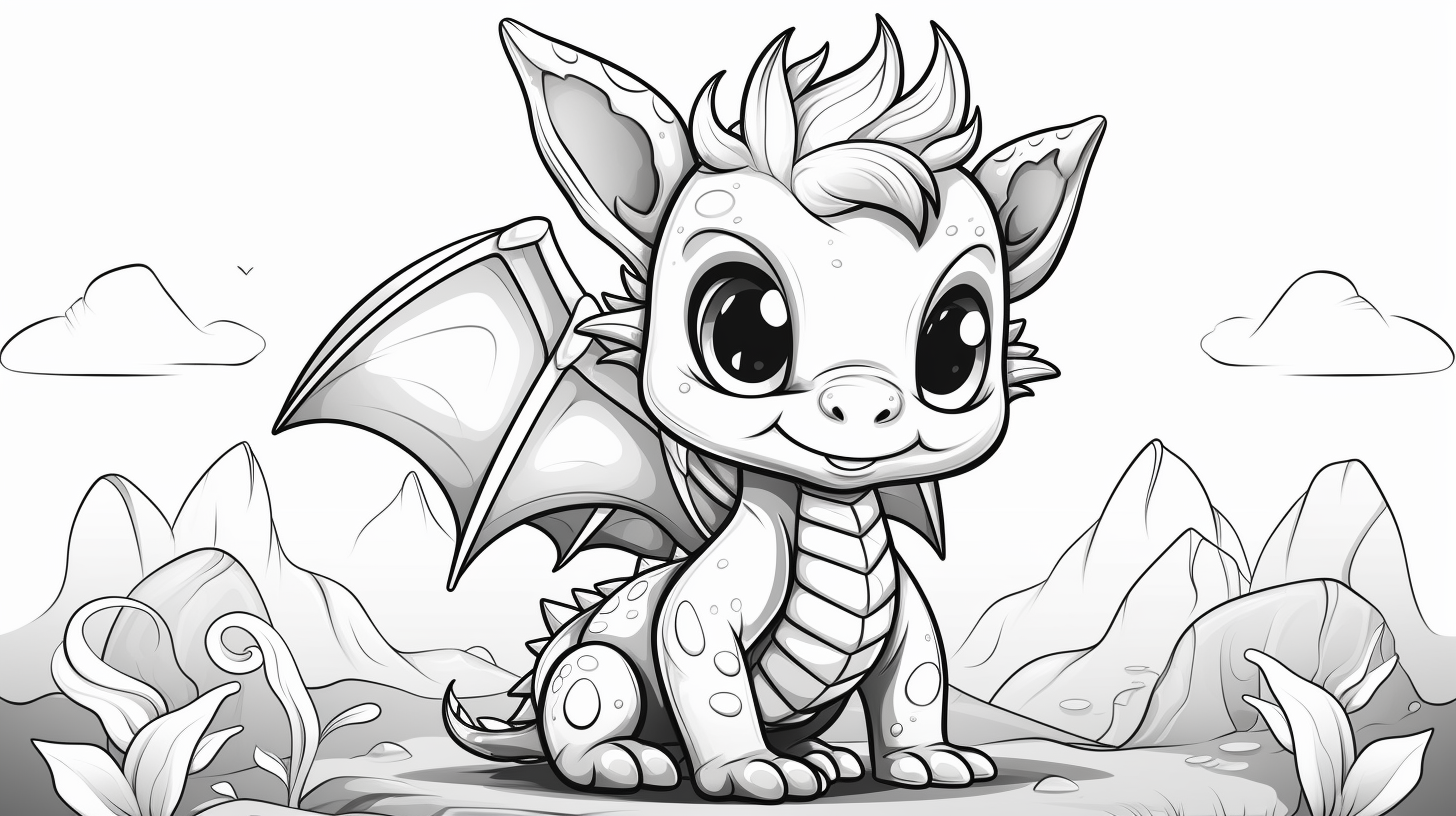
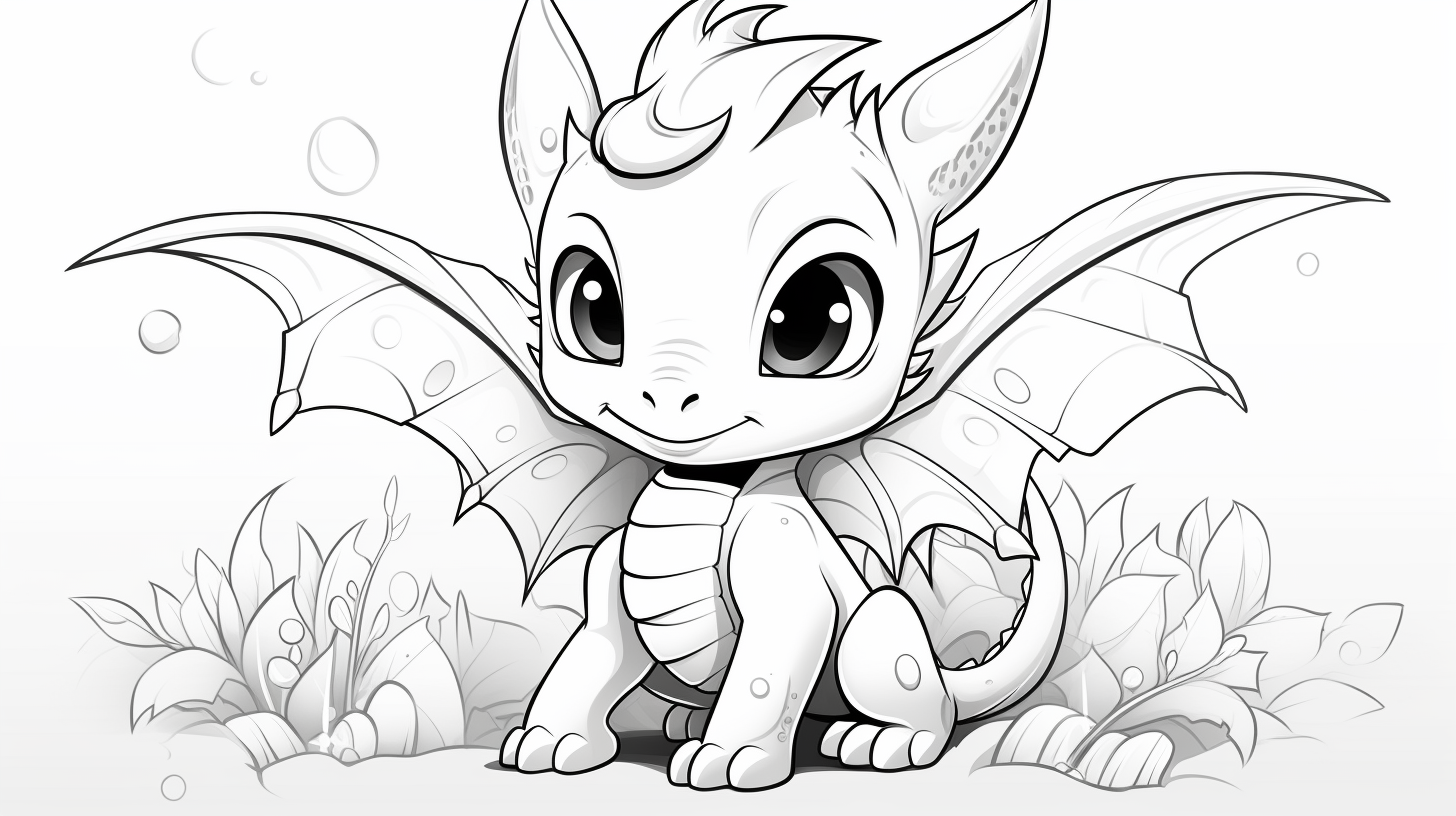
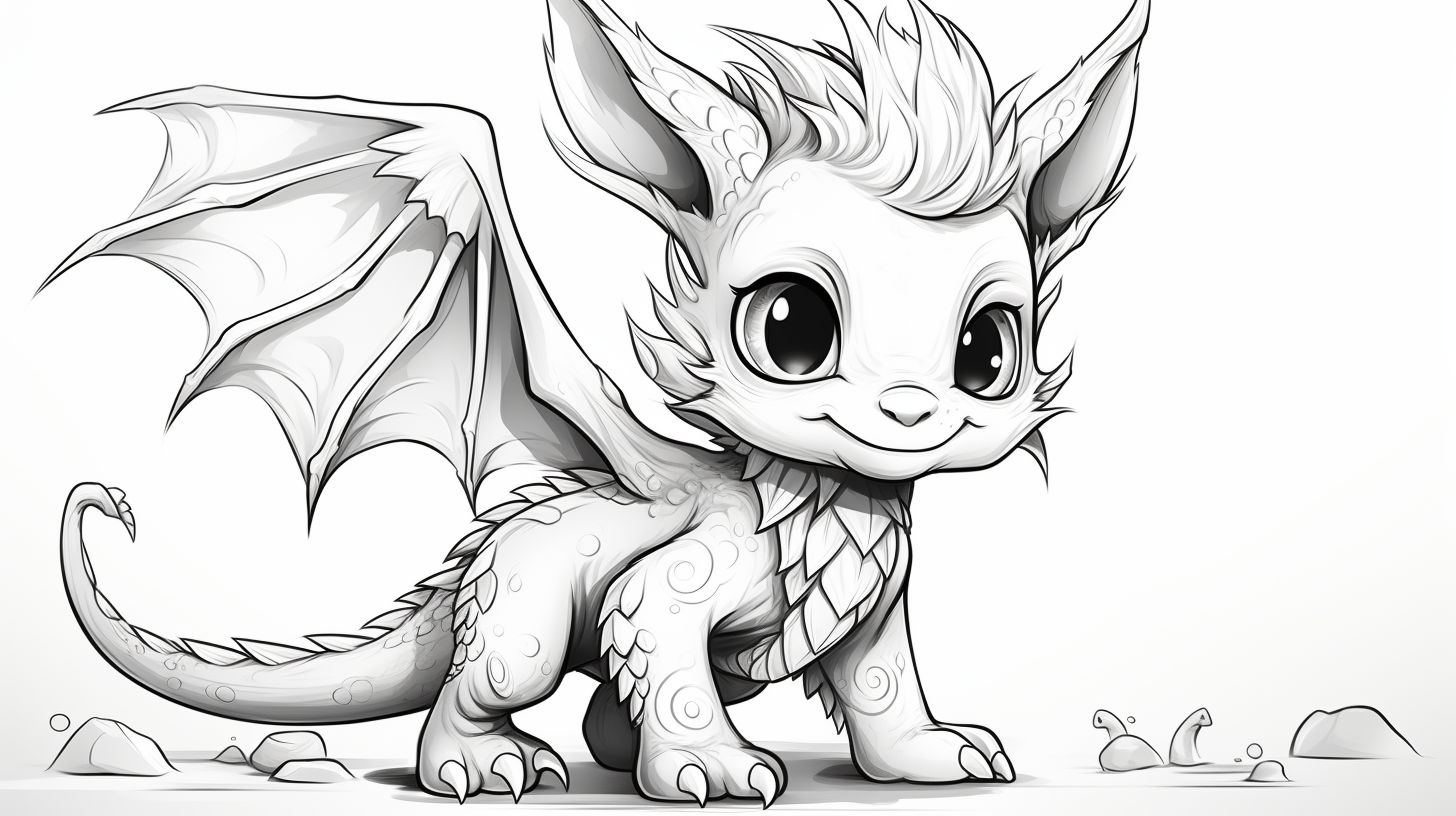
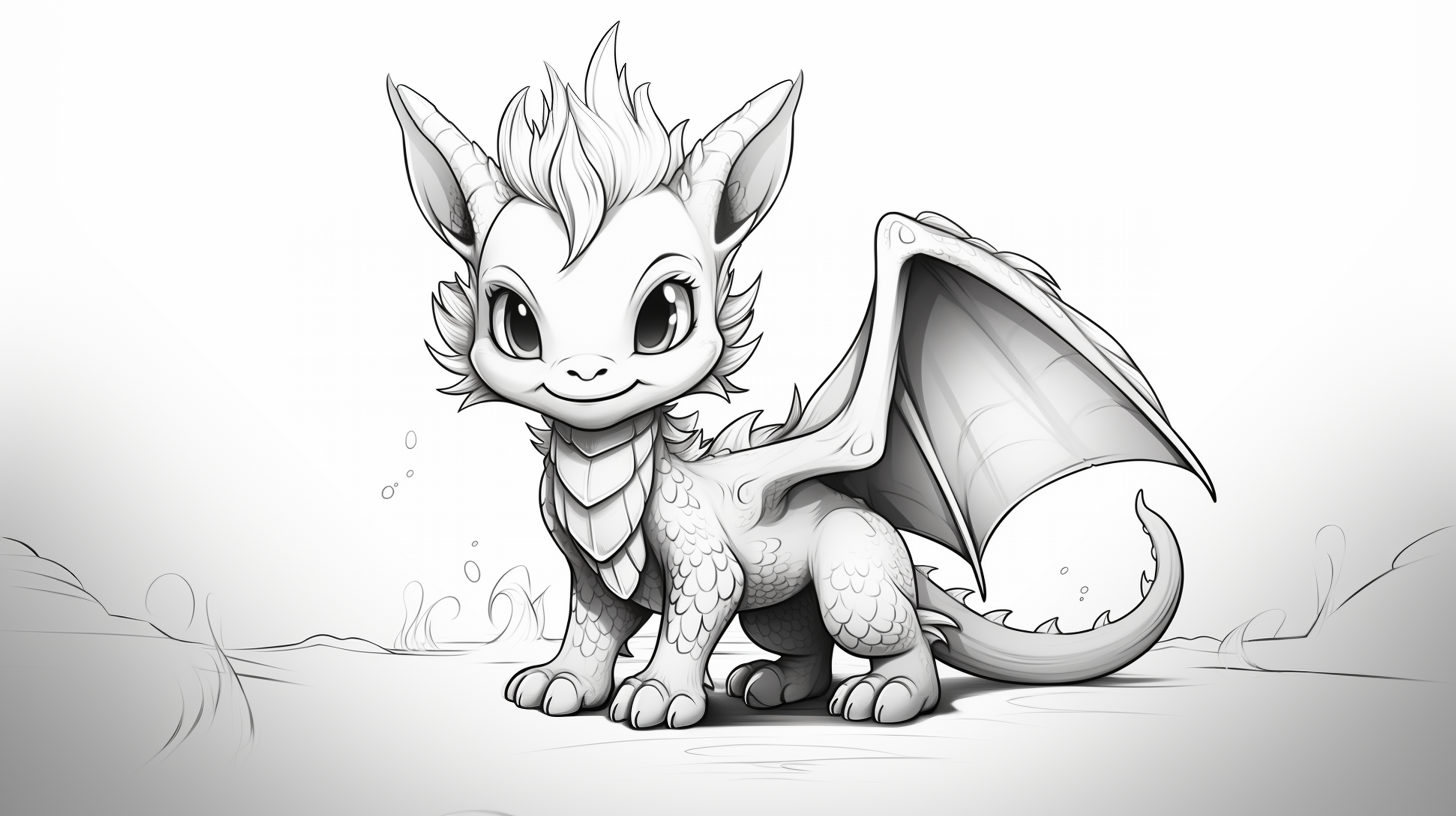
These are the quickest pages in this landscape set. Keep the body to one or two main colors and use the horns, belly or wings as accents instead of trying to make every small feature different.
Baby dragons — Sheets 7–9
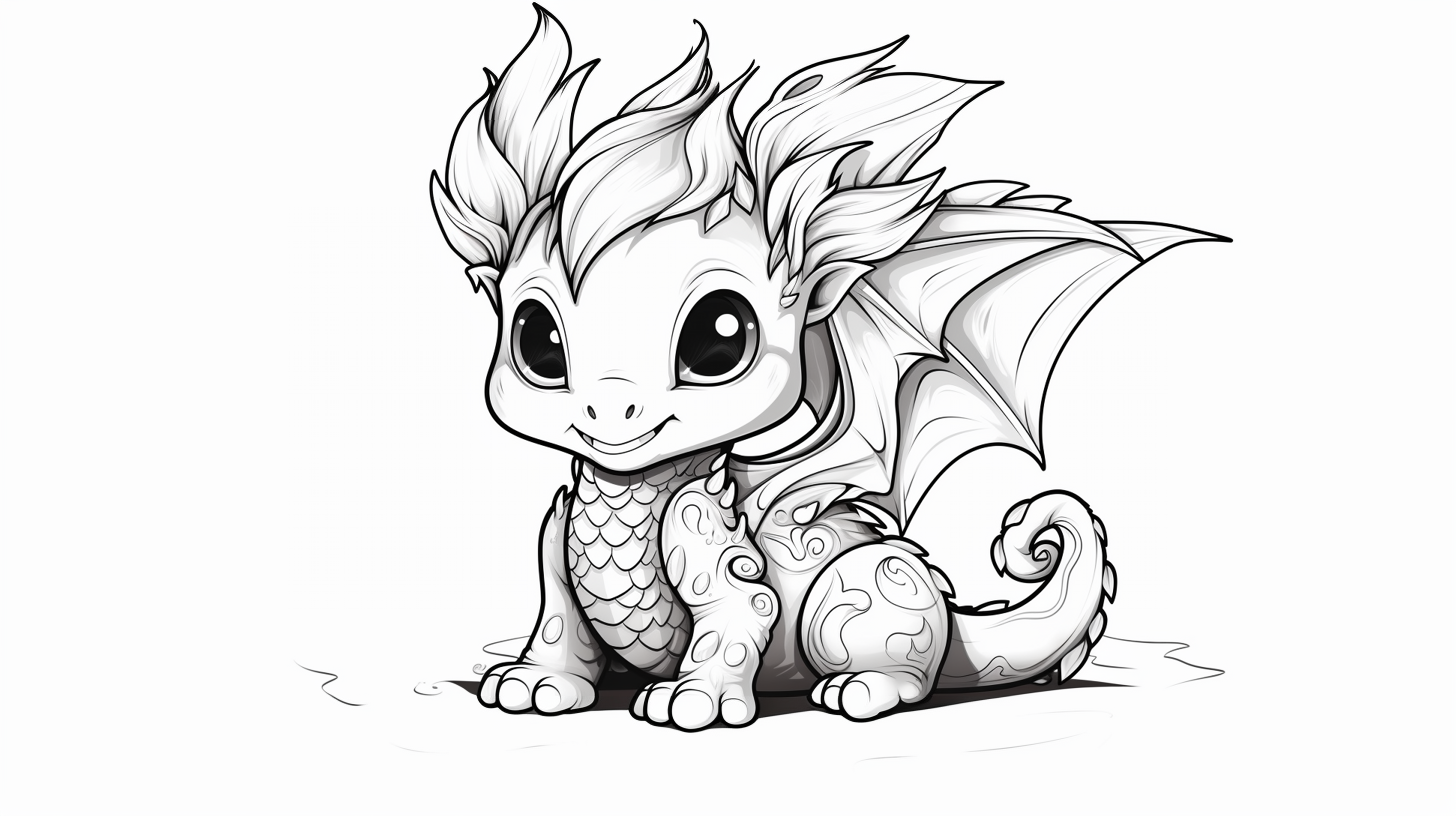
Baby dragons work well with softer color transitions. A pale body with slightly darker wings, horns or belly scales keeps the page gentle without making it look unfinished.
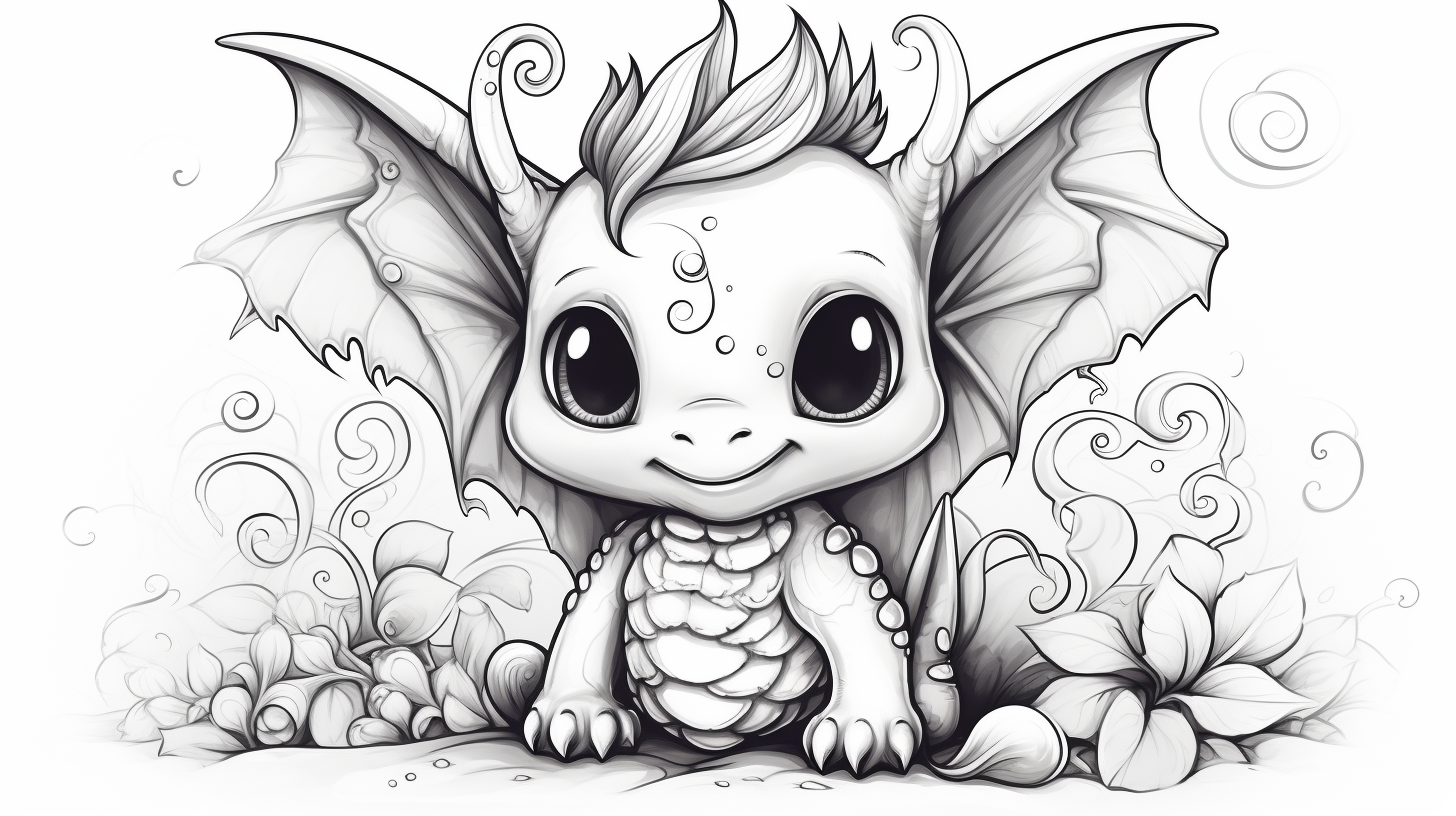
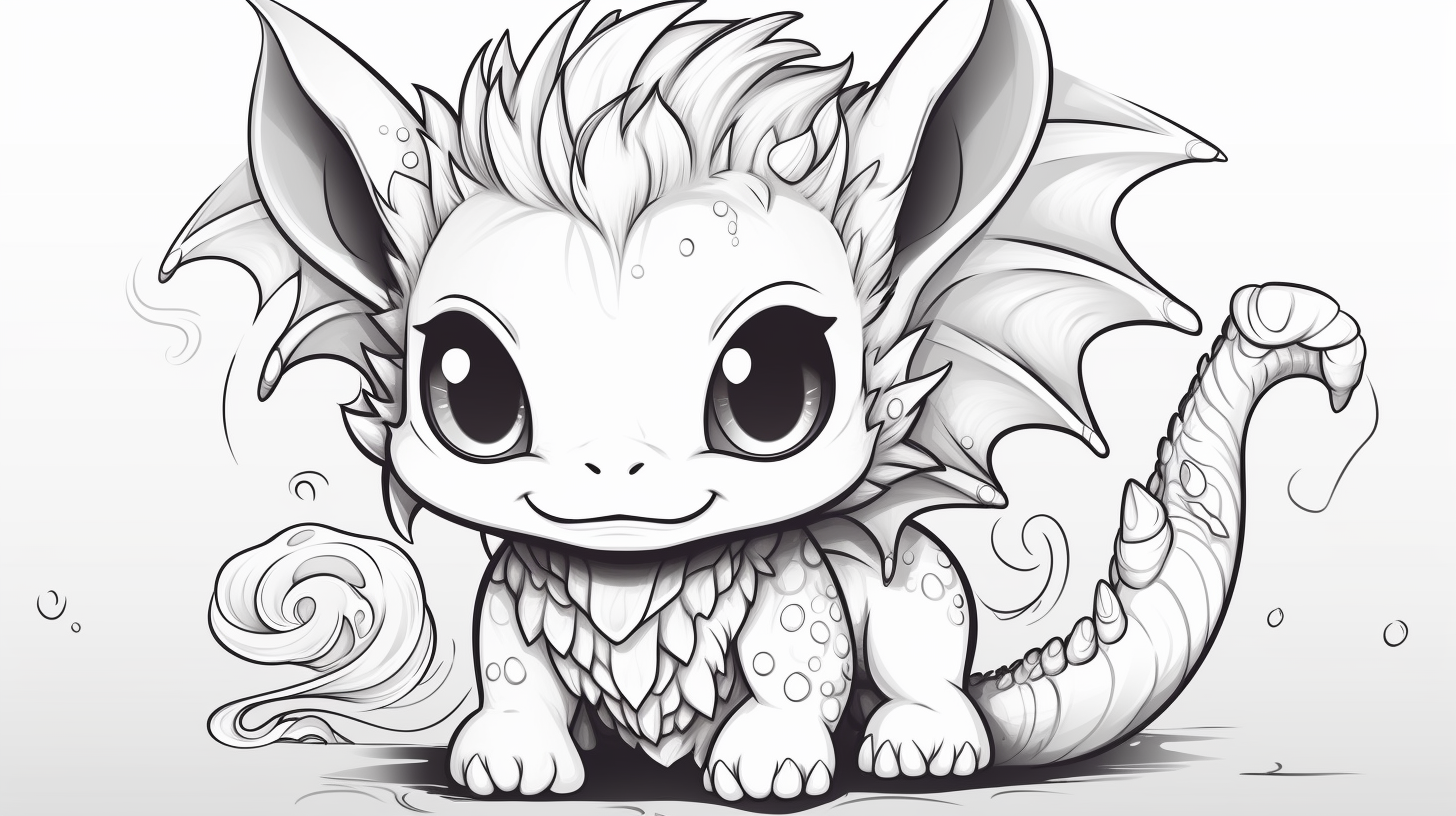
General fantasy dragons — Sheets 10–13
These pages are a good middle ground when you want more character than the easy sheets but not the dense linework of the realistic set. Use one dominant body color and reserve the strongest contrast for wings, eyes or horns.
Detailed and realistic dragons — Sheets 14–20
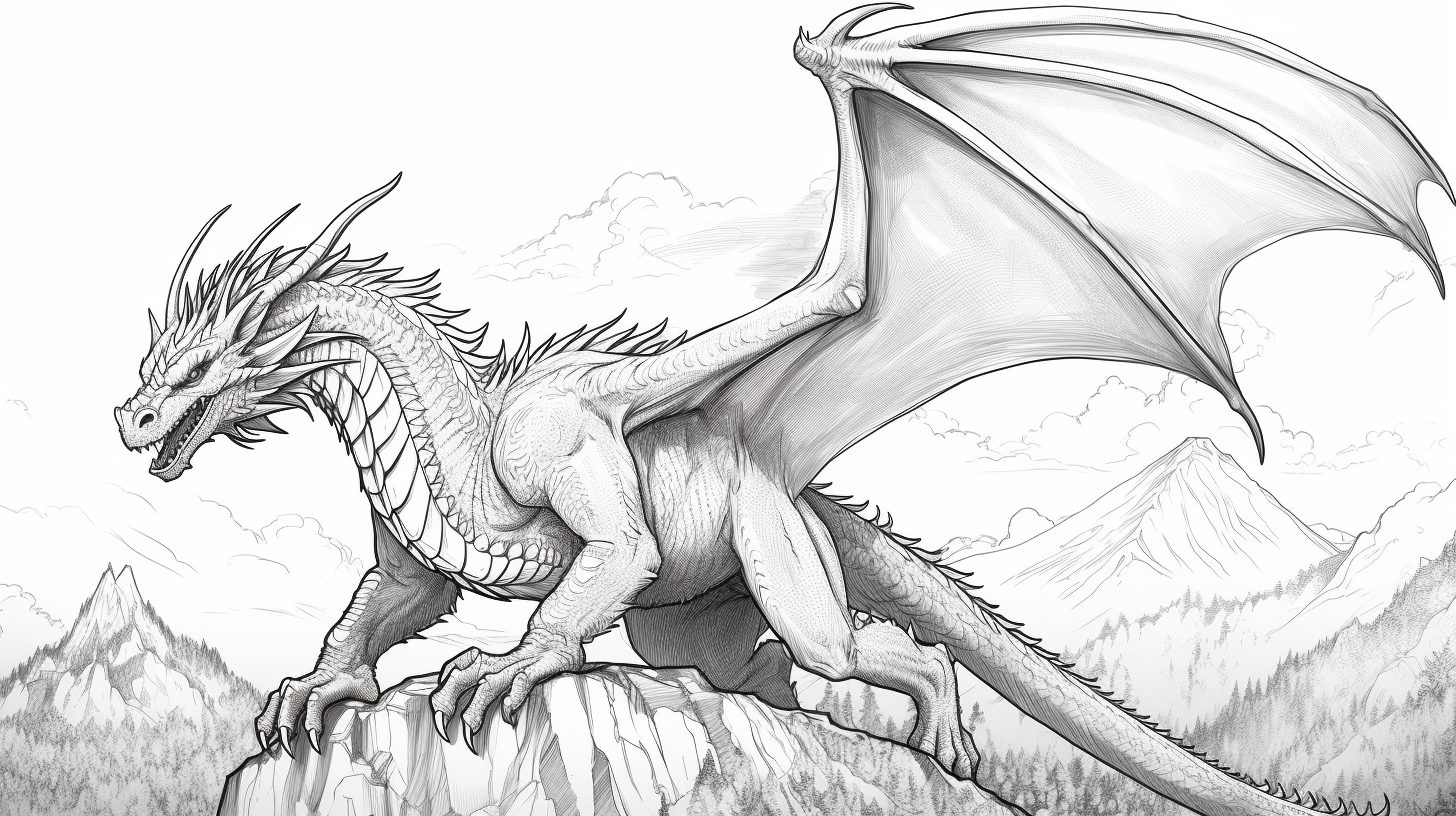
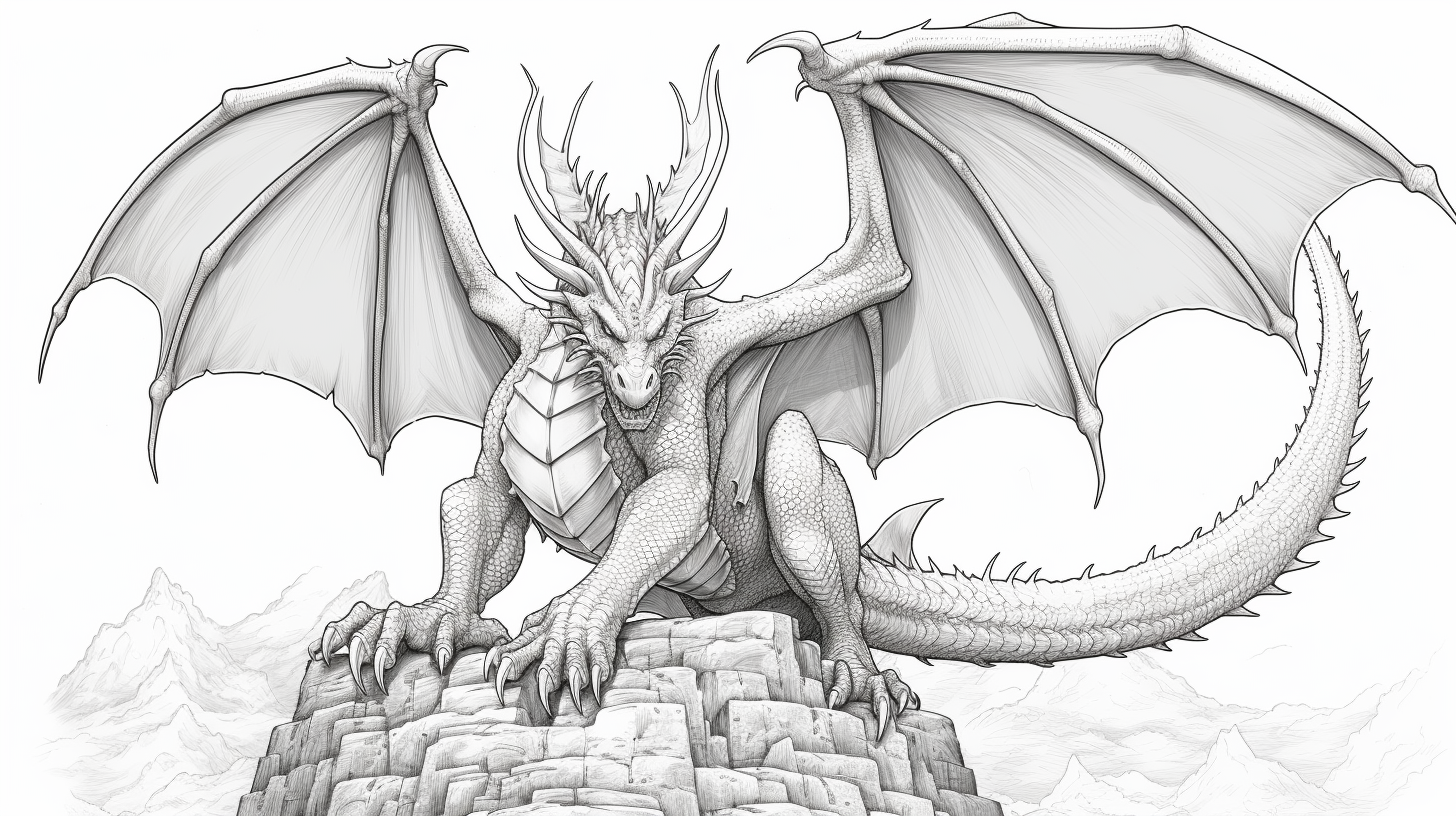
These sheets have the most small sections. Work in larger color families rather than coloring each scale independently; that keeps the dragon readable and makes the details feel intentional instead of noisy.