
Twenty-three realistic dragon coloring pages, from close-up portraits to full-body dragons, flying scenes and large battles. Click any image to open the original full-size printable.
Jump to: portraits · full-body dragons · flying & landscapes · riders & battles
Realistic dragon portraits — Sheets 1–4
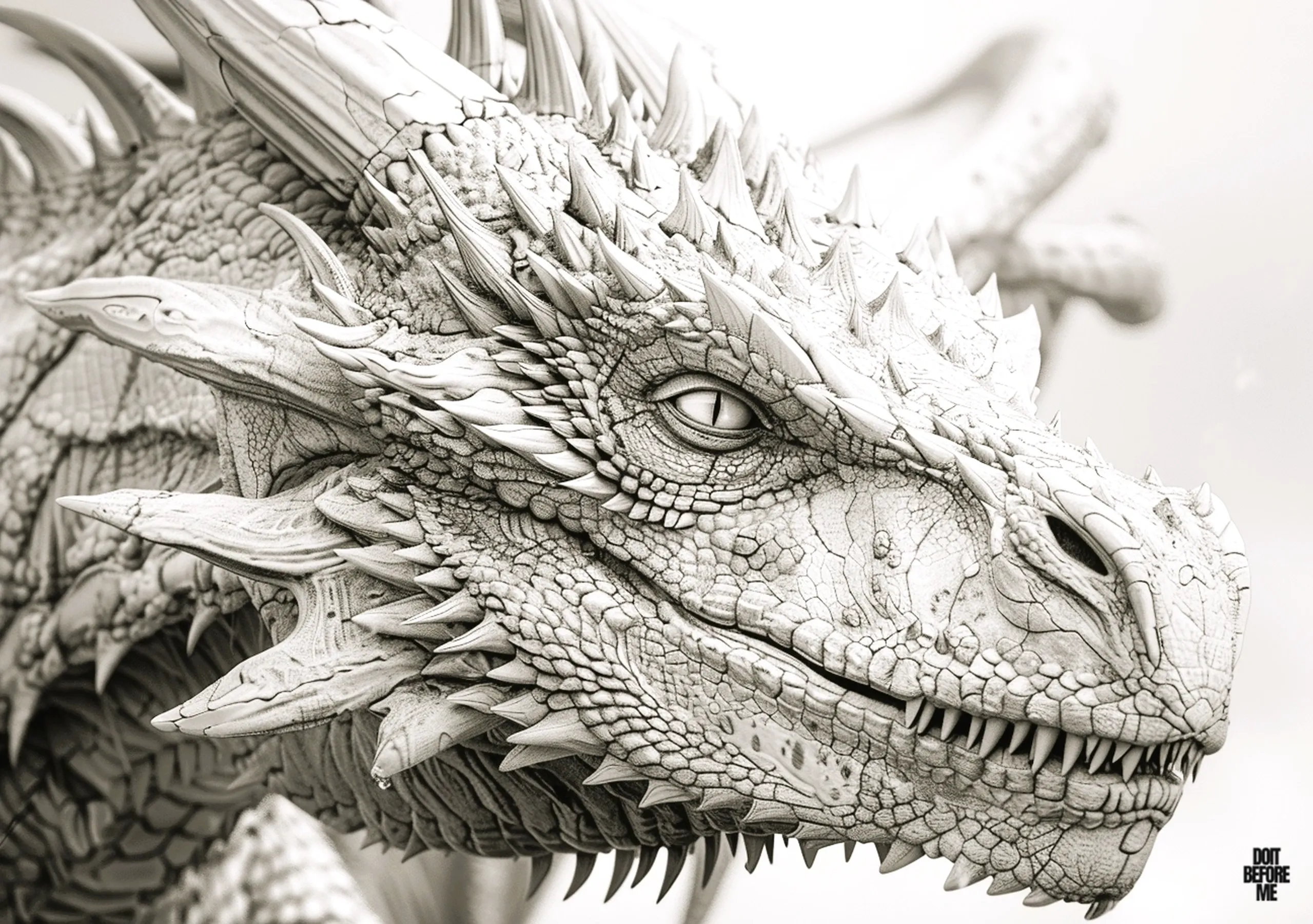
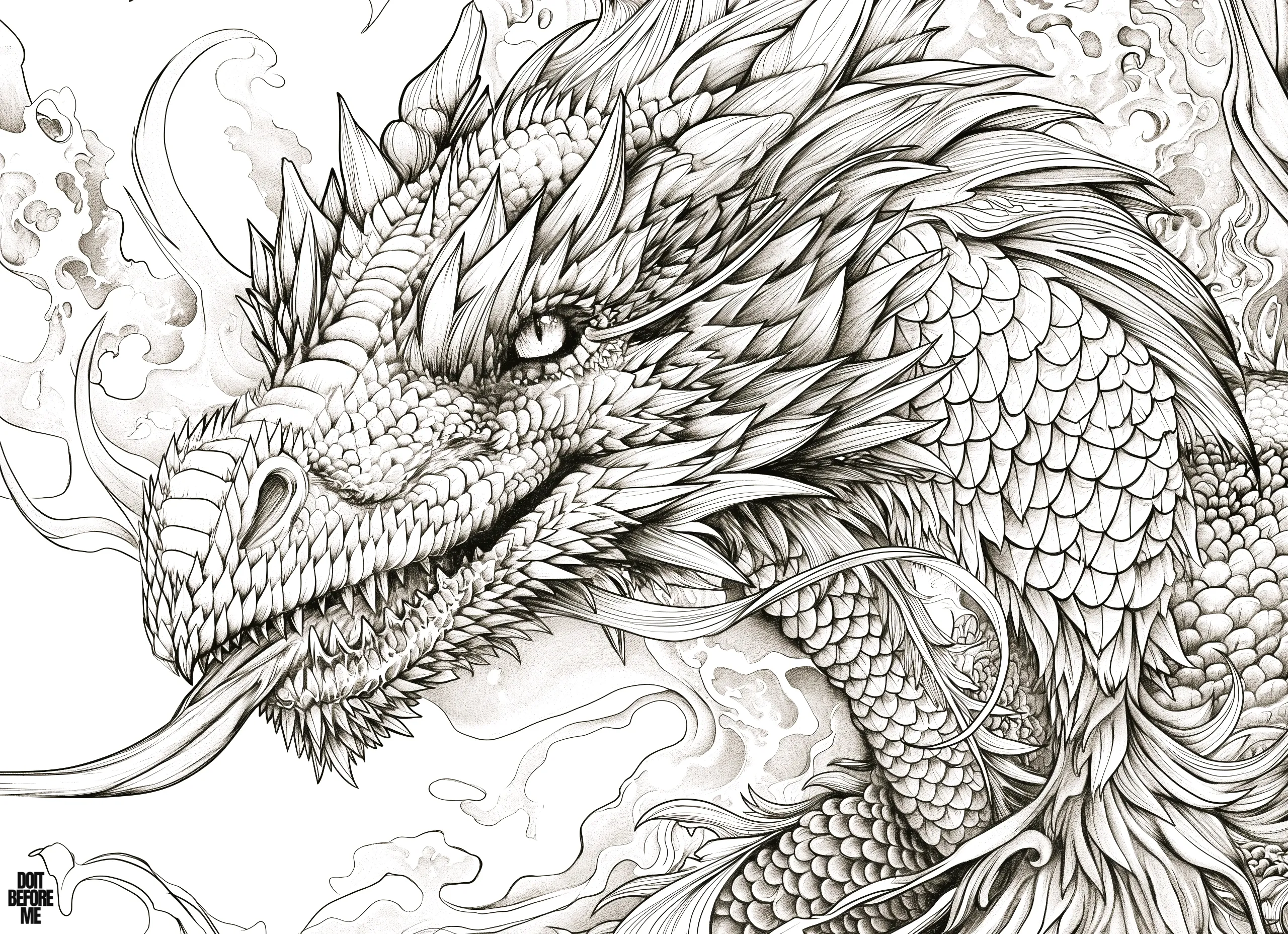
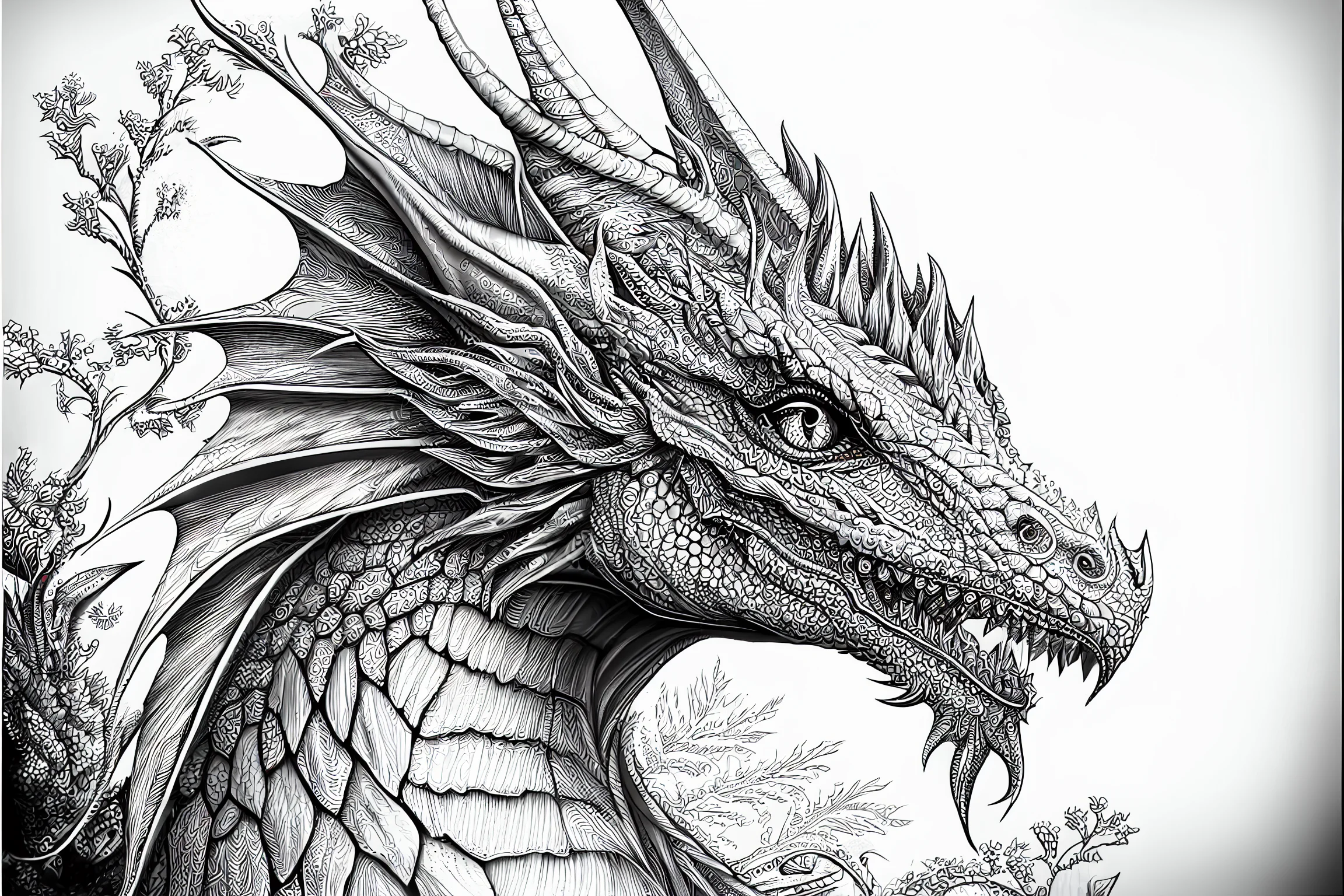
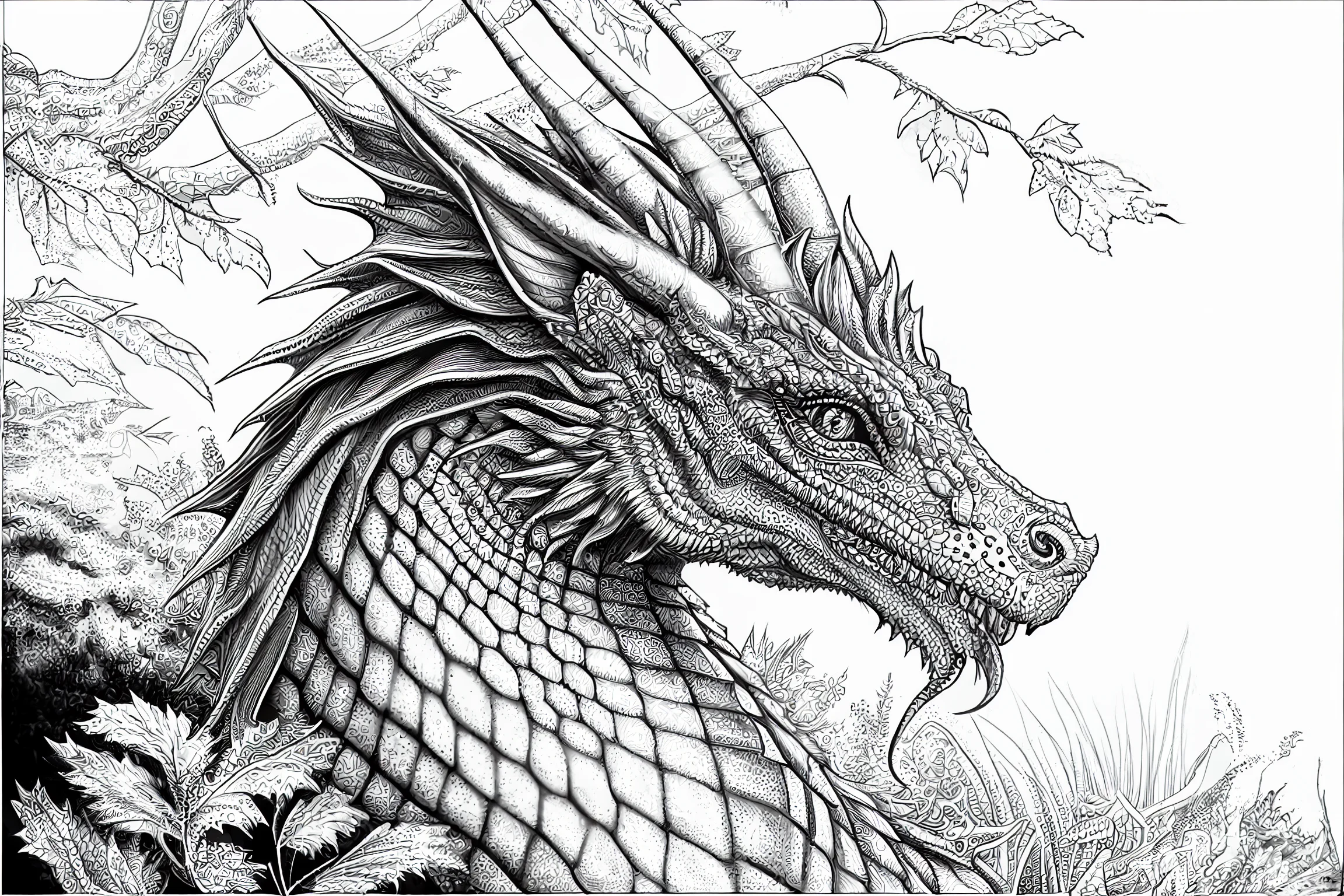
Start here if you want scale texture, horns and eyes without committing to an army or castle in the background. On a close-up face, pick the light direction before you choose the darkest pencil. Keep the forehead, bridge of the snout and upper cheek planes lighter, then deepen the sockets, underside of the jaw and spaces where horns overlap the head.
How to color a realistic dragon without getting lost in the detail
Think in large forms first: head, neck, chest, wings, legs and tail. The scales sit on top of those forms; they should not become 200 separate little coloring decisions.
- Choose one light direction. Upper left, upper right or a fire source in the scene.
- Lay down the lightest body color first. Keep the top planes lighter.
- Add shadow where forms overlap. Under the jaw, beneath wings, between legs and where the tail passes behind the body.
- Shade scale groups, not every scale. Darken clusters around joints and the underside.
- Separate the wing membranes. Make them slightly lighter, warmer or less saturated than the body.
- Finish horns, claws, eyes and scenery last.
Four palettes that work well
| Look | Body | Accents |
|---|---|---|
| Forest | Olive, moss, deep green | Warm brown or muted gold |
| Fire | Dark red, rust, charcoal | Orange, amber, cream |
| Ice | Pale blue, gray-blue, white | Navy or violet shadows |
| Obsidian | Charcoal and near-black | Deep red, gold or icy blue |
If the page feels overwhelming
Pick one focal point—face, wings or fire—and let that carry the strongest contrast. Limit yourself to one main dragon color, one shadow color, one accent and one background family. Leave some distant rocks, clouds or soldiers quieter. A detailed page does not improve just because every tiny shape is filled.
Colored pencils are the easiest all-round tool for this set. Fine-tip markers work well for armor and tiny background accents, while broad markers are better saved for large sky areas.
For something much simpler, use the baby dragon coloring pages. For a middle ground, use the 20 mixed landscape dragon pages.
Full-body realistic dragons — Sheets 5–13
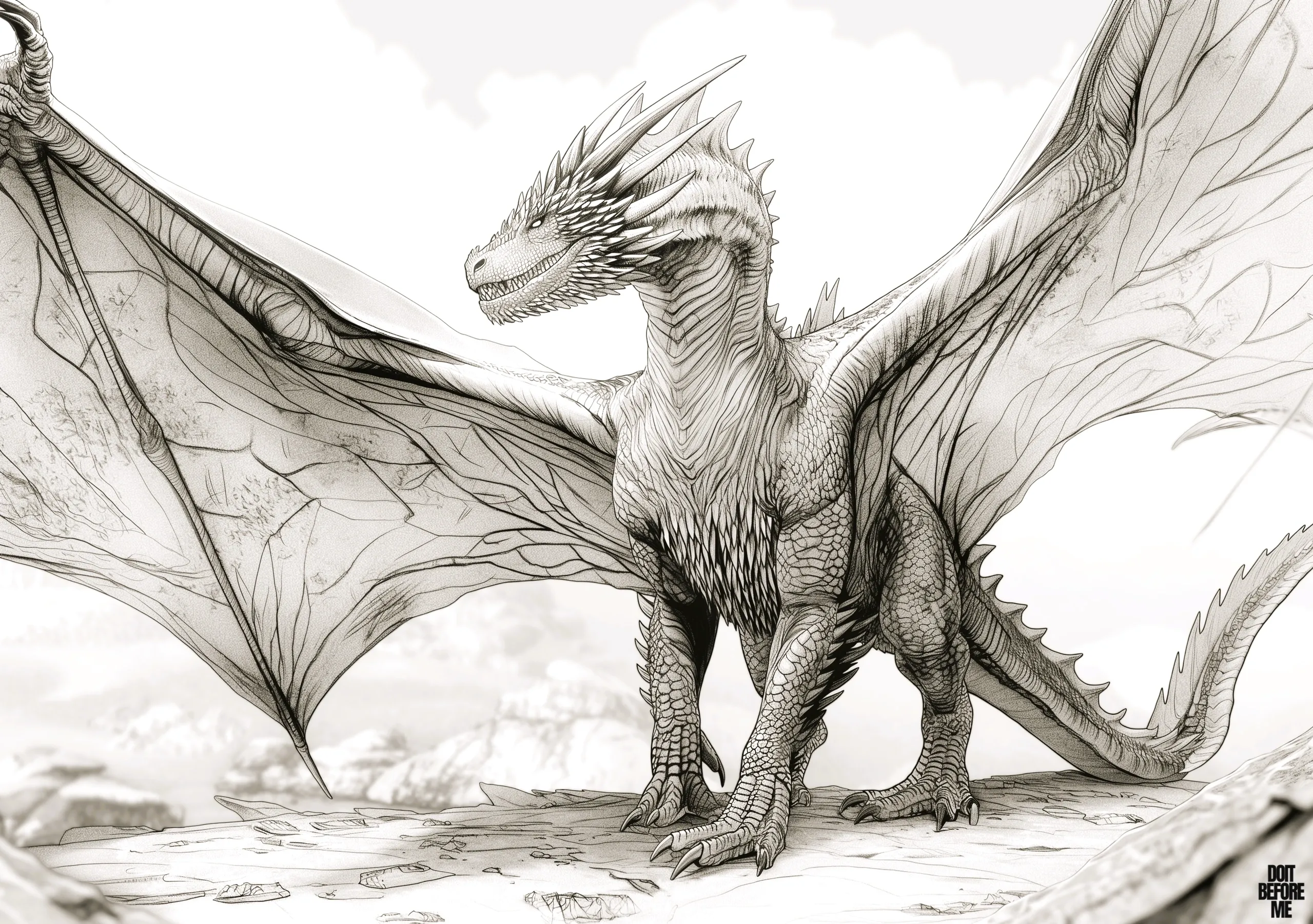
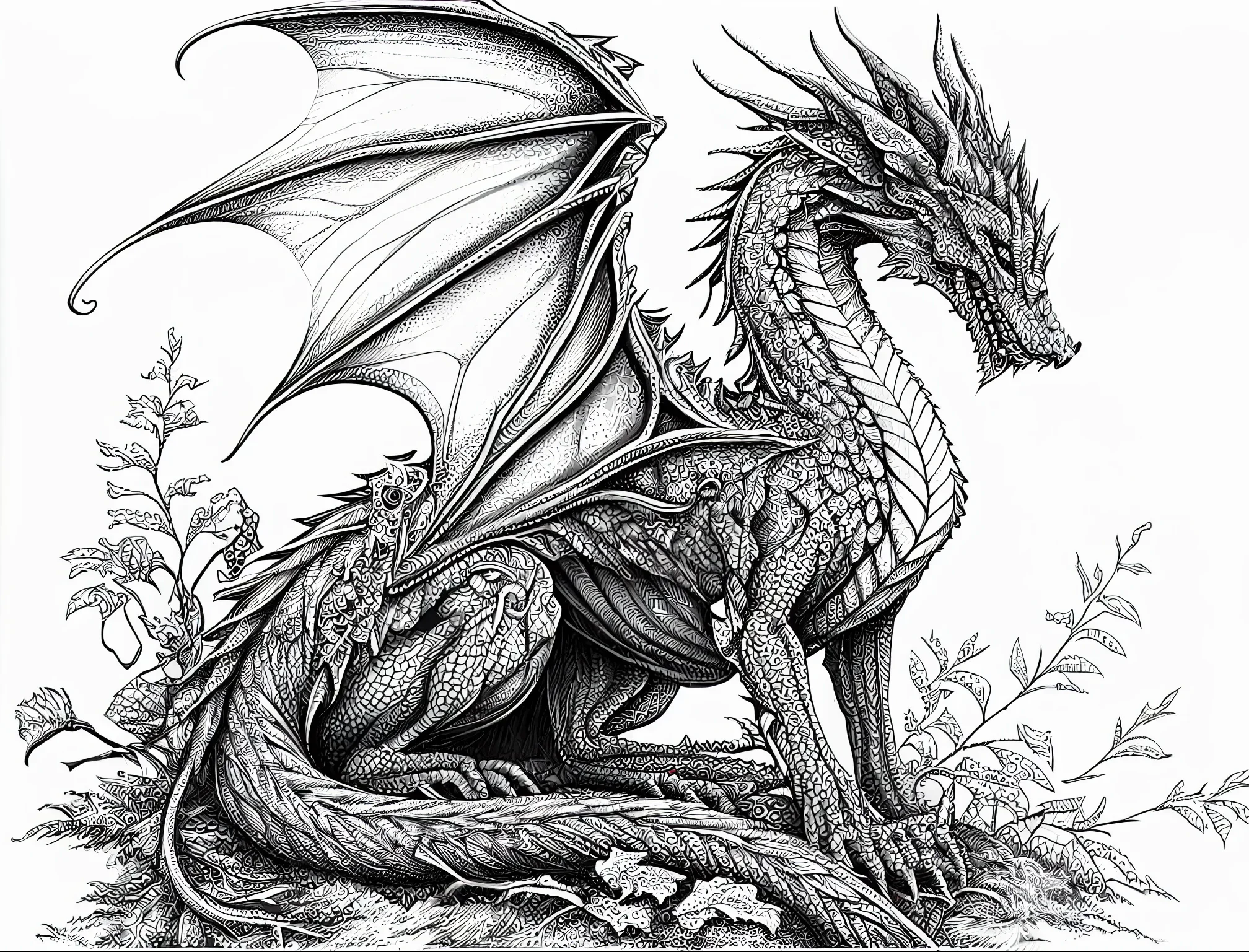
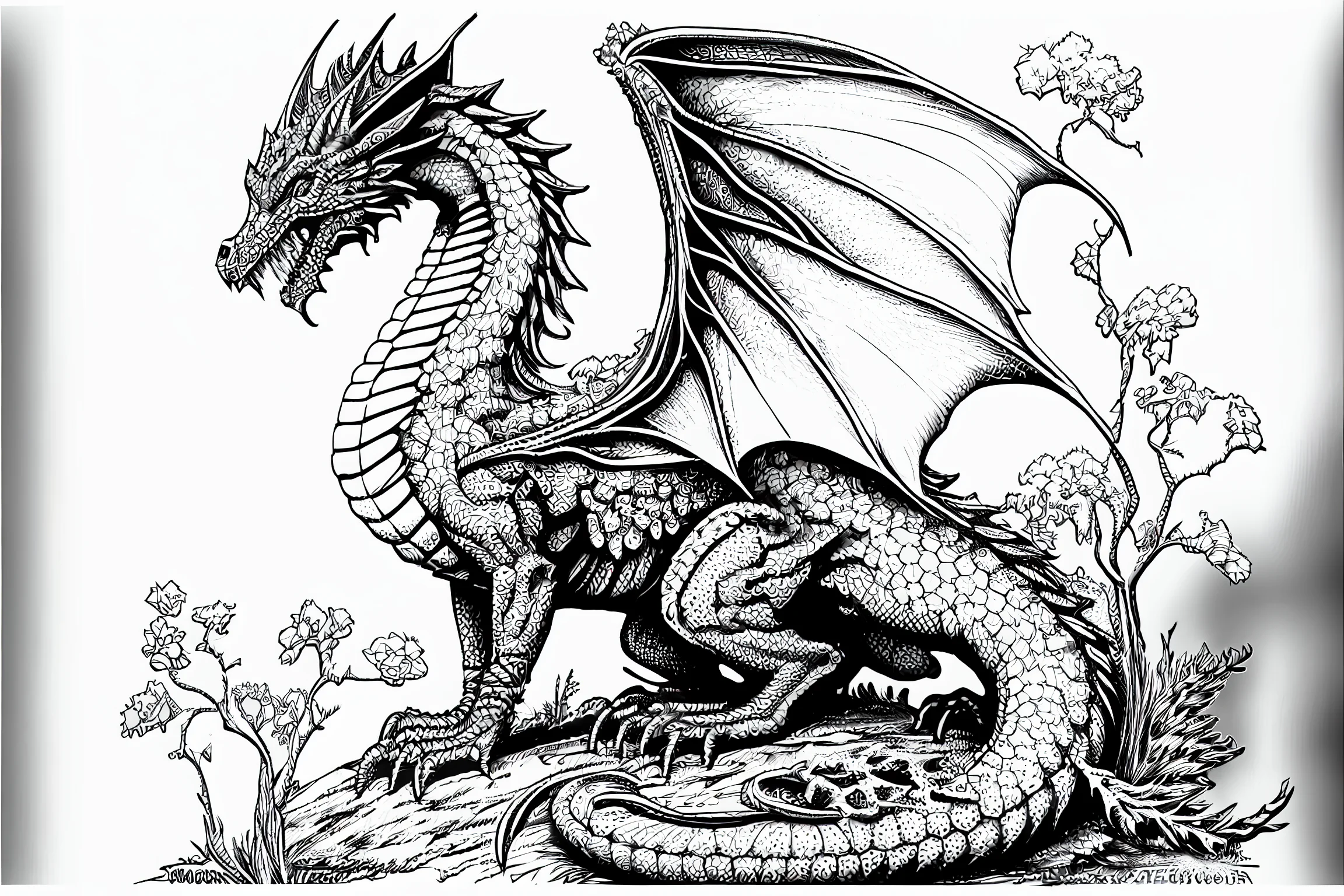
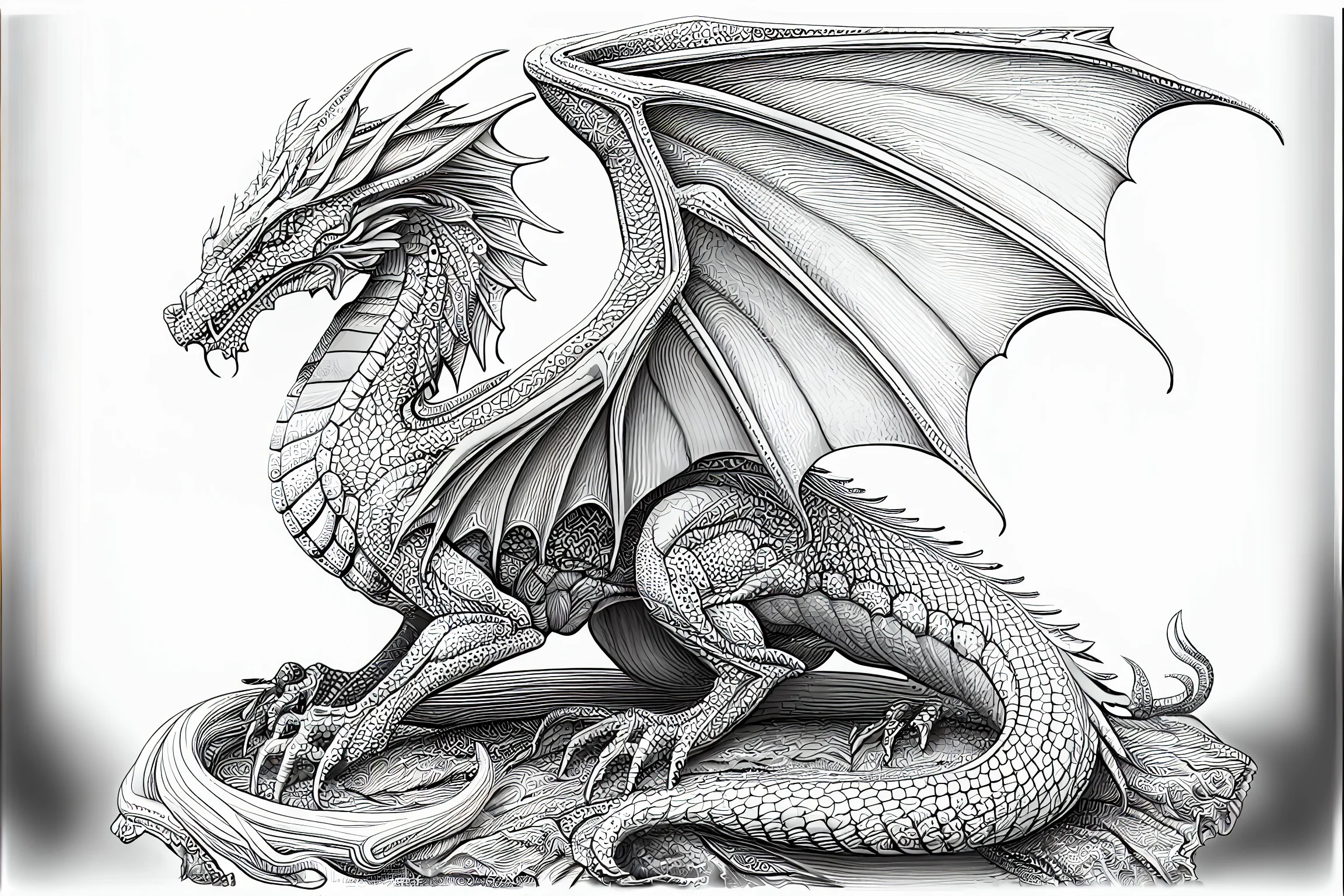
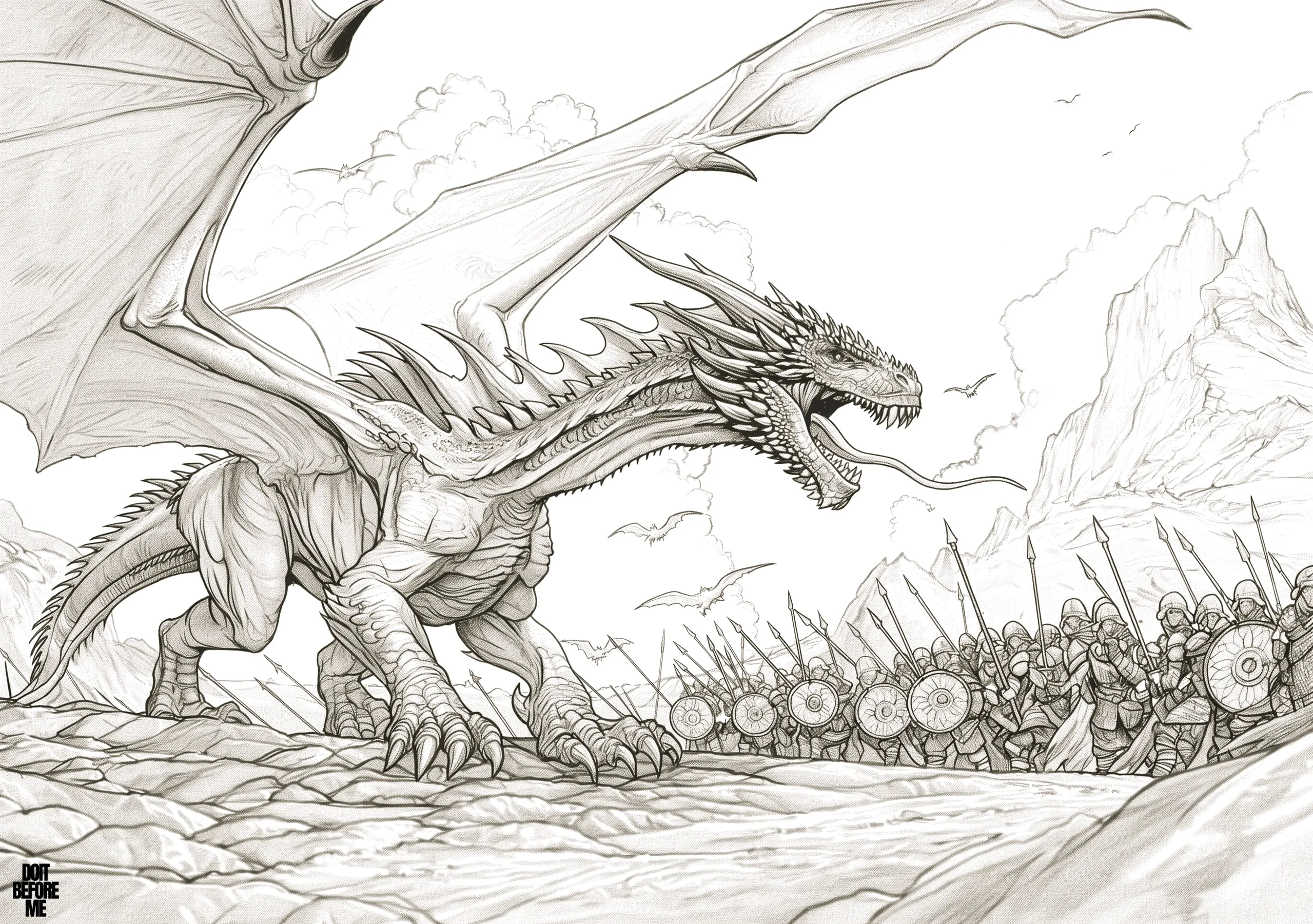
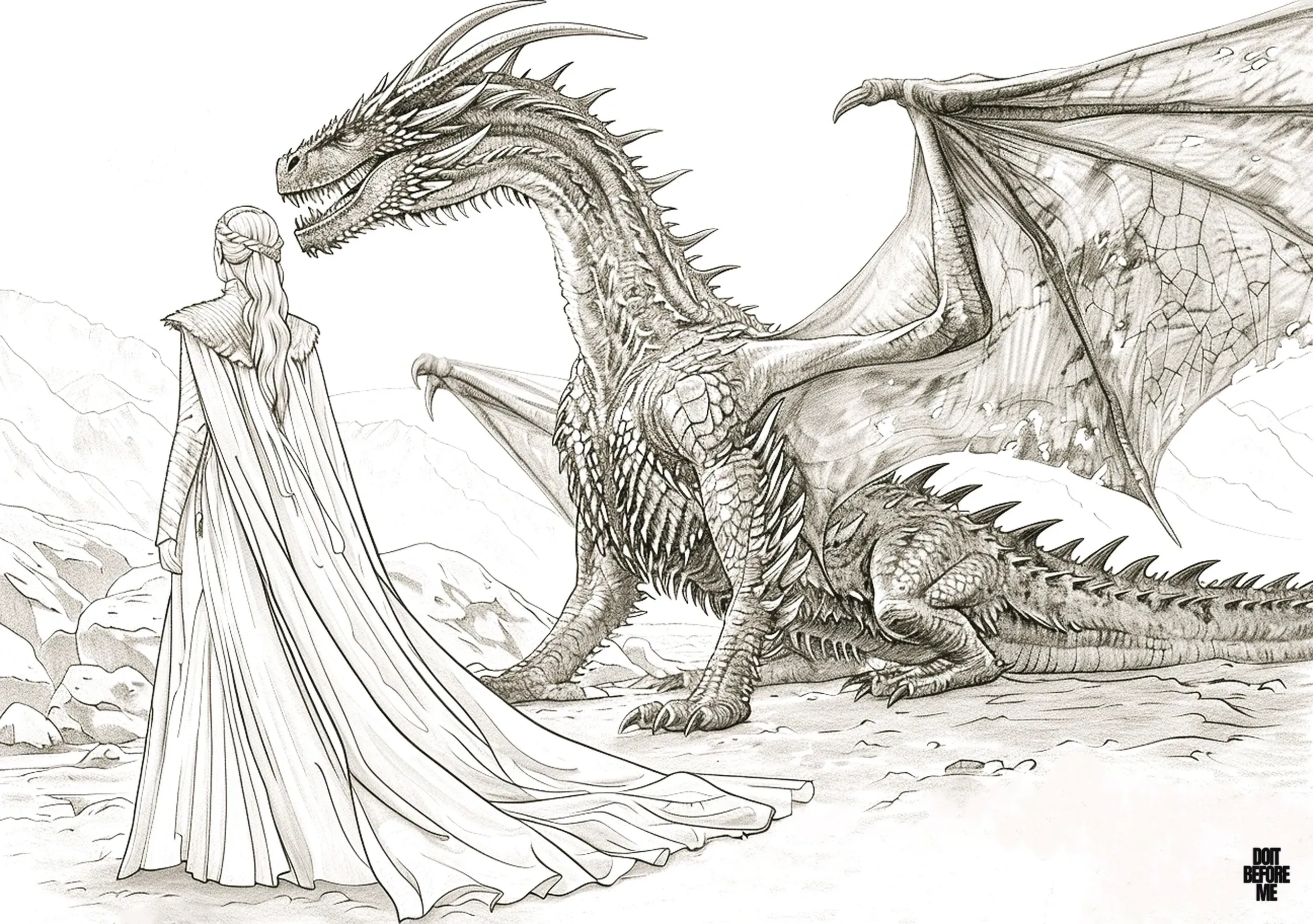
These pages give you room to work on anatomy: chest, legs, tail, wings and the way the body sits on rock or ground. Do not use the same darkness everywhere. A darker underside with a lighter back immediately gives the torso more volume. On folded or partly open wings, make the bony fingers slightly darker than the membranes so the structure remains visible.
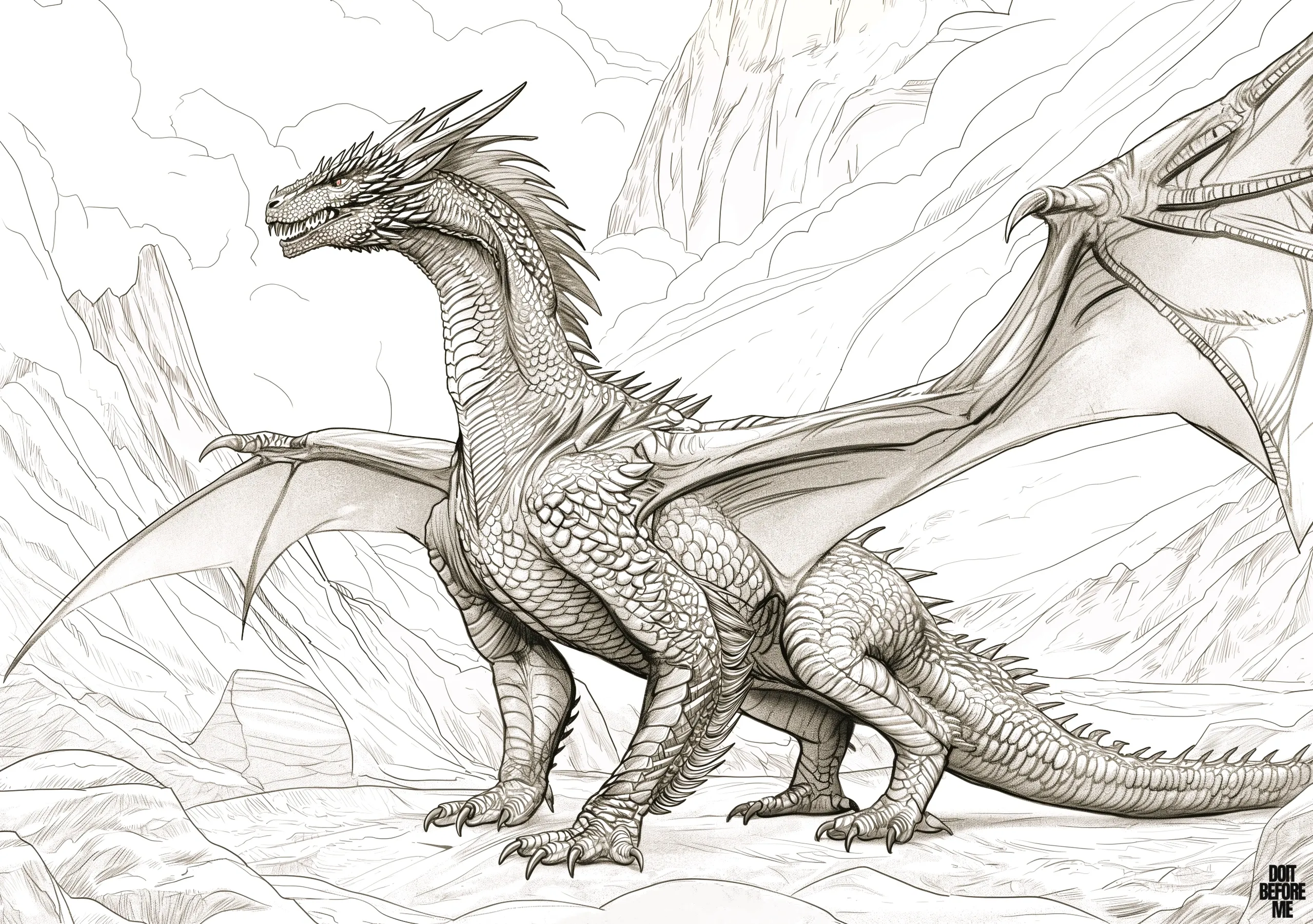
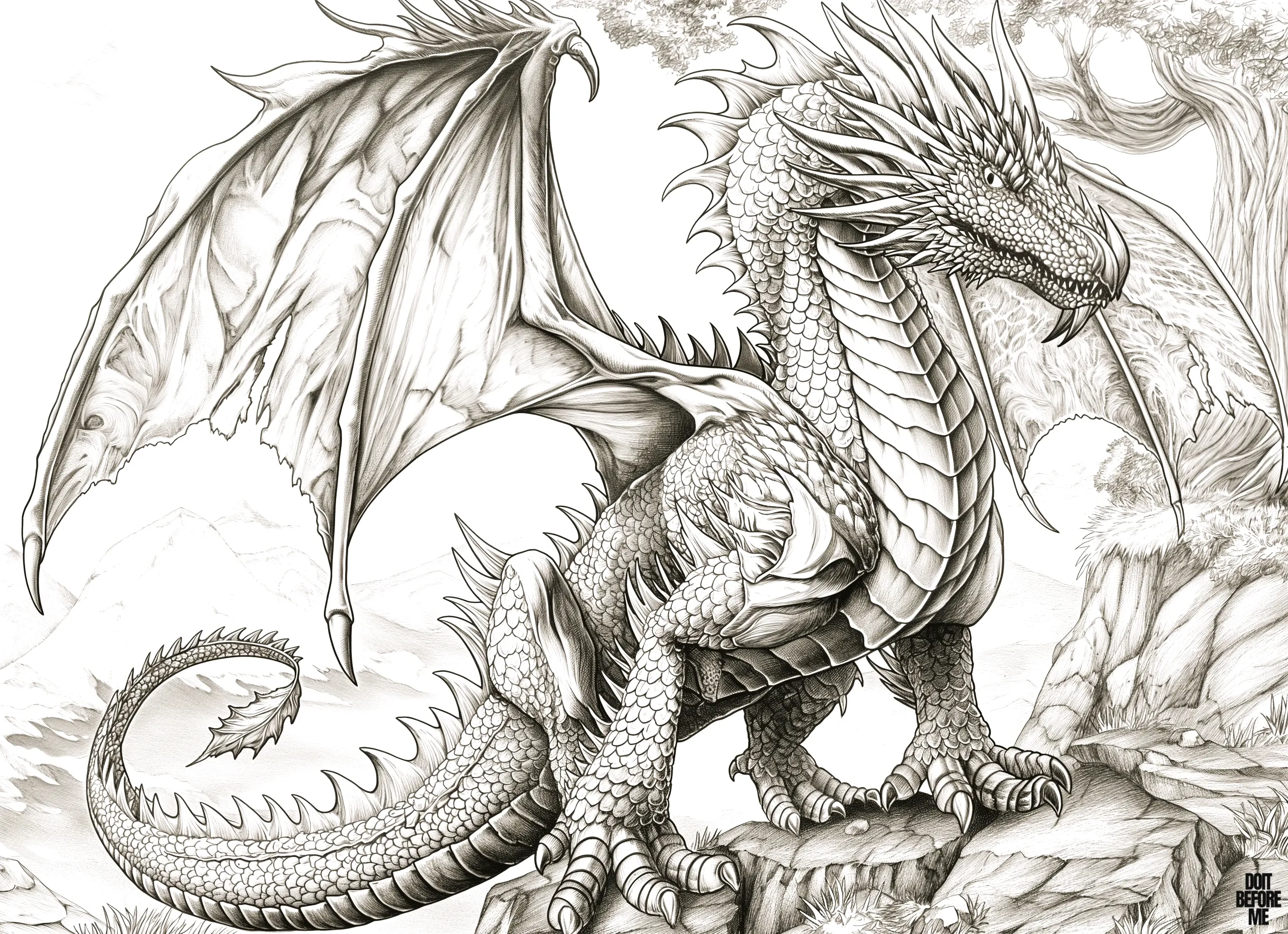
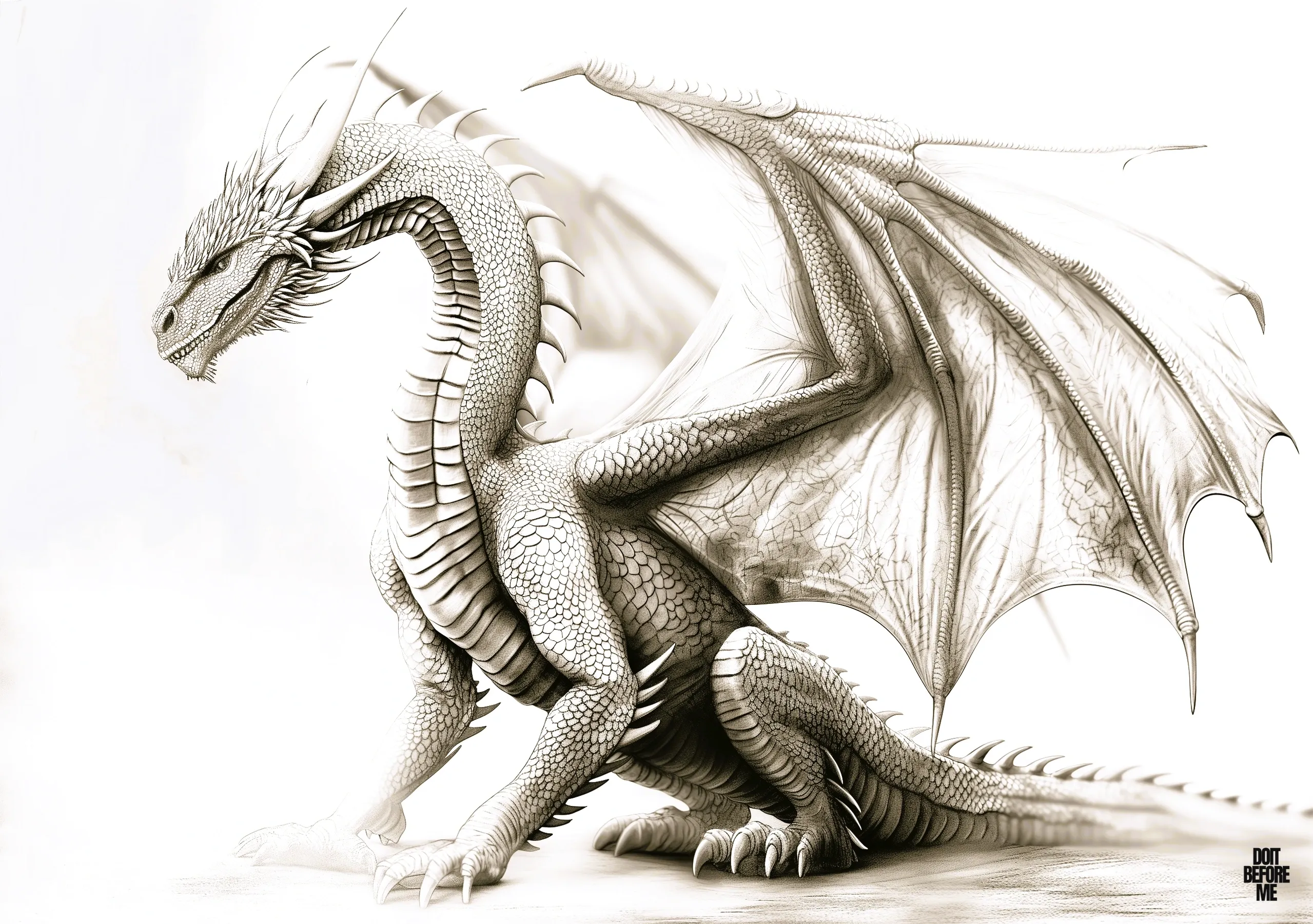
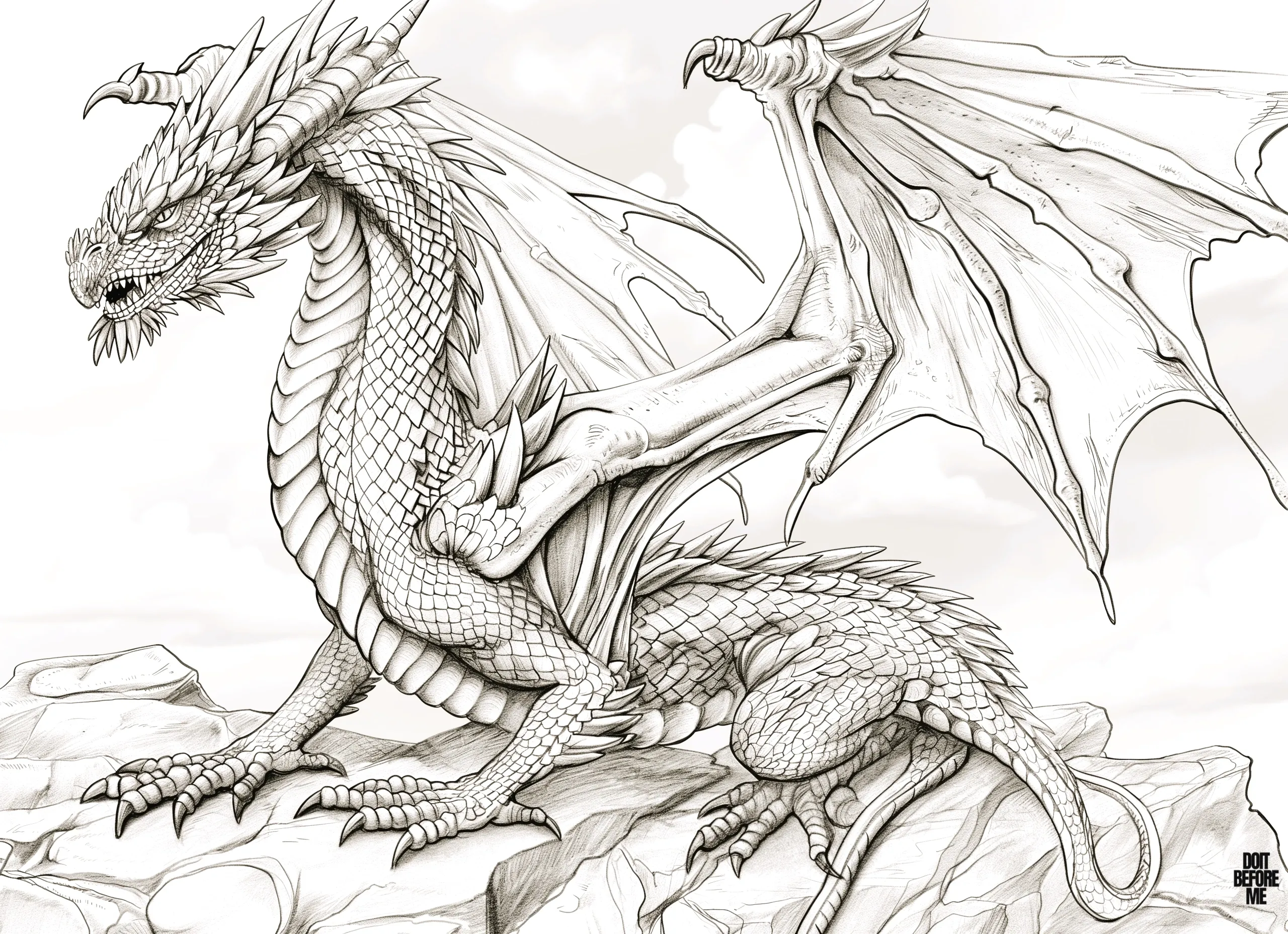
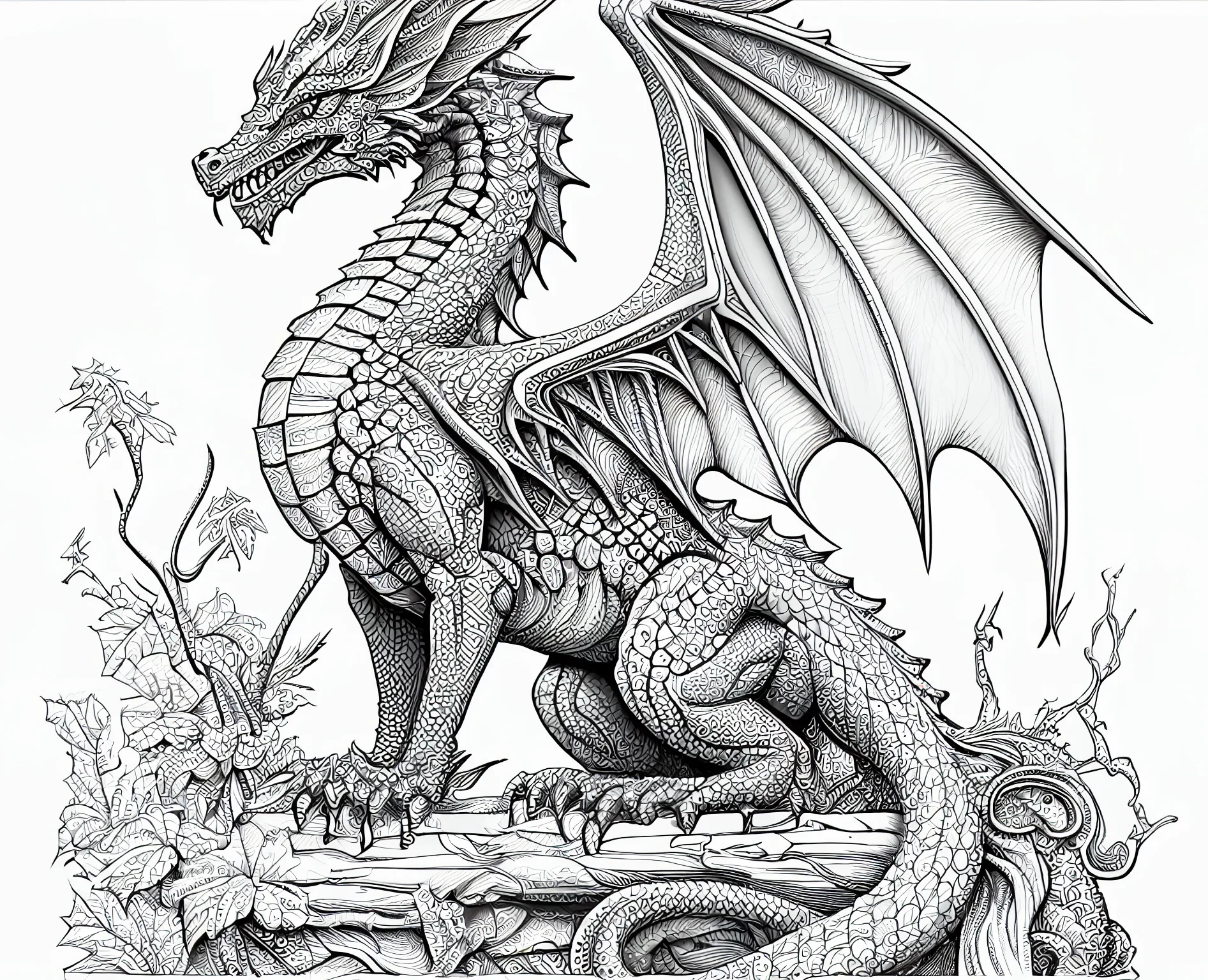
Flying and landscape dragons — Sheets 14–16
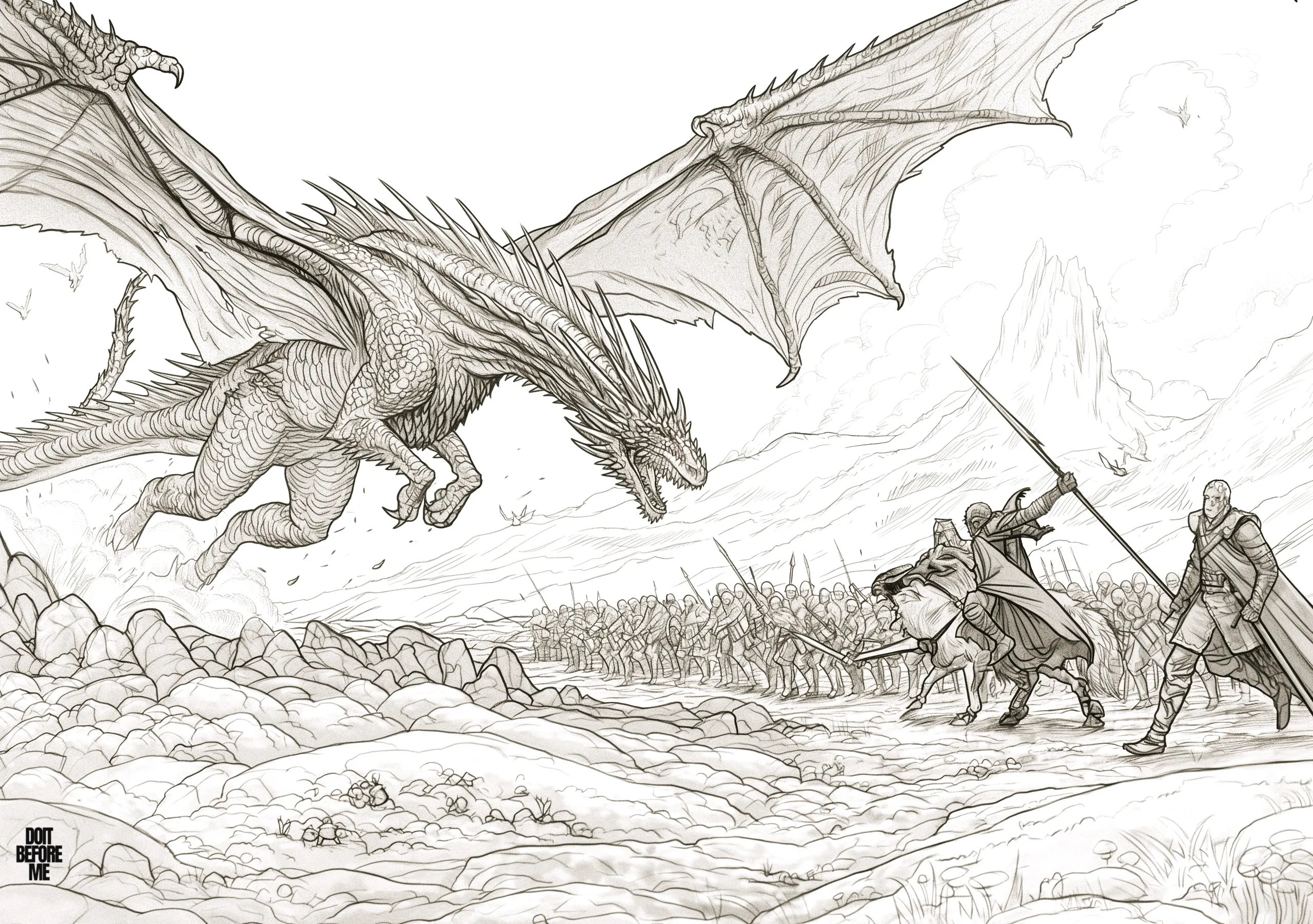
These work best when the background is quieter than the dragon. For a sky scene, keep distant clouds and mountains lighter and less saturated than the creature. That creates depth without needing to outline the dragon more heavily. On a flying dragon, shade the underside of the wings and belly more than the upper surfaces so the pose reads clearly.
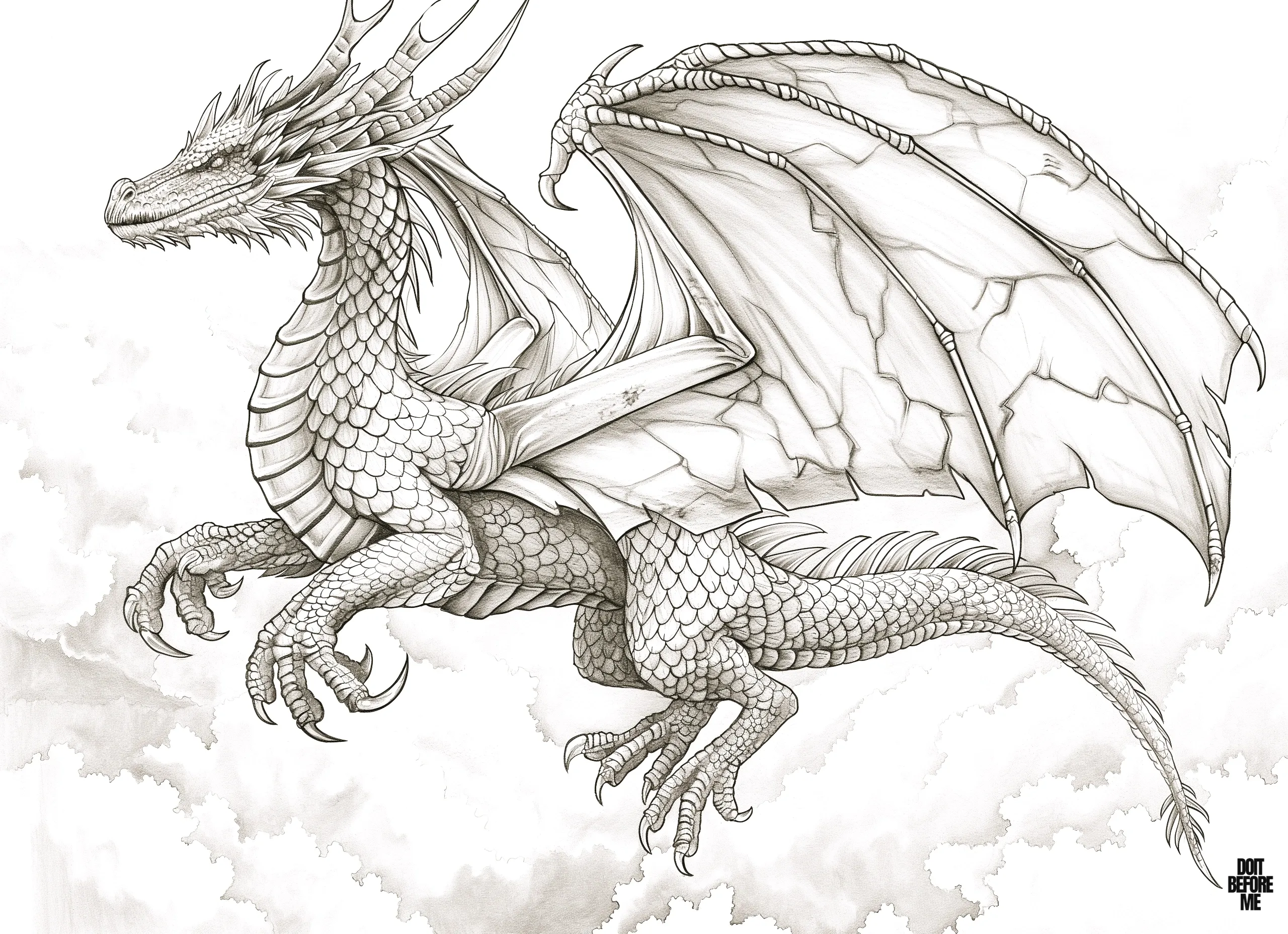
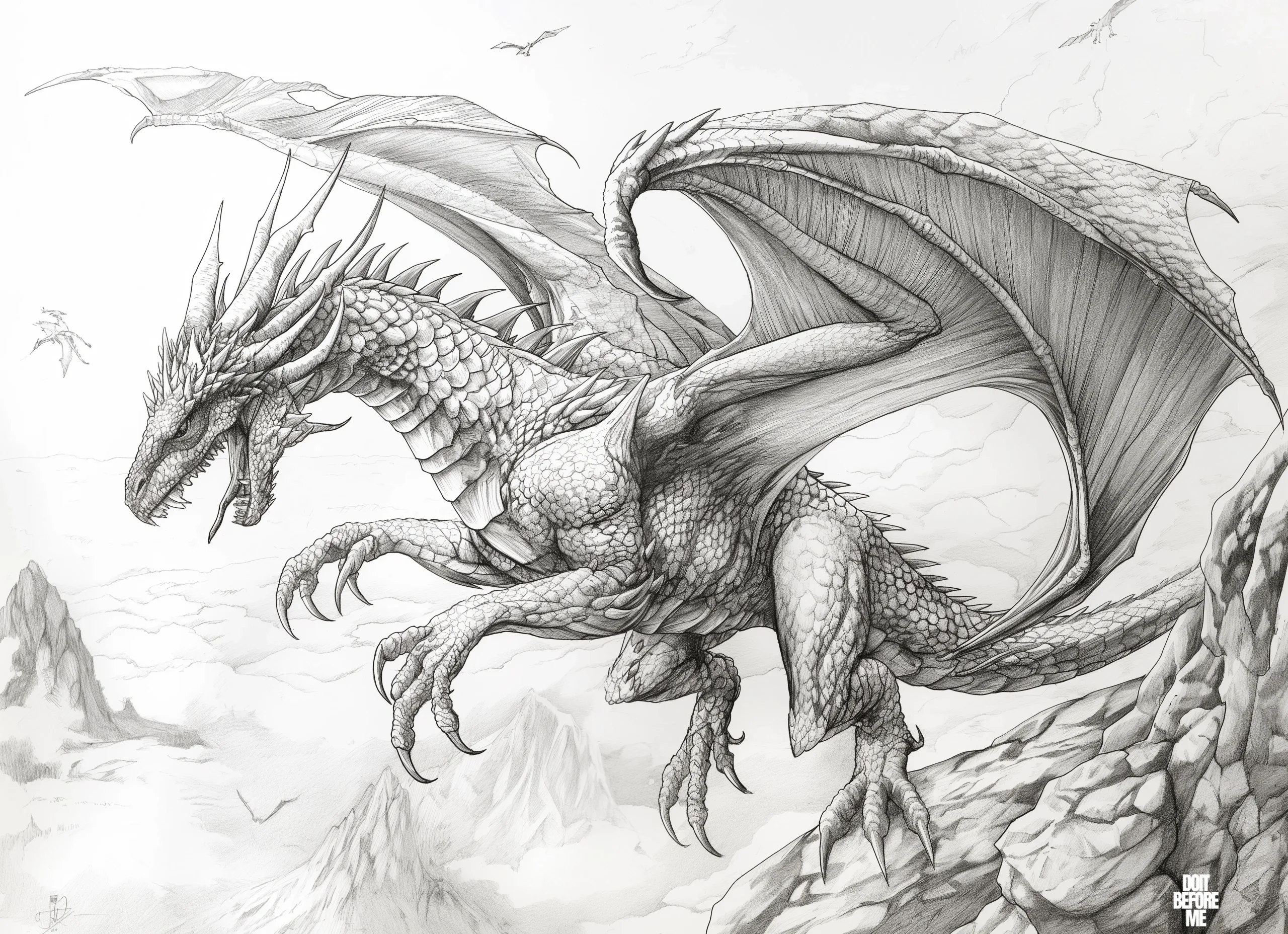
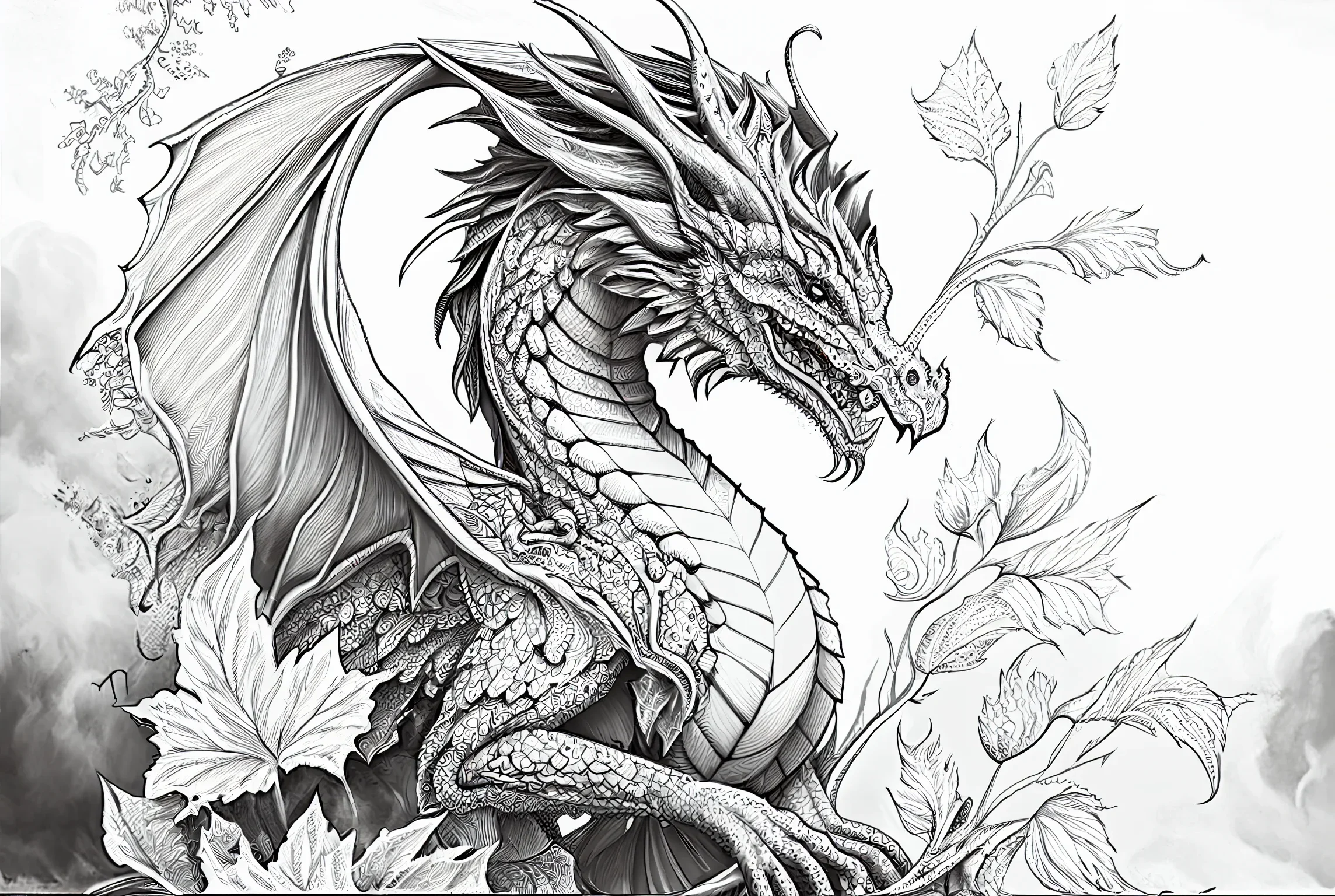
Dragon riders, castles and battle scenes — Sheets 17–23
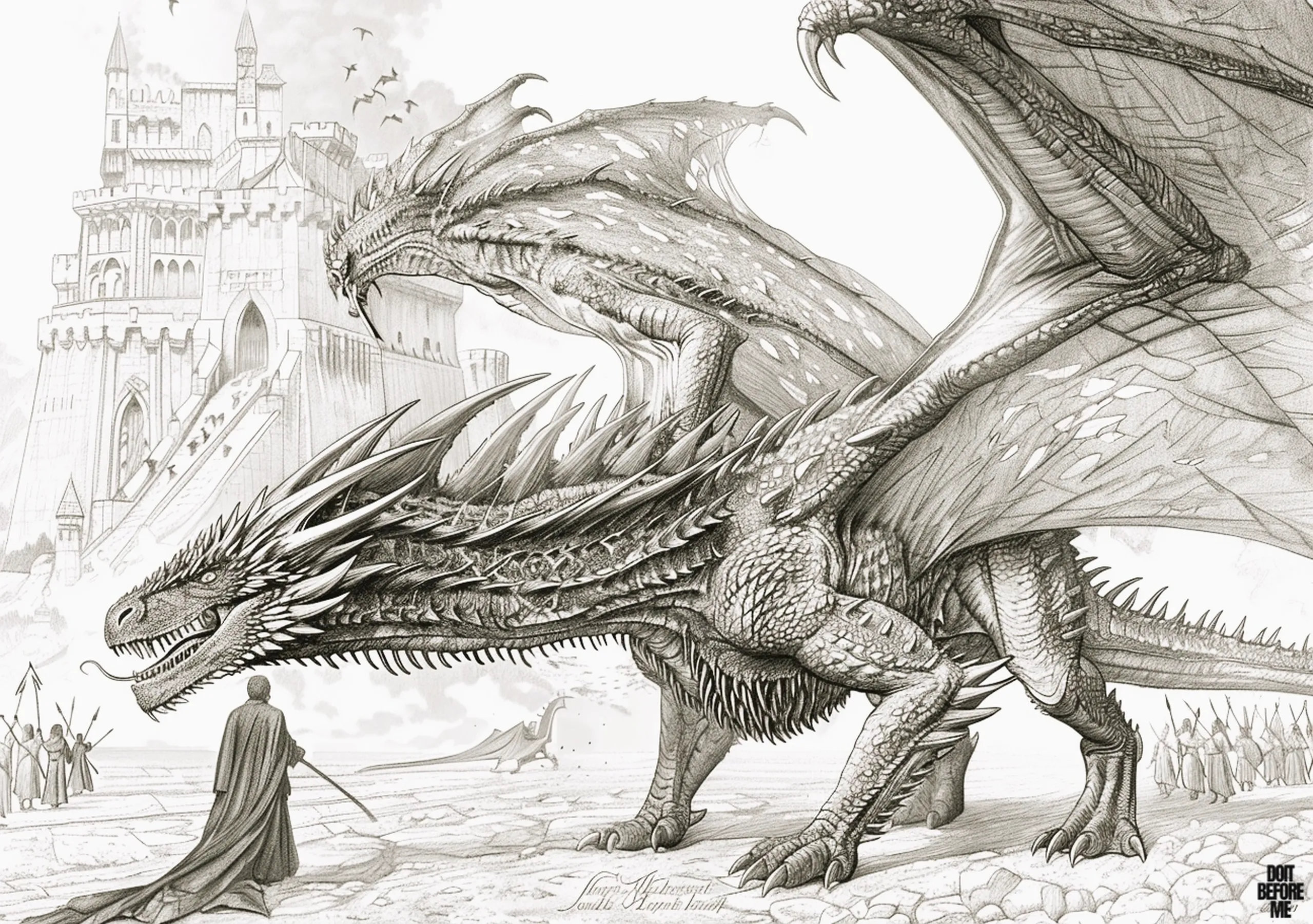
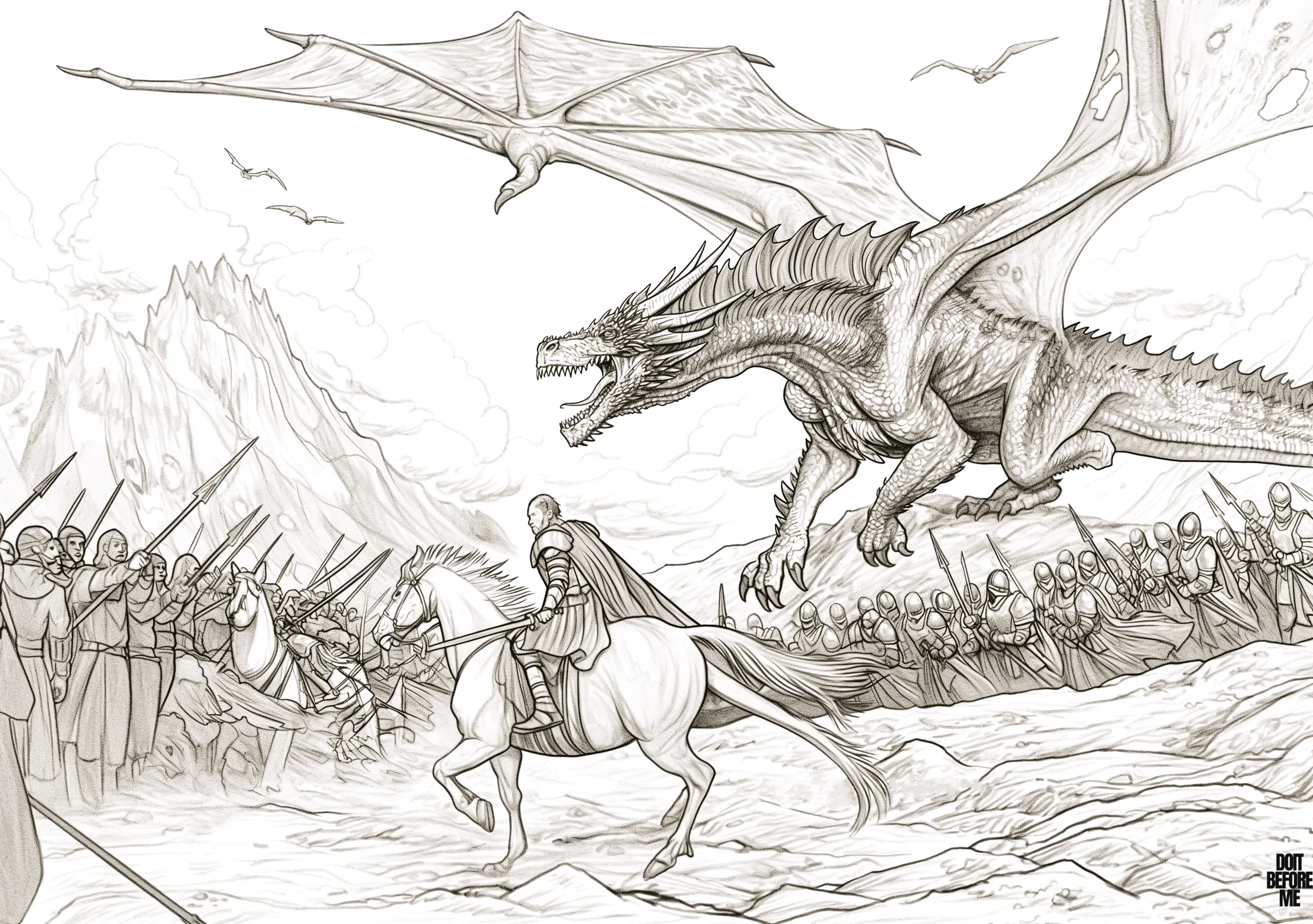
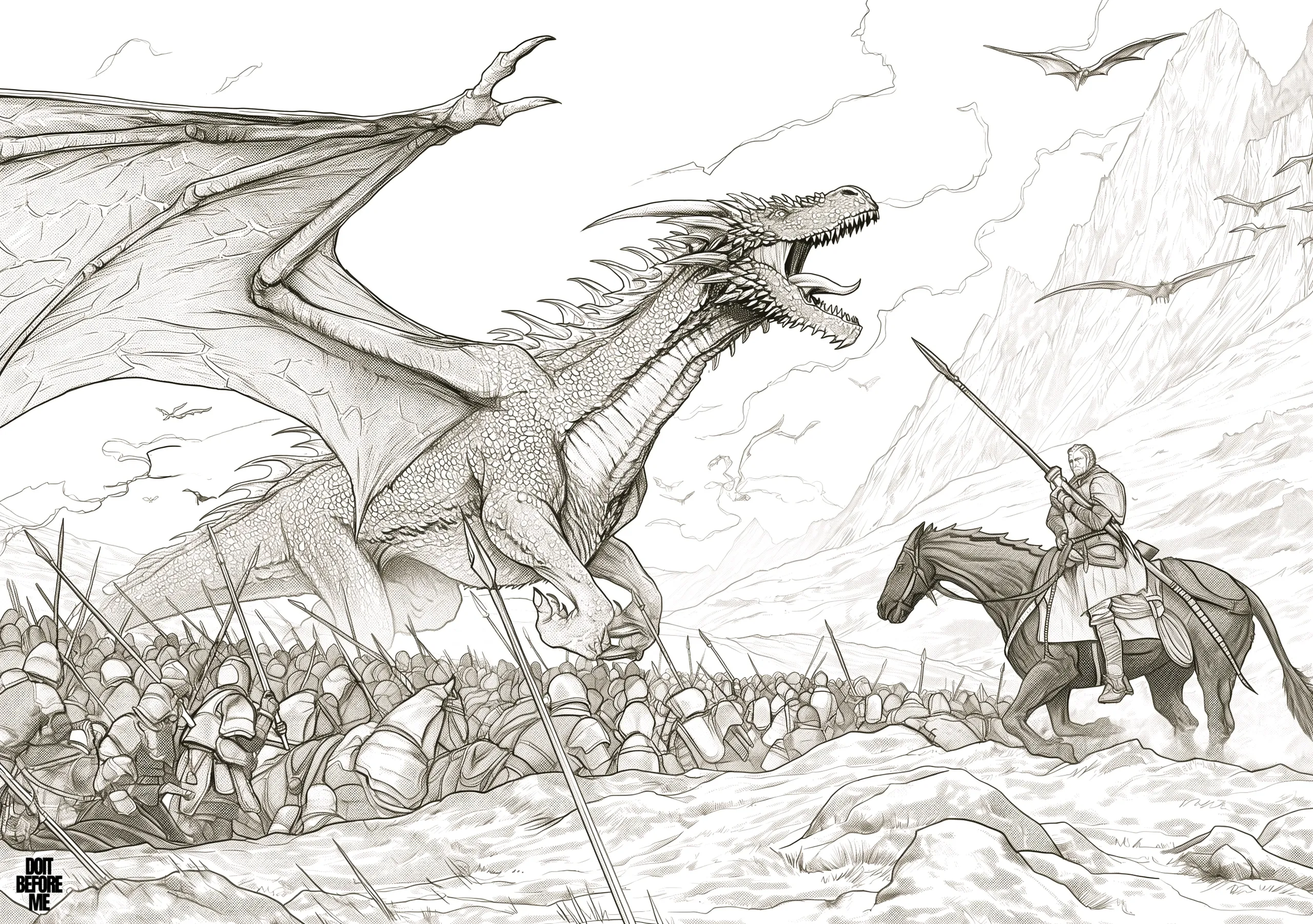
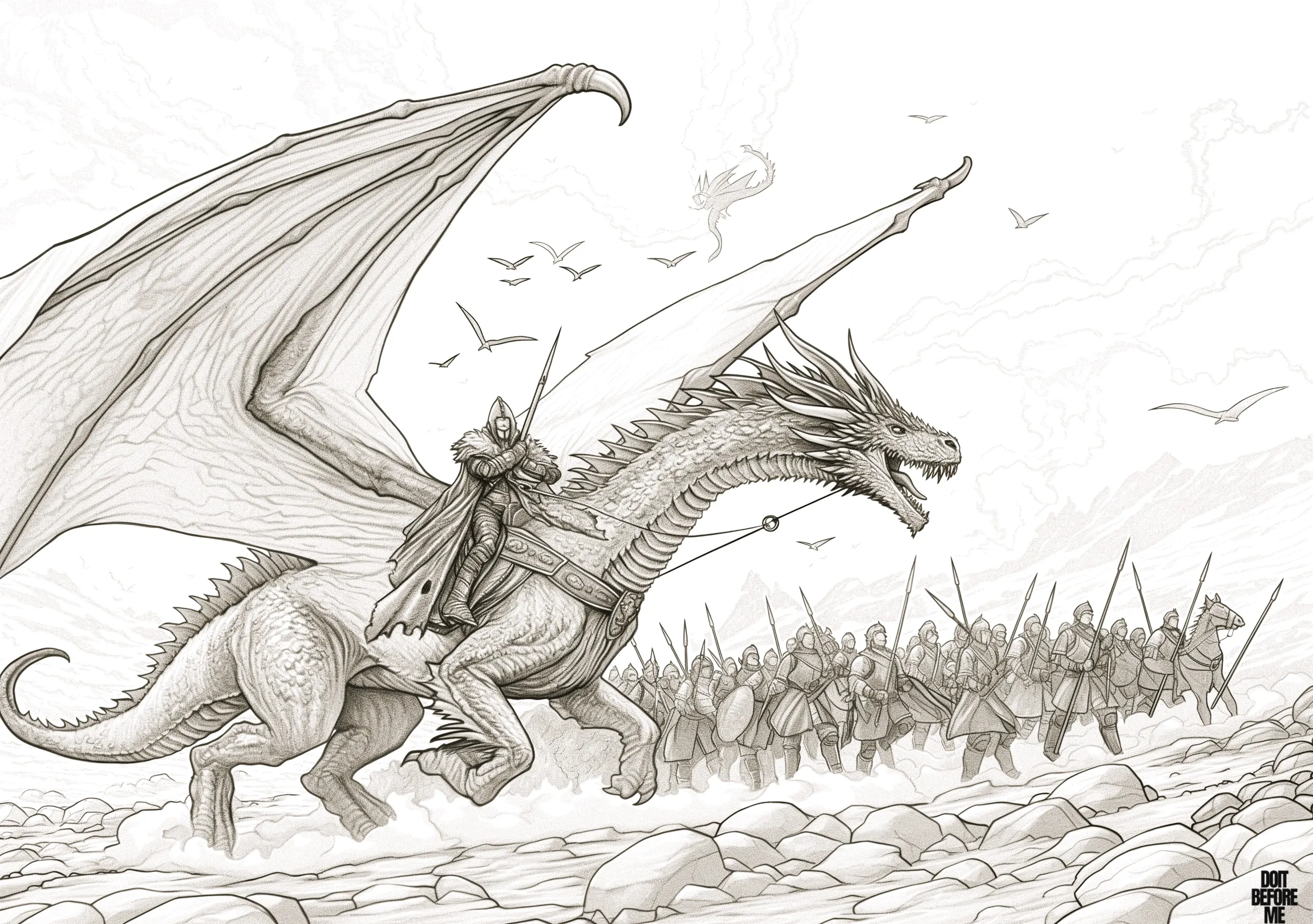
These are the pages to choose if you enjoy world-building as much as the dragon. Work in layers: dragon first, then the nearest rider or soldiers, then architecture, then the far background. If everything receives the same contrast, the scene becomes difficult to read.
For fire, leave the center of the flame nearly white or pale yellow, move through yellow and orange, and use red only toward the outside. Then let that warm light touch the nearest scales, armor or stone. A small amount of reflected color is more convincing than turning the entire scene orange.
Which realistic dragon page should you print?
- Mostly interested in scales and faces? Pick Sheets 1–4.
- Want anatomy, wings and claws without a crowded scene? Use Sheets 5–13.
- Enjoy sky and scenery but not armies? Try Sheets 14–16.
- Want the longest, busiest coloring session? Choose Sheets 17–23.
A good way to avoid abandoning a difficult page halfway through is to choose one focal challenge. On a portrait, make that the face. On a full-body dragon, make it the wings. On a battle page, make it the dragon and fire. The rest of the page can be quieter.
Printing detailed dragon pages
Click or tap any image above to open the original full-size file. Most sheets are landscape. Use A4 or US Letter with Fit to page, and check the preview before printing so wing tips, horns and castle edges are not clipped.
For colored pencils, ordinary printer paper is usable, but slightly heavier matte paper gives you more room to layer color without roughening the surface as quickly. For markers, use thicker paper if your printer accepts it and put a spare sheet underneath. The full setup is in the printing guide.
Realistic dragon coloring questions
Which pages are best if I do not want to color a background?
Start with Sheets 1–4 for close-up portraits, or Sheets 5–13 for dragons where the creature remains the main subject.
What colors make a dragon look realistic?
Realistic does not mean the dragon needs a real-world color. The effect comes from consistent light, believable shadows and restrained contrast. Green, red, blue, black, white or purple can all look convincing if the shading follows the form.
Should I color every scale separately?
No. Treat scales in groups. Shade more strongly around the underside, joints and overlaps, and let many scales remain close to the base body color.
How do I color black dragons without losing the linework?
Use charcoal and very dark gray for most of the body, saving true black for the deepest shadows. A lighter background also helps preserve the silhouette.
Which pages are the most difficult?
The rider, castle and battle scenes in Sheets 17–23 have the most competing detail because the environment needs almost as much attention as the dragon.
Where can I find easier dragons?
The 33 baby dragon pages are much simpler. You can also use the 20 mixed landscape dragon pages for a middle ground between cute and highly detailed.

