
Parrots can carry a lot of color, but a page looks better when those colors have jobs. The face and chest can stay relatively quiet, the wings can carry the strongest contrast, and the tail can echo one of the wing colors. These 32 sheets now follow that logic: simple birds first, then character pages, flying parrots, family groups, general printables and finally the adult/realistic set.
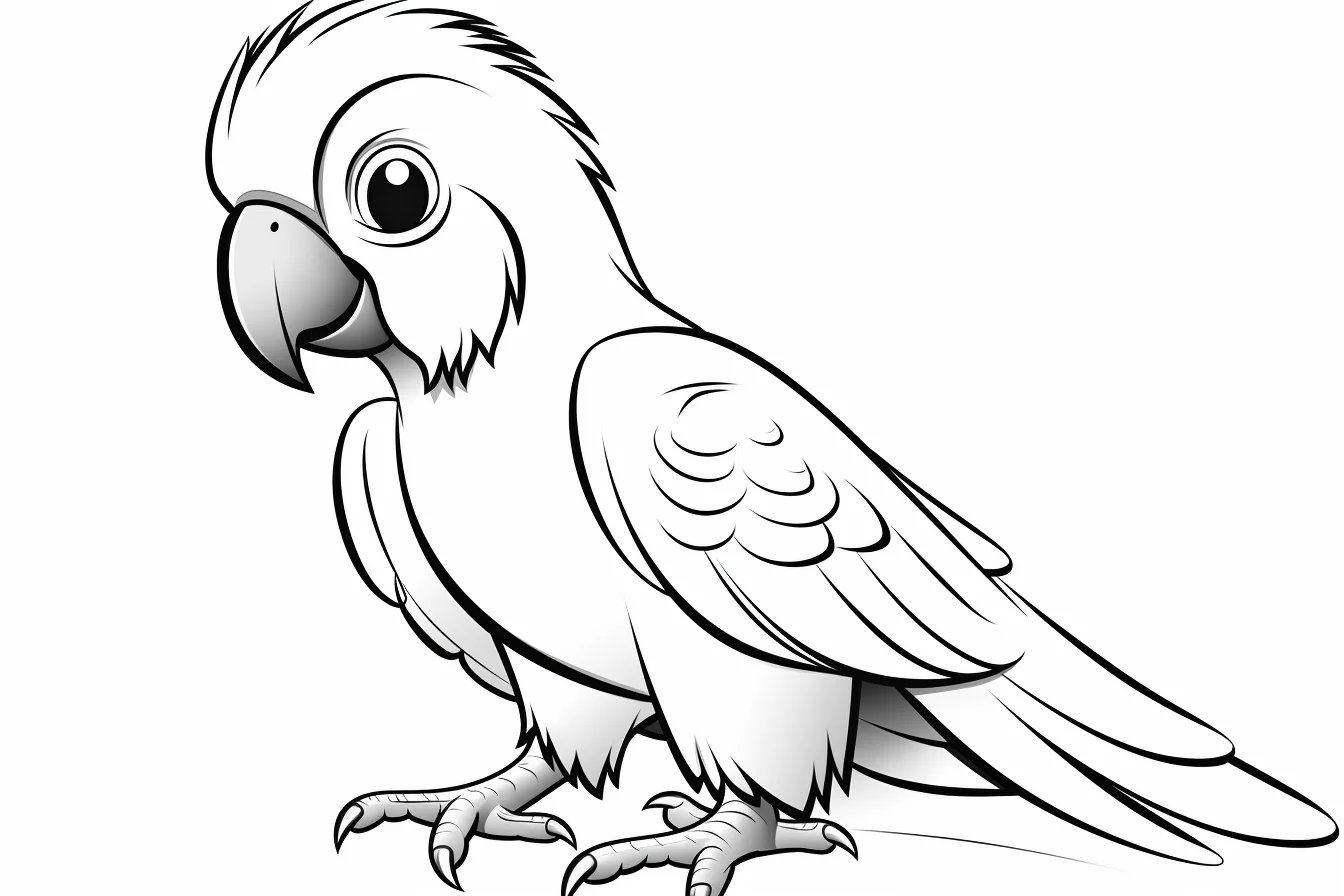
60-second test before you start coloring
Before committing to a palette, use a scrap of the same paper and make three swatches with your main feather color: barely any pressure, normal pressure, then the darkest layer you can make cleanly. If the three swatches look almost identical, that tool will give you color but very little feather depth; use a second darker pencil for the wing overlaps instead of pressing harder until the paper becomes shiny.
- Check the smallest spaces. Compare your crayon or marker tip with the eye ring, toes and narrow feather gaps. If the tip is wider than those spaces, use it for the chest and large wing areas, then switch to a sharpened pencil for the face and feet.
- Protect the face first. Lightly color around the eye before filling the rest of the head. If the eye stops reading clearly from arm’s length, the surrounding feathers are too dark or too similar in value.
- Test the wing hierarchy. Make the folded wing or outer flight feathers one value darker than the chest. If you can still see that separation when you hold the page at arm’s length, you have enough contrast; more colors are optional.
- Decide whether the background should compete. For a single-bird sheet, keep leaves, branches or sky lighter or less saturated than the parrot. For family scenes, repeat one small accent color across the birds before adding background color.
For younger children: stop at two feather colors plus a beak color. Fill the chest with the lighter color and use the darker one only on the wing and tail. Clean large shapes matter more than trying to color every feather separately.
Choose a parrot page by what you want to color
| If you want… | Start here |
|---|---|
| Easy or cute single birds | Sheets 1–8 |
| Character/costume-style parrots | Sheets 9–13 |
| Flying parrots | Sheets 14–17 |
| Parrot families and groups | Sheets 18–22 |
| General printable parrots | Sheets 23–28 |
| Adult or realistic pages | Sheets 29–32 |
Use feather groups, not 100 separate little shapes
Start with a light base over the chest or body. Then treat the wing as two or three larger feather zones rather than trying to give every feather its own color. Use the strongest red, blue, green or yellow on the wing and tail, and keep the beak and feet relatively quiet. That keeps a bright palette from competing with itself.
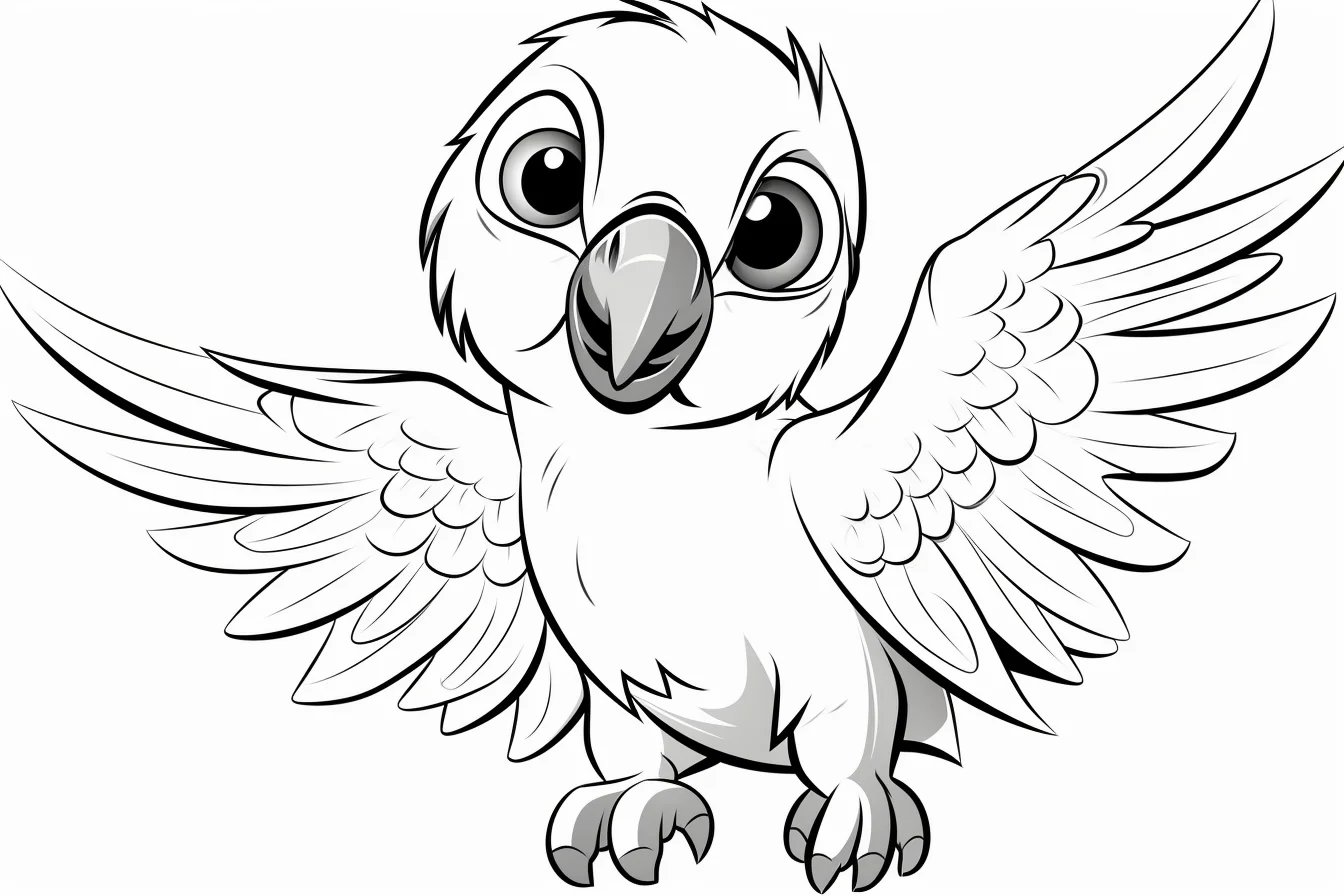
On flying parrots, make the wing tips darker than the inner wing so the spread wings read clearly. On family scenes, repeat at least one shared color across all the birds; the group will feel connected even if each parrot has a different main palette.
A simple parrot-coloring order
- Choose the chest/body base color.
- Add the main wing color, then one darker wing or feather accent.
- Repeat one wing color in the tail.
- Keep the beak, feet and eye area simpler.
- Color the background last so it does not overpower the bird.
Printing
Most sheets here are landscape. Click any image to open the original full-size file, then use “Fit to page” on A4 or US Letter paper. For more bird printables, see the baby bird pages, the 32-page bird collection or the wider animal collection.
Easy and cute parrots — Sheets 1–8
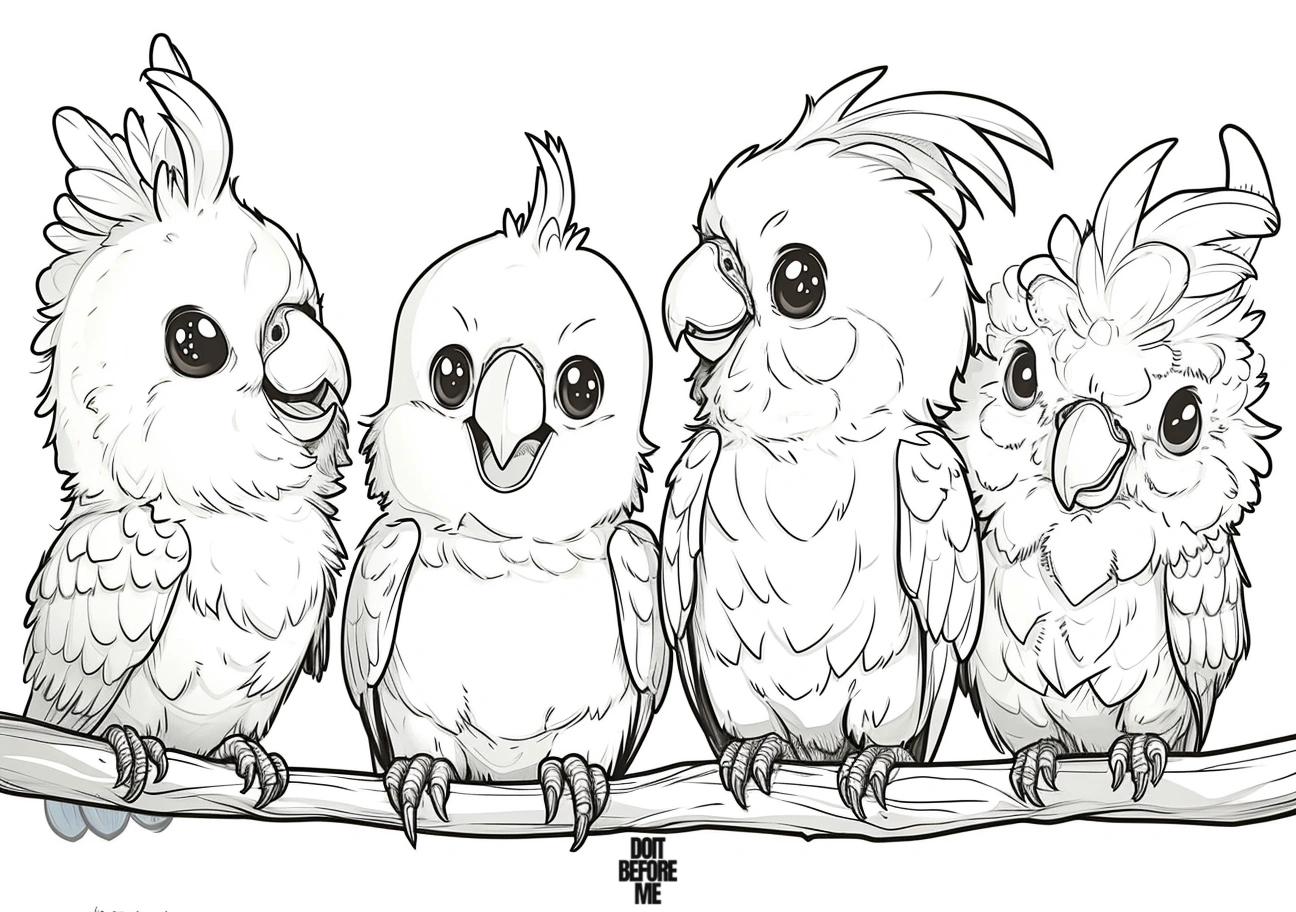
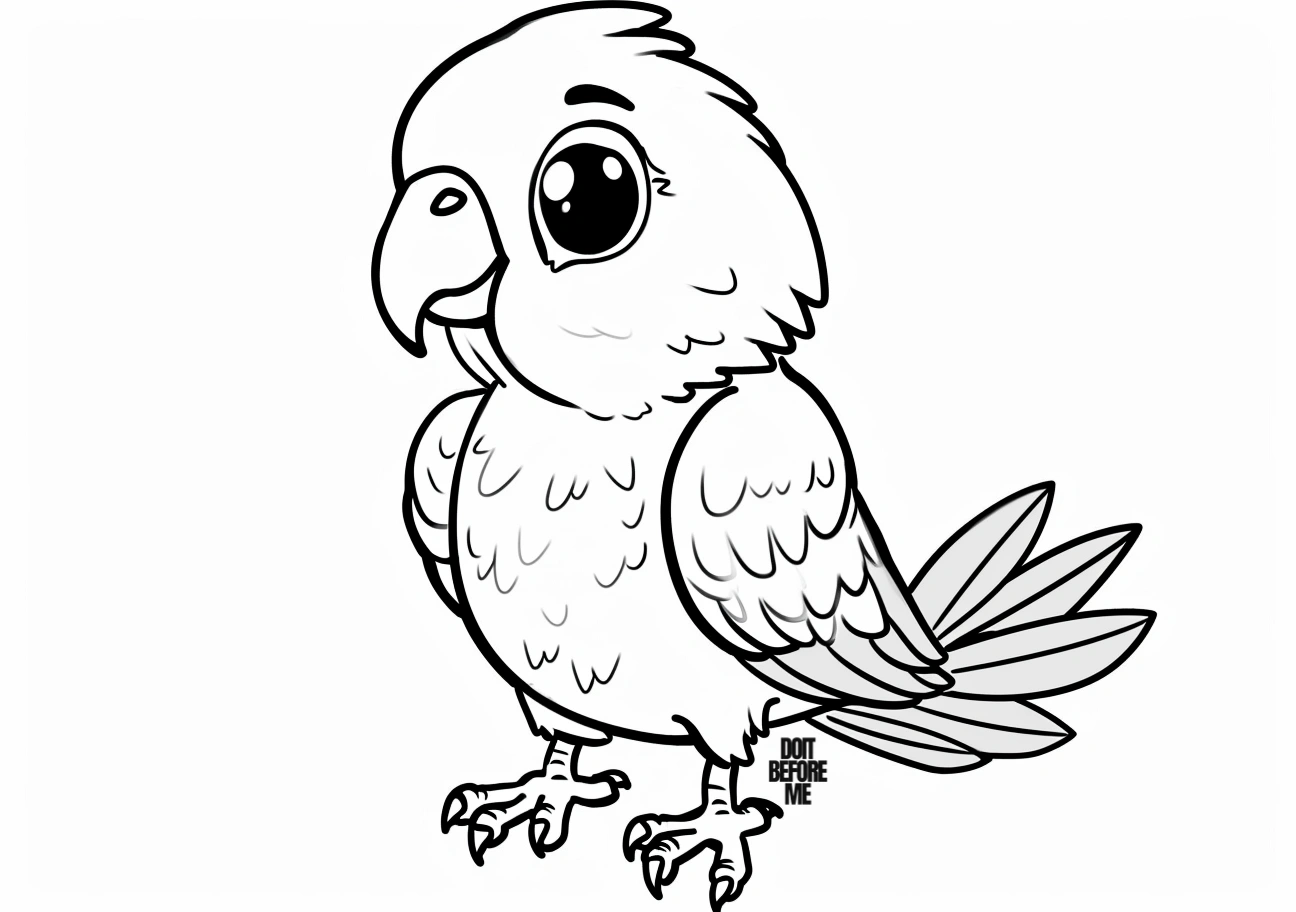
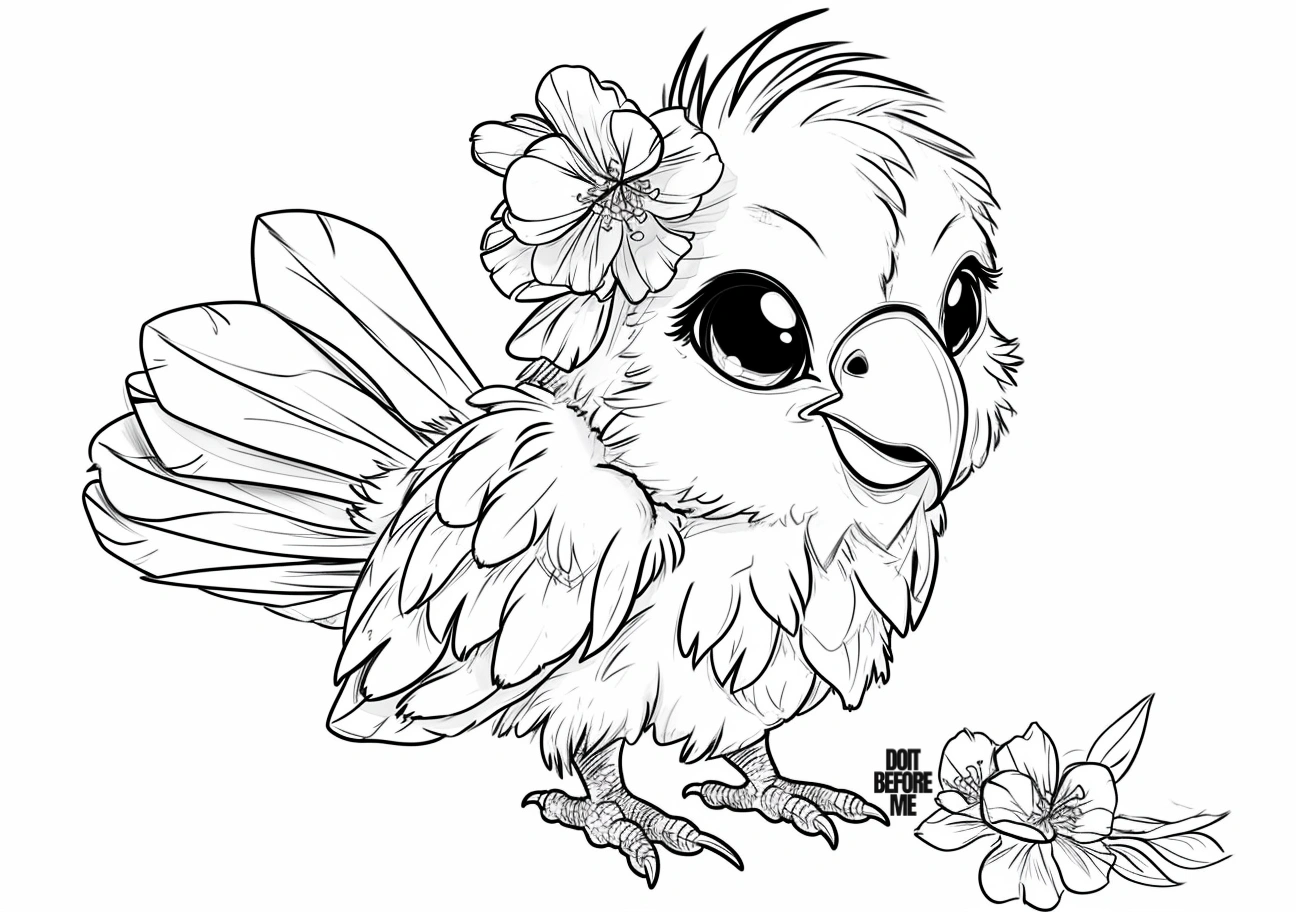
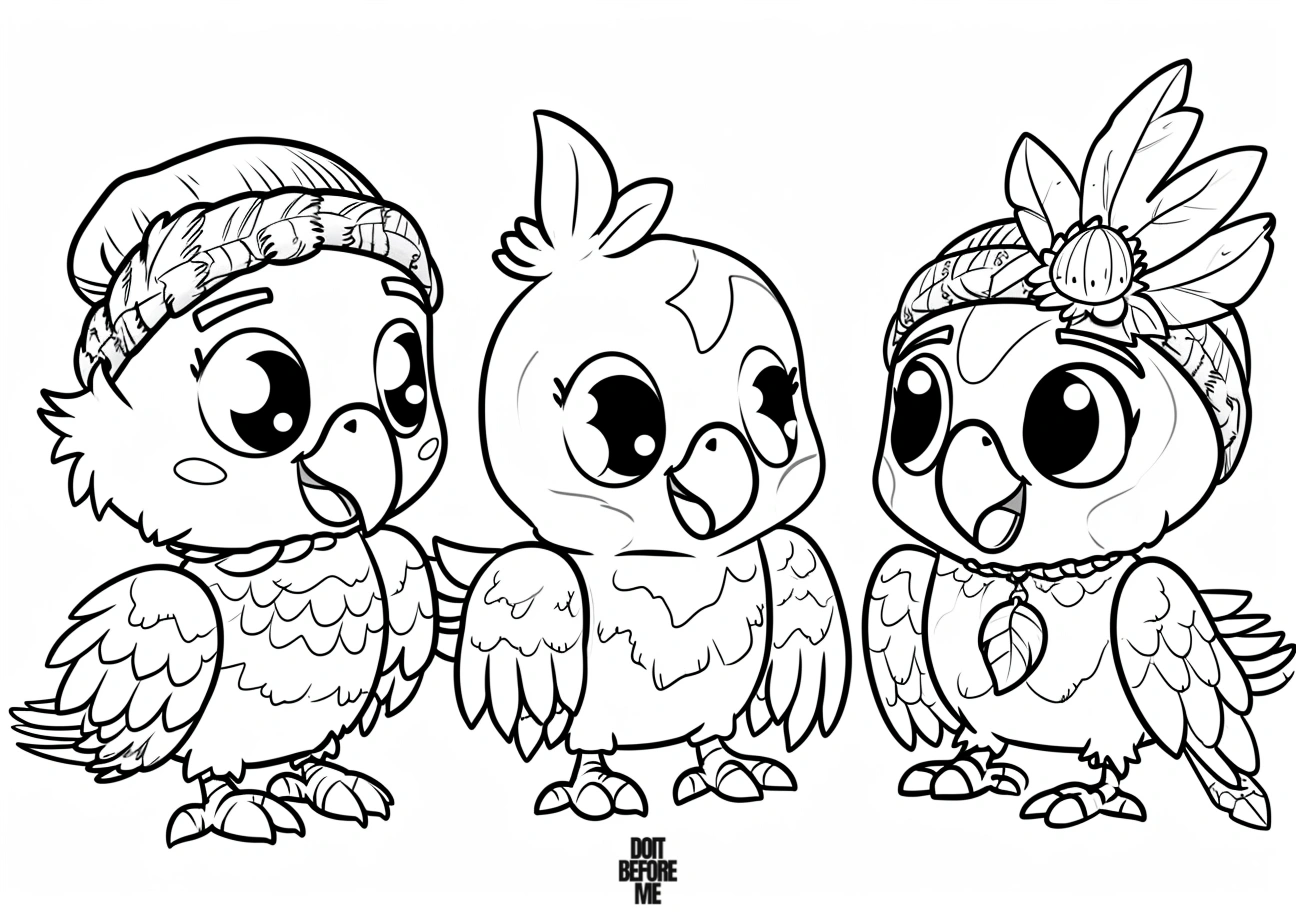
These pages are the easiest place to begin if you want one bird, broad feather areas and a quick color plan. The first easy sheet appears above so you can start immediately; the remaining seven continue below.
Character and costume parrots — Sheets 9–13
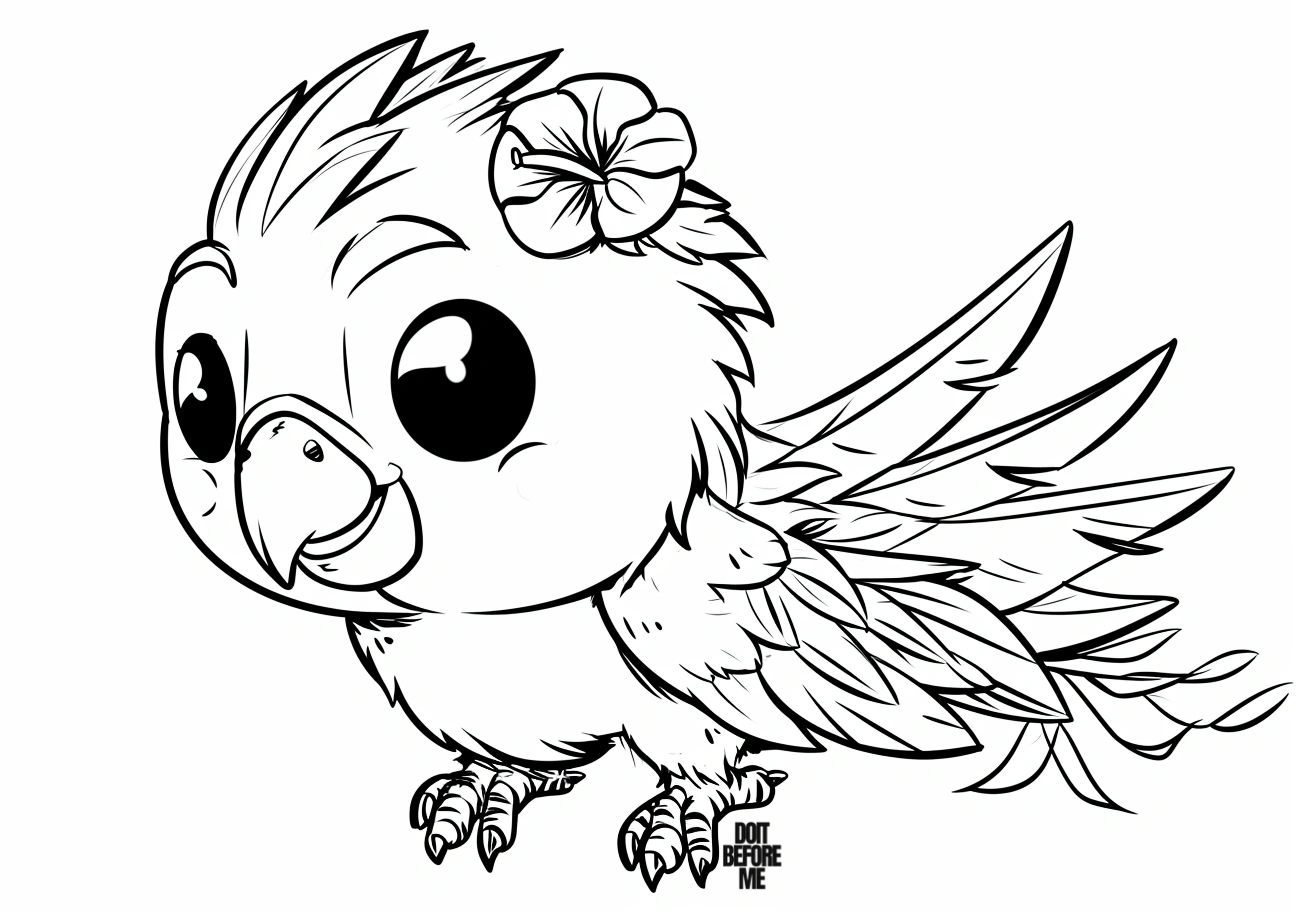
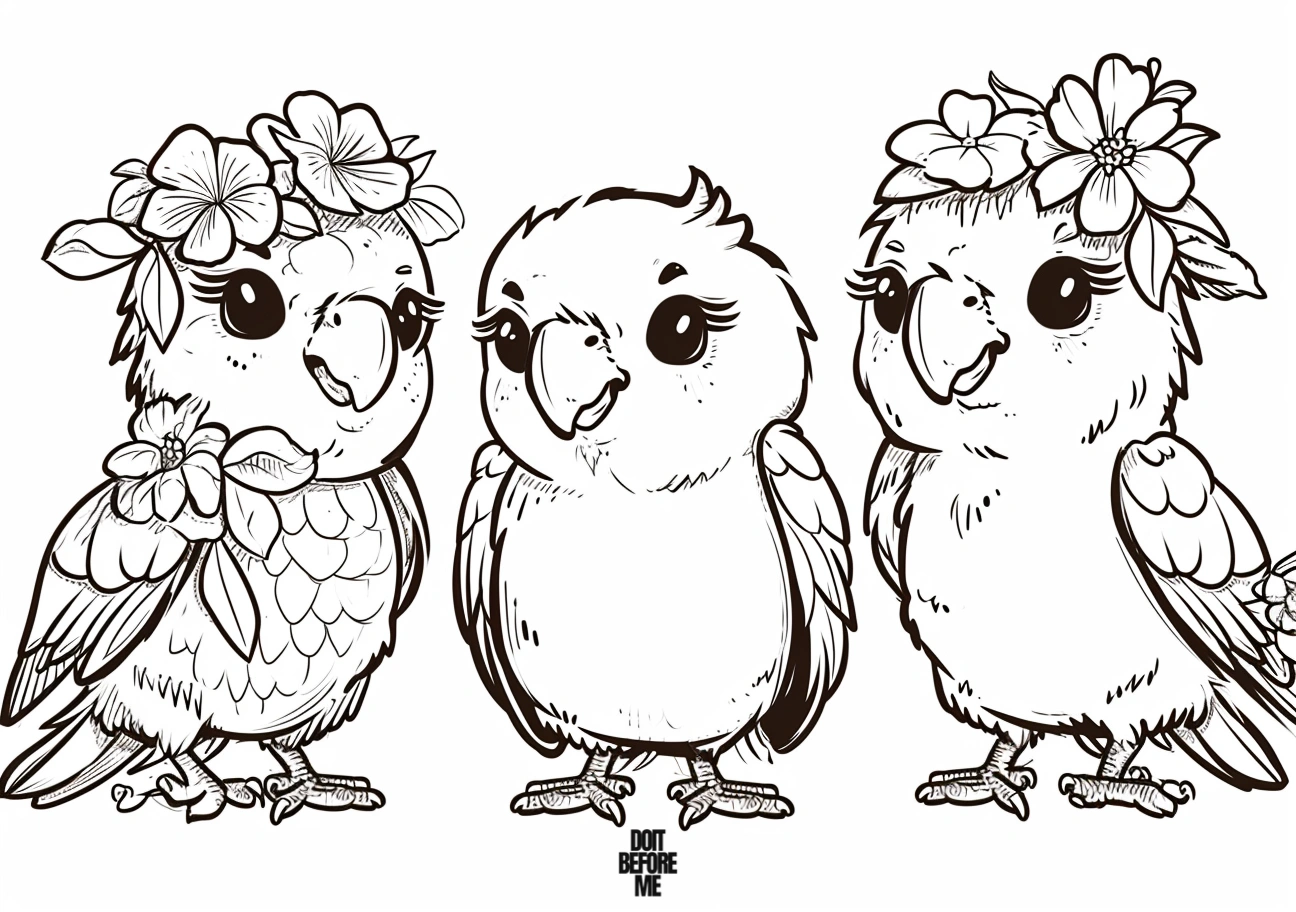
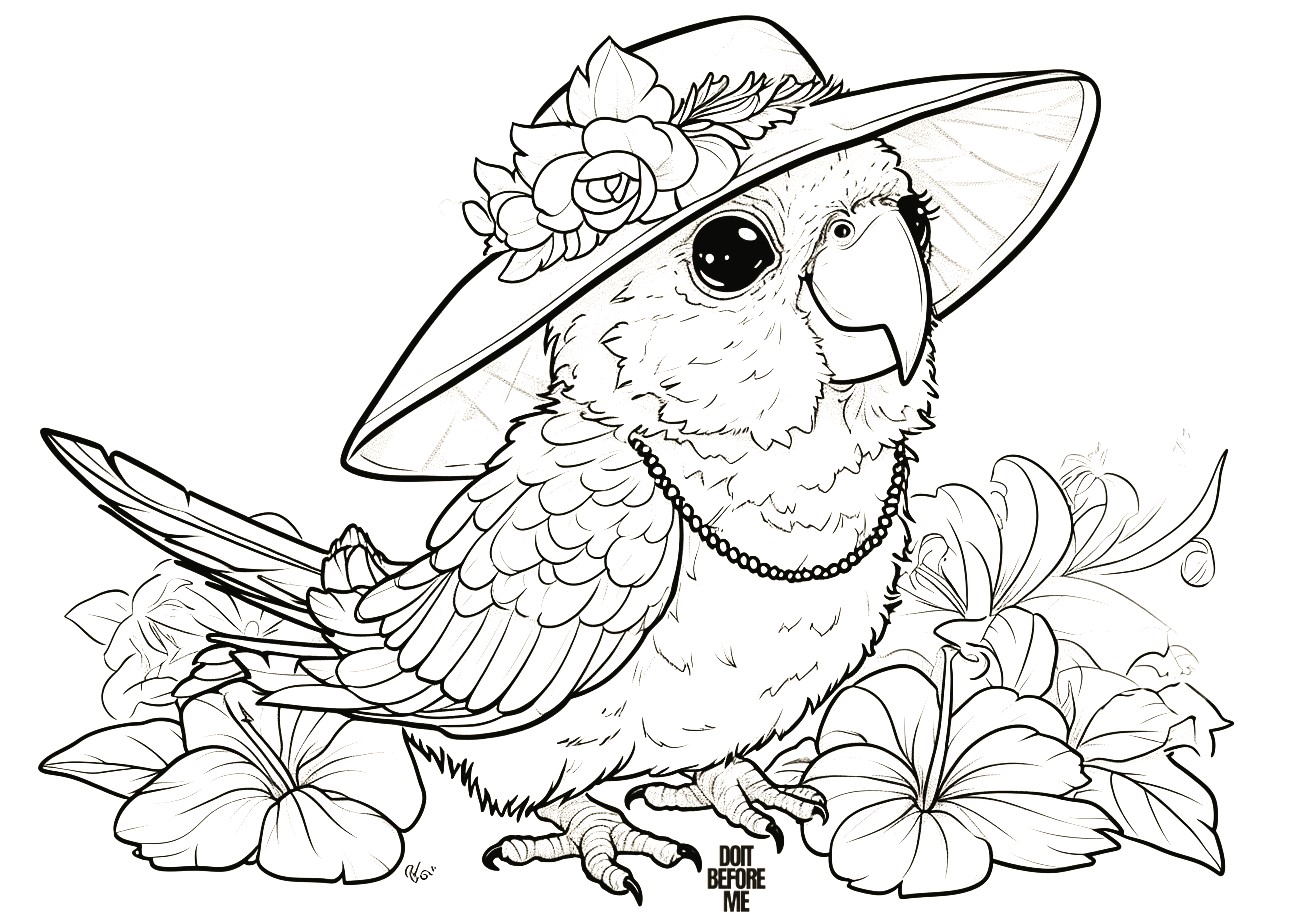
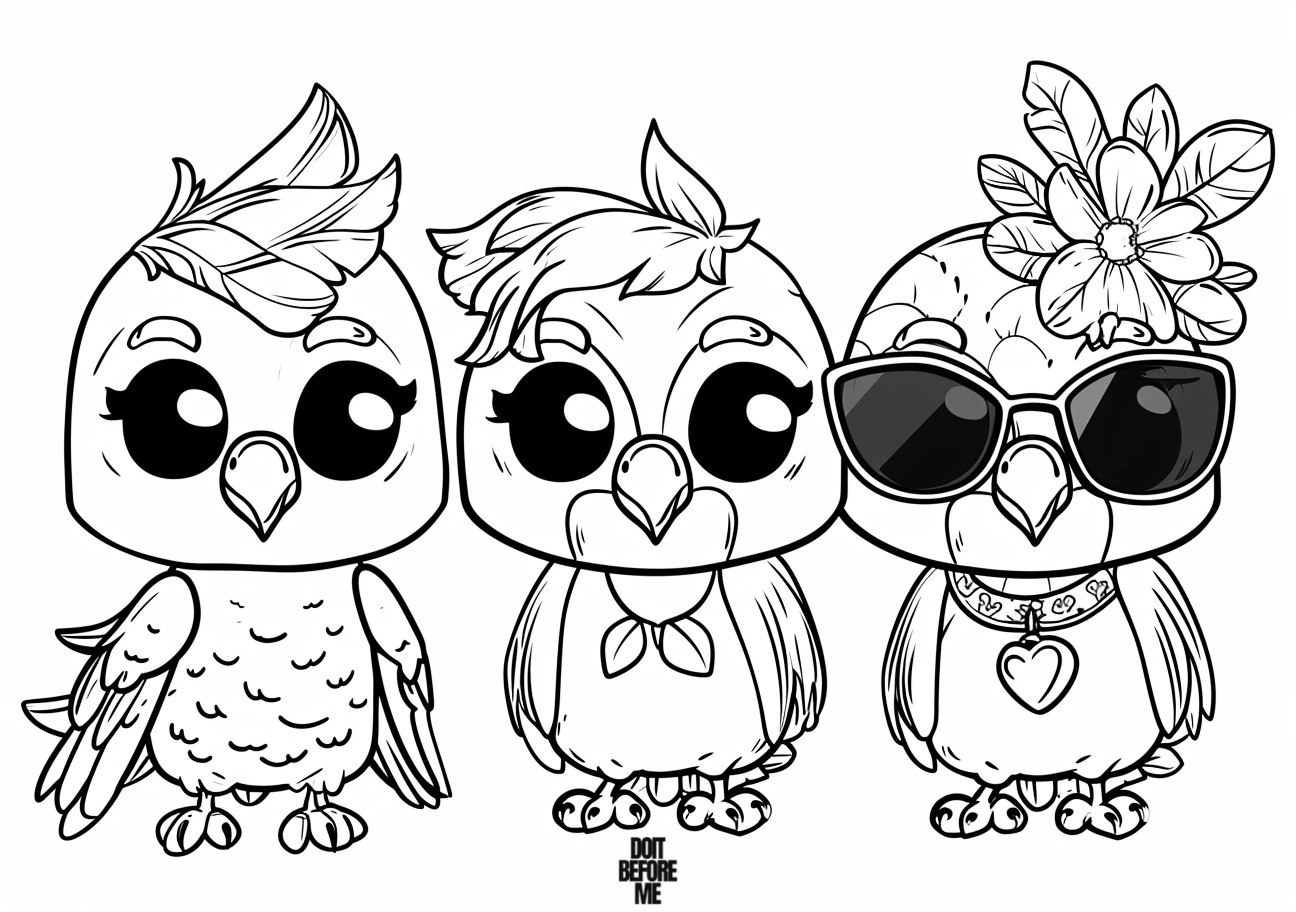
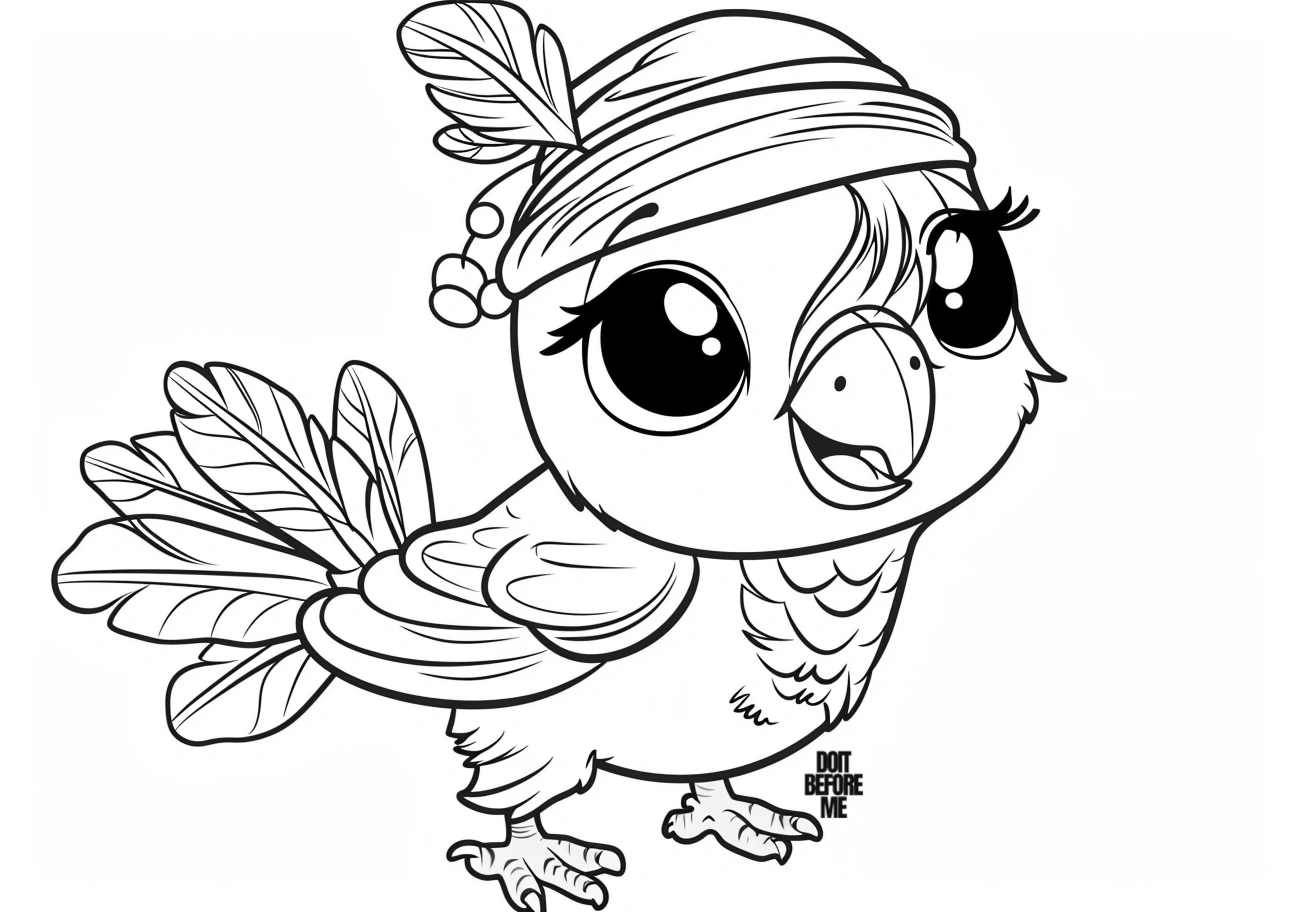
Here the accessories matter almost as much as the feathers. Keep the bird palette fairly controlled, then use stronger contrast on clothing, flowers or character details.
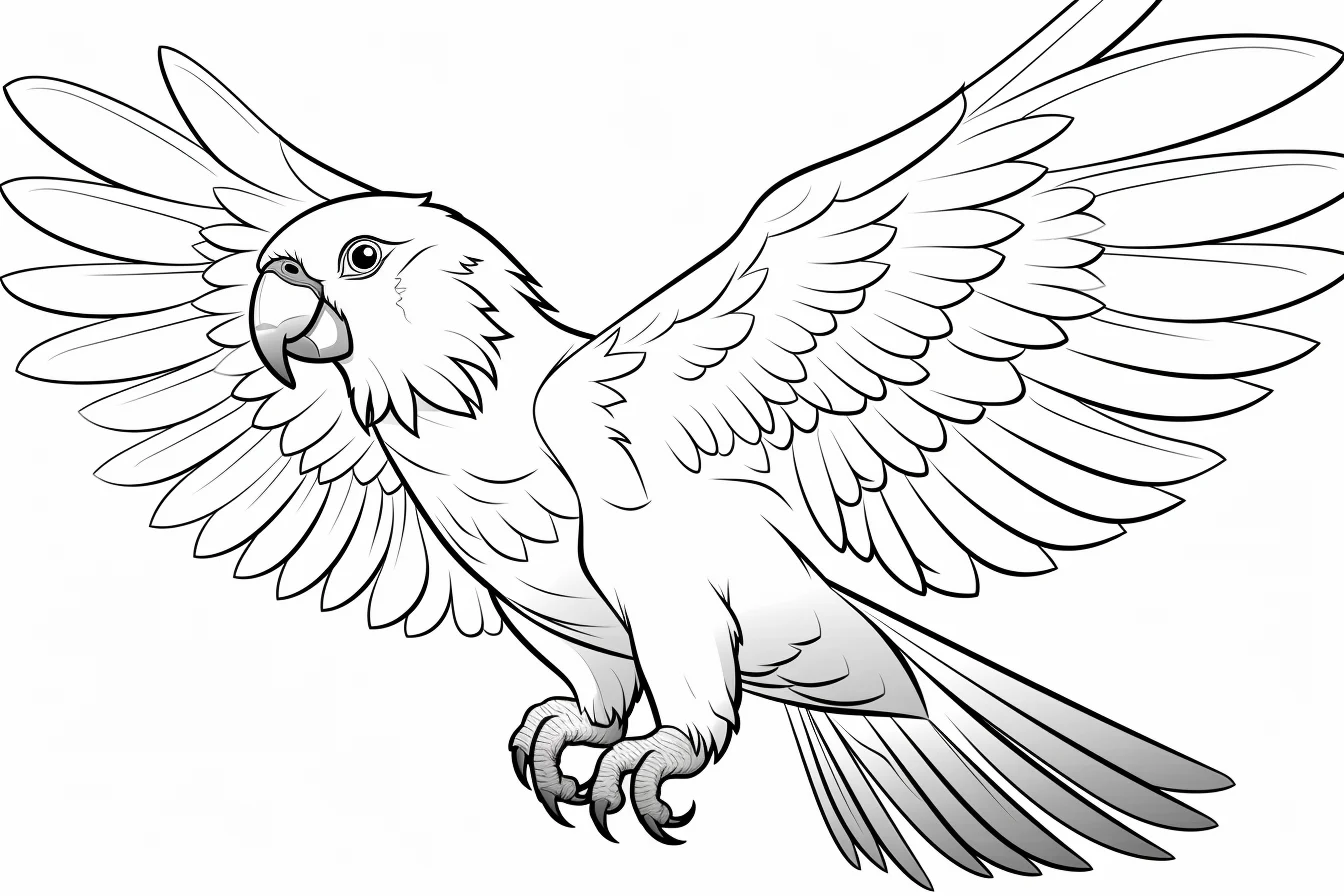
Flying parrots — Sheets 14–17
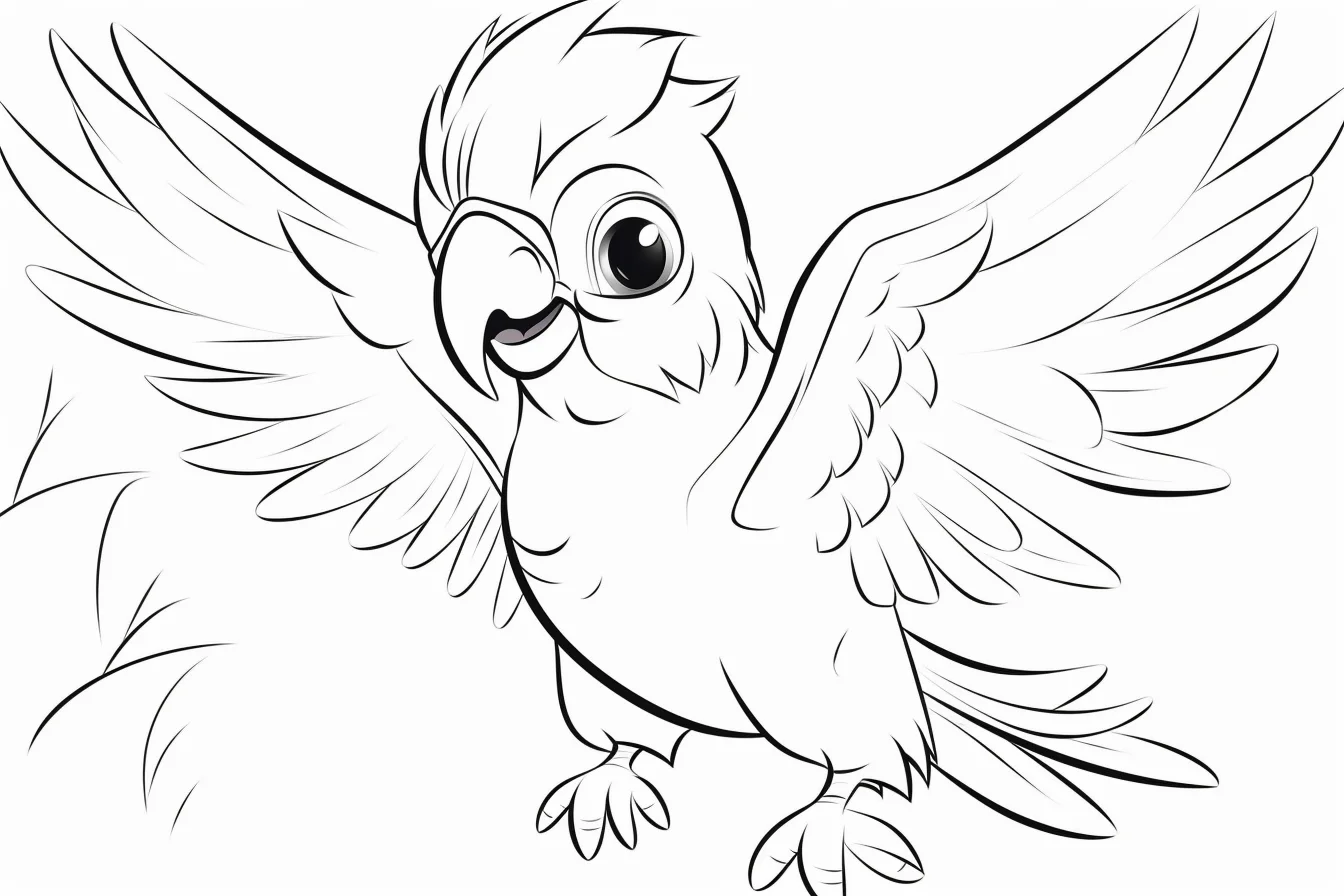
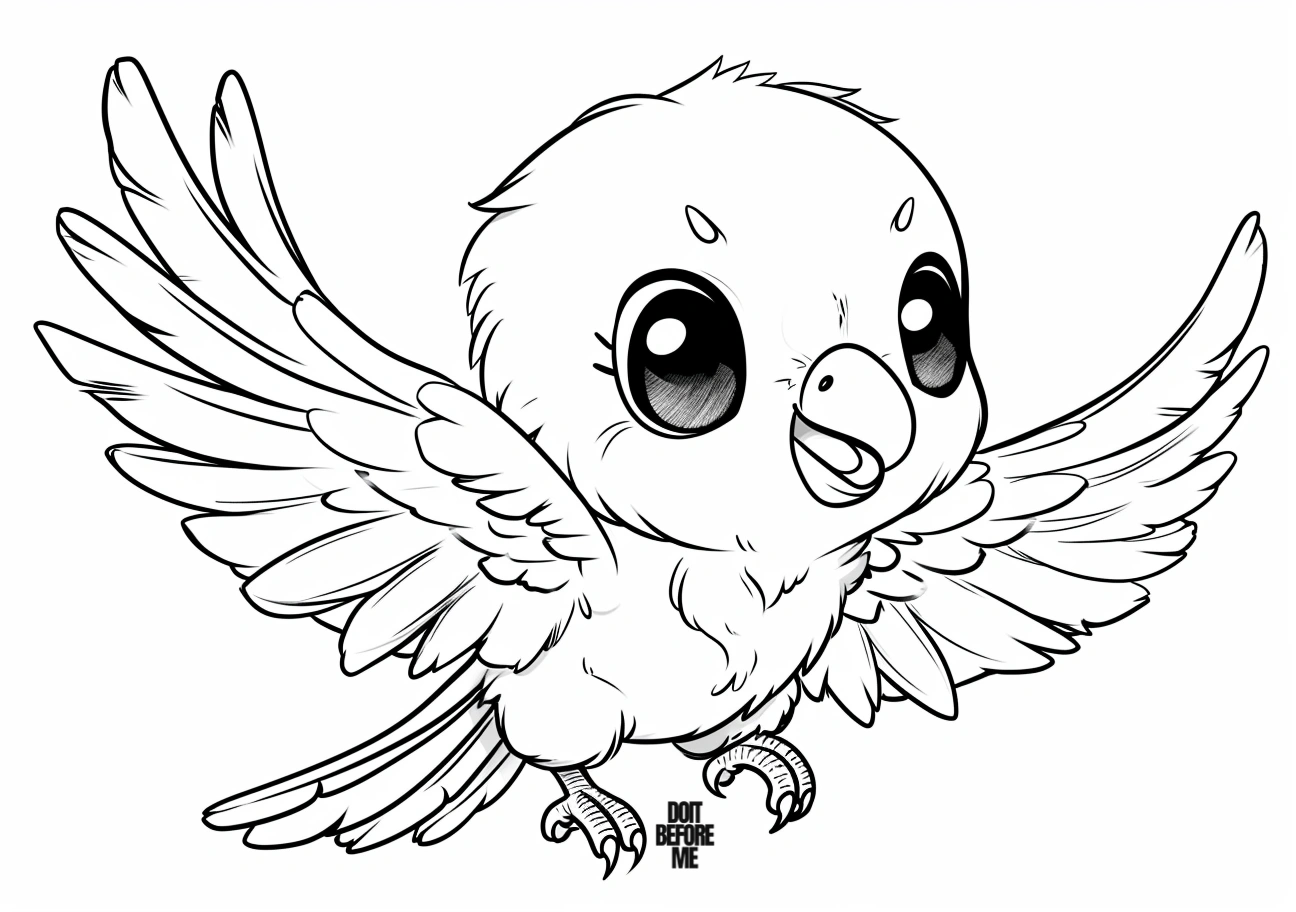
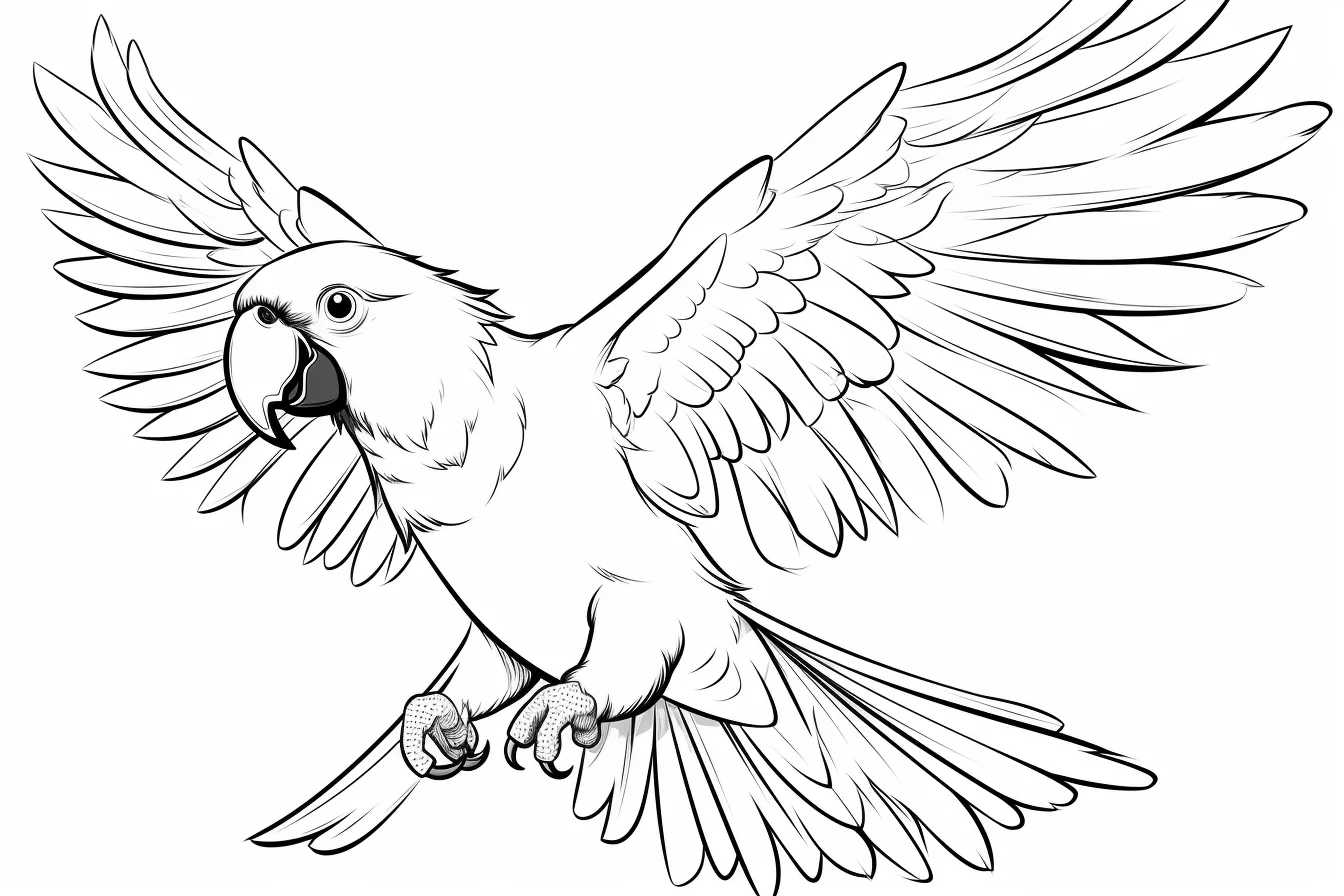
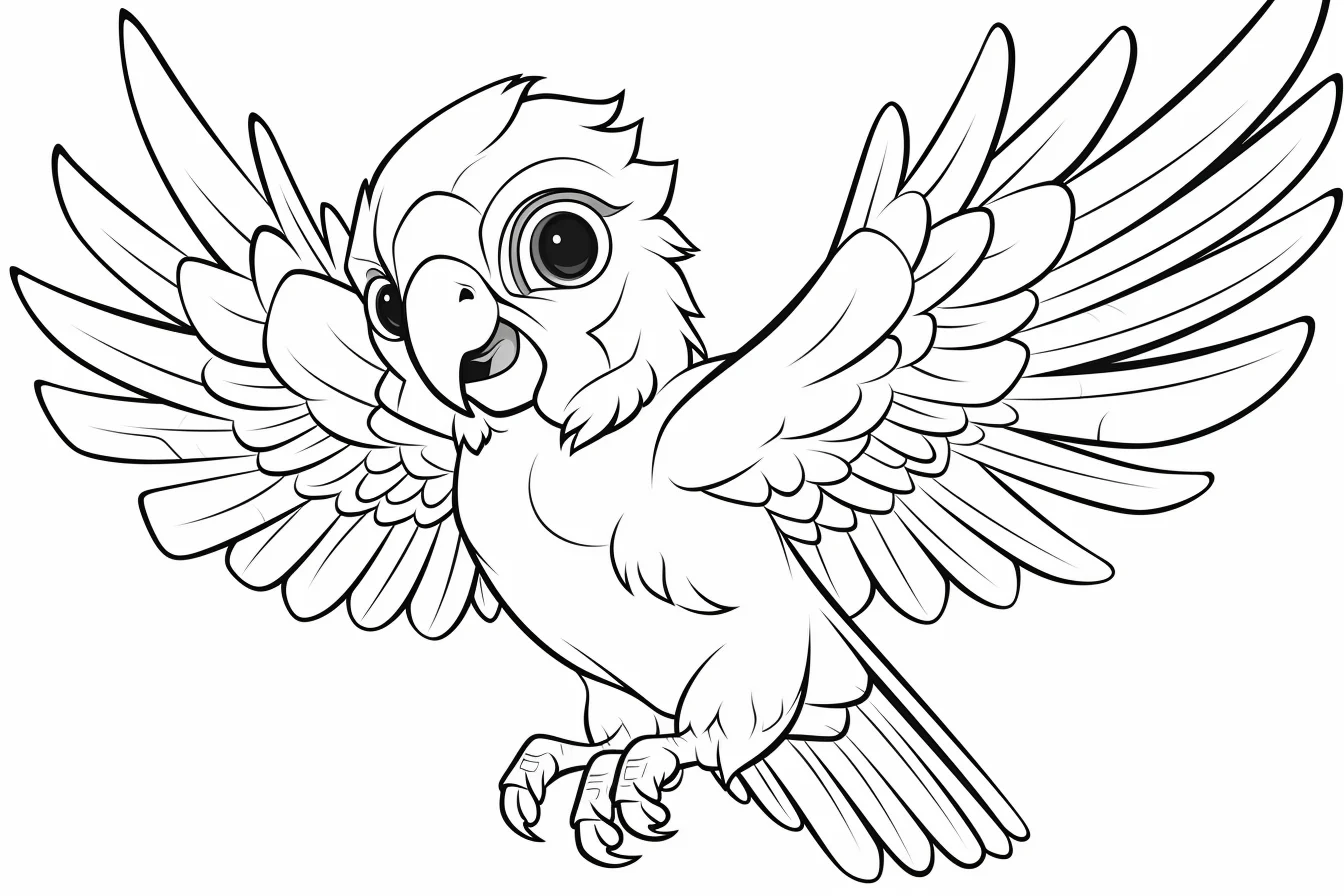
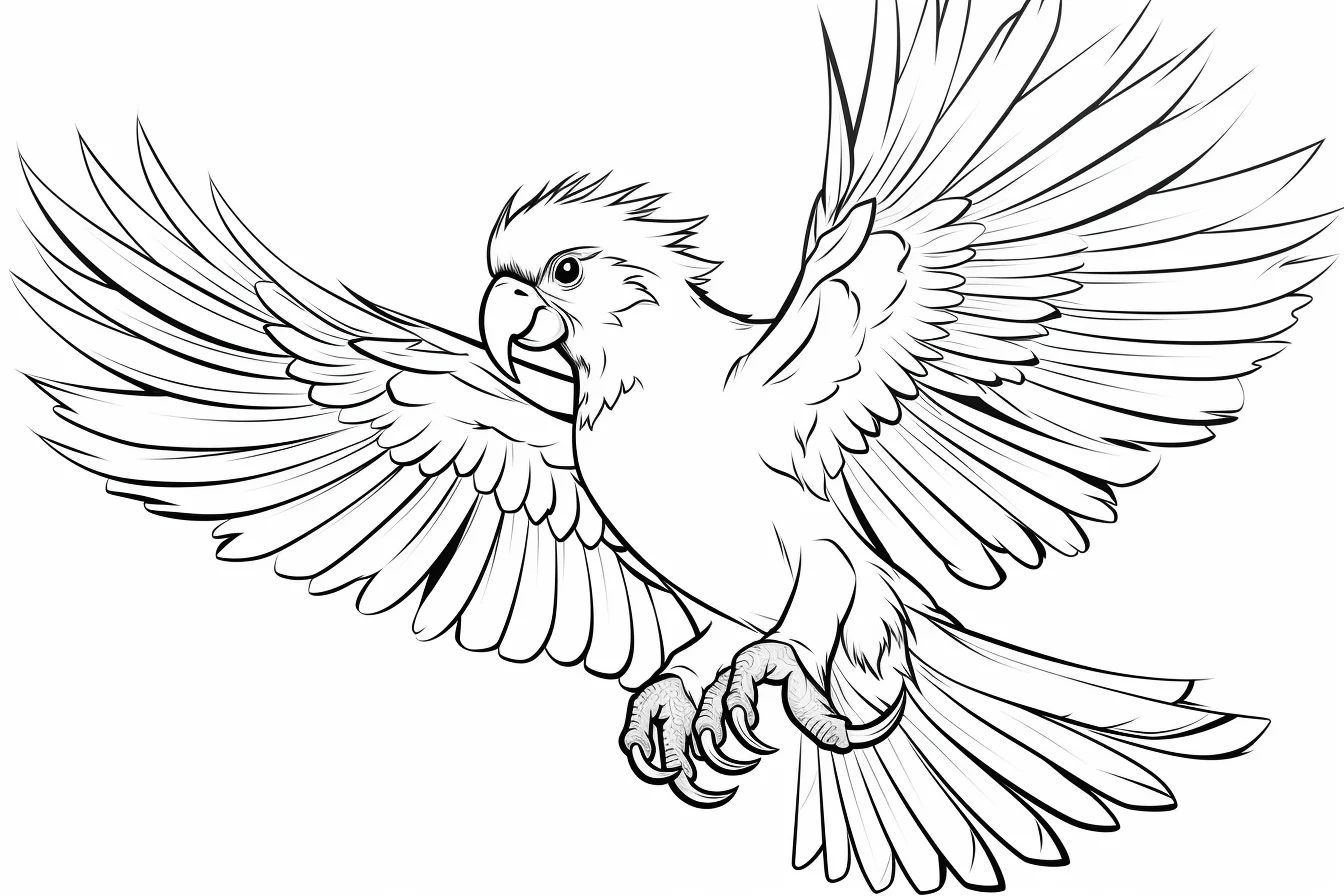
Use the strongest contrast on the spread wings and tail. A lighter chest helps the silhouette remain readable when the bird is shown in motion.
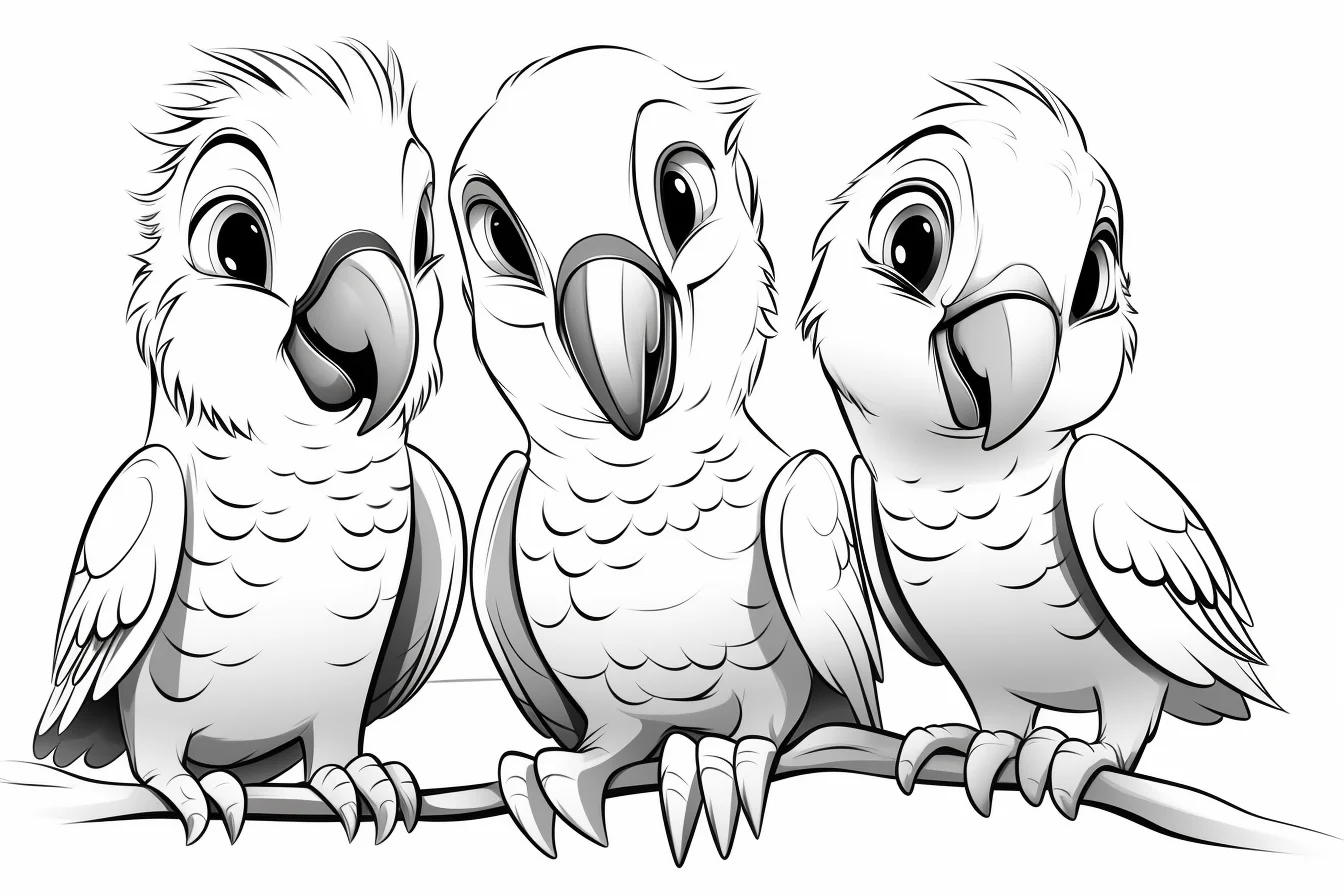
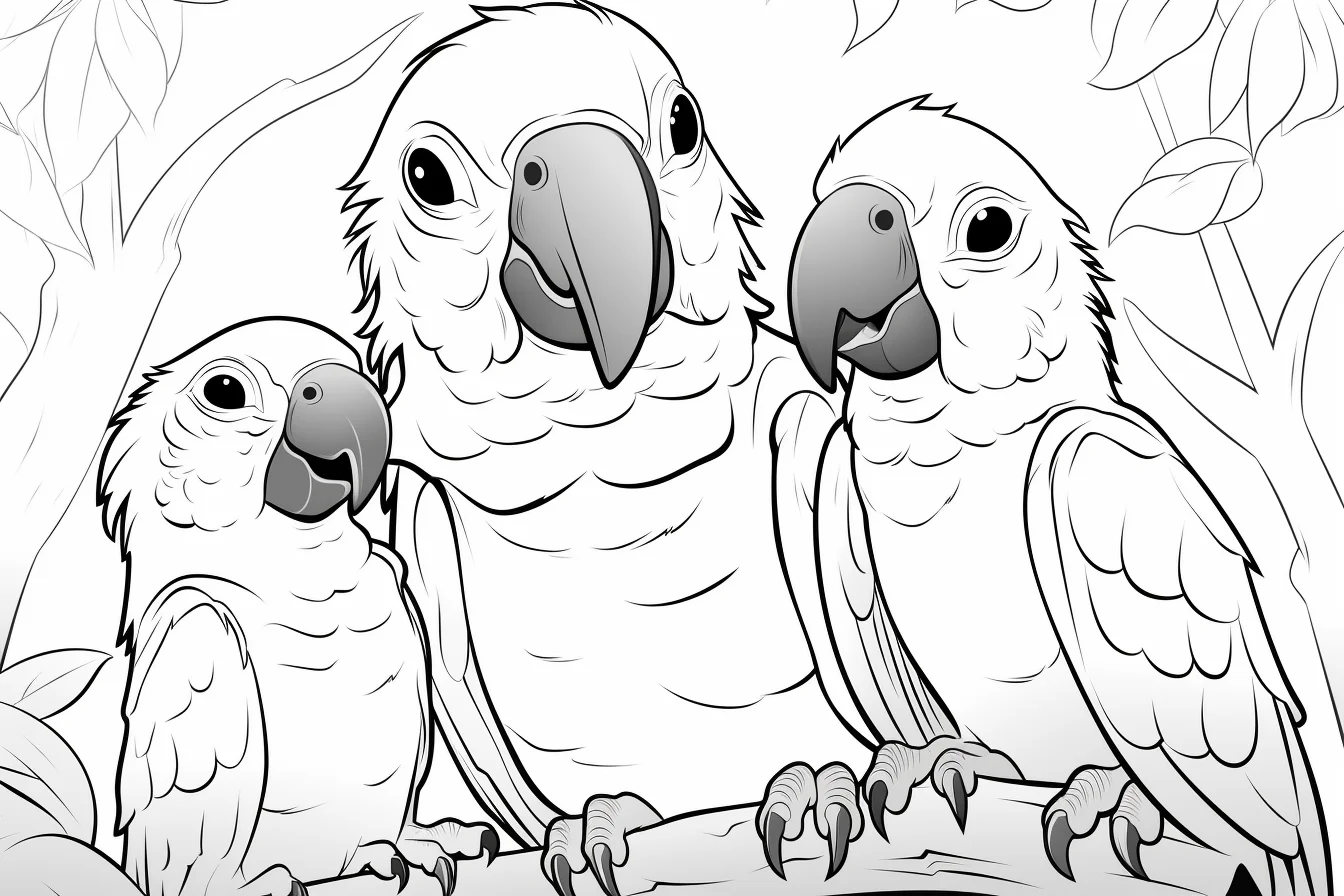
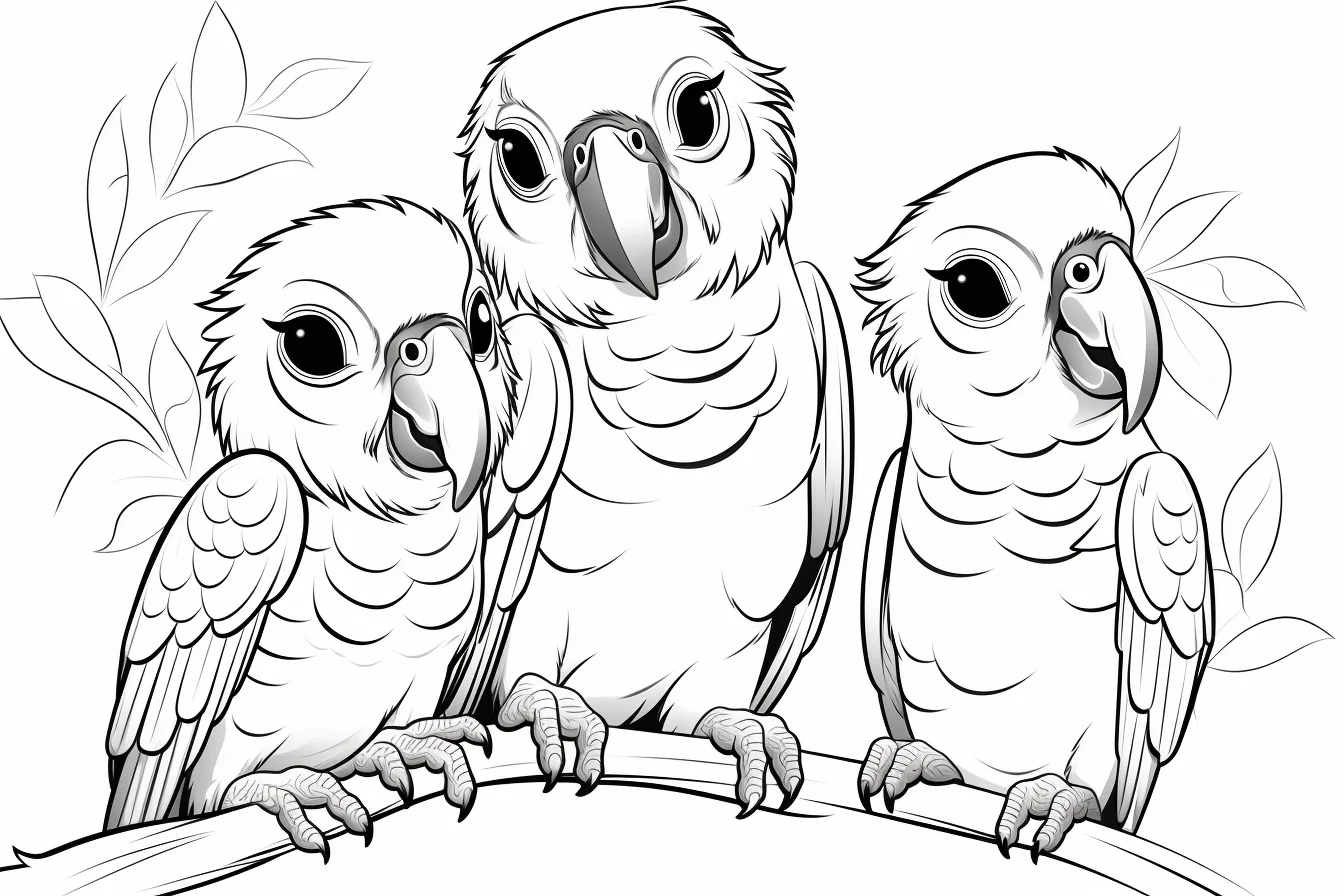
Parrot families and groups — Sheets 18–22
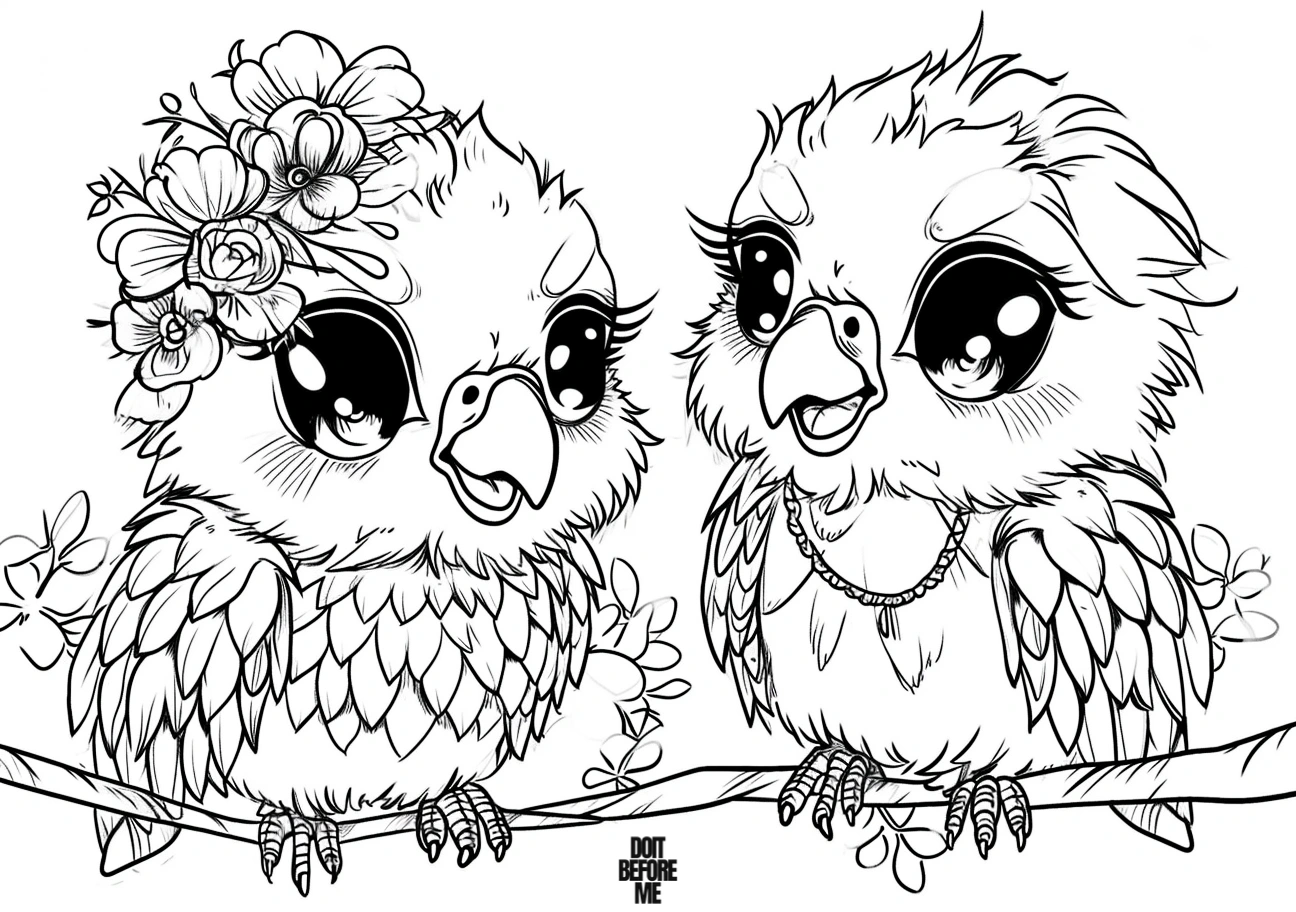
Give each bird its own main color, then repeat one shared accent across the group. That keeps several bright parrots from looking unrelated.
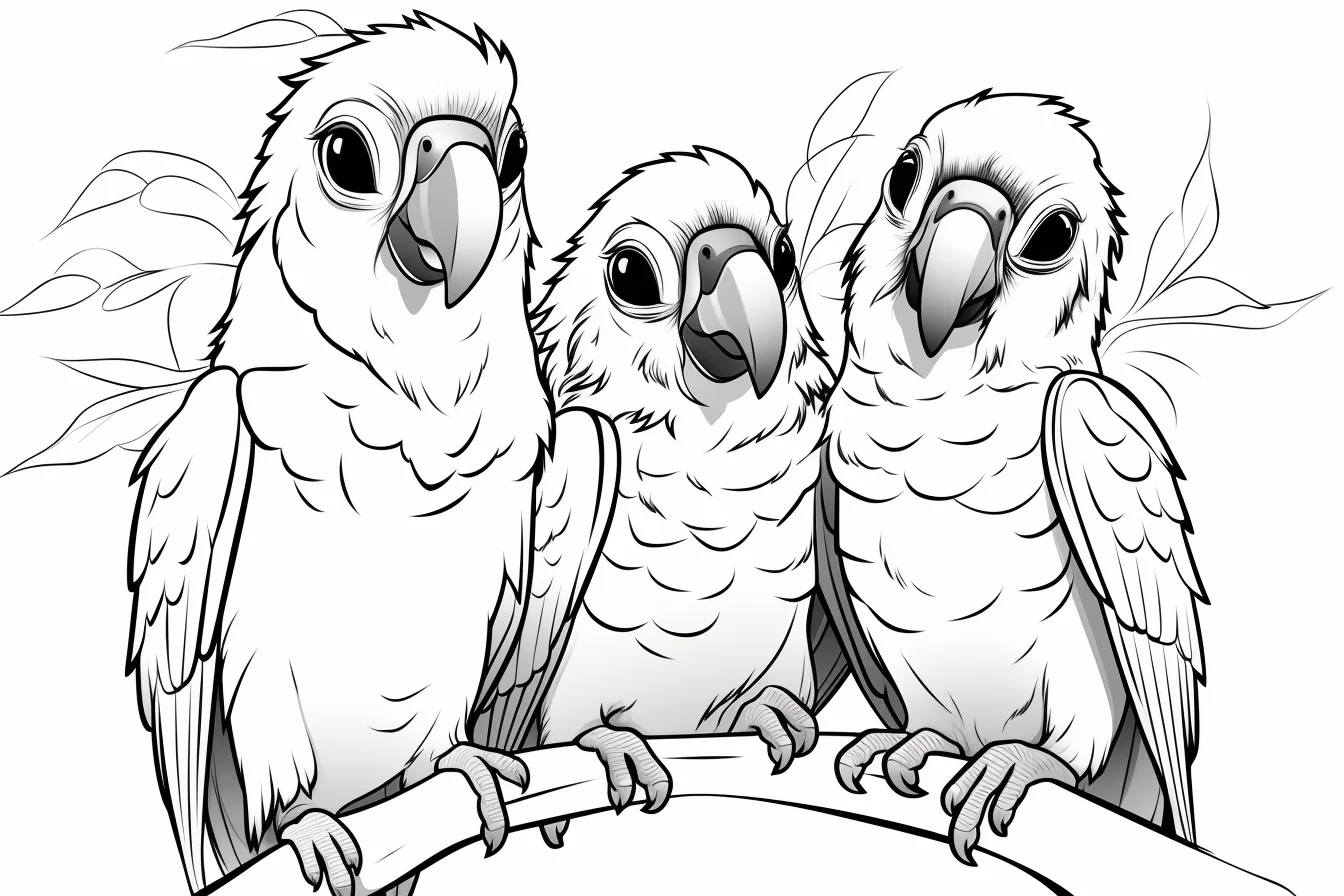
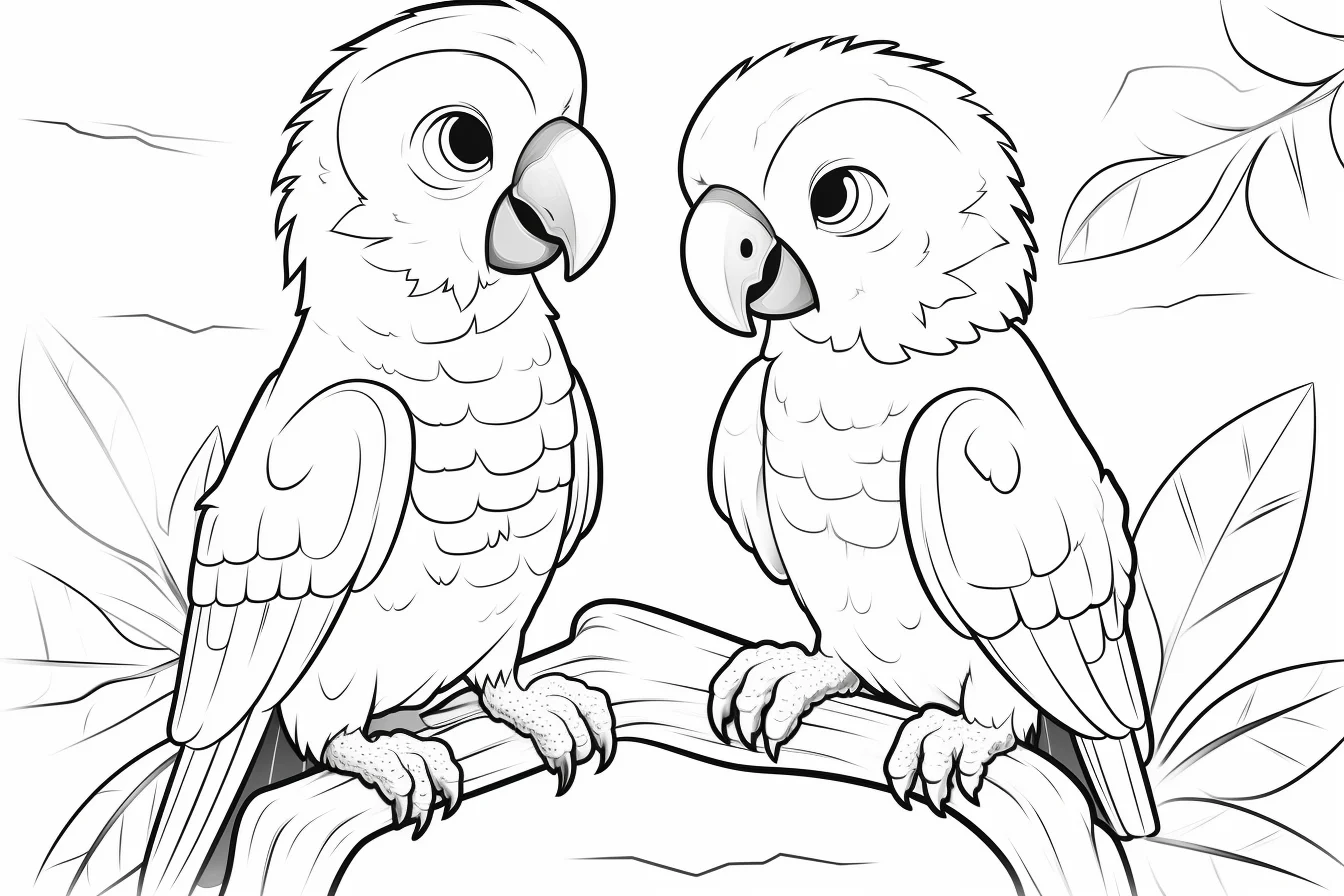
General printable parrots — Sheets 23–28
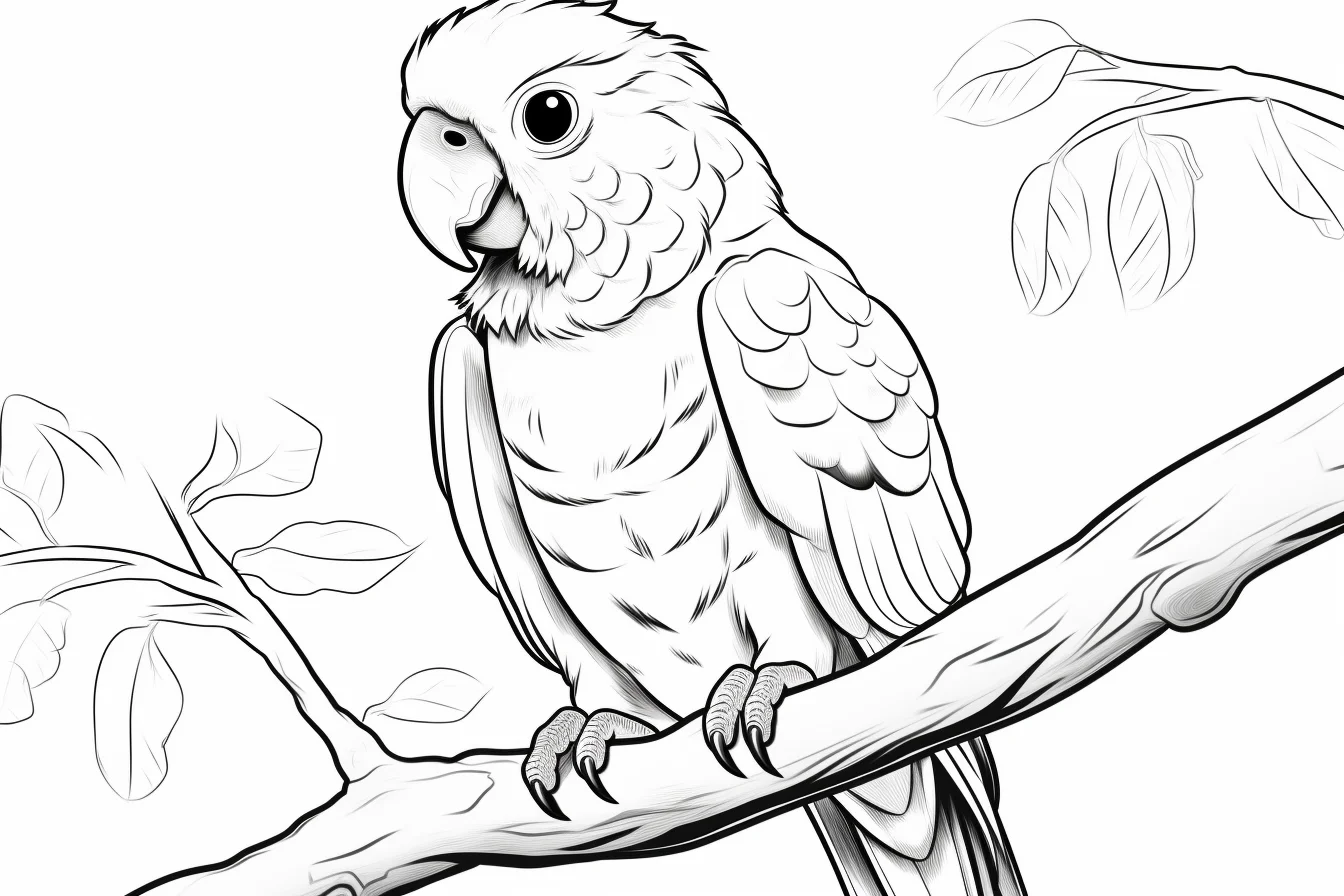
These are the flexible middle-ground sheets: not specifically preschool, not specifically realistic. Two or three feather colors plus one beak/feet color is usually enough.
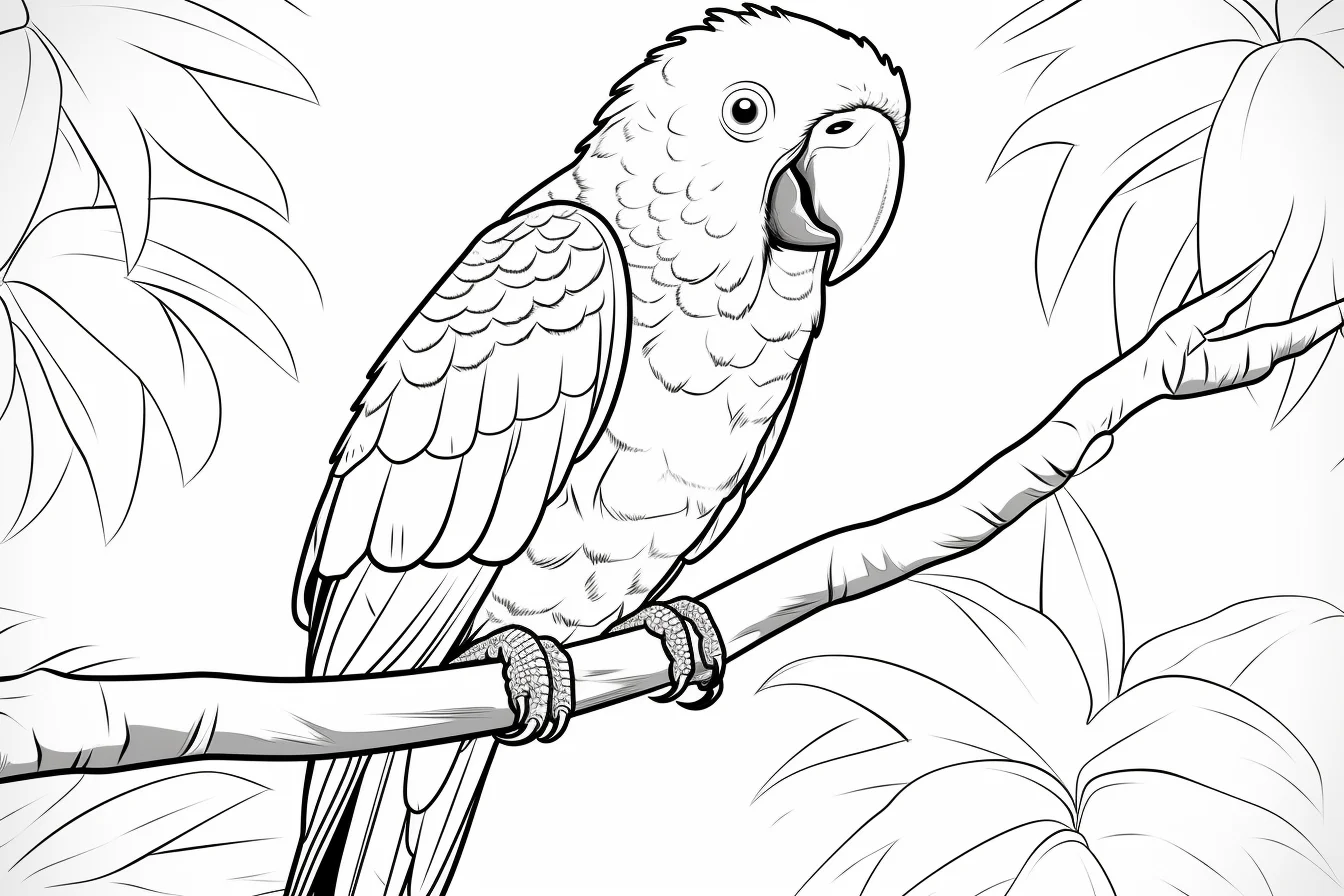
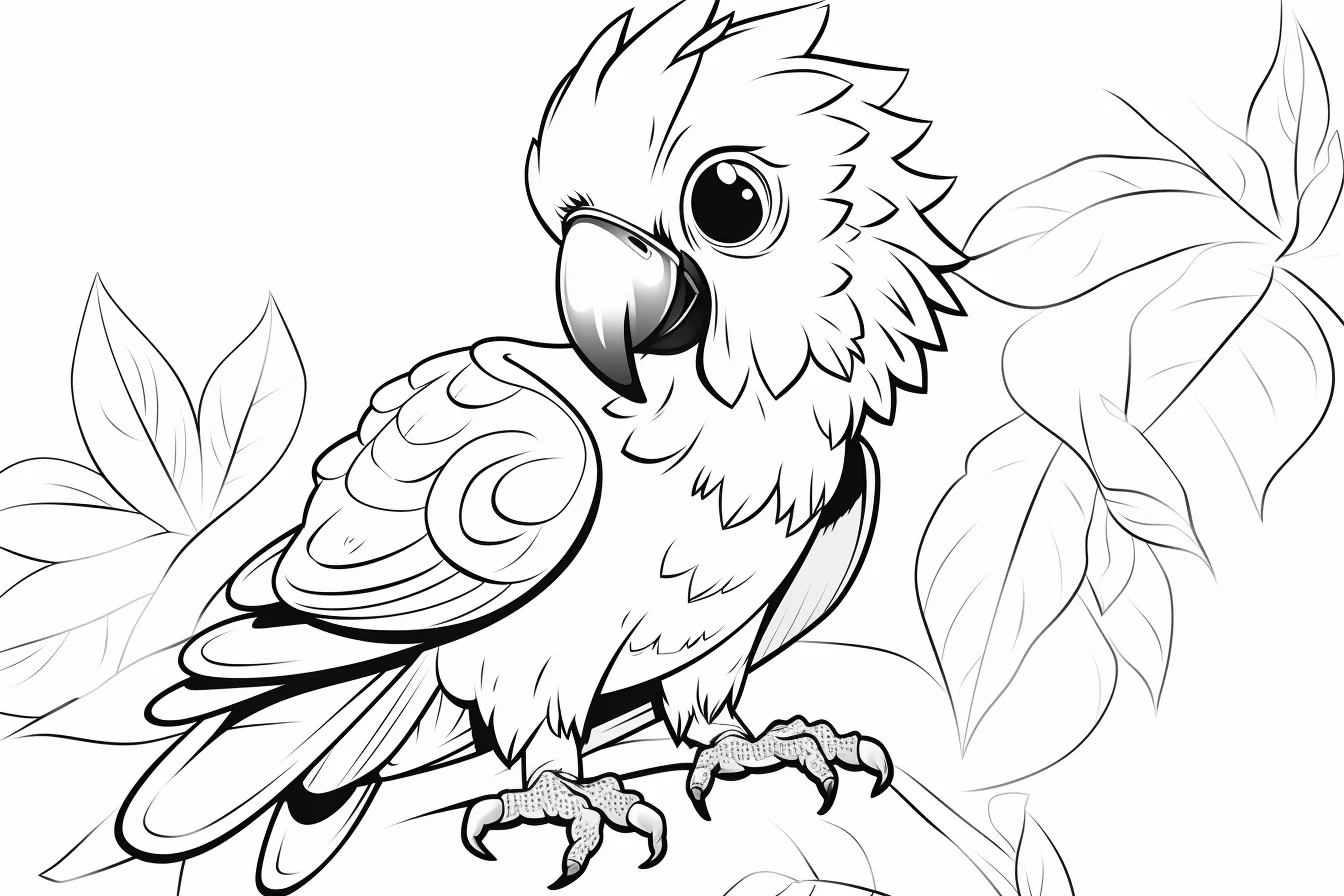
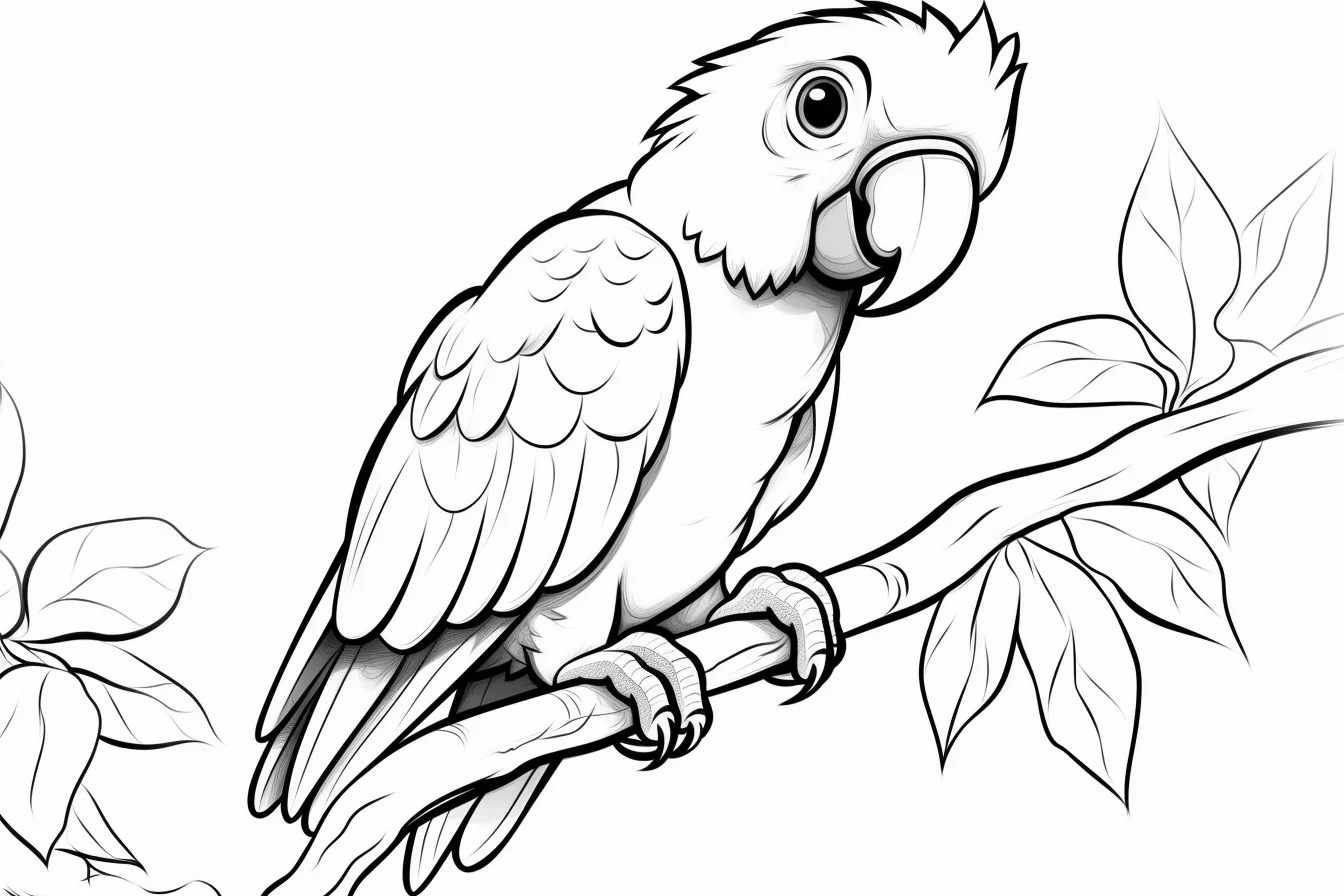
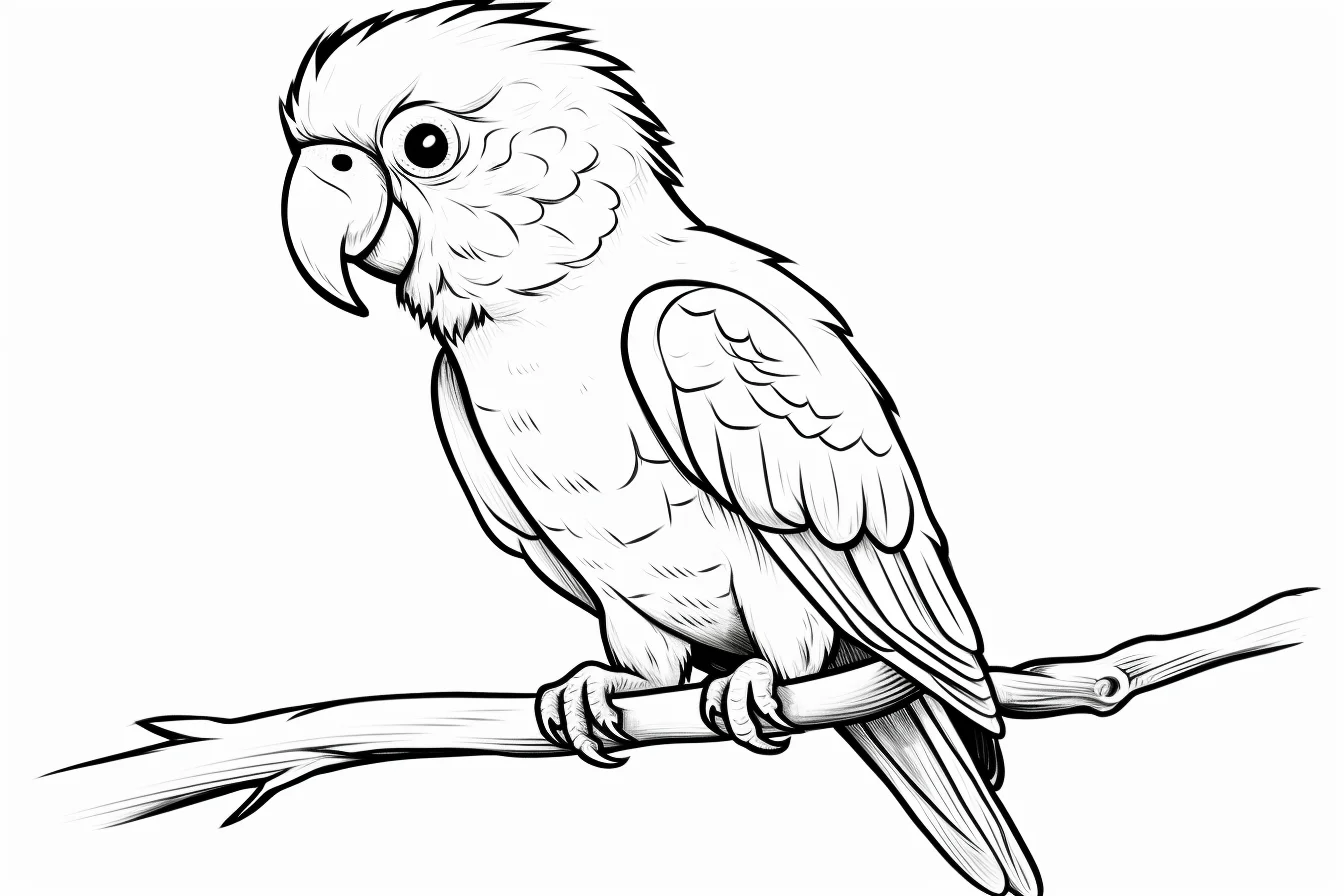
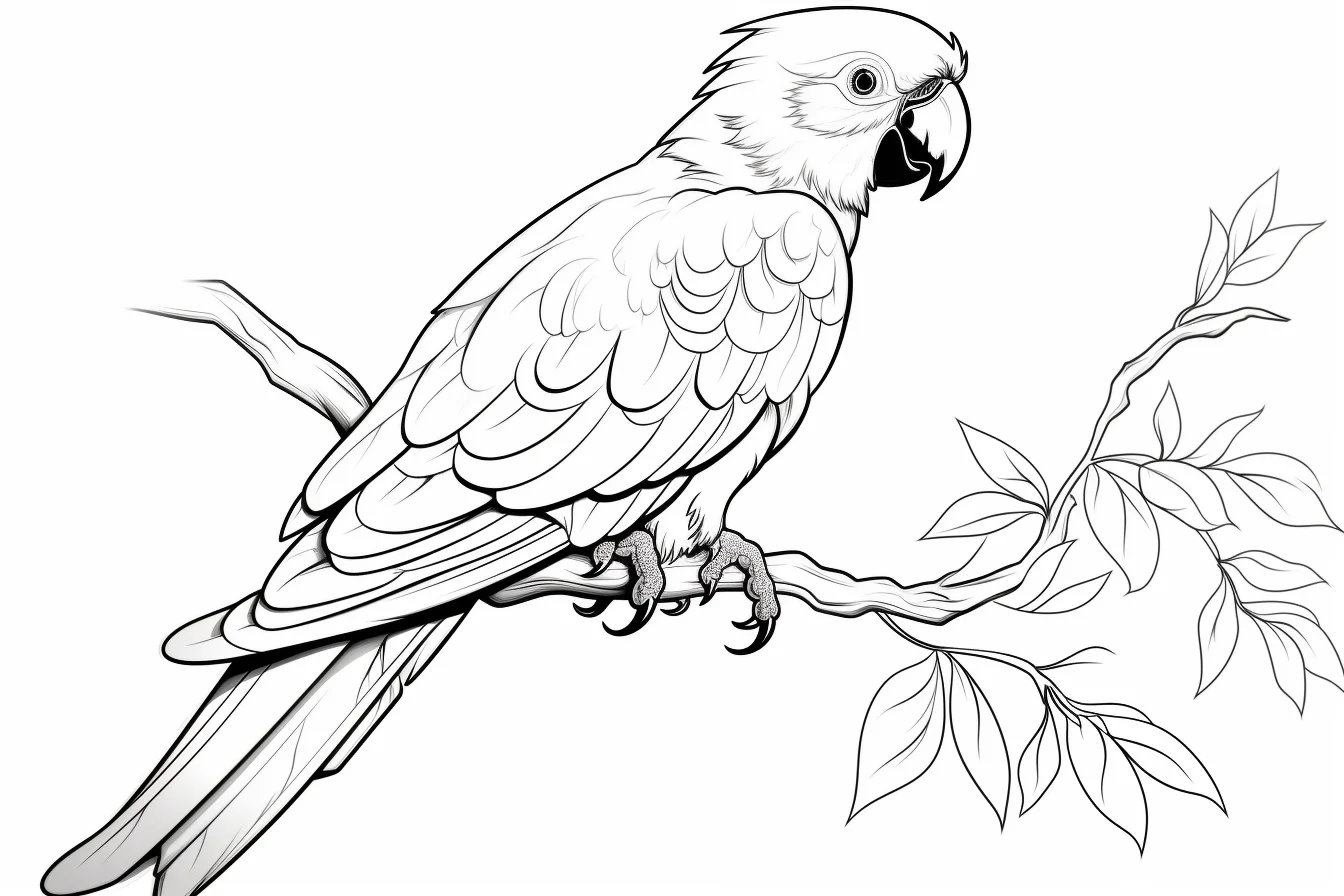
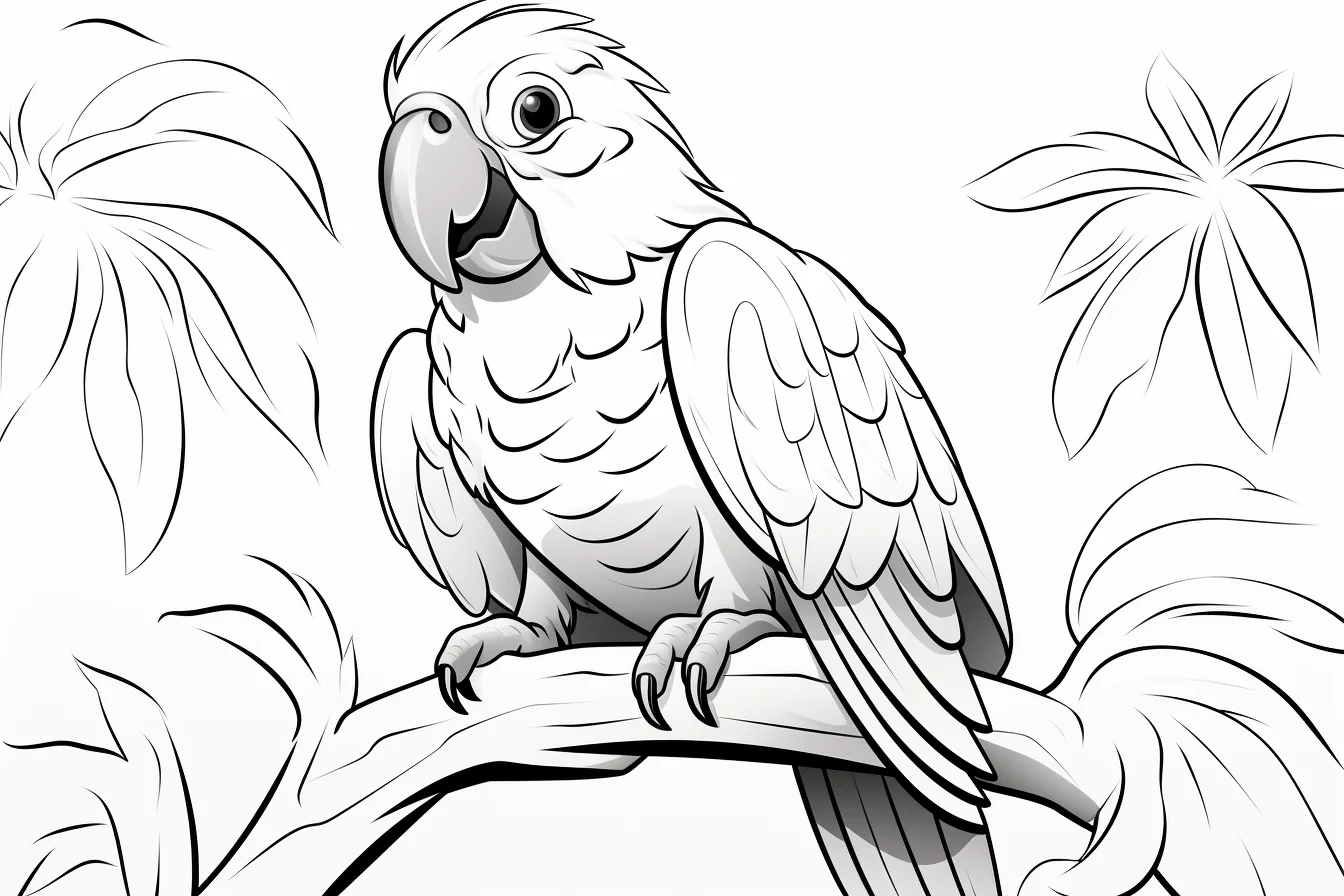
Adult and realistic parrots — Sheets 29–32
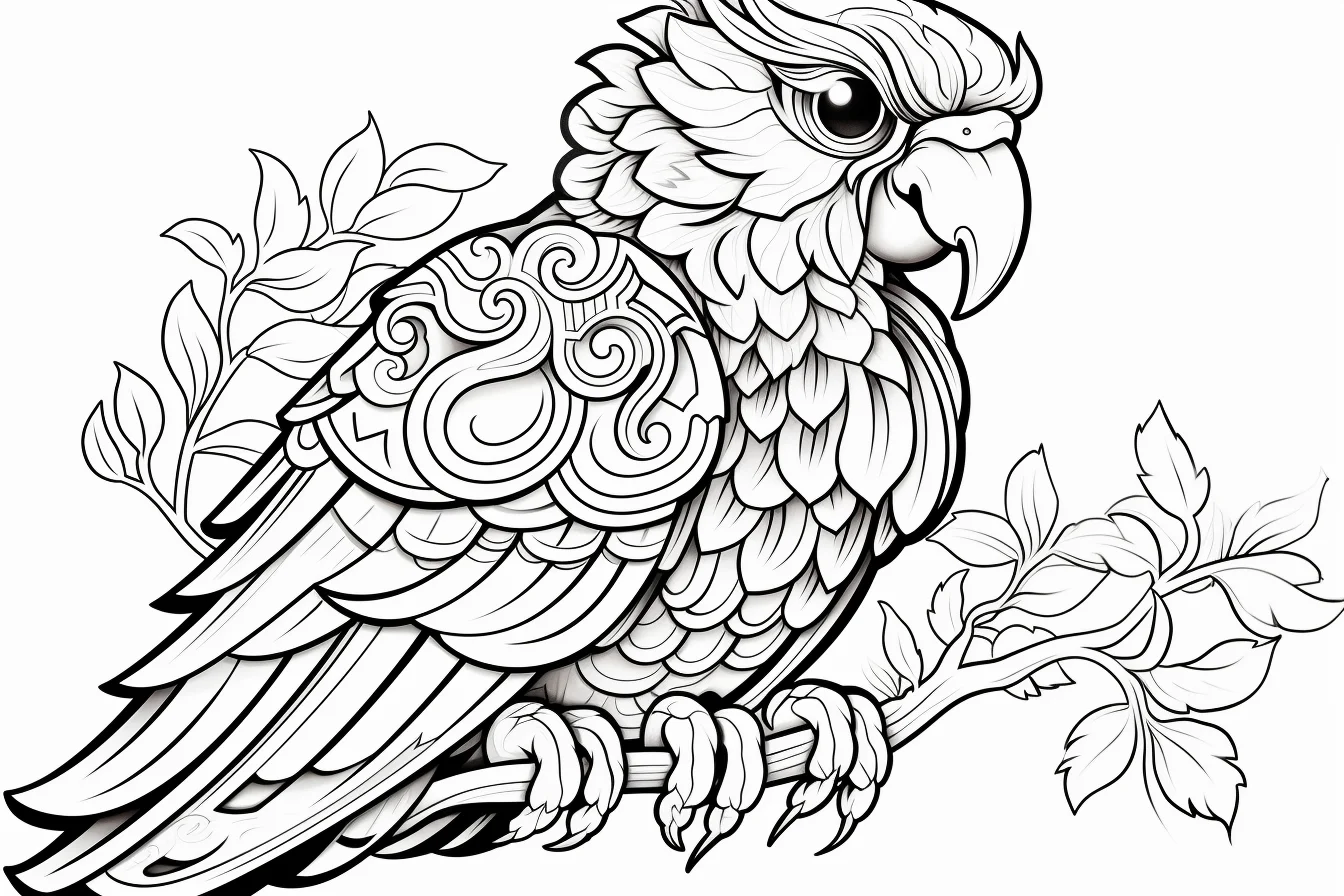
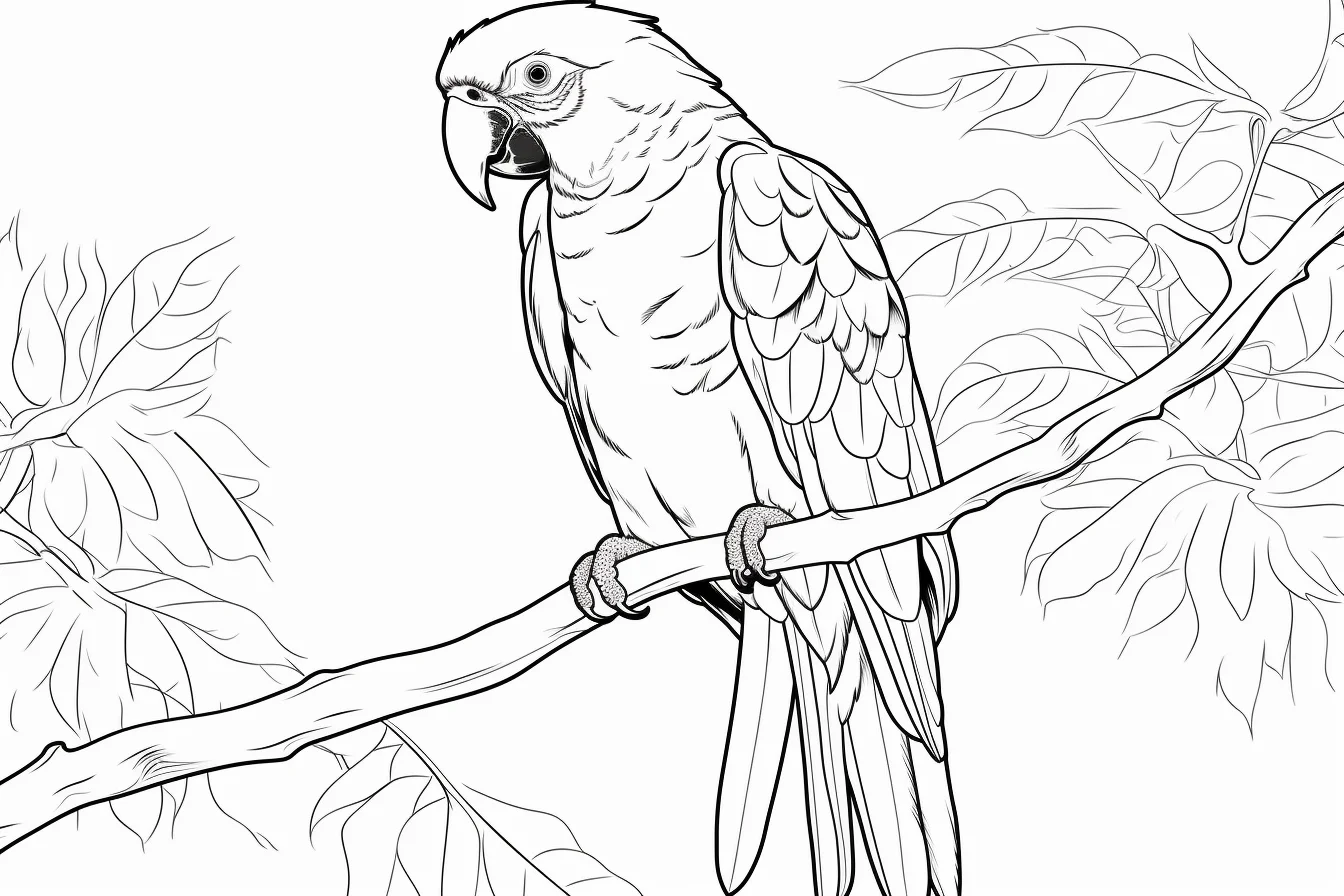
Use pencils here if you want feather direction and layered color to remain visible. Put the brightest pigment on the wing and tail, then use softer transitions across the chest and face.
Make bright parrot feathers look layered
Parrots are useful practice for learning color transitions because a wing can be vivid without becoming a patchwork. Pick one light, one middle and one dark version of the same color family. Cover the feather group lightly with the palest color, add the middle value where feathers overlap, then place the darkest value only near feather bases, under the folded wing and between the longest tail feathers. Leave some of the light base visible at the feather tips. The wing will read as a layered surface instead of a collection of outlined shapes.
If you are using colored pencils, make strokes in the direction the feathers grow. On the chest, use shorter, softer strokes; on the wing and tail, use longer strokes that follow the feather shafts. With crayons, simplify the same idea into a light base plus a darker overlap color. With markers, avoid repeatedly going over tiny feather sections: use a flat base first and add the darker feather separation with pencil after the marker is dry.
Three-page parrot practice progression
- Easy single bird: choose one of Sheets 1–8. Limit yourself to three main colors and concentrate on keeping the eye and beak clean.
- Flying bird: choose one of Sheets 14–17. Use a light-to-dark change from the inner wing toward the tips so the spread wings have structure.
- Realistic bird: choose one of Sheets 29–32. Keep the same basic palette, but add a second value inside each major feather group rather than adding more colors.
Using a related palette on all three pages makes the progression easier to judge: the challenge changes from clean color placement to wing structure and finally to feather depth.
Fix common parrot-coloring problems
| Problem | Try this |
|---|---|
| Every feather looks like a separate stripe | Color the whole wing with one light base first, then shade only the overlaps and lower edges. |
| The bird has many bright colors but no focal point | Put the strongest contrast on the wing or face and soften at least one other area. |
| The eye disappears into dark feathers | Keep a narrow lighter area around the eye instead of darkening the entire face. |
| The tail looks disconnected from the body | Repeat one wing color in the tail and deepen the color where the tail begins beneath the body. |
| Several parrots compete with one another | Give each bird one dominant color but repeat a shared accent across the group. |
| A realistic page still looks flat | Add value changes inside existing color areas rather than introducing extra hues. |
Four controlled parrot palettes
- Scarlet-inspired: red body, deep red shadows, blue wing accents and warm yellow details.
- Tropical green: leaf-green body, darker green feather overlaps, yellow chest accents and small blue details.
- Blue and gold: blue wings and back, golden-yellow chest, deeper navy wing tips and a quiet gray beak.
- Fantasy pastel: pale turquoise body, lavender wings, coral accents and a cream or pale-gray beak.
You do not need to match a real species for the imaginative pages. The useful principle is simpler: choose one dominant color, one supporting color and one small accent, then create depth with lighter and darker versions of those colors before adding anything else.
Quick parrot-coloring questions
Do parrots need realistic colors?
No. Real species can be useful references, but the cute and character sheets work just as well with invented palettes.
How many colors should I use on one bird?
Three or four main colors are usually enough: one body/chest color, one or two wing and tail colors, plus a quiet beak/feet tone.
How do I stop a family scene from looking chaotic?
Repeat one accent color across every bird, even if their main colors differ. That small repetition makes the group feel intentional.

