
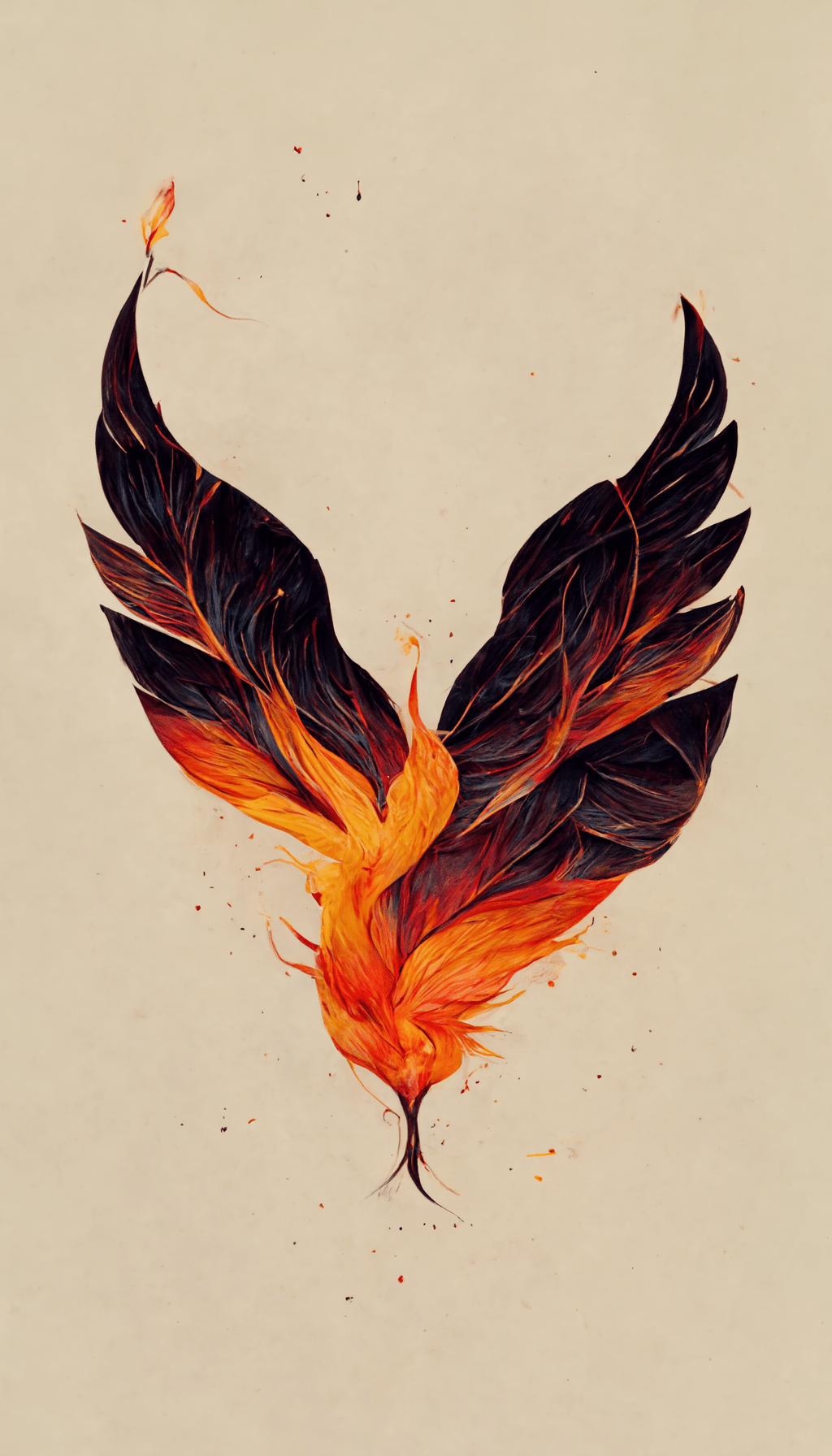
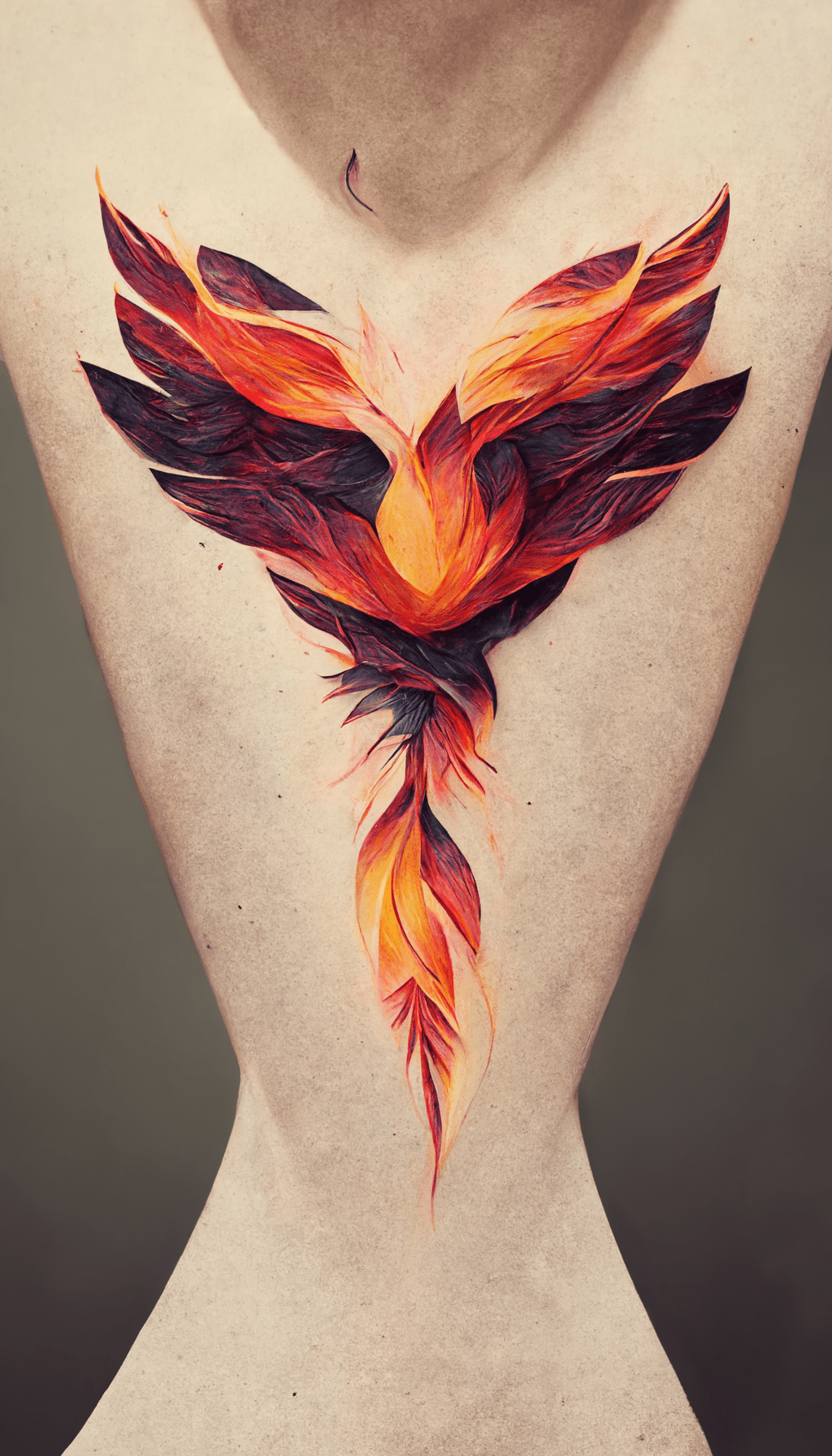
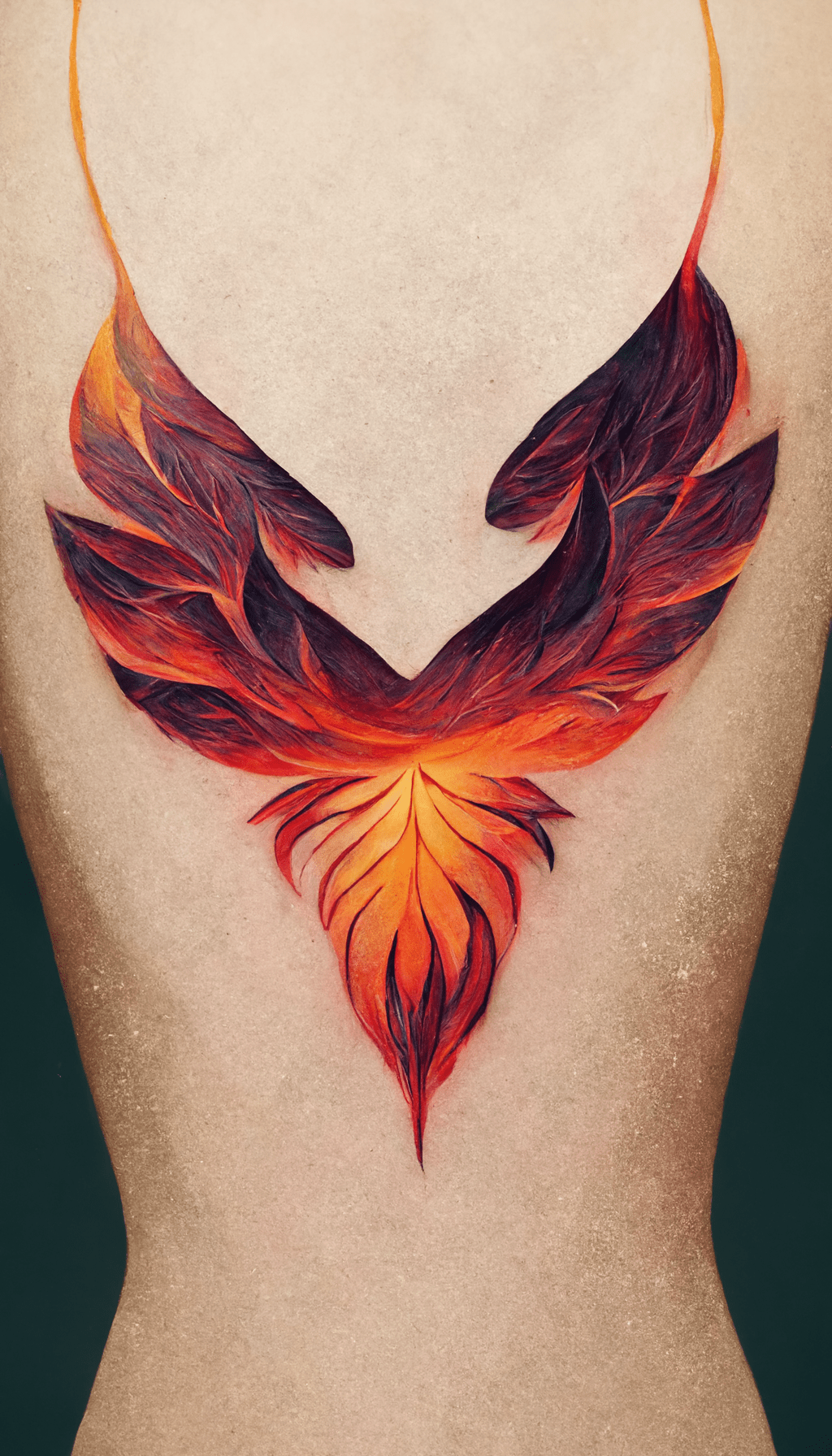
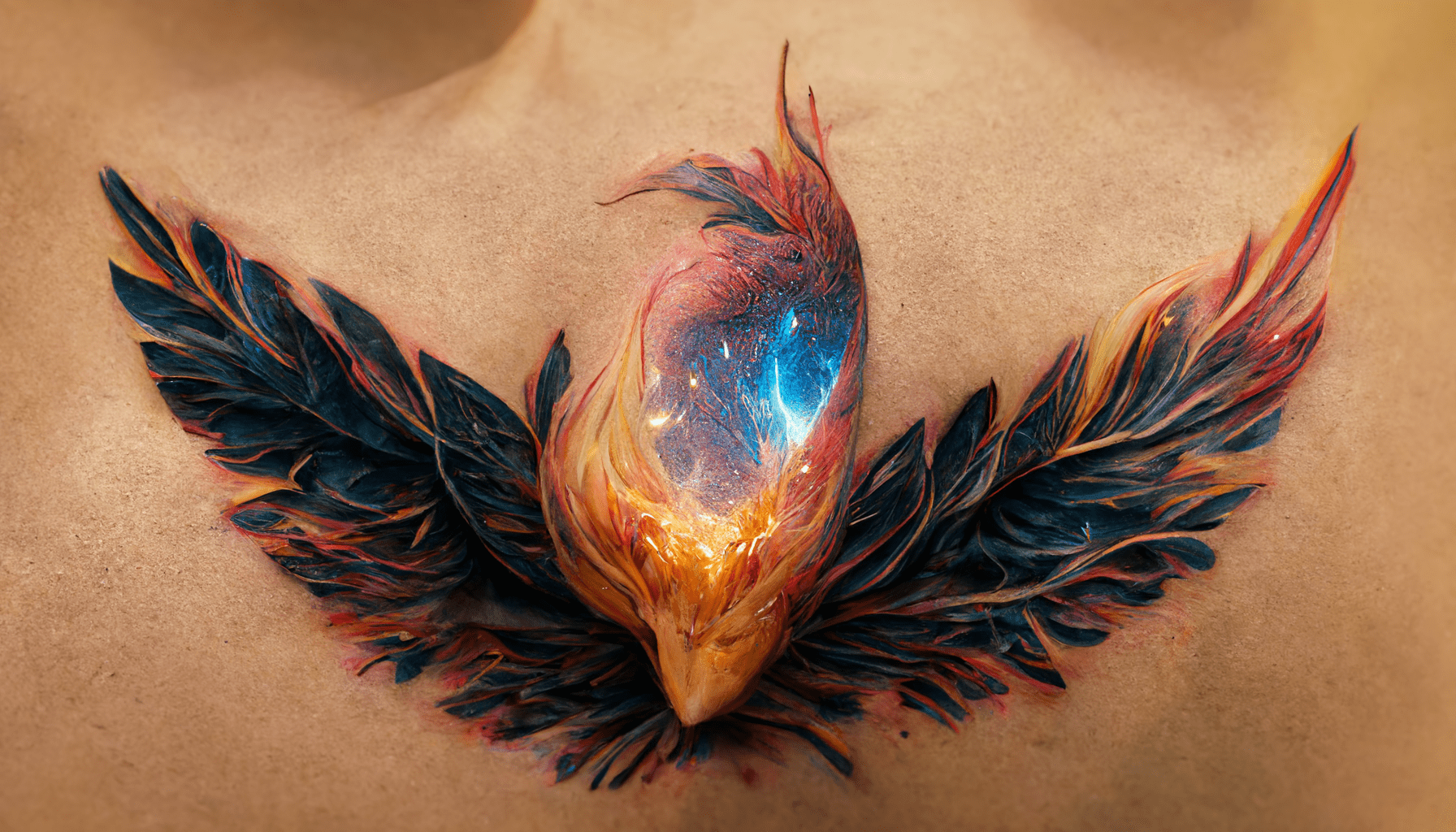
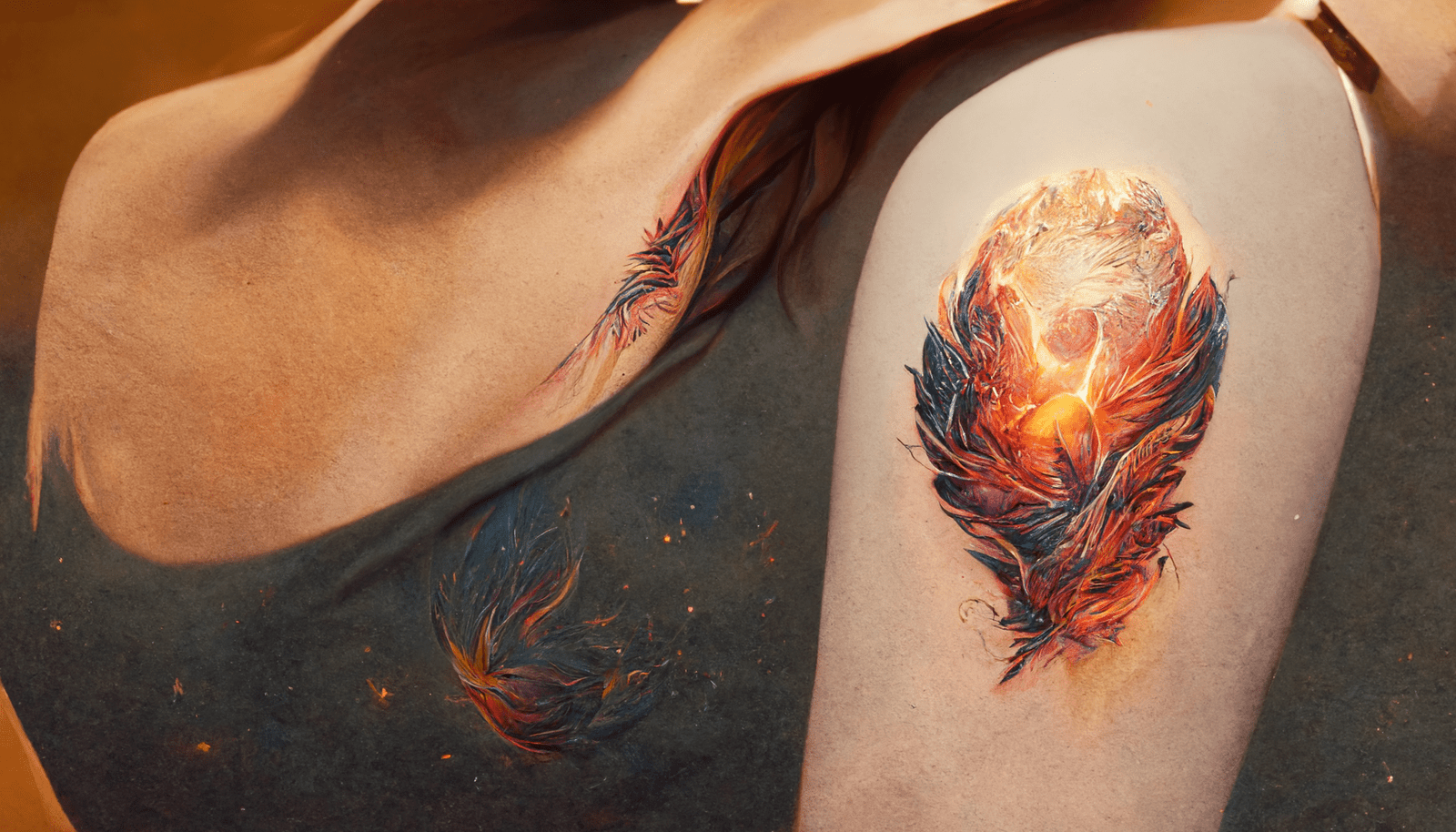
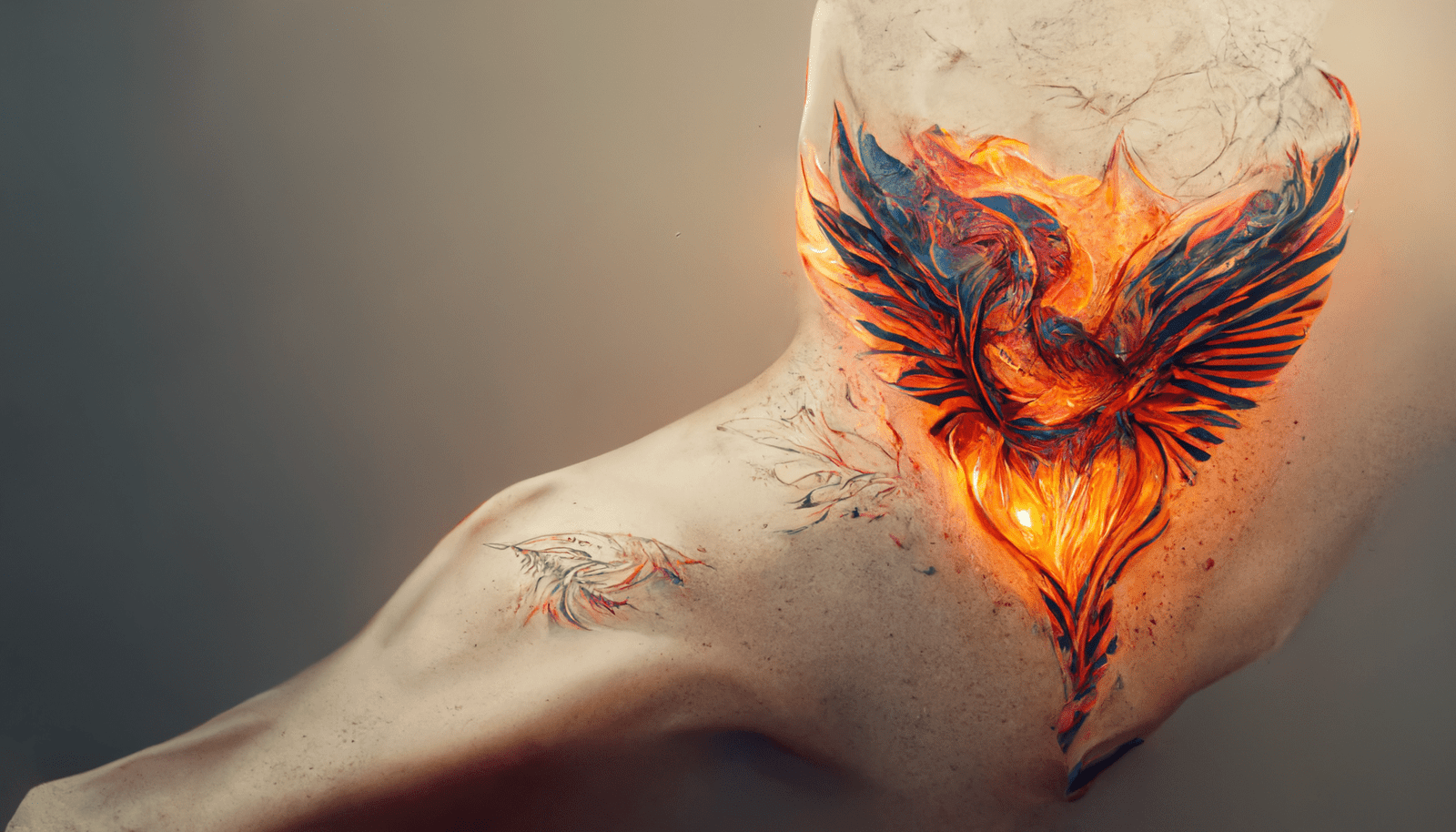
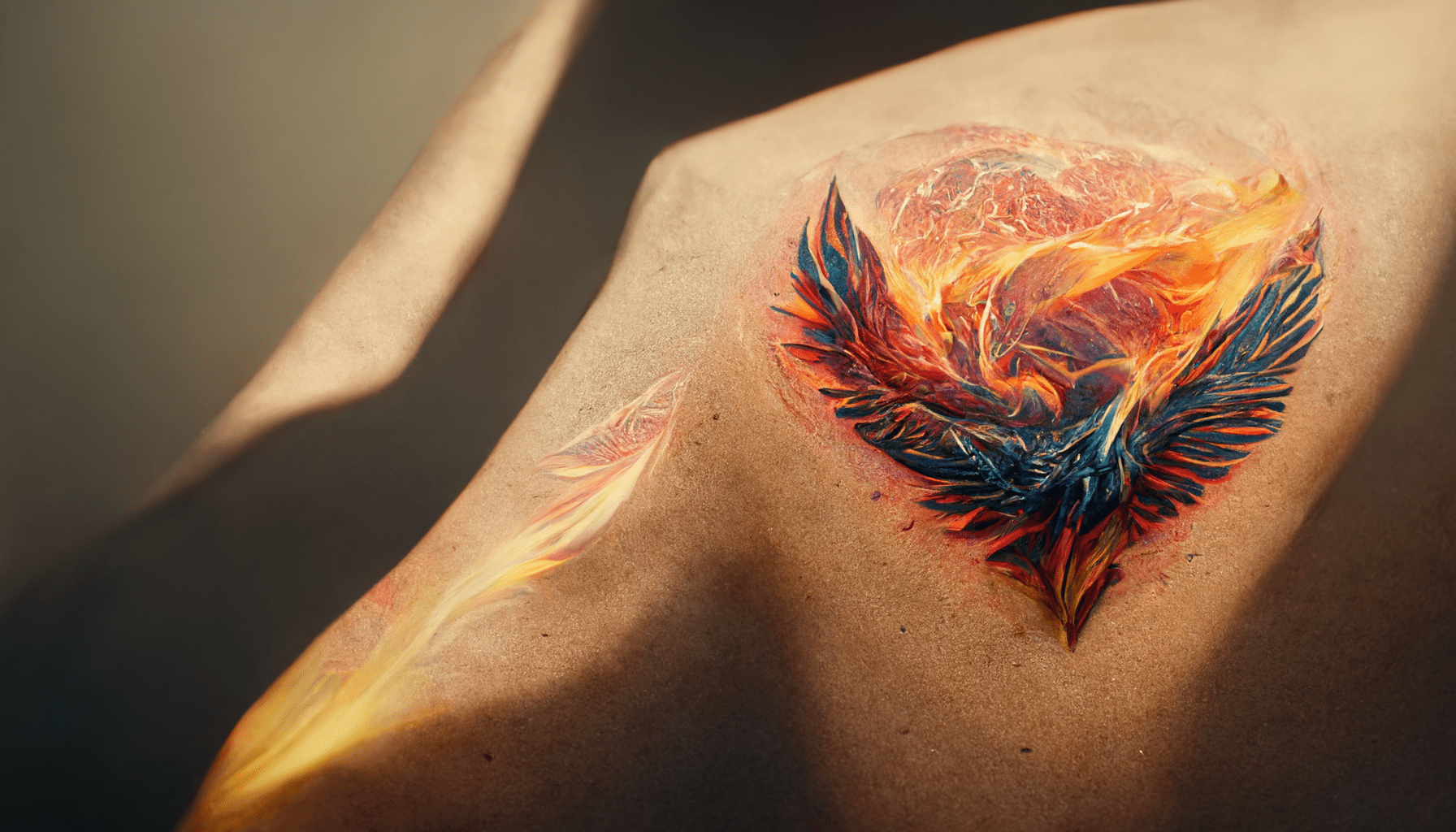
Phoenix tattoo designs work best when the bird still reads clearly at the size and placement you actually plan to wear. Before choosing feathers, flames or ornamental detail, look at the silhouette: head, wings, body and tail should remain distinct even when you view the design from a few feet away. The 14 references below show different ways to handle that balance.
How to choose a phoenix tattoo design
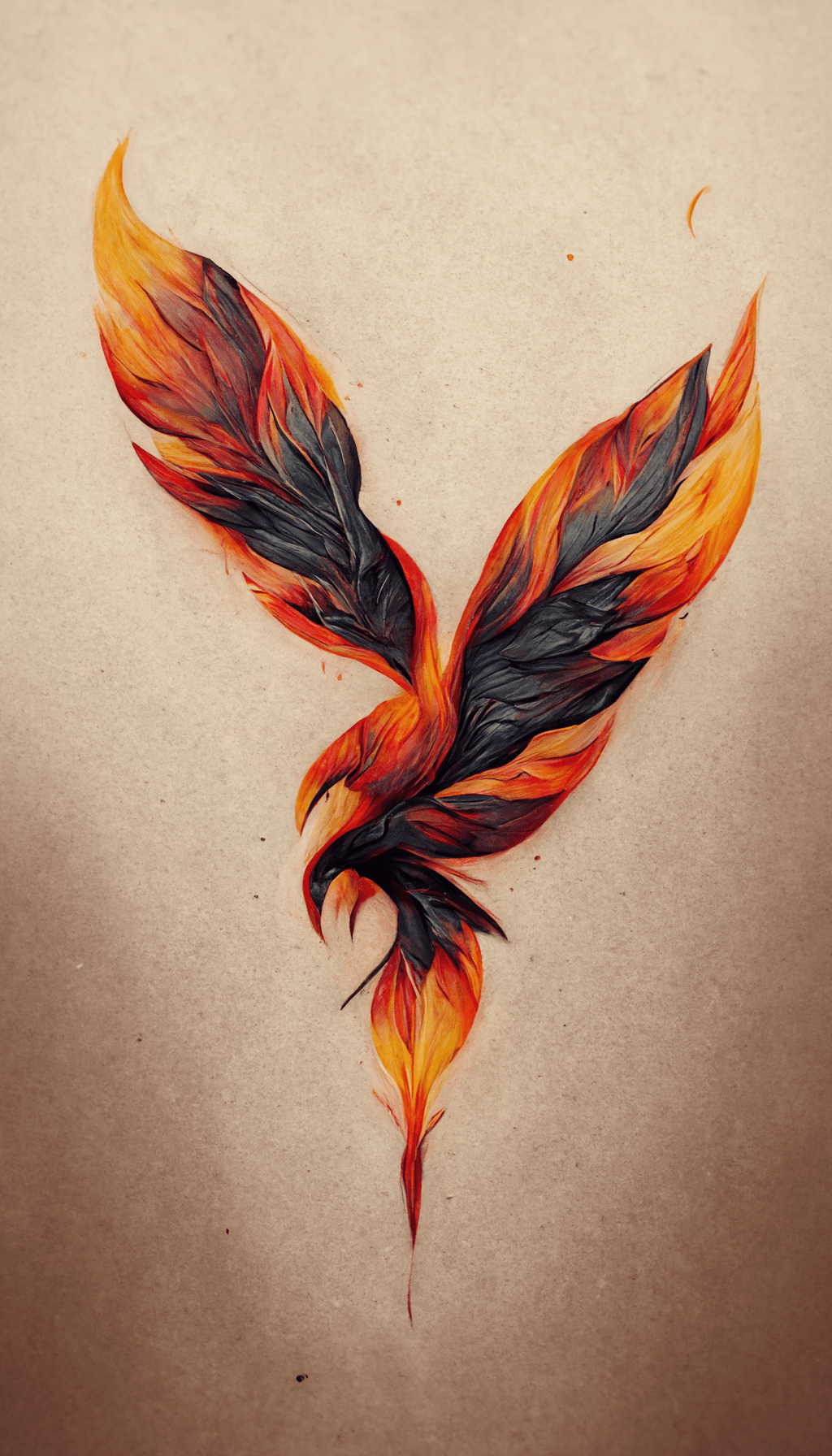
Start with the shape rather than the decoration. A phoenix can be compact and upright, spread into a wide winged composition, or flow vertically with a long tail. That choice determines which body placements will feel natural.
- Check the silhouette: shrink the reference on your screen. If the bird turns into an unreadable dark shape, it may need less interior detail or more negative space.
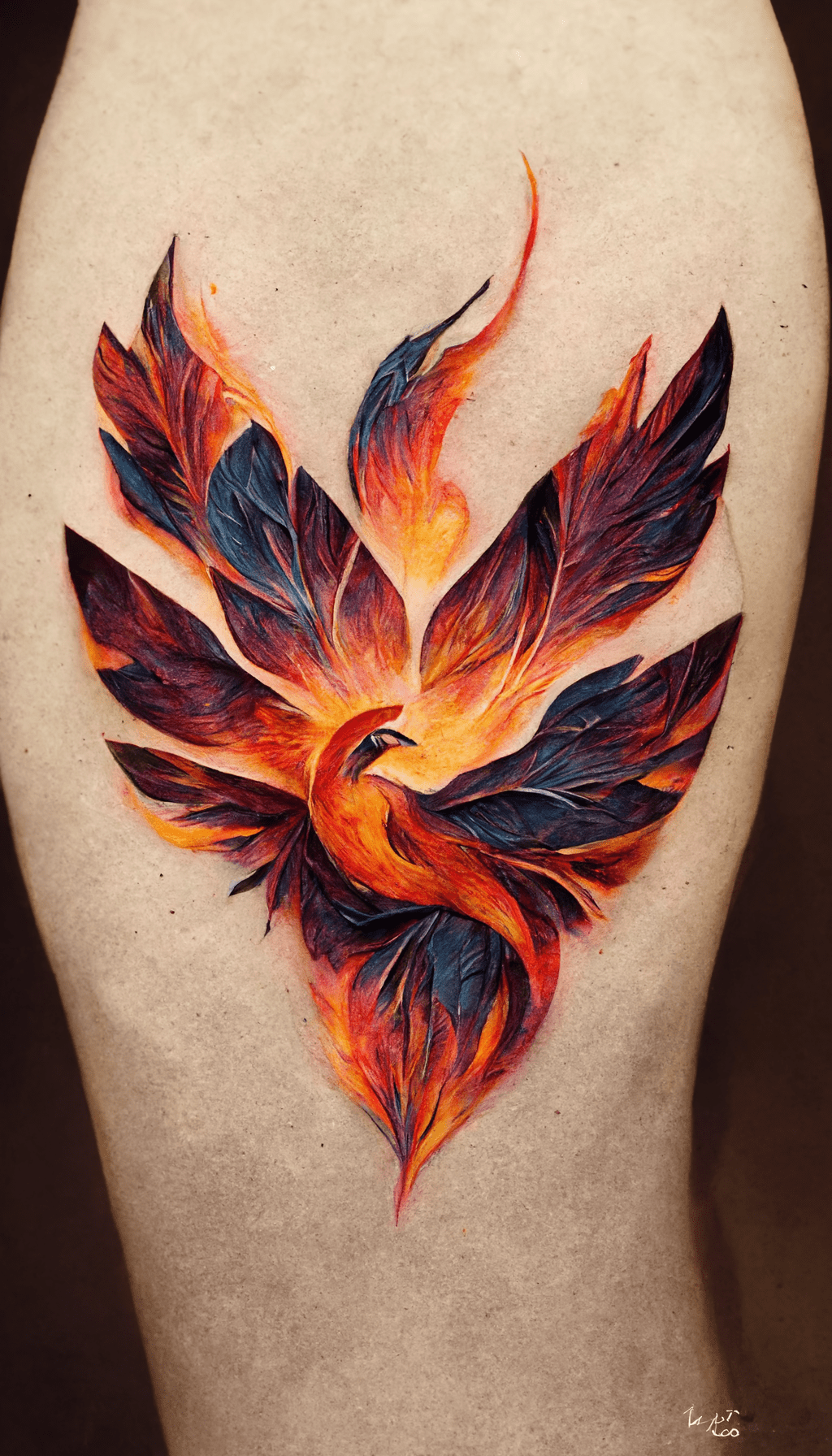
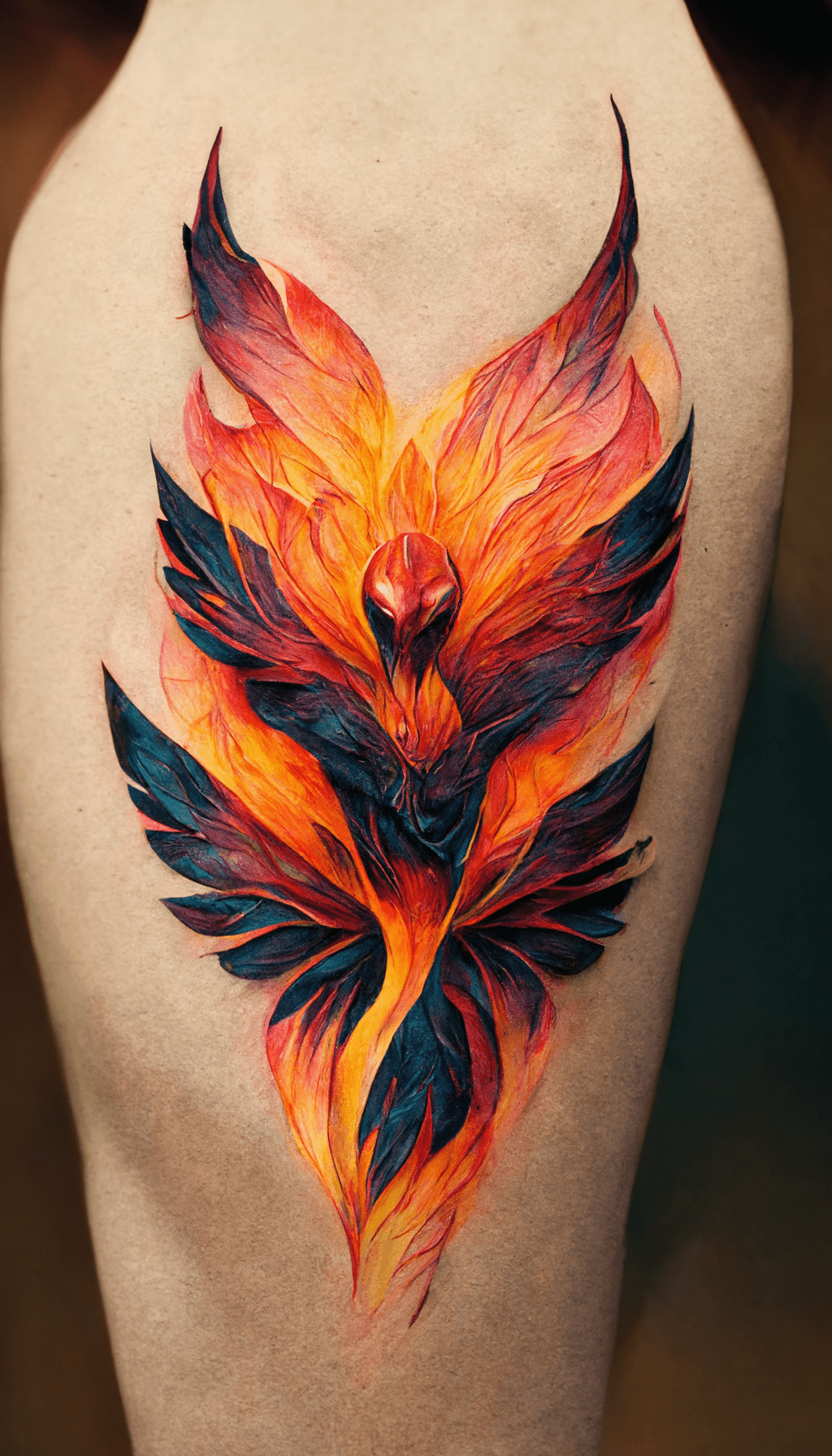
- Match orientation to placement: vertical designs usually adapt more naturally to the forearm, calf, spine or side; wider wing spreads often need broader areas such as the upper back, chest or thigh.
- Protect small gaps: tiny spaces between feathers, flames and outlines can visually close as a tattoo ages. Ask the artist which details need simplifying at your intended size.
- Decide what carries the motion: wings create lift; a long tail creates flow; flames create turbulence. Using all three aggressively can make a small design busy.
- Test it at real size: print or display the design close to the dimensions you are considering. A composition that looks elegant at poster size may feel cramped at 8–10 cm.
Phoenix symbolism: rebirth, renewal and resilience
The phoenix is a legendary bird associated with destruction followed by renewal. In tattoo design, that makes it a common visual metaphor for starting again after a difficult period, surviving change, or deliberately leaving an old identity behind. The meaning does not require literal flames: a rising posture, upward wing direction or transition from dense lower shapes to open upper shapes can suggest the same idea more subtly.
Symbolism also varies with the visual tradition being referenced. If you want a design rooted in a specific cultural or historical tradition rather than a general modern phoenix motif, bring that reference explicitly to your tattoo artist and research its context rather than treating every fire-bird image as interchangeable.
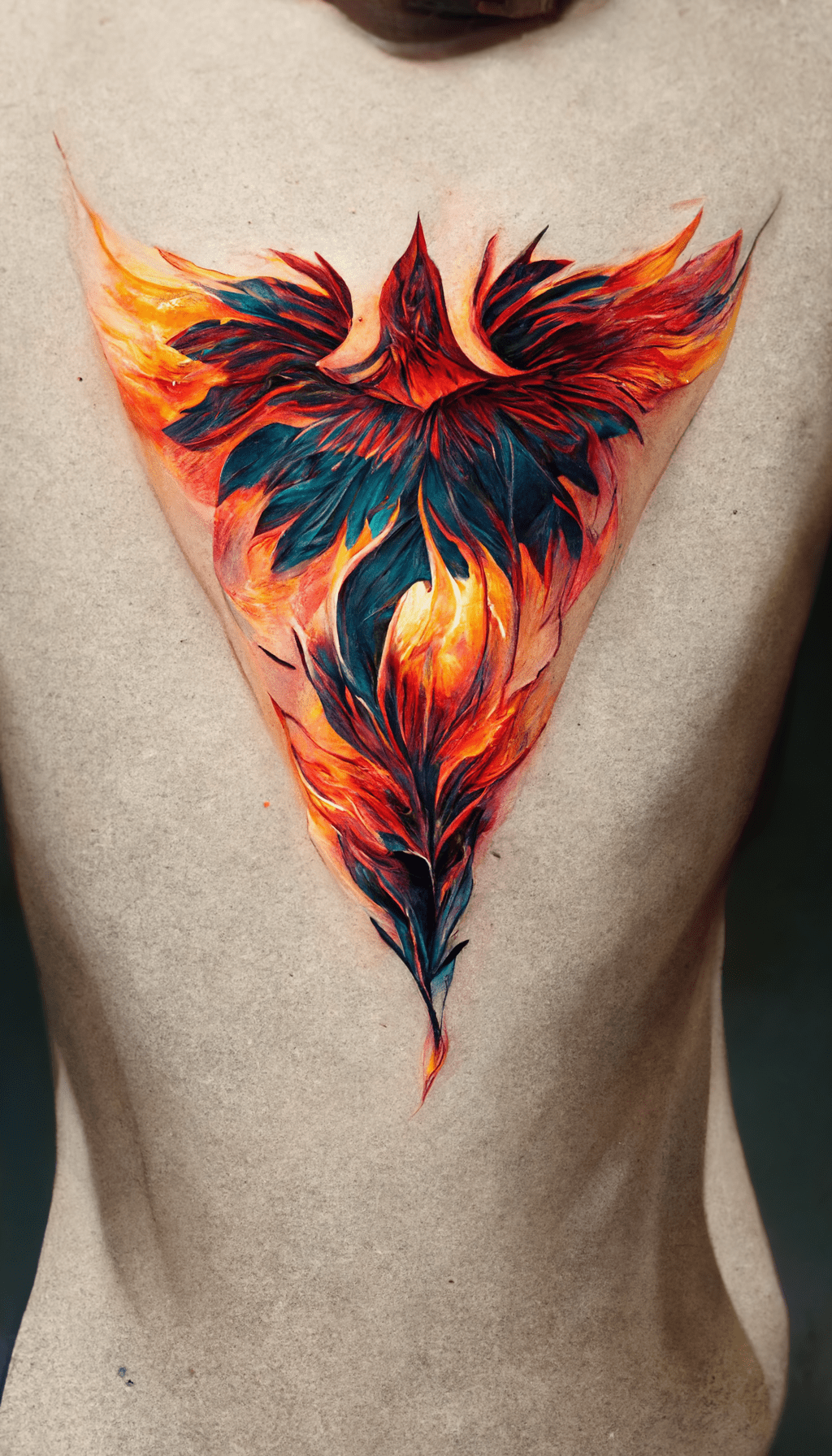
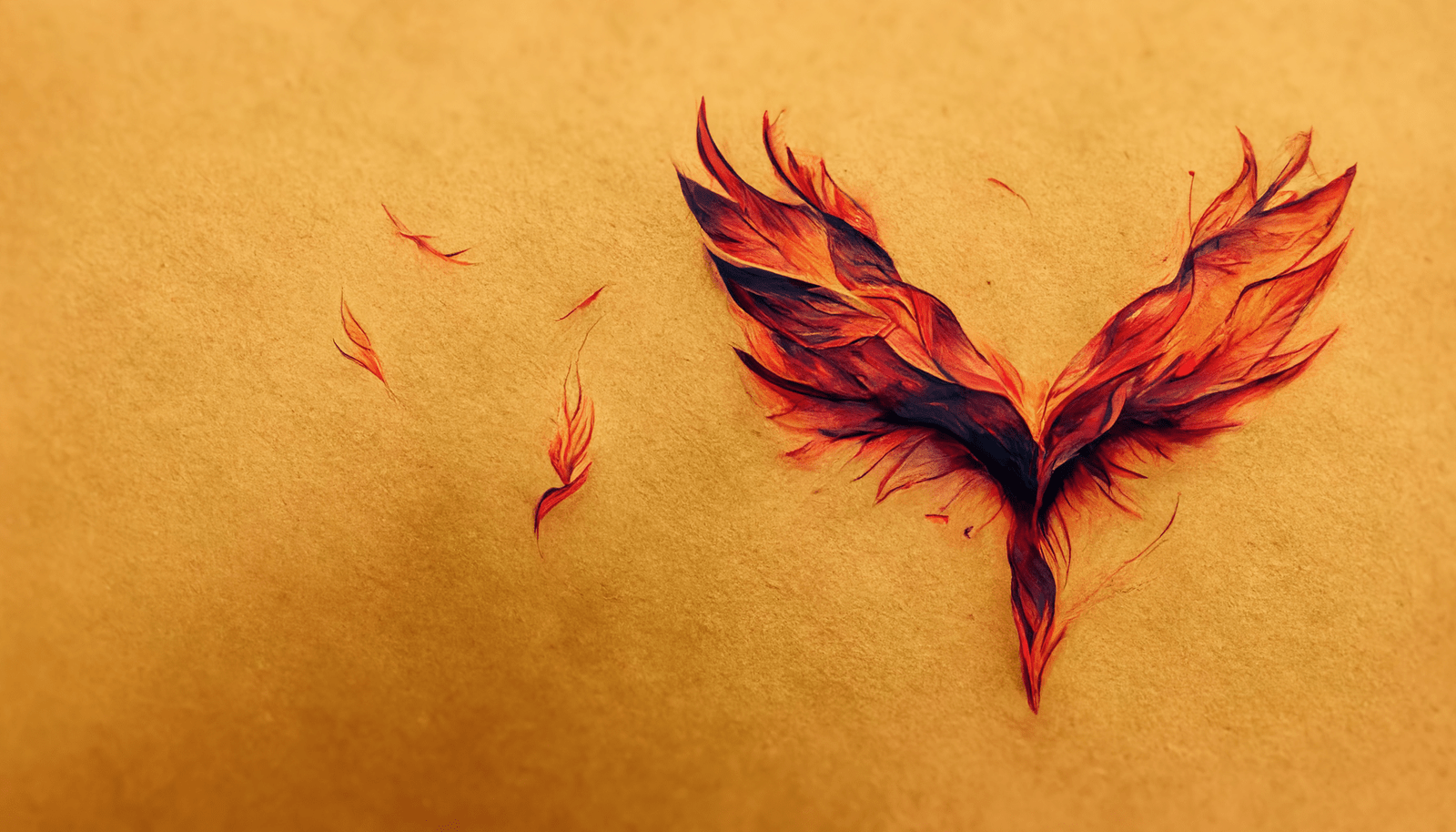
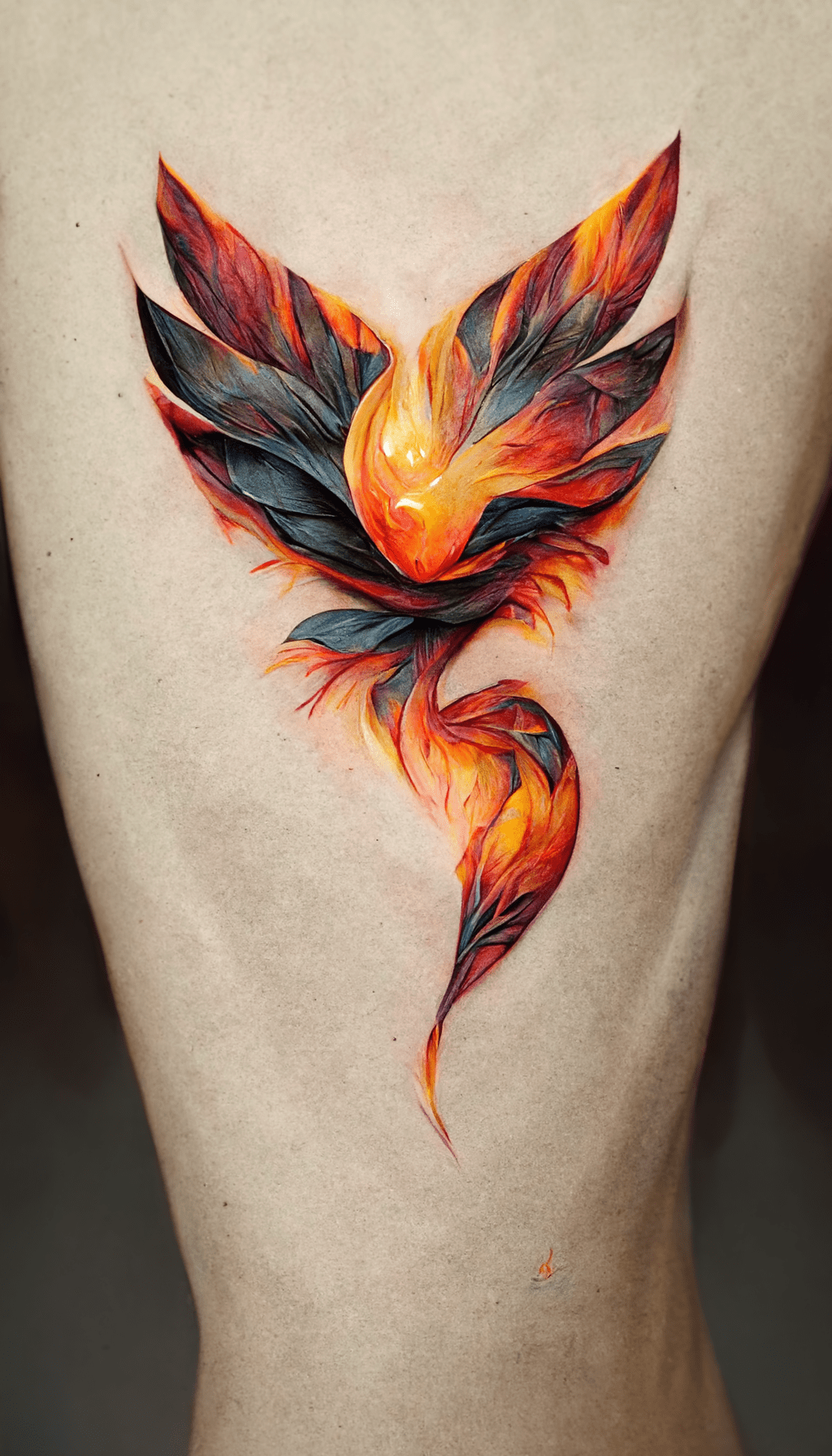
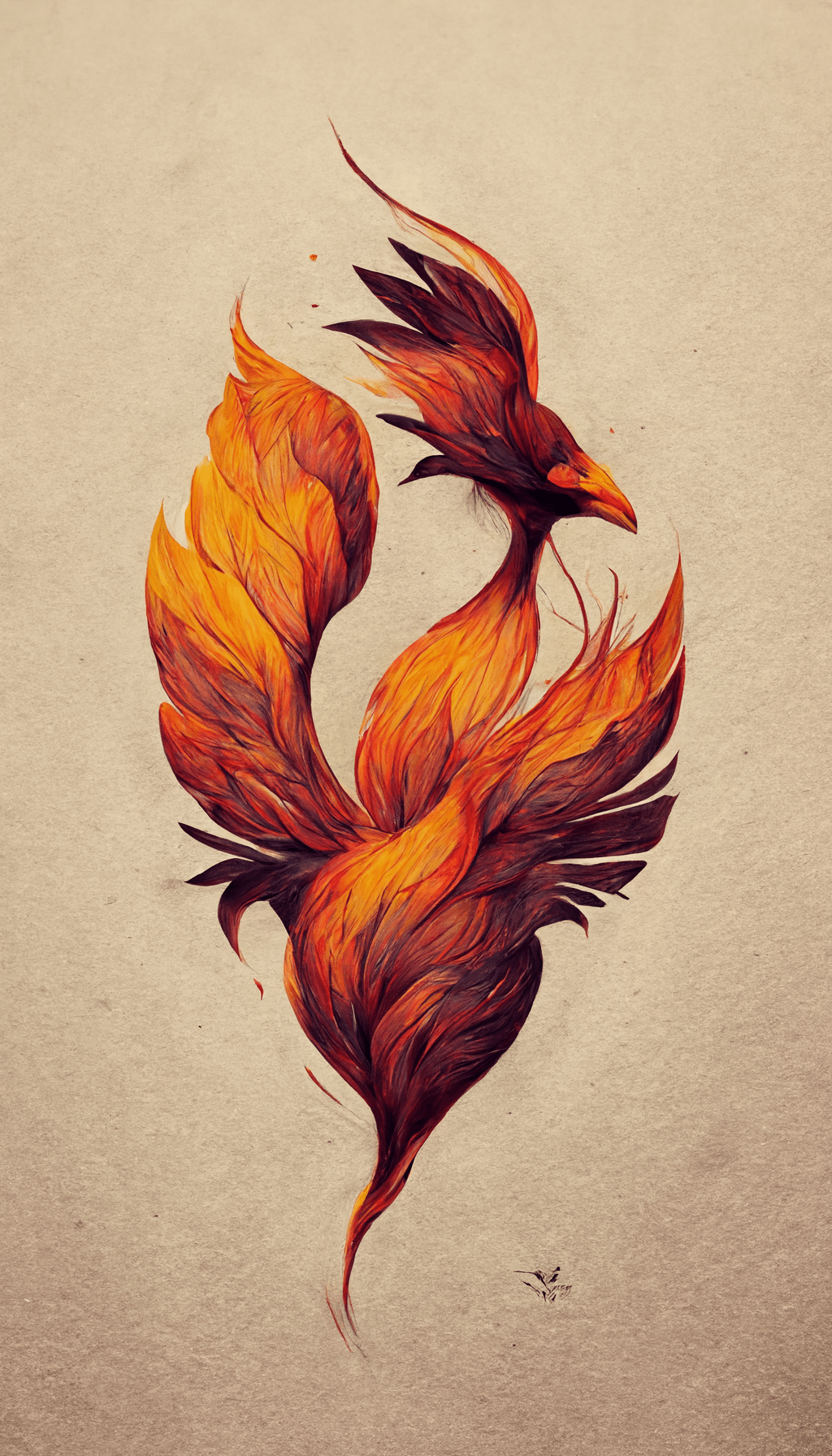
Turn a reference into a clear design brief
Do not judge a reference only by decoration. Note the wing angle, amount of open space, tail direction and overall silhouette you want to preserve. Combining two or three specific qualities gives an artist a clearer brief than asking for an exact copy.
Five-minute design check
- Ignore interior detail: does the outer shape still read clearly?
- Check wing roots: can you see where each wing joins the body?
- Follow the eye path: head, wings and tail should create a deliberate visual route.
- Inspect small gaps: flag crowded areas that may need more breathing room at a smaller scale.
- Test orientation: compare the design vertically and horizontally before choosing placement.
Small versus detailed phoenix designs
At a small scale, prioritize a clean contour, recognizable wing gesture and restrained tail. Larger compositions can support more layered feathers, shading and flame detail. If you like a complex reference but want it smaller, simplify the number of feather groups instead of shrinking every line.
FAQ
Does a phoenix design need flames?
No. An upward pose, opening wings or a sweeping tail can communicate movement and renewal without literal fire.
How do I keep a small phoenix readable?
Favor a strong outer contour, clear separation between wings and body, limited micro-detail and generous negative space. Test the image at the intended size rather than only enlarged on a screen.
For another symbol-led design example, see the ankh design guide. For a floral motif, compare the black rose design references.

