
Baby rhinos look simple on a coloring page because the body is mostly one large shape, but that can make them oddly easy to flatten. If you fill the whole animal with one gray, the horn, face and legs can start blending together. These 21 printable baby rhino pages range from broad preschool shapes to rainbows, dressed-up characters and one realistic rhino for shading practice.
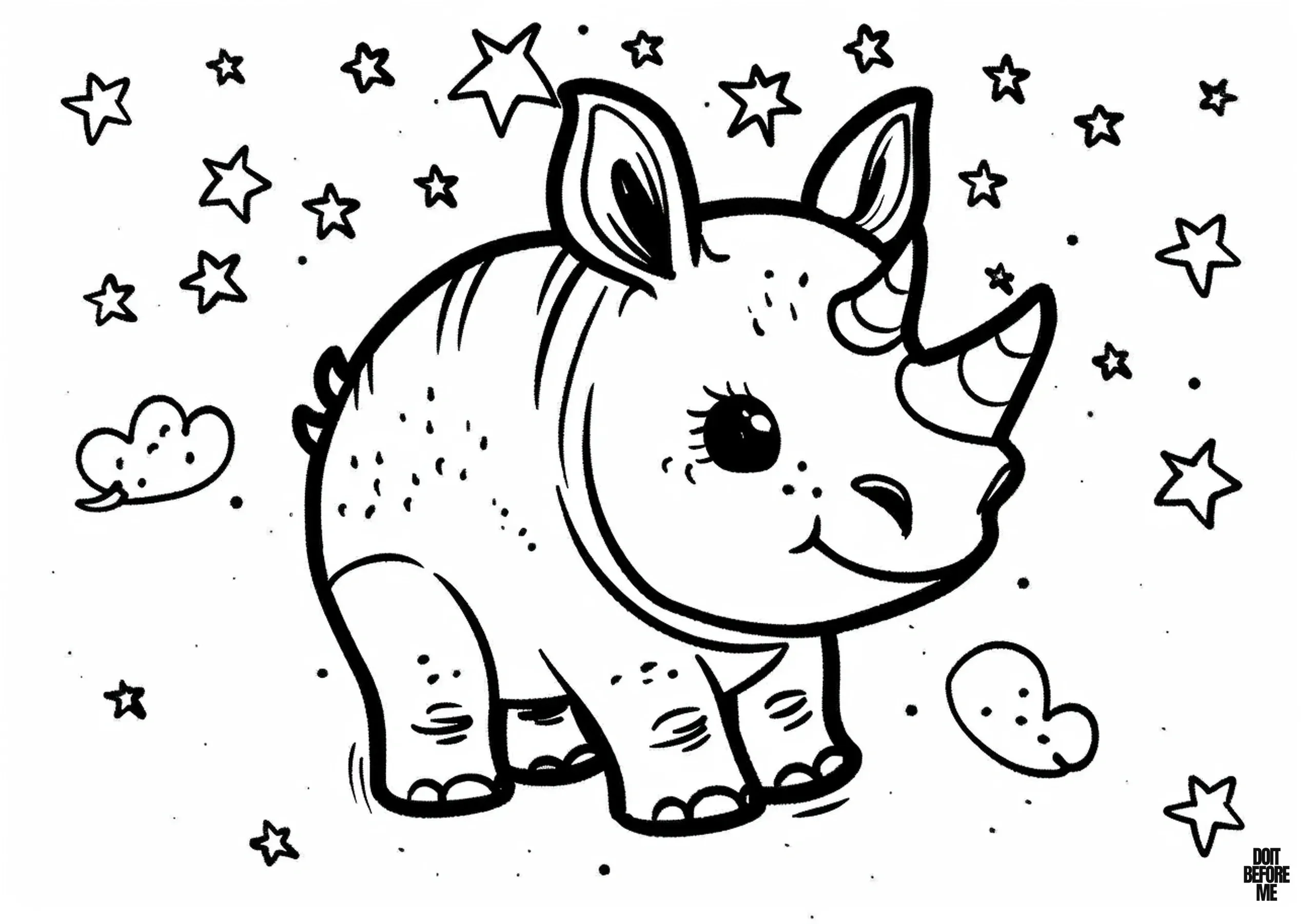
Open full-size baby rhino coloring sheet 1
Do a 60-second rhino test before choosing a sheet
Look at the smallest space you actually need to color—not the size of the rhino. If your crayon tip is wider than an eye, inner ear, clothing edge or star, choose one of the plain early sheets rather than fighting the detail. Then make three quick gray swatches on scrap paper: light, medium and dark. If you can still tell all three apart from arm’s length, you have enough range to make a gray rhino look rounded without adding extra colors.
- Protect the face first. Keep the eye, mouth and horn edges uncolored while you lay in the light body gray. Add darker color around them afterward instead of coloring over the line work.
- Pick one shadow rule. Put the darker gray under the belly, chin and rear legs. Repeating the same rule around the body creates depth more reliably than random patches of shading.
- Separate horn from skin. Test cream or pale beige beside your light gray. If the two values look identical when you squint, either lighten the horn or darken only its base.
- For preschoolers, stop there. One body gray, one horn color and two bright accent colors are enough. The goal is clean control of the large shapes, not realistic skin texture.
The collection is ordered by what changes the coloring task: simple preschool rhinos come first, rainbow and sky scenes stay together, character pages add clothing and movement, and the realistic sheet finishes the set. Use the guide below to jump to the level you want.
Choose the kind of baby rhino page you want
| If you want… | Go to | Why |
|---|---|---|
| A very easy page | Sheets 1–10 | Large body shapes and little background clutter |
| Rainbows, stars and clouds | Sheets 11–15 | Easy background color choices without making the rhino harder |
| Dancing or dressed-up rhinos | Sheets 16–20 | More personality, movement and clothing details |
| A realistic challenge | Sheet 21 | More natural proportions and room for layered shading |
How to color a gray rhino without making it look flat
Start lighter than you think you need. A pale warm gray, taupe or gray-brown works well as the first layer. Then darken the underside of the belly, the back legs, the base of the horn and the area where the head meets the neck. Keep the top of the face, shoulder and back slightly lighter. You only need two or three tones for the animal to start looking rounded.
The horn does not need to match the skin. Cream, light beige or a pale warm gray gives it enough separation from the face. The inner ears can be a touch warmer too. On the cartoon pages, a pinkish beige inside the ears is perfectly fine even if the rest of the rhino stays gray.
Choose the tool to match the page
- Crayons: best on the simplest baby-rhino sheets with large open areas.
- Colored pencils: easiest for building two or three gray tones without covering the line art.
- Markers: good for rainbows, stars and clothing; use a lighter marker on the body if you still want the outlines to show.
Practice on three pages instead of coloring at random
- Sheet 2 — clean coverage: use one pale gray over the body, then add a second gray only beneath the belly, chin and back legs. The goal is smooth coverage, not detail.
- Sheet 14 — subject/background separation: keep the rhino neutral and reserve saturated colors for the rainbow, stars and clouds. Check from arm’s length: the rhino should still be the first shape you recognize.
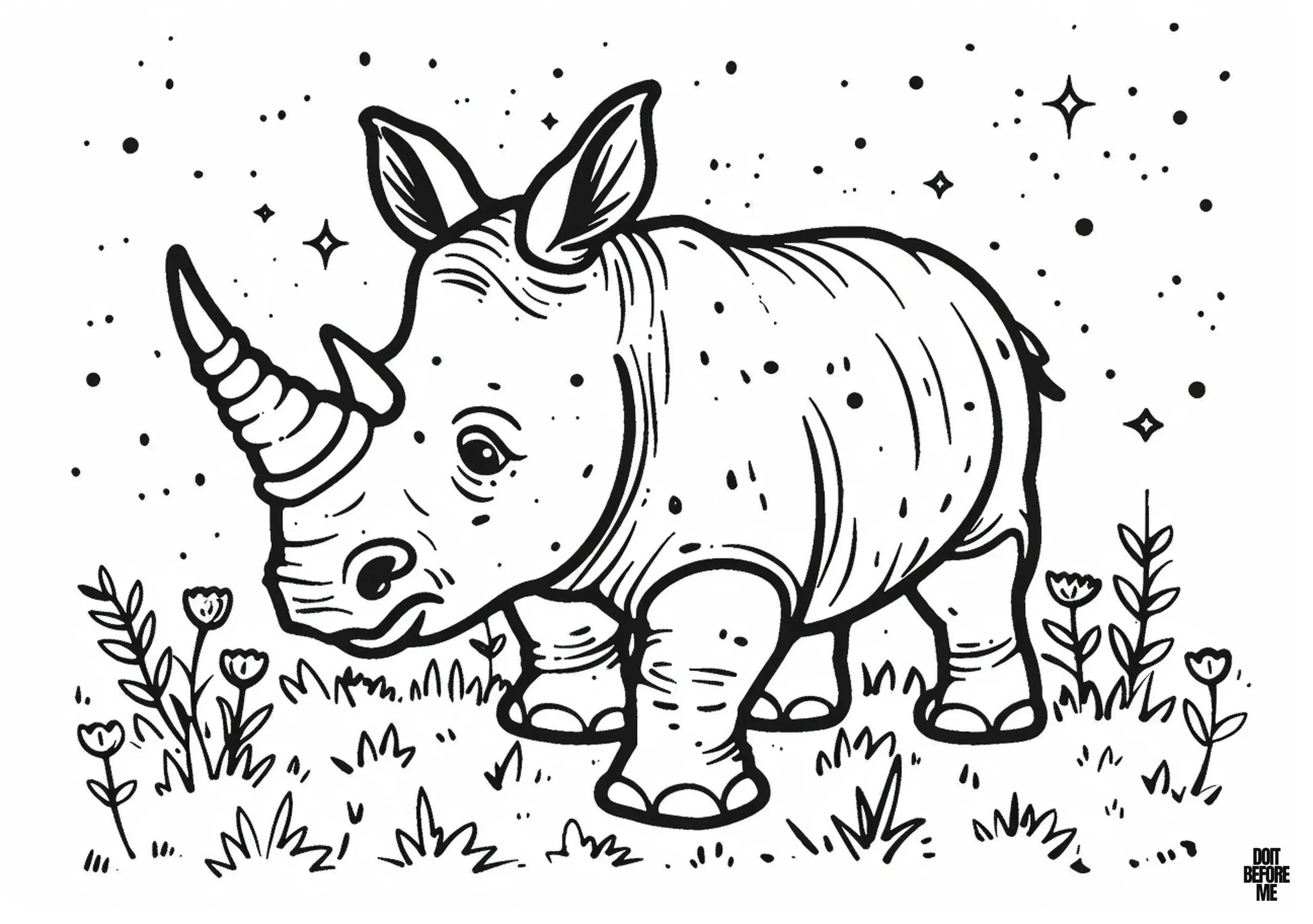
- Sheet 21 — form and depth: build three values on the realistic rhino. Leave the back and top of the head light, use mid-gray on the sides, and put the darkest value under overlapping forms.
Fix the result when a rhino page is not working
| What looks wrong | Likely cause | Try this |
|---|---|---|
| The rhino looks like one flat gray shape | One value covers the whole body | Add a darker gray under the belly, jaw, ear and rear legs; keep the back lighter. |
| The horn disappears into the face | Horn and skin are too similar | Use cream or warm beige on the horn and keep a narrow light edge where it meets the head. |
| Pencil shading looks striped | Heavy pressure was used too early | Use small overlapping circles with light pressure, rotate the page, then build a second layer. |
| The rainbow scene feels chaotic | Every small element is equally saturated | Keep the rhino neutral and repeat two or three accent colors in stars and clouds. |
| The face becomes muddy | Dark gray was carried across the eyes and muzzle | Keep the muzzle lighter and place dark values beside—not over—the facial features. |
| Marker strokes leave bands | Large areas dried between passes | Work one body section at a time with a wet edge; use the lightest gray marker for the base. |
Open the full-size image before printing, then use A4 or Letter paper with “fit to page.” Each sheet is an individual image file, so there is no need to print the whole collection.
Easy baby rhino coloring pages — Sheets 1–10
These are the cleanest pages in the collection. The rhinos are large, the outlines are easy to follow, and most of the backgrounds stay simple enough for crayons.
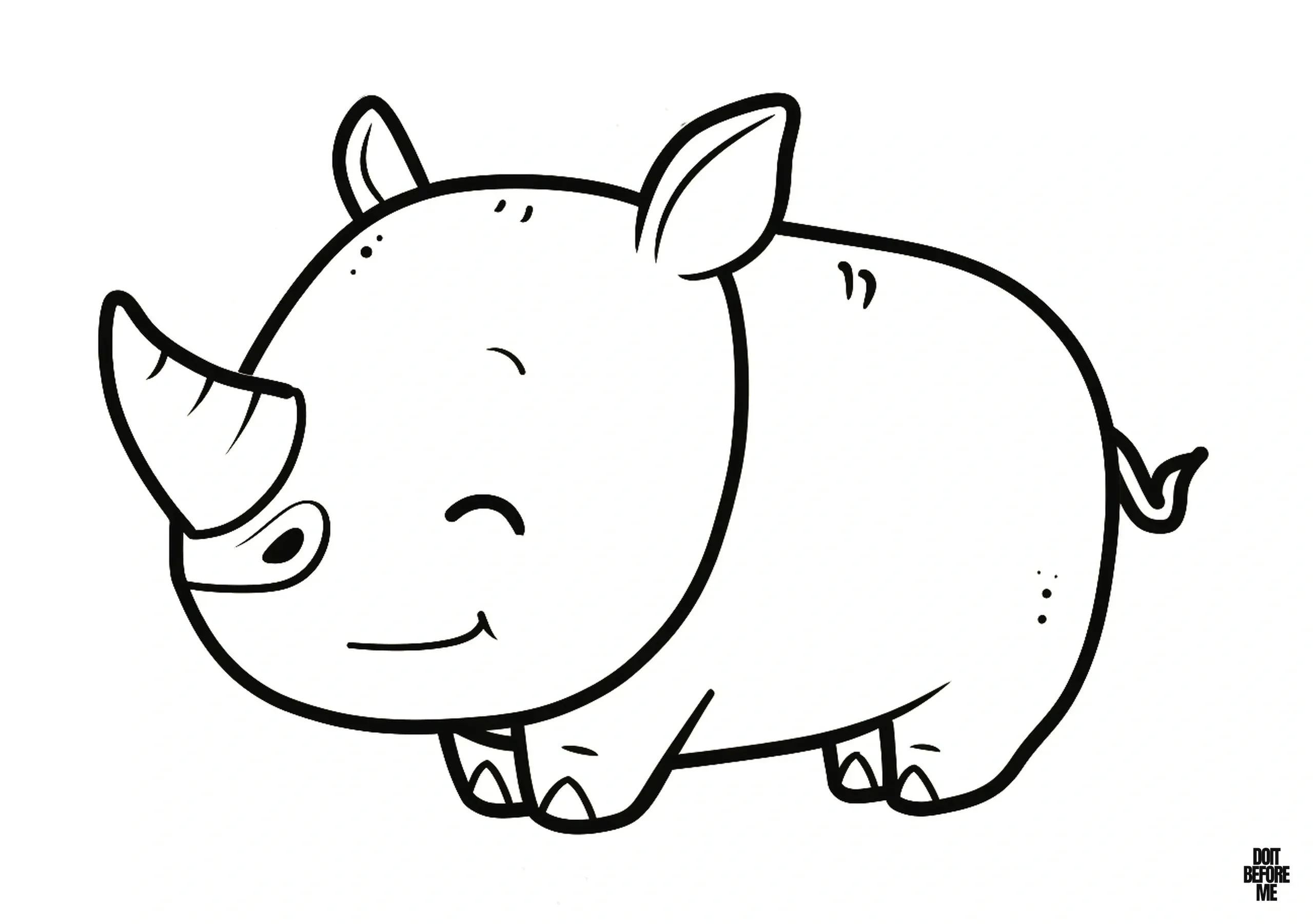
Open full-size baby rhino coloring sheet 2
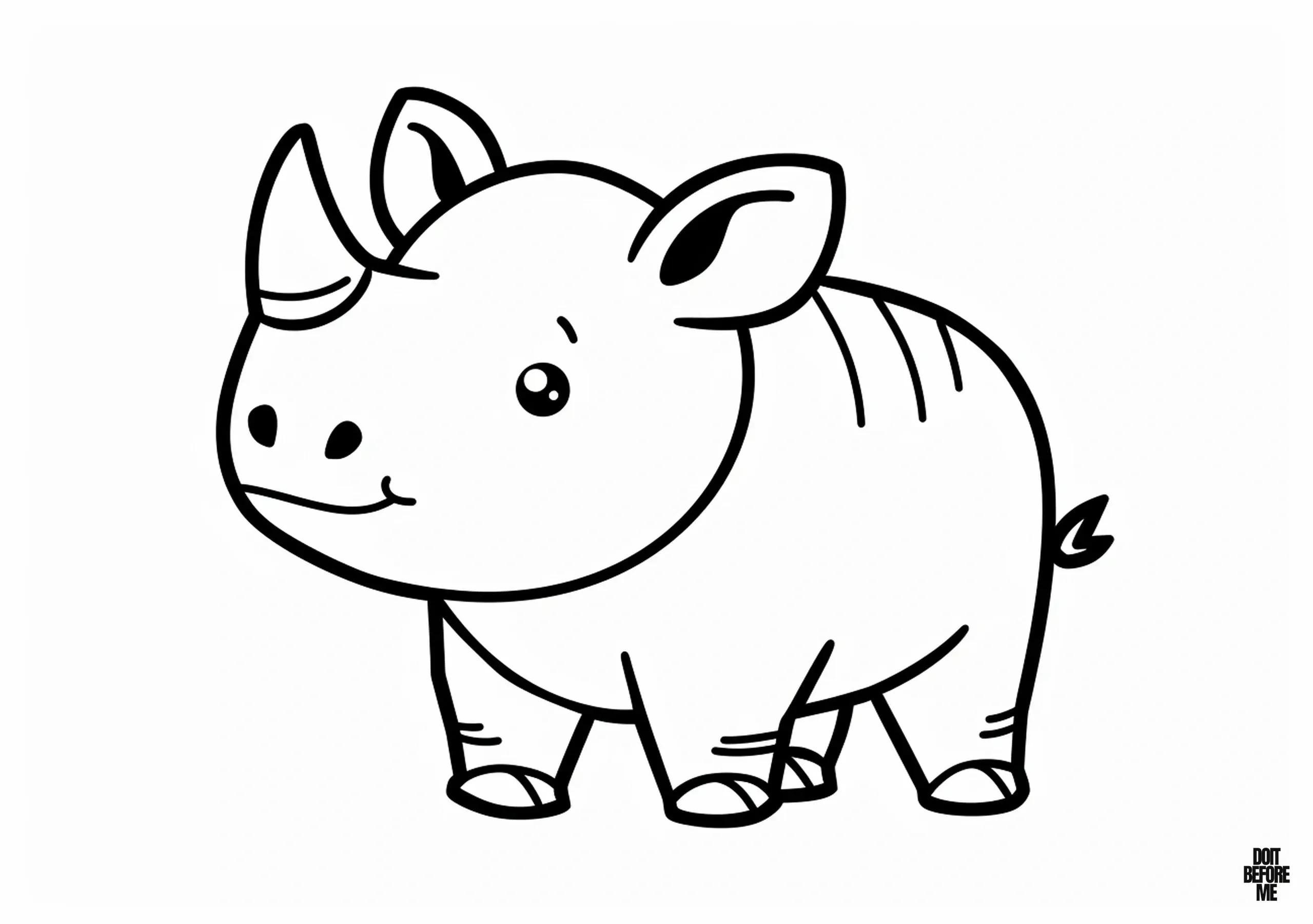
Open full-size baby rhino coloring sheet 3
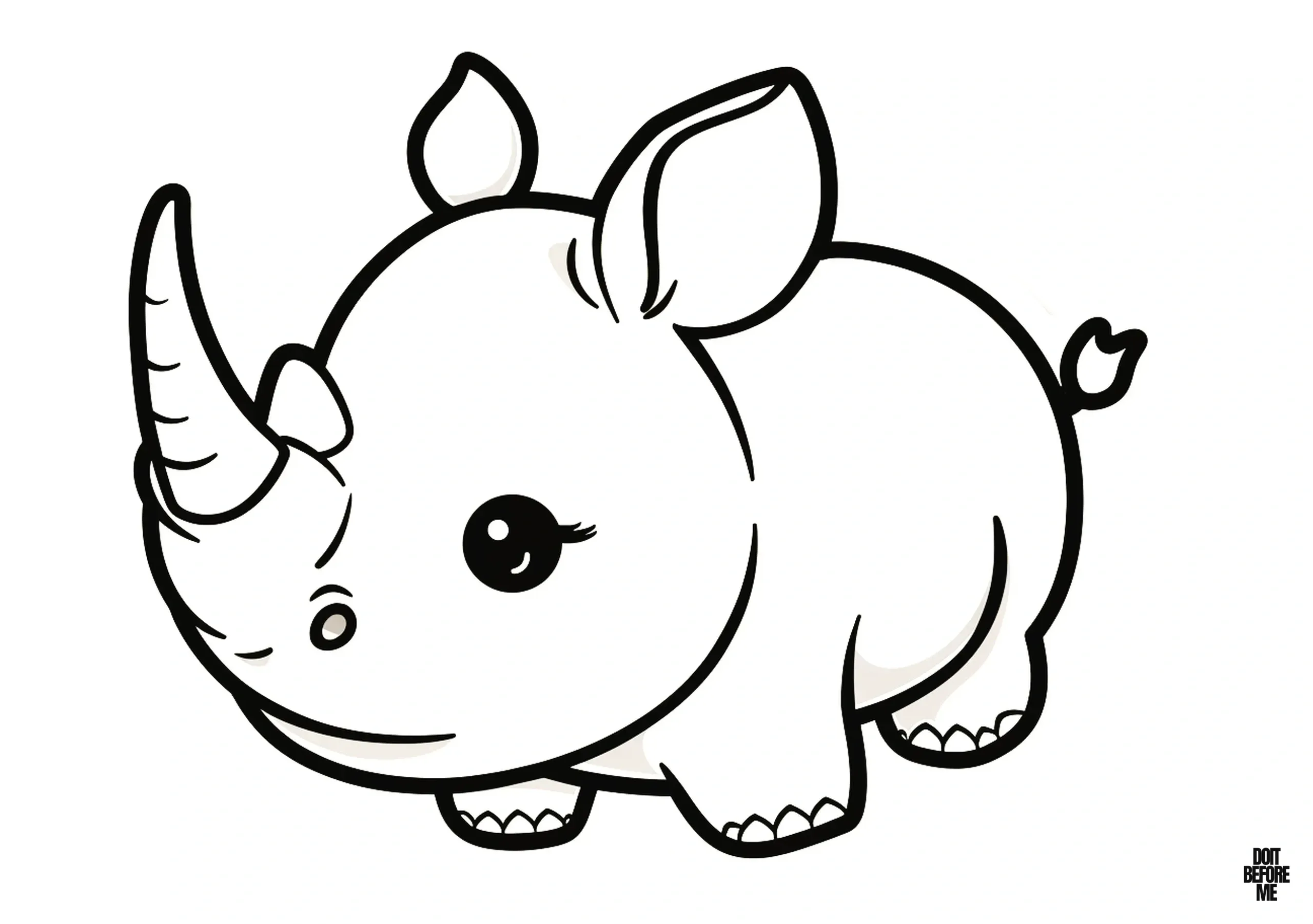
Open full-size baby rhino coloring sheet 4
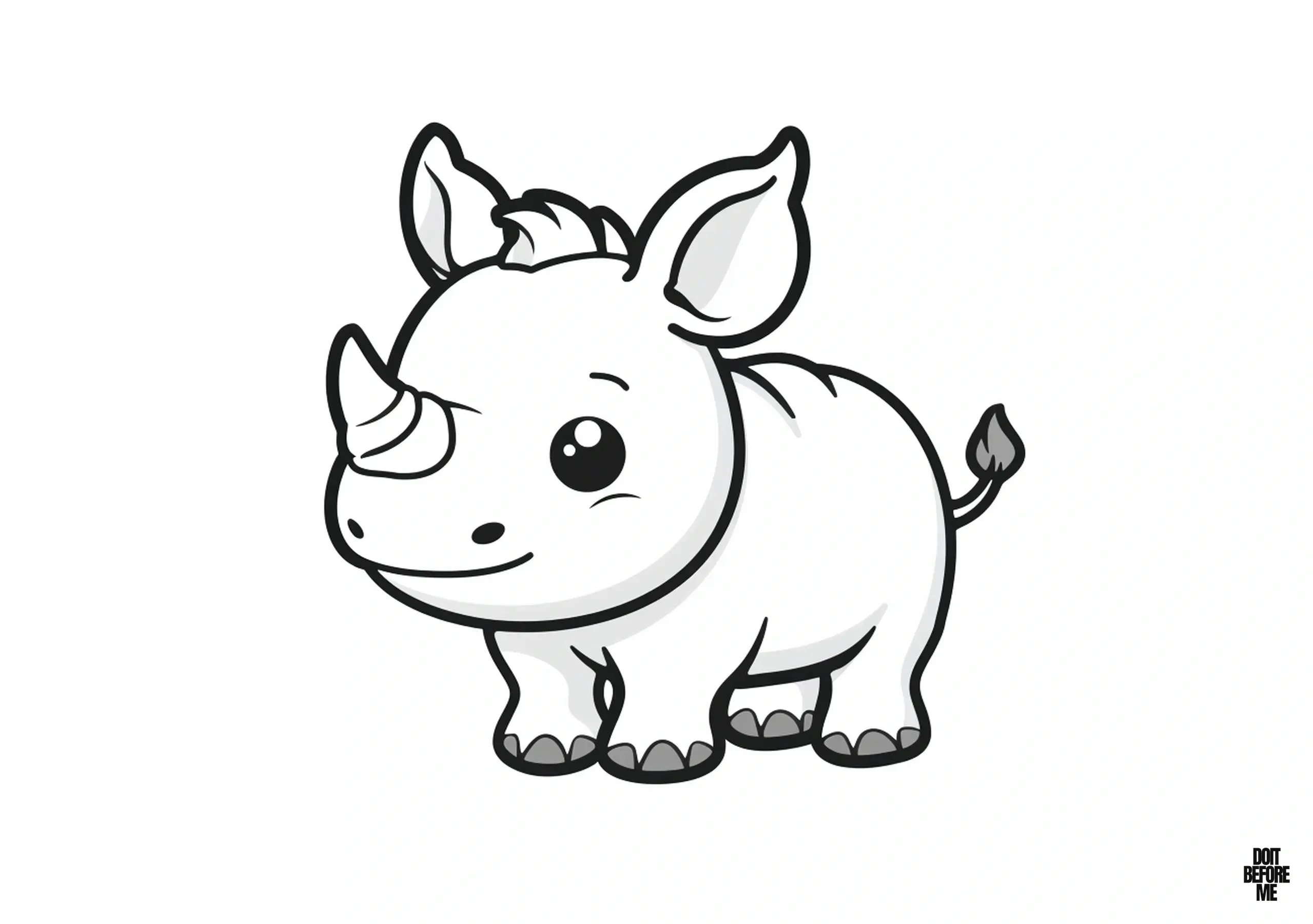
Open full-size baby rhino coloring sheet 5
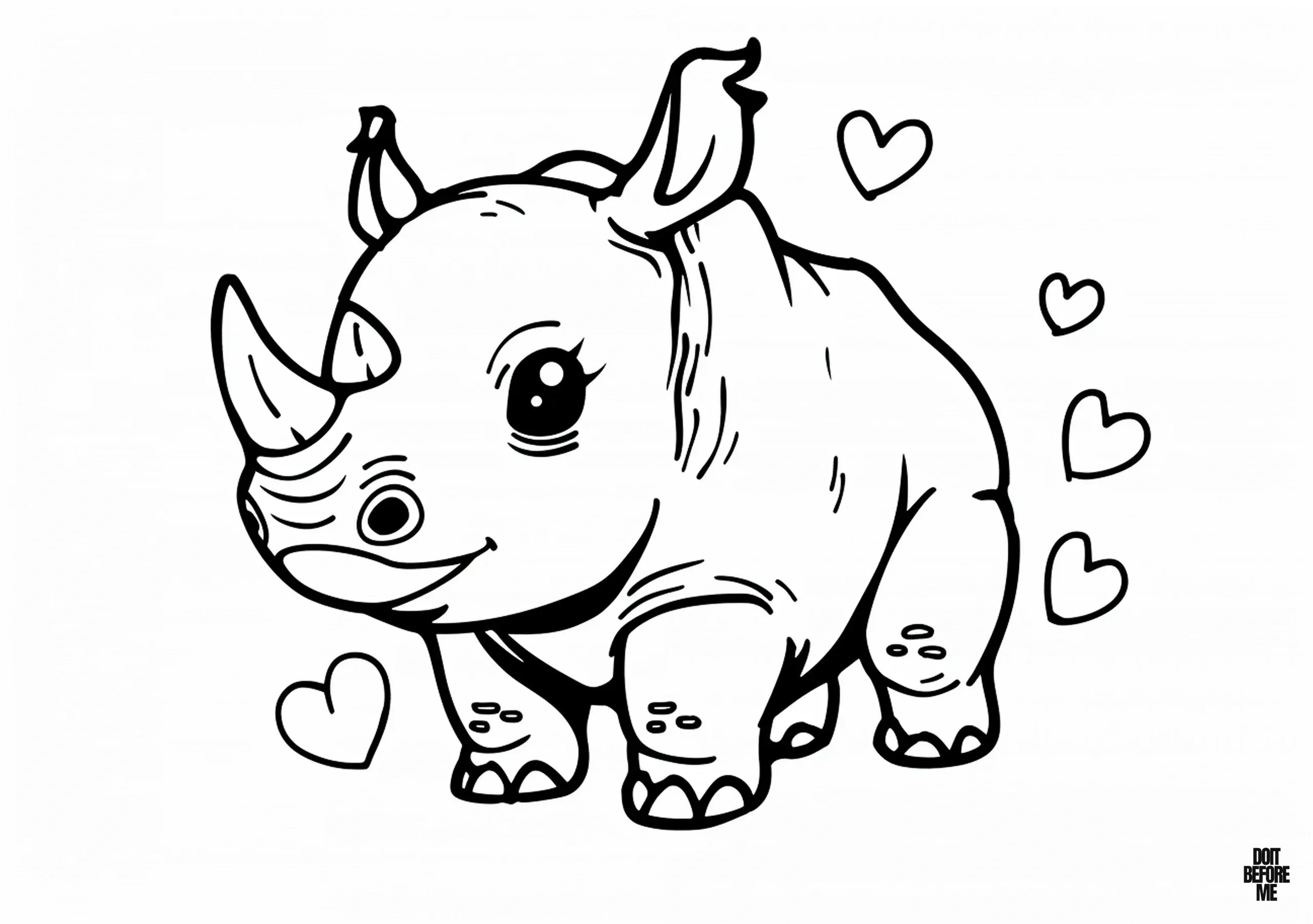
Open full-size baby rhino coloring sheet 6
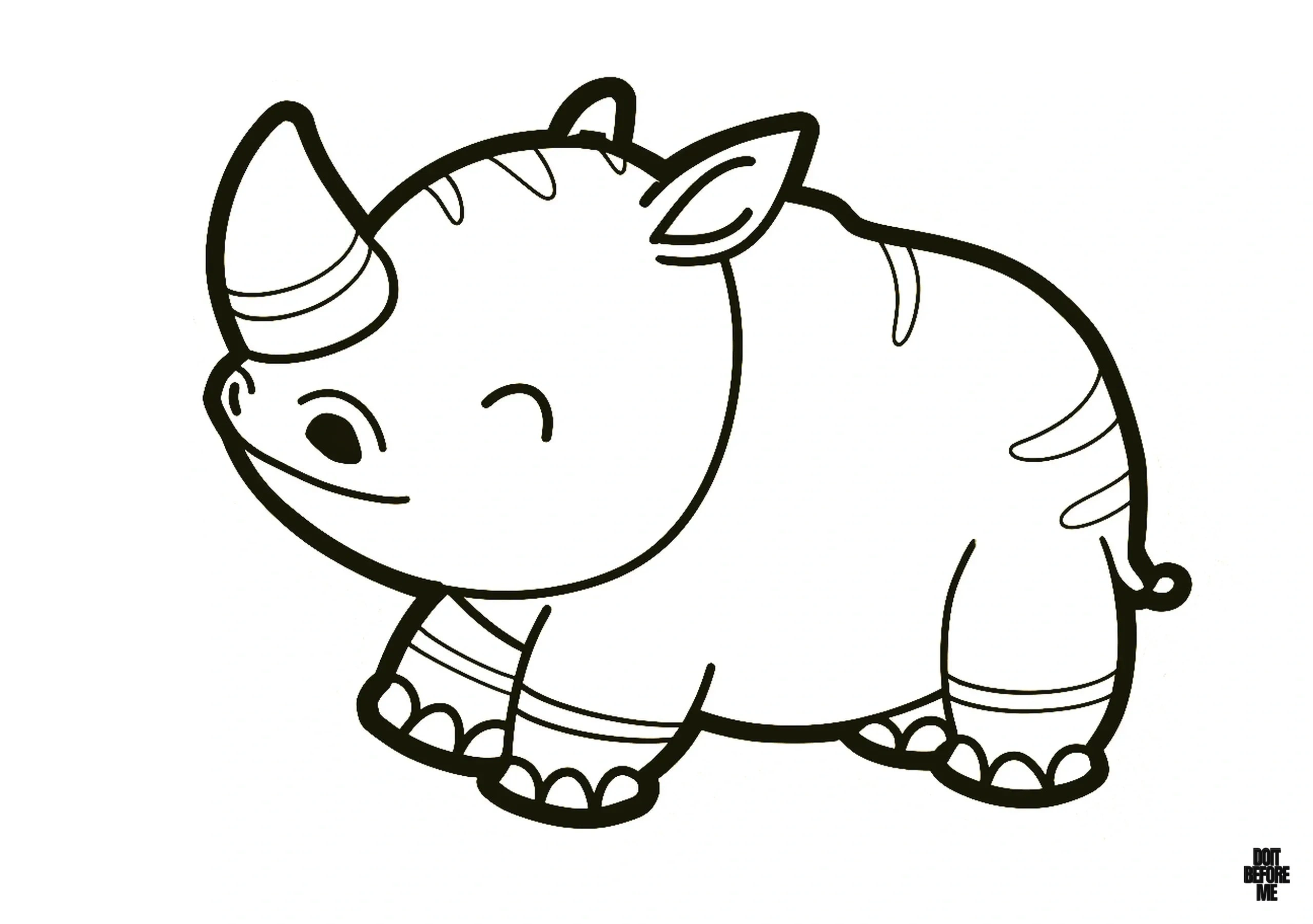
Open full-size baby rhino coloring sheet 7
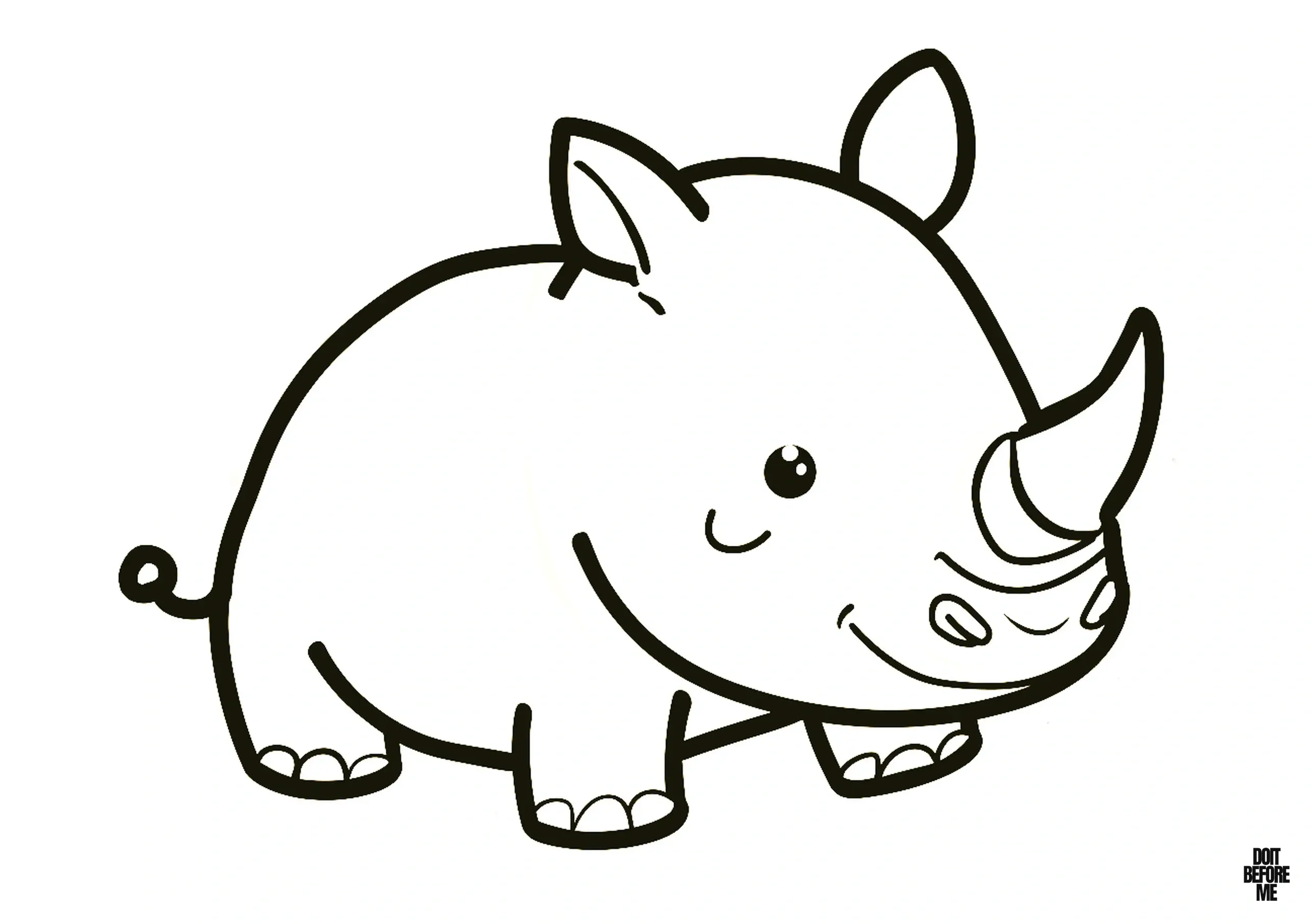
Open full-size baby rhino coloring sheet 8
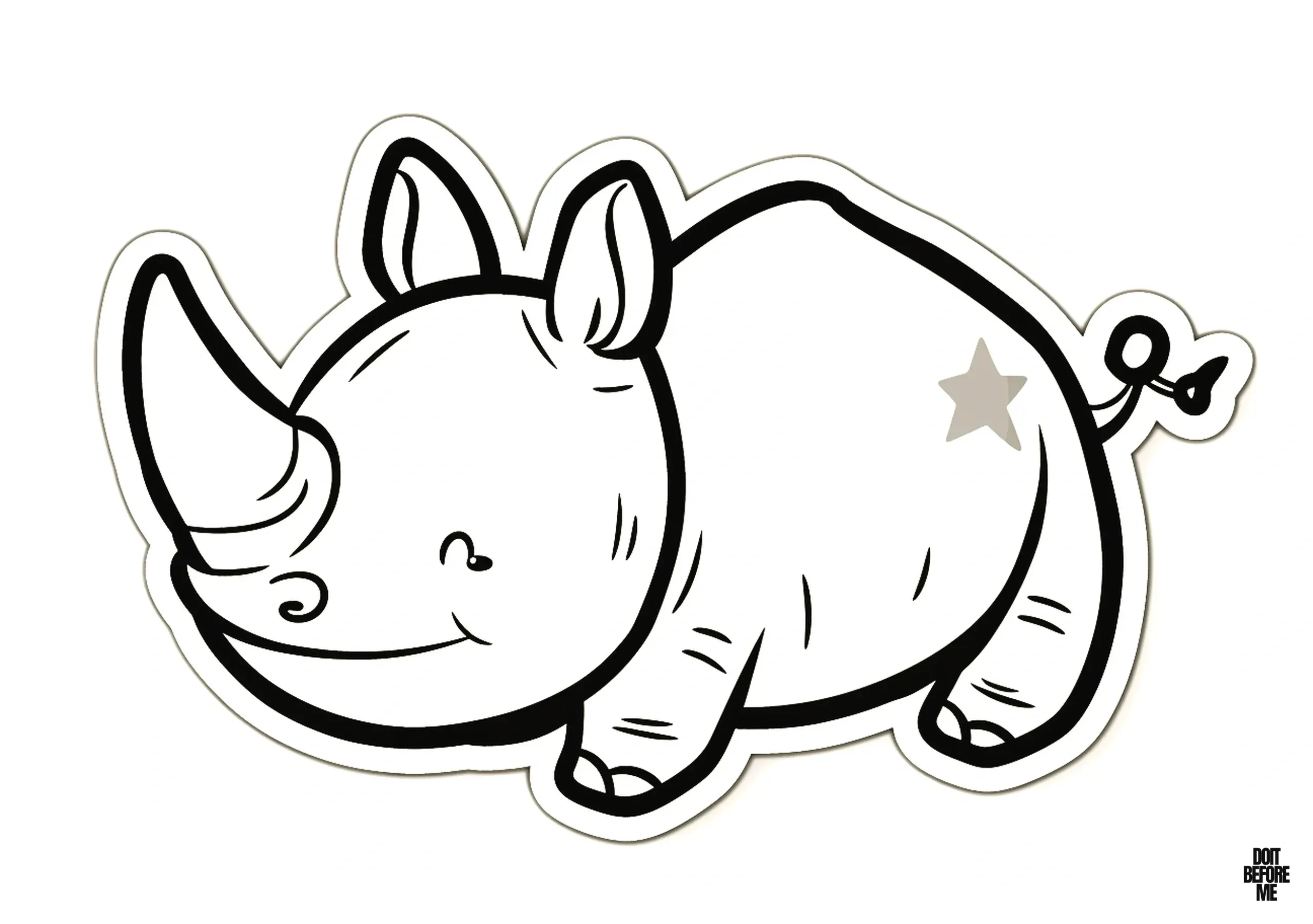
Open full-size baby rhino coloring sheet 9
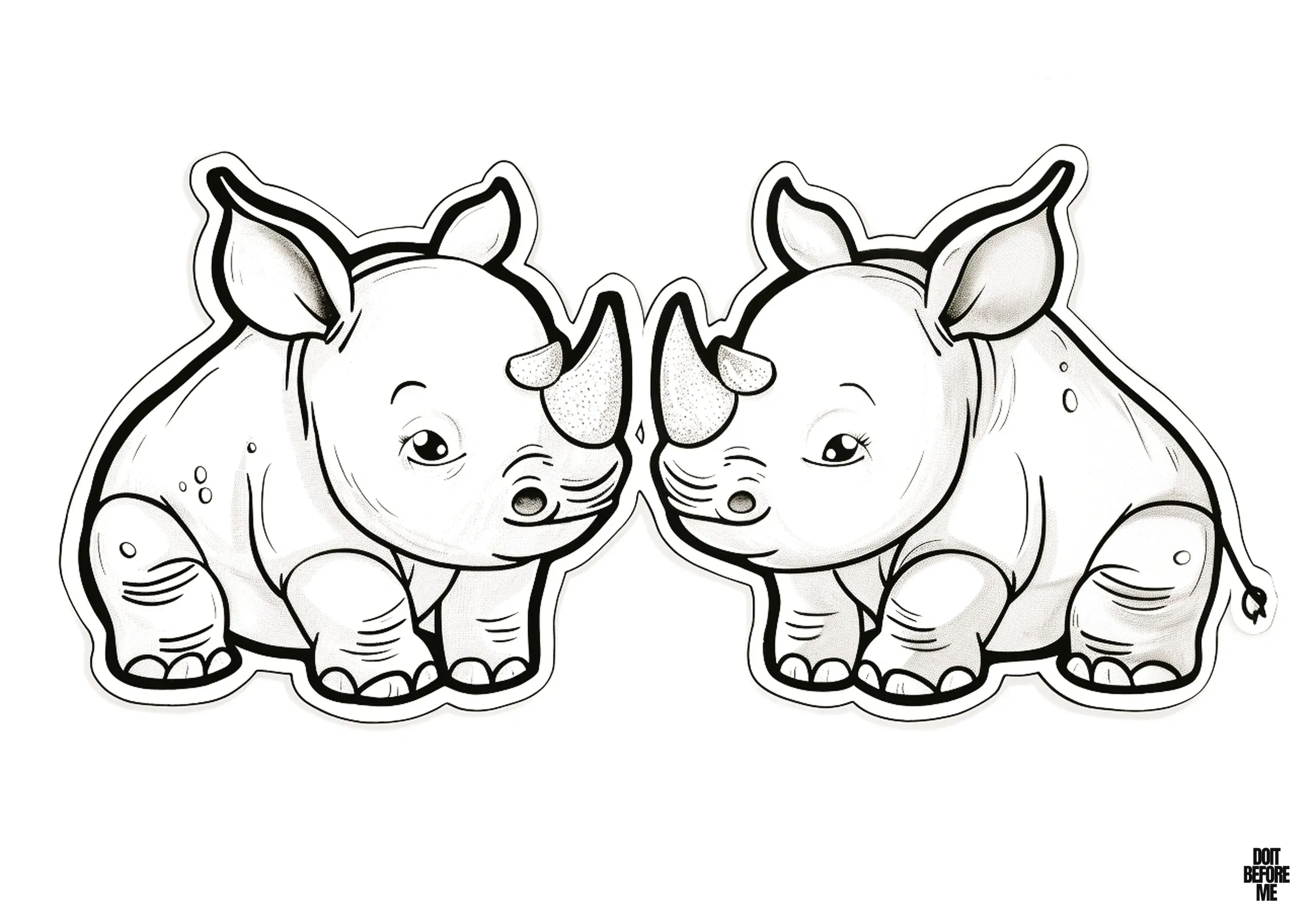
Open full-size baby rhino coloring sheet 10
Rainbow, stars and sky rhinos — Sheets 11–15
Keep the rhino in one gray family and let the rainbow, clouds and stars do the colorful work. That keeps the animal readable and gives younger children obvious places to switch colors.
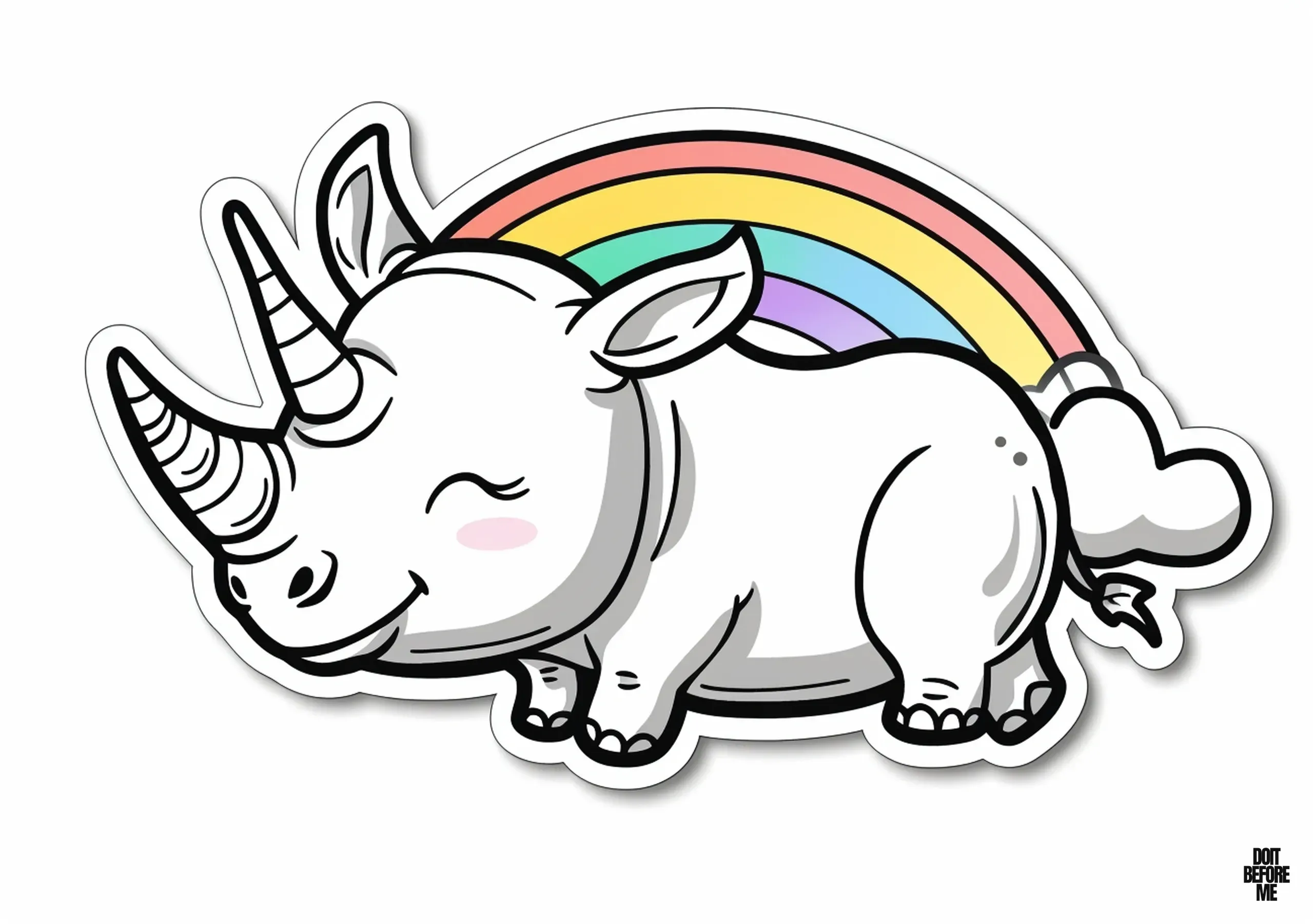
Open full-size baby rhino coloring sheet 11
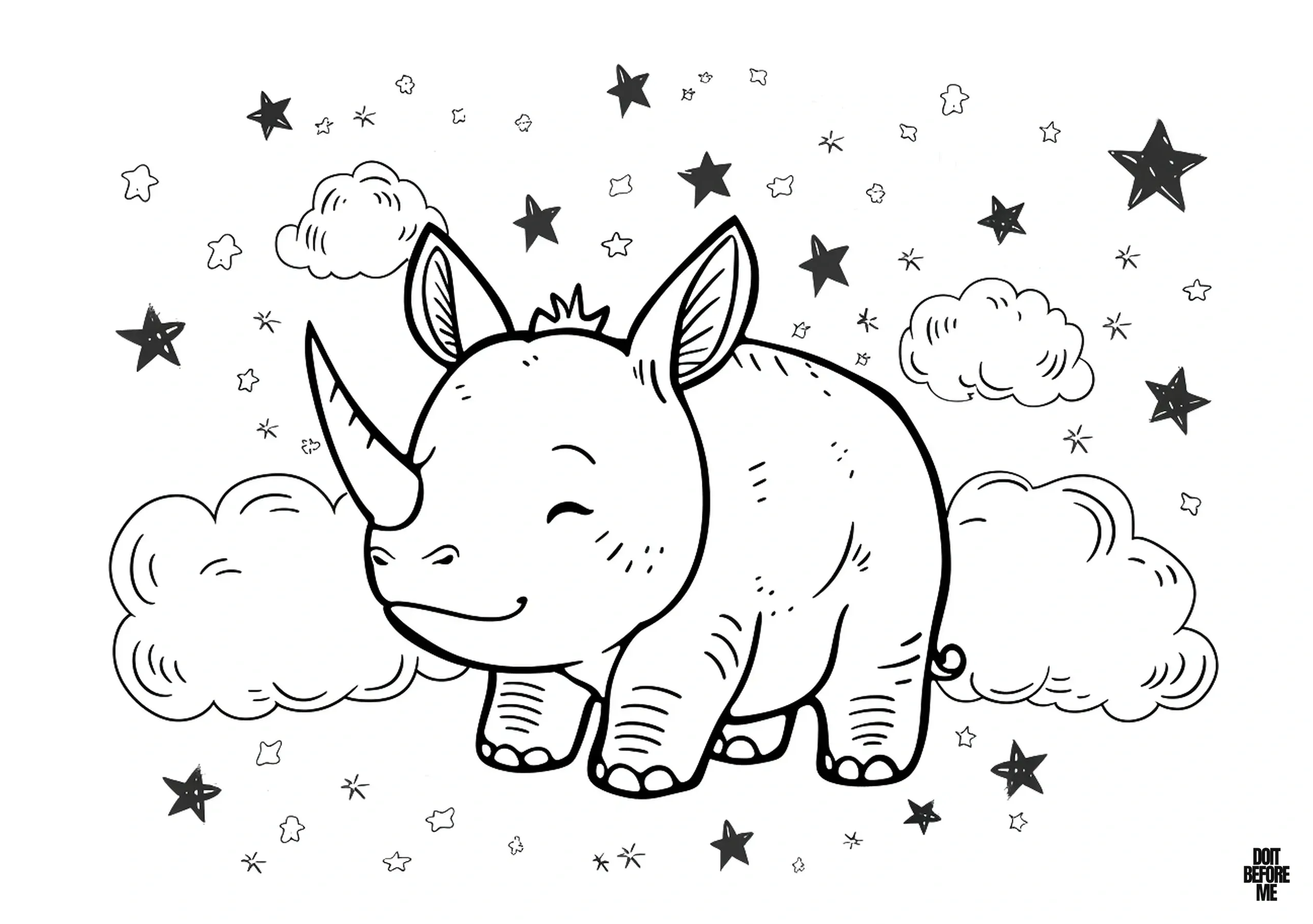
Open full-size baby rhino coloring sheet 12
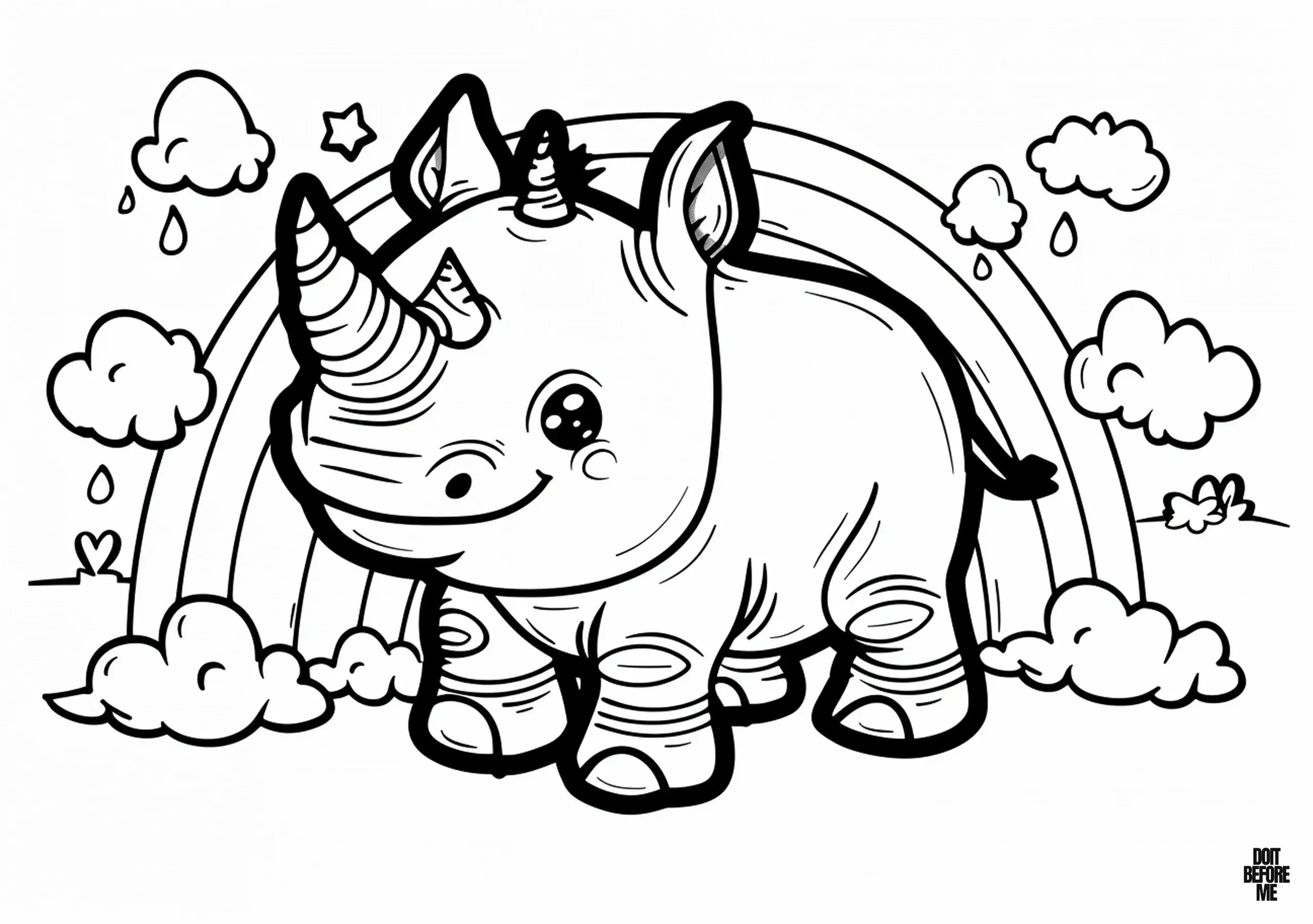
Open full-size baby rhino coloring sheet 13
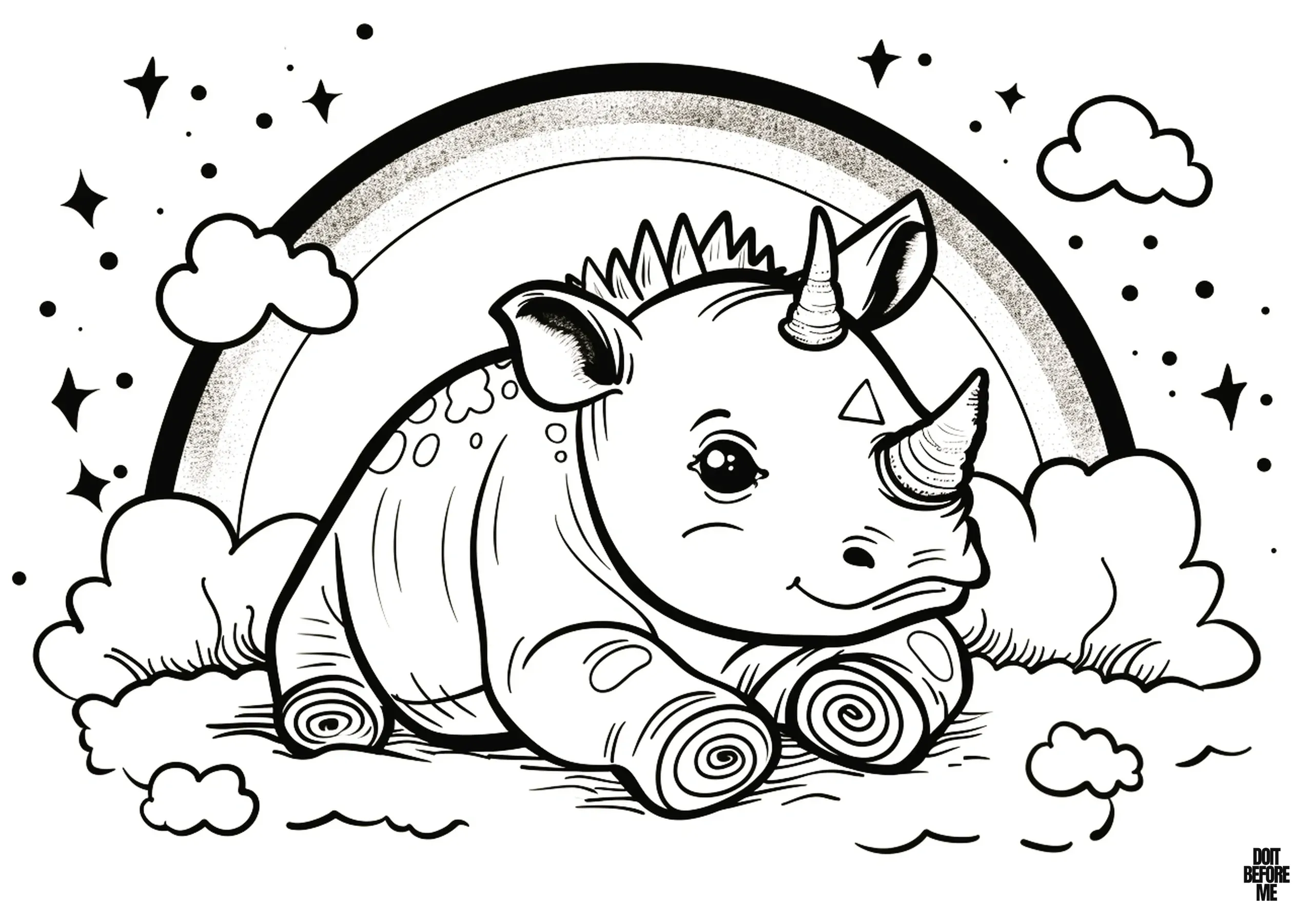
Open full-size baby rhino coloring sheet 14
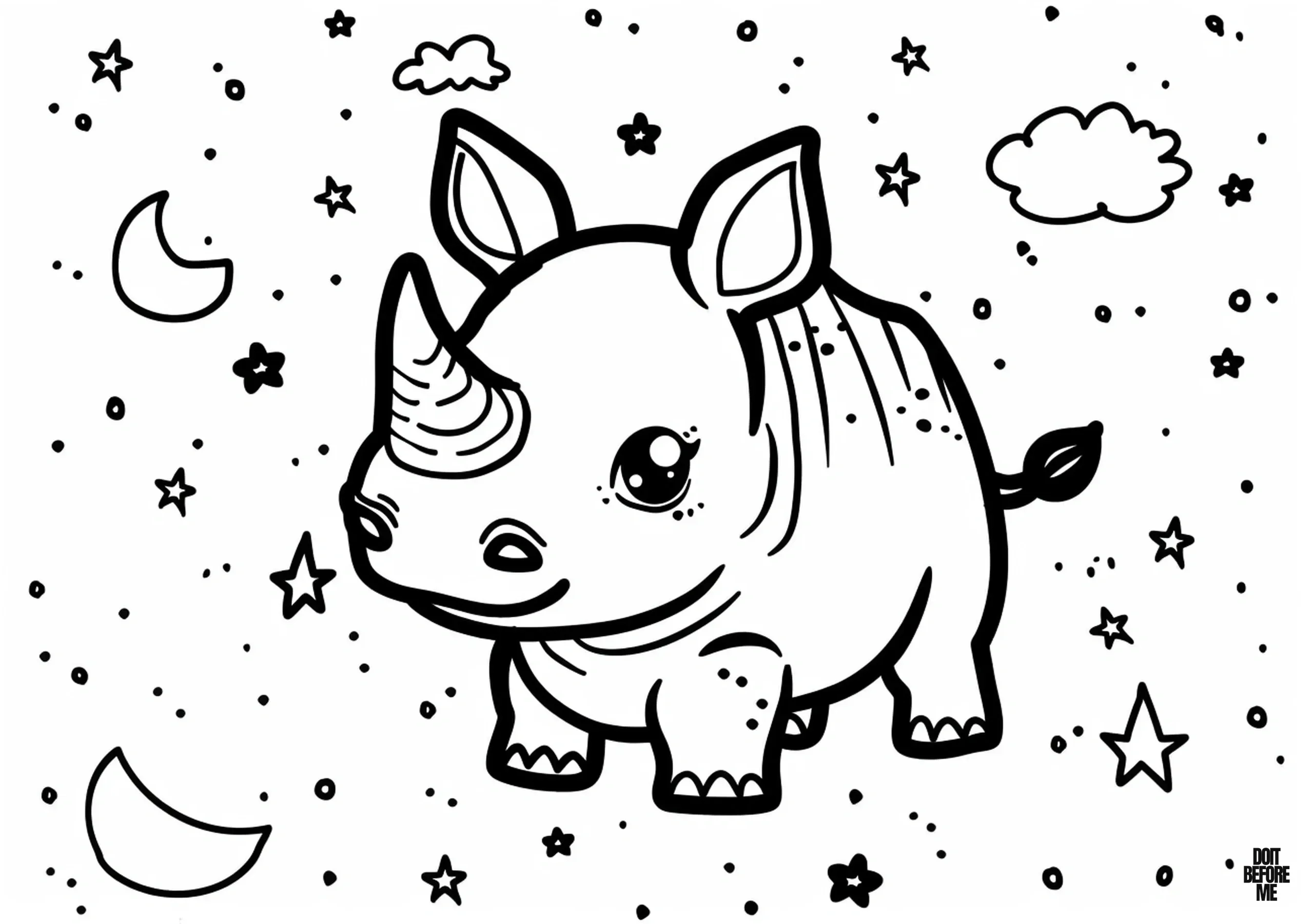
Open full-size baby rhino coloring sheet 15
Dancing and dressed-up rhinos — Sheets 16–20
These pages are more playful. For clothing, finish the gray skin first and then choose the fabric colors. For dancing rhinos, the musical notes and hearts can carry the brighter accents.
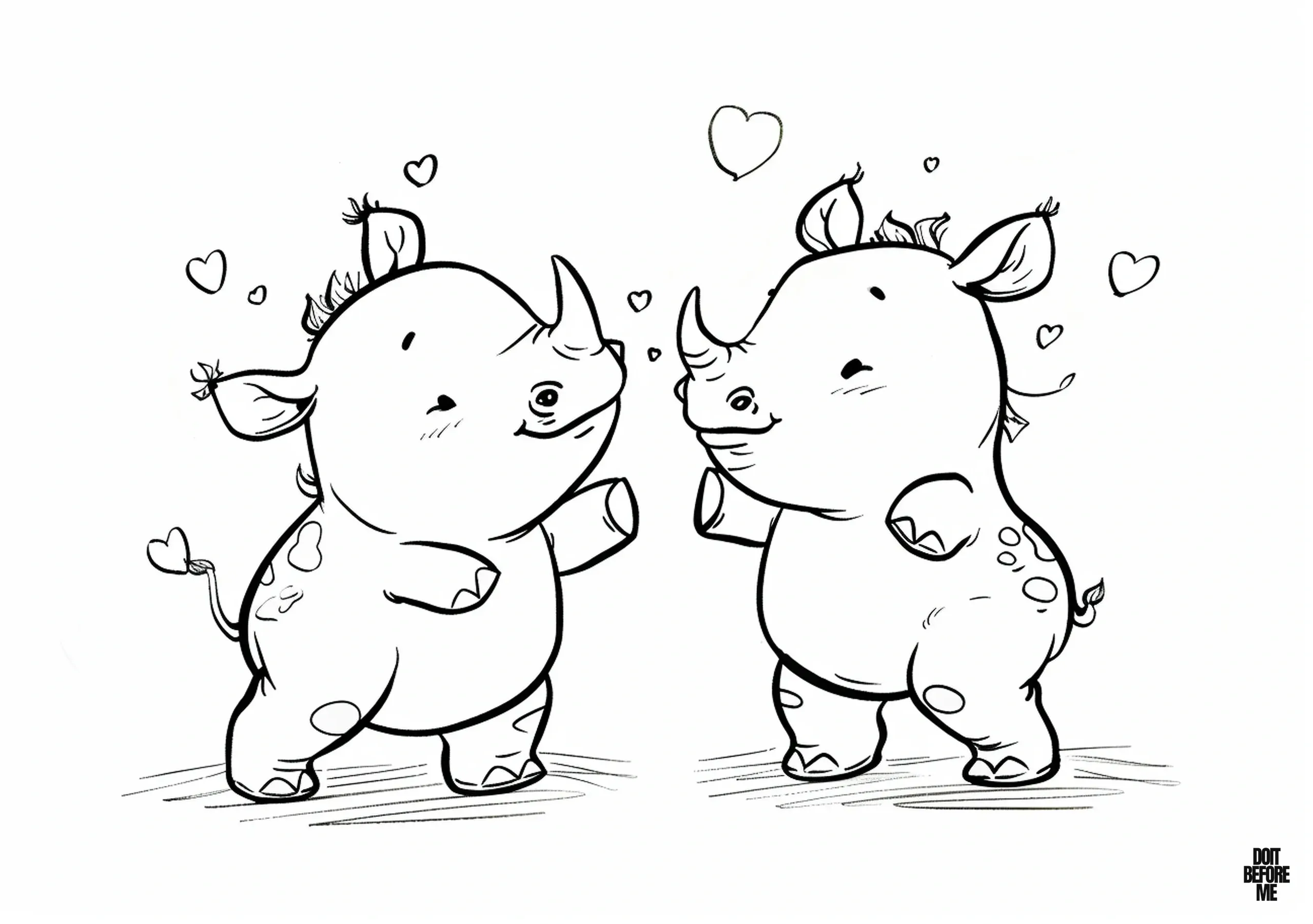
Open full-size baby rhino coloring sheet 16
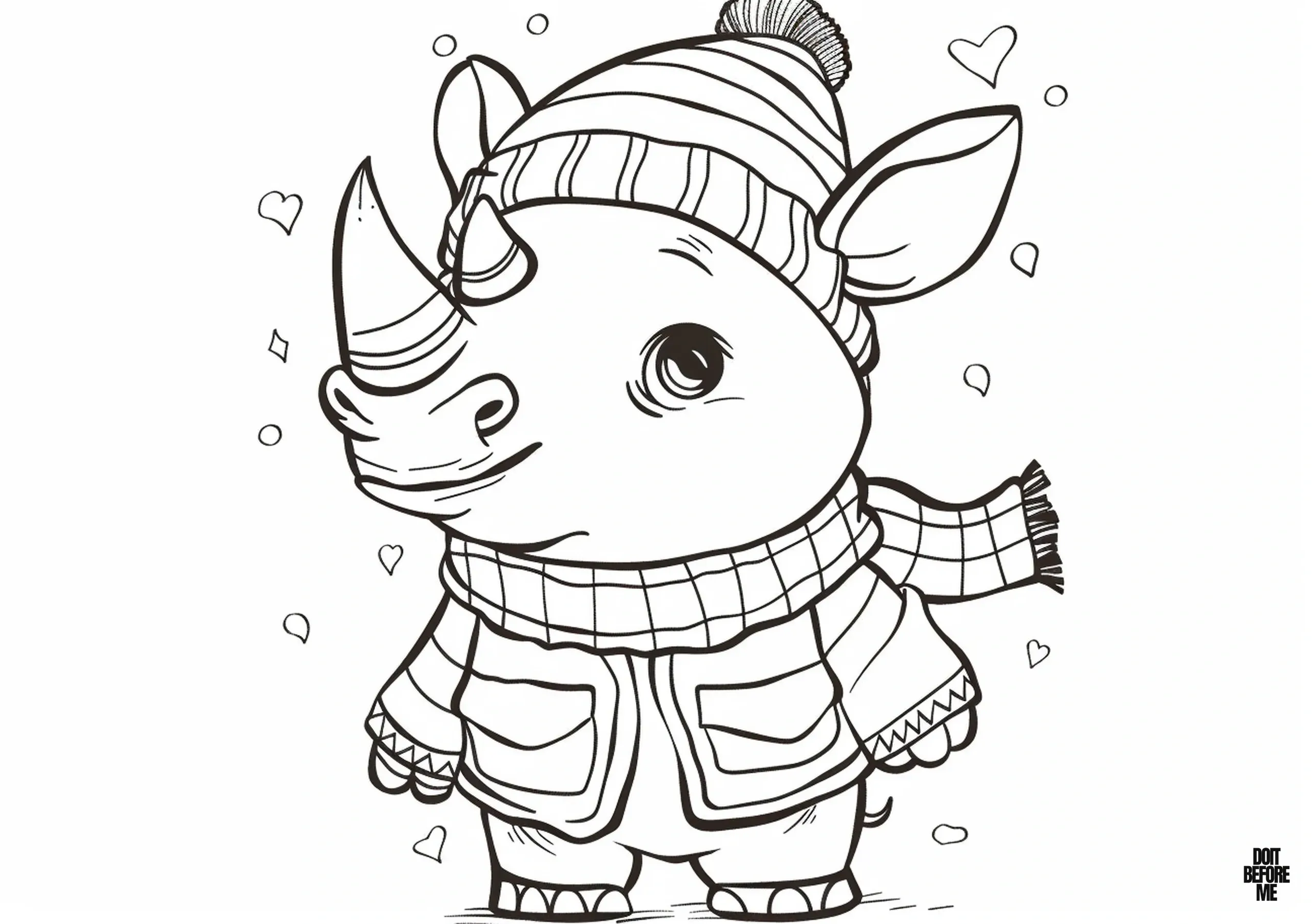
Open full-size baby rhino coloring sheet 17
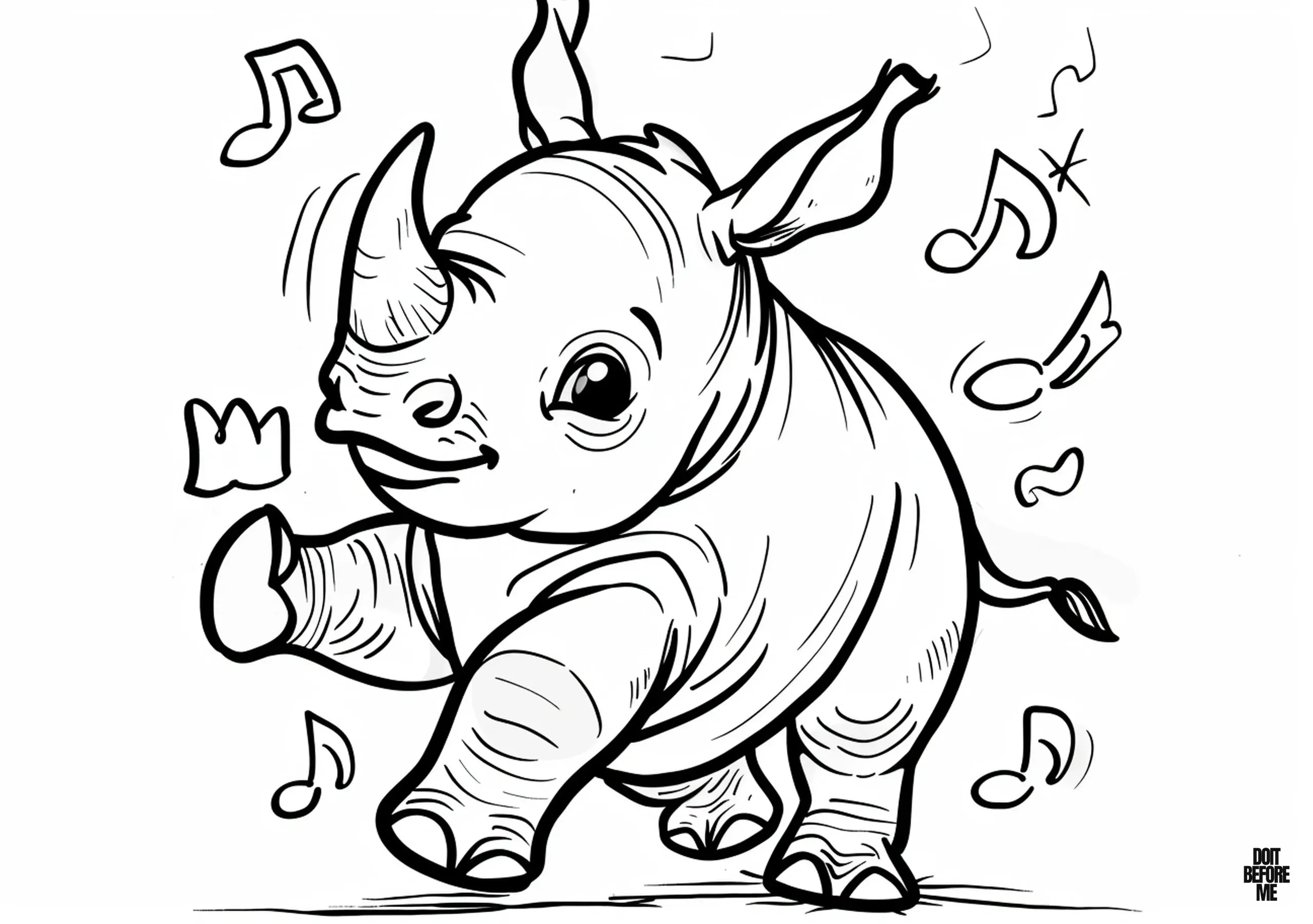
Open full-size baby rhino coloring sheet 18
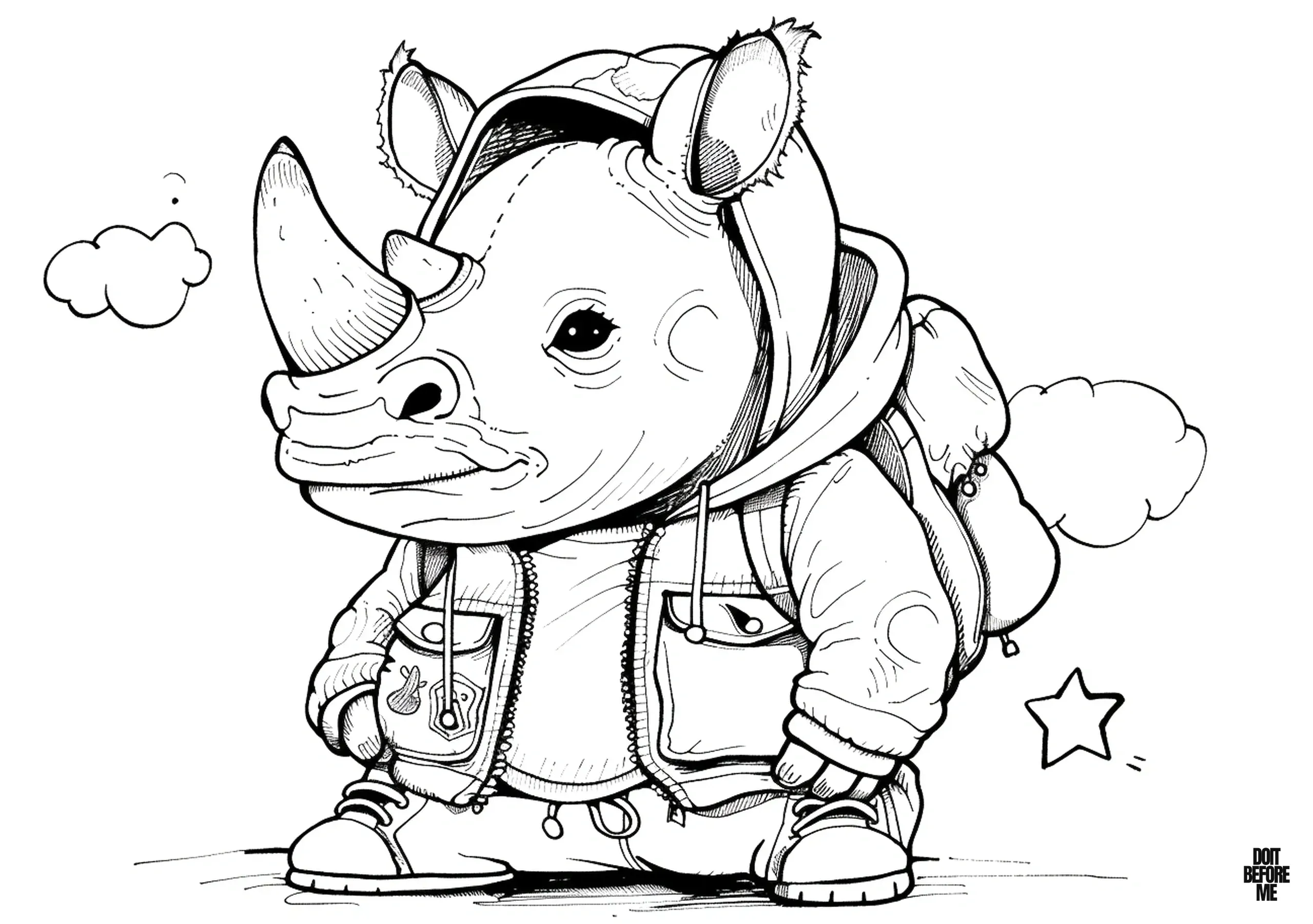
Open full-size baby rhino coloring sheet 19
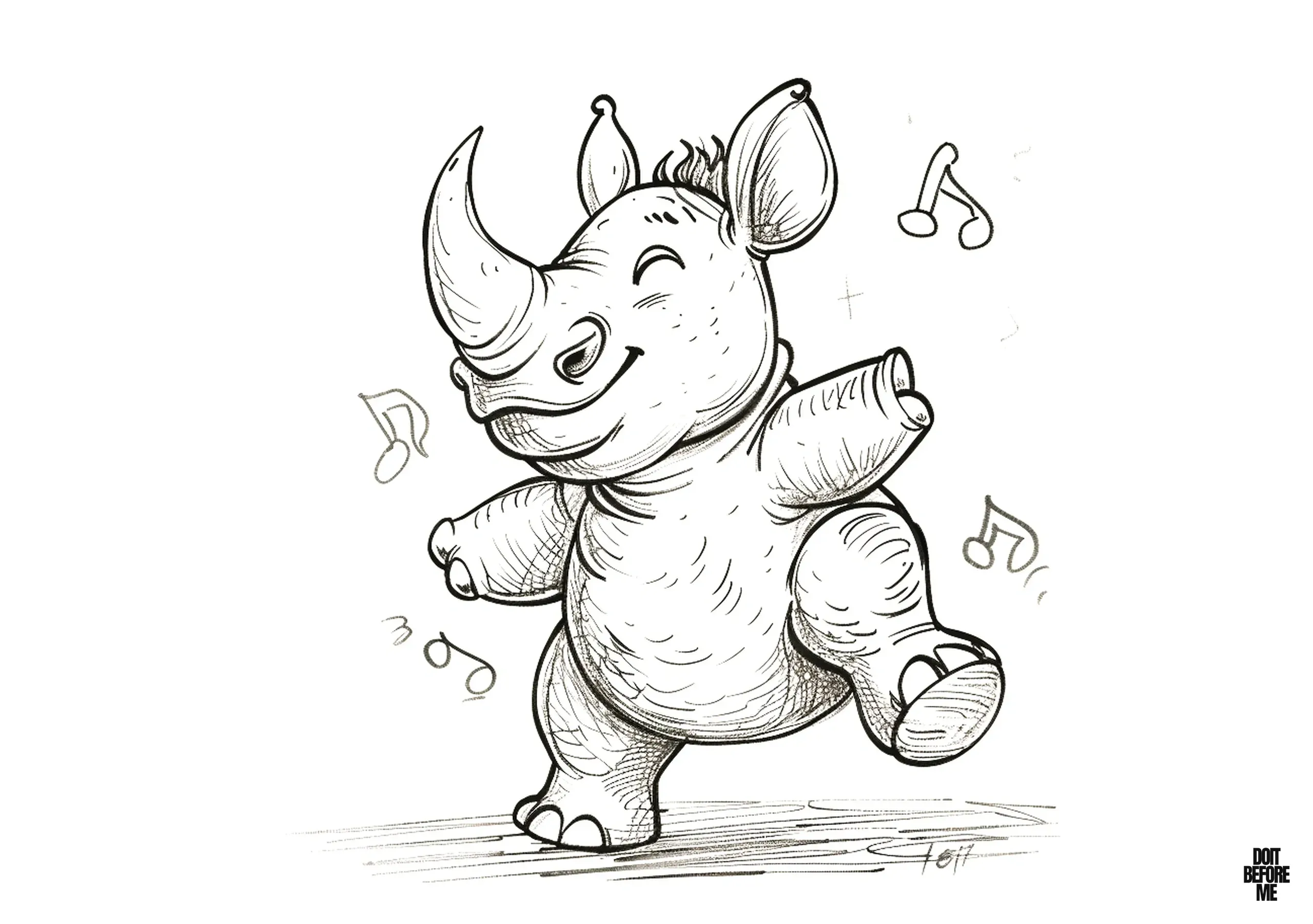
Open full-size baby rhino coloring sheet 20
Realistic rhino coloring page — Sheet 21
This is the one to choose if you actually want to practice shading. Work from the large shadows to the small details: underside of the body first, then legs, neck and face. Keep the meadow lighter until the rhino itself is finished.
Open full-size baby rhino coloring sheet 21
Three small coloring challenges to try
- The three-gray challenge: use only a light, medium and dark gray on the rhino and see how much shape you can create without adding another body color.
- The bright-background challenge: keep the rhino neutral and make the rainbow, stars or clothing carry all the saturated color.
- The no-outline-loss challenge: use a light enough body color that the eyes, mouth, horn and folds stay easy to see when you are finished.
Baby rhino coloring questions
Which pages are easiest for toddlers or preschoolers?
Sheets 1–10. The rhinos are large, the outlines are clear and most of the pages have very little background clutter.
Do I have to color the rhino gray?
No. Gray and gray-brown make sense if you want a natural-looking animal, but these are playful coloring pages. A blue, purple or pink cartoon rhino is not a mistake.
How do I stop gray marker from covering the details?
Use the lightest gray you have for the first pass and leave the darkest marker for the underside, legs and a few shadow areas. Filling the entire animal with a dark marker can swallow the facial lines.
Which page is best for an older child or adult?
Sheet 21 is the clearest choice for realistic shading. If clothing and character details are more appealing than a natural scene, use Sheets 16–20.
More animal pages with different kinds of texture
If the large, simple rhino shapes worked well, try the baby wild animal coloring pages. For more variety in one place, the animal coloring pages collection mixes many different species and styles. If you want fur instead of thick skin, the lion and lion cub pages are a good next step. For a bigger jump in shading detail, continue with the realistic animal coloring pages.

