
One-line drawing is less about making a perfect picture and more about making better decisions with fewer marks. Choose a route through the subject, keep the pencil moving, and let the line do more work than the detail. Click or tap any reference below to open the full-size image.
Jump to: easy warm-ups · faces & figures · observational contour · 5-minute practice
Start here: use Idea 1 if you have never tried continuous-line drawing before. Move to Idea 4 once you want to tackle a face.
Easy one-line warm-ups — Ideas 1–3
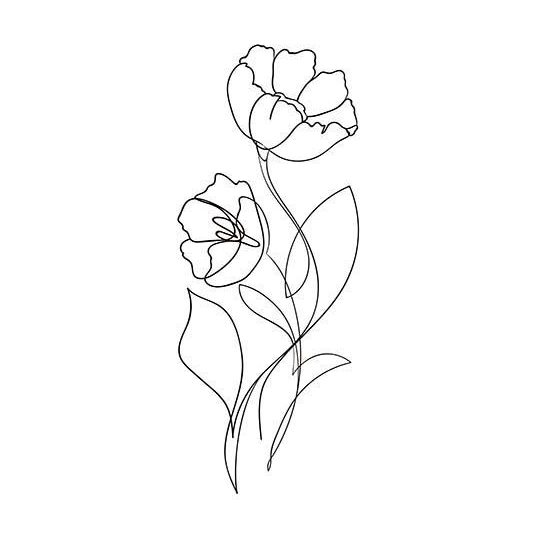
A flower is one of the easiest subjects because the line already has somewhere natural to travel: stem → leaf → petal → center. Do not correct every uneven curve. The point is to keep the route alive.
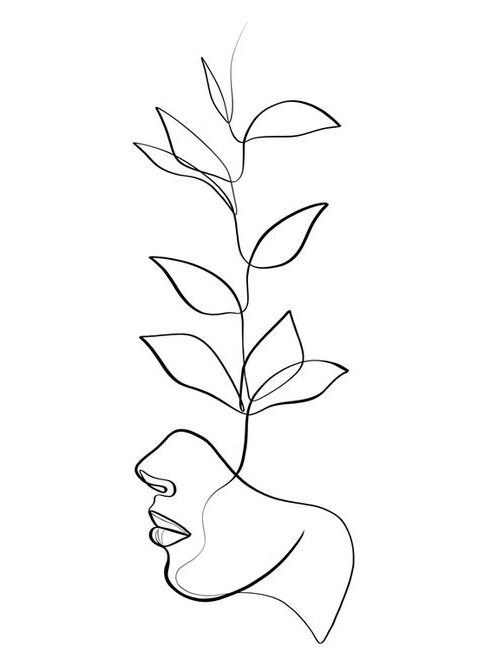
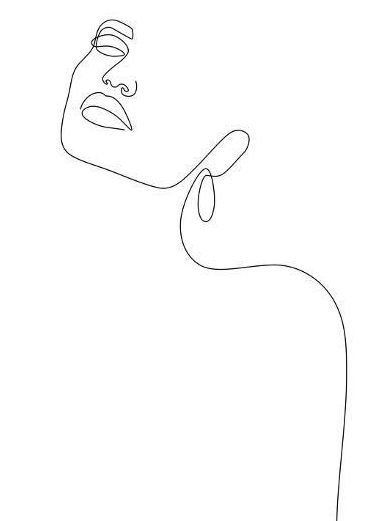
Faces and figures — Ideas 4–7
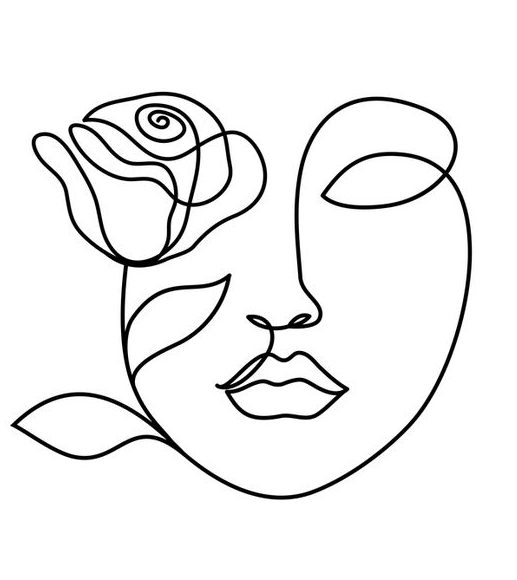
For a profile, the easiest route is usually the outside rhythm first: forehead → nose → lips → chin. If that contour reads, you can decide whether the line needs to travel back toward the eye or hair.
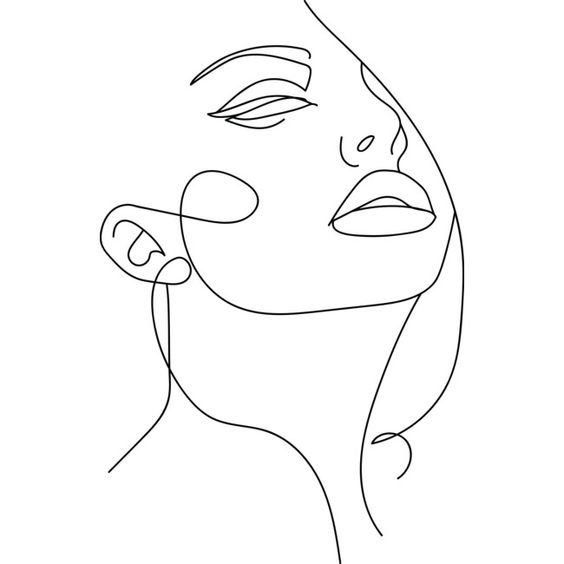
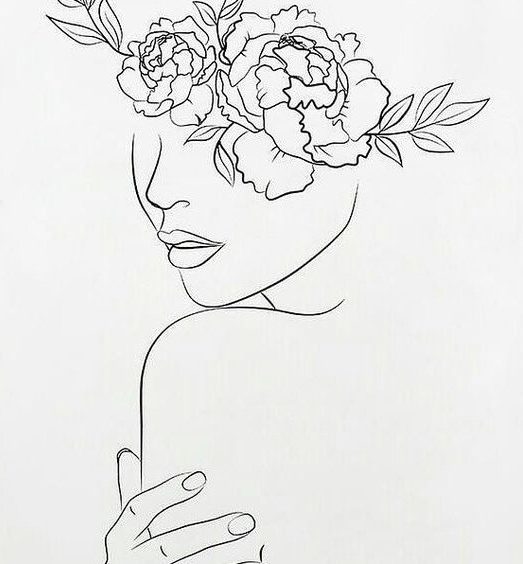
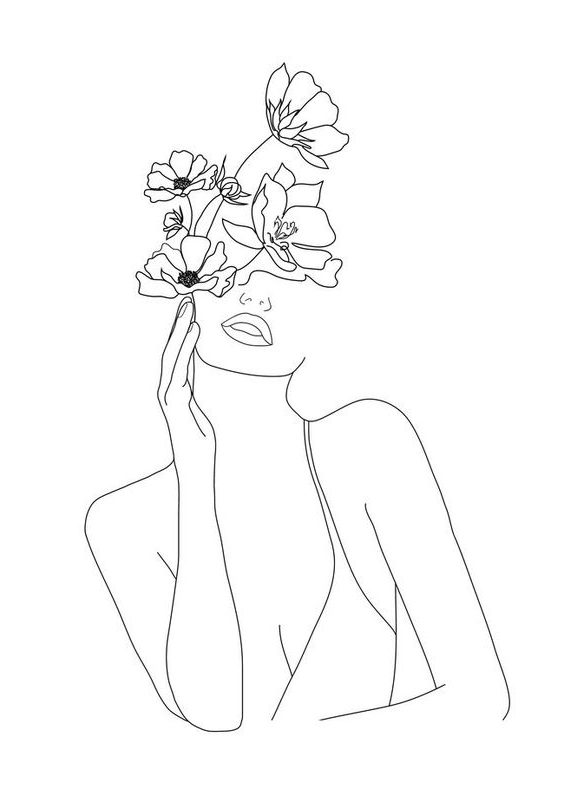
Observational contour studies — Ideas 8–9
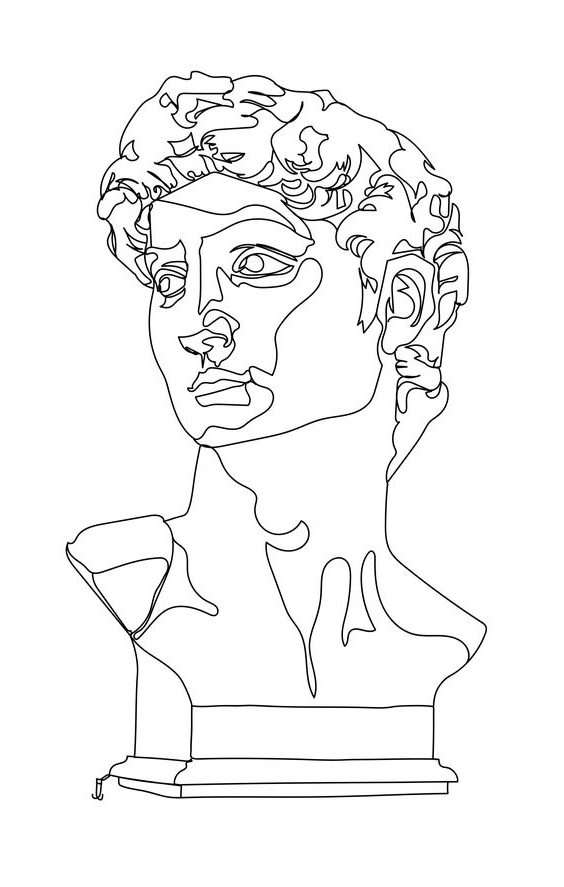
These are less about decorative minimalism and more about observation. Let the line cross itself when it needs to travel from one feature to another. Crossing is fine. Constantly stopping to repair the previous mark is what kills the rhythm.
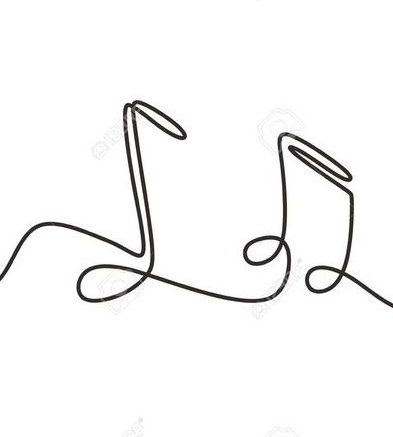
Plan the route before the pencil touches the page
You do not need to rehearse every bend. Decide four things: where the line starts, which two or three shapes matter most, where a crossing can move you to another part of the subject, and roughly where you want to finish.
- Start somewhere useful. On a profile, the forehead or hairline gives you a clean run into the nose and lips.
- Protect the recognizable shapes. A flower can survive uneven petals; it cannot survive a stem that never connects convincingly to the bloom.
- Use crossings as travel. If the line needs to get from the jaw to the eye, crossing the drawing is often cleaner than forcing a strange route around the outside.
- Do not obsess over the ending. A one-line drawing can stop in an unexpected place and still feel complete.
Continuous line and blind contour are not the same exercise
In a continuous-line drawing, the main rule is that the line stays unbroken. You can look at the page and make deliberate choices about where the line travels.
Blind contour shifts the challenge: you spend most or all of the drawing looking at the subject instead of the paper. Accuracy usually gets worse, but observation gets better. Use Ideas 8–9 for that kind of practice rather than expecting a decorative finished result.
Line speed and pressure matter more than people expect
Continuous does not mean fast. Move slowly enough that you can react to the shape in front of you, but not so slowly that the line turns into a series of tiny corrections. Keep your grip lighter than normal. A heavy grip makes every hesitation visible.
For cleaner curves, try drawing slightly larger than you think you need. Tiny one-line drawings often become cramped because there is not enough room for the wrist and arm to move smoothly.
Four mistakes that make one-line drawings feel stiff
- Repairing every awkward curve. Leave it. The next version is where you fix the route.
- Trying to include every feature. If the subject already reads, another eye, fold or petal may only make the line busier.
- Tracing the same edge twice without a reason. Repeated lines can work, but use them to move or emphasize—not because you lost confidence.
- Drawing at one speed. Slow down around a nose or petal turn; move more freely through long, simple stretches.
A five-minute one-line practice
- Minute 1: study one reference and trace the route in the air with your finger.
- Minute 2: draw it once slowly without lifting the pencil.
- Minute 3: draw it again using fewer interior lines.
- Minute 4: make a third version while looking at the subject more than the paper.
- Minute 5: compare them. Keep the version with the strongest rhythm, not automatically the most accurate one.
If the third drawing looks strange, that is normal. It is doing a different job: training your eye to follow the subject instead of following your previous mark.
Pencil, pen or marker?
Use pencil when you are learning the route, but resist erasing during the attempt. A fineliner is useful when you want commitment. A felt-tip marker exaggerates every wobble, which makes it surprisingly good practice once you stop caring about producing a perfect page.
Where this fits in the drawing section
Use this page when you want to practice simplification and line confidence. For movement and body rhythm, go to gesture drawing. For finished minimalist inspiration, try the aesthetic minimalist drawing ideas. For quick subjects rather than a line constraint, use the easy cool drawing ideas. And if you want a small study that looks polished quickly, try easy drawings that look impressive. You can also browse the drawing tutorials and ideas hub to move between techniques and subjects.
One-line drawing questions
Do I really have to keep the pencil on the page?
For the exercise, try to. If you lift once because the route genuinely breaks down, start again rather than turning the drawing into a series of short corrected lines.
Where should a one-line drawing start?
Start at a place that gives you a useful run through the subject. On a profile, the forehead or hairline works well. On a flower, the stem is an easy entry point.
Can the line cross itself?
Yes. A crossing can be part of the design and is often the cleanest way to move between separate features without lifting the pencil.
Is one-line art the same as contour drawing?
No. They overlap, but contour drawing is a broader practice built around following edges and shape changes. It can use several lines. Continuous-line drawing adds the specific constraint of keeping the line unbroken.
Reference-use note
This is a legacy inspiration gallery and original artist attribution or reuse licensing is not documented for every image. Use the references for study and practice; do not assume the source artwork is cleared for commercial republication.


Beautiful!
Hi! Are you the original artist of this drawing? I redrew it and I was wondering if I could use it as the cover on my book.