
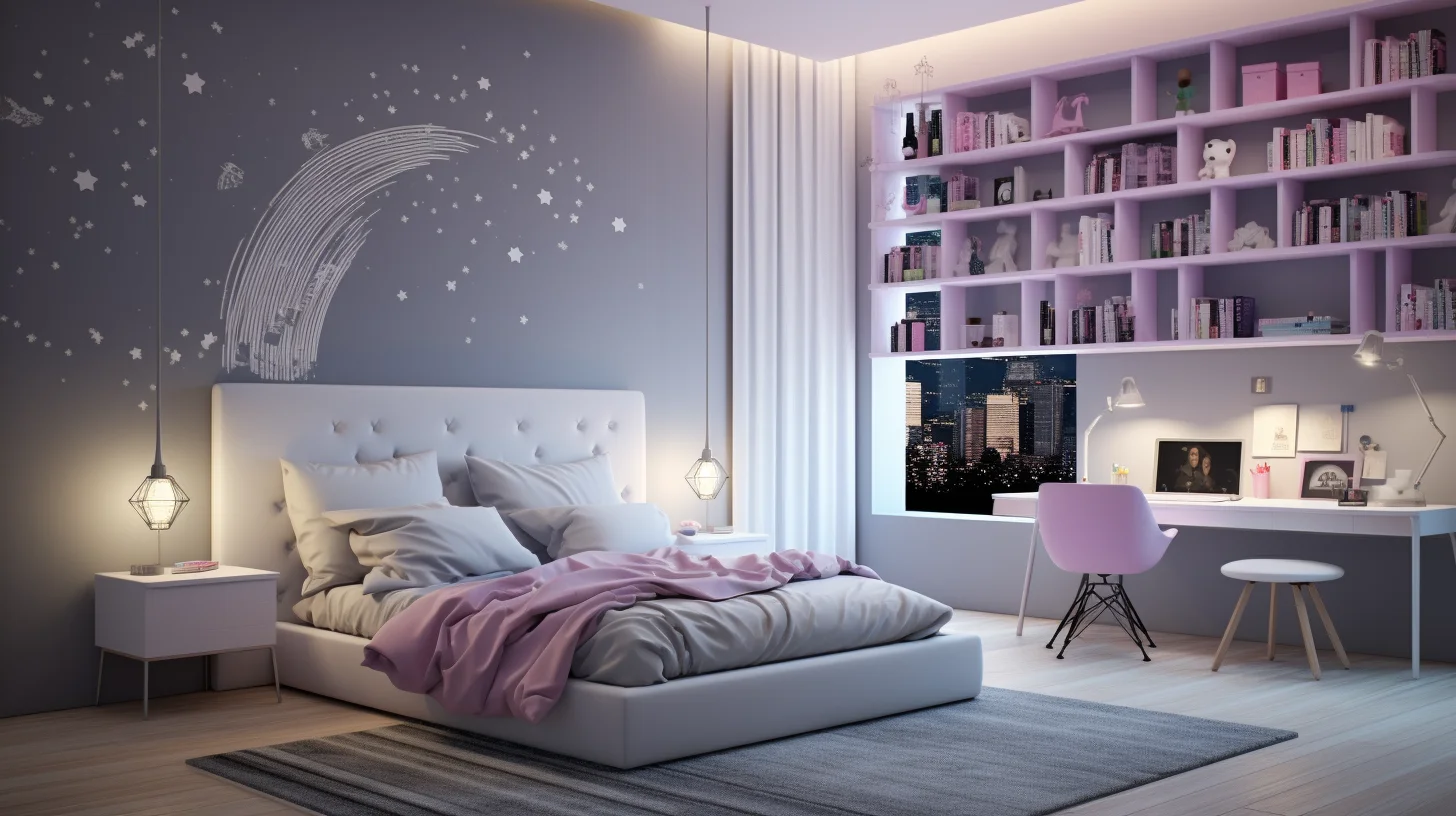
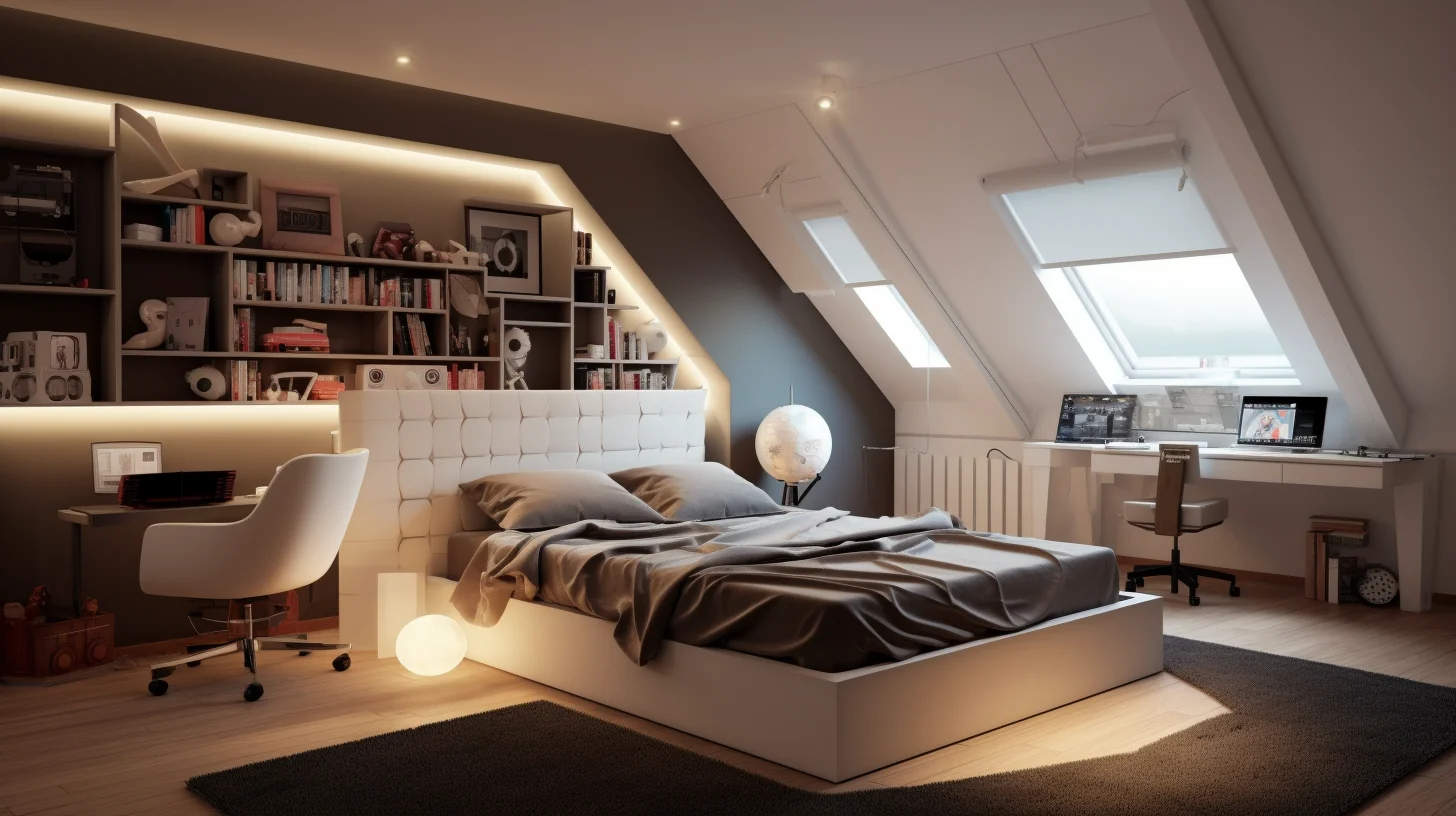
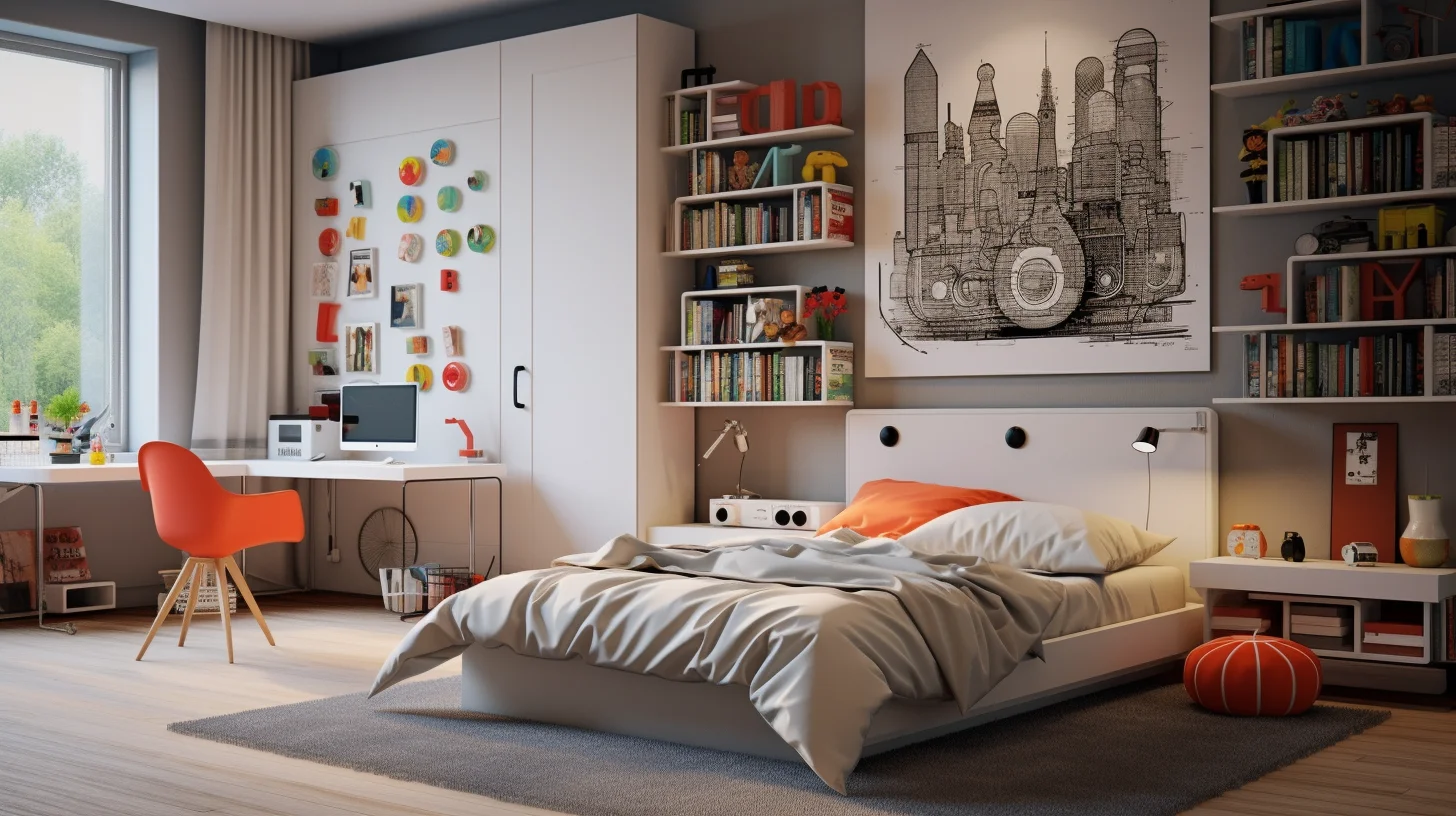
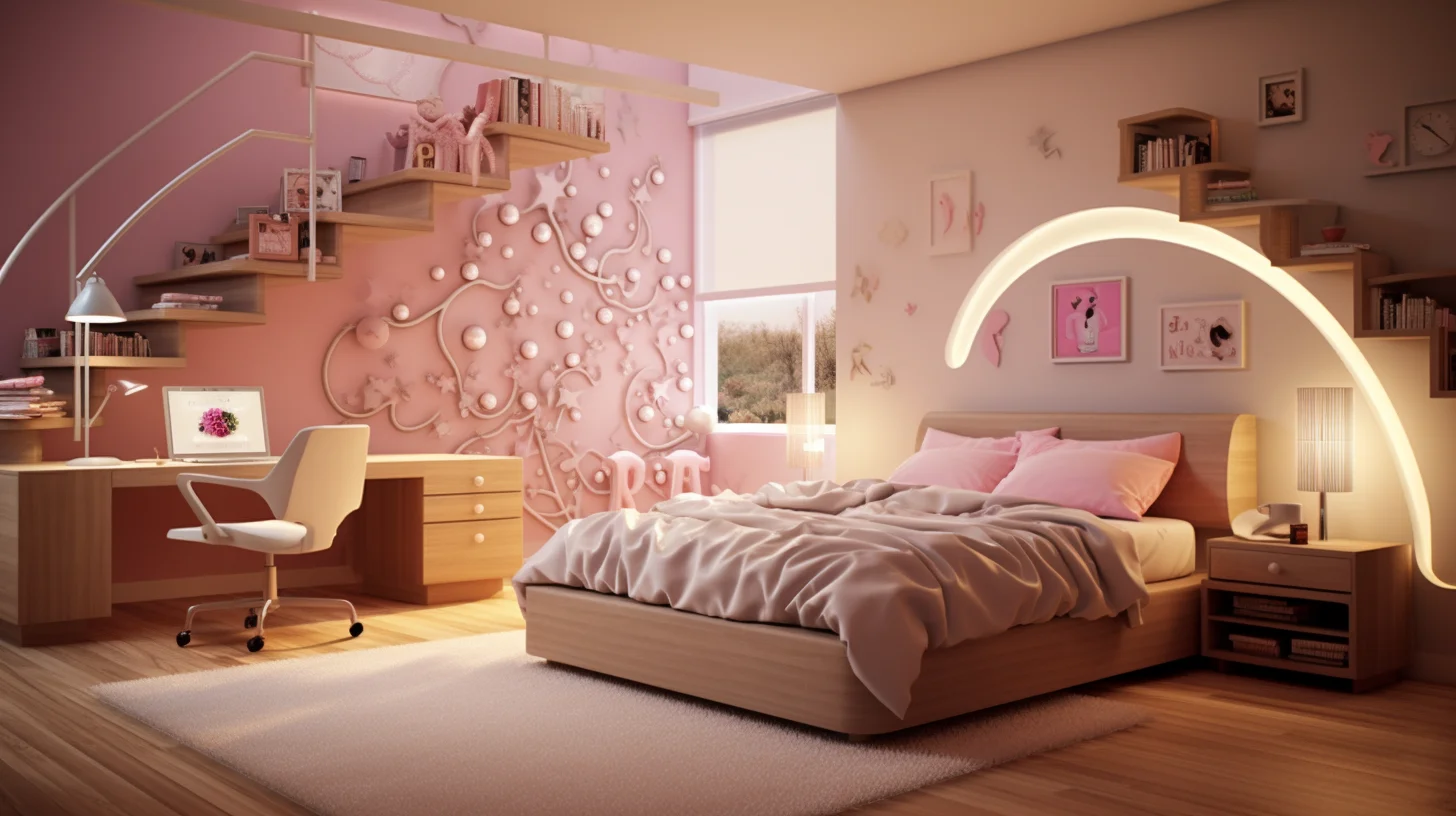
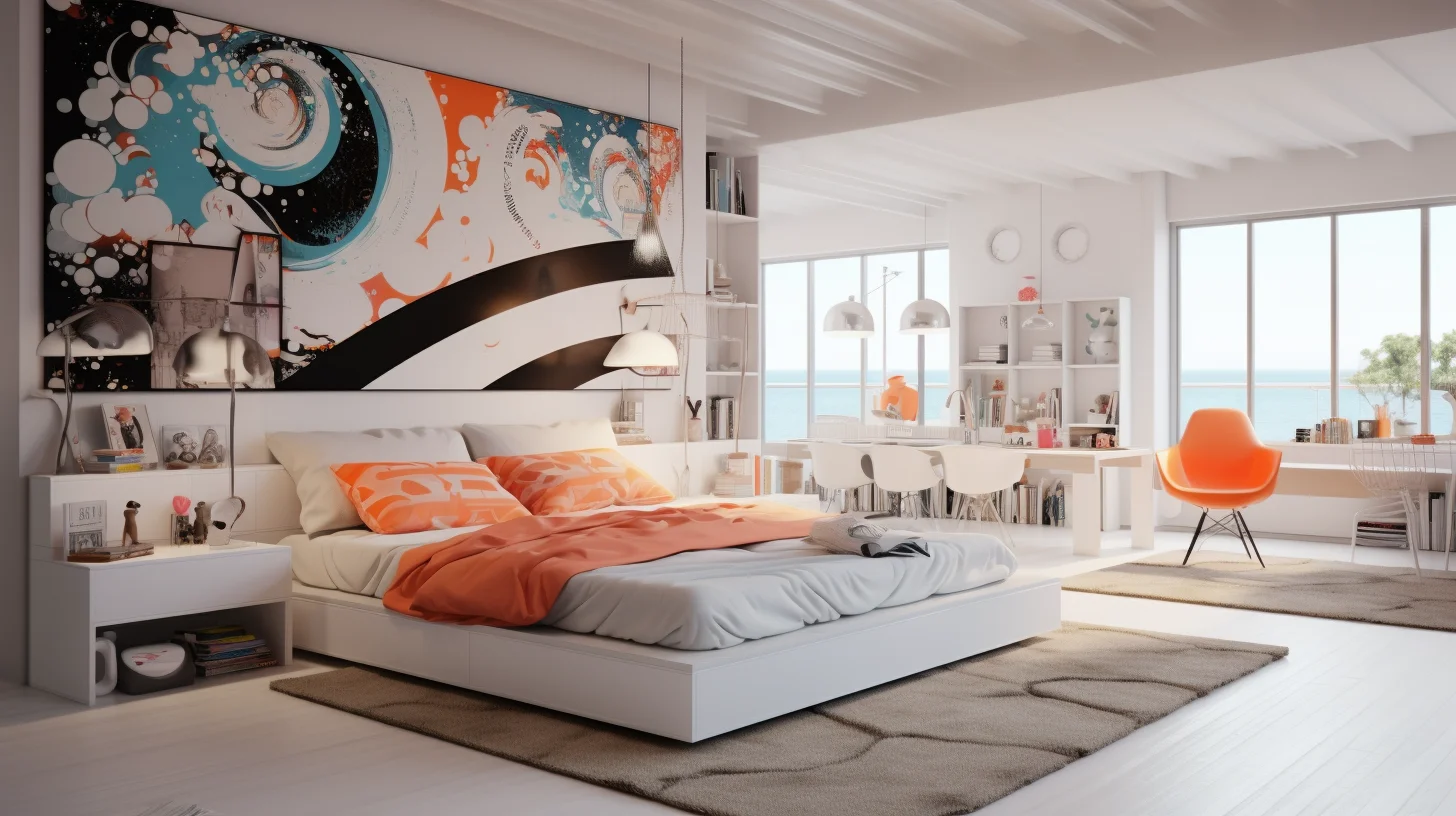
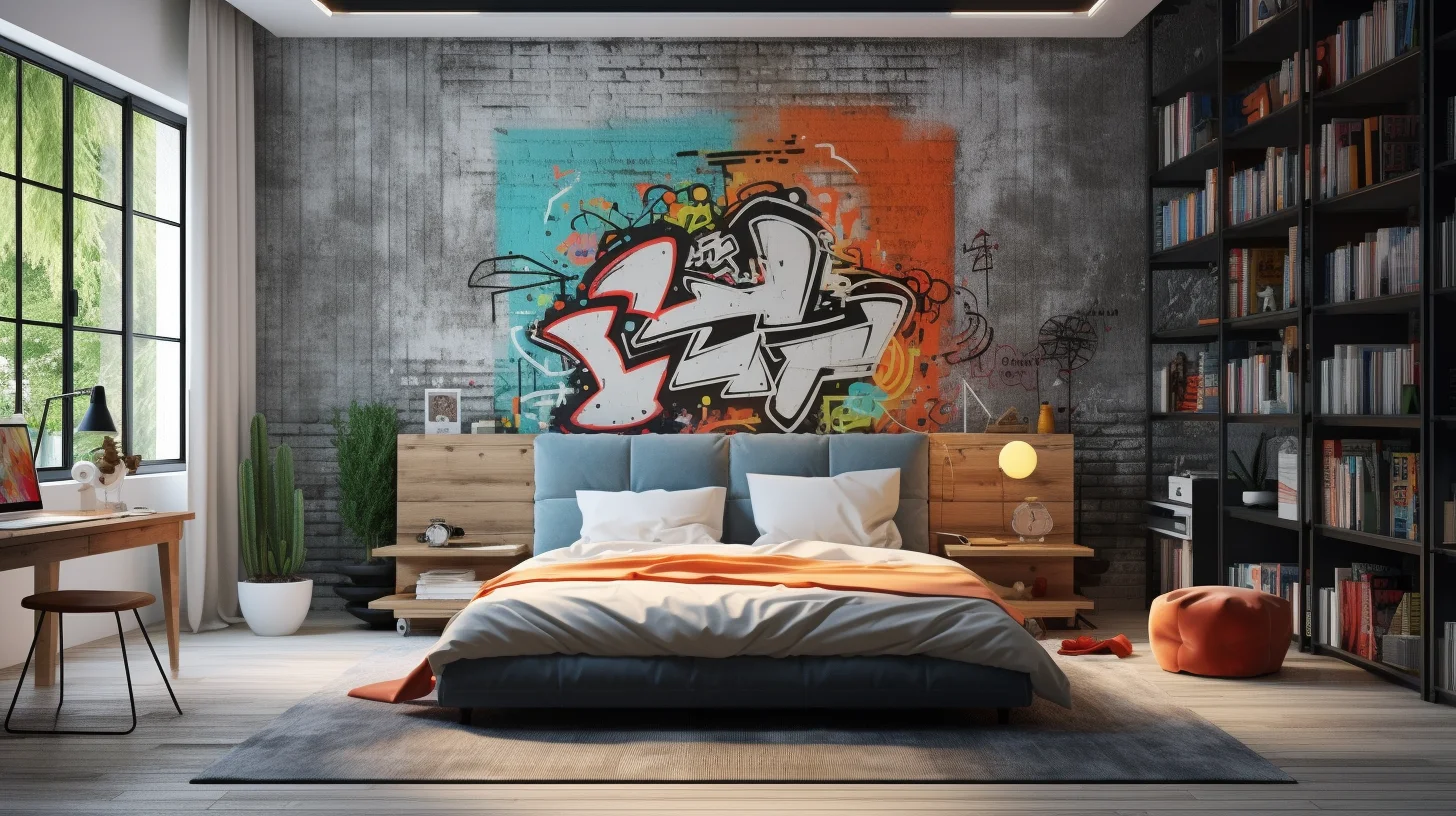
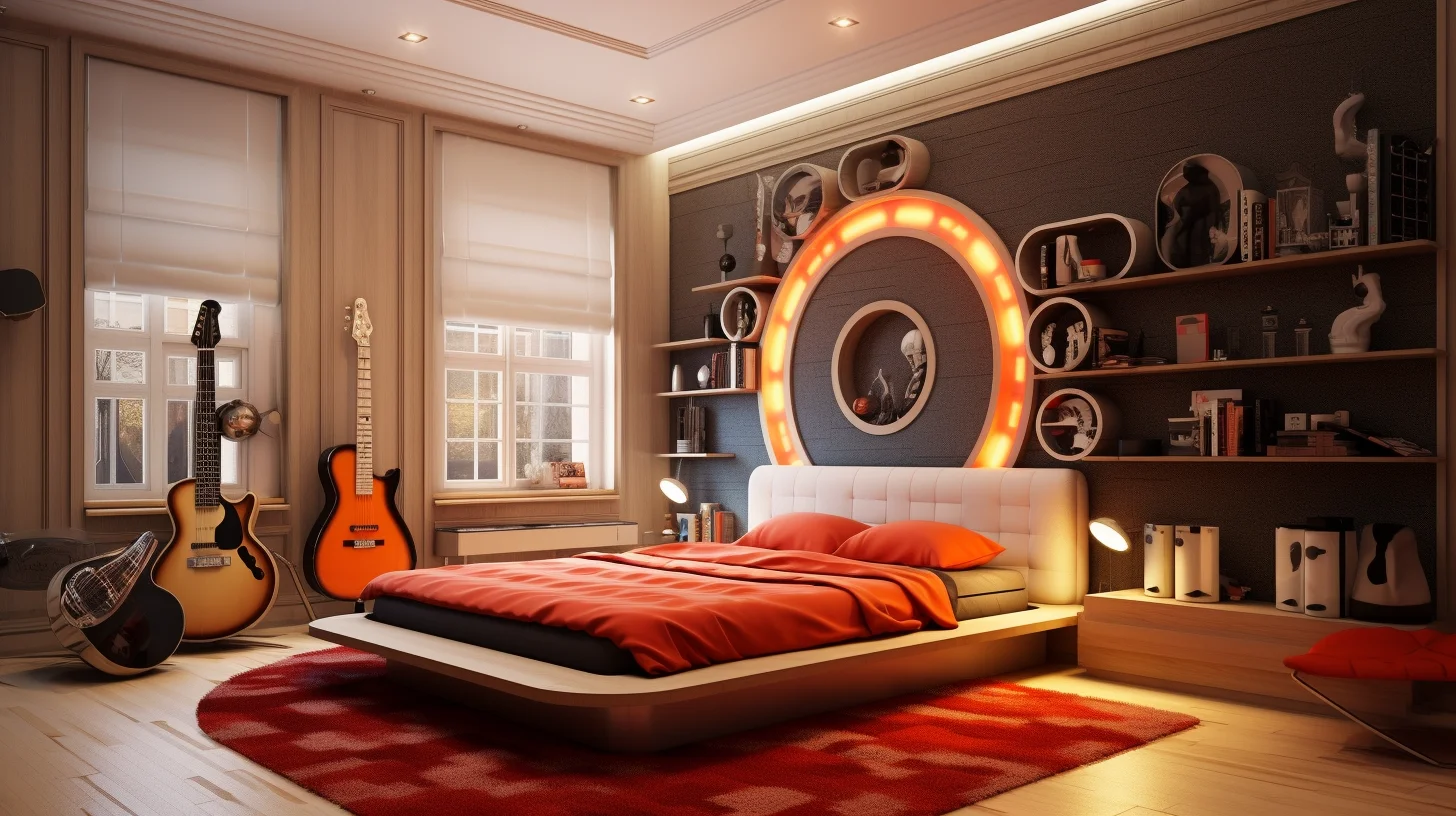
This gallery contains 26 teen bedroom concepts, from colorful and boho rooms to modern, cozy and more neutral setups. The best teen bedroom is not just an aesthetic backdrop: it has to support sleep, schoolwork, storage, charging devices, getting dressed and spending time alone or with friends.
Plan the room by function before style
| Need | What to plan first |
|---|---|
| Sleep | A comfortable bed, blackout or privacy options and clear space around the bed |
| Homework | A desk or work surface with task lighting and accessible outlets |
| Storage | Closed storage for clothes and school items before adding display shelves |
| Charging | A safe, reachable place for phone, laptop and other devices without cables crossing walkways |
| Hangout space | One extra seat, floor cushion or clear area only if the room actually has space |
Once those basics work, color, posters, bedding and accessories can change much more easily as tastes change. That is especially useful in a teen room, where a style that feels perfect now may feel dated surprisingly quickly.
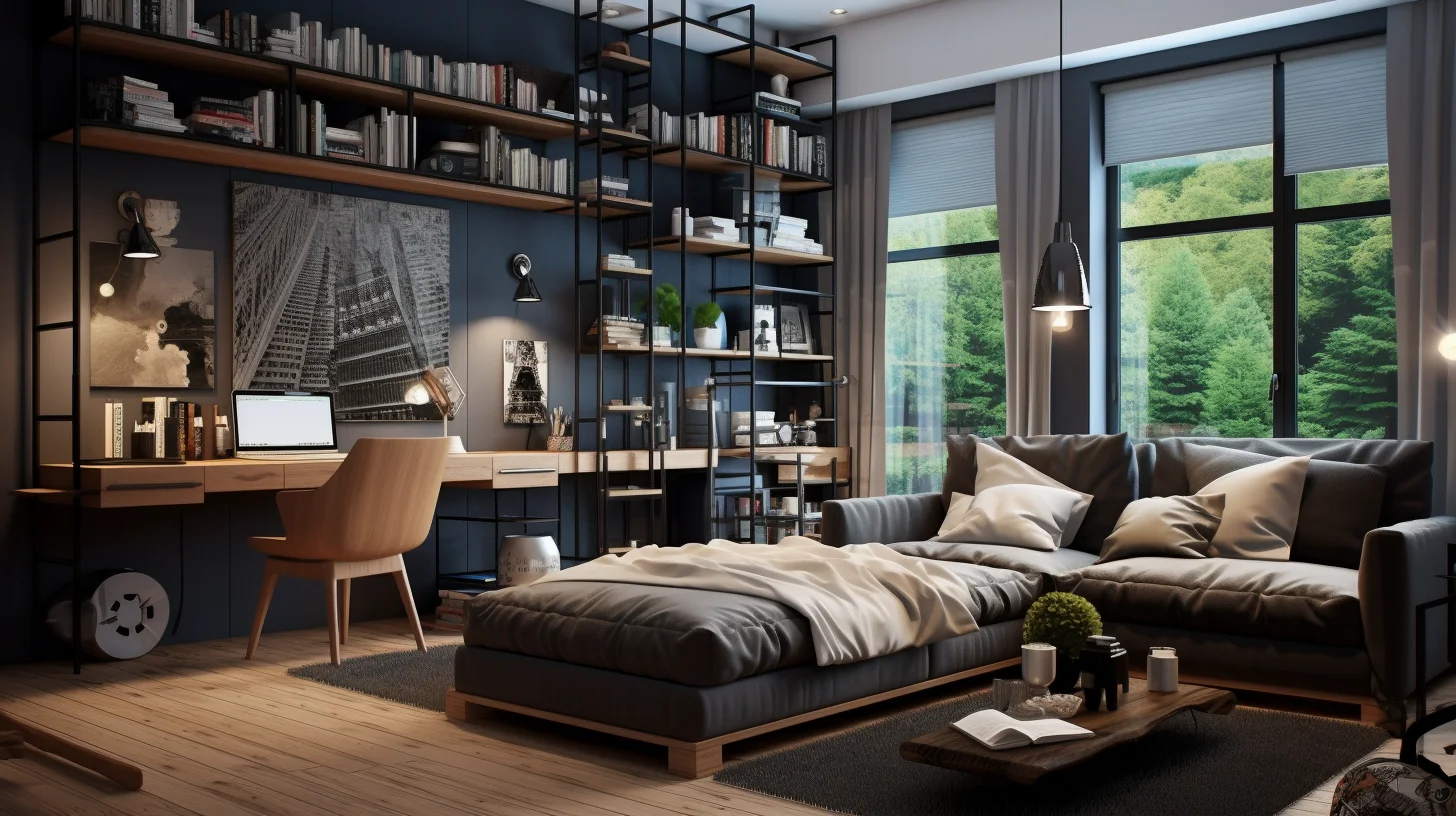
Run a 15-minute room test before buying anything
Take one photo from the doorway and another from the desk or bed. Then walk the route from the door to the bed, wardrobe and desk while imagining drawers and doors fully open. If a chair, hamper or bedside table would force you sideways, the layout needs fixing before it needs decorating.
- Study test: put a laptop and an open notebook on the proposed desk surface. Both should fit without balancing one on the other.
- Storage test: identify the three things that most often end up on the floor or chair. Give those items the easiest storage positions, not the prettiest baskets.
- Power test: trace where phone and laptop cables will run. Do not plan a setup that requires a cable across a walking route.
- Night test: switch off the ceiling light. Check whether the desk and bedside area can each be used comfortably with their own light.
- Change test: point to every expensive item carrying the current aesthetic. If several major pieces are highly themed, move more of the look into bedding, art and removable accessories instead.
This separates layout problems from style problems. A room that feels cramped, dark or chronically messy will not be fixed by a new color palette.
Do not create a hangout area by blocking the room
An extra chair or floor cushion is useful only if there is still a clear path to the bed, wardrobe and door. In a small room, the bed can already double as informal seating. Add a washable throw and a nearby surface for drinks rather than squeezing in furniture that makes everyday movement harder.
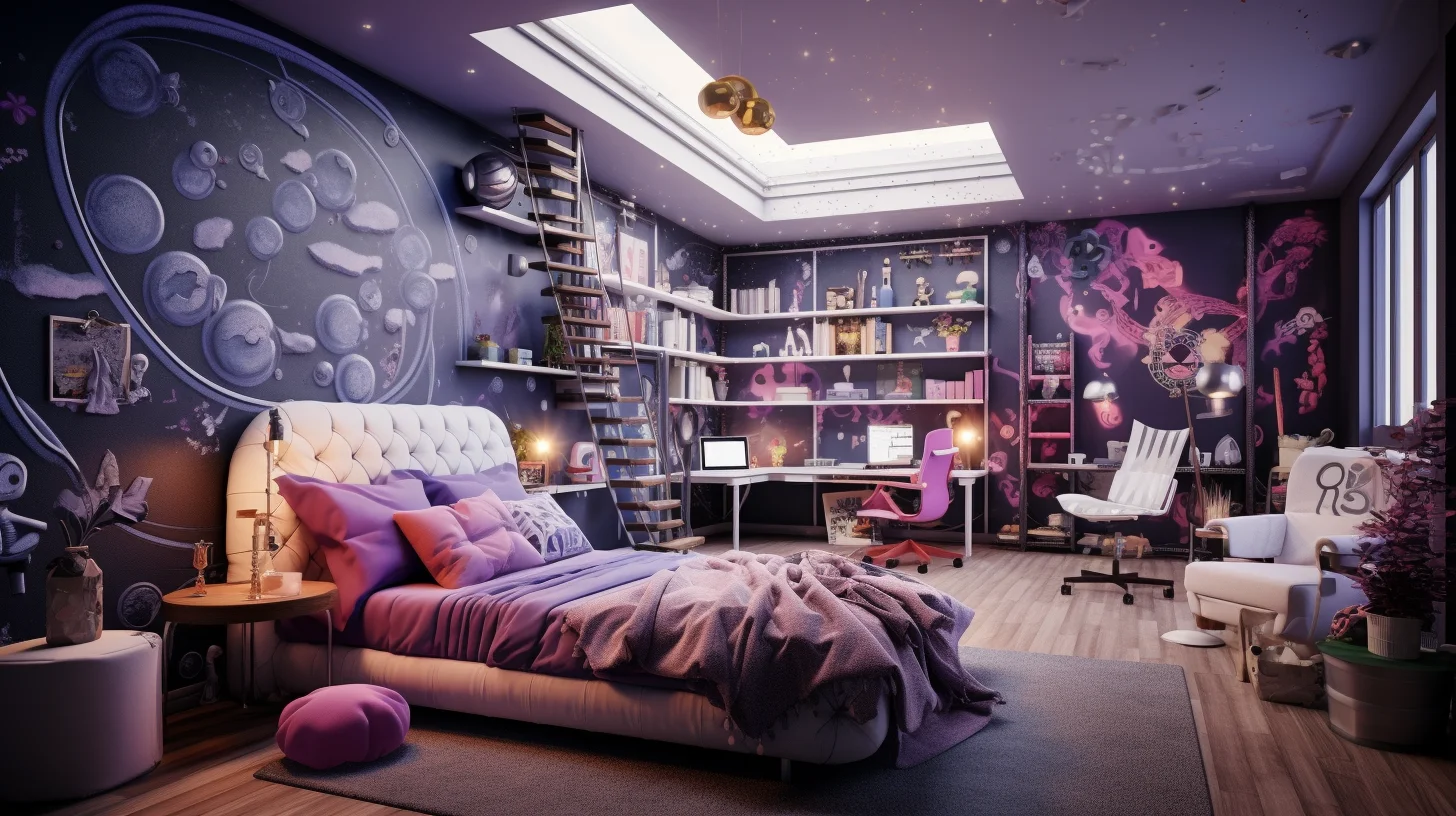
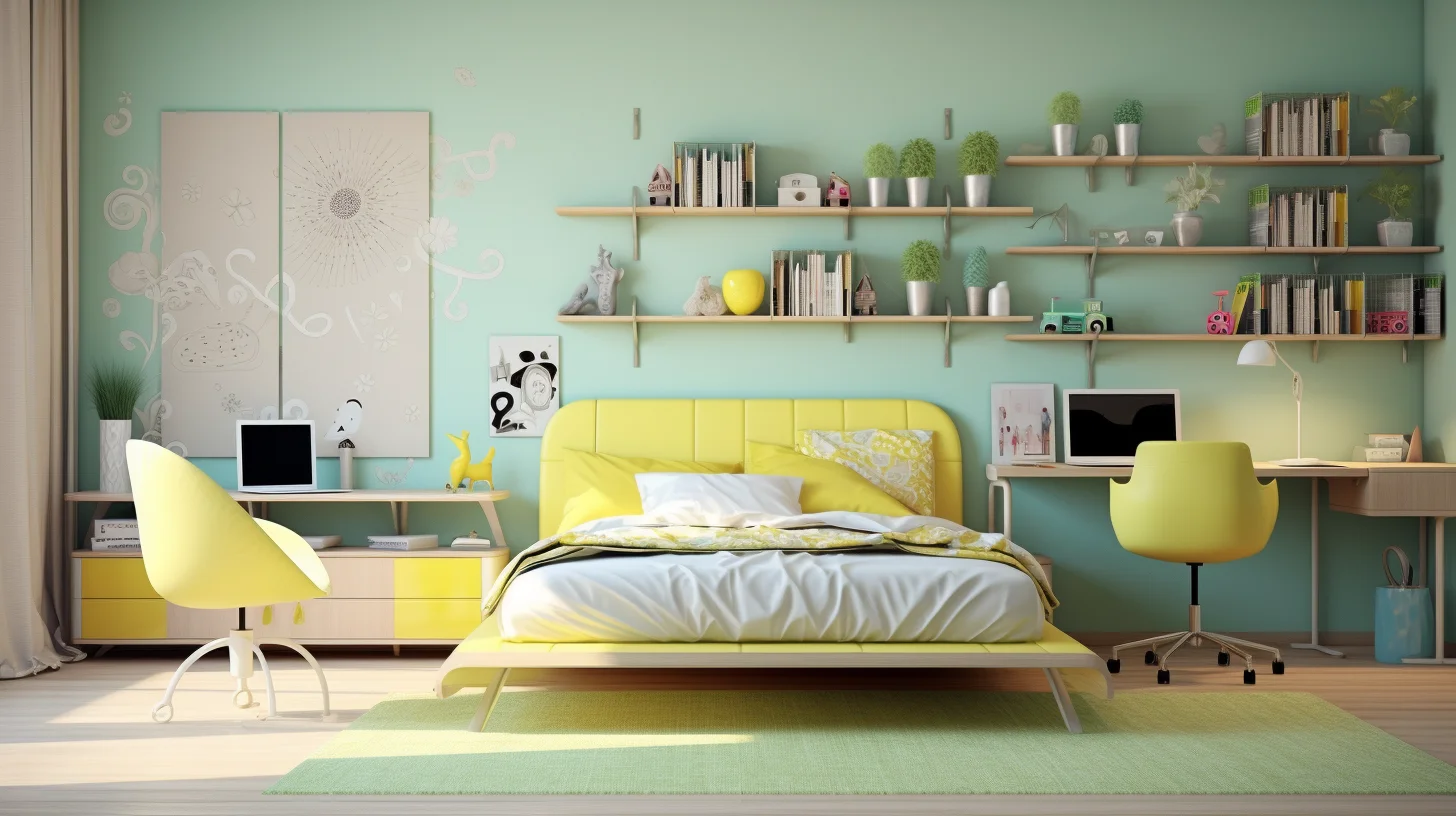
Use strong color where it is easy to change
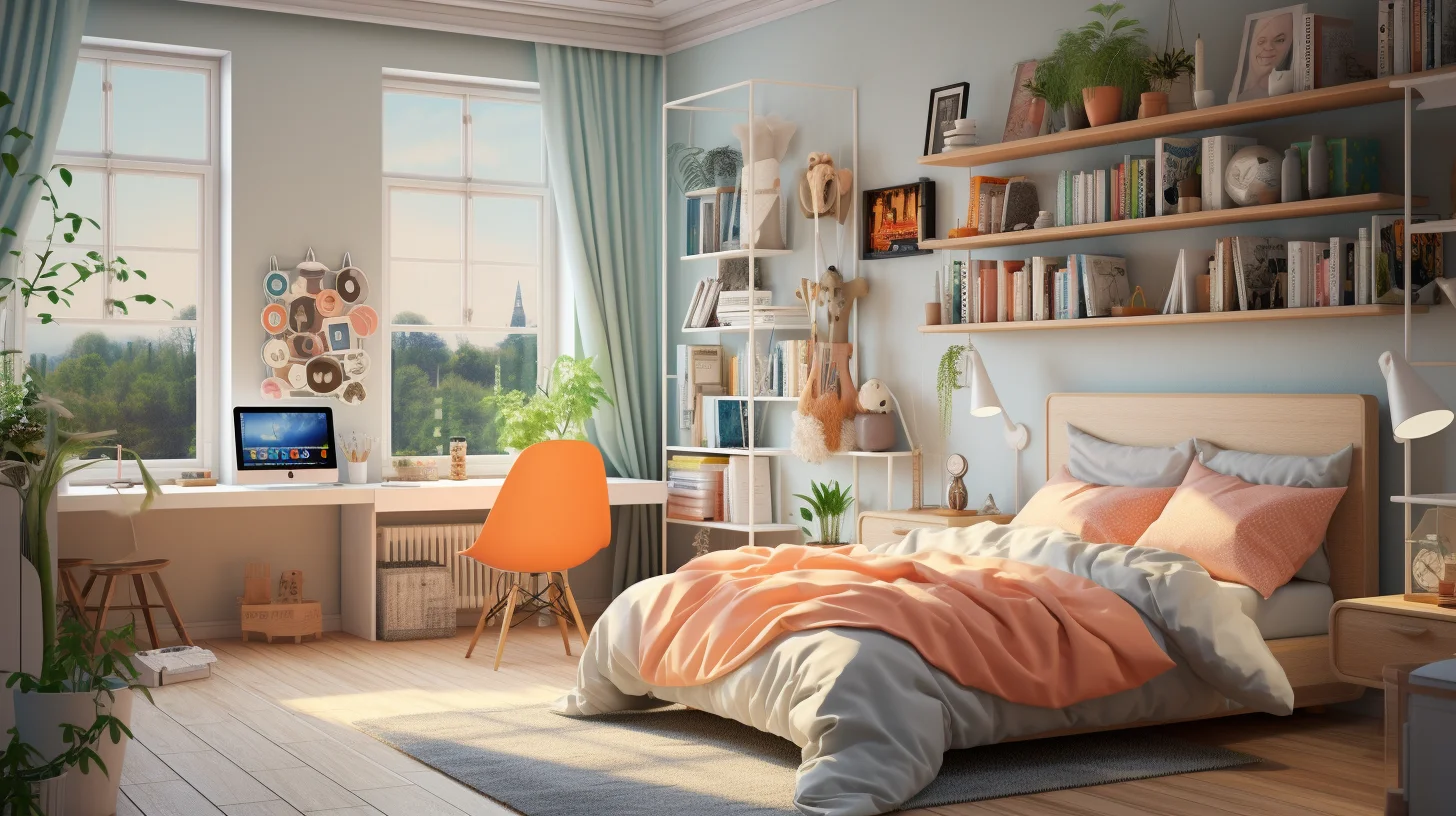
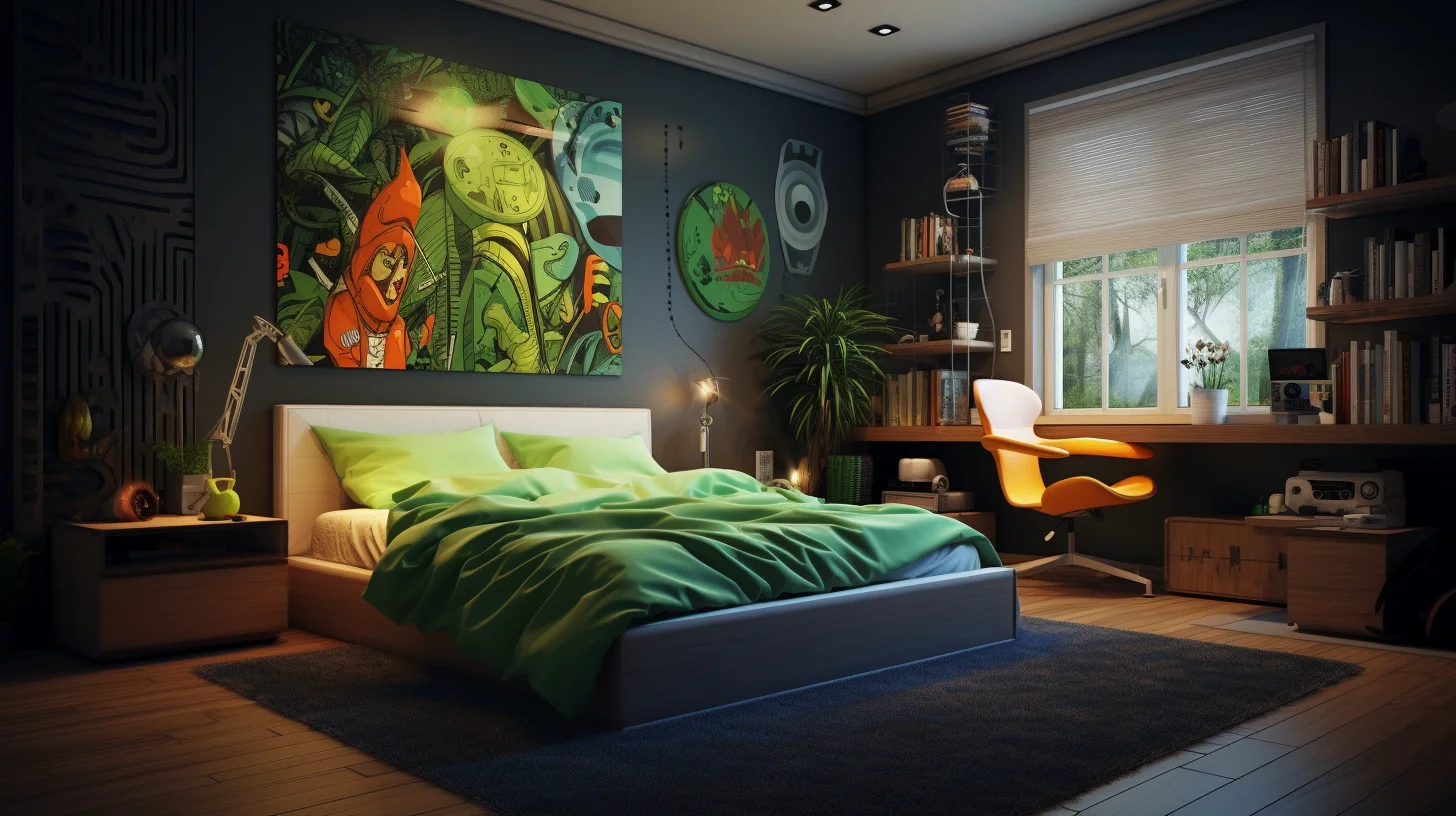
If a teen wants green, yellow or another bold palette, bedding, curtains, a rug, removable art and smaller painted furniture are easier to change later than a fully themed fitted room. Keep expensive storage and the bed relatively flexible, then let the lower-cost layers carry more of the current personality.
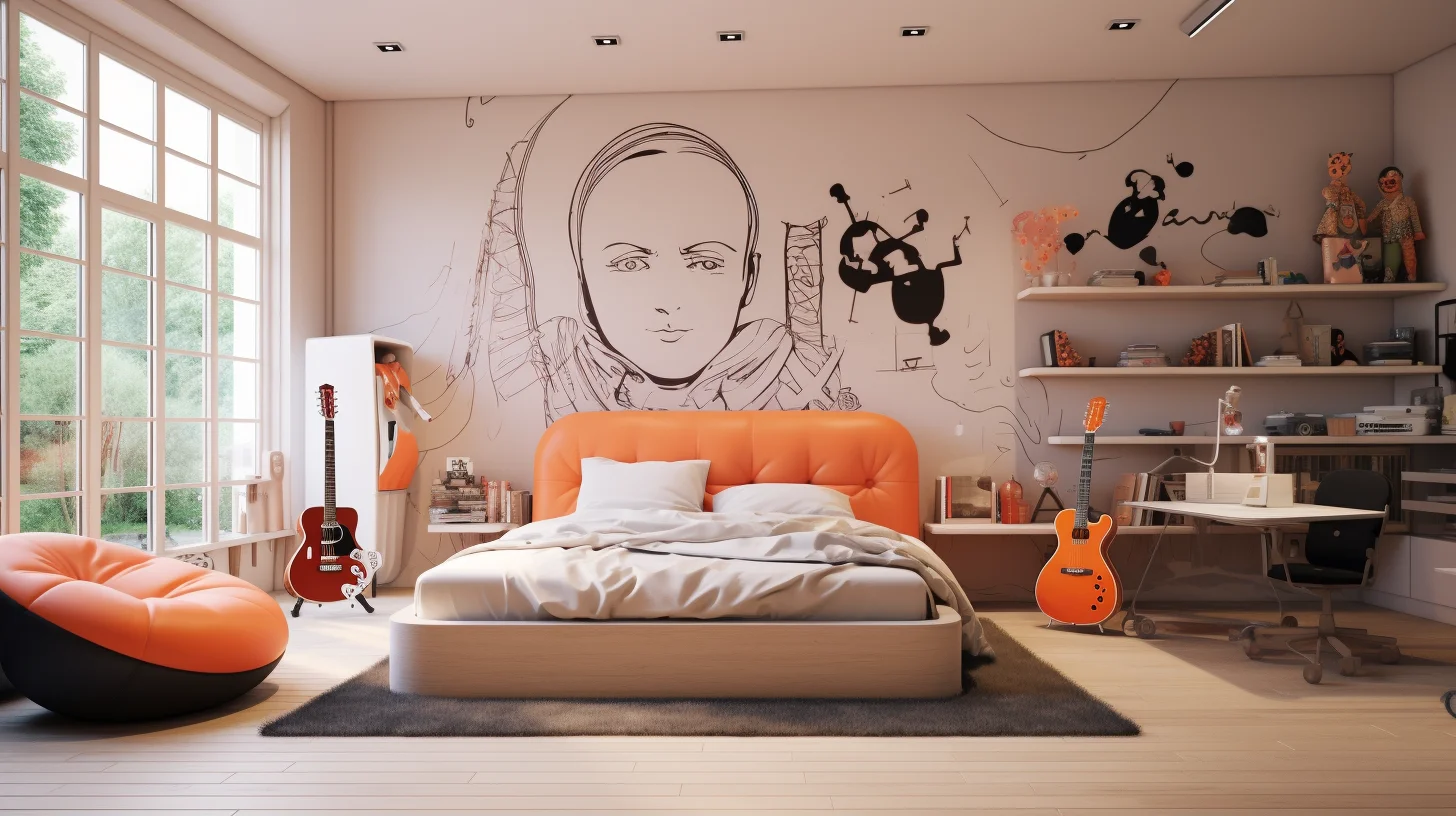
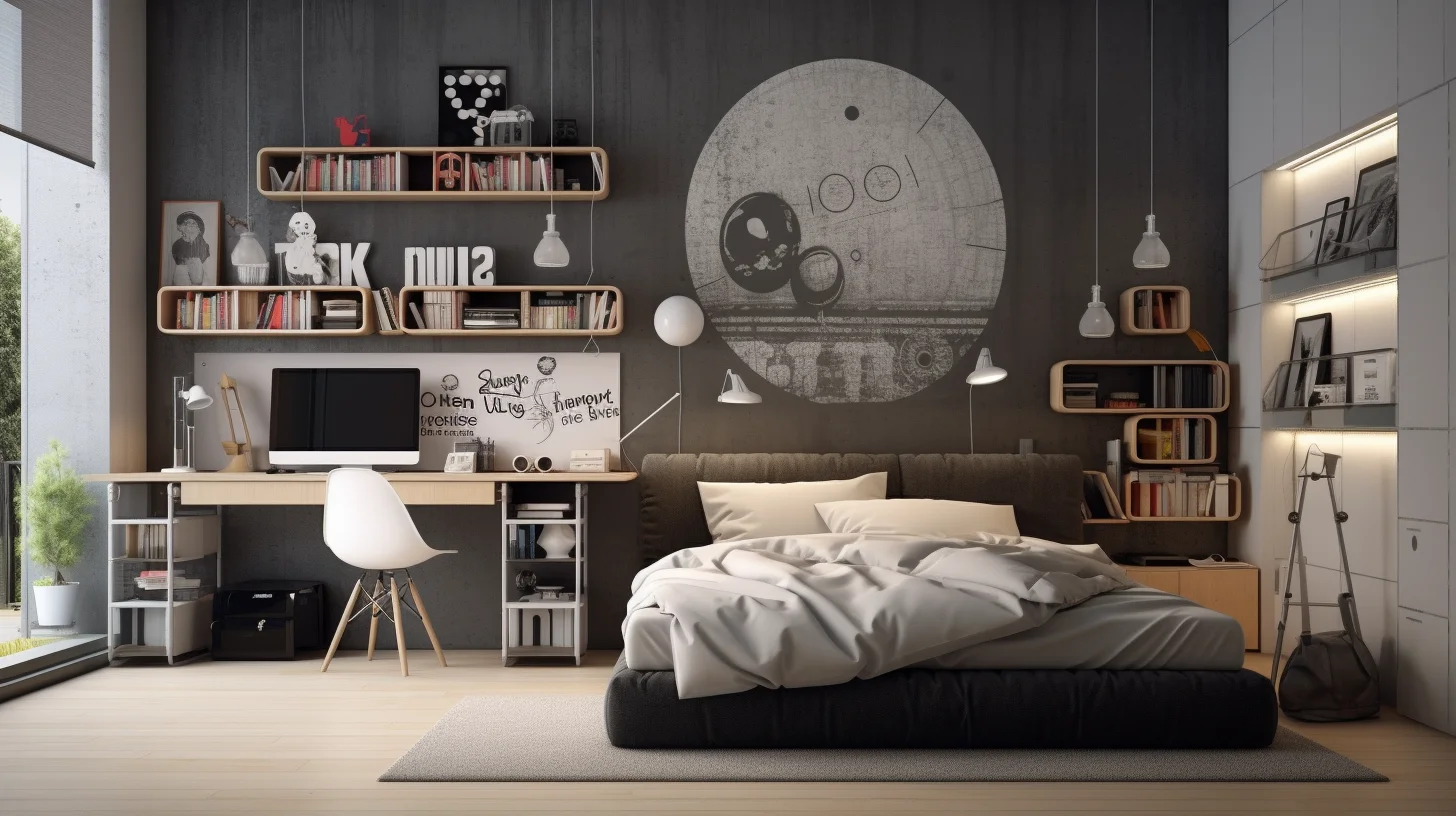

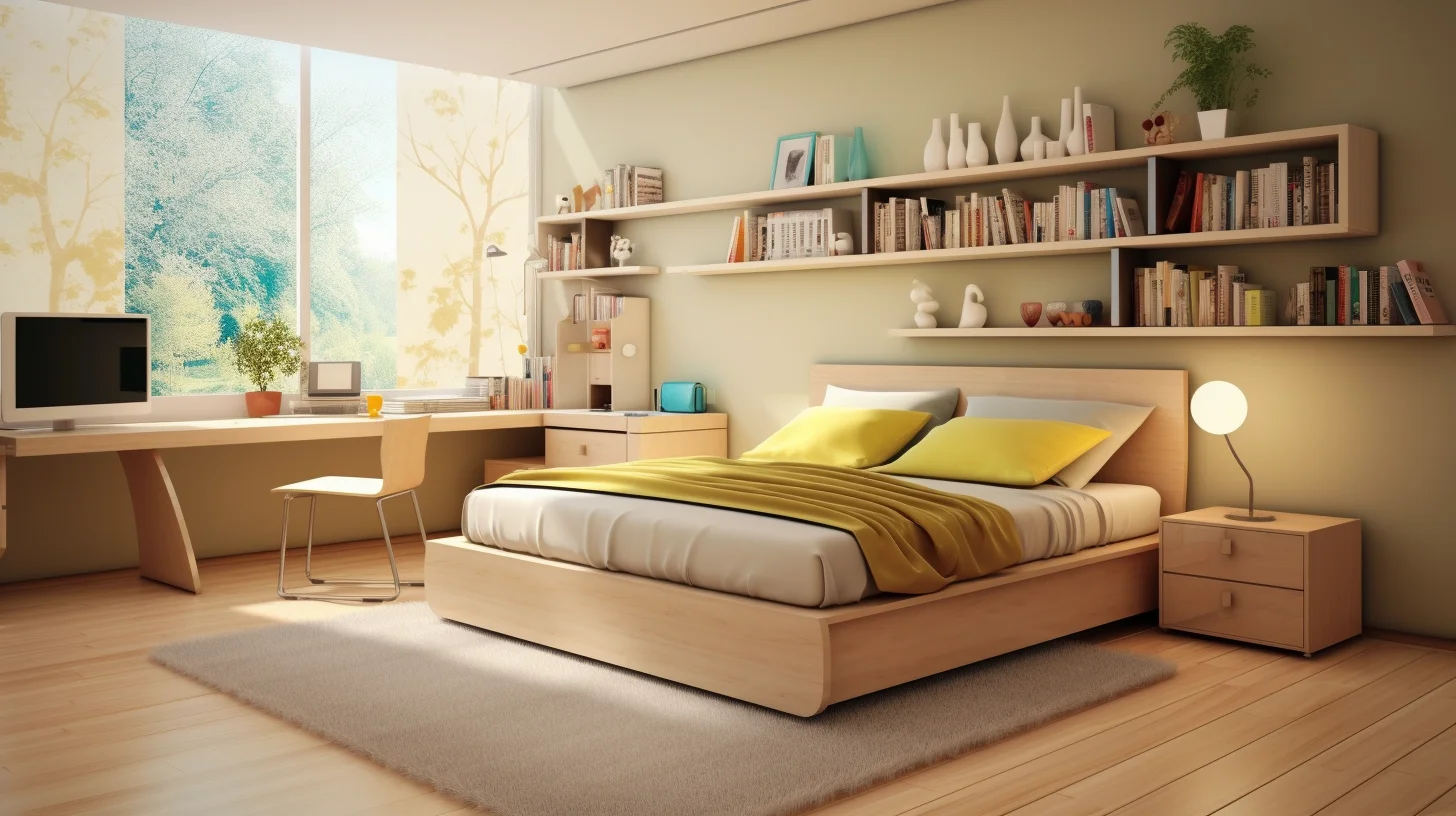
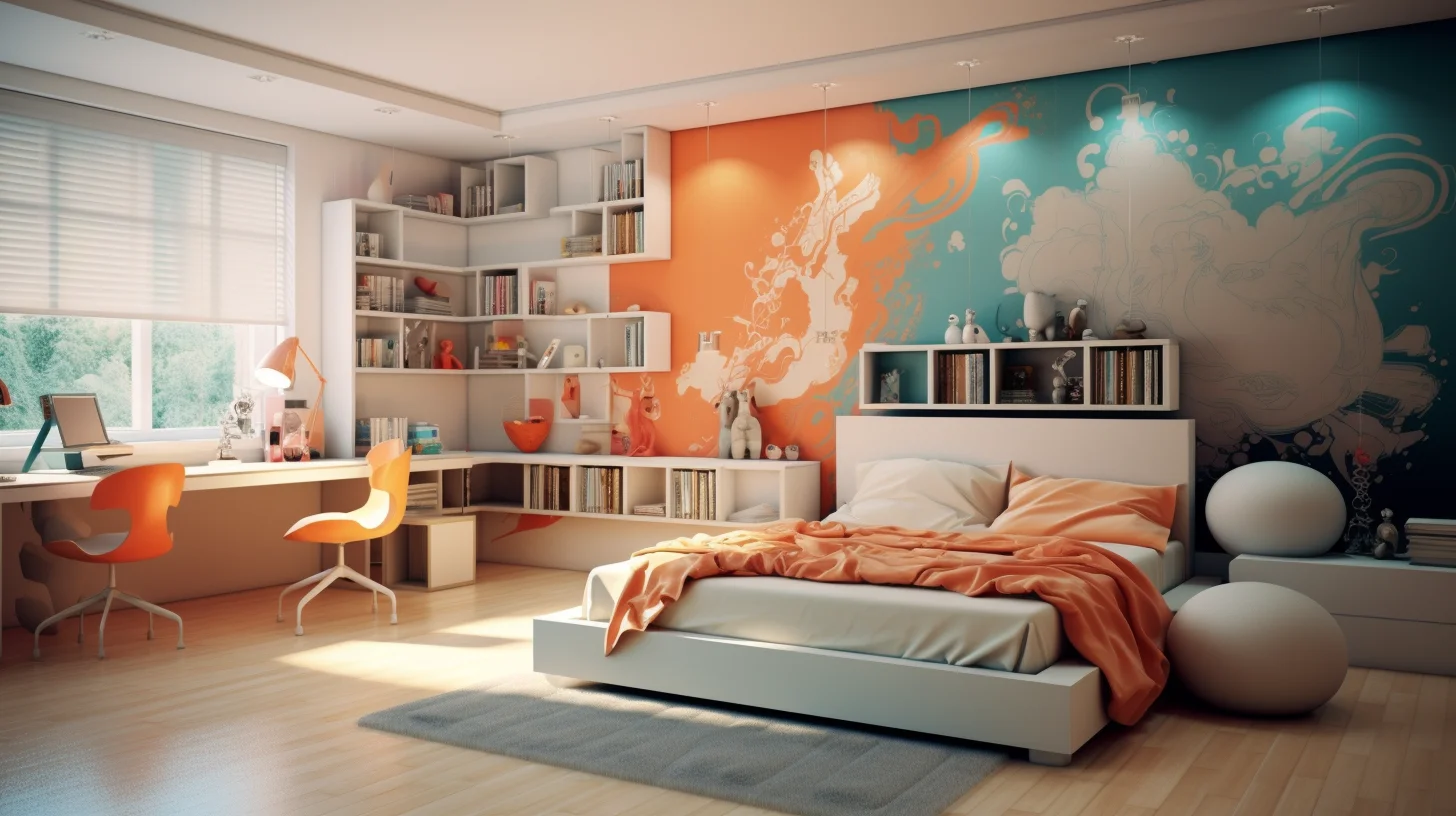
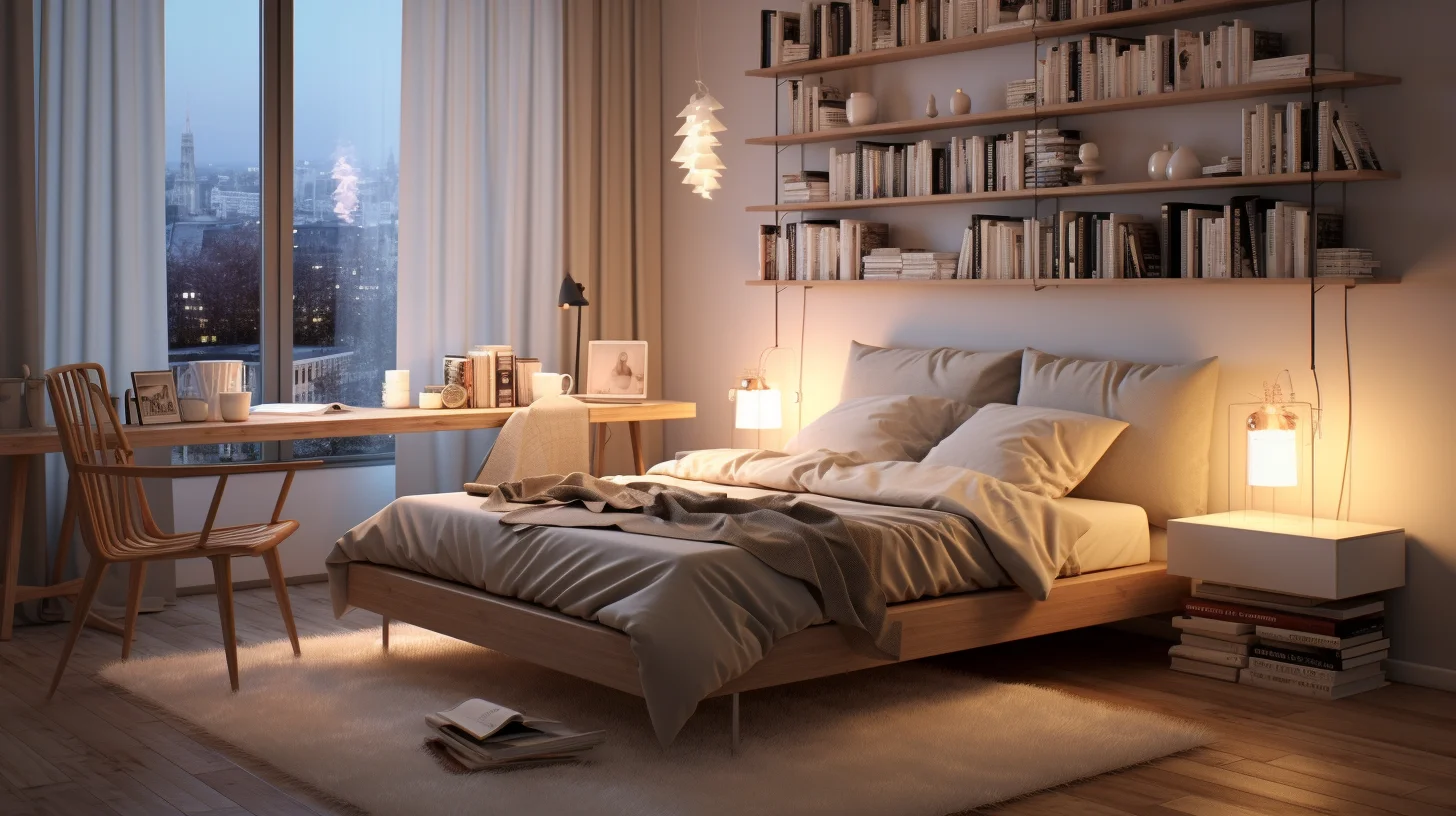
Boho and cozy teen rooms still need a desk and storage plan
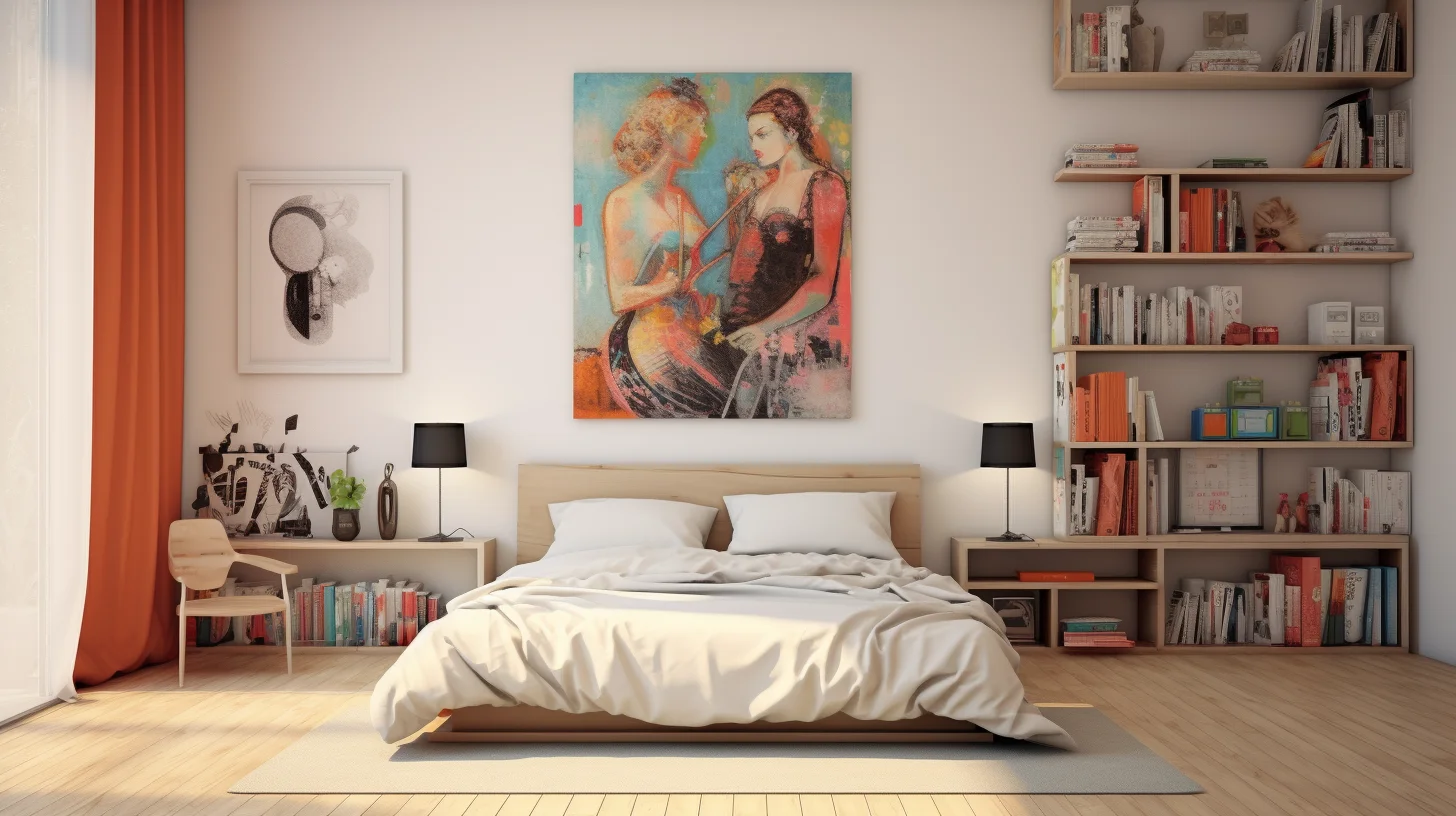
String lights, plants, layered bedding and wall art can make the room feel personal, but they should not take over the practical zones. Keep the desk bright and relatively clear, place school storage within reach, and avoid hanging decor where it blocks task lighting or plugs.
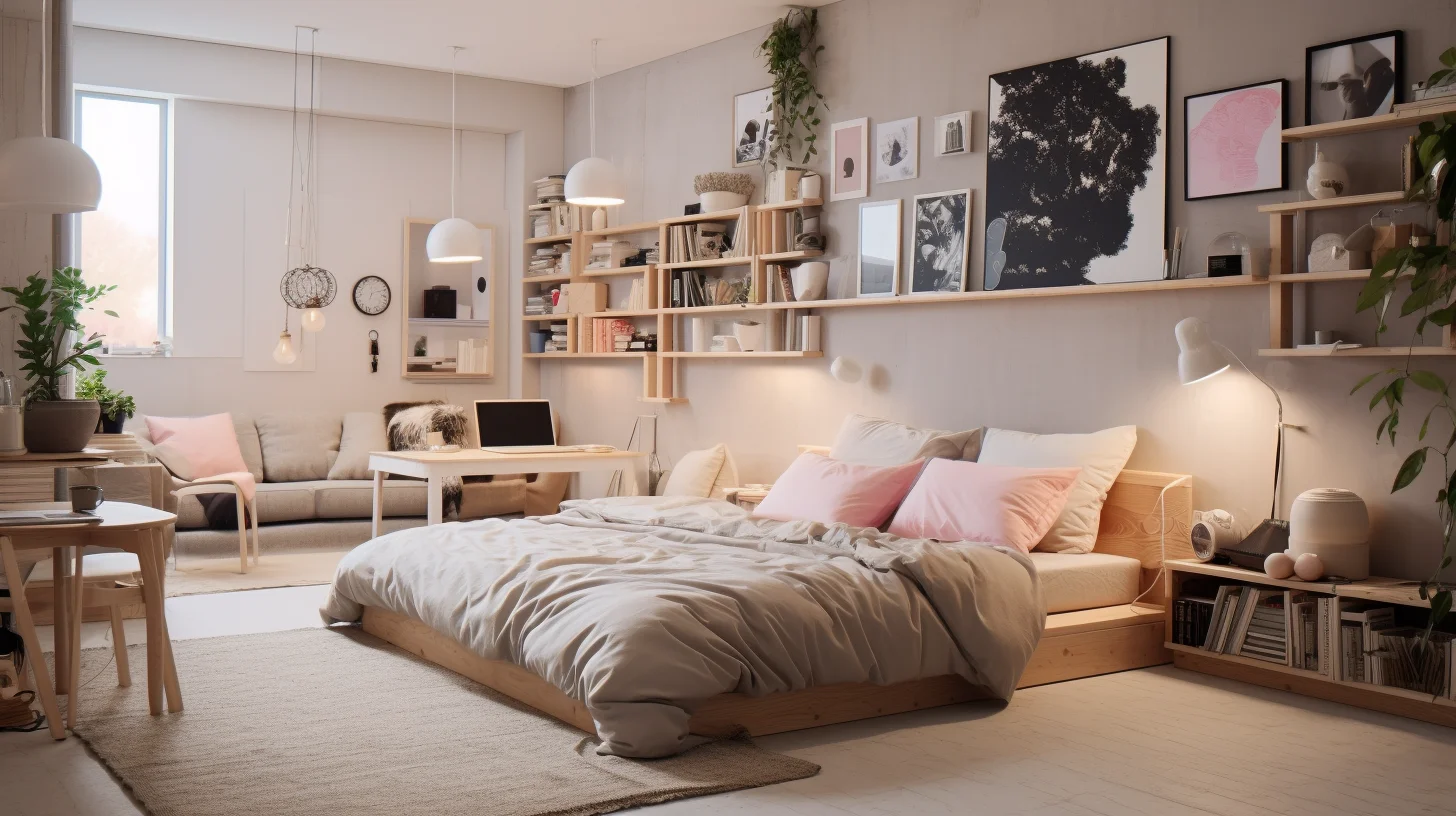
For more layered boho examples, see the boho bedroom gallery. If the preference is cleaner and quieter, compare the storage restraint and pale-material approach in these Scandinavian bedroom ideas; for a room built around older music, posters or thrifted pieces, the retro bedroom ideas show a different direction without turning this page into a style-specific gallery.
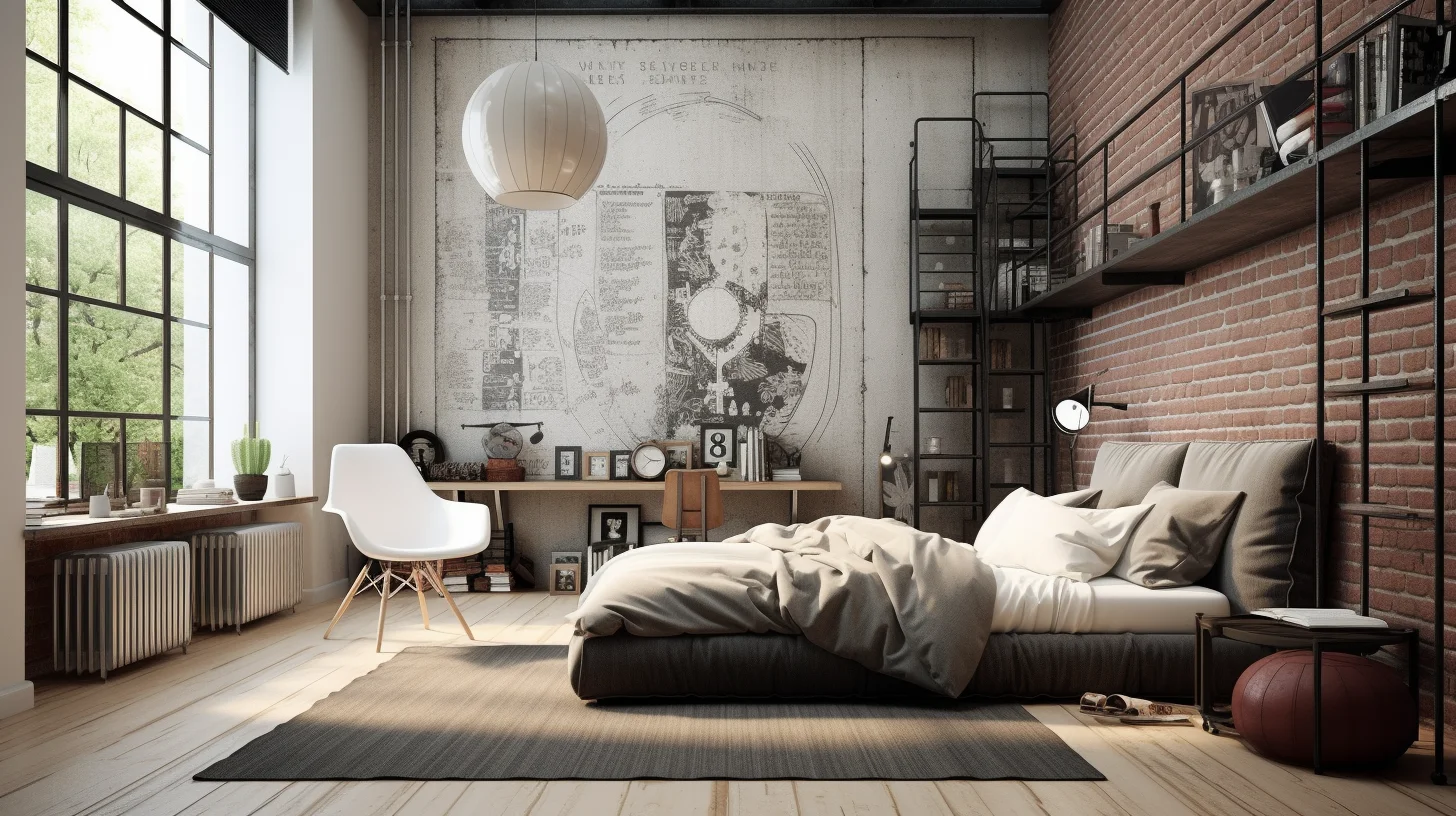
Furniture should survive changing tastes
A desk with good depth, a comfortable chair, practical drawers and a bed with useful storage are better long-term purchases than highly themed furniture. If budget is limited, spend on the pieces that affect comfort and organization, then personalize them with handles, lamps, bedding and wall art.
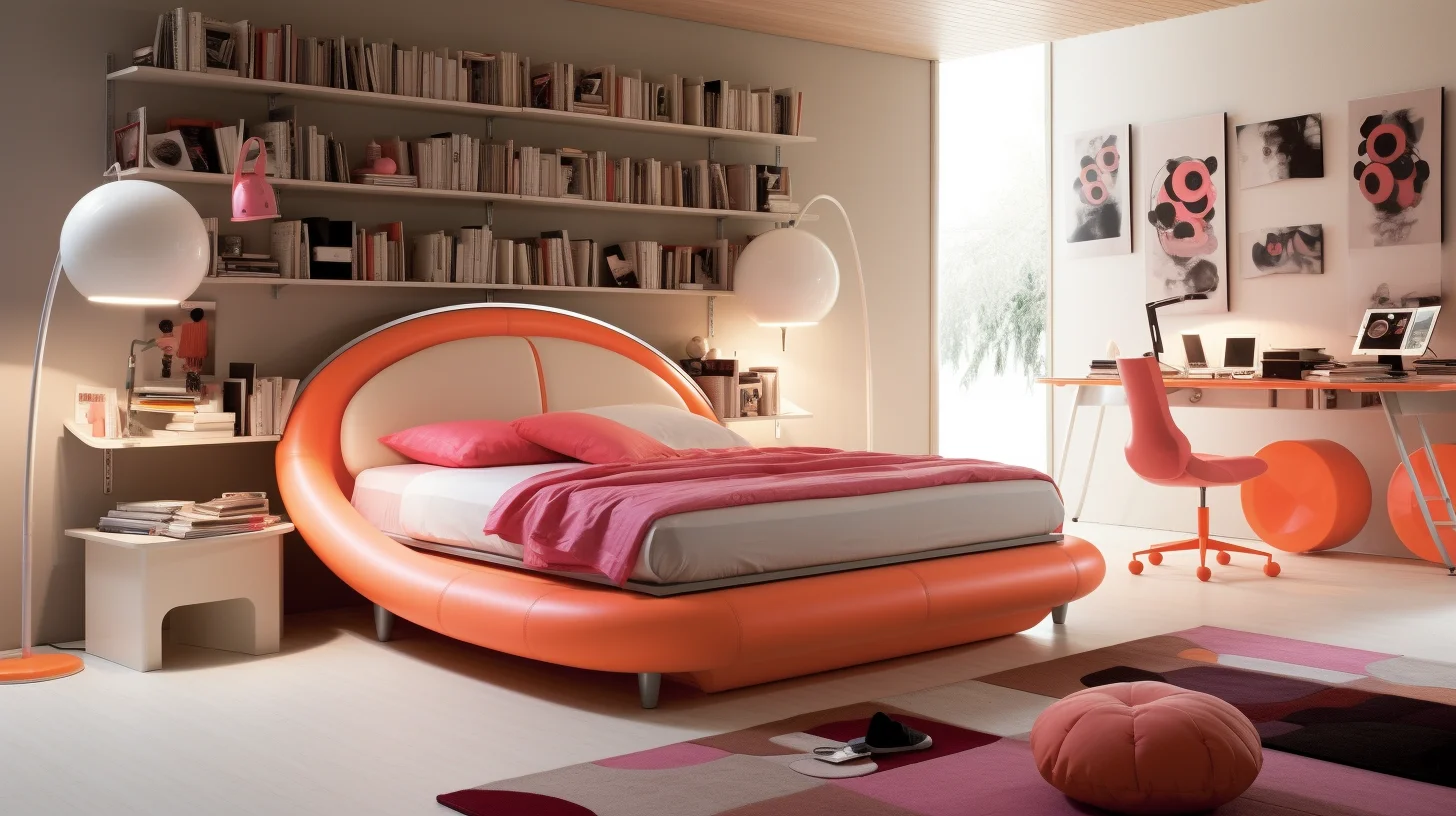
Use the old “boy” and “girl” labels as file history, not design rules
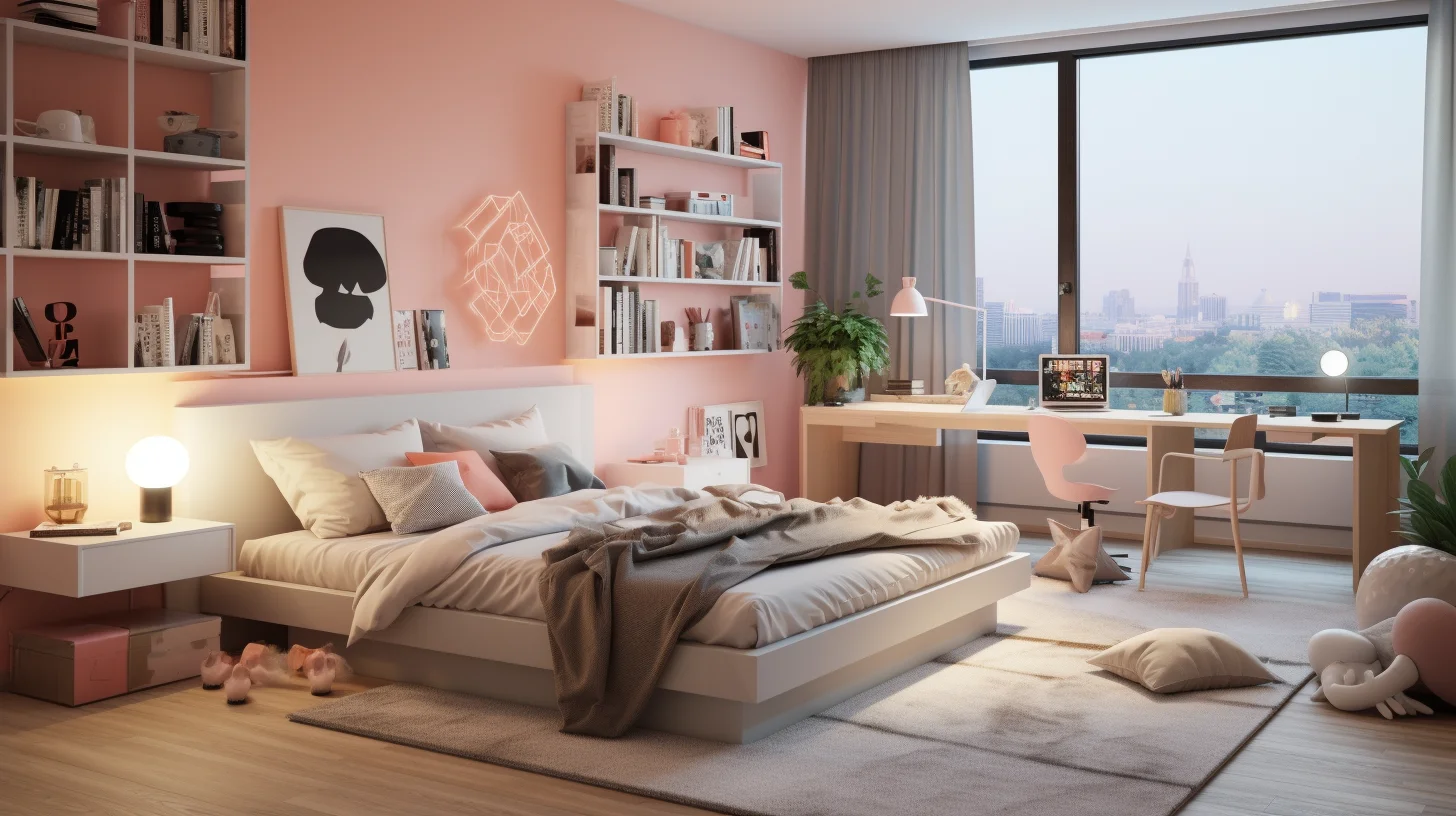
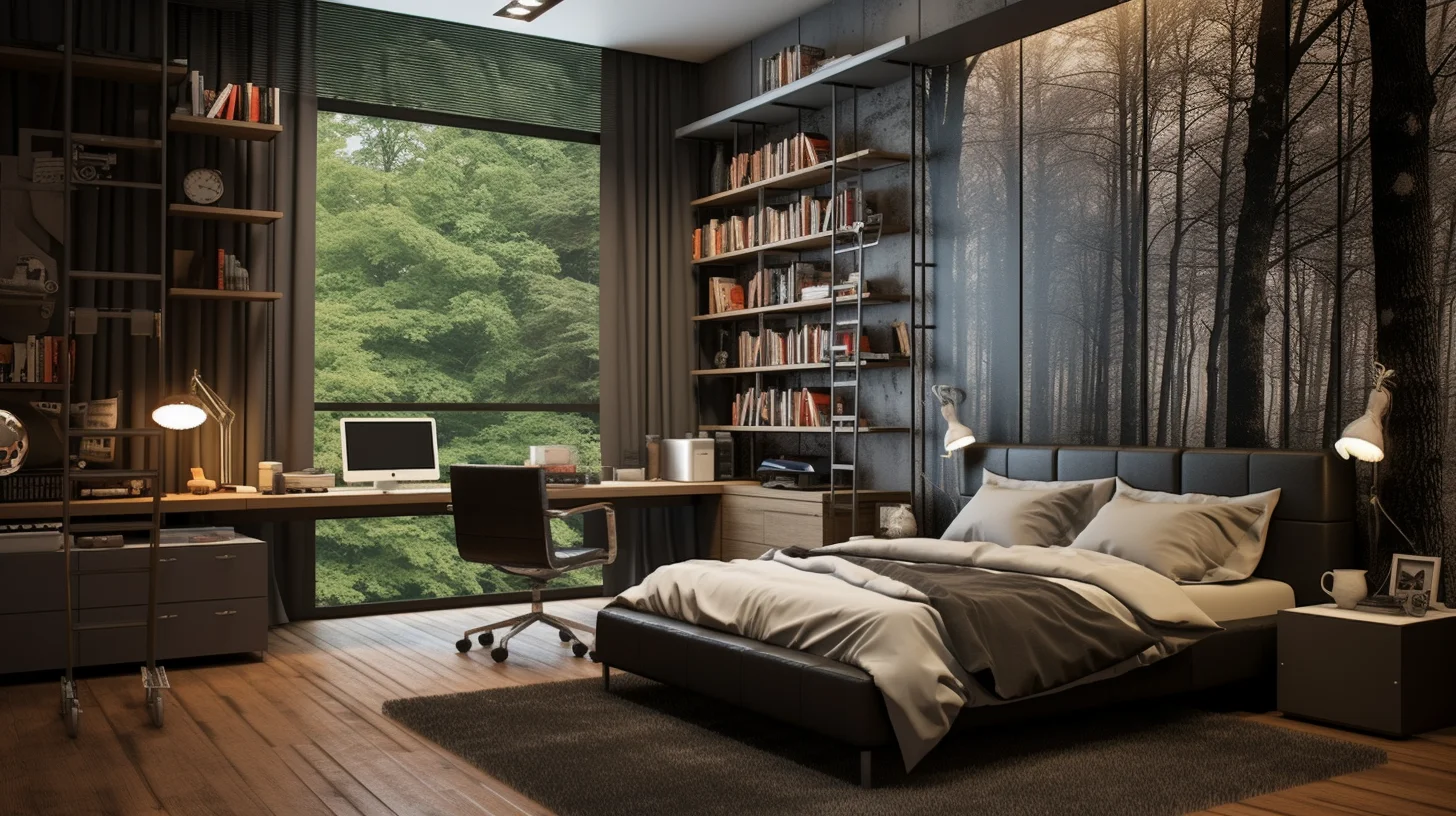
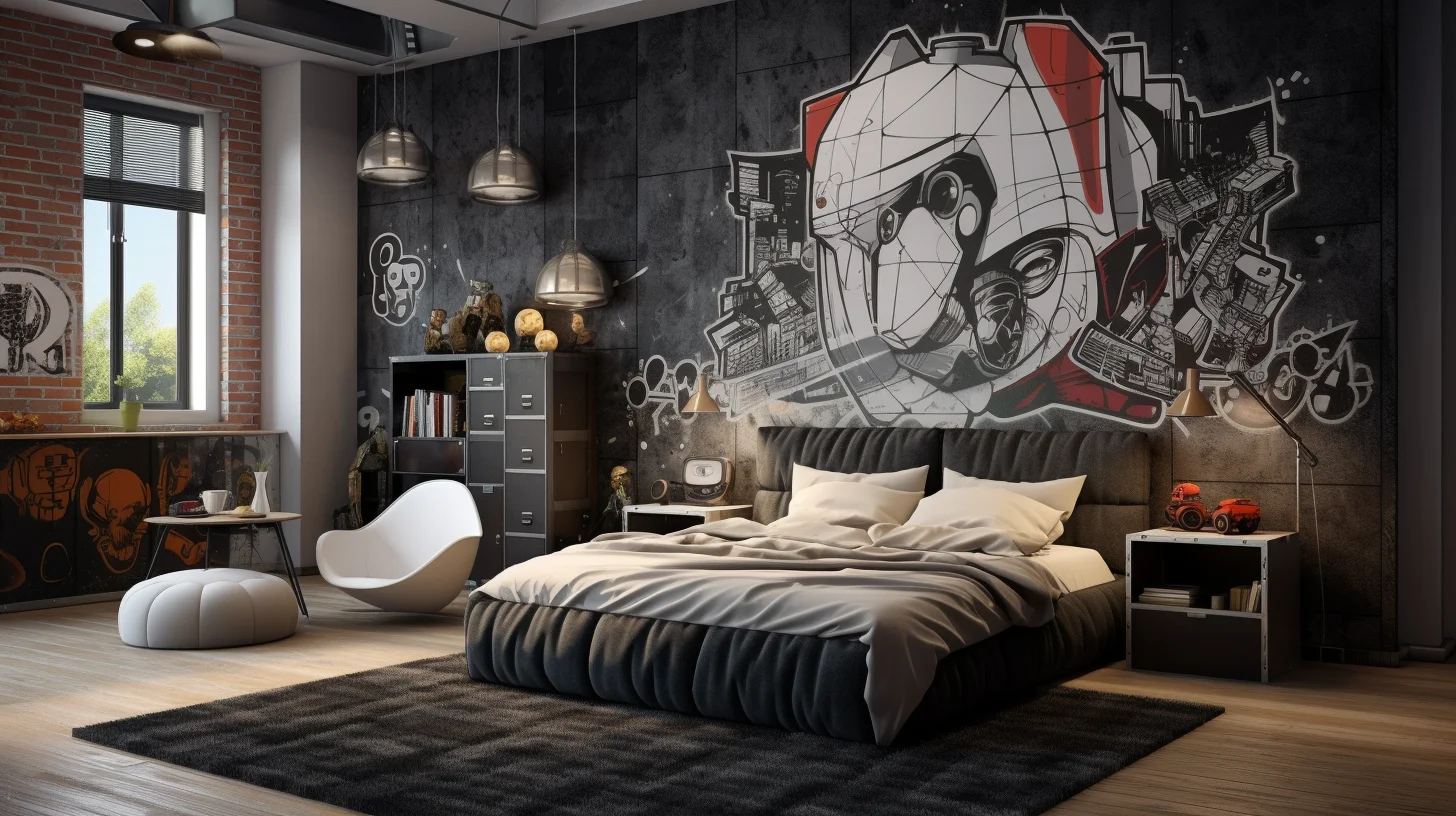
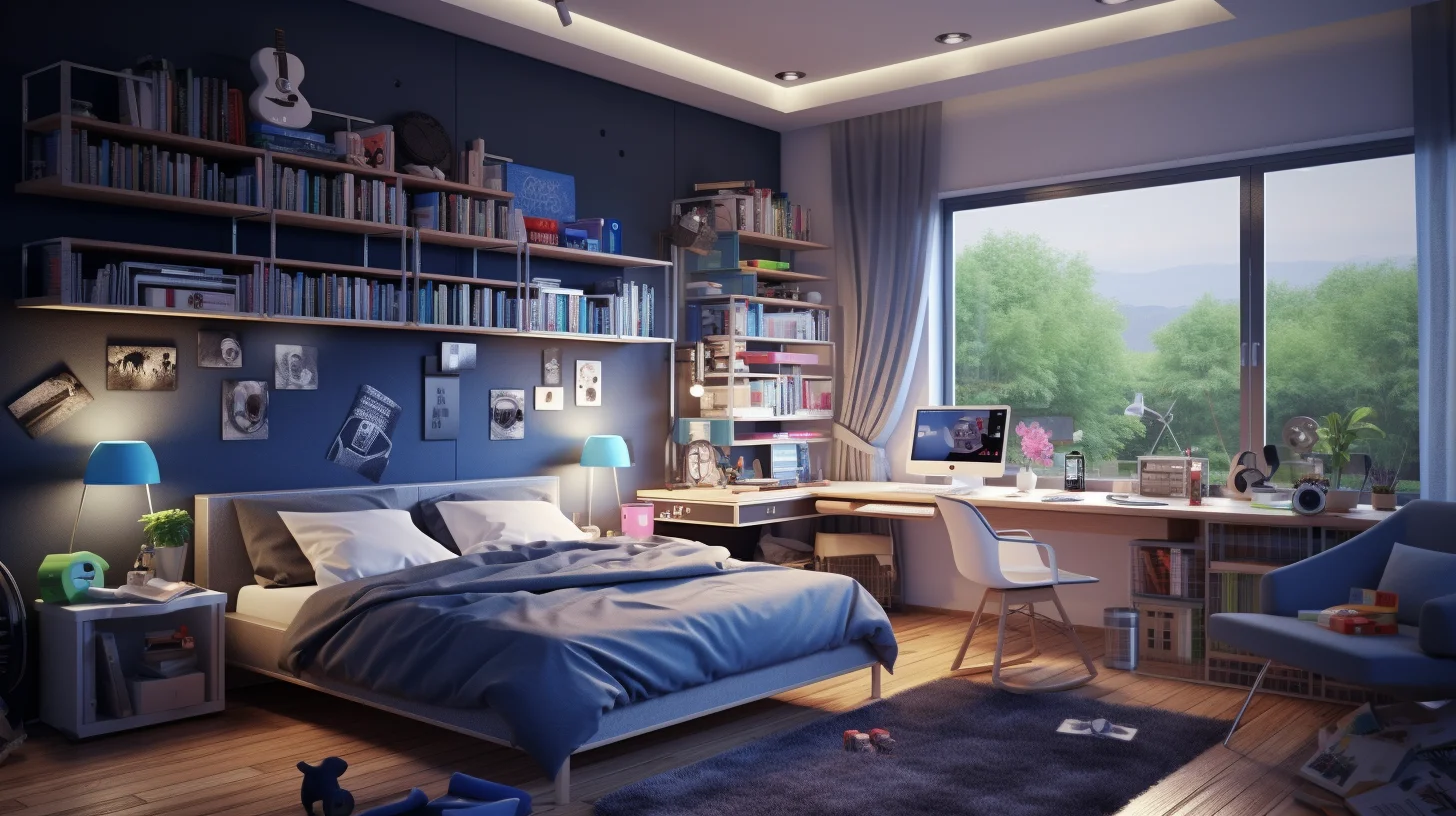
Some older image filenames in this gallery use gendered labels, but color, furniture style and room layout do not need to follow them. A green, dark, pastel, boho or modern room can work for any teen. Start with the person who will actually use the room: what they want to display, where they study, what needs storing and how much visual stimulation they enjoy.
Build the room in an order that prevents expensive mistakes
A teen room usually has more jobs than its floor area suggests. Instead of buying a complete look at once, make the decisions in an order that protects the essentials and leaves room for personality.
- Measure the fixed constraints. Mark the door swing, wardrobe opening, radiator, windows and usable outlets before moving the bed or ordering a desk.
- Place the bed and study zone. Give both enough clearance to work properly; do not force a large desk into the room if it blocks storage or circulation.
- List what actually needs storing. Separate hanging clothes, folded clothes, school supplies, sports or hobby gear and items worth displaying. Different things need different storage.
- Plan power and lighting. A desk needs useful task light and charging access; the bedside area needs light that can be reached without crossing the room.
- Choose a flexible base. Durable furniture and relatively adaptable large surfaces make later style changes cheaper.
- Add the personality layer last. Bedding, art, photographs, collectibles, lamps and color are where the room can become specific to the person using it.
Three layouts for common teen-bedroom problems
| Room problem | Layout priority | What to skip first |
|---|---|---|
| Small bedroom | Clear circulation, vertical storage and a compact study surface | Decorative bench, oversized nightstand or extra lounge chair |
| Lots of schoolwork | A comfortable desk zone with task light, power and nearby supplies | Tiny decorative desk that cannot hold a laptop and notebook together |
| Lots of clothes or hobbies | Closed storage plus one intentional display area | Multiple open racks and baskets that make everything visually compete |
| Friends visit often | Flexible floor space or one movable seat | Permanent bulky seating that obstructs the everyday route |
Fix the room when it looks good but does not work
| Problem | Likely cause | Better move |
|---|---|---|
| The desk is always messy | School supplies have no storage within reach | Add one drawer, shelf or container for the things used every day rather than more desktop organizers |
| Clothes collect on the chair | The wardrobe system is inconvenient for frequently worn items | Create an easy hook, hamper or accessible shelf before adding another chair |
| The room feels crowded | Too many pieces are trying to create separate zones | Let the bed or desk serve two functions and remove the least useful floor-standing item |
| The room feels childish too quickly | Expensive furniture carries a very specific theme | Keep major furniture adaptable and put changing interests into art, textiles and smaller objects |
| There is nowhere to display interests | Every storage surface is purely practical | Reserve one shelf, pinboard or wall area for collections, photos or current interests |
| Night lighting is uncomfortable | The ceiling fixture is doing every job | Add a reachable bedside light and a separate focused desk light |
What is worth spending more on?
Spend first where comfort and daily use justify it: a supportive mattress, a desk chair that fits the user, effective lighting and storage hardware that will survive frequent opening and closing. A well-sized desk can also be worth keeping through school and later study years.
Save on the parts most likely to change. Posters, cushion covers, bedding, small lamps, removable prints and second-hand side tables can carry a strong aesthetic without locking the whole room into it. If the teen wants a major color change, test it through textiles or one smaller surface before committing every wall and piece of furniture.
Make a small teen bedroom feel less compromised
Do not solve a small room by making every object miniature. Keep the bed comfortable and the study surface genuinely usable, then reduce secondary furniture. A narrow bedside shelf, wall-mounted lamp, under-bed storage or taller wardrobe can recover floor area without making the room feel temporary.
Look at the room from the doorway after the practical pieces are placed. If the eye meets several open shelves, rails and baskets at once, consolidate some of that storage behind doors or drawers. A small room often feels calmer when fewer storage systems are visible, even if the total amount stored stays the same.
Teen bedroom questions
How can a teen bedroom look grown-up without feeling boring?
Use durable, simple furniture as the base and let the room’s personality come from art, color, lighting, books, collections and textiles. “Grown-up” does not require beige or removing everything personal.
Where should the desk go?
Choose a position with enough working depth, useful light and access to power without creating a cable trip route. Natural light can be helpful, but the desk still needs dependable task lighting for darker hours.
What if there is no room for a separate hangout area?
Do not force one. The bed can double as casual seating with a washable throw and supportive cushions, while a small movable stool or floor cushion can be stored when it is not needed.
How do you design a room that will not feel dated in a year?
Keep the costly pieces adaptable and make the most specific style choices easy to replace. Interests changing is normal; the room should be able to change with them without requiring a new bed, wardrobe and desk.
Teen bedroom checklist
- Give homework a properly lit surface and accessible power.
- Plan closed storage before buying decorative organizers.
- Keep the route from door to bed and wardrobe clear.
- Use bedding, art and small accessories for the easiest style changes.
- Give charging cables a fixed place away from walkways.
- Leave some wall or shelf space for interests to change over time.

