
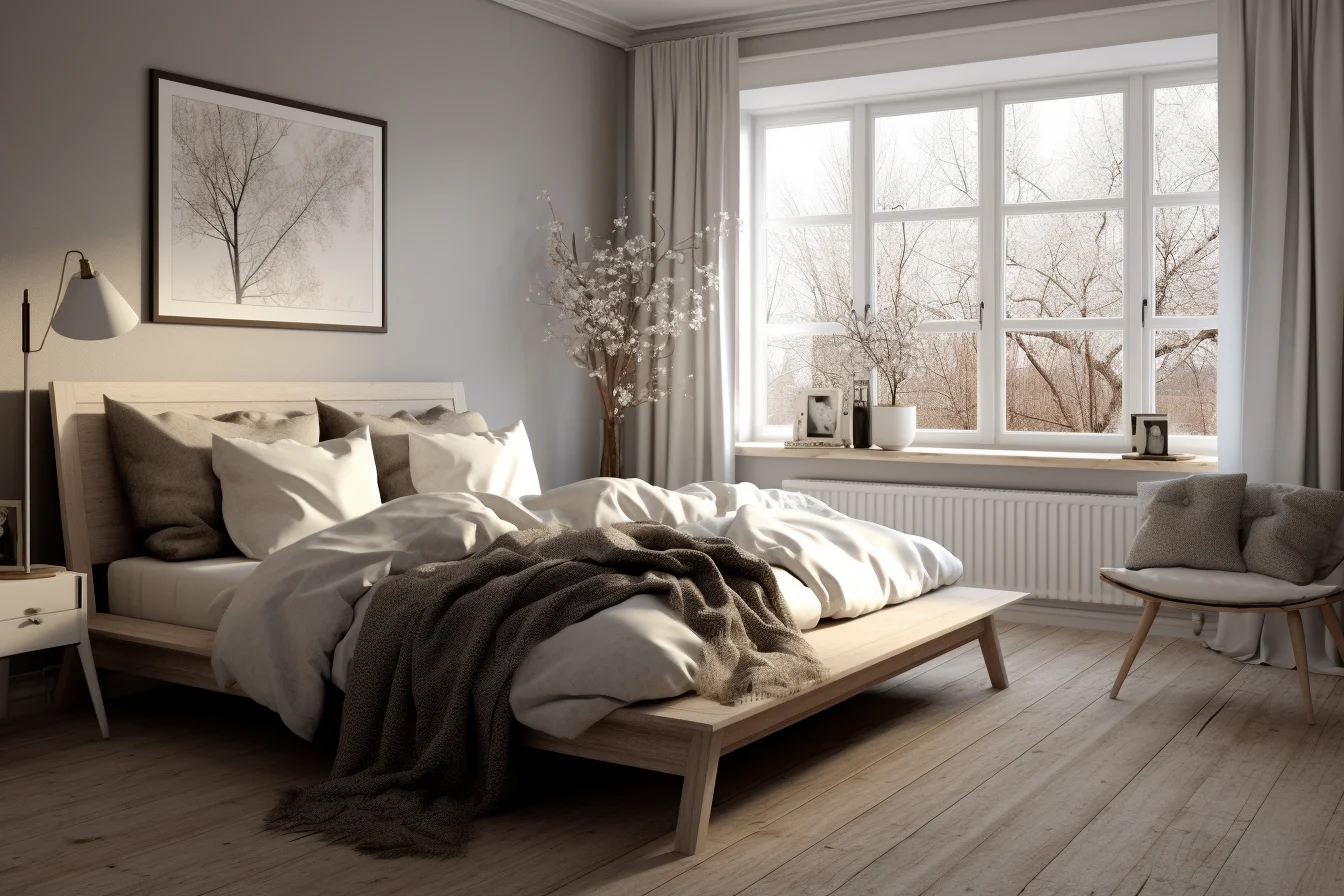
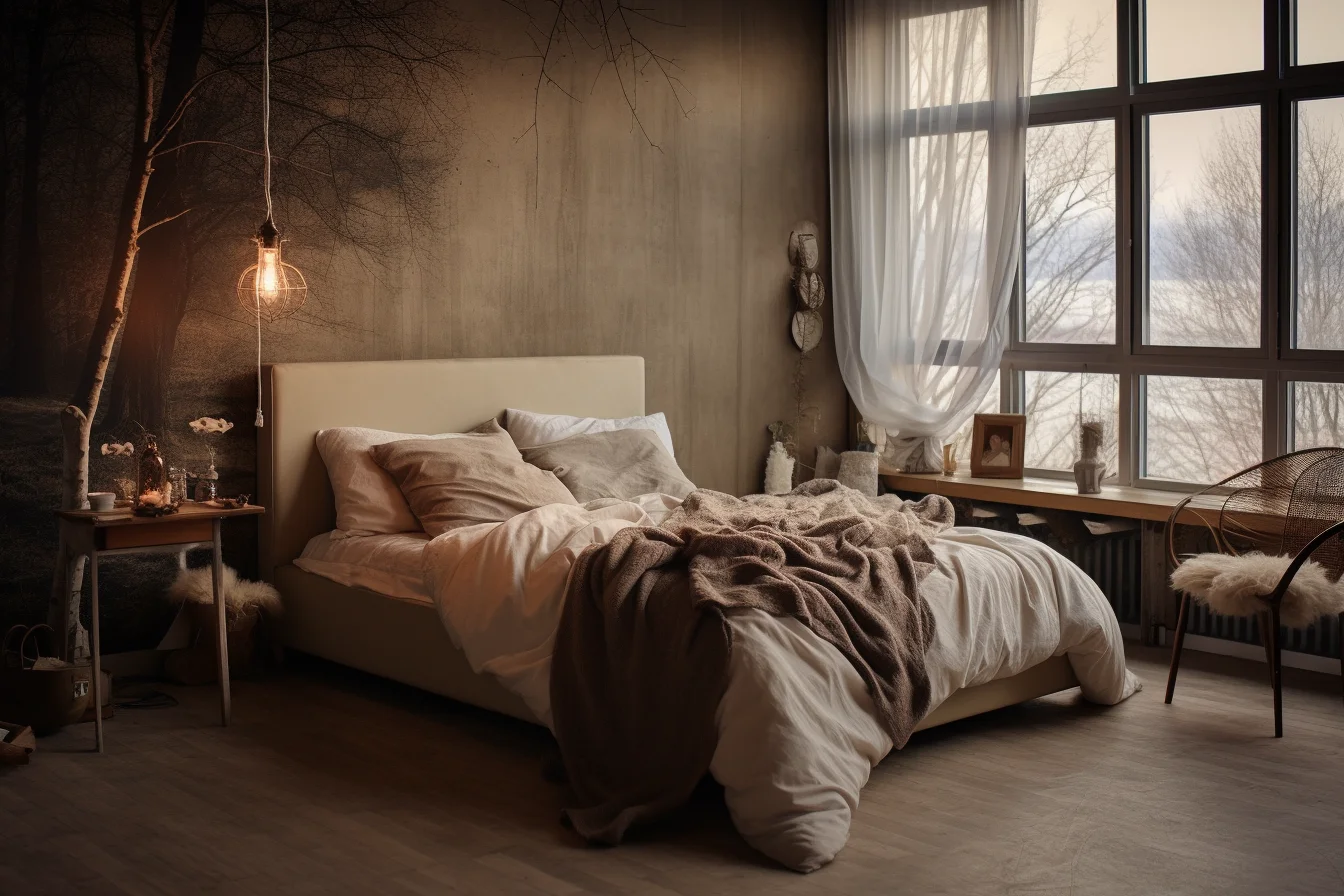
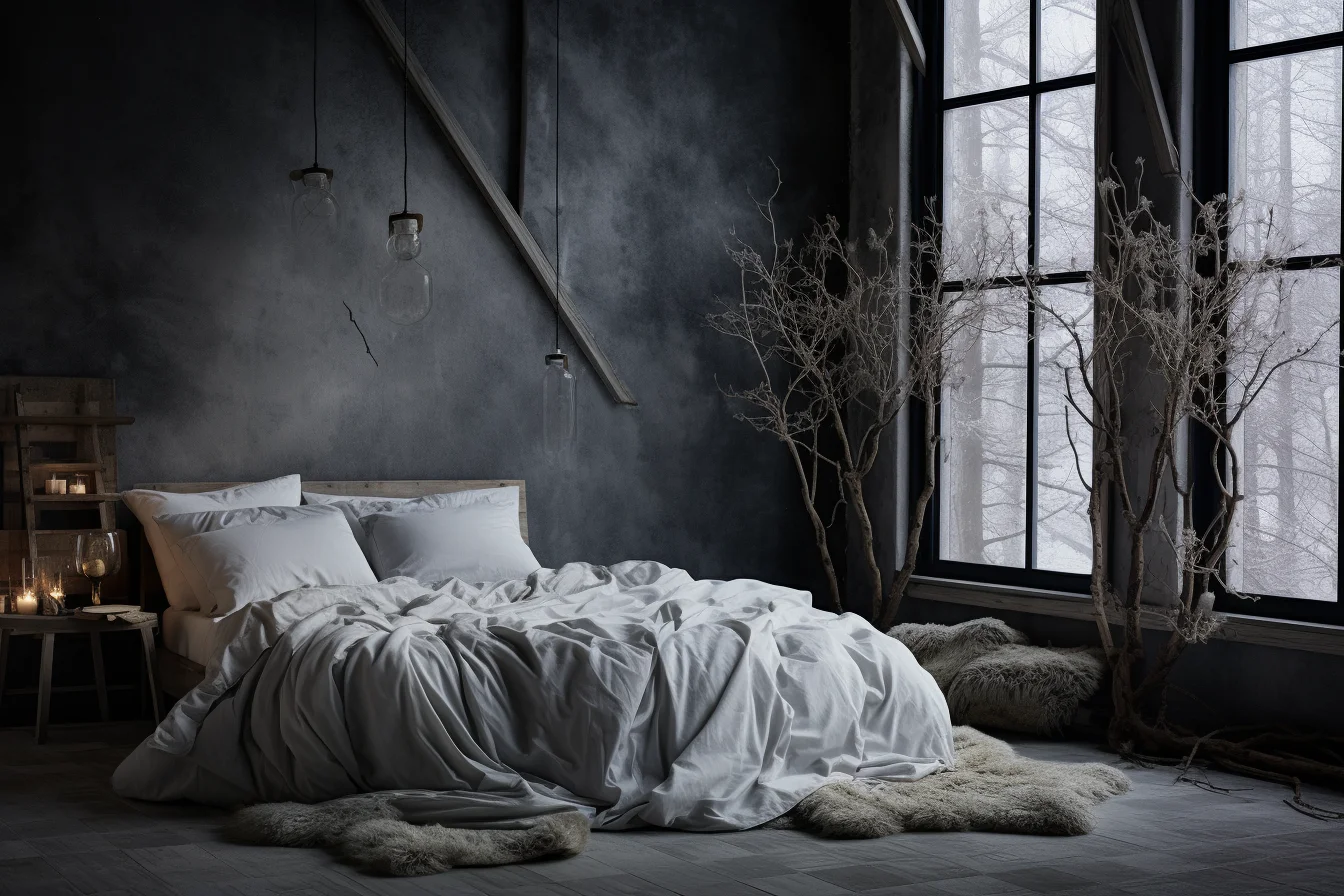
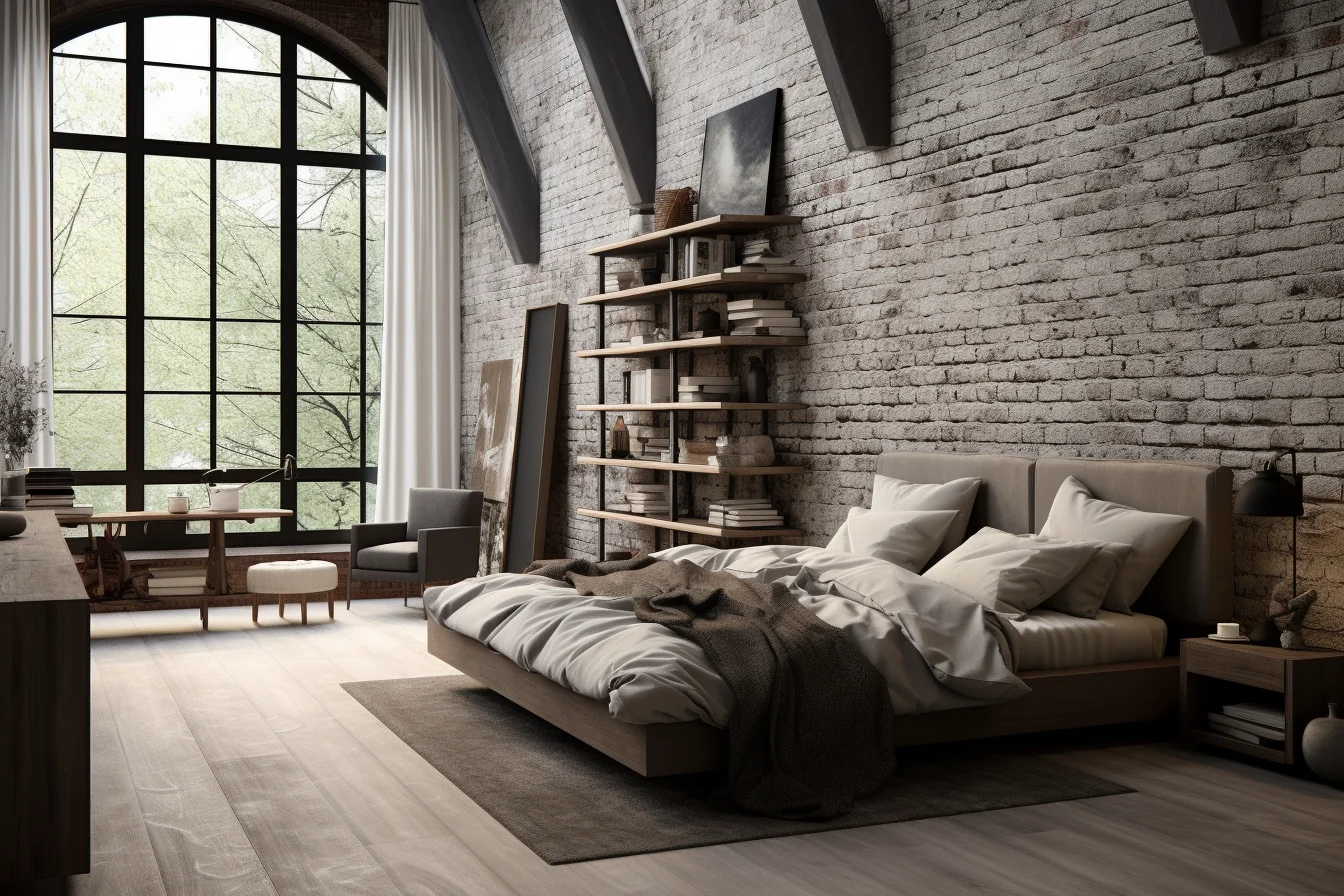
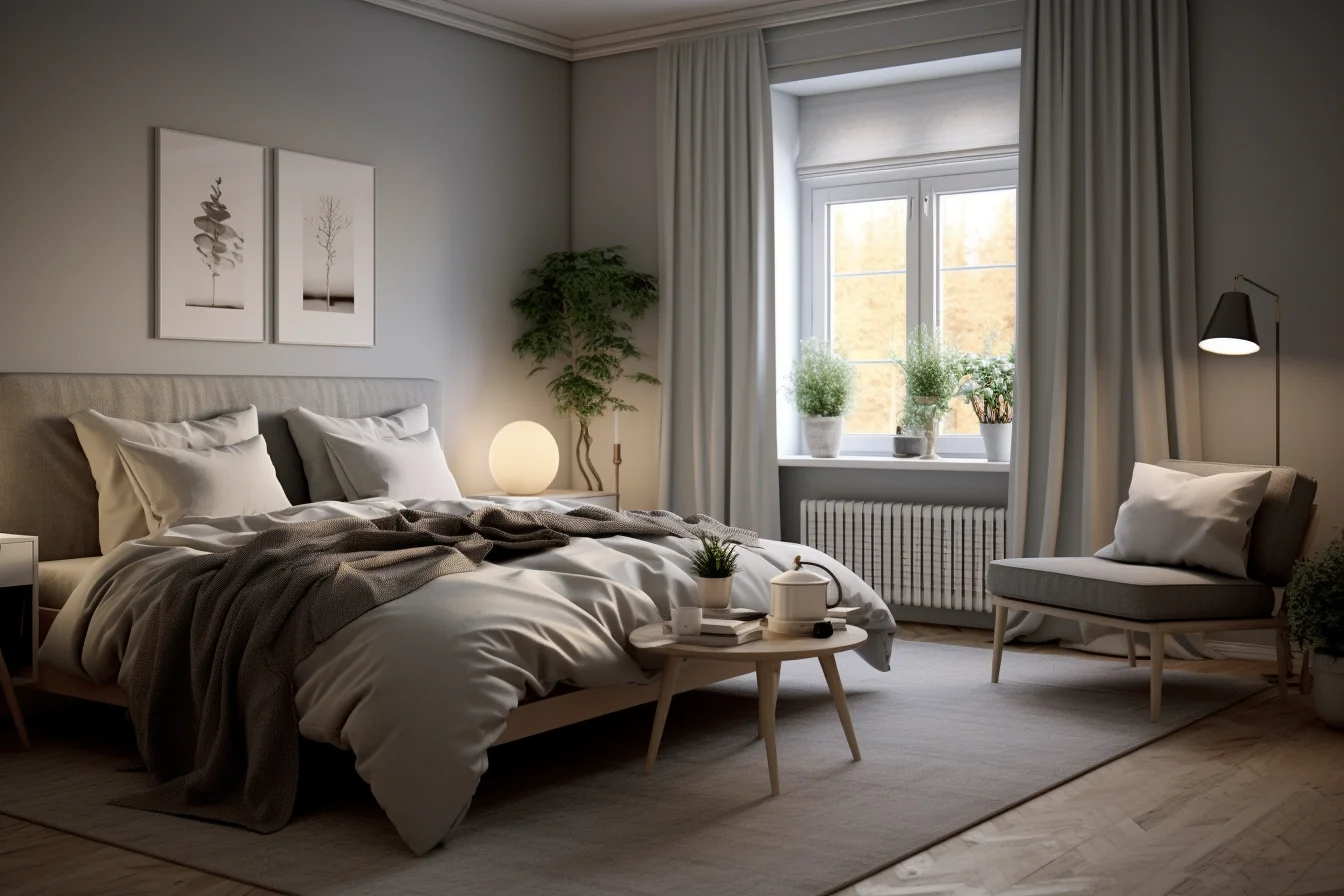
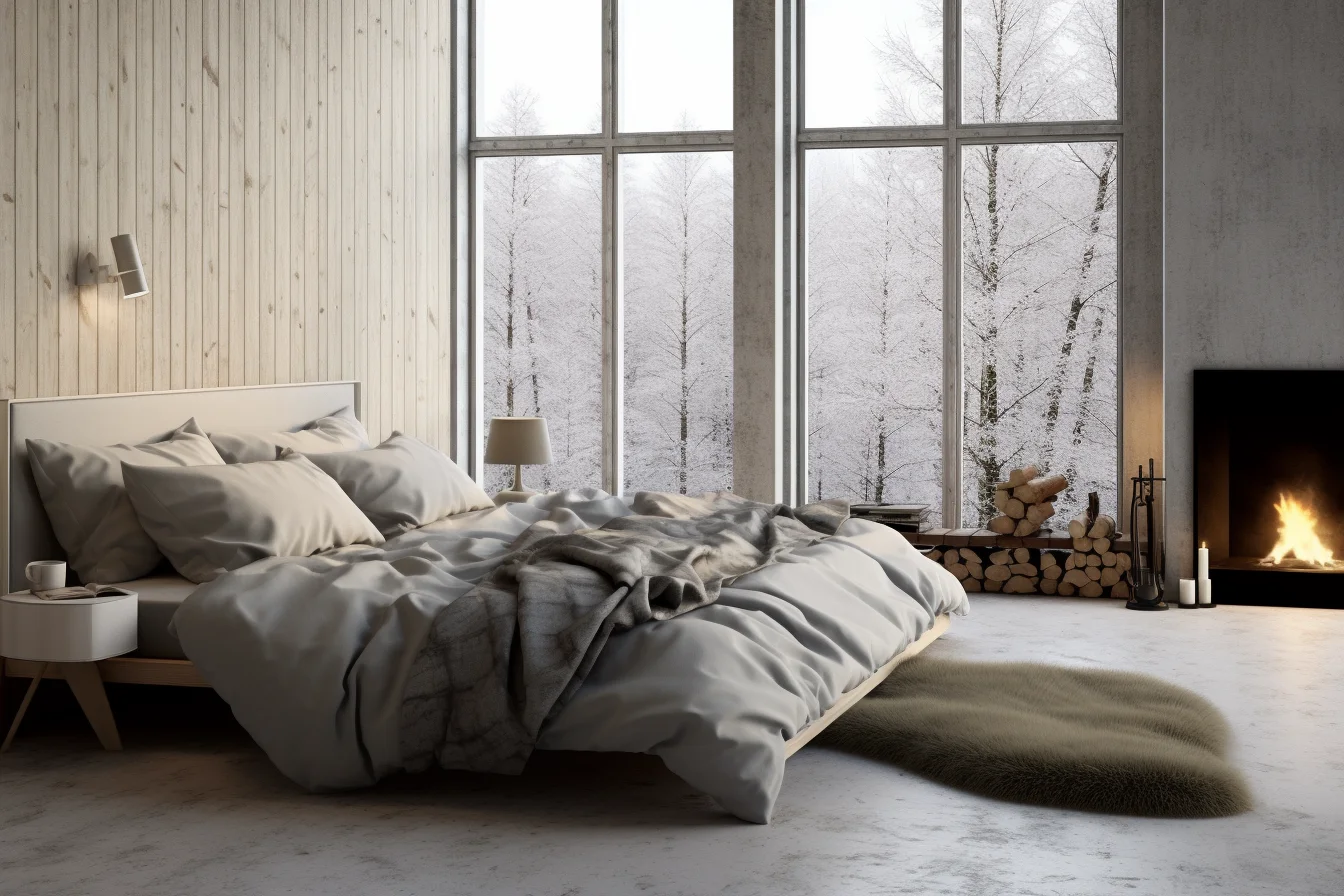
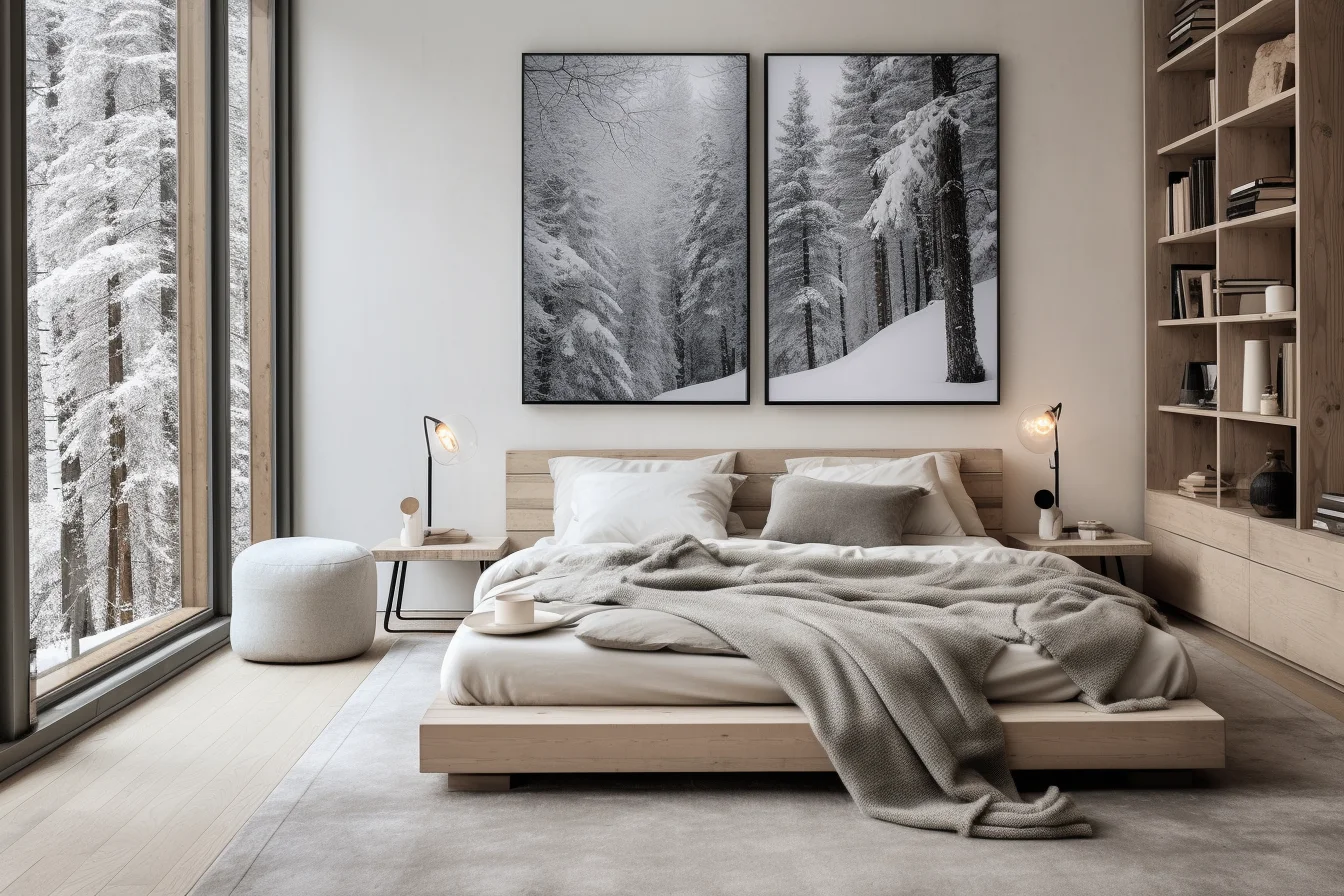
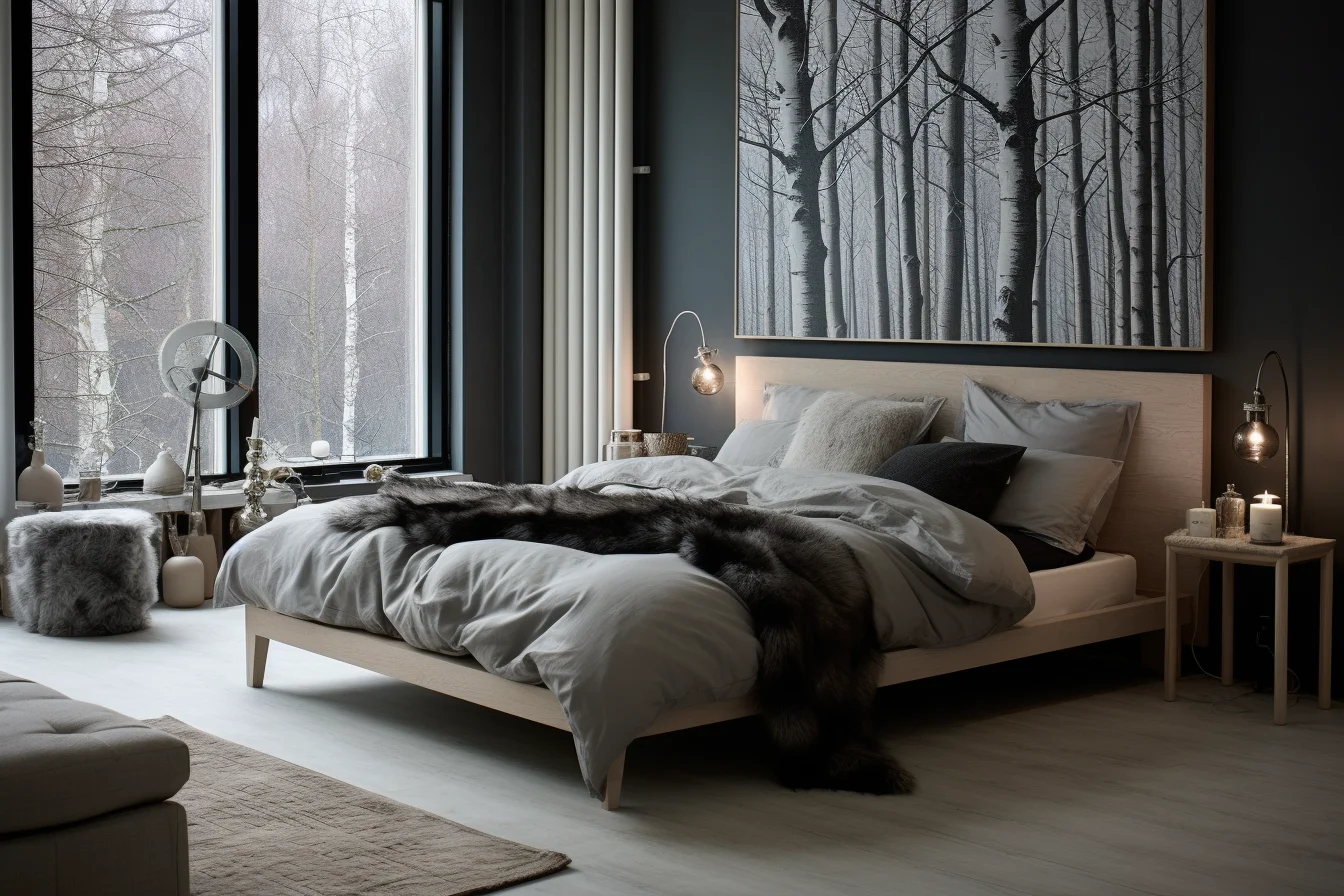
This gallery contains 26 Scandinavian and Nordic bedroom concepts, including warm, white, dark, minimalist, small-room and modern variations. The most useful way to read the images is to look for recurring design decisions rather than treating “Scandinavian” as one fixed formula.
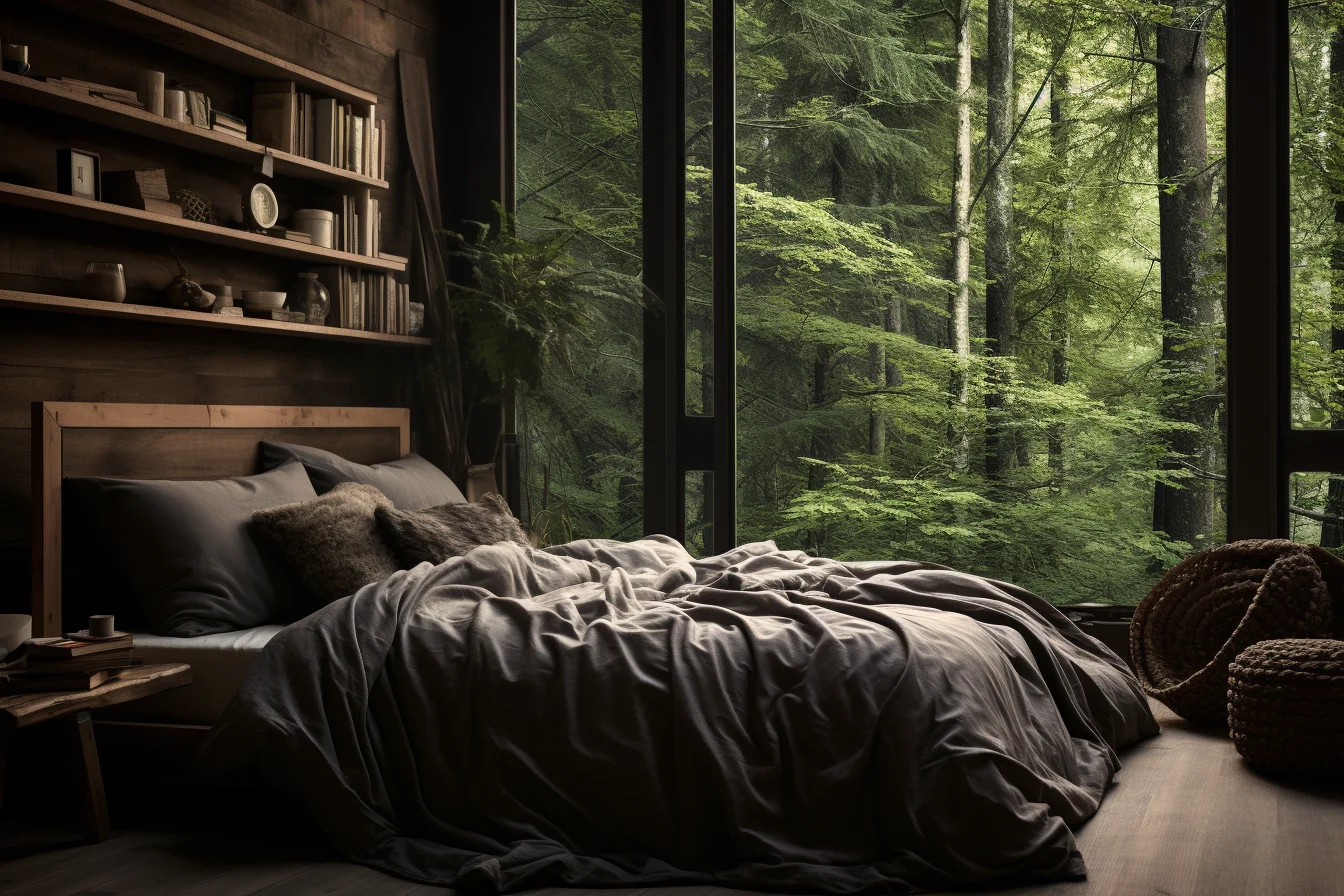
Do a 10-minute room audit before buying anything
Use the room you already have as the starting point. Stand in the doorway and take one photo in daylight, then another with the lamps you normally use at night. In each photo, identify the three largest visual areas—usually the floor, walls and bed. If all three are pale and smooth, the room probably needs texture more than another white object. If several dark woods, black pieces and strong textiles compete, simplify the contrast before adding decor.
- Measure the walking route. Check the narrowest point between the bed, wardrobe and door. Do not choose a wider nightstand, bench or storage unit until that route works comfortably.
- Count exposed storage. Open shelves are useful only when their contents can stay visually calm. If everyday items already fill several surfaces, solve closed storage first.
- Check the light at bedtime. Turn off the ceiling light. If the room becomes flat, gloomy or harsh, improve bedside or wall lighting before changing the palette.
- Find the missing material. A room dominated by painted MDF, glass and smooth white fabric often benefits more from timber, woven fabric or a substantial rug than from extra ornaments.
This test keeps the page’s minimalist ideas practical: the goal is not to copy an empty showroom, but to make your actual bedroom calmer, warmer and easier to use.
What to look for in a Scandinavian-style bedroom
| Goal | Useful design move |
|---|---|
| More warmth | Add wood tones, textured bedding, rugs and warm lamps before adding more decoration |
| More light | Keep large surfaces pale and use contrast in smaller furniture or textiles |
| Less clutter | Prioritize closed storage, clear bedside surfaces and a limited number of visible objects |
| A darker Nordic look | Use charcoal or deep tones selectively while preserving lighter bedding, walls or flooring |
| A small bedroom | Choose lower-profile furniture and let storage do more than one job |
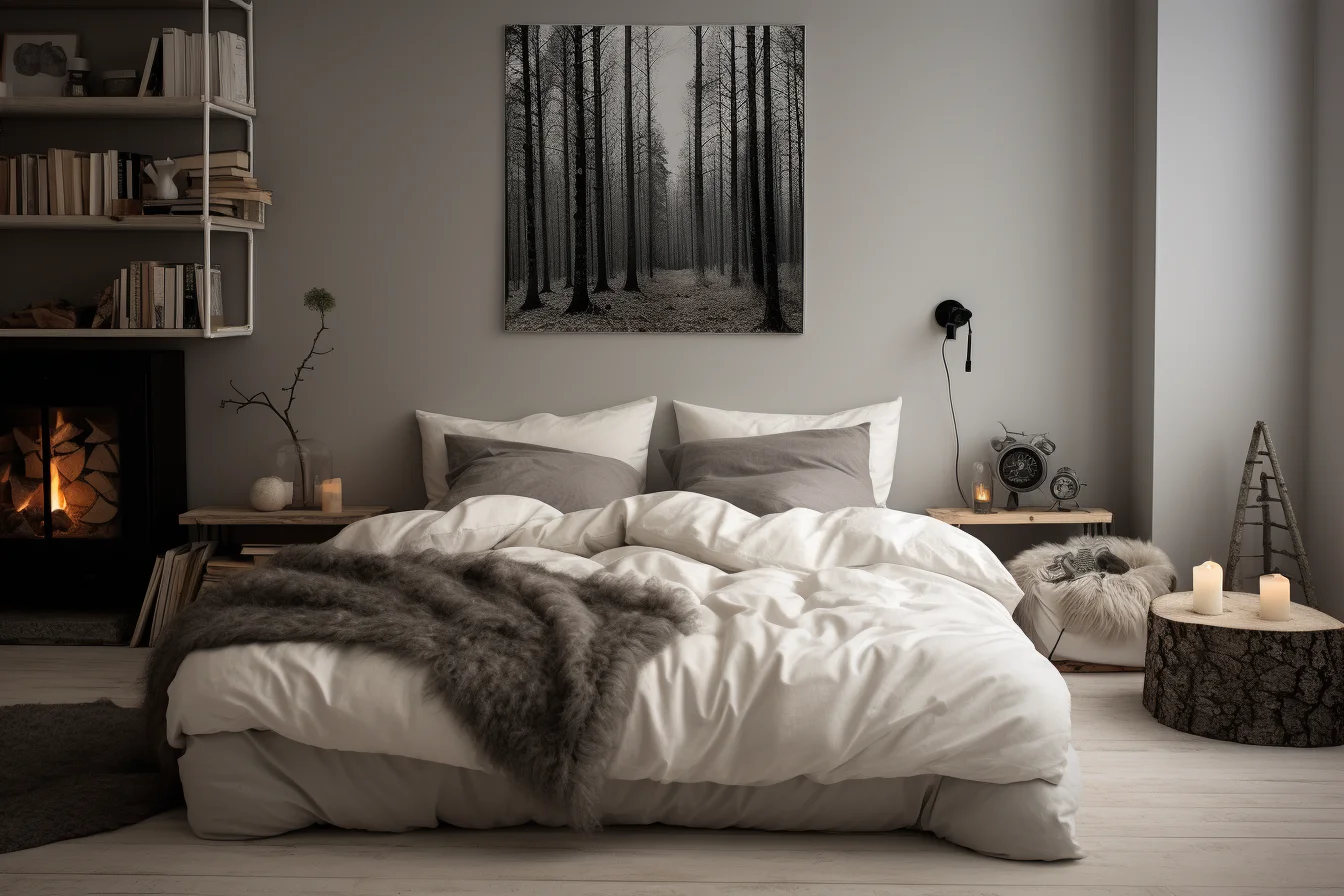
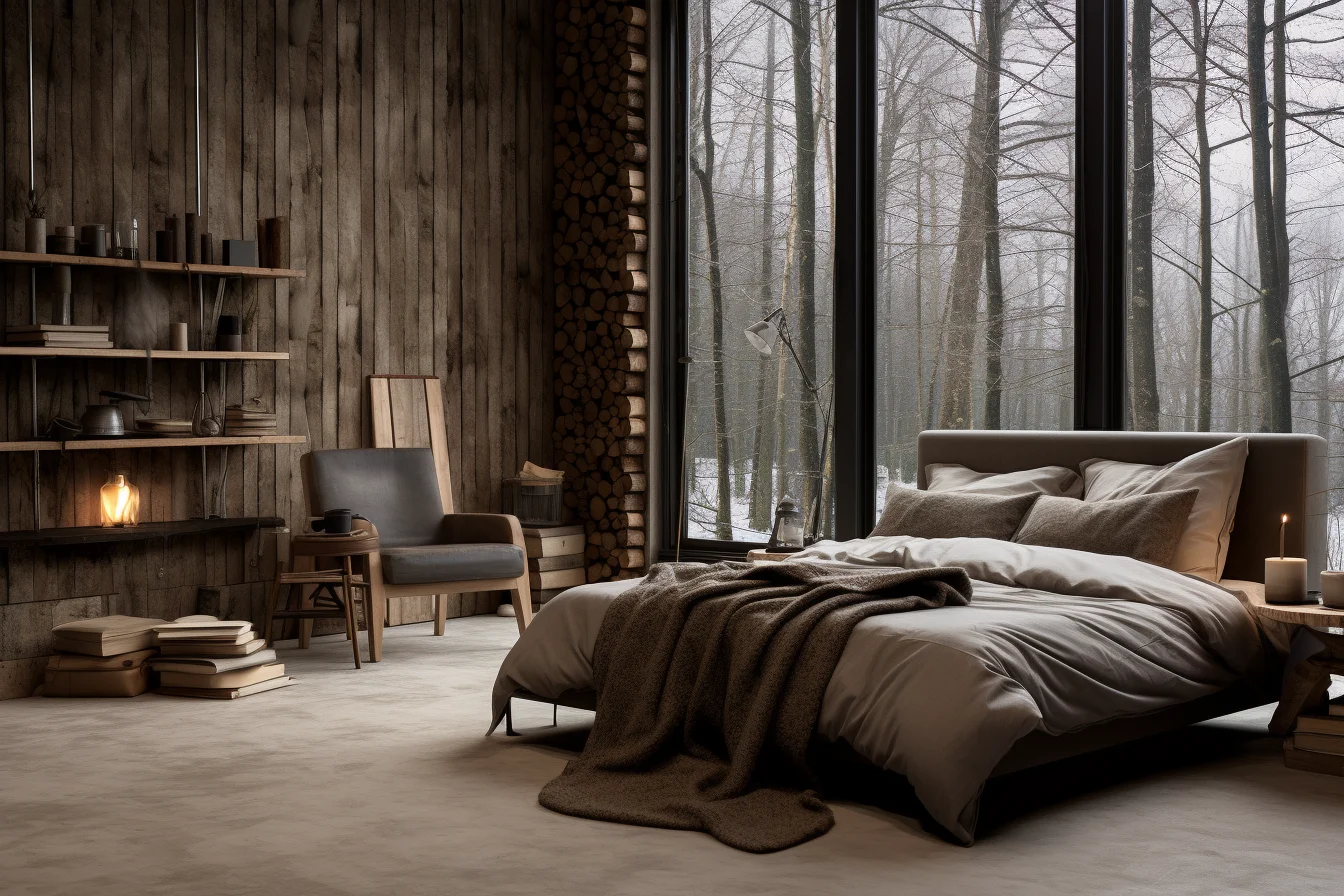
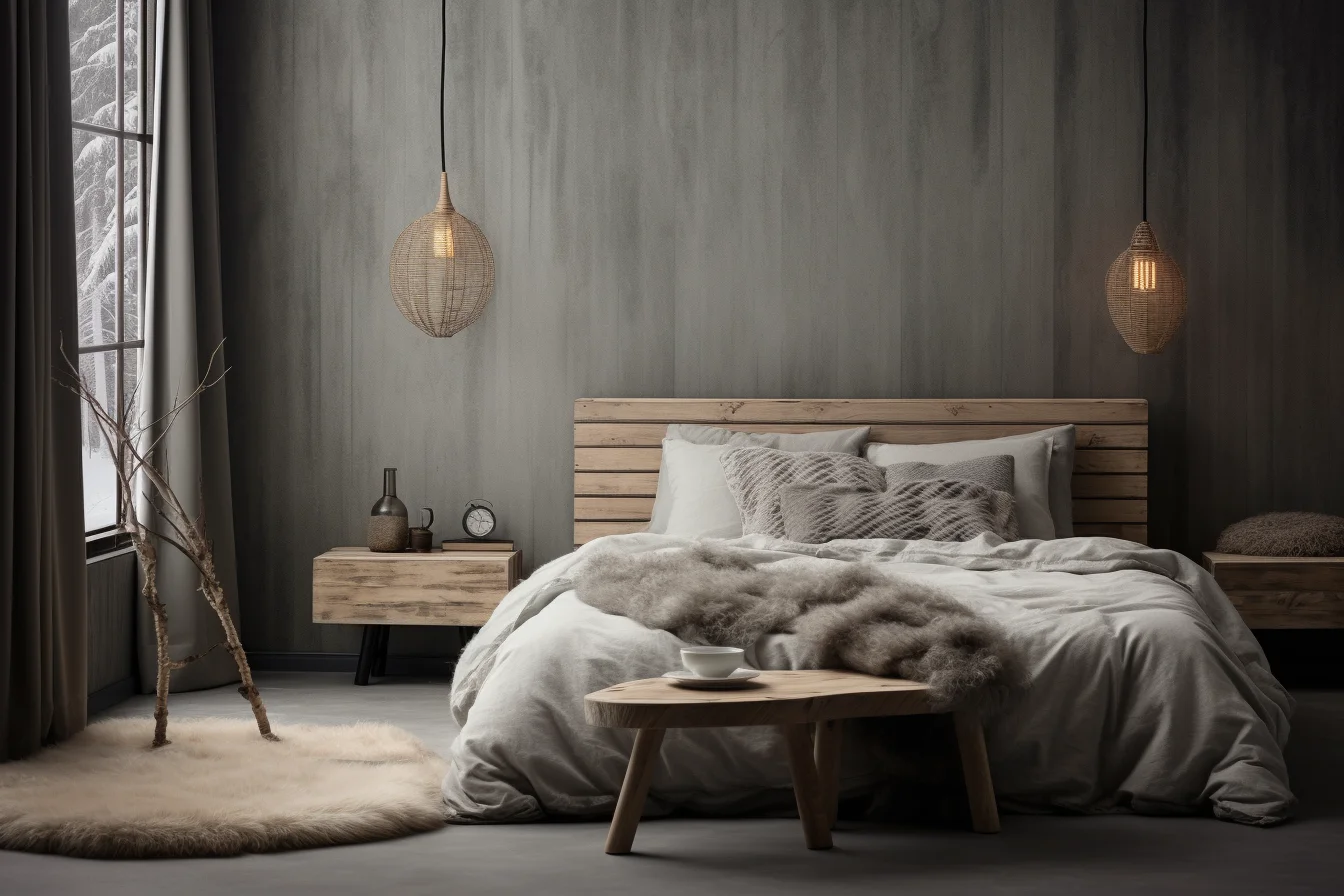
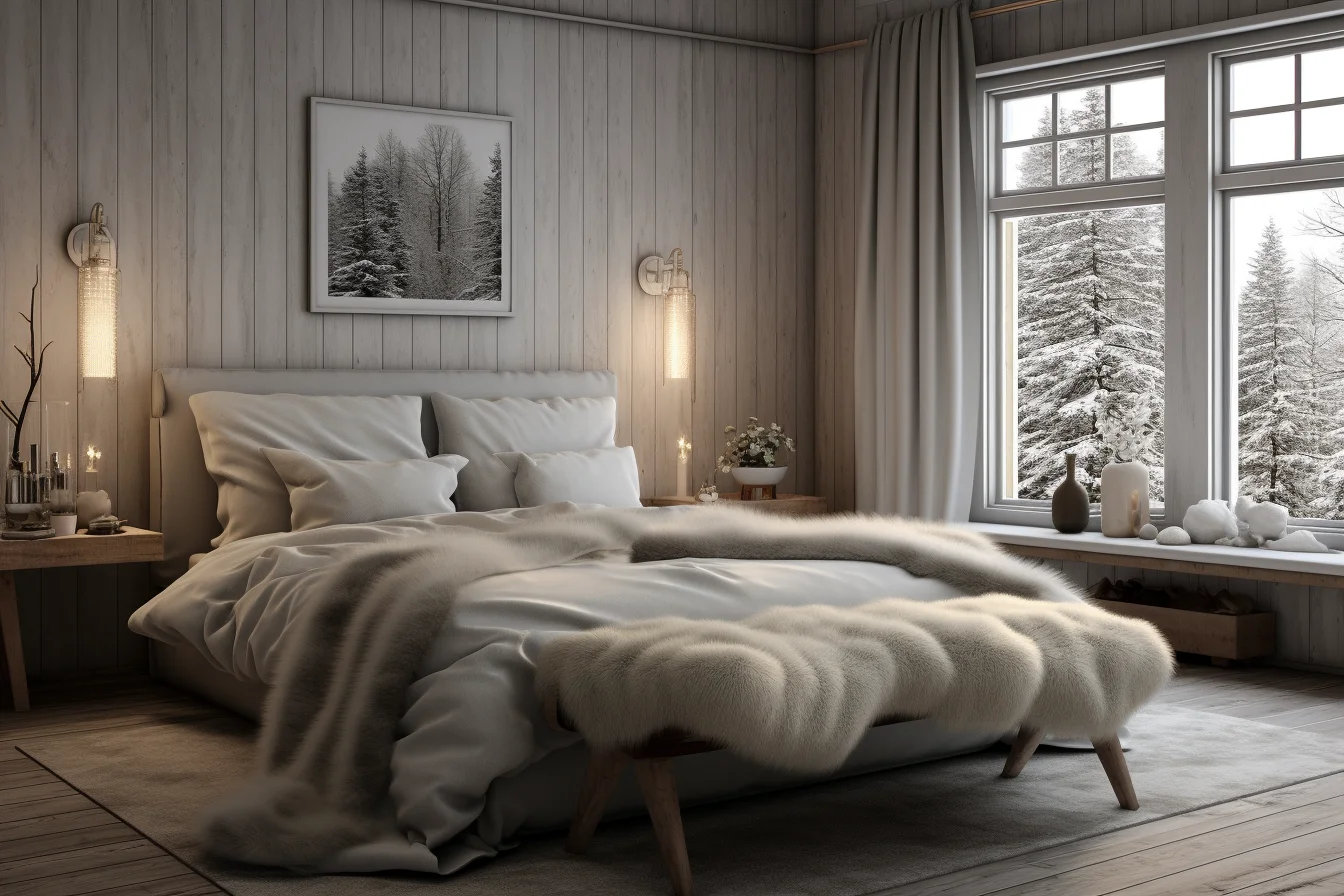
A calm room does not have to be empty. The strongest concepts usually combine simple furniture with enough texture—wood, linen-like bedding, wool-like rugs or soft lighting—to stop minimalism from feeling sterile.
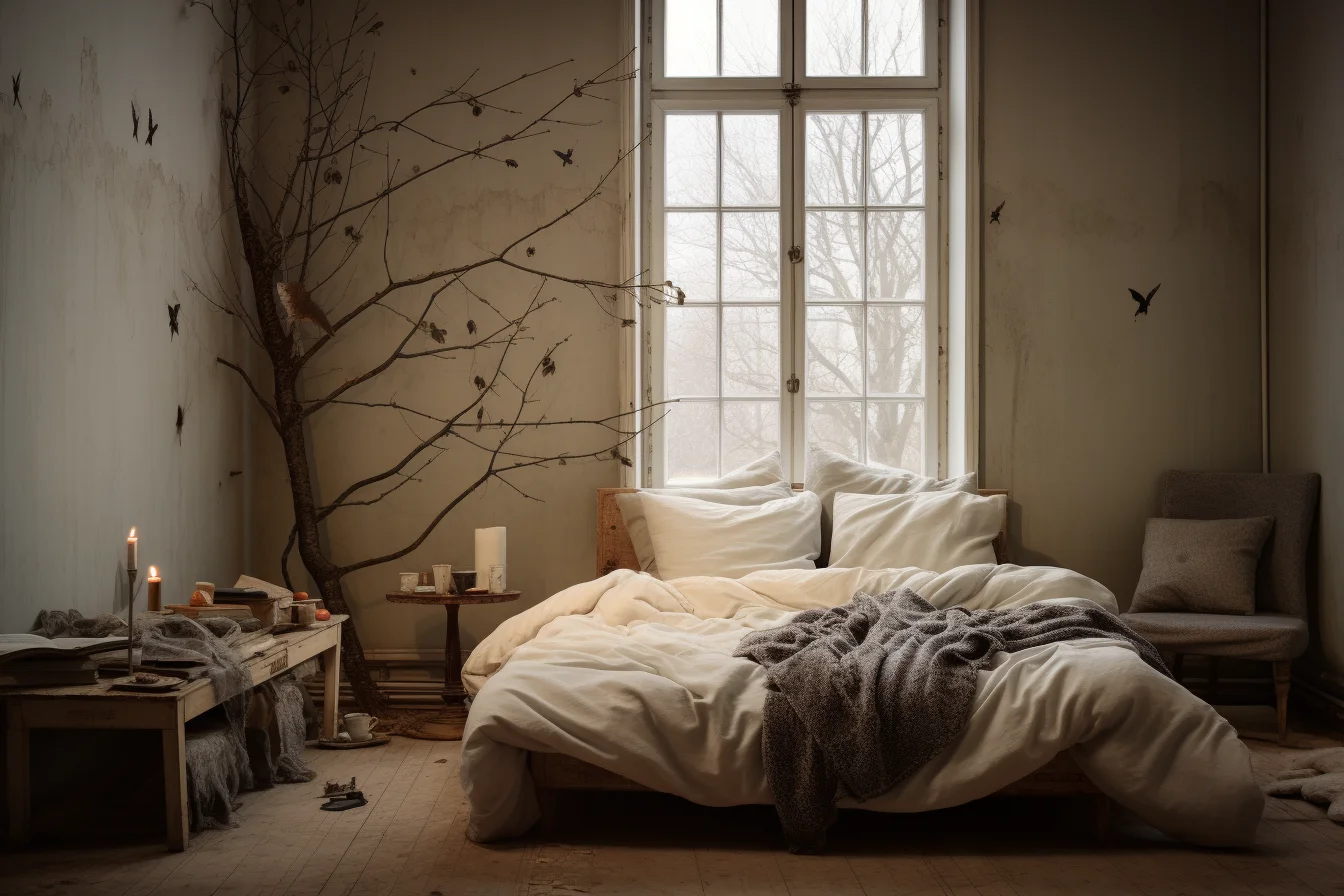
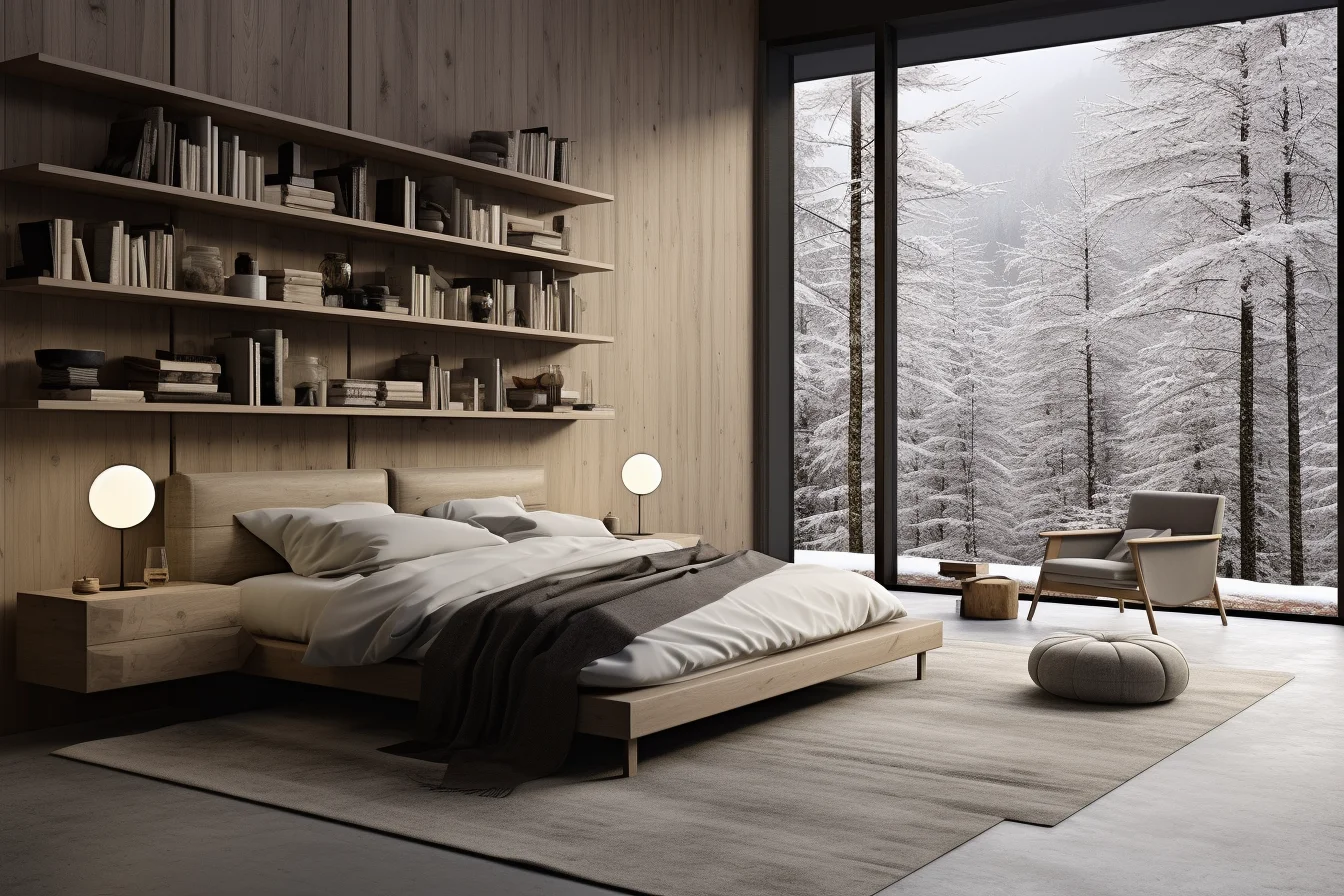
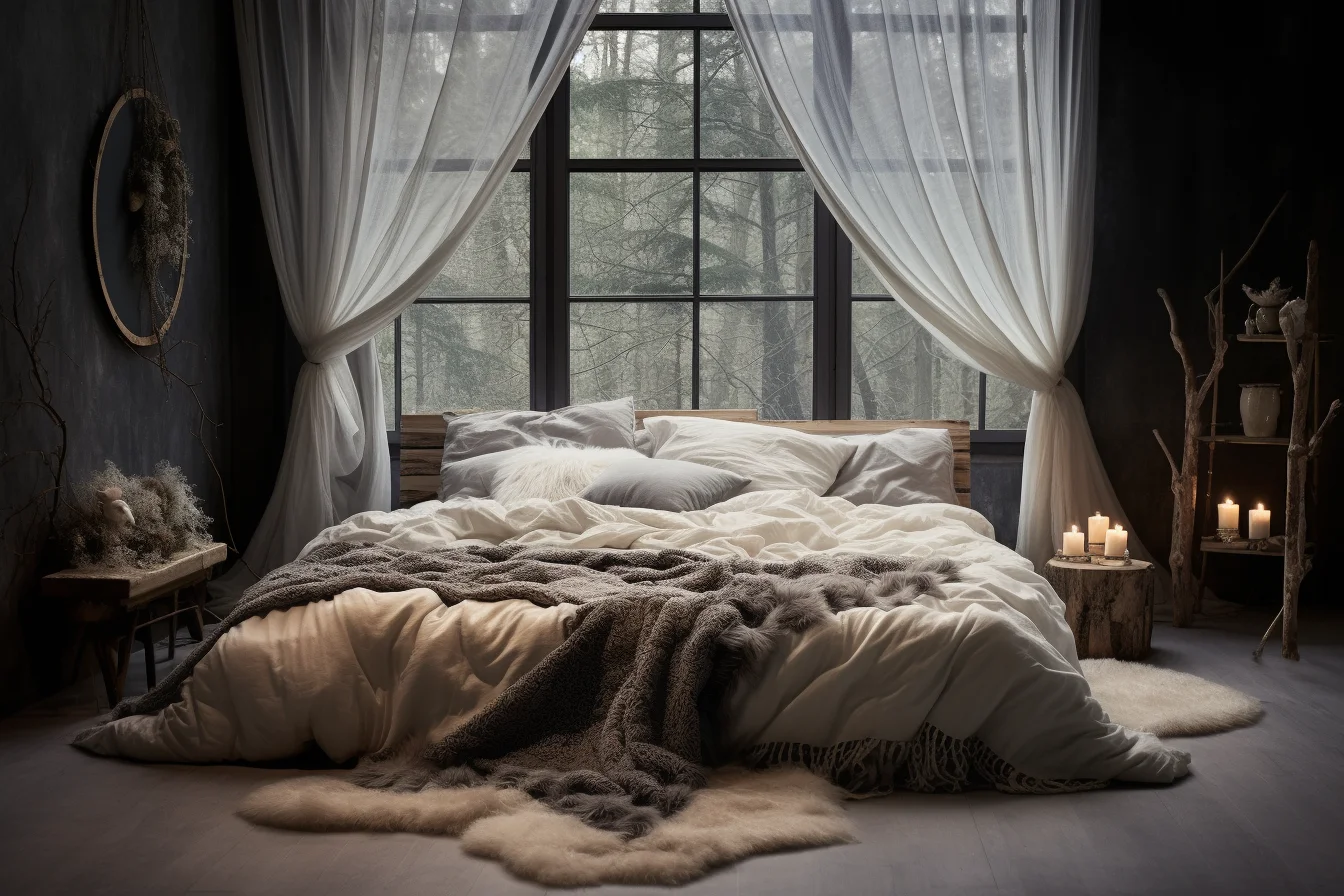
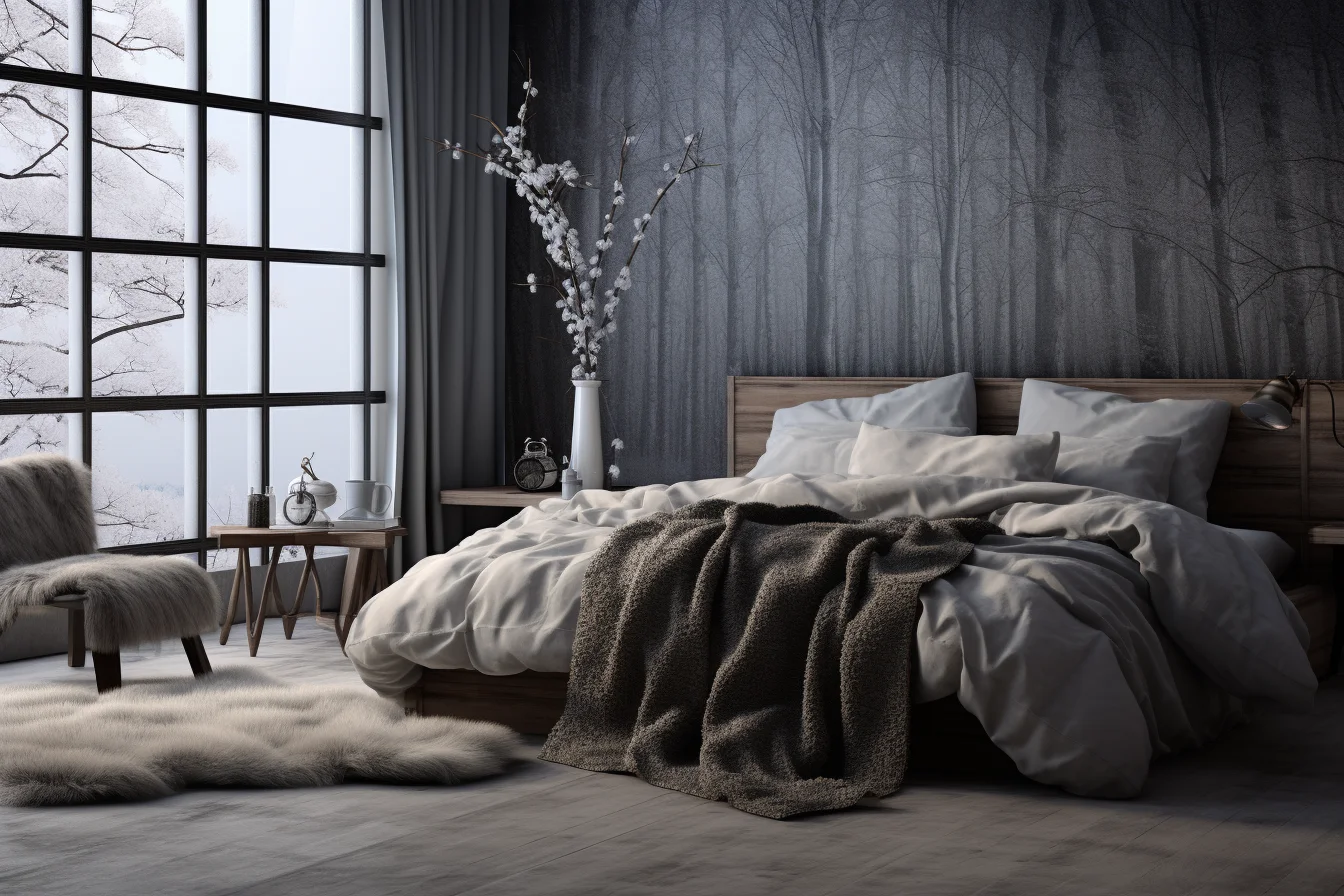
Small Scandinavian bedrooms: protect floor space first
In a compact bedroom, avoid adding furniture simply because it matches the style. A narrow bedside shelf, wall-mounted light or bed with storage is usually more valuable than a decorative bench or extra chair. Keep the route around the bed clear and let one wall carry most of the visual interest.
If you want warmth without losing space, use texture vertically—curtains, a headboard or wall art—rather than adding more objects to the floor.
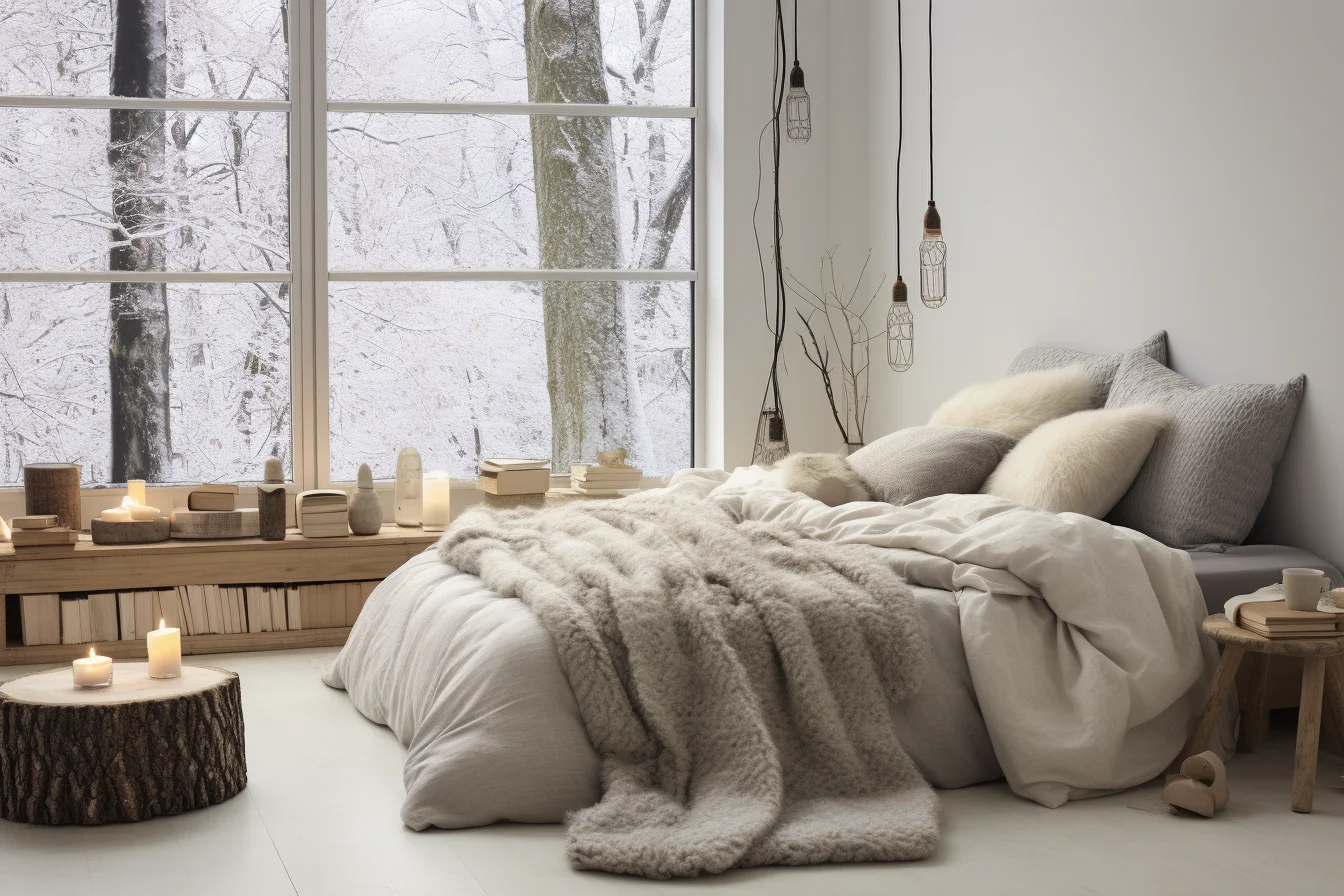
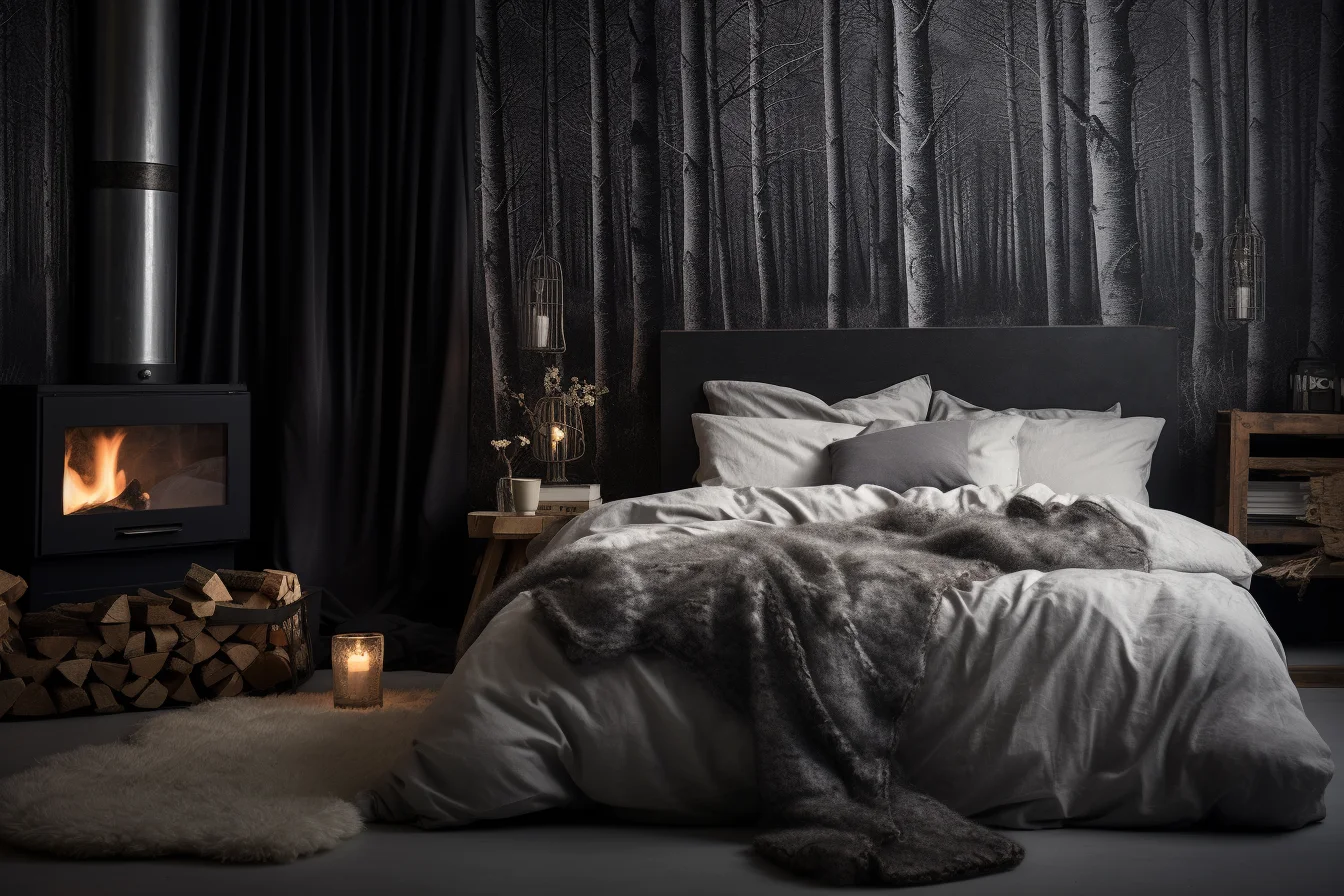
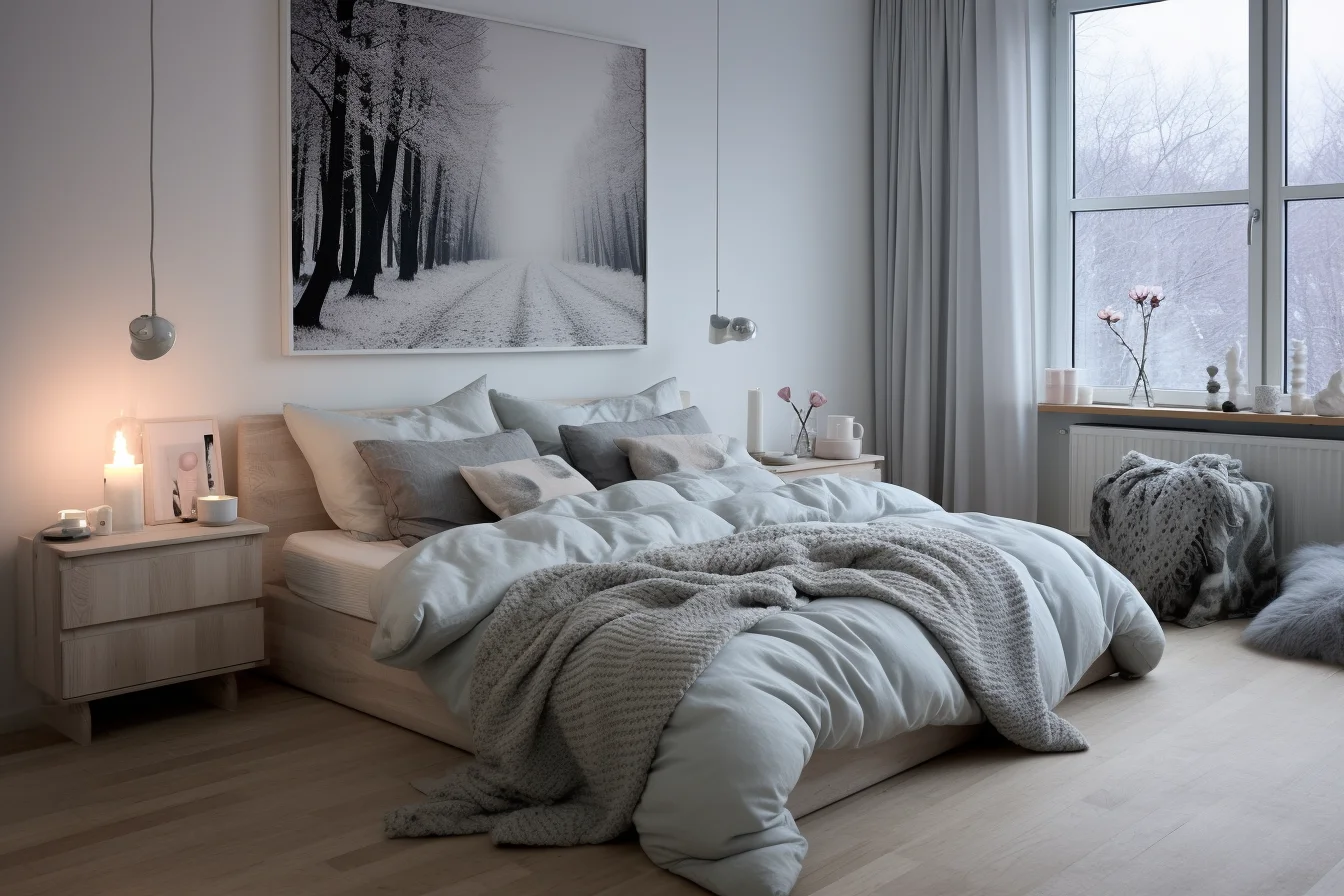
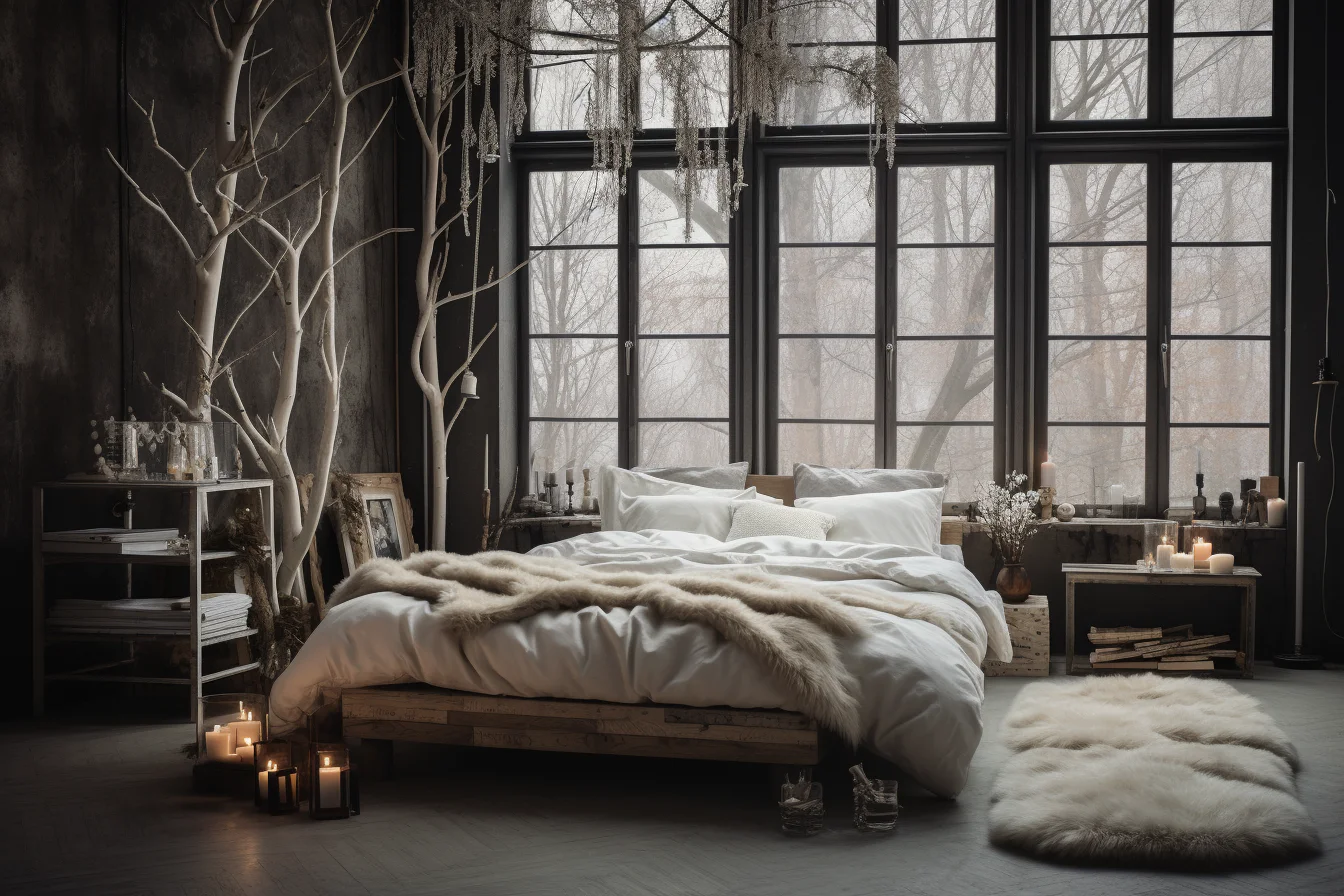
Dark Nordic rooms still need visual contrast
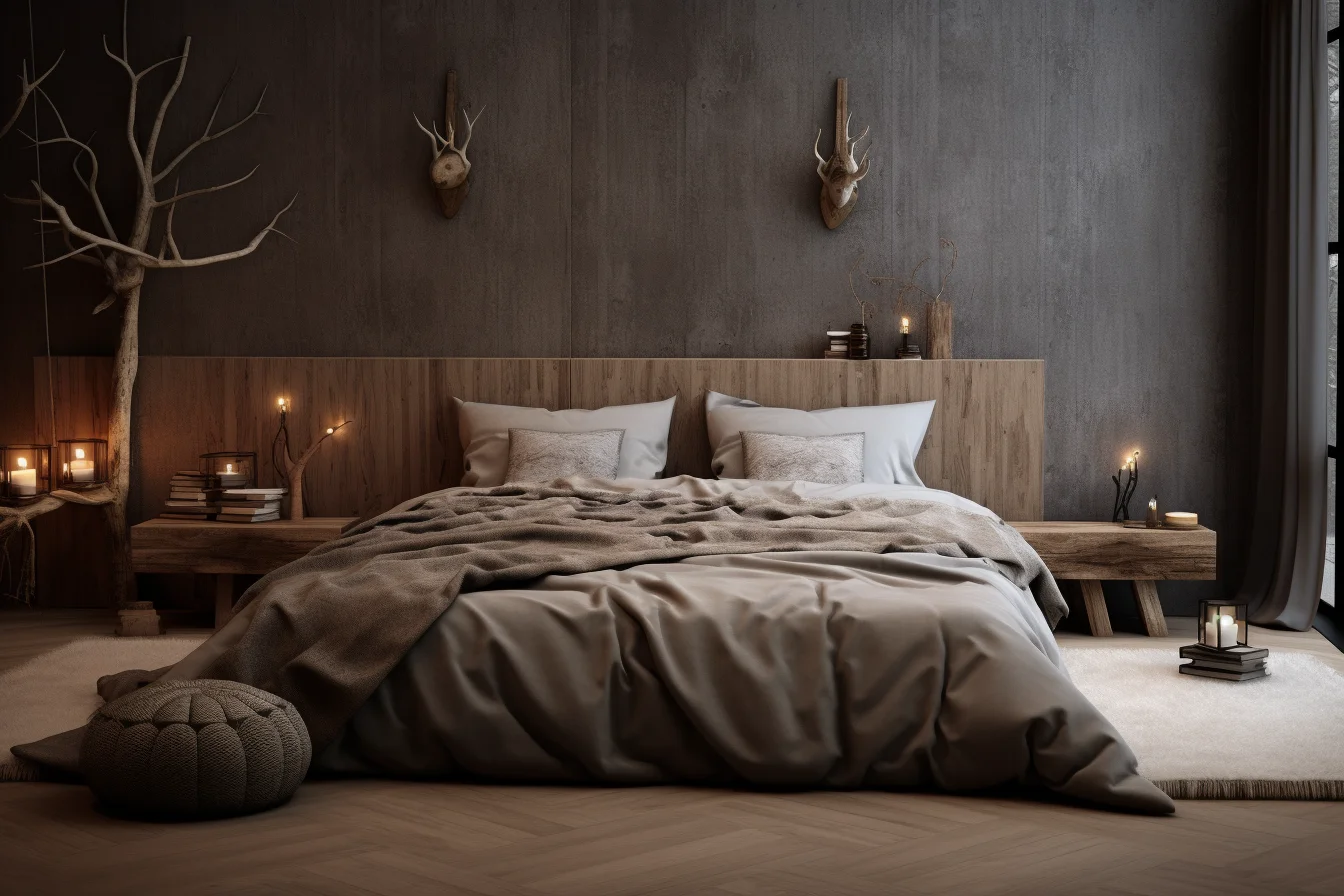
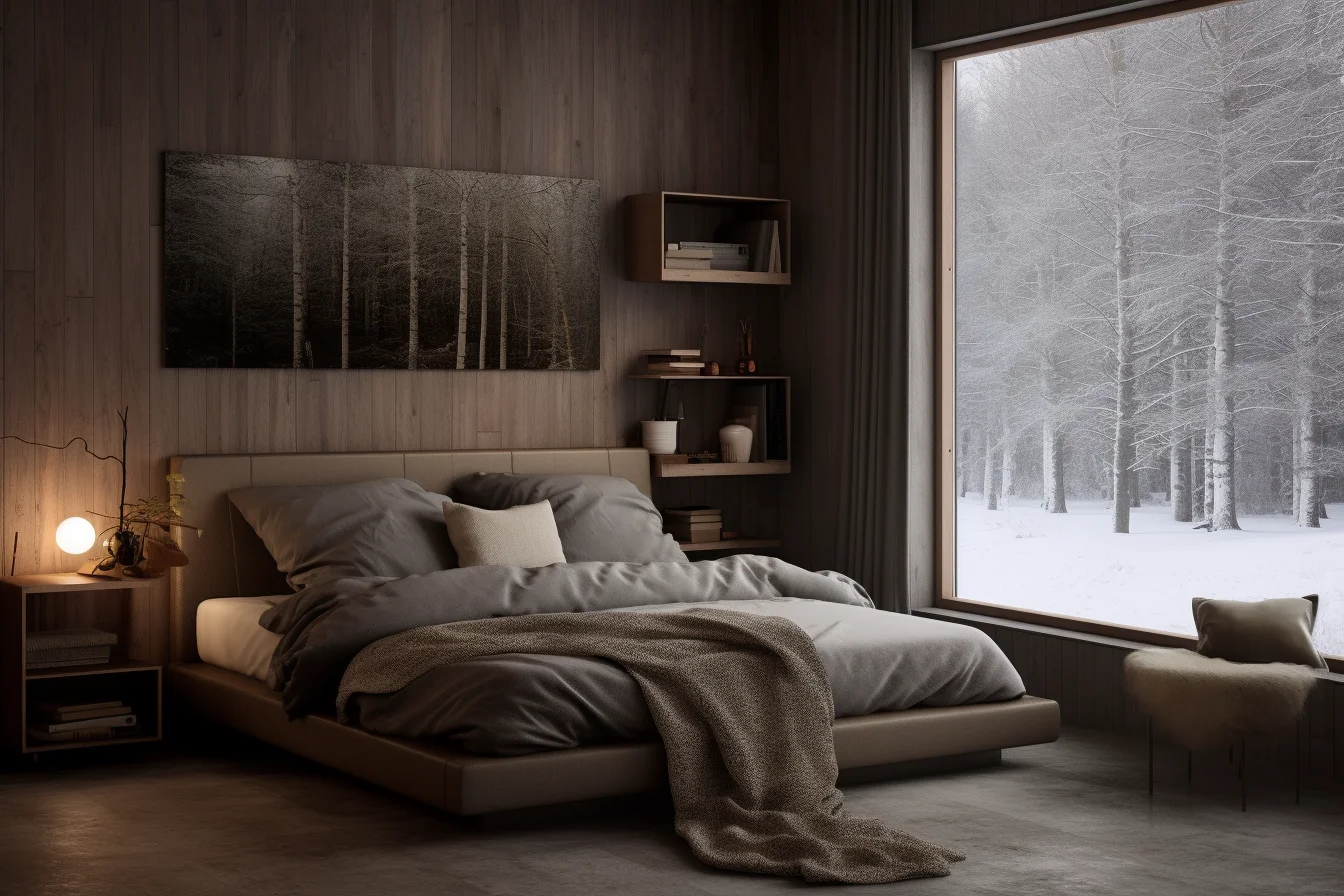
A dark Scandinavian bedroom works better when not every surface is equally dark. Keep some separation between walls, bedding, floor and furniture so the room has depth. Pale bedding, natural wood, a lighter rug or a warm bedside lamp can stop charcoal and black tones from becoming a single flat block.
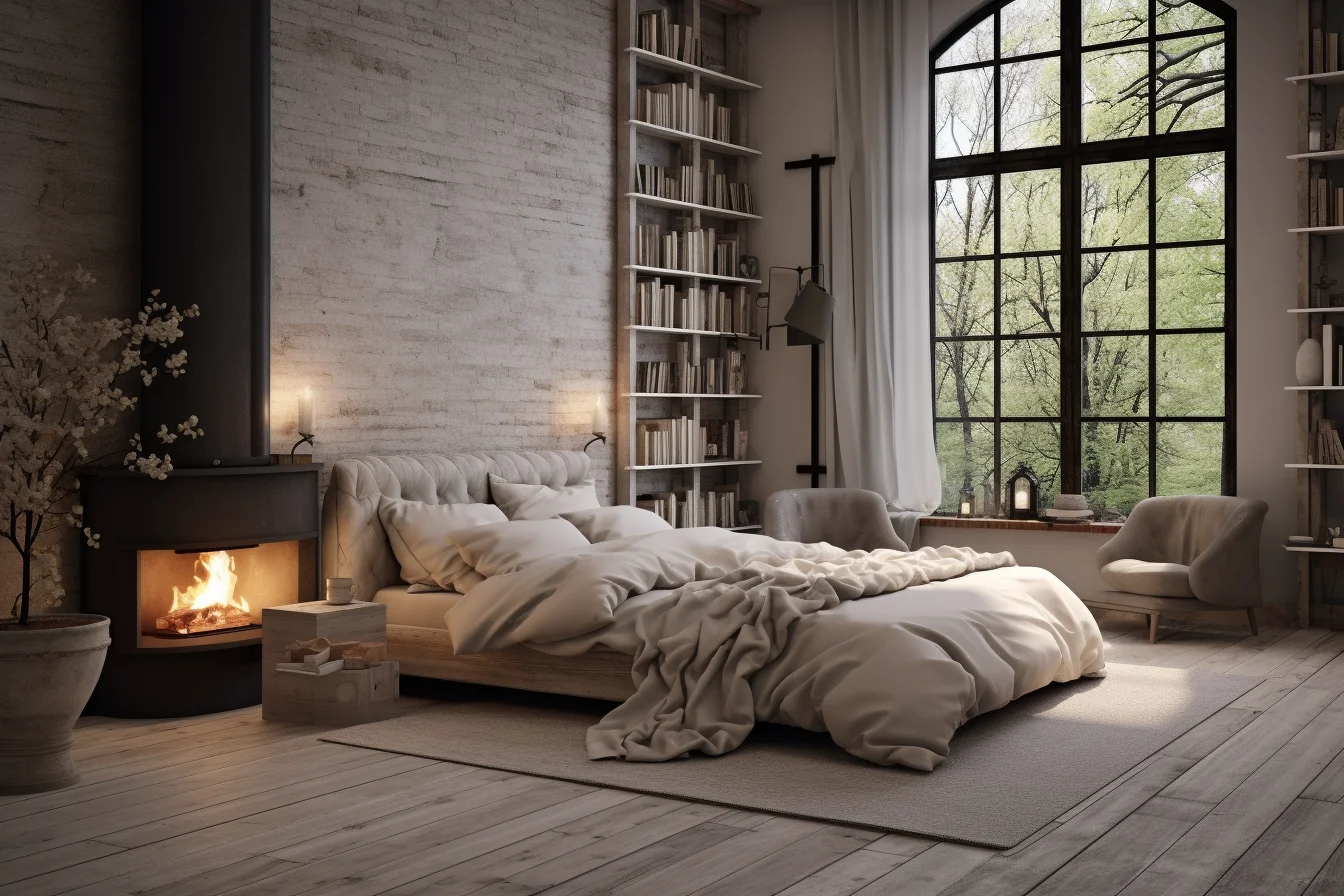
Minimalist does not mean removing every useful object
Before deleting decor, remove visual duplication: three small lamps, several tiny storage baskets or multiple competing prints create more clutter than one larger useful piece. Keep what supports sleep, storage and lighting, then give those objects enough empty space around them.
A practical Scandinavian bedroom can still include books, clothes and personal objects; the difference is that storage is planned so those items do not dominate every visible surface.
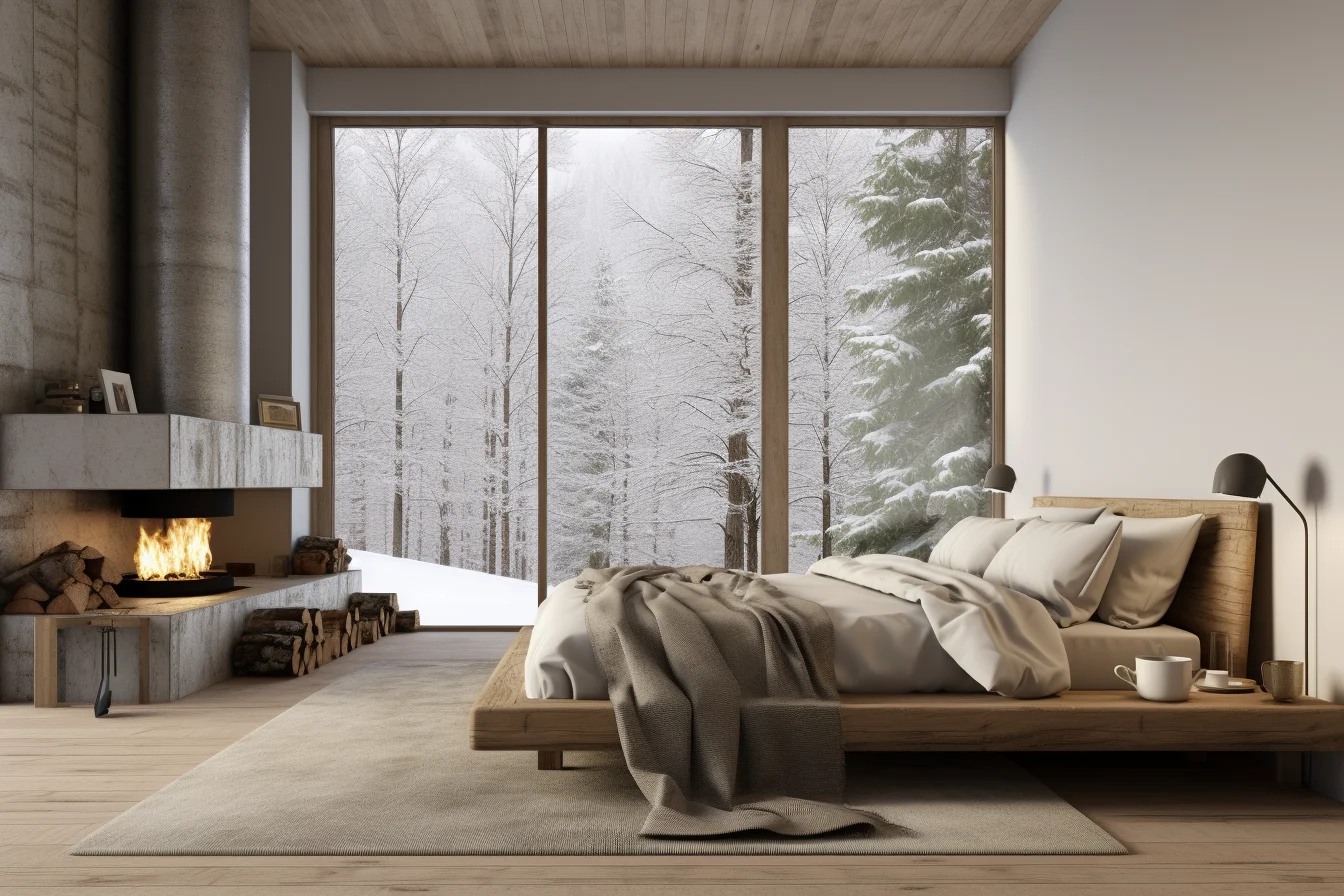
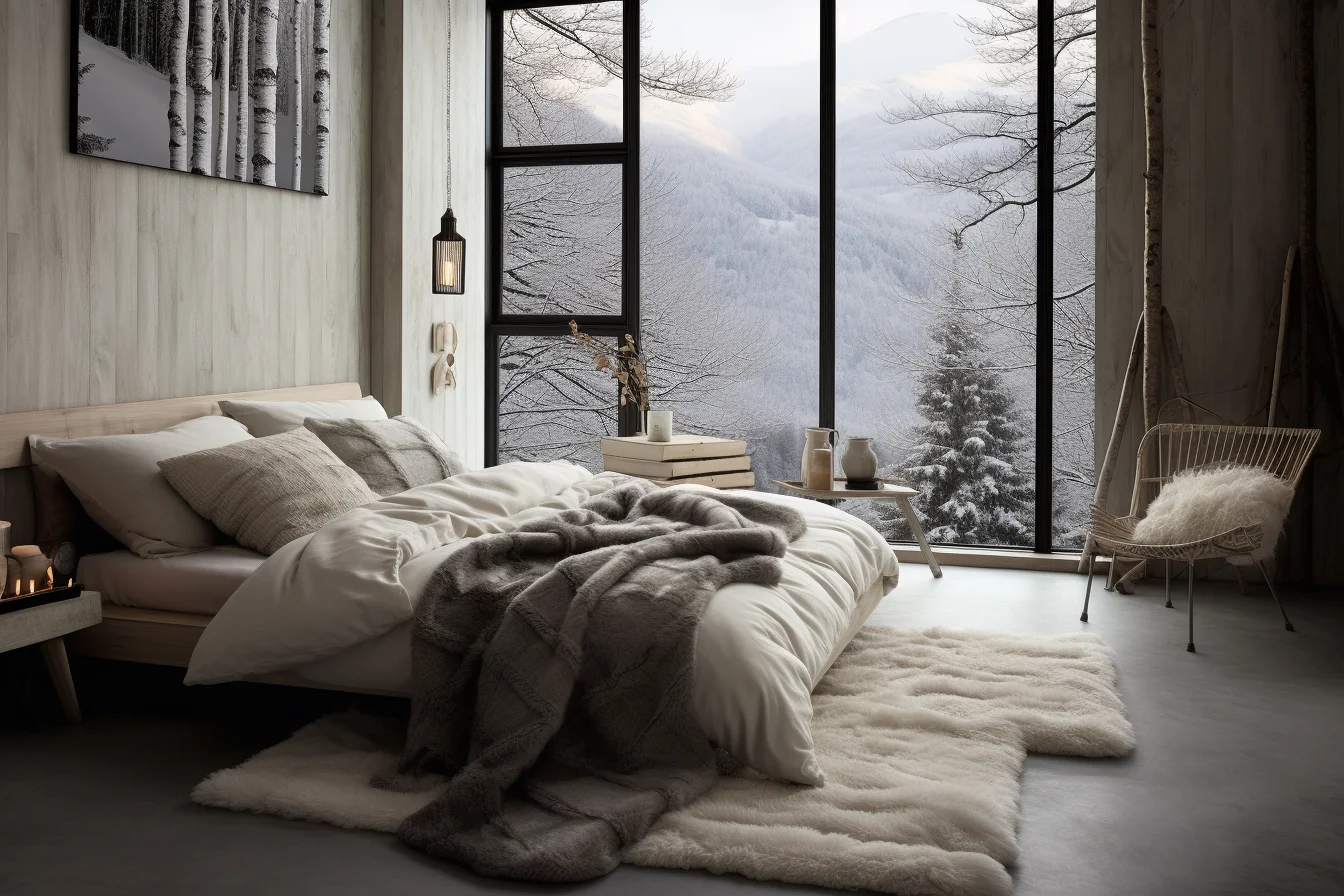
For a more modern Scandinavian look
Use contemporary lighting, clean storage and a simple bed frame, then let warmth come from materials rather than decorative clutter. One wood finish repeated across a bedside table, frame or shelving unit is usually enough to connect the room. If everything is white, add texture before adding more objects.
Build the room from function outward
A Scandinavian bedroom is easier to get right when the practical decisions come before the decorative ones. Start with how the room must work, then use materials and color to soften that structure.
- Map the circulation. Keep the route from the door to the bed, wardrobe and window clear before deciding where extra furniture belongs.
- Solve storage. Decide what genuinely needs to remain visible. Clothes, chargers and everyday clutter need an assigned place before open shelving or decorative baskets are added.
- Choose one visual anchor. This might be the bed, a timber wall detail, a pendant light or one piece of art—not all four competing at once.
- Set the light-dark balance. Large pale surfaces make a useful base; darker tones work best where they define rather than swallow the room.
- Add tactile layers. Bedding, curtains, a rug and natural-looking wood can provide warmth without increasing object count.
- Finish with personal objects. Add books, art or ceramics selectively once the room already functions well.
Three palettes that stay warm without becoming beige
| Palette | Base | Contrast | Useful for |
|---|---|---|---|
| Light Nordic | Warm white and oatmeal | Light oak and muted black | Small or naturally darker bedrooms |
| Earthy Scandinavian | Greige and soft clay | Medium wood and olive accents | Rooms that need more warmth and color |
| Dark Nordic | Charcoal or deep gray | Pale bedding, warm timber and amber light | Rooms with enough light to support darker walls |
Test paint and textile samples together in the actual bedroom. A white that looks clean in a store can read blue beside warm timber, while a gray can shift noticeably under warm bedside lamps.
Diagnose a Scandinavian bedroom that feels wrong
| Problem | Likely reason | Try this first |
|---|---|---|
| It feels sterile | Too many smooth white surfaces | Add texture through bedding, curtains, timber or a rug before adding decor |
| It still looks cluttered | Small objects are distributed across every surface | Group essentials and move the rest into closed storage |
| The room feels generic | Every decision follows the same neutral formula | Add one personal artwork, distinctive lamp or muted accent color |
| A dark scheme feels heavy | Walls, furniture and textiles share the same value | Introduce a clearly lighter layer through bedding, flooring or curtains |
| The small room feels crowded | Too many floor-standing pieces | Replace one with wall-mounted lighting, shelving or a narrower bedside surface |
| The room looks unfinished | Minimalism has removed visual softness | Add one substantial textile layer instead of several small accessories |
Spend on comfort before decorative minimalism
If you are working with a limited budget, prioritize the mattress, bedding you enjoy using, effective window treatment and lighting that works at night. Those decisions affect the bedroom every day. A designer-looking stool, vase or decorative basket has much less impact if sleep, storage or bedside lighting still feels inconvenient.
Existing furniture can often stay. Instead of replacing a usable dresser because its style is not perfectly Nordic, simplify what sits on it and repeat one compatible wood, textile or dark accent elsewhere. Cohesion usually matters more than owning a complete matching collection.
Make a small Nordic bedroom work harder
Measure before assuming that “minimal” furniture will fit. A narrow bedside shelf may be more useful than a conventional nightstand, and a wall light can release the surface entirely. Beds with drawers or lift-up storage can reduce the need for another cabinet, but check that drawers have enough clearance to open.
Keep the room visually calm by concentrating storage rather than scattering it. One well-planned wardrobe wall can feel lighter than several small cabinets around the room, even when it stores more.
Scandinavian bedroom questions
Does a Scandinavian bedroom have to be white?
No. Pale rooms are common because they reflect light well, but muted earth tones, gray, green and darker schemes can work too. The more useful principles are clarity, functional furniture, restrained materials and enough contrast to keep the room readable.
How do I make Scandinavian minimalism feel cozy?
Use fewer but more tactile elements: layered bedding, curtains, a rug, timber and lower warm lighting. Cozy does not require filling every surface with accessories.
Can I mix wood tones?
Yes, but give one tone a dominant role. Two related woods are easier to coordinate than several equally prominent finishes. Repeating the dominant tone in two or three places helps the mix look intentional.
What should I remove first if the room feels cluttered?
Start with duplicate small objects and anything without a practical or personal reason to be visible. Then clear bedside surfaces and reassess before removing useful furniture.
Is Scandinavian the same as Nordic design?
The terms overlap heavily in everyday interiors content, but they are not perfectly interchangeable geographic labels. On this page they describe the shared bedroom direction shown in the gallery rather than a claim that every image represents one country’s design tradition.
Scandinavian bedroom checklist
- Plan storage before adding decorative baskets or open shelving.
- Use one or two wood tones rather than several unrelated finishes.
- Keep at least one large surface visually quiet.
- Add warmth through texture and lighting before buying more decor.
- In a small room, protect floor space and circulation first.
- In a dark room, preserve contrast between walls, bedding and furniture.
If you prefer a more colorful nostalgic room, compare these ideas with the retro bedroom gallery. For a softer layered look, see the boho bedroom ideas.

