
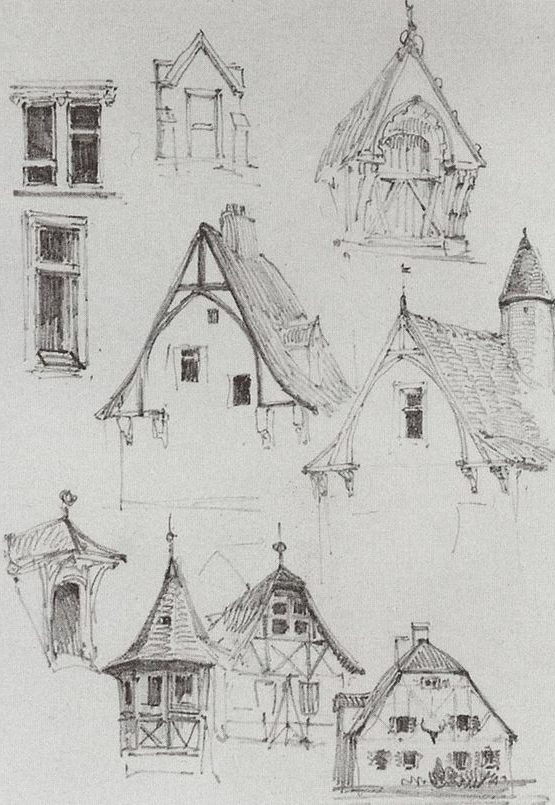
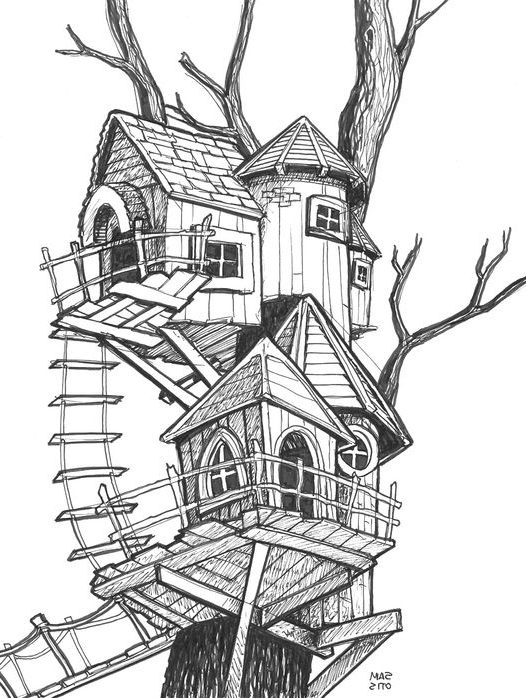
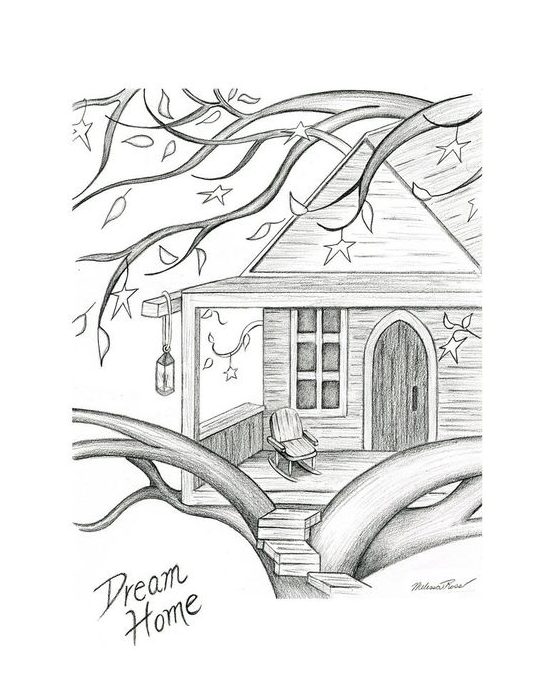
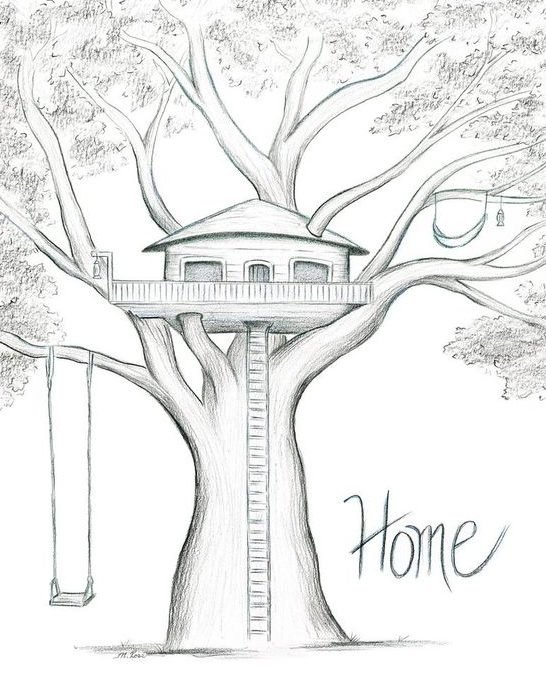
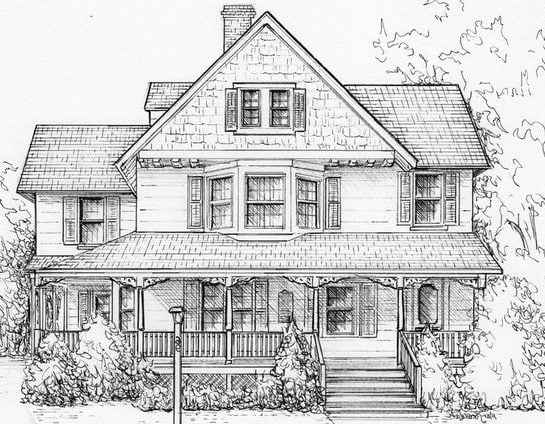
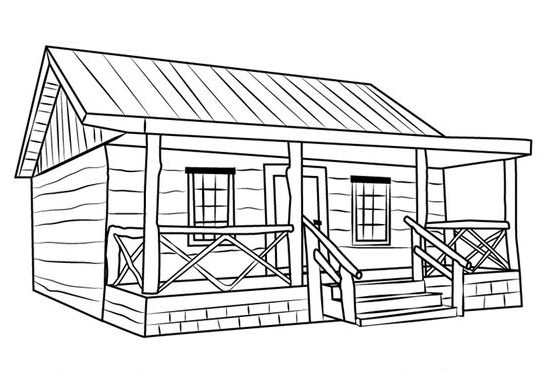
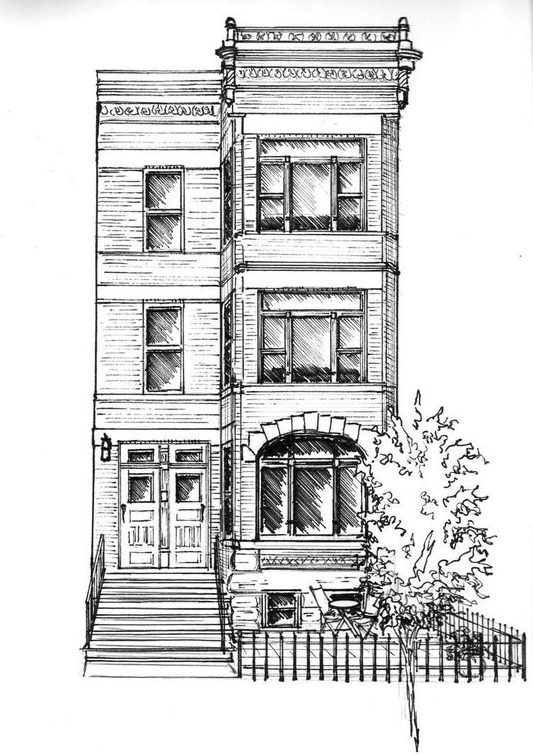
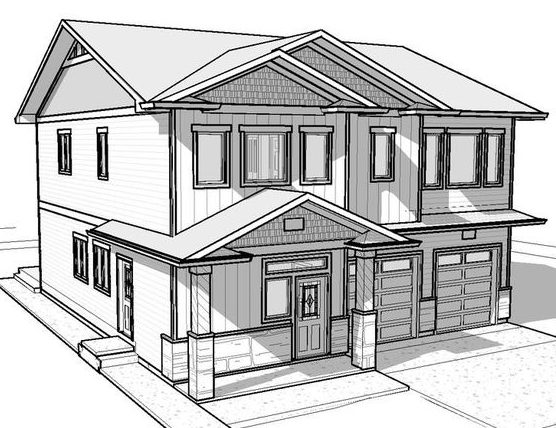
Twenty house drawing references, from very simple front views to 3D perspective sketches and more finished pencil studies. If you are new to this, start with the flat house shapes first; perspective is much easier once the proportions of a basic facade already make sense. Click or tap any image to open the full-size reference.
Jump to: easy houses · 3D & perspective · modern houses · pencil sketches · perspective method
Easy house drawing references — 1–5
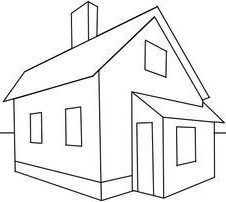
Start with the roof and wall proportions before you add windows. A house can survive simple details; it cannot hide a roof that is too small for the walls or windows that drift randomly across the facade.
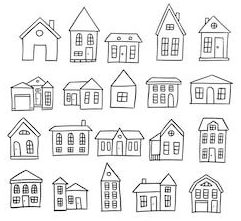
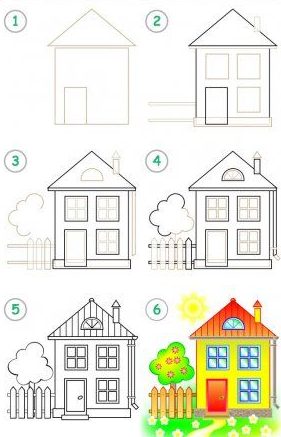
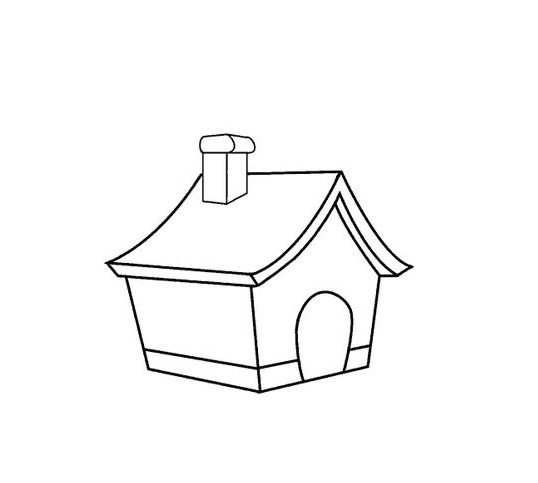
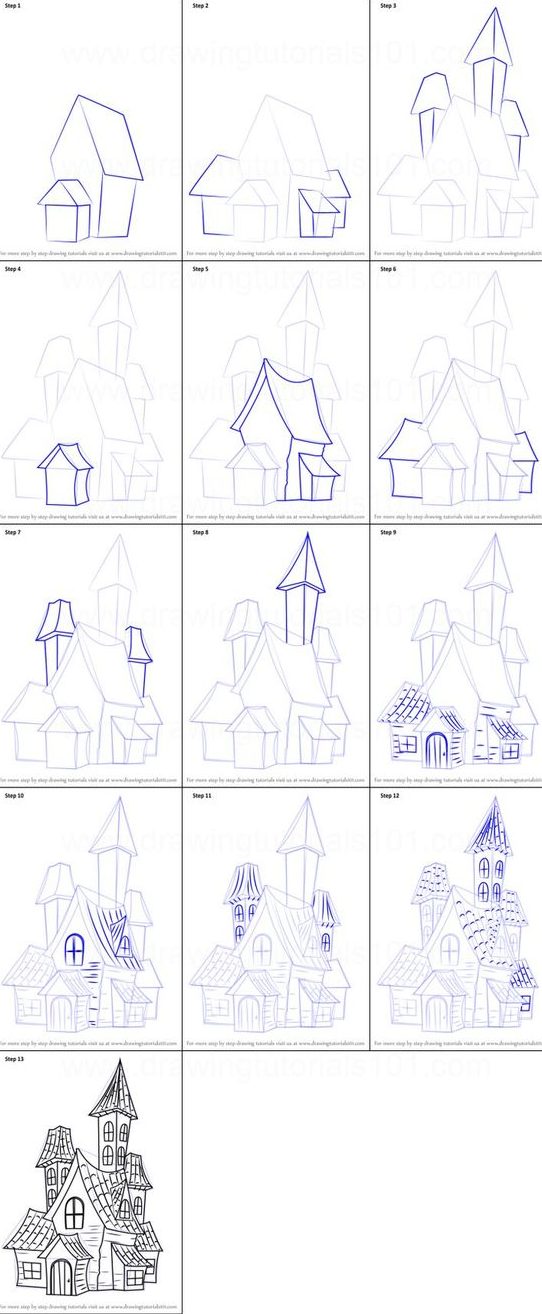
Before perspective: make the front of the house believable
A 3D house is easier when the flat front already feels proportioned. Lightly mark the full wall rectangle first, then place a center line if the facade is roughly symmetrical. Use that line to judge the roof peak, main door and major window groups.
- Roof first, details second. Check the roof width and pitch before adding shingles, gutters or trim.
- Doors establish scale. Once the door height feels believable, compare the windows and floor height against it.
- Group windows before drawing frames. Place simple window boxes first. Subdivide them only after the spacing works.
- Leave margins around openings. Windows pushed too close to corners make the wall feel cramped even if each window is drawn neatly.
- Use repetition carefully. Repeated windows should share height and alignment, but small variations can keep a sketch from feeling mechanical.
A quick test is to hide the roof and details mentally. If the wall rectangle, door and window blocks already read like a plausible facade, you are ready to turn it into space.
3D and perspective houses — 6–10
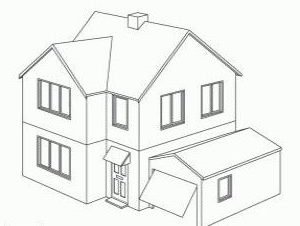
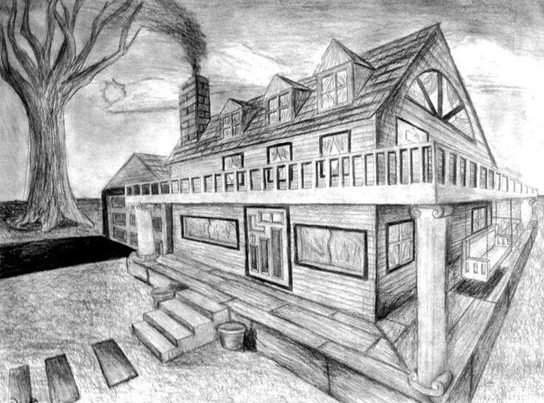
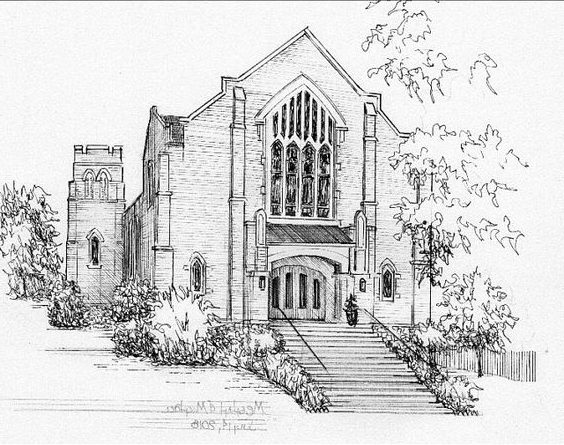
Once you show two sides of the house, the receding edges need a consistent direction. If you are looking straight toward one face, one dominant vanishing point may be enough. If you are looking at the corner of the building and can see two side planes, two-point perspective is usually the cleaner construction.
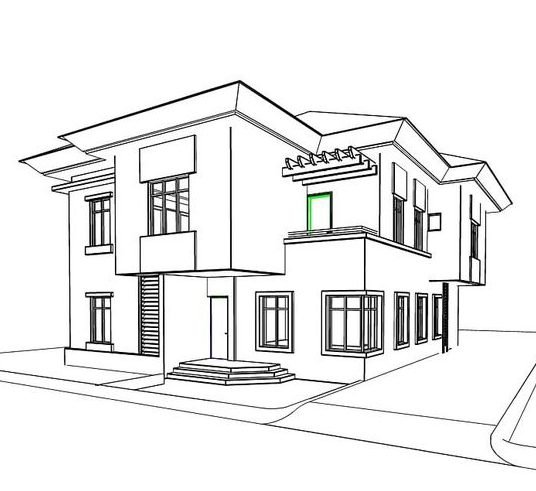
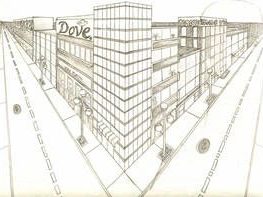
Choose the perspective from the view, not from a rule
Use one-point perspective when one main wall faces you nearly straight on and the depth recedes away from that face. The front wall can stay largely rectangular while the side, path, roof depth or interior edges move toward one vanishing point.
Use two-point perspective when you are looking toward a corner and can clearly see two wall planes. One family of horizontal edges recedes toward a vanishing point on the left; the other family recedes toward a vanishing point on the right.
For ordinary eye-level house sketches, vertical wall edges usually stay vertical. They do not need a third vanishing point unless you are deliberately drawing a dramatic view looking far up or down at a tall building.
Three rules that keep a house from warping
- Parallel in space means shared vanishing logic. The top and bottom of windows on the same wall should agree with that wall’s receding edges.
- Do not mix perspective systems halfway through. If one wall is using a left vanishing point, a window sill on that wall cannot suddenly tilt in an unrelated direction.
- Keep vanishing points farther apart for a calmer view. Points placed very close to the building create dramatic distortion. That can be intentional, but it makes a simple house much harder to control.
How to place doors and windows on a receding wall
Draw each opening first as a simple box attached to the wall plane. Its vertical sides stay vertical; its top and bottom follow the wall’s perspective direction. Only after the box sits correctly should you add frames, panes or trim.
Repeated windows should appear progressively narrower as they recede. Do not guess every window independently. Establish the first opening, then use the wall’s perspective direction and spacing rhythm to guide the next ones.
Modern and architectural house studies — 11–15
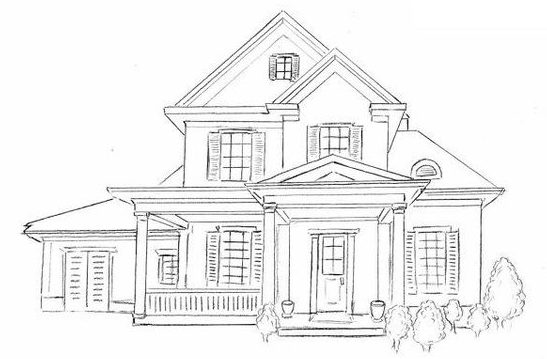
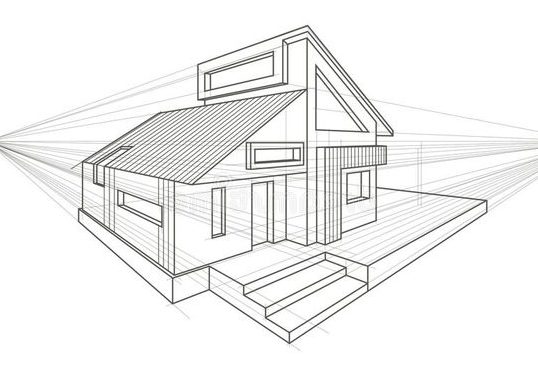
Modern houses are useful because their large wall, roof and window shapes make perspective errors easier to spot. Think of the building as a stack of boxes before you think about style. A projecting room, balcony, garage or upper floor is just another volume attached to the main one.
Build those volumes one at a time. Make sure each new box follows the same horizon and vanishing logic as the main structure. Setbacks should actually recede; balconies should project from a wall plane; flat roofs should share the wall’s perspective rather than floating as unrelated parallelograms.
Large windows are especially revealing. If a glass panel sits on a receding wall, its top, bottom and frame divisions have to belong to that plane. Draw the large window opening first, then divide it into panes. Do not construct every pane independently.
Finished house sketches — 16–20
A reliable way to build a 3D house from scratch
- Set eye level. Draw the horizon lightly. A low horizon lets you see more of the building’s upper planes; a high horizon lets you see more ground.
- Choose one-point or two-point perspective. Use the view of the house to decide, not habit.
- Draw the main wall box. Keep it simple until the width, height and depth feel convincing.
- Check the verticals. In a normal eye-level view, walls, door jambs and window sides should generally remain vertical.
- Add the roof as a volume. Establish the roof ridge, eaves and overhang before shingles or texture.
- Cut in doors and windows. Place large opening boxes on the wall planes, then subdivide them.
- Add secondary volumes. Porches, garages, dormers, balconies and chimneys should inherit the perspective of the structure they attach to.
- Clean the construction. Strengthen the useful lines and erase only after the building works in space.
How to draw a gable roof without guessing
A simple pitched roof is easier if you treat it as geometry rather than a triangle placed on top of a box. First identify the wall that receives the triangular gable. Find the midpoint of that wall’s top edge, raise the roof peak from that midpoint, then connect the peak to the two upper corners.
The ridge then travels backward through space. Its direction must agree with the building depth. On a two-point house, do not send both roof slopes to random vanishing points. Separate the roof into its actual edge families: the ridge, eaves and wall-parallel edges each follow the direction they would have if the roof were a solid object.
Roof overhangs should project consistently beyond the walls. Draw the main roof plane first, then offset the eave. If you draw the overhang independently on each side, the roof often looks twisted.
Chimneys, dormers and porches are smaller perspective problems
A chimney is a box sitting on a roof plane. Start with its base where it meets the roof, then build upward with vertical sides. A dormer is another small box emerging from the roof. A porch is a shallow box attached to a wall.
Thinking this way keeps architectural details connected to the main structure. The mistake to avoid is drawing a convincing house first and then decorating it with details that follow a different perspective system.
How to repeat windows without measuring every one
For a beginner sketch, you do not need a full architectural measuring construction. Start with the first and last window positions, then divide the space between them visually. Keep the tops and bottoms aligned to the same receding guides.
As windows move farther away, their apparent width compresses. Equal real-world spacing does not look equally wide on the page. If repeated windows remain identical rectangles all the way down a receding wall, the perspective will feel flat.
Use line weight to separate near, far and hidden edges
Once the construction works, vary line weight instead of outlining everything equally. Near outside corners can be slightly darker. Far edges can stay lighter. Window frames and siding should usually be quieter than the main silhouette.
Do not darken every perspective guide. Construction lines should disappear into the final drawing. The goal is for the house to feel solid without showing the full scaffolding used to build it.
Simple house shading: think in planes
Before shading individual windows or roof tiles, assign one broad value to each major plane. If the front wall faces the light, keep it lighter. Let the side wall be a middle tone and the underside of the roof or porch become darker.
- Light plane: leave most of the paper visible.
- Middle plane: use an even, light graphite layer.
- Dark accents: reserve them for window interiors, deep overhangs, door recesses and cast shadows.
This three-value approach makes the building read as a volume before texture is added. Brick, wood grain and roof tiles should sit on top of the value structure, not replace it.
Seven perspective mistakes that make houses look wrong
- Different windows use different vanishing directions. Group openings by wall plane and make them obey the same receding guides.
- The roof peak is off-center for no reason. Find the wall midpoint before raising the gable peak.
- The roof floats above the walls. Check where the eaves actually meet the wall tops and how far the overhang projects.
- Every horizontal line is parallel on the page. Receding edges need convergence unless the view is effectively orthographic.
- Every line converges. Vertical edges usually stay vertical in a normal eye-level view.
- Vanishing points are too close. Excessive convergence makes an ordinary house feel distorted. Move the vanishing points farther apart for a calmer view.
- Details arrive before the box works. Remove siding, plants and windows mentally. If the wall box and roof mass are wrong, redraw those first.
A fast diagnostic when your house looks strange
Cover or ignore all small details and ask four questions in order:
- Box: do the main wall planes feel solid?
- Convergence: do matching receding edges agree?
- Roof: does the ridge sit over the building and do the eaves follow the walls?
- Openings: do the doors and windows actually belong to their wall planes?
Do not troubleshoot the chimney before those four pass. Architectural drawings become much easier when errors are corrected from large structure to small detail.
A four-drawing practice ladder
- Drawing 1 — flat facade: use References 1–5. Concentrate on roof, door and window proportion.
- Drawing 2 — one visible side: use References 6–10. Build one main box and make all depth edges agree.
- Drawing 3 — corner view: draw a simple two-point house with no texture. Add only a door and four windows.
- Drawing 4 — architectural variation: use References 11–20 and add one secondary volume such as a garage, balcony, porch or dormer.
Then redraw Drawing 3 without looking at the construction steps. If the wall planes and roof still work, you have learned more than the appearance of one reference.
House drawing questions
Should I use a ruler?
Use one if clean perspective is the goal. Then repeat a small version freehand. The ruler teaches alignment; the freehand version checks whether you understood the directions.
Why do my windows look pasted onto the wall?
Their top and bottom edges are probably ignoring the wall perspective. Draw each window first as a box sitting on the plane, then add frames and panes.
How do I know whether to use one-point or two-point perspective?
If one main wall faces you directly, one-point perspective often works. If you are looking toward a building corner and can see two receding wall planes, two-point perspective is usually the better fit.
Why does my roof look crooked even when the walls are fine?
Check the gable midpoint, ridge direction and eave overhang. Roofs often fail because they are drawn as decoration after the box instead of constructed as a second volume.
Where to go next
For the deeper theory behind horizon lines and vanishing points, use the one-point perspective guide. For broader object construction and beginner exercises, continue with the 43 drawing tutorials.
Reference-use note
This is a legacy drawing gallery, and original artist attribution or reuse licensing is not documented for every reference. Use the images for drawing study and perspective practice; do not assume the source artwork itself is cleared for commercial republication.


These drawings help me. Thank you!