
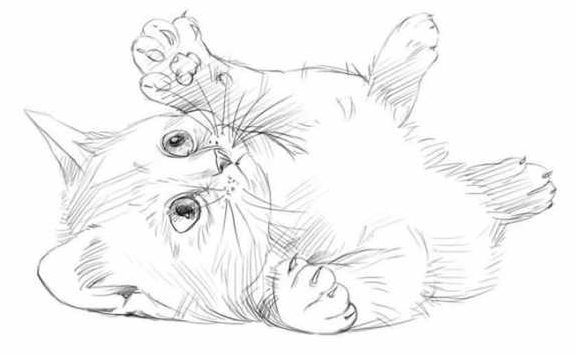
Eighteen cat drawing references, from very simple cartoons to head studies, sleeping cats and more realistic sketches. Cats are easier to draw when you think about the spine and head angle first; the whiskers and fur can wait. Click or tap any image to open the full-size reference.
Jump to: easy cats · heads & faces · full-body cats · sketch & realistic studies
Easy cat drawing tutorials — References 1–4
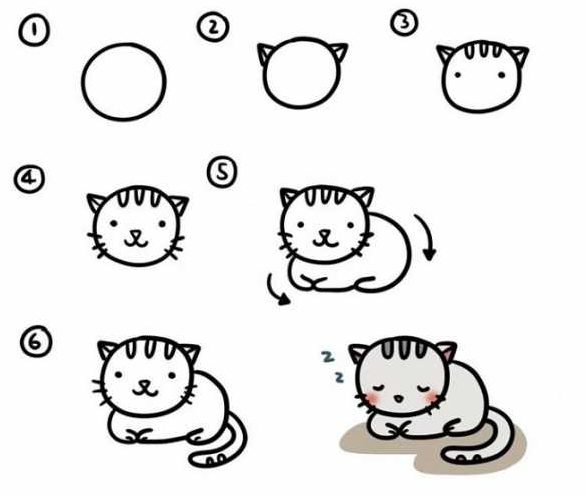
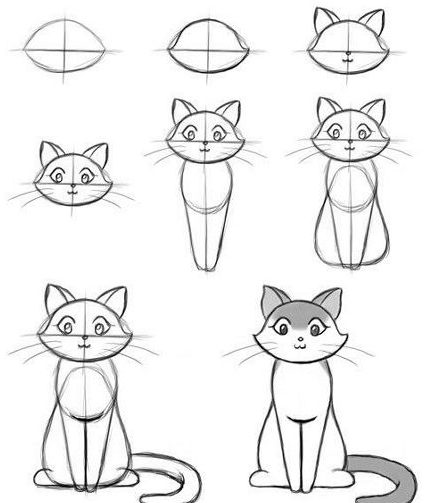
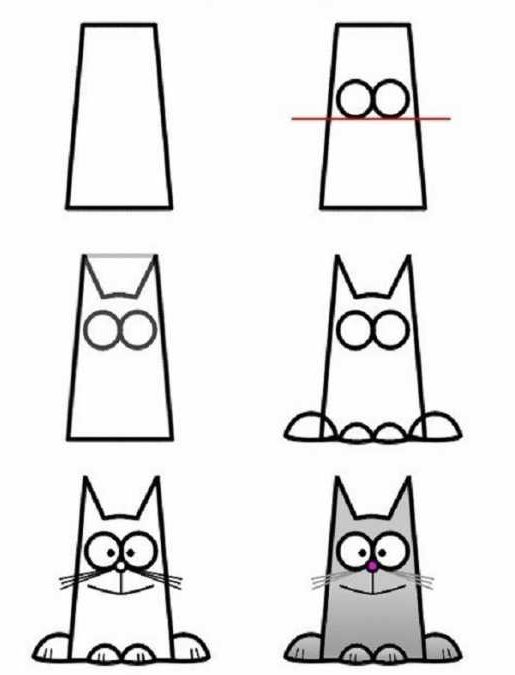
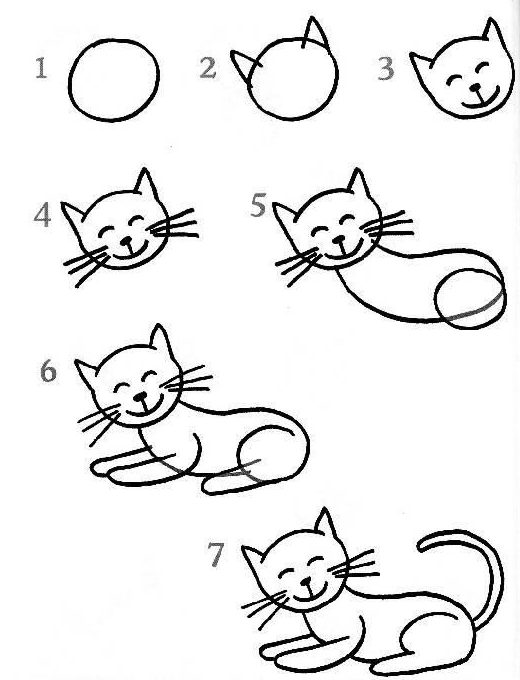
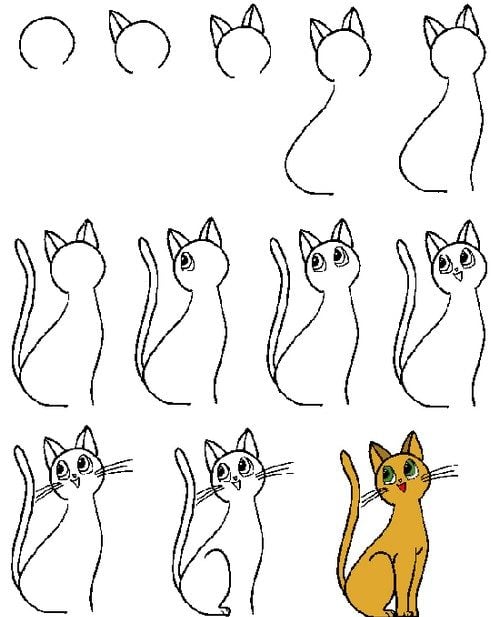
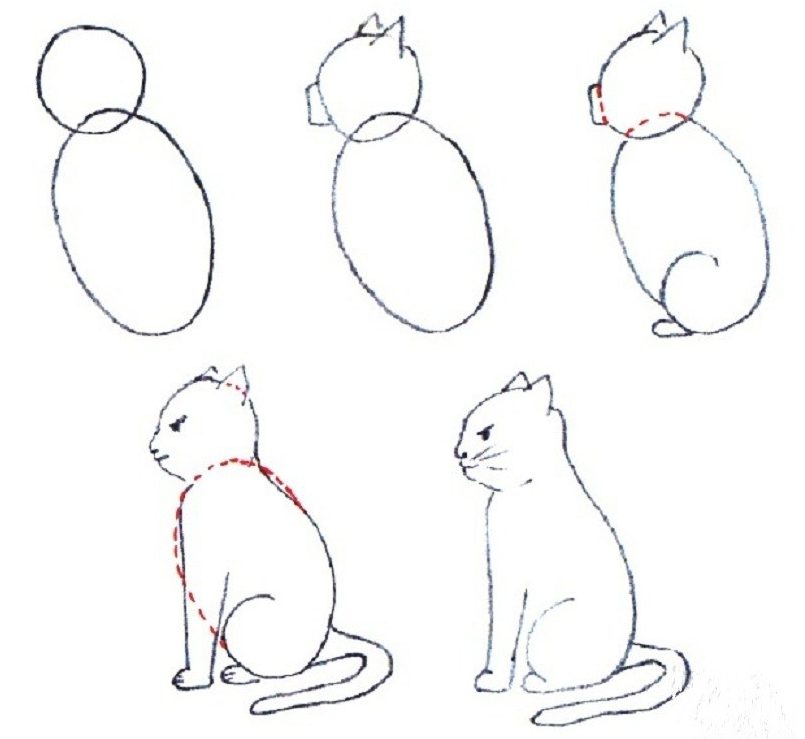
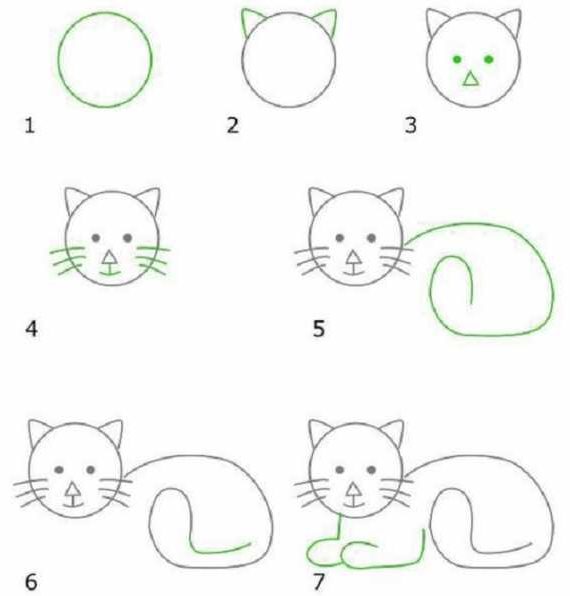
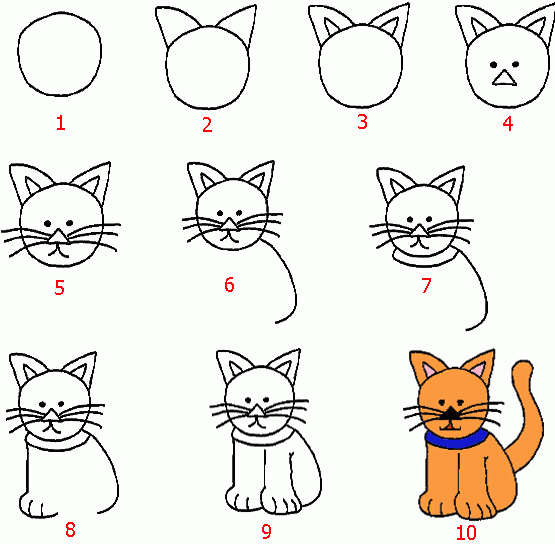
Start here if you want the construction to stay obvious. Keep the head, chest and hips as simple masses, then use the tail as part of the gesture rather than adding it at the end like an accessory.

What makes a cat read as a cat
The ears sit on top of the skull rather than growing from the sides of the face, and the muzzle projects slightly forward even in a simplified drawing. Place those forms before whiskers or eye highlights.
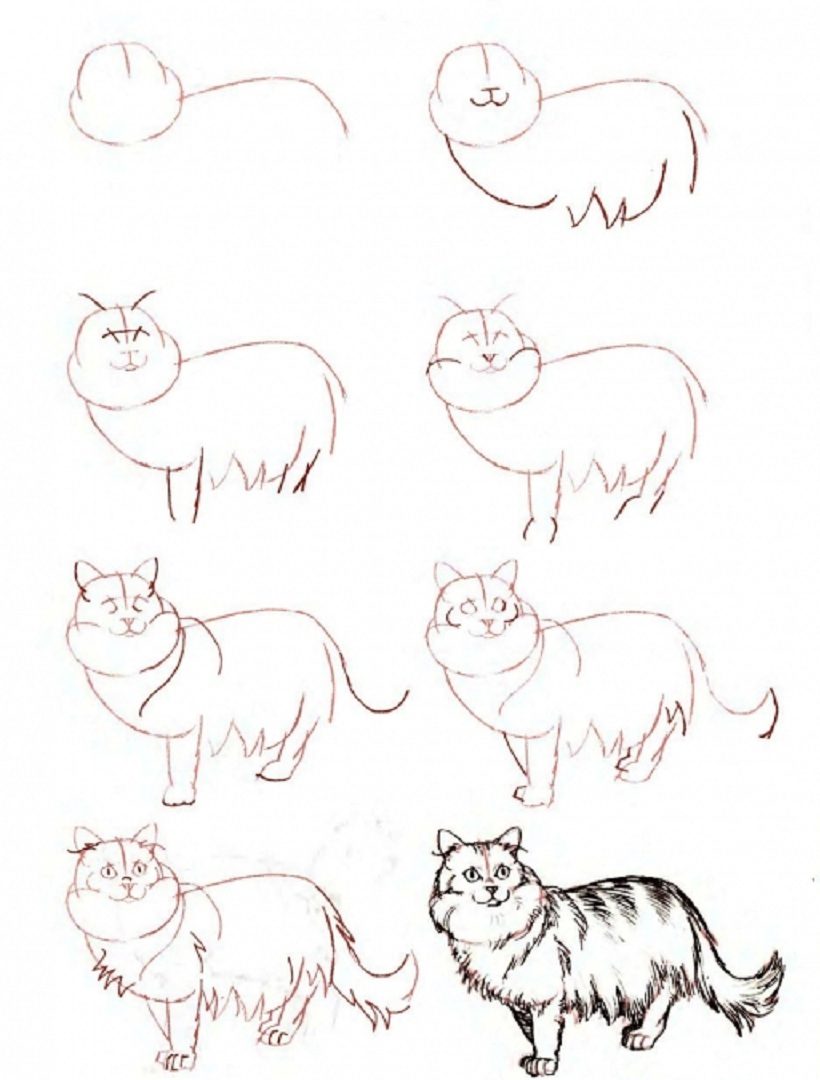
For the body, draw one loose line through the spine before you place the chest and hips. Cats bend through the torso more noticeably than many dogs, so a perfectly straight body can make the pose feel stiff. Let the tail continue that movement whenever the reference allows it.
Keep the paws small until the limb angles are settled. Fur comes last; a few breaks around the chest, cheeks and tail are usually enough once the silhouette already works.
Head, face and simple cat studies — References 5–8
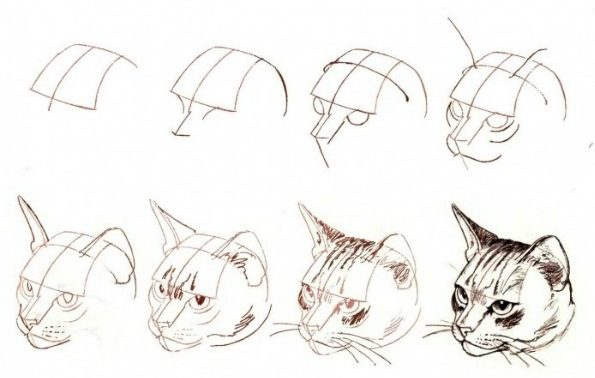
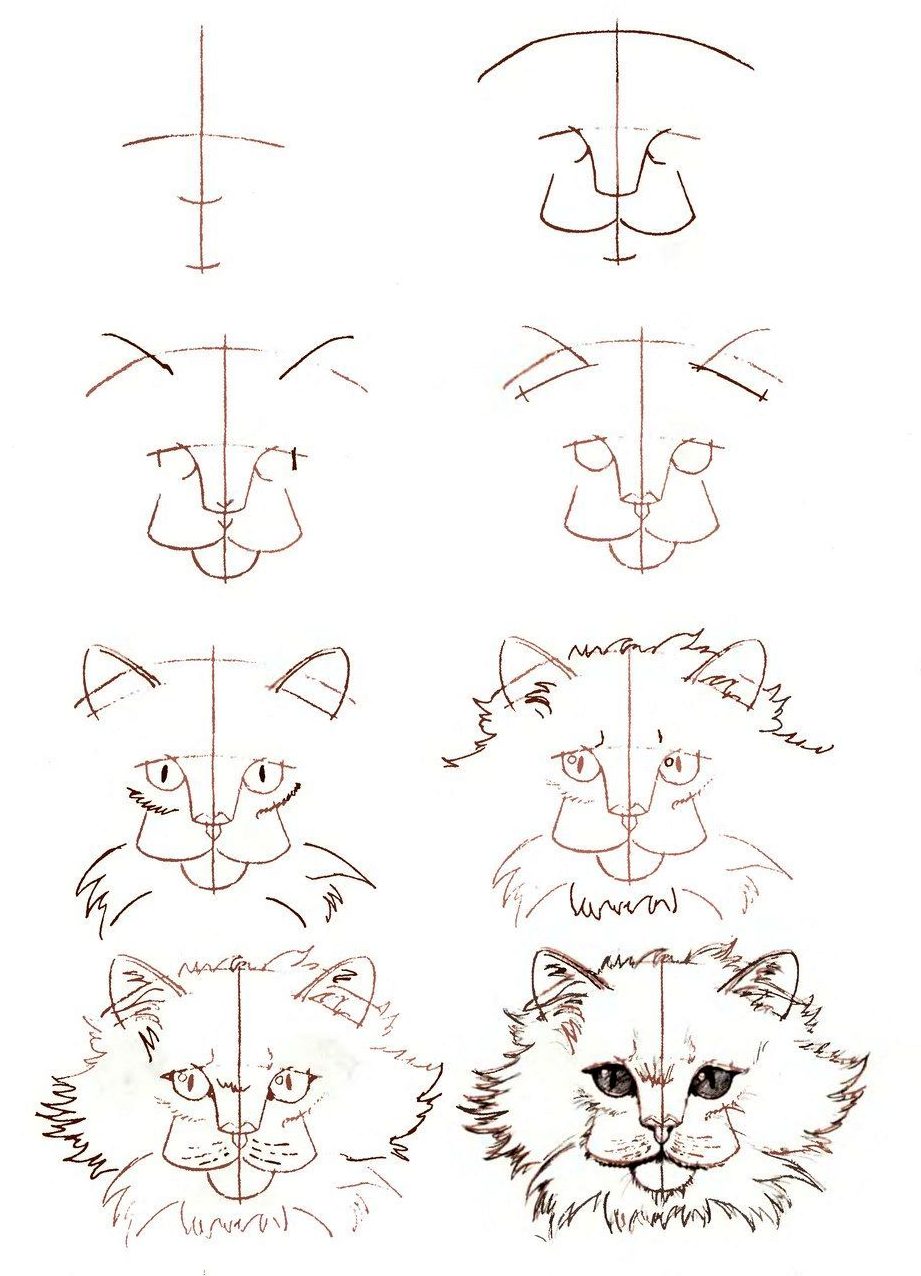
For head studies, keep a center line visible until both eyes and the nose are placed. The ears should follow the skull angle; drawing two identical upright triangles can flatten a turned head.
Full-body beginner cats — References 9–14
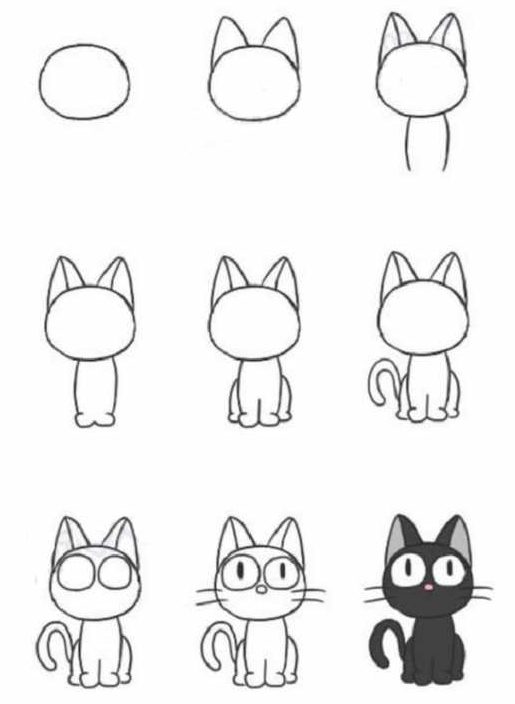
On full-body cats, compare the chest and hip masses before the legs. The paws are small, but the shoulder and thigh shapes underneath them control whether the pose feels balanced.
Sketch and style studies — References 15–18
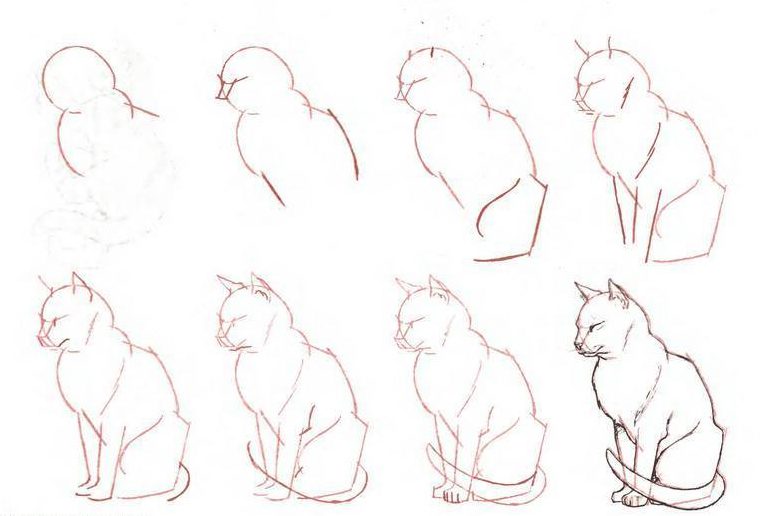
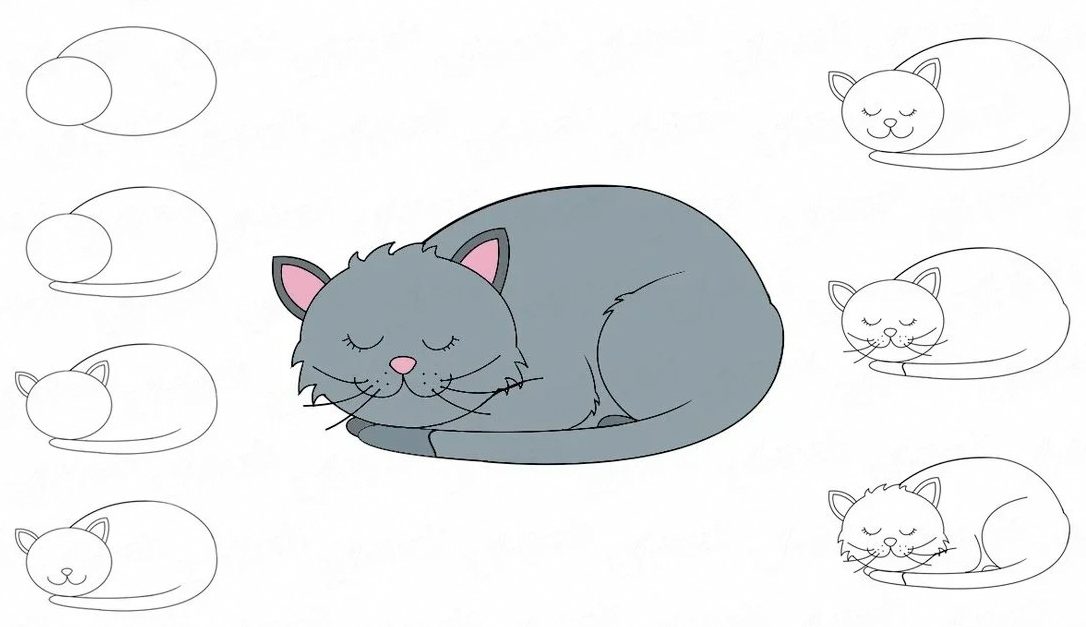
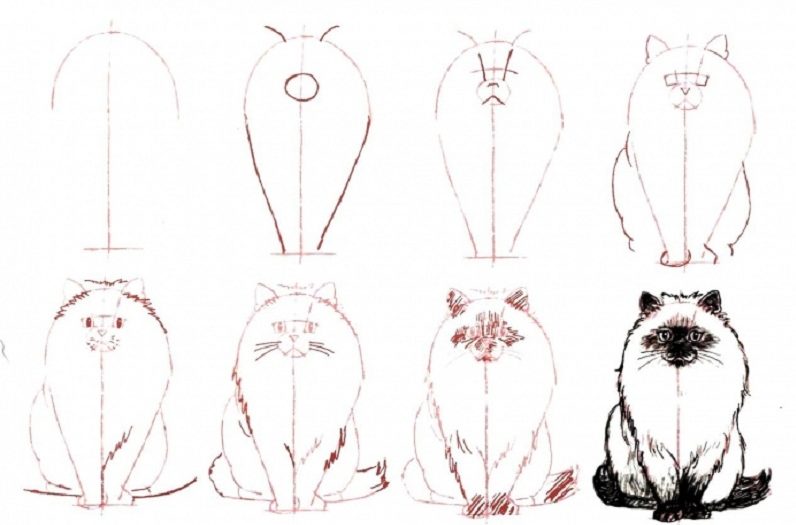
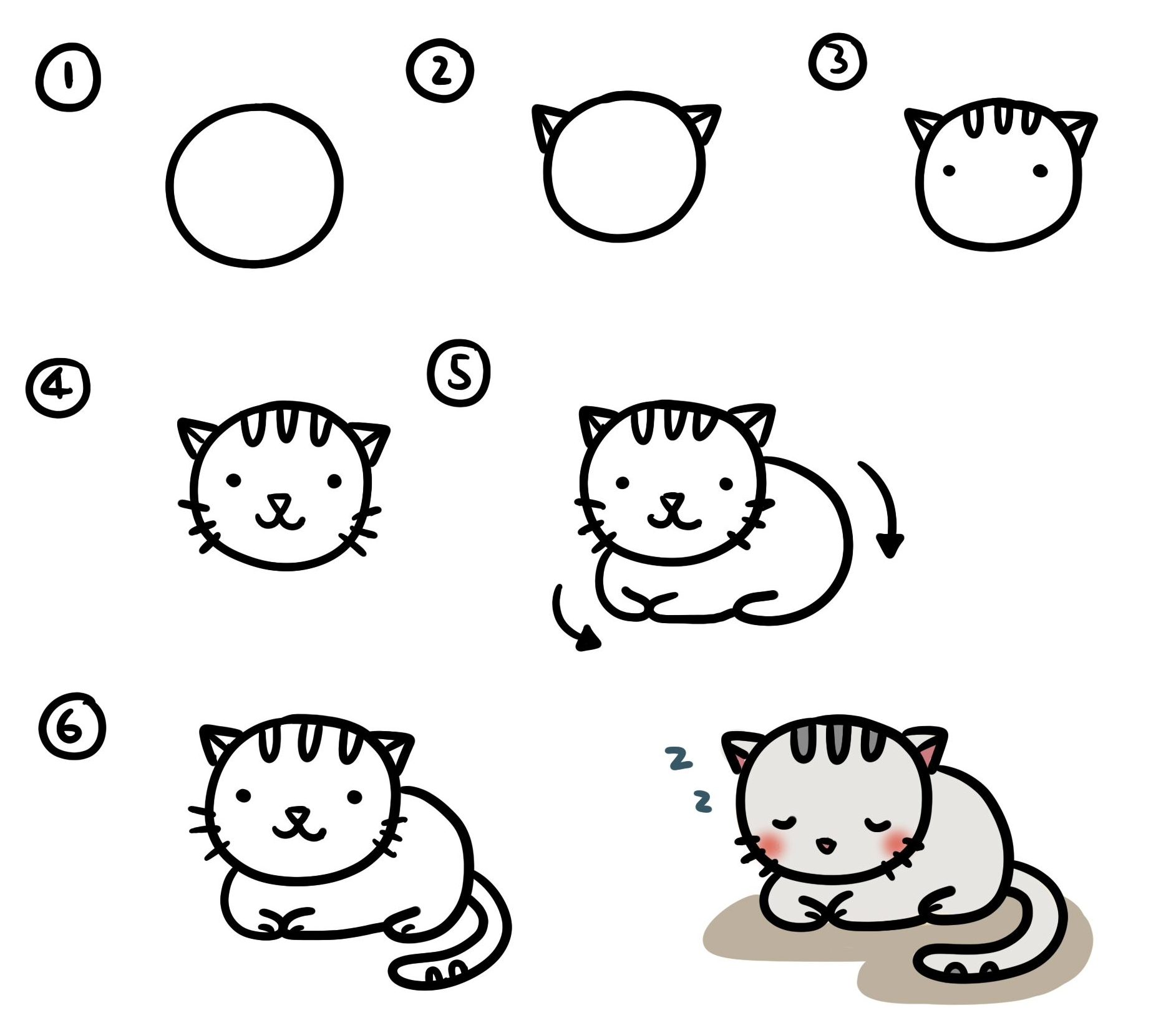
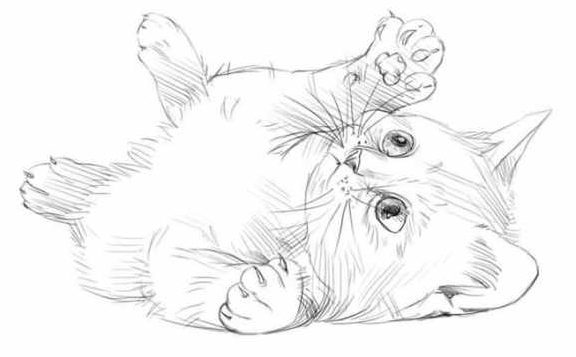
The last four are useful because they solve the subject differently. Compare how much information each drawing needs before it still reads as a cat. That is a better lesson than simply adding more fur.
Three cat-drawing checks before you finish
- Ears: do they follow the skull angle, or are they pasted on symmetrically?
- Spine and tail: do they support the same movement through the pose?
- Paws: are they attached to believable limb directions rather than floating under the body?
For another animal, use the dog drawing references or the animal drawing page for kids. For a broader mix of subjects, return to the beginner drawing tutorials.


cute