
These 19 beach coloring pages stay focused on the beach itself: sand, water, simple summer scenes and a few people or beach objects. The collection is ordered from the easiest preschool/toddler sheets into broader kids’ summer pages and then general beach printables, so you can choose without scanning the whole page first.
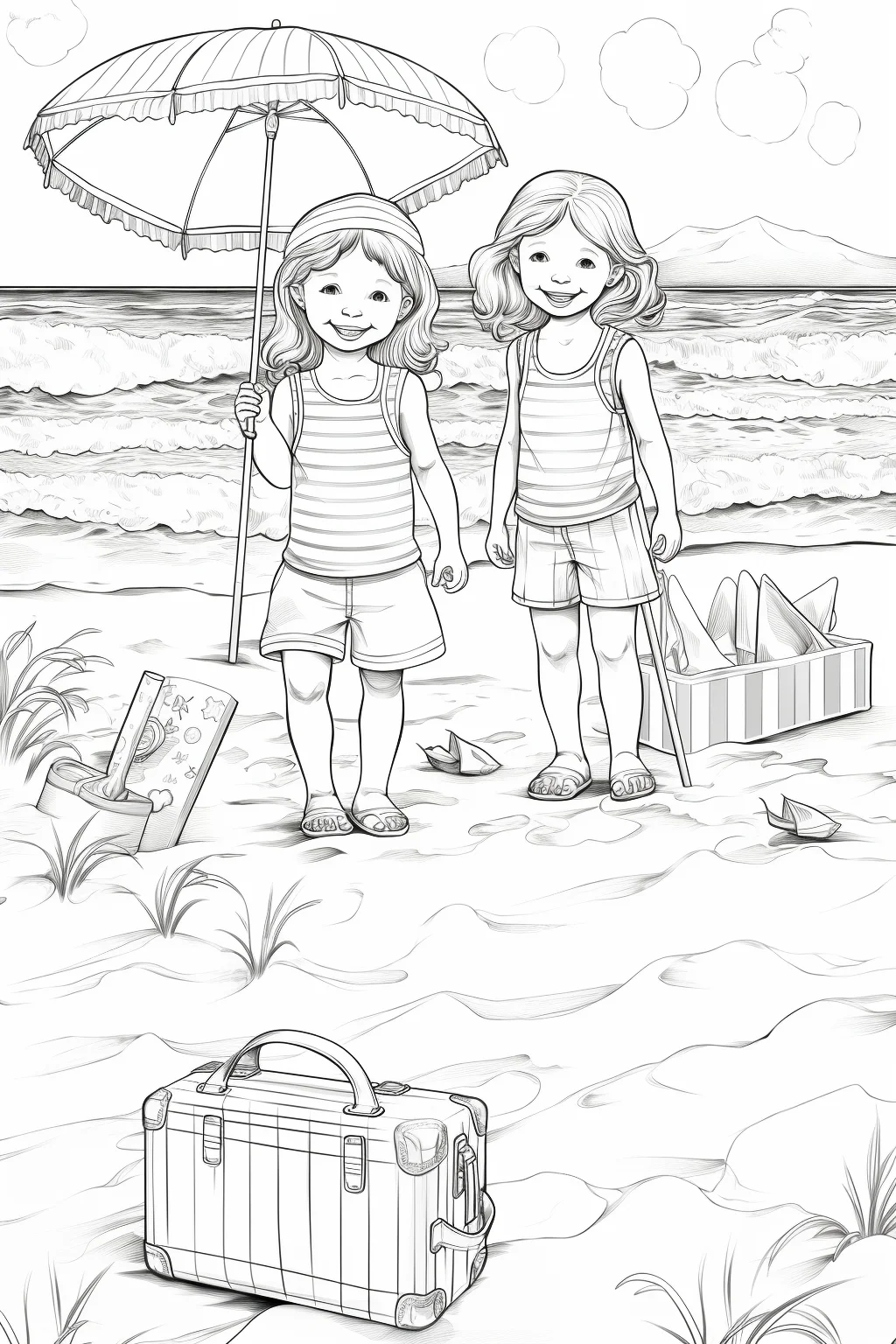
Choose a beach page
| If you want… | Start here |
|---|---|
| Preschool or toddler beach pages | Sheets 1–7 |
| Kids’ beach and summer pages | Sheets 8–12 |
| General beach printables | Sheets 13–19 |
Keep sky, water and sand from becoming three flat stripes
You only need small changes. Keep the sky light near the horizon, make the water a little deeper in color away from the shore, and add a second warm tan or ochre around footprints, sandcastles or foreground objects. Leave wave foam white or nearly white. Those few shifts give the scene depth without turning a children’s page into a landscape-painting exercise.
Use the strongest colors on umbrellas, buckets, swimsuits or other small objects. If everything in the background is equally bright, the main activity can disappear. Crayons are fine for broad sky, water and sand; colored pencils are easier for people and smaller beach details.
A quick beach-coloring order
- Color the main person, animal or beach object first.
- Add the sand, keeping a little variation around objects.
- Color the water and leave foam light.
- Add the sky with a lighter value near the horizon.
- Finish with bright accents such as umbrellas, toys or towels.
Do a 90-second horizon test first
On a scrap of the same paper, make three small swatches: your sky color, your water color and your sand color. Now squint at them or hold the paper at arm’s length. If the sky and water merge into one blue block, lighten the sky or shift the water slightly toward turquoise. If the sand is the darkest swatch, lighten it unless the page is meant to show sunset or wet sand.
Then draw one short horizontal water stroke and leave a thin strip of white beside it. That white gap is your wave-foam test. If it is still visible from arm’s length, you have enough contrast to keep the shoreline readable. This tiny check prevents the most common beach-page problem before a large area has already been filled.
If you want a larger collection specifically aimed at preschoolers, use our easy summer coloring pages for preschoolers. For mixed ages and non-beach summer subjects, browse the broader summer coloring pages collection. Adults looking for denser scenery and smaller details should use the separate summer beach coloring pages for adults instead; this page stays focused on kid-friendly beach sheets.
Match the page to the skill you want to practice
Do not judge difficulty only by how “cute” or simple the drawing looks. Before printing, inspect the smallest enclosed spaces. If a crayon tip is wider than several important areas—fingers, shell edges, swimsuit straps or small beach toys—the page will demand more precision than its overall design suggests.
- For control: choose a Sheet 1–7 page and try to fill one large shape evenly without repeatedly tracing the outline.
- For color planning: use Sheets 8–12 and pick five colors before starting. Reuse them instead of inventing a new color for every object.
- For depth: use Sheets 13–19 and make only three decisions first: palest sky at the horizon, slightly stronger water, and the strongest accent on a foreground object.
If markers are the chosen tool, print one small corner or test on scrap paper from the same printer pack first. A marker that feathers through thin copy paper can make narrow beach details frustrating even when the drawing itself is easy. For broad preschool pages, crayons usually tolerate ordinary printer paper better; for pencils, a slightly toothier matte sheet makes light-to-dark layering easier.
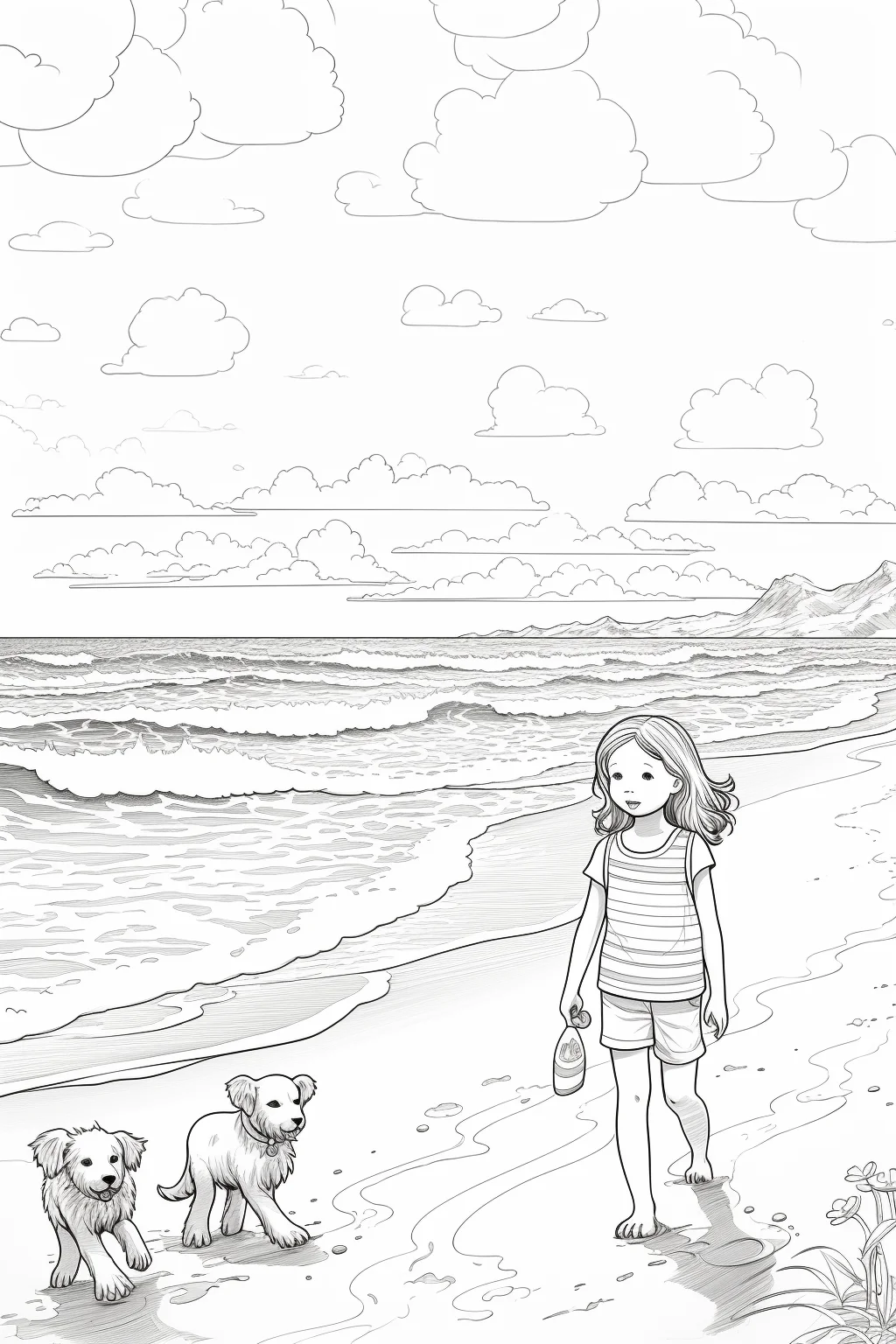
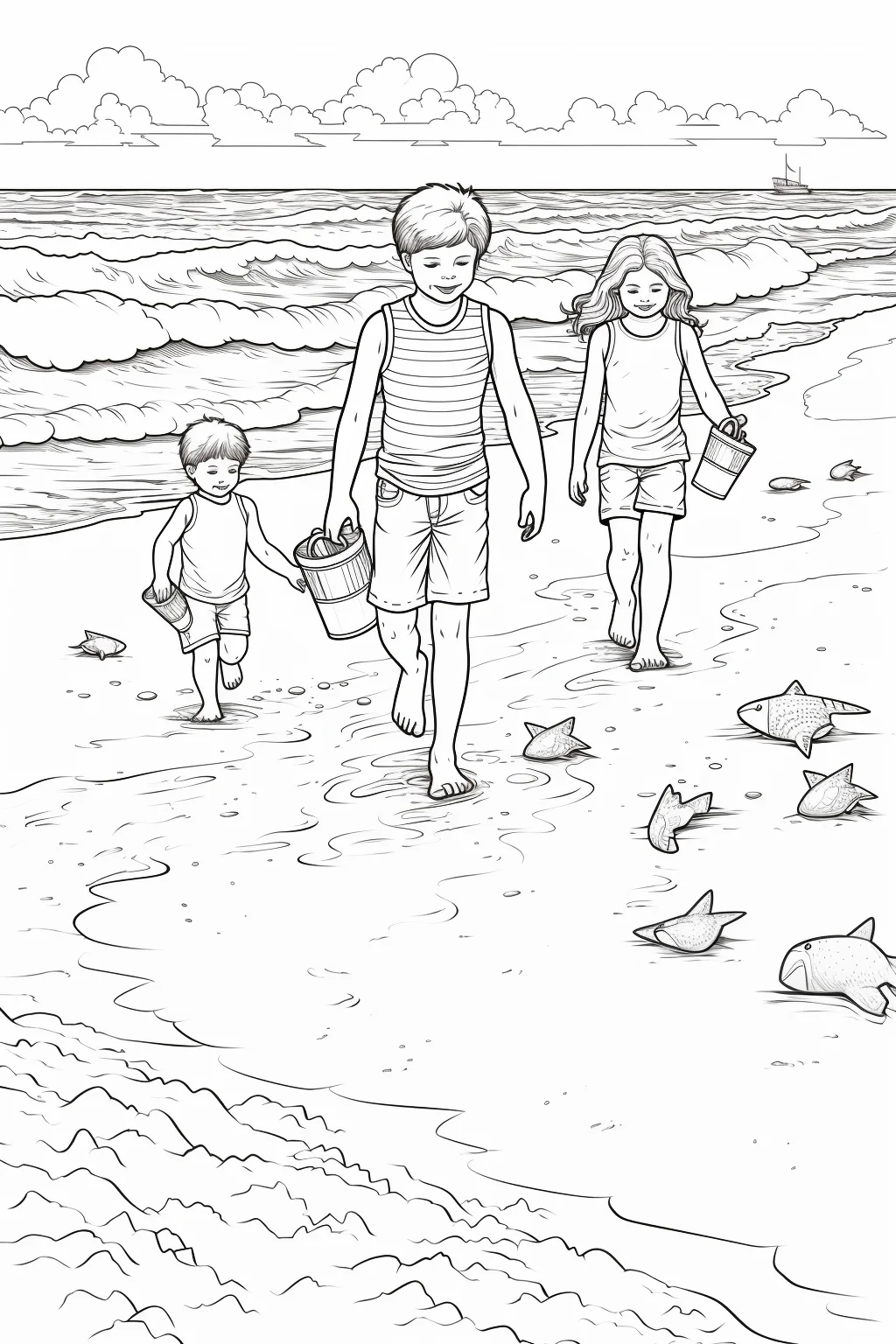
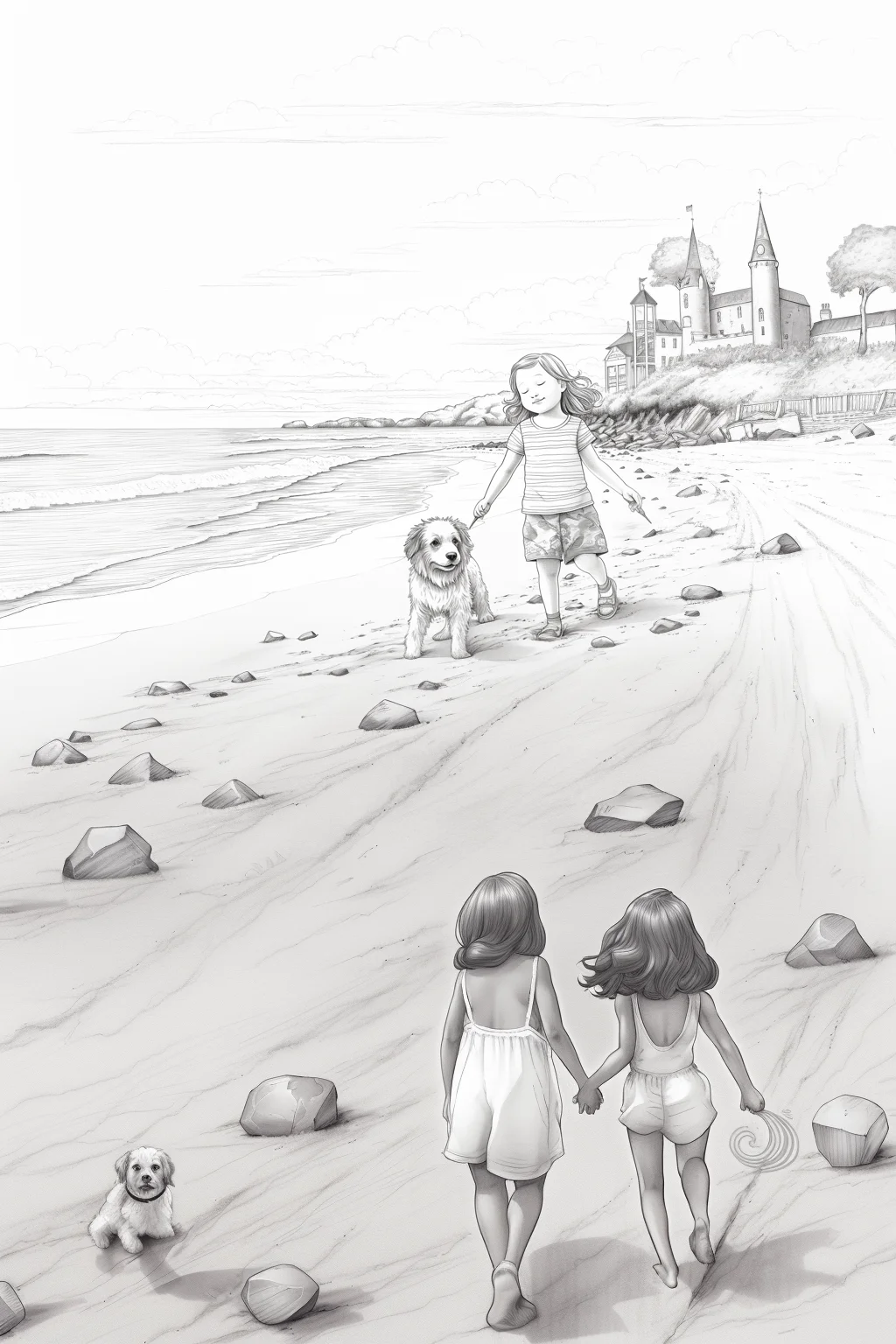
Easy beach pages for preschoolers — Sheets 1–7
These are the quickest sheets in the collection and work well with crayons or broad washable markers.
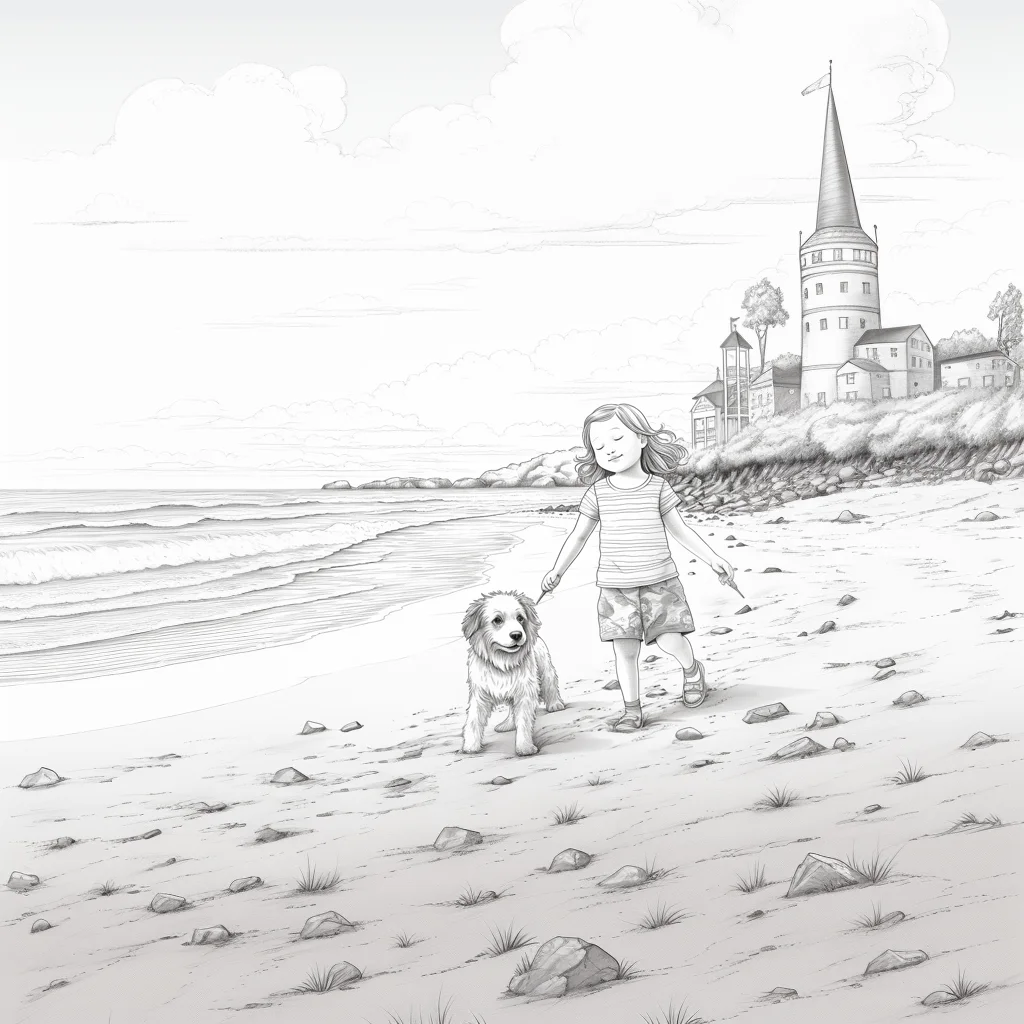
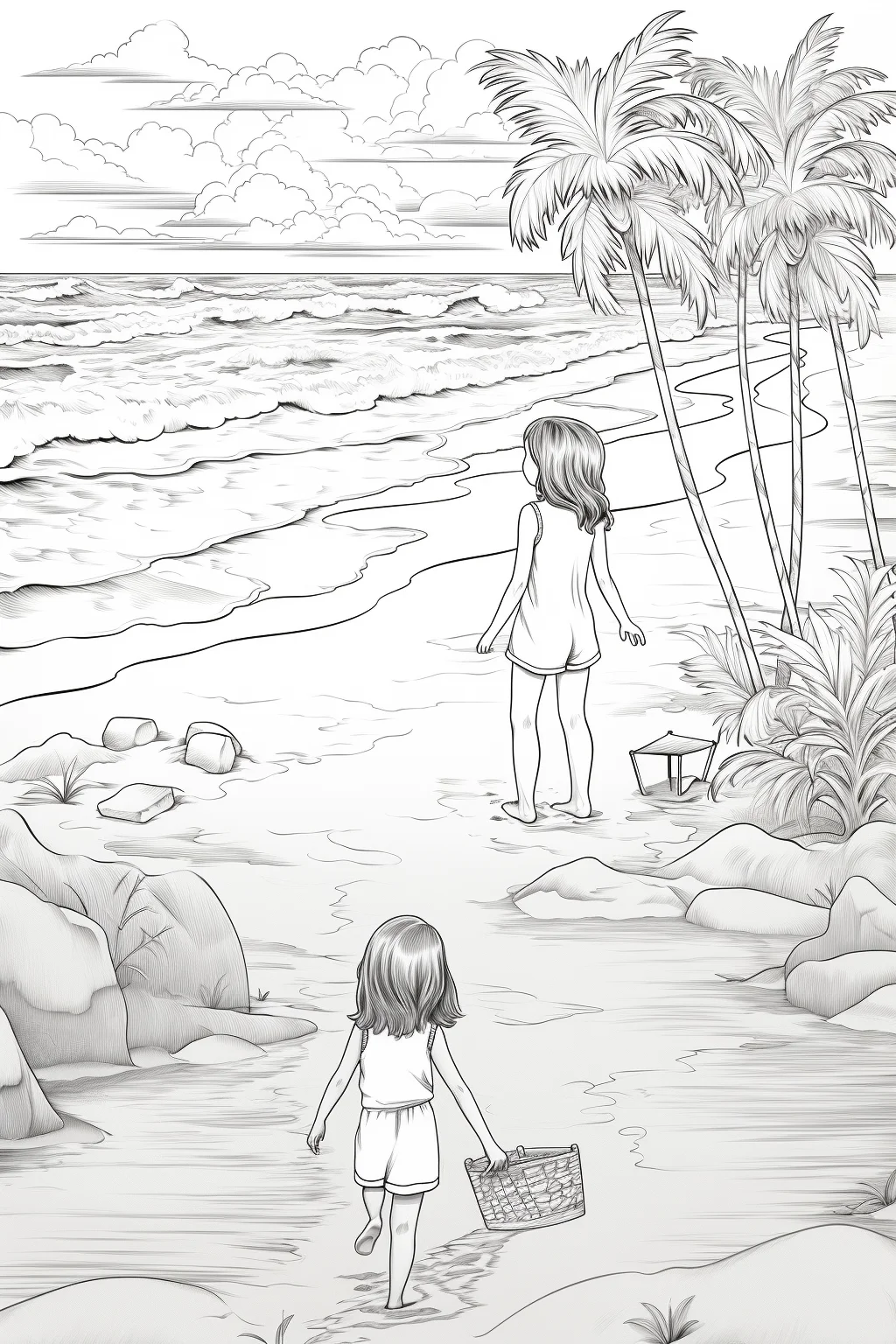
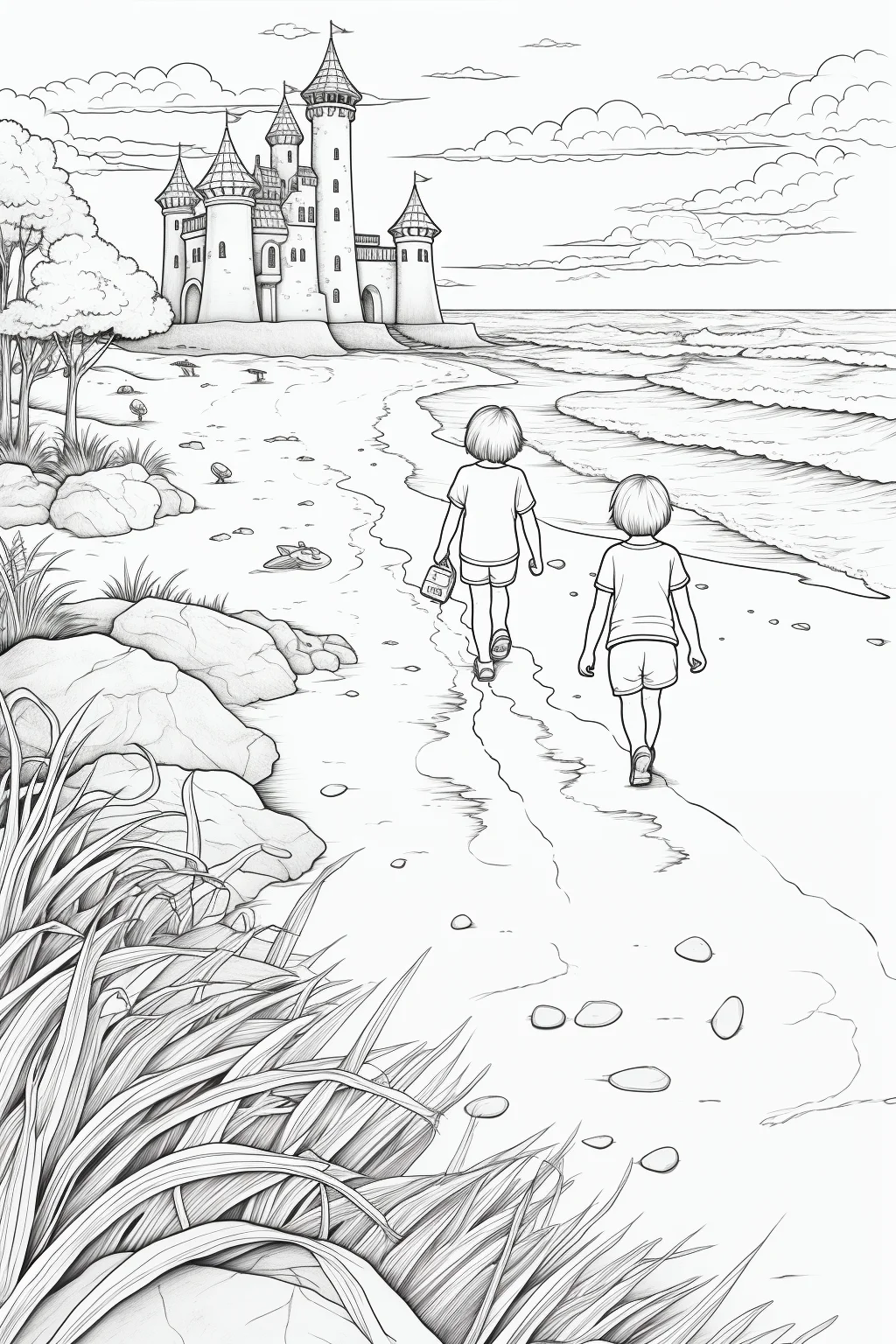
Kids’ beach and summer pages — Sheets 8–12
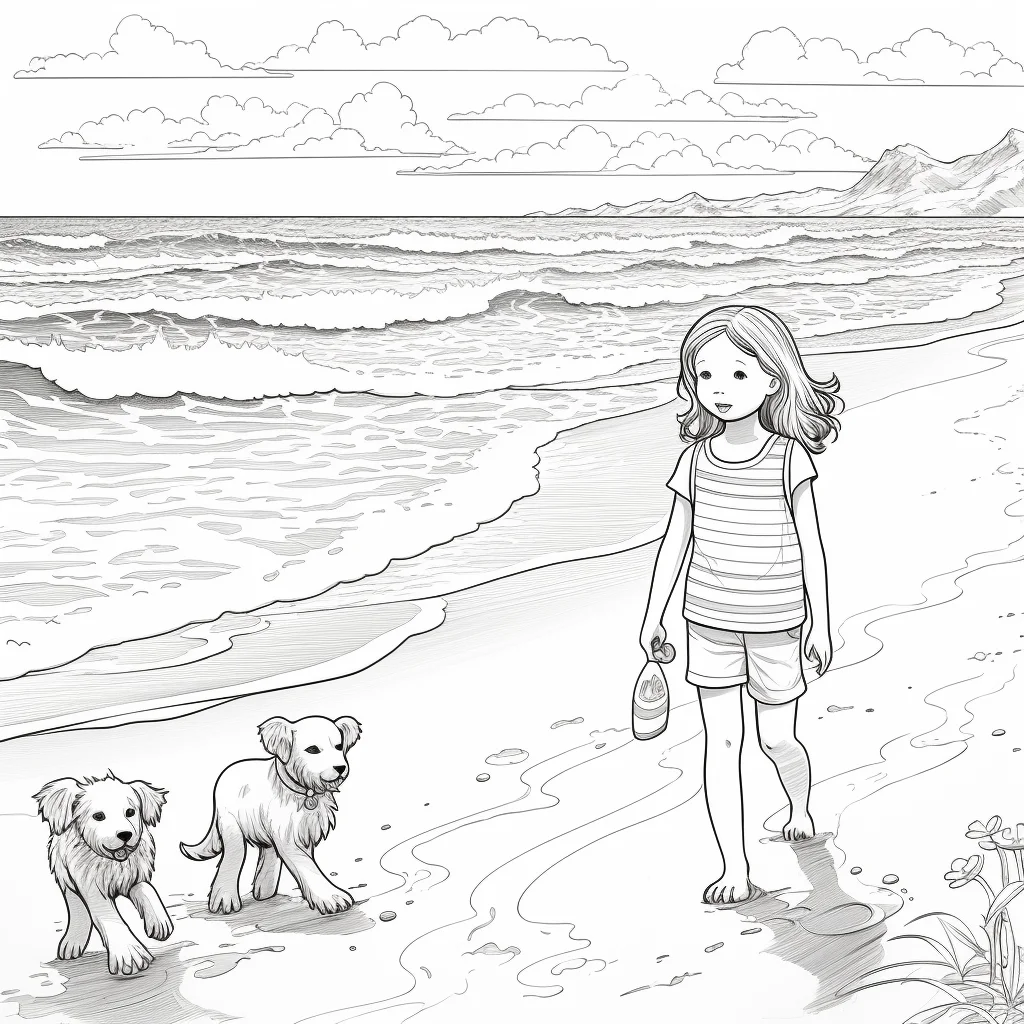
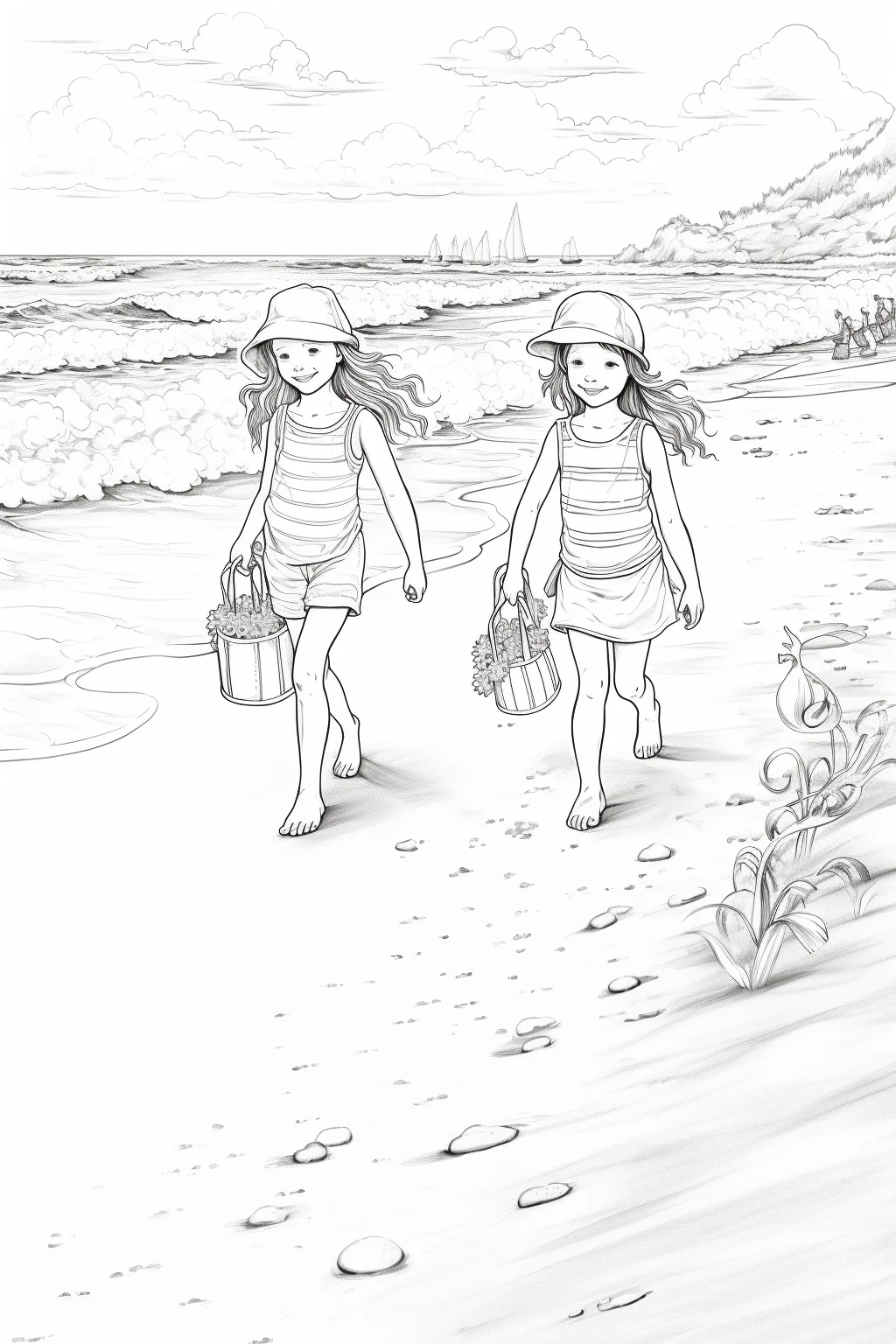
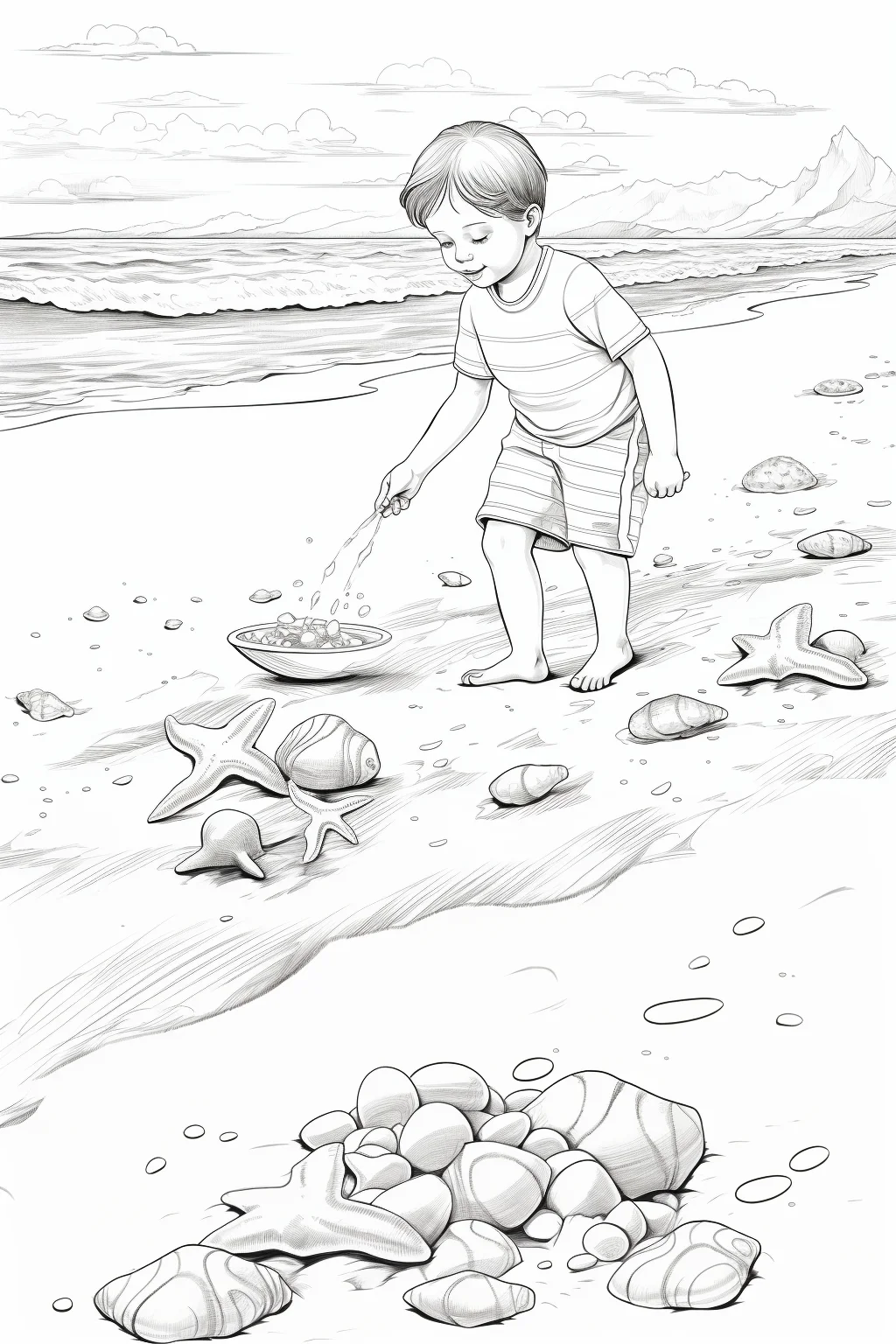
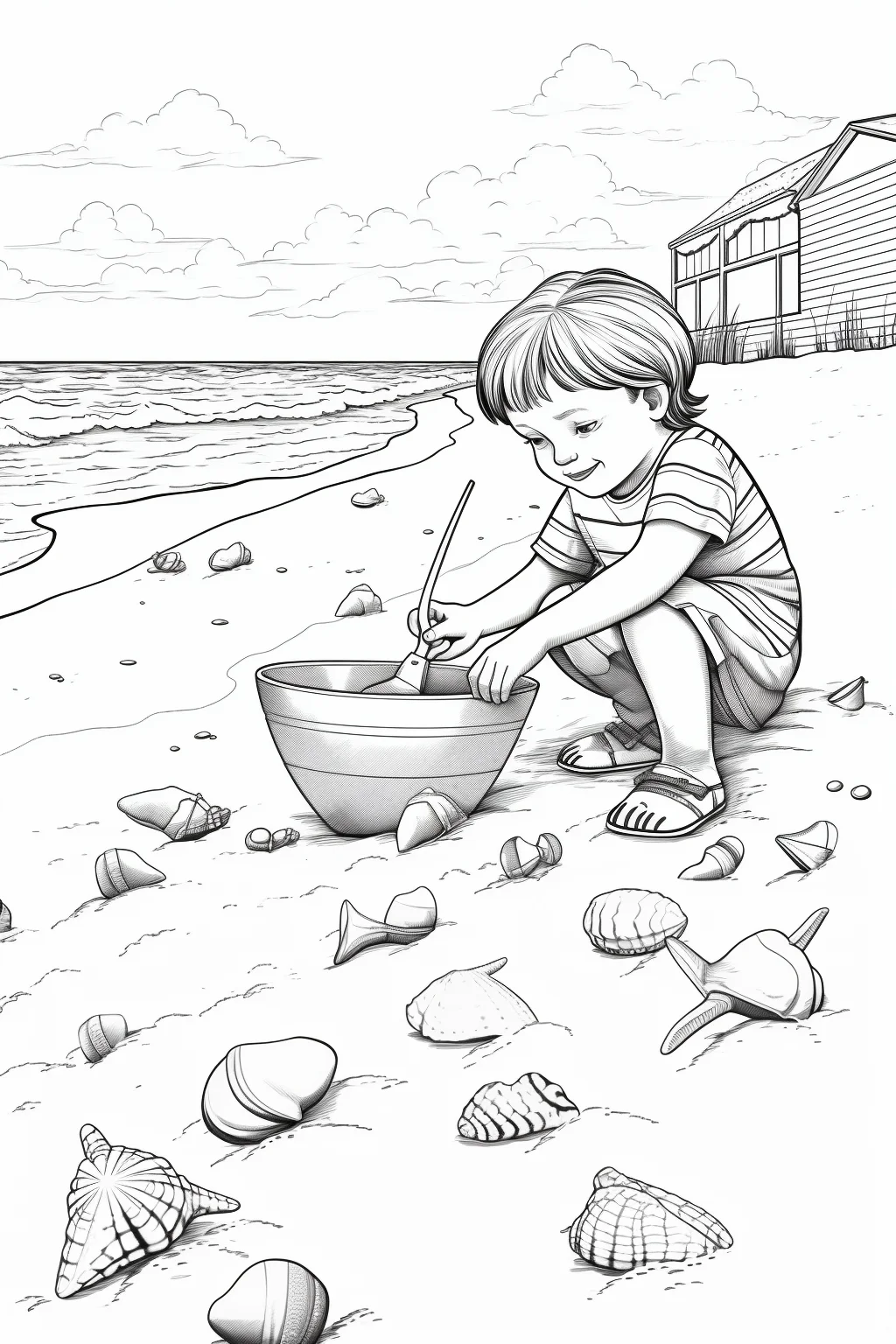
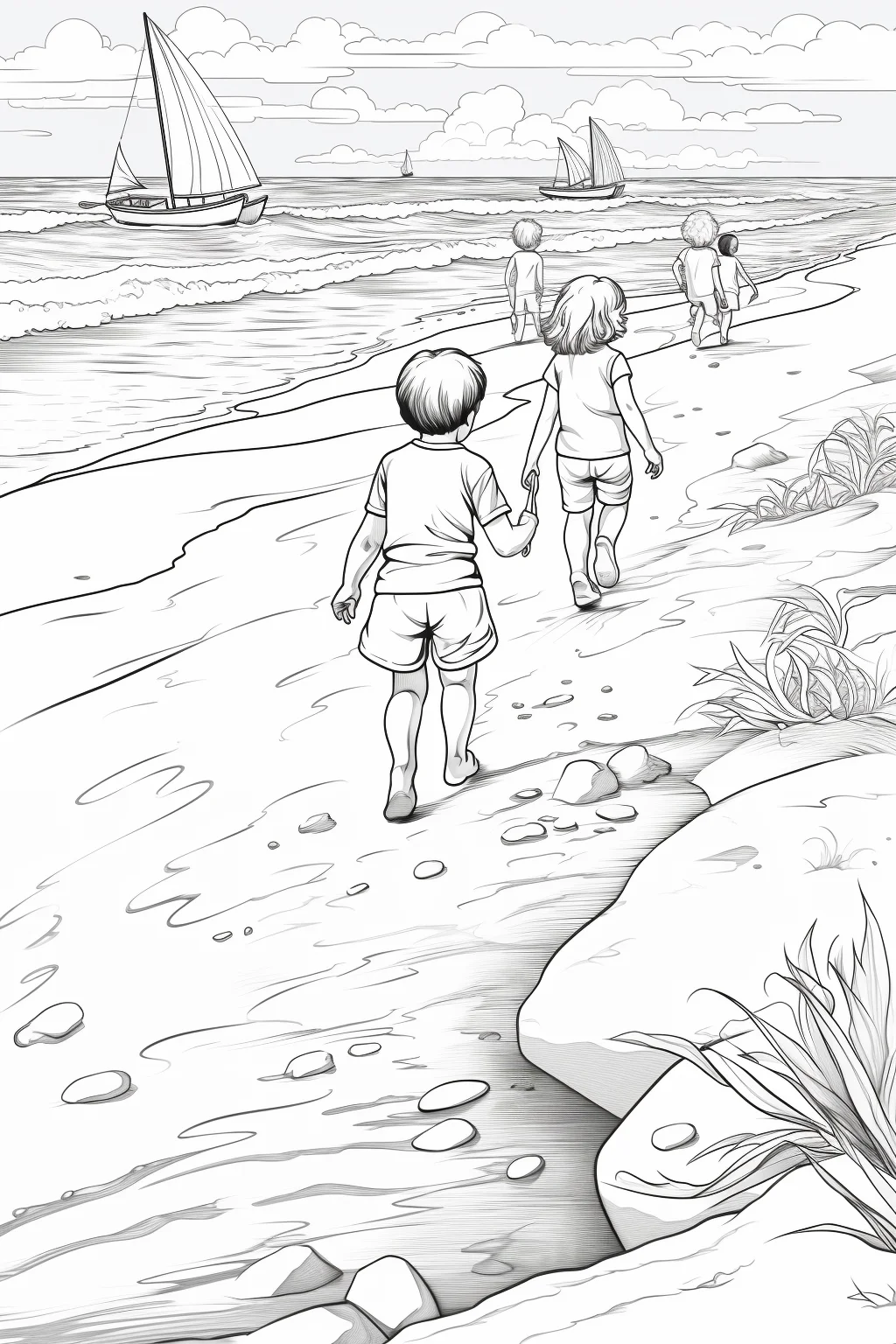
This group adds more school-age or summer-activity detail. Use pencils when the page includes people or several smaller objects.
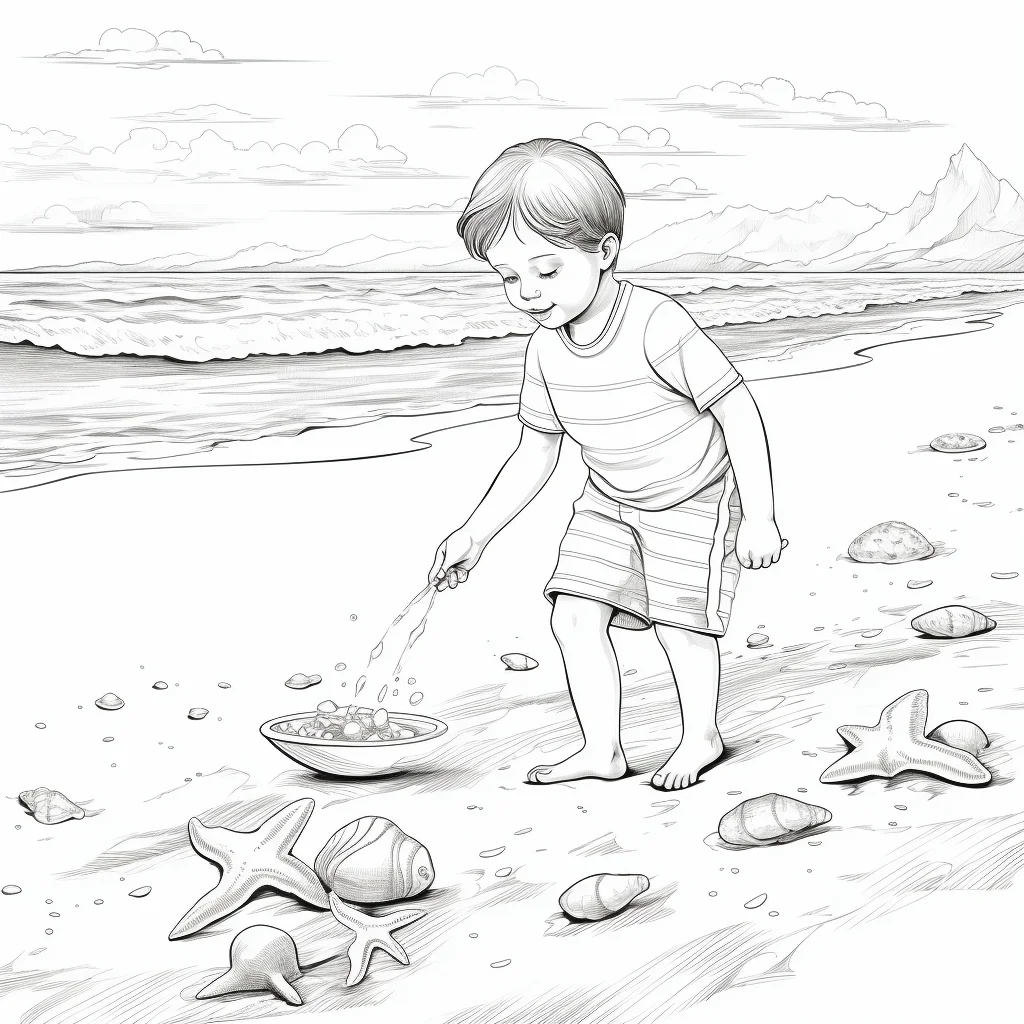
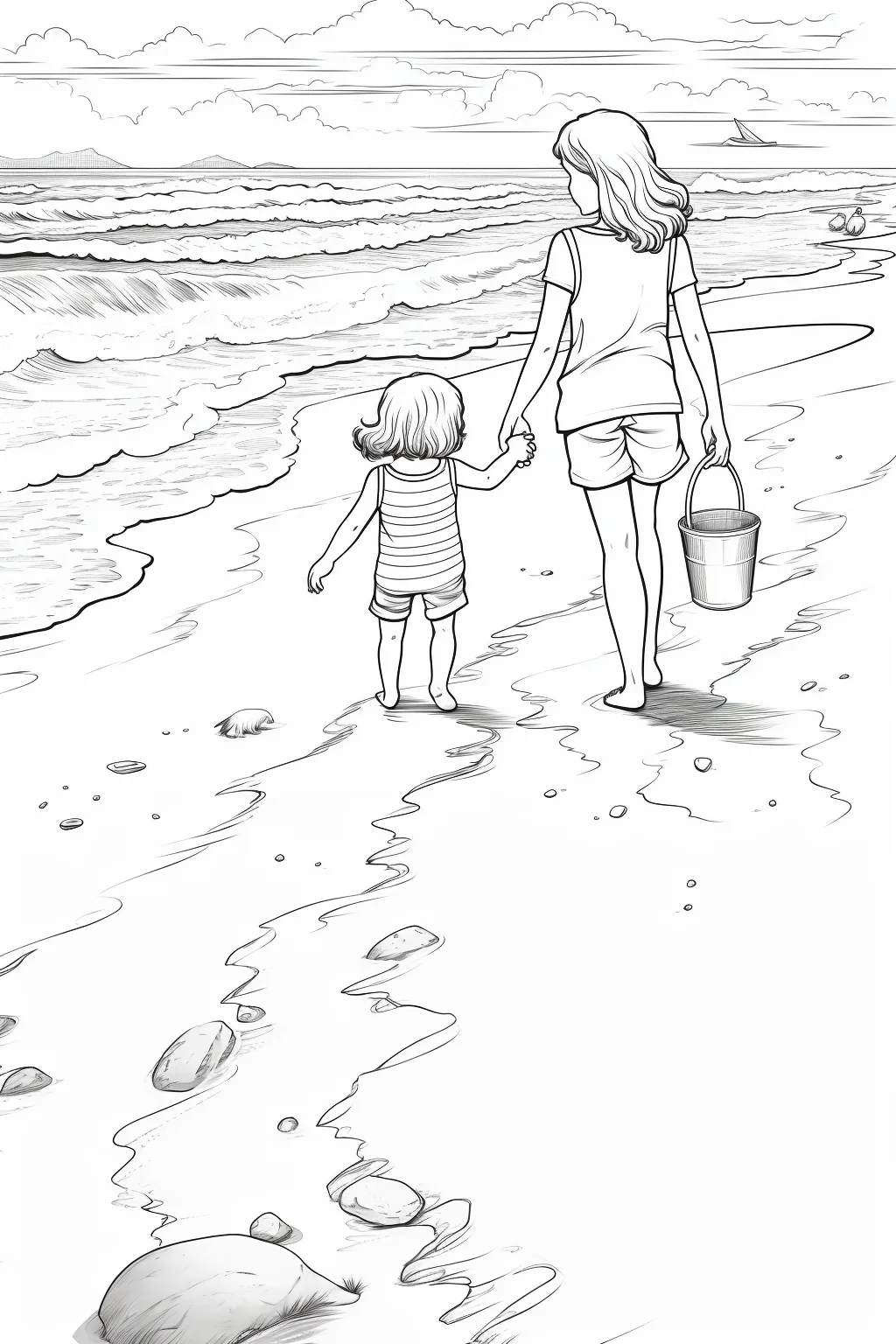
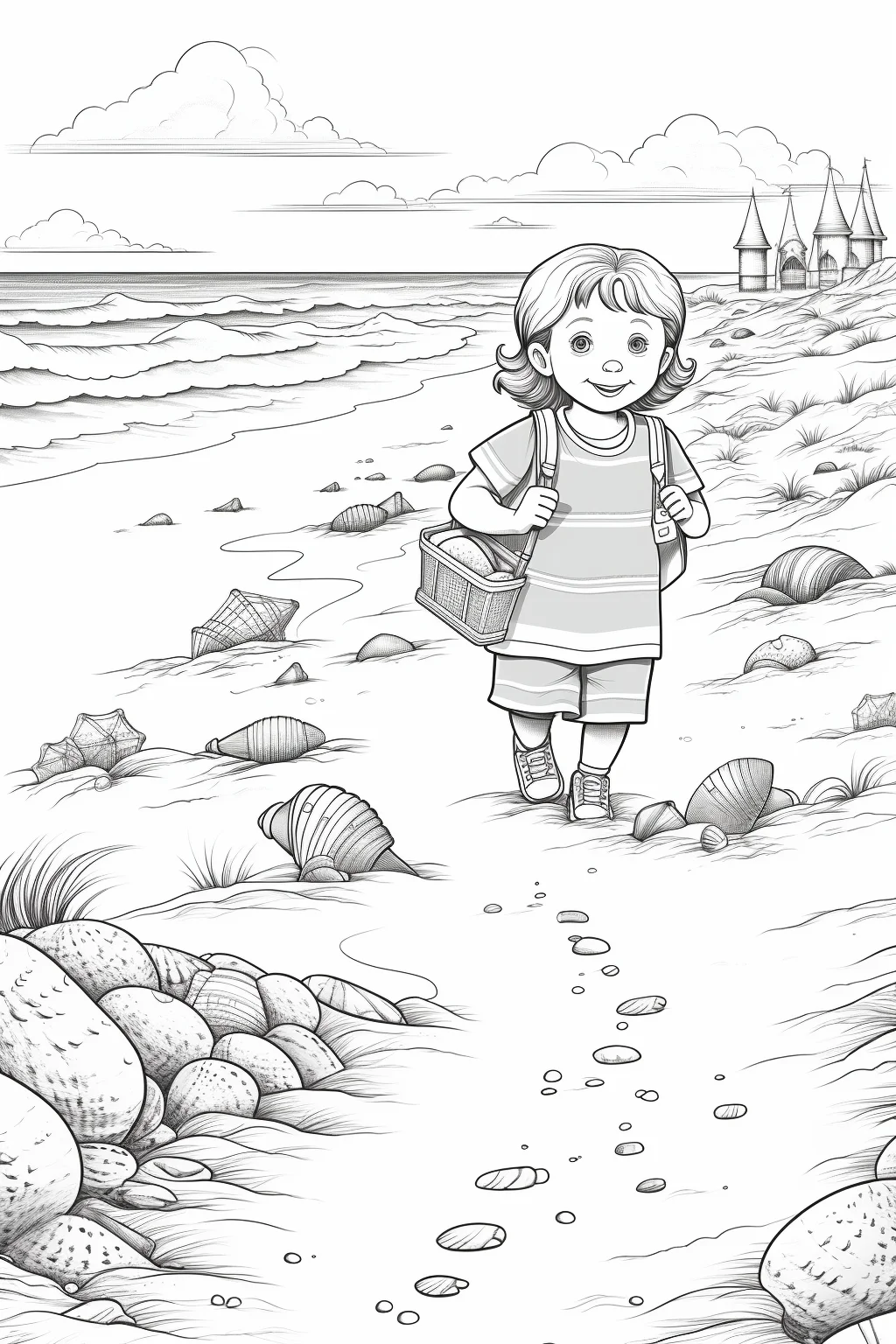
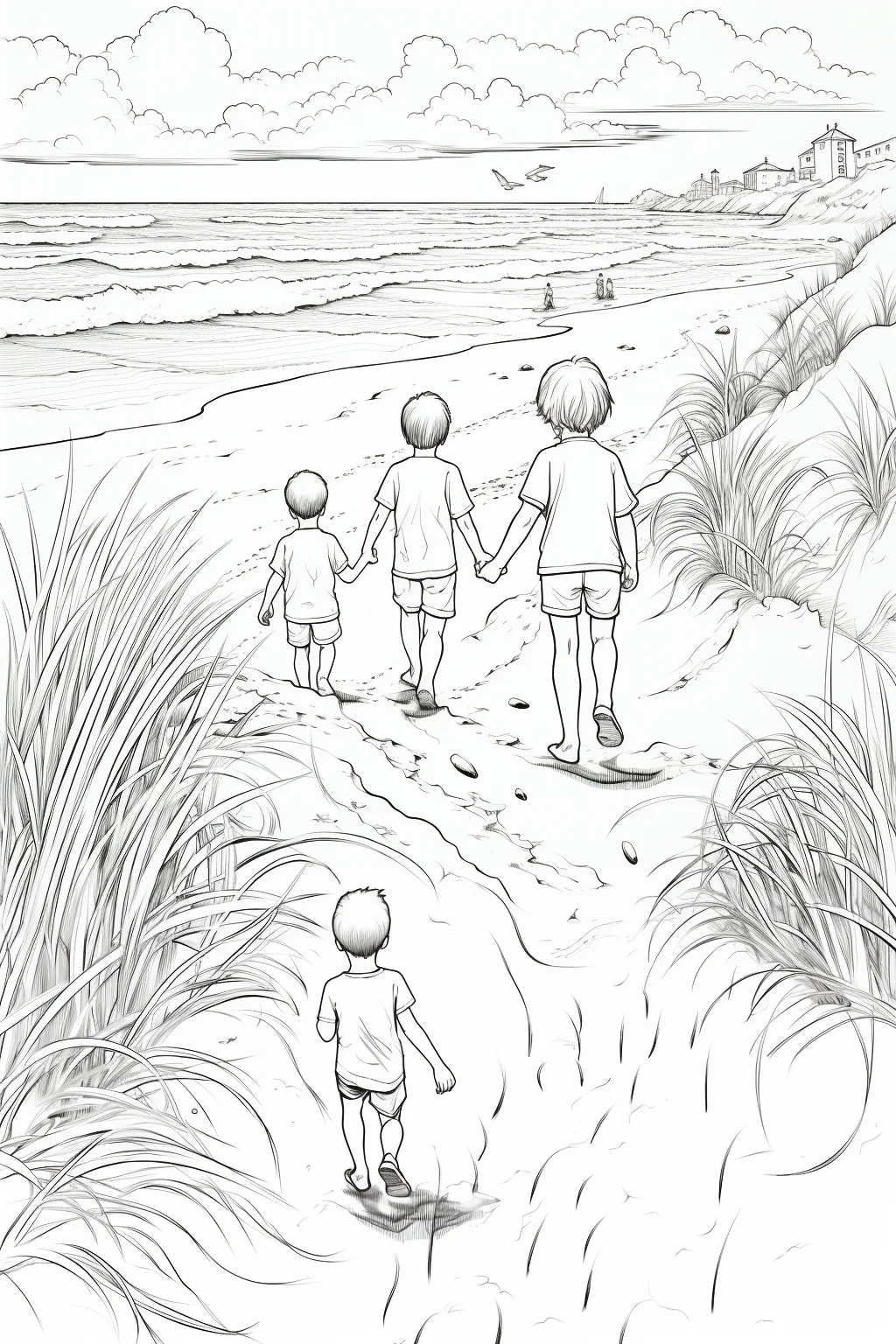
General beach printables — Sheets 13–19
The final seven are the broader beach set. They are useful when you want a beach scene without specifically choosing by age first.
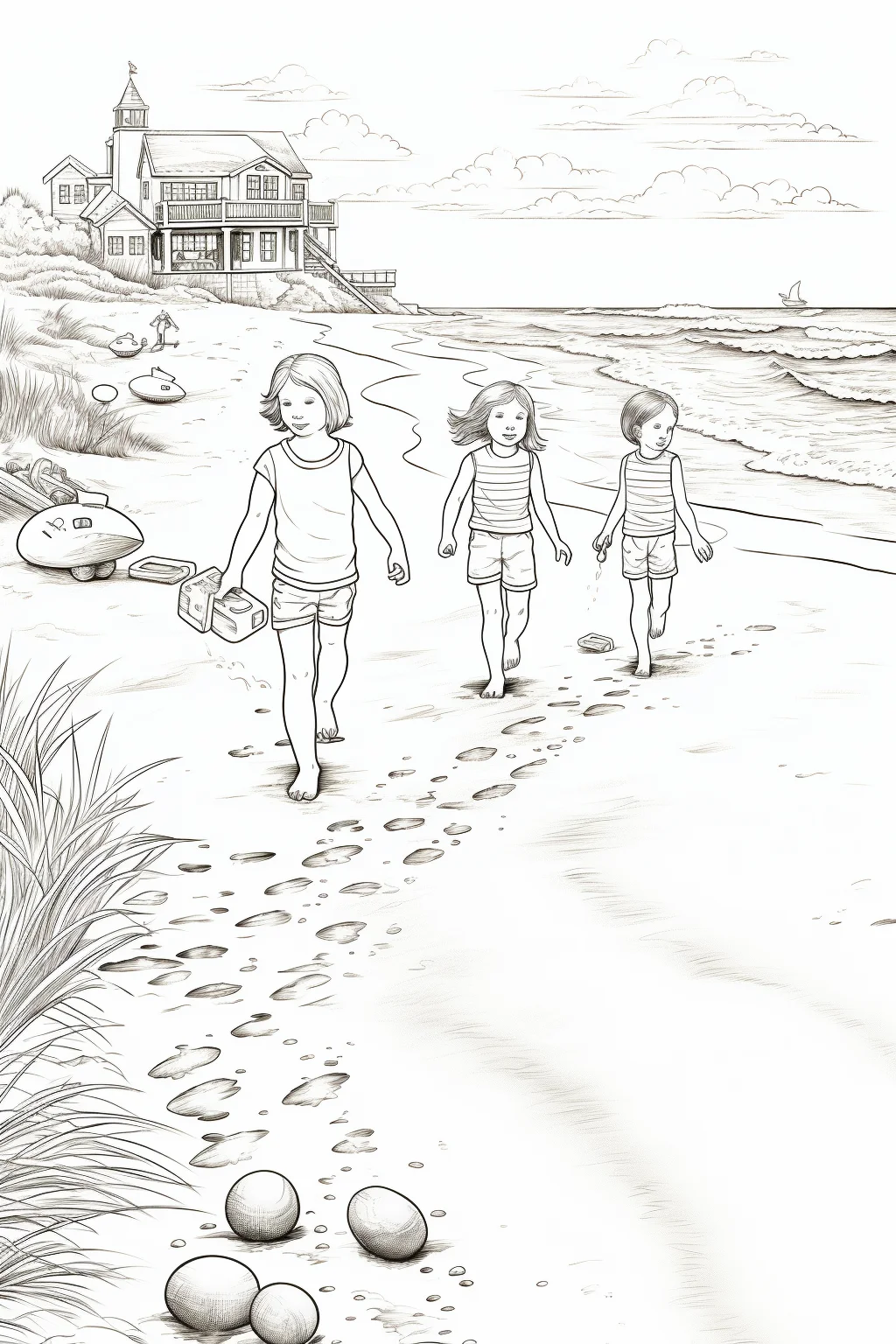
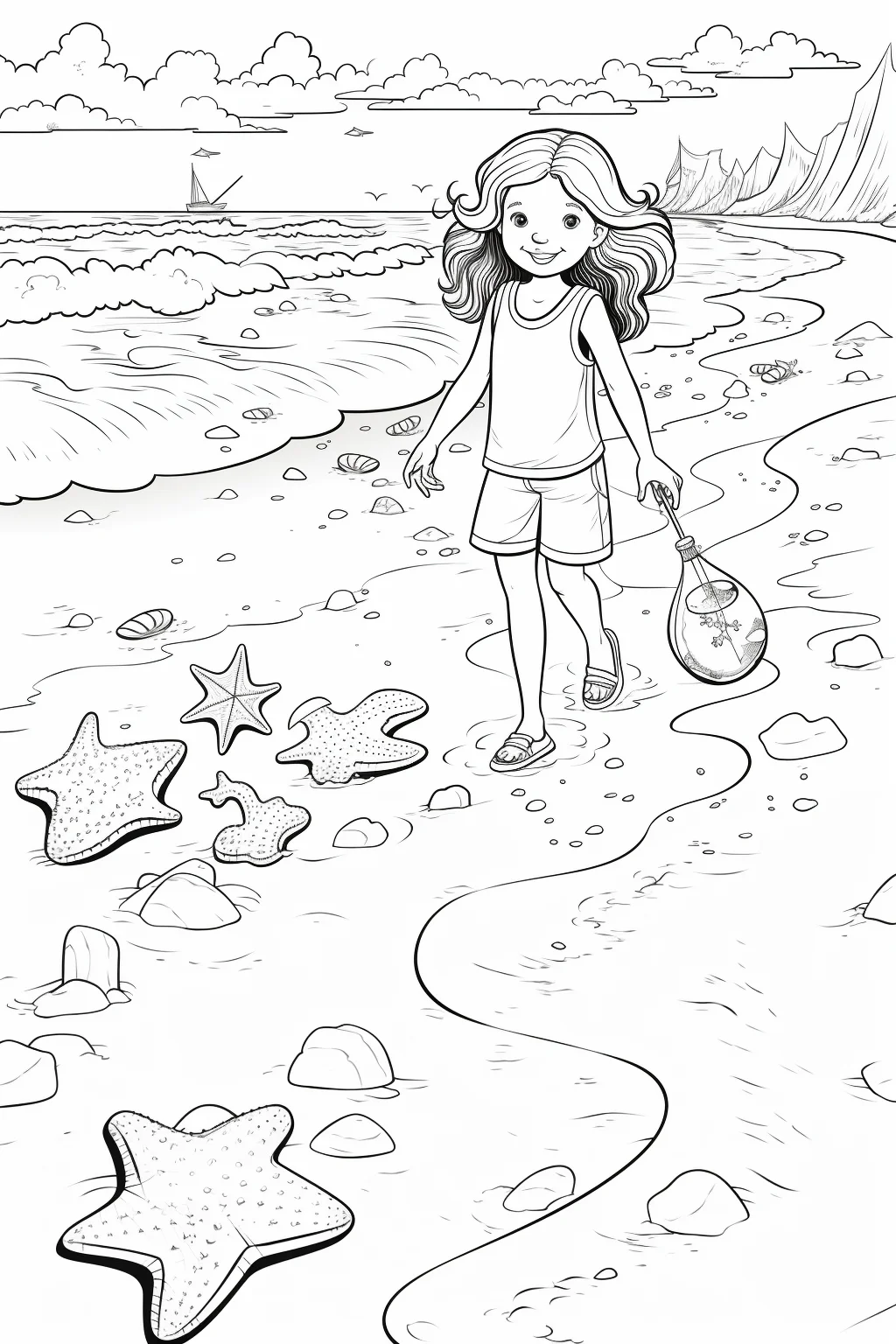
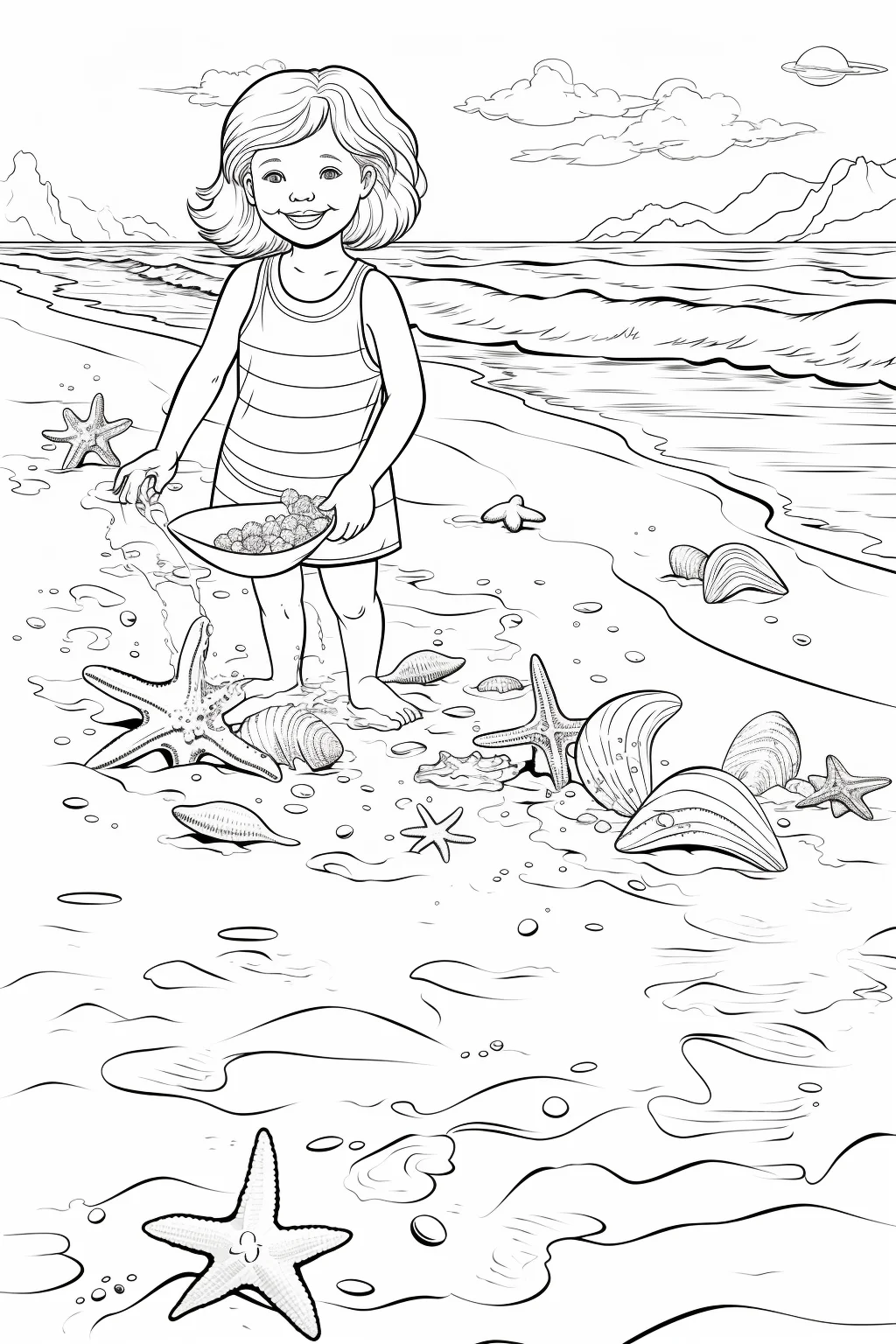
Three-sheet practice route for kids
If a child wants to get better rather than simply finish more pages, use three sheets with different jobs. On a simple page from Sheets 1–7, practice staying inside large shapes and filling them without pressing hard. On a page from Sheets 8–12, choose only five or six colors before starting and repeat them across the scene. Then use one of Sheets 13–19 to practice depth: keep the sky palest at the horizon, make distant water slightly quieter, and reserve the strongest color for something in the foreground.
This progression works better than asking a child to “color more neatly.” Each page has one visible goal, so it is easier to notice improvement.
What to do when a beach page is not working
| What you notice | Likely cause | Try this |
|---|---|---|
| Sky, sea and sand look like three flat bands | Each area uses one unchanging color | Add one lighter or darker version of each color, especially near the horizon and foreground. |
| The main character disappears | Background colors are as strong as the subject | Use softer sky, water and sand colors; save saturated colors for the person, animal or beach object. |
| Water looks like a solid blue wall | Wave foam was colored over | Leave foam white and use short horizontal strokes rather than filling every area uniformly. |
| Sand looks muddy | Too many dark browns were layered everywhere | Return to cream or pale tan and use the darker shade only under objects, around footprints or at the front edge. |
| A younger child keeps crossing small outlines | The sheet has too many narrow spaces | Move back to Sheets 1–7 and use a broad crayon. Difficulty should come from one new skill at a time. |
| The page feels busy before it is finished | Every object has a different bright color | Choose a small palette and repeat colors. A repeated towel, bucket or umbrella color ties the scene together. |
Simple beach palettes that still leave room for choice
- Clear summer day: sky blue, turquoise, sandy beige, coral and sunny yellow.
- Soft seaside: pale aqua, muted blue, cream, peach and sea-glass green.
- Sunset beach: peach, warm pink, lavender, deep blue and warm tan.
- Bright kids’ palette: cyan, yellow, orange, grass green and purple, with pale blue and beige kept for the background.
These are starting points, not rules. The useful habit is deciding which colors belong to the background and which should attract attention before coloring the entire sheet.
Turn one coloring page into a small observation activity
Beach scenes are useful for more than color matching. Before coloring, ask a child to find three things that might be hot in the sun, two things that could move in the wind, or one object that belongs near the water. Afterward, ask what is closest to the viewer and what is farthest away. For younger children, simply count shells, clouds, toys or people if the chosen page contains them.
For school-age children, try a tiny storytelling constraint: choose a sheet and decide the time of day before choosing colors. A midday scene might use clear blues and strong accents; an evening scene can shift the same drawing toward peach, lavender and deeper water. The drawing stays unchanged, but the child has to make a visual plan.
Printing these beach pages
Most sheets are portrait and two are square. Use portrait orientation for the tall pages, but let the print preview decide for the square sheets. Select “Fit to page” and, if you use markers on ordinary copy paper, place a spare sheet underneath.
Quick beach-coloring questions
Which sheets are easiest?
Start with Sheets 1–7. They are the preschool/toddler group and use simpler summer subjects.
Does the sand have to be yellow?
No. Cream, beige, pale tan and light warm gray all work. A second slightly darker shade around objects adds depth without making the beach look muddy.
How do I color waves?
Keep foam white or nearly white, use a lighter blue-green close to the shore and a slightly deeper blue farther out.

