
The easiest pages here are the single baby elephants with big ears, clear outlines and very little background. The family scenes, flower gardens and realistic elephants take more time because there are more small areas to work around. The set also includes a few deliberately imaginative pages—winged elephants, space scenes and birthday designs—so it is not limited to realistic animals.
For a natural-looking elephant, soft gray or blue-gray works better than filling the whole body with one dark tone. Keep the ears a little lighter and add a darker shade under the belly, trunk and legs. On the fantasy pages, ignore realism completely and use the background to carry most of the color.
Printing the pages
- Open the full-size image using the link beneath the elephant you want.
- Print on A4 or Letter paper and select “fit to page.”
- Use crayons for the simpler sheets or colored pencils for flowers, wings and realistic skin detail.
For more animal printables, see the animal coloring pages or the elephant drawing guide.
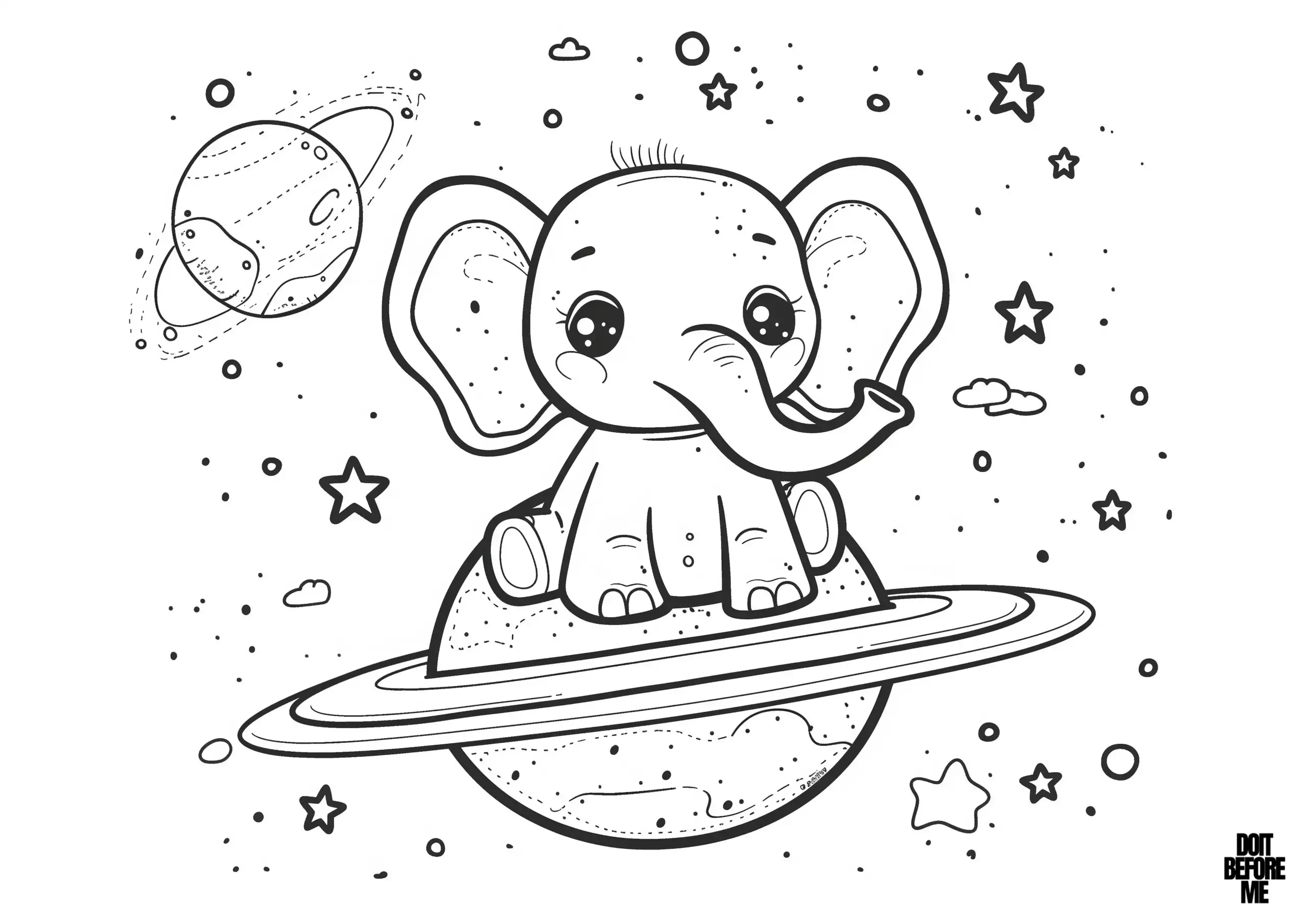
Open full-size baby elephant coloring page 1
The big ears and rounded body shapes do most of the visual work on these pages, so you do not need heavy shading to make the elephant readable. On the simplest designs, one body color plus a lighter ear and a darker shadow is enough.
Kawaii Baby Elephant Sitting
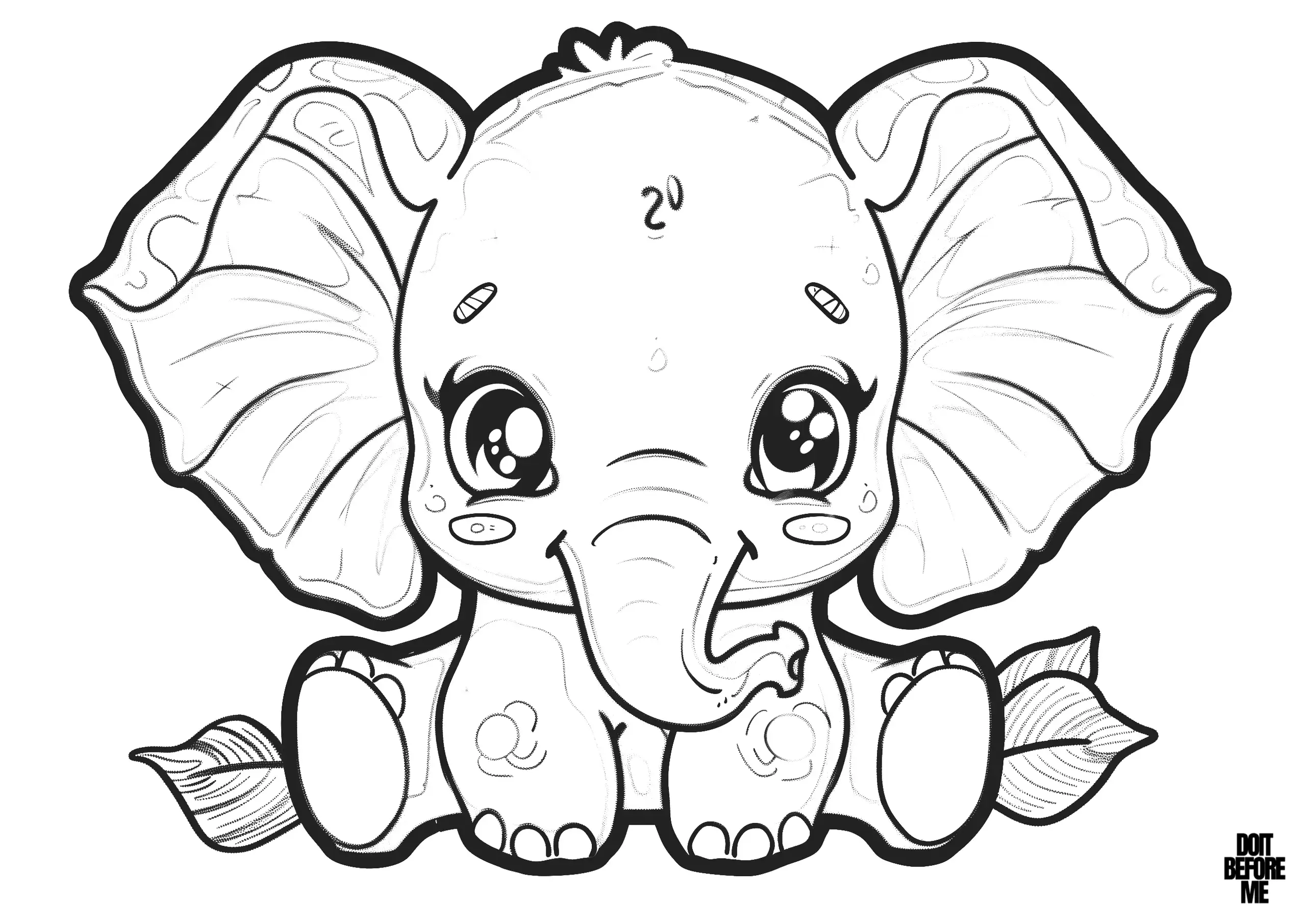
Open full-size baby elephant coloring page 2
Coloring tip: for a playful cartoon elephant, try soft gray, blue-gray or completely imaginative colors. Keep the large ears slightly lighter than the body and use a darker shade under the belly, trunk and legs to create simple depth.
Big-Eared Baby Elephant
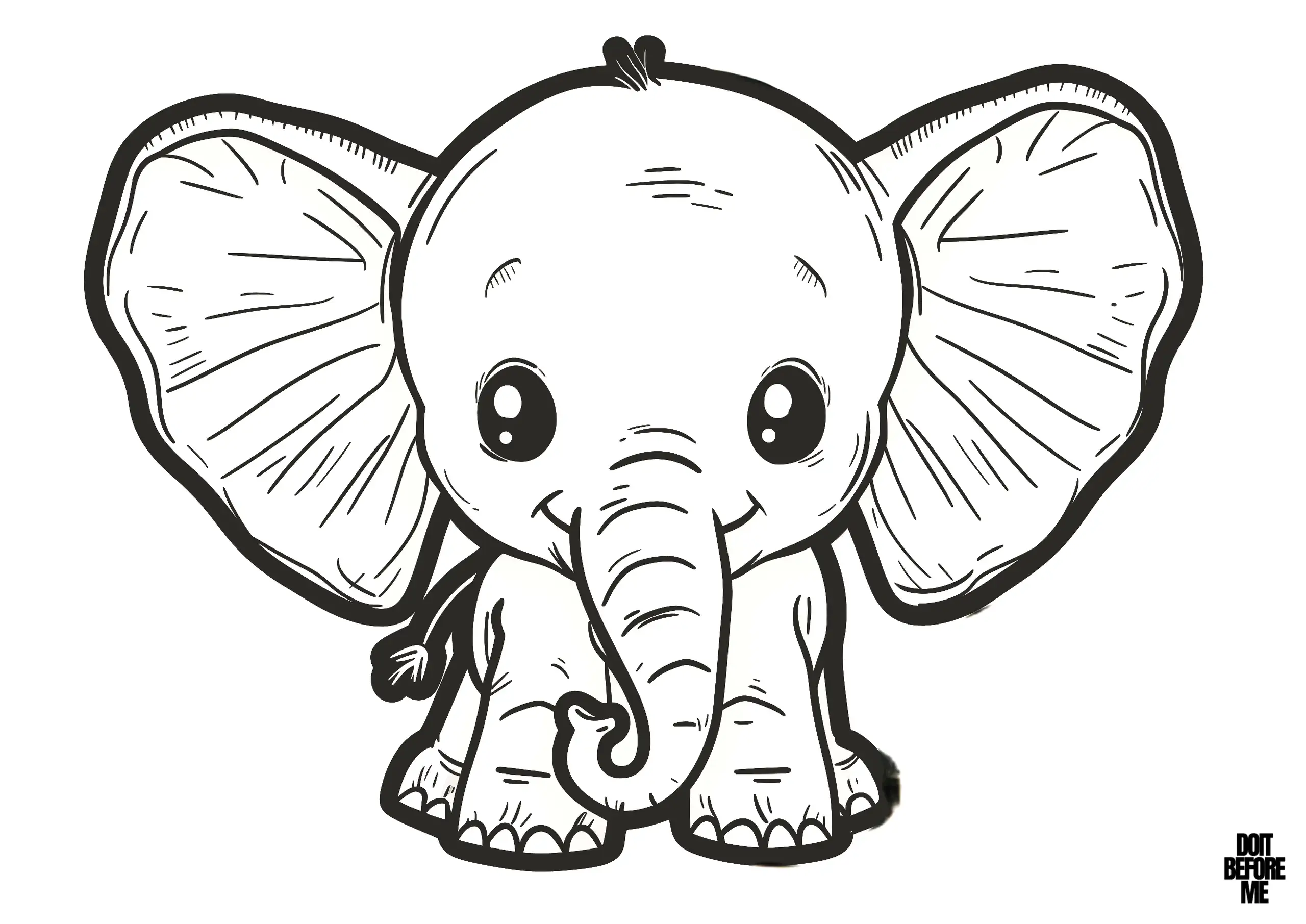
Open full-size baby elephant coloring page 3
Choosing a page: the mother-and-baby scenes have more elements to color and work well with colored pencils, while the single baby-elephant pages have larger open areas that are easier to fill with crayons or broad markers.
Happy Elephant Under the Rainbow
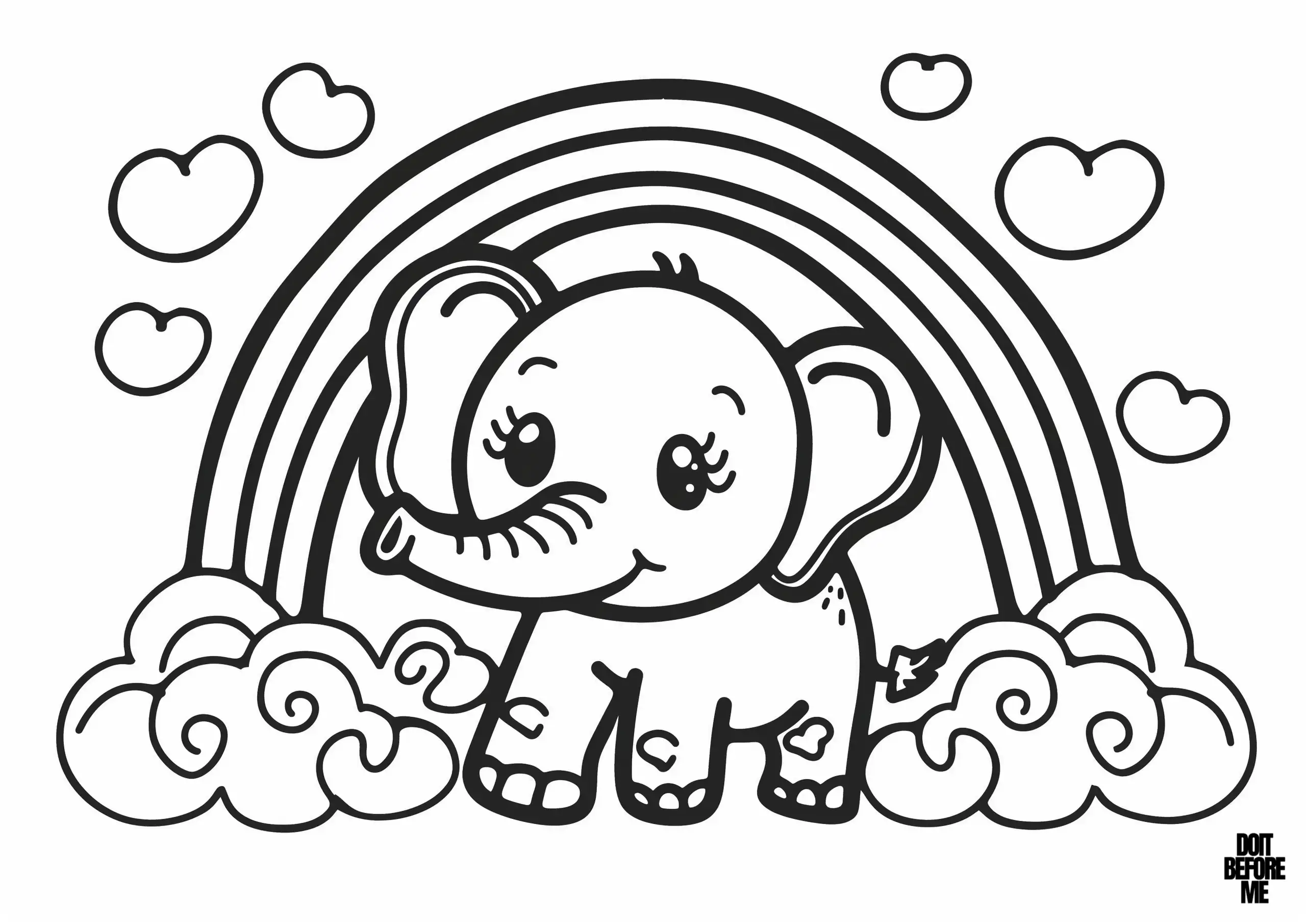
Open full-size baby elephant coloring page 4
The family scenes are a different kind of coloring exercise from the single-elephant pages. Start with the two elephants first, then treat the flowers, grass or sky as a separate background layer so the animals do not disappear into the scene.
Elephants in a Flower Garden
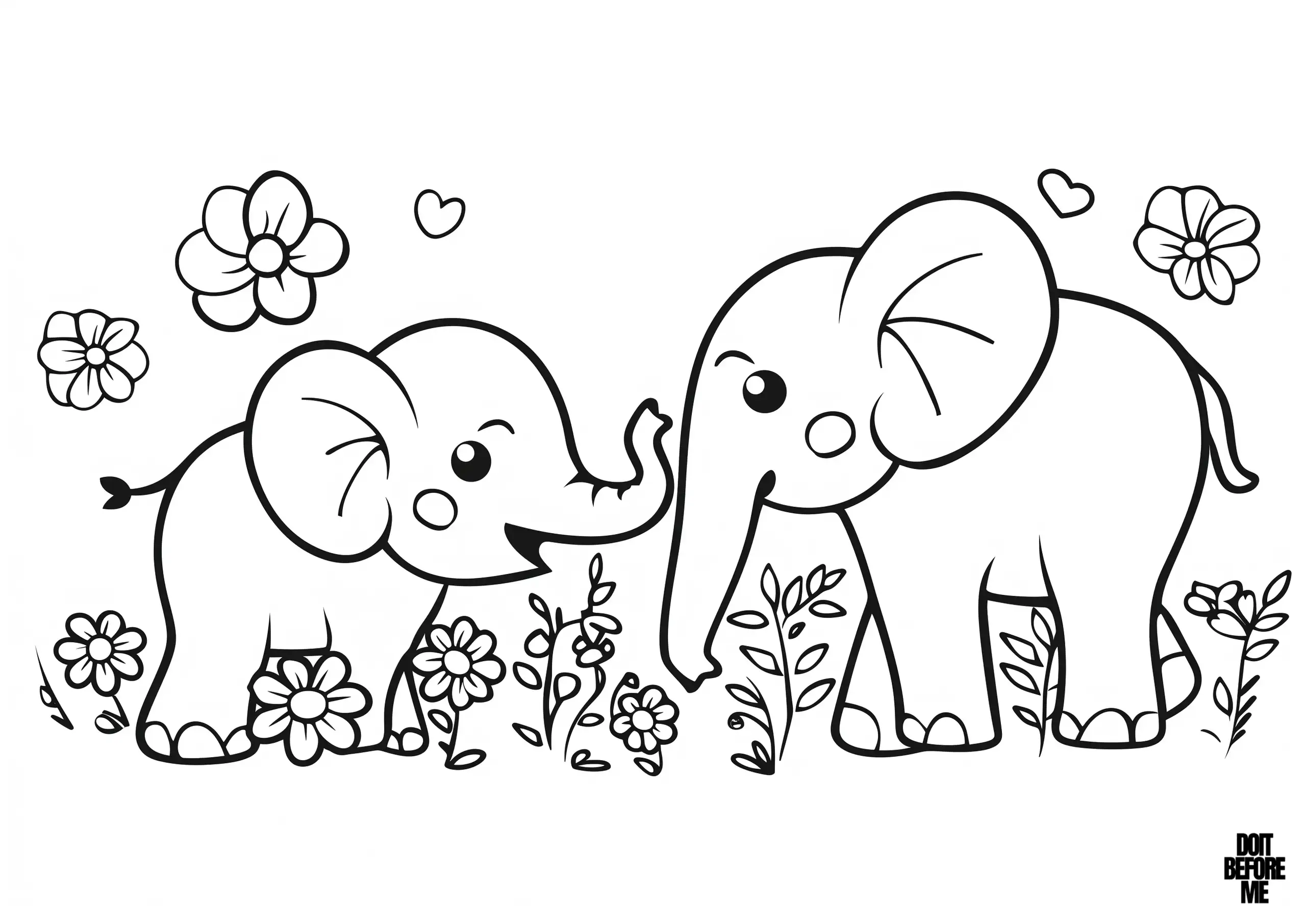
Open full-size baby elephant coloring page 5
Mother Elephant with Baby Elephant in a Field
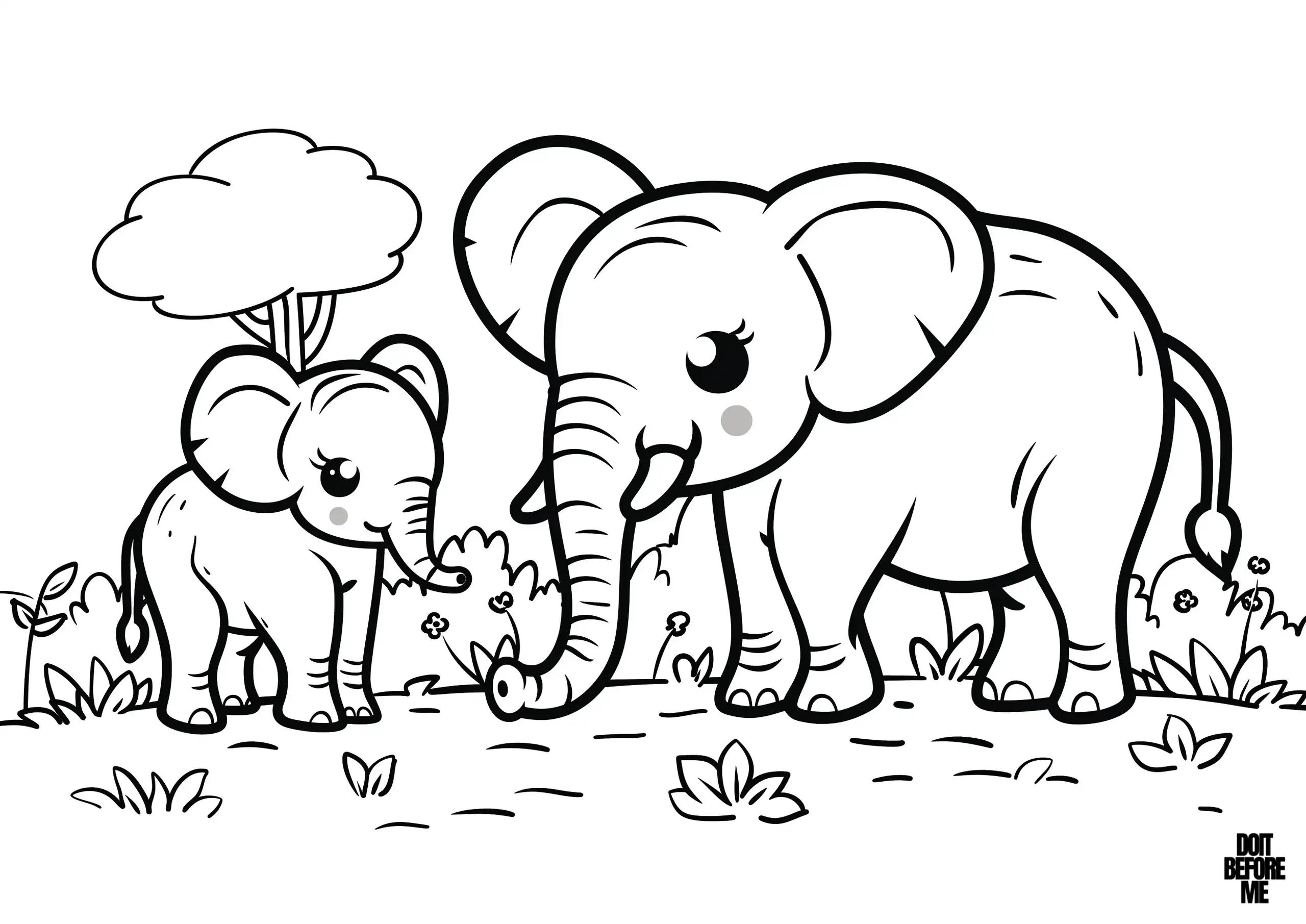
Open full-size baby elephant coloring page 6
Joyful Elephant Walk
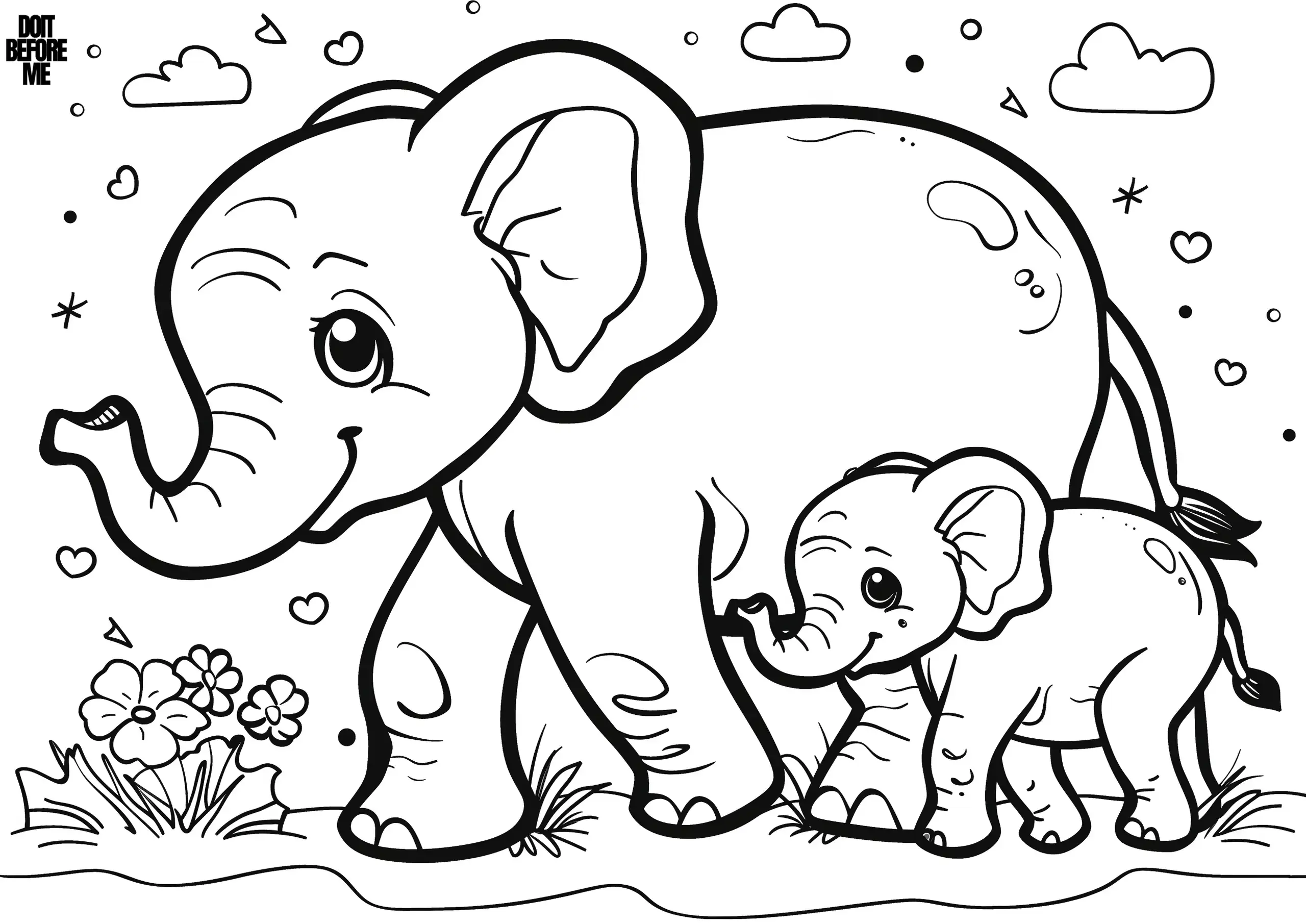
Open full-size baby elephant coloring page 7
Elephant Family in the Meadow
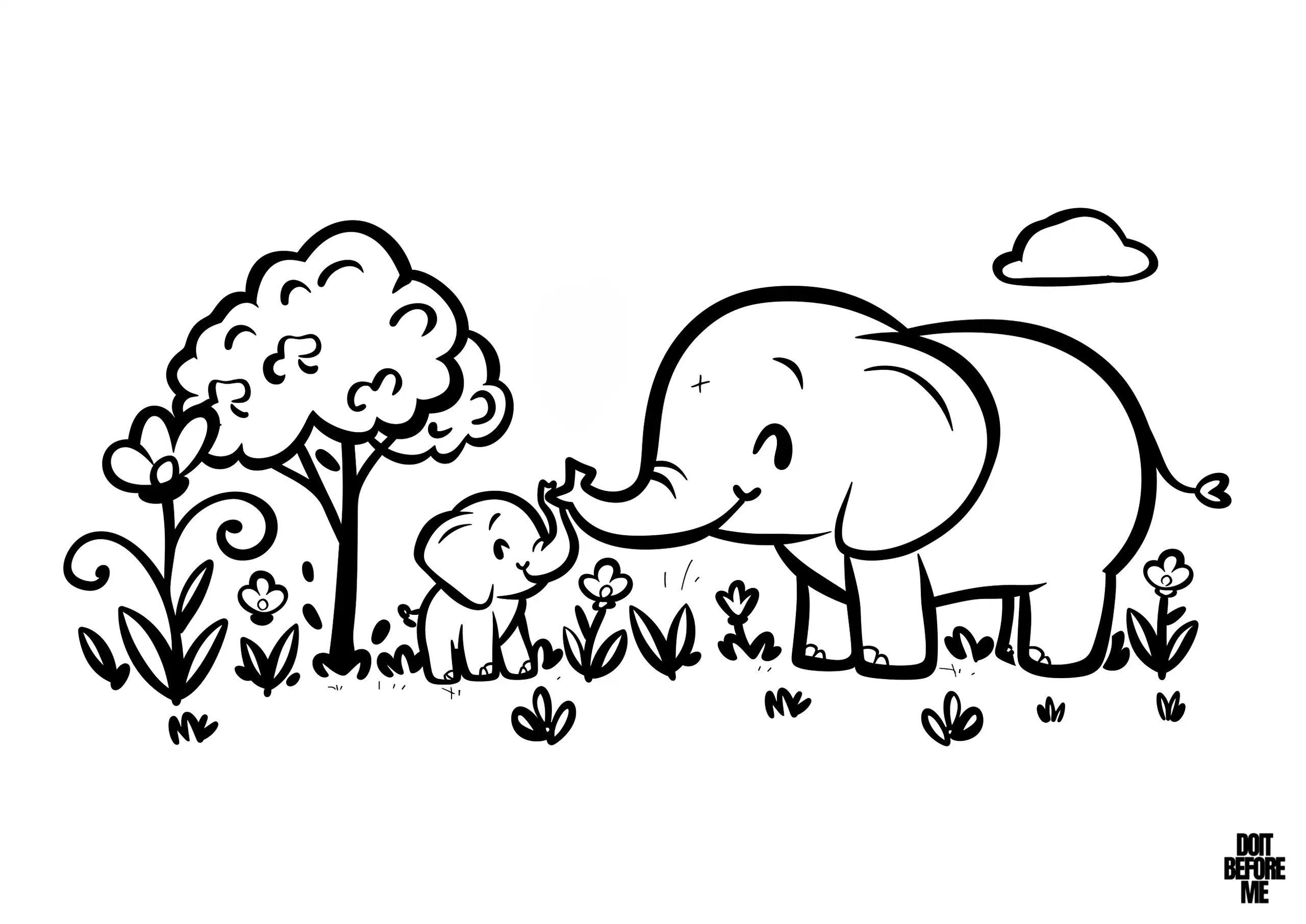
Open full-size baby elephant coloring page 8
Realistic Baby Elephant
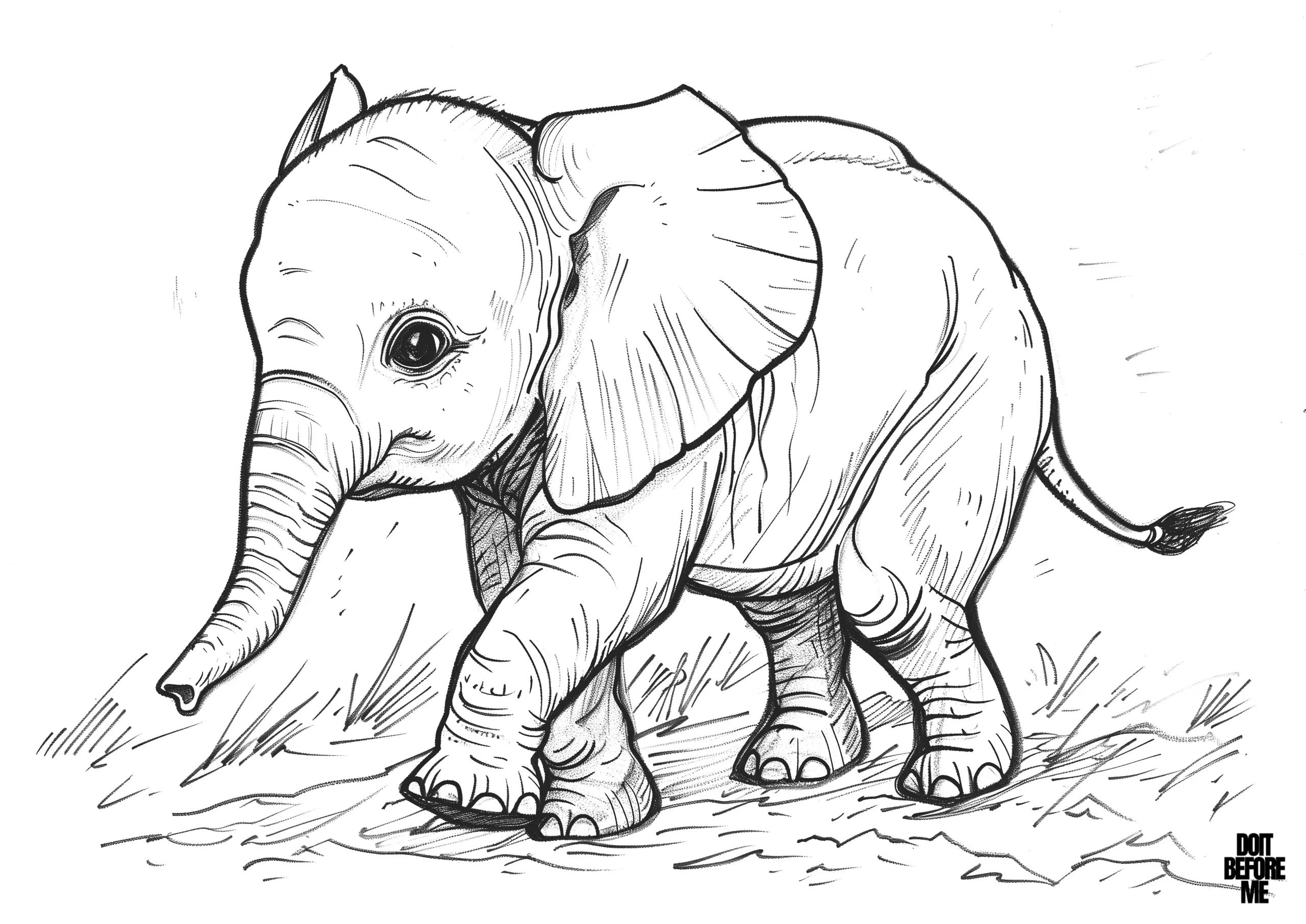
Open full-size baby elephant coloring page 9
Mother Elephant with Baby Elephant in the Savannah
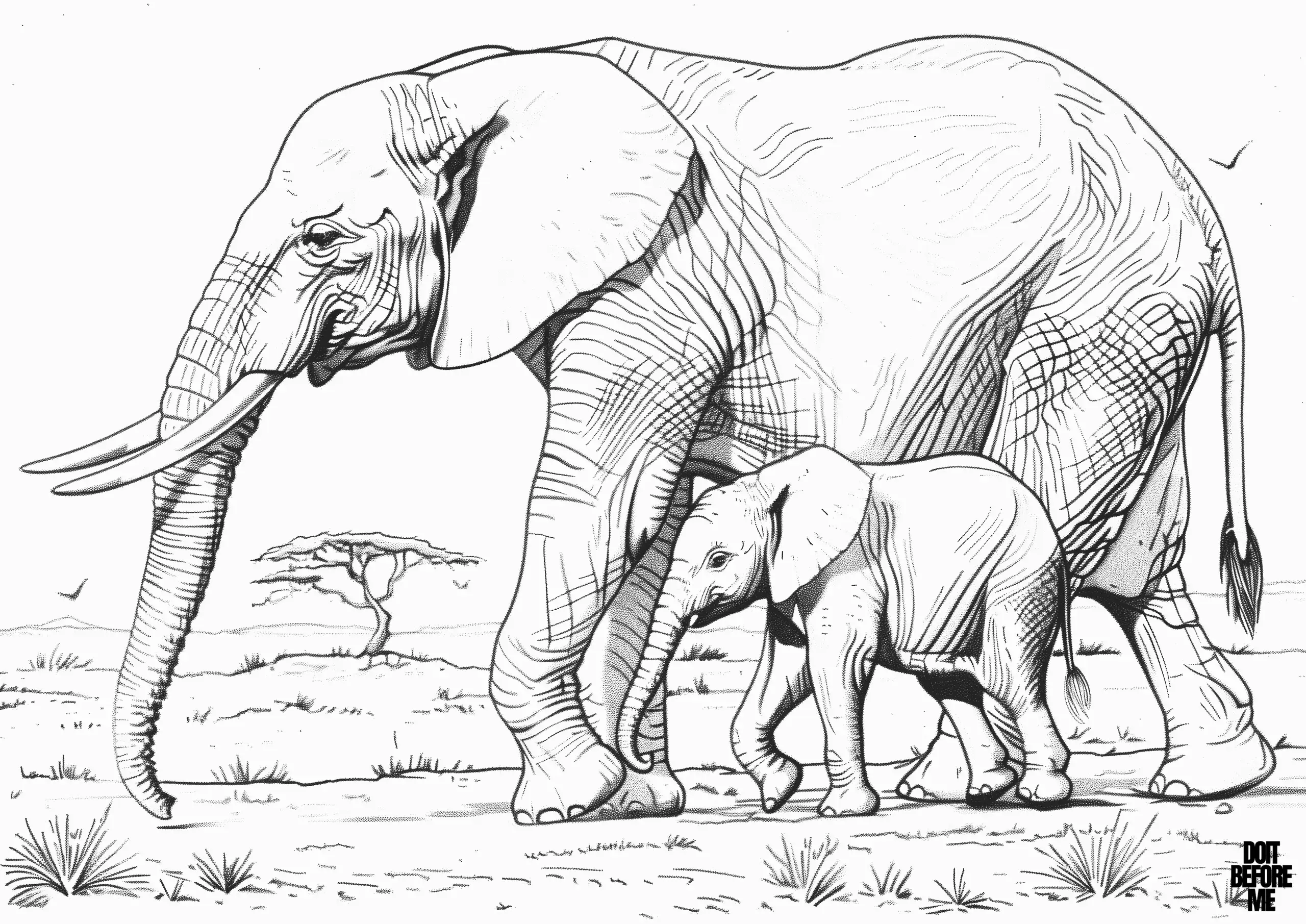
Open full-size baby elephant coloring page 10
Angelic Baby Elephant
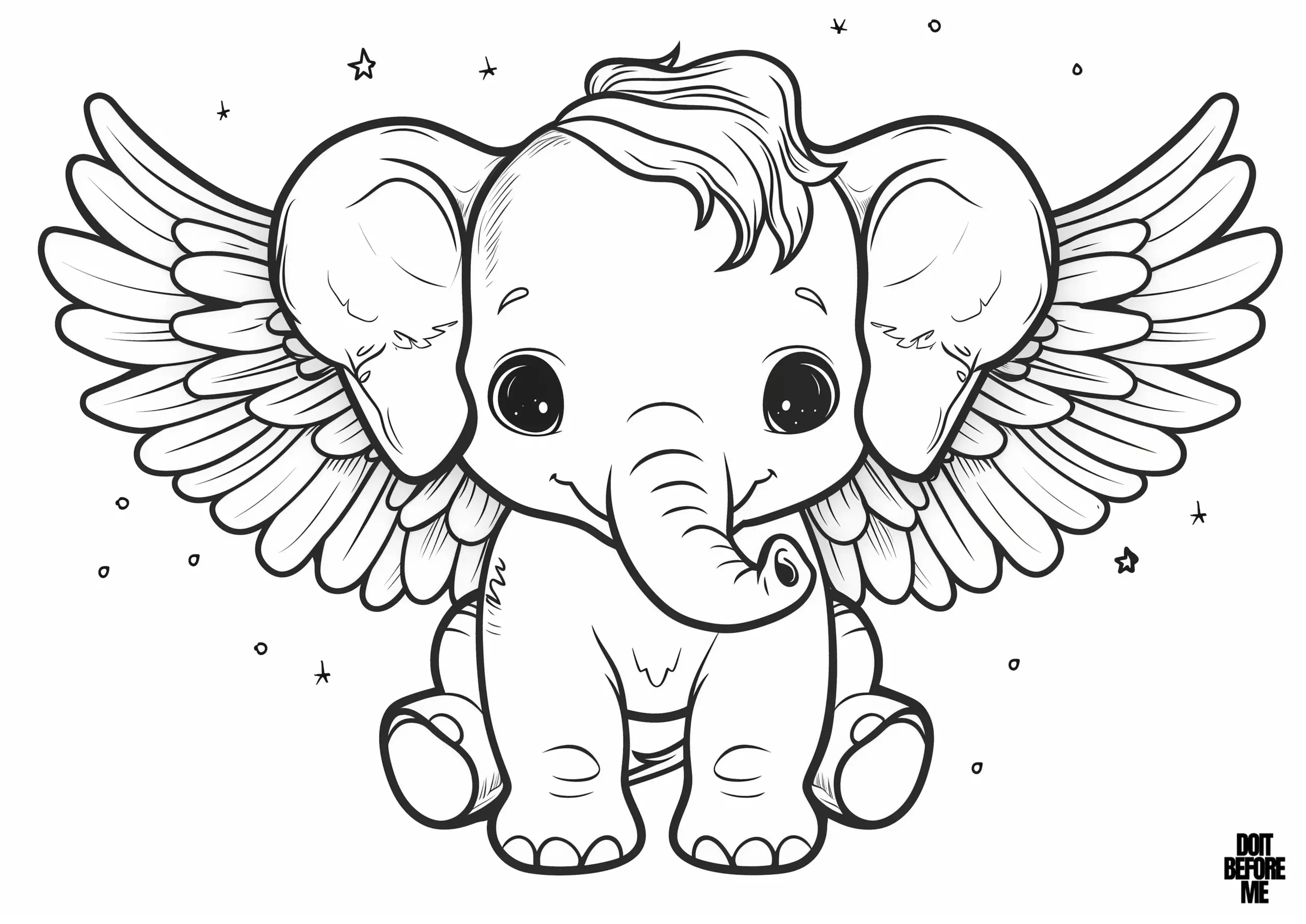
Open full-size baby elephant coloring page 11
Winged Baby Elephant
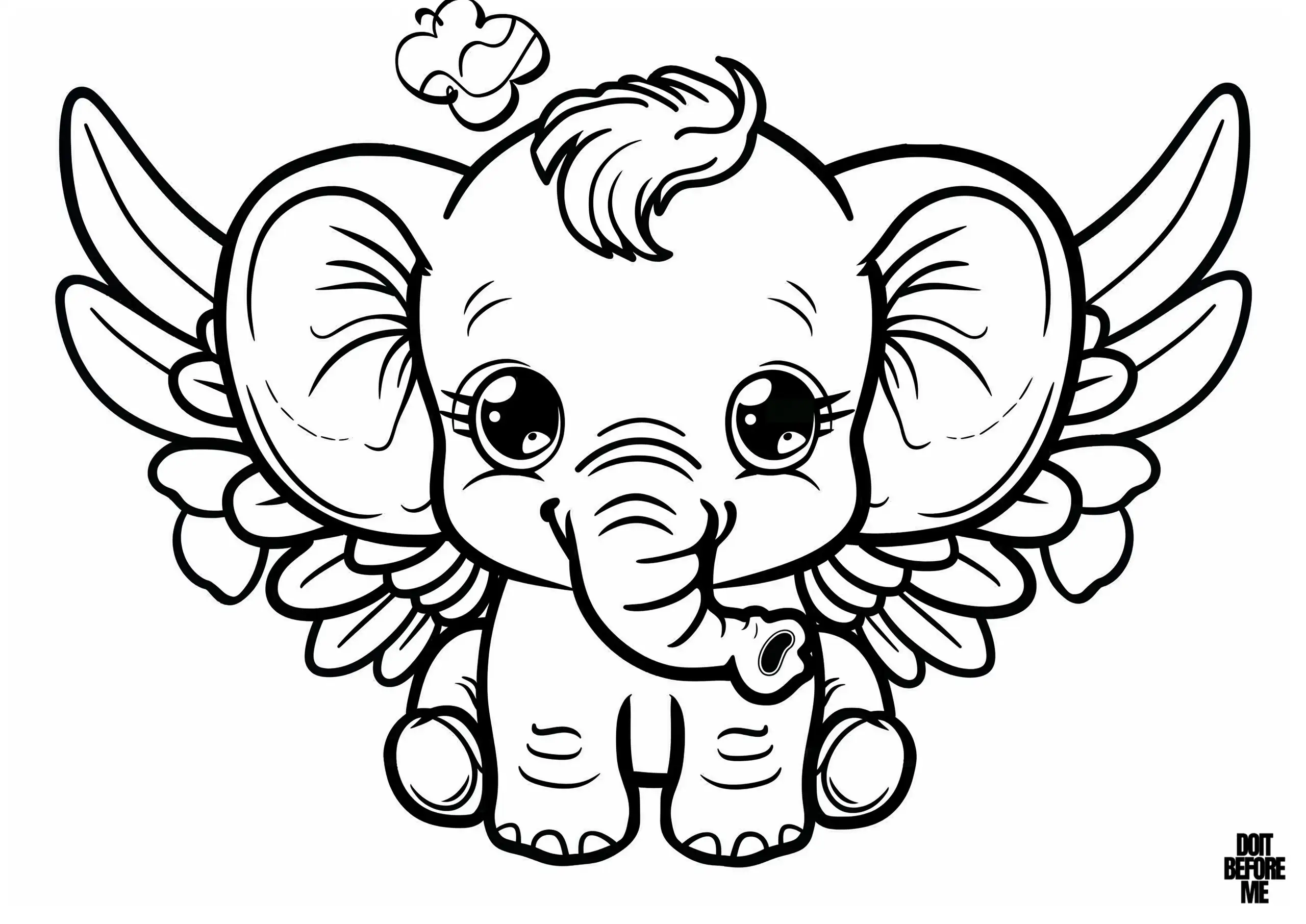
Open full-size baby elephant coloring page 12
Space Adventurer Elephant
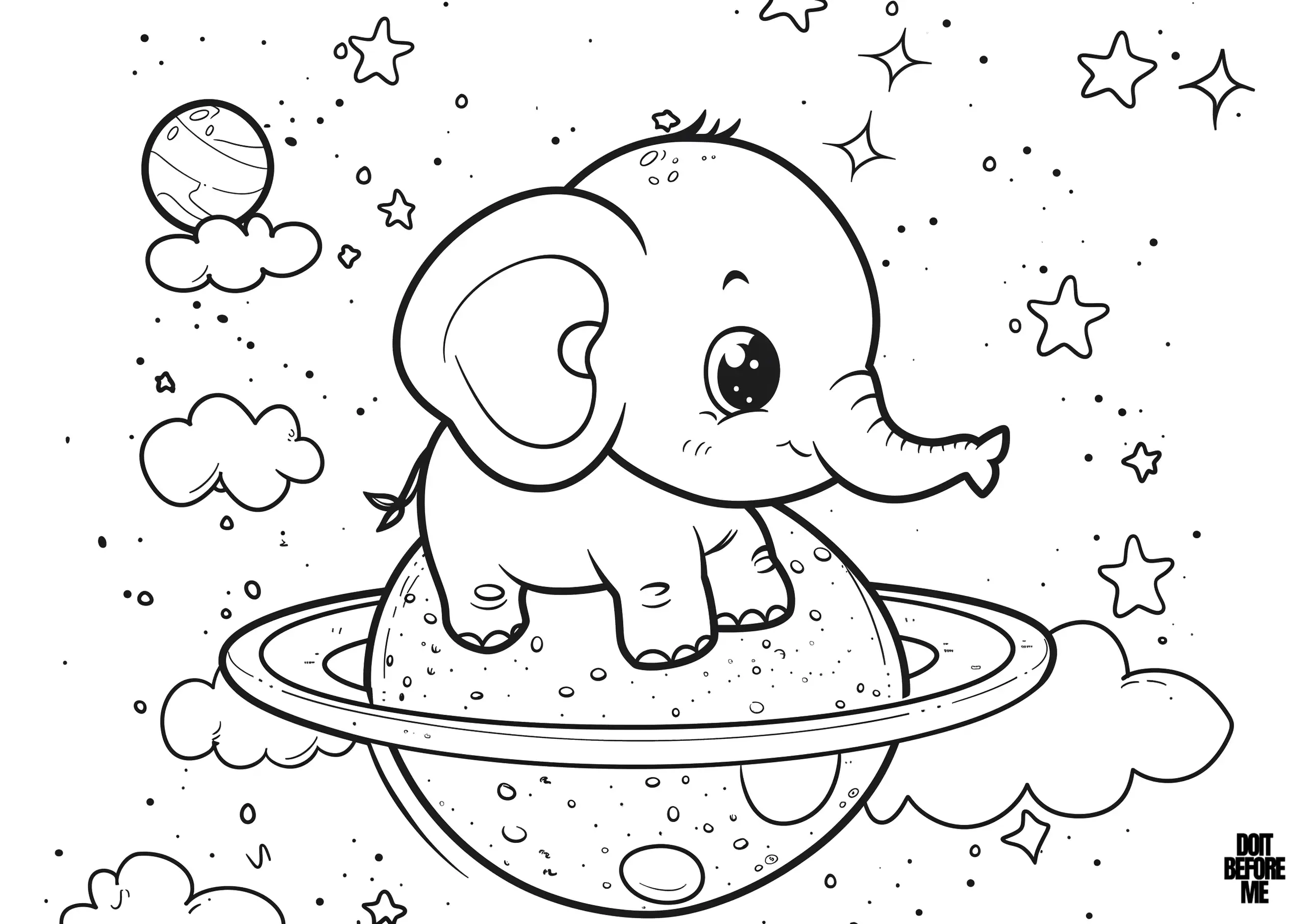
Open full-size baby elephant coloring page 13
Elephant Astronaut on a Ringed Planet
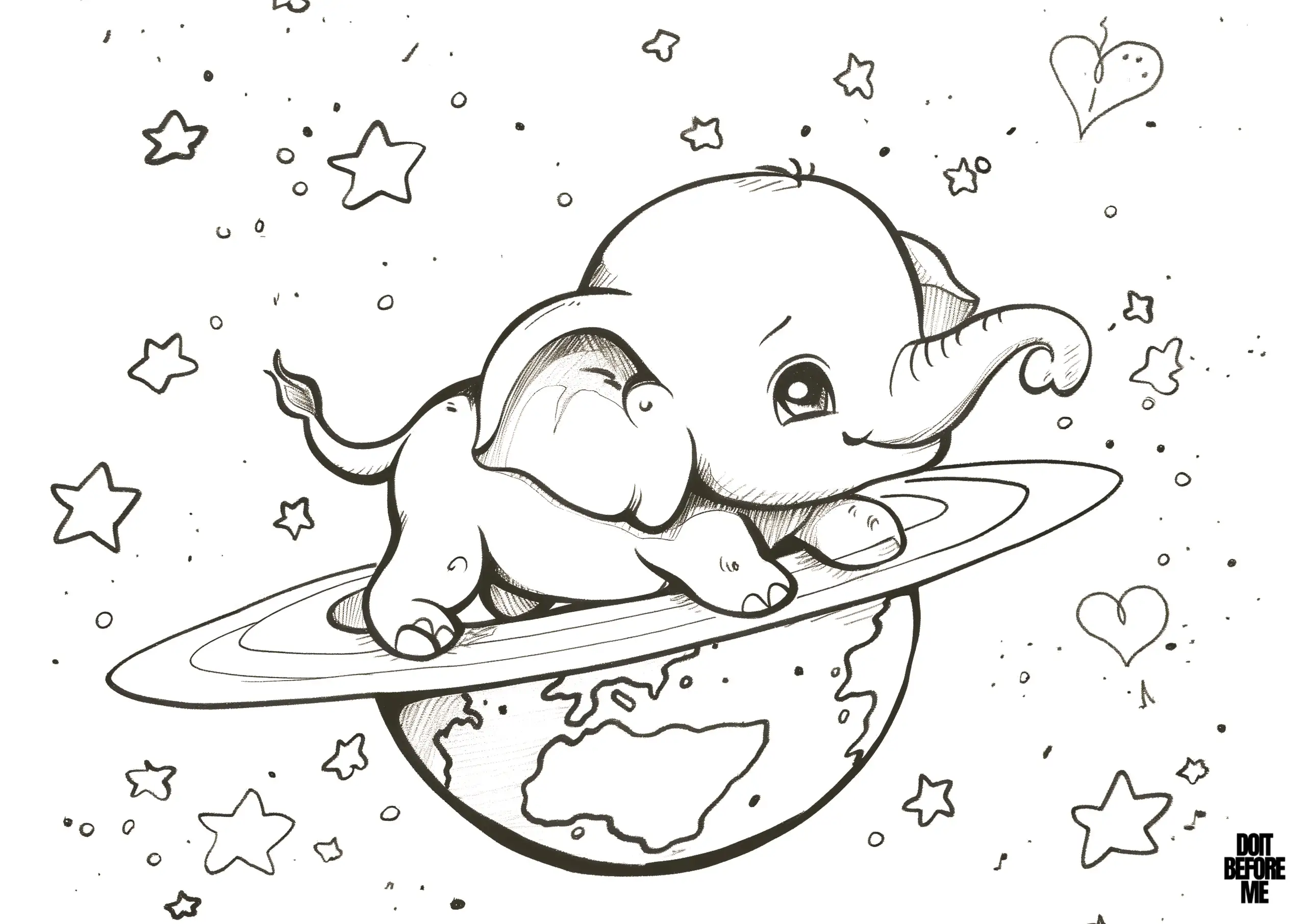
Open full-size baby elephant coloring page 14
Happy Birthday Elephant Coloring Pages
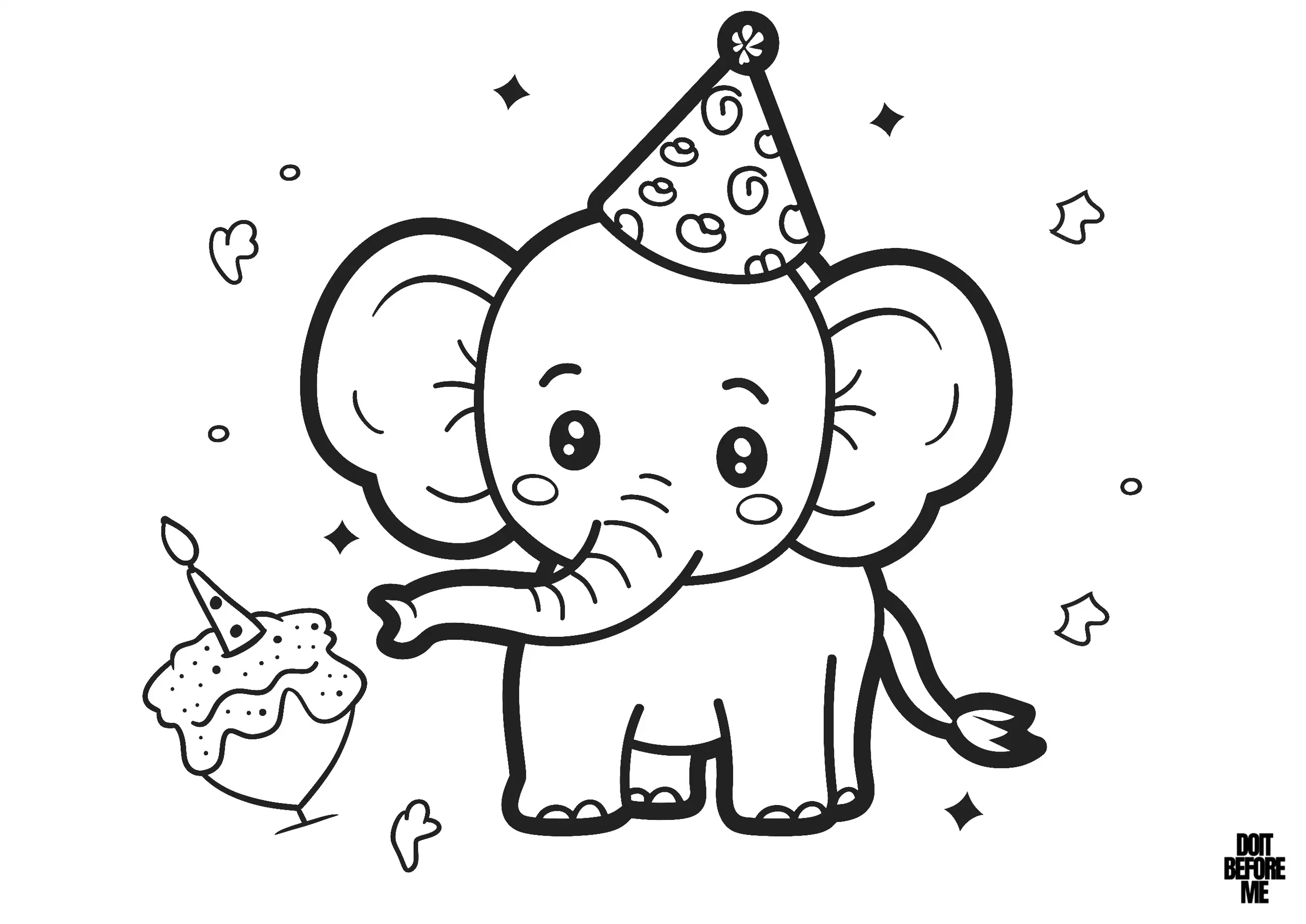
Open full-size baby elephant coloring page 15
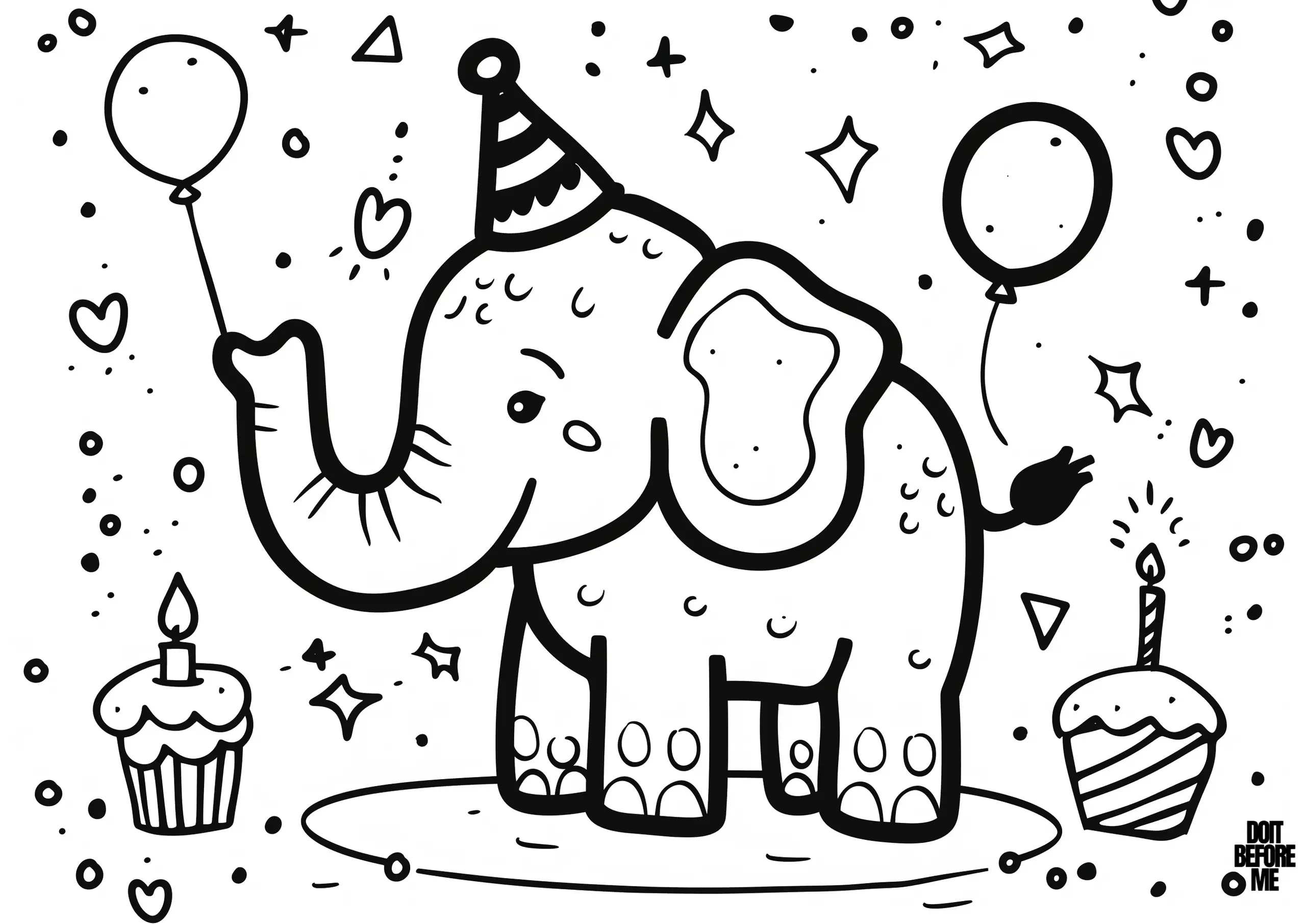
Open full-size baby elephant coloring page 16
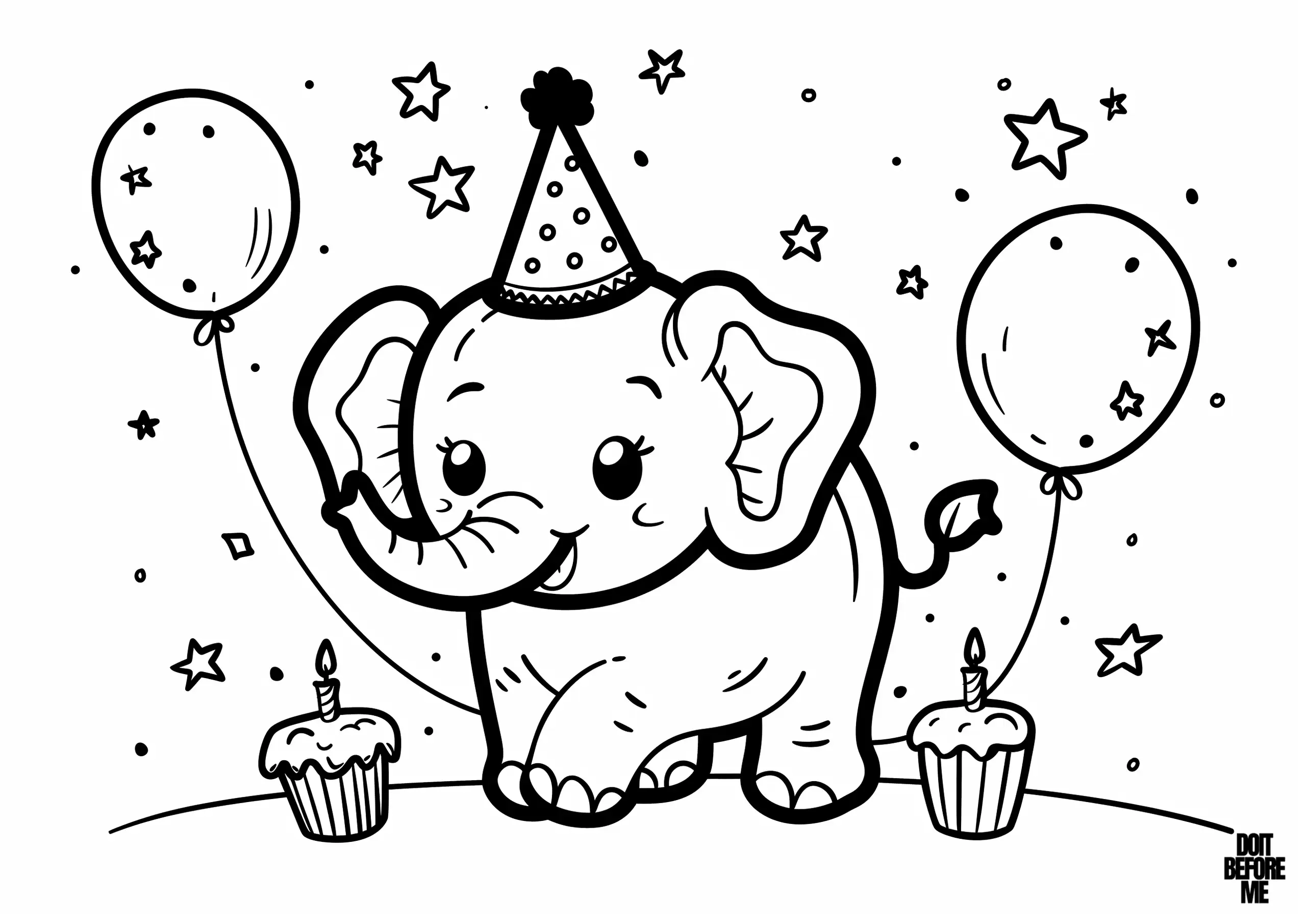
Open full-size baby elephant coloring page 17
A three-page baby elephant practice sequence
If you want to do more than simply fill the shapes, use three sheets as a small progression. The point is to change one skill at a time rather than making every page more complicated at once.
- Start with a single big-eared elephant. Use one light body color, then add a slightly darker version beneath the trunk, belly and feet. Leave a small uncolored highlight in each eye.
- Move to a mother-and-baby scene. Keep the elephants related but not identical: for example, use the same gray family with the calf slightly lighter. Color the animals before the grass, flowers and sky so the background supports them rather than competing with them.
- Finish with the realistic baby elephant. Instead of outlining every wrinkle, build soft shadows around the ear folds, where the legs meet the body, beneath the trunk and close to the ground.
How to make gray elephants look less flat
Gray does not have to mean one gray pencil. A simple three-value approach works well: pale gray for most of the body, medium gray for folds and undersides, and a small amount of dark gray for the deepest creases. Keep the center of the forehead, upper trunk and broad part of the ears lighter. That creates volume without covering the page in heavy shading.
For younger colorists, the same idea works with crayons: press lightly for the base, then make a second pass only beneath the belly and around the legs. On the fantasy sheets, you can use the method with blue, pink or purple instead of gray.
Fix common elephant-coloring problems
| Problem | What to change |
|---|---|
| The elephant looks like one flat gray shape | Keep the upper surfaces lighter and add a second gray beneath the trunk, belly and legs. |
| The large ears overpower the face | Use a lighter version of the body color inside the ears instead of a completely unrelated strong color. |
| The mother and calf blend together | Make one elephant slightly lighter or darker, especially where their bodies overlap. |
| Flowers and scenery distract from the elephants | Finish the elephants first, then use softer or less saturated background colors. |
| Realistic skin starts looking scribbled | Shade larger folds and shadow areas rather than trying to draw lots of tiny wrinkle lines. |
| Marker spreads into the eyes or toes | Use marker for the broad body areas and switch to a colored pencil for the smallest sections. |
Easy palette ideas for these pages
- Soft natural: cool gray body, pale gray ears, muted green grass and dusty blue sky.
- Warm natural: warm gray elephant with tan ground, olive grass and soft yellow accents.
- Storybook: powder-blue or lavender elephant with pastel pink, yellow and mint details.
- Birthday: keep the elephant fairly simple and put the strongest colors into the balloons, hat, cupcake and confetti.
- Space: use a light elephant against a dark blue or purple space palette so the character stays easy to see.
Baby elephant coloring questions
Which pages are easiest for younger kids?
Choose a single elephant with a large body, broad ears and little background detail. Those shapes are easier to fill with crayons than the flower, family and realistic scenes.
What colors can I use besides gray?
Any colors work on the cartoon and fantasy designs. Blue, lavender and pink are particularly easy to shade because you can use a pale version for the body and a deeper version underneath it. The realistic sheets are better practice for gray and earth-tone palettes.
How can I color elephant skin without drawing every wrinkle?
Think in shadows rather than lines. Darken the folds around the ears and legs and the underside of the body, then blend those areas back into the lighter base. A few deliberate shadows describe the skin better than covering the animal with short strokes.
Are these the same as the other easy elephant printables?
No. This is the 17-page mixed baby-elephant collection, including family, realistic, birthday, winged and space scenes. The separate easy baby elephant coloring set is a smaller collection centered more closely on easy designs.

