
This is the compact puppy collection: 20 printable sheets covering Chow Chows, French Bulldogs, Pomeranians, Dachshunds, Pitbull puppies, one Bernese Mountain Dog and a few kawaii/general puppy designs. If you want a much larger breed-by-breed browse, use the 41-page puppy breed collection. Stay here when you want a smaller set that is faster to scan.
Choose a puppy by breed
| Breed or style | Sheets |
|---|---|
| Chow Chow | 1–3 |
| French Bulldog | 4–5 |
| Pomeranian | 6–8 |
| Dachshund / sausage dog | 9–13 |
| Pitbull puppy | 14–15 |
| Bernese Mountain Dog | 16 |
| Kawaii and general puppies | 17–20 |
Use the coat pattern to separate the face
Whatever the breed, keep the muzzle, chest or eyebrow markings a little lighter than the main coat. That makes the eyes and expression easier to read. On fluffy breeds such as Chow Chows and Pomeranians, use short pencil strokes around the outer coat rather than filling every fur line individually. On short-haired breeds, broad smooth areas usually look cleaner.
A simple puppy-coloring order
- Choose the main coat color.
- Leave the muzzle, chest and light markings open.
- Add ears, paws and darker coat patches.
- Color collars, bows or props next.
- Finish the background last.
Do a 90-second face-and-coat test before you color
Before committing to a whole puppy, test the three things that most often make these drawings go flat: the face, the coat edge and the background. On a scrap of the same paper, make three swatches with your main coat color: light pressure, normal pressure and the darkest pressure you can control cleanly. Your middle value should still leave enough room to make the ears, eye area or outer fur darker later.
- Protect the face first. Decide which muzzle, eyebrow or cheek areas will stay lighter before filling the main coat. If the eyes sit inside a dark patch, leave a thin halo of the lighter base around them until the end.
- Match the stroke to the breed. For a French Bulldog, Dachshund or Pitbull puppy, test a smooth patch about the size of a coin. For a Chow Chow or Pomeranian, test five to eight short strokes that follow the edge of the cheek or chest. If those strokes look like separate stripes, use lighter pressure and fewer of them.
- Check silhouette contrast. Put your intended background color beside the coat swatch. If the two look almost identical when you hold the paper at arm’s length, lighten one or darken the other. The ears and head should remain easy to pick out.
- Save the darkest value. Use true black or your deepest brown only after the base coat is established. A few dark accents around the pupils, ear folds, paws or deepest fur shadows usually read better than covering large areas immediately.
Quick diagnostic: step back and look at the puppy from arm’s length. You should notice the eyes and head shape before individual fur marks. If you notice texture first, stop adding strokes. If the face disappears, lighten the muzzle or the area immediately around the eyes rather than outlining everything in black.
For preschoolers, skip the value test: choose one coat color and one contrasting collar or background color. Leave the muzzle uncolored until the end. That gives the face separation without turning a simple sheet into a shading exercise.
Printing
These sheets are landscape-oriented. Click any image to open the original full-size file, then use “Fit to page” on A4 or US Letter paper. Crayons suit the simpler puppies; colored pencils are better for fluffy coats and breed markings. For focused breed pages, try the toy poodles, golden retrievers or pugs.
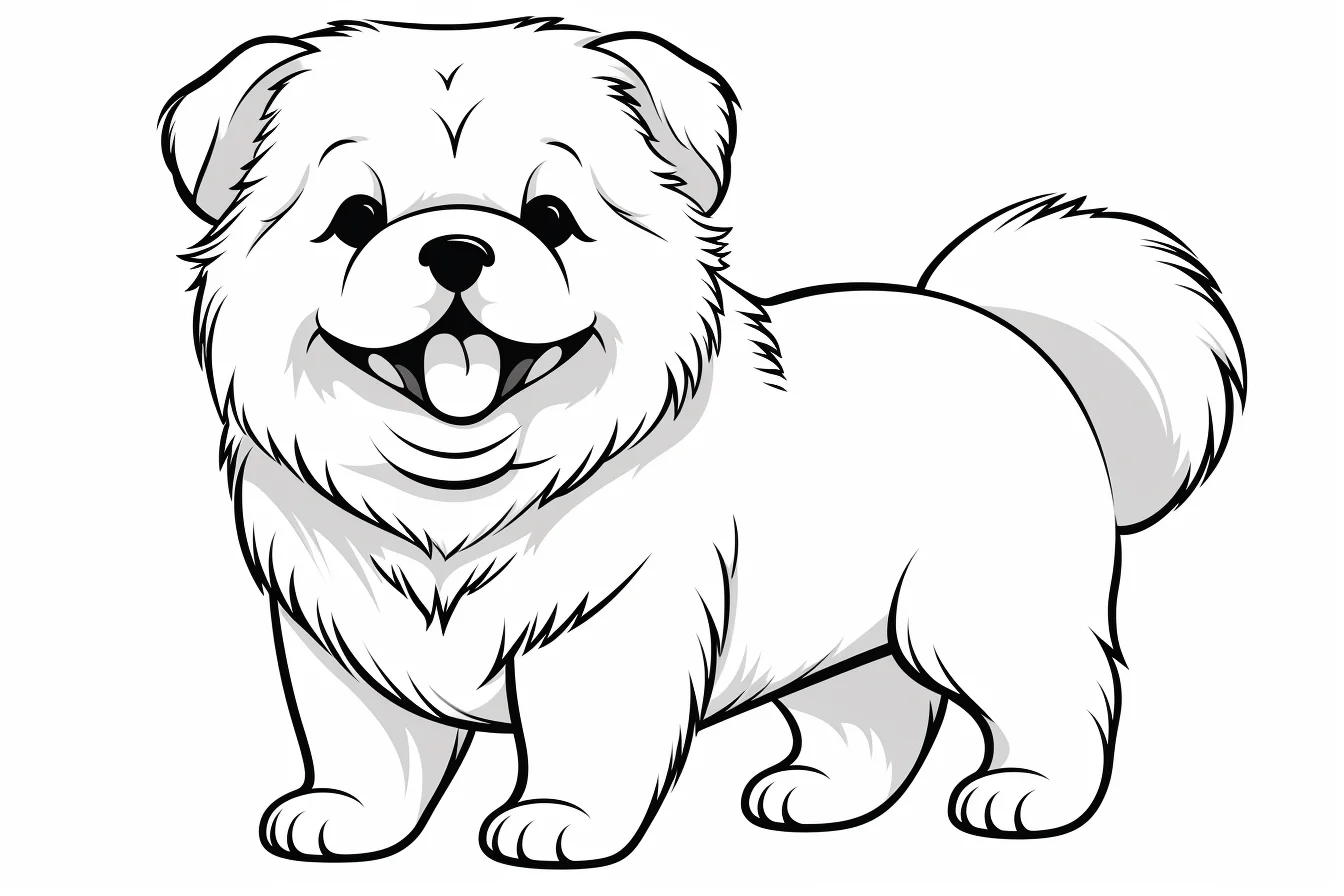
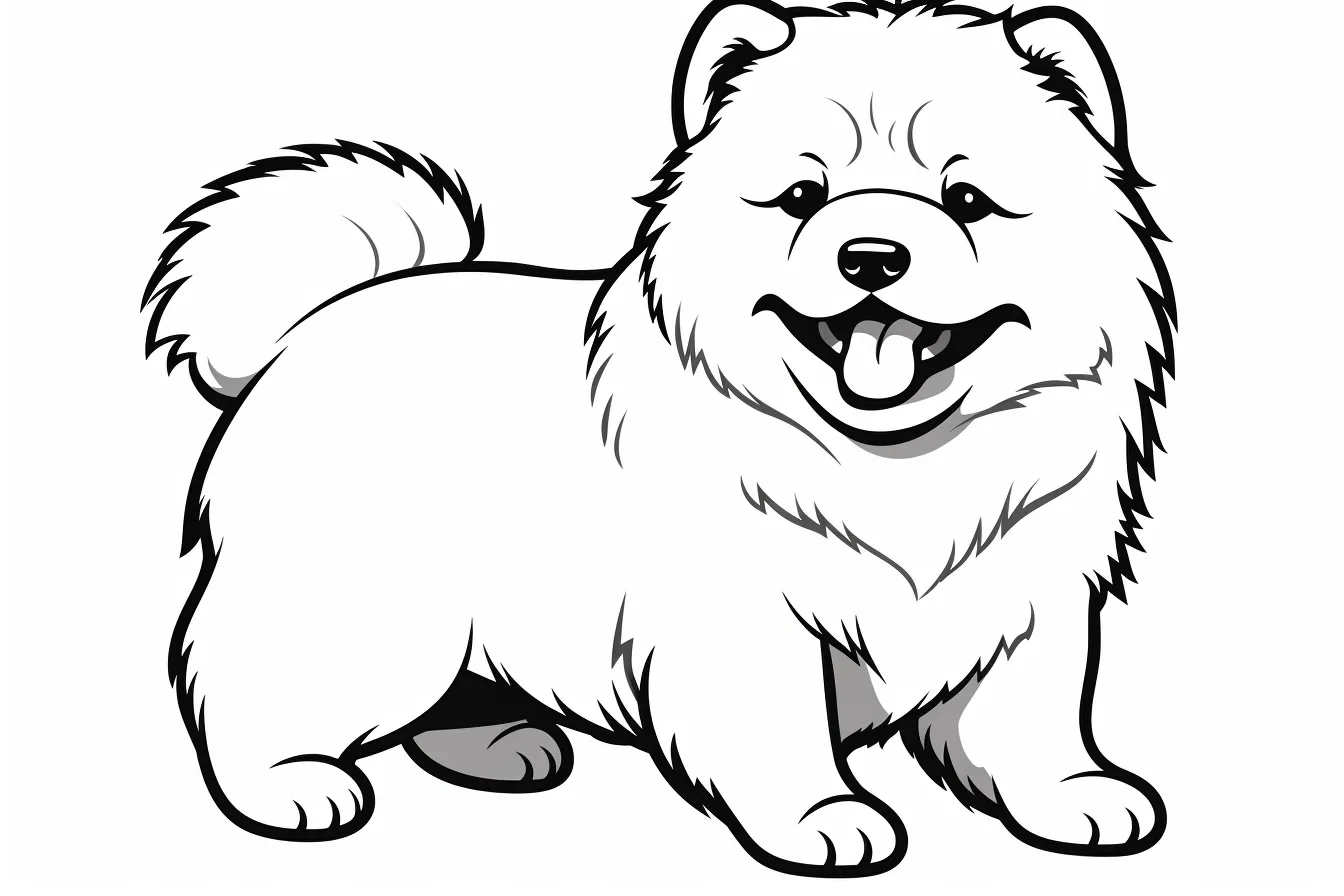
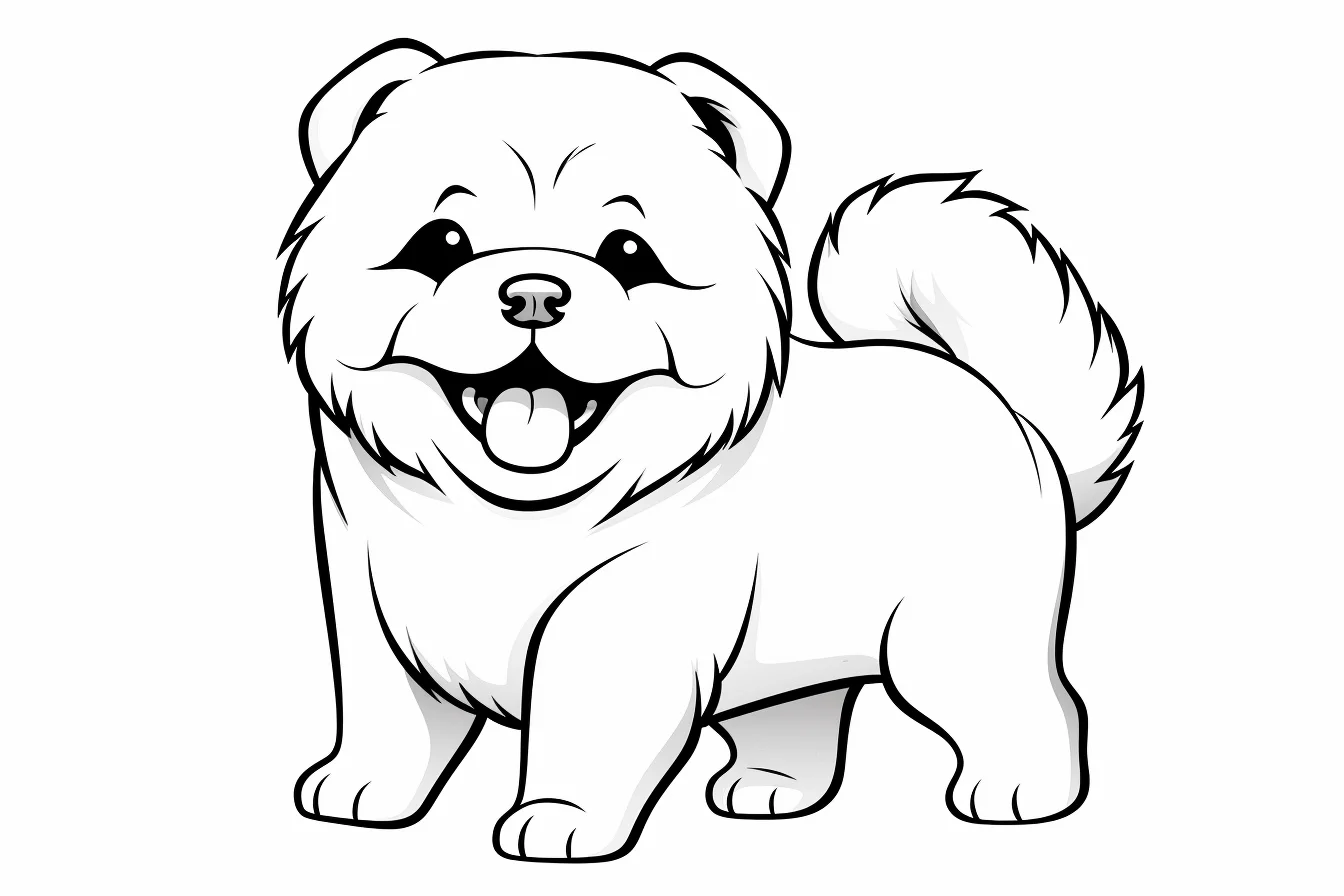
Chow Chow puppies — Sheets 1–3
Chow Chows benefit from layered fur. Keep the muzzle lighter, use a medium coat color over most of the body and add darker pencil strokes only around the outer fluff, ears and legs.
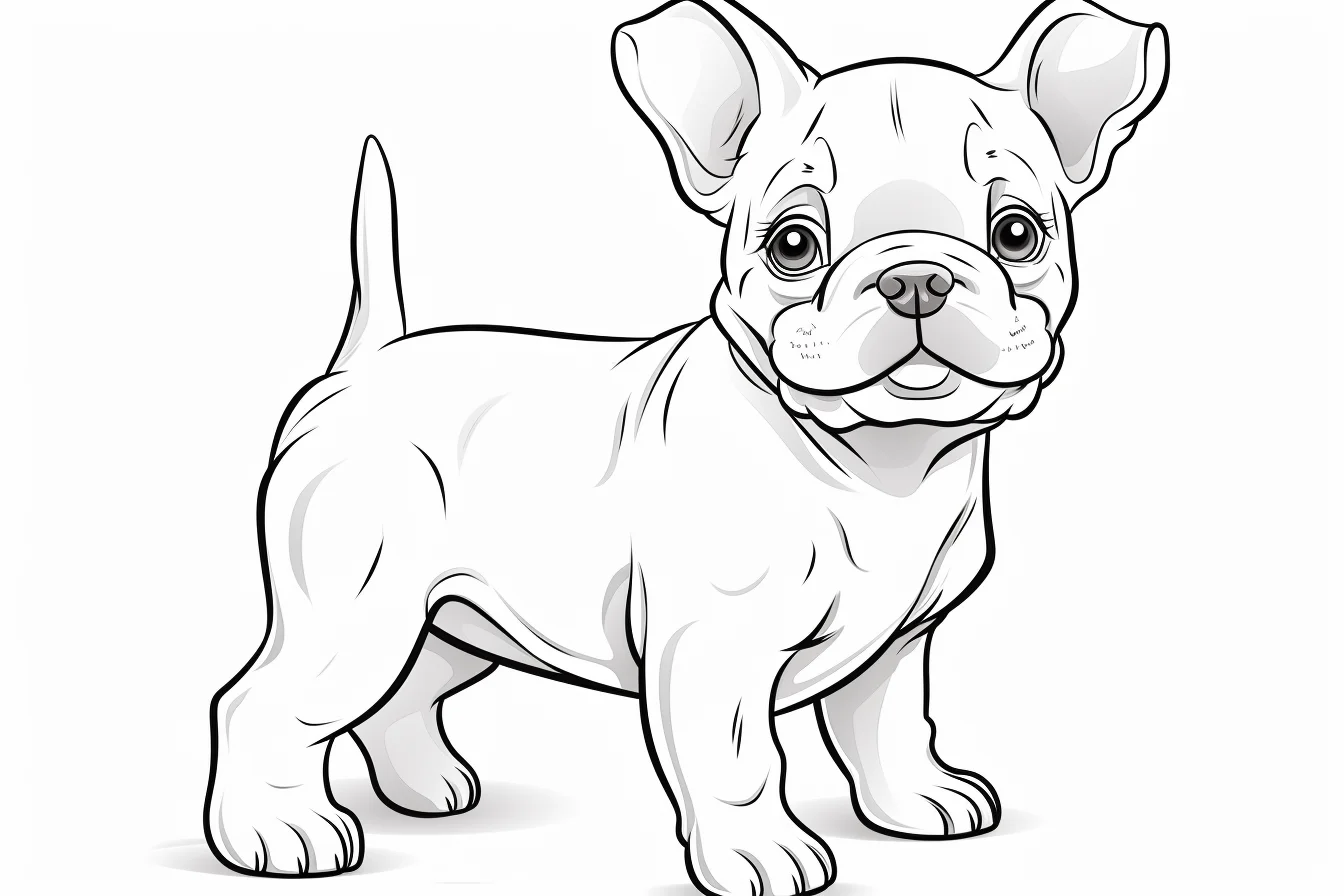
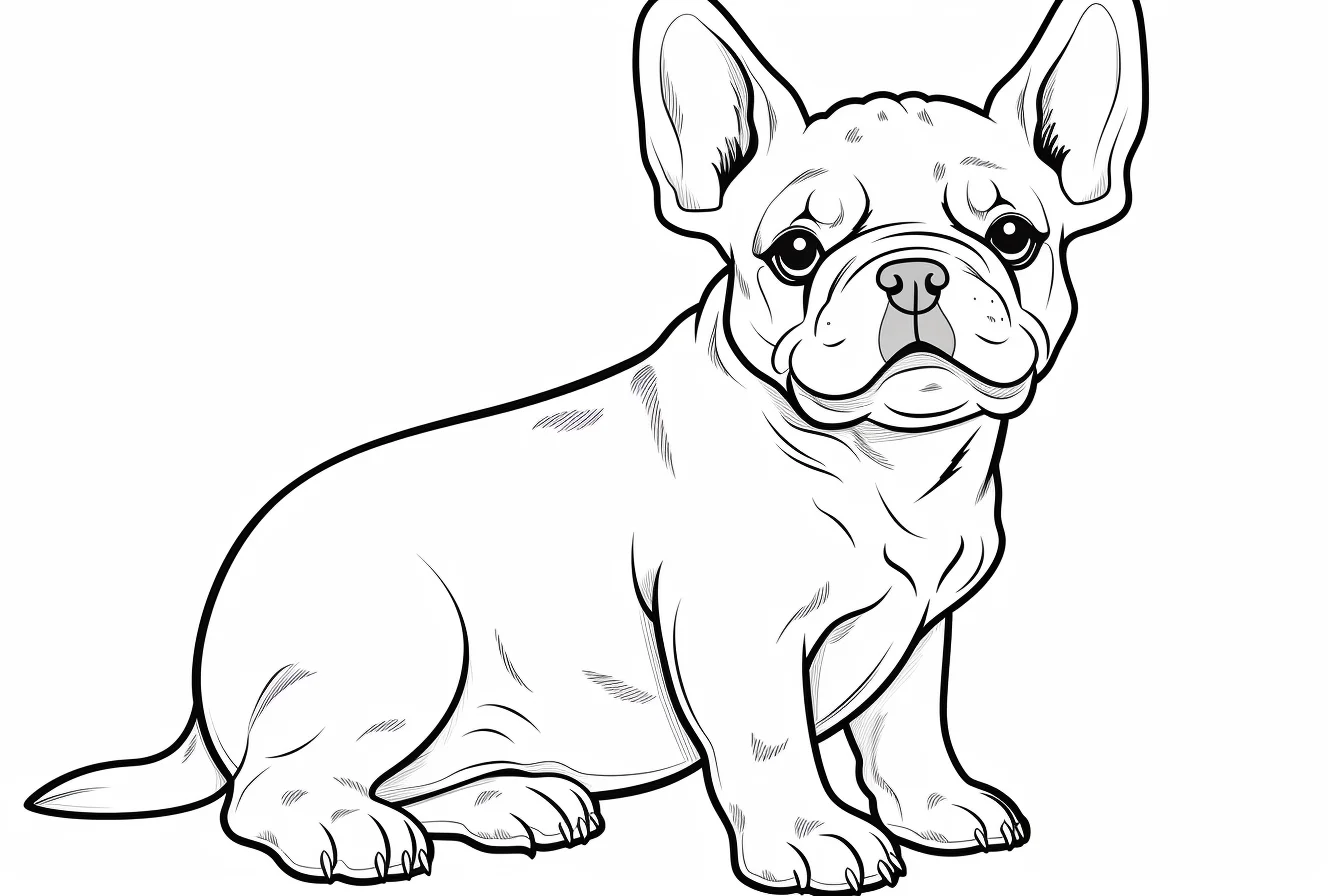
French Bulldog puppies — Sheets 4–5
Use the ears and facial mask to create contrast. Cream, fawn, brindle, gray or black-and-white all work, but leave the muzzle slightly lighter so the short face stays readable.
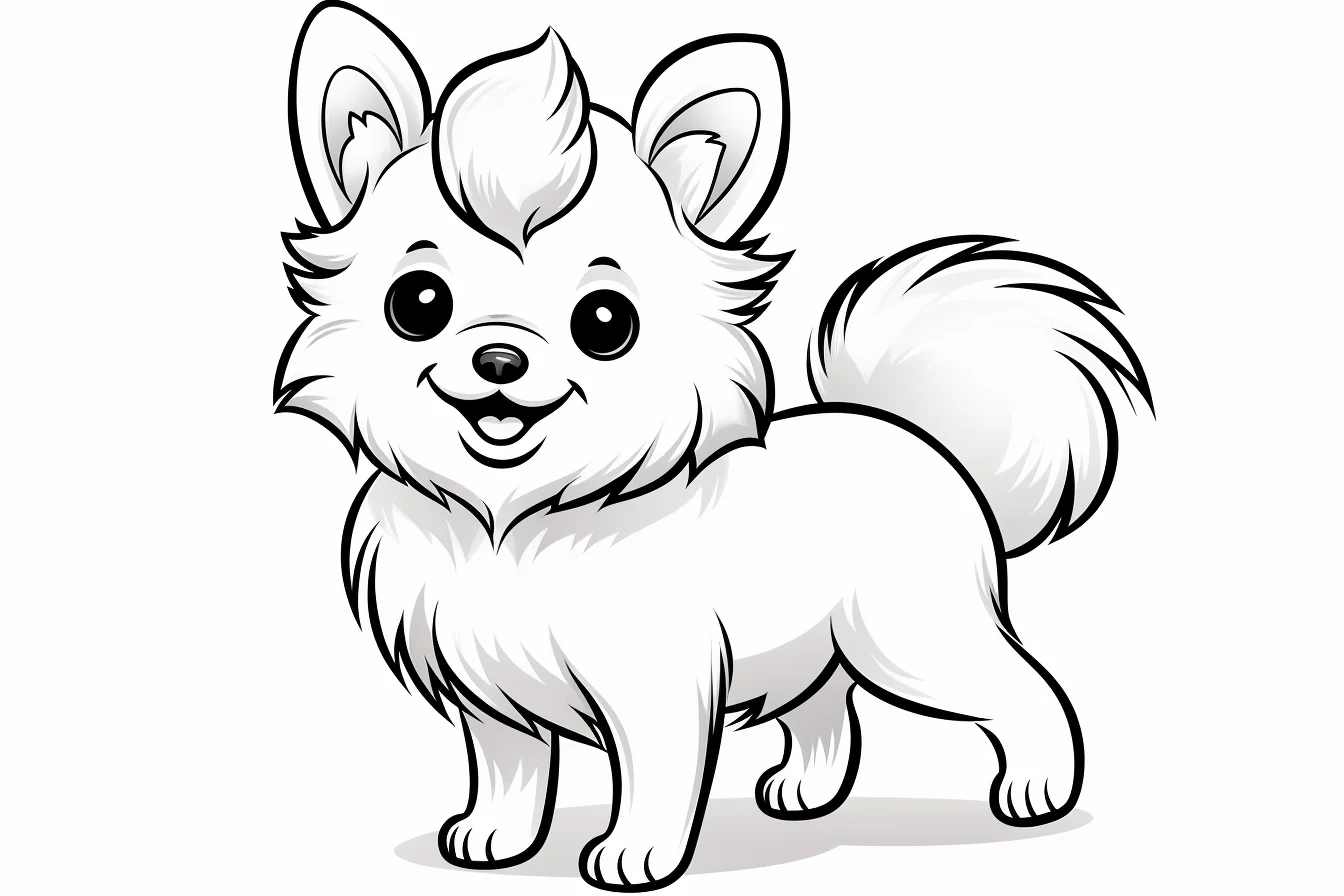
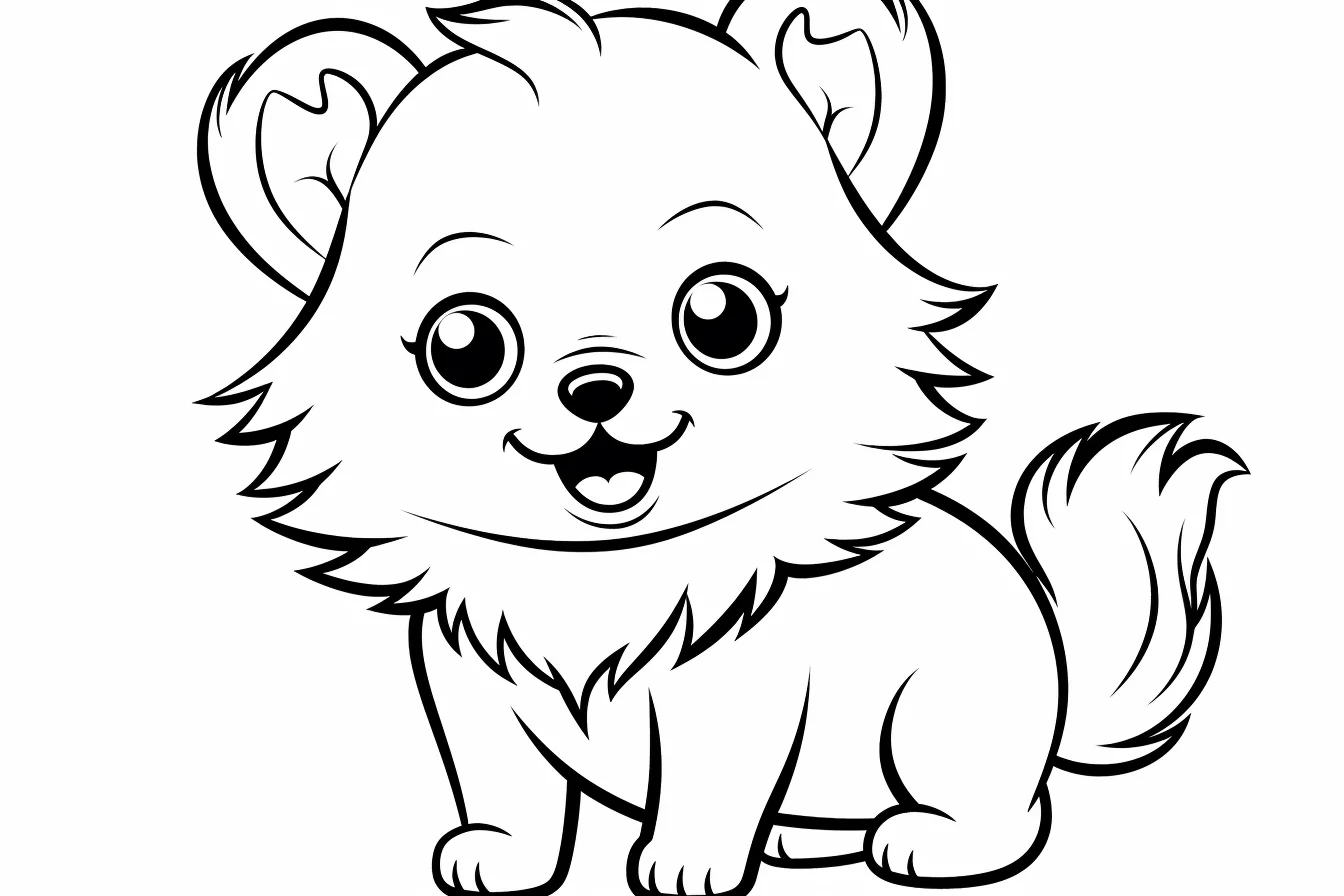
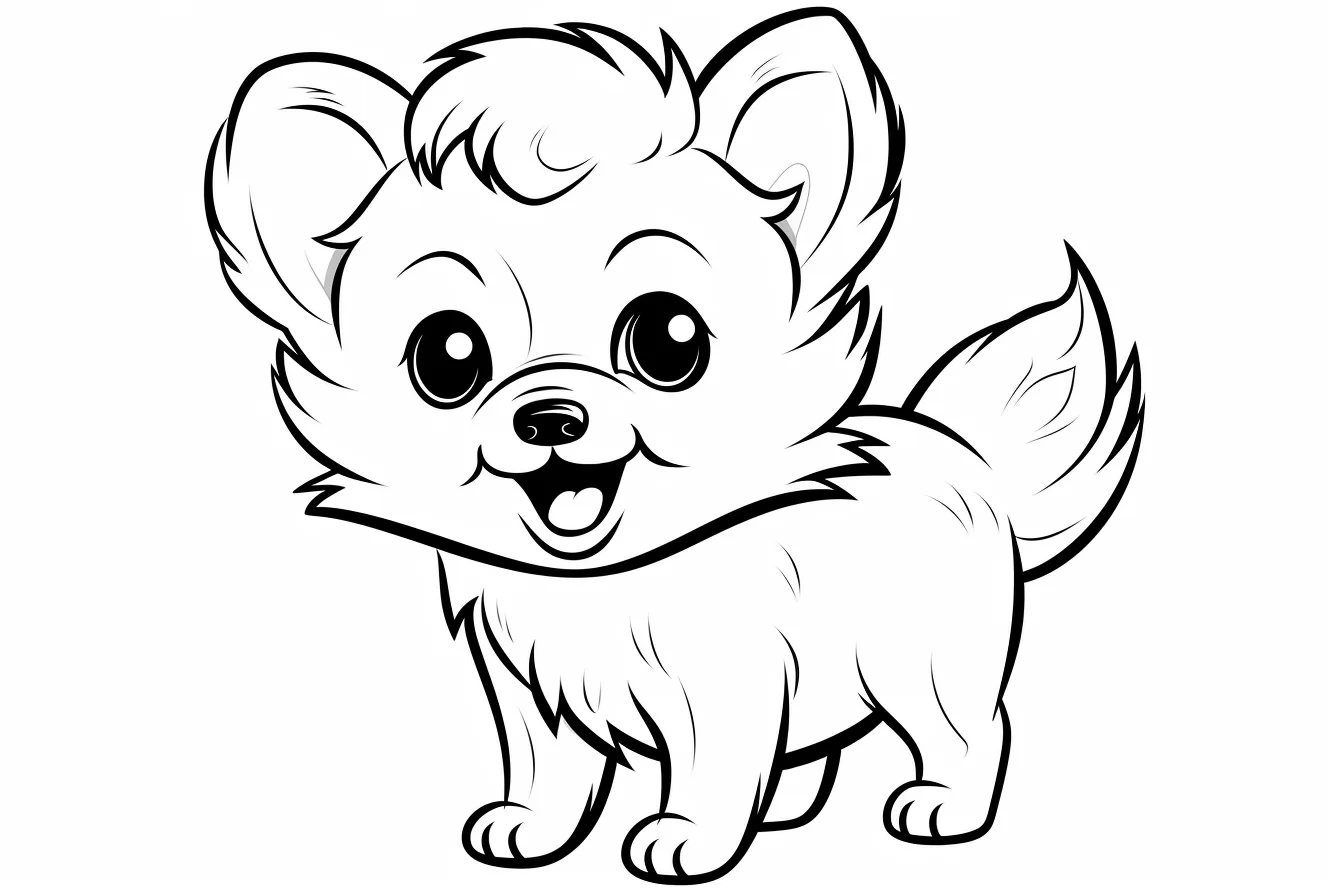
Pomeranian puppies — Sheets 6–8
For fluffy coats, avoid outlining every strand. Lay down cream, orange, tan or gray first, then use short darker strokes around the chest ruff, tail and outer body.
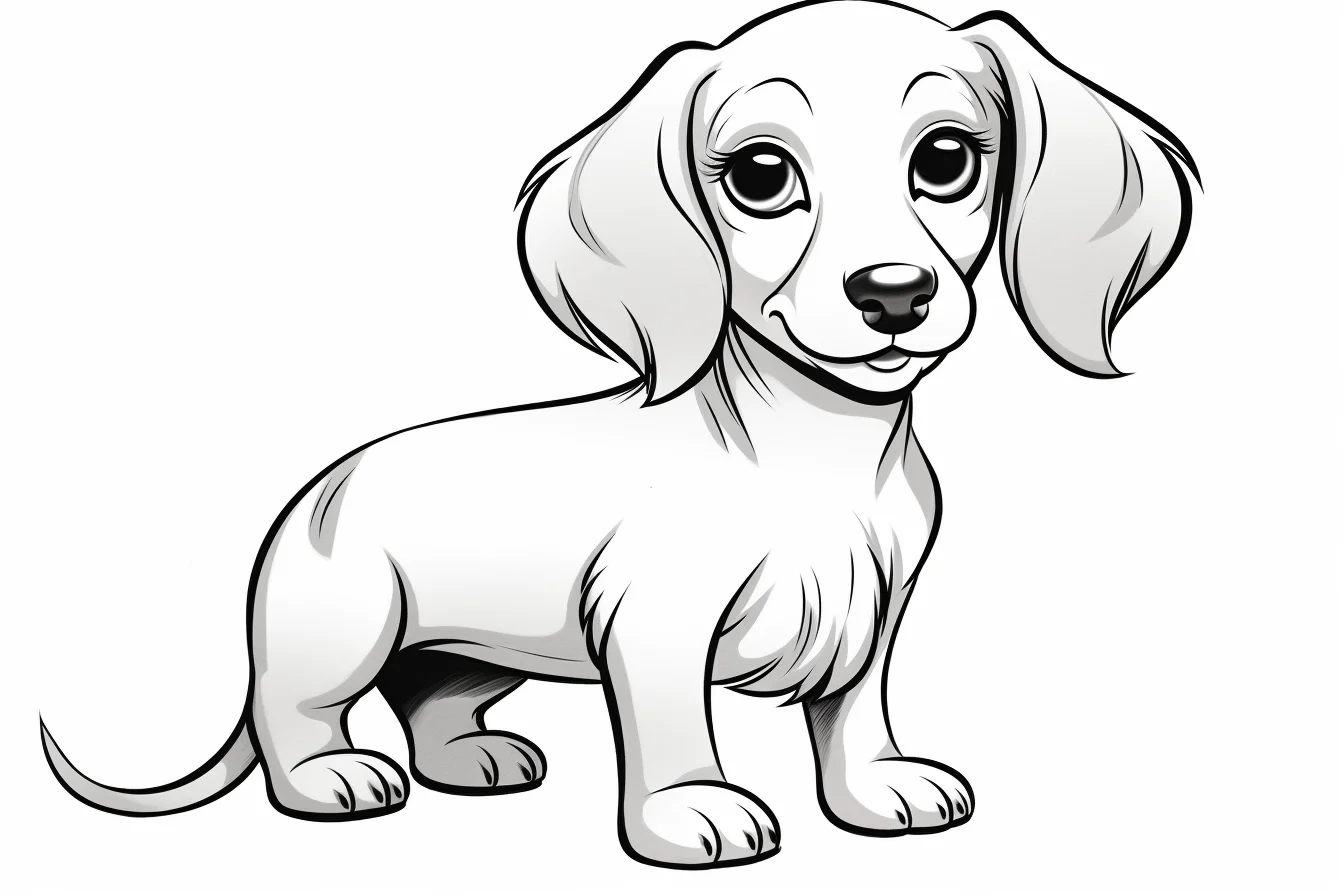
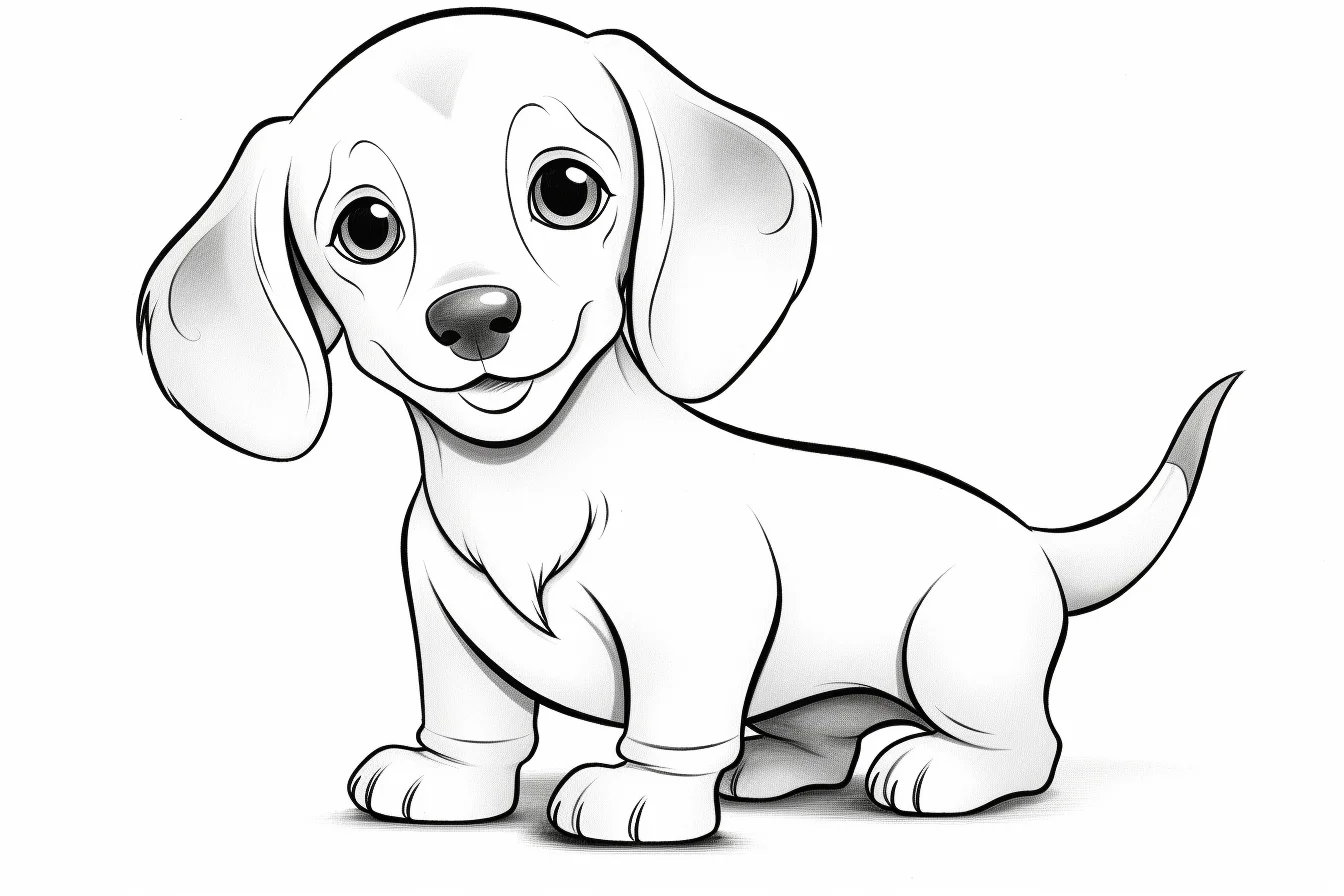
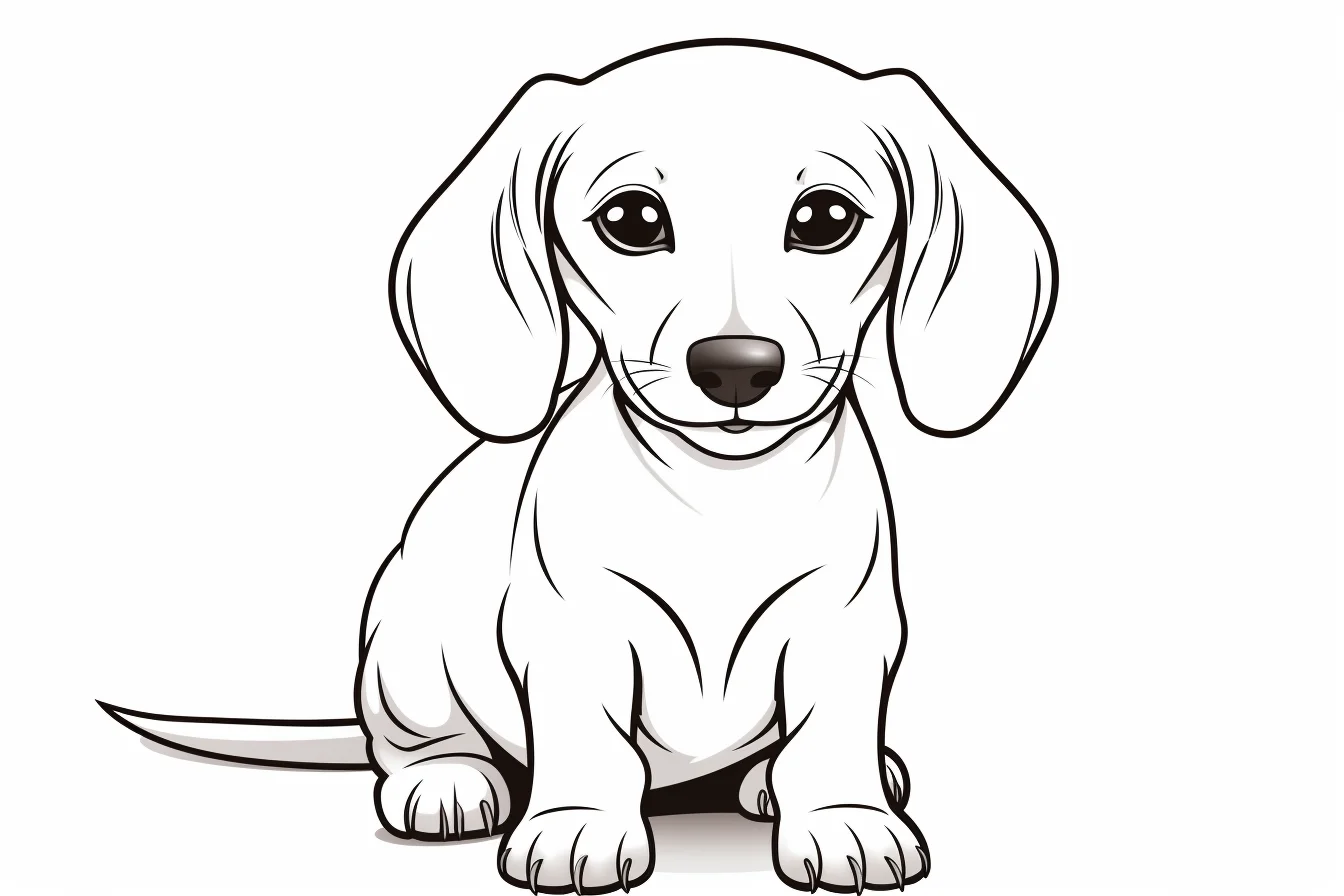
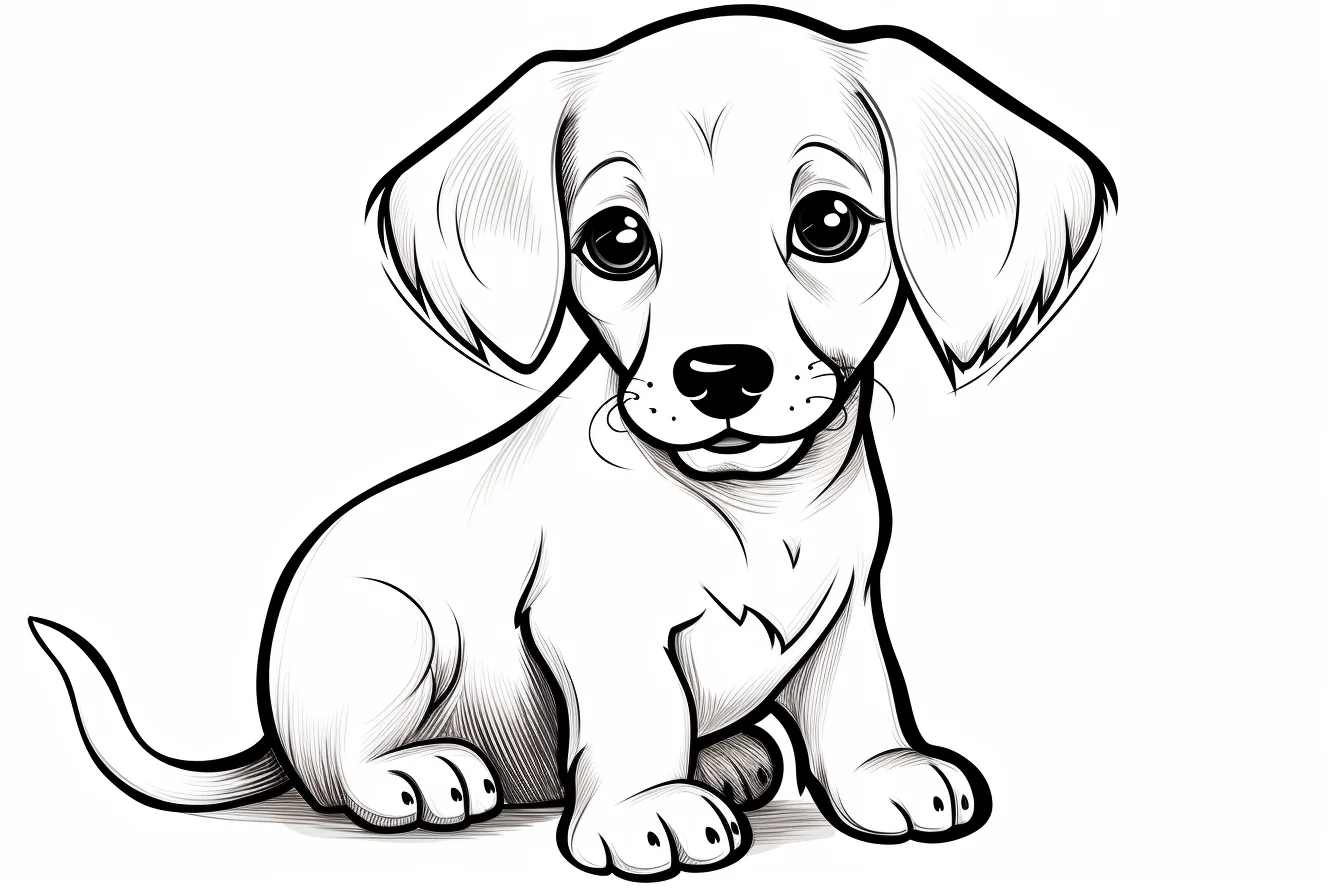
Dachshund puppies — Sheets 9–13
The long body and ears do most of the visual work here. Use one main coat color, then add a lighter muzzle/chest or darker ears and back rather than overcomplicating the pattern.
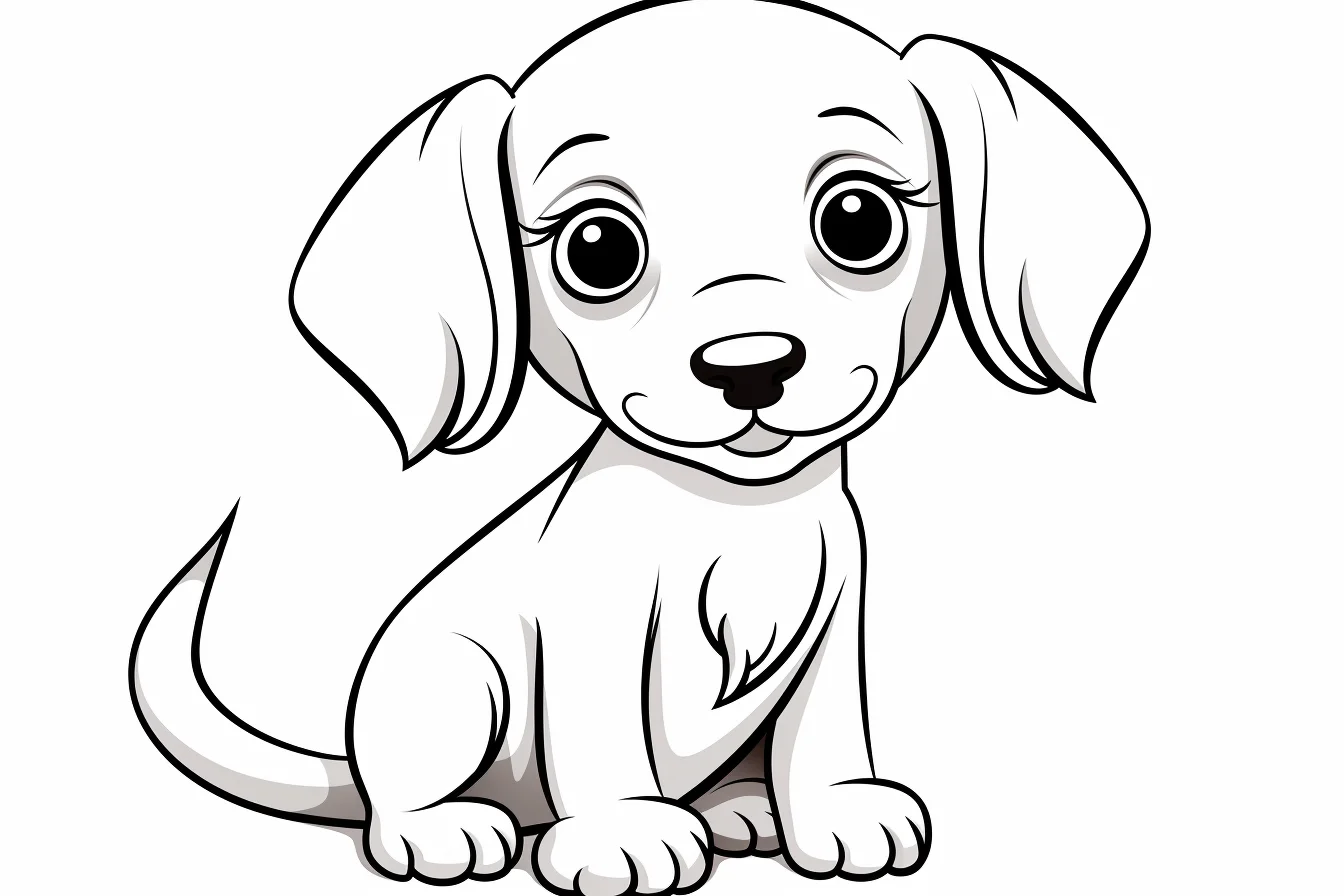
Pitbull puppies — Sheets 14–15
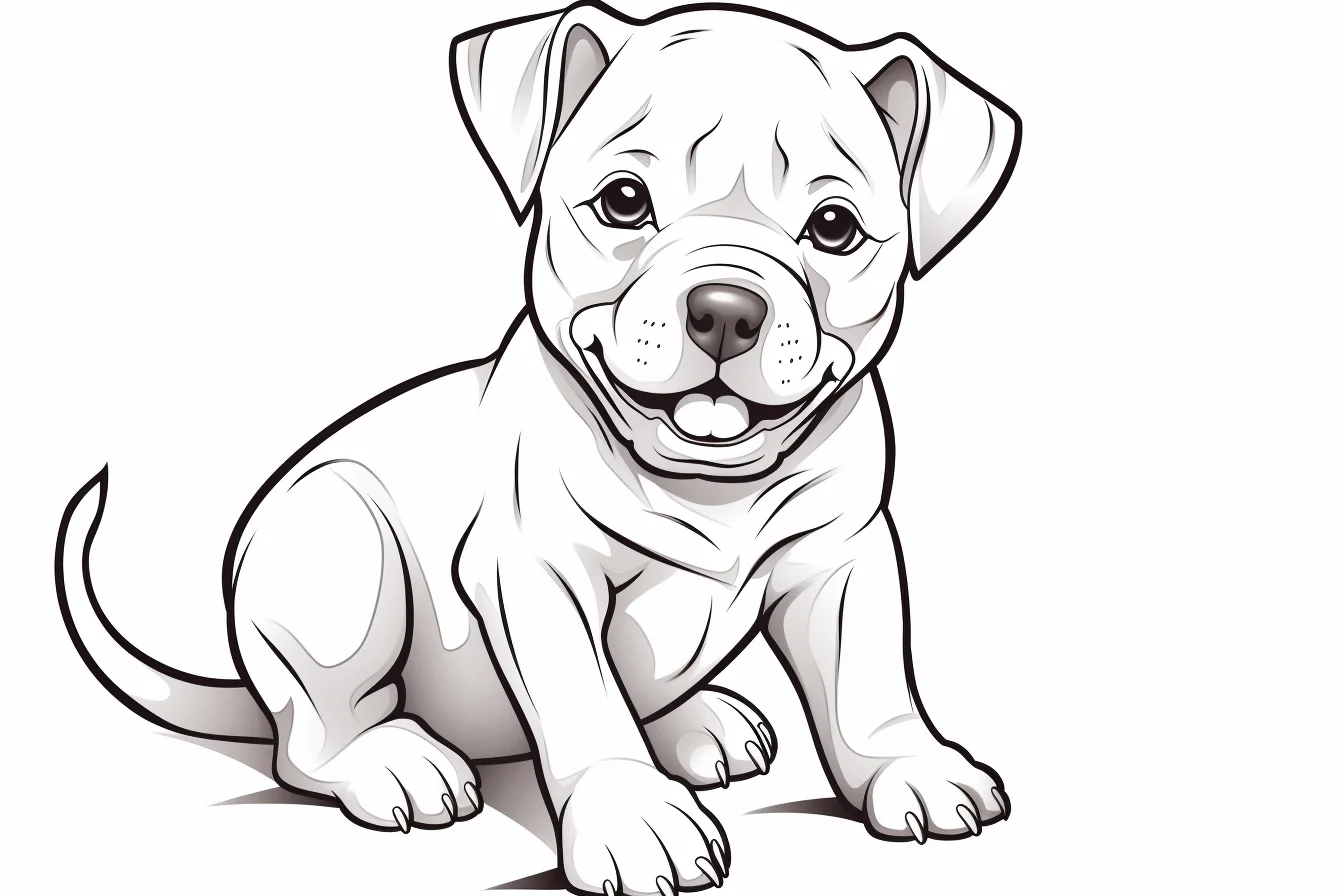
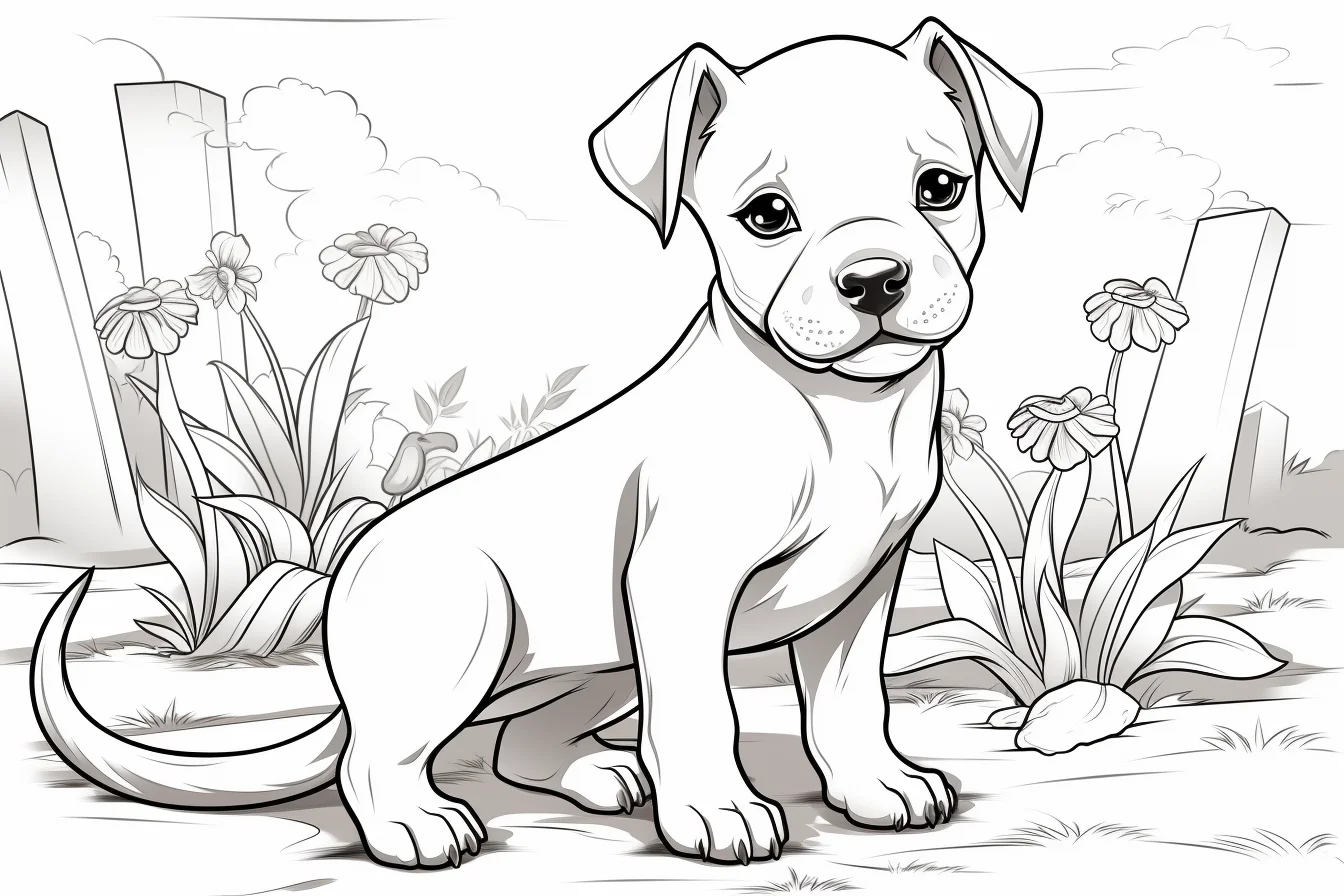
Short coats look cleaner with broad smooth color. Keep the muzzle and chest lighter, then use darker patches only where the drawing supports them.
Bernese Mountain Dog — Sheet 16
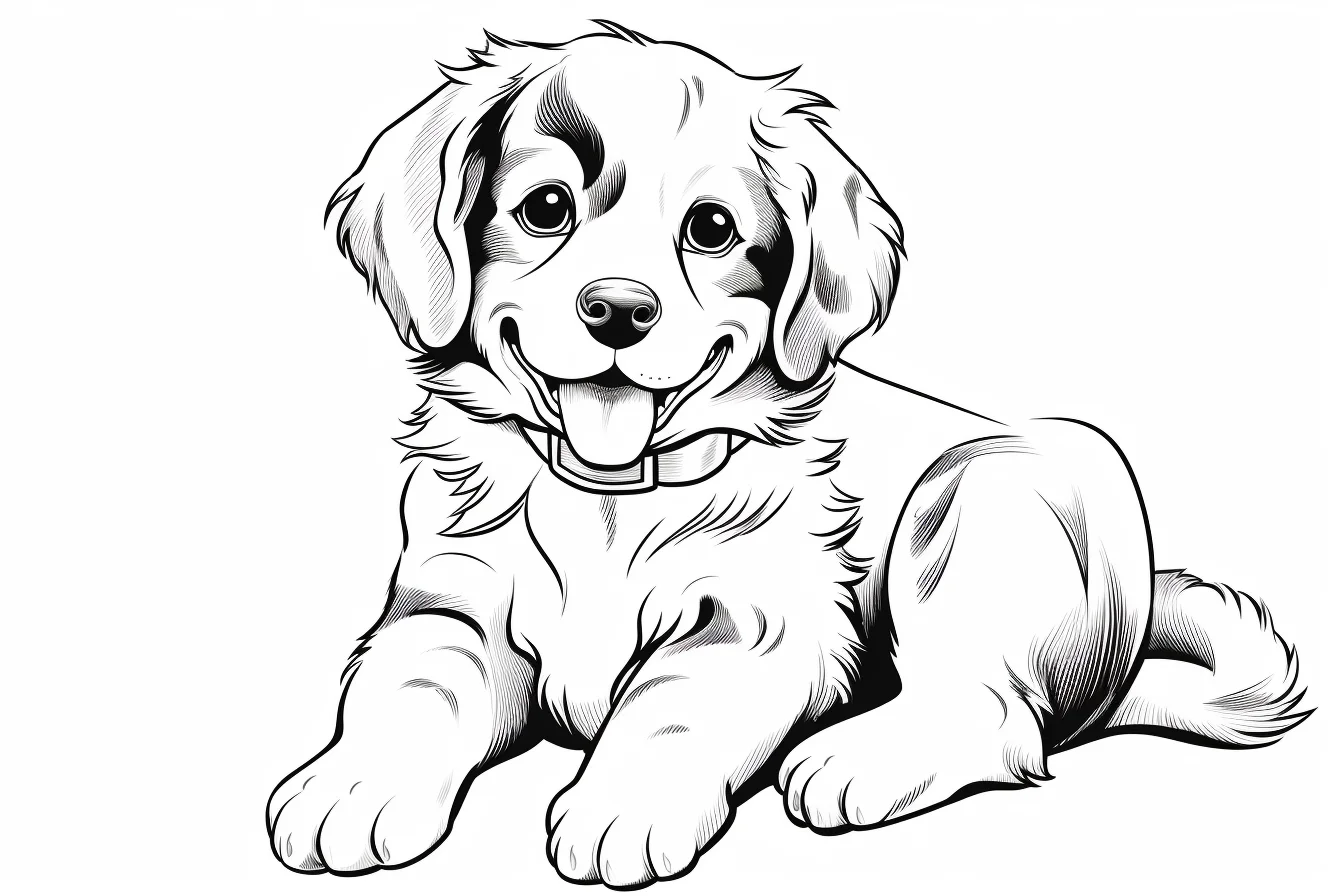
This breed is naturally useful for three-color practice: black as the main coat, rust/tan accents and white on the chest, muzzle or face. Leave the white areas clean before adding the dark coat.
Kawaii and general puppies — Sheets 17–20
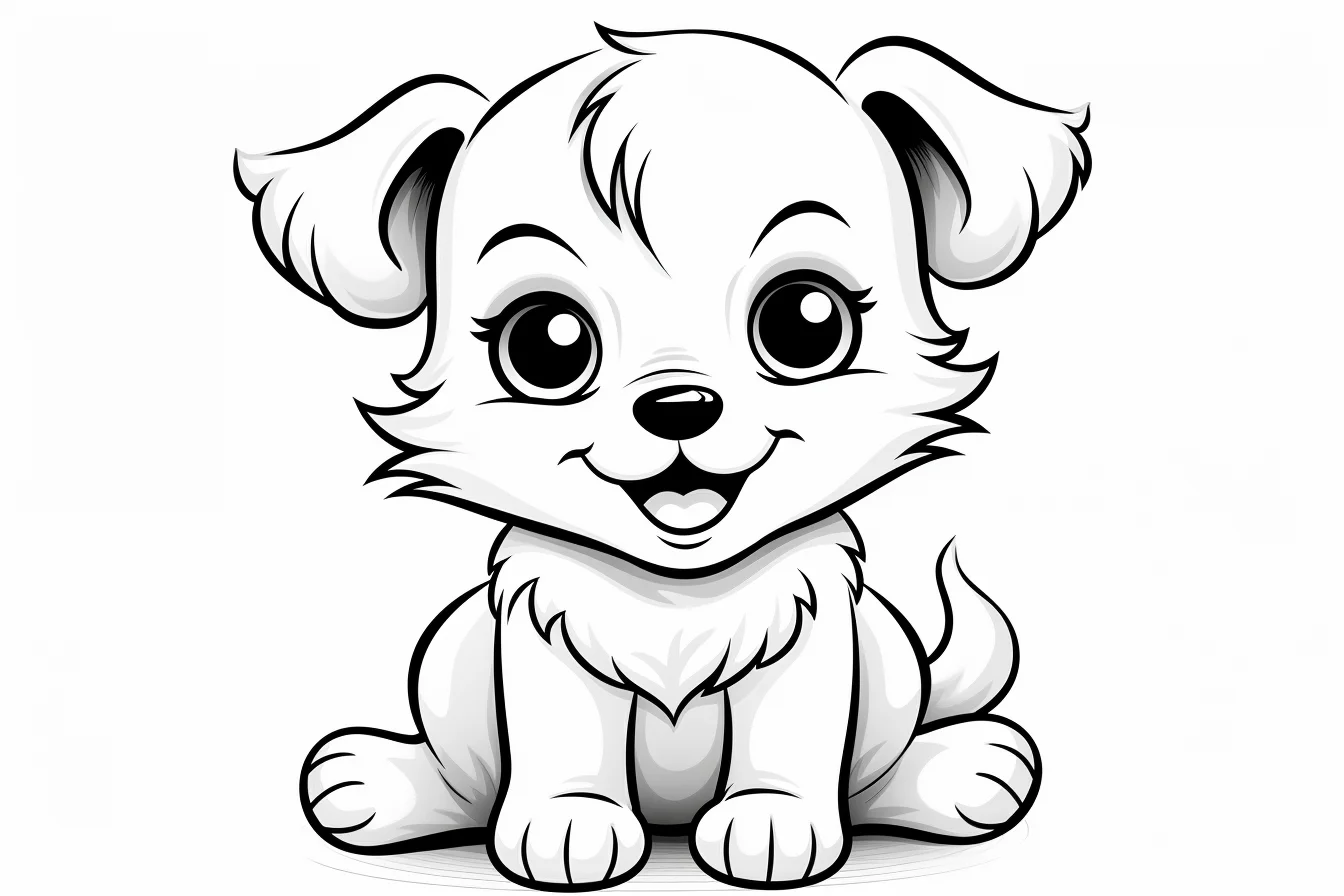
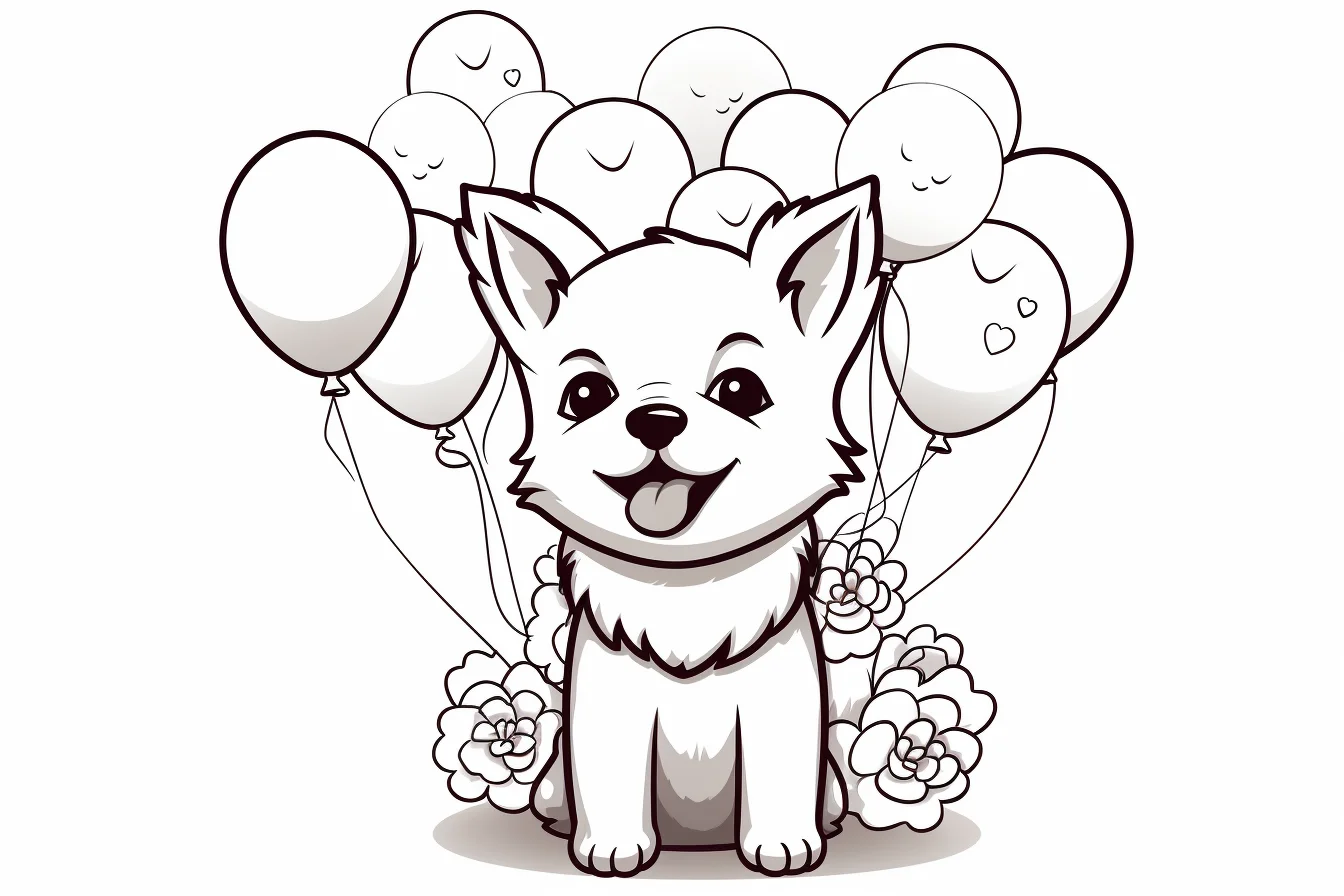
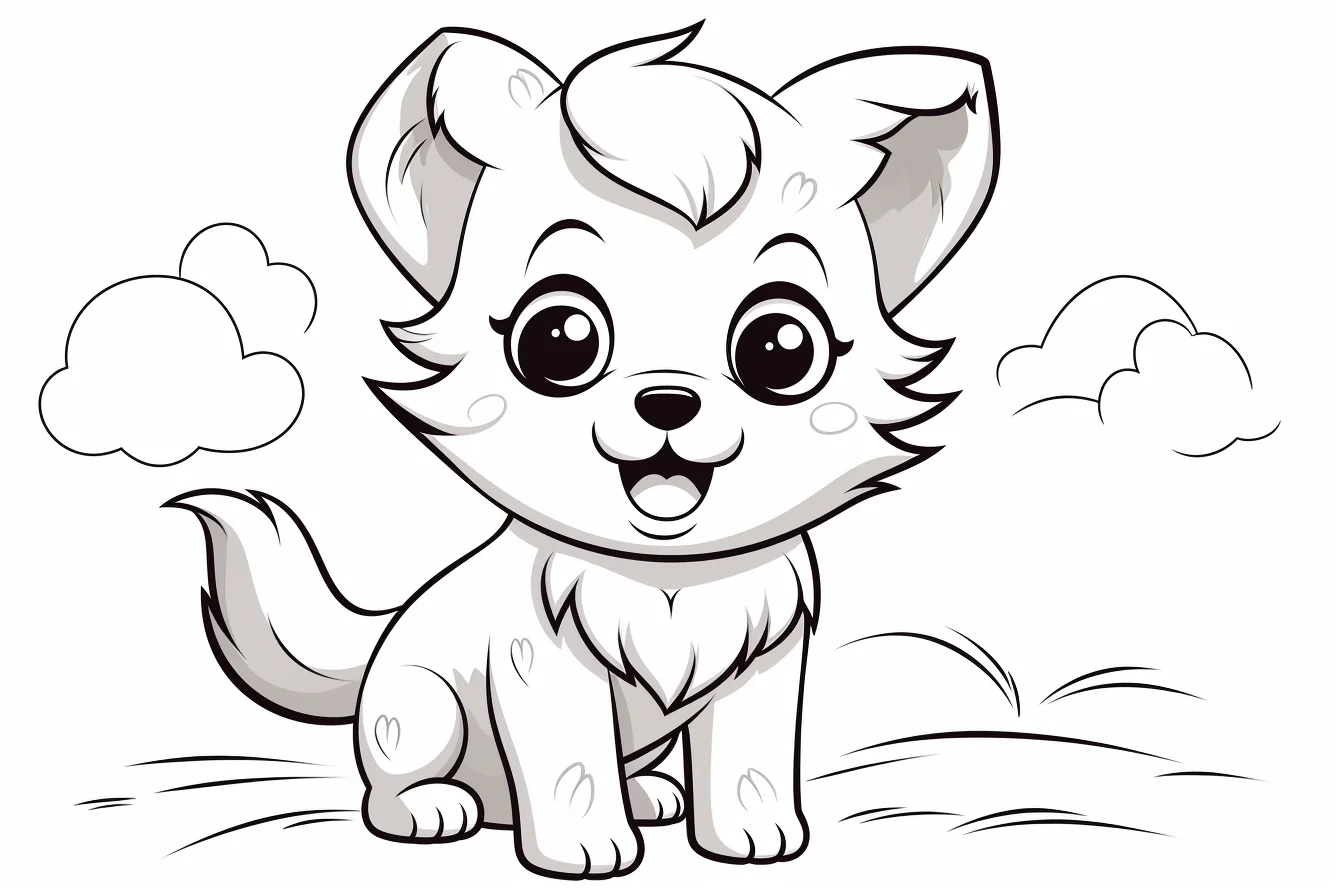
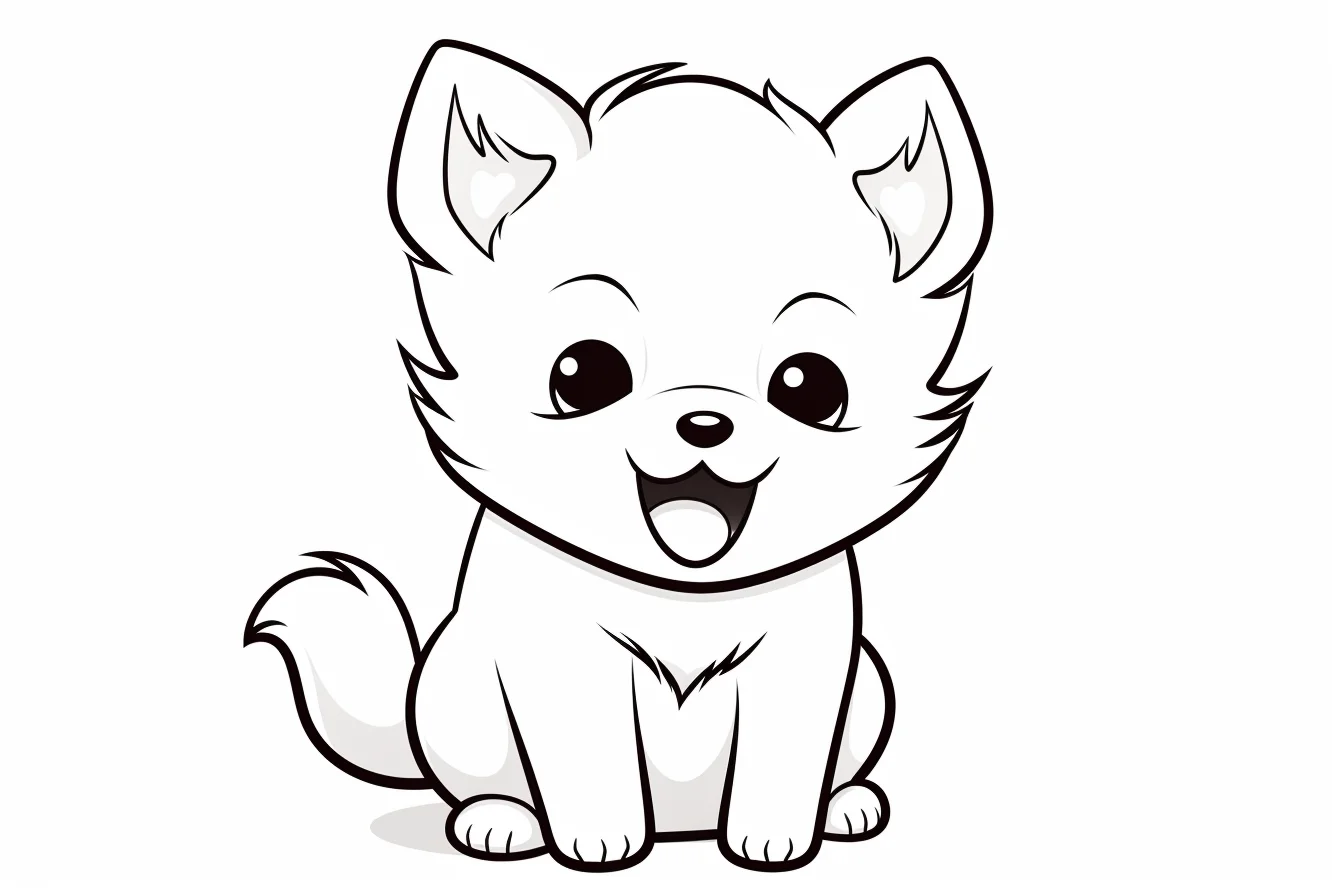
These last pages are less breed-specific, so there is no reason to chase realistic coat colors. Keep the face clear, pick one or two main coat colors and use brighter accents on collars or small details.
Make the coat look like fur, not a flat shape
The useful trick is to separate base color, direction and contrast. Start with a light base over the whole coat, then add texture only where the body changes direction: around the cheeks, chest, shoulders, legs and tail. Fur strokes should follow the form rather than all pointing downward. Leave some of the base layer visible. If every inch receives the same dark texture, a fluffy puppy quickly turns into a noisy gray mass.
For a simple three-sheet practice session, use one short-haired puppy first, a Pomeranian or Chow Chow second, and the Bernese puppy third. The first teaches smooth coverage, the second teaches directional texture, and the third teaches how to preserve light markings while building a dark coat.
Fix common puppy-coloring problems
| If this happens | Try this on the next sheet |
|---|---|
| The eyes disappear into dark fur | Keep a narrow lighter area around the eyes and build the darkest coat values gradually instead of starting with black. |
| Fluffy fur looks scribbled | Use fewer, shorter strokes and place them mainly along edges and changes in body direction. |
| The muzzle looks pasted onto the face | Repeat a little of the main coat color at the muzzle edges so the light and dark areas connect. |
| Black fur looks completely flat | Begin with dark gray or brown-black, preserve lighter patches, and reserve true black for the deepest shadows. |
| Marker strokes look streaky | Work one small coat section at a time and overlap strokes while the ink is still wet. Avoid repeatedly scrubbing a drying area. |
| The puppy blends into the background | Choose a background value clearly lighter or darker than the coat, especially around the head and ears. |
Choose the medium to match the puppy
Crayons are forgiving on pages with large coat areas. Use the side of the crayon for the base and the point for ears, paws and markings. Colored pencils give the most control for Pomeranian and Chow Chow fur because you can layer a pale base and add directional strokes without covering the paper immediately. Markers work especially well on French Bulldogs, Dachshunds and Pitbull puppies, where broad short-haired areas reward smooth, even fills.
If children are using markers, print on slightly heavier paper when possible and place scrap paper underneath. For mixed media, a clean combination is marker for the background or accessories and pencil for the puppy itself; the difference in texture helps the dog stand forward without needing heavy outlines.
Three coat palettes worth practicing
- Warm and soft: cream base, honey-tan midtone, warm brown shadows and a muted blue or green background.
- Cool gray: pale gray base, charcoal accents, soft pink inside the ears and a warm beige background for contrast.
- High-contrast tricolor: off-white reserved first, rust or caramel accents second, then dark brown or black last. This is especially useful on the Bernese sheet.
These are practice palettes, not breed rules. A child who wants a purple Dachshund or a blue Pomeranian is still solving the same useful coloring problems: keeping the face readable, separating adjacent shapes and controlling light versus dark.
Quick puppy-coloring questions
Which pages are easiest?
Sheets 17–20 are the least breed-dependent and work well for imaginative coloring. Among the breed pages, choose whichever drawing has the largest open coat areas.
Do I need realistic dog colors?
No. Natural coat references are useful on the breed pages, but the kawaii set works just as well with fantasy colors.
What tool is best for fluffy puppies?
Colored pencils. Use a light base layer first, then short darker strokes around the outer fur instead of filling every hair line separately.

