
This 14-page tiger collection is the simpler, cuter companion to our larger tiger gallery. It focuses on baby tigers, kawaii faces, easy outlines and preschool-friendly designs rather than realistic anatomy or dense stripe work.
If you are printing for a younger child, start here. The pages use tall portrait layouts and mostly large shapes, which are easier to control with crayons or broad markers than the more detailed tiger pages elsewhere on the site.
Choose the right tiger page
- Preschool and first coloring pages: choose the baby-tiger and preschool sheets with larger shapes and fewer small details.
- Kawaii pages: use these when big eyes and a softer cartoon look are more appealing than realistic proportions.
- Easy printable pages: good for short activities where the goal is to finish a complete page without spending a long time on stripes.
For a wider mix that includes realistic and adult-oriented designs, use the 32 tiger coloring pages.
14 cute and easy tiger coloring pages
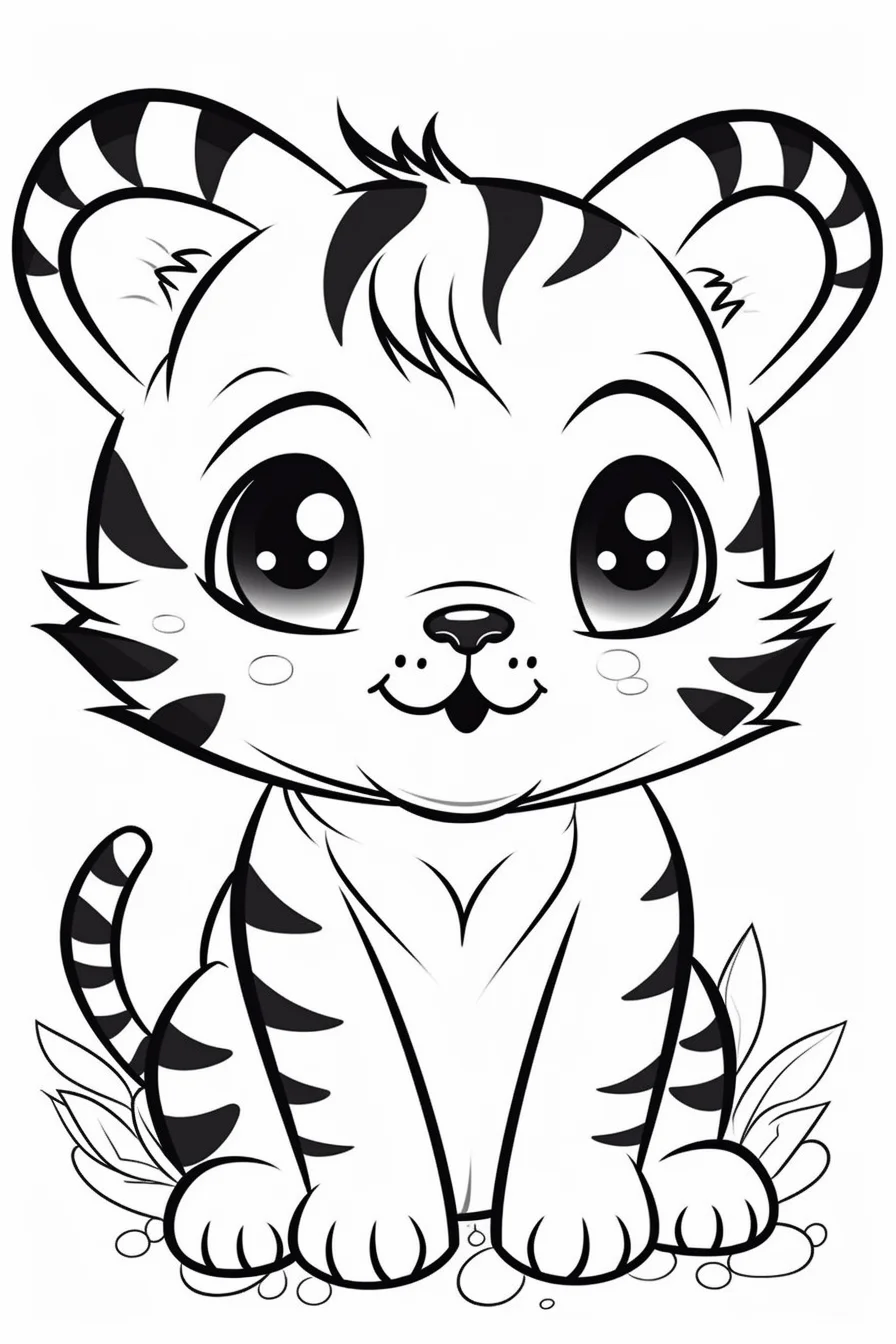
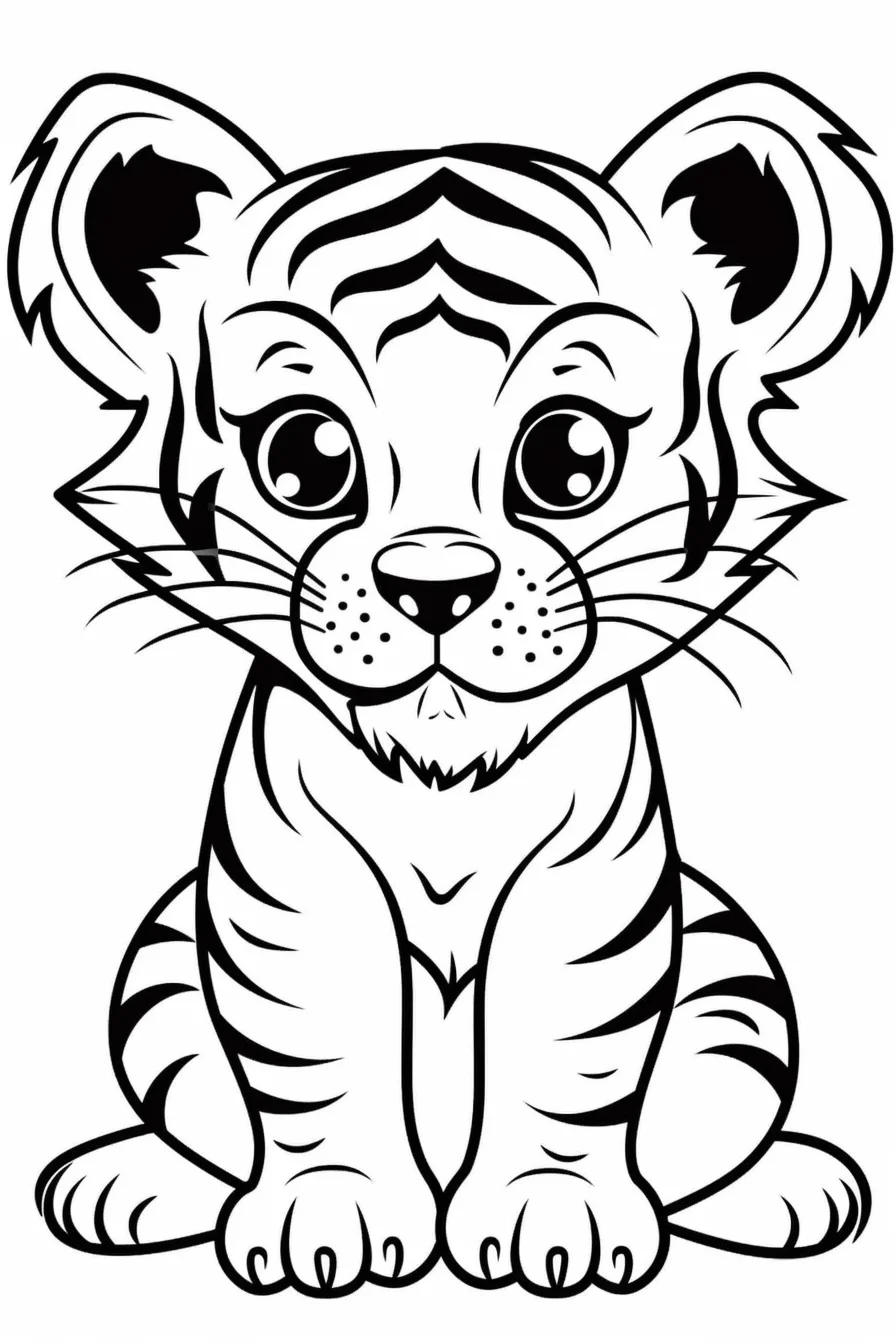
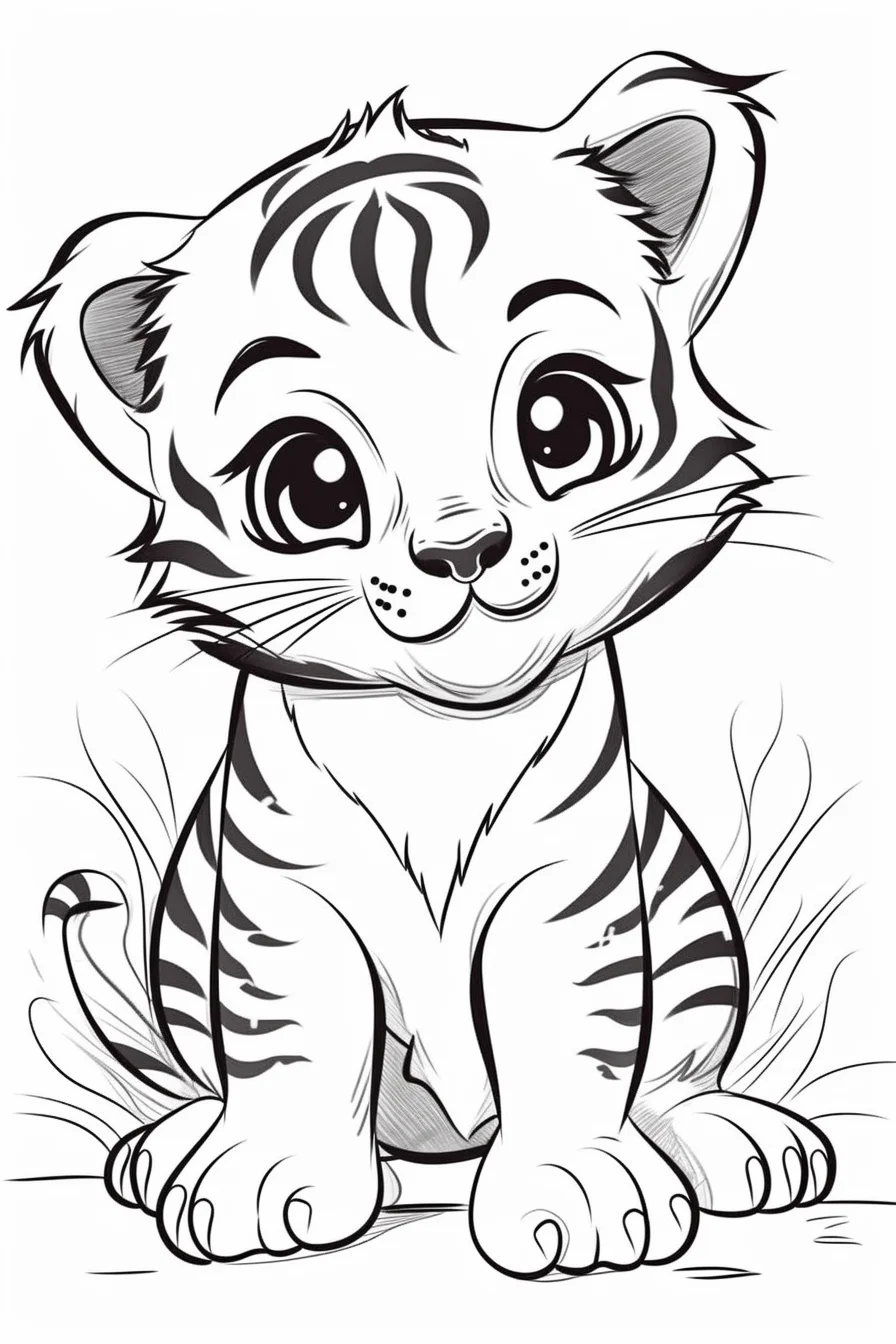
Good starting group: these first baby-tiger sheets are the easiest place to begin if a child is still getting used to staying inside outlines. Use a light orange or yellow base first, then add the stripes after the body is filled so the pattern stays clear.
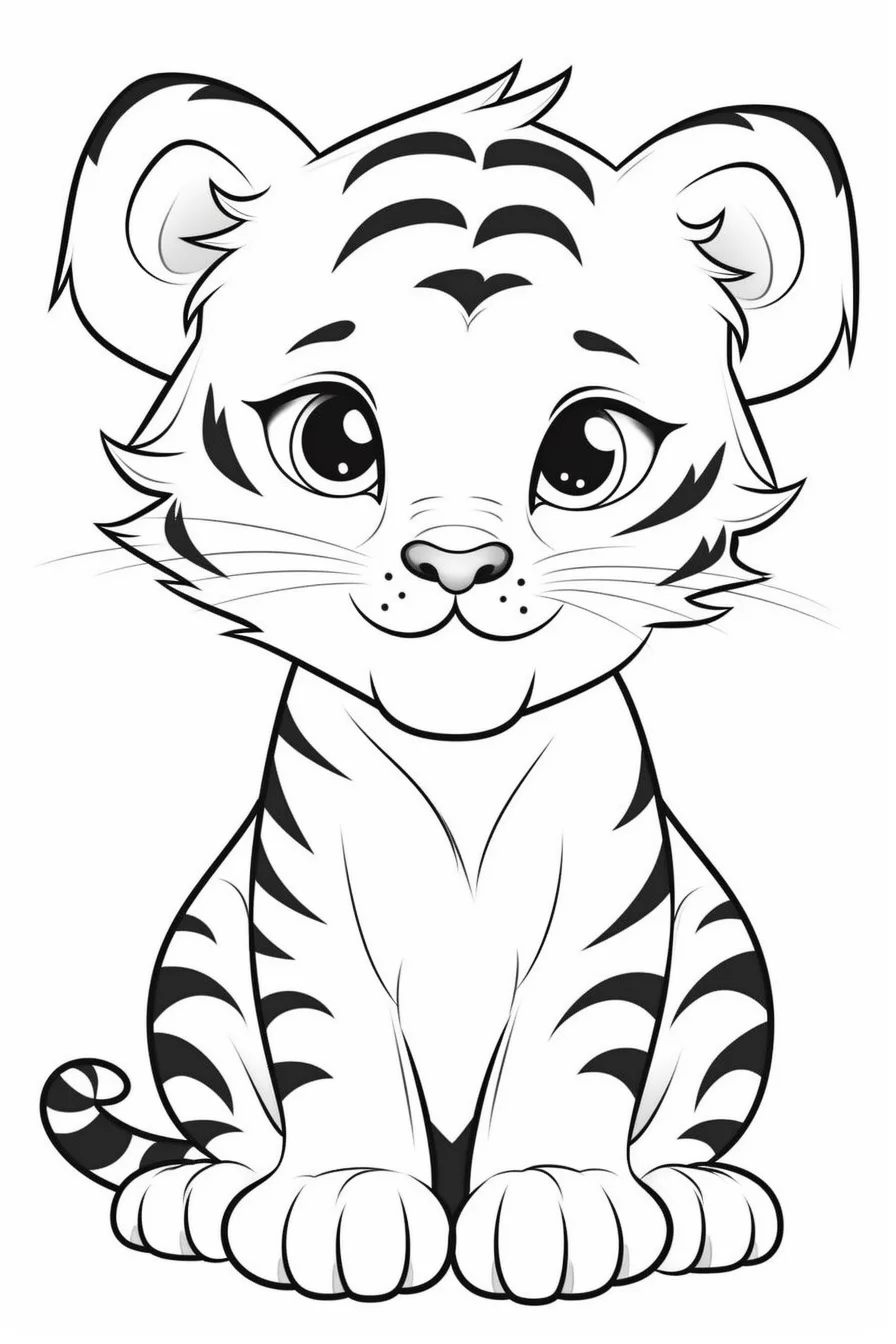
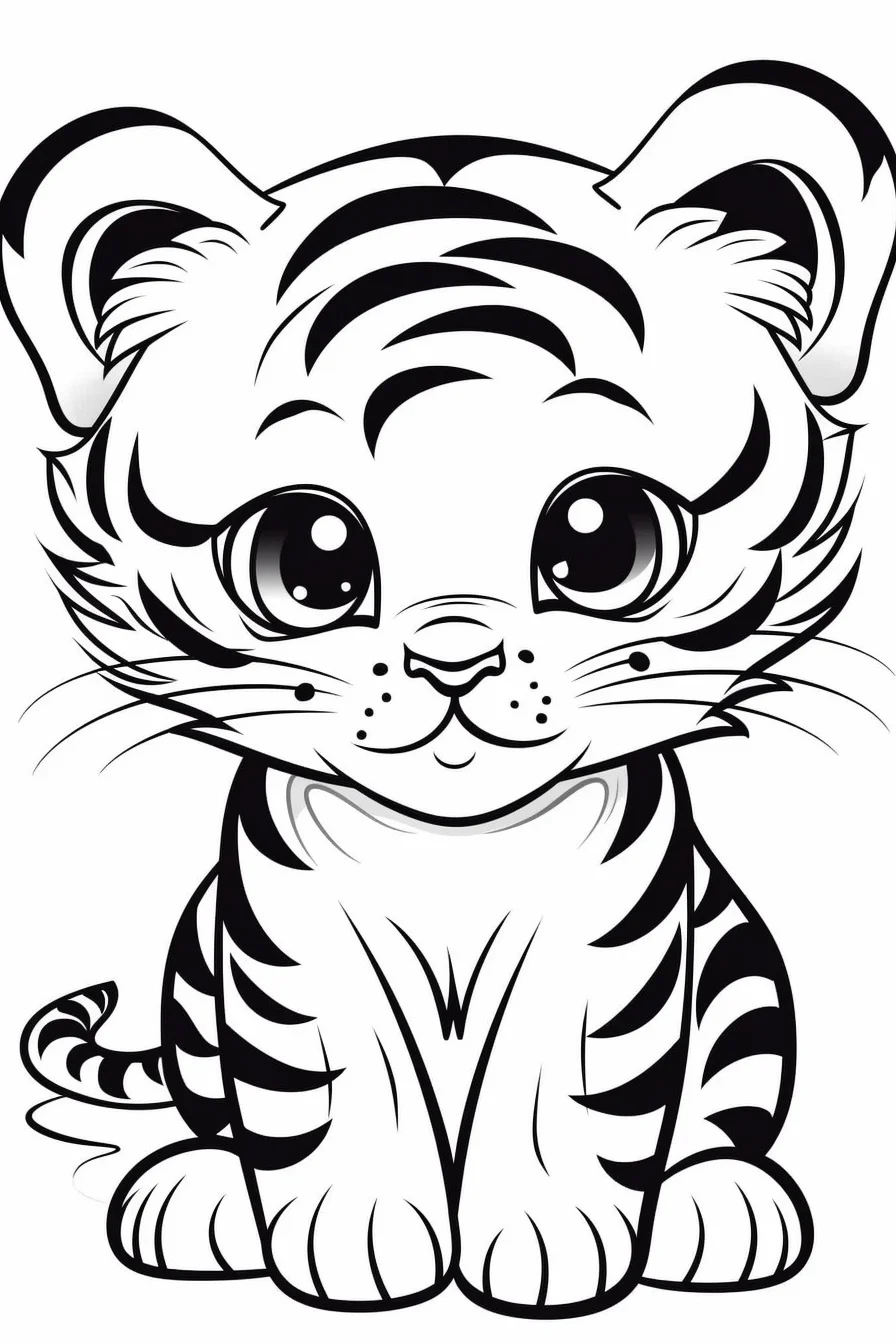
For a kawaii look: softer colors work well here. Try peach, pale orange, cream or even non-realistic pink and lavender, then keep the stripes a little darker than the body instead of using solid black everywhere.
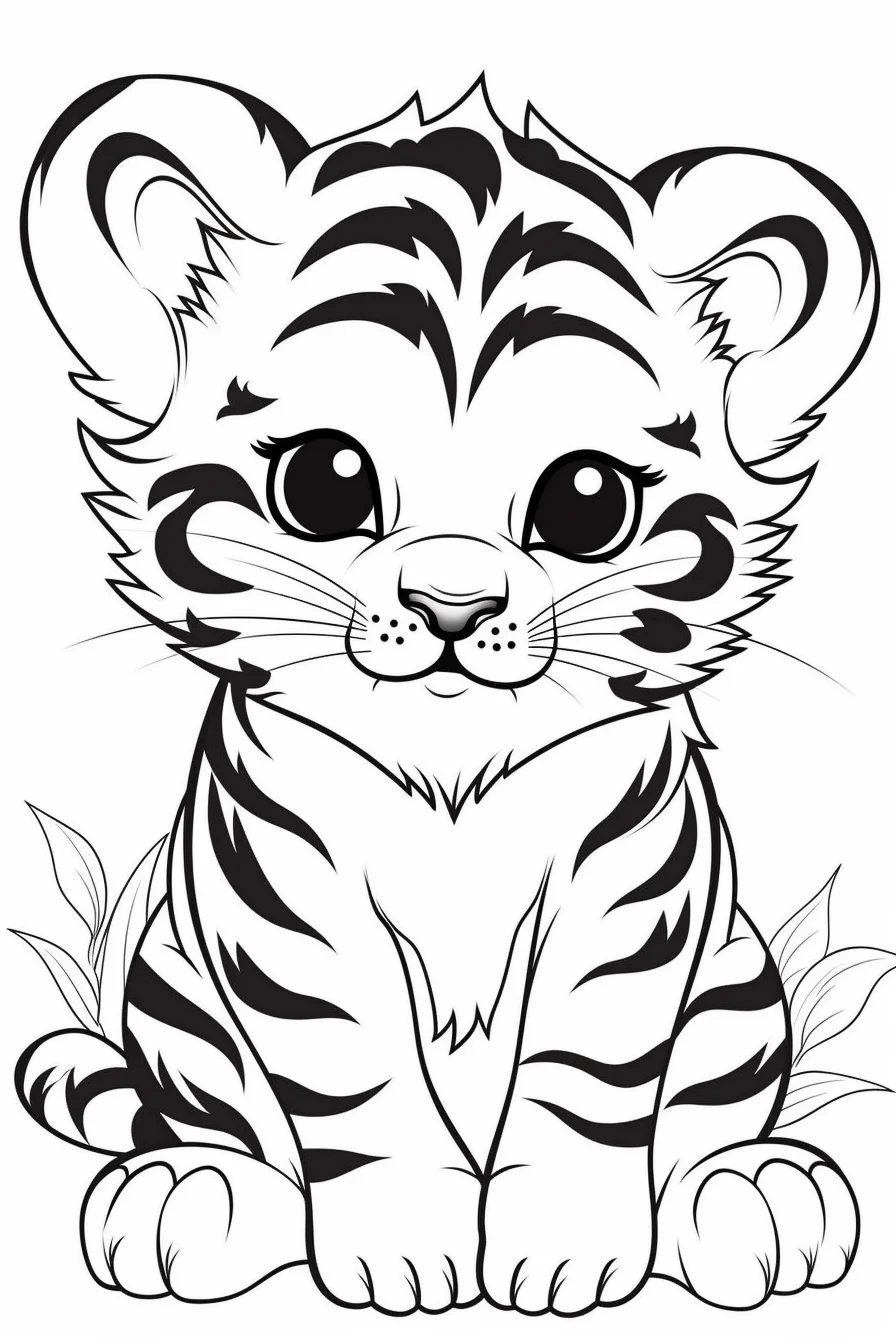
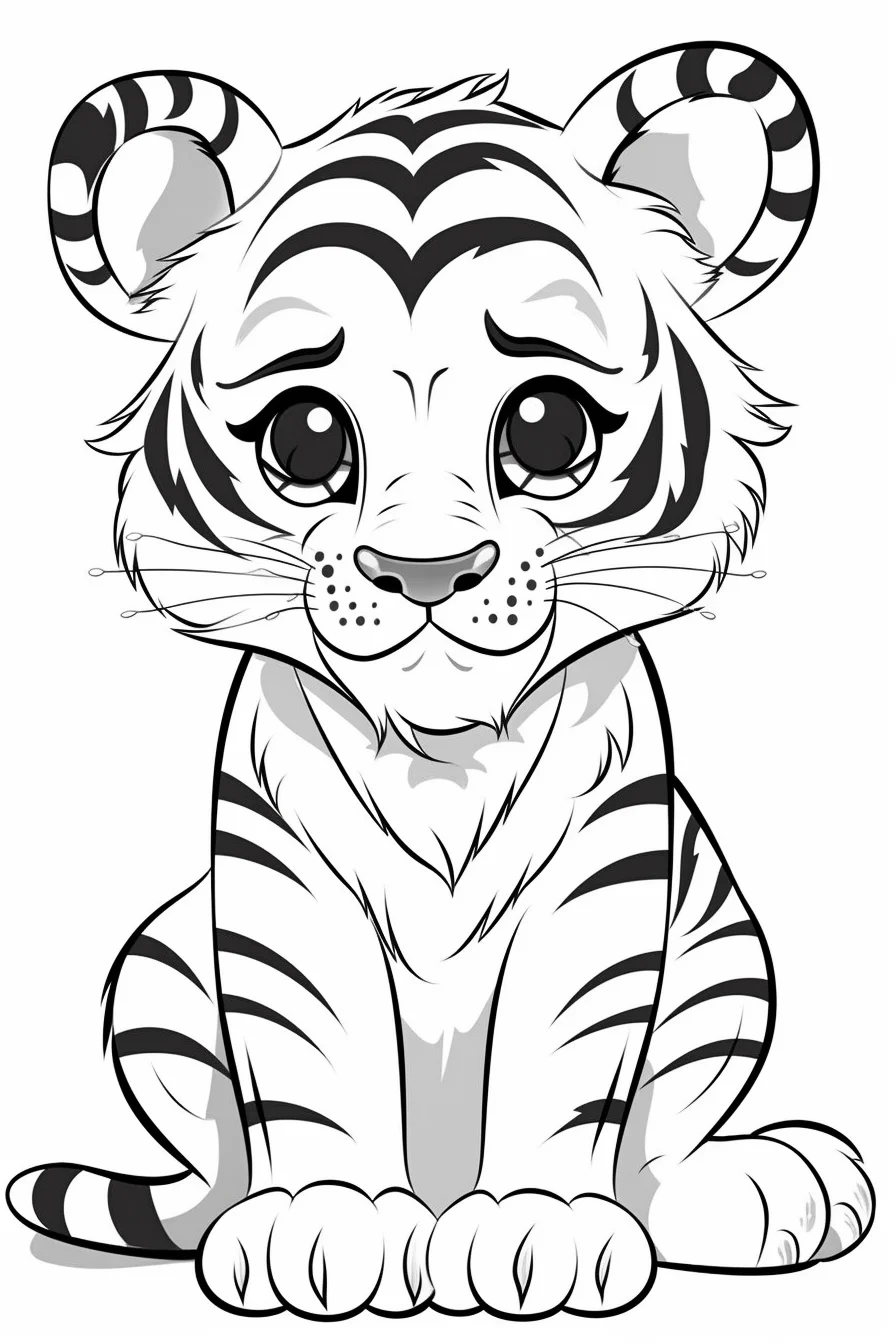
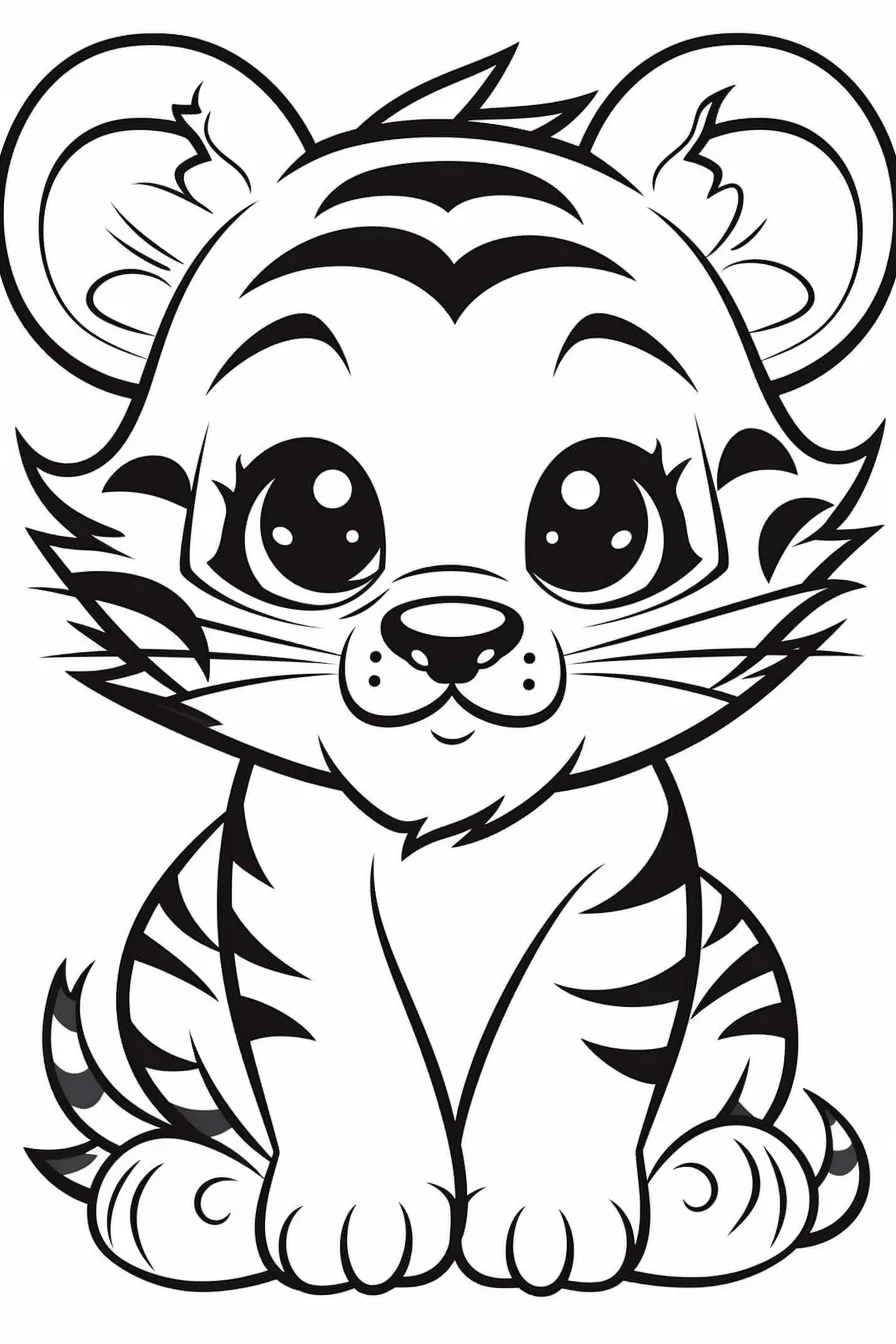
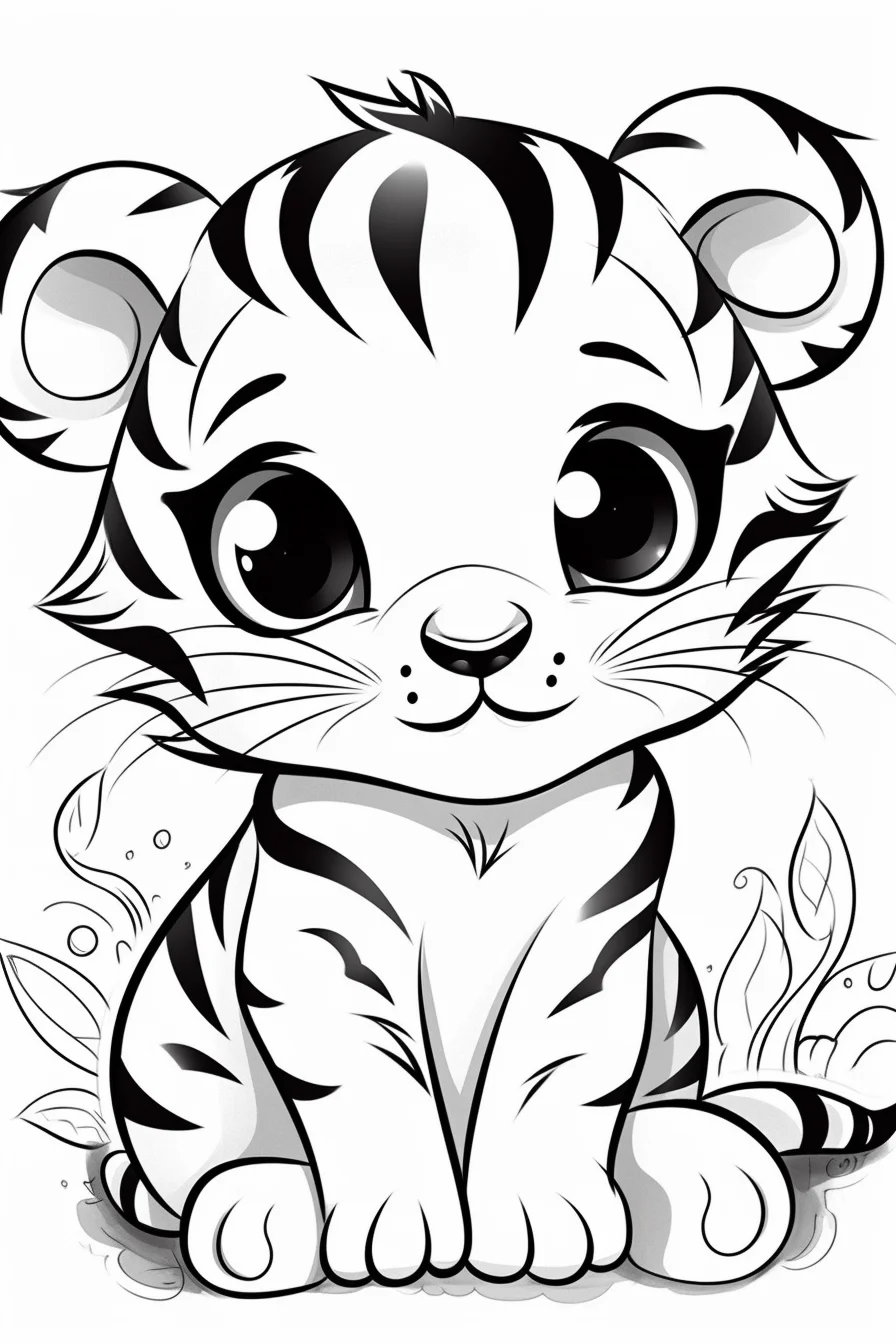
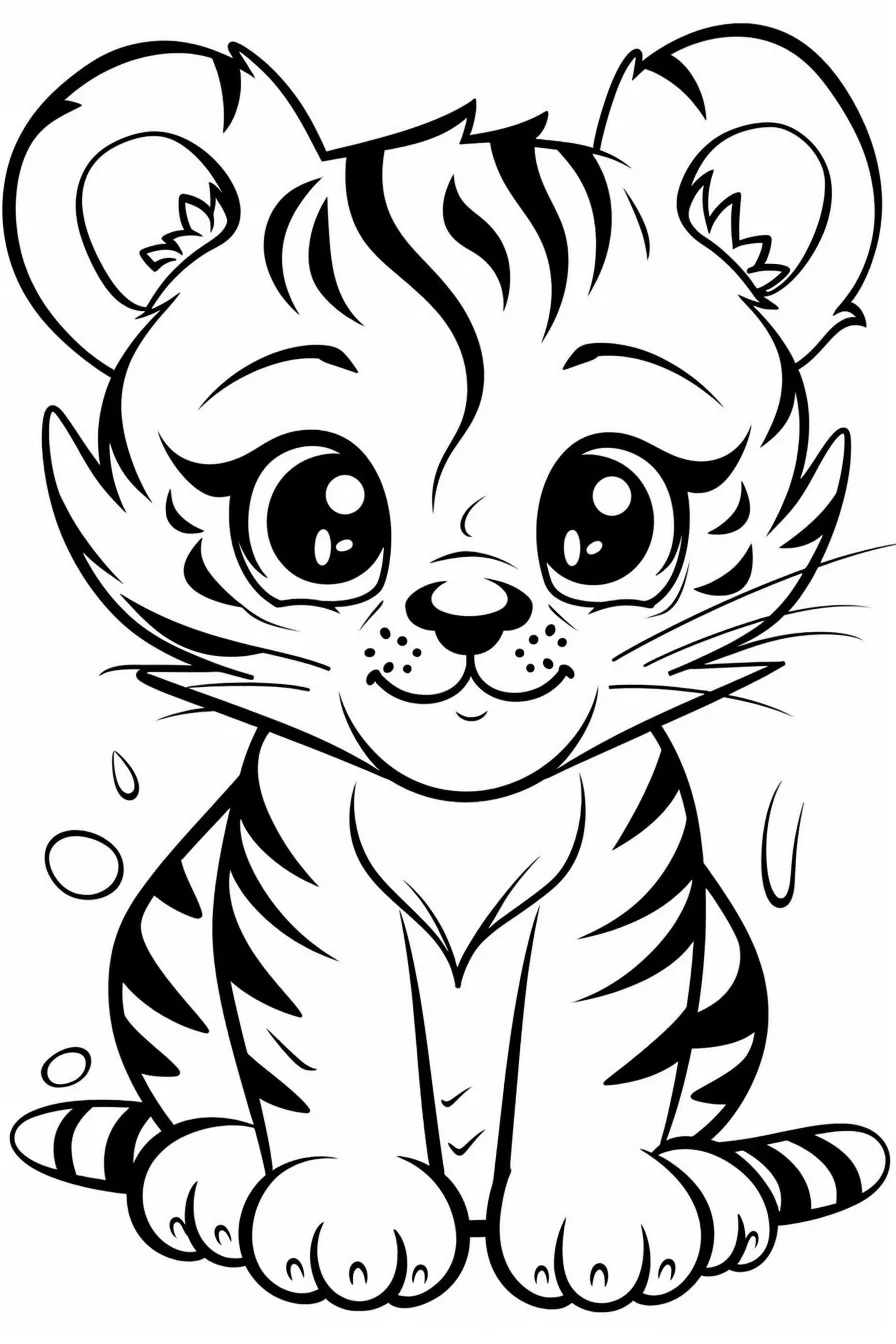
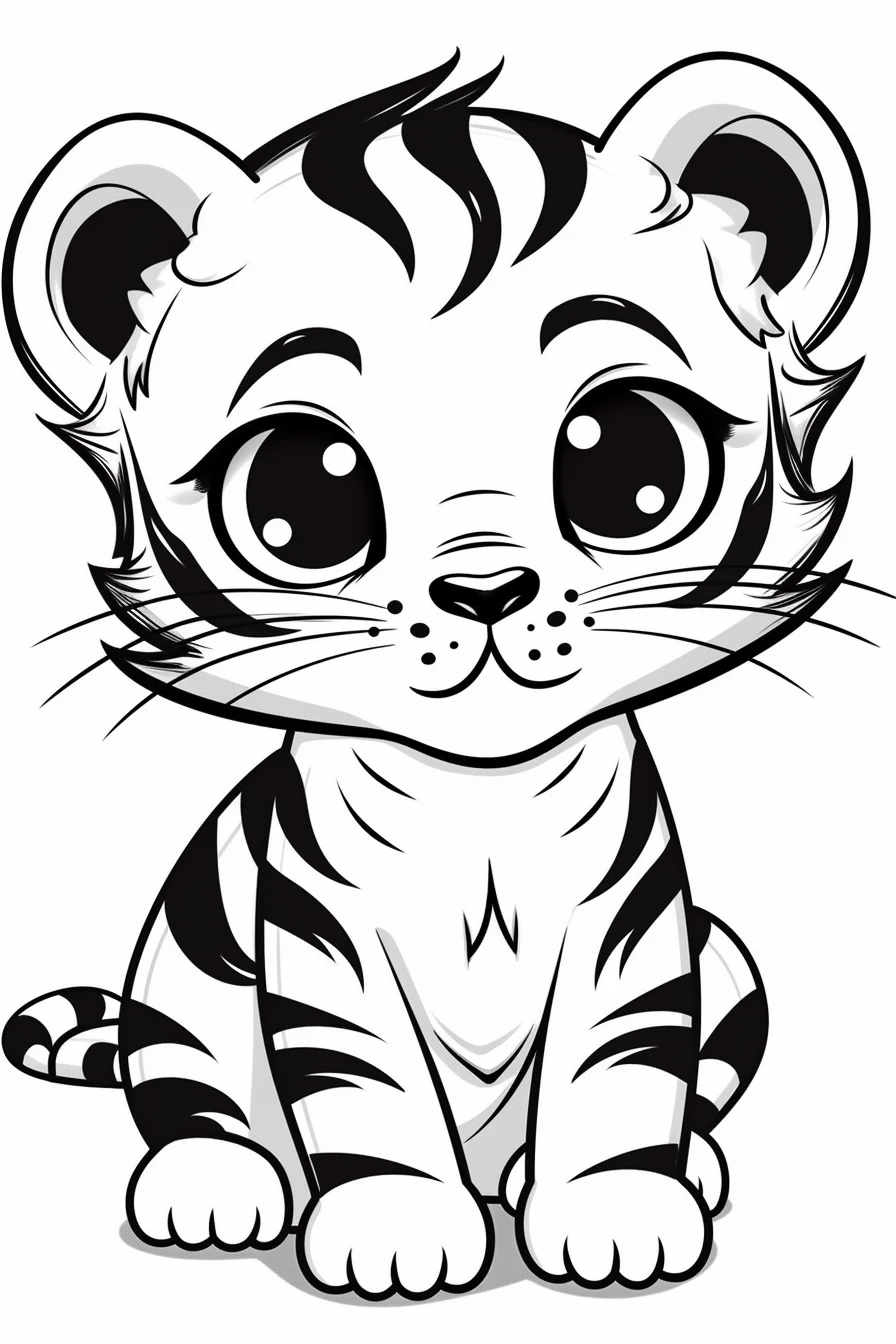
Keep the face readable: on big-eyed cartoon tigers, avoid making every facial marking equally dark. A lighter muzzle and inner ears help separate the expression from the stripes.
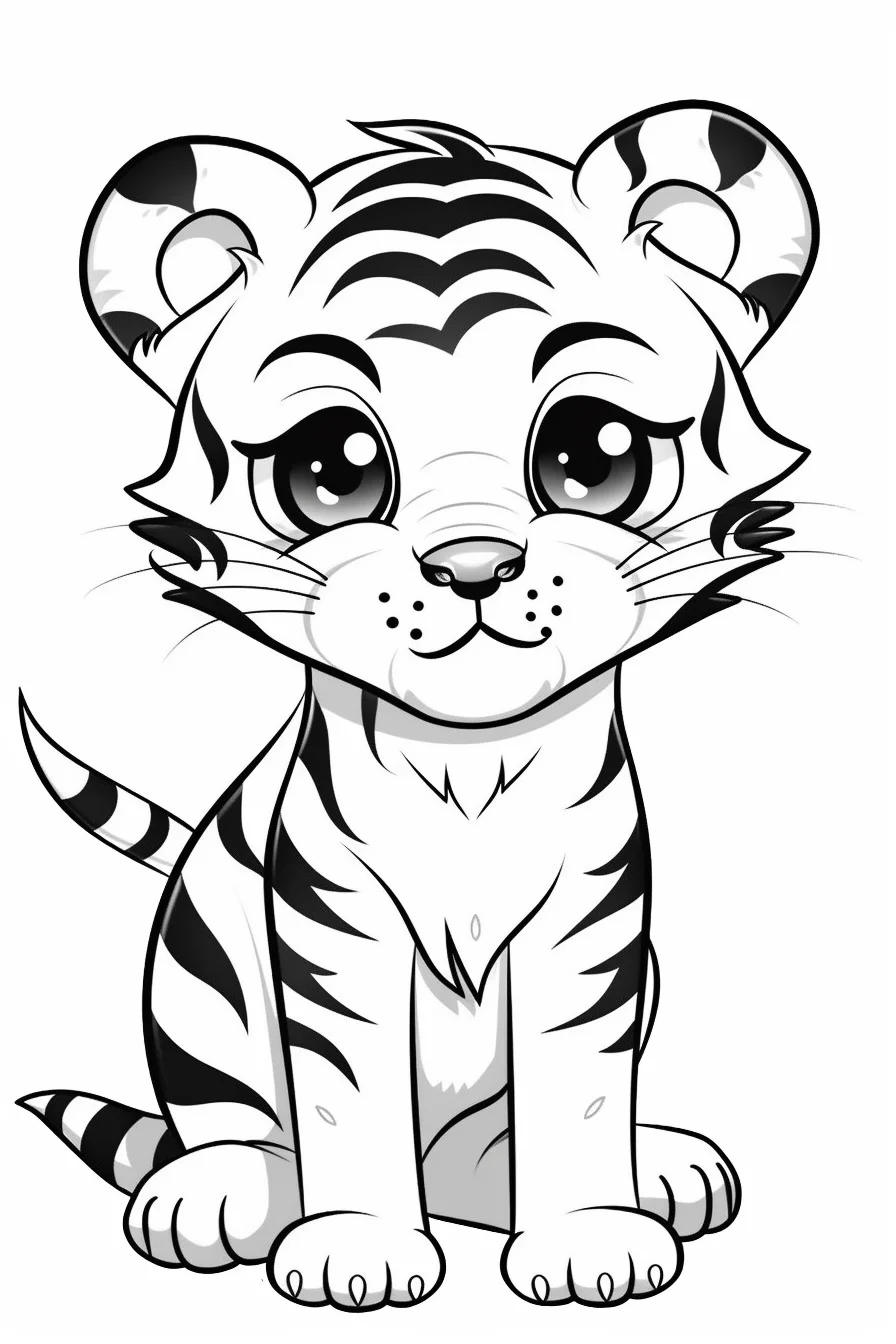
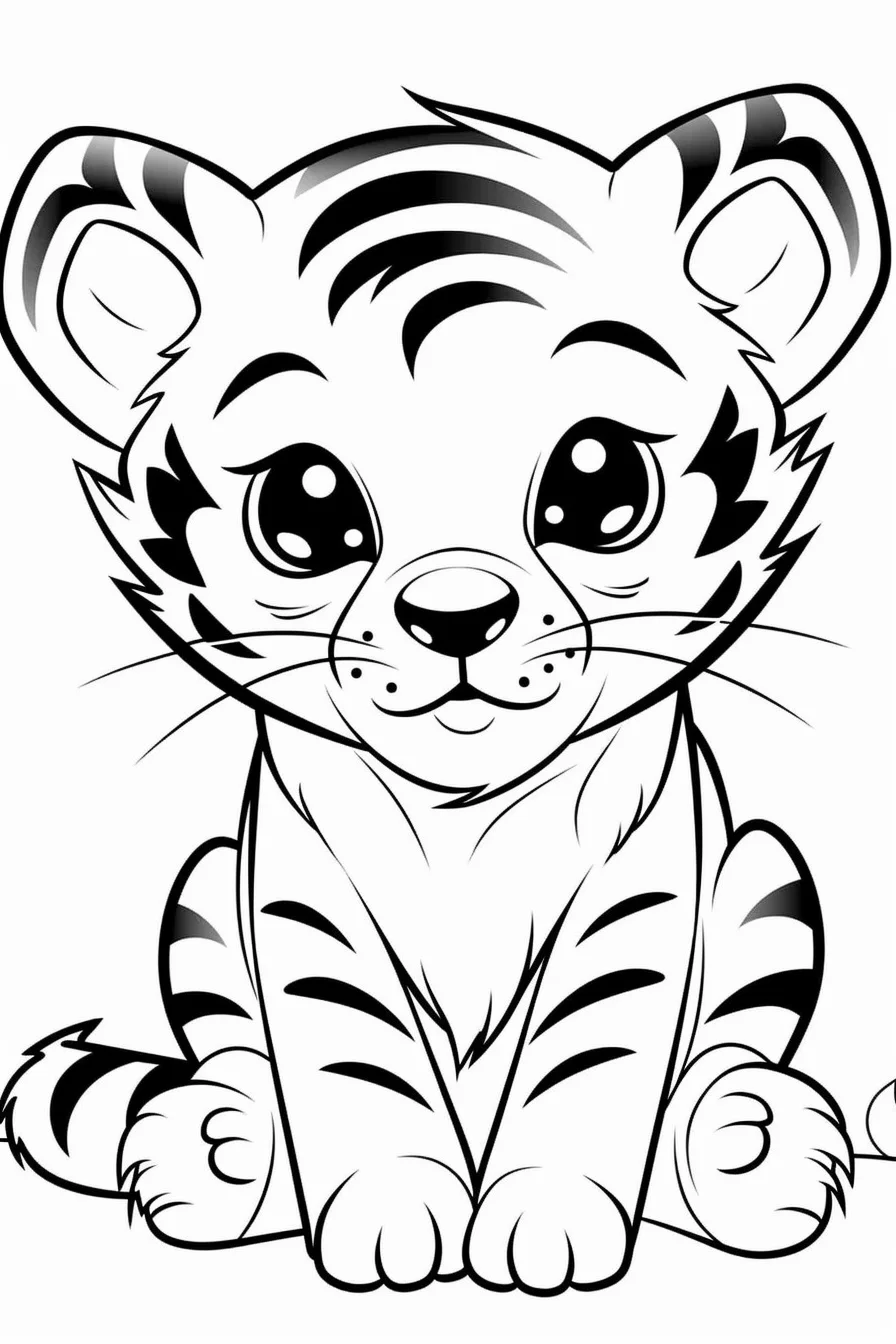
Best for preschool: crayons are usually more forgiving than pencils on these simple sheets. Let the child fill the larger orange areas first, then add just a few dark stripes rather than worrying about perfect realism.
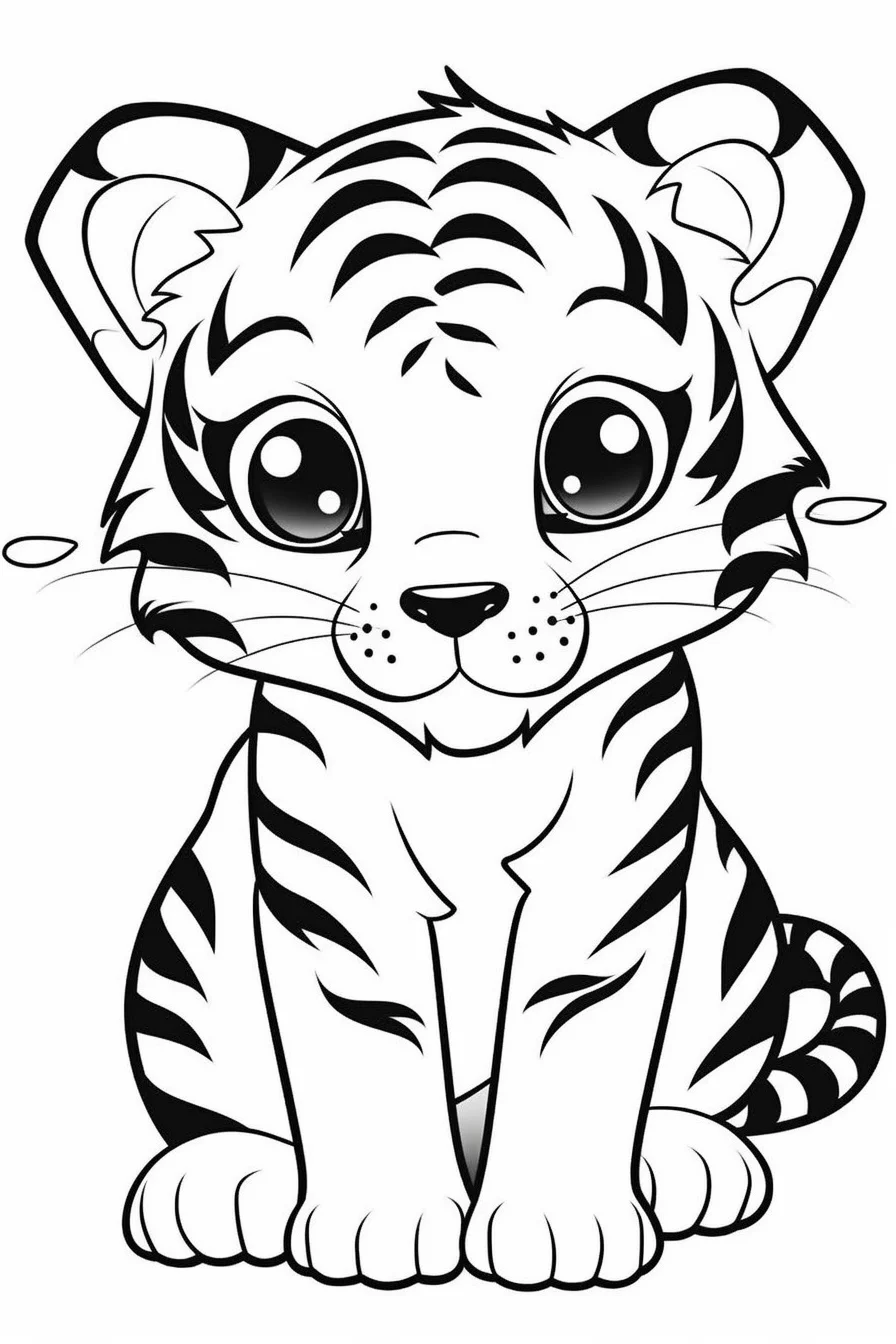
Printing these portrait tiger pages
These files are tall rather than wide, so portrait orientation is the safest choice. Open the image itself before printing, select A4 or US Letter paper and use “Fit to page” so the ears, paws and tail stay inside the printable margins. For more help, use our save-and-print guide.
If a child finishes these easily and wants more challenge, move on to the larger tiger coloring collection, where the coat pattern and realistic designs require more careful stripe work.

