
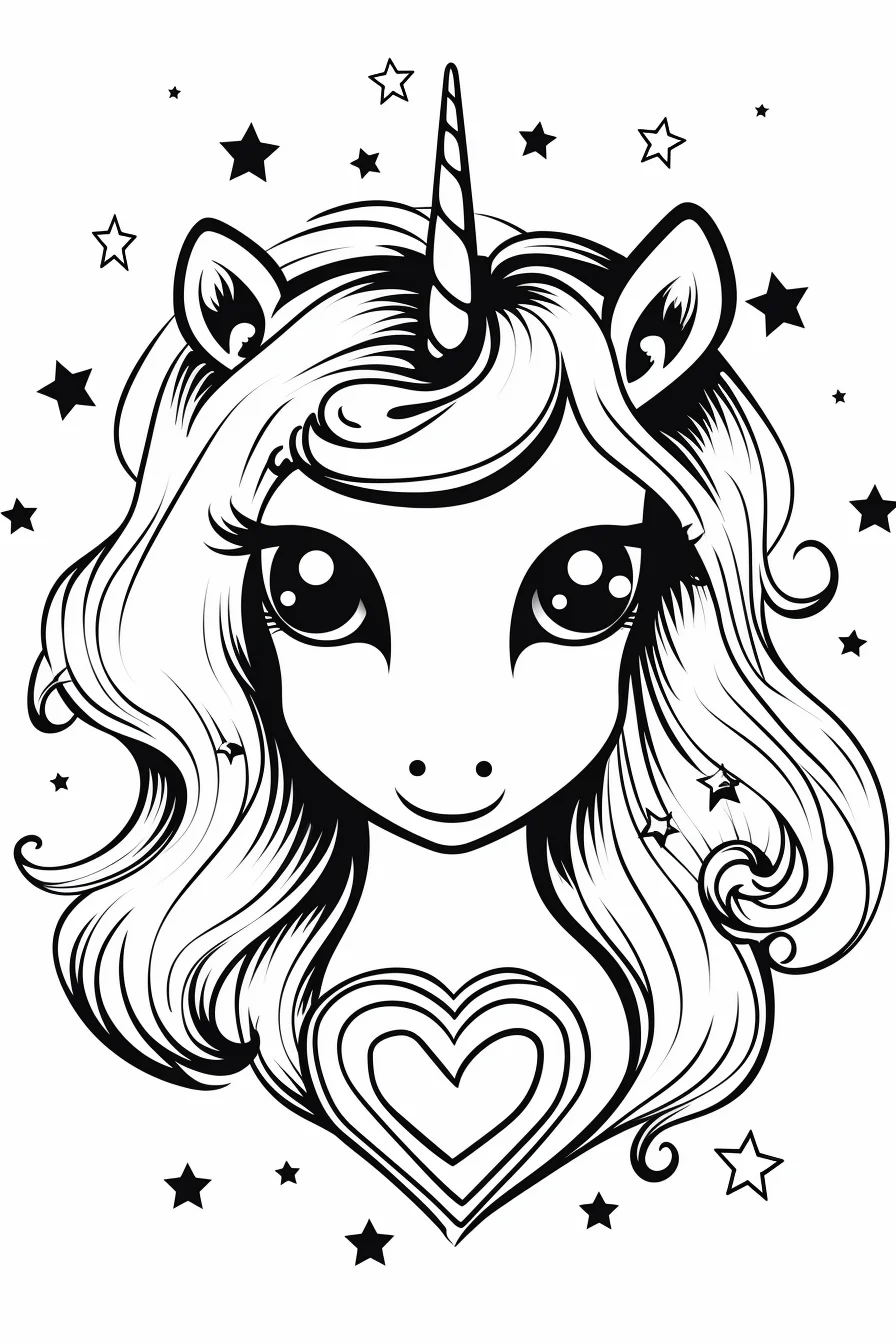
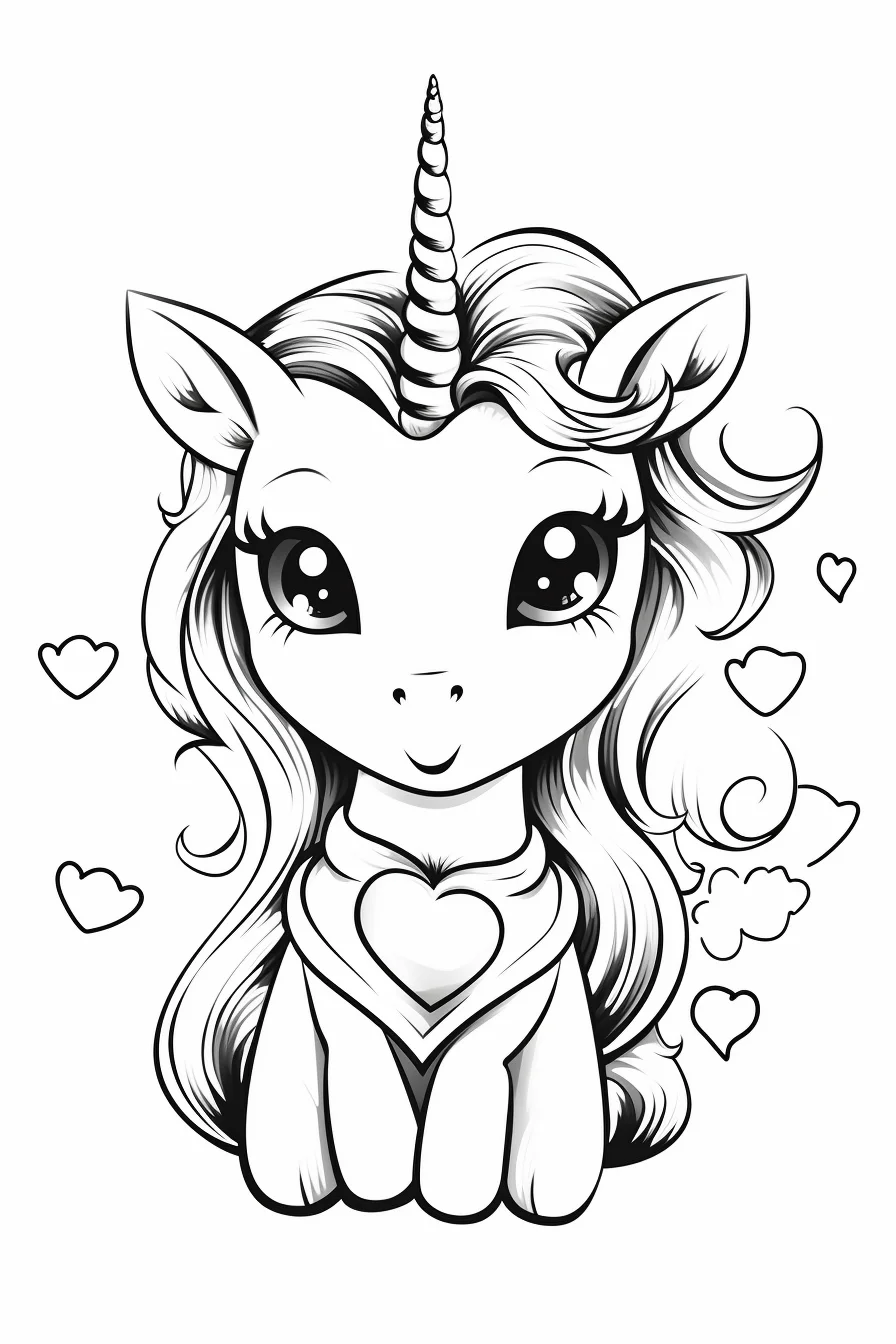
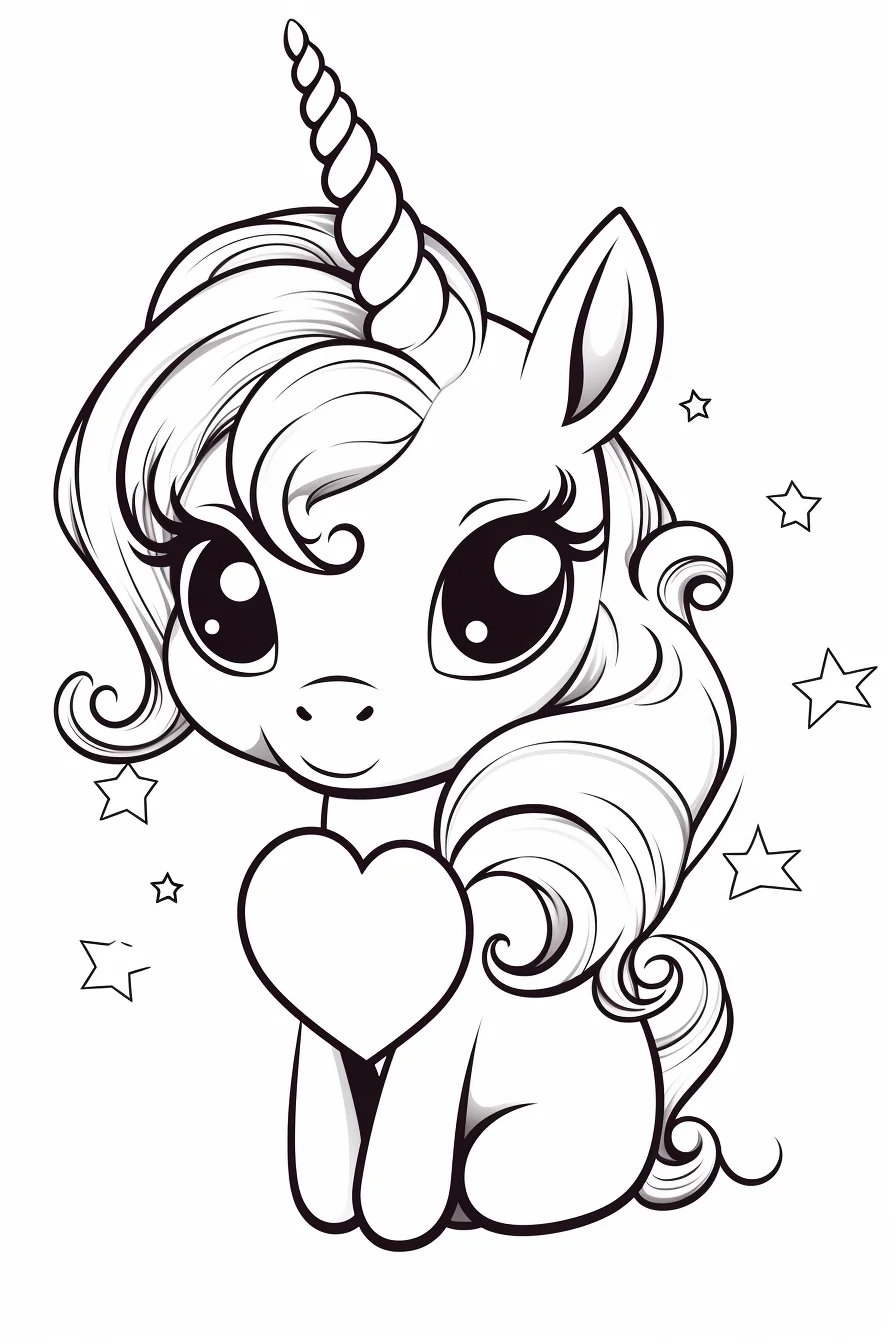
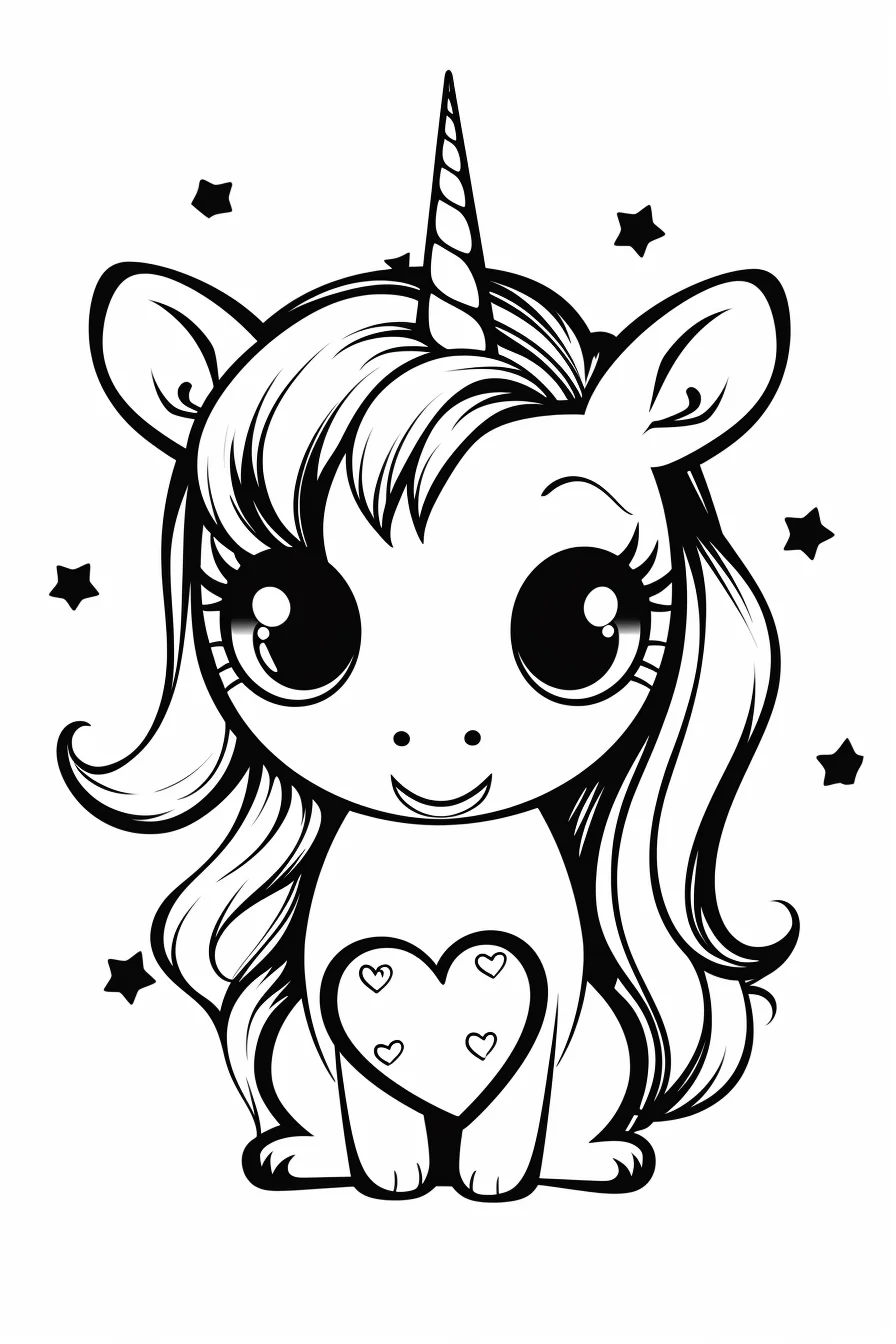
This collection contains 12 portrait-format unicorn coloring pages with cute, baby, easy and slightly more detailed designs. Choose this set if you want tall pages that fit naturally on portrait-oriented paper.
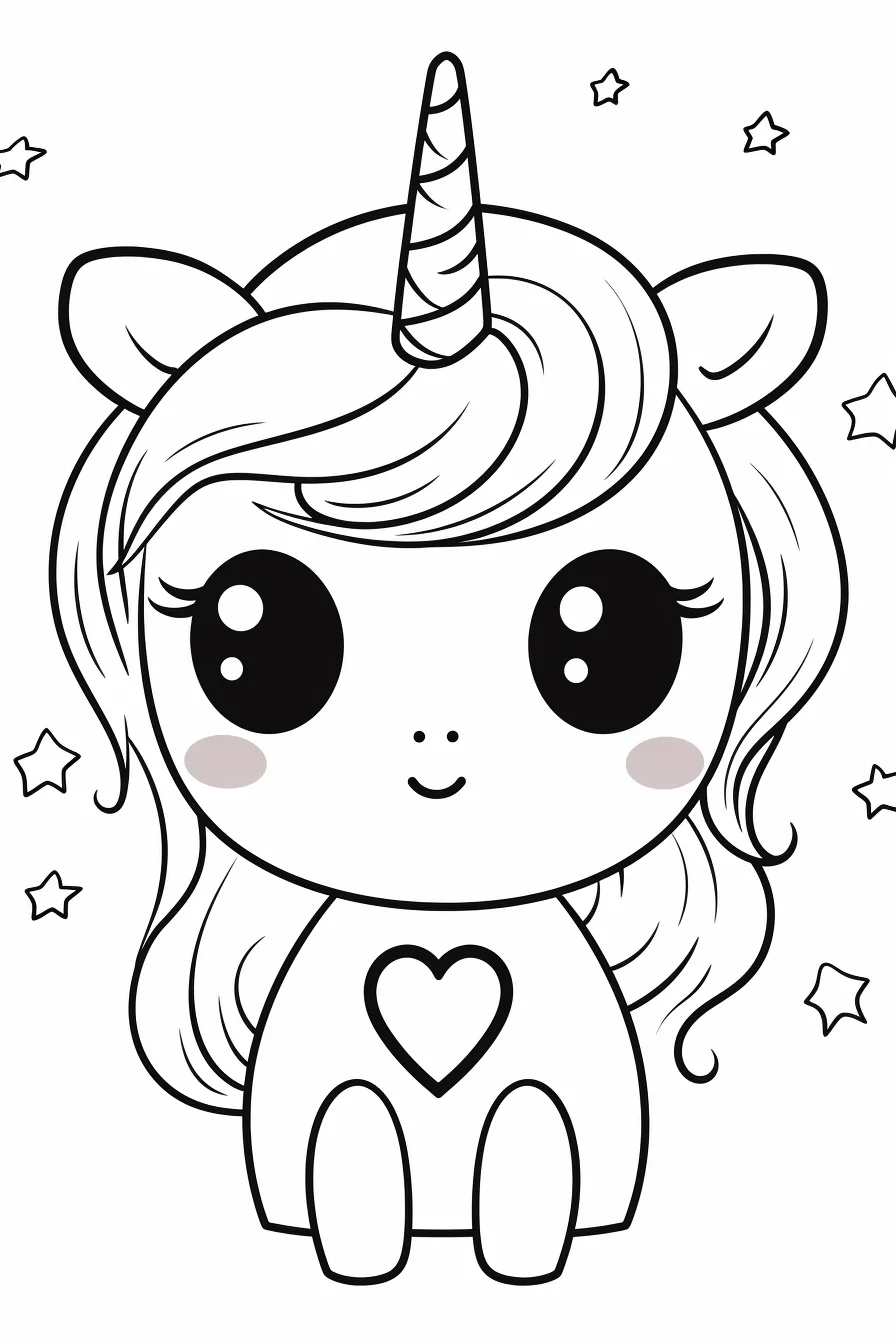
Do a 60-second portrait-page test
Before committing to a full page, use the first unicorn to check whether the design matches your tools and the amount of detail you want. The tall format makes the mane, horn and face especially noticeable, so a little planning prevents the upper half of the page from becoming visually crowded.
- Check the smallest space. Put your pencil or crayon tip beside the narrowest mane strand or facial detail. If the tip is wider than the space, use that tool for the body and switch to a sharper pencil for the face and mane.
- Choose the focal point. Decide whether the face, mane or horn should carry the strongest contrast. Keep the other two slightly quieter instead of making every feature equally bright.
- Test a white body. If you want a white unicorn, leave the paper untouched and add one very pale shadow beneath the jaw or mane. If that already reads as form, you do not need to shade the whole body.
- Limit the mane first. Pick two related colors plus one accent and repeat them. Add more colors only if the pattern still looks intentional.
For younger children, simplify the test to two decisions: one body color and two repeating mane colors. Let the horn, tiny accessories and background remain optional. For older colorers, keep the same palette but add one consistent light direction; this makes the page harder through technique rather than through extra colors.
Choose a color style
There is no required unicorn palette. Pastels work well for a soft fantasy look; bright rainbow manes create more contrast; darker body colors can make a pale horn, mane or tail stand out. Colored pencils are useful for gradients, while crayons or broad markers are faster on the larger open areas.
If you want a broader mix of styles, start with our 17-page mixed unicorn collection. For very simple designs, use the 25 baby and easy unicorn pages.
How to use this gallery: tap or click any unicorn to open the original image. If you are printing, save that original first rather than printing the web-page preview. These files are tall 896 × 1344 images, so portrait orientation is the natural fit.
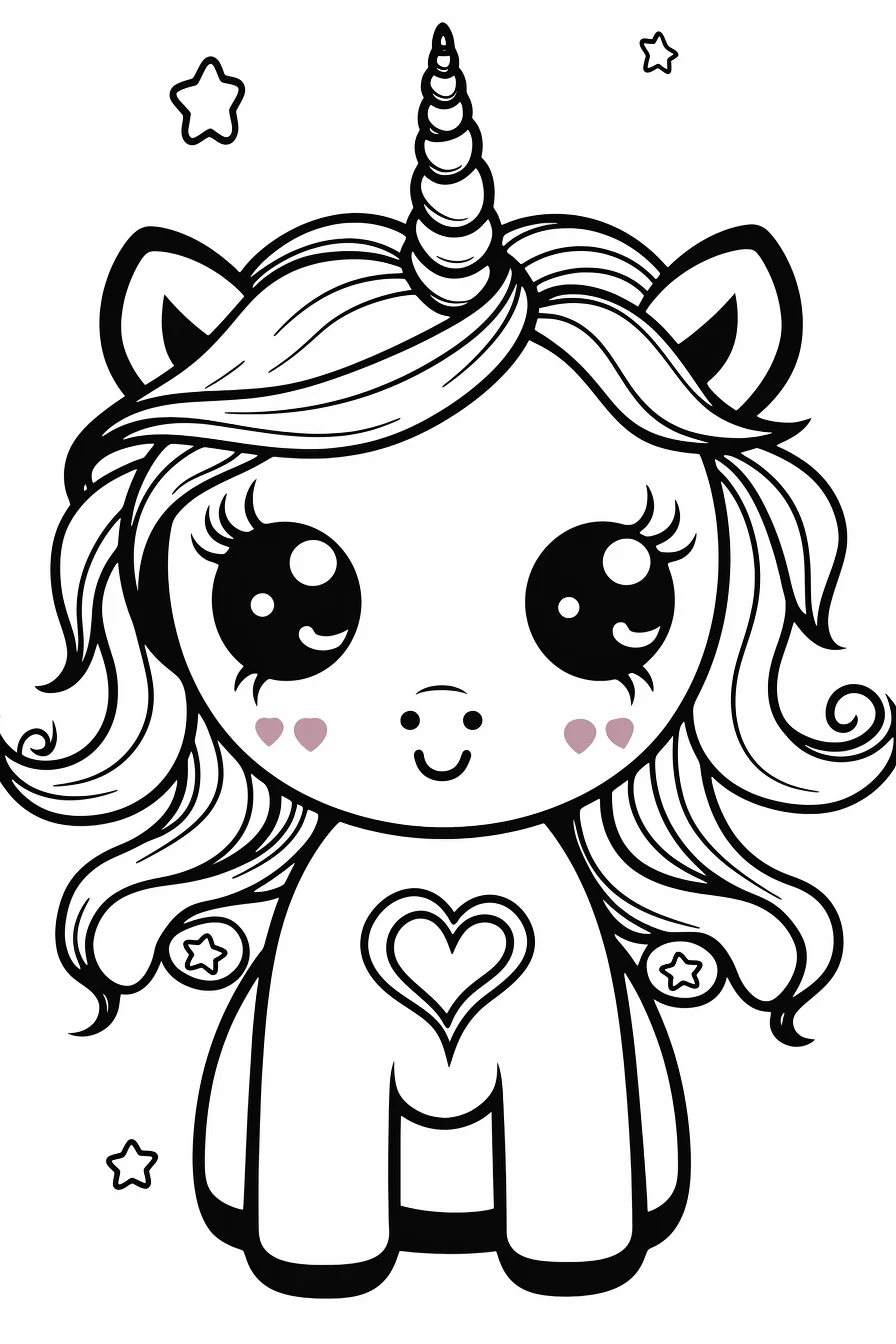
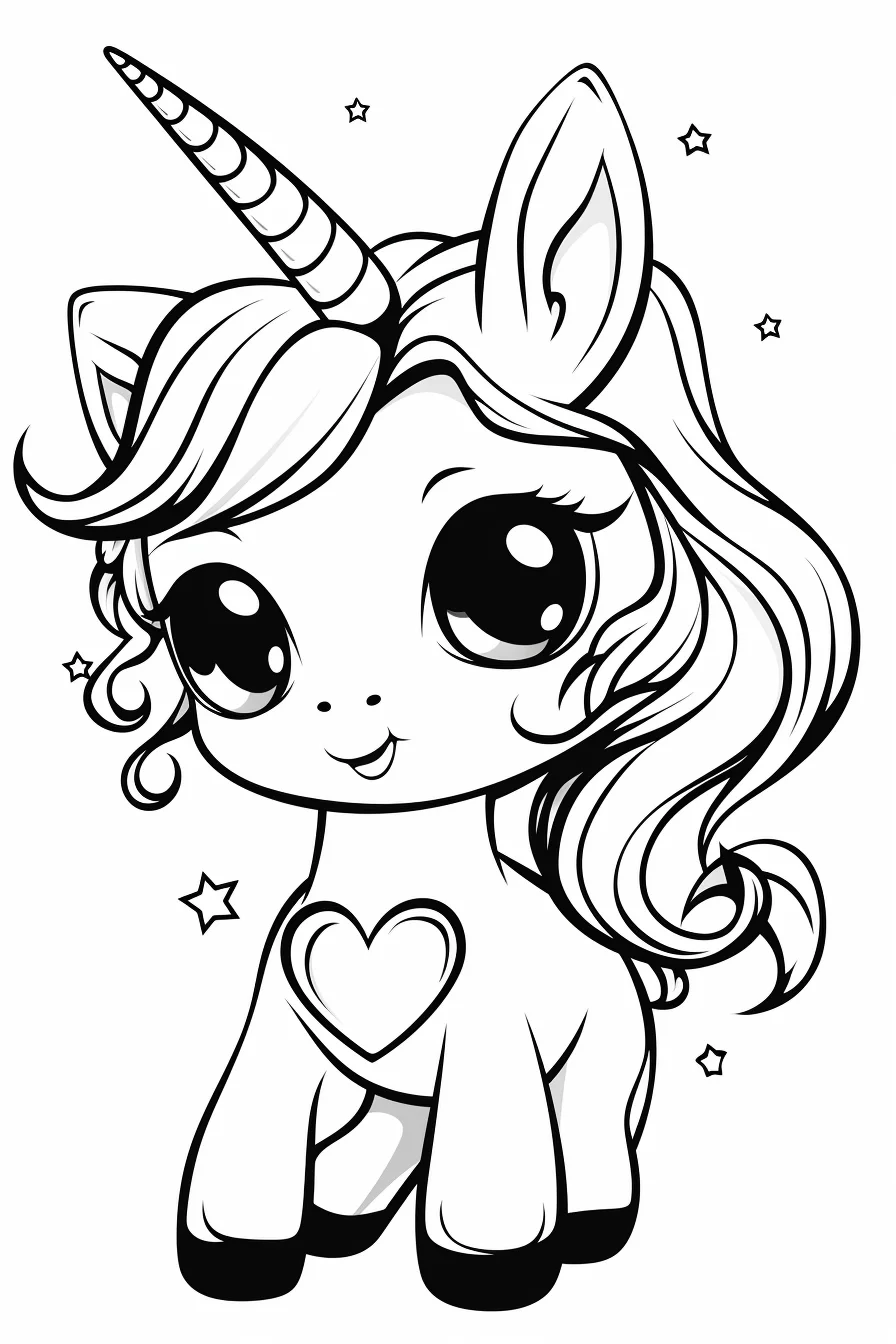
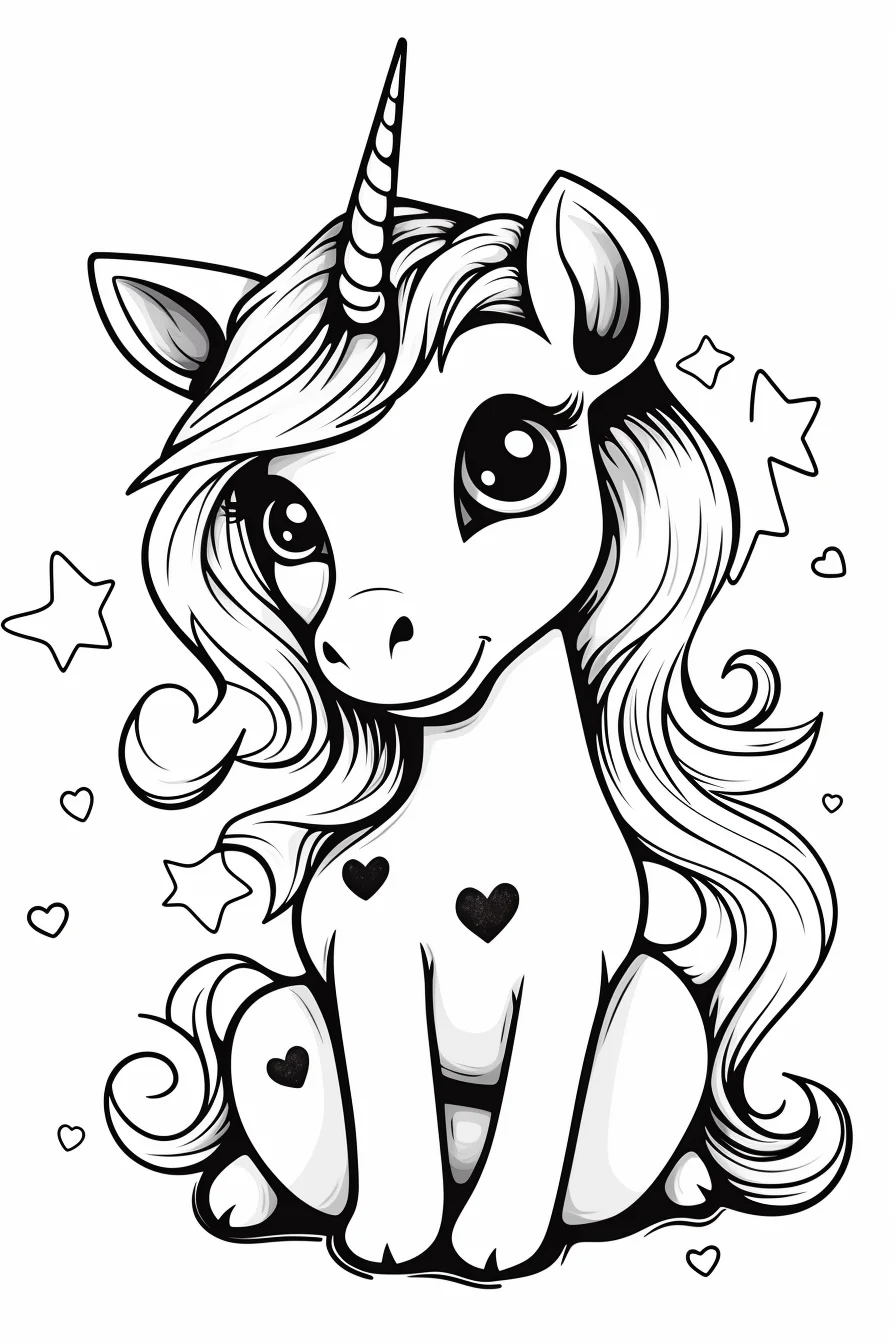
Printing these portrait unicorn pages
The images are portrait-oriented, but they are not exact A4 files. Save the individual image first, then print it on A4 or US Letter paper using portrait orientation and “Fit to page.” That keeps the horn, ears and hooves inside the printable area even when your printer has larger margins.
On a phone or tablet, open the full image and use the browser or share menu to save it. On a computer, open the image itself before using your browser’s save-image option. If the preview crops the artwork, use our Print & Save Help.
Reuse and permissions
For uses beyond ordinary coloring and printing, including republication, redistribution or commercial use, check the site’s Terms of Use rather than relying on assumptions from an individual gallery page.
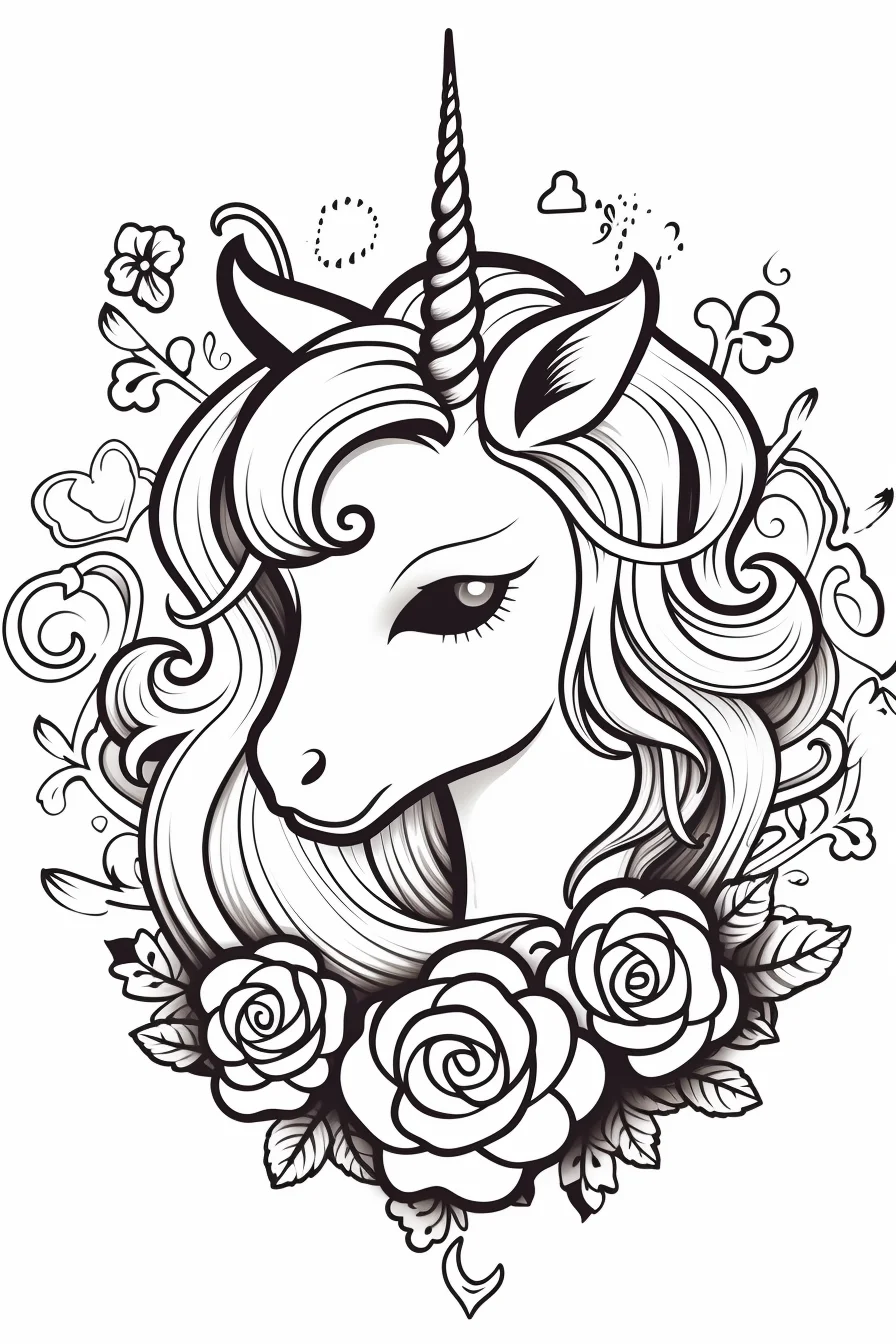
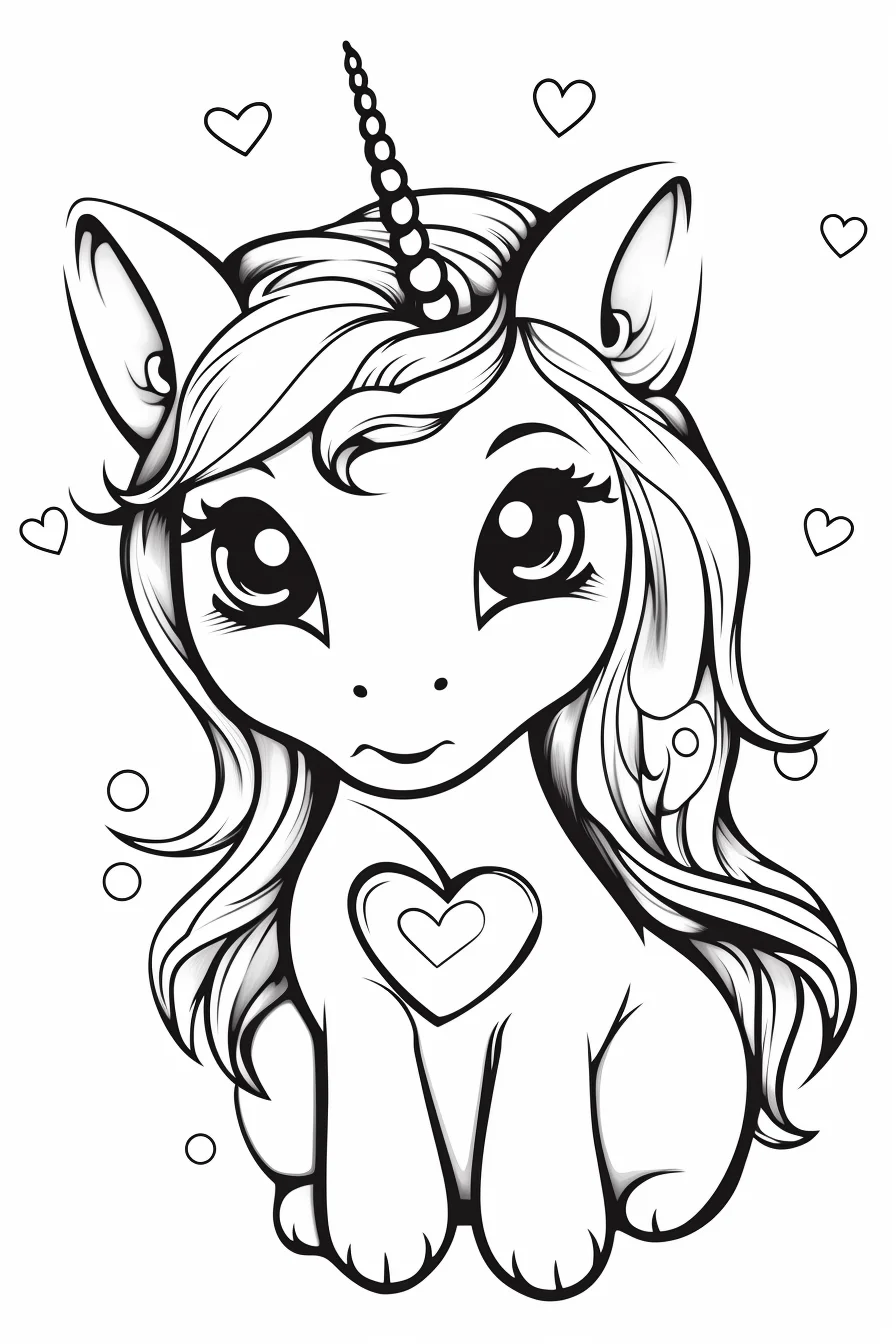
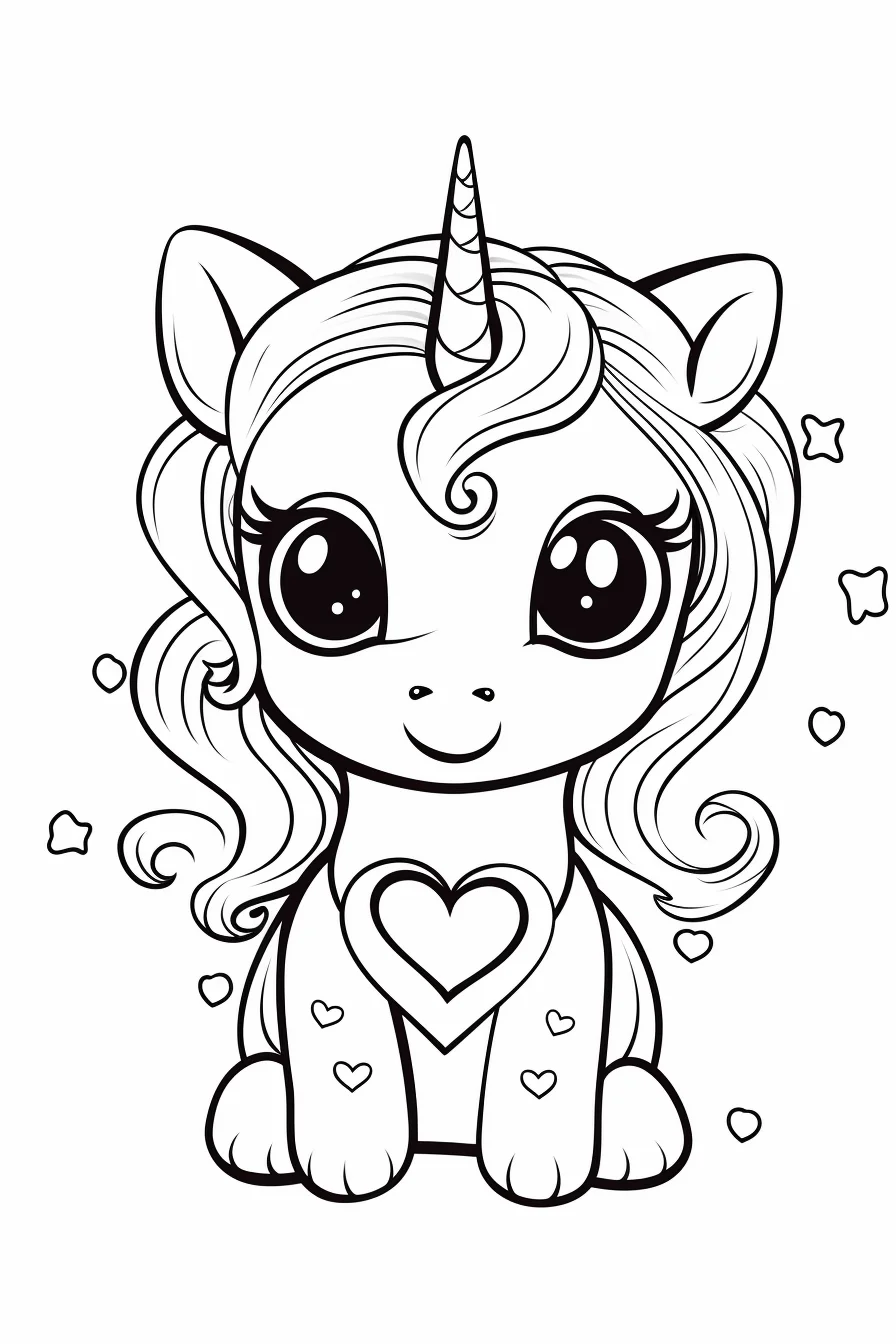
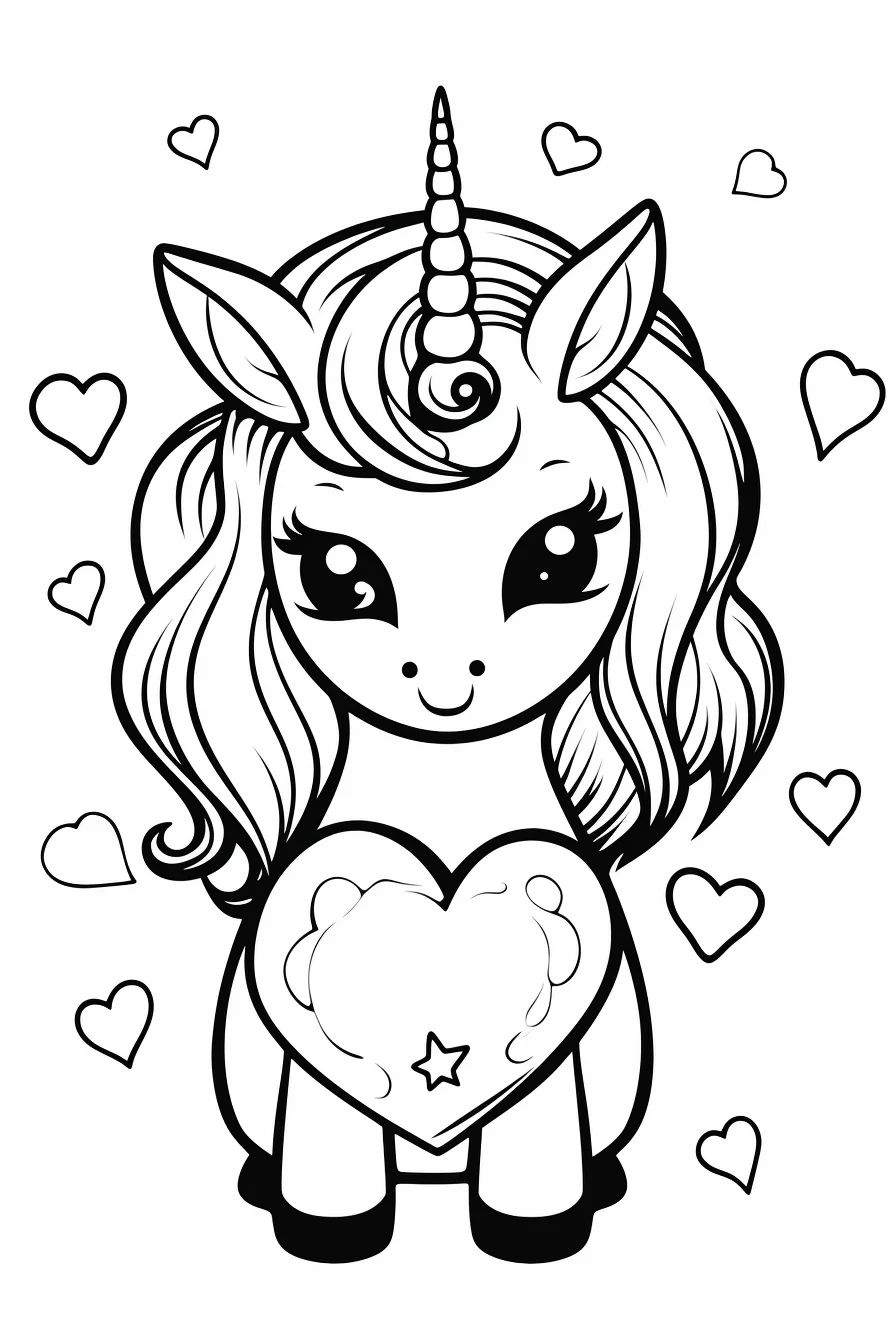
Make a portrait unicorn feel dimensional
Portrait pages give the unicorn more vertical space, so the mane, horn and legs can carry the color scheme without needing a busy background. Start with the largest surface—the body—and keep it lighter than at least one neighboring feature. If the body is white, leave most of the paper untouched and use a pale gray, lavender, blue or warm beige only where the neck meets the mane, beneath the belly and around overlapping legs. That creates form without turning a white unicorn gray.
For the mane, choose two or three related colors instead of assigning a new color to every strand. Lay the lightest color over the whole section, add the middle tone where strands overlap, and save the darkest tone for narrow gaps. The result reads as hair rather than separate ribbons.
A three-page unicorn practice progression
- Page 1 — clean color control: choose one of the easiest designs. Use one body color, two mane colors and one accent for the horn or accessories.
- Page 2 — smooth transitions: pick a page with more mane or tail area. Blend two neighboring colors and repeat that same transition in both areas.
- Page 3 — light and shadow: choose a more detailed portrait. Imagine light coming from one upper corner and darken the opposite side of the neck, belly and legs.
Using the same palette for all three pages makes it easier to notice improvement in pencil pressure, blending and shading instead of judging the pages only by color choice.
Color the horn without making it look striped
A spiral horn does not need alternating rainbow bands. For a more dimensional look, use one main color and darken the lower edge of each spiral section. Leave a thin lighter strip toward the imagined light source. Metallic-looking horns can be suggested with pale yellow and ochre, cool gray and blue, or lavender and deep violet; the contrast matters more than the exact colors.
Quick fixes for common unicorn-coloring problems
| Problem | What to change |
|---|---|
| A white unicorn looks unfinished | Add very light shadow beneath the mane, belly and overlapping legs while leaving most of the body white. |
| The rainbow mane looks chaotic | Repeat a short sequence of two or three colors instead of changing color on every strand. |
| The horn looks flat | Shade one consistent side of each spiral and keep the opposite edge lighter. |
| The face loses its expression | Keep the area around the eye relatively quiet and add the darkest facial details near the end. |
| Marker strokes look patchy | Work one small section at a time while the ink edge is still wet; use pencil for narrow mane and facial details. |
| Pastels all blend together | Add one darker accent—such as violet, teal or deep pink—to the horn, mane shadows or accessories. |
Four easy palette ideas
- Soft rainbow: white body, blush pink, peach, pale yellow, mint and lavender mane.
- Moonlight: pale blue-gray body, navy mane shadows, lavender mane and a silver-gray horn.
- Warm fantasy: cream body, coral and dusty-pink mane, ochre horn and warm brown details.
- High contrast: white or pale body, teal and deep violet mane, bright gold or yellow horn.
Turn one portrait into a deliberate coloring study
If you want to spend longer on one sheet, choose the portrait with the clearest face and treat it like a small illustration project rather than trying to fill every white area. Decide on three things before you start: the light direction, the main mane colors and the single strongest accent. Then work from broad areas to details.
- Body first: establish the lightest body tone and its shadows, but keep the paper showing through in the brightest areas.
- Mane and tail: follow the direction of the drawn strands with your pencil strokes. Darken where sections tuck behind one another rather than outlining every strand.
- Face: use the darkest values sparingly around the pupil, upper eyelid, nostril and mouth so the expression remains the focal point.
- Horn and accents: repeat one of the mane colors or introduce one contrasting accent. Repetition makes the palette feel planned.
- Final check: place the page at arm’s length. If the face disappears into the mane, deepen only the closest mane shadows instead of darkening the entire picture.
This same workflow works with crayons, but colored pencils make the value changes easier to control. With markers, use them for flat base colors and add subtle shading with pencil only after the ink is dry.
Simple ways to use the finished portrait
The tall format works naturally for a bedroom-door picture, a birthday coloring table or a small fantasy-themed display. For a group activity, give everyone the same page but set a different palette rule—pastel, warm colors, cool colors or three colors only. The finished pages stay comparable while still looking individual. If you want to reuse a favorite design for technique practice, print a second copy and deliberately change just one variable, such as the light direction or mane palette.
Portrait unicorn coloring questions
Which pages are easiest for younger colorers?
Choose designs with large body sections, a simple mane and fewer small accessories. If the narrow details become frustrating, crayons can handle the body while a colored pencil is used only for the eye, horn and small mane sections.
Do unicorns have to be white?
No. These are fantasy subjects, so blue, pink, brown, black or multicolored bodies all work. What usually makes the page readable is contrast: if the body is dark, keep at least part of the mane or horn lighter, and vice versa.
How can I make a pastel page less flat?
Keep the pastel base, then choose one deeper version of each important color for shadows. A pale lavender mane, for example, becomes clearer with small violet shadows where strands overlap.
Where should I go for more difficult unicorn pages?
Try the more detailed unicorn collection when you want denser linework, or use the extra unicorn gallery when you simply want more designs to choose from.

